

With the BMW MOA National Rally coming up in June 2026 in Essex Junction, Vermont, now is the perfect time to plan your ride there to truly enjoy what the area around has to offer. What makes this state a wonderful destination is the lush green mountains, amazing rural farm landscapes and fabulous roads to ride your motorcycle!
Billy Joel sings about a “New York State of Mind,” and that comes to into my head every time I cross the border. But I’d change that line to a “Vermont State of Being.” Vermont is unlike any other state, thankfully. It has a vibe all its own. Cross the border and you can almost feel the difference from its neighboring states. A bit more laid back, without being lost from the rest of the world. Slower paced than New York and New Hampshire and not as overtly commercial as Massachusetts.
Having lived in Vermont in the late 1970s and early ’80s, I can honestly say that the mindset of the people there is more honest, caring and helpful than almost anywhere else. It ranks second to last in U.S. population; only Wyoming has fewer people. It’s also one of the smallest states in square miles. Compared to Wyoming, which is 10 times larger, Vermont is a narrow pie slice-shaped state with only 180 miles of border from north to south, 90 miles at its widest point at the Canadian border, and just 37 miles at its narrowest point at the Massachusetts border.
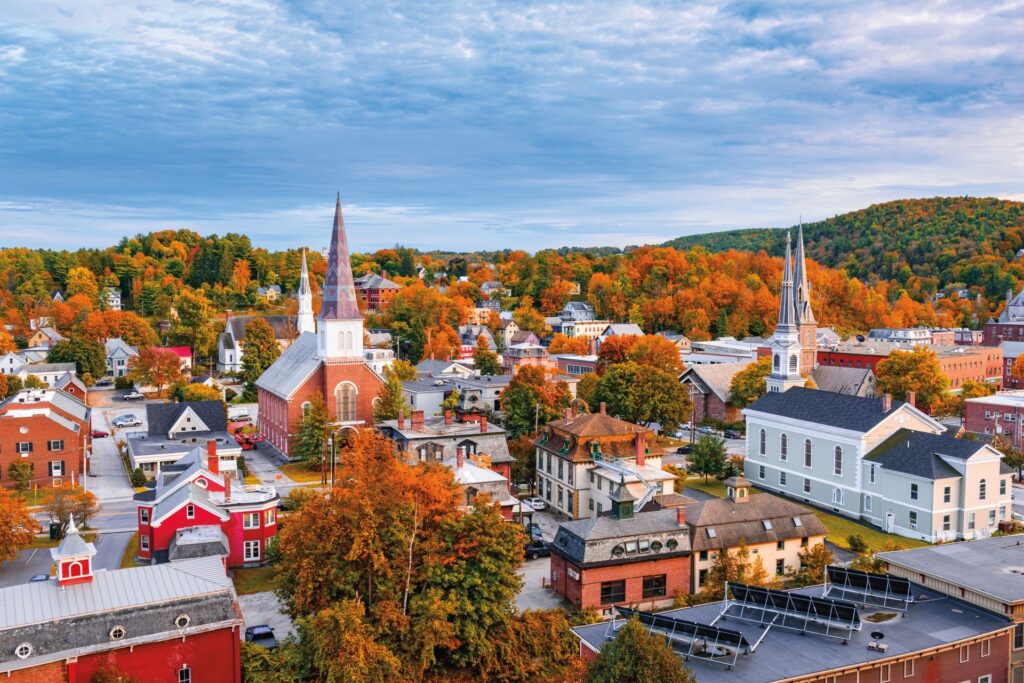
Vermont has innumerable spectacular small, well-maintained roads, some with fantastic long views and some that cut through the many state forests. While the majority run north and south, there’s a plethora of twisty, winding roads that pass through the mountains like Appalachian Gap, Lincoln Gap and Middlebury Gap, just to name a few. Even the two interstate highways are a joy to ride on. Both I-89 and I-91 feature moderate traffic volume and are wide and smooth, featuring large medians between the travel lanes. While you can see great long views for miles from much of the route, it’s truly the back roads that are the most inviting.
It’s often said that the best parts of life can be found in the details. While the long, sweeping views from the interstate are nice, it’s the distant details that help every traveler truly feel they’ve experienced a place. Every state has its claims to fame, but for Vermont, one standout is that it’s home to over 100 authentic covered bridges. This gives the state the highest number per square mile and per capita in North America.
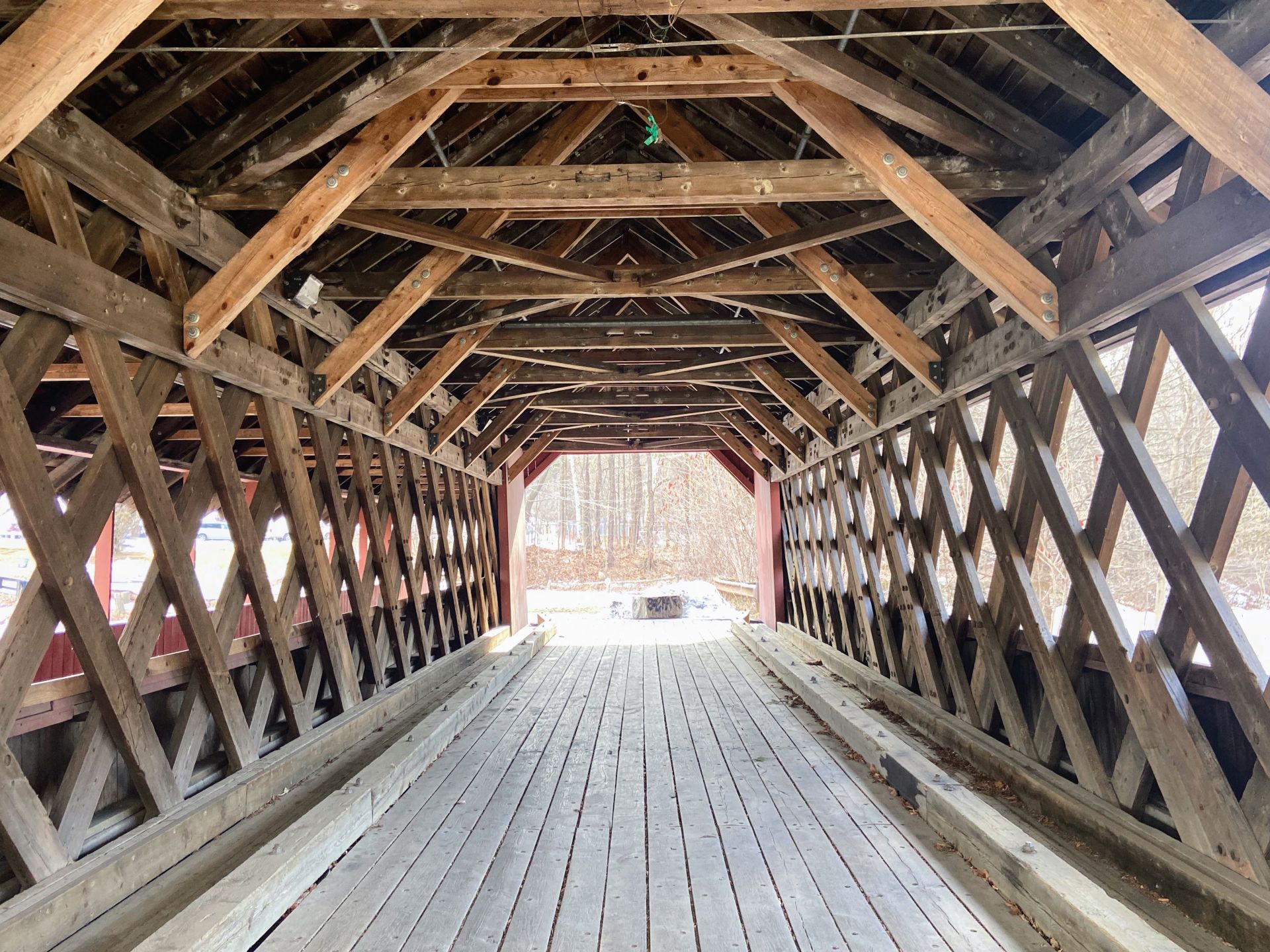
If you’ve never ridden your bike over a covered bridge before, it’s an amazing treat you’ll never forget. There’s something magical about cruising along next to a country river, past farms and fields, in the open air, then rounding a bend to see this barn-like structure spanning the roadway. The minimal amount of darkness contained due to the short stretch, with bright sunlight beckoning at the other end. You downshift, become more aware of your balance, more thoughtful in your handling of your machine and slowly ride in. Hear the wood creak beneath you, see the sunlight streaming in through the not quite solid sides by design, smell the history, and moments later, you’re back out. Amazing and exhilarating all at once.
Vermont’s covered bridges are landmark centerpieces of charming rural New England settings. A true definition of a covered bridge is a timber structure supporting a wooden deck surface with a roof overhead. The primary purpose of the roof is to protect the structure from damaging weather. Builders knew that simply putting on a roof paid off in the long run in terms of protection. Adding walls helped calm animals crossing rushing waters, which frequently scared livestock and caused stampeding. The high ceiling height and typical lattice sides or windows allowed drivers to see oncoming traffic as well as provide natural light.
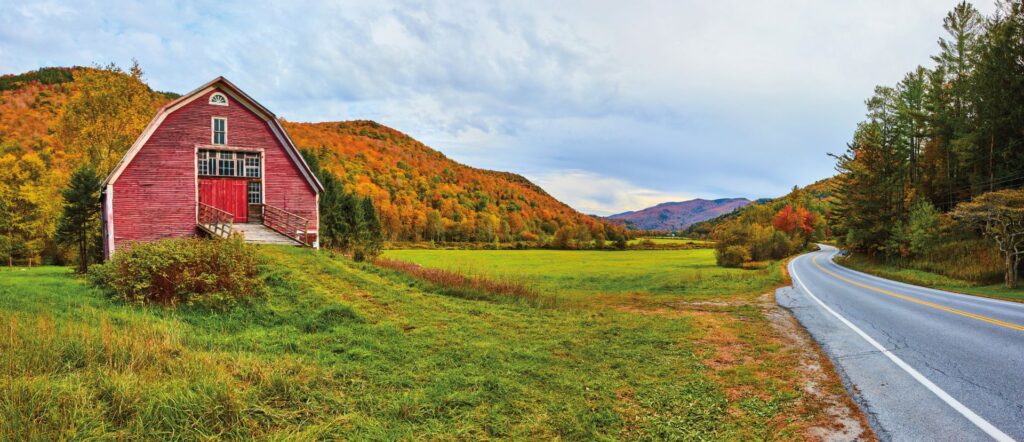
In the 1800s, the number of covered bridges in Vermont reached over 700. Unfortunately, horrific statewide flooding in 1927 destroyed nearly 100 covered bridges. When automobiles became the primary mode of transportation and their construction could not withstand the continual weight of autos, the number of these gems dropped to 200.
Fifty miles northeast of the rally point in Essex Junction is the town of Montgomery, known as Vermont’s covered bridge town. Its unique geography required many bridges, and as recently as the 1940s there were 13 covered bridges within the town’s limits. Today, there are six covered bridges. It is a perfect place to get a taste of both history and riding enjoyment. Interestingly, not selected on anything but their location within the town of Montgomery, brothers Sheldon and Savannah Jewett built all these bridges. They represent the best-documented concentrations of bridges by a single building team in the state. The Jewetts prepared the original timber for the bridges at their mill in Montgomery’s West Hill area from the nearby forests.
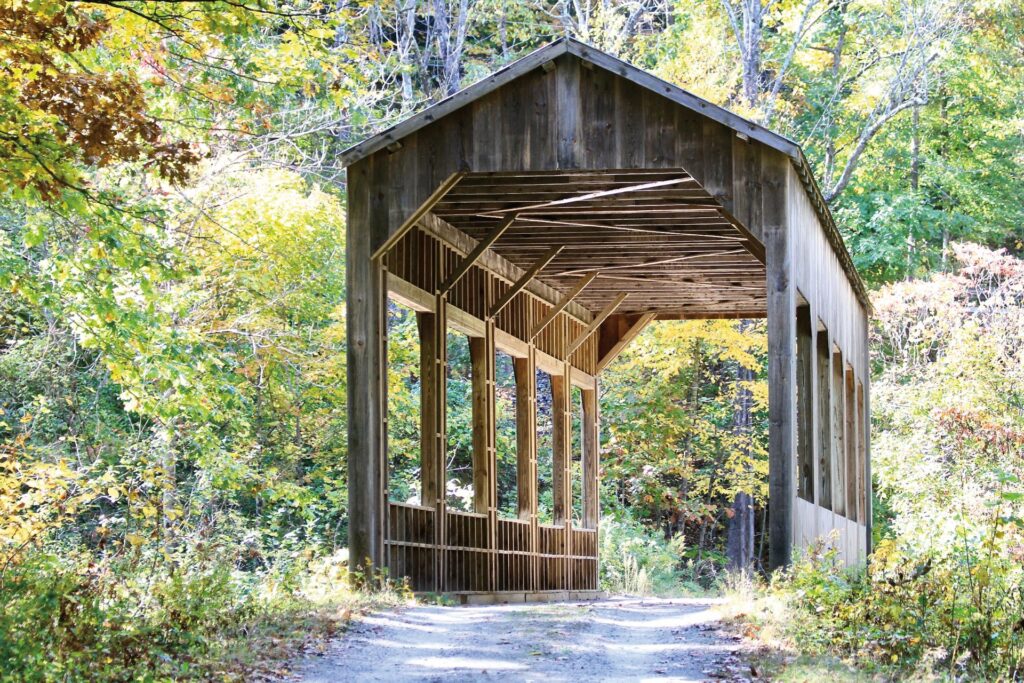
Luckily, to experience these, you’ll get to enjoy the Vermont countryside as it’s just over an hour’s ride out from the Rally site. With taking time to explore the bridges and a stop or two, this round-trip tour is a great way to spend half the day.
To reach Montgomery, head out of Essex Junction on Route 15N towards the small town of Jericho. Within five miles on Route 15, you’ll see that it is a perfect example of just how fantastic the riding is in this state thanks to a small two-lane blacktop gently winding its way through the towns of Jericho and Cloverdale and on up to Cambridge and Jeffersonville. There are many farms and livestock-filled fields on either side to fill your senses. This route takes you alongside the Lamoille River as well as one of its branches. In Jeffersonville, jump onto Route 108N for a little more than a quarter mile, then take Route 109N. Route 109 is a beautiful, lightly traveled road that continues to provide a smooth ride with even more farmland views. Take in the lush green all around you that is a constant in summer as you ride on, taking Route 118N straight toward Montgomery.
Riding over covered bridges is a skill unto itself. It’s not like roaring through an urban tunnel. These are short structures that were built over 100 years ago, and the traveling surfaces are typically older wood that can be a bit slippery. There may even be two tracks of heavier boards, spaced far apart, where automobile tires travel. On a bike, well that’s a different story. You’re going to pick either one of those two or ride down the center! Once you’ve made your decision, you have to stick with it. Changing partway through can be dangerous. Adding to this adventure is the fact that there is no specific Vermont Agency of Transportation rule granting right-of-way on covered bridges. I take the position that since these bridges are quite narrow, typically single lane, you should yield to vehicles that are already on the bridge. I also believe that when in doubt, let the other traveler go first. In Vermont, that type of thinking goes a long way!
Just north of Hectorville, before you get to Montgomery Center, is the Hutchins Covered Bridge, the first you’ll encounter on this trip. It’s 77 feet long and was built in 1883. To get there, take a left off Route 118 onto a road labeled South Brook Road, which quickly turns into Hutchins Bridge Road. This is a hard-packed, unpaved road, so if riding a covered bridge isn’t enough of an adventure–and if this is your first time on a surface like this—exercise appropriate caution. Get used to it. Nearly all of the bridges on this trip require traveling these types of roads. But you were up for an adventure, weren’t you?
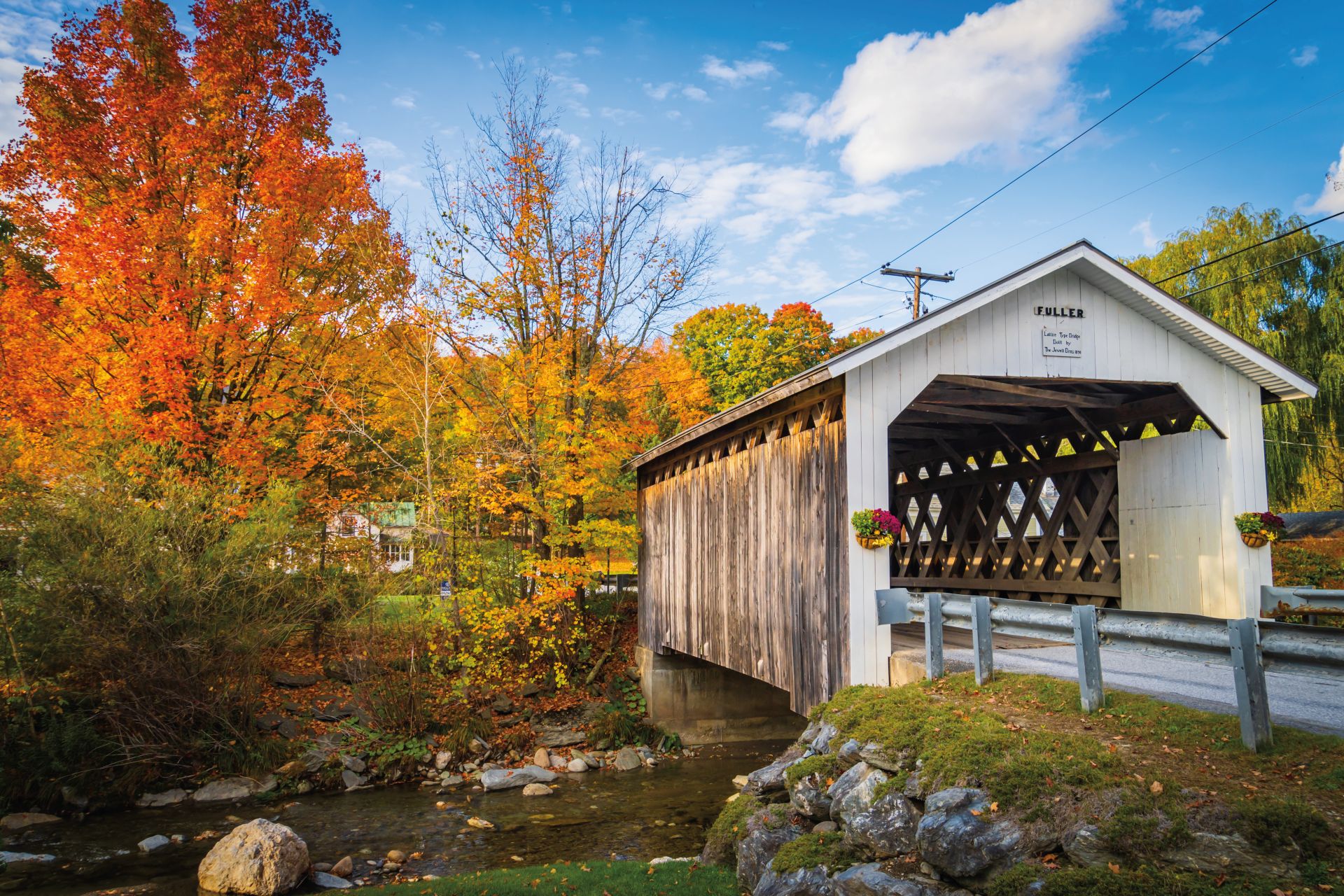
Next up, Fuller Covered Bridge, completed in 1890, is four miles further along Route 118 through the town of Montgomery. This 49-foot-long bridge is situated in the middle of a residential neighborhood, two blocks off Route 118 on South Richford Road. As the second structure for you to cross, its surface is made of a single layer of planks, making for great practice. Head over to Fuller, then turn around and head back to Route 118N.
Just around the corner just off Route 118N, you’ll find the Comstock Covered Bridge. It’s an easy left turn onto, surprisingly, Comstock Bridge Road. Opened in 1883, it was located next to John Comstock’s mill works–John being a miller, grain dealer, and manufacturer of carriages and sleighs. Drive straight through this 69-foot beauty and stay on the road until it intersects again with Route 118. Then, turn left and head north.
Another 1883 project and 59 feet in length, the Historic West Hill Bridge (also known as Creamery Bridge) is a seven-minute ride over to the Montgomery/Enosburg town line. Down a long, dirt-packed road, it’s a more complicated destination. To get to this bridge, you really get a sense of what backroad Vermont means. The main challenge in enjoying this site is that, depending on what the Mud Season (what some Vermonters call what the rest of us refer to as Spring) has wrought, this road may or may not be passable.
If the roads on both sides of the bridge are passable and you are experienced enough with traversing hard-packed, slightly rutted surfaces, ride over this bridge and stay on Creamery Bridge Road for about a mile until it intersects with West Hill Road. Then, take a right and head north to RT 118 for another eight miles. This is another one of the great backroad Vermont routes that you’ll remember for quite a while. From where you meet RT 118 again to your next destination is a short one to two-mile ride.
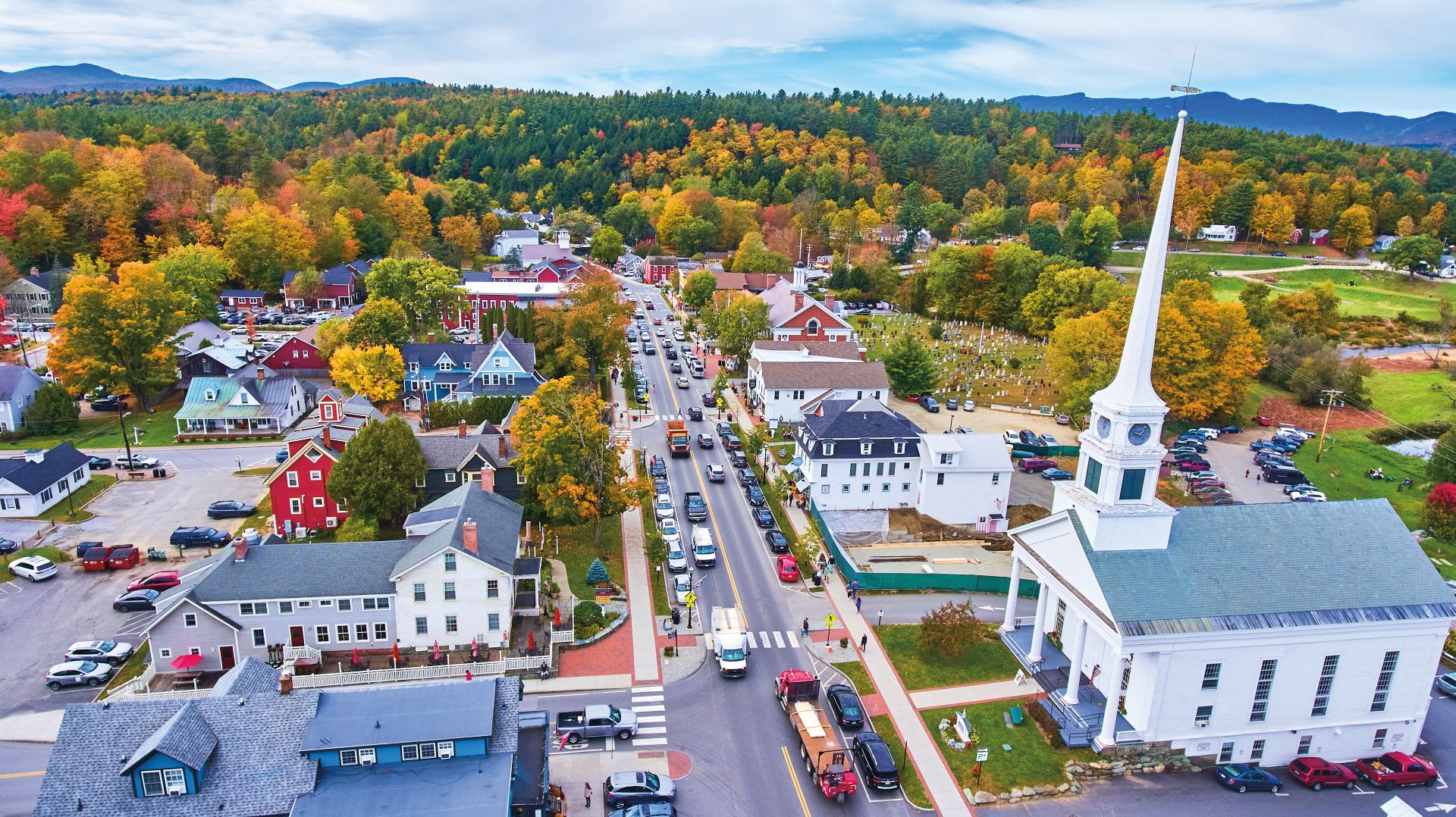
However, if you can’t cross and continue on, then turn around and enjoy this scenic country lane back to Route 118N, as your next destination is the 85-foot Longley Covered Bridge, also known as the Harnois Covered Bridge. It’s a three-and-a-half-mile ride north on Route 118, where you turn onto Longley Bridge Road. This bridge, built in 1863, is one of Vermont’s oldest. The only older bridge is the Cold Brook Bridge, constructed in 1844 and located further south. The main reason to visit this bridge is the ride that follows. Coming out the other side and staying on Longley Bridge Road toward our last stop will offer some of the best country riding. With the Trout River on your right and miles and miles of open fields, iconic Vermont barns and buildings, and then deep into woodlands. Within a few miles, you’ll reach Hopkins Bridge Road (which might be marked Town Highway 17) on your right. Take it. This is the Golden Prize of roads–another six miles of deep Vermont back-road riding. Hard-packed and crowned, it’s a route you can’t do at 50 mph; it demands your full attention as the surrounding woodland envelops you, offering an experience to remember. But we’re not done yet!
Hopkins Covered Bridge is the last on the tour, and it appears just after you emerge from the woods; you’ll feel like you’re trespassing onto someone’s farm. Passing so close to a working barn, you’ll be able to smell hay, manure, animals…everything. A quarter mile or so further with the Trout River on your right, you’ll make a 90-degree turn, and the 90-foot-long bridge is right in front of you. Built in 1875, this is one of the longer bridges in Montgomery. It’s lattice on the inside, solid plank walls on the outside with narrow transom windows running allow for a little bit of sunlight in. As soon as you get off, you’re facing Route 118.
Getting around to all six makes for quite an adventure and will probably take you a little over an hour. The variety of locations is well worth it and gives you a different vantage point of the Vermont countryside.
After exploring and enjoying these covered bridges, now it’s time to head back to Essex Junction, and I’ve always thought that a different return route makes every ride more interesting.
Head south on Route 118 until you reach the intersection of Route 100, then turn south again toward the town of Stowe. Some sections of Route 100 make it one of the best north-south rides Vermont has to offer, with a wide variety of small towns and villages to pass through. And this northern leg is no different. From the intersection of Routes 118 and 100 to Stowe, you’ll pass small businesses of all kinds on a smooth, lightly traveled road.
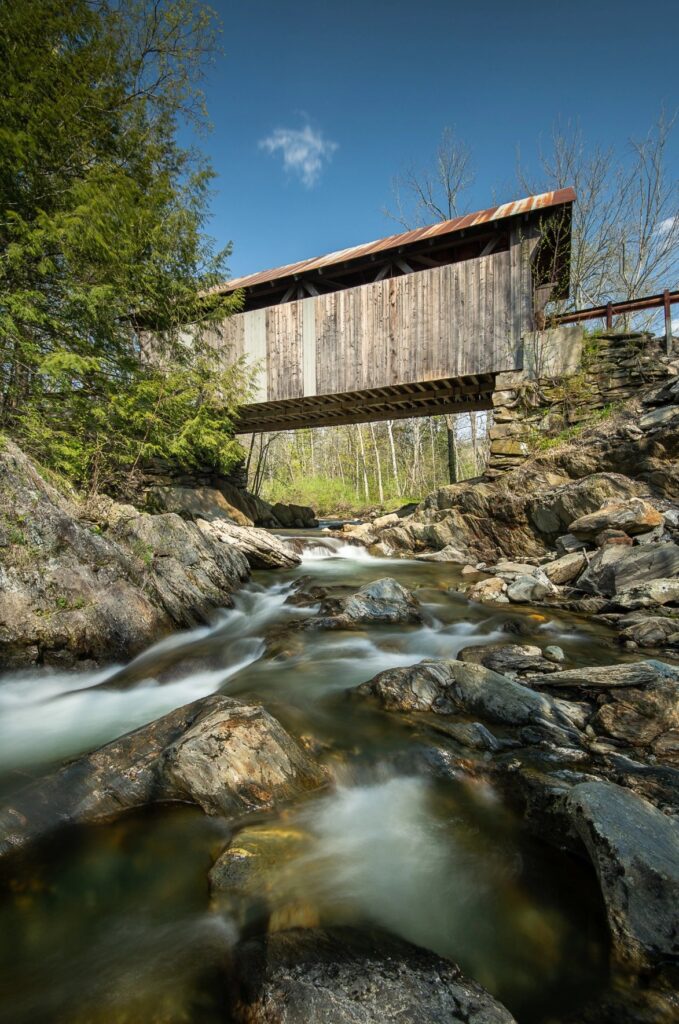
Stowe, situated at the foot of Mount Mansfield, is a four-season tourist spot. It’s a postcard-perfect, upscale, walkable Vermont town with many well-preserved historic buildings. Traffic there, both vehicles and pedestrians, gets heavy during summer and foliage season, so stay alert and keep your head on a swivel at all times. There is free, three-hour public parking along Main Street and Depot Street, but finding a spot can sometimes be like searching for hen’s teeth. Fortunately, several public parking lots are located in the town center behind the Stowe Community Church, the Stowe Town Hall, and in the lot before the Post Office on Depot Street. Personally, I know Vermont is very safe, but I always feel that parking off the main street is better. Let the Harley guys show off and park on Main!
If you haven’t eaten yet, Stowe is a great place to stop and stretch your legs, and there’s a wide variety of restaurants to choose from. If you’re looking for something simple, The Lower Bar (lowerbarstowe.com), Black Cap Coffee & Bakery (blackcapvermont.com), or The Café on Main (cafeonmainvt.com) are great choices. For a more upscale meal, try The Whip Bar & Grill (thewhip.com) or Harrison’s (harrisonsstowe.com). All are close to the intersection of Routes 100 and 108 in the center of town.
Now that you’re satiated, it’s back in the saddle and a quick hour’s ride back to Essex Junction. Unless, of course, you’re in the mood for a classic Vermont-branded ice cream. The Ben & Jerry’s Factory Store (benjerry.com/waterbury) is just 10 miles south along Route 100 in Waterbury, as you pass by. Nearly every flavor imaginable is available in servings from cones to sundaes to pints to shakes. You can also take a tour of the factory if you’re interested.
From there, it’s a 24-mile ride on smooth roads with stunning views of true Vermont countryside back to MOA Rally grounds in Essex Junction. With this tour, you realize you probably didn’t hit every covered bridge. When riding the back roads, you have to accept that there are others you simply passed by without even noticing. Your reward is that, with this half-day adventure, you’ve experienced all the beautiful sights this state offers–breathtaking views of farmland and forests, towns both big and small, incredible back-country roads, historic sites and local cuisine. No wonder it’s one of my favorite states.