

Some cars are fast, some are beautiful, but only a very small number genuinely change the course of automotive history. Fewer still deserve to be remembered as both a machine and a mindset. The Bugatti F.K.P. Hommage belongs squarely in that rare category.
Unveiled as the second creation of Bugatti’s Programme Solitaire, the Bugatti F.K.P. Hommage is far more than a one-off hypercar. It is a deeply personal tribute to Ferdinand Karl Piëch, the man who not only revived Bugatti, but fundamentally redefined what a modern automobile could be. At the same time, it marks twenty years since the Bugatti Veyron shattered every perceived limit the industry thought it understood. This is not nostalgia; it is gratitude, expressed at 400 km/h.
Ferdinand Piëch – The Man Who Refused “Impossible”
To understand the Bugatti F.K.P. Hommage, you first have to understand Piëch—not as a chairman, but as an engineer in the purest sense. For him, “not possible” simply wasn’t an acceptable answer. The Veyron’s origin story has long since become legend: a sketch drawn on a Japanese bullet train, a radical W-engine layout, and an uncompromising brief demanding 1,000 horsepower, 400 km/h, all-wheel drive, and genuine luxury. At the time, many questioned whether such a car was necessary, or even feasible.
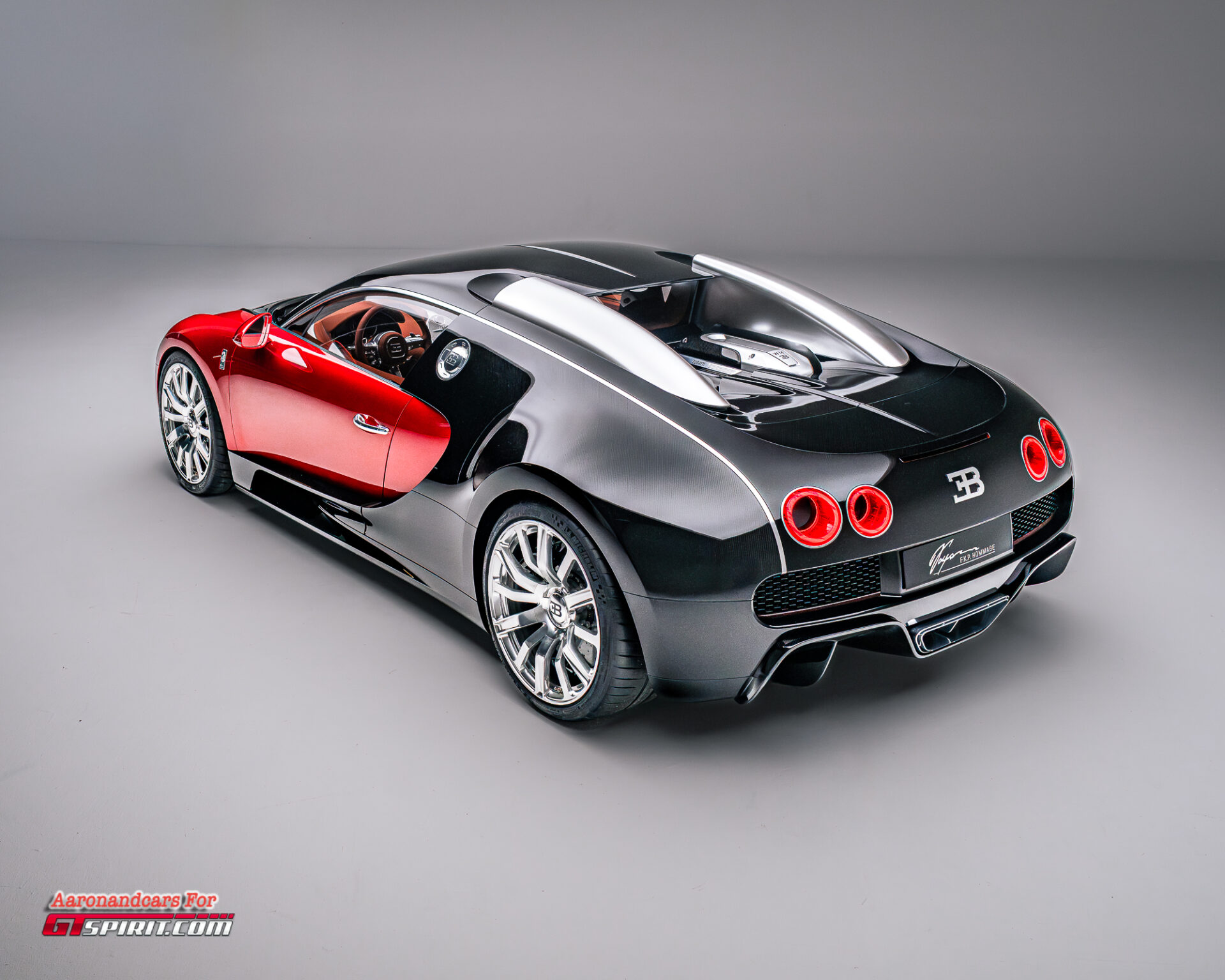
History answered that question decisively. When the Veyron debuted in 1999, it didn’t merely introduce a new Bugatti; it created an entirely new segment. This wasn’t a race car adapted for the road, but a luxury grand tourer that happened to be devastatingly fast—the first true hypercar. The fact that today’s automotive landscape is filled with seven-figure hypercars only underlines how far ahead of its time the Veyron really was.
Period-Correct, Yet Unmistakably Modern
Speaking with Bugatti Designer Frank Heyl, one thing becomes immediately clear: the Bugatti F.K.P. Hommage was never meant to shock. Instead, it was designed to feel inevitable. The car is instantly recognizable as a Veyron, retaining its signature leaning-back posture—calm, noble, almost aloof. At a time when supercars were still obsessed with aggressive wedge shapes, the Veyron reclined with quiet confidence, as if it had nothing to prove.
Every surface, however, has been rethought. The proportions remain familiar, but the geometry is sharper and more resolved, with a three-dimensional horseshoe grille machined from solid aluminum and body surfaces flowing organically from it in true fuselage fashion. Even the iconic two-tone paint is no longer a graphic gesture, but a structural one, defined by actual panel separations. As Heyl describes it, the design is “period correct”—as though this is exactly the Veyron Bugatti would have built if twenty more years of progress had been available at the time.
The Ultimate Expression of the W16 Era
True to Piëch’s personal philosophy, the Bugatti F.K.P. Hommage does not settle for heritage specifications. Instead, it uses the very highest evolution of the W16 platform, producing 1,600 horsepower and representing the absolute pinnacle of two decades of development. Piëch never owned yesterday’s technology; he always demanded the latest iteration, the final word.
Accordingly, this Veyron homage breathes through larger air intakes, benefits from vastly evolved aerodynamics, and sits on subtly upsized wheels wearing modern Michelin rubber. The details sharpen the stance and capability without disturbing the original car’s character. Even the paint tells a story of progress: what appears to be red metal is actually a silver aluminum base beneath a translucent red-tinted clear coat, while the exposed carbon fiber is not painted black but subtly tinted within the clear coat itself. As Heyl jokingly puts it, it’s “like wearing mink on the inside”—understated, and only for those who know where to look.
Inside: Where Engineering Meets Haute Horlogerie
If the exterior is defined by restraint, the interior is defined by obsession. There is no digital clutter here, no screens competing for attention or threatening to age poorly. Instead, the cabin embraces timelessness, with a circular steering wheel echoing the original Bugatti Veyron’s Bauhaus-inspired purity and a center console and dashboard machined from solid blocks of aluminum, left honest and tactile.
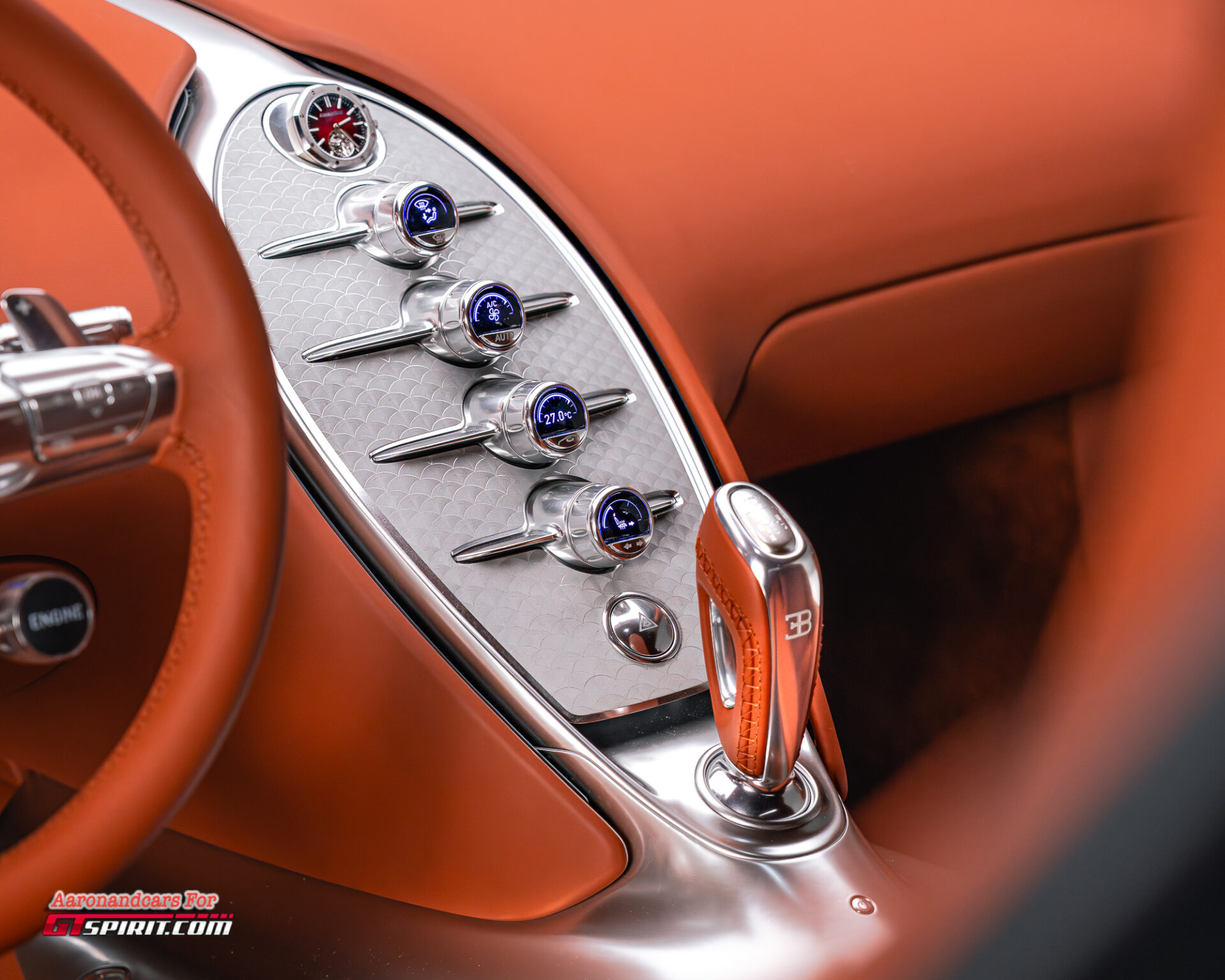
At the heart of it all sits a bespoke Audemars Piguet Royal Oak Tourbillon, integrated directly into the dashboard within an engine-turned aluminum island inspired by Ettore Bugatti’s straight-eight cylinder heads. Mounted in a self-winding gondola, the mechanical timepiece quietly rotates to maintain power—autonomous and gloriously unnecessary. By itself, the watch carries a value exceeding that of many new Ferraris or Bentleys, an almost incidental detail that perfectly captures the mindset behind this project. That sense of continuity runs deeper still: the owner of the F.K.P. Hommage also owns one of the very first 2005 Bugatti Veyrons, finished in the exact same red-and-black color scheme, turning this one-off into a modern counterpart rather than a replacement. It exists not to impress passengers, but because the owner wanted it—and because Bugatti could make it happen.
The Bugatti F.K.P. Hommage – A Celebration, Not a Reinvention
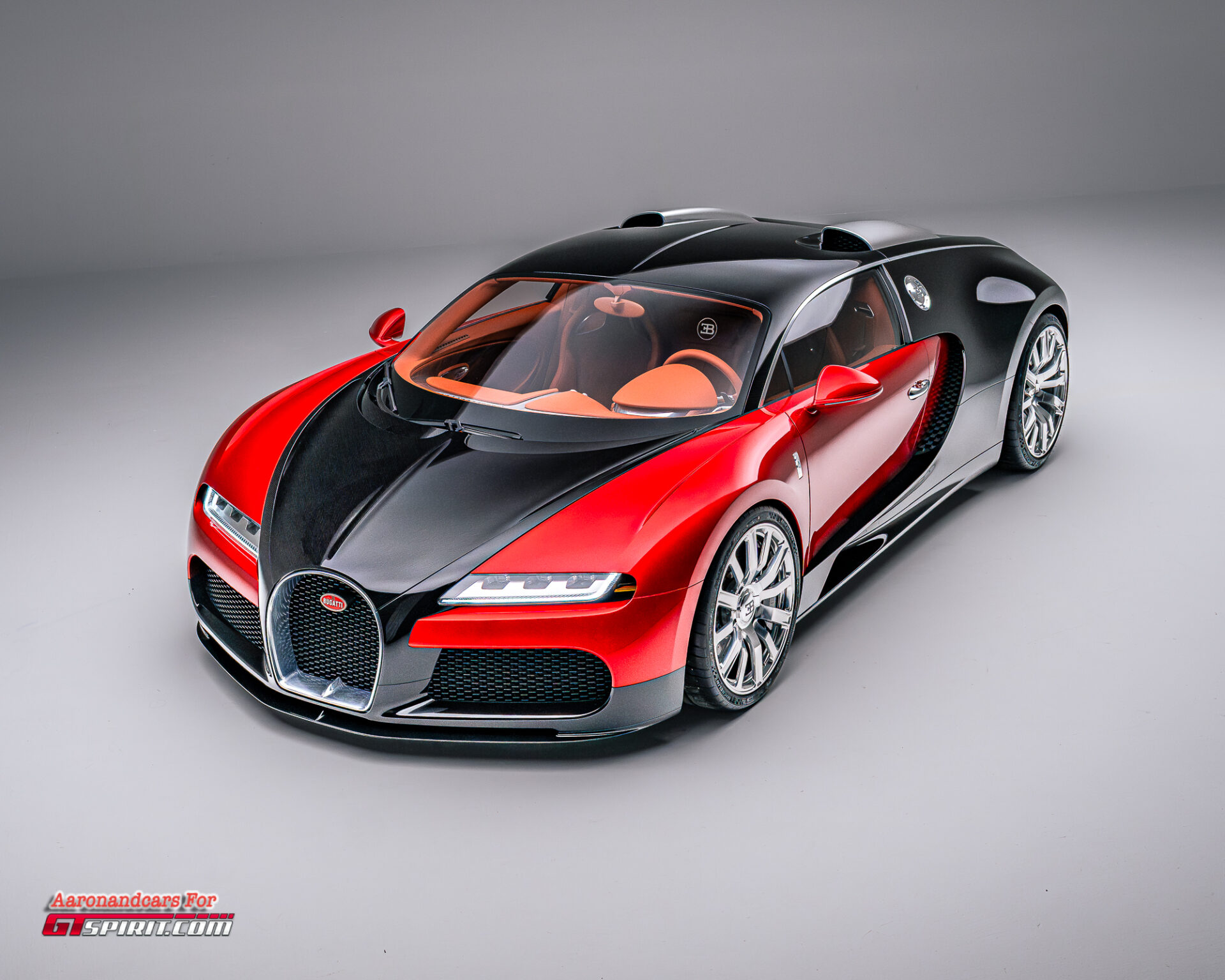
The Bugatti F.K.P. Hommage does not attempt to replace the Veyron or rewrite its story. Instead, it completes a sentence that began twenty years ago. As Frank Heyl describes it, this project represents the “next opportunity” Piëch once spoke of—a chance to revisit an idea when technology, time, and trust finally align. The result is what Heyl himself considers the ideal, definitive Veyron.
The car shown today is a pre-production masterpiece, with the final, customer-delivered Bugatti F.K.P. Hommage scheduled for completion and handover next year. In an era racing toward electrification and digital abstraction, it stands as a reminder of what happens when vision, engineering, and absolute belief collide—a thank-you letter to a man who refused limits, and a beautifully machined punctuation mark at the end of the W16 era.