

Support CleanTechnica’s work through a Substack subscription or on Stripe.
Or support our Kickstarter campaign!

Last year we bought a combination washer and heat pump dryer and have been pretty impressed. Not only does the machine offer significant convenience where you put a load of clothes in and literally two hours later it is both washed and dried, it also uses a small amount of energy. Like, under one kWh-worth of energy. It feels like heat pump clothes drying technology has now fully arrived; the most innovative and easy to use technology is also the most energy efficient.
Our Journey To The Combo Washer + Heat Pump Dryer
Hang drying laundry
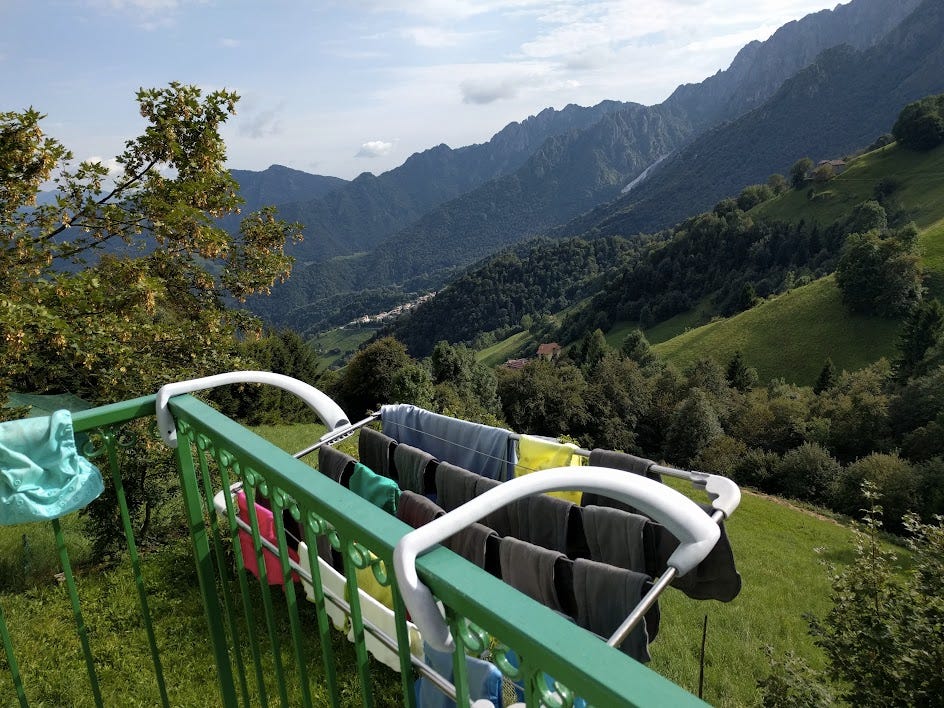
In my house, we’ve been on a journey to make our clothes washing and drying as efficient as possible for a long time. After living in Italy as an exchange student, I fell in love with the simple and practical beauty of hang drying laundry, which is common around the world but unfortunately a lost art on this continent. Hang drying works especially well in the summer when it’s easy to dry your clothes quickly and have them smell amazing.
First heat pump dryer — 2022
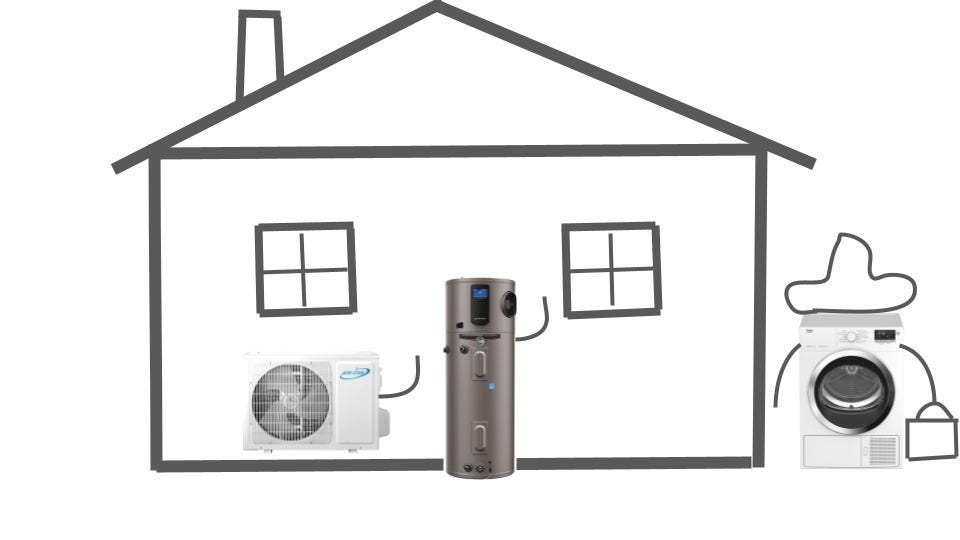
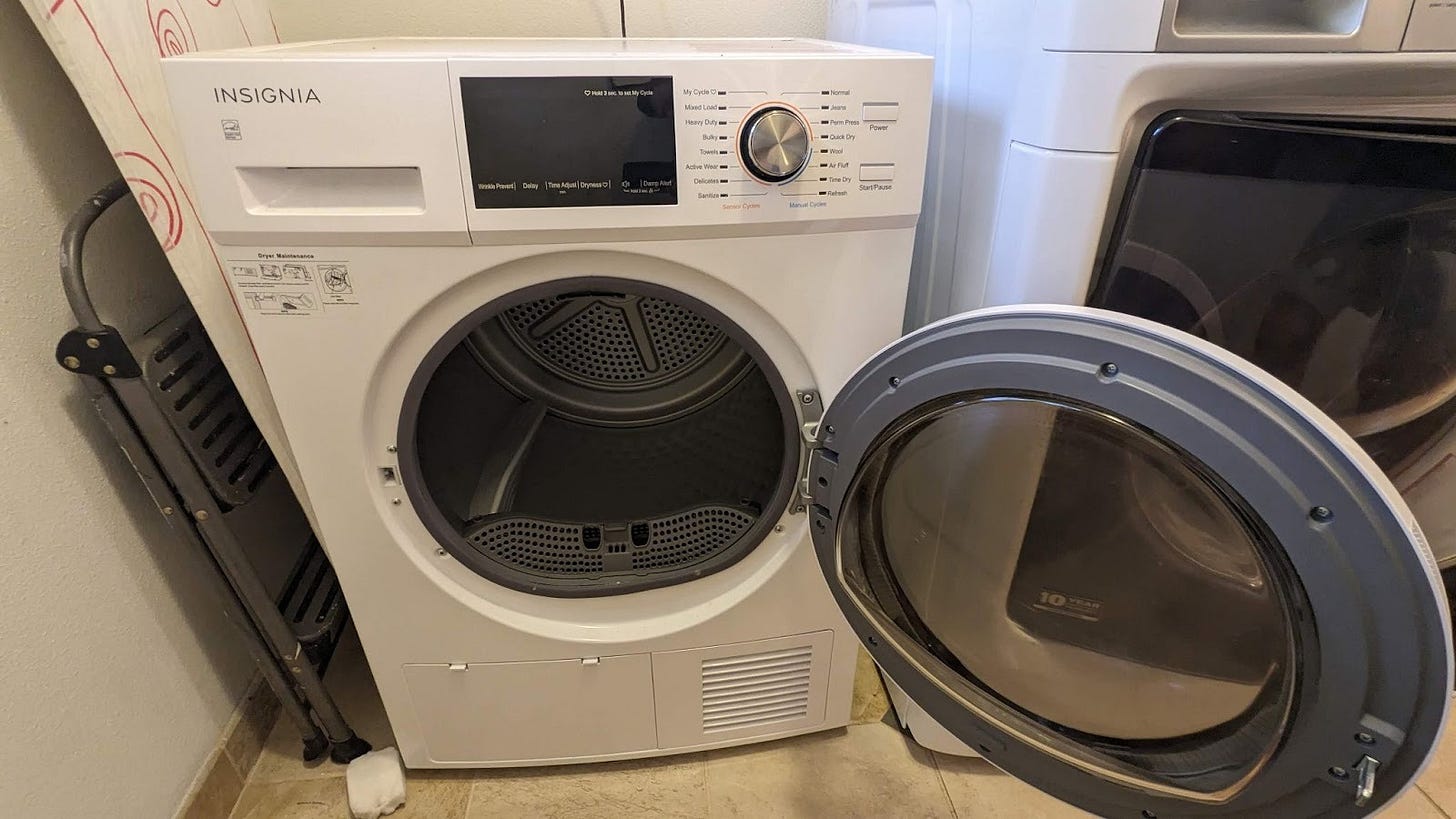
But, hang drying is not for everyone or every season, and our family wanted to get an efficient dryer to use in the winter. In 2022, we researched and then bought an Insignia (Best Buy’s Brand) heat pump dryer for our main house, replacing the ancient, 20-year old, energy hogging dryer that had come with our house when we bought it. After doing a lot of research (and writing an article about it), we saw that in 2022, nearly all heat pump dryers were “compact.” This means they had smaller drums, around 4 cubic feet of capacity (“typical” American dryers have around 7 feet of capacity). Three years ago, the Insignia cost $800 (today it costs $700), more than standard, energy hogging, electric dryers that cost $400-600 on average. But buying a compact heat pump dryer was still an upgrade for us. For one, we got to patch the hole in our house and remove the lint-filled dryer vent (heat pump dryers don’t need one). Say goodbye to cleaning vents and fire hazards! It also allowed us to use the dryer pretty guilt-free because it is so darn efficient, using only 300 to 400 watts of energy an hour and half a kilowatt hour per load (a standard electric dryer will use 3-4 kWh). The only negative parts about this dryer, which we still have and use, are that we have to divide big loads into two (because it has a smaller drum) and that it can sometimes take a long time to dry, between 75 and 120 minutes depending on the size of the load.
Enter The Combination Washer + Heat Pump Dryer
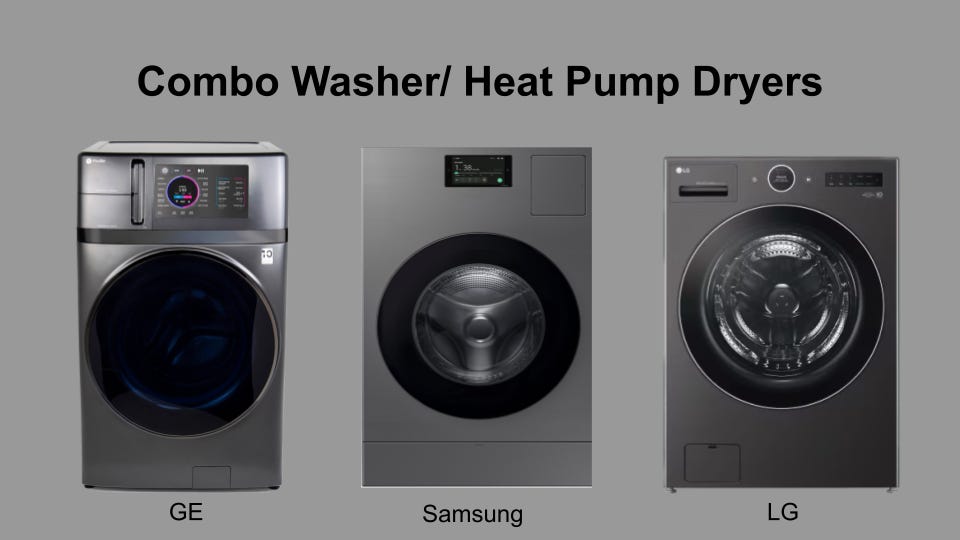
In 2023, the year after we bought our compact heat pump dryer, GE came out with a front loading washer combined with a heat pump dryer to form an all-in-one laundry machine to rule them all. This combo washer/heat pump dryer uses both air circulation techniques and a heat pump to dry clothes with very little energy and it removes the need to switch a load of laundry from a washing machine to a drying one. There had been many combo washer dryers before, we had one in our small accessory dwelling unit (ADU) apartment next door, but they were largely all compact and used the same energy-intensive, electric resistance technology. This was the first combo washer + heat pump dryer.
GE’s unit saw strong sales and two other manufacturers, LG and Samsung, quickly came out with products.
Many of us who geek out on energy efficient appliances saw these combo washer and heat pump dryers as a Holy Grail of sorts, where doing the right thing (using the least amount of energy) is also doing the most convenient thing. But in our house we thought, could this be real? Does it really work well and are there any drawbacks?
Since we’d recently bought a heat pump dryer for our main house, we didn’t think we’d be trying a combo washer-dryer soon. But recently, the 13-year-old small electric resistance-powered washer/dryer in our attached ADU broke and we needed to get a new replacement quickly.
Heavy and taller, but easy installation
We looked online and found a nearly new GE available on Facebook marketplace for $1,600 that someone had bought for their elderly mother (who had decided she didn’t want it because it was too different from what she was used to). We went to buy and pick it up in a borrowed truck but found that the machine was very heavy — around 300 pounds, which was impossible for us to lift. So, we hired some movers who picked up the washer/dryer for us for an extra $150 and brought it into our ADU.
The other thing to note about this combo washer and dryer is that it is around 6” taller than a standard single washer and dryer (the GE one is 47 inches tall). It is large, but the overall laundry footprint is smaller because you only need one machine rather than two.
The installation is quite easy. Put it in place, plug it into a standard outlet and hook up water pipes and drain tubes. The combo washer/heat pump dryer doesn’t need 240-volts of electricity or an outdoor dryer vent. It can just plug into a normal outlet, which offers another clue of how efficiently these products use energy.
Operating a combo washer/dryer
Operating the washer/dryer is pretty straightforward. You put your clothes in, choose the cycle you want and voilá — your clothes are completely clean and dry in two hours. All the manufacturers have apps that allow you to track your energy usage too.
Lint
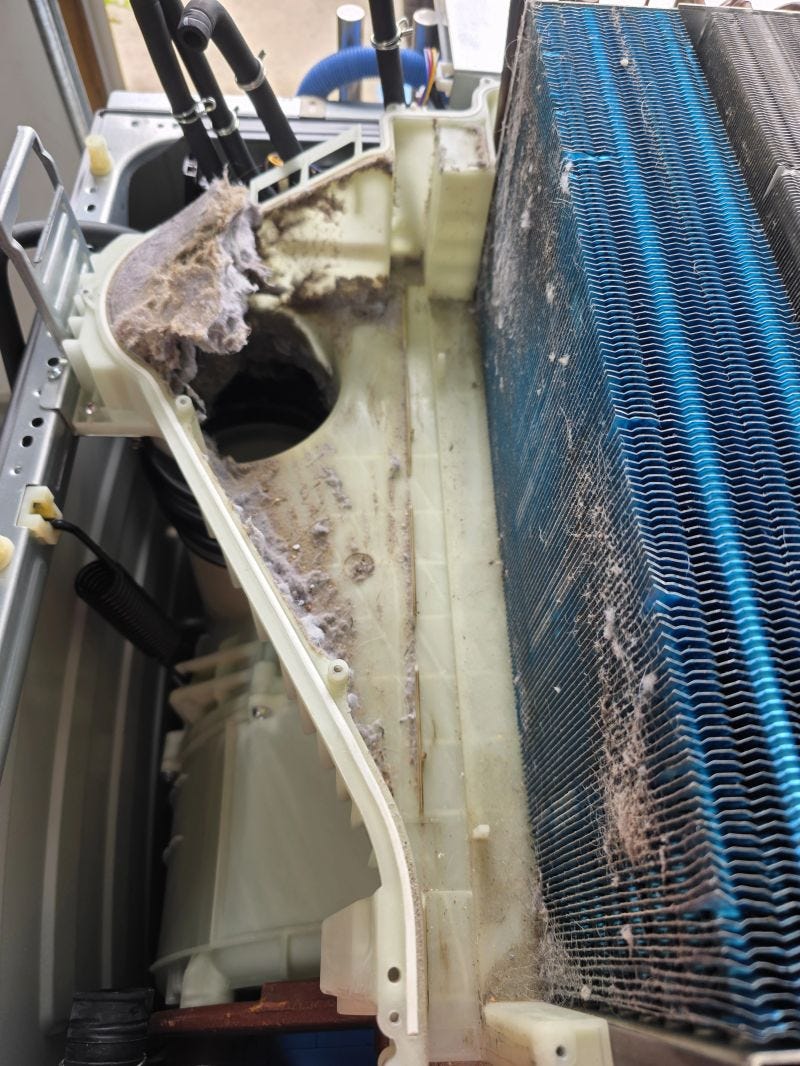
All the combo washer/dryers have serious filters to help keep lint at bay. The lint filter must be cleaned after every load. Yet, there are some questions as to whether these lint filters remove all the lint. A technical friend, Edward Louie, took apart his 1.5-year-old GE and found a decent amount of lint build-up in the machine. He says the “GE combo washer heat pump dryer has a bypass in the back of the filter slot to allow some air to bypass the filter to keep the unit from failing if the user fails to clean the lint filter. That was a mistake in my opinion, as it lets lint bypass the filter and thus lint gets into the evaporator.”
Samsung’s and LG’s heat pump dryers don’t have this design challenge according to Edward, and additionally the two brands have coil wash nozzles that run during a self-clean cycle to wash lint out of the heat exchanger should some make it past the lint filter. The current GE unit doesn’t have a coil wash.
Keeping the lint filter removed from the filter slot when the machine is not in use allows the plastic to dry/air out which seems to slow the rate at which lint sticks to surfaces. Purchasing an aftermarket dryer/appliance lint cleaning brushes and a long flexible vacuum cleaner crevice tool attachment helps greatly with removing lint that’s visible in the filter slot that didn’t make it into the lint filter.
Energy Usage
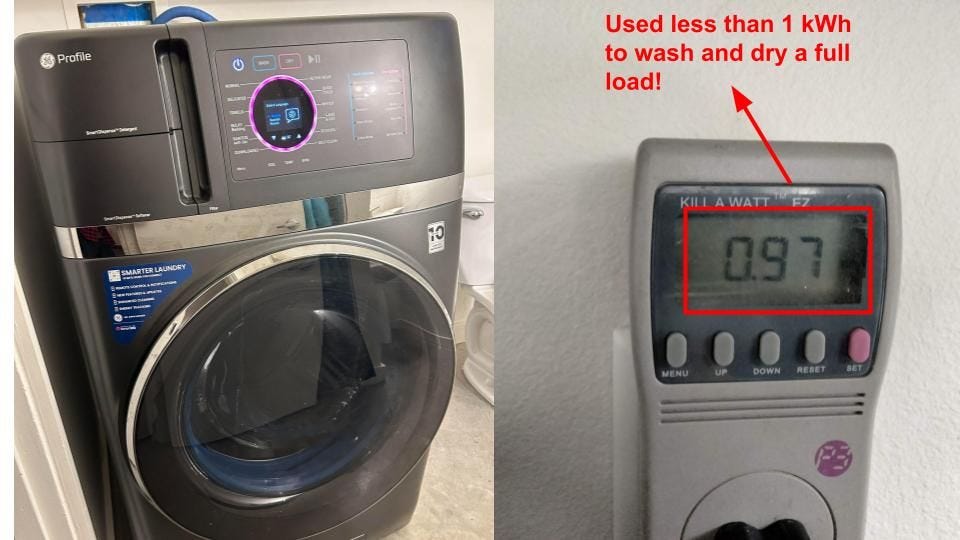
I wanted to see just how little energy my combo washer/dryer used and so put my old Kill A Watt energy reader on the outlet it was connected to. I was expecting low energy usage, but have to admit being really excited when a full wash and dry load came in under one kWh of energy. Typically, electric resistance dryers use 2.5 to 4 kWh per load, according to Silicon Valley Power. This means a typical home could save something like 450 kWh per year, or around $80.
One other benefit we’ve noticed is that unlike other front loading washers where you have to regularly clean the rubber door lining which gets full of water and can get moldy, the lining of the combo washer/dryer stays dry and doesn’t have this problem.
Energy efficiency in a laundry machine that does both washing and drying is a powerful concept. It means a household can do good for the environment, save money on utility bills and have a more convenient, space-saving appliance.
PS – at Electrify Now, we are volunteers who like to write about innovative technology and don’t receive any funding or free products from any manufacturers in the process.
Check out a webinar we’re doing on combo washer/ heat pump dryers and let us know your experience with them.
Support CleanTechnica via Kickstarter

Sign up for CleanTechnica’s Weekly Substack for Zach and Scott’s in-depth analyses and high level summaries, sign up for our daily newsletter, and follow us on Google News!
Have a tip for CleanTechnica? Want to advertise? Want to suggest a guest for our CleanTech Talk podcast? Contact us here.
Sign up for our daily newsletter for 15 new cleantech stories a day. Or sign up for our weekly one on top stories of the week if daily is too frequent.
CleanTechnica uses affiliate links. See our policy here.
CleanTechnica’s Comment Policy