
Think of your RV wheel bearings as the unsung heroes of your road trip. While they are tucked away inside your wheel hubs, they carry the entire weight of your home-on-wheels while allowing your tires to spin at 60+ mph.
Maintaining them is a messy job, but neglecting them is far worse. Failing to regularly grease camper wheel bearings can increase friction, leading to overheating, premature tire failure, or, in the worst-case scenario, a seized axle.
In this guide, we’ll cover exactly how often to grease trailer bearings, the signs of wear to watch for, and how to keep your travels rolling smoothly.
Key Takeaways
- Maintenance Frequency: Most RV wheel bearings are unsealed and require cleaning and repacking with grease at least once a year or every 10,000–12,000 miles to prevent axle failure.
- Warning Signs: Critical indicators of bearing wear include grease splattering on the rims, grinding or chirping noises, excessive hub heat, and physical “play” or movement in the wheel.
- Safety and Inspection: Regular servicing prevents dangerous wheel seizures and provides professionals with an opportunity to inspect related components, such as spindles and brakes.
What Are RV Wheel Bearings?
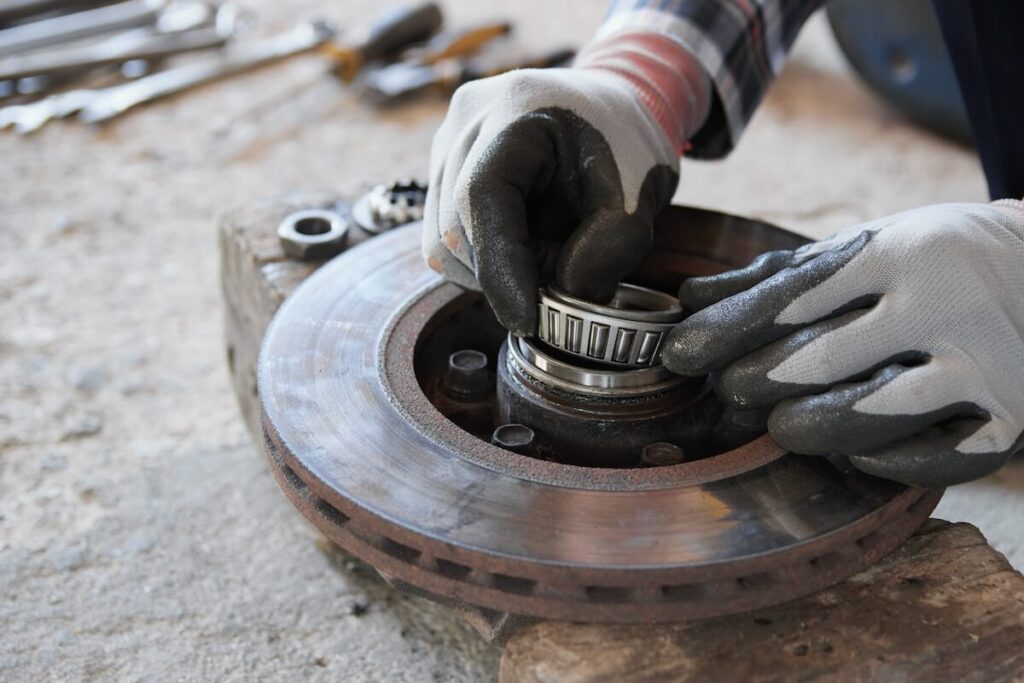
Your wheel bearings are located inside the hub of your RV wheels. They are a set of small steel rollers in a metal ring (called a cage) that allow the wheels to spin with minimal friction.
One of the best ways to protect your bearings is to understand your trailer ratings for cargo capacity and other important metrics and never exceed them. Excessive weight puts undue stress on the bearings, causing them to heat up and wear out prematurely.
Sealed vs Unsealed Wheel Bearings
Some modern vehicles use sealed bearings. This design traps the grease inside and prevents debris from entering. Sealed bearings do not need to be cleaned and repacked.
However, you’ll find unsealed bearings on almost all standard travel trailers and motorhomes. These require specialized wheel bearing grease to reduce friction and must be cleaned and repacked with fresh grease at regular intervals to prevent failure.
Why Wheel Bearing Maintenance Is Critical for Safety
Over time, the grease inside unsealed bearings breaks down due to heat and age. It can also accumulate road grit and debris. When your RV sits idle for months, the oils in the grease can separate from the carrier media and leak past the seals. This oil typically ends up in the brake drum, increasing stopping distances and requiring brake replacement.
Whether it’s due to leakage, aging, or debris accumulation, if wheel bearing grease isn’t replaced regularly, the increased friction and heat will lead to premature failure. That frictional heating can also cause a fire that damages your RV.
If a wheel seizes while you’re traveling at highway speeds, it puts you and everyone around you at risk. Even at low speeds, a failed bearing usually results in expensive roadside assistance and axle repairs that far exceed the cost of simple preventative maintenance.
Technician Tip:To stay ahead of issues, keep up with these RV preventative maintenance tips.
How Often Should You Grease RV Wheel Bearings?

This is the most common question RVers ask. While you should always start by referring to your specific RV manufacturer’s specifications, there is a general industry standard for travel trailers and motorhomes.
| Usage Type | Recommended Interval |
| Standard Use | Once a year or every 10,000 to 12,000 miles |
| Frequent/Full-Time Travel | Every 6 months or 6,000 miles |
| Occasional/Short Trips | Once a year or every 2,000 miles |
Why the Yearly Rule?
Even if you take only a few short trips each year, the grease in your bearings can break down or separate over time. While the best RV wheel covers can reduce the amount of moisture and debris that enters the hub while parked, they don’t stop the chemical breakdown of the grease.
Note for New RV Owners: If you’ve recently acquired a new or used motorhome, have a certified RV technician inspect your wheel bearings before your first trip. Unless you have a dated service receipt, it’s best to start your ownership with a fresh repack. This is also the ideal time to have your tech inspect, clean, and adjust your brakes.
Four Signs Your Wheel Bearings Need Service

Sticking to your RV manufacturer’s recommended service intervals is the best way to stay safe, but you can also stay vigilant for these common warning signs of camper wheel bearing failure.
Visual Signs (Grease Splatter)
If you see an oily film or grease “splattering” onto your rims or coming out of the hub, it’s a sign that a seal has failed. Once the seal is gone, the grease will quickly leak out, leaving the bearing bone-dry.
Audible Clues (Chirping or Grinding)
If you hear a high-pitched screeching, “chirping,” or a rhythmic grinding sound coming from your wheels while in motion, your bearings are likely metal-on-metal. This is an emergency—stop as soon as it’s safe to do so.
The Physical “Play” Test
If you can safely jack up your RV so the tires are off the ground, grab the tire at the 12 and 6 o’clock positions. Try to rock it back and forth. Repeat this test with your hands at the 3 and 9 o’clock positions. The tire should have almost zero movement on the axle. If you feel a “clunk” or significant play, the bearings are worn, or the spindle nut is loose.
Technician Tip: Lifting an RV to perform this test requires a heavy-duty floor jack and jack stands. Only attempt it if you have experience doing this safely, your floor jack is properly rated to handle your RV’s weight, and you know what you’re feeling for in terms of bearing play.
Excessive Heat
A practical test during a road trip is to (carefully!) feel your wheel hubs during a fuel stop. They should be warm to the touch, but never hot. If one hub is significantly hotter than the others, that’s a sign that your bearings need immediate attention.
Technician Tip: Non-contact IR thermometers are a much safer and far more accurate way to inspect wheel hubs for excessive heat. They are inexpensive, readily available, and useful for checking the temperature of cookware, HVAC, and other RV components.
Professional vs DIY: Which is Right for You?
Cleaning and repacking RV wheel bearings is a DIY task for many owners, but it is notoriously messy and requires specialized tools such as heavy-duty floor jacks, torque wrenches, and bearing packers.
If you want to save time, cleanup, and grease under your fingernails, we recommend having a professional handle the job. A certified technician won’t just grease the bearings—they will also inspect the spindles for heat damage and ensure your brakes are in top shape.
Technician Tip: Keep in mind that axle and hub issues can be complex. If you suspect issues you aren’t comfortable troubleshooting, schedule an appointment at your closest service center for further inspection.
Here are some additional RV maintenance resources:
When was the last time you had your RV wheel bearings greased? Leave a comment below.