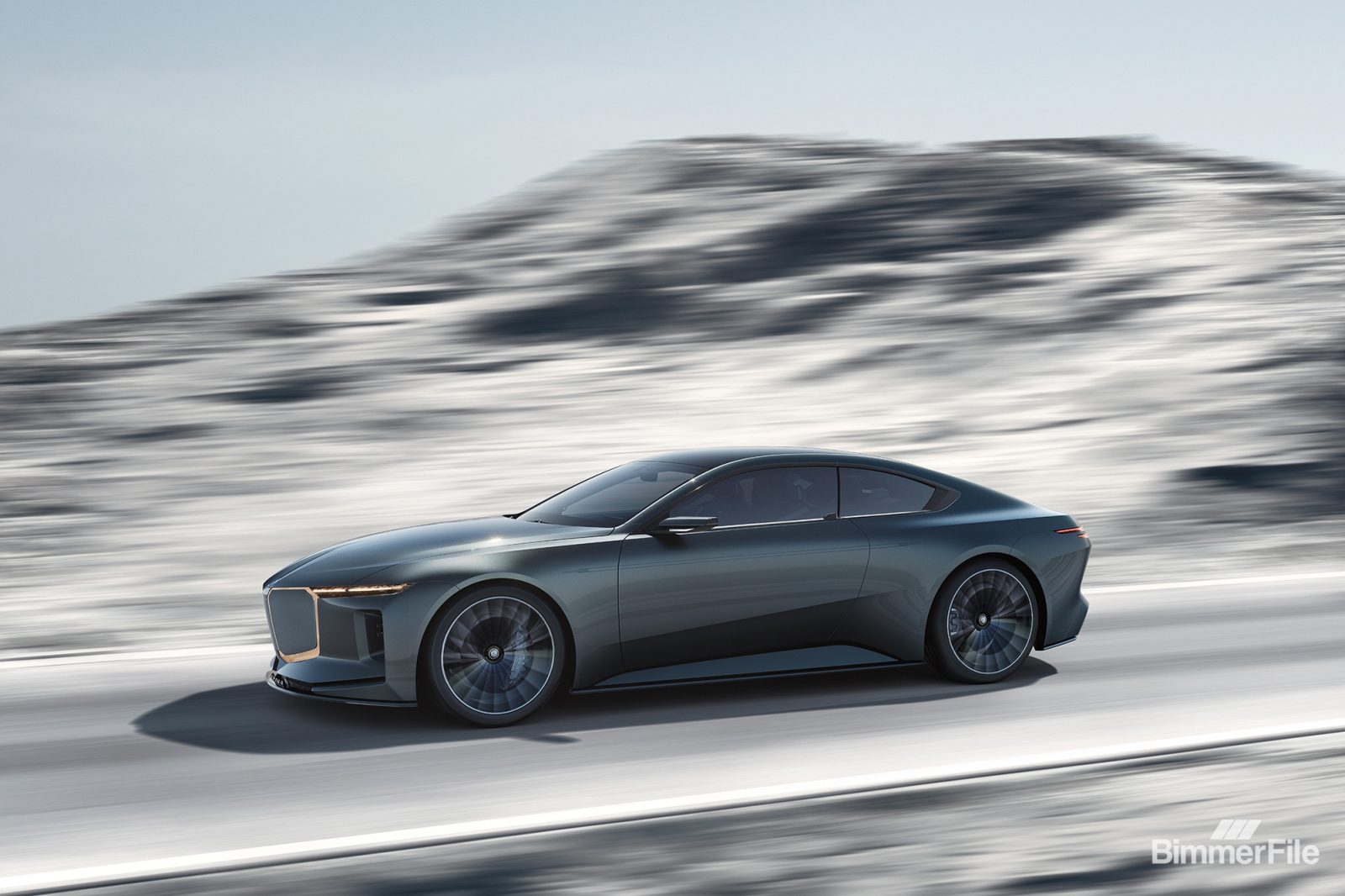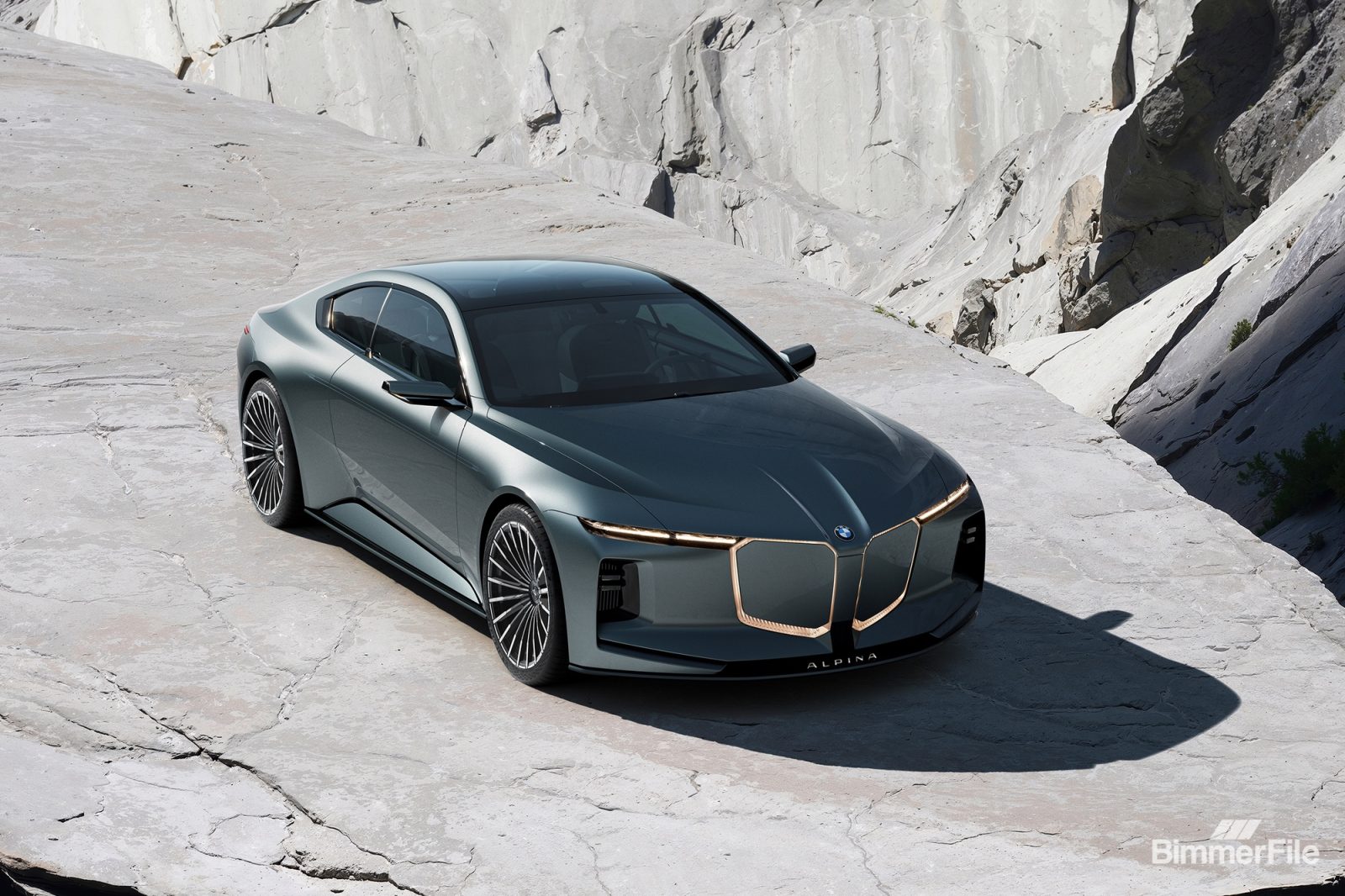

BMW ALPINA became a full BMW Group brand in 2026. That transition raised an obvious question: would BMW preserve what made Alpina worth acquiring, or would the brand gradually dissolve into the broader portfolio, its distinctive character softened into something more manageable and less interesting? The Vision BMW ALPINA, revealed at the Concorso d’Eleganza Villa d’Este on May 15, doesn’t answer that question definitively. What it does is make a credible opening argument that BMW understands what it bought.
The Vision is a one-of-one design study, not a production car. That distinction matters. Concept vehicles are commitments of intent, not hardware, and BMW is careful to frame it as a signal of direction rather than a preview of a specific model. What it signals, at least visually and philosophically, is encouraging.
What BMW ALPINA Actually Means, and Why It’s Worth Preserving
The Alpina story begins in 1965 in Buchloe, a small Bavarian town in the shadow of the Alps. Burkard Bovensiepen, who might otherwise have spent his career in typewriter manufacturing, chose instead to build high-performance versions of BMW road and racing cars. His philosophy was specific and, in retrospect, genuinely original: speed and comfort were complementary ambitions, not competing ones. In endurance racing, while rivals stripped weight in pursuit of lap times, Bovensiepen added extra padding to the driver’s seat. His reasoning was simple and correct: a comfortable driver is a faster driver.
That insight carried into every road car that followed. Alpinas became known for their ability to cover ground at extraordinary speed without punishing the people inside. The Alpina B7 coupe of the late 1970s, based on the BMW E24 6 Series, marked the point at which this philosophy fully matured: a luxury car with a long hood, wide stance, shark nose, and a cabin that could carry four people across a continent in genuine comfort. The Vision BMW ALPINA positions itself explicitly as the next chapter of that car’s story.
BMW ALPINA fills a specific gap in the BMW Group portfolio, sitting between BMW and Rolls-Royce in the high-end segment. Oliver Viellechner, head of BMW ALPINA, has framed the brief clearly: preserve the essence of speed, comfort, and sophistication while building on a strong legacy and global community. Whether that brief survives contact with production realities remains to be seen. The Vision, at minimum, takes it seriously.
Design: Substance Over Statement
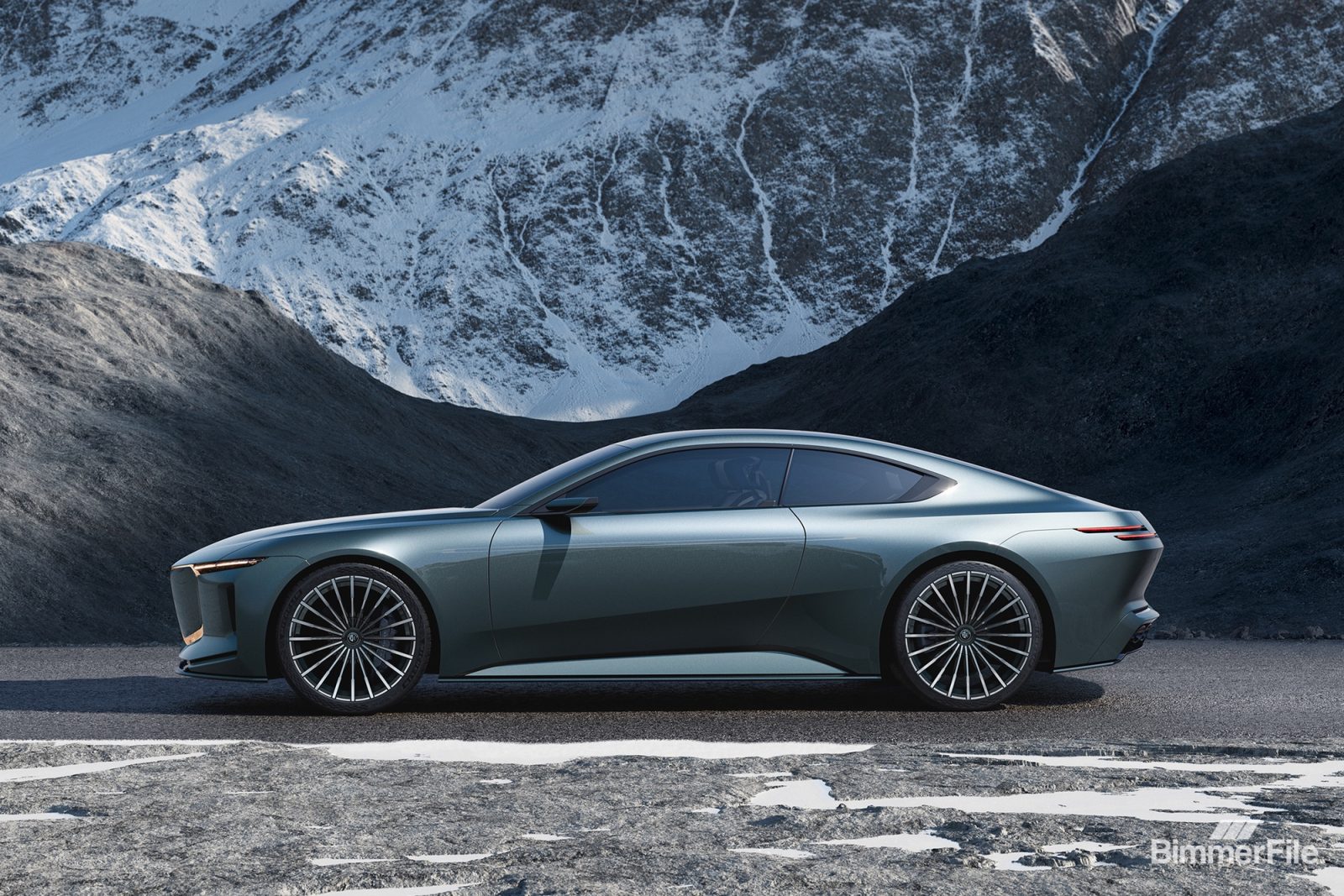
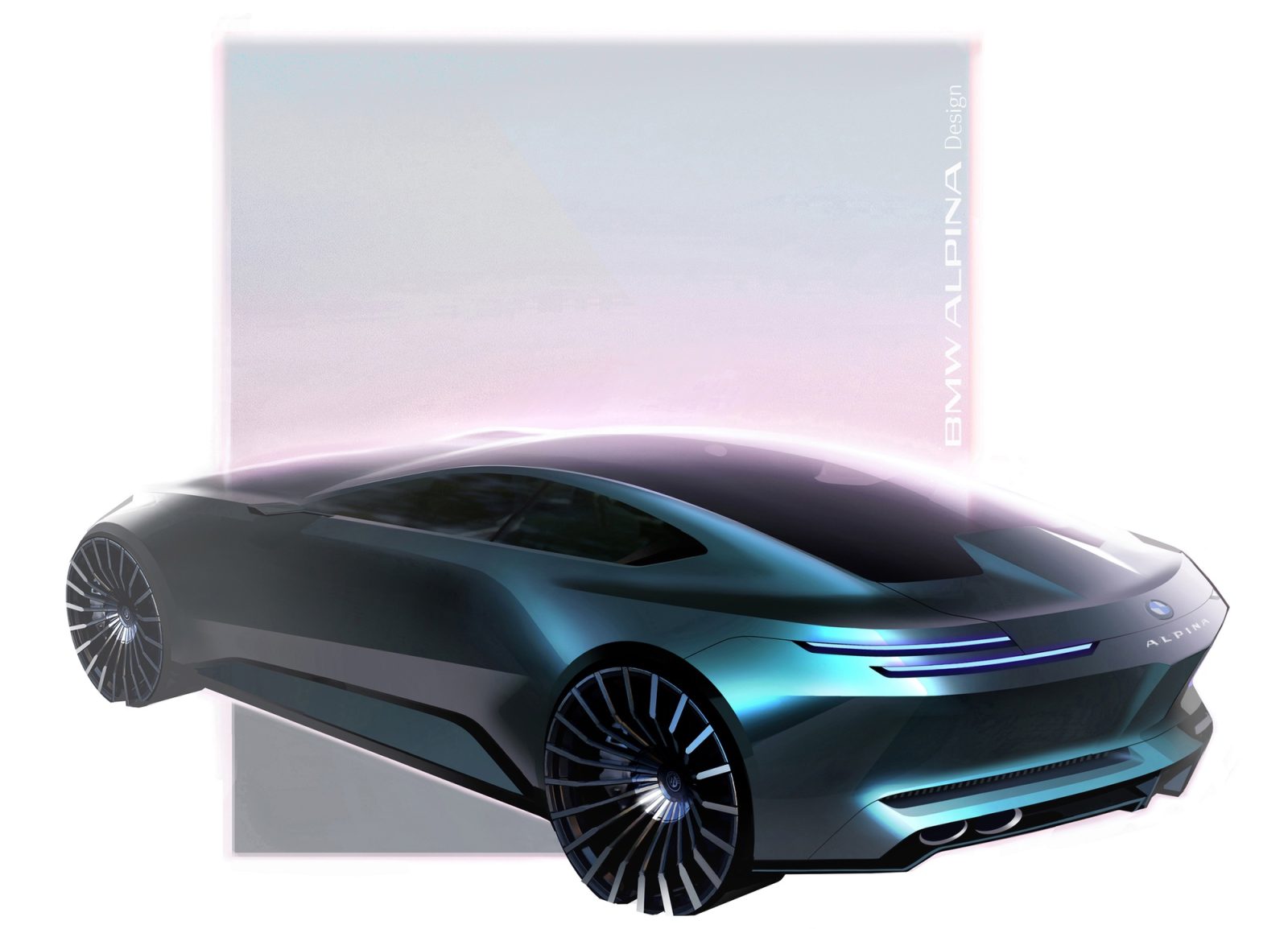
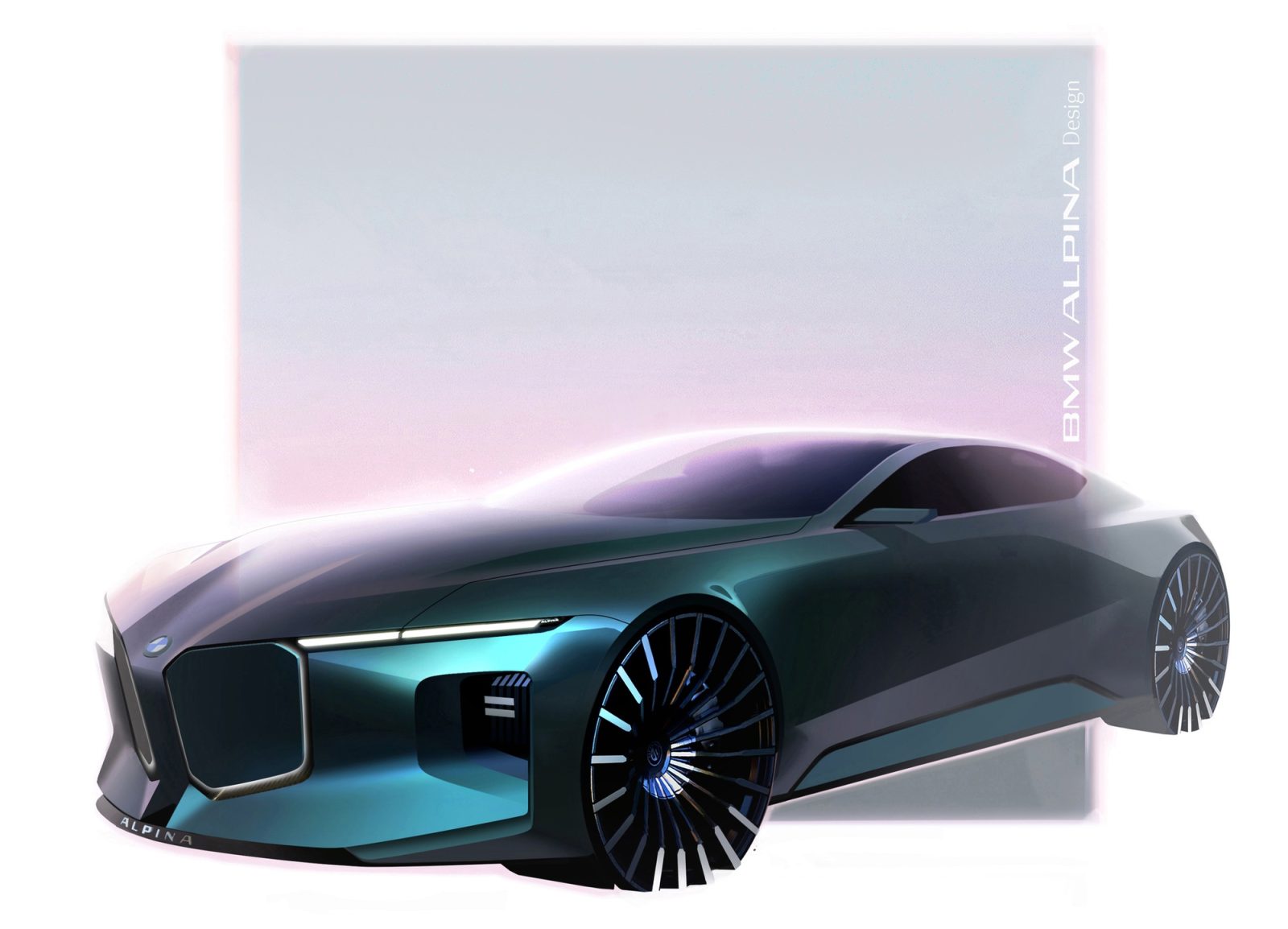
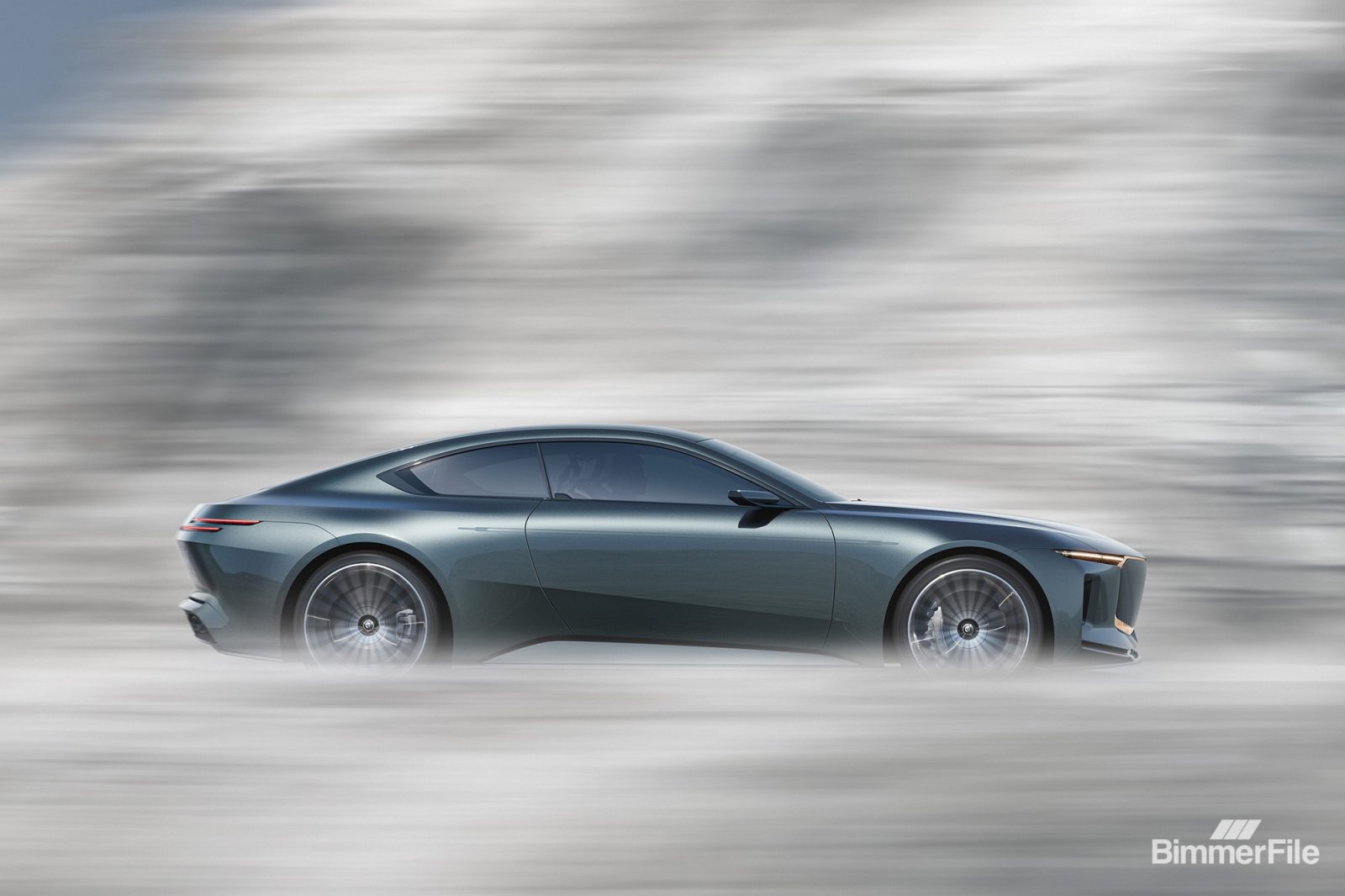
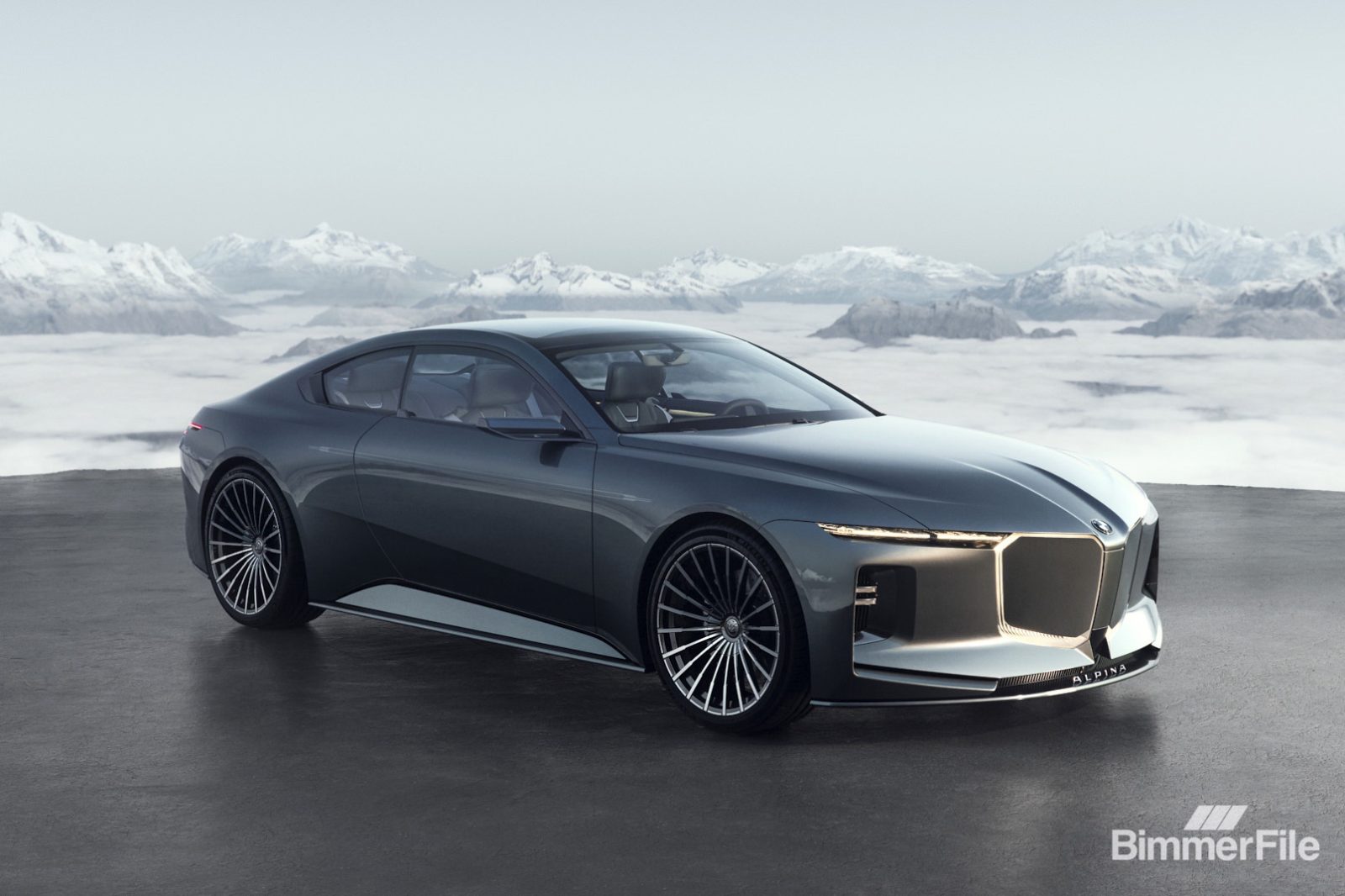
At 204.7 inches in length, the Vision BMW ALPINA is a substantial car. The coupe roofline is long and raked, promising both speed and genuine accommodation for four adults. A V8 powertrain drives the experience, tuned to produce what BMW describes as the characteristic Alpina exhaust note: rich and deep at low speed, sonorous at high revs.
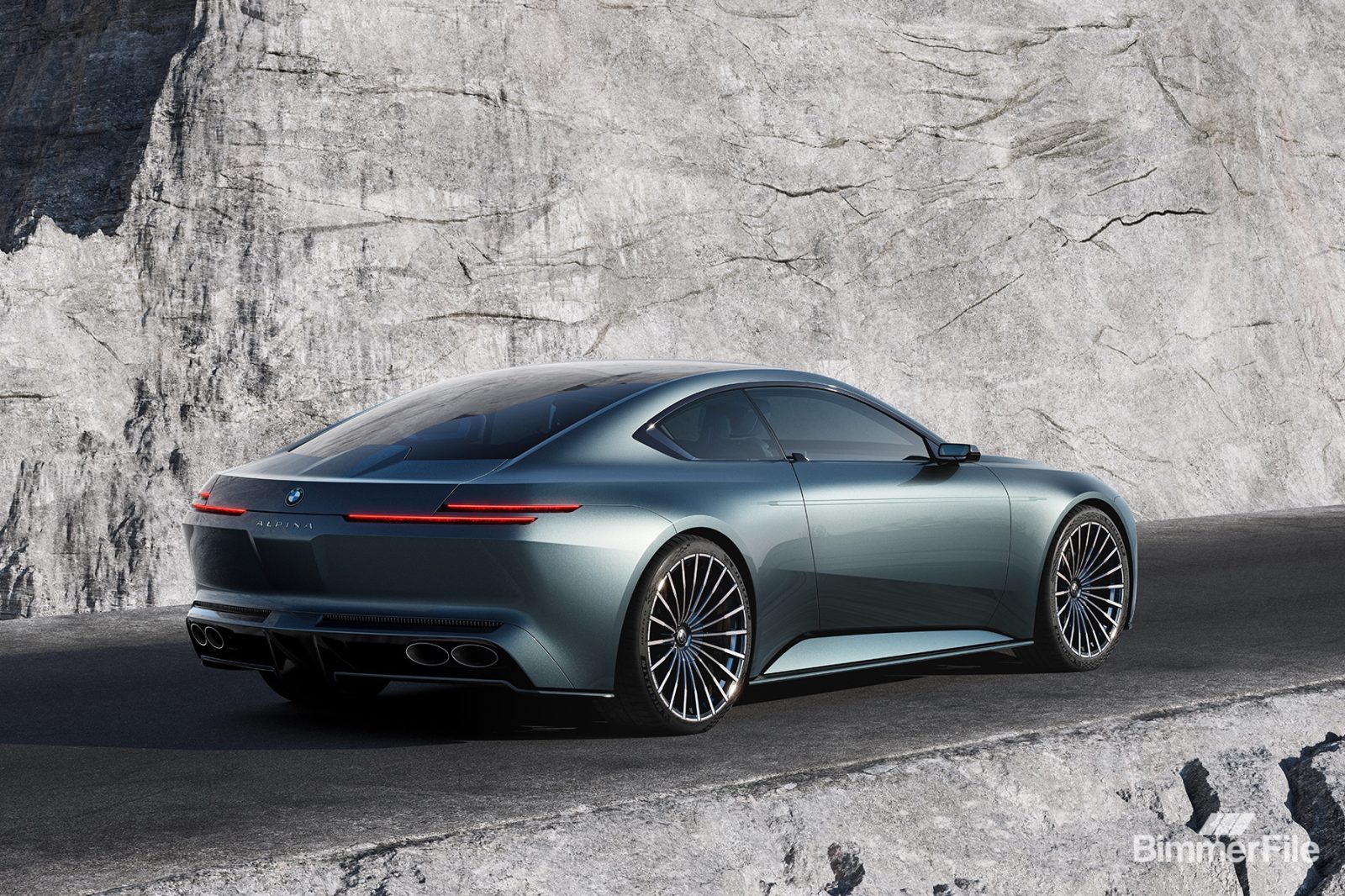
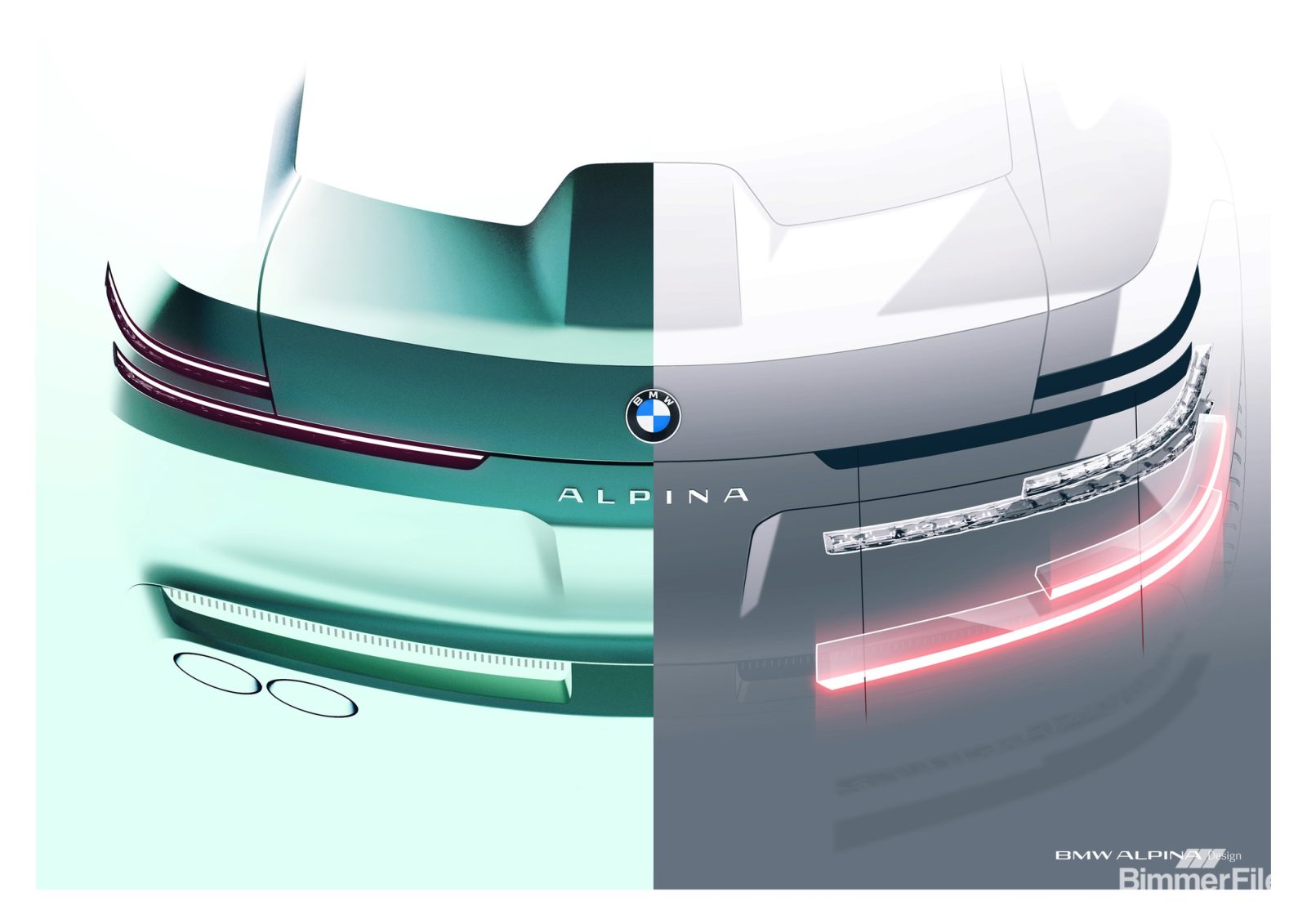
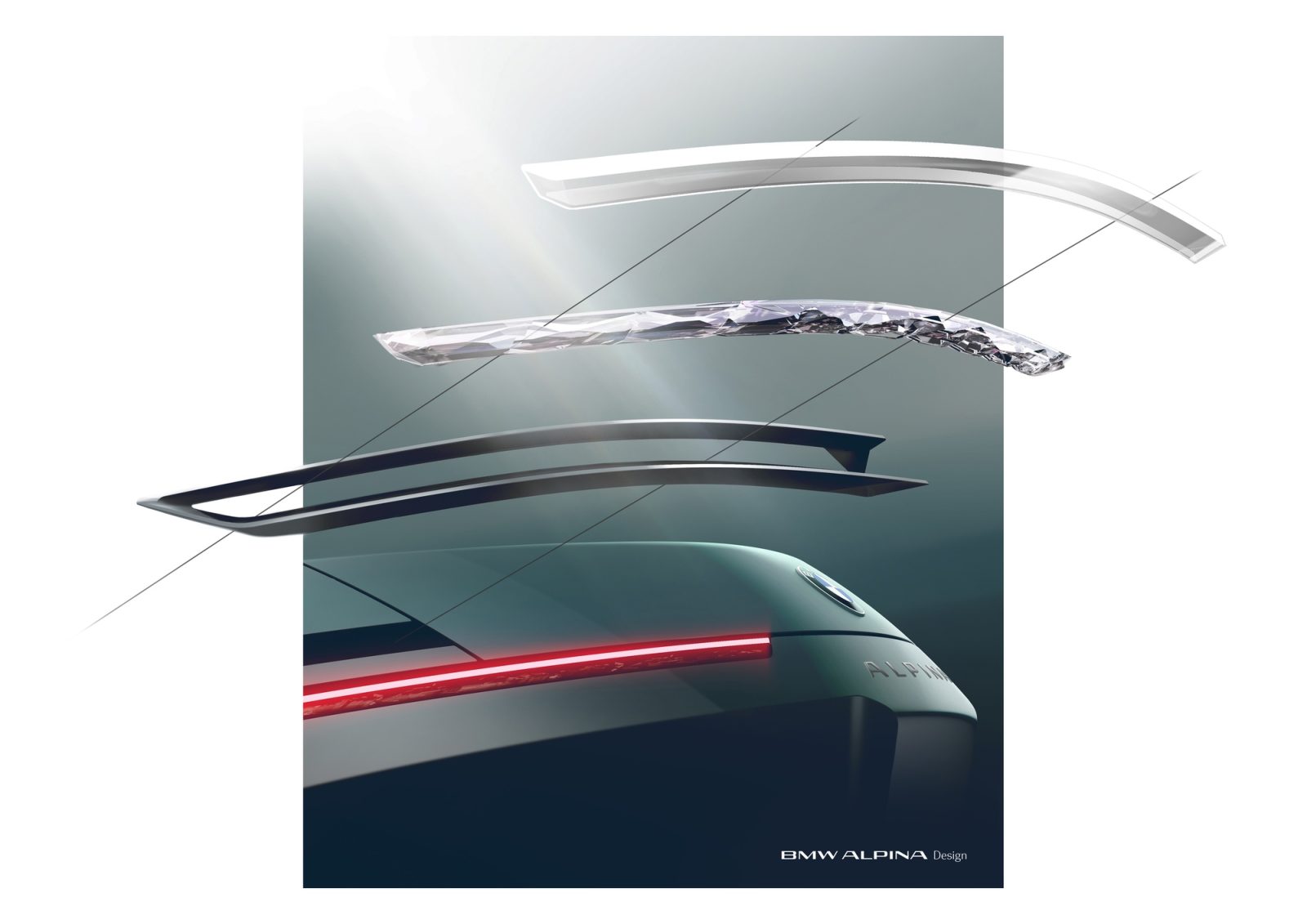
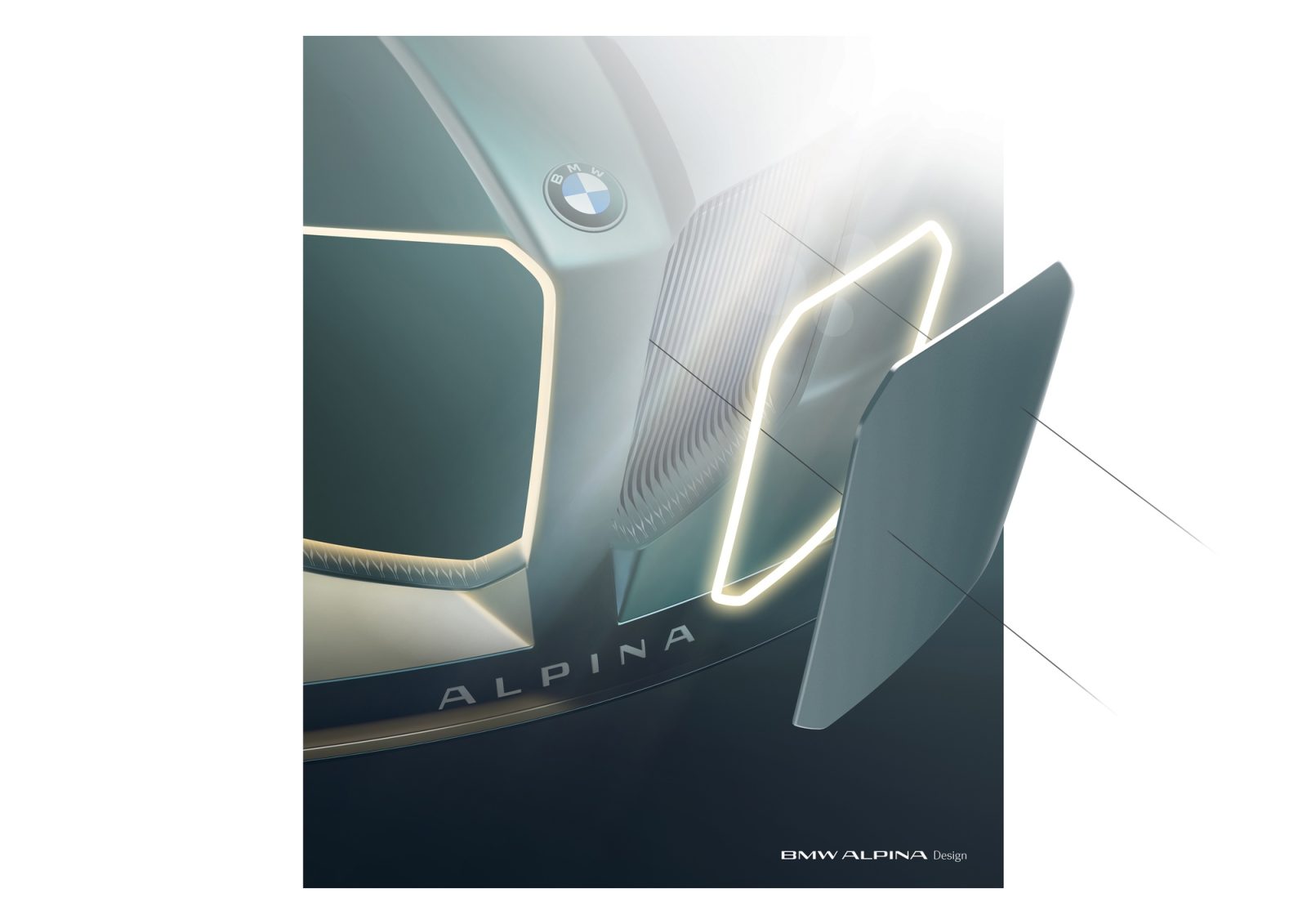
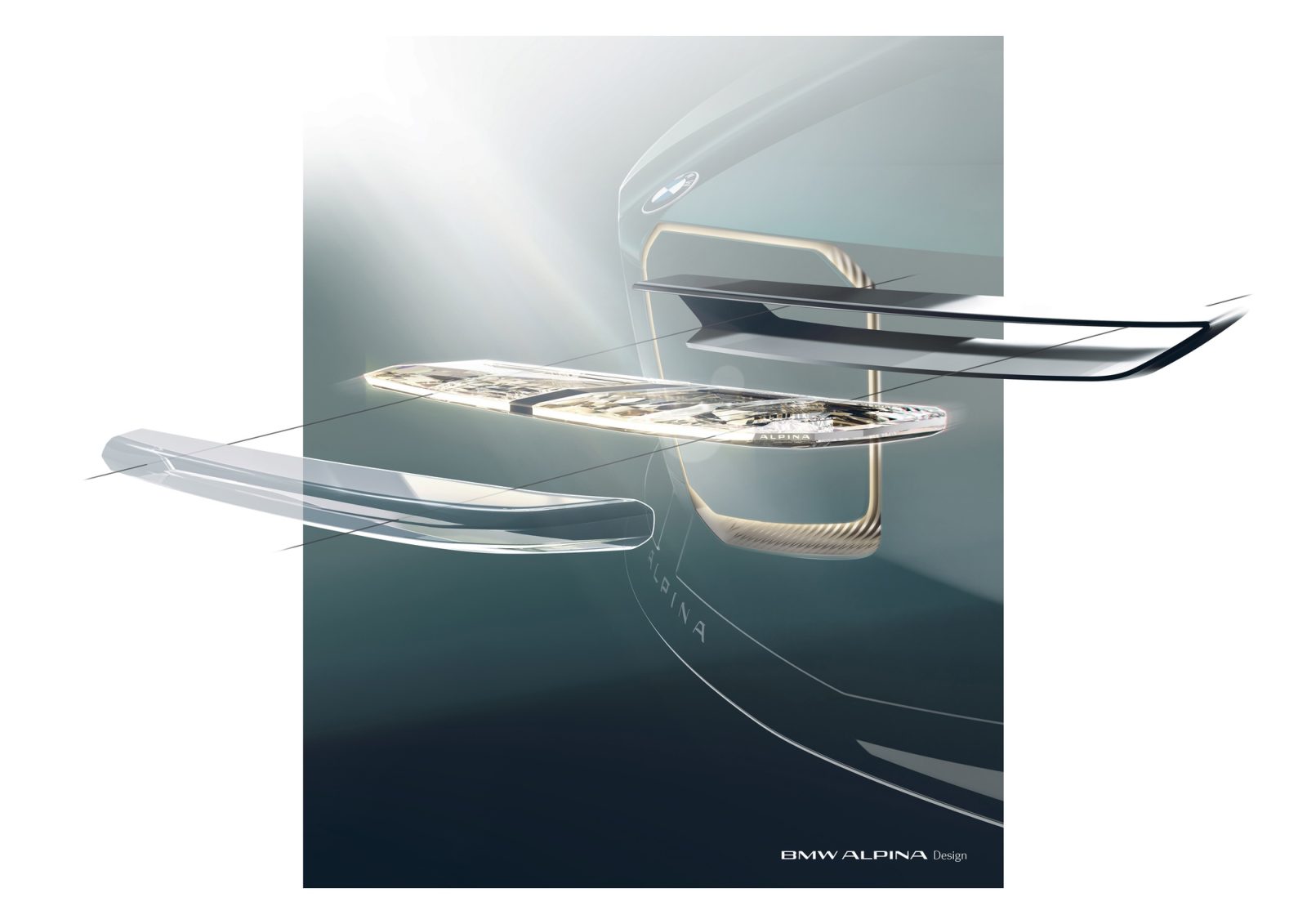
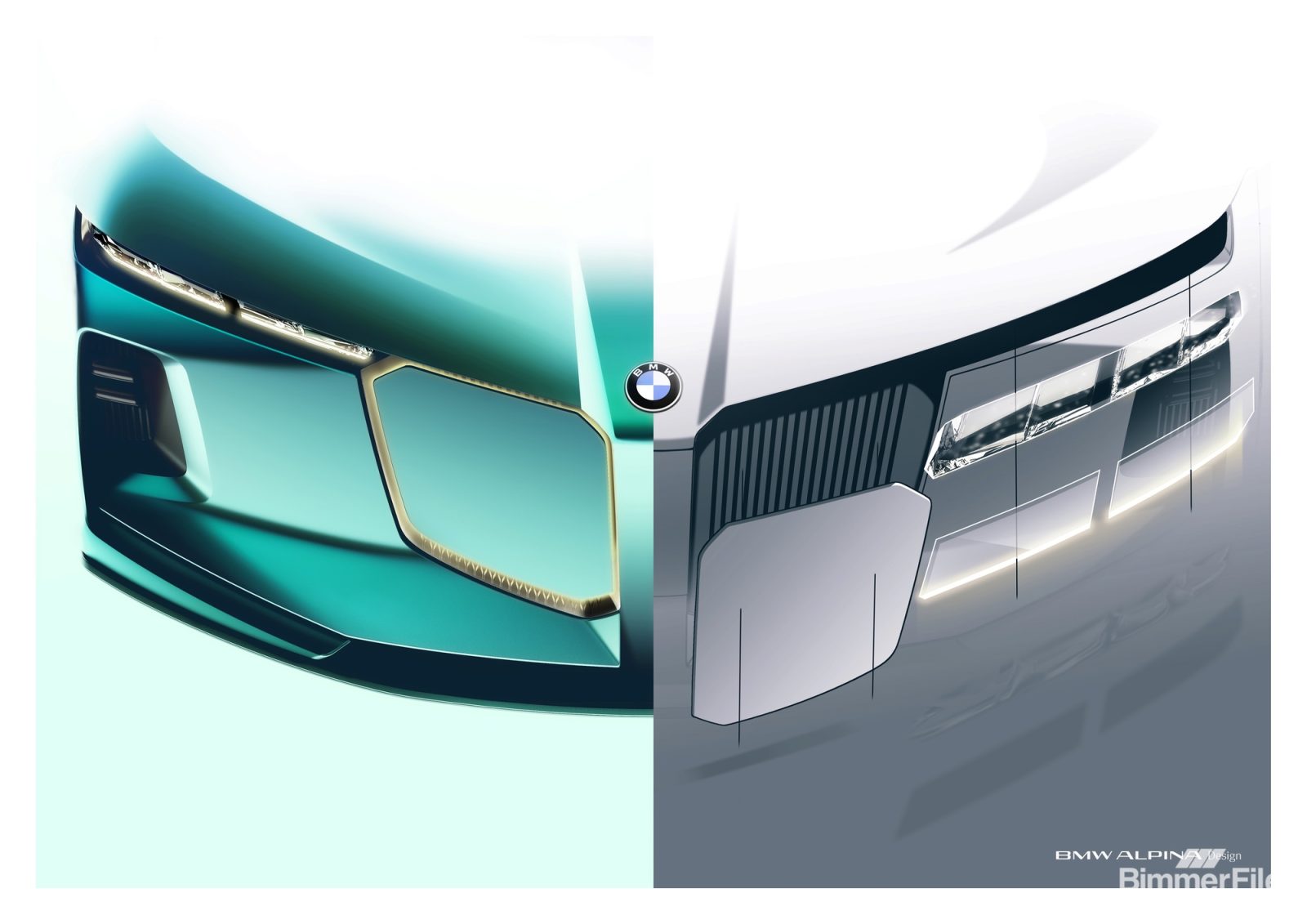
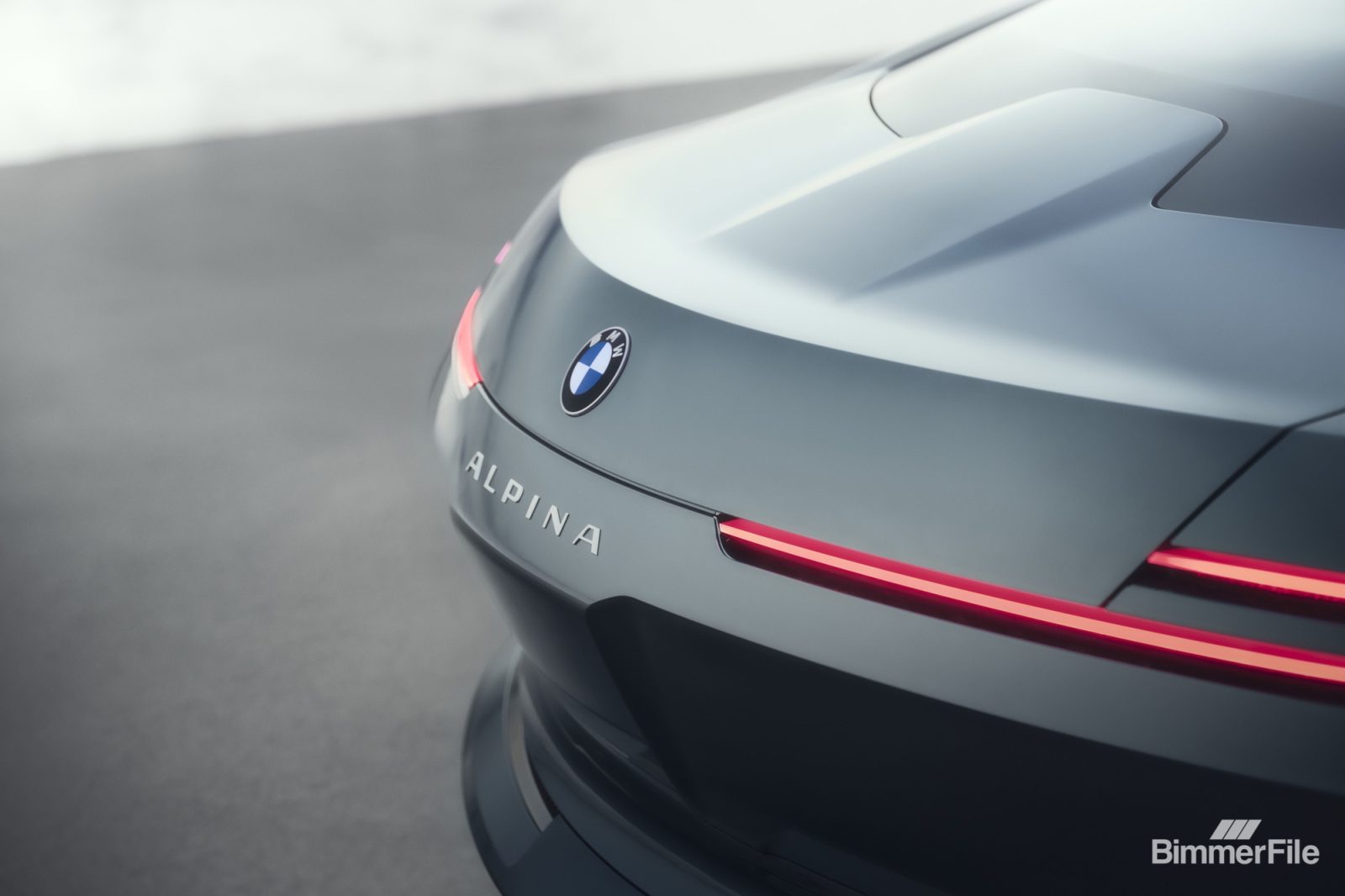
The front end reinterprets BMW’s kidney grille as the shark nose, a signature traceable directly to the Alpina B7, rendered here as a three-dimensional sculpture rather than a surface treatment. It frames the brand emblem with restraint, which is the right instinct. From the nose, the exterior is organized around a single visual axis: the speed feature line. Rising from the lower front corners at a six-degree inclination, it runs along the body and wraps around the rear, assertive enough to suggest motion, controlled enough to remain refined.
What’s interesting about the design language BMW has chosen here is its deliberate resistance to drama for its own sake. Adrian van Hooydonk, head of BMW Group Design, describes the approach as discipline and modernity. Maximilian Missoni, head of BMW Design Midsize and Luxury Cars and BMW ALPINA, calls it a “Second Read” principle: subtle details that reward closer attention without demanding it.
The Second Read: Details That Earn the Price
That second-read philosophy runs throughout the Vision BMW ALPINA and is worth examining in some detail, because it’s where the character of an Alpina has always lived.
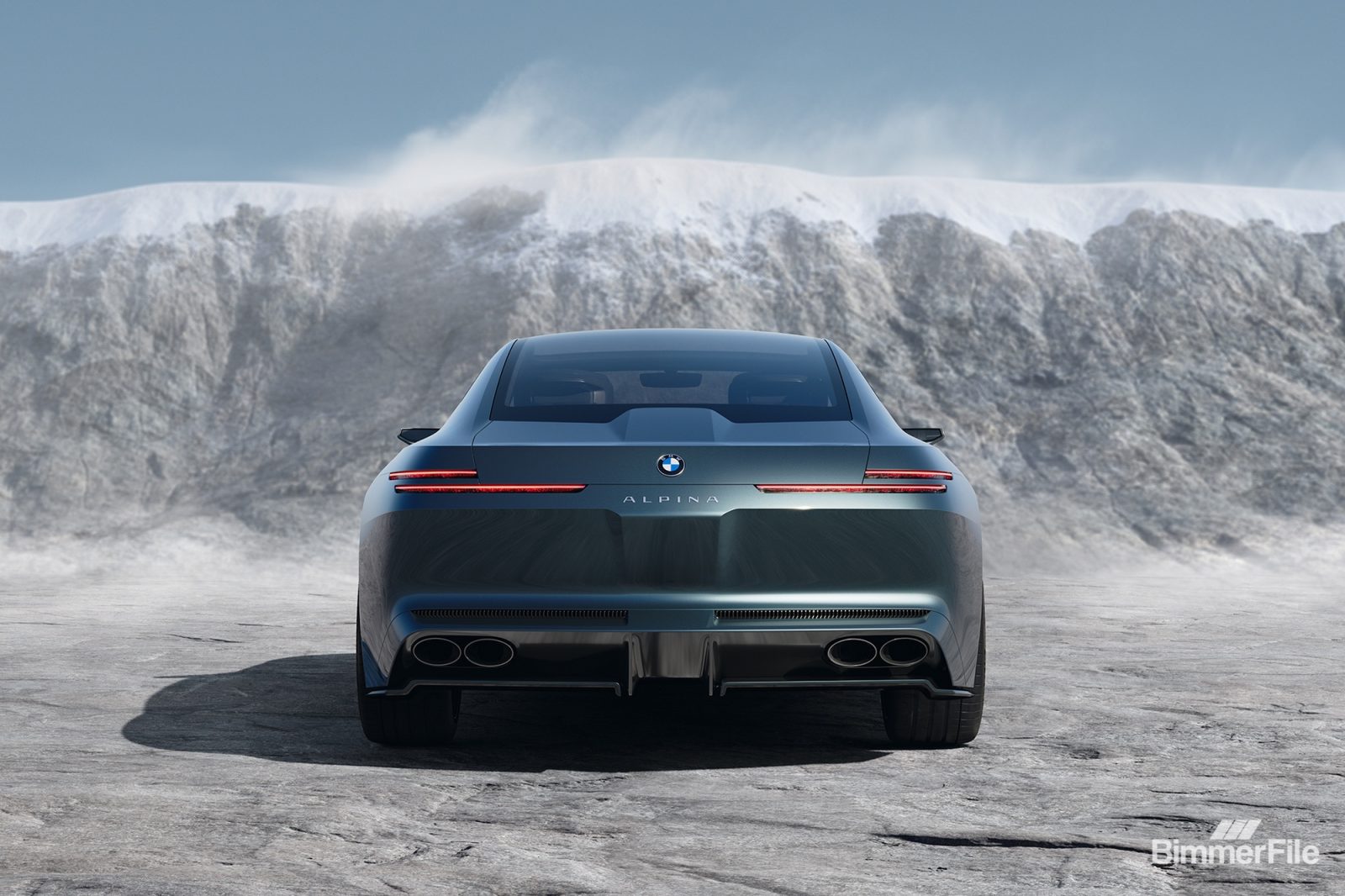
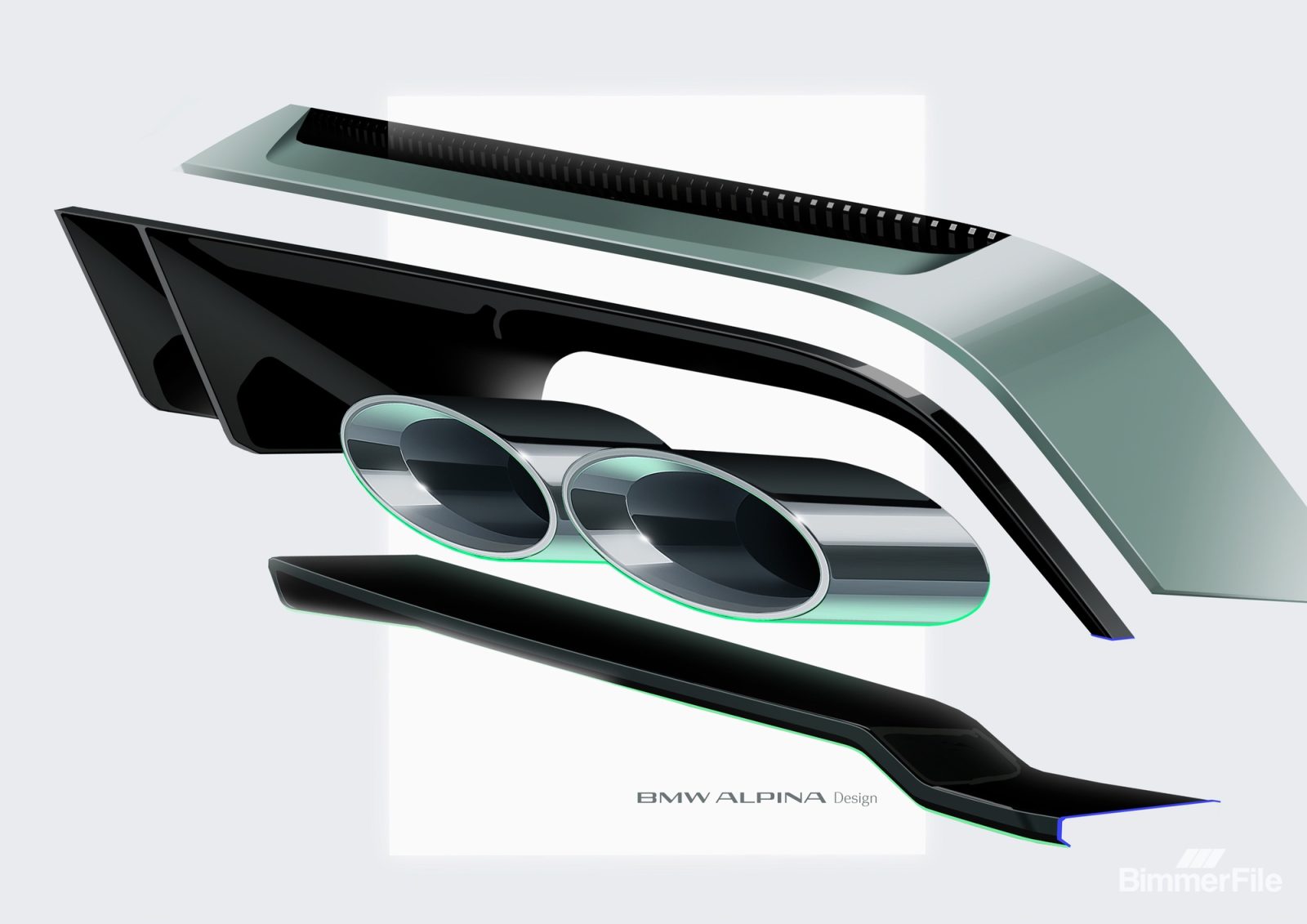
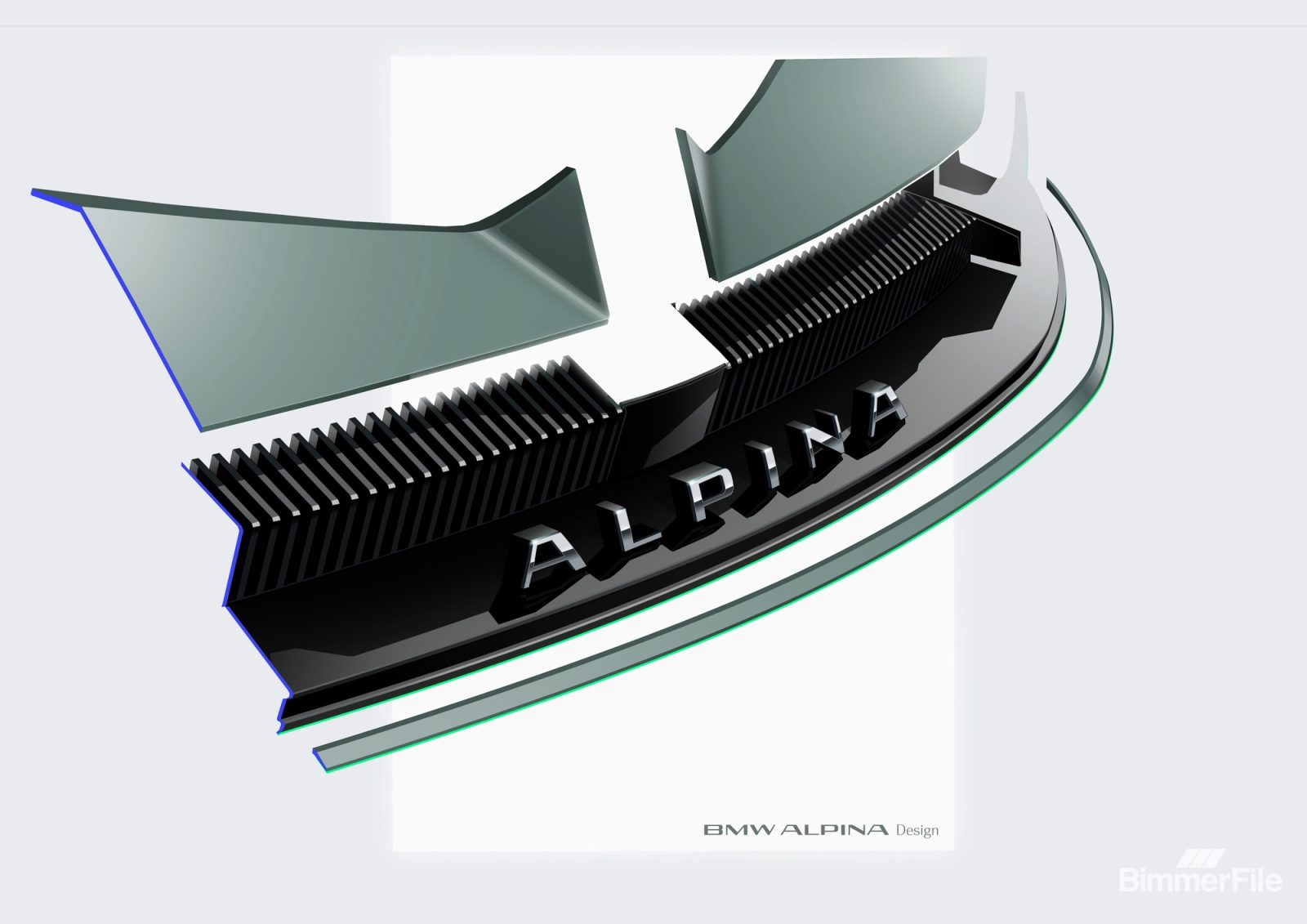
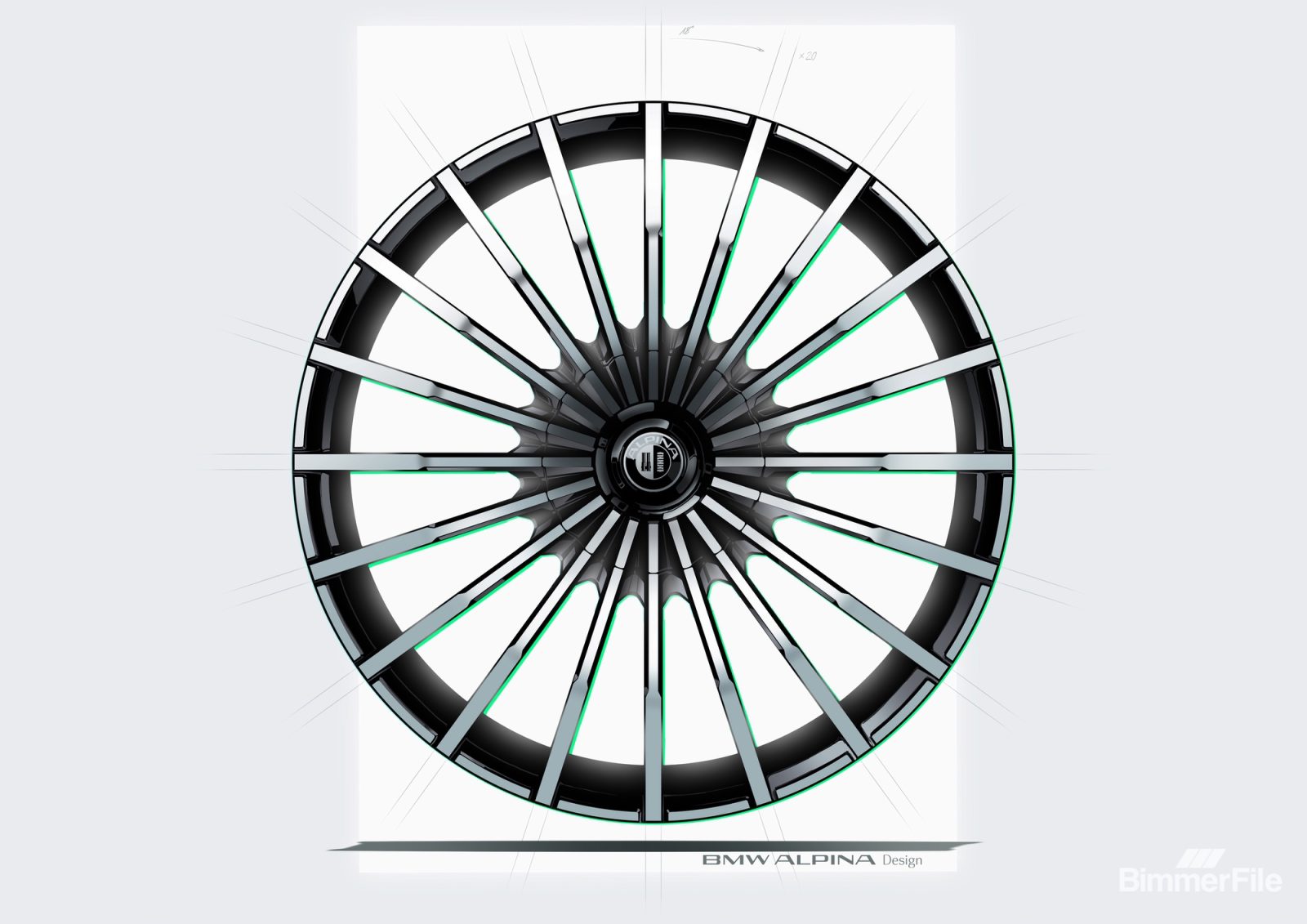
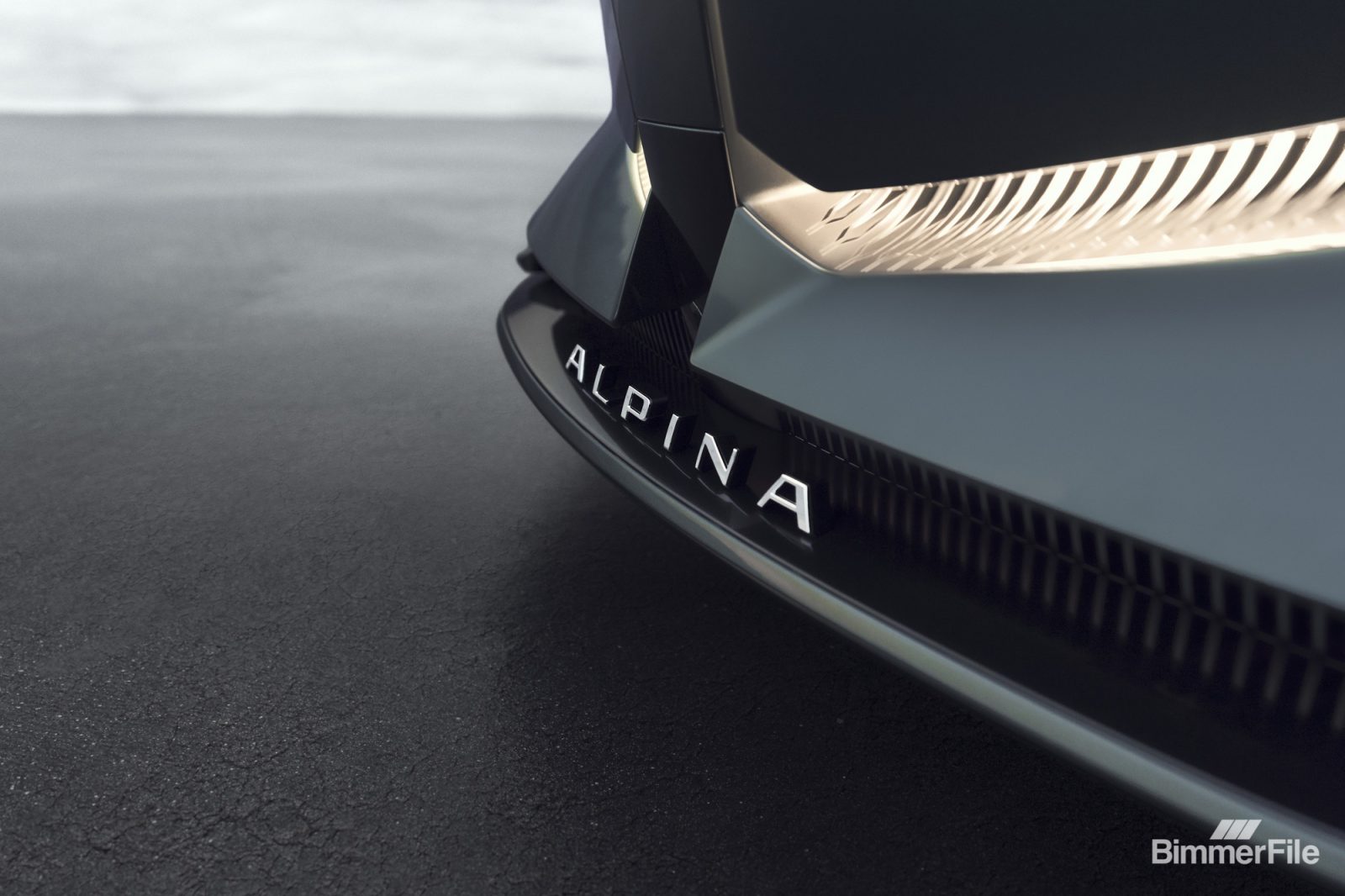
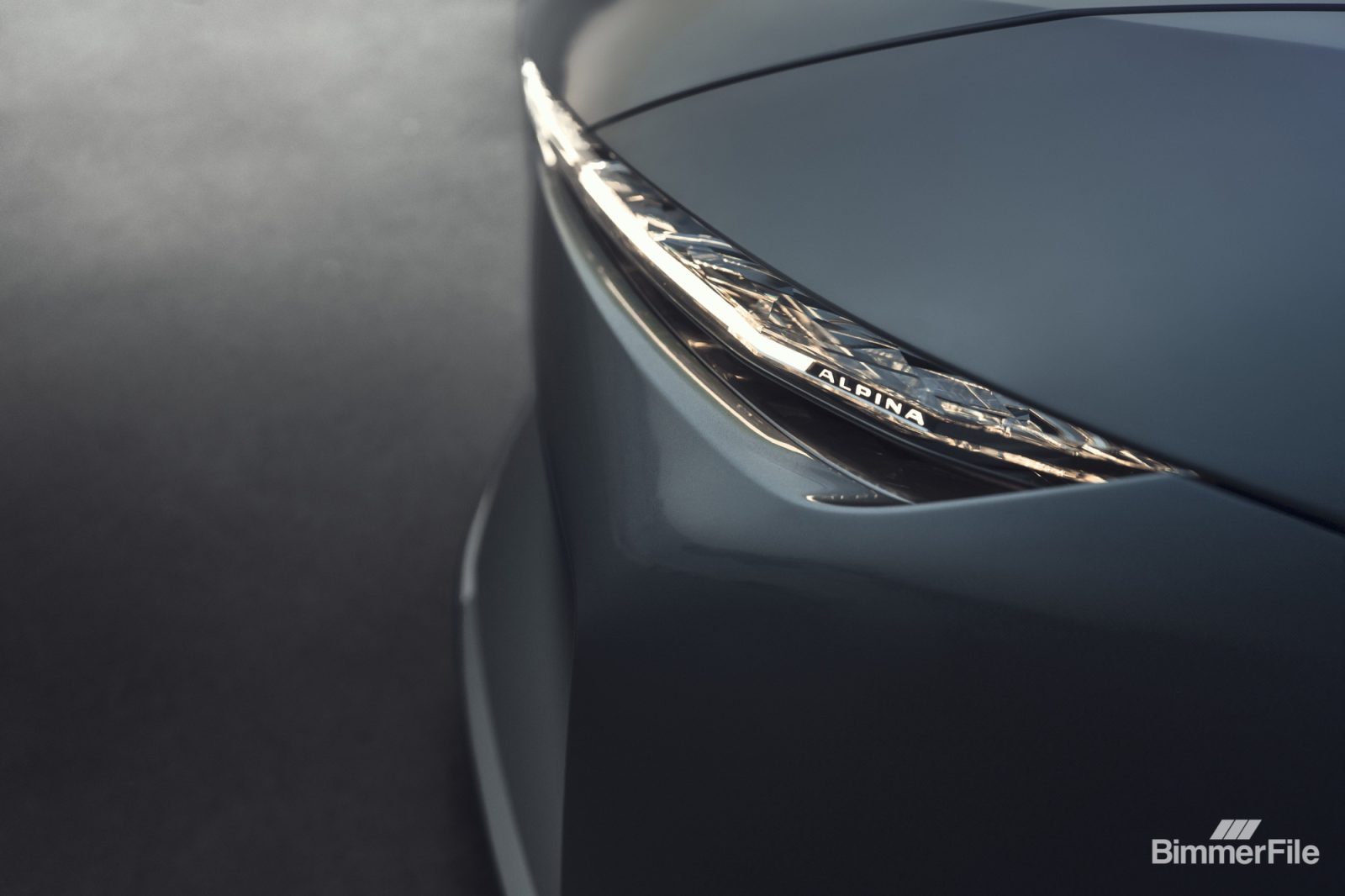
The deco-lines, a defining visual element since 1974, are modernized here and painted beneath the clear coat rather than applied over it. It’s a quiet gesture, and a considered one. The inward-facing return surfaces are finished in a dark metallic tone inspired by the chrome-inside-the-kidney-grille treatment of the BMW 507. The shark nose inner surfaces carry a finely scaled deco-line graphic, with a concealed, softly backlit perimeter that reveals it only when active. The 22-inch front and 23-inch rear wheels use the 20-spoke design that has been continuous at Alpina since 1971. The elliptical four-pipe exhaust remains. The ALPINA lettering is reinterpreted as a machined, polished metal element on the lower front apron.
None of these details announce themselves. That’s the point. Alpina buyers have always known what they were looking at. The Vision suggests BMW understands that audience well enough not to over-explain.
Interior: Architecture Over Ambiance
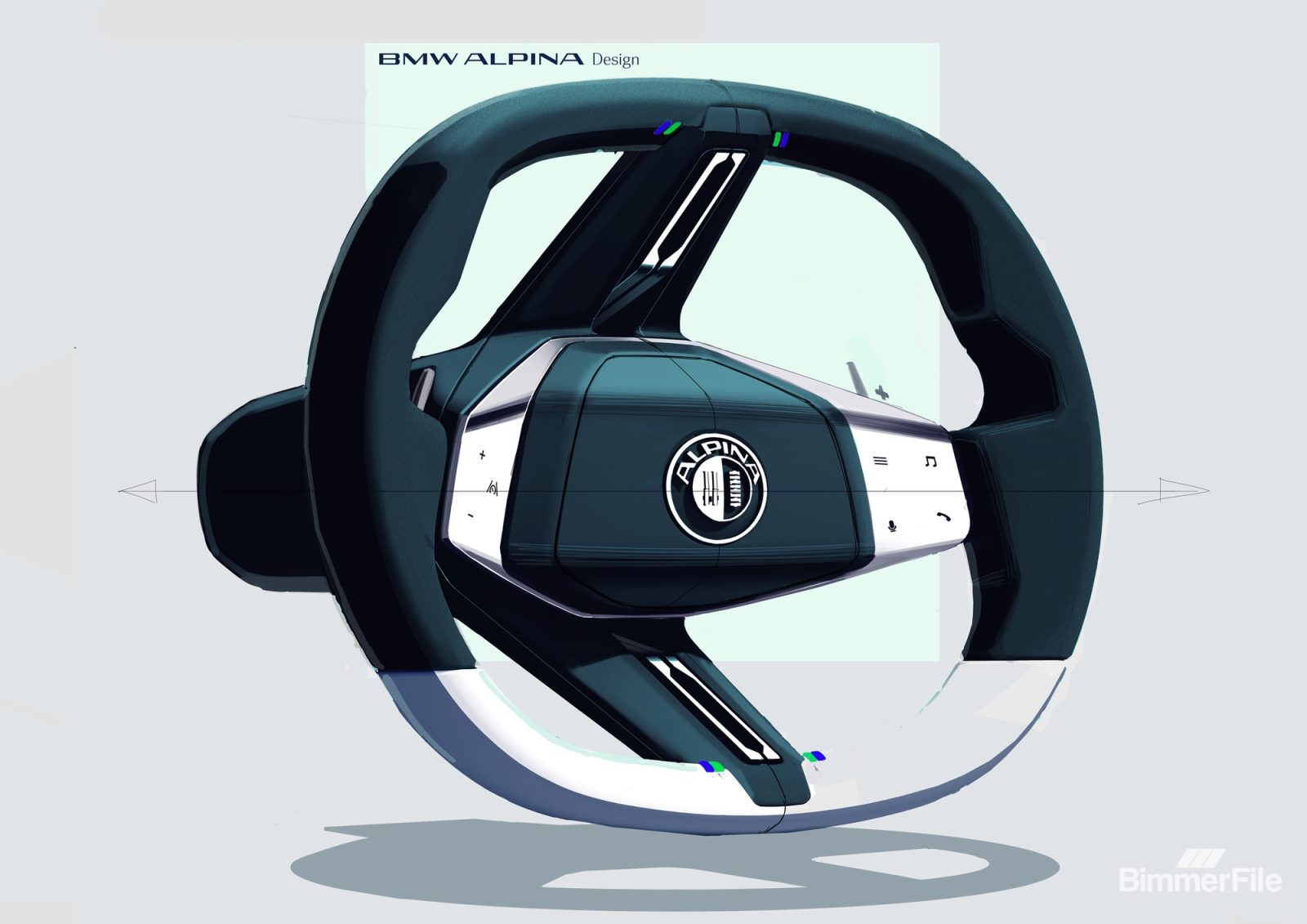
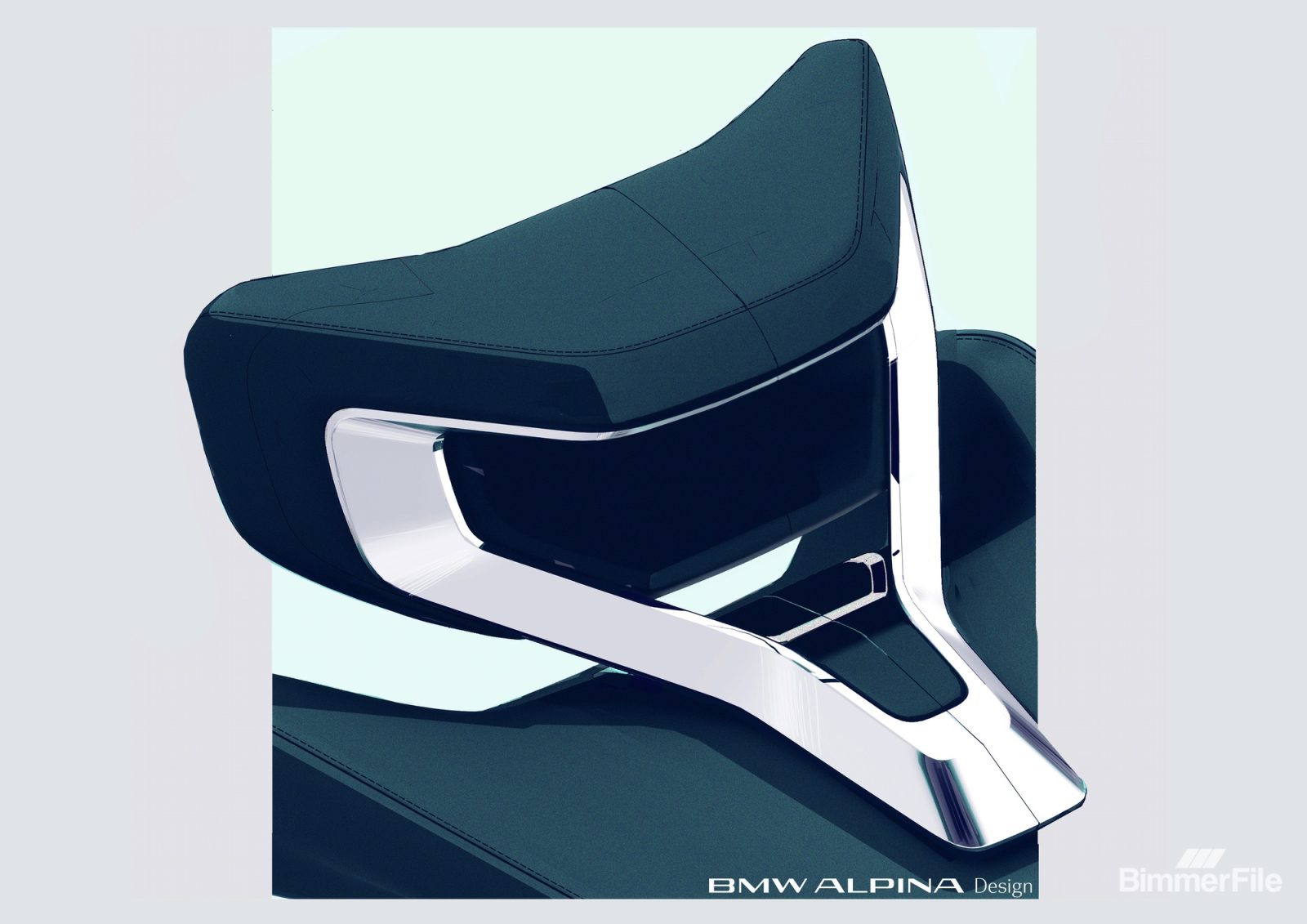
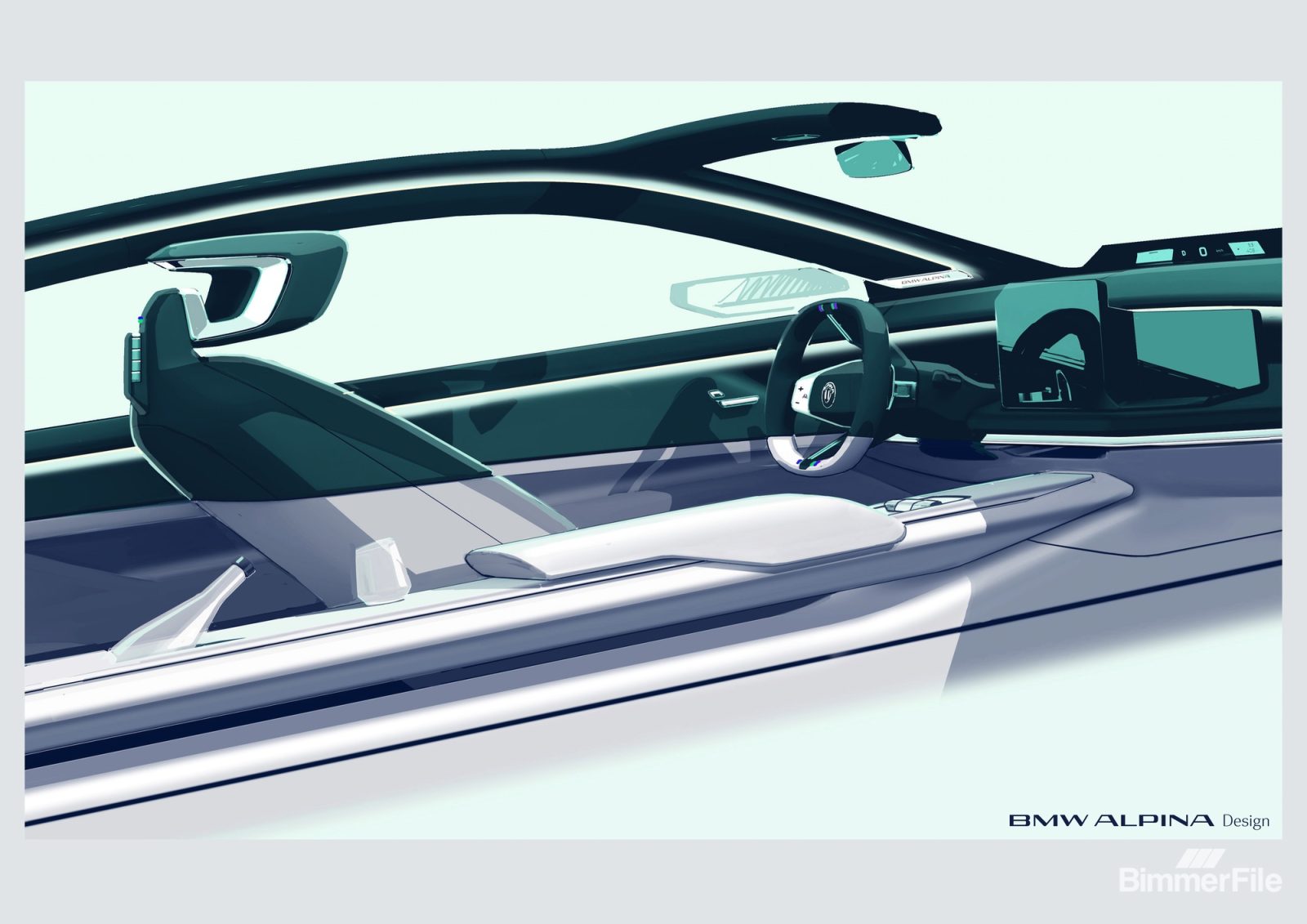
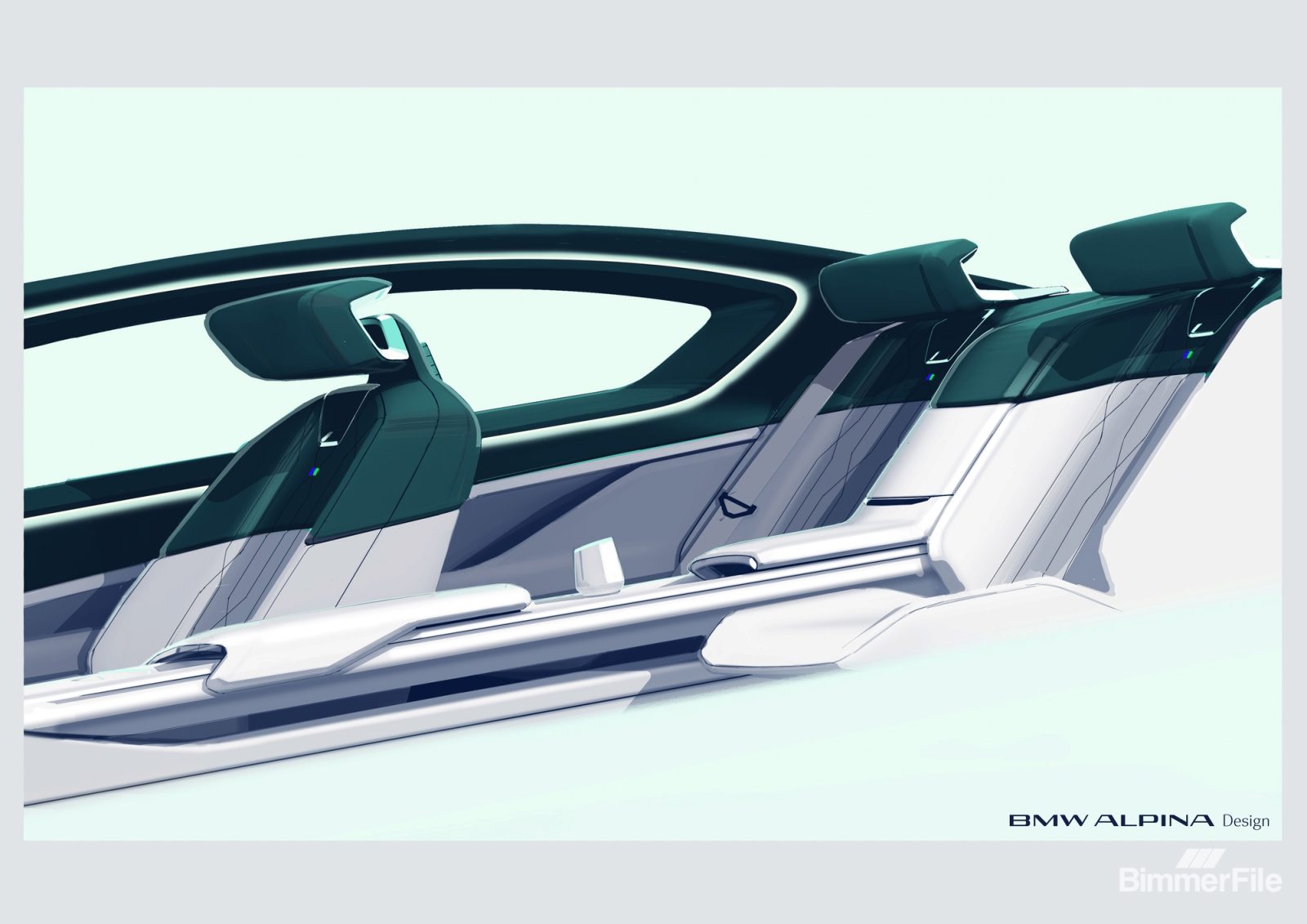
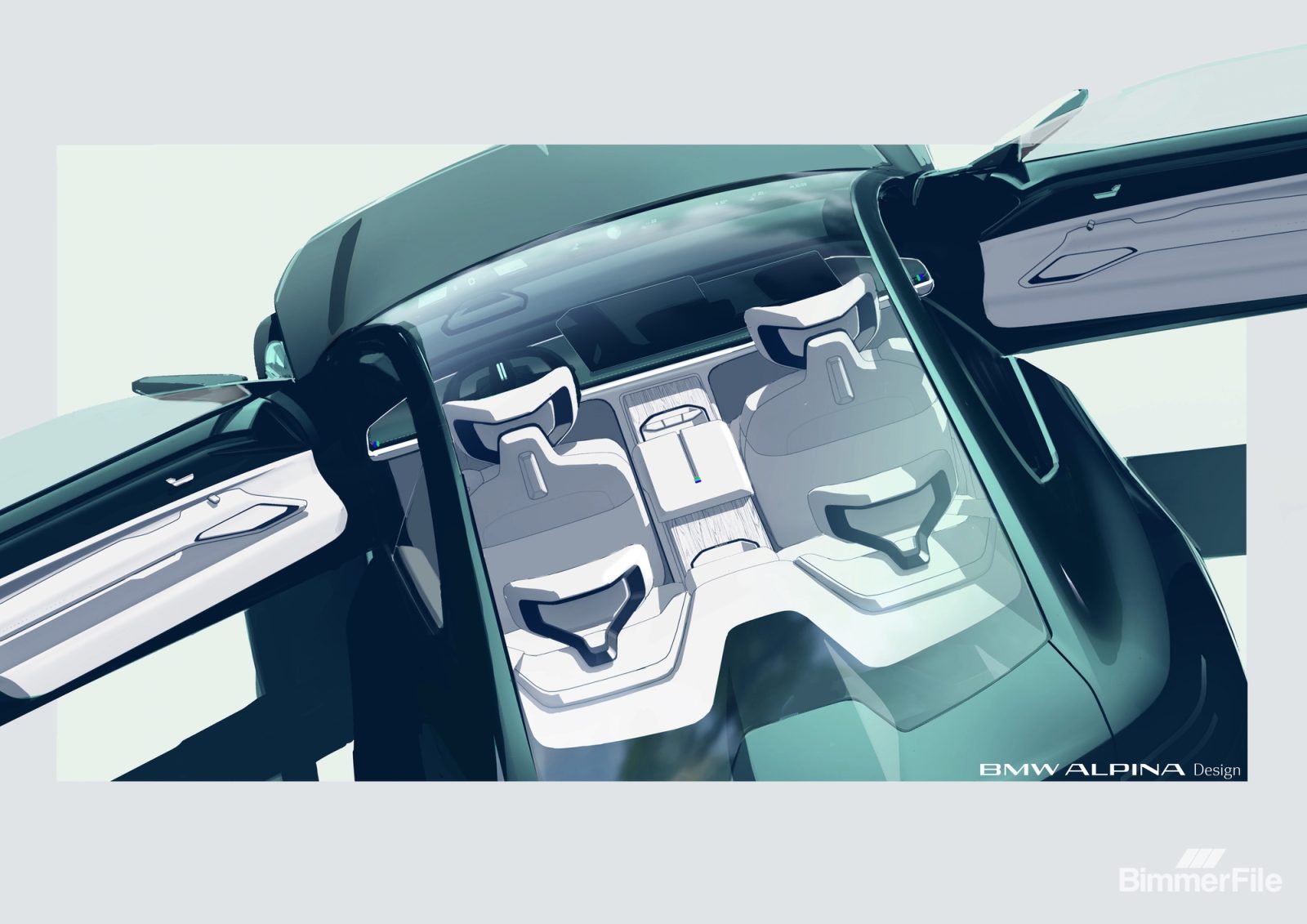
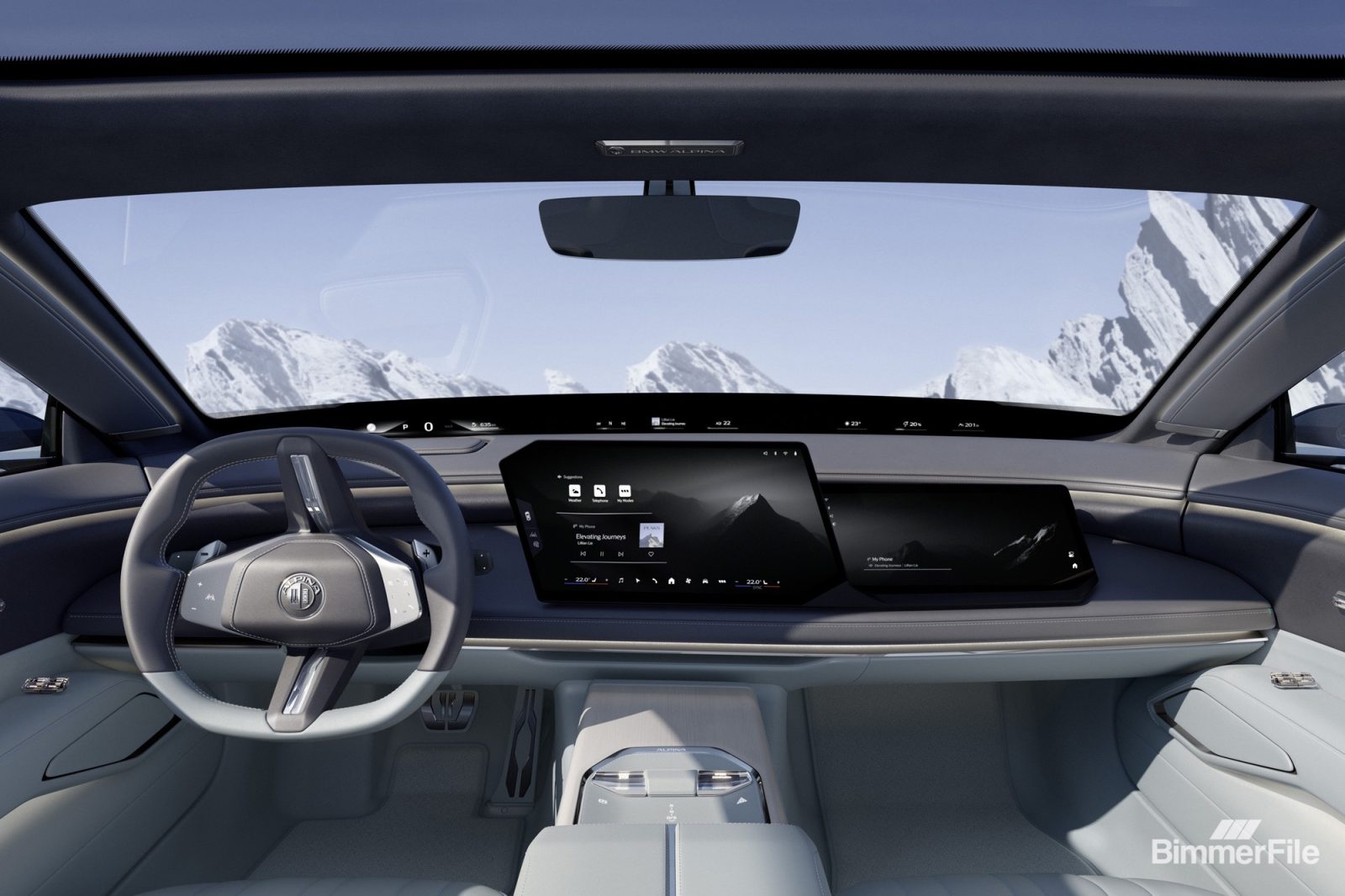
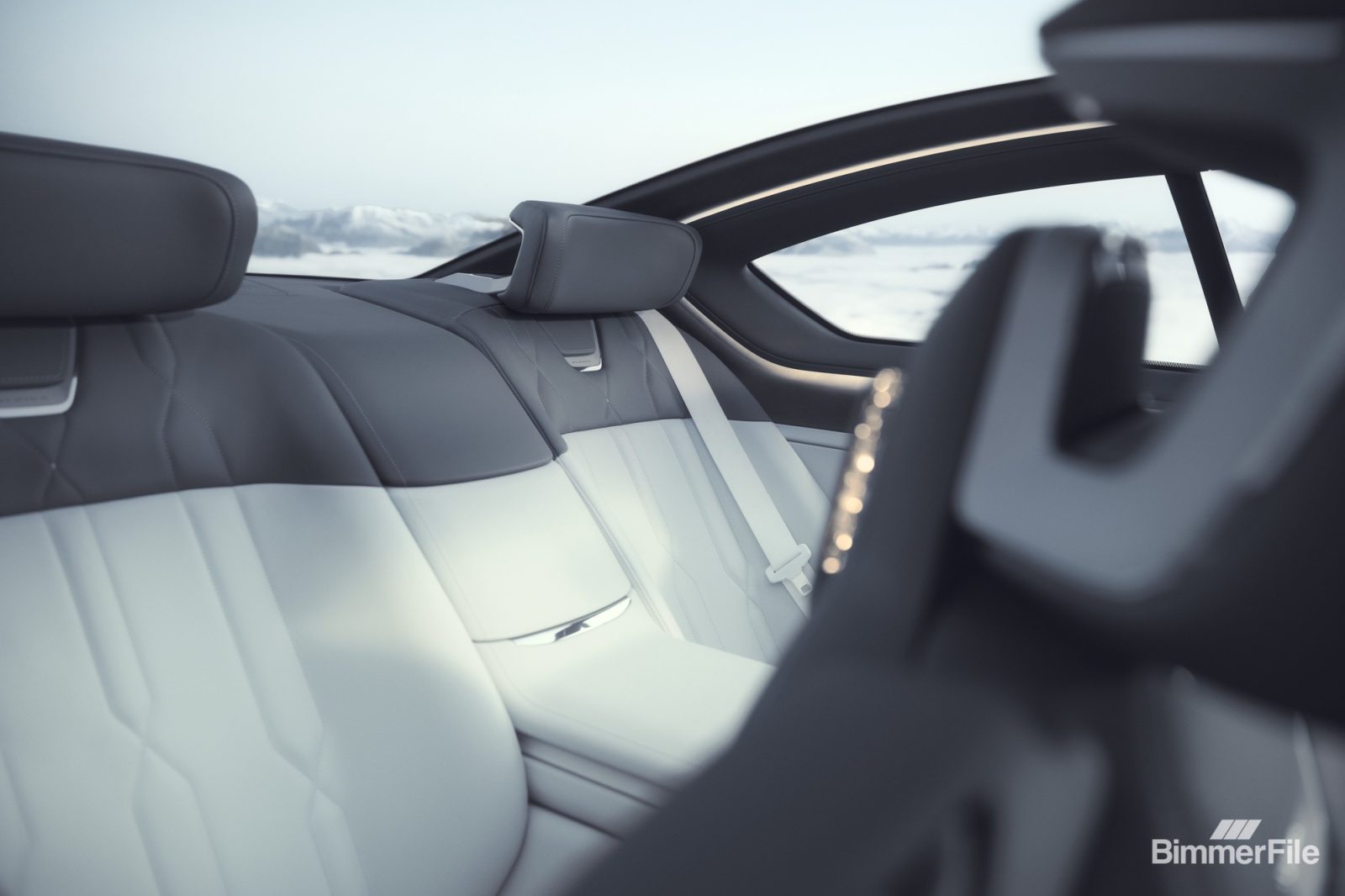
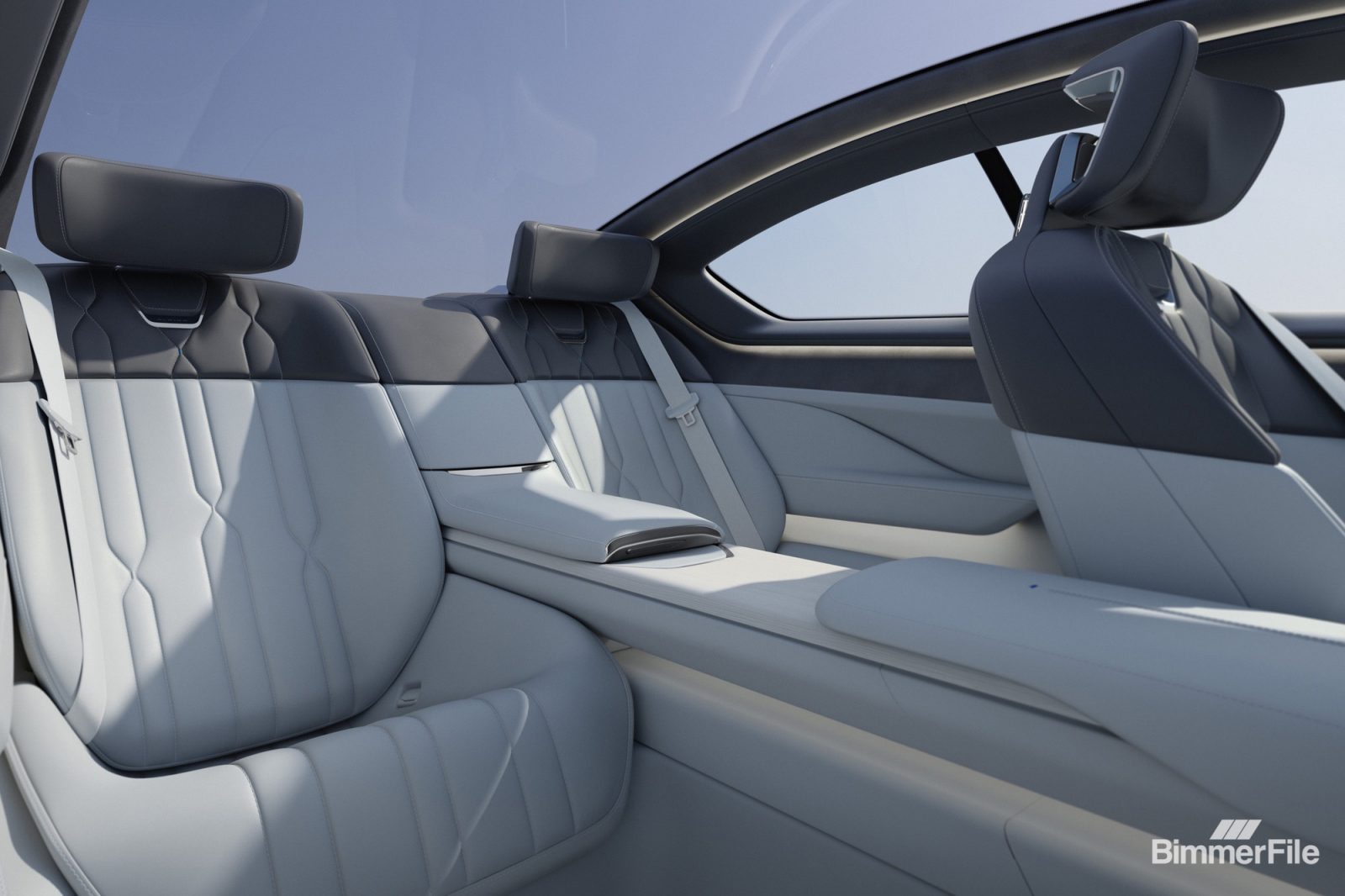
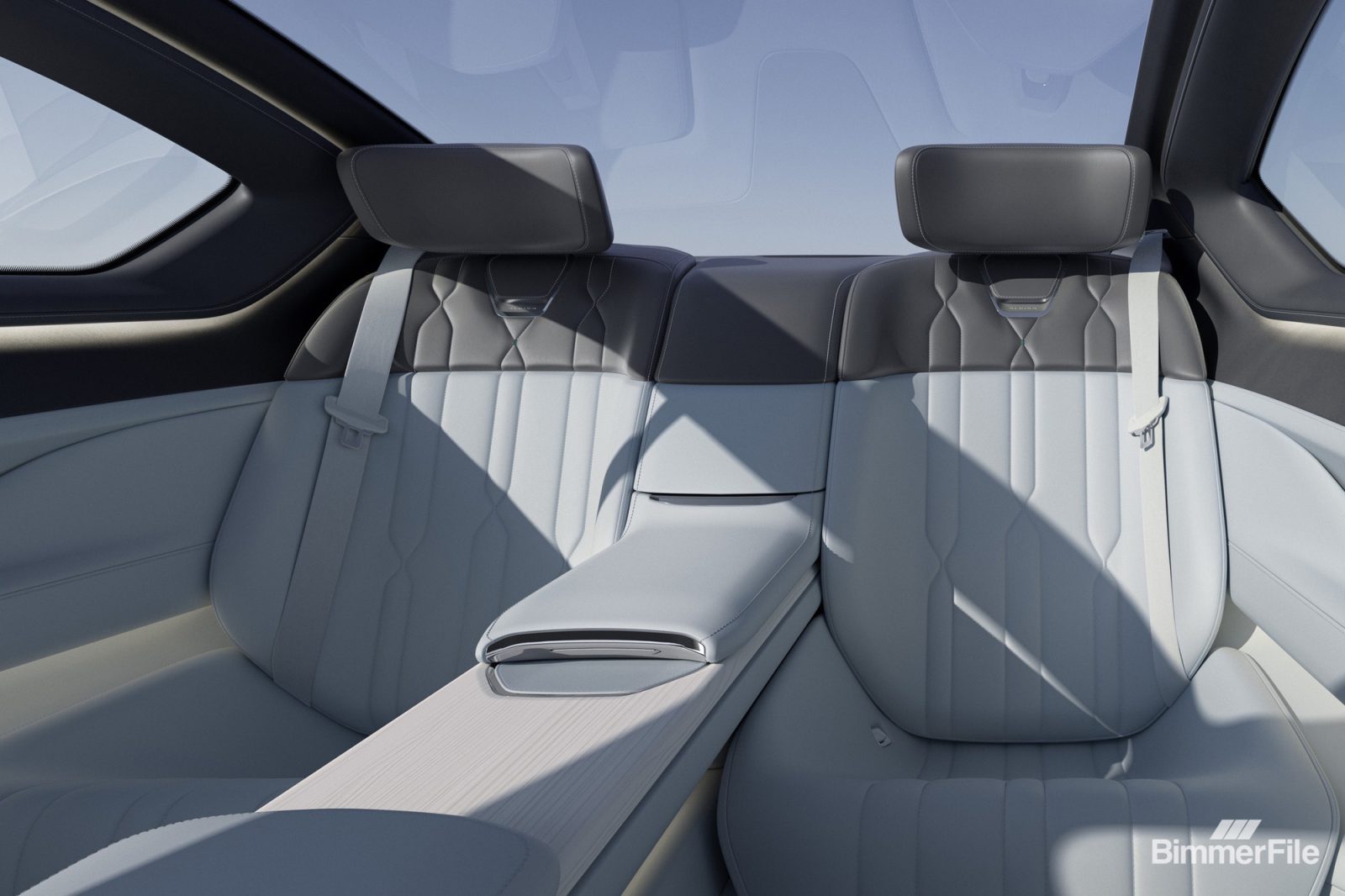
The cabin prioritizes architectural clarity over atmospheric mood, which is the correct choice for a brand that values substance. Each element is designed as a standalone form rather than absorbed into a homogeneous surface. The six-degree speed feature line continues through the interior, dividing a darker upper segment from a lighter lower one. Full-grain leather, sourced from producers across the Alpine region, pairs with stitching inspired by the deco-lines. Metal components use a watchmaking-inspired beveling technique combining satin and polished finishes. Clear-cut crystal is reserved specifically for the controls that govern how the car drives, a deliberate prioritization.
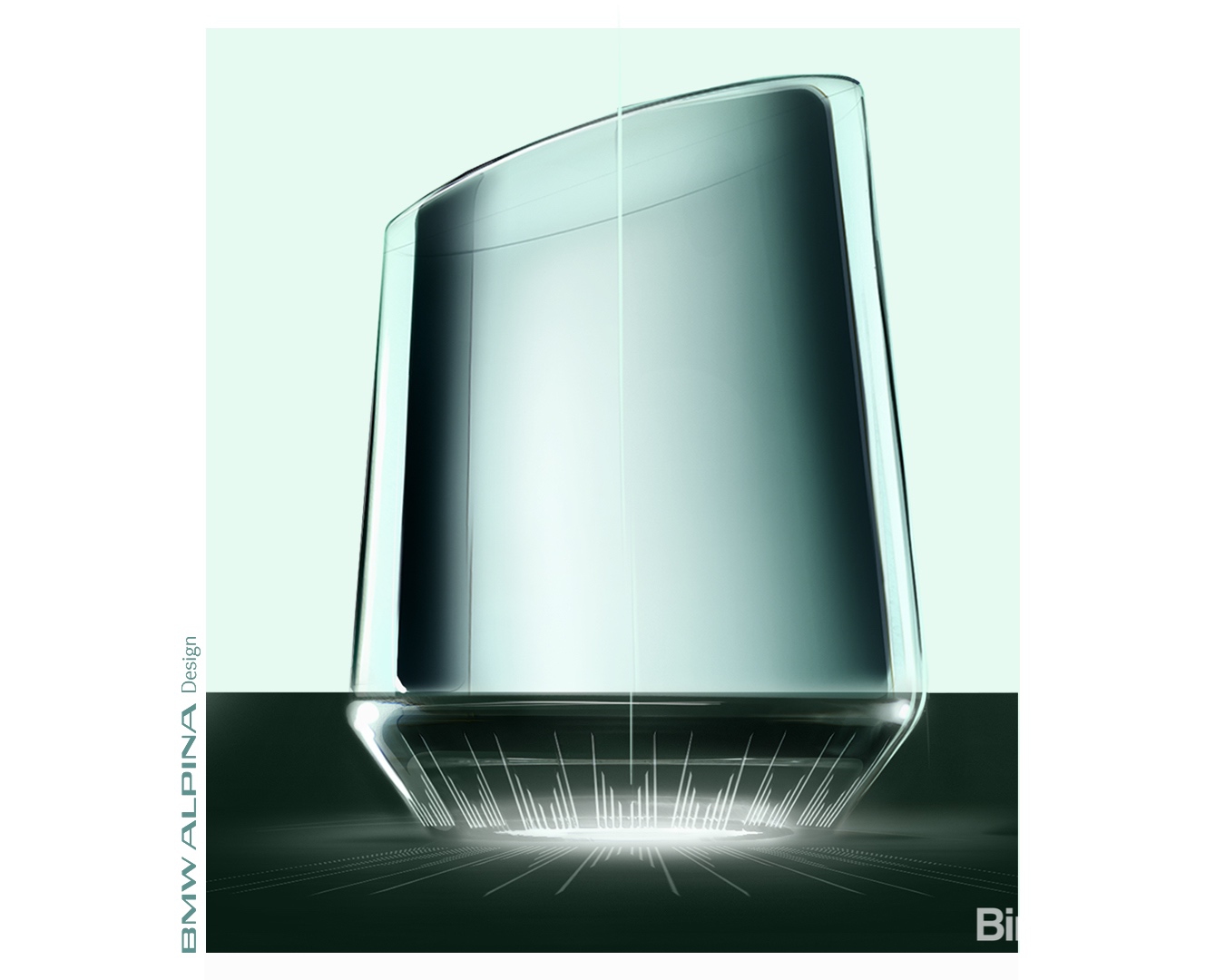
Behind the rear console, a glass water bottle sits alongside BMW ALPINA crystal glasses that rise on a self-deploying mechanism. Each glass is engraved with 20 deco-lines and features a six-degree rim profile, held by concealed magnets and softly lit against the open-grain center console. It’s an indulgence, and a knowing one.
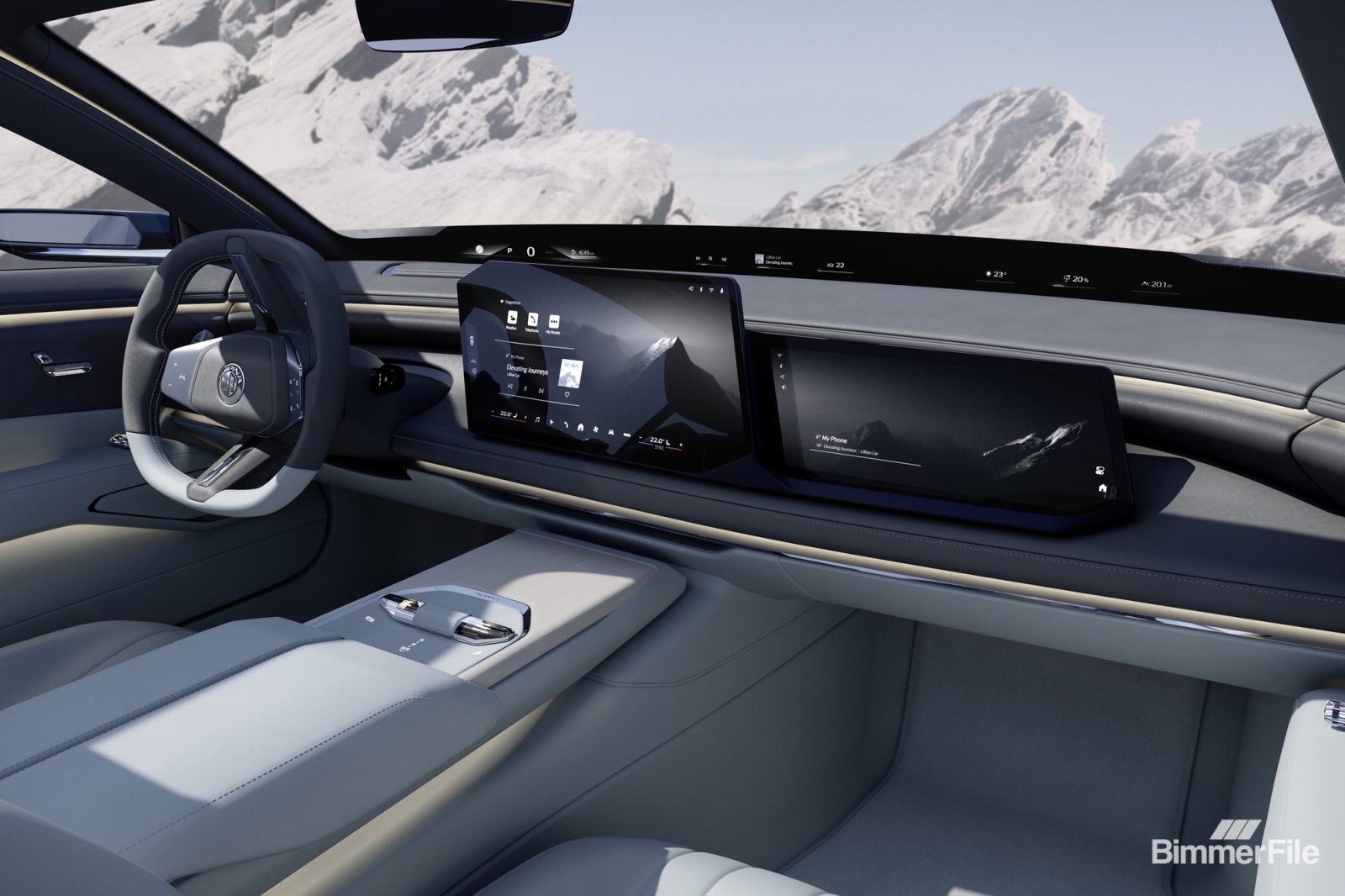
BMW Panoramic iDrive, including a passenger screen, spans the dashboard with a digital UI language crafted specifically for BMW ALPINA. Heritage blue and green appear with discipline, intensifying as the driver moves from Comfort+ to Speed mode within the BMW Panoramic Vision head-up display. The background imagery depicts an exact rendering of the mountain range visible looking south from Buchloe. That’s either charming or excessive depending on your tolerance for such things, but it’s not thoughtless.
Comfort+ remains, the setting that takes BMW’s standard comfort calibration and pushes it further toward supple and refined. Its retention here matters. It was Bovensiepen’s idea, and keeping it is an implicit acknowledgment that the new stewards have actually read the history.
What Comes Next
The first production BMW ALPINA model, inspired by the BMW 7 Series but described as unmistakably ALPINA, is expected to reach customers next year. The Vision is not that car. What it does is establish the visual and philosophical vocabulary that model will presumably draw from.
There’s a tension worth acknowledging. BMW has absorbed Alpina into its corporate structure, and corporate structures have a tendency to rationalize the idiosyncratic out of things over time. The Vision BMW ALPINA is a design study produced by people who clearly understand the brief. The question is whether that understanding survives the compromises that production, cost, and portfolio management always introduce.
For now, the Vision is the right kind of promise: specific, historically grounded, and restrained enough to be believable. BMW has shown it knows what Alpina is. Next year, we’ll see whether it can build it.