

No model defines BMW more than the 3 Series. Not the M3, not the 7 Series, not any flagship that gets the press conference and the canyon road photoshoot. The 3 Series is the car that established BMW’s identity in the 1970s, sustained it through decades of platform changes and powertrain shifts, and remains the clearest expression of what the brand believes a car should be: rear-wheel-drive bias, a straight-six up front, a driver’s seat that means something. Everything else BMW makes is either an extension of that idea or a departure from it.
Which is why what’s happening to the 3 Series right now is the most consequential product story in BMW’s recent history. Not the M3. Not the 7 Series LCI. This one. Because BMW isn’t replacing the 3 Series with an electric car. It’s building two 3 Series simultaneously, one electric and one combustion, that look almost identical from the outside and represent fundamentally different answers to what a BMW should be. And alongside all of that, the 4 Series is quietly running toward a cliff edge with no confirmed successor in sight.
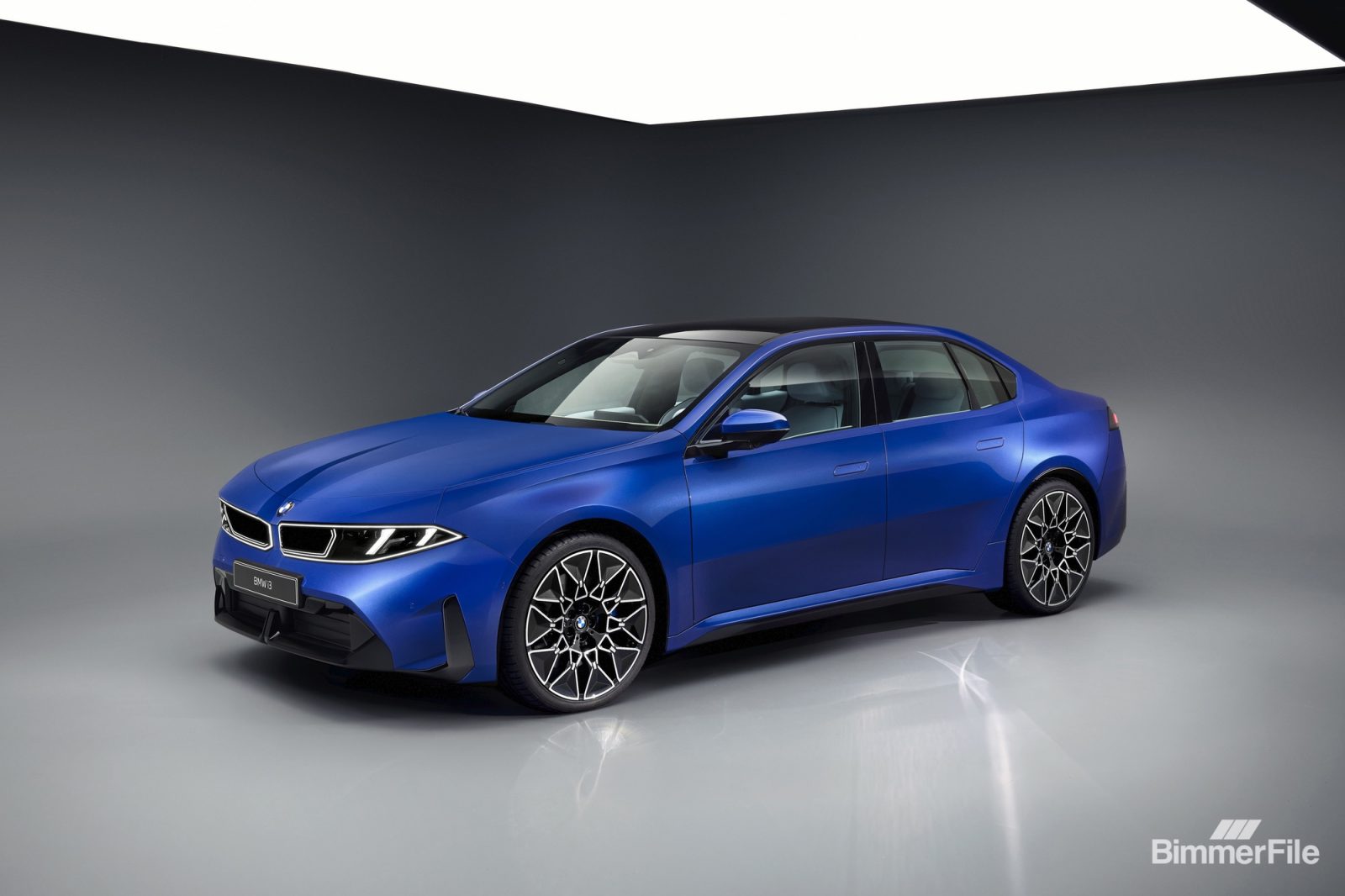
NA0 i3 | Production August 2026, Running Until October 2035
The NA0 i3 is the most important BMW launch since the E46, and that framing isn’t hyperbole. This is the car that ends combustion production at BMW’s Munich plant, the factory that has been building cars since 1922. From the moment the first i3 rolls out the door and the last combustion 3 Series follows it, Plant Munich produces only battery-electric vehicles. That’s not a product update. It’s a declaration.
The i3 itself is built on the full Neue Klasse platform: 800V architecture, Panoramic iDrive X with the windshield-projected display interface, Gen6 eDrive with cylindrical cells, bidirectional charging capability, and multifunction seats that were previously reserved for the 5 Series and above. The rollout is staged: the non-US 50 xDrive launches first in July 2026, with US models and the base 40 following four months later in November, and the M60 xDrive arriving globally in March 2027. A Touring version (NA1) follows in the second half of 2027, though North America is not currently in the plans for that variant.
The i3’s relationship with the G50 combustion 3 Series is worth understanding clearly. These two cars are being designed to look nearly identical, sharing proportions, front-end treatment, and lighting signatures to the point of sharing wheel options. Park them side by side and most people won’t know which is electric and which runs on petrol. That’s a deliberate strategic choice, not a styling coincidence. BMW wants buyers to choose a 3 Series based on powertrain preference, not because one looks like the future and one looks like the past.
What the i3 represents underneath the shared skin is a clean-sheet rethink. The flat battery floor changes the interior packaging in ways a combustion car physically cannot replicate. The Panoramic iDrive X interface is native to this platform, not adapted from another car’s architecture. The 800V charging means roughly 230 miles of range added in ten minutes under ideal conditions. And the efficiency gains from Gen6 eDrive, a 40% reduction in energy loss compared to the previous generation, are baked into every aspect of how this car was engineered from the start.
The question the i3 has to answer isn’t whether it’s technically impressive. It almost certainly is. The question is whether it feels like a 3 Series to people who have cared about 3 Series for decades, and whether it earns new buyers who’ve never had a reason to consider one. BMW needs it to do both at once.

G50 3 Series | Production Late 2026, Running Until October 2035
The G50 is the successor to the G20 and, almost certainly, the final full evolution of the combustion-powered 3 Series. It moves production to Dingolfing and adopts the Neue Klasse design language almost entirely, which means it looks like the i3 from the outside. Inside, the Panoramic iDrive X interface arrives here too, bringing the windshield display and the larger central screen that first appeared in the 7 Series LCI and iX3.
The engine lineup tells the story of where BMW’s combustion development effort is currently concentrated. The 318 and 320 get the B48TÜ3 in various states of tune, and the M350x gets the B58B30M3 at 313 kW with a 13 kW mild hybrid system providing an additional 200 Nm of torque. That M350x figure is a meaningful step up from the current M340i, and it arrives with the same engine going into the G50 X3 M50x and the updated G42 M240i. A 330e PHEV follows in July 2027, though that’s a non-US proposition. Rear-wheel drive returns for base models. The M350x is expected to be xDrive-only.
The G50’s significance goes beyond its own spec sheet. This is the preview of how the next M3’s interior will feel, because the G84 combustion M3 will share the G50’s design language and interface architecture. If the G50’s interior transition, from rotary controller and physical buttons to Panoramic Vision and a large touchscreen, lands well with buyers, the M3 gets a tailwind. If it generates the kind of backlash that some of BMW’s more aggressive interface decisions have produced in the past, the M3 inherits that problem.
The G50 also represents something philosophically unusual for BMW: a car that is the most refined version of a century-old idea, wearing design that belongs to a very different kind of future. The i3 is where the brand is going. The G50 is where the brand is today, optimized to its highest level. That both cars look the same from the outside is either brilliant positioning or a source of confusion for buyers. Probably both.

G22/G23 4 Series | In Production Until June 2029
The current 4 Series coupe and convertible run until June 2029, a year longer than originally planned, and they are not getting a Neue Klasse successor in any confirmed form. The gas-powered M4 ends with this generation. The convertible ends with this generation. What comes after, if anything does in combustion form, is genuinely unclear.
Before the curtain comes down, there’s one meaningful update worth noting. From March 2027, non-US M440i xDrive models receive the B58B30M3 engine upgrade at 294 kW, the same unit going into the G50 M350x and the updated M240i. It’s a substantive improvement in a car’s final years, which suggests BMW sees value in keeping the 4 Series competitive through 2029 rather than letting it coast to end of production.
The styling controversy that followed the G22’s debut in 2020 has largely faded, replaced by the more uncomfortable realization that a direct successor may never arrive. The only confirmed product in this space is the NA2 i4, a fully electric car. Whether that’s enough to sustain the 4 Series identity through the next decade is the question BMW hasn’t publicly answered. Internally, the debate about a combustion coupe built on the G50 platform continues. Externally, there is nothing confirmed, and the clock is running.

NA2/NA3 i4 | Production July 2028, Running Until October 2036
The next-generation i4 enters production in July 2028 and runs through October 2036, making it one of the longer windows in the Neue Klasse plan. Built on the full NK platform rather than the CLAR-based G26 gran coupe architecture that underpins the current i4, the NA2/NA3 finally gives the nameplate what it always should have had: a purpose-built EV foundation with 800V charging, native Panoramic iDrive X, and packaging that doesn’t compromise interior space around a battery that wasn’t part of the original platform design.
The current i4 has been a quiet success. It proved that a BMW electric car could be genuinely enjoyable to drive, earned loyal owners, and found an audience that other EVs in its class hadn’t reached. The NA2 takes that foundation and rebuilds it properly. Range will be substantially better. Charging will be faster. The interior will feel like it was designed for this car rather than adapted from another one.
The more complicated story is what the NA2 represents for the broader 4 Series family. If BMW’s plan holds and no combustion coupe successor to the G22 is approved, the NA2 i4 becomes the only 4 Series in the lineup from 2029 onward. That’s a significant reduction in scope for a nameplate that currently spans coupe, convertible, gran coupe, M4 coupe, M4 convertible, and i4. Whether the electric i4 alone can sustain the 4 Series identity, or whether BMW quietly walks back from that position as EV demand patterns become clearer, is the defining open question for this segment.
BMW has been explicit that combustion will never fully disappear, and the G50 platform will be in production through 2035 with compliant engines available. The economic logic for a combustion 4 Series coupe built on that platform exists. The approved program does not, at least not yet. In a market where EV adoption in the US has plateaued and buyer preferences for two-door cars remain stubbornly niche, the pressure to revisit that decision will only grow. BMW has built the flexibility into its platform strategy to act on it. The question is whether it will.
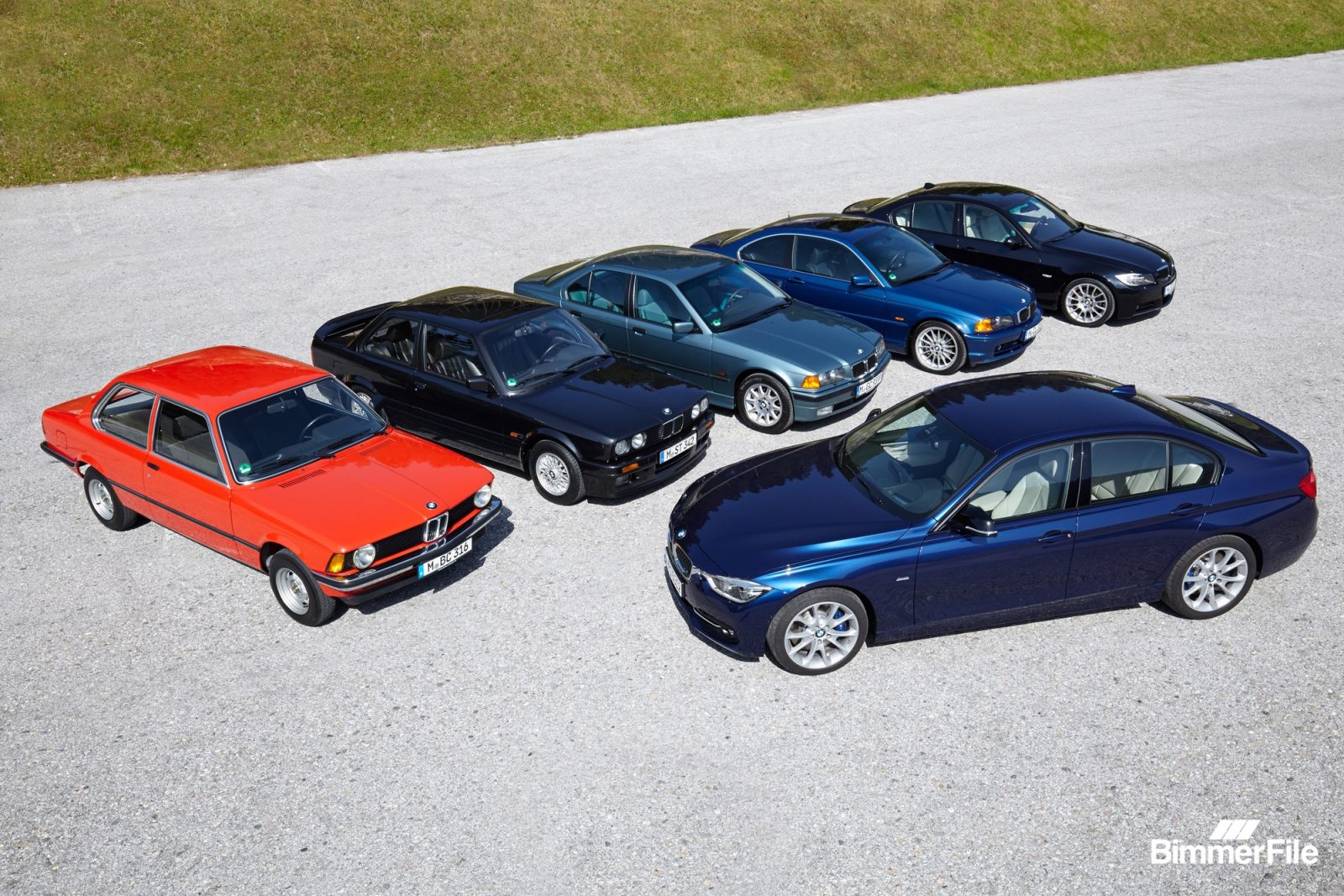
The Bigger Picture
What BMW is doing with the 3 Series and 4 Series is not a clean transition. It is a deliberate hedge, built on a platform strategy designed to keep options open rather than commit to a single outcome. The i3 and G50 make two fundamentally different versions of BMW’s most important car. The i4 continues alone while the combustion 4 Series runs out. And underneath all of it is the recognition that nobody, including BMW, knows with certainty where buyer preferences will land by 2030.
The 3 Series has survived every major automotive transition of the past fifty years by being the best version of what a driver’s car should be in any given era. The i3 and G50 are BMW’s bet that the answer to what comes next is not one car but two. Whether that bet pays off will tell us more about BMW’s next decade than any single model launch could.