

BMW Group just posted its worst Q2 profitability in years, and the company is not pretending otherwise. Group pre-tax earnings fell 35.1 percent to €1,697 million in the second quarter, automotive EBIT margin dropped to 2.3 percent, and free cash flow in the segment collapsed 73.4 percent to €513 million. None of that is a surprise after June’s guidance cut. What matters more is what BMW is doing about it, and the shape of that response tells you a lot about where the next several years of this company are headed.
The numbers, without the spin
For the first half of 2026, BMW Group delivered 1,156,727 BMW, MINI and Rolls-Royce vehicles, down 4.2 percent year on year. Revenue came in at €62,266 million, off 8.0 percent. Group EBT margin for H1 landed at 6.5 percent, down from 8.5 percent a year earlier, and automotive EBIT margin for the half was 3.6 percent, well below the 6.2 percent posted in H1 2025.
The story inside those numbers is regional and stark. China deliveries fell 20.4 percent for the half and 30.2 percent in Q2 alone, a decline CEO Milan Nedeljković and CFO Walter Mertl both pointed to as the single largest driver of the miss. Europe grew 5.4 percent for the half and accelerated to 7.6 percent in Q2. The US grew 3.9 percent for the half and 11.9 percent in Q2. On paper, that reads as a wash. In practice, it means the two markets BMW built the Neue Klasse rollout around are performing exactly as hoped, while the market BMW has relied on for two decades of volume is behaving like a different business entirely.
MINI, notably, had a strong half. Deliveries rose 11.7 percent to 149,535 units, with Q2 growth of 17.1 percent, and electrified models made up 36.9 percent of the brand’s volume. In a report full of declining figures, MINI’s line stands out, and it is worth remembering that a meaningful share of that growth is riding on electric variants at a moment when BEV demand elsewhere in the portfolio is uneven.
The restructuring is not cosmetic
The headline move out of this report is the agreement BMW reached with its Works Council on a workforce restructuring program, including a voluntary severance scheme for indirect functions in Germany. Nedeljković was direct about the intent: leaner, faster decision making, and a lower cost base that starts showing up in the numbers from 2027 onward. Mertl added that the automotive EBIT margin guidance of 1 to 3 percent for the full year already carries a built in burden of up to 1.25 percentage points tied to this program.
That is an unusually candid admission. BMW is telling investors, in effect, that fixing the cost structure will make this year’s numbers look worse before they look better. It also lines up with a broader set of structural priorities Nedeljković laid out on the call: reworking the customer journey and sales model in Europe, using AI to speed up internal decision making, rethinking global sourcing toward a more local for local model, and standardising engineering to cut development time. None of that is new territory for a legacy automaker under margin pressure, but the pace being described here, with visible impact expected within a year, is faster than BMW has typically moved.
Neue Klasse as the long game
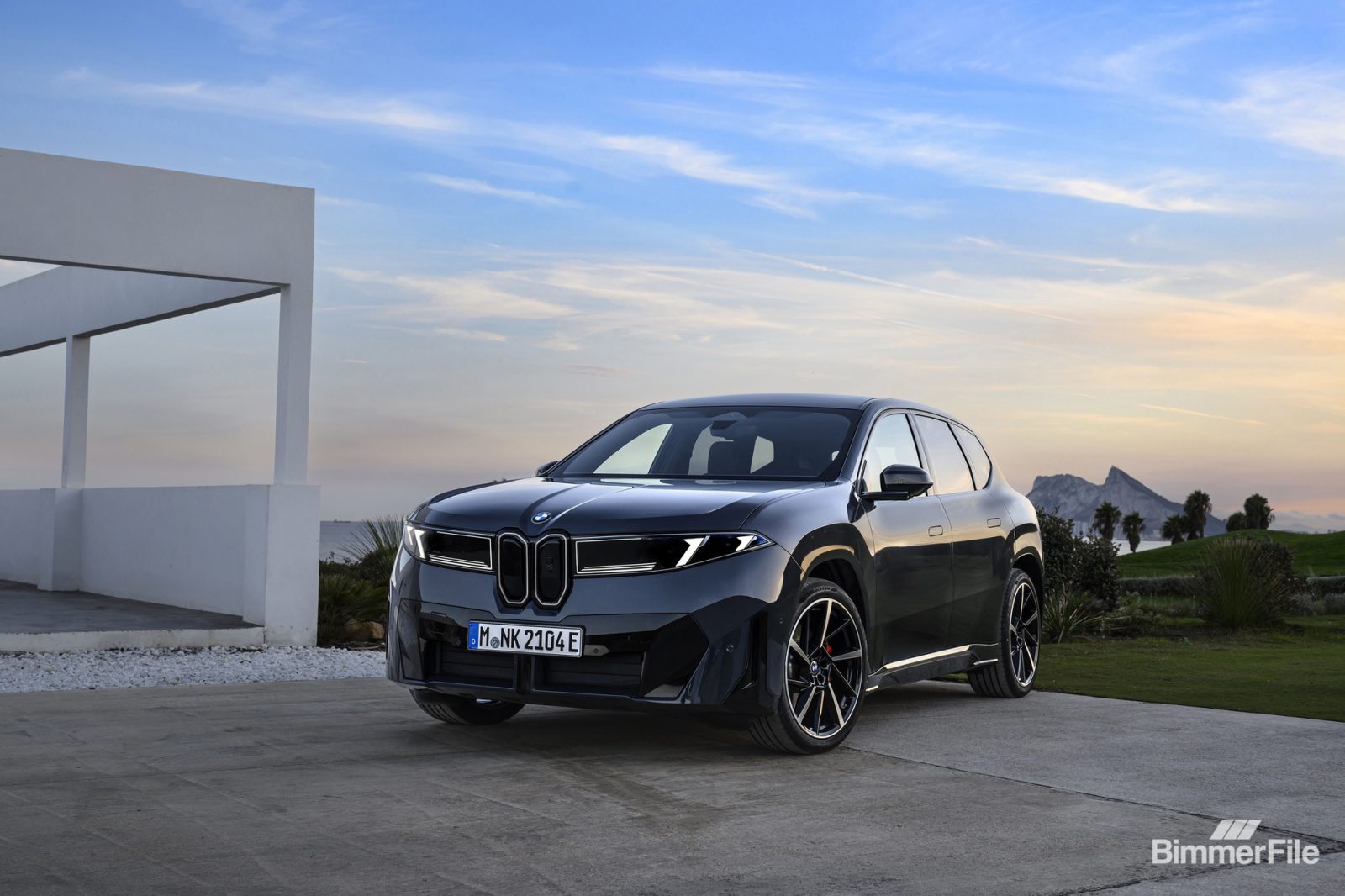
Strip out the noise from China and the restructuring headlines, and the more durable story is that Neue Klasse is doing what BMW said it would. The iX3 is tracking toward its first 100,000 order milestone, and BMW added a second shift at Plant Debrecen ahead of schedule to keep up. The i3 has drawn strong early demand in its launch edition ordering phase. The fifth generation X5, which brought Neue Klasse technology to a five drivetrain lineup, has had what Nedeljković called an extremely positive reception since its premiere.
The bigger tell is the roadmap behind those cars. BMW says it will launch 40 new and updated models by the end of next year, including Neue Klasse variants of the iX3 and a long wheelbase i3 built specifically for China at the Shenyang plant, developed with local tech partners baked in. That is the local for local strategy Nedeljković described applied directly to the market causing the most pain right now, which suggests BMW’s read on China is not retreat, it is a bet that the wrong products were on offer, not the wrong market.
Europe’s BEV growth of 37.9 percent in Q2, largely credited to the iX3 launch, supports that read, and lines up with what we covered here in July when the sales figures first came out ahead of the full financial report.
The target that matters most
Buried near the end of Nedeljković’s remarks is the number that should anchor how you read everything else in this report: BMW intends to return to its strategic EBIT margin corridor of 8 to 10 percent by the start of the next decade. That is a multi year runway, not a quick fix, and it is a tacit admission that 2026 and likely 2027 are transition years, not recovery years.
That framing matters for how the rest of this year’s coverage should land. Every Neue Klasse launch, every restructuring update, every regional sales report from here forward is a data point on whether that corridor target is realistic or aspirational. BMW has given itself cover to post weak numbers through the workforce program and R&D pullback (down 7.6 percent for the half, with capex down 30.5 percent), betting that the product pipeline and cost base reset land before the next real downturn hits. It is a coherent strategy. Whether it is the right one depends almost entirely on whether Neue Klasse scales as fast in China as it appears to be scaling in Europe.