

Winter is in full swing. For those of us who live in our RVs full-time, this means we either need to A) head south to warm weather, or B) plan to deal with a set of season-specific problems.
Most of the time, my family chooses the former option—but for the past couple of years, we have wintered in Oklahoma, where we have experienced true winter weather while living in an RV. This has meant taking extra precautions and dealing with some unfortunate situations.
In this article, I will share the most important precautions we take while winter RVing, as well as some of the mistakes we’ve made and how you can avoid them.
Frozen Water Lines and Pipes
Easily the most common winter RVing problem, frozen water lines are a real pain in the neck. We actually had our first experience with this in our new-to-us motorhome after a freak October ice storm. Some of our water lines froze and we didn’t realize it, so when we hooked up to a water source for the first time after the storm, we had water pouring out of the bottom of our RV. We ended up replacing several water lines and it was not a fun time.
Warning Signs
- No water flow from faucets
- Reduced water pressure
- Frost on exposed pipes
- Unusual smells when attempting to run water
- Water leaks under sinks, behind walls, or from the outside of the RV
How to Prevent It
If you won’t be staying in your RV during the freezing weather, winterize it. This is the most surefire way to avoid frozen water lines and all the issues that come with them.
That said, if you will be staying in your RV when the temperatures drop below freezing, you’ll have to come up with a different method of protecting your plumbing. In this case, you will want to insulate exploded pipes and water lines with foam and invest in a heated water hose.
Keep the interior of your RV heated and open the cabinet doors to allow warm air to reach water lines. I also recommend heating the underside of your RV using a small space heater (tank heaters are also a great investment).
How to Fix It
You can fix this problem by using a hair dryer or heat gun to thaw the frozen lines. Once the frozen spots are thawed, inspect the plumbing for leaks. If you find a burst line, turn the water off right away and replace the damaged section with PEX fittings.
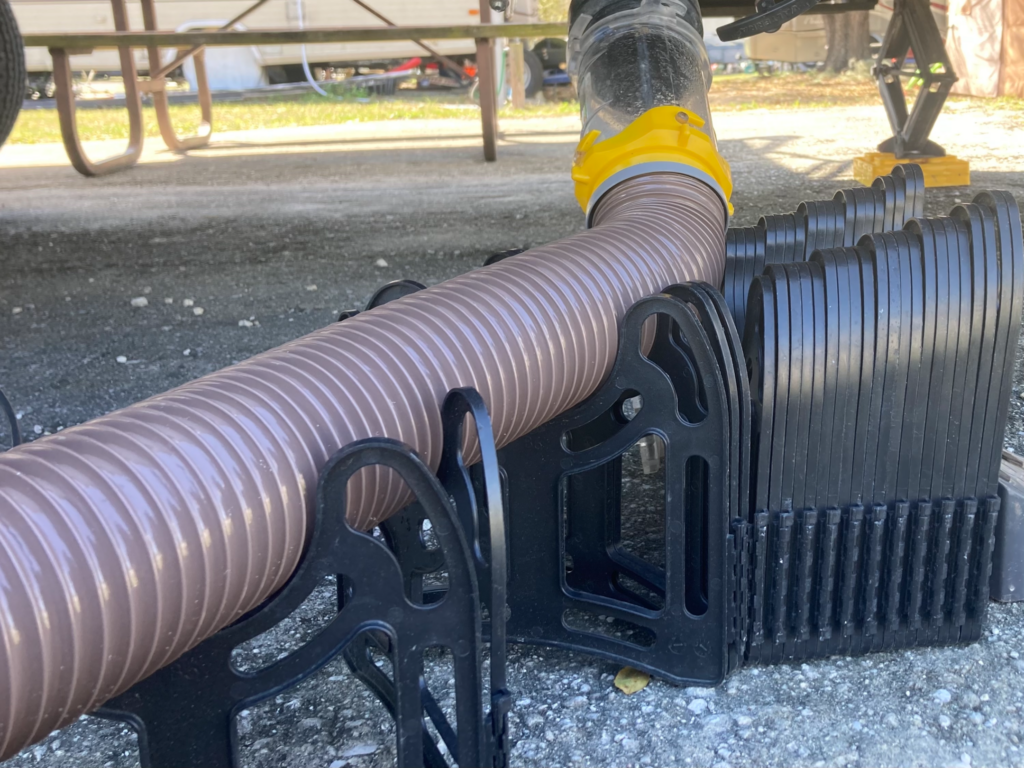
Frozen Sewer Hoses and Dump Valves
Another thing that can and will freeze? Your sewer hose and dump valves. The end result is a heavy “poopsicle” in your hose that makes it impossible to dump your tanks. This is an issue that I definitely don’t want to deal with—like, ever—so I make sure to take steps to avoid it.
How to Prevent It
We prevent this problem by keeping our dump valves closed and only emptying the tanks when they reach about ¾ full. For extra measure, you could use a heavy-duty sewer hose rated for cold temperatures and insulate the hose with foam wrap, but I’ve never done this and we’ve never had a problem.
How to Fix It
To thaw a frozen hose, pour warm (but not boiling) water over the frozen section. If a valve is the problem, use a space heater or even a heating pad near the valve area. If it comes down to it, you could always thaw the hose indoors, but I wouldn’t recommend it because it’s sure to be pretty gross as it thaws. It’s also good to note that a sewer hose that froze is likely to have a leak, so that’s something you’ll want to look out for.
Furnace Failures
Okay, so really an RV furnace could fail at any time of year. That said, you aren’t likely to notice it during the summer months, making furnace failure a winter problem. We’ve been fortunate enough to never have issues with our RV furnaces. That said, there are many reasons a furnace could fail, including dust buildup, low battery voltage, airflow blockages, and more.
Common Causes
- Dirty burner chamber
- Blocked exterior exhaust vent
- Weak house batteries
- Faulty sail switch or limit switch
How to Prevent It
To ensure you don’t have problems with your RV furnace, you might want to clean the vents before winter hits. It’s also a good idea to inspect exterior exhaust ports regularly for snow, ice, or insect nests, and maintain fully charged batteries. Lastly, we like to run our furnace from time to time even though we rely mostly on space heaters to keep our RV warm.
How to Fix It
If you have a problem with your furnace, check the house battery voltage first, as many furnace “failures” are electrical. You should also clean the burner and fan assembly. If the ignition clicks but doesn’t light, the sail switch may need cleaning or replacement.
Condensation and Moisture Buildup
One of the biggest winter RV problems we have faced? Moisture buildup. When the interior of an RV is warmer than the exterior, condensation tends to gather on the walls. People breathing, releasing steam into the air while cooking and showering, and running the propane furnace all add to this problem, to the point where you could see water literally dripping down your walls.
Problems Caused
All of this moisture buildup is a problem because it can cause issues such as:
- Mold and mildew
- Rotting wood
- Fogged windows
- Damp bedding and clothing
How to Prevent It
We run a dehumidifier constantly throughout the winter to get rid of condensation in the RV. It also helps to run roof vents while cooking and showering, or to crack windows on opposite sides of the RV to encourage airflow.
DampRid in cabinets and closets is great if you have trouble with moisture gathering in these places, something I have noticed in every RV we’ve owned.
How to Fix It
If you do notice condensation in your RV, wipe the excess moisture off the walls right away. Treat mold immediately with vinegar or RV-safe mold cleaner, replace moldy mattresses and clothing, and repair soft spots caused by moisture buildup.
Slide, Roof, Seal, and Vent Damage
We’ve only seen snow and ice a handful of times while living in our RV. That said, every time we do, I worry about damage to the roof, slides, vents, and seals.
I have heard plenty of times that the weight of heavy snow can damage vents, skylights, and roof seams, and that freeze-thaw cycles widen small cracks into major leaks. On top of that, snow and ice collect on slides, and when those slides are brought in, frozen debris can tear seals or prevent full closure (not to mention the melty mess that ends up indoors).
How to Prevent It
You can prevent damage caused by ice and snow by using a roof rake to clean the top of your rig regularly—especially before moving—and using slide toppers to prevent accumulation on the tops of your slides. It’s also a good idea to avoid parking under trees, which can drop snow and ice (along with broken branches) onto your RV.
Checking seals before winter sets in and using conditioner on slide seals can also help prevent leaks from cracked seals.
How to Fix It
If you run into issues with snow and ice accumulation, remove the snow gradually. Look for leaks and patch them immediately with RV-specific sealant. Replace cracked vent covers and torn slide seals promptly, and never ever force a slide in or out.
Tire Problems and Flat Spots
Pretty much anytime we stay in cold weather for any length of time, we leave with RV tires that need air. This is because cold air reduces tire pressure. If you stay parked in one spot long enough, this can lead to flat spots and even cracking.
How to Prevent It
I try to check our tire pressure regularly—even when parked for long periods of time—to ensure the tires don’t develop flat spots. Tire covers can help protect your tires from weather exposure, and moving the RV every few weeks can also help keep them healthy.
How to Fix It
Believe it or not, flat spots often resolve themselves after driving. That said, severe cases (or cases where the tires have been cracked) will require replacement. Before driving after being parked in cold weather, make sure to inflate your tires to the manufacturer’s specifications.
These are some of the more common winter RV problems. Most of these we have dealt with at one point or another, and those we haven’t seen are issues our friends have dealt with. Fortunately, all of these problems are completely preventable.
I highly recommend doing what you can to avoid the issues in the first place, and if you miss something and damages do occur, make sure to repair them as soon as possible in order to avoid even bigger ordeals down the road.