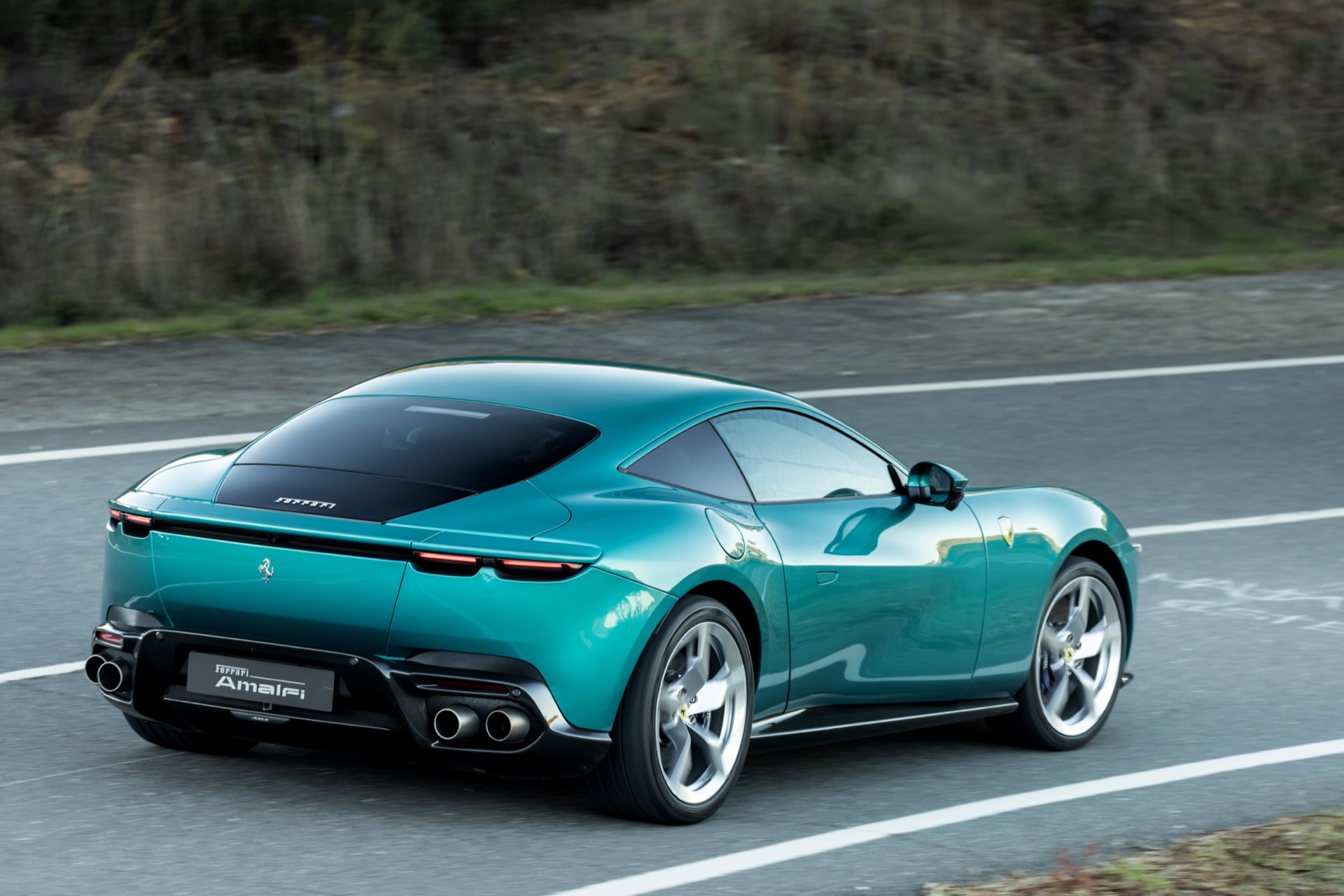

The Amalfi arrives as Ferrari’s new front-mid-engined 2+ coupé, replacing the Roma and proving that “entry-level” is only a price point. This is a wonderfully athletic GT that keeps the recipe refreshingly simple: a twin-turbo V8 up front, an eight-speed dual-clutch gearbox, rear-drive balance, and driver-focused technology that enhances rather than distracts.
At its heart is the latest evolution of the F154 V8. It delivers 640 cv at 7,500 rpm with a 7,600 rpm red line, good for 0–100 km/h in 3.3 sec and 0–200 km/h in 9.0 sec. Ferrari cites a best-in-class power-to-weight ratio of 2.29 kg per hp. On the road you feel the way the Amalfi stacks thrust: razor-sharp throttle response, clean pick-up, and upshifts that drop you into an even stronger band of torque. The dual-clutch gearbox is a highlight. Shifts are very quick; if the default thump on aggressive upshifts feels a touch theatrical, a calmer map tones it down.
Turbo control and calibration make the numbers feel natural. Independent turbo-speed management for each bank, higher maximum turbo rpm, and dedicated pressure sensing help the engine pick up from low revs and charge to the top. The flat-plane crank and equal-length runners add clarity of response and a purposeful note as revs rise. Hold a gear and the Amalfi rewards you with pull and sound that build to the limit.
Chassis tuning convinces from the first kilometre. Steering and primary controls feel “very Ferrari”: immediate, accurate, never frantic. Side Slip Control 6.1 links the e-diff, torque management and brake control to give a confident, playful balance. The front axle keys in quickly, the wheel gains reassuring weight just off centre, and with the Manettino in more permissive modes the rear breathes without biting. ABS Evo, using a 6D sensor to estimate true vehicle speed and optimal tyre slip, tidies straight-line stops on mixed surfaces and adds stability when the road is less than perfect.
The only system that required brief acclimatisation was brake-by-wire. Pedal feel is consistent once your foot learns the initial bite, and modulation soon becomes second nature. Day to day, Bumpy Road Mode remains a faithful Ferrari trick for broken tarmac, while the nose-lift proves its worth over monumental speed humps.
Aerodynamics are neatly integrated rather than showy. Underbody fairings trim drag, the floor and diffuser manage wake, and an integrated rear wing switches between low-drag and higher-downforce settings to keep the car calm at speed without visual fuss. The effect is simple: the Amalfi stays planted as lateral load builds, with no lift to undo the steering’s good work.
Inside, Ferrari has fixed the key frustration. The steering wheel now uses physical buttons, including a proper aluminium start button. The triple-screen HMI pairs a 15.6-inch driver display with a 10.25-inch central touchscreen and an 8.8-inch passenger screen. Wireless Apple CarPlay and Android Auto are standard, and a neatly milled aluminium centre tunnel houses the charger and switchgear. Materials feel rich and well assembled. Only one seat type is offered; deeper bolsters would be welcome if you live near the limit, but heating, ventilation and massage make long days painless. The rear seats are best for bags and jackets, which suits the brief.
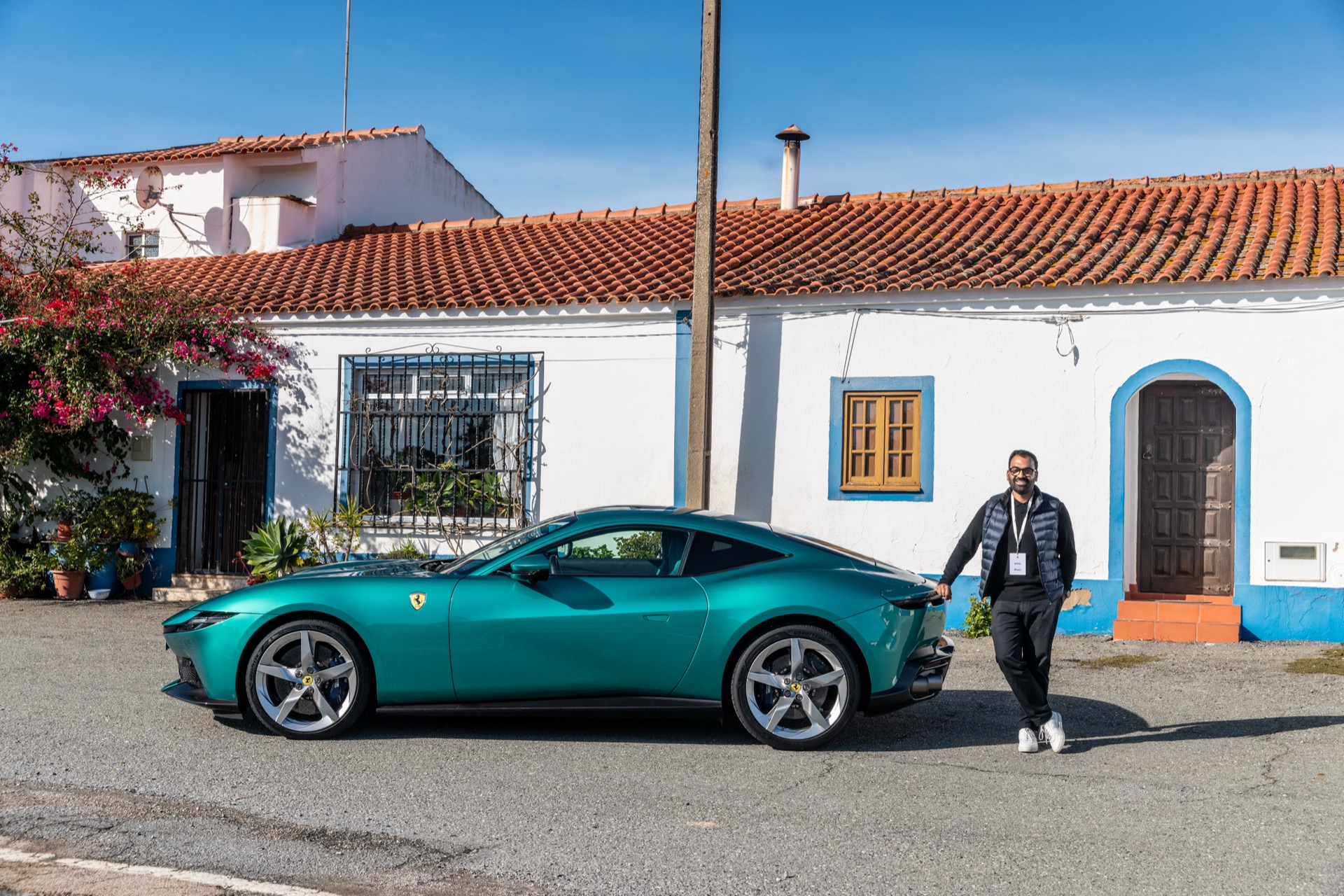
The design evolves the Roma’s clean, sculptural theme. Fewer lines, more surface. The nose looks tidy and technical without jewellery, while the tail hides the lamps within crisp graphic cuts above a functional diffuser. It reads modern and confident rather than theatrical, which suits the car’s character.
What lingers is the ease with which the Amalfi serves its performance. The steering is precise, the throttle is trustworthy, and the chassis invites you to explore the balance. Ferrari’s control philosophy: SSC 6.1, ABS Evo, predictable DCT mapping; works quietly in the background, helping you feel skilful rather than supervised. This is, in the best sense, a driver’s GT: quick, communicative, and effortless to gel with.
The Amalfi may sit at the entry point to Ferrari’s range, but it feels anything but basic. The powertrain is vivid, the chassis is beautifully judged, and the cabin finally marries modern tech with sensible ergonomics. If you want a Ferrari that looks elegant, goes hard, and communicates clearly, without hybrid complexity or all-wheel-drive weight, this is it. Entry-level is just the label. The experience is pure Ferrari.