If you list your RV with RVshare or another RV rental company, there’s a significant electrical update coming; one that affects both your fleet and your renters’ safety. Beginning with the 2026 National Electrical Code (NEC), RVs with 30-amp or 50-amp electrical service will be required to install a Grounding Monitor Interrupter (GMI). This new device is not just a technicality; it’s a game-changer for reducing serious risks like “hot skin.”
In this post, we’ll break down what a GMI is, why it’s becoming required, the risks it addresses, and how your rental business can prepare, ensuring safer RV experiences for your customers and lower liability for you.
What Is a Grounding Monitor Interrupter (GMI)?
A Grounding Monitor Interrupter is a “loss-of-ground” safety device. According to RVIA, before any electrical current flows into the RV, the GMI checks the pedestal or receptacle to ensure there’s a proper ground connection. If the ground is missing or if there’s a fault, the GMI cuts off power to prevent danger.
Once power is running, the GMI continues to monitor ground continuity. If the ground becomes compromised while electricity is flowing (for example, due to a damaged shore cord), the GMI will disconnect power immediately.
Why Is the New GMI Requirement Coming?
Addressing “Hot Skin” Hazards
One of the primary motivations behind the GMI requirement is to prevent a phenomenon called “hot skin.” This occurs when the RV’s metal parts (like the chassis or exterior) become electrified due to a faulty or missing ground.
Without a proper ground, there’s a risk that electrical current could flow through the RV’s metal surfaces, which is a serious shock hazard. The GMI ensures the ground path is solid before allowing power in, and interrupts it if that path fails during use.
National Electric Code (NEC) Enforcement
The requirement stems from an update to the National Electric Code(NEC). Article 551 of the NEC covers RVs and RV parks, and the 2026 edition finalizes the GMI requirement.
Although the 2023 NEC first introduced the loss-of-ground device requirement, the enforcement was delayed until 2026 because, at the time, no compliant GMI devices were commercially available.
Implications for RV Rental Businesses
As an RV owner renting out your RV, this update affects you in several ways:
Safety First: Ensuring all your RVs comply with the GMI requirement makes your rentals safer. It significantly mitigates the risk of electrocution or shock from ground faults.
Liability Protection: If a rented RV suffers from a ground-fault accident (or “hot skin”), and your RV isn’t GMI-equipped, your business could be exposed to legal liability.
Fleet Upgrades: If you own or manage RVs without GMIs, you’ll need to plan for retrofitting or phasing in GMI-equipped models to stay compliant.
Renter Education: Educating renters about the GMI’s function will help them understand why sometimes their power might cut off, letting them know it’s not just a nuisance trip, it’s a safety mechanism.
Partnership With Campgrounds: Since the GMI checks pedestal grounding, the condition of campground electrical systems matters. Communicating with campgrounds about this change strengthens your relationships and ensures safer stays.
How to Prepare Your RV Rental Business
Here are recommended steps to get ready for the GMI requirement:
Audit Your Fleet
Identify which of your RVs have 30A or 50A shore power.
Check if they already have GMI devices, or if they’ll need to be retrofitted.
Work With Licensed Electricians
Hire an electrician who understands NEC code changes.
Have them inspect your RVs’ power systems and install Type II GMIs where needed. (NEC 551.40(D) lays out the requirement for where the GMI must be installed.)
Train Your Staff
Teach your team how GMIs work.
Prepare a checklist for pre-trip inspections (e.g., verifying the GMI is active, making sure shore cords are undamaged).
Create Renter Resources
Add a section in your rental agreement and renter handbook explaining GMIs, why they are required, and what happens if power cuts.
Consider a brief demo video or illustration showing how the GMI protects them.
Engage with Campgrounds
Talk to the campgrounds you partner with about their electrical systems. Make sure their pedestals have good ground continuity. RVIA recommends parks test their ground continuity from pedestal to main panel regularly. (RVIA)
Encourage their maintenance teams to use portable receptacle testing devices to verify readiness. (RVIA)
Monitor Code Updates
The NEC is updated every three years. While 2026 is the current milestone for GMI enforcement, stay on top of future changes.
Follow RVIA announcements for the latest guidance. (RVBusiness – Breaking RV Industry News)
Communicating to Renters: Sample Messaging
Here’s a sample blurb you could include when corresponding with renters:
“New Electrical Safety Feature (GMI) – For your protection, our RVs built with 30A or 50A shore power now include a Grounding Monitor Interrupter (GMI). This device checks the campground plug for proper grounding before allowing electricity to flow, and it actively disconnects power if it detects a problem – helping prevent electrical shock or “hot skin” danger. If the power goes off unexpectedly, don’t worry: it’s a built-in safety cut-out, not a malfunction. Please reach out to us if you have any questions about how it works.”
Breakdown
The upcoming GMI requirement is more than a regulatory update. It’s a major step forward in keeping RV users safer. As an RV rental company, being proactive now means you’ll:
Protect your customers from electrical hazards
Reduce liability for your business
Strengthen trust with renters and campgrounds
Stay ahead of compliance and industry standards
Start planning today, audit your fleet, talk to your electrician, educate your team, and let your renters know that their safety is a top priority.
GMI Frequently Asked Questions
What are Grounding Monitor Interrupters (GMIs)? Grounding Monitor Interrupters (GMIs) are safety devices that will be required on many RVs beginning in 2026. A GMI checks your campsite’s electrical ground before powering your RV and keeps monitoring for safety. If a problem is detected, it automatically disconnects power to prevent shocks. If your RV loses power, check your site’s power source or cord. Contact your rental provider if you need help with GMIs or hookups.
Explain the new RV GMI rule in simple terms: The upcoming 2026 GMI requirement ensures your RV will only receive power if a safe ground connection is detected, reducing shock and wiring hazards. Always inspect the shore power cord and pedestal before use, follow your rental company’s guidelines, and never bypass safety devices. If power stops unexpectedly, contact campground staff or your RV provider.
How does a GMI protect RV users? A Grounding Monitor Interrupter (GMI) safeguards RV users by checking for a secure ground before allowing electricity from a campground’s power source. If it detects an unsafe ground, it blocks power to prevent shocks or “hot skin.” The GMI continues to monitor and will disconnect power if a hazard appears, providing ongoing protection and making RV stays safer.
Do older RVs need a GMI installed? RVs built before 2026 aren’t required to have a Grounding Monitor Interrupter (GMI), but adding one is highly recommended for safety, especially for rentals or frequent campground use. Installing a GMI reduces electrical hazards, shows commitment to safety, and may soon be required by insurers or rental platforms. Consult a licensed RV electrician to ensure upgrades meet current standards and maintain competitiveness in the rental market.
What makes a Grounding Monitor Interrupter (GMI) compliant? A compliant Grounding Monitor Interrupter (GMI) must meet current NEC 551.40(D) standards for RVs and be tested by a recognized safety agency like UL. Choose a GMI designed for RV use with continuous monitoring and automatic shut-off to ensure code compliance and safety. Always select manufacturers who provide proof of NEC compliance and have your GMI installed by a qualified electrician familiar with RV systems.
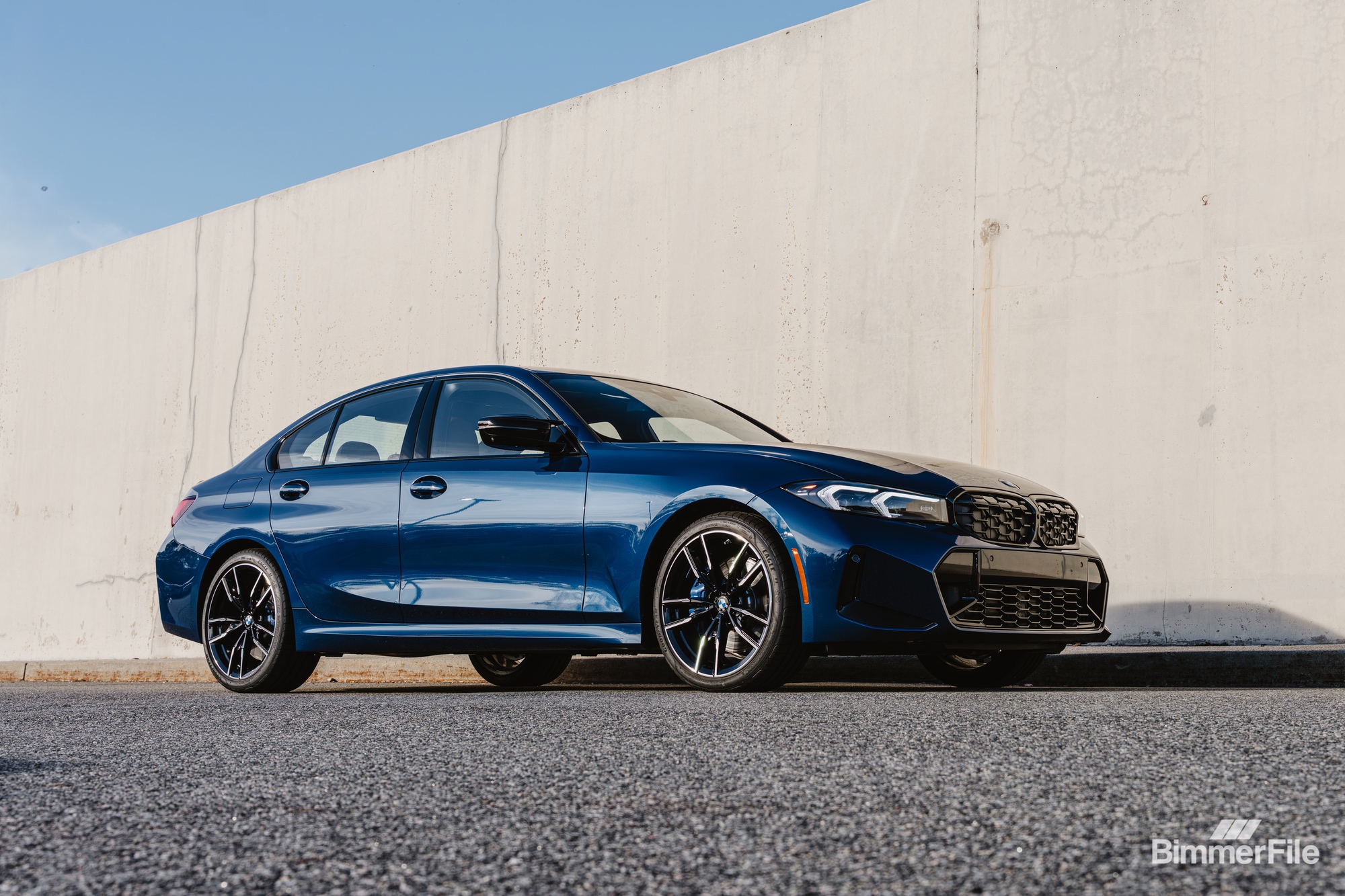
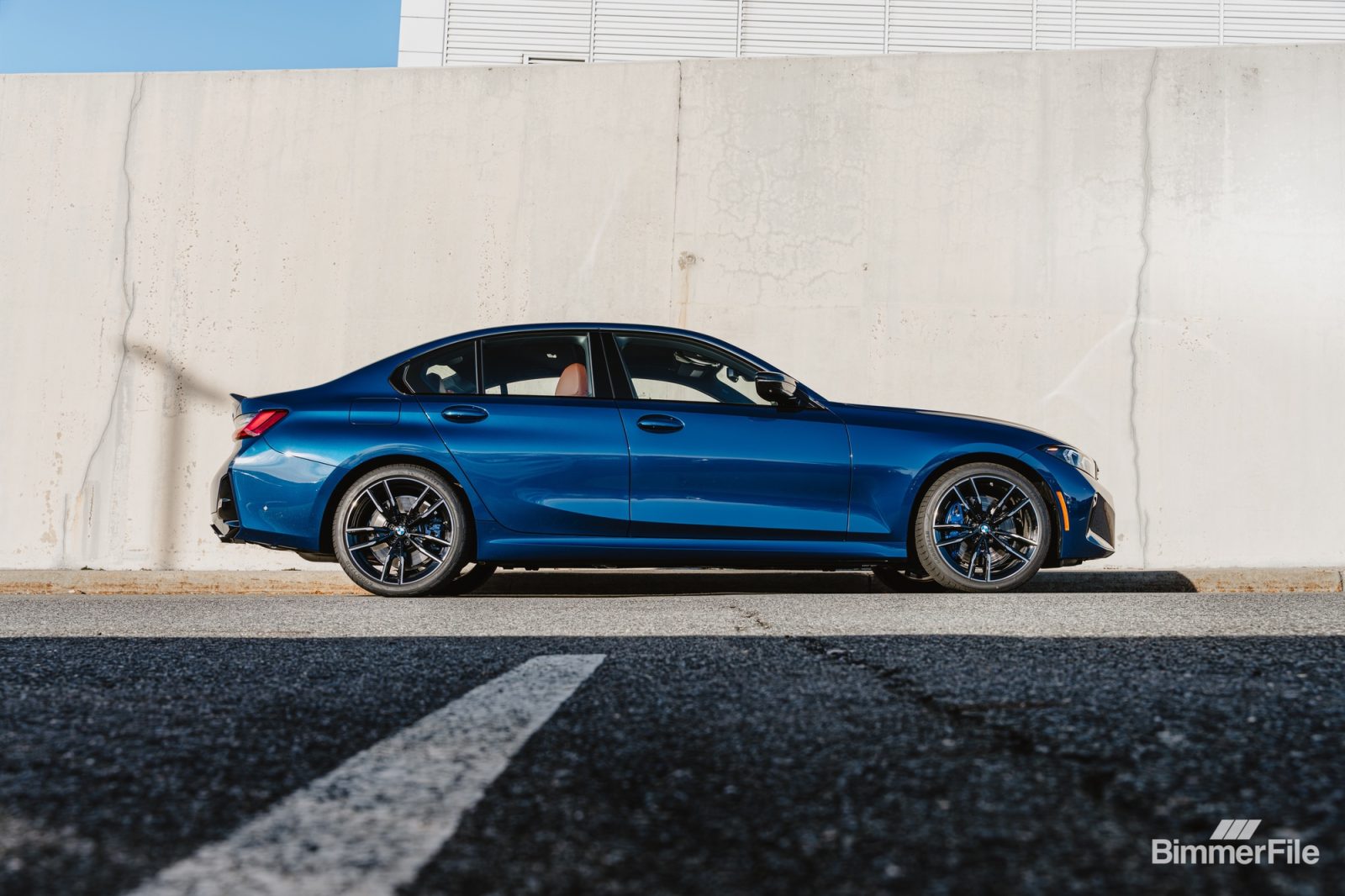
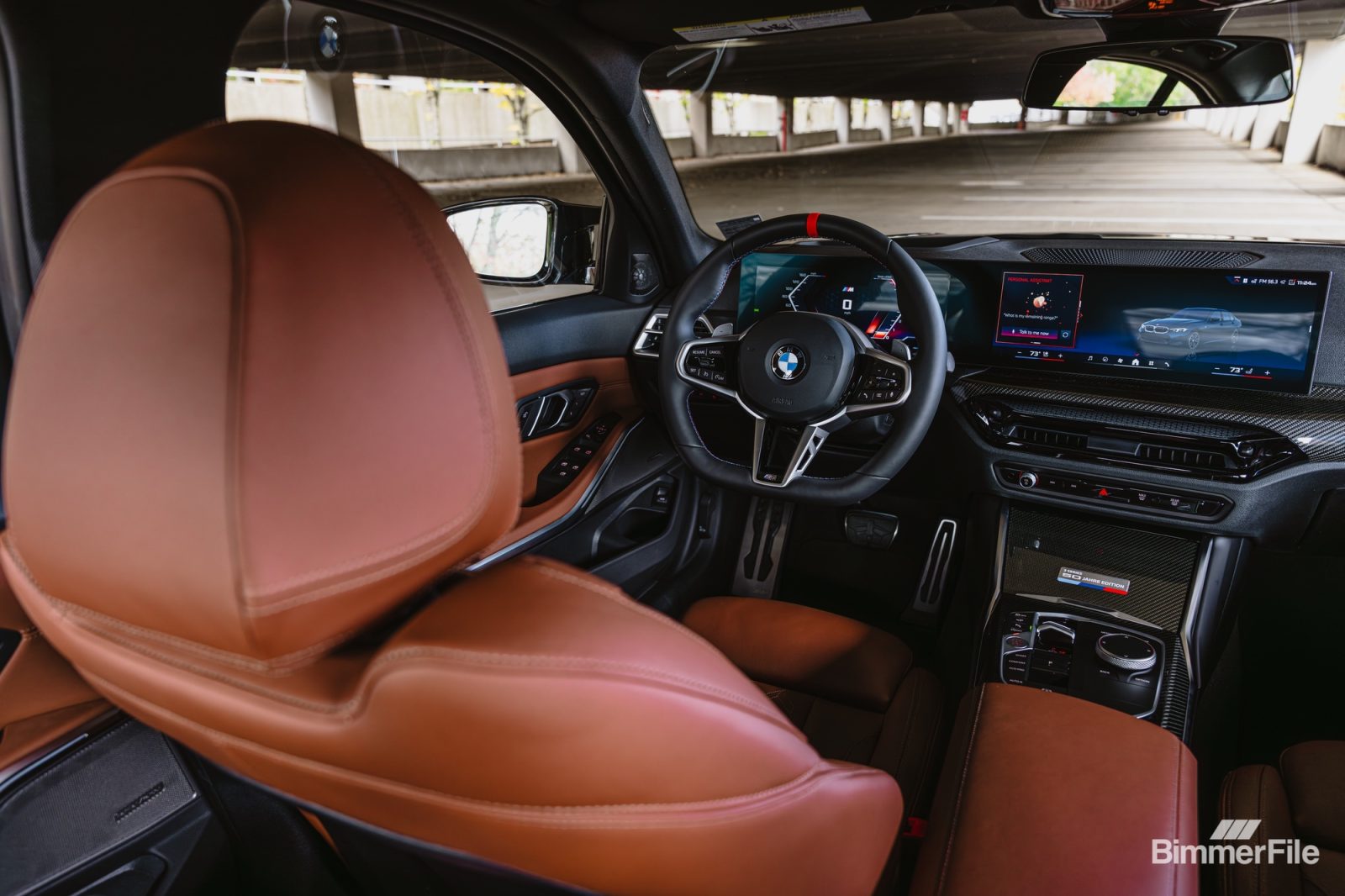
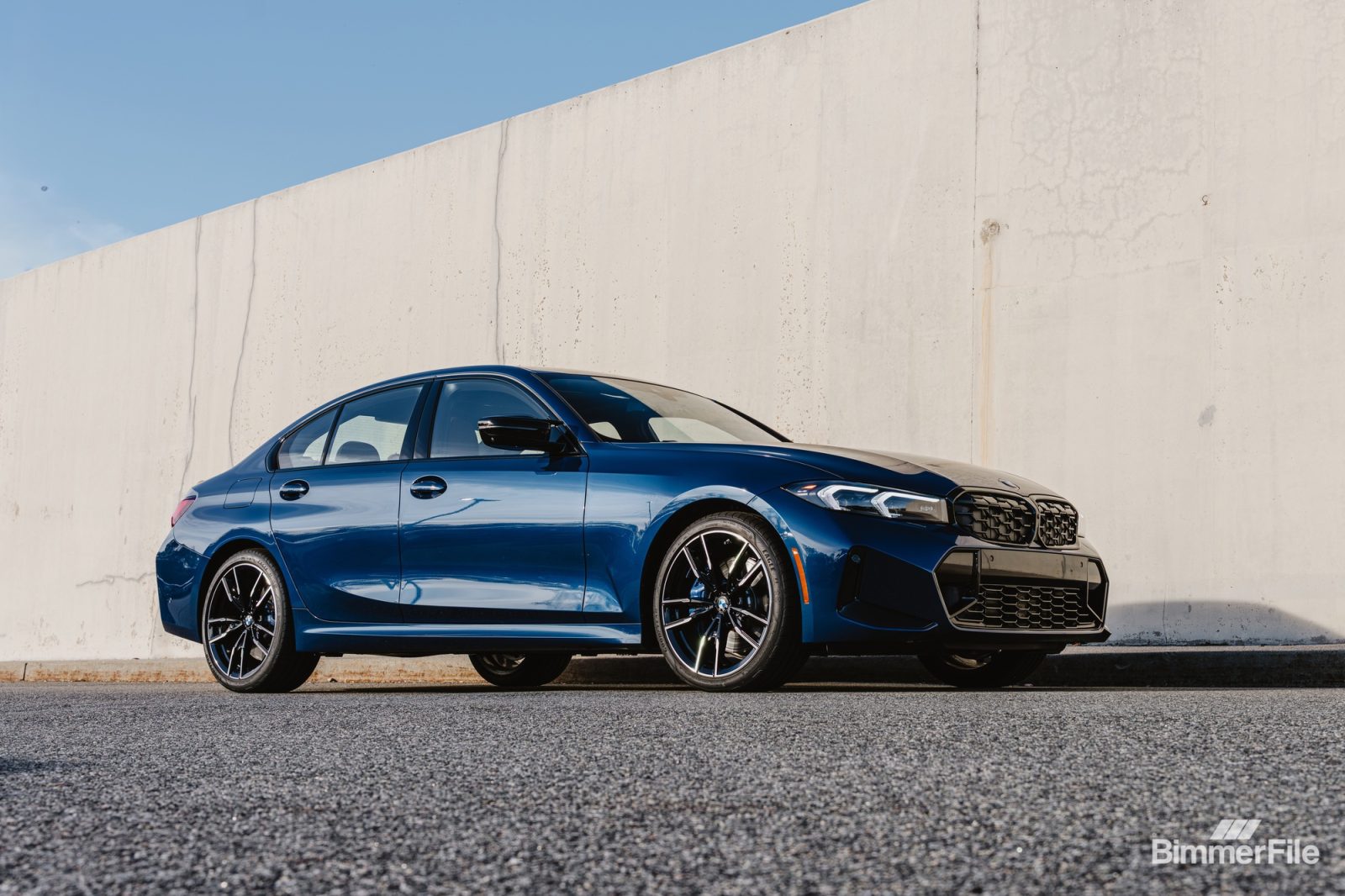
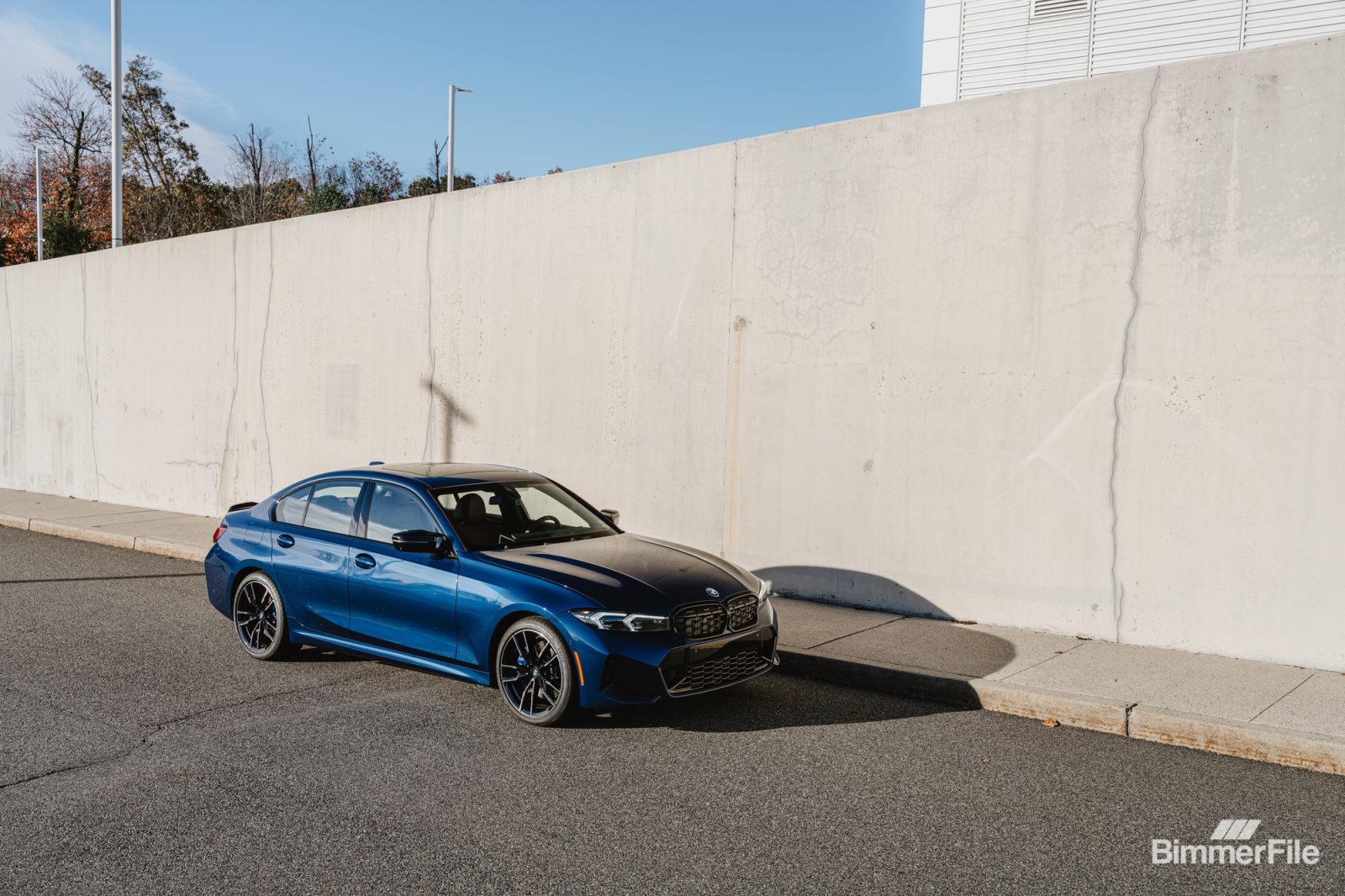
BMW is celebrating fifty years of the 3 Series with something more meaningful than a badge package or a new wheel finish. The 2026 BMW M340i xDrive 50 Jahre Edition is a curated, heritage-driven spec that ties the modern G20 to five generations of the cars that built the sports-sedan blueprint. And unlike recent “limited editions” that felt more like option bundling, this one genuinely leans into BMW Individual, material upgrades, and performance touches you normally have to spec yourself.
It is also, in classic BMW fashion, very limited and very focused. One configuration. Five heritage-inspired looks. No additional options. And a price that puts it squarely into M3 territory at $75,200 plus $1,175 destination.
Still, this is an intriguing nod to half a century of the 3 Series, and one of the most thoughtfully executed special editions BMW has done in years.
A Heritage Palette That Actually Matters
BMW went deep into its back catalog for the 50 Jahre Edition, reviving signature colors from the first five generations of the 3 Series and pairing them with interior hues that feel properly considered. Each version gets either red or blue M Sport brake calipers, depending on the combination.
The five design packages:
Generation
Paint
Upholstery
Brake Calipers
1st (E21)
Ruby Red Metallic
Ivory
Red
2nd (E30)
Boston Green Metallic
Tartufo
Blue
3rd (E36)
Avus Blue Metallic
Tartufo
Blue
4th (E46)
Carbon Black Metallic
Black
Red
5th (E90)
Sparkling Graphite Metallic
Tartufo
Red
For longtime BMW fans, these colors are far more than marketing names. Ruby Red on an E21. Boston Green and Avus Blue on the E30 and E36. Sparkling Graphite on the E90. These shades defined eras, and seeing them layered onto the G20 feels like a quiet reminder of how central color was to the identity of each generation.
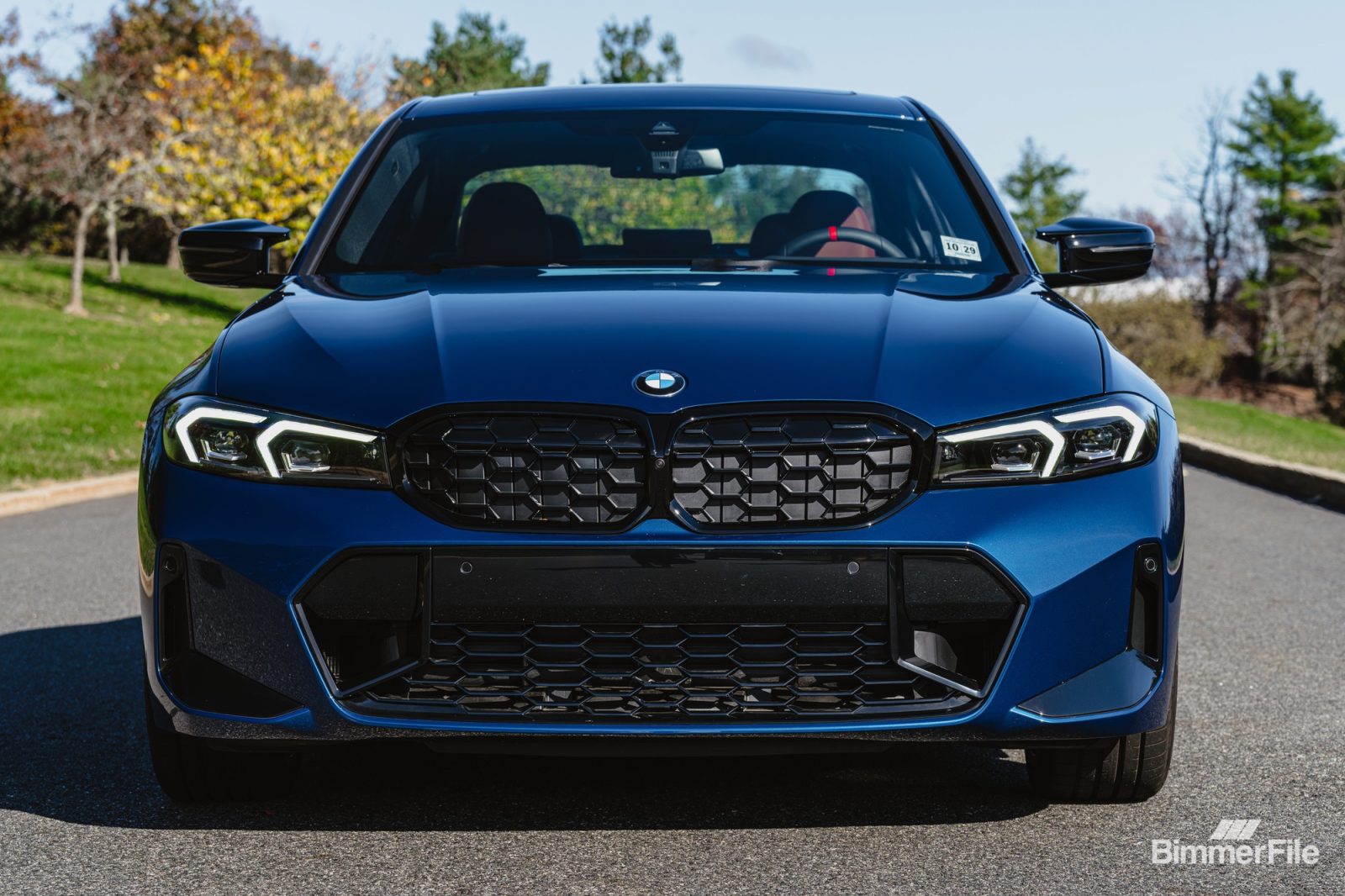
Every version also receives the Shadowline Package with blacked-out trim, darkened adaptive LED headlights, and subtle exterior detailing that keeps the throwback paint as the hero.
Proper Performance Touches
BMW didn’t stop with paint. The 50 Jahre Edition gets the factory M Performance exhaust, Shadowline finishers, and a carbon fiber rear spoiler. The wheels are 19-inch 792M dual-spokes in a bicolor black finish on all-season runflats.
Is this a full M car? No. But these touches finally give the M340i the visual and acoustic presence its chassis has always deserved.
A First for the US: Extended Merino Leather in a 3 Series
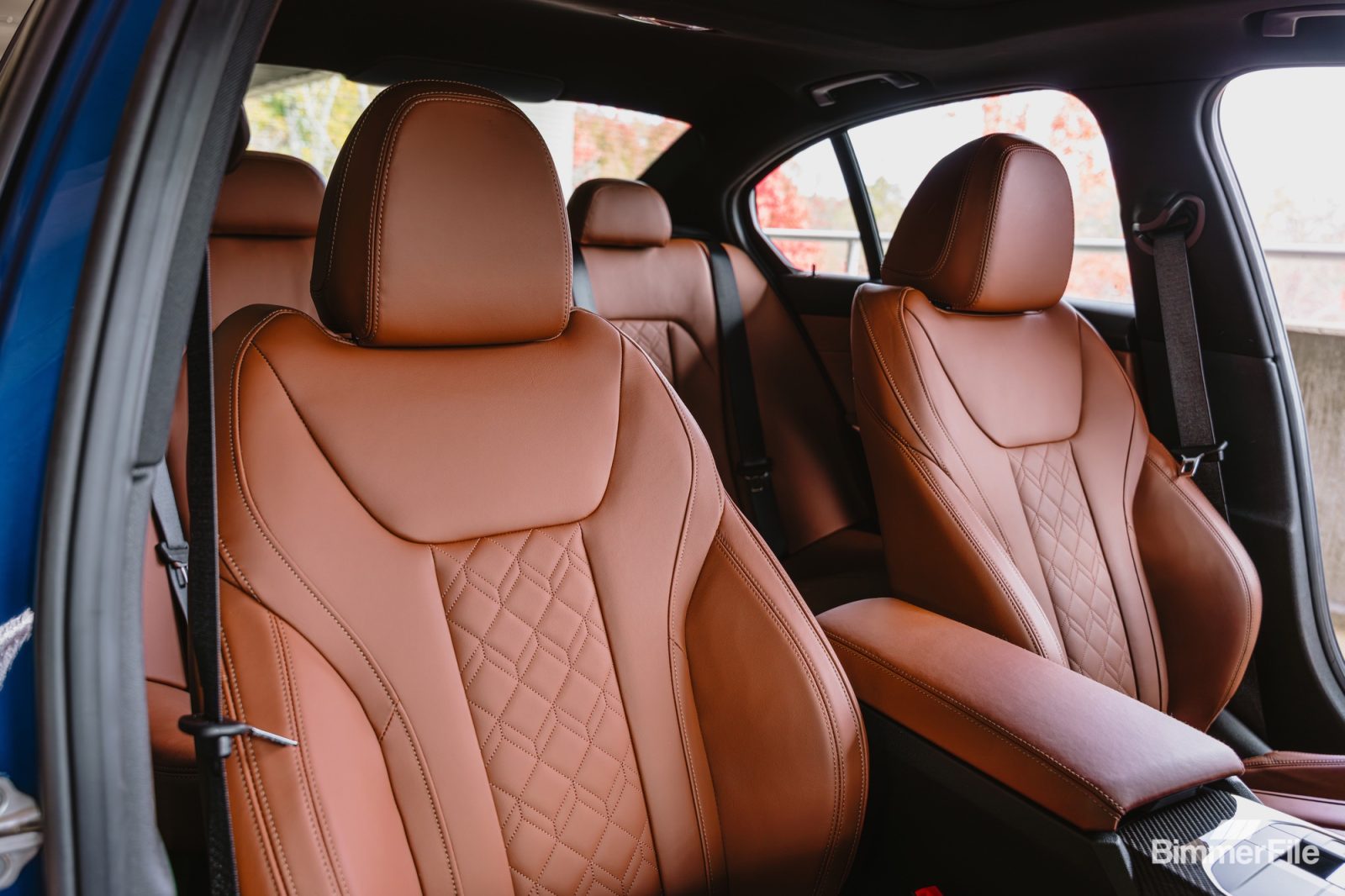
This is arguably the biggest functional upgrade. For the first time on a US-market 3 Series, BMW is offering Extended Merino Leather. And it shows. Whether you choose Ivory, Black, or the always-excellent Tartufo, it instantly elevates the cabin beyond the typical M340i spec.
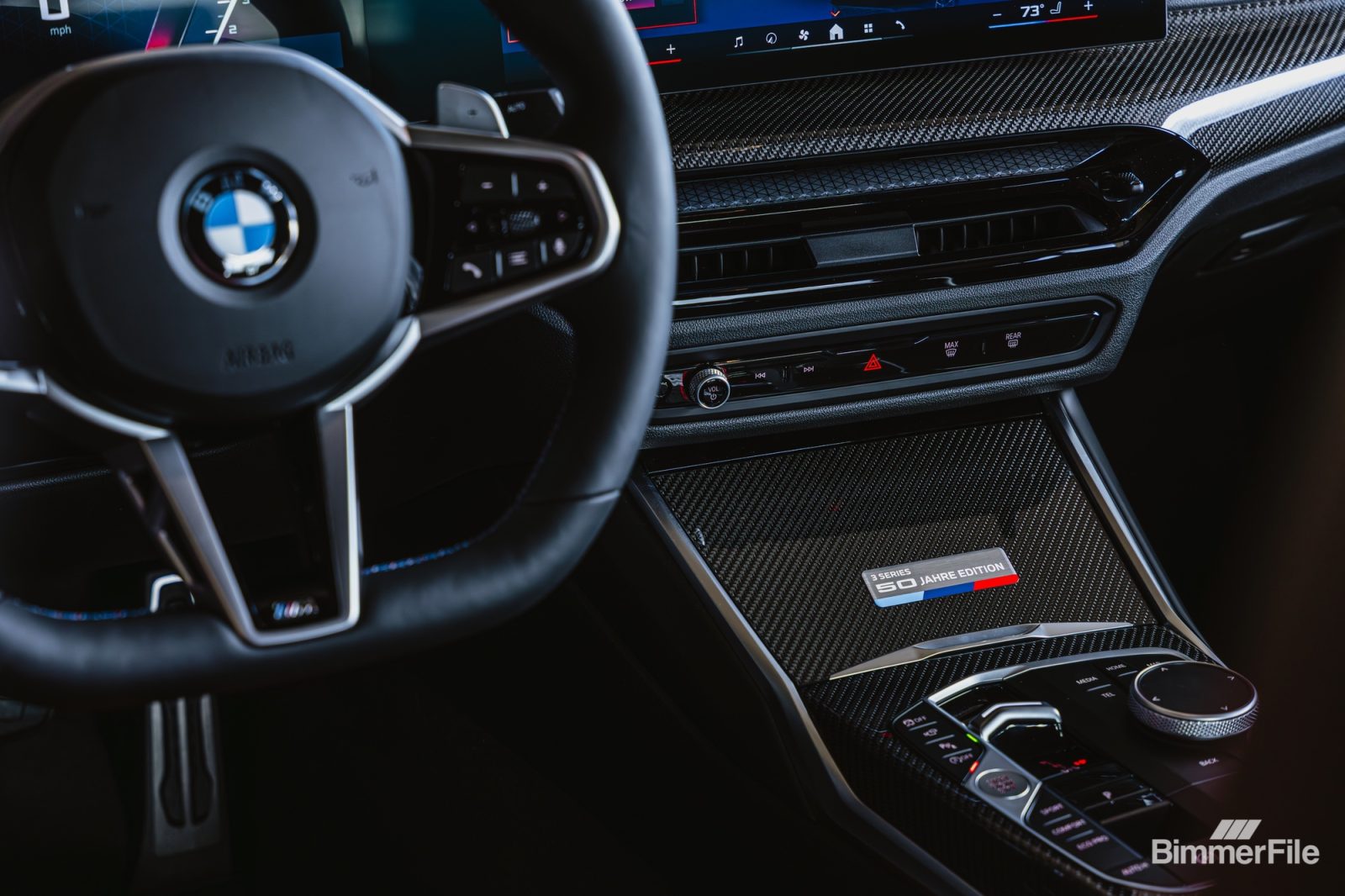
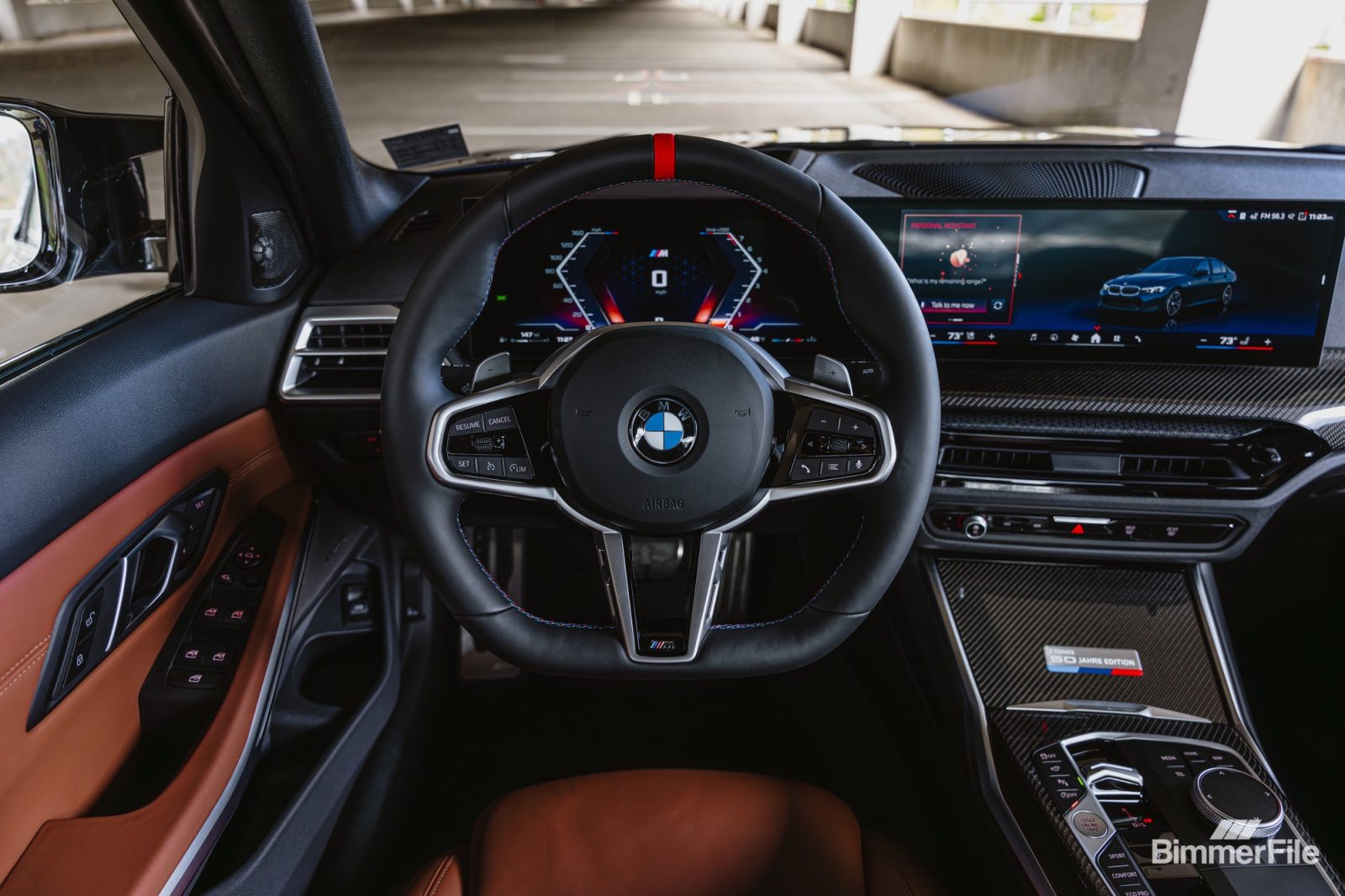
Carbon fiber trim is standard, as are the Harman Kardon system and BMW’s Curved Display with Head-Up Display thanks to the included Premium Package. Even the door sills and the cupholder plaque get “3 SERIES 50 JAHRE EDITION” markings that feel more coachbuilt than gimmicky.
Underneath, It’s the Benchmark We Already Know
At its core, this is still the M340i xDrive we have long considered the sweet spot of the lineup. BMW’s 3-liter inline-six with TwinPower Turbo and 48-volt mild hybrid tech produces effortless, immediate torque. Paired with the 8-speed Steptronic and xDrive, the car hits 60 mph in 4.1 seconds.
The chassis remains the M340i’s secret weapon: balanced, unflustered, and communicative in a way newer competitors still struggle to emulate. Even with all-season tires, the package delivers the same blend of accuracy, compliance, and playfulness that has kept the 3 Series at the center of the segment for so long.
Final Thoughts
The 50 Jahre Edition is the kind of anniversary model BMW used to excel at: focused, beautifully finished, and rooted in brand history without feeling nostalgic or forced. By tying iconic colors to modern materials and performance pieces, BMW has created something that feels worthy of the badge.
It may not be inexpensive, and it may tempt a few buyers away from base M3 territory, but as an homage to 50 years of the sports sedan benchmark, it is one of the most compelling G20 variants yet.
If you’ve been waiting for a 3 Series that honors its past without leaning on clichés, this might be the one.
Gallery
Specifications
2026 BMW M340i xDrive 50 Jahre Edition
Body
No. of doors/seats
4 / 5
Length / Width / Height (in)
185.9 / 71.9 / 56.7
Wheelbase (in)
112.2
Track, front / rear (in)
62.2 / 61.7
Ground clearance (in)
5.1
Turning circle diameter (ft)
39.4
Fuel tank capacity (gal)
15.6
Curb weight (lbs)
4,008
Luggage capacity (cu ft)
16.9
Engine
Config. / no. cylinders / valves
Inline / 6 / 24
Capacity (cc)
2,998
Bore / stroke (mm)
82.0 x 94.6
Compression ratio (:1)
11.0
Max output (hp @ rpm)
386 @ 5,200-6,250
Max torque (lb-ft @ rpm)
398 @ 1,900-4,800
Chassis
Steering
Electric Power Steering (EPS) with Servotronic function
The United Auto Workers union is ramping up its strike against General Motors and Stellantis – the global company that makes Chrysler, Jeep and Dodge vehicles – and getting closer to a deal with Ford.
About 5,600 UAW members at 38 General Motors and Stellantis distribution centers for auto parts in 20 states walked off the job on Sept. 22, 2023, after an announcement by UAW President Shawn Fain.
Workers at the only Ford plant affected by the strike since it began on Sept. 15 will remain off the job. The total number of UAW members involved in the strike stands at about 18,300.
Under Fain’s leadership, the union is taking an adversarial approach: It’s railing against what it describes as the “poverty wages” UAW members earn while denouncing the automakers’ CEOs as “greedy” and vowing to “wreck their economy.”
As a scholar of employment relations, I think this strike is too narrowly focused on making up for the wages and benefits autoworkers have lost in recent years. But another big objective is ensuring that autoworkers will have good jobs once most U.S.-made vehicles are electric-powered.
This dispute alone will not resolve this larger objective. Rather, I believe management and labor will need to swiftly move on following the strike and work together constructively to meet that goal.
UAW’s demands
The union is demanding an end to the concessions it made to the three companies during the financial crisis that began in 2007. Its members employed by Ford, GM and Stellantis have experienced a 19% decline in their wages, after accounting for inflation, since 2008.
The union also wants the automakers – sometimes called the Detroit Three – to abolish the tiered wage system, which pays new employees far less than more experienced workers, even for the same work. The UAW initially said it was seeking a wage increase of 40% over four years and the restoration of a cost-of-living allowance that would link wages to inflation.
In addition to these demands, the UAW wants defined-benefit pensions for all workers restored, company-paid health benefits for retirees reestablished and the right to strike over plant closures guaranteed. Other demands include more paid time off and seeing all temporary workers made permanent. It has also called for a 32-hour work week without a pay cut.
Ford CEO Jim Farley speaks to reporters about the UAW contract talks on Sept. 13, 2023. AP Photo/Paul Sancya
Precedents for working together
Although the strike has emphasized the goal of boosting future autoworker pay and benefits, I believe that workers and management can look to the past for ideas that might help them move forward.
GM’s Saturn partnership offers one potential model.
The company’s approach to its Saturn brand of compact vehicles, launched in 1985, was unique in many respects. Its governance structure was characterized by shared decision-making at different levels throughout the plant. The local union was a full partner in virtually all business decisions.
GM invested billions of dollars in this venture, through which it tried to compete with Japanese imports and transplants that were quickly eroding GM’s market share. Saturns were designed differently than other U.S. vehicles, but what made those vehicles special was the extent to which labor shared the responsibility for running Saturn’s main factory.
The Saturn partnership was hard to maintain, especially following the departure of Roger B. Smith, the General Motors CEO who had pushed hard for it. The company stopped making Saturns in 2009, but the former subsidiary’s overall approach of involving workers in decisions about their jobs and the manufacturing process remains as critical today as it was in its heyday.
I would encourage the auto industry to again invoke the spirit of the Saturn venture, which emphasized the collaboration and partnership of labor and management in the production of high-quality, world-class vehicles. Only this time, the vehicles will be EVs.
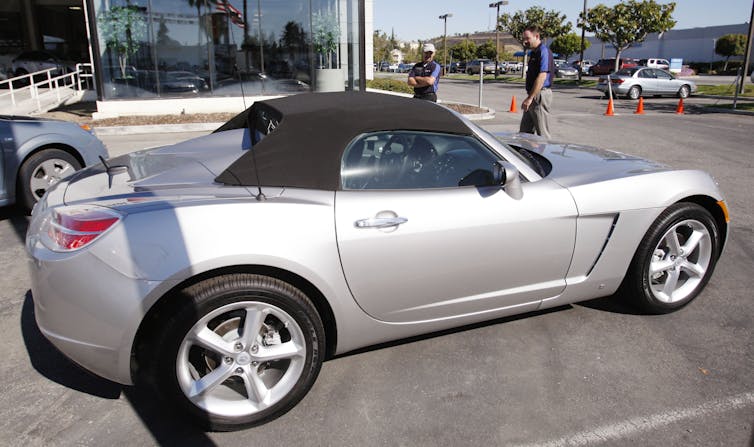
Two Saturn salesmen look at a Saturn Sky Roadster in San Jose, Calif., weeks before all Saturn dealerships closed in 2009. AP Photo/Paul Sakuma
GM offers another model for positive union-management relations.
About 20 years ago, its Lansing-Grand River assembly plant in Michigan began to engage in a similar example of what I call joint responsibility unionism. Management and the local UAW union established a contractual commitment to work together to continually improve production by systematically solving problems and increasing productivity.
Management and the local UAW union established a contractual commitment to work together to continually improve production by systematically solving problems and increasing productivity.
The local union and management hold each other accountable for keeping costs down and quality high. The plant, which assembles Cadillacs and Chevy Camaros, continues this approach successfully today.
Shift the focus to the future
The UAW is pointing to the billions of dollars in profits auto companies are currently getting when it demands a bigger piece of the pie. The companies counter that rapidly increasing EV production is costly.
GM, Ford and Stellantis already plan to invest more than US$100 billion in electric vehicle manufacturing. As production shifts away from vehicles with internal combustion engines that burn gasoline or diesel fuel, the number of autoworkers needed to build them will decline. EVs have fewer parts.
Ford and Volkswagen, for example, have estimated that they’ll eventually need 30% less labor due to the EV transition.
Undergoing this transformation with labor and management at loggerheads can’t possibly benefit the UAW or the auto companies.
Instead, they’ll need to focus on finding solutions together that increase productivity, build a skilled workforce and efficiently convert plants that make conventional vehicles today to EV factories tomorrow. In so doing, the UAW is more likely to meet its goal of seeing those EV factories employ its members.
During our RV downsizing journey, we looked at quite a few small travel trailers. The number one requirement was the travel trailer had to be lightweight. Specifically, we were looking for travels trailers under 3,500 pounds. Between all the research, visiting dealers and attending RV shows, we got to check out quite a few small camper trailers.
Here’s a look at some of our favorite lightweight travel trailers under 3,500 pounds. Just remember that GVWR can change from year to year, so double-check the rating for the exact model and year with the manufacturer to make sure you have the most accurate details.
Small Travel Trailers Under 3,500 lbs (A-Z)
Alto Teardrop Camper Trailer by Safari Condo
Based in Saint-Nicolas, Quebec, Canada. The Alto trailer by Safari Condo is one of our favorite teardrop campers. Kait’s aunt and uncle own the Alto R1713 and let us film a walk-through of their teardrop trailer which you can watch below. They found the Alto travel trailer easy to tow with their Jeep Wrangler and took it on many camping trips before they sold this unique teardrop trailer.
More recently, we had the chance to check out the Alto F2114 lightweight travel trailer with an open layout and two sleeping areas.
Website: https://www.safaricondo.com/en
Barefoot and TAB Teardrop Trailers by nuCamp
Based in Sugarcreek, Ohio. nuCamp manufactures a handful of lightweight travel trailers that can be towed by a half-ton truck. The TAB teardrop trailers are the most well known in the nuCamp trailers product line. Below is a tour of their largest teardrop camper.
The nuCamp Barefoot is an European style lightweight camper that is labeled “retro-chic” by the manufacturer. Watch the video below for a tour of the nuCamp Barefoot travel trailer.
GAWR: 2,220 lbs- 3,900 lbs
Website: https://nucamprv.com/
Basecamp 16 Aluminum Travel Trailer by Airstream
Based in Jackson Center, Ohio. The Basecamp travel trailers joined Airstream’s line of aluminum travel trailers in 2018. The Airstream 16X basecamp trailer comes with a decent sized wet bath and a wrap around window in the galley. Watch our tour of the Airstream Basecamp below.
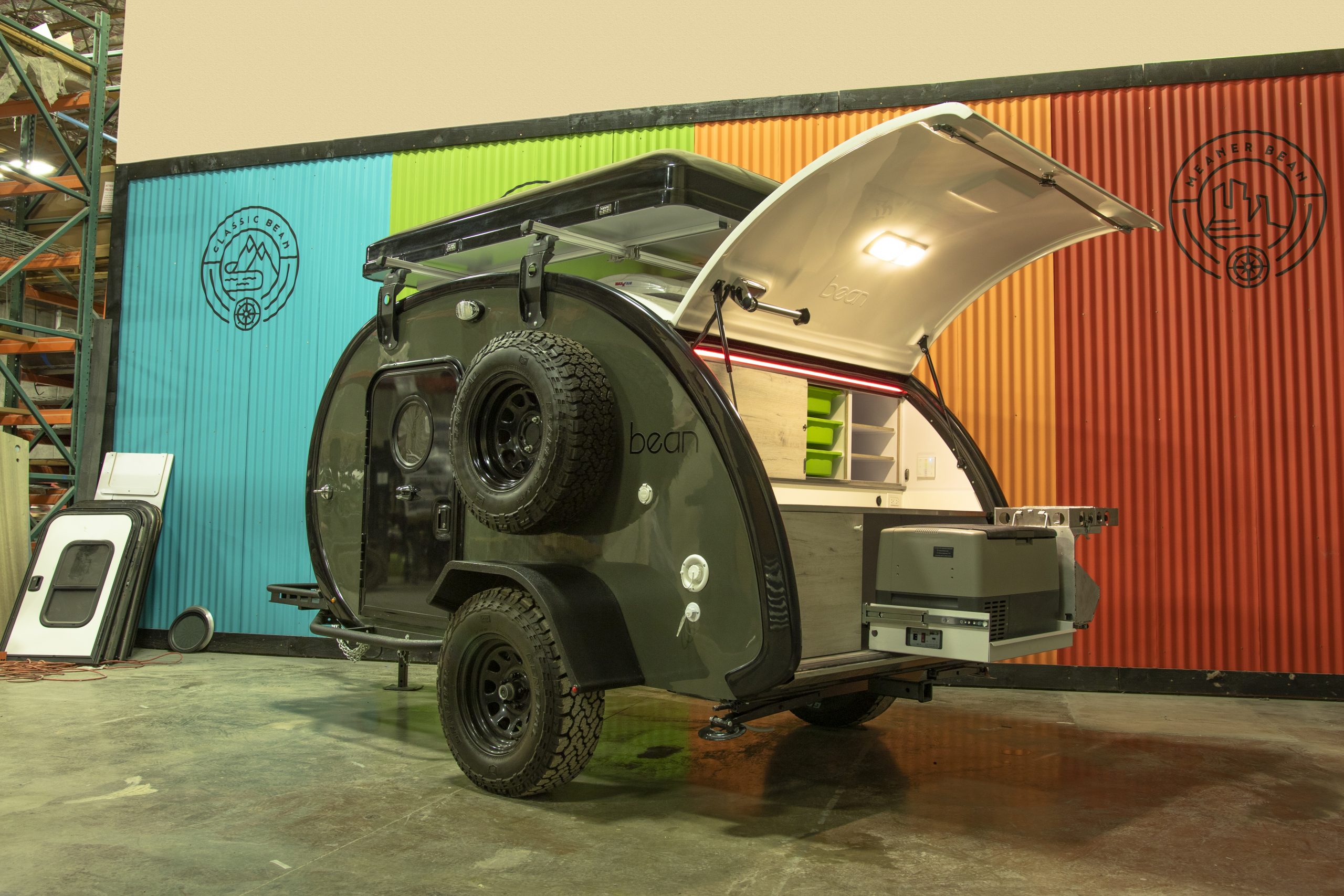
Based in Salt Lake City, Utah. Bean Trailer makes lightweight trailers with a fiberglass shell. Keep an eye out for these cool teardrop trailers at the different Overland events and expos around the country.
Photo Credit: Bean Trailer
Website: https://beantrailer.com/
Boreas Campers Off-Road Travel Trailers
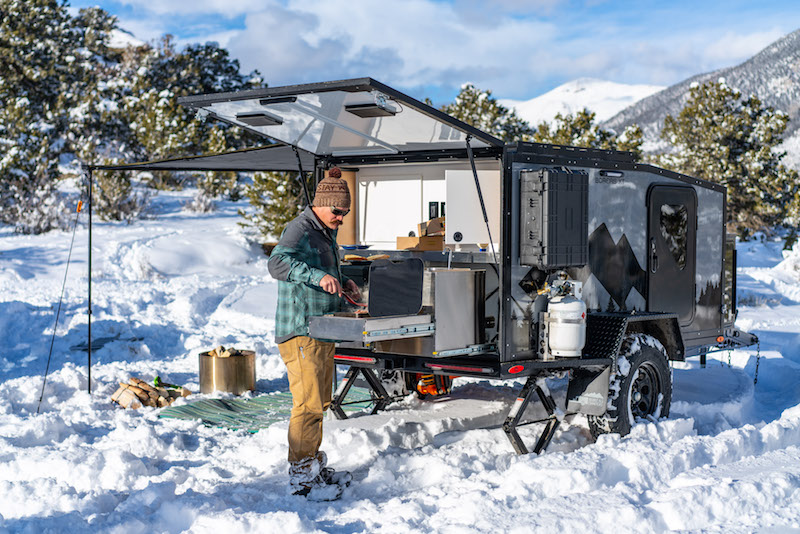
Based in Arvada, Colorado. Boreas Campers makes several models of off-road overland campers. The Boreas XT camper featured in the photo below has a dry weight of 2,200 lbs with a GVWR of 3,500 lbs and 19″ of ground clearance.
Photo Credit: Boreas Campers
Website: https://boreascampers.com/campers/
Casita Spirit Fiberglass Travel Trailers
Based in Rice, Texas. This lightweight travel trailer manufacturer has been making small campers since 1983. Designed to be durable and aerodynamic, these fiberglass travel trailers can be easily spotted rolling down the road.
Website: https://casitatraveltrailers.com/
Cedar Ridge Campers Classic Teardrop Trailer
Based in Murray, Kentucky. Cedar Ridge Campers offers three types of campers: Vega 2.0, Vega Lite, and Denab.
Website: https://cedarridgecampers.com/
Cricket Trailer by TAXA Outdoors
This small camper trailer’s big selling point is the “NASA inspired design.” We briefly considered towing the Cricket trailer behind our Jeep Wrangler Unlimited when we were downsizing from our small Class A RV.
Website: https://taxaoutdoors.com
Escapod Off-Road Teardrop Camper
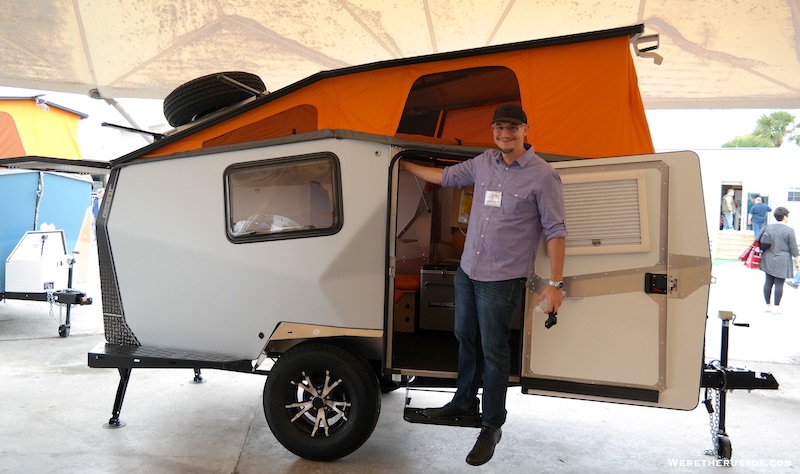
Based in Coalville, Utah. The TOPO2 by Escapod is “an off-road teardrop camper that’s built to endure” with a dry weight under 2,000 pounds including the basic features. We got a chance to tour the facility and spend a night out of this four season small teardrop camper. Watch our full walk-through of this teardrop trailer.
Website: https://escapod.us/
Happier Camper HC1 Fiberglass Travel Trailer
Based in Los Angeles, California. The Happier Camper HC1 is the Lego of fiberglass travel trailers. This small pull behind camper is so modular, you can configure it in many ways to make it fit your camping trailer needs.
Website: http://happiercamper.com/
InTech’s Flyer, Luna & Sol Trailers
Based in Nappanee, Indiana. In 2010, the founders of InTech RVs set out on a mission to build the best travel trailers. The company now offer a variety of lightweight aluminum travel trailers that range in size and layout.
Website: https://www.intechrv.com/
Lance 1475 Small Travel Trailer
Based in Lancaster, California. Before Lance released the 1475, we considered towing the Lance 1575 camper. This small travel trailer doesn’t have any slides and the most notable feature are the large windows by the swivel chairs. Below is our video tour of the Lance 1475 travel trailer.
Website: http://www.lancecamper.com/
Scamp Fiberglass Travel Trailers
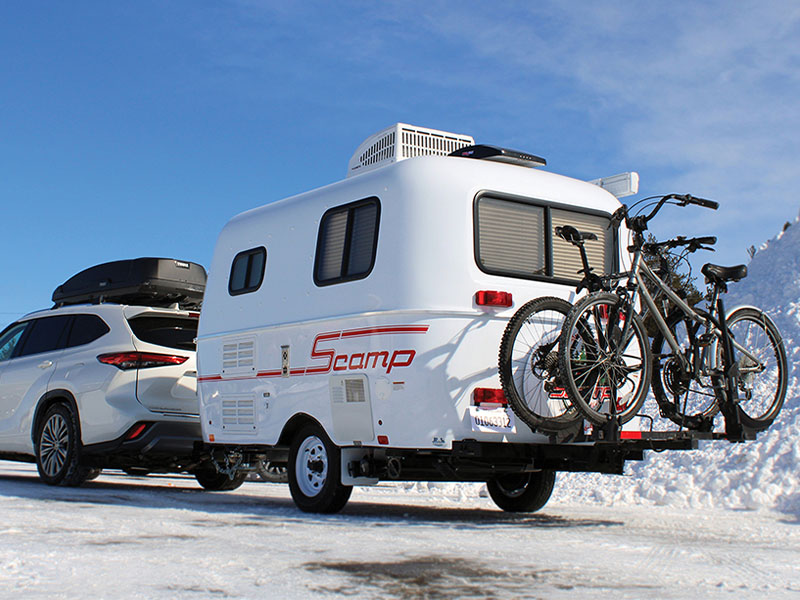
Based in Backus, Minnesota. Scamp Trailers make fiberglass travel trailers to order at the factory and use suppliers based in the U.S.A. The Scamp 13″ is the smallest fiberglass travel trailer in their product line.
Photo Credit: Scamp Trailers
Website: http://www.scamptrailers.com/
SylvanSport VAST Lightweight Travel Trailer
Based in Brevard, North Carolina. SylvanSport has a few towable options with the VAST being their first travel trailer. The company’s slogan is about “adventurous comfortable camping” with the aim to reset consumer expectations for RV trailers.
Website: https://www.sylvansport.com/
TetonX Hybrid Camper Trailer
Based in St. George, Utah. We learned about TetonX Hybrid through our friend Jason. This lightweight camping trailer is designed for off road adventures. Check out the video tour we filmed of our friend’s small travel trailer below.
Website: https://atlasoutdoorsusa.com
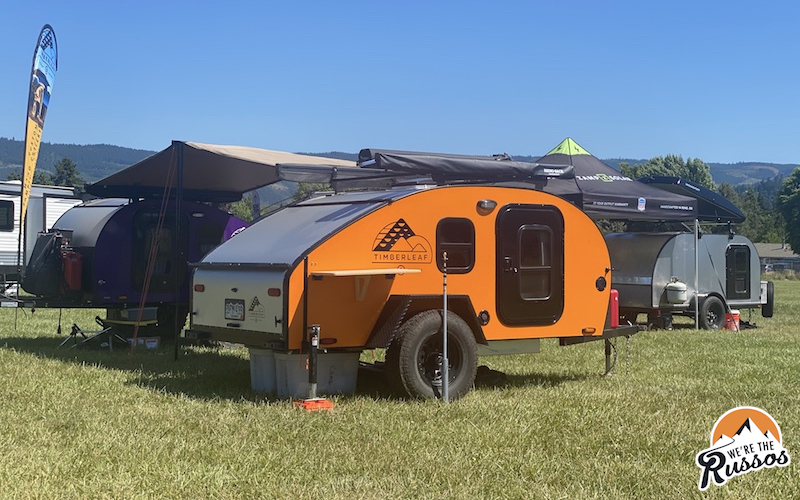
Timberleaf Teardrop Trailers
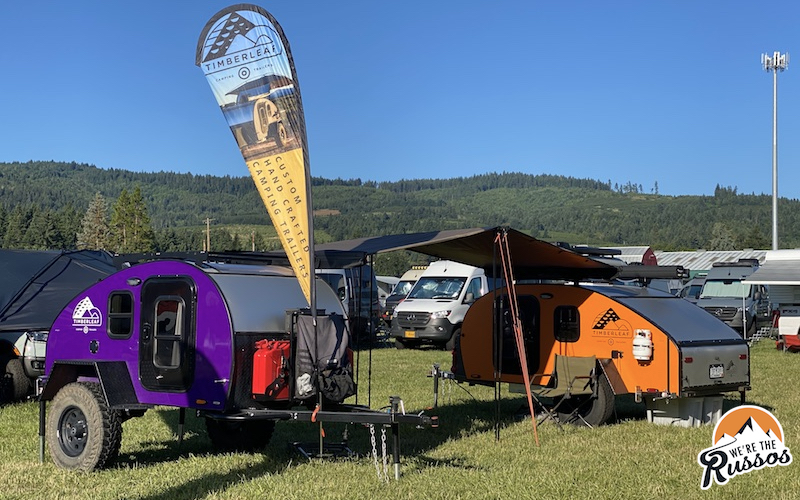
Based in Grand Junction, Colorado. Timberleaf Camping Trailers offers three models of teardrop trailers.
Website: https://timberleaftrailers.com/
Vistabule Teardrop Trailers
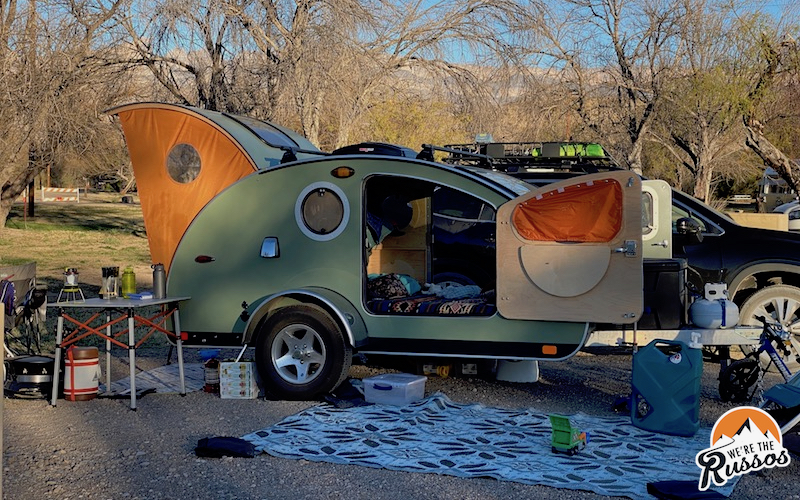
Based in St. Paul, Minnesota. We learned about these cool teardrop trailers camping next to one in Big Bend National Park. Kata and Marina, the owners of the Vistabule teardrop trailer below, were gracious enough to give us a tour. At the time, they were towing this small RV trailer with their Subaru.
Website: https://vistabule.com/
Other Small Camper Trailers to Consider
These small camper trailers are over 3,500 pound GVWR (gross vehicle weight rating), but worth looking into if you’re in the market for a small pull behind camper.
Bigfoot Fiberglass Travel Trailer
Bigfoot RV is based in British Colombia, Canada. They manufacture fiberglass travel trailers and truck campers for four season camping.
Website: https://bigfootrv.com
Black Series Off-Road Travel Trailers
Black Series is based in Upland, California. They make a series of off-road travel trailers that can be found in the United States, Australia and Europe.
Website: https://www.blackseries.net
Escape Fiberglass Travel Trailers
Based in Chilliwack, British Colombia, Canada. Escape Trailer manufactures fiberglass travel trailers that are sold direct to consumers. While most of their small camping trailers are well over 3,500 lbs, the Escape 17A and 17B have a GVWR of 4,000 lbs.
Website: https://escapetrailer.com/
Grand Design Imagine AIM Travel Trailer
Based in Middlebury, Indiana. Grand Design (part of Winnebago) manufactures a wide range of camper trailers including the Imagine AIM line of small travel trailers. We got a chance to tour a friend’s Imagine AIM 16ML camper trailer with a small slide out and lots of storage.
Website: https://www.granddesignrv.com/
Oliver Fiberglass Travel Trailer
Oliver Travel Trailers is based in Tennessee. They make double-hulled fiberglass travel trailer that are heavier than other options listed in this post. If staying under 3,500 lbs isn’t a criteria for you, then check out the Legacy Elite II travel trailer.
Tesla Full Self-Driving appears to be heading to Europe soon, especially as the company has continued to expand its testing phases across the continent.
It appears that the effort is getting even bigger, as the company recently posted a job for a Vehicle Operator in Prague, Czech Republic.
This would be the third country the company is seeking a Vehicle Operator in for the European market, joining Germany and Hungary, which already have job postings in Berlin, Prüm, and Budapest, respectively.
This position specifically targets the Engineering and Information Technology departments at Tesla, and not the Robotics and Artificial Intelligence job category that relates to Robotaxi job postings.
Although there has been a posting for Robotaxi Operators in the Eastern Hemisphere, more specifically, Israel, this specific posting has to do with data collection, likely to bolster the company’s position in Europe with FSD.
The job description says:
“We are seeking a highly motivated employee to strengthen our team responsible for vehicle data collection. The Driver/Vehicle Operator position is tasked with capturing high-quality data that contributes to improving our vehicles’ performance. This role requires self-initiative, flexibility, attention to detail, and the ability to work in a dynamic environment.”
It also notes the job is for a fixed term of one year.
The position requires operation of a vehicle for data collection within a defined area, and requires the Vehicle Operator to provide feedback to improve data collection processes, analyze and report collected data, and create daily driving reports.
The posting also solidifies the company’s intention to bring its Full Self-Driving platform to Europe in the coming months, something it has worked tirelessly to achieve as it spars with local regulators.
For years, Musk has said the process for gaining approval in Europe would take significantly more time than it does in the United States. Back in 2019, he predicted it would take six to twelve months to gain approval for Europe, but it has taken much longer.
This year, Musk went on to say that the process of getting FSD to move forward has been “very frustrating,” and said it “hurts the safety of the people of Europe.”
Elon Musk clarifies the holdup with Tesla Full Self-Driving launch in Europe
The latest update Musk gave us was in July, when he said that Tesla was awaiting regulatory approval.
Competition is heating up in the luxury SUV space with Porsche’s new Cayenne Electric. It’s the company’s second high-riding model to eschew the combustion engine, following the Macan Electric’s launch last year. Its bigger brother arrives after the BMW iX M70 and ahead of a rumored electric X5 M coming around 2028.
Looking instantly familiar, the Cayenne Electric doesn’t stray far from its gasoline-fueled counterpart. Since there’s no V8 under the hood requiring cooling, Porsche closes the grille but adds air flaps in the nose. These movable cooling slats are part of a broader active aero kit that also includes an adaptive roof spoiler. Step up to the range-topping Turbo, and aero blades extend from the rear bumper’s corners.
Additional aero-friendly tweaks over a conventionally powered Cayenne include bespoke wheels and a redesigned rear diffuser. The electric SUV’s underbody is nearly completely enclosed, while the front incorporates air curtains below the familiar headlights.
Porsche made the EV slightly bigger than its ICE counterpart. It’s 196.2 inches (4985 millimeters) long, 78 in (1980 mm) wide, and 65.9 in (1674 mm) tall. That makes it a tad longer, wider, and lower than the BMW iX M70. At the same time, the massive wheelbase, spanning 119 in (3,023 mm), ever so slightly exceeds that of Bavaria’s M Performance electric SUV.
But while the exterior doesn’t stray too far from a regular Cayenne, it’s a different story inside. Porsche embraces the supersized-screen craze with a curved 12.25-inch OLED panel dominating the dashboard. To its left sits a 14.25-inch digital instrument cluster, while to the right is an optional 14.9-inch passenger screen. Side note: It won’t be long until BMW also crams an extra display in for the front passenger.
At launch, the Cayenne Electric will be offered as a base model and a hotter Turbo. The latter packs a ludicrous 1,140 horsepower and 1,106 pound-feet (1,500 Newton-meters) of torque. It’s the most potent Porsche production vehicle in history. Even though it’s a large and heavy electric SUV, it delivers supercar-beating acceleration, hitting 62 mph (100 km/h) in just two and a half seconds. It needs only 7.4 seconds to go from a standstill to 124 mph (200 km/h). Flat out, it reaches a top speed electronically capped at 162 mph (260 km/h).
However, these output figures come with an asterisk. The full punch is available temporarily and only with Launch Control active. In normal driving, the dual motors deliver a combined 845 horsepower. At the touch of a button, a 10-second push-to-pass function adds 174 hp into the mix.
Stick to the base Cayenne Electric and you’ll have to make do with 402 hp, or 436 hp if you activate Launch Control. Even the entry-level trim does the 0-62 mph (0-100 km/h) sprint in a respectable 4.8 seconds on its way to 143 mph (230 km/h). For reference, the BMW iX M70 maxes out at 650 hp and 1,015 Nm (749 lb-ft), enough to complete the sprint in 3.8 seconds and reach 155 mph (250 km/h).
Circling back to the Porsche Cayenne Electric, both the base and Turbo models share a 113-kWh battery, slightly bigger than the BMW’s 108.9-kWh pack. The cheaper of the two Cayenne EVs goes 399 miles (642 kilometers) on a single charge in the WLTP cycle, whereas the more potent variant stops after 387 miles (623 km). By comparison, the iX M70’s WLTP range varies from 318 to 373 miles (521 to 600 km).
Porsche has engineered the Cayenne Electric to support a BMW iX3-matching 400-kW DC fast charging, allowing the battery to go from 10% to 80% in under 16 minutes. In just 10 minutes, you can add enough energy for 202 miles (325 kilometers) in the base model and 196 miles (315 km) in the Turbo. By comparison, the BMW iX M70 tops out at 195 kW and gains only 95 to 113 miles (152 to 182 kilometers) after 10 minutes.
Aside from significantly faster charging, the Cayenne Electric has another advantage: it supports inductive charging, eliminating the hassle of cables. However, at 11 kW, refilling that large battery takes time. Even so, it’s a useful convenience, and one you can’t get on the iX M70.
As for pricing, Porsche asks €105,200 for a base Cayenne Electric and €165,500 for the Cayenne Electric Turbo in Germany. The BMW iX M70 sits between them with a starting price of €124,900. The first combustion-free Cayenne is already available to order.
Lepas has confirmed plans to launch its brand in Malaysia in the first quarter of 2026, ahead of the cars’ debut within the first half. The Chery International offshoot says it expects to offer two models here – the L6 and the L8.
The brand, a portmanteau of “Leopard”, “Leap” and “Passion”, is focused on design, powertrain technologies and spaciousness as its three pillars, combining “beauty and intelligence.” The cars are built on an all-new new energy vehicle (NEV) platform claimed to support multiple sizes and powertrains, the latter including hybrid and electric vehicles.
Leading the charge is the L8, a rebadged version of the next-generation Chery Tiggo 8; unlike the previous model, this is strictly a five-seater. Lepas is touting features such as V-shaped daytime running lights inspired by “the gaze of a leopard”, “jewellery-grade” grille detailing, an interior inspired by skylines and waterfalls, a 2,800 mm wheelbase (Chery quotes a figure of 2,825 mm for the new Tiggo 8) and 970 mm of legroom that the company says is class-leading.
Also included are ventilated and massaging seats with Relax, Nap and Cinema reclining modes, a UV-reflective windscreen, eight airbags and a body structure that aims to deliver five-star safety ratings. Under the bonnet will be a plug-in hybrid powertrain similar to the Chery Super Hybrid (CSH) system in the Malaysian-market Tiggo 7 and 8 PHEV and the Super Hybrid System (SHS) in the Jaecoo J7 PHEV.
This should entail the same a 204 PS/310 Nm electric motor, integrated into a single-speed dedicated hybrid transmission (DHT) and juiced by a 143 PS/215 Nm 1.5 litre turbocharged four-cylinder engine. Combined outputs are rated at 275 PS and 365 Nm of torque – bang on what the Tiggo 7 and 8 PHEV are quoted at, although the pure electric range is slightly higher at 100 km, hinting at a larger battery. Lepas says that when paired with the petrol engine, the total range should hit 1,300 km.
Lepas L6
Also tipped to be sold here is the L6, a smaller C-segment SUV that looks an awful lot like a cut-price Porsche Macan. Not much has been revealed just yet, only that it carries the same family design DNA with softer curves, an intelligent user interface with “emotional resonance”, “high-value” powertrains and bright colours. It remains to be seen if this will have a hybrid powertrain or a pure petrol engine; our guess is it will offer both options.
Lepas continues to keep mum on the details of its Malaysian launch, but are you excited for the arrival of this new brand? Let us know in the comments.
For decades, luxury car ownership focused on performance measures and brand status. LUXUO explores the “codes” of modern male car collectors, who prioritise innovation, scarcity, discerning design, personal expression, sustainability, and collectability. This year’s most interesting debuts, which include electric SUVs, heritage-inspired limited editions, and speculative designs, demonstrate how the market is recalibrating. These are more than simply cars; they are cultural assets that signal a shift in how the affluent man expresses himself, engages in craftsmanship, and participates in the future of mobility.
Masterful, Purposeful Design on Wheels
The Bugatti Tourbillon offers a hybrid system. Image: Bugatti.com
Forget pixels. Forget screens. The new Bugatti Tourbillon is a watchmaker-created machine with a spirit that defies the digital age. Its engine is a powerful new 8.3-litre V16, a mechanical marvel. The hybrid system, which has three electric motors, produces a whopping 1,800 horsepower. But you may feel it before you see it. The cockpit is an oasis of analogue creativity, with Swiss-made instrument pods, titanium components, and no huge LCD. This is not just a hypercar to drive; it is a heritage to cherish. It is the sensation of a mechanical timepiece colliding with a sonic boom, a declaration that true luxury is about more than simply speed, but also the soul of the machine. Every glance at the dashboard serves as a reminder that you are piloting a masterpiece, not a soulless computer.
Coachbuilding Personified
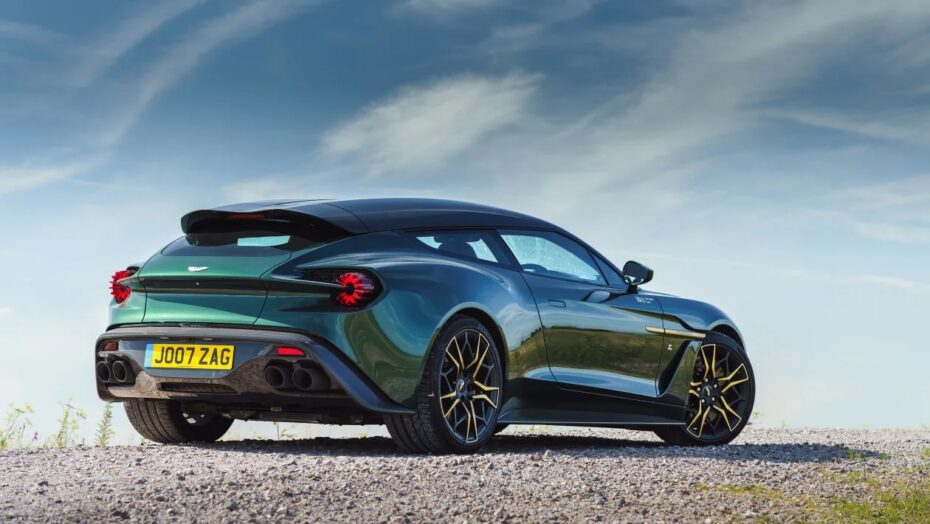
Zagato’s coachbuilding expertise elevates the Aston Martin Vanquish Zagato Shooting Brake. Image: Evo.co.uk
They dubbed it the perfect Grand Tourer for the 1 percent who laugh at baggage. This is the Aston Martin Vanquish Zagato Shooting Brake, and it represents desire on wheels. To avoid assembly line methods, the firm worked with the famed Italian house Zagato to incorporate its coachbuilding skills into the car’s architecture and interior. It features sculpted haunches, the trademark ‘double-bubble’ roof, and a massive, finely sculpted tailgate made of carbon fibre. It is a moving sculpture, but with a stunning party trick: a practical, leather-lined boot where you can keep your valuable luggage.
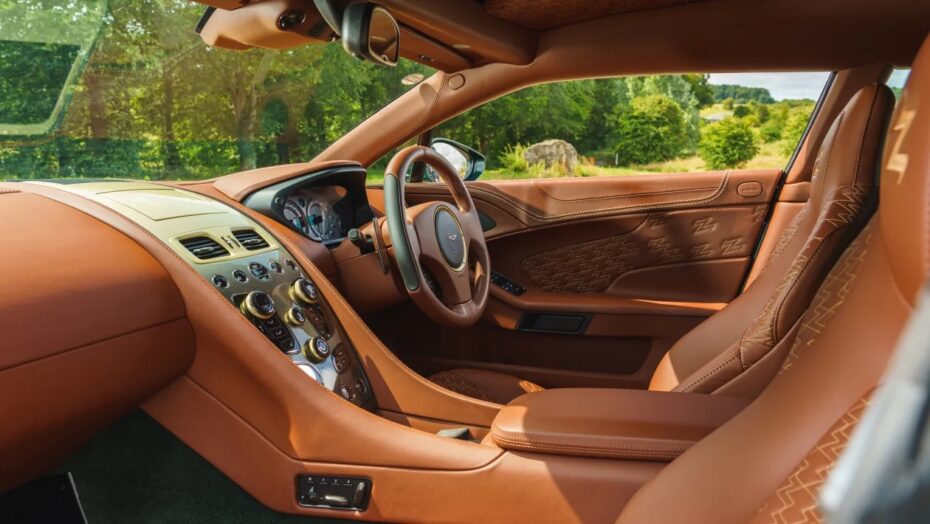
Interior is finessed with leather-focused details. Image: Evo.co.uk.
Under the interminable bonnet is a fierce, naturally aspirated 5.9-litre V12 set to produce 592bhp. It is combined with a rear-mounted 8-speed gearbox for optimal balance, transforming this 500-unit unicorn into a driver’s car rather than a display. The sound is pure mechanical theatre, with a rising snarl reminiscent of an Italian mountain pass. It is a paradox: a practical hypercar and a utilitarian work of art. This is more than just a car; it is a statement about how much you appreciate the journey.
Customisation To The Nth Degree
The Rolls-Royce Phantom is a 100-year-old design modernised. Image: Rolls-Royce Motor.
A century of the Phantom is marked by profound substance rather than noisy celebrations. The Rolls-Royce Phantom Centenary is an exclusive car with a statement of continuity. The luxury vehicle is built on the Architecture of Luxury, a framework that ensures the famed silence and smooth ride. A 6.75-litre twin-turbo V12 provides power while remaining quiet.
Every detail of the interior can be customised to every whim and fancy. Image: Rolls-Royce Motor.
Inside, the emphasis is on legacy. The Starlight Headliner is set to show the exact stars over Sussex on the night that the first Phantom was launched. Bespoke embroideries and open-pore wood embellishments exemplify the brand’s refined aesthetic. This premium car exemplifies a singular standard of luxury that has stood the test of time for 10 decades, remaining true to its objective. It is history, individually commissioned.
Technical Discernment Over Aesthetics
Porsche’s mastery in technology ensures this Macan EV serves the goods. Image: Porsche.
The new Porsche Macan GTS EV Turbo Electric transforms the performance SUV. It retains its classic shape and is based on the new Premium Platform Electric (PPE) architecture, designed for superior performance and long range. The EV’s dual electric motors provide 639 horsepower and over 700 lb-ft of torque, allowing it to accelerate from 0 to 100 km/h in 3.1 seconds.
The EV will offer a maximum range of 591 kilometres. The 100-kWh battery can charge at up to 270 kW, providing a significant range in minutes. Porsche uses a rear-axle steering system and the most advanced adaptive air suspension to provide precise control. The inside has the Porsche Driver Experience, which includes a curved display and a head-up display. It is a vehicle that delivers Porsche’s trademark driving qualities, now fully electric.
Car Design Shaped by Atelier Expertise
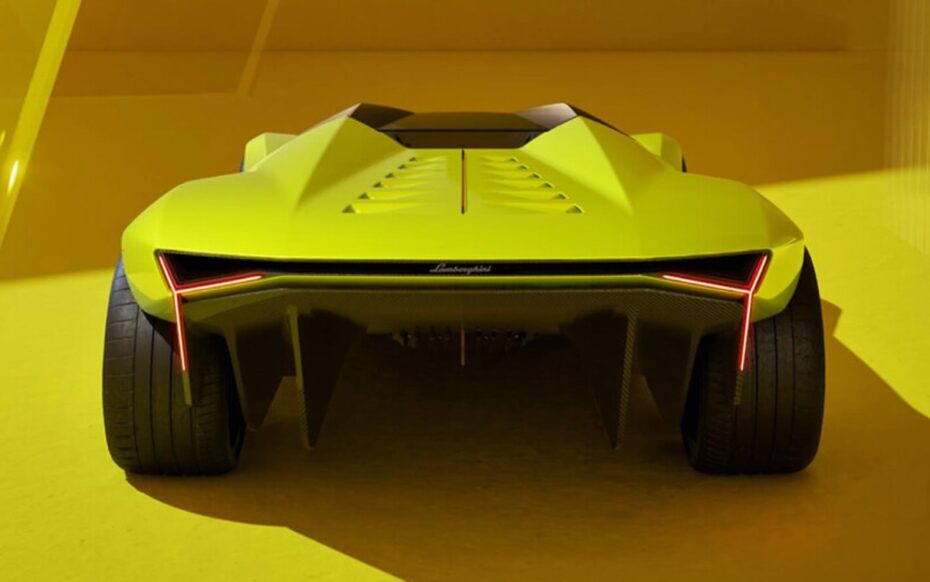
Lamborghini Manifesto concept is designed from the ground up by Centro Stile. Image: Lamborghini.
The Lamborghini Manifesto is not a vehicle for the road. It is a concept whittled down to its essence, a purposeful rejection of complication from the brand’s Centro Stile. Its design is a simple, sculptural statement with an asymmetric shape and a radical, single-seat cockpit.
An aerodynamic design starts at the car’s sleek rear shape. Image: Lamborghini.
The technical essence of the Manifesto is a beautiful, constructive collaboration of exposed carbon fibre and aluminium. The car offers a retractable carbon fibre roof and integrated lighting elements that are minimal and chic. The cockpit is minimalist and dominated by a rectangular steering yoke. This vehicle is a physical representation of Lamborghini’s design philosophies, emphasising pure geometry, lightweight materials, and the raw, emotional bond between driver and machine.
Sustainable Details in A Future Concept
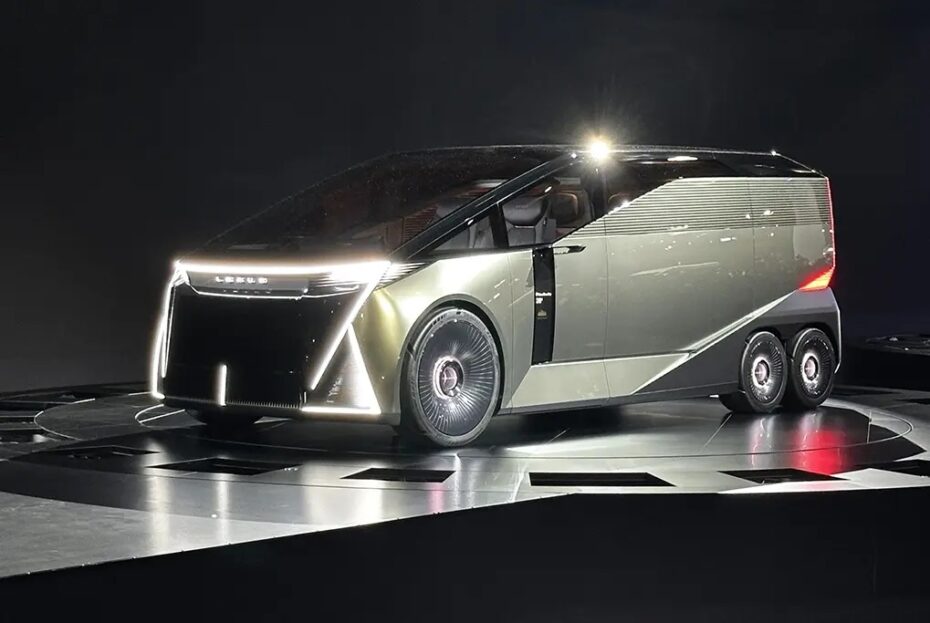
The striking six-wheeled Lexus LS concept. Image: Lexus.
The Lexus LS has been reimagined, discarding its sedan shape in favour of a radical new purpose. This proposal transforms the flagship into a six-wheeled MPV, a mobile lounge that embodies the brand’s devotion to Omotenashi hospitality. Its longer wheelbase and extra axle provide a solid, spacious cabin, but the vehicle retains the sophisticated powertrain of the standard LS.
The emphasis switches completely to the internal experience. Passengers enter a peaceful setting via a wide-opening coach door, which features handmade leather upholstery, sustainable wood trim, and individual power seats. The cabin is well-lit thanks to a panoramic glass roof. This is a vehicle that caters to a man who prefers to be the passenger rather than the driver. It reimagines luxury travel as a peaceful, first-class retreat that prioritises comfort and spaciousness over everything else.
Embracing Refinement, Averting Garish Pursuits
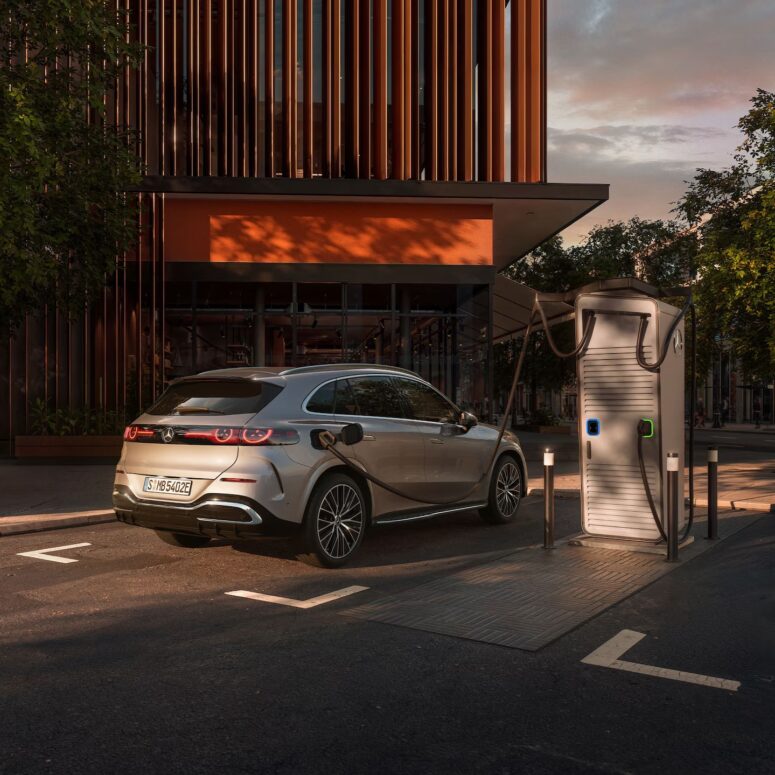
Mercedes-Benz GLC takes pride in the midsize luxury SUV for the modern man-about-town. Image: Mercedes-Benz.
The Mercedes-Benz GLC Electric reimagines the midsize luxury SUV for the modern era. Built on the brand’s dedicated electric architecture, it incorporates an 80-kWh battery into its underbody for a low centre of gravity. Its dual-motor all-wheel-drive system delivers reliable power, producing 255 kW (342 bhp) and 565 Nm of torque for quick reaction.
Charge up the Mercedes-Benz GLC from 10 to 80 percent in about 30 minutes. Image: Mercedes-Benz.
The car is designed for practicality, with a WLTP range of up to 460 kilometres. Its 170-kW DC fast-charging capabilities enable a 10 to 80 percent charge in about 30 minutes. The interior has the newest MBUX infotainment system within a cabin that prioritises material quality and passenger space. This vehicle combines the expected presence and refinement of a GLC with the effortless performance of electric mobility.
Exclusive Pared-down Design with Bespoke Details
The BMW Skytop is an expression of exclusivity, a limited-production special model distinguished by its distinct silhouette. It has a retractable targa top made of two different carbon fibre panels, which transforms the car from a coupe to an open-air cruiser. Power comes from a twin-turbocharged V8 engine shared with the brand’s most powerful M models, ensuring that performance matches its stunning presence. The vehicle’s front-end styling, including its distinctive grille and lights, is completely new. The interior accommodates unique, high-gloss finishes and luxury leather appointments. The BMW Skytop, designed as a modern interpretation of a classic roadster, caters to a select few who seek a one-of-a-kind, driver-focused experience. It is a handcrafted object of desire that combines BMW’s engineering pedigree with coachbuilt artistry.
THIS HOLIDAY SEASON, over 28 million RVers plan to hit the road. If you aren’t one of them, why not? With air travel costs soaring and delays still making headlines, the open road is looking better than ever. This winter, a road trip might be the most relaxing, rewarding, and cost-effective way to celebrate the season.
So if you haven’t considered an RV trip — or how to use your RV this winter — we’re covering where to go, which RVs are the best for hosting, and much more. Whether you’re heading to a favorite campground decked out in holiday lights or traveling cross-country to see family, here’s everything you need to prep for an RV-friendly holiday.
Key Takeaways
RVing offers a relaxing and cost-effective alternative to holiday air travel, and RVs with spacious kitchens make preparing festive meals on the road feel like being at home.
Holiday destinations—from Florida’s Space Coast to the Smoky Mountains and Arizona desert—shine this time of year, and choosing the right campground means balancing availability, amenities, and proximity to seasonal attractions.
Whether you’re hosting guests in your driveway or hitting the road yourself, RVs provide flexible sleeping arrangements, extra living space, and self-contained comfort—perfect for moochdocking, family visits, or even short-term rentals during the holidays.
Holiday Meals At the Campground
Image by Camping World
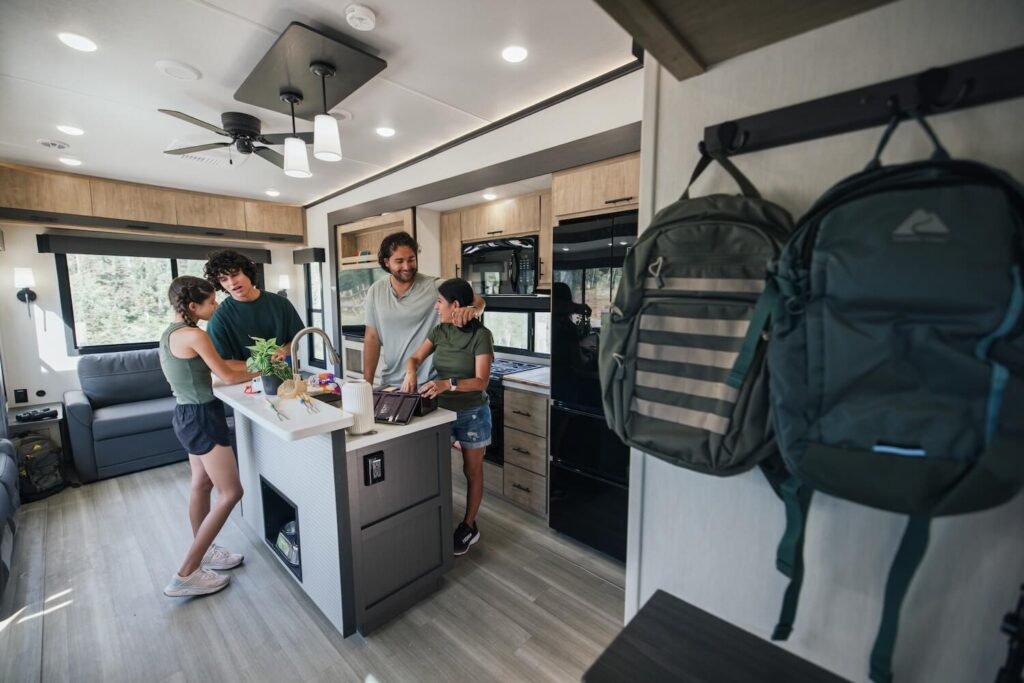
The stakes are high for holiday meals, but dinners in an RV can be every bit as special as the ones you make at home—especially when your kitchen is designed for it. Though some kitchens are better suited for a family affair than others. Residential appliances, solid surface countertops, open layouts, and versatile dining options all go a long way to making your holiday in an RV feel more like home.
We’re highlighting a few RVs with spacious kitchens, island prep space, and even outdoor cooking setups that make campground hosting easier and better suited for the camp chef in your group. From roasting the ham to baking pies, there’s plenty of room to celebrate right from your campsite with these models.
A Front Kitchen with A View
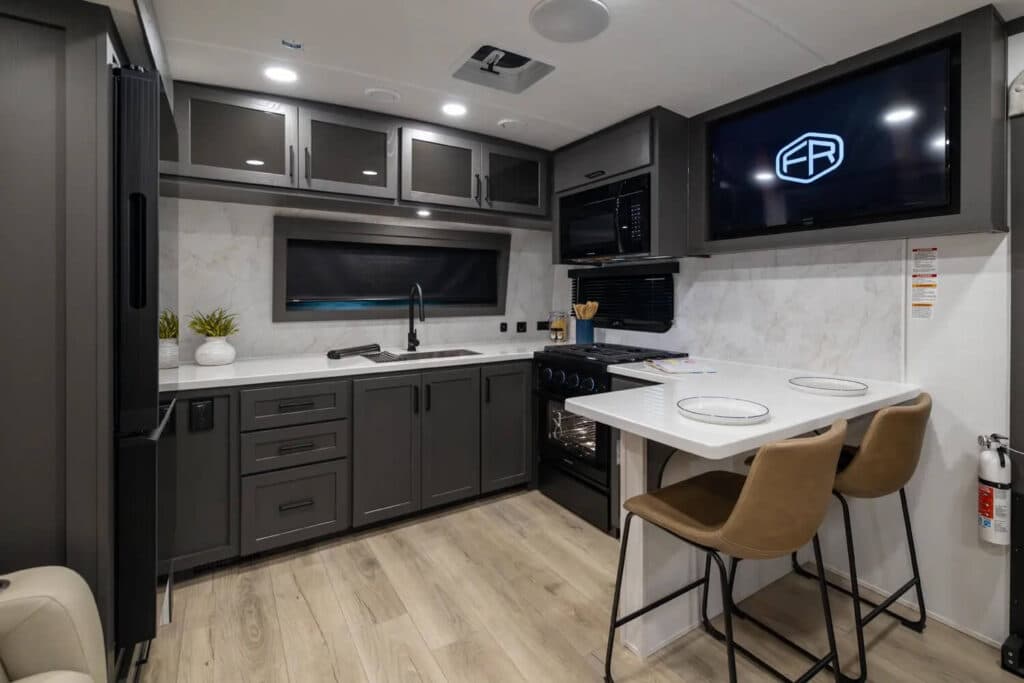
Rockwood Signature 8263MBR
Images by Forest River
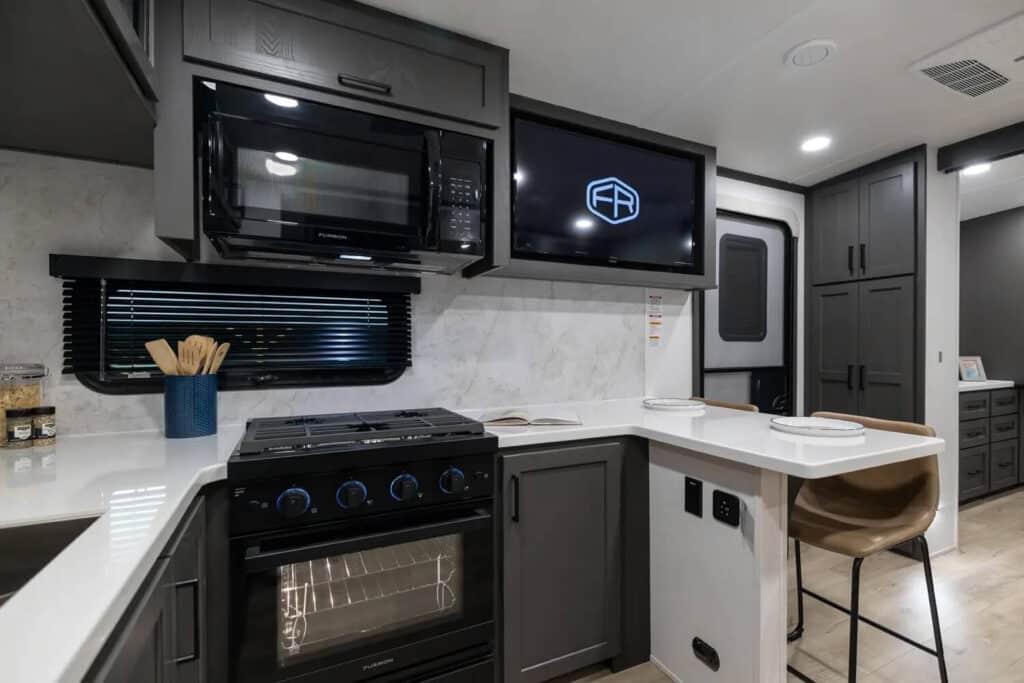
You don’t need a massive RV to enjoy a spacious kitchen. Front kitchen layouts like the Rockwood Signature 8263MBR provide a more substantial cooking setup, even in an RV under thirty feet long. Front kitchen floor plans typically include extra counterspace and easy, central access to your refrigerator, oven, and microwave. Plus, when you’re shuffling from project to project, no one is walking through your space.
On the 8263MBR, you’ll enjoy wraparound solid surface counters with a section that doubles as a bar (great for hosting guests), and a conveniently mounted TV that makes it easy for the whole crew to watch the game. And the front cap has a window for extra natural lighting. If you’re looking for a front kitchen in this lineup that’s better suited for hosting a larger group, the Rockwood Signature 8339FK adds a kitchen island, a table and chairs, and a remarkably spacious pantry.
A Classic Fifth Wheel for Holiday Cooking
Keystone Montana 3910RK
Want to see the latest RVs? Subscribe to the Camping World YouTube channel, and never miss a video.
Like a front kitchen floor plan, the rear kitchen setup ensures you have a designated space for food prep, which is ideal for holiday get-togethers. And there’s arguably no better rear kitchen setup than the Montana 3901RK, which provides an elevated kitchen from which you can gaze down on your guests in the living room to make sure all are fed, comfortable, and happy. With countertop space on all four sides, you have your own domain, complete with a residential refrigerator (18 cubic feet of cold storage with an ice maker), an oven range, cooktop, convection microwave, and an oversized deep stainless steel sink. While pantry space should be a given on this size RV, we’re glad the 3910RK offers plenty.
A Compact Family Dining Option
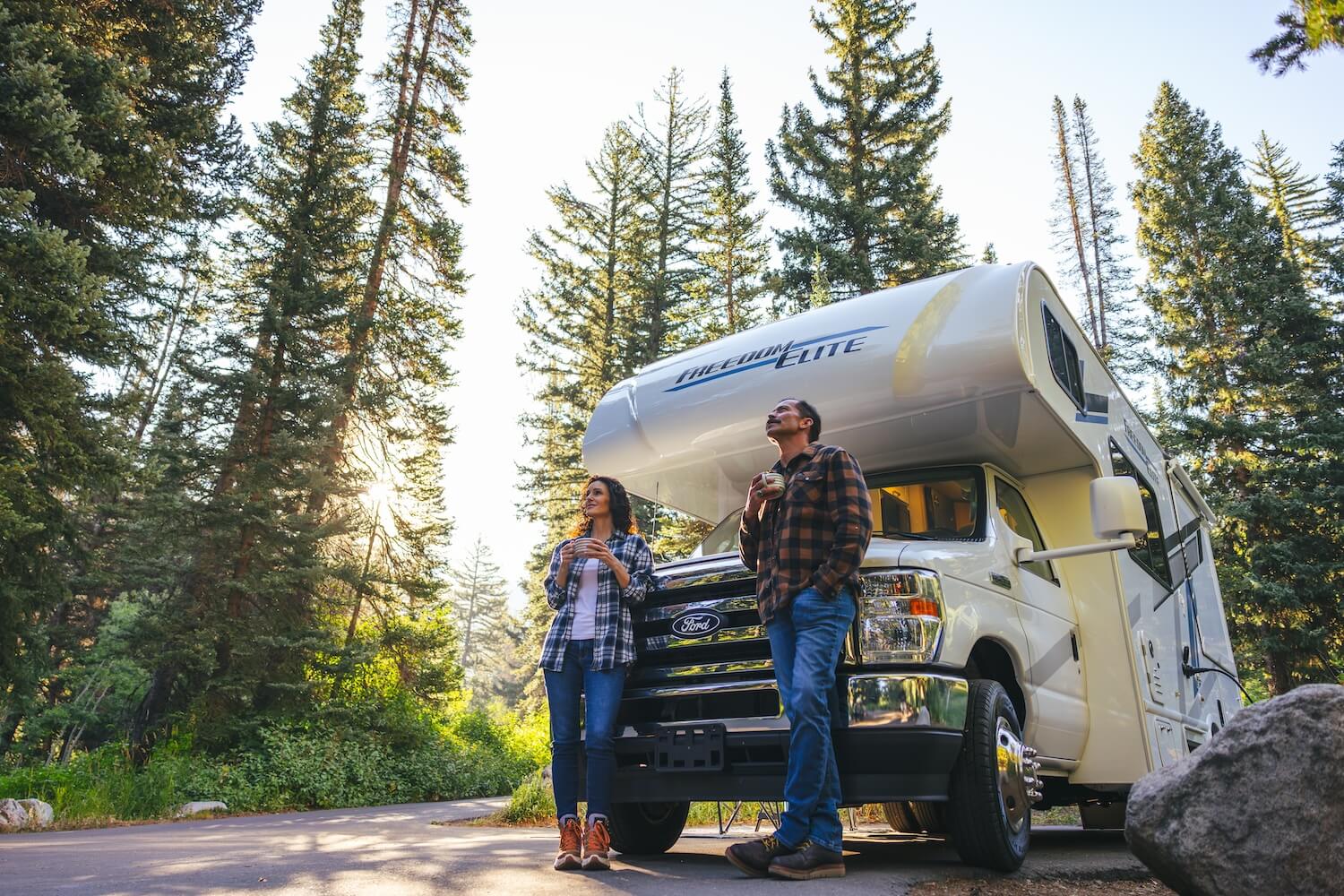
Thor Freedom Elite 19HE
Want to see the latest RVs? Subscribe to the Camping World YouTube channel, and never miss a video.
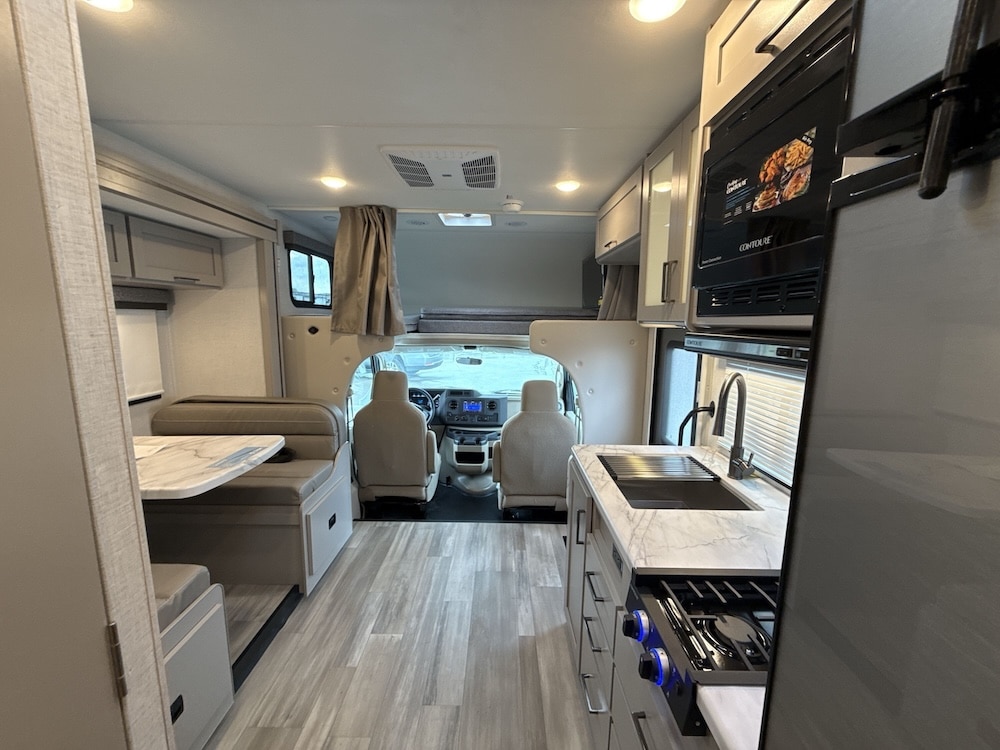
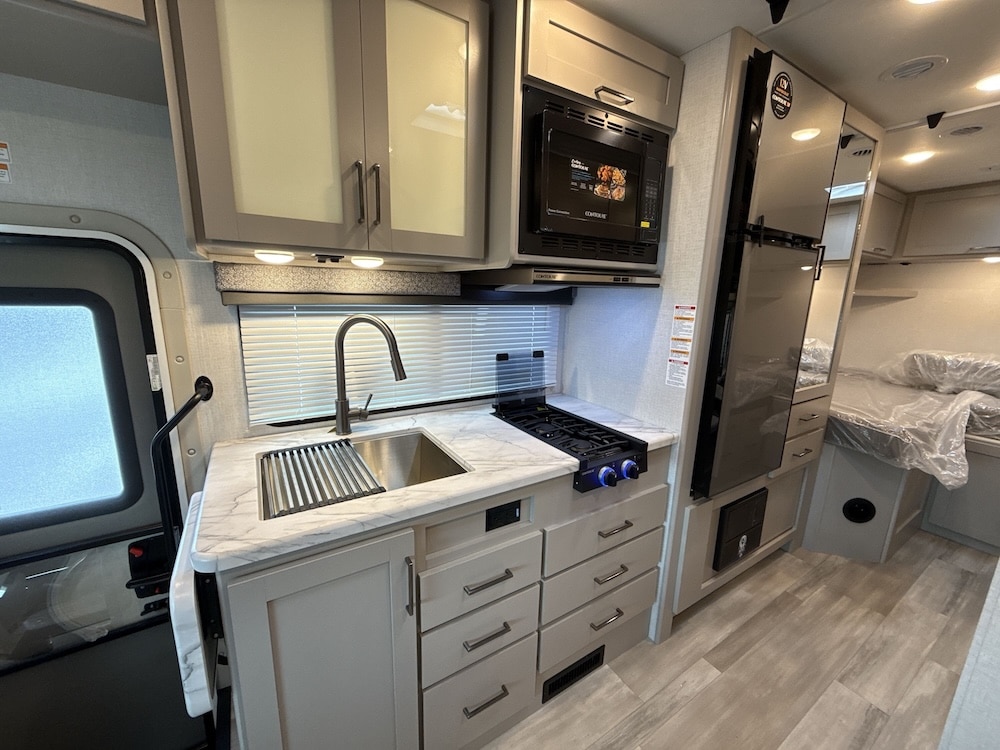
If you think a smaller motorhome can’t host a holiday meal, the Freedom Elite 19HE might change your mind. At just over 20 feet long, it’s true that a compact Class C won’t offer the expansive cooking and prep space of larger rigs—but this one makes up for it with a smart focus on dining together. The standout feature is the rear booth dinette, which replaces the traditional rear bedroom and converts easily for sleeping at night. It’s a clever layout that gives the whole crew a place to gather for meals, conversation, or a round of cards. Cupholders tucked behind the armrests free up table space, making the setup even more meal-friendly.
And while the kitchen is compact, the essentials are all here: a two-burner cooktop, a convection microwave with air fryer, and a 12V refrigerator. In other words, everything you need to put together a solid holiday meal—without needing a 30-foot coach to do it.
What Makes a Good Kitchen RV?
If the previous RVs have you thinking about upgrading your current kitchen setup, consider what really makes a good RV kitchen. First, it’s helpful to consider how the kitchen’s placement in the RV floor plan will work with day-to-day living. Think foot traffic, access, and how far cooking smells will travel. For example, a kitchen located right next to your bedroom can result in lingering scents.
Then, from an ergonomic standpoint, what’s it like to work and cook in the kitchen? Are appliances or workspaces cramped, awkward, or too small? Finally, storage, counterspace, appliances, and fit-and-finish are four easy things you can measure when comparing RV kitchens.
Storage: Look for full-extension drawers, overhead cabinets, deep pantries (or multiple pantries), hidden storage, and pull-out shelves. RV manufacturers can get pretty creative, and you’ll want to have a spot for everything from spices to appliances.
Counterspace: Not only do you want sufficient counterspace for cooking prep, but the quality of your countertops matters a lot. Solid surface countertops are best, followed by pressed countertops.
Appliances: It’s easy to check the size of the refrigerator, but you should also know how it’s powered (12V, etc.) and what that means for keeping food cool. More and more manufacturers are including extras like air fryers and cup rinsers.
Fit and finish: Cabinet doors should feel solid and close cleanly without rattling, hinges should be sturdy, and drawer slides should operate smoothly even when fully loaded. Look for tight seams on countertops and backsplashes, and flooring that can handle the inevitable spills and foot traffic. Lighting like LEDs under cabinets or over prep areas also makes the space feel more finished.
Altogether, these considerations give you a good read on how the kitchen will stand up to years of cooking, cleaning, and holiday hosting.
Where To RV Travel During the Holidays
Image by Camping World
So, are you convinced to hit the road yet? Whether you’re chasing warm weather or snow-covered views, some of the best RV destinations truly shine during the holidays. Think Florida’s Space Coast, Gatlinburg’s winter lights, or Arizona’s desert campgrounds, to name a few.
The Great Outdoors RV Nature & Golf Resort
If a balmy, coastal holiday suits your fancy, it’s tough to beat this Great Outdoors resort on Florida’s east coast. Located in Titusville, Florida, there’s enough on-site to keep you busy for a long weekend or extended winter vacation. From golf to fishing to sports courts, not to mention nature trails and excellent birdwatching opportunities, everyone can enjoy their preferred daily activities before gathering for a holiday meal.
There’s also plenty to do nearby, as this resort is within convenient driving distance of attractions like the Kennedy Space Center, the Westgate Cocoa Beach Pier in Cape Canaveral, the American Space Museum & Walk of Fame, and the Canaveral National Seashore.
If you’re looking for a mountain holiday getaway with plenty of outdoor recreation and indoor attractions nearby, make this Gatlinburg RV park your holiday basecamp. Set under 15 minutes from the heart of town, this park offers an ideal location for exploring two of the more locally preferred parts of Great Smoky Mountains National Park.
Choose the nearby Cosby entrance to access less-traveled hiking trails to attractions like the Mt. Cammerer Lookout Tower. Alternatively, use the Greenbrier entrance for access to trails that lead to the Messer Cabin or Ramsey Cascades. Always check weather and trail closures at this time of the year.
And even if trails are closed or hiking isn’t your thing, there is plenty to enjoy down in Gatlinburg. Recurring events like the downtown district’s Winter Magic and the Gatlinburg SkyPark’s Lights over Gatlinburg span the holiday season. Additionally, venues like Ripley’s Aquarium of the Smokies and the Gatlinburg Space Needle host special events that will require more advanced planning, but are well worth it. Explore Gatlinburg’s winter events calendar for more info.
Top RV Park Amenities:
Fully heated and air-conditioned clubhouse (great for family reunions or holiday parties!)
Free book and DVD lending library
Community space with a fire pit and playground
Seasonal pool and hot tub
Get tips for RV camping in the Great Smoky Mountains.
Towerpoint Resort
Those seeking a 55-and-up desert holiday experience will love the amenities at Arizona’s Towerpoint Resort. Managed by Cal Am Resorts, this vibrant resort is packed with amenities. From its on-site Cactus Bar & Grill to a bevy of classes hosted in its various facilities, you’ll have plenty to choose from—yoga, Zumba, water aerobics, wood carving, etc.
Located in Mesa, Arizona, this RV park’s location offers excellent proximity to the larger Phoenix metro area. You’ll find unique cityscapes to explore in Mesa itself, along with nearby Chandler, Tempe, and Scottsdale. But because it sits conveniently on the outskirts, you’re also within convenient driving distance of nearby natural attractions like Granite Reef Recreation Area, Usery Mountain Regional Park, and Lost Dutchman State Park.
Top Amenities:
Outdoor therapy spa and Olympic-sized swimming pool
Two ballrooms with themed dances, parties, line dancing, and live music
RC truck road racing course, batting cages, and golf driving range
What Makes a Good Holiday Campground?
Image by Camping World
During the holidays, campgrounds fill up fast, prices fluctuate, and amenities vary more than you might expect. Whether you’re looking for festive fun, quiet relaxation, or a convenient basecamp near family or attractions, these key considerations can help you ensure a memorable and stress-free holiday camping experience.
Availability and Price: Holiday weekends and winter breaks are peak camping times, so booking early is essential. Check reservation systems well in advance and be aware of minimum stay requirements or holiday rate increases. If you’re flexible with your travel dates, you may find better deals just before or after the busiest days.
Location and Proximity to Attractions: Consider the type of holiday experience you desire. Do you prefer a peaceful, wooded retreat or a campground close to family gatherings, holiday events, or local attractions? Consider drive times to nearby destinations, restaurants, and grocery stores, especially if you’ll need last-minute supplies.
On-Site Amenities: Holiday camping often means spending more time at the campground, so being excited about the on-site amenities is important. Look for campgrounds that offer heated common areas, decorated gathering spaces, community events, or even simple comforts like reliable Wi-Fi and clean bathhouses. RV resorts might feature extras like hot tubs, fitness rooms, or holiday potlucks—perfect for staying cozy and social.
Quality of Facilities: The holidays often bring inclement weather, so facilities like heated restrooms and insulated water hookups make holiday camping safer and more enjoyable. Well-lit and well-maintained roads, as well as lighted dump stations, also contribute to a smoother stay, especially if you’re arriving after dark or in freezing conditions.
Good Company: The campground itself can set the stage, but the people you travel with truly make the experience. Whether it’s family, friends, or your favorite furry travel companions, prioritize shared activities and connection over logistics. A cozy campfire with the right company often matters more than the perfect campsite view.
Ultimately, a good holiday campground balances comfort, convenience, and connection. The right spot gives you everything you need for a relaxed stay—but it’s the memories you make with the people you care about that turn any campsite into the perfect holiday getaway.
Best RVs for Hosting at Home
Already have guests coming to you? RVs make the perfect on-site guest suites. Destination trailers, toy haulers with convertible garages, and motorhomes with multiple sleeping spaces offer privacy and comfort for friends or family. Additionally, the extra kitchen, bathroom, and climate control ensure everyone’s comfort without overcrowding your home.
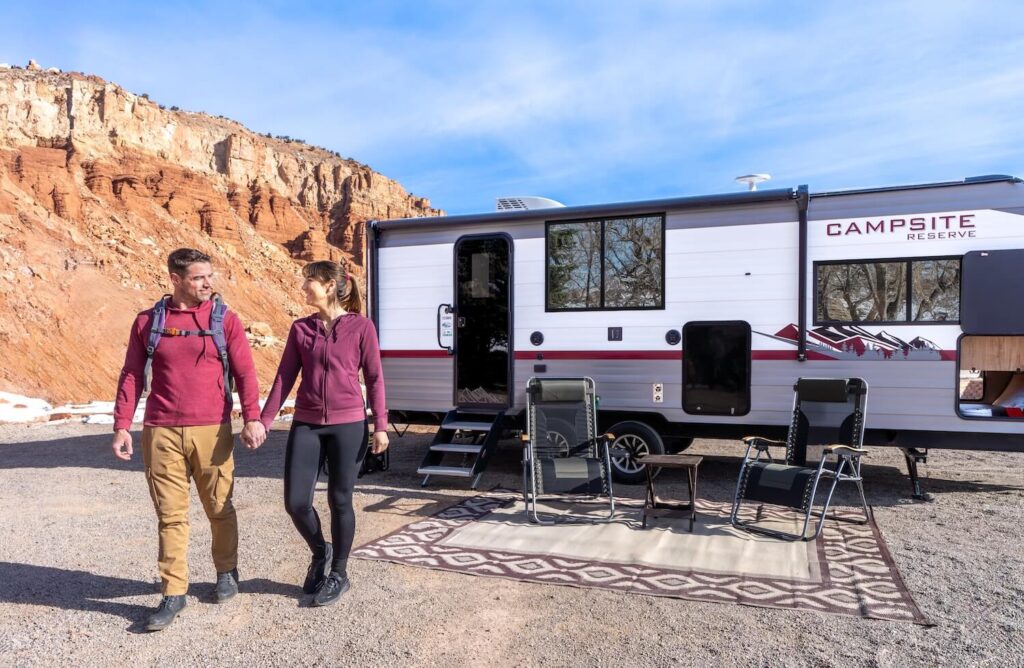
Campsite Reserve 20JW
Want to see the latest RVs? Subscribe to the Camping World YouTube channel, and never miss a video.
Invite guests to stay in their very own tiny home! With its multi-level layout, the Campsite Reserve 20JW is ideal for hosting a family—there’s room to sleep up to six comfortably. Kids can fight over the lofted sleeping areas while parents enjoy a private sleeping area on the ground level. Plus, that built-in rear patio is the perfect place to stop wet winter clothes and muddy boots before they come inside!
Cougar 360MBI
Want to see the latest RVs? Subscribe to the Camping World YouTube channel, and never miss a video.
The Cougar 360MBI is a luxurious 5th wheel with serious hosting potential. Highlighted by a central bonus room featuring a tri-fold sleeper sofa and a lofted sleeping space above, it also allows you to convert the living area into a guest space, thanks to a second sleeper sofa. Plus, you’ll have no trouble preparing holiday meals in this residential-style RV kitchen!
Coleman 25EZF
Images by Camping World
For a motorhome option with multi-use sleeping spaces, check out Thor’s Coleman 25EZF Class C RV. This compact motorhome features a unique twin-to-king bed conversion in the rear, meaning small families can convert the king bed for the parents with kids sleeping in the cabover bunk or on the convertible dinette. However, if you need it as a crash pad for a group of kids, you have two twin beds in the rear, a large over-cab bunk, and an extra-deep dinette, which together provide a total sleeping capacity of five little ones with ease.
What Makes a Good RV for Hosting Guests?
Image by Camping World
From sleeping arrangements to storage space and entertainment options, the best RVs for hosting strike a balance between comfort and functionality. Here’s what to look for when selecting (or preparing) an RV to accommodate guests.
Sleeping Space and Privacy: A good host ensures everyone has a comfortable place to sleep. Look for RVs with convertible dinettes, tri-fold sofas, or bunkhouse floor plans that provide extra sleeping options. Separate sleeping zones—like a private bedroom or loft—allow everyone to have their own space.
Spacious Living Areas: Floor plans with slide-outs, open kitchens, or U-shaped dinettes create room for group meals and evening gatherings. Even small details—like swivel chairs, movable tables, or an electric fireplace—can make the space feel more inviting for entertaining.
Kitchen Capacity and Convenience: The holidays often revolve around food, and your kitchen should keep up. Larger refrigerators, generous counterspace, and an oven or convection microwave make meal prep easier. An outdoor kitchen is even better, as it keeps some traffic out of the main cabin and lets guests mingle while cooking.
Bathroom Access and Capacity: Nothing tests hospitality like a crowded bathroom. If possible, choose an RV with a larger main bathroom or a bath-and-a-half layout. Check holding tank capacities as well—you’ll want to plan for the demand of multiple guests.
Storage and Organization: Guests come with luggage, coats, and gifts, so adequate storage is essential. Pass-through compartments, under-bed storage, and accessible cabinetry help keep the living space uncluttered. Consider bringing collapsible bins or hooks to make temporary storage even easier.
A good RV for hosting guests doesn’t have to be the biggest model on the lot—it just needs to be thoughtfully equipped and arranged for comfort. When everyone has space to sleep, relax, and enjoy the festivities, your RV becomes more than a vehicle—it becomes a true home for the holidays.
Moochdocking Tips for the Holidays
Image by Camping World
Moochdocking is when you park your RV at a friend’s or family’s home or property—ideally for free. It may involve being completely self-sufficient, unless utilities are offered. Here are some tips for being a moochdocking RV guest that will get invited back the next time they host:
Setup & Courtesy: Always get permission first, clearly communicate expectations, and be respectful of your host’s property, utilities, and privacy—treat the stay as a privilege, not a right.
Preparation Is Key: Plan by bringing essential gear, such as adapters, hoses, propane, and leveling blocks, so you can be fully self-sufficient and minimize your impact on your host’s home systems.
Utility Management: Arrive with full fresh water and empty waste tanks. Limit electrical draw to prevent tripped breakers and plan to dump tanks elsewhere. Bring adapters, hoses, and surge protectors for safe connections.
Safety & Legality: Park on level ground, check for hazards such as low power lines, and research local ordinances or HOA rules to ensure your RV stay is permitted and within time limits.
Host-Friendly Habits: Keep visits short unless invited to extend them, use your own Wi-Fi if possible, and maintain good communication so that your hosts feel comfortable welcoming you again.
If a parking space is available, moochdocking is a great way to join holiday gatherings without overtaxing your host.
Learn more about how to moochdock.
Renting an RV for Yourself or Family
Image by Camping World
If you don’t own an RV—or need one for your guests—consider a holiday rental. Platforms like Good Sam RV Rentals make it easy to find travel trailers, fifth wheels, and motorhomes for short-term use. You can even have the RV delivered and set up at your home or campsite, giving everyone space while keeping the holiday spirit close.
Use these additional resources to travel safely and maximize enjoyment when RVing during the holidays:
Are you RV camping this holiday season? Let us know where you’re heading and who you’re traveling with!
Support CleanTechnica’s work through a Substack subscription or on Stripe.
Elections have consequences. Boy, howdy, do they ever! As soon as the last presidential election was over, several US manufacturers read the writing on the wall and realized trade relations between the US and China were about to get bumpy. News reports this week indicate Tesla has quietly told its suppliers that it expects them to supply parts for its cars that are not sourced from China.
Tariff and trade issues are just the latest piece of the puzzle. The COVID-19 pandemic caused massive disruptions in supply chains all around the world. It can be argued the pandemic exposed the flaws in the economic model known as globalization and made manufacturers painfully aware that outsourcing comes with risks that may not have been fully appreciated previously.
According to the Wall Street Journal, those disruptions first spurred Tesla to begin rethinking its supply chains for its vehicles manufactured in the US. The current furor over tariffs and the push to demonize China has accelerated the company’s efforts to decouple its manufacturing in the US from Chinese suppliers.
Tesla North American Content
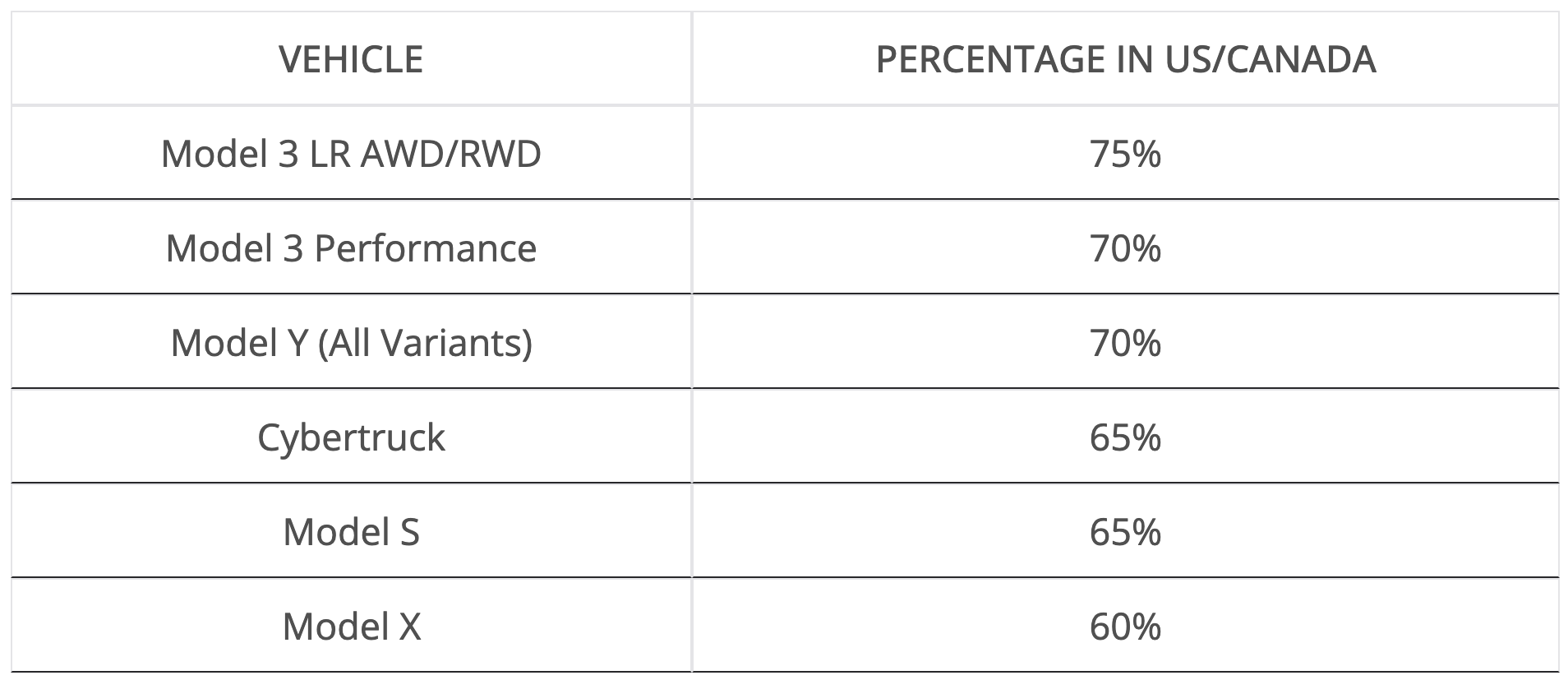
Just how much does Tesla rely on parts supplied from countries other than the US and Canada? According to data from NHTSA, its vehicles have a higher North American content, on average, than any other US manufacturer. But that does not mean they are entirely US or North American made. Not A Tesla App breaks the percentages down as follows:
It goes on to say, “The most interesting takeaway from this is that the car manufacturers that you’d assume would be most American — the Detroit Big Three — are, in fact, some of the least American you can find. Tesla, on the other hand, holds the crown for most North American made cars — while also being based in the United States.”
China remains a leading producer of auto parts, including chips, batteries, and essential materials, many of which are more affordable due to its large-scale production, lower costs, and weak currency, Interesting Engineering reports. Tesla executives have faced challenges navigating the uncertainty created by shifting tariffs in the US–China trade conflict. Those policy disruptions have made it harder for Tesla to establish a consistent pricing strategy, according to sources familiar with the matter.
Change Began Months Ago
There are reports that Tesla began turning to non-China based suppliers earlier this year and has now notified its primary suppliers that they have until 2027 to entirely purge those suppliers from their supply chain. The trade and tariff conflicts roiling businesses all around the globe have convinced Tesla to build supply chains that are more resilient to political disruptions.
When China got into a spat with Dutch chip maker Nexperia earlier this year, that had knock-on effects for many automakers who relied on Nexperia chips, including Tesla. “Interestingly, Tesla has been encouraging Chinese suppliers to set up shop in Mexico and Southeast Asia for years. This could potentially allow Tesla to sidestep tariffs that are aimed solely at China itself. It also halted the use of Chinese-made lithium-iron-phosphate batteries in favor of making them in Nevada next year,” according to CarScoops.
GM Facing Supply Chain Issues As Well
Tesla is not the only US automaker facing these troubled waters. General Motors is working to distance itself from Chinese parts and materials, a shift that has taken on greater urgency as trade conditions continue to change, says CarScopes, citing unnamed industry sources. General Motors in particular has reportedly instructed thousands of its suppliers to phase out Chinese content from their operations no later than 2027.
With relations between the United States and China still strained, GM has been focused on strengthening its supply chain in ways it hopes will reduce future disruptions. It is understood that GM is especially focused on limiting Chinese content in vehicles built in North America and would prefer to source those parts from nearby factories.
Unnamed sources told Reuters that GM is open to non-US supply lines, just as long as they are not in China. It is also thought to be urging suppliers to stop sourcing parts and materials from Russia and Venezuela.
While GM has yet to comment on the report, chief executive Mary Barra did recently note the company has been “working now for a few years to have supply chain resiliency.” The automaker’s global purchasing chief, Shilpan Amin, also confirmed that, due to supply chain disruptions, it has been forced to shift away from relying solely on countries that can supply the least expensive parts. According to some supplier executives, China has become so dominant in certain areas that it can be hard to find alternatives.
Disrupting 30 Years Of Stable Trade Relations
The head of the Vehicle Suppliers Association, Collin Shaw, notes that existing supply chains involving China have been established over the past 20 to 30 years and re-configuring them quickly — which is what the current administration wants — is a tall order. “It’s not going to happen that fast,” he told Reuters.
There has been some rapprochement between the US and China of late, but manufacturers cannot make long term plans based on short term policy changes. The mercurial nature of the US tariff initiative is the last thing manufacturers want because it destabilizes their business plans, which typically results in higher costs to consumers and lower profits for manufacturers. It is curious that so many major corporations actively — even aggressively in the case of Tesla — supported the incumbent. They are really in no position now to complain, therefore, at least not loud enough for anyone to hear.
Business depends on stable trade relations. Having the rug pulled out from beneath 30 years of predictable industrial policy is hurting lots of companies and most consumers. As Tesla in particular is striving to reduce costs so it can offer it customers lower priced vehicles, the trade war with China will make that task significantly more challenging.
The oddest part of all this is that the administration expects companies to adapt and adjust on the fly and undo three decades of stable, predictable trade relations in a matter of months, if not weeks. A rational government would see the absurdity of that position.
Sign up for CleanTechnica’s Weekly Substack for Zach and Scott’s in-depth analyses and high level summaries, sign up for our daily newsletter, and follow us on Google News!
Advertisement
Have a tip for CleanTechnica? Want to advertise? Want to suggest a guest for our CleanTech Talk podcast? Contact us here.
Sign up for our daily newsletter for 15 new cleantech stories a day. Or sign up for our weekly one on top stories of the week if daily is too frequent.
CleanTechnica uses affiliate links. See our policy here.