

For decades, the M3 has been defined by its engine as much as its balance. From high-revving fours and sixes to turbocharged torque monsters, every generation has carried a mechanical signature that shaped how it drove and how it felt. That is about to change.
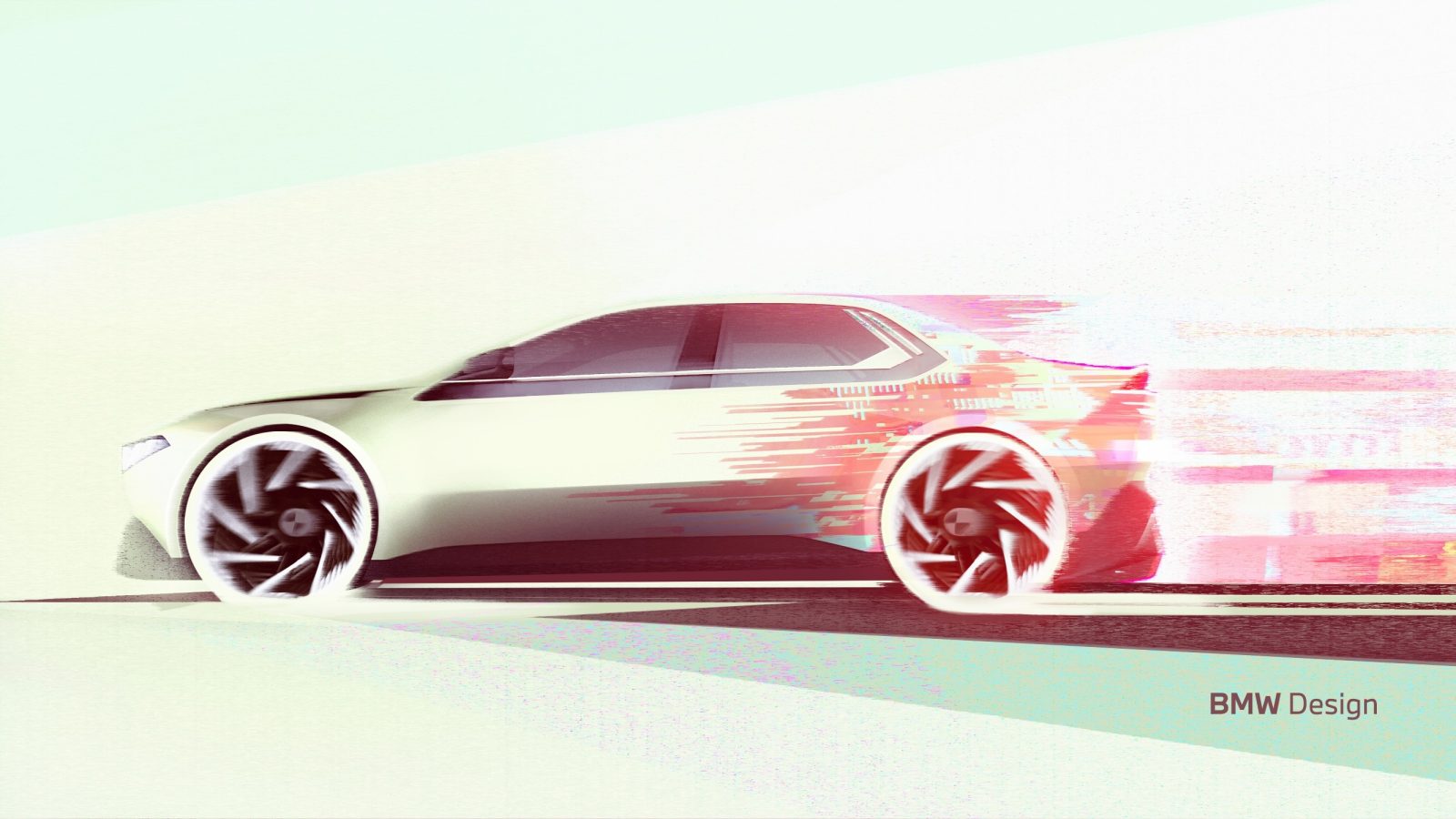
BMW M busy finalizing development of its first fully electric M3, internally known as ZA0, and while the powertrain marks a clean break from tradition, everything else suggests Munich is working hard to make this feel like a proper M car rather than an EV wearing an M badge.

A New Foundation, Not a Reinvention
The electric M3 will sit atop BMW’s Neue Klasse architecture, closely related to the upcoming electric 3 Series range internally referred to as NA0 and NA1. Production for the M3 EV is currently planned from March 2027 through October 2034, with a single variant at launch.
While the standard electric 3 Series will roll out in phases starting mid-2026, the M3 EV arrives once the platform has matured. That timing matters. BMW has been clear, at least behind closed doors, that M’s first fully electric core model cannot afford to feel experimental.

Quad Motors and a Staggering Torque Figure
Early indications point to a quad-motor layout, one motor at each wheel, unlocking fully variable torque vectoring and output figures that simply are not possible with combustion. Power should be in the 700 – 800 hp range with peak torque around 1,000 lb-ft, delivered instantly and independently across all four corners.
Straight-line pace will be brutal, but the more interesting story is how BMW M plans to use that hardware. Expect software-driven handling modes that actively shape yaw, traction, and throttle response to mimic the adjustability M drivers expect. This is less about raw numbers and more about preserving that familiar M sense of control at the limit. Powering it all will be the “Heart of Joy” processing unit previewed in last year’s Vision Driving Experience concept. The new technical architecture processes to allow engineers to finely calibrate every element of performance and feedback in ways we’ve never seen in an EV before. The promise is an electric M3 that feels as nuanced as a classic petrol version.

Familiar M Car Design Language & Materials
Despite the electric shift, BMW is clearly aiming for continuity inside and out.
Standard equipment is expected to include full M sport seats, with optional bucket seats constructed from BMW’s newly announced natural fiber composite. The same material will appear on interior trim pieces, offering a sustainability story without leaning on glossy carbon fiber everywhere.
Other expected highlights include M design trim, M seatbelts, and a head-up display as standard. Outside, the car will wear M-specific 20-inch wheels, with optional forged 20s or a staggered 20-inch front and 21-inch rear setup. Carbon ceramic brakes remain on the options list, as do M-specific headlights.
Purists may wince at one detail. The panoramic glass roof from the standard i3 appears set to carry over unchanged, with no lightweight alternative planned for the initial launch. Why? BMW’s view is simple. With the battery mass mounted low in the floor, center of gravity concerns are largely neutralized, even if the romance of a steel roof is gone. That said we expect a carbon roof to make its way to the options sheet eventually. BMW can’t leave that money on the table for long.
Context Matters. Meet the Electric 3 Series Family
Understanding the M3 EV also means understanding the broader electric 3 Series lineup that underpins it.
The NA0 and NA1 electric 3 Series range enters production in July 2026 and runs through late 2034. It spans multiple outputs, including 20, 40, 40 xDrive, 50, 50 xDrive, and an M60 xDrive flagship. Production begins in Germany, with San Luis Potosí joining roughly a year later.
The rollout is staged. One European model launches first, followed by additional European and US variants later in 2026. By March 2027, the M60 xDrive will be available globally.
In terms of size and packaging, expect a familiar 3 Series footprint. What changes is the tech. Multifunction seats previously reserved for the 5 Series and above become available, along with expanded Iconic Glow exterior elements, panoramic glass roof as standard, and a new tiered approach to driver assistance that includes highway and city capability. Panoramic vision, an optional HUD, and Harman Kardon audio round out the tech story.
The M60 xDrive effectively serves as a bridge between the regular electric 3 Series and the full M3 EV. It brings adaptive M suspension, M brakes, an M steering wheel, multifunction seats, HUD, and HK audio as standard. Wheels start at 20 inches, sport tires unlock a higher top speed, and M-colored headlights and exterior accents add visual separation.

What This Really Means for M
The electric M3 will not replace the emotional appeal of a straight-six with a H-pattern manual. BMW knows that. But the ZA0 project is less about replacing the past and more about proving that M can still define driver engagement when sound and revs are no longer part of the equation. In our brief time in BMW’s Vision Driving Experience, it’s clear that BMW’s aiming for more than just outright performance but also feedback and feel.
If BMW gets the calibration right, the electric M3 could redefine what performance sedans feel like in the EV era rather than simply keeping up with it. Either way, this is the most important M3 since the original E30.
And like that car, it will likely be controversial long before anyone drives one.