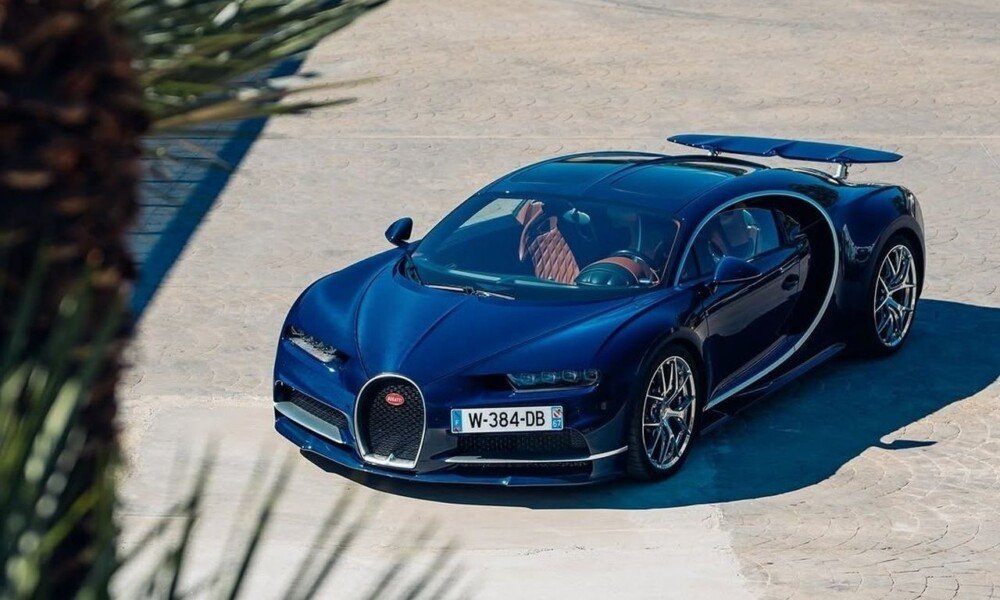
A Bugatti is not a car you drive to work in daily or run errands in. Hypercars like the Chiron are purchased as an investment and spend most of their time tucked away in a garage. However, there are a few exceptions.
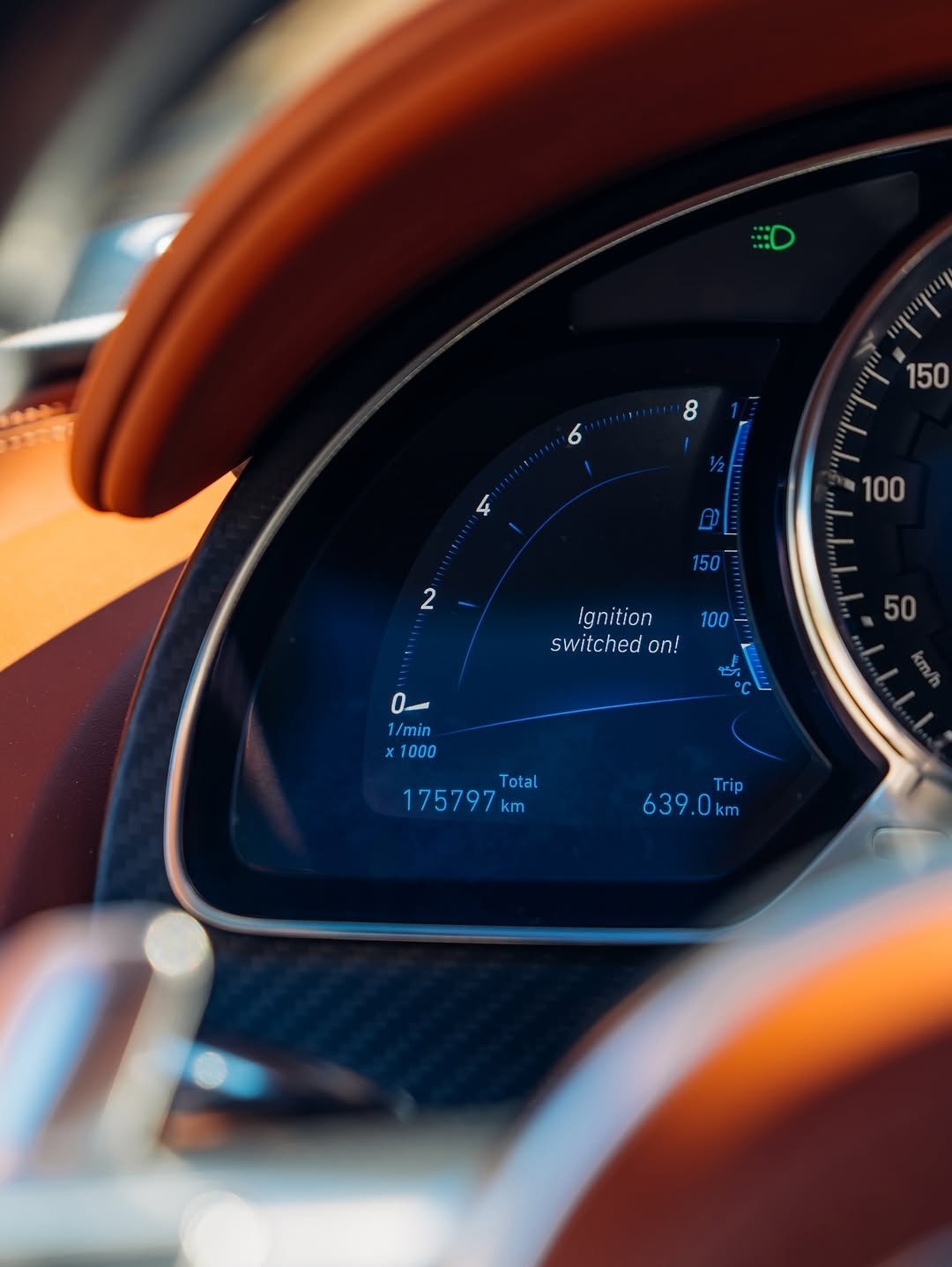
This Bugatti Chiron has more miles on it than a shopping trolley. With an odometer that reads 175,797 kilometers, or 109,235 miles, this could be the highest-mileage Bugatti on the planet.
Who in their right mind would rack up over 100k miles in their Bugatti, you might ask? Well, the answer to it is quite simple and not that surprising.
It is a development car owned by Bugatti. This is the car used by the company to test and validate everything from mechanical components to electronics and other minor bits and bobs.
It’s also a testament to how reliable the Chiron can be if it is maintained properly. Just look at it. The Chiron prototype looks as good as any customer car.
Every car scene has its originals — the day ones who have seen it all and done it all, yet remain humble all the same. In Ontario, Geoff Mayes is undeniably one of those individuals. He’s been an integral and respected part of the Ontario car community for decades.
Geoff wouldn’t self-proclaim his OG status, but he’s at most events, always willing to help out another enthusiast and has become an irreplicable part of Vanfest, one of Canada’s largest minitruck events.
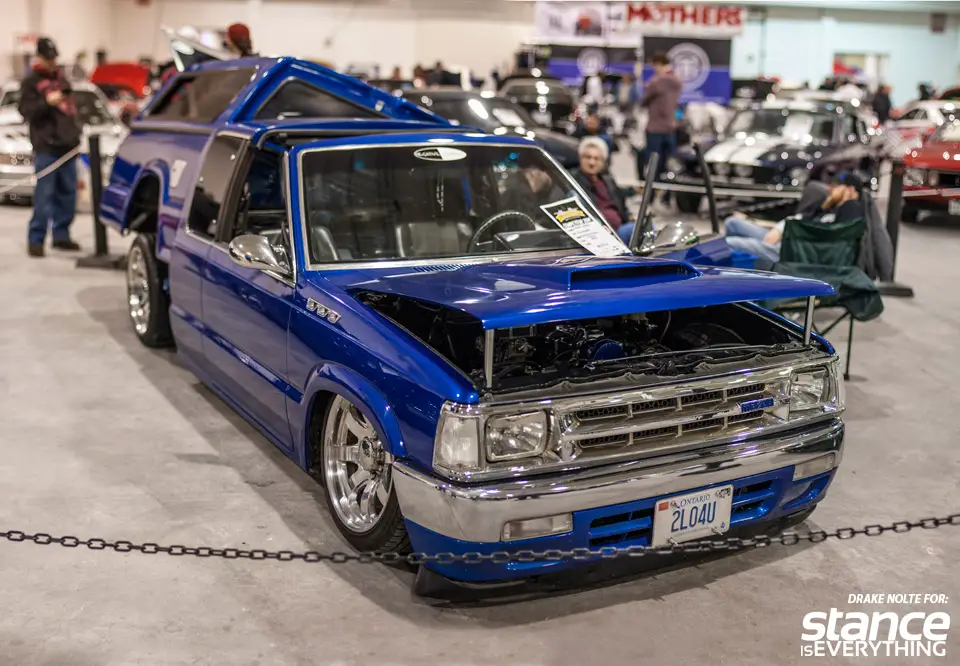
While he recently picked up an air-cooled Beetle to play with, Geoff will forever be tied to minitrucks thanks to his blue Mazda that has stood the test of time. As a Mazda owner myself, in the early days of this site, Geoff was one of the rare few I would see at both minitruck events and Mazda events.
As a result I’ve been fortunate enough to document a number of the more recent versions of this truck. However his history with it goes all the way back to 1995, when I was still building scale models and lusting after nitro rc cars.
Back then, the Mazda was static and paint hues changed from green to copper. Eventually, he settled on blue paint around the time he decided to also put it on air ride.
As the years went by, Geoff’s modifications grew increasingly more involved. The door handles, badges, and antenna have all been shaved, giving the truck a cleaner, smoother appearance.
Though it looks like a 1990s new-old-stock piece, the hood is actually a one-off Mayes custom fitted with a Ford Gran Torino scoop Geoff sourced from a pick-and-pull yard.
The front bumper, however, is a discontinued piece from the Mazdarossa kit. Geoff tracked down the now very hard-to-find part by buying an entire second truck with the kit already installed. That donor truck was too far gone to repair so he took what he needed and parted out the rest.
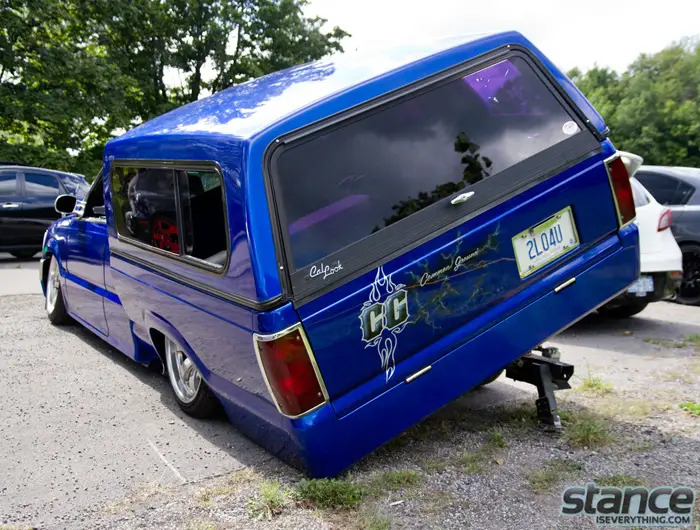
Recently, in a move that surprised many of us locals, Geoff ditched the bed topper the truck was always known for in favour of a more streamlined ARE tonneau cover. Surprisingly, this piece was sourced locally and in remarkable shape.
While doing the switch to the truck’s most recent shade of Nissan B16 blue, the tonneau was painted to match, and the graphics added below the belt line.
Mazda’s choice to equip the B2200 with a 6×5.5 bolt pattern can make wheel selection difficult, but over the years, Geoff has managed well. Before the current 18″ Eagle Alloys, he ran polished Nissan Pathfinder wheels, Prymes, and Hammers. The 18s help bridge the gap between ‘old school’ minitruckin’ and the new.
Like the rest of the truck, the suspension has been refined over time. Torsion bars and lowering blocks worked for a while, and for a brief period, air shocks and a compressor were installed when he needed a little more clearance on the fly. As time and technology evolved, he decided to make the switch to a proper air set up.
For this modification, he was determined to do it right—once. Up front, the truck retains its factory upper and lower control arms, while the rear features a step notch and a four-link setup paired with a Ford Courier rear end.
Taking the time to install the air ride system correctly has paid off—Geoff says it’s been incredibly reliable. Aside from routine maintenance, he’s never had to revisit the setup since completing it.
One of the truck’s most notable features—after its tilt bed, of course—is the Targa roof, a modification not for the faint of heart. Despite taking a next-level amount of commitment, these conversions were, at one point, very popular. Those who did them soon found out that most off the shelf conversions fit poorly and had a tendency to leak.
For a proper fix to these issues, Geoff turned to his long-time friend and fellow minitrucker, Tim Atkinson of Atkinson Customs. Tim crafted a new removable roof section entirely out of metal, ensuring both durability and ease of use.
Now more like OEM hardtop quality rather than an aftermarket modification, the roof sidesteps the downfalls of the previous design.
Tim also lent his expertise to the truck’s interior. The dash has been refined with the removal of the package tray and wrapped in premium leather, elevating the cabin’s overall feel.
Acura EL bucket seats have replaced the factory Mazda equipment, and these, too, are wrapped in matching leather for a seamless look. Flame-gauge faces serve as a nostalgic nod to the mid-’90s, complemented by an APC steering wheel from the same era.
Even after decades with the truck, and several different looks, Geoff is the first to admit it isn’t “finished.” As times and trends evolve, he’s never been afraid to make revisions to suit the moment.
One thing that won’t change, however, is that the truck will always carry the ‘Mayes’ name. His daughter, Sam, absolutely loves it, though she’s still a few years away from driving age. Geoff knows it won’t be long before she starts asking to take it for a cruise.
Geoff’s time in the spotlight was long overdue, and I’m happy to have this platform to show this OG the respect he deserves.
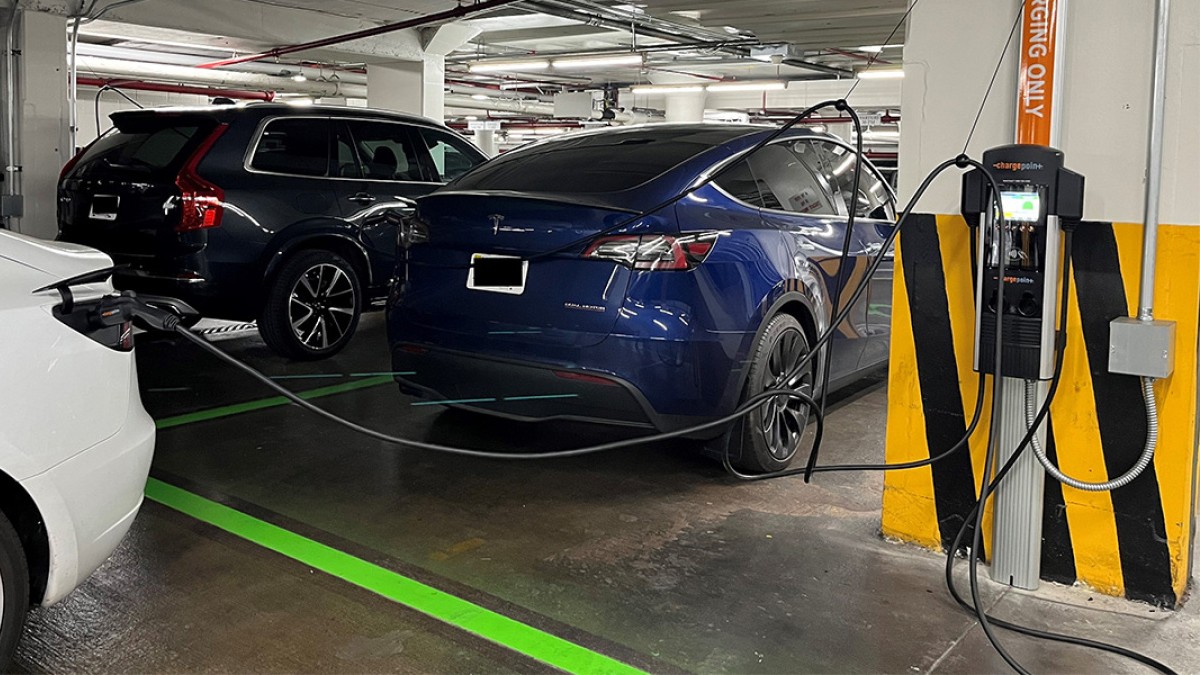
EV chargers that don’t work because they’re stuck offline are still a daily frustration for drivers and a costly headache for operators. Emobi and HeyCharge say they have a practical fix for that.
The two companies announced a partnership that enables existing EV chargers to be retrofitted so they can operate reliably even in areas with poor or expensive internet connectivity, such as underground garages and dense urban buildings. Once upgraded, those chargers connect to Emobi’s roaming network, which links more than 140,000 chargers across 26+ charging networks in the US and Canada through a single API.
HeyCharge, a Munich‑based EV charging technology company, focuses on hardware that enables smart EV charging without the internet. Emobi provides the roaming layer, making those chargers visible and usable across automaker systems, fleet platforms, and consumer charging apps.
The fix is straightforward: retrofit older, disconnected chargers instead of ripping them out and starting over. Emobi says the upgraded hardware can also support its JustPlug system, enabling Plug & Charge‑style automatic authentication across both new and legacy chargers.
Advertisement – scroll for more content
Many existing chargers struggle with spotty connectivity, which leads to failed sessions, higher operating costs, and frustrated drivers. HeyCharge says its local‑communication setup avoids those failures by reducing dependence on cellular networks, cutting installation time, and avoiding costly network upgrades.
Once retrofitted, chargers become discoverable across major EV platforms and support app‑free charging, without cards or new hardware. Emobi says operators also gain features that offline chargers typically lack, including session tracking, energy‑based billing, and real‑time availability, though how consistently those features perform will matter in real‑world deployments.
For property owners, fleets, and charging operators, the promise is simpler installs, lower costs, and better uptime in challenging locations. For drivers, the benefit is fewer failed charging attempts in garages and urban buildings where connectivity is often weakest.
“This partnership addresses one of the most persistent challenges in EV charging: unreliable or offline chargers that were never designed for modern connectivity,” said Emobi CEO Lin Sun Fa.
HeyCharge CEO Chris Carde added, “Charging needs to be secured and work everywhere, not only where the internet is strong.” By pairing HeyCharge’s offline technology with Emobi’s roaming network, he said, operators get a more reliable product and drivers get a more consistent charging experience across very different environments.
Read more: EVgo plans 150 fast chargers a year at Kroger stores through 2035
If you’re looking to replace your old HVAC equipment, it’s always a good idea to get quotes from a few installers. To make sure you’re finding a trusted, reliable HVAC installer near you that offers competitive pricing on heat pumps, check out EnergySage. EnergySage is a free service that makes it easy for you to get a heat pump. They have pre-vetted heat pump installers competing for your business, ensuring you get high quality solutions. Plus, it’s free to use!
Your personalized heat pump quotes are easy to compare online and you’ll get access to unbiased Energy Advisors to help you every step of the way. Get started here. – *ad
FTC: We use income earning auto affiliate links. More.
EU-India deal details emerge; Renault changes customer focus | Automotive World
Skip to content
The EU is keen to strike a trade deal with India, and Renault wants to capitalise on the country’s growing middle-income consumer segment. By Will Girling
A free trade agreement (FTA) between the EU and India could be secured as early as 27 January. Anonymous sources told Reuters that vehicles from the bloc priced at more than €15,000 (US$17,793) will see import tariffs lowered to 40%, a 70pt reduction from the maximum rate today.
Subscribe to Automotive World to continue reading
Sign up now and gain unlimited access to our news, analysis, data, and research
Welcome back , to continue browsing the site, please click here
We use cookies to ensure that we give you the best experience on our website. If you continue to use this site we will assume that you are happy with it.
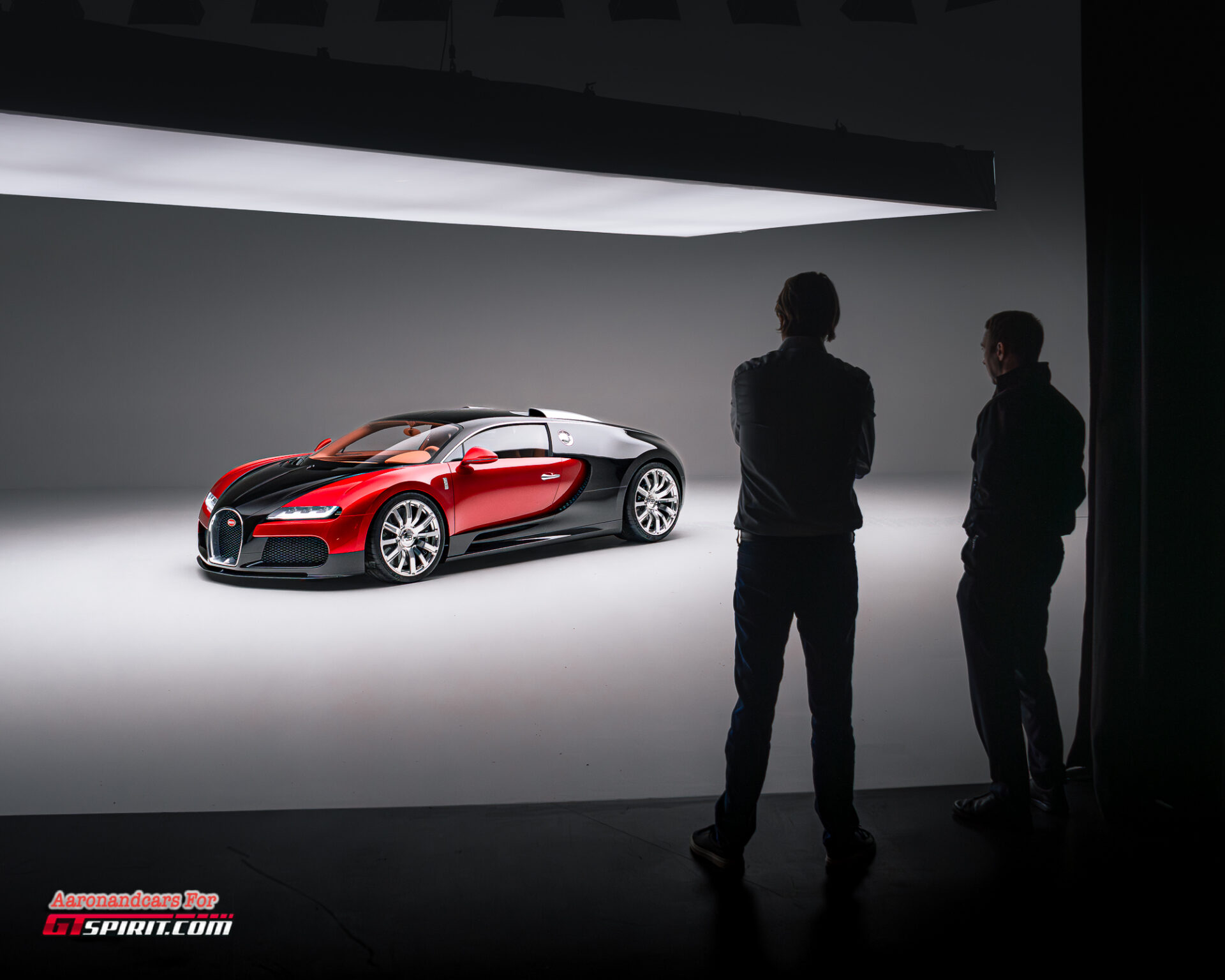
Some cars are fast, some are beautiful, but only a very small number genuinely change the course of automotive history. Fewer still deserve to be remembered as both a machine and a mindset. The Bugatti F.K.P. Hommage belongs squarely in that rare category.
Unveiled as the second creation of Bugatti’s Programme Solitaire, the Bugatti F.K.P. Hommage is far more than a one-off hypercar. It is a deeply personal tribute to Ferdinand Karl Piëch, the man who not only revived Bugatti, but fundamentally redefined what a modern automobile could be. At the same time, it marks twenty years since the Bugatti Veyron shattered every perceived limit the industry thought it understood. This is not nostalgia; it is gratitude, expressed at 400 km/h.
Ferdinand Piëch – The Man Who Refused “Impossible”
To understand the Bugatti F.K.P. Hommage, you first have to understand Piëch—not as a chairman, but as an engineer in the purest sense. For him, “not possible” simply wasn’t an acceptable answer. The Veyron’s origin story has long since become legend: a sketch drawn on a Japanese bullet train, a radical W-engine layout, and an uncompromising brief demanding 1,000 horsepower, 400 km/h, all-wheel drive, and genuine luxury. At the time, many questioned whether such a car was necessary, or even feasible.
History answered that question decisively. When the Veyron debuted in 1999, it didn’t merely introduce a new Bugatti; it created an entirely new segment. This wasn’t a race car adapted for the road, but a luxury grand tourer that happened to be devastatingly fast—the first true hypercar. The fact that today’s automotive landscape is filled with seven-figure hypercars only underlines how far ahead of its time the Veyron really was.
Period-Correct, Yet Unmistakably Modern
Speaking with Bugatti Designer Frank Heyl, one thing becomes immediately clear: the Bugatti F.K.P. Hommage was never meant to shock. Instead, it was designed to feel inevitable. The car is instantly recognizable as a Veyron, retaining its signature leaning-back posture—calm, noble, almost aloof. At a time when supercars were still obsessed with aggressive wedge shapes, the Veyron reclined with quiet confidence, as if it had nothing to prove.
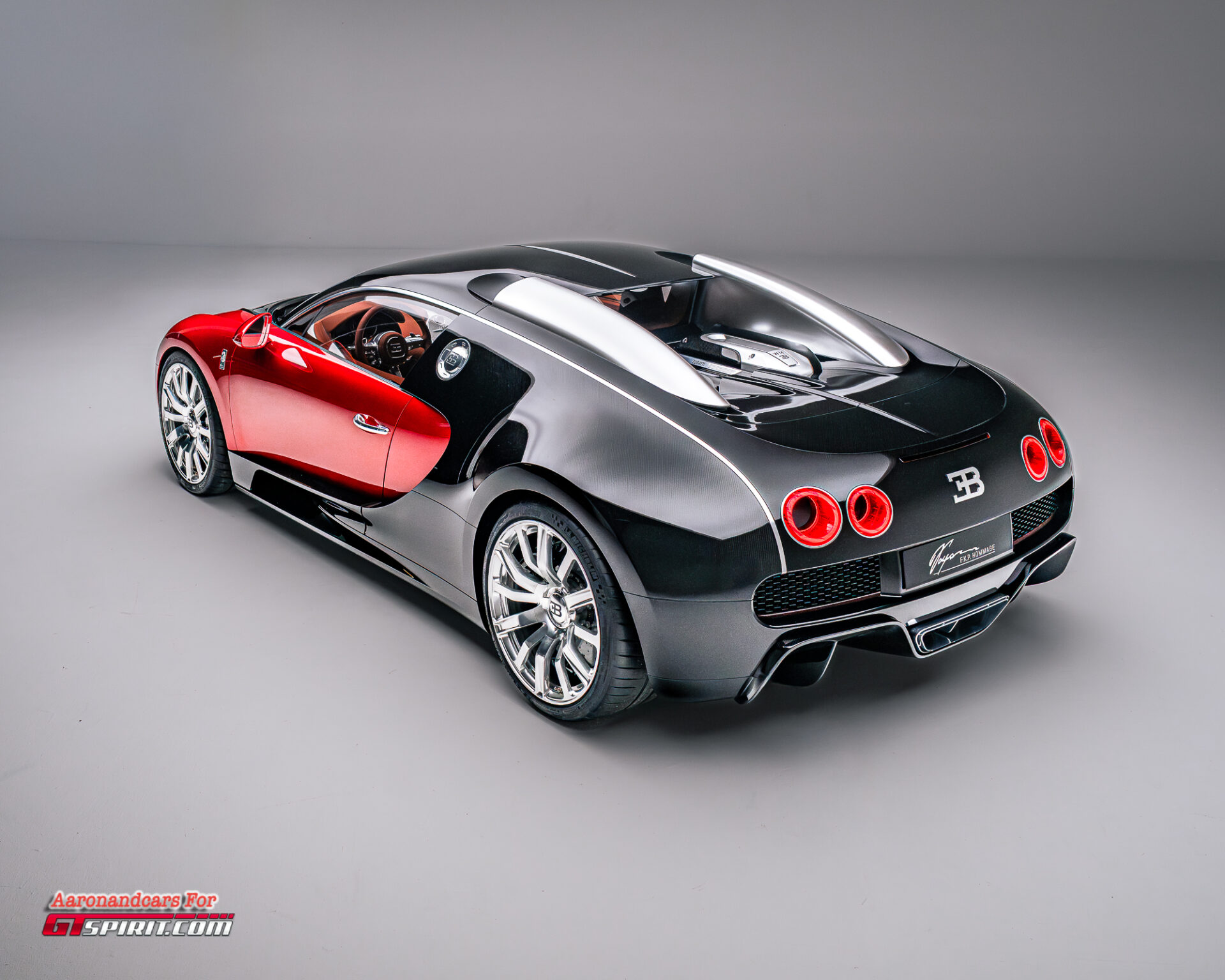
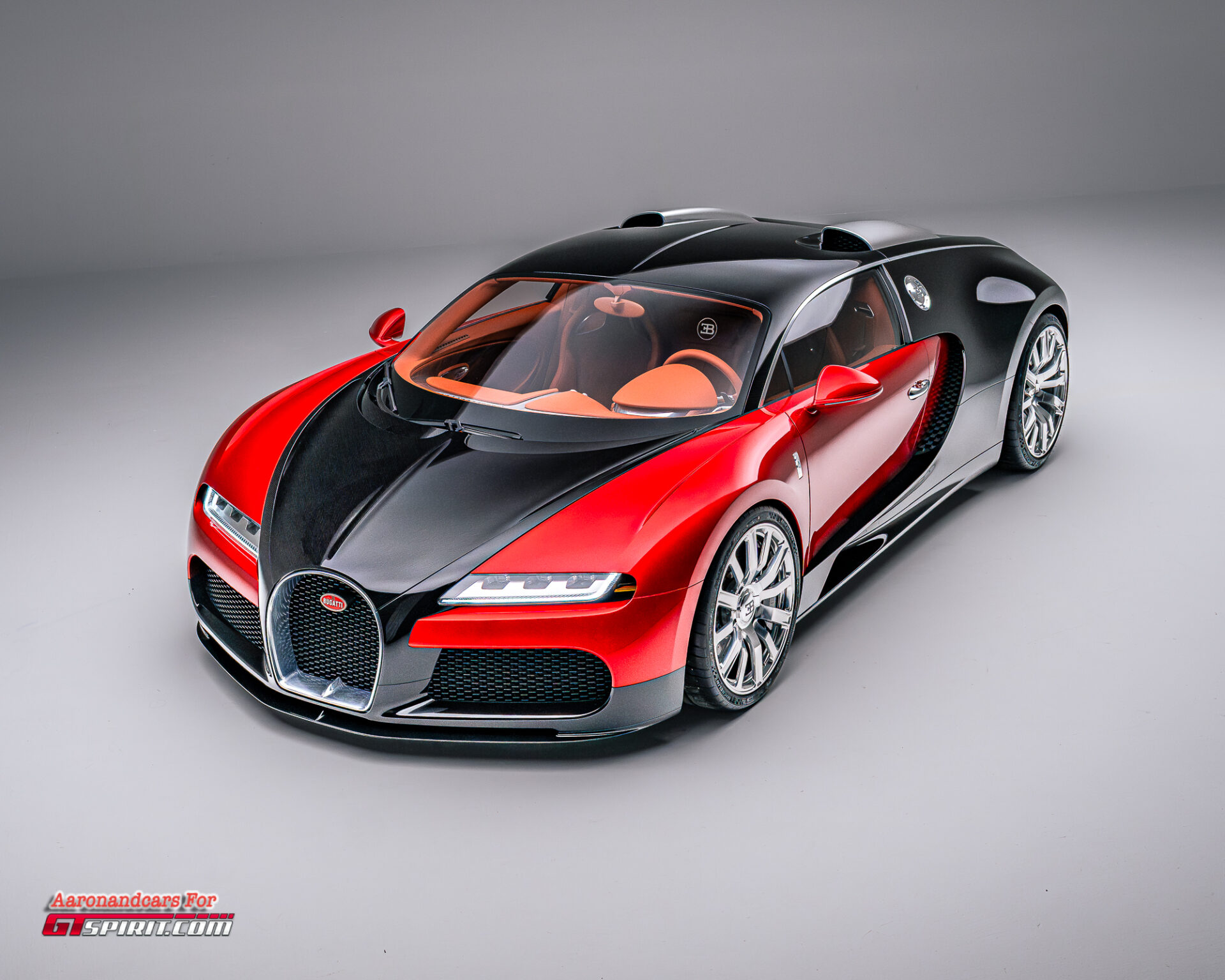
Every surface, however, has been rethought. The proportions remain familiar, but the geometry is sharper and more resolved, with a three-dimensional horseshoe grille machined from solid aluminum and body surfaces flowing organically from it in true fuselage fashion. Even the iconic two-tone paint is no longer a graphic gesture, but a structural one, defined by actual panel separations. As Heyl describes it, the design is “period correct”—as though this is exactly the Veyron Bugatti would have built if twenty more years of progress had been available at the time.
The Ultimate Expression of the W16 Era
True to Piëch’s personal philosophy, the Bugatti F.K.P. Hommage does not settle for heritage specifications. Instead, it uses the very highest evolution of the W16 platform, producing 1,600 horsepower and representing the absolute pinnacle of two decades of development. Piëch never owned yesterday’s technology; he always demanded the latest iteration, the final word.
Accordingly, this Veyron homage breathes through larger air intakes, benefits from vastly evolved aerodynamics, and sits on subtly upsized wheels wearing modern Michelin rubber. The details sharpen the stance and capability without disturbing the original car’s character. Even the paint tells a story of progress: what appears to be red metal is actually a silver aluminum base beneath a translucent red-tinted clear coat, while the exposed carbon fiber is not painted black but subtly tinted within the clear coat itself. As Heyl jokingly puts it, it’s “like wearing mink on the inside”—understated, and only for those who know where to look.
Inside: Where Engineering Meets Haute Horlogerie
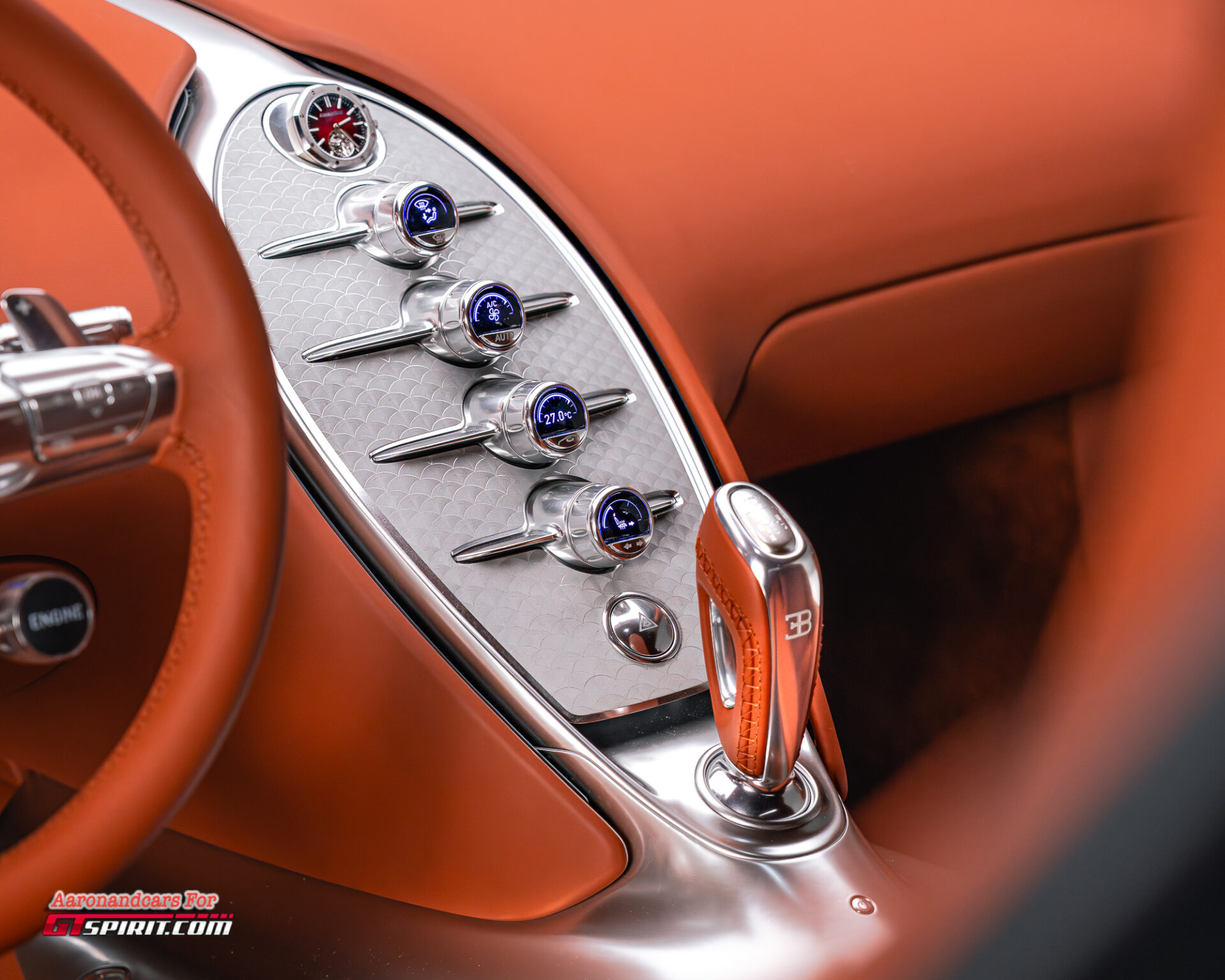
If the exterior is defined by restraint, the interior is defined by obsession. There is no digital clutter here, no screens competing for attention or threatening to age poorly. Instead, the cabin embraces timelessness, with a circular steering wheel echoing the original Bugatti Veyron’s Bauhaus-inspired purity and a center console and dashboard machined from solid blocks of aluminum, left honest and tactile.
At the heart of it all sits a bespoke Audemars Piguet Royal Oak Tourbillon, integrated directly into the dashboard within an engine-turned aluminum island inspired by Ettore Bugatti’s straight-eight cylinder heads. Mounted in a self-winding gondola, the mechanical timepiece quietly rotates to maintain power—autonomous and gloriously unnecessary. By itself, the watch carries a value exceeding that of many new Ferraris or Bentleys, an almost incidental detail that perfectly captures the mindset behind this project. That sense of continuity runs deeper still: the owner of the F.K.P. Hommage also owns one of the very first 2005 Bugatti Veyrons, finished in the exact same red-and-black color scheme, turning this one-off into a modern counterpart rather than a replacement. It exists not to impress passengers, but because the owner wanted it—and because Bugatti could make it happen.
The Bugatti F.K.P. Hommage – A Celebration, Not a Reinvention
The Bugatti F.K.P. Hommage does not attempt to replace the Veyron or rewrite its story. Instead, it completes a sentence that began twenty years ago. As Frank Heyl describes it, this project represents the “next opportunity” Piëch once spoke of—a chance to revisit an idea when technology, time, and trust finally align. The result is what Heyl himself considers the ideal, definitive Veyron.
The car shown today is a pre-production masterpiece, with the final, customer-delivered Bugatti F.K.P. Hommage scheduled for completion and handover next year. In an era racing toward electrification and digital abstraction, it stands as a reminder of what happens when vision, engineering, and absolute belief collide—a thank-you letter to a man who refused limits, and a beautifully machined punctuation mark at the end of the W16 era.
Planning a road trip through Utah’s Mighty 5 national parks is a bucket-list adventure for many RV travelers. From the red rock arches of Moab to the towering canyon walls of Zion, this iconic route packs an incredible amount of scenery into a relatively compact loop. But one big question always comes up first:
How much does a Mighty 5 RV trip actually cost?
To help answer that, we’ve put together a complete cost breakdown for a 12-day RV road trip through all five Utah national parks, based on real-world rental rates and travel expenses for 2026. Here’s how the numbers shake out and what to expect when planning your own trip.
Total Cost for a Utah Mighty 5 RV Trip
For two travelers spending 12 days exploring Utah’s Mighty 5 in an RV rented through RVshare, the estimated total cost comes out to $4,590.
That estimate includes:
RV rental
Fuel
Campgrounds
National park access
Food
Insurance and common add-ons
While every trip is different, this breakdown gives you a realistic planning baseline for one of the most popular RV itineraries in the U.S.
Complete Cost Breakdown for a 12-Day RV Adventure
Here’s how that $4,590 breaks down across major expense categories.
RV Rental: $2,100
The largest portion of the budget is the RV itself.
12 nights at an average of $175 per night
Accounts for about 38% of the total trip cost
Class C motorhomes are the most popular choice for this route, thanks to their balance of comfort, drivability, and campsite compatibility. Travel trailers and Class A motorhomes are also options, depending on your group size and travel style.
Gas and Fuel: $680
Fuel costs are based on:
Approximately 1,200 miles driven
An average of 10 miles per gallon
Fuel prices and RV efficiency vary, but this estimate reflects a typical Mighty 5 loop starting and ending in Utah.
Campgrounds: $540
Camping fees are surprisingly reasonable when traveling by RV.
12 nights at an average of $45 per night
Mix of national park campgrounds and nearby options
Staying inside or near the parks reduces daily driving and lets you experience sunrise and sunset without fighting crowds.
Park Passes: $80
Instead of paying individual entrance fees, this itinerary assumes the America the Beautiful Annual Pass.
Covers entrance to all five national parks
Pays for itself quickly on a Mighty 5 trip
Food and Dining: $840
Food costs are estimated at:
$70 per day for two people
Combination of groceries cooked in the RV and occasional meals out
One of the biggest advantages of RV travel is having your own kitchen, which helps keep food costs predictable.
Insurance and Extras: $350
This includes:
RVshare’s protection plans provide peace of mind, especially when navigating long desert highways and mountain roads.
Budgeting for Extras
While many of Utah’s best experiences are free, it’s smart to budget an extra $200–$400 for:
Souvenirs
Gear rentals
Optional tours or activities
Unexpected detours and discoveries
Ranger-led hikes, scenic drives, and stargazing programs are free and often become trip highlights.
The 12-Day Utah Mighty 5 RV Itinerary
This route is designed as a logical loop that minimizes backtracking and maximizes time inside the parks.
Days 1–2: Arches National Park
Highlights include Delicate Arch at sunrise, Devils Garden, and the Windows Section. Camping near Moab makes it easy to explore early and late in the day.
Days 3–4: Canyonlands National Park
From Mesa Arch to Island in the Sky viewpoints, Canyonlands delivers vast landscapes and unforgettable overlooks. Optional guided 4×4 tours are available for those looking to explore deeper.
Days 5–6: Capitol Reef National Park
A quieter stop with incredible geology, scenic drives, and historic orchards. Fruita Campground offers a classic national park camping experience.
Days 7–9: Bryce Canyon National Park
Known for its hoodoos and amphitheaters, Bryce rewards hikers who explore the Navajo Loop and Queen’s Garden trails. Cooler temperatures make this a refreshing midpoint.
Days 10–12: Zion National Park
Zion’s dramatic cliffs, famous hikes like Angels Landing and The Narrows, and efficient shuttle system make it a memorable finale to the trip.
If you want to test out or tweak this itinerary, a Reddit thread is a great way to gather more opinions!
Choosing the Right RV on RVshare
RVshare connects travelers with trusted RV owners across Utah, offering a wide range of rental options.
Popular RV Types for the Mighty 5
Class C Motorhomes Ideal for couples or small families. Easy to drive, fuel-efficient for their size, and compatible with most campsites.
Travel Trailers A more affordable option with lower nightly rates. Best for travelers who already have a capable tow vehicle.
Class A Motorhomes Spacious and luxurious, but larger size and fuel consumption make them better suited for experienced RVers or larger groups.
RV owners on RVshare also offer optional add-ons like mileage packages, kitchen kits, generator usage, and protection plans to customize your rental. Be sure to review the listing details for the RV you want to rent to see which amenities are included.
Planning Tips for a Smooth 2026 Trip
Best time to go: Spring (April–May) and fall (September–October) offer mild temperatures and smaller crowds. Summer is peak season, so booking your RVshare rental six months in advance is recommended.
Save money: The America the Beautiful Pass covers all five parks. Cooking in your RV and focusing on free hikes and scenic drives keeps costs down.
Plan your route carefully: Pick up your RV in Moab or Salt Lake City and travel south in a loop. Gas stations can be sparse between parks, so fill up whenever you can.
Be prepared: Arrive at popular trailheads early, pack layers for dramatic temperature swings, and download offline maps since cell service is limited in many areas.
Ready to Explore Utah’s Mighty 5?
An RV trip through Utah’s national parks offers flexibility, comfort, and unforgettable scenery, and with the right planning, it can be surprisingly budget-friendly.
Explore RV rentals on RVshare, compare options that fit your travel style, and start mapping out your 2026 adventure through one of America’s most iconic road trip routes.
All costs are estimates based on average 2026 rates for two travelers. Actual expenses may vary depending on season, RV selection, and travel style.
Increased battery density is the endgame of all cutting-edge battery design, improvements cannot come at the expense of safety or cost limitations. The question then becomes how to push the envelope in a safe and cost-effective way. Monitoring the state-of-health of cells is at the top of the list of considerations.
Accurately measuring ambient factors like temperature and voltage provides critical data to the BMS. For years, this could be done through discreet wiring, though this method was inefficient, and quality was lacking. In today’s designs, flexible PCBs are taking the place of discreet wiring. These FPC-based systems are the newest generation of Cell Contacting Systems. They simultaneously bring down the cost of pack manufacturing and improve reliability in manufacturing and data harnessing.
Quality of data is essential in order to safely maximize energy density. This white paper from Churod Electronics details the hows and whys of FPC-based Cell Contacting Systems and how this cost-effective, yet reliable tool is a key to modern battery pack efficiency.
For a lot of drivers, the story starts the same way: a pothole, a curb, or a surprise crack in the rim when you finally take the wheel off. Suddenly you’re on a temporary spare, and the dealer is quoting a price for one OEM wheel that feels like a car payment.
Ten or fifteen years ago, you didn’t have many options. Today, the way we buy BMW OEM wheels has completely changed.
Here’s how we got from chasing junkyards by phone to clicking through an online catalog and having the correct OEM wheel show up at your door in just a few days.
The “old days”: dealer or junkyard, pick your pain
Before online catalogs and e-commerce became common, replacing a factory wheel looked something like this:
Call the dealer.
Get quoted a shockinglyhigh price for a brand-new OEM wheel.
Hope they actually have it in stock.
Call local junkyards and wheel shops.
Ask if they have your exact Year, Make, Model, trim.
Maybe they have something “close enough”, but very often they don’t.
Hope the wheel isn’t bent, cracked, or badly corroded.
Drive around and visually check wheels.
Compare styles, offsets, and paint/finish.
Sometimes come home with nothing, or with a wheel that isn’t quite right.
You were largely at the mercy of local inventory. If nobody nearby had your wheel, you either paid high dealer or gambled on something “similar”.
The early internet days: more options, not much clarity
As car forums and early e-commerce sites popped up, the choices expanded, but so did the confusion.
You could find used wheels on classifieds and early marketplaces, but it was hard to verify the condition.
Sellers might not know (or list) the exact part number or offset.
Photos weren’t always clear enough to see bends, cracks, or welded repairs.
You had more places to look. The internet gave you new options, but not much more confidence that what you were buying was actually correct – and safe – for your car.
The rise of dedicated OEM wheel specialists
Over time, a new type of business emerged: specialists that deal only in OEM wheels.
These companies do something very specific:
Source OEM wheels from lease returns, body shops, auctions, and salvage
Inspect, straighten and refinish them to a consistent highstandard
List them by Year, Make, Model and style in an online catalog
Ship them directly to owners, shops, and dealers
Instead of random individual sellers, you get:
A structured inventory with thousands of wheels available
Warehouses positioned across the country
Clear information about size, bolt pattern, offset, and finish
Consistent packaging and shipping
A return policy and customer support if something isn’t right
Finish Line Wheels is an example of this kind of business: they focus on genuine OEM alloy and steel wheels only (no replicas) and allow buyers to filter by Year, Make, and Model to see the exact factory designs that fit their vehicle.
What changed for drivers
For everyday drivers, the internet completely changed what happens after a bent or cracked wheel:
1. Price – real alternatives to dealer pricing
You’re no longer stuck with one local option. Within a few minutes you can:
See dealer pricing
Compare it to reconditioned OEM wheels online
Decide whether the difference is worth it
On many cars, a reconditioned OEM wheel from a specialist can cost significantly less than a brand-new OEM wheel from the dealership, often around half of dealer pricing and sometimes even better, while still matching factory specs.
2. Access to the exact style you want
If your car came with a specific wheel design you like, you can:
Search for that style by photo and part number
Replace only the damaged wheel
Keep the car looking original for resale or lease return
For many owners, keeping the factory look matters just as much as cost.
3. Better control over downtime
Instead of waiting weeks for a back-ordered wheel:
You can find an in-stock reconditioned OEM wheel from a specialist
Have it shipped directly to your home or shop
Get back on the road faster.
This is especially helpful if you can’t drive long-term on a temporary spare.
What changed for shops and dealers?
It’s not just individual owners using these services. Many body shops, tire shops, and even dealers now:
Buy reconditioned OEM wheels from online specialists when they can’t justify dealer pricing
Use them to get customers back on the road faster
Keep repair estimates competitive without cutting corners on quality
Instead of saying “we’ll have to order that from the manufacturer”, a shop can often go straight to a specialist who already has that exact OEM wheel in stock, ready to ship.
Why reconditioned OEM became the “middle ground”
The internet has created three clear categories:
New OEM from dealer
Highest cost
Perfect for brand-new vehicles under warranty or very high-end models where originality is critical
Reconditioned OEM from a specialist (online)
Genuine factory wheels that have been inspected, repaired if needed, and refinished to “like-new” condition.
Middle price point, often significantly lower than new OEM
Still matches OEM specs and engineering
Replicas / generic aftermarket / knockoffs
Usually the lowest upfront price, although many replicas have risen into the same general price range as reconditioned OEM
Quality and specs vary a lot from brand to brand
Can work well if you choose reputable brands and understand the trade-offs
For a lot of real-world situations, daily drivers, family SUVs, and light trucks—reconditioned OEM wheels have become the most logical option: OEM safety and fitment at a more reasonable price.
The role of search filters and fitment tools
Another big shift the internet brought is fitment tools.
On a good OEM wheel site, you can:
Enter your Year, Make, and Model
Sometimes your trim level or OEM part number
Instantly see wheels that match your car’s specs
You don’t have to calculate offset or bolt pattern yourself unless you want to. The catalog does the work, and if you choose a wheel from that filtered list, you know it’s built for your vehicle.
For example, on an OEM-only retailer like Finish Line Wheels, you select your vehicle and browse only genuine OEM wheels that match, instead of guessing through hundreds of random listings.
Risks that still exist online
Of course, moving online doesn’t magically remove every risk. There are still things to watch for:
Misrepresented wheels – Photos that hide damage or welding repairs
Non-OEM wheels labeled as OEM– especially on auctions or marketplaces
Poor packaging– Wheels shipped with minimal padding, arriving damaged
No return policy– Hard to resolve if the wheel doesn’t fit or arrives bent
The difference is that now you can choose sellers who:
Clearly state whether the wheel is OEM or aftermarket
Provide good photos and detailed specs
Offer a return policy or guarantee
Have reviews and history, not just a brand-new account
How to shop smart for OEM wheels online
If you’re going to replace a factory wheel online, here’s a simple process:
Confirm your exact wheel specs
Use your owner’s manual, dealer parts diagram, or OEM part number.
Note the size, offset, bolt pattern, and finish.
Identify the wheel design that looks like yours.
Decide OEM vs aftermarket
If you want zero guesswork and maximum safety → OEM (new or reconditioned).
If you’re okay with experimenting and your use case is lighter → aftermarket or replica wheel from a known brand may work for you.
Choose the right type of seller
Dealer if you want brand-new OEM and cost is less important.
OEM wheel specialist (like Finish Line Wheels) if you want genuine reconditioned OEM at a better price.
Be cautious with anonymous listings where specs and condition aren’t clear.
Check policies
Shipping damage procedures.
Return/replace rules if the wheel doesn’t fit.
Warranty, if any.
Inspect on arrival
Look for cracks, flat spots, or obvious repairs.
Test fit the wheel before mounting a tire if possible.
The internet hasn’t changed the physics of wheels-offset, load rating, and quality still matter just as much as they did twenty years ago.
What it has changed is access:
You’re no longer limited to one local dealer or one nearby junkyard.
You can compare new OEM, reconditioned OEM, and replicas in a few clicks.
You can see real photos and specs before you buy.
For many drivers, the best balance today is finding a reputable OEM wheel specialist that sells genuine, reconditioned factory wheels online. You keep the safety and engineering of OEM, gain the pricing and convenience of the internet, and skip the old headache of calling scrap yards one by one.
When a pothole takes out a wheel, that’s the difference between a long, stressful hunt – and a straightforward one-click solution that gets you back on the road.
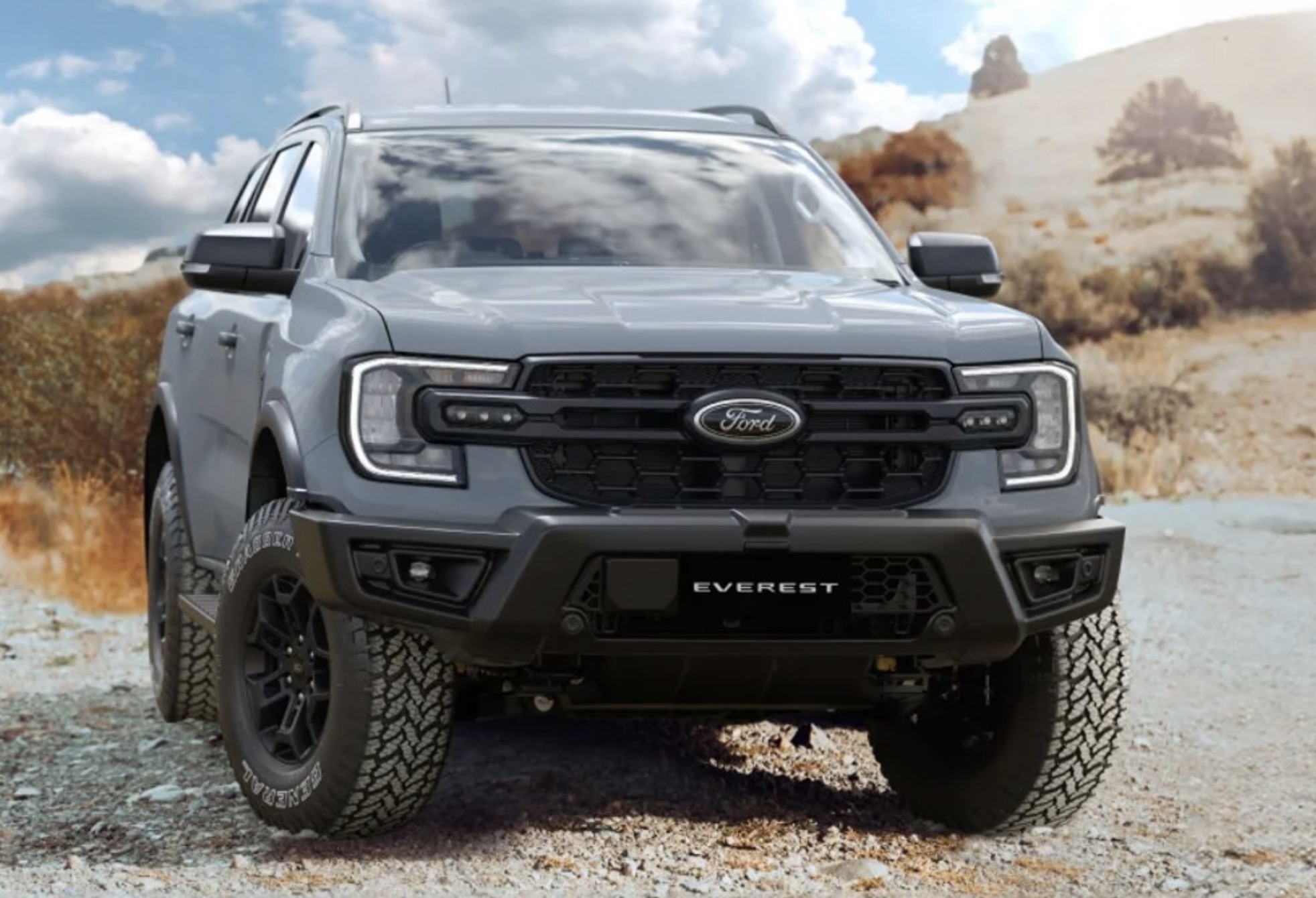
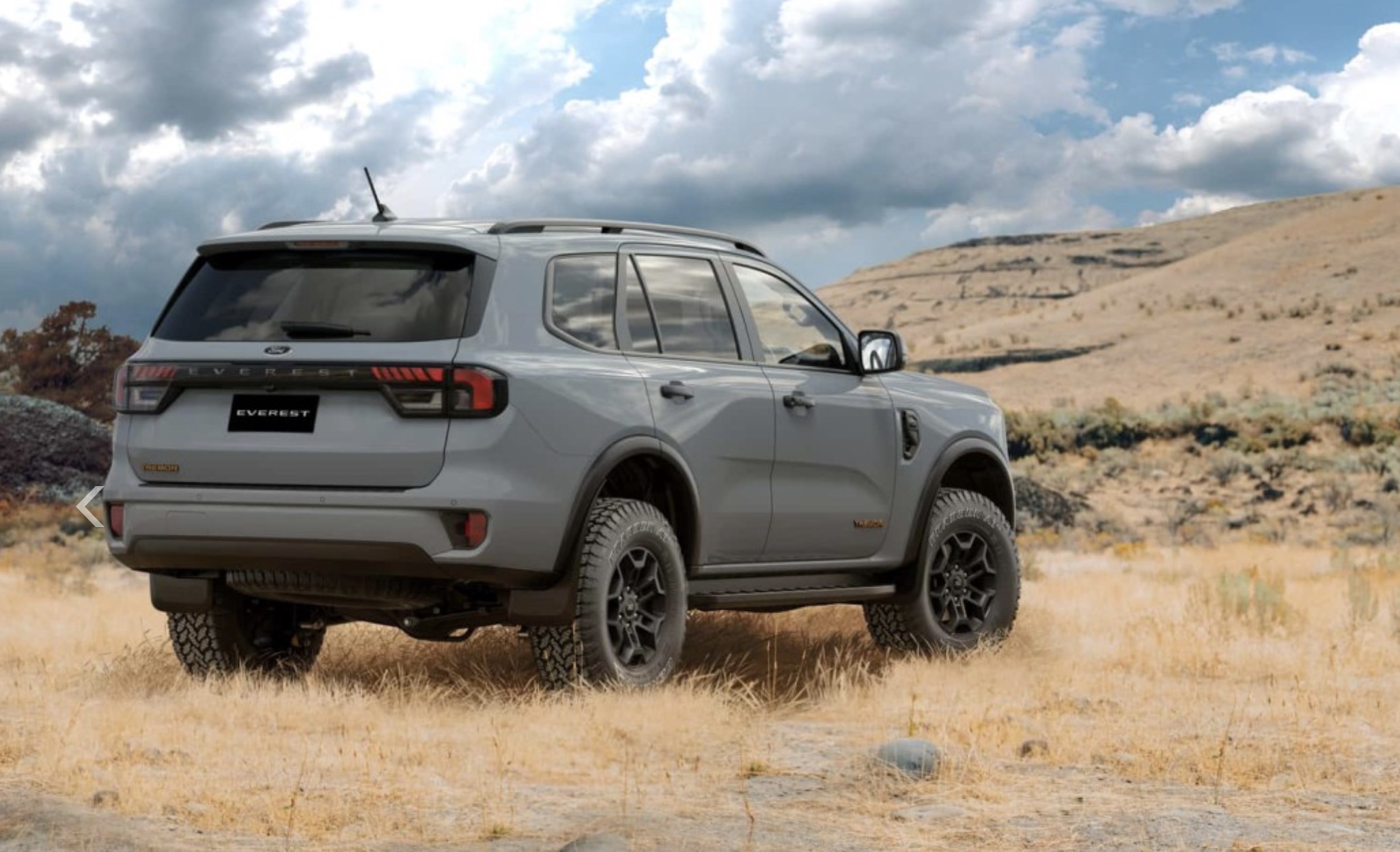
No, the Ford Everest is not coming to the USA in the near term, and there are no official plans from Ford to introduce it or have it replace the Explorer.
The Ford Everest is a body-on-frame, midsize SUV (built on the Ranger pickup platform) primarily sold in markets like Australia, Southeast Asia, South Africa, the Middle East, and New Zealand. It’s designed for rugged off-road use with strong diesel options, good towing, and a more truck-like feel compared to unibody crossovers.
In contrast, the Ford Explorer is a unibody, three-row midsize/large SUV built specifically for the North American market (and some others), emphasizing family comfort, on-road refinement, tech, and a range of gasoline/hybrid powertrains. It’s one of Ford’s top-selling SUVs in the US.
Key reasons why the Everest isn’t (and likely won’t soon be) available in the US:
Market overlap and cannibalization — It would compete directly with the Explorer, Bronco, and other Ford SUVs. Ford has a crowded lineup, and adding the Everest could hurt Explorer sales without enough upside. Regulatory and certification hurdles — The Everest (built in Thailand or similar) doesn’t meet US crash, emissions, and safety standards out of the box. Certifying it would cost millions. Manufacturing and economics — It’s not built in North America, so import tariffs/fees apply, and diesel focus doesn’t align as well with US gasoline/hybrid preferences. No official confirmation — Ford’s US site and lineup focus on models like the Explorer (including the new 2026 version with Tremor off-road trim), Bronco, and others. No announcements or press releases indicate Everest for the US.
Rumors and speculation pop up often (e.g., spy shots of testing in the US, forum chatter about 2026–2028 timelines, or wishful thinking that it could replace the Explorer or compete with the Toyota 4Runner). Some enthusiast sites and videos fuel this, but reliable sources (including Ford’s own channels) show no plans. Gray-market imports are possible but expensive, complex, and often not fully compliant/legal for road use.
Americans who like the Everest’s rugged style often point to the Bronco (more off-road focused) or the current Explorer Tremor as closer alternatives. If Ford ever shifts strategy (e.g., due to demand for more truck-based SUVs), it could change—but as of now in 2026, it’s not happening, and the Explorer remains firmly in place as Ford’s mainstream three-row SUV.
SHOULD the Everest come here?
Or should they redo the NEXT Explorer with the Everest design language?
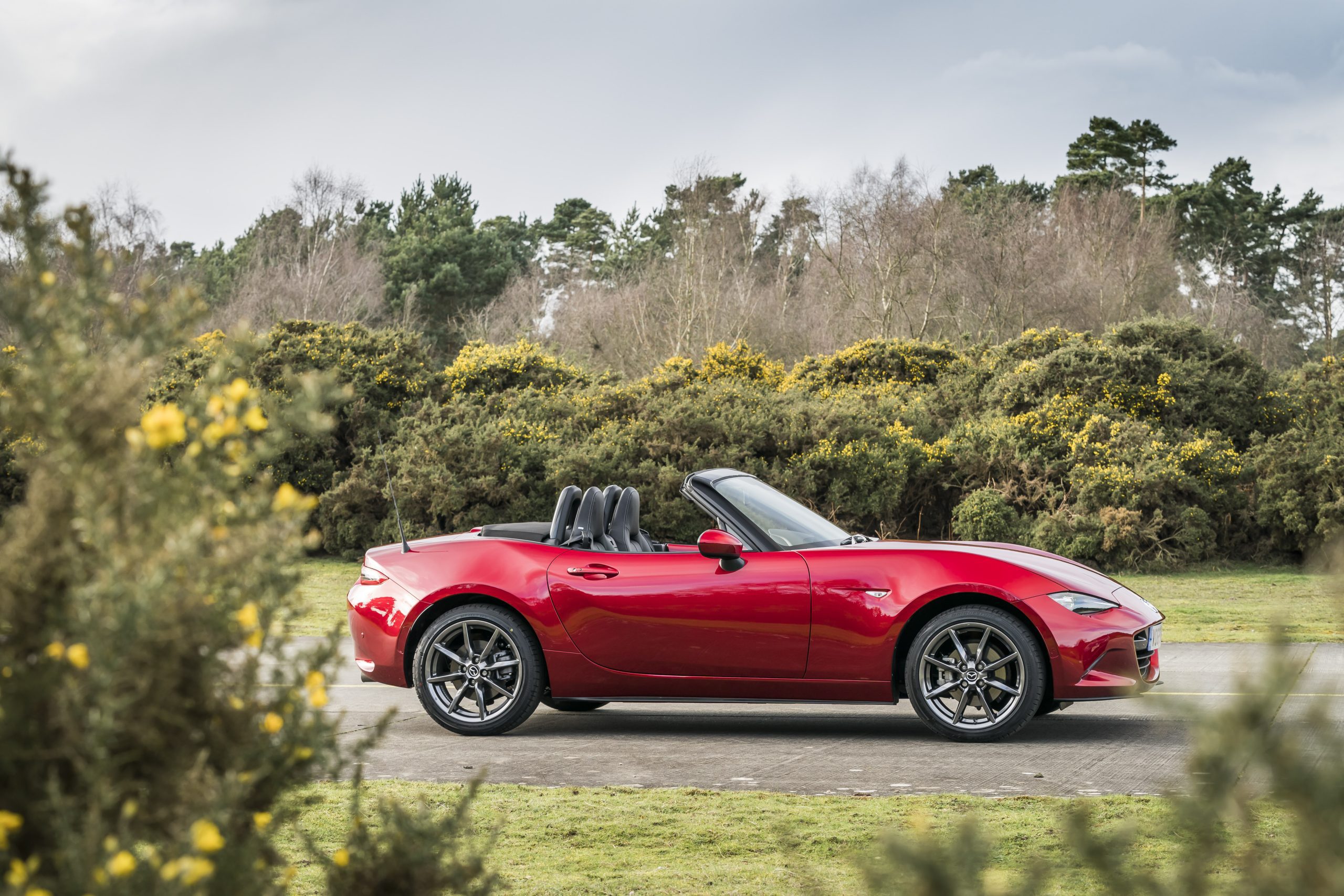
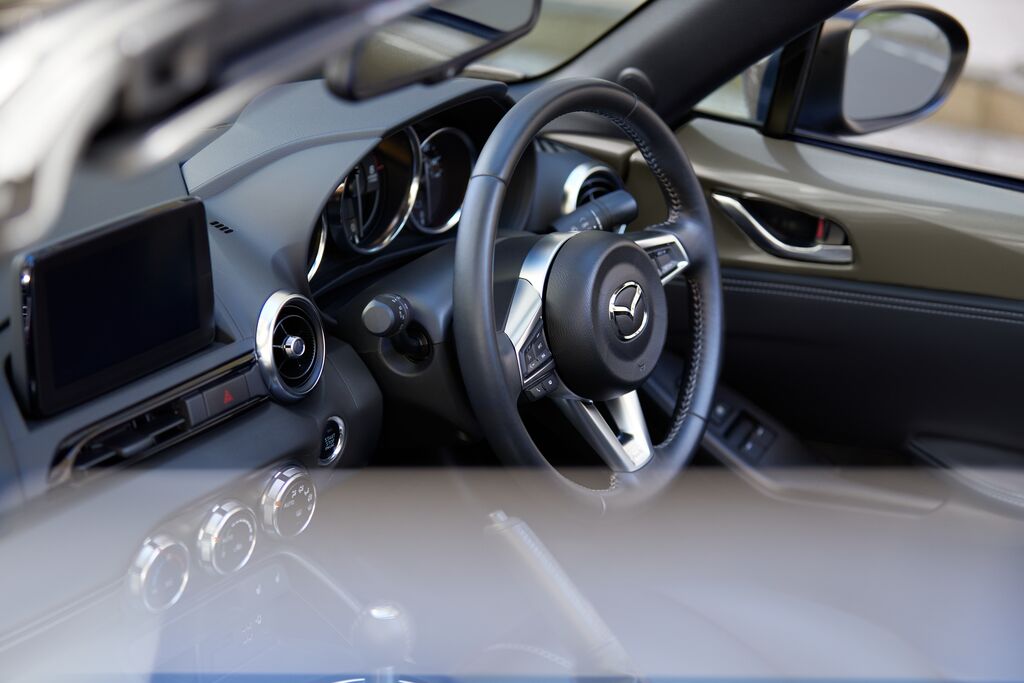
Mazda just launched the 2023 Mazda MX-5, which has held on to the winning formula that was able to sell more than 24,000 fourth-generation MX-5s in the UK since it was launched back in 2015. This time, a new naming structure was used for the 10-model line-up with the Roadster name given to the convertible models, while other trim levels were named Prime-Line, Exclusive-Line, and Homura.
As the engine line-up is the same, the Roadster and Retractable Fastback RF models have an option between a 1.5-liter 132ps and a 2.0-liter 184ps Skyactiv-G petrol engines. For the 2023 model, the SE-L and Sport grade models that were previously offered were replaced with the Prime-Line and Exclusive-Line grade. The Skyactiv-G Roadster with the 184ps 2.0-liter engine is matched to the Exclusive-Line and top-of-the-line Homura grade, which has replaced the Sport Tech and GT Sport Tech model names.
Similar to the Roadster, the Prime-Line RF is equipped with a 1.5-liter engine. For the Exclusive-Line models, there is an option between a 1.5-liter or a 2.0-liter engine. Only one engine is offered for the Homura, which is the 184ps 2.0-liter engine. Also, for the 2.0-liter RFs in both trim levels, there is an additional option of acquiring it with an automatic gearbox.
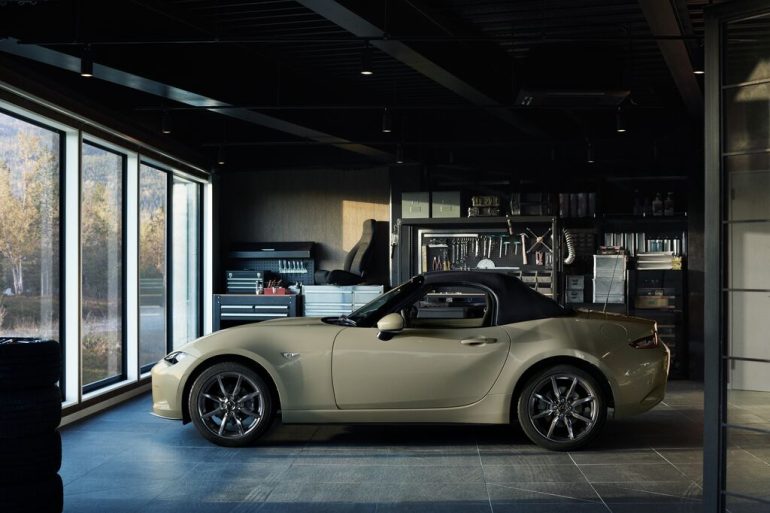
Some of the upgrades for the 2023 Mazda MX-5 include the Zircon Sand paint color which is the first time it is offered for the MX-5. Manual models of the Homura will have red Brembo front brake calipers.
Known for their dynamic abilities, the 2023 Mazda MX-5 has kept the same award-winning mechanical set up that it previously had. Initially introduced in September 2018, the upgraded 184ps version of the 2.0-liter Skyactiv-G engine has lighter pistons and con-rod, improved camshafts, fuel injectors, exhaust valves, throttle valve, and air intake. Brought together, they increase the performance of the new MX-5 which gives the engine a redline of 7,500rpm compared to the 160ps version that was in the fourth-generation MX-5 which was launched in 2015. Additionally, with its higher fuel pressure and more efficient combustion, it now has an increase in torque across the rev range, with peak torque rises by 5Nm.
Like before, cars with a 2.0-liter engine with a manual gearbox are equipped with a front strut brace, Bilstein dampers, and limited slip differential as standard. All MX-5 models are equipped with Kinematic Posture Control (KPC). The KPC system from Mazda is designed to improve stability during cornering without affecting the handling and driver engagement of the MX-5. To accomplish this, the KPC system applies a very small amount of brake force to the inner/unloaded rear wheel during cornering, making the brake force pull the body down, limiting body roll to produce a more reassuring cornering that is so subtle that the MX-5’s engaging handling is kept pure.
Performance of the MX-5 does not compromise its efficiency with the help of Mazda’s i-ELOOP kinetic recovery and i-stop stop-start technology as standard in both engines, making the model more economical than ever. In 2015, when it made its debut, it was named the World Car Design of the Year so it is understandable that the style of the 2023 MX-5 has been mostly unchanged.
Program manager and chief designer of the MX-5 Masashi Nakayama shared, “the key phrase for our development of the fourth-generation MX-5 was ‘Innovate in order to preserve’, and I strongly believe that this model’s ongoing appeal is the result of our unceasing commitment to refining the vehicle over its 30-year history. We want it to continue to offer customers unique excitement and cement its position as a cultural icon.”
Mazda UK Managing Director Jeremy Thomson commented on the 2023 Mazda MX-5 and stated, “when it comes to driver engagement, the current generation MX-5 has already established itself as a benchmark sports car, and with the 2023 Mazda MX-5 we continue to offer one of the most exciting and satisfying to drive cars money can buy.”
Thomson added, “Our engineers have created a sports car that incorporates our ground-breaking Skyactiv technology, modern safety and superb efficiency with the driver focused enjoyment for which the MX-5 is loved. The MX-5 is Mazda’s brand icon and it embodies all that is great about our products. Its fun to drive character has strengthened the bond between Mazda and its customers for more than 30 years and the 2023 model continues this unswerving dedication to delivering an affordable, engaging, world-class sports car”.
The 2023 model year car is now ready to order. More information on its price and specifications can be found on their website.