There’s no shortage of advice on how to size a home solar system, but most of it assumes a suburban house with city water and a long list of optional loads. Rural homes play by different rules, and when your water comes from a well, keeping the lights on is optional — but keeping the well’s pump running isn’t.
Here’s what it really takes, in solar and battery terms, to keep your home’s water flowing even when its electrons aren’t.
Rooftop solar has become common enough on upscale suburban homes and commercial buildings, but it’s still surprisingly rare in rural America. What’s more, many Americans (rural or otherwise) don’t realize that solar panels alone can’t power a home when the grid is down. For that, you need a home battery system to store the DC energy generated by the panels and convert it into usable AC power for your appliances.
I say “surprisingly” because when outages hit, rural areas are often the last to see power restored — making farm and horse-country households ideal candidates for solar-plus-battery backup.
Advertisement – scroll for more content
As clever as that observation is, the inspiration for this post wasn’t my own cleverness. Instead, it came from one of my favorite story sources: the Electrek comments.
Please include data on capability to power well pumps. Those of us in rural areas can do without many electrical appliances during a power outage, but not having water is a major issue. Assume 20 amp, 220V for the circuit.
Jb
I thought it was a fantastic question – but how to answer it? Instead of running off to ChatGPT or Perplexity and hoping for the best, I decided to follow my own advice and ask the experts. In this case, that meant reaching out to my good friend, Emily Walker. Emily (who received a Masters’ in Environmental Science and Policy from Johns Hopkins University) is not just smart, she works with data from home- and commercial-grade solar installations all day in her role as Director of Insights at Energy Sage, so seemed uniquely equipped to give me a solid answer.
I sent her Jb’s comment word-for-word, and this is the response I got back:
220V * 20A = 4,400 watts (4.4 kW)
So, the inverter and battery system must be able to handle a continuous power output of at least 4.4 kW.
Most well pumps have startup surges that are significantly higher than the running power draw. Let’s assume it’s 2X.
4.4 kW * 2 = 8.8 kW
So, the inverter and battery system must be able to handle a peak power output of at least 8.8 kW.
Well pumps typically run intermittently, not continuously. Let’s assume the daily runtime is about 2 hours total per day.
4.4 kW * 2 hours = 8.8 kWh/day
So, the battery system must provide at least 8.8 kWh of usable battery storage to comfortably run the well pump for a day during an outage. For reference, the Tesla Powerwall 3 provides 11.5 kW of peak power output and 13.5 kWh of usable storage capacity. It could power a well pump during an outage.
EMILY WALKER
Since the comment came from a post titled “It’s time to start recommending some Tesla Powerwall alternatives,” I feel somewhat obligated to add that the modular Enphase IQ Battery 10T or Generac PWRcell units, with 9-10 kWh capacity and ~3.5-5 kW of power output, are also up to the challenge, though a single battery unit may struggle with the pump’s startup surge and household energy needs making a two battery system the go-to. For a single battery solution, the FranklinWH aPower almost exactly matches the Powerwall with 13.6 kWh capacity and up to 10 kW of peak output (5 continuous).
The good news if your budget forces you to go for one of the smaller battery options is that (as Emily points out) well pumps don’t need to run constantly, or for very long, to effectively provide you with needed water during a prolonged outage – and a little planning can go a long way toward stretching a limited battery capacity.
During an outage, run the well pump intentionally, turning it on 20–30 minutes before you plan to shower, do dishes, or flush toilets, then shut it back off once you’re done.
If you have some advance warning that severe weather or a even a planned outage is coming, pre-fill bathtubs, sinks, and other spare containers so you’re relying less on the pump when the batteries are under stress. Managing when, not just how the pump runs can easily double how long even a modest home battery system keeps water flowing.
And, finally, it’s always smart to get multiple independent quotes and talk to your trusted financial experts before moving forward with any major home improvement project.
Original content from Electrek.
If you’re considering going solar, it’s always a good idea to get quotes from a few installers. To make sure you find a trusted, reliable solar installer near you that offers competitive pricing, check out EnergySage, a free service that makes it easy for you to go solar. It has hundreds of pre-vetted solar installers competing for your business, ensuring you get high-quality solutions and save 20-30% compared to going it alone. Plus, it’s free to use, and you won’t get sales calls until you select an installer and share your phone number with them.
Your personalized solar quotes are easy to compare online and you’ll get access to unbiased Energy Advisors to help you every step of the way. Get started here.
FTC: We use income earning auto affiliate links. More.
At CES 2026, the conversation around the future of the car shifted in a meaningful way. It was no longer about horsepower, range, or even design. It was about software. Not screens or digital gimmicks, but the underlying architecture that will determine how cars are built, updated, and experienced for decades. And among legacy automakers, BMW is emerging as the clear leader.
Speaking to MotorTrend, BMW technology chief Joachim Post made it clear that the company is no longer treating software as a layer added late in development. It is now the foundation as much as the physical platform itself. The upcoming Neue Klasse models, beginning with the electric iX3, are designed from the ground up as software-defined vehicles.
This shift is not just about features. In a world shaped by trade tensions, supply chain volatility, and rapid advances in computing, BMW wants the ability to adapt without reengineering entire vehicles. The answer is decoupling software from hardware.
The BMW Vision Driving Experience
Instead of tying vehicle functions to specific chipsets or suppliers, BMW is building a flexible software stack that can run across multiple hardware platforms. Whether processors come from Qualcomm, Samsung, Infineon, or others becomes less critical. What matters is that the same core software can operate consistently across regions and suppliers. That flexibility is now a strategic necessity, not a technical luxury.
This architecture also unlocks the real promise of over-the-air updates. Vehicles will no longer be frozen at the moment they leave the factory. Software updates can refine driving behavior, improve efficiency, enhance safety systems, and add entirely new capabilities years after purchase. The car becomes something that evolves rather than ages.
Artificial intelligence plays a central role in this future. BMW plans deep integration of Amazon’s next-generation Alexa Plus into its operating system. This is not voice control as a novelty. It is conversational, contextual AI that can handle complex tasks like managing schedules, finding destinations, and interacting with connected services in a natural way.
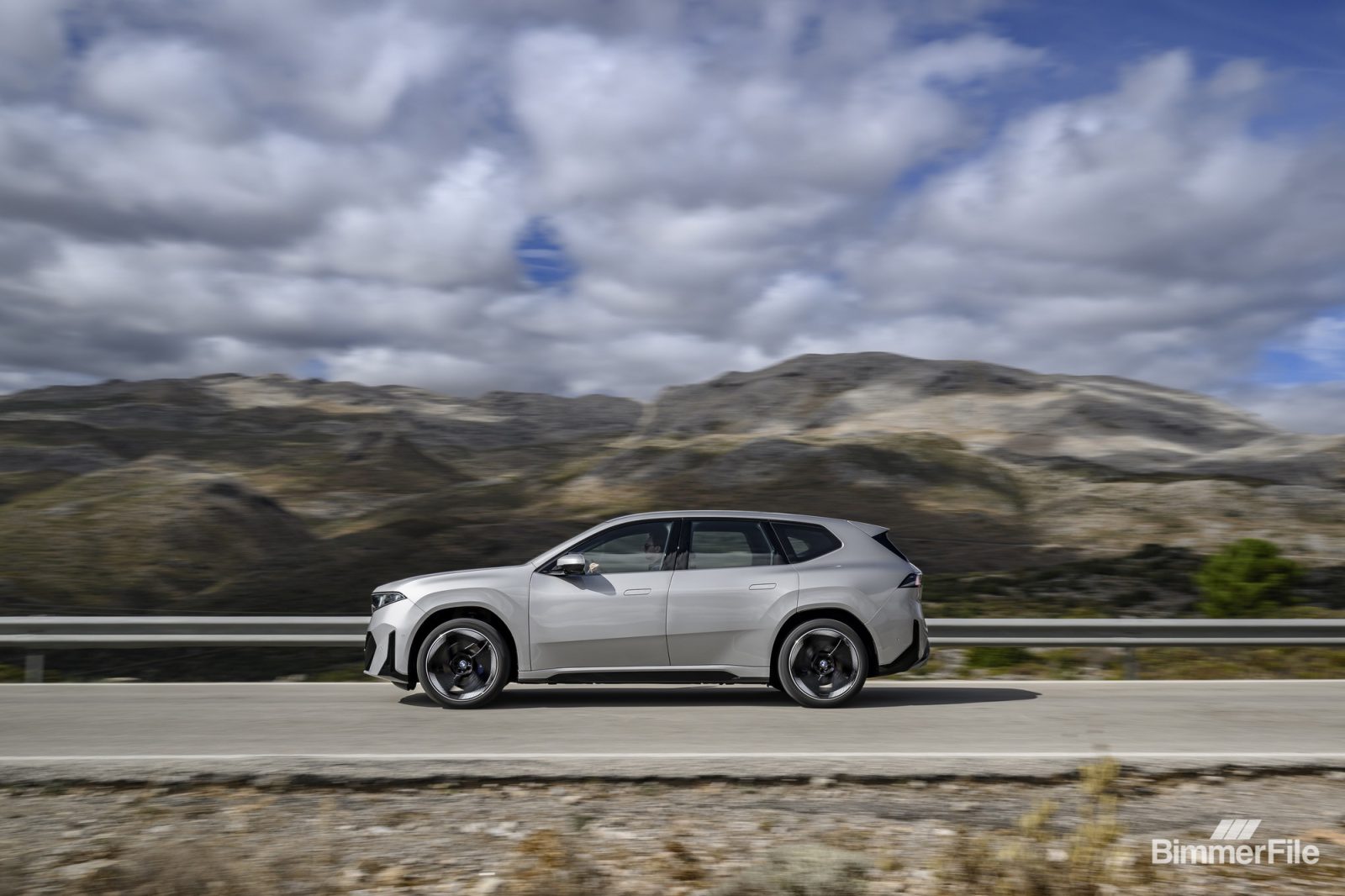
The BMW iX3
Importantly, BMW is taking a hybrid approach. Core functions continue to run locally in the vehicle, ensuring reliability even without connectivity. Cloud-based intelligence enhances the experience rather than replacing it. This balance reflects a growing understanding that cars must remain dependable machines first, even as they become increasingly digital.
Software also becomes the connective tissue between the car and the rest of a driver’s digital life. The same assistant used at home or on a phone can follow you into the vehicle, creating continuity across devices and environments. Mobility becomes part of a broader personal ecosystem rather than a standalone experience.
Yet BMW is cautious about excess. Post acknowledged that not every customer wants complexity or constant interaction. The challenge is not just building advanced software but making it intuitive, restrained, and respectful of the driving experience. Technology should reduce friction, not introduce it.
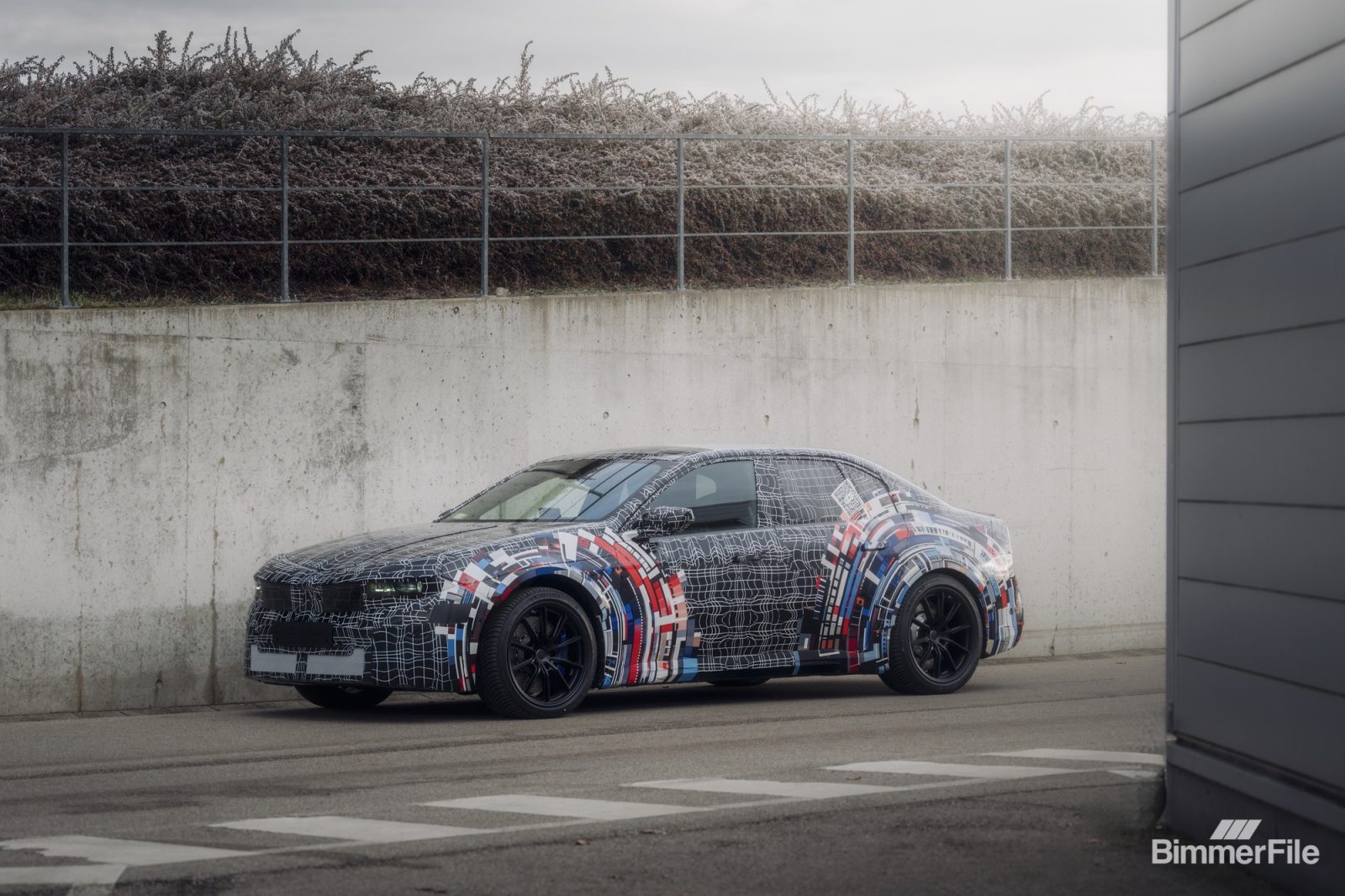
The forthcoming BMW iM3
Our Take: Why BMW Is Well Positioned for a Software-Defined Future
BMW’s strength in the software-defined era is not speed but discipline. Rather than chasing Silicon Valley-style reinvention, the company has focused on building a flexible digital foundation while preserving what matters most in a car: reliability, usability, and driving integrity.
Years of in-house software development, from early iDrive systems to today’s OS platforms, have given BMW hard-earned experience. Those lessons are now shaping a more mature approach that prioritizes modular architecture, long-term support, and meaningful updates over novelty.
A critical enabler of this strategy is BMW’s new Heart of Joy processing units. By consolidating vehicle control, driving dynamics, and key software functions into a small number of high-performance computers, BMW gains the determinism, latency control, and integration needed to make software truly central to the driving experience. This hardware-software co-design is what unlocks real-time responsiveness and future-proof over-the-air evolution.
BMW also understands that automotive software carries different stakes than consumer tech. Keeping critical functions running locally while using cloud intelligence to enhance the experience shows a clear focus on safety and dependability.
With Neue Klasse, BMW aligns hardware and software from the start, avoiding the compromises of retrofitted systems. Combined with a supplier-agnostic strategy that reduces risk in a volatile global market, BMW is positioned to navigate the software-defined future with confidence and clarity.
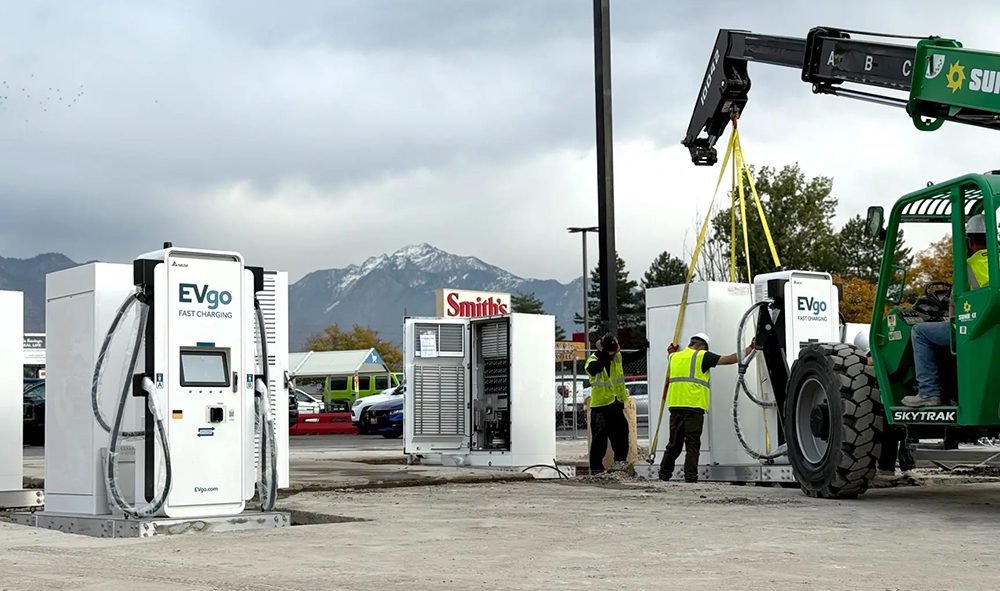
EV charging provider EVgo has committed to a massive deployment of EV charging sites at Kroger Family of Stores locations across the US. The company plans to build at least 150 fast charging stalls per year through 2035 at the company’s sites, which operate under various brands, including Kroger Foods, Fred Meyer, Fry’s Food Stores, Harris Teeter, King Soopers and Smith’s Food and Drug.
Each of the sites will include up to 16 DC fast charging stalls, featuring high-power EVgo chargers that can deliver a full charge in as little as 15 minutes—an ideal fit for grocery locations where shoppers tend to spend less than an hour.
The first charging site of the expanded program is now operational in Salt Lake City. Additional deployments are slated for Arizona, California, Florida, Georgia, Texas, Washington and other states.
EVgo’s current network includes over 4,600 stalls in the US, and the company expects to energize more than 15,000 by the end of 2029.
“Kroger is the grocery destination of choice for millions of Americans,” said Badar Khan, CEO of EVgo. “Adding fast charging to Kroger locations will provide the growing number of EV drivers an essential amenity—the convenience of charging where they shop.”
If you’re not already overwhelmed by the sheer number of in-car apps, here’s another one to add to the list. On top of the 60-plus third-party apps already available in the ConnectedDrive Store, BMW Group UK is introducing Global Player. The app delivers a broad selection of digital radio stations, along with playlists and podcasts.
Because it’s downloadable directly from the app store built into the infotainment system, there’s no need for a smartphone. Global Player isn’t limited to the Neue Klasse SUV, either. It also works in all BMWs and MINIs running the previous-generation infotainment system. More than 180,000 vehicles equipped with Operating System 9 are already compatible with the latest in-car app, and BMW expects that number to exceed 300,000 by the end of the year once 2026 iX3s start hitting the road.
Looking ahead, all Neue Klasse models will support Global Player. The second-generation iX3 will soon be joined by the i3 sedan and iX4, both slated to debut in 2026. It’s also worth noting that Neue Klasse won’t be exclusive to EVs. Essentially all new BMW models will fall under the NK umbrella, including the next 3 Series and X5, which are set to adopt iDrive X when they arrive later this year. The upcoming 7 Series facelift will likewise become part of the expanded Neue Klasse family.
Global Player does more than stream live radio. Users can rewind and pause audio and video shows or browse thousands of podcasts and curated playlists directly from the center display. The new iX3 features the largest touchscreen ever fitted to a BMW Group vehicle, measuring an imposing 17.9 inches. Accessing the content requires a BMW Digital Premium or MINI Connected Package subscription.
As with most streaming apps, Global Player supports seamless switching between devices. That means you can start a podcast in the car and continue listening at home, picking up exactly where you left off once you step out of the vehicle.
The growing roster of in-car apps underscores how modern vehicles are increasingly becoming oversized, rolling smartphones. BMW’s iDrive X is the brand’s most advanced infotainment system yet, even enabling users to play games on the 17.9-inch touchscreen using a smartphone as a controller. This feature is also available on iDrive 9 for those looking to pass the time in a more entertaining way.
Once hailed as a financial lifeline for a struggling publishing house, the 2022 acquisition of Éditions Jalou by Chinese financial group AMTD is now at the centre of a legal and criminal investigation that could threaten the future of one of fashion’s luxury titles.
French authorities have confirmed that an investigation into suspected large-scale fraud is underway following a complaint lodged by the Jalou family, founders of the publishing house behind L’Officiel. The complaint was formally filed on 5 March 2025 and the case has been assigned to the financial investigations unit of the Paris judicial police. What began as a corporate rescue has since evolved into a multi-jurisdictional dispute spanning Europe, Asia and offshore financial centres.
At the heart of the legal action is the allegation that AMTD Group — alongside its subsidiaries including AMTD Digital and The Generation Essentials Group — prioritised financial engineering over responsible stewardship. The Jalou family is seeking at least EUR 40 million in damages to creditors and accuses the group of stripping assets from the century-old fashion institution while it remained under court supervision.
From Rescue to Receivership Fallout
Founded in 1921, Éditions Jalou was long regarded as a cornerstone of French fashion publishing, overseeing titles such as “L’Officiel de la mode”, “Jalouse” and “L’Optimum”. The group also previously owned “The Art Newspaper” — another internationally influential cultural title — before both assets were sold to AMTD. Its decline began in the mid-2010s following a costly legal dispute in Russia, culminating in the company being placed into receivership in 2022.
AMTD — a Hong Kong-based conglomerate with a diverse portfolio spanning across digital solutions, media, entertainment and hospitality — presented itself as something of a “white knight” capable of stabilising the business. The acquisition was accompanied by high-profile gestures designed to signal revival, including a special edition unveiled at the World Economic Forum in Davos and a fashion show staged at the New York Stock Exchange. However behind the spectacle, the relationship between buyer and seller was already fraying. According to legal filings reviewed by French authorities, the Jalou family alleges that the takeover masked a “predatory” operation aimed at hollowing out the French entity rather than rebuilding it.
Allegations of Fraud, Trademark Abuse and Missing Assets
The complaint accuses AMTD of counterfeiting, tax fraud, trademark infringement and misuse of company assets. Central to the case are claims that a series of opaque financial structures spanning Paris, New York, Hong Kong, the Cayman Islands and the British Virgin Islands were used to divert value away from Éditions Jalou.
One key allegation concerns the unlawful registration of the “L’Officiel” trademark in around 40 countries through a foreign subsidiary based in the British Virgin Islands, despite the recovery plan explicitly prohibiting any transfer or disposal of the brand. The family further alleges that licensing agreements were terminated and reassigned to overseas entities, depriving the French publisher of revenue while expanding AMTD’s control abroad.
Among the most alarming accusations is the disappearance of L’Officiel’s photographic archives, a unique visual record documenting more than a century of French fashion and culture. The family maintains that the whereabouts of these archives remain unknown. The Jalou family also claims that proceeds from the sale of the business were never fully paid. They allege that AMTD failed to settle the full purchase price for both “L’Officiel” and “The Art Newspaper,” while portions of the funds that were due remain frozen within AMTD-controlled accounts.
At the same time, they argue that AMTD exploited the L’Officiel brand across international markets — notably in Asia and the Middle East where the magazine maintains a wide publishing footprint — without revenue flowing back to the French entity. International licensees were reportedly instructed to bypass Éditions Jalou altogether and deal directly with the new owners, effectively severing the original company from its most valuable asset.
Marie-Jose Jalou
Tax Claims and Regulatory Scrutiny
Another pillar of the case concerns alleged tax evasion. The Jalou family accuses AMTD of seizing control of the L’Officiel brand — which they value at nearly EUR 85 million — as part of a scheme designed to avoid French tax obligations. They argue that these actions directly contravened the court-approved recovery plan established when the company entered receivership. That plan — which runs until 2028 — explicitly restricts the transfer or sale of assets and trademarks in order to protect employees, suppliers, URSSAF and the French state.
According to the complaint, AMTD committed “serious and repeated violations” of these conditions, undermining the very framework that allowed the acquisition to proceed. Marie-José Jalou — the magazine’s former editor-in-chief and one of its most prominent figures — has described the situation as devastating. “L’Officiel was the bible of fashion,” she said. “It cannot be treated as a speculative asset. I will never give up.”
The dispute has also expanded beyond France. Despite ongoing legal proceedings, AMTD has listed both “L’Officiel” and “The Art Newspaper” as media assets on the London and New York stock exchanges, a move that has further inflamed tensions between the parties. The group’s founder — Chinese financier Calvin Choi — is now directly named in several of the disputes.
The case unfolds against a broader backdrop of scrutiny surrounding AMTD, which has faced separate regulatory issues and legal proceedings involving the Hong Kong Securities and Futures Commission. For the Jalou family’s legal team, the issue extends beyond a commercial disagreement. “L’Officiel is a century-old French fashion institution,” their lawyers, Céline Bekerman and Antoine Cadeo, said. “Its heritage must be preserved and cannot be sacrificed for predatory practices.”
As investigators work through a web of cross-border transactions, disputed trademark registrations and unpaid proceeds, the future of “L’Officiel” remains uncertain. What began as a rescue operation has evolved into a cautionary tale about the risks facing heritage media brands in an era of global capital. Regardless of the outcome, the case underscores a broader tension in a globalised market, where fashion and cultural institutions risk being subordinated to financial engineering rather than protected as heritage assets.
AMTD Pushes Back with Defamation Lawsuit
In January 2026, AMTD Group and its subsidiaries announced that they had launched legal proceedings against Benjamin Eymere — a member of the Jalou family and former employee of an AMTD subsidiary, alleging malicious falsehood, defamation and misconduct. The group claims Eymere was dismissed for mismanagement, that subsequent appeals in the Paris courts were dismissed and that his recent actions prompted AMTD to involve law enforcement. AMTD also rejected what it described as inaccuracies circulating in press and social media, stating that its 2022 acquisition of L’Officiel was fully completed with 100 percent of the purchase price paid, that the controlling seller was investment group GEM rather than the Jalou family and that L’Officiel has not incurred new debt since the takeover. The company said it would continue to pursue legal action to defend its reputation, positioning itself as a lawful owner acting to counter allegations made by the magazine’s founding family.
For more on the latest in business and finance reads, click here.
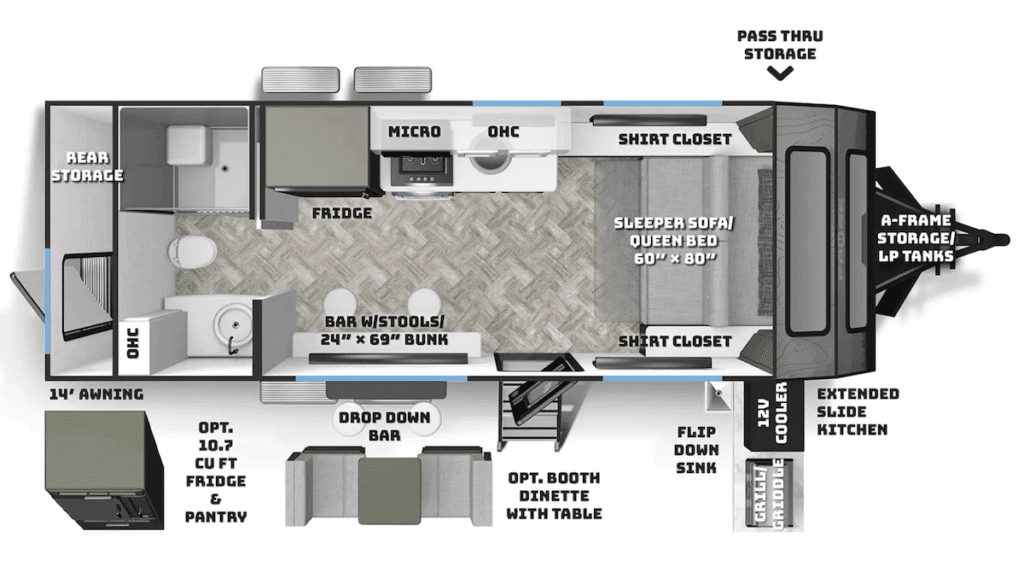
HAVE YOU ALWAYS WANTED an easy way to camp but aren’t ready to commit to a large, drivable motorhome? If so, you may want to consider an off-road pull-behind camper. These rugged, towable RVs combine camp luxuries with off-grid capabilities like expanded ground clearance, upgraded tires, and improved suspension systems.
When you’re craving outdoor adventure, all you have to do is hook up your camper and hit the road. And when you need a basecamp, you’ll have a semi-permanent place to rest your head while your tow vehicle keeps you mobile to explore your surroundings. Let’s explore some of our favorite travel trailers for off-road adventures.
Key Takeaways
Rugged Versatility: Off-road pull-behind campers offer a middle ground between tent camping and large motorhomes, featuring reinforced chassis, high ground clearance, and specialized suspension systems designed for backcountry terrain.
Diverse Options: Models range from minimalist, garageable trailers like the Taxa Mantis to high-tech “expedition” units like the BruderX and MDC XT19HRT, which offer massive solar arrays, lithium batteries, and luxury amenities for extended off-grid stays.
Key Considerations: When choosing a camper, buyers must prioritize their vehicle’s towing capacity, desired bathroom/kitchen configurations, and the specific off-road gear (like articulated hitches and all-terrain tires) required for their planned adventures.
Our Favorite Off-Road RV Campers
So which pull-behind campers are the best for off-roading? Here are our top ten!
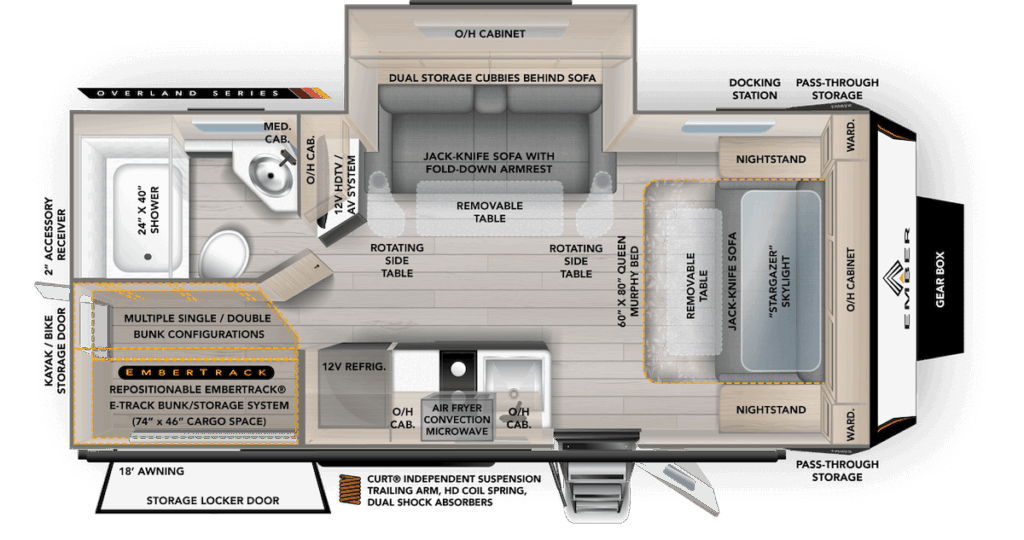
Ember Overland Series 221MSL
Image by Ember RV
Specs
Length: 26’1”
Dry Weight: 5,850 pounds
Cargo Capacity: 1,700 pounds
Sleeping Capacity: Up to 8
Ember’s Overland Series 221MSL is a versatile and stunning off-roading camper! We toured it at the Florida RV Supershow and were immediately impressed, especially with the rear storage locker, also known as a bunk room. It’s one of the most flexible layouts I’ve found in any camper, and it’s ready for those off-road adventures, with its Trailblazer™ Heavy-Duty Offroad Chassis and tough suspension system.
Measuring 74″ x 46″ and outfitted with the Embertrack™ system, the rear locker easily converts between a seating area, bunk beds, a desk, or secure storage with tie-downs. As a remote worker, I especially loved the desk configuration, which faces the massive storage locker door that flips up to reveal expansive views—an ideal setup for working from the road.
The rear bathroom offers a generous amount of counterspace and features the unique Showermi$er™ Fresh Water Saver, which recycles unused water back into the fresh tank. This system helps conserve water and extend tank capacity—an excellent advantage for extended boondocking.
In the main living area, a jackknife sofa provides additional sleeping space. Complete with a two-burner cooktop and a convection microwave/air fryer combo, cooking will be easy off-road.
The queen-sized mattress is flanked by dual wardrobes, along with bedside USB ports and 120V power outlets, as well as LED lighting. While the main bedroom isn’t separated from the living space, it’s a great layout for a full-time RV couple or families on short-term adventures.
Taxa Outdoors Mantis
Images by Camping World
Specs
Length: 19’
Dry Weight: 3,115 pounds
Cargo Capacity: 986 pounds
Sleeping Capacity: Up to 4
For those seeking true off-grid adventure, don’t miss Taxa Outdoors’ Mantis campers! Lightweight enough to be towed by many six-cylinder vehicles and compact enough to fit in most garages, it’s an ideal camper for spontaneous adventure escapes and rugged terrain.
Sleeping up to four, this camper maximizes space with a bunk-to-couch conversion and a full-sized bed that converts to dining or lounge space. The full galley includes a sink, a two-burner cooktop, and a cooler platform. While there’s no built-in refrigerator, many high-performance off-grid coolers integrate seamlessly with this setup.
What’s truly impressive about this minimalist camper is that it offers amenities like A/C, a furnace, a hot water system, and a unique wet bath, while remaining fully off-road capable. If you upgrade to the Overland Edition, you’ll enjoy additional off-road benefits like axle-less suspension, increased ground clearance, all-terrain tires, and a Lock ‘N’ Roll hitch that allows 360 degrees of articulation for maximum towing freedom on uneven terrain.
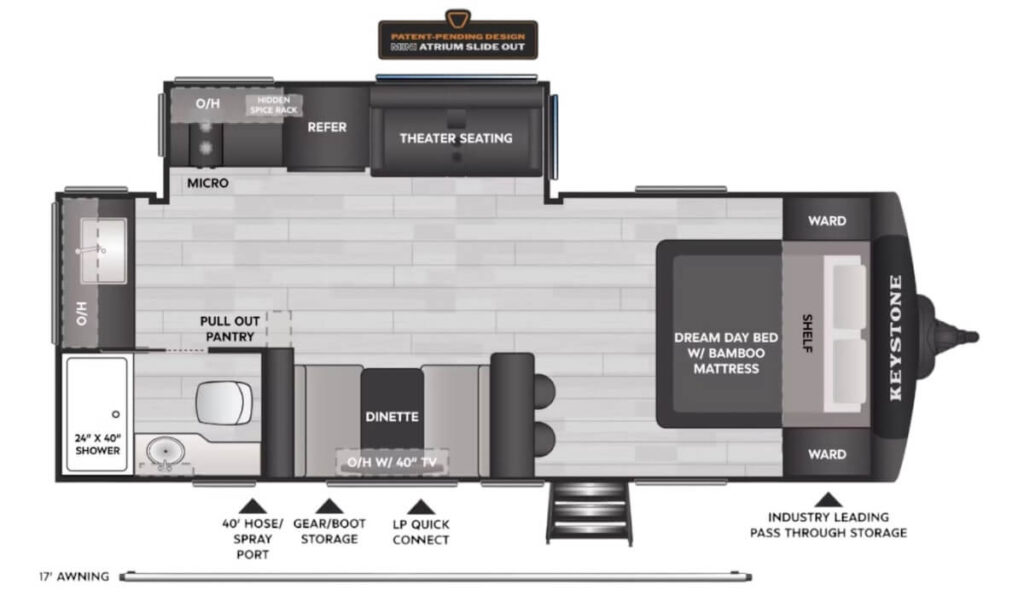
Keystone Walkabout 22MAX
Image by Keystone
Specs
Length: 26’7”
Dry Weight: 6,365 pounds
Cargo Capacity: 2,235 pounds
Sleeping Capacity: Up to 4
The Walkabout 22MAX is an excellent option for adventure-minded couples who want comfort, style, and the flexibility to host occasional guests. This luxury off-grid camper features an open, airy floor plan that maximizes usable space while still accommodating off-road travel.
The main bedroom, outfitted with a bamboo mattress, flows seamlessly into the living area. In addition to a dinette, countertop seating for two provides extra dining space or a convenient separate workspace—perfect for remote work on the road. The theater-style sofa sits in the Atrium slide, surrounded by windows.
The rear kitchen is a standout feature in this off-road pull-behind camper, offering generous counterspace. The large drop sink is also surrounded by windows, allowing views while washing dishes. The kitchen is well-equipped with a two-burner cooktop, a microwave below, a hidden spice rack, and a spacious 10-cubic-foot refrigerator, making it easy to prepare everything from quick trail meals to a cozy dinner for a camping date night.
Adjacent to the kitchen, the full bathroom features a 24” x 40” shower. With a thoughtful blend of comfort and capability, this off-roading RV delivers all the amenities you’d expect—without limiting your adventures. The sleek black-and-orange exterior design further sets the Walkabout apart from the crowd.
Explore the larger Walkabout 26MAX floor plan.
Forest River Campsite Reserve 19KR
Subscribe to the Camping World YouTube channel, and never miss a video.
Specs
Length: 26′
Dry Weight: 4,993 pounds
Cargo Capacity: 2,732 pounds
Sleeping Capacity: Up to 2
Are you an adventurous couple searching for the perfect pull-behind camper? The Campsite Reserve 19KR is an excellent option designed with couples in mind, blending comfort, functionality, and adventure-ready versatility.
A camp king mattress features dual wardrobes and seamlessly transitions into the living area without a separate doorway. Between the bedroom and living space, the centrally located bathroom features a generous countertop, a full-size toilet, and a shower/tub combo—ideal for quick showers or bathing a muddy pup after a day outside.
In the living area, enjoy two reclining swivel chairs with a flip-up table between them. They face the entertainment center, with hidden shelving behind it. The full kitchen also includes an air fryer, a great addition to any RV kitchen.
The rear of the 19KR opens into a 90” x 75” patio door, providing outdoor lounge space, and the option to store and haul toys, such as kayaks or bikes. Overall, this is a great off-road RV camper for a couple seeking adventure!
Jayco Jay Flight SLX Sport 178DBSW
Images by Camping World
Specs
Length: 23’7″
Dry Weight: 3,705 pounds
Cargo Capacity: 1,095 pounds
Sleeping Capacity: Up to 8
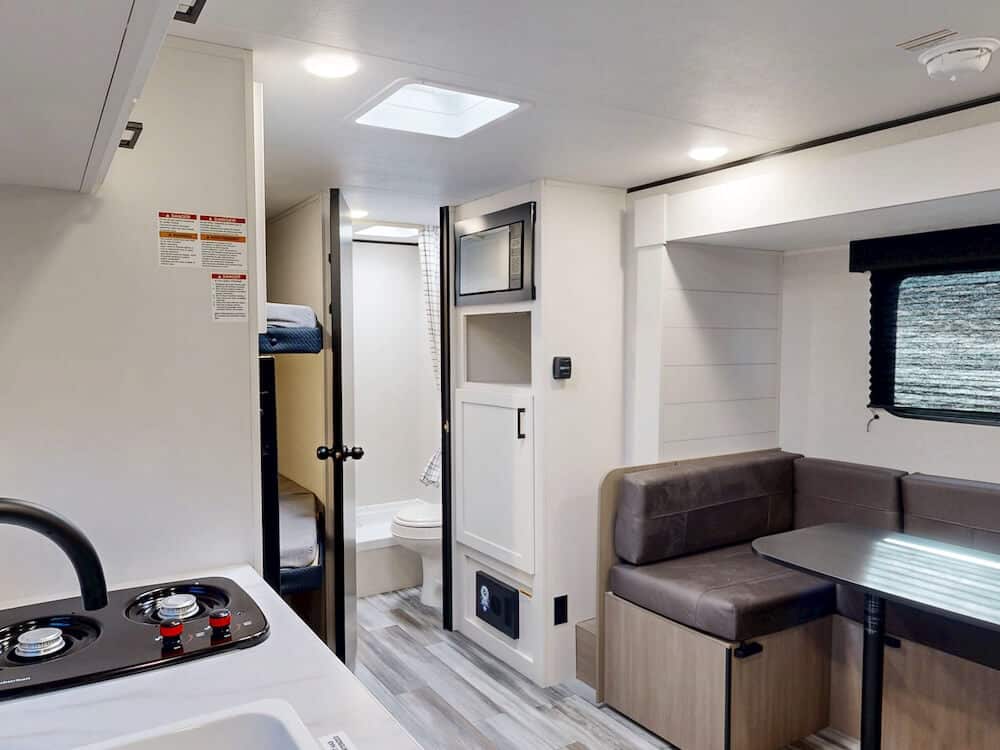
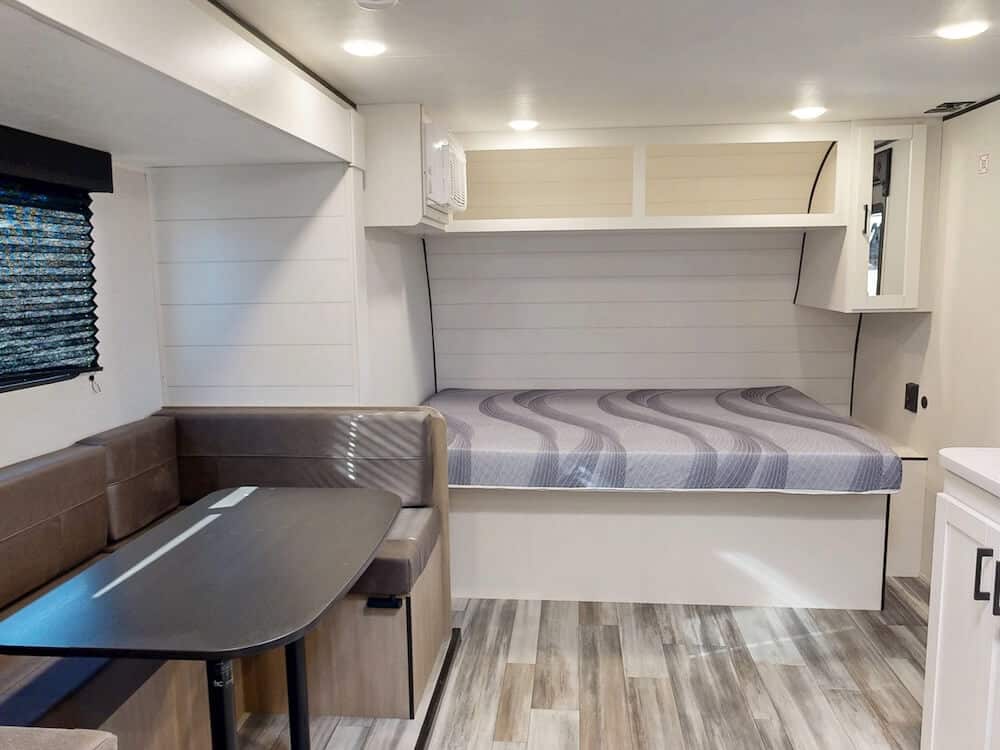
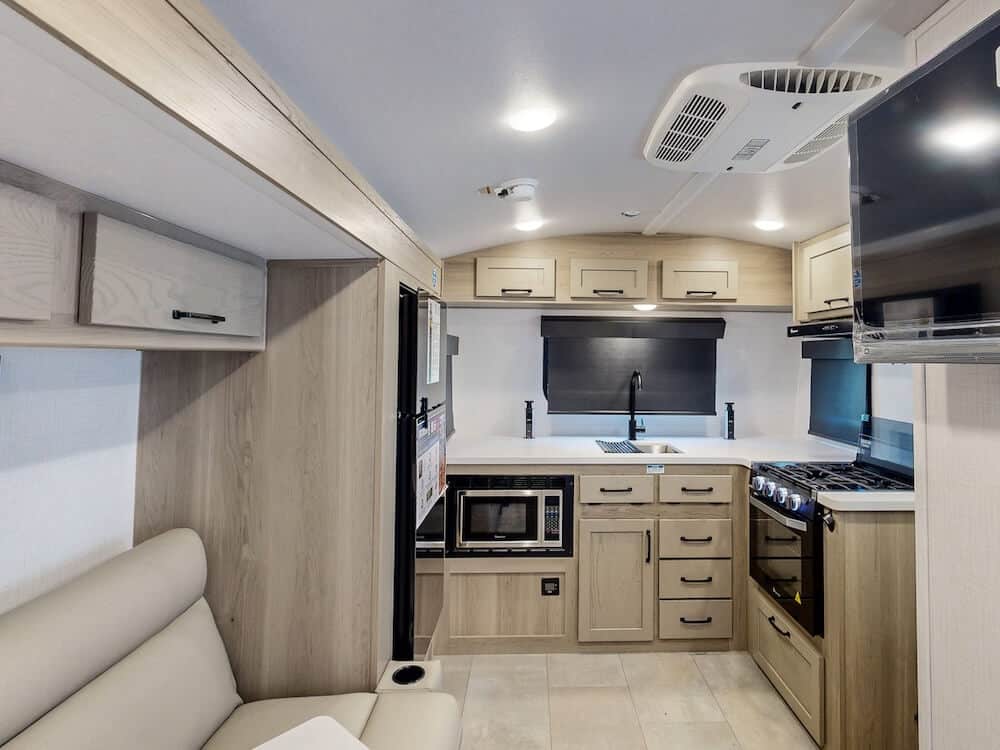
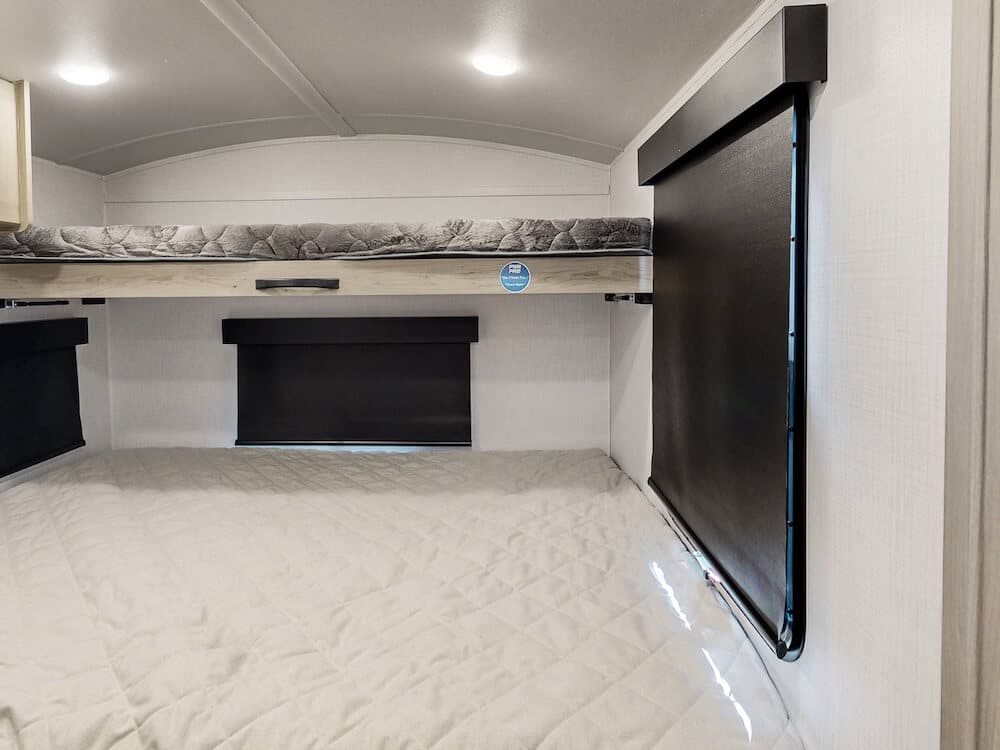
For families looking to adventure together, the Jay Flight SLX Sport 178DBSW offers space for the whole crew—whether you’re traveling with grandkids or adult children and their spouses. This camper offers generous sleeping and living space while remaining under 4,000 pounds, making it easily towable and suitable for boondocking beginners.
The open floor plan flows from the front, queen-sized mattress, into the living area. A spacious U-shaped dinette provides space for the family, converting into additional sleeping space when needed. The kitchen includes a sink and a two-burner cooktop on one side, with the microwave and pantry on the other.
Rear double-over-double bunks provide sleeping space for up to four and are conveniently located next to the full bath, the only room in the camper with a privacy door.
While the camper is well-suited for families, it also offers some great off-grid amenities. One standout is the oversized fresh water tank, which is 25% larger than comparable models, allowing for fewer refill stops when camping off the grid.
Keystone Coleman 13T
Subscribe to the Camping World YouTube channel, and never miss a video.
Specs
Length: 15’11”
Dry Weight: 2,940 pounds
Cargo Capacity: 1,940 pounds
Sleeping Capacity: Up to 4
The Coleman 13T is impressively compact, weighing in under 3,000 pounds and towable by many trucks and SUVs. Despite its small footprint, it even functions as a toy hauler, making it an excellent pull-behind camper for families seeking easy weekend escapes.
The layout is so unique and best appreciated in person. With 123” x 69” of garage space, it’s easy to haul bikes or other outdoor gear. Unload everything through the rear ramp door, and convert the garage to a living space. A Murphy bed folds down, while the pop out tent houses another bed. When the Murphy bed isn’t in use, there’s a pop up table or desk with two bar stools.
The galley kitchen includes a microwave and air fryer combo, a two-burner cooktop, a sink, and a refrigerator. Tucked into the corner next to the kitchen is the wet bath. It’s amazing there’s a bathroom at all in such a compact off-roading camper, but you’ll find a full-sized toilet and shower, fueled by a tankless water heater.
Forest River Rockwood Geo Pro 20FK
Images by Camping World
Specs
Length: 21’2”
Dry Weight: 4,217 pounds
Cargo Capacity: 1,278 pounds
Sleeping Capacity: Up to 3
The Rockwood Geo Pro 20FK features a beautiful front kitchen that anyone will appreciate. Spanning the full front width of the camper, it offers generous counterspace and windows on three sides, flooding the kitchen with natural light and providing scenic views whether you’re cooking or doing the dishes.
In the living area, a spacious 72” sofa pairs with a removable table, so you can eat dinner and watch TV on those rainy nights. The full bathroom also offers a decent countertop and a large, double medicine cabinet. In the camper’s rear, a queen-sized bed and an overhead flip-up bunk provide flexible sleeping arrangements for couples or small families.
Designed for extended-season travel, this Rockwood Geo-Pro camper includes heated holding tanks, radiant foil insulation in the front cap, and complete composite wall construction.. Enhancing its off-road readiness, the Sunseeker Package adds a 200-watt solar panel with an inverter, an additional solar side port, sport tires and wheels, and a tire pressure monitoring system—great features for off-grid and backcountry adventures.
Forest River Palomino Pause 20.3
Image by Forest River
Specs
Length: 25’2”
Dry Weight: 7,859 pounds
Cargo Capacity: 1,600 pounds
Sleeping Capacity: Up to 3
The Palomino Pause 20.3 sets a new benchmark for off-road campers, combining the top in off-grid technology with high-end, residential-style amenities. At first glance, the full body wrap will immediately catch your eye.
Inside, the Murphy bed is surrounded by windows, allowing you to stargaze directly from bed. All windows are equipped with screens and blackout shades, and the Murphy bed conversion is impressively seamless—simply fold the mattress in half and lower the sofa to transition from a sleeping space to a living area in seconds. The main living space is even more versatile, offering options for a four-person bar or a two-person dinette, both of which can be converted into a single bunk. Across in the full kitchen, you’ll find a three-burner cooktop, microwave, and refrigerator.
The rear, full-width bathroom is beautiful, with subway brick tile, a spacious shower, and a stylish vessel sink.
Outside, the off-grid features truly shine. This all-terrain camper is equipped with air ride suspension, allowing you to raise and lower it as needed. The heavy-duty shocks and tires, along with the mounted recovery boards, ensure you’re ready to tackle challenging routes. With the upgraded package, the robust solar power and 3,000-watt inverter will keep you running for days, even powering the air conditioner (for a limited time!).
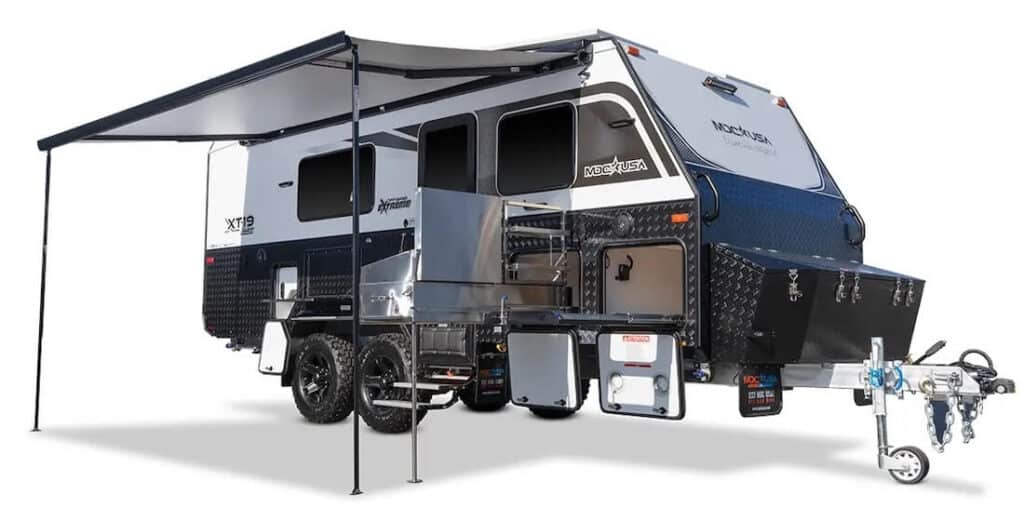
MDC XT19HRT
Image by MDC USA
Specs
Length: 25’4”
Dry Weight: 6,610 pounds
Cargo Capacity: 1,104 pounds
Sleeping Capacity: Up to 3
Another off-roading pull-behind camper that truly breaks the mold, the MDC XT19HRT blends luxury finishes with serious off-grid capability. Hailing from Australia, this unique camper stands out immediately—and you’re unlikely to see one on many campground loops.
One of the most appealing aspects of MDC is its all-inclusive approach: there are no upgrade packages or add-ons. Everything comes standard. On the off-grid side, the XT19HRT is equipped with approximately 800 amp-hours of battery capacity, 1,025 watts of rooftop solar, and a 3,000-watt inverter, with exterior ports available for additional solar panels. This robust power system eliminates the need for a portable generator, allowing you to run the air conditioner and other power-hungry appliances with ease. Everything is managed through MDC’s Renogy-based power system, complete with a mobile app for monitoring and control. Pair that with heavy-duty suspension and off-road tires, and this camper is ready to go just about anywhere.
Inside, it doesn’t sacrifice comfort even if you are in the backcountry. Enjoy a full-sized queen mattress with wireless charging pads on the nightstands. Glossy, upscale cabinetry with under-cabinet lighting complements the durable, stylish flooring, while oak timber laminate countertops—including those at the dining table—add warmth and character. A comfortable U-shaped dinette converts into an additional single bed, providing flexible sleeping options. The full-width rear bathroom offers a huge countertop with a vessel sink and ample storage.
Outside, the adventure continues with a slide-out exterior kitchen, an attachable snap-on annex room, and a dedicated shower tent for outdoor bathing—perfect for extended stays off the grid.
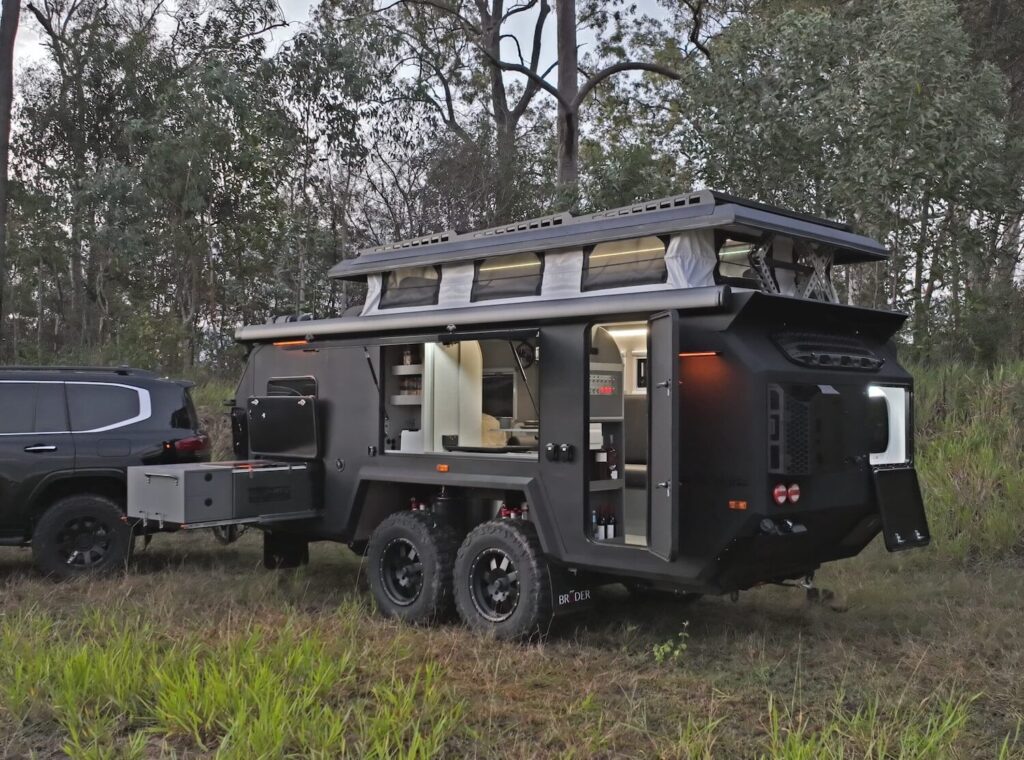
BruderX Exp-7
Image by BruderX
Specs
Length: 22’11”
Dry Weight: 5,950 pounds
Cargo Capacity: 1,766 pounds
Sleeping Capacity: Up to 4
Another incredible off-grid camper hailing from Australia, the BruderX Exp-7 delivers a rugged, military-inspired aesthetic with its eye-catching flat black exterior. The all-terrain travel trailer is available in two models: the pop-top (PT) and the hard-top grand tourer (GT).
This camper’s off-road capability is staggering. What stands out to me the most is its patented suspension system. With its equal load distribution, it can convert from four to three to two-wheel configurations, eliminating flat tire worry. The hydronic diesel-powered internal heating and hot water make you even more self-sufficient. The kitchen and bathroom have hot and cold water, while a composting toilet eliminates the need for a black tank.
The kitchen is accessible both indoors and out, thanks to the rolling window. With a portable induction cooktop, fridge and freezer combo, and a microwave, you’ll have no trouble cooking on the road. Equipped with 1,200-watt solar panels, 10.8-kilowatt-hour lithium battery bank, and a 3,000-watt inverter, the camper will keep you powered for days—so much so, it even has a washing machine at the rear!
Inside, the living space proves that luxury and expedition travel can coexist. From the queen-sized bed to the leather sofa, every detail reinforces that comfort doesn’t have to be sacrificed—even when you’re far beyond the pavement.
Honorable Mentions
What Is a Pull-Behind Camper?
Image by Camping World
A pull-behind camper is any travel trailer that’s towed by a vehicle. There are a few different types: The smallest are often called “teardrops” since they’re shaped like a tear. Pop-ups are another popular type of pull-behind camper. They’re usually larger than teardrops and get their name from folding into themselves for easier storage.
There are also pull-behind campers large enough to sleep families and even tow toys, such as dirt bikes and quads. These are more affectionately known as toy haulers.
Most pull-behind campers can sleep at least two people and have some space for cooking. They can be super cozy and lightweight compared to other RVs. Plus, many come with a kitchen or bathroom.
Pros and Cons of Pull-Behind Campers
Here are some pros and cons of pull-behind campers:
Pros
Cons
Different sizes available
People can’t travel in the trailer
Can take day trips
Hitches need to be checked often
Affordable
Fewer amenities
Insurance is less costly
Sedans may not be able to tow
Easy maintenance
Not as spacious
Travel any time
Kitchen and bathroom included
Pros
Image by Camping World
Different sizes available: Some models are small enough for easy storage in your garage. Others are larger with more sleeping space.
Can take day trips: if you’ve set up camp but want to take a day trip to an attraction, you can! Just unhitch your vehicle and head off.
Affordable: Larger RVs are fun, but they can be expensive, with some models nearing $200,000 or more. A pull-behind camper can cost a fraction of that, especially if you opt for a used model.
Insurance is less costly: Insuring a pull-behind camper costs significantly less than insuring other, larger RVs.
Easy maintenance: Since your camper doesn’t have an engine, there’s less to maintain. You could even do some repairs yourself if you have the know-how.
Travel any time: If you’ve had a rough week and want to decompress on the weekend in nature, you can. All you need to do is check camper supplies, load up, and go. You could be in your favorite spot within a few hours.
Kitchen and bathroom included: Depending on the model you choose, you may have a bathroom and kitchen in even the most remote locations.
Cons
Image by Camping World
People can’t travel in the trailer: One drawback to having a pull-behind camper is that people can’t (and shouldn’t) sit in it while it’s moving. Some states allow this, but many don’t. It’s best for everyone to travel inside the car or truck towing the camper.
Hitches need checks at every stop: You likely won’t have any issues during the drive, but it’s still recommended that you check the hitch at each stop.
Fewer amenities: Because travel trailers are smaller than RVs with engines, they’ll have fewer amenities than their drivable counterparts.
Sedans may not tow them: You will likely need a truck or SUV with a high tow rating to transport a pull-behind camper.
Not as spacious: If you want something that sleeps many people, a pull-behind camper may not have the space you need compared to a large, drivable RV.
How To Choose an Off-Road Pull-Behind Camper
Now that you know the pros and cons of pull-behind offroading camper trailers, let’s go over how to choose one for off-road adventures.
What Can Your Car Tow?
Image by Camping World
This is the most critical piece of information. You could find all-terrain travel trailers with all the amenities you want within your price range. But if your car can’t tow them, it’s useless.
Sedans: Sedans generally have a tow rating of 1,000-4,000 pounds. Check your vehicle’s specifications on the manufacturer’s website or manual to determine its towing capacity.
Trucks: Mid-size trucks can tow about 6,400 pounds or more, while some full-size trucks can tow up to 11,000 pounds.
SUVs: SUVs can tow anywhere from 1,750 to 5,000 pounds. Be sure to check the manufacturer’s website or manual to determine the exact number.
Be sure to factor in the loaded weight as well. This is the weight of the pull-behind camper when it’s all packed and ready to go. There are only a few times you’ll tow your camper with nothing in it, like when you first take it home. After that, it’ll likely be loaded with camping supplies, so factor that weight in when calculating the final number.
Bathroom Preferences
If the campsites you visit typically have communal bathrooms, you may want to consider campers that do not. But if you’re going off the grid, it might be worth considering models with a bathroom.
Off-Roading Abilities
Image by Camping World
Another point to consider is the off-roading abilities of your car and the camper you choose. You may want to consider purchasing off-road tires for your vehicle and camper. Car makers might also have hitches designed for off-roading.
When it comes to the camper itself, it’s best if they have the following:
Rugged construction: An off-road camper should have reinforced bodies and off-road tires.
High ground clearance: A raised chassis is essential because campers can get damaged if they’re too low to the ground.
Weatherproofing: Is your RV adequately insulated for cold temps? Can it keep out heavy rain and water? What about a good AC for hot days?
Amenities
Image by Camping World
You’ve already thought about your bathroom preferences. Now it’s time to think about the kitchen and other areas. What are your must-haves? How many people should your camper sleep? Would you want your kitchen to be outside or inside? Once you have a solid list of comforts and functionalities you’re looking for, you can move on to pricing.
Pricing
Off-road pull-behind campers can be anywhere from $5,000-$60,000, depending on the make and model, and whether they’re new or used. Now is the time to determine your spending range. What is the most you’re willing to pay? You’ll also want to factor in insurance, maintenance, and renovation costs.
Keep in mind that there are RV financing options available to help make the cost more manageable.
Use these additional resources to find your perfect pull-behind off-roading camper:
Where do you plan to go off-road camping? Let us know in the comments below!
Adjustable car suspension is an important component that can significantly impact how well a car performs, handles, and feels to ride in. Coilovers and air suspension systems are two of the most popular types of adjustable suspension systems available on the market. Both offer unique benefits and drawbacks, and deciding which one to choose is challenging.
Coilovers are adjustable suspension systems that use a coil spring and shock absorber in one unit. Car fans and racers like these systems because they are easy to use, last a long time, and let you fine-tune the suspension settings. Coilovers allow easy height and damping adjustments, providing a more precise driving experience.
On the other hand, air suspension systems use air-filled bags instead of metal springs and shocks. These systems are known for their smooth ride quality, adjustability, and ability to raise or lower a vehicle’s ride height. Air suspension systems are also popular with car fans and people who own show cars because they can give a car a sleek, low look while keeping the ride comfortable.
In this infographic, we’ll compare the pros and cons of coilovers and air suspension systems. This will help you choose the best adjustable suspension system for your car.
The outlandish DS No4 Taylor Made concept previews how DS will make its range-topping variants stand out better – and the first of these will be a sportier version of its mid-sized hatchback.
The concept, designed in partnership with DS Formula E driver Taylor Barnard (hence the name) and unveiled at the Brussels motor show, is based on the standard EV but sits lower, has a wider track and gains a host of aero modifications.
Asked about the concept’s chances of making production, product boss Audrey Amer told Autocar that “we are not going to do this one” but added: “On DS 7 we had dedicated engines developed with motorsport that were a little bit more powerful. Why not for the No4?”
Design boss Thierry Métroz said that going more bespoke with its top models was the route DS was looking to take – and the changes would not just be limited to aesthetics. “We are looking to do a more performance[-focused] version for some cars of the Performance Line collection, especially on No4,” he said, referring to the sub-brand DS uses for its most exclusive cars.
The DS 7 Amer was referring to was the E-Tense 4×4 360, a 355bhp PHEV flagship capable of sprinting to 62mph from rest in just 5.6sec.
It also brought a series of chassis modifications said to be informed by DS’s Formula E team, DS Performance: a 15mm drop in ride height; unique wishbones giving a 24mm-wider track up front and 10mm-wider track at the rear; and 380mm front brake discs with four-piston calipers.
The most powerful No4 is currently the 222bhp plug-in hybrid, which shares much of its drivetrain with the old 7 E-Tense 4×4, but it is front driven only, so it’s possible that any increase in power would bring an extra electric motor on the rear axle for 4WD and added grunt.
Other elements that could be taken from the Taylor Made concept to production, said Métroz, are its split lip spoilers, squat stance, low front splitter and two-tone paint – the last of which is likely to be used to distinguish these cars from the rest of the line-up.
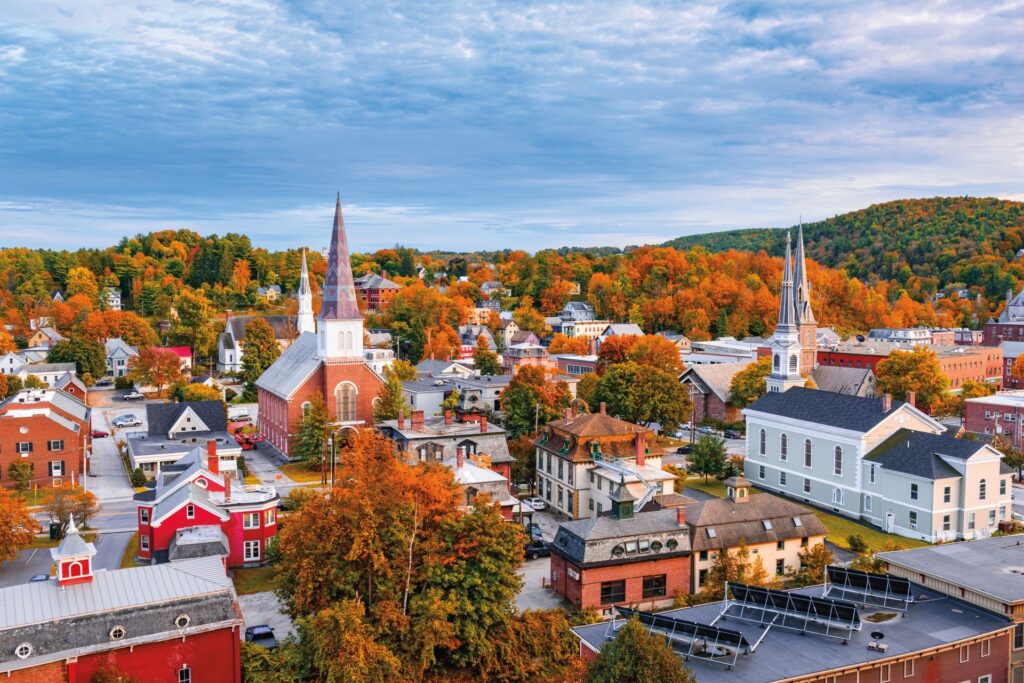
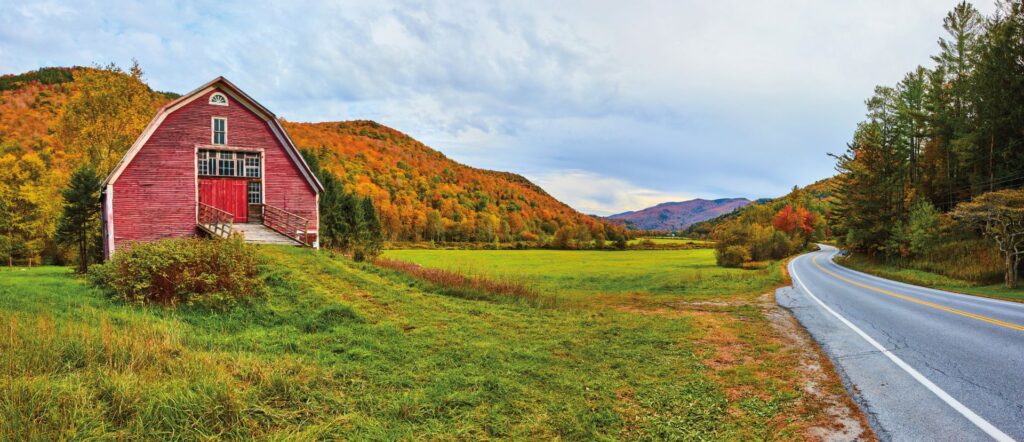
With the BMW MOA National Rally coming up in June 2026 in Essex Junction, Vermont, now is the perfect time to plan your ride there to truly enjoy what the area around has to offer. What makes this state a wonderful destination is the lush green mountains, amazing rural farm landscapes and fabulous roads to ride your motorcycle!
Billy Joel sings about a “New York State of Mind,” and that comes to into my head every time I cross the border. But I’d change that line to a “Vermont State of Being.” Vermont is unlike any other state, thankfully. It has a vibe all its own. Cross the border and you can almost feel the difference from its neighboring states. A bit more laid back, without being lost from the rest of the world. Slower paced than New York and New Hampshire and not as overtly commercial as Massachusetts.
Having lived in Vermont in the late 1970s and early ’80s, I can honestly say that the mindset of the people there is more honest, caring and helpful than almost anywhere else. It ranks second to last in U.S. population; only Wyoming has fewer people. It’s also one of the smallest states in square miles. Compared to Wyoming, which is 10 times larger, Vermont is a narrow pie slice-shaped state with only 180 miles of border from north to south, 90 miles at its widest point at the Canadian border, and just 37 miles at its narrowest point at the Massachusetts border.
Vermont has innumerable spectacular small, well-maintained roads, some with fantastic long views and some that cut through the many state forests. While the majority run north and south, there’s a plethora of twisty, winding roads that pass through the mountains like Appalachian Gap, Lincoln Gap and Middlebury Gap, just to name a few. Even the two interstate highways are a joy to ride on. Both I-89 and I-91 feature moderate traffic volume and are wide and smooth, featuring large medians between the travel lanes. While you can see great long views for miles from much of the route, it’s truly the back roads that are the most inviting.
It’s often said that the best parts of life can be found in the details. While the long, sweeping views from the interstate are nice, it’s the distant details that help every traveler truly feel they’ve experienced a place. Every state has its claims to fame, but for Vermont, one standout is that it’s home to over 100 authentic covered bridges. This gives the state the highest number per square mile and per capita in North America.
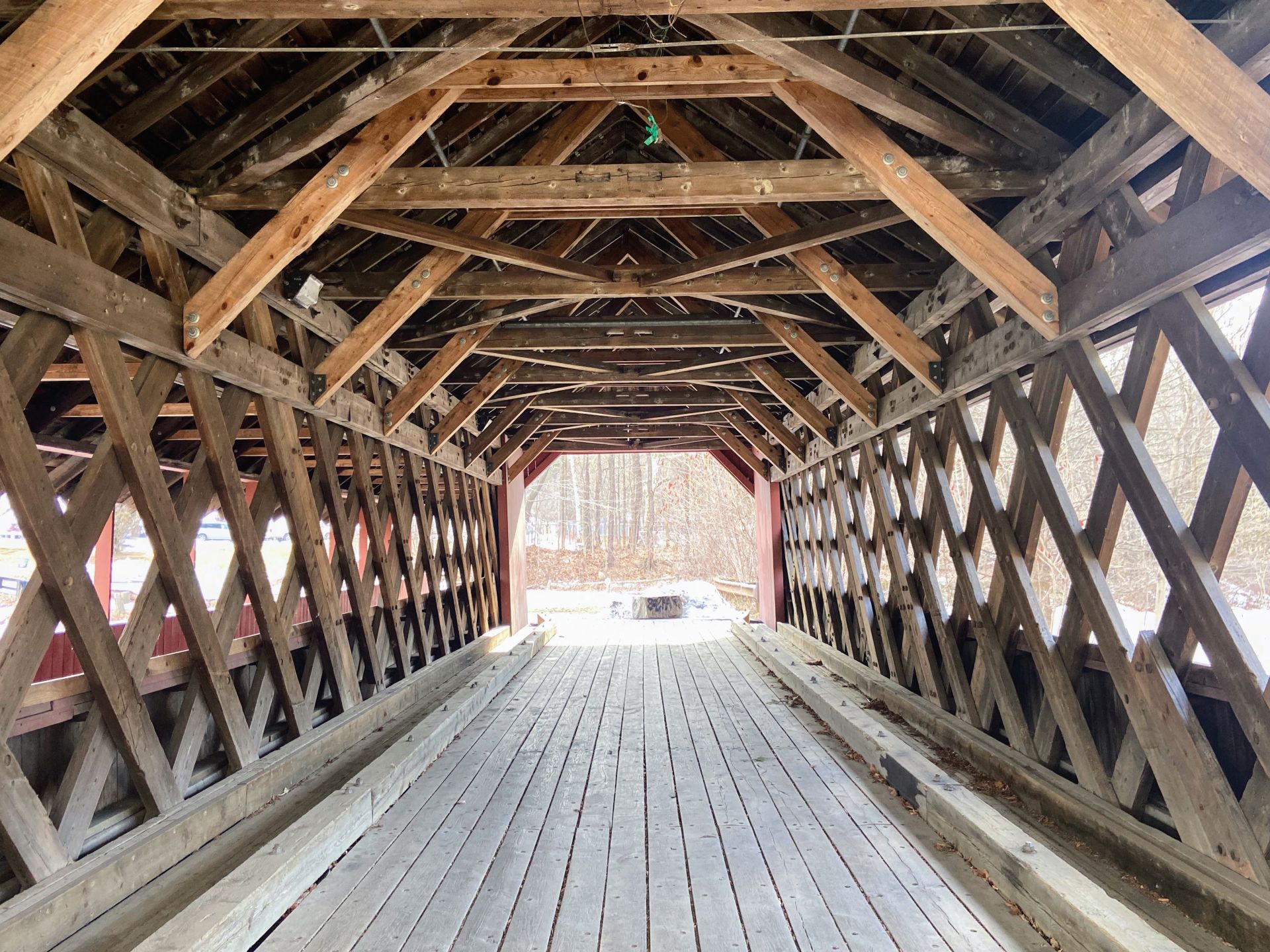
If you’ve never ridden your bike over a covered bridge before, it’s an amazing treat you’ll never forget. There’s something magical about cruising along next to a country river, past farms and fields, in the open air, then rounding a bend to see this barn-like structure spanning the roadway. The minimal amount of darkness contained due to the short stretch, with bright sunlight beckoning at the other end. You downshift, become more aware of your balance, more thoughtful in your handling of your machine and slowly ride in. Hear the wood creak beneath you, see the sunlight streaming in through the not quite solid sides by design, smell the history, and moments later, you’re back out. Amazing and exhilarating all at once.
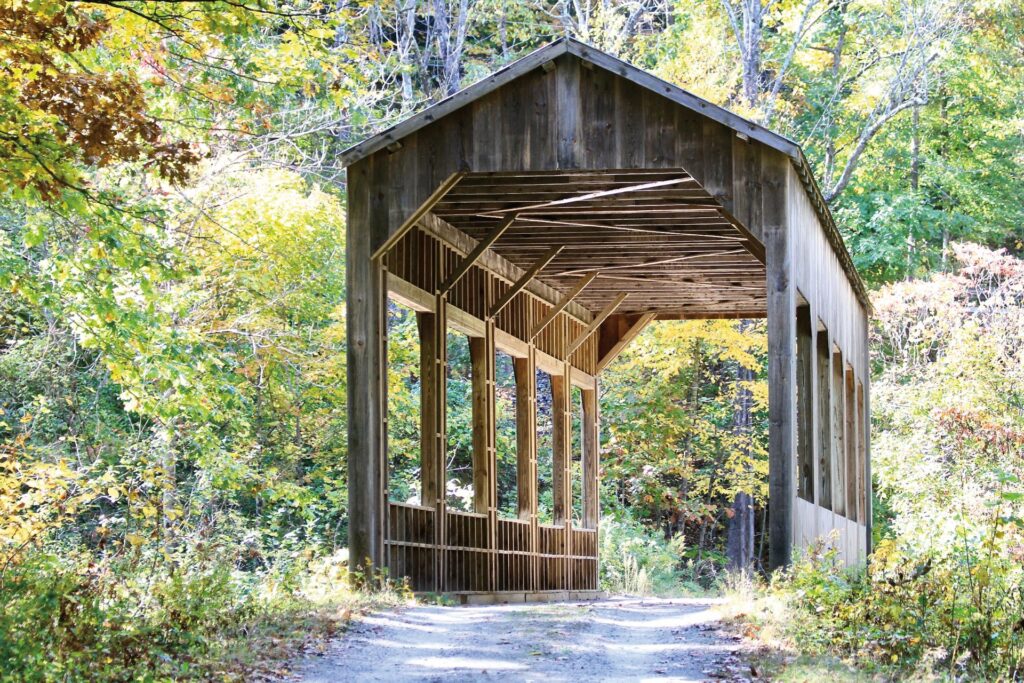
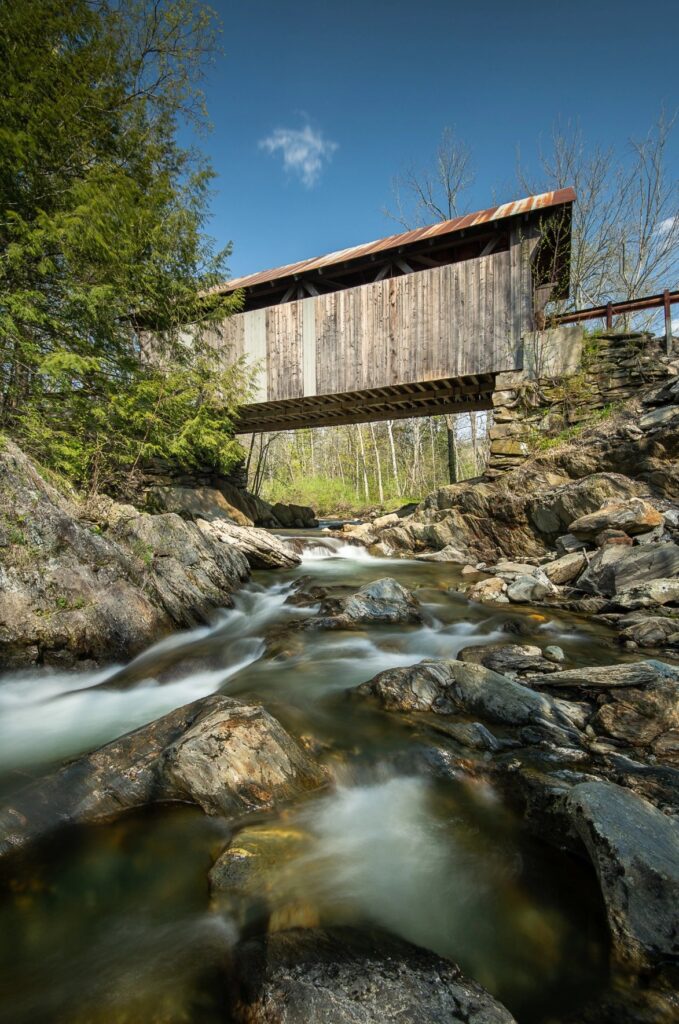
Vermont’s covered bridges are landmark centerpieces of charming rural New England settings. A true definition of a covered bridge is a timber structure supporting a wooden deck surface with a roof overhead. The primary purpose of the roof is to protect the structure from damaging weather. Builders knew that simply putting on a roof paid off in the long run in terms of protection. Adding walls helped calm animals crossing rushing waters, which frequently scared livestock and caused stampeding. The high ceiling height and typical lattice sides or windows allowed drivers to see oncoming traffic as well as provide natural light.
In the 1800s, the number of covered bridges in Vermont reached over 700. Unfortunately, horrific statewide flooding in 1927 destroyed nearly 100 covered bridges. When automobiles became the primary mode of transportation and their construction could not withstand the continual weight of autos, the number of these gems dropped to 200.
Fifty miles northeast of the rally point in Essex Junction is the town of Montgomery, known as Vermont’s covered bridge town. Its unique geography required many bridges, and as recently as the 1940s there were 13 covered bridges within the town’s limits. Today, there are six covered bridges. It is a perfect place to get a taste of both history and riding enjoyment. Interestingly, not selected on anything but their location within the town of Montgomery, brothers Sheldon and Savannah Jewett built all these bridges. They represent the best-documented concentrations of bridges by a single building team in the state. The Jewetts prepared the original timber for the bridges at their mill in Montgomery’s West Hill area from the nearby forests.
Luckily, to experience these, you’ll get to enjoy the Vermont countryside as it’s just over an hour’s ride out from the Rally site. With taking time to explore the bridges and a stop or two, this round-trip tour is a great way to spend half the day.
To reach Montgomery, head out of Essex Junction on Route 15N towards the small town of Jericho. Within five miles on Route 15, you’ll see that it is a perfect example of just how fantastic the riding is in this state thanks to a small two-lane blacktop gently winding its way through the towns of Jericho and Cloverdale and on up to Cambridge and Jeffersonville. There are many farms and livestock-filled fields on either side to fill your senses. This route takes you alongside the Lamoille River as well as one of its branches. In Jeffersonville, jump onto Route 108N for a little more than a quarter mile, then take Route 109N. Route 109 is a beautiful, lightly traveled road that continues to provide a smooth ride with even more farmland views. Take in the lush green all around you that is a constant in summer as you ride on, taking Route 118N straight toward Montgomery.
Riding over covered bridges is a skill unto itself. It’s not like roaring through an urban tunnel. These are short structures that were built over 100 years ago, and the traveling surfaces are typically older wood that can be a bit slippery. There may even be two tracks of heavier boards, spaced far apart, where automobile tires travel. On a bike, well that’s a different story. You’re going to pick either one of those two or ride down the center! Once you’ve made your decision, you have to stick with it. Changing partway through can be dangerous. Adding to this adventure is the fact that there is no specific Vermont Agency of Transportation rule granting right-of-way on covered bridges. I take the position that since these bridges are quite narrow, typically single lane, you should yield to vehicles that are already on the bridge. I also believe that when in doubt, let the other traveler go first. In Vermont, that type of thinking goes a long way!
Just north of Hectorville, before you get to Montgomery Center, is the Hutchins Covered Bridge, the first you’ll encounter on this trip. It’s 77 feet long and was built in 1883. To get there, take a left off Route 118 onto a road labeled South Brook Road, which quickly turns into Hutchins Bridge Road. This is a hard-packed, unpaved road, so if riding a covered bridge isn’t enough of an adventure–and if this is your first time on a surface like this—exercise appropriate caution. Get used to it. Nearly all of the bridges on this trip require traveling these types of roads. But you were up for an adventure, weren’t you?
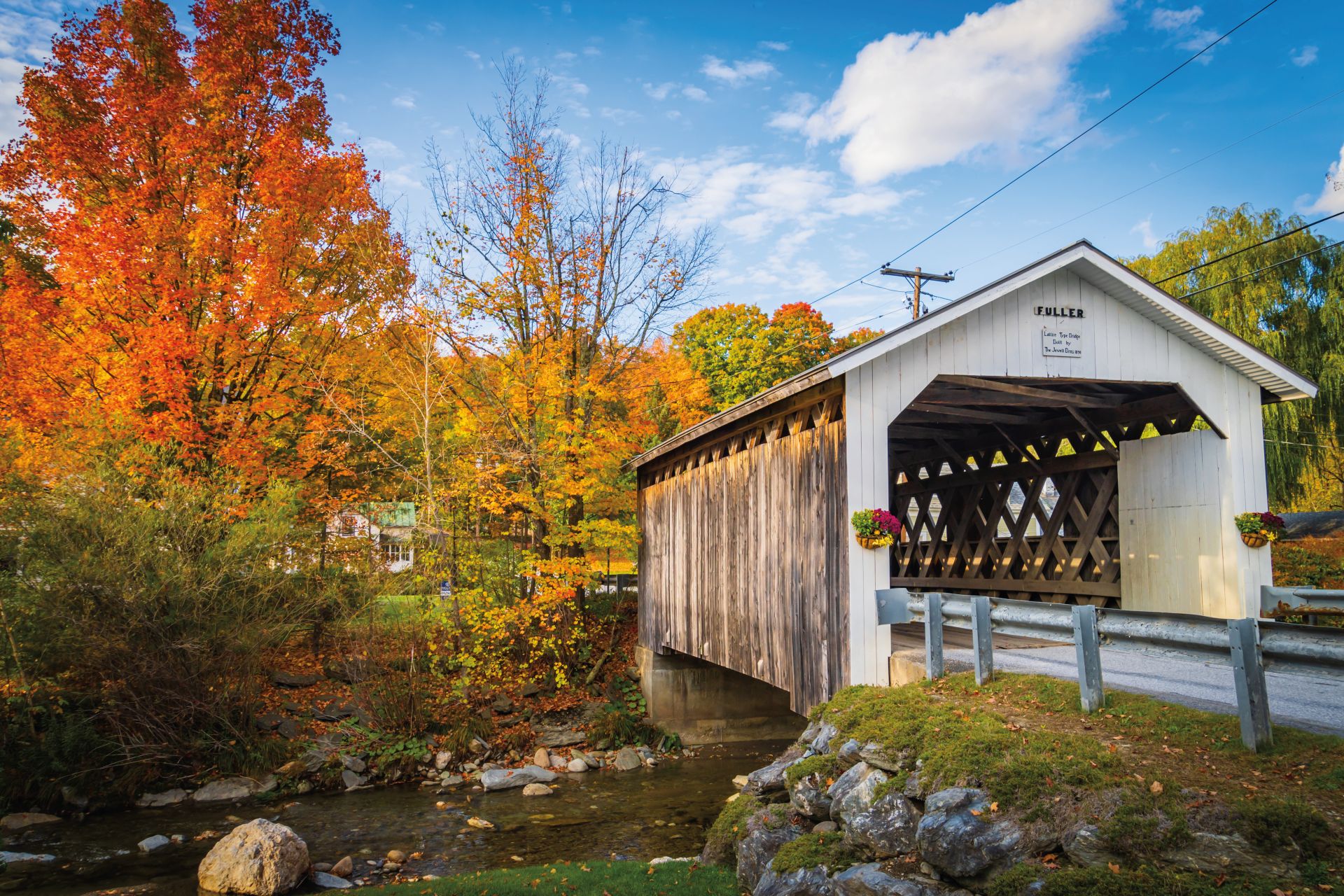
Next up, Fuller Covered Bridge, completed in 1890, is four miles further along Route 118 through the town of Montgomery. This 49-foot-long bridge is situated in the middle of a residential neighborhood, two blocks off Route 118 on South Richford Road. As the second structure for you to cross, its surface is made of a single layer of planks, making for great practice. Head over to Fuller, then turn around and head back to Route 118N.
Just around the corner just off Route 118N, you’ll find the Comstock Covered Bridge. It’s an easy left turn onto, surprisingly, Comstock Bridge Road. Opened in 1883, it was located next to John Comstock’s mill works–John being a miller, grain dealer, and manufacturer of carriages and sleighs. Drive straight through this 69-foot beauty and stay on the road until it intersects again with Route 118. Then, turn left and head north.
Another 1883 project and 59 feet in length, the Historic West Hill Bridge (also known as Creamery Bridge) is a seven-minute ride over to the Montgomery/Enosburg town line. Down a long, dirt-packed road, it’s a more complicated destination. To get to this bridge, you really get a sense of what backroad Vermont means. The main challenge in enjoying this site is that, depending on what the Mud Season (what some Vermonters call what the rest of us refer to as Spring) has wrought, this road may or may not be passable.
If the roads on both sides of the bridge are passable and you are experienced enough with traversing hard-packed, slightly rutted surfaces, ride over this bridge and stay on Creamery Bridge Road for about a mile until it intersects with West Hill Road. Then, take a right and head north to RT 118 for another eight miles. This is another one of the great backroad Vermont routes that you’ll remember for quite a while. From where you meet RT 118 again to your next destination is a short one to two-mile ride.
However, if you can’t cross and continue on, then turn around and enjoy this scenic country lane back to Route 118N, as your next destination is the 85-foot Longley Covered Bridge, also known as the Harnois Covered Bridge. It’s a three-and-a-half-mile ride north on Route 118, where you turn onto Longley Bridge Road. This bridge, built in 1863, is one of Vermont’s oldest. The only older bridge is the Cold Brook Bridge, constructed in 1844 and located further south. The main reason to visit this bridge is the ride that follows. Coming out the other side and staying on Longley Bridge Road toward our last stop will offer some of the best country riding. With the Trout River on your right and miles and miles of open fields, iconic Vermont barns and buildings, and then deep into woodlands. Within a few miles, you’ll reach Hopkins Bridge Road (which might be marked Town Highway 17) on your right. Take it. This is the Golden Prize of roads–another six miles of deep Vermont back-road riding. Hard-packed and crowned, it’s a route you can’t do at 50 mph; it demands your full attention as the surrounding woodland envelops you, offering an experience to remember. But we’re not done yet!
Hopkins Covered Bridge is the last on the tour, and it appears just after you emerge from the woods; you’ll feel like you’re trespassing onto someone’s farm. Passing so close to a working barn, you’ll be able to smell hay, manure, animals…everything. A quarter mile or so further with the Trout River on your right, you’ll make a 90-degree turn, and the 90-foot-long bridge is right in front of you. Built in 1875, this is one of the longer bridges in Montgomery. It’s lattice on the inside, solid plank walls on the outside with narrow transom windows running allow for a little bit of sunlight in. As soon as you get off, you’re facing Route 118.
Getting around to all six makes for quite an adventure and will probably take you a little over an hour. The variety of locations is well worth it and gives you a different vantage point of the Vermont countryside.
After exploring and enjoying these covered bridges, now it’s time to head back to Essex Junction, and I’ve always thought that a different return route makes every ride more interesting.
Head south on Route 118 until you reach the intersection of Route 100, then turn south again toward the town of Stowe. Some sections of Route 100 make it one of the best north-south rides Vermont has to offer, with a wide variety of small towns and villages to pass through. And this northern leg is no different. From the intersection of Routes 118 and 100 to Stowe, you’ll pass small businesses of all kinds on a smooth, lightly traveled road.
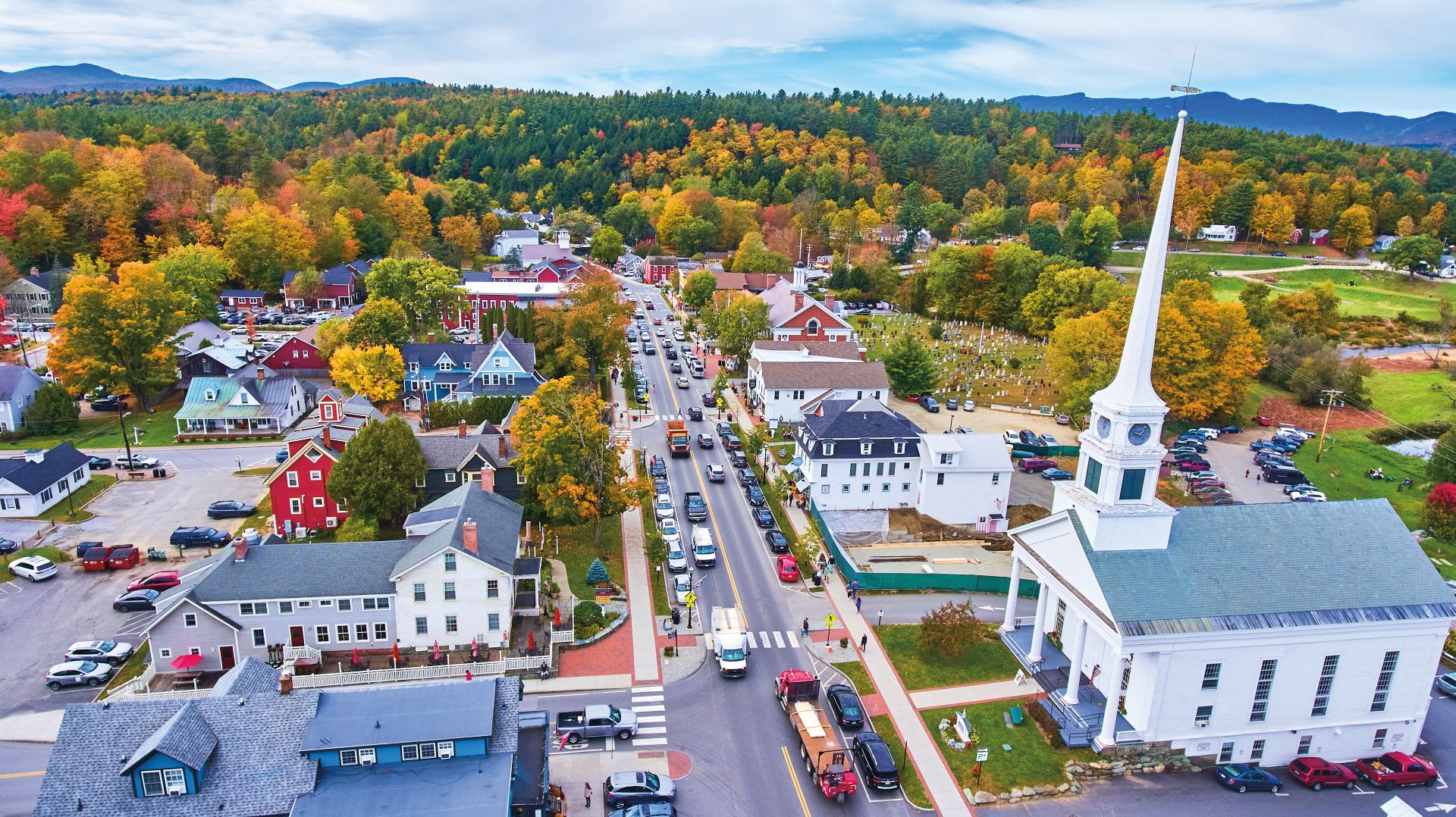
Stowe, situated at the foot of Mount Mansfield, is a four-season tourist spot. It’s a postcard-perfect, upscale, walkable Vermont town with many well-preserved historic buildings. Traffic there, both vehicles and pedestrians, gets heavy during summer and foliage season, so stay alert and keep your head on a swivel at all times. There is free, three-hour public parking along Main Street and Depot Street, but finding a spot can sometimes be like searching for hen’s teeth. Fortunately, several public parking lots are located in the town center behind the Stowe Community Church, the Stowe Town Hall, and in the lot before the Post Office on Depot Street. Personally, I know Vermont is very safe, but I always feel that parking off the main street is better. Let the Harley guys show off and park on Main!
If you haven’t eaten yet, Stowe is a great place to stop and stretch your legs, and there’s a wide variety of restaurants to choose from. If you’re looking for something simple, The Lower Bar (lowerbarstowe.com), Black Cap Coffee & Bakery (blackcapvermont.com), or The Café on Main (cafeonmainvt.com) are great choices. For a more upscale meal, try The Whip Bar & Grill (thewhip.com) or Harrison’s (harrisonsstowe.com). All are close to the intersection of Routes 100 and 108 in the center of town. Now that you’re satiated, it’s back in the saddle and a quick hour’s ride back to Essex Junction. Unless, of course, you’re in the mood for a classic Vermont-branded ice cream. The Ben & Jerry’s Factory Store (benjerry.com/waterbury) is just 10 miles south along Route 100 in Waterbury, as you pass by. Nearly every flavor imaginable is available in servings from cones to sundaes to pints to shakes. You can also take a tour of the factory if you’re interested.
From there, it’s a 24-mile ride on smooth roads with stunning views of true Vermont countryside back to MOA Rally grounds in Essex Junction. With this tour, you realize you probably didn’t hit every covered bridge. When riding the back roads, you have to accept that there are others you simply passed by without even noticing. Your reward is that, with this half-day adventure, you’ve experienced all the beautiful sights this state offers–breathtaking views of farmland and forests, towns both big and small, incredible back-country roads, historic sites and local cuisine. No wonder it’s one of my favorite states.
The UAE is one of the biggest markets for luxury car modification brand Mansory. So, it’s no surprise that the world’s first Koenigsegg Jesko Mansory calls Dubai home.
We had shared the first images of the Mansory Jesko a few days back. Now that the hypercar has finally been revealed, we can have a closer look. It has a beige exterior that matches the colour of the desert sand and a tonne of custom carbon fibre parts.
The Jesko Mansory is fitted with an extreme front splitter with canards on either side. The splitter has extended end plates with additional canards. There are carbon fibre louvres on the front clamshell and more carbon elements on the sides, along with custom side skirts. At the rear, you have a Mansory wing and a more aggressive diffuser.
The Jesko Mansory has a Tiffany Blue interior, with a chequered pattern on the seats and the ‘Mansory’ logos embroidered into the backrests.
We still don’t know whether Mansory has made any mechanical changes to the car. The standard Jesko is powered by a 5.0-liter twin-turbo V8 engine that puts out 1280 hp (1600 hp on E85) and 1106 lb-ft of max torque. The engine is hooked to a 9-speed multi-clutch transmission.