The goal of the project was to propel the brand into a new age while honoring more than 115 years of heritage.
As Bugatti Chief Exterior Designer Jan Schmid explains, it was about “finding that sweet spot of what a Bugatti is and what a Bugatti can be in the future.” and “[…] making a Bugatti recognizable as a Bugatti from every angle by incorporating our core design DNA elements.”
From the official Press Release:
Every angle of the Tourbillon tells a story. The iconic horseshoe grille, lower and wider than on any Bugatti before it, anchors a face that appears to be lunging forward. But this isn’t simply sculptural. Schmid and his team shaped every millimeter with intent, even ensuring that an EU number plate fits seamlessly within the horseshoe’s curves while maintaining aerodynamic and structural integrity.
The horseshoe is joined by the fuselage accentuation and the centerline; a feature that traces its lineage to the riveted spine of the Type 57 SC Atlantic. On the Tourbillon, this centerline flows from nose to tail, culminating in the third brake light, which is integrated into the spine itself.
The distinctive Bugatti Line, sweeping from the A-pillar around the greenhouse before flowing toward its precise return at the front of the car, creates what Schmid describes as “an impression of leaping forward.” That defining curve accentuates and supports the car’s side profile, where every surface seems charged with motion and ready to accelerate. Along the line’s path, it also defines the division for Bugatti’s iconic duotone color split, a signature element that traces back to the brand’s earliest creations.
The Tourbillon’s side profile is a bold statement of form. Its pronounced “Coke bottle” curvature, sweeping inward before flaring over the rear haunches, gives the car a sense of visual drama. This sculptural treatment celebrates proportion, offering a unique interplay between lightness and strength.
A closer look at the Tourbillon’s face reveals a remarkable feat of engineering. Despite sharing nearly the same footprint as the Chiron, the Tourbillon manages to accommodate more luggage space, an electric front axle and intricate aerodynamic ducting, all while sitting lower to the ground. The secret lies in the seamless collaboration between design and engineering, transforming function into sculpture.
The headlights exemplify this philosophy. Compact yet unmistakable, they attach to what Bugatti calls the ‘flying fender,’ which serves dual purposes. Visually, it accentuates the fuselage’s forward thrust. Functionally, it channels air beneath the fender and out the top, feeding the side radiators and air intakes. The side view reveals a dynamic interplay between the precisely drawn front fender, with its long crease line flowing all the way toward the side intake, and the muscular, sculpted rear fender.
At the rear, the Tourbillon’s fender flows seamlessly into the deck, where an active rear wing deploys only when needed. Below, the open engine bay showcases the towering plenum of the naturally aspirated V16.
More than 124 individual LED elements form a single monobloc tail light that traces the rear’s contour from edge to edge, with the Bugatti script illuminating at its center. Beneath this, air outlets draw hot air from the side-mounted radiators. The exposed rear wheels and high-mounted diffuser channel, starting behind the front seat, create a lightweight, planted appearance while accelerating air rearward with efficiency.
“Everything is playing hand in hand. The new package, the design – we really showcased the capabilities of what the Tourbillon can do.”
When asked to choose his favorite element, Schmid explains “I have to point towards the way the rear fender is shaped. It is, in fact, inspired by the proportion of the rear fender of the Veyron with its reflection-based vastness and the grandeur of the surfacing. I’m particularly happy about how it turned out and how it gives really strength and muscle to the car and enhances the overall stance and proportion.”
Previous Episode
Below we report the first episode of the series, with insights from Mate Rimac, CEO of Bugatti, President Christophe Piochon, Bugatti Director of Design Frank Heyl and CTO Emilio Scervo.
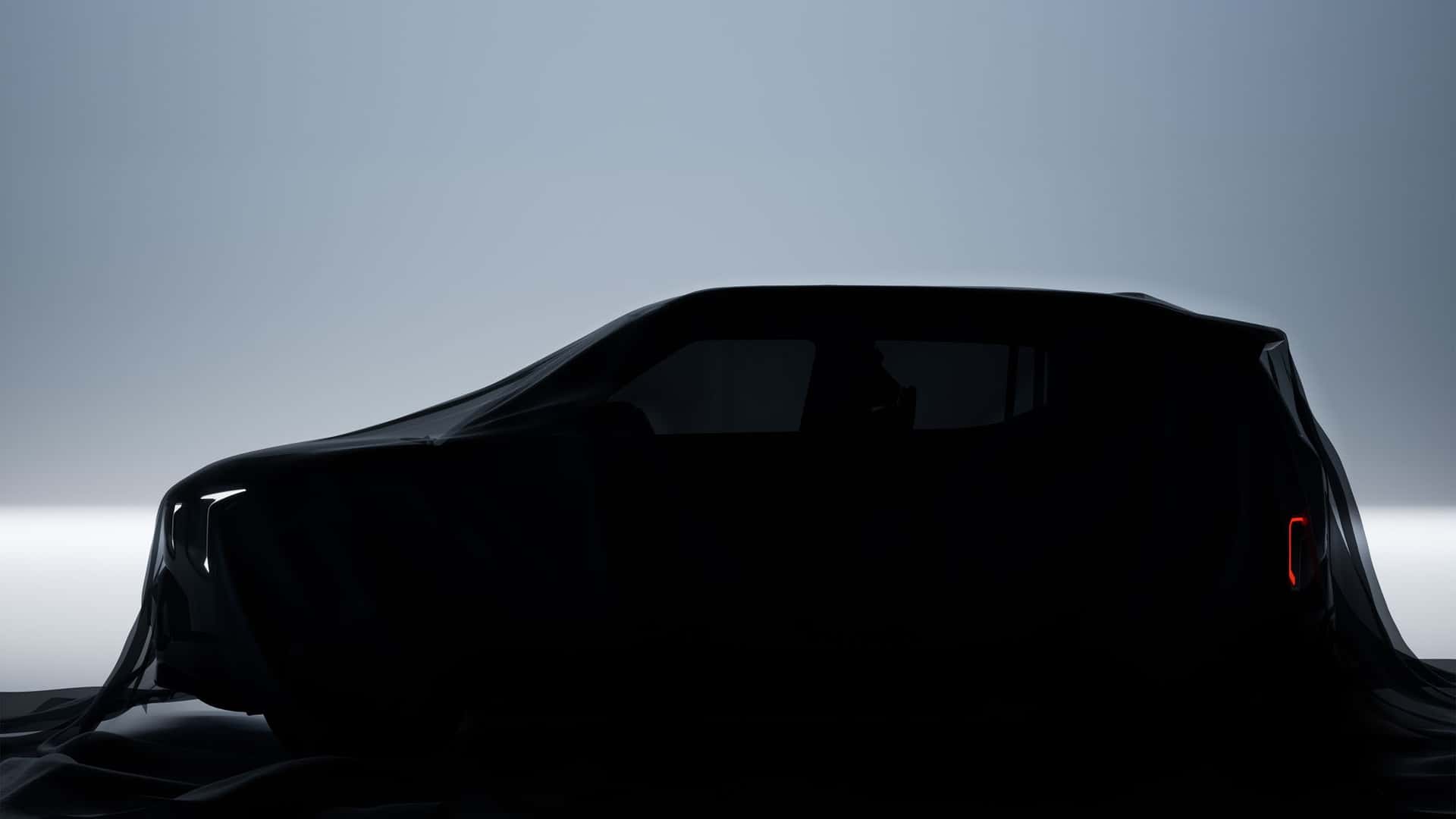
Kia confirms it will unveil its smallest EV on January 9 in Belgium.
The EV2 will slot below the EV3 in Kia’s lineup, entering a segment that will soon see many more models.
Production of the EV2 will begin in Slovakia and ramp up through 2026.
There is a plethora of new small B-segment EVs coming to Europe. Some are already here, like the brilliant Renault 5 (or the slightly larger 4) and the Hyundai Inster, but more are on the way and one of the most hotly anticipated is the Kia EV2, which we now know will be revealed on January 9 during the 2026 Brussels Motor Show.
As its name implies, it will slot under the EV3 in Kia’s lineup and it will have a similar mini-SUV body style. The thinly-veiled production car in the teaser photos hints that the overall design will stay pretty close to the EV2 concept that previewed it, at least on the outside, because the interior will look nothing like the study’s and it will be closer in style and feel to the EV3’s.
Photo by: Kia
Under its petite SUV body, the EV2 will ride on the same front-wheel drive version of the E-GMP platform, which is used in all of Kia’s bespoke electric models up to the EV5. It will come with two battery options: a smaller LFP pack in the base model and more capacity and NMC cells in the long-range variant.
The battery options will likely be smaller than what Kia offers in the EV3 (58.3 kWh and 81.4 kWh), but larger than in the Hyundai Inster, whose big battery has a 49 kWh capacity. The EV2 will be a direct rival to its Korean stablemate, but since it’s not an adapted gas car, it should offer superior specs. That being said, I really liked the Inster, even despite its platform sharing with a gas variant.
Photo by: Kia
The EV2 will be built in Slovakia and has been designed specifically for Europe (although it will likely also go on sale in South Korea and other markets). This would have made for a fine rival to the upcoming 2026 Chevrolet Bolt EV, but there’s no chance of seeing the EV2 reach the U.S., mainly due to tariffs.
The manufacturer recently commented on the upcoming model saying “This compact SUV delivers the innovation and the spirit of our larger EVs while fitting seamlessly into everyday life in Europe. Designed, developed, and soon to be produced in Europe, we are confident that the EV2 will play a pivotal role in shaping the future of responsible mobility across the region.”
It won’t be alone at the Kia stand in Brussels. Kia is using the venue to unveil hot GT variants of the EV3, EV4 and EV5, which should make these competent but somewhat dull-to-drive cars a bit more exciting. No word on a potential EV2 GT, but it would be the only model in the lineup without a hot version, so Kia may reveal that in the future.
Pricing in Europe is expected to start at around €30,000 ($34,800), which seems pretty steep for such a small car. The slightly larger Renault 4 starts at just under €30,000, although the Kia will probably have a roomier back seat, as well as better range and charging power. If the other front-wheel-drive E-GMP cars are anything to go by, though, it won’t be anywhere near as enjoyable to drive as its retro-inspired French rival, whose driving dynamics are surprisingly brilliant.
The BMW Group remains committed to achieving carbon neutrality by mid-century. To demonstrate progress toward its ambitious 2050 goal, the company has set a new interim target for 2035. It aims to slash at least 60 million metric tons of CO2e compared with 2019 levels.
That’s a notable increase from the previous objective of cutting 40 million metric tons by the end of this decade. One line in the press release caught our attention:
“By 2035, each euro generated will see less than half as much CO2e emitted compared to 2019.”
But BMW’s decarbonization efforts go far beyond tailpipe emissions. Of course, even fully electric vehicles like the iX3 generate CO2 during production. That is why sourcing steel with lower embedded emissions and expanding the use of recycled materials is crucial. Case in point, roughly one-third of the new iX3’s weight comes from reused materials. It ranges from secondary aluminum to recycled plastics, amounting to about 740 kilograms (1,631 pounds).
The Neue Klasse iX3 will surpass the gasoline-powered X3 in carbon efficiency after 21,500 kilometers (13,359 miles). If charged exclusively with renewable electricity, it becomes the greener choice after just 17,500 kilometers (10,873 miles).
BMW is also looking beyond EVs to further curb emissions. The company is actively promoting low-carbon alternative fuels such as HVO100 for diesel models and eFuels for gasoline cars. Both can cut emissions by up to 90% compared to fossil fuels. HVO100 is already compatible with modern BMW diesel engines, making it a practical way to reduce emissions from cars already on the road.
The group acknowledges that EV demand alone won’t rise fast enough for it to meet its 2030 and 2035 targets without additional measures. That’s why BMW is working to cut CO2 across each vehicle’s entire life cycle, regardless of whether it uses gasoline, diesel, plug-in hybrid, or electric power. Beginning in 2028, hydrogen fuel cells will join as a fifth drivetrain option with the iX5 60H xDrive.
Looking ahead to the 2050 net-zero commitment, BMW expects EVs to account for 50% of its annual sales by 2030. This projection covers the BMW brand as well as MINI and Rolls-Royce. We might as well include ALPINA, which starts a new era on January 1, 2026, as a wholly owned BMW Group brand. But reaching half of sales by the decade’s end won’t be easy, given that EVs accounted for only 18.3% of total sales in the first half of 2025.
The 2026 Proton Saga MC3 may have been launched in Malaysia for almost a week now, but this is the first time we’re clapping eyes on the RM37,990 (after the RM1k early-bird rebate) Standard variant. Feast your eyes on this full showroom gallery as we take you on a tour.
But first, we must note that all showroom display cars in the Klang Valley are of the Premium and Executive variants only, so we intercepted this customer car before delivery, courtesy of the Proton Sianghin Auto showroom in Taman Melawati.
Let’s start with the exterior – you still get LED projector headlamps, but they’re not automatic (Executive and Premium only) and there’s no auto high beam (Premium only). Those L-shaped LEDs are still there, but they’re used as positioning lamps rather than DRLs (they’re not as bright and do not automatically come on when the engine is started).
However, we checked and found that the part number is the same as the Executive variant, so the difference is merely in the software – we’re sure the resourceful will find a way to reactivate them soon enough.
Moving on, there are no front parking sensors, and the Ethereal Bow (the thing that ‘cups’ the Proton logo in the grille) and door handle decorative strips are finished in silver instead of the chrome you get on the Executive and Premium. The Standard is also the only variant with 14-inch alloys, taken from the old MC2.
Unlike the Executive and Premium, there’s no keyless entry here (so there’s no button on the driver’s door handle) but there’s keyless start at least. All Saga variants use the same new key fob (no more flip key like before). On the Standard, you’ll have to first thumb the key fob to unlock the doors, then get in and press the engine start button.
Along the side, you’ll see body-coloured B-pillars (only the Premium gets them in black) and no side skirts (also Premium only), although the mirror caps are still black. Because the Executive doesn’t get full-width tail lamps and an outside boot release button, the Standard obviously doesn’t either. There isn’t even a reverse camera or a lamp inside the boot – you’d need at least the Executive to get these.
Inside, the steering wheel is polyurethane (only the Premium’s is leather-wrapped) but at least it contains all the same buttons as the other variants (the previous Saga Standard had no steering wheel buttons whatsoever). You also still get a digital instrument panel, when the similarly-priced Axia G has analogue gauges and not even a rev counter.
The one you most want to see is the head unit. Unlike the other variants’ nine-inch touch-screen, the Standard gets a basic radio with Bluetooth, although it uses more modern-looking capacitive-touch buttons instead of physical ones.
No screen, so no Apple CarPlay/Android Auto, and the design of the thing (still connected to the digital instrument panel in one long piece) means fitting an aftermarket screen would not be a straightforward task. There are only two speakers here (the rear door speaker grilles are empty); the other variants get four.
The Standard’s upholstery is plain black fabric as opposed to the Executive’s wavy patterns. The driver’s seat uses the same rotary knob as on the Executive for height adjustment (only the Premium gets the new lever that raises or lowers the entire seat). Like the Executive, there’s no auto-down function for the driver’s window; you’d need the Premium for that. No Saga variant has auto-up windows.
Below the centre air vents sit two rows of buttons flanked by air-con control knobs – the top row is missing the parking sensor button (obviously, since it has no front parking sensors). The bottom row is all blank, but so it is even on the Premium.
Behind the handbrake, you’ll find no USB ports (Executive and Premium only). The front USB port is still there, but it’s for data transfer and charges slowly. Located right in front of the driver’s left knee, it’s an awkward place to stick a pendrive for music. Regarding the back seats, you’ll need to buy at least the Executive to get adjustable headrests and seat back pockets.
The Standard and Executive share the same powertrain and safety equipment – a 120 PS/150 Nm 1.5 litre i-GT four-cylinder engine, an Aisin four-speed auto (Premium gets a Punch CVT), two airbags, stability control and no ADAS (Premium gets six airbags, ADAS and RSRS). The Saga Standard is the only sub-RM40k car in Malaysia with a 1.5 litre engine – give your RM40k to Perodua and you’ll get a 1.0 litre three-potter.
Now, with the exception of crucial safety features like airbags and ADAS, many of the Standard’s omissions can be retrofitted rather easily later on. It remains superb value at RM38k – arguably even more so than the RM44k Executive – but of course it’s best to go for the Premium if budget permits. What are your thoughts on the most affordable new Proton you can buy today?
AD: Drive the Proton model of your dreams. Submit your details and Proton PJ will get in touch with you.
Former Force India F1 driver Adrian Sutil has been arrested over allegations of fraud.
According to media reports, Sutil is suspected of ‘aggravated joint fraud and joint embezzlement’. He was arrested by the Stuttgart State criminal police and sent to pre-trial detention in a prison in Baden-Württemberg by a judge.
The police raided multiple locations in Monaco, Switzerland and Sindelfingen before taking Sutil into custody.
This is not the first time that Sutil has had a run-in with the law. He was found guilty in an assault case and was handed an 18-month suspended prison sentence and a fine of €200,000.
During his Formula 1 career, Sutil raced for the Spyker, Force India and Sauber teams. His last race was the 2014 Abu Dhabi GP.
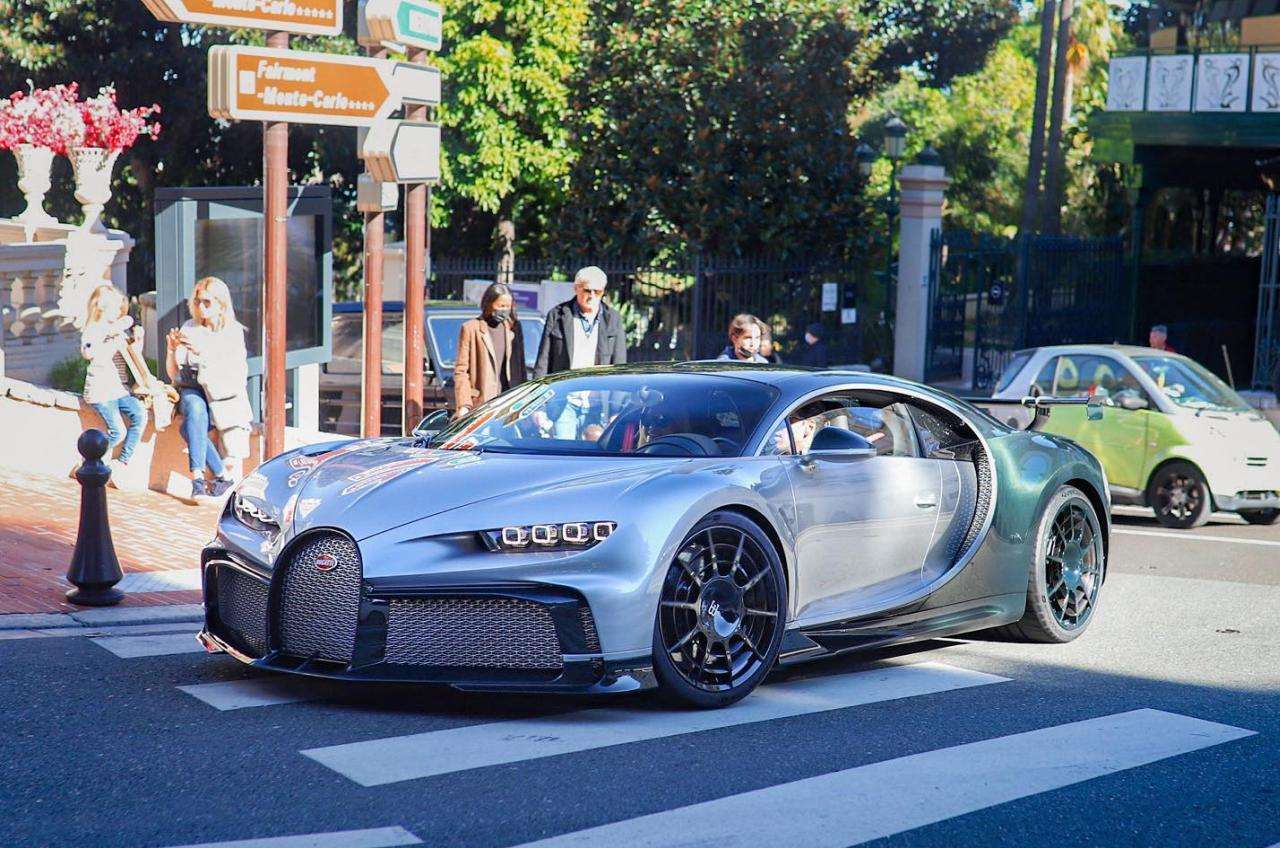
Adrian Sutil is known for his flamboyant lifestyle and is often spotted driving his hypercars in Monaco. He owns the Bugatti Chiron Pur Sport ‘Green Rhapsody’, Bugatti Veyron Rembrandt, Mercedes SLR Stirling Moss and a Koenigsegg Regera.
Turn your next vacation into an adventure. The following destinations put campers in some of North America’s most exciting spots for boating, hiking, biking, fishing, and more. Keep your eyes on this page for more adventures.
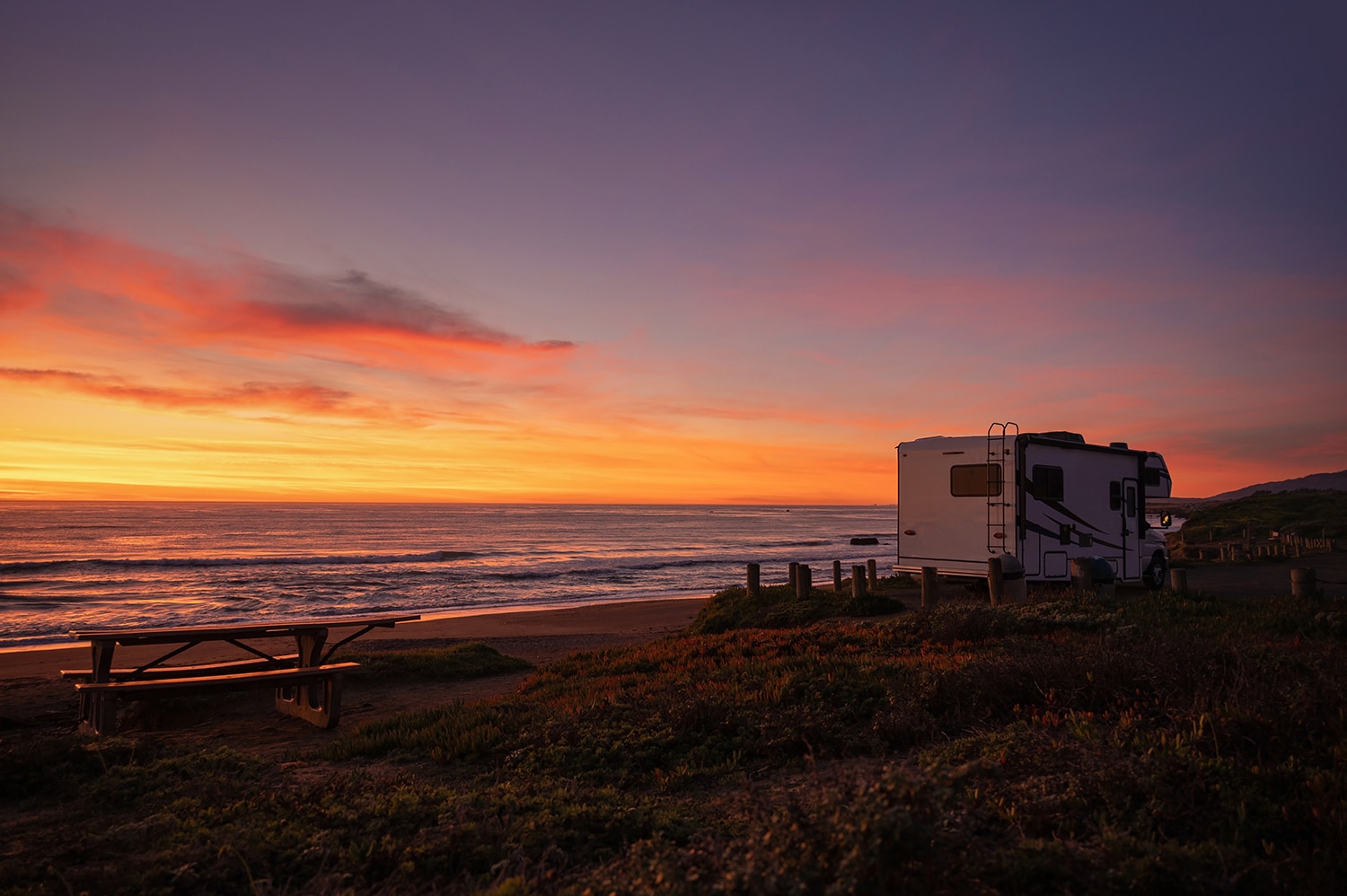
Motorhome campsite near the lake on early morning late in the season.
31 Must-Visit Waterfront Campgrounds
Before you know it, summer will bring warm temperatures and clear skies across North America. Have you planned your warm-weather escape? Find ample diversions, from fishing to boating, along America’s scenic coastal areas.
Seascape at dawn on Cape Cod in the fall
Check out this roundup of coastal destinations here, and make your reservations today. The RV parks listed in this article put guests near the water’s edge of some of the most gorgeous lakes, rivers, and ocean shorelines. Follow our guide on what to bring and plan your trip.
We’ll cover more adventures in the coming months:
Watch the Spring Eclipse
See the Sun Disappear Marvel at an astronomical phenomenon across North America.
April: Plot a Course for Alaska
Journey to the Last Frontier Bask in the Midnight Sun and marvel at larger-than-life glaciers.
Camping in the Shadow See the eclipse from a perfectly positioned campground.
Epic Fishing and Boating Haul in huge salmon or watch orcas defy gravity. Adventures are endless here.
July: Prep for Fall Color Trips
Crimson and Gold Forests Explore top spots for the time-honored pastime of “leaf peeping.”
September: Embark on Wild Fun
Explore Untamed Landscapes From river rafting to mountain biking, America’s wide-open spaces invite thrill seekers.
Colorful Camping Stay at a campground that’s bathed in vibrant autumn hues.
Legendary Base Camps Camp in places like Sedona, Kalispell, and Moab, steps away from thrilling fun.
November: National Parks
Nature and History Preserved Pay a visit to some of America’s most cherished treasures.
Camp Close to National Parks Stay under clear skies near one of America’s finest national parks.
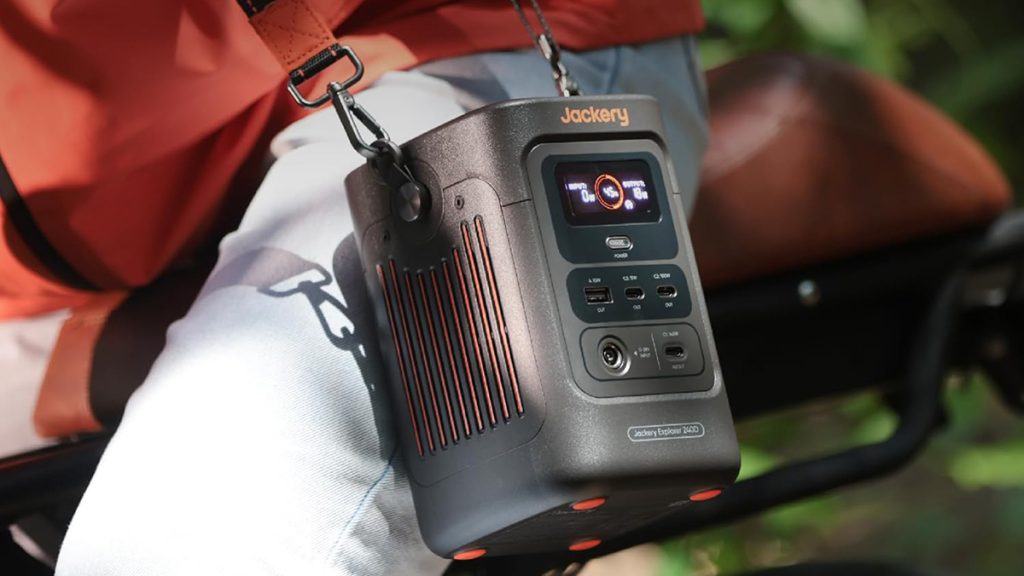
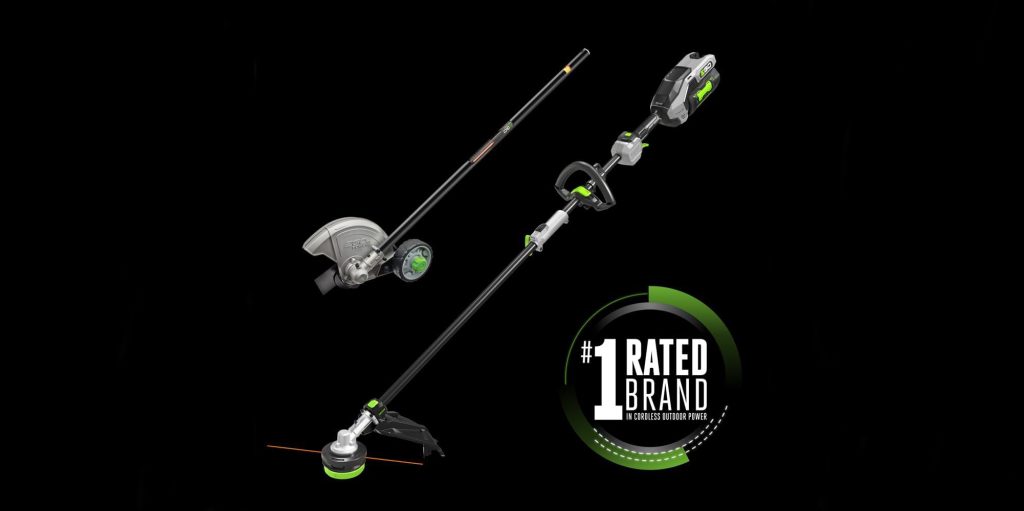
Thanksgiving may be over, but that just means we’re moving into Cyber Monday savings! Today’s Green Deals are jam-packed with power station and e-bike savings, in particular, led by EcoFlow’s latest DELTA Pro Ultra X Portable Whole-Home Backup Power Station (as well as 18 additional series offers) with up to $13,289 exclusive savings to new low prices starting from $174 – plus, EcoFlow’s DELTA Pro Ultra solar bundle and the brand’s latest flash sale. From there, we have a rare sale from MOD Bikes, with the Easy 3 Cruiser e-bike back at a $2,199 low, among others, as well as Lectric’s Cyber Monday Sale, and new low prices on units from Anker SOLIX, Jackery, an EGO Multi-Head combo, and much more waiting for you below. And don’t forget about the hangover deals from last week alongside the latest deals from this week that are collected together in our Black Friday/Cyber Monday Green Deals hub, which we will continue to update through the rest of the week.
Head below for other New Green Deals we’ve found today and, of course, Electrek’s best EV buying and leasing deals. Also, check out the new Electrek Tesla Shop for the best deals on Tesla accessories.
Score up to $13,289 exclusive Cyber Monday savings on EcoFlow’s DELTA Pro Ultra X power station + bundles, more from $174
For Cyber Monday, we’ve secured a very special exclusive code from Wellbots that saves our readers an additional 10% on a large selection of offers on EcoFlow’s latest (and largest) backup power solution, with the DELTA Pro Ultra X Portable Power Station (1x inverter + 2x batteries) for $7,199.10 shipped, after using the exclusive code 9TO5CMDPUX at checkout. This is the latest release from the brand, having opened for pre-sale discounts mid-October and officially hitting the market at the top of November carrying a $10,597 MSRP, which starts off lower at $8,299 here at Wellbots. Aside from the initial $1,000 pre-sale promotional discount, we’ve only seen this model taken down to $7,999 in early and full Black Friday sales from the brand, with this exclusive deal giving you a larger-than-ever, combined $1,100 off Wellbots’ starting rate ($3,398 off its MSRP) for the lowest price we have tracked. Head below to learn more about it and check out the 18 other offers for this system.
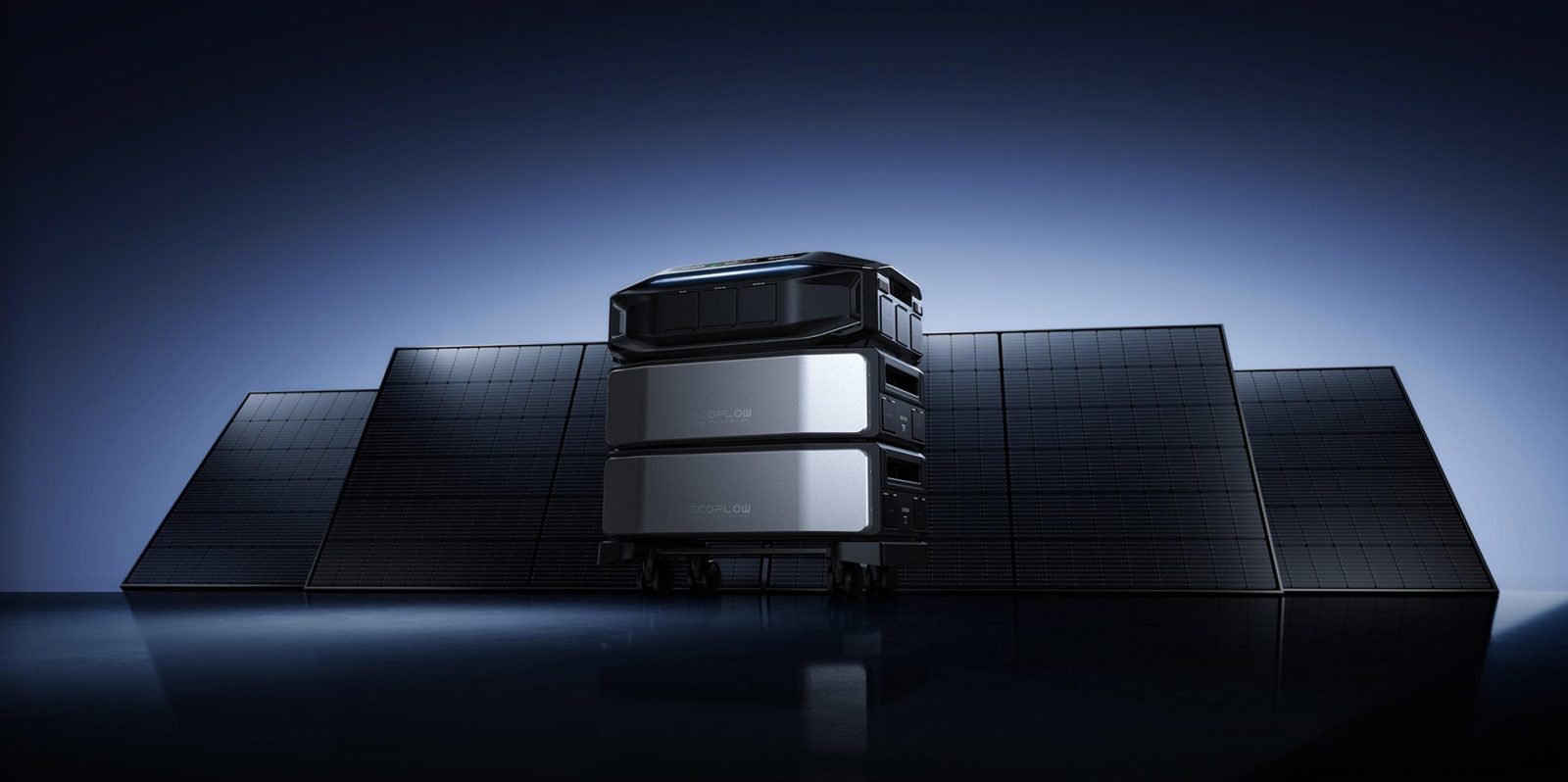
The EcoFlow DELTA Pro Ultra X power station is an even more capable home backup solution than its predecessor, starting with a 12,288Wh LiFePO4 battery capacity that can expand to 180kWh, which is twice as large a maximum as its predecessor’s final expanded capacity. Its power output also expands along with the system, going from 12,000W to 36,000W, complete with all the port options you could need to power devices, appliances, RVs, EVs, and much more. Among those options, you’ll also gain the greatest of the brand’s home backup capabilities here when paired alongside the Smart Home Panel 3 (which is included amongst the offers below).
Advertisement – scroll for more content
You’ll have plenty of options to recharge the station, including the usual AC outlet option, as well as with up to its 10,000W solar input max, gas generators, with a level 2 EV charging station, and through a Smart Home Panel from the grid or solar – or both simultaneously. Speaking of the Smart Home Panel 3, it’s a 200A hub for your home systems that covers up to 32 different circuits once installed, giving you emergency options to cut non-essential loads across your home should the grid ever go down unexpectedly.
***Note: Be sure to use the exclusive code 9TO5CMDPUX at checkout to score the additional 10% discount that gives you the prices seen below.
Exclusive Wellbots EcoFlow DELTA Pro Ultra X deals:
FlowMaster Generator Rectifier: $175 (Reg. $209)
DELTA Pro Ultra X (6,144Wh) Extra Battery: $1,979 (Reg. $2,799)
Smart Home Panel 3: $2,699 (Reg. $3,599)
DELTA Pro Ultra X Inverter: $3,239 (Reg. $3,899)
2x DELTA Pro Ultra X Extra Batteries (6,144Wh each): $3,958 (Reg. $6,598)
3x DELTA Pro Ultra X Extra Batteries (6,144Wh each): $5,759 (Reg. $9,897)
DELTA Pro Ultra X (12,288Wh) power station: $7,199 (Reg. $8,299)
4x DELTA Pro Ultra X Extra Batteries (6,144Wh each): $7,970 (Reg. $13,196)
DELTA Pro Ultra X (12,288Wh) with 4x 400W solar panels: $8,189 (Reg. $12,595)
DELTA Pro Ultra X (18,432Wh) with 3x batteries: $8,774 (Reg. $13,896)
DELTA Pro Ultra X (12,288Wh) with Smart Home Panel 3: $9,899 (Reg. $13,896)
5x DELTA Pro Ultra X Extra Batteries (6,144Wh each): $10,111 (Reg. $16,495)
DELTA Pro Ultra X (18,432Wh) with 3x batteries and 4x 400W panels: $10,258 (Reg. $18,692)
6x DELTA Pro Ultra X Extra Batteries (6,144Wh each): $12,864 (Reg. $19,794)
7x DELTA Pro Ultra X Extra Batteries (6,144Wh each): $15,074 (Reg. $23,093)
2x DELTA Pro Ultra X (12,288Wh each) stations with Smart Home Panel 3: $16,919 (Reg. $24,493)
8x DELTA Pro Ultra X Extra Batteries (6,144Wh each): $17,009 (Reg. $24,999)
9x DELTA Pro Ultra X Extra Batteries (6,144Wh each): $18,809 (Reg. $26,999)
10x DELTA Pro Ultra X Extra Batteries (6,144Wh each): $19,701 (Reg. $32,990)
MOD Bikes offers rare Black Friday/Cyber Monday e-bike discounts to lows starting from $1,799 (Up to $400 off)
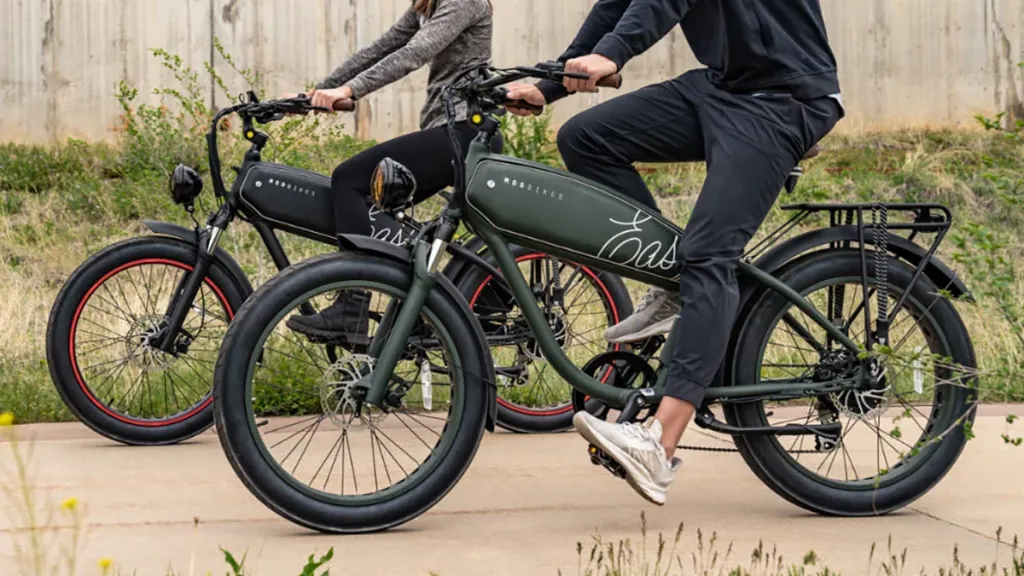
It’s the final day of MOD Bikes’ Black Friday/Cyber Monday Sale event with up to $400 rare discounts across its e-bike lineup, including one of my favorite rides of all time: the Easy 3 Cruiser e-bike at $2,199 shipped. There are also its sidecar counterparts, the Easy 3 SideCar e-bike at $3,499 shipped and the newer Easy SideCar Sahara also at $3,499 shipped – both down from $3,899. The standard Easy 3 e-bike dropped from its $3,499 MSRP to $2,399 during last year’s Black Friday season, which we stopped seeing the brand offer discounts for (alongside its entire lineup) back in spring, likely due to tariffs, but we’re getting a rare discount to its lowest tracked price here today, saving you $200 (and $400 off the SideCar variants to their lowest prices).
You learn more below and browse the entire sale lineup, as well as get my in-depth experience in my hands-on review here.
If you want to learn more about this particular model, you can get an in-depth experience in our hands-on review here, or check out our coverage of the full sale lineup here.
Get EcoFlow’s DELTA Pro Ultra power station + a FREE 400W solar panel at a new $3,449 Cyber Monday low ($2,350 off)
With Cyber Monday in full swing, over at Wellbots you can score the DELTA Pro Ultra Portable Whole-Home Backup Power Station with FREE 400W solar panel for $3,449.08 shipped, after using the code ECOBF8 at checkout, beating out the brand’s direct sale pricing that would cost you $4,178 with the event’s extra savings code. This monstrous bundle is dropping down from its $5,799 full price to $3,749, which already starts $50 under the previous low, but the deal gets all the sweeter thanks to the additional $300 that the extra savings code gets you. That’s $2,350 in total Cyber Monday savings, landing it at a new all-time low price.
You can learn more about this whole-home backup power solution in our original coverage of this deal here.
Best Fall EV deals!
Velotric Nomad 2X e-bike (camo) with DELTA 3 Plus station: $3,048 (Reg. $3,298)
Velotric Nomad 2X e-bike (sage or fig) with DELTA 3 Plus station: $2,948 (Reg. $3,298)
Lectric XP4 Standard Folding Utility e-bikes with $326 bundle: $999 (Reg. $1,325)
Lectric XP Lite 2.0 Long-Range e-bikes with $449 bundles: $999 (Reg. $1,448)
Heybike Mars 2.0 Folding Fat-Tire e-bike with Black Friday gift: $999 (Reg. $1,499)
Heybike Ranger S Folding Fat-Tire e-bike with Black Friday gift: $999 (Reg. $1,499)
Segway E3 Pro Electric Scooter: $500 (Reg. $700)
Best new Green Deals landing this week
The savings this week are also continuing to a collection of other markdowns. To the same tune as the offers above, these all help you take a more energy-conscious approach to your routine. Winter means you can lock in even better off-season price cuts on electric tools for the lawn while saving on EVs and tons of other gear.
FTC: We use income earning auto affiliate links. More.
Nvidia invested $2bn in Synopsys common stock at US$414.79 per share as part of a multi-year AI collaboration
Nvidia and Synopsys have announced an expanded strategic partnership to integrate AI and accelerated computing with engineering solutions for research and development teams across semiconductor, aerospace, automotive and industrial sectors. Nvidia invested US$2bn in Synopsys common stock at US$414.79 per share as part of the multi-year collaboration focused on CUDA accelerated computing, agentic and physical AI, and Omniverse digital twins to deliver simulation capabilities at speed and scale beyond traditional CPU computing.
The partnership includes joint development initiatives to accelerate Synopsys applications using Nvidia CUDA-X libraries and AI-Physics technologies across chip design, verification, molecular simulations and electromagnetic analysis. The companies will integrate Synopsys AgentEngineer technology with Nvidia’s agentic AI technology stack including NIM microservices and NeMo Agent Toolkit software for autonomous design capabilities in electronic design automation and simulation workflows.
Nvidia and Synopsys will collaborate on digital twins using Omniverse and Cosmos technologies for industries including semiconductor, robotics, aerospace and automotive. The companies plan to enable cloud access for GPU-accelerated engineering solutions and develop joint go-to-market initiatives utilizing Synopsys’ global network of sellers and channel partners.
“CUDA GPU-accelerated computing is revolutionizing design – enabling simulation at unprecedented speed and scale, from atoms to transistors, from chips to complete systems, creating fully functional digital twins inside the computer,” Jensen Huang, Founder and Chief Executive Officer of Nvidia, said. “Our partnership with Synopsys harnesses the power of Nvidia accelerated computing and AI to reimagine engineering and design.”
Sassine Ghazi, President and Chief Executive Officer of Synopsys, added: “The complexity and cost of developing next-generation intelligent systems demands engineering solutions with a deeper integration of electronics and physics, accelerated by AI capabilities and compute.”
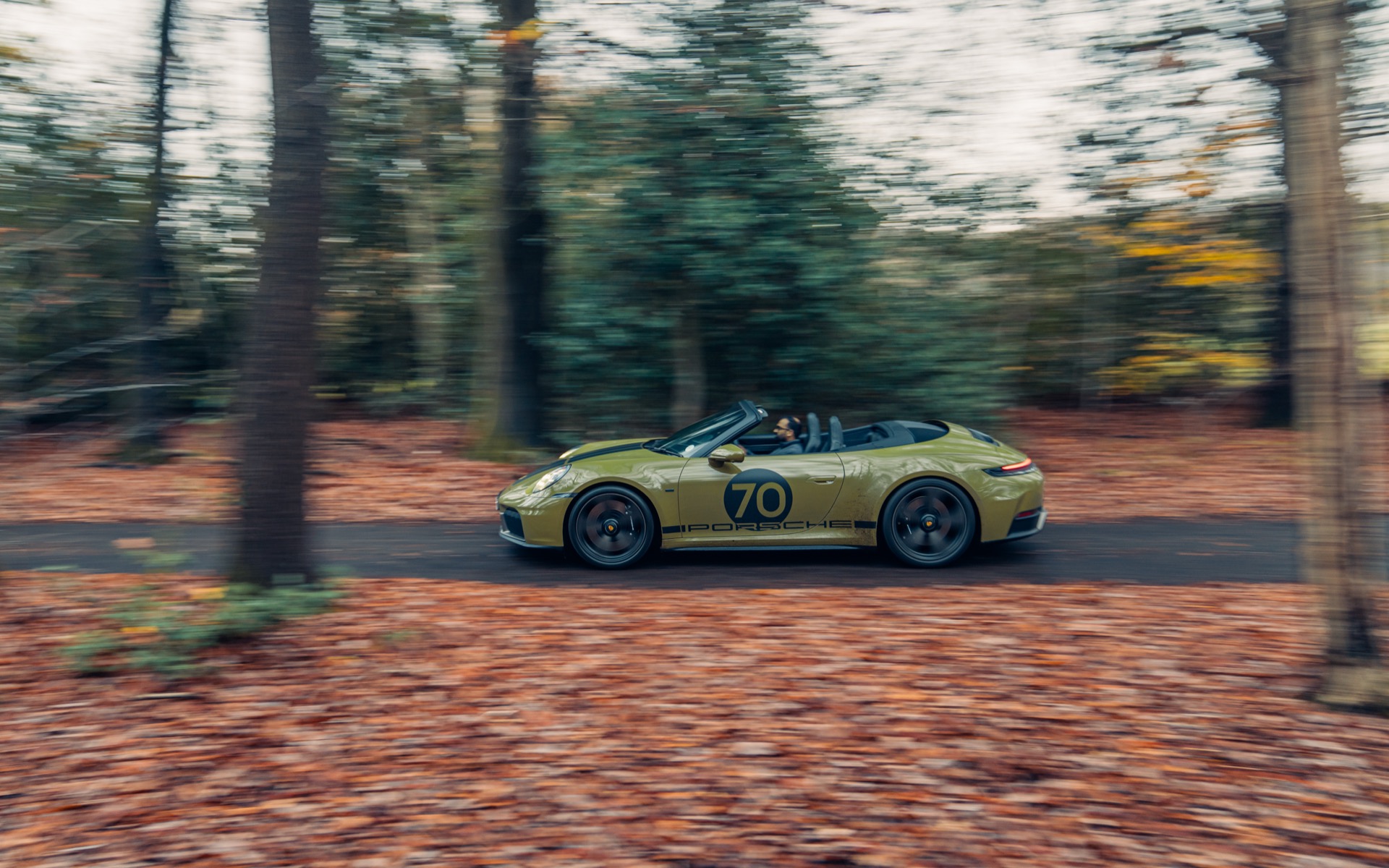
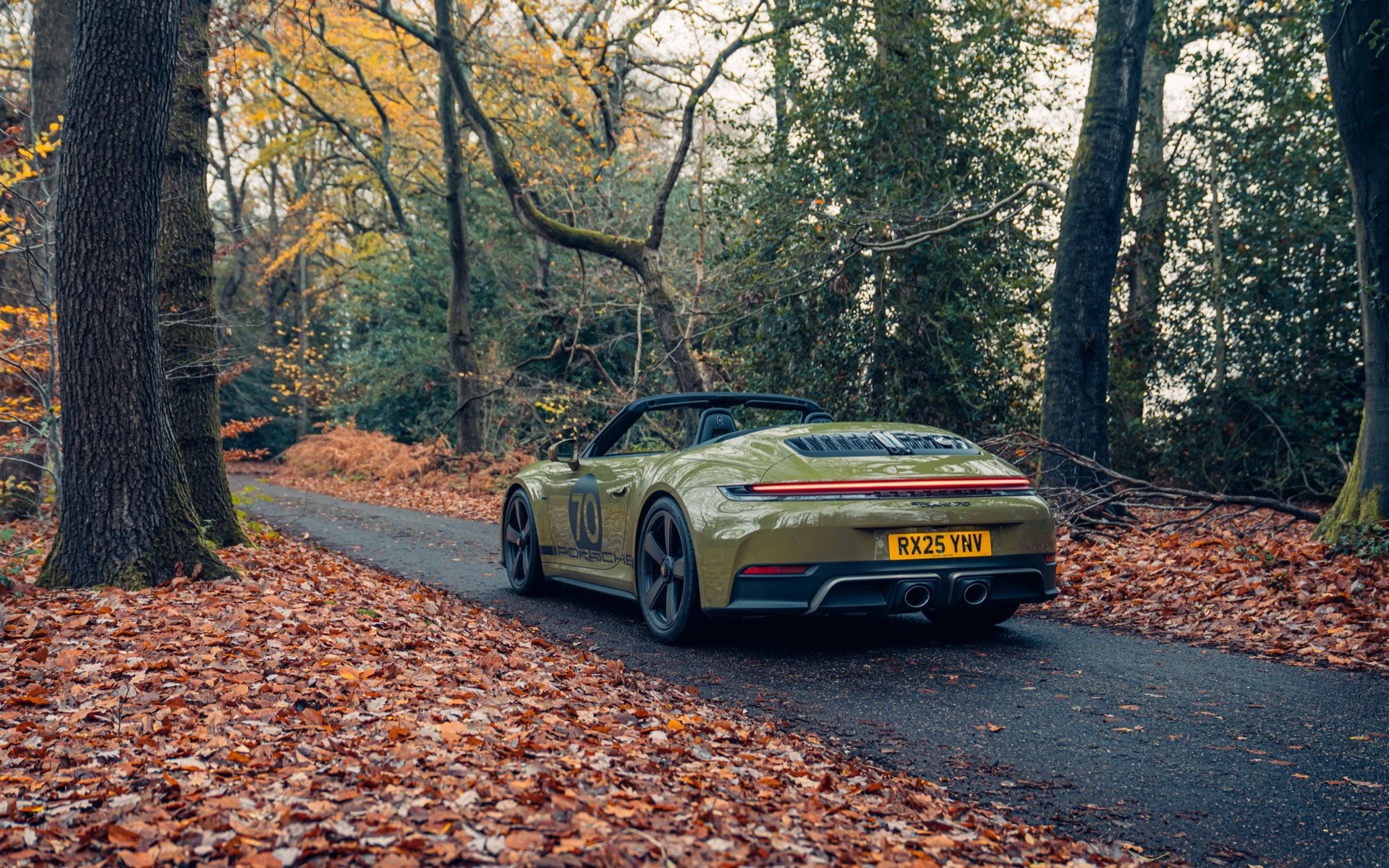
Oh look, another 911! Well yes, but this one is a little different. The Porsche 911 Spirit 70 takes its brief straight from the late 1970s, then executes it with contemporary build quality. Created by Porsche Exclusive Manufaktur, it is a design-led edition that marries period colour, graphics and materials with the performance and technology of today’s 992.2 Porsche 911 GTS. The exterior theme references the era with coordinated paint, liveries and badging that read as curated rather than loud. Wheel finishes and trim details are chosen to complement the palette, avoiding pastiche while clearly signalling the inspiration. It looks retro at a glance, yet remains unmistakably a modern 911 in proportion and stance. And you wont miss those decals!
Inside, the Heritage Design intent is even clearer. Seat centres and door cards adopt period-inspired fabrics, paired with coordinated leathers and embossed crests. Switchgear, dials and plaques reinforce the narrative without compromising usability. It feels special from the moment you drop into the sports seats, with that familiar 911 driving position that places you low, centred and connected. The result is theatre you can live with every day. Crucially, fit and finish match series-production standards because the cars are built within Porsche’s factory processes.
Underneath the styling sits the latest 992.2 hardware. The Spirit 70 specification aligns with the GTS T-Hybrid’s broad capability, delivering instant response and seamless drive out of corners. The chassis keys into the front axle cleanly, then pushes hard on the rear in a way that still feels classically 911, albeit with a hybrid punch. Roof-down, the experience gains another layer, with more sound and more sense of occasion.
The 992.2 GTS T-Hybrid develops 533 bhp and 610 Nm from its 3.6-litre single-turbo flat-six with integrated e-motor. Officially it sprints 0–100 km/h in 3.0 seconds and reaches 312 km/h. Independent testing has found even quicker numbers, and it feels every bit as quick. What matters on the road is the torque fill: the e-motor stacks response from low revs, so the car feels keener in everyday throttle applications and punches harder out of slow corners.
It’s a package that is deeply impressive, and the Exclusive Manufaktur touches heighten the visual impact.
Exclusive Manufaktur should not be confused with the Sonderwunsch programme, both serve different missions, and Spirit 70 makes that distinction clear. Exclusive Manufaktur delivers factory-defined special editions with coherent themes and full type approval. Sonderwunsch is the route for deeper, co-created one-offs. Spirit 70 sits firmly in the former camp, yet carries the attitude of the latter. For buyers who want a modern 911 with a deliberate nod to Porsche’s late-’70s character, this edition hits the brief with authenticity.
The ultimate holiday destination to indulge in the splendour of the sun and the seas is none other than island paradise Bali. While the mystic island is dominated by many beautiful luxury resorts, the newest addition to the land is Seminyak’s first and only private beachfront villa. Called the Noku Beach House, this game changing retreat is perfectly perched on the Seminyak beachfront, once again raising the bar for lavish travel in Bali.
Noku Beach House – Seminyak’s Only Private Beachfront Villa
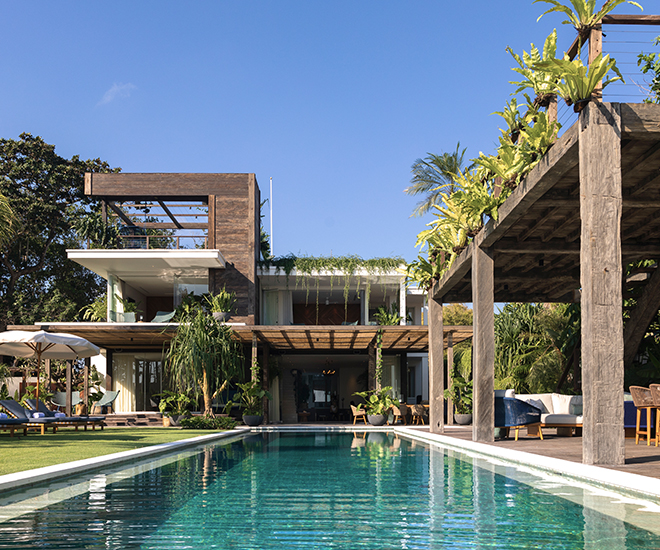
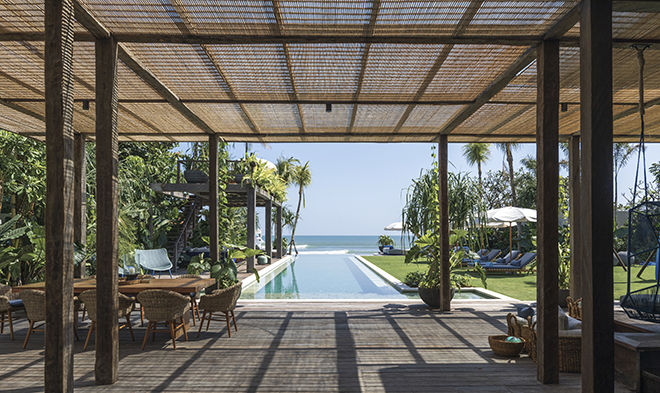
The six-suite mansion features a long azure swimming pool, multiple dining areas and alcoves amid curated tropical gardens and pristine lawns. A full-size portable tennis court – in Noku camouflage colours – available to roll out for a game at any time of the day. Upon entering the villa, guests are greeted by an exclusive spa boasting a pool adorned with hand-made decorative tiles as the building centrepiece, creating a lush tropical oasis looking over the Indian Ocean and Bali’s famed sunsets.
Noku Beach House is a rare place of privilege and a gem on Bali’s oceanfront. With a legion of highly skilled army of staff, car and driver, in-house personal concierge and a private chef operating discreetly to service, Noku Beach House is dedicated to the jet-setting crowd and anyone who appreciates the fine and dandy way of life. And all these are made possible with leading international luxury villa marketing and management company; Elite Havens who operates exclusively at the estate, aiming to deliver a lux villa experience that transcends all others.
Elite Havens secured the creative skills of award-winning interior designer Alex Zabotto-Bentley to bring to life this outstanding refurbishment on an essential part of Bali’s famous Seminyak beach landscape. Zabotto-Bentley has created a Zen-style space with a soothing colour palette of light turquoise and blue and paired it with Moroccan accents to add a touch of history and culture juxtapose against the modern interior. Bespoke art collection and furnishings such as the tribal beadwork, antique Indonesian artefacts and some of nature’s most exquisite designs fill the halls of the villa. Everything from plates to teapots has been artisanally crafted in tiny Balinese villages. The outside poolside dining and rooftop terrace is built from a 100-year-old pier from Borneo.
Guests will revel in the opulence of the estate dotted with deep sofas and multiple living zones and endless vistas of ocean and sky. From the six ensuite bedrooms to the balconies, every facility operates seamlessly, providing luxurious comfort to the indoor-outdoor experience in Noku. Exclusive toiletries are blended with the highest quality essential oils and the plastic minimisation policy has drinking water in Noku branded glass bottles – what a way to contribute to eco-friendliness and sustainability!
Noku Beach House can deliver a divinely intimate holiday as exquisitely as an event for more than 200 people. The estate is the premier property of the Noku brand set in Bali, which will blossom globally and organically.
For more information, visit theluxurysignature.com
For more on the latest in lifestyle, culture and travel reads, click here.