Not sure I would spend a dime for the M package. If I owned one the first thing I would do is take a heat gun to those black side decals. Geez BMW, didnt you solicit any prior feedback from customer test groups?
When you have listened to what BMW said about car clinics the last years, you would know they totally ‘inverse’ prospect buyers’ feedback.
Based on Adrians’ interviews, you could conclude that BMW developped somekind of ‘cognitive dissonance’ about it: When prospects where happy with what was shown, that proved that they were not innovating enough and they rejected the design. When there was much resent and critique, it proved they had it right and they categorised us as being conservative. It’s like this that they were convinced that beever grills where the way to go: most prospects hated it.
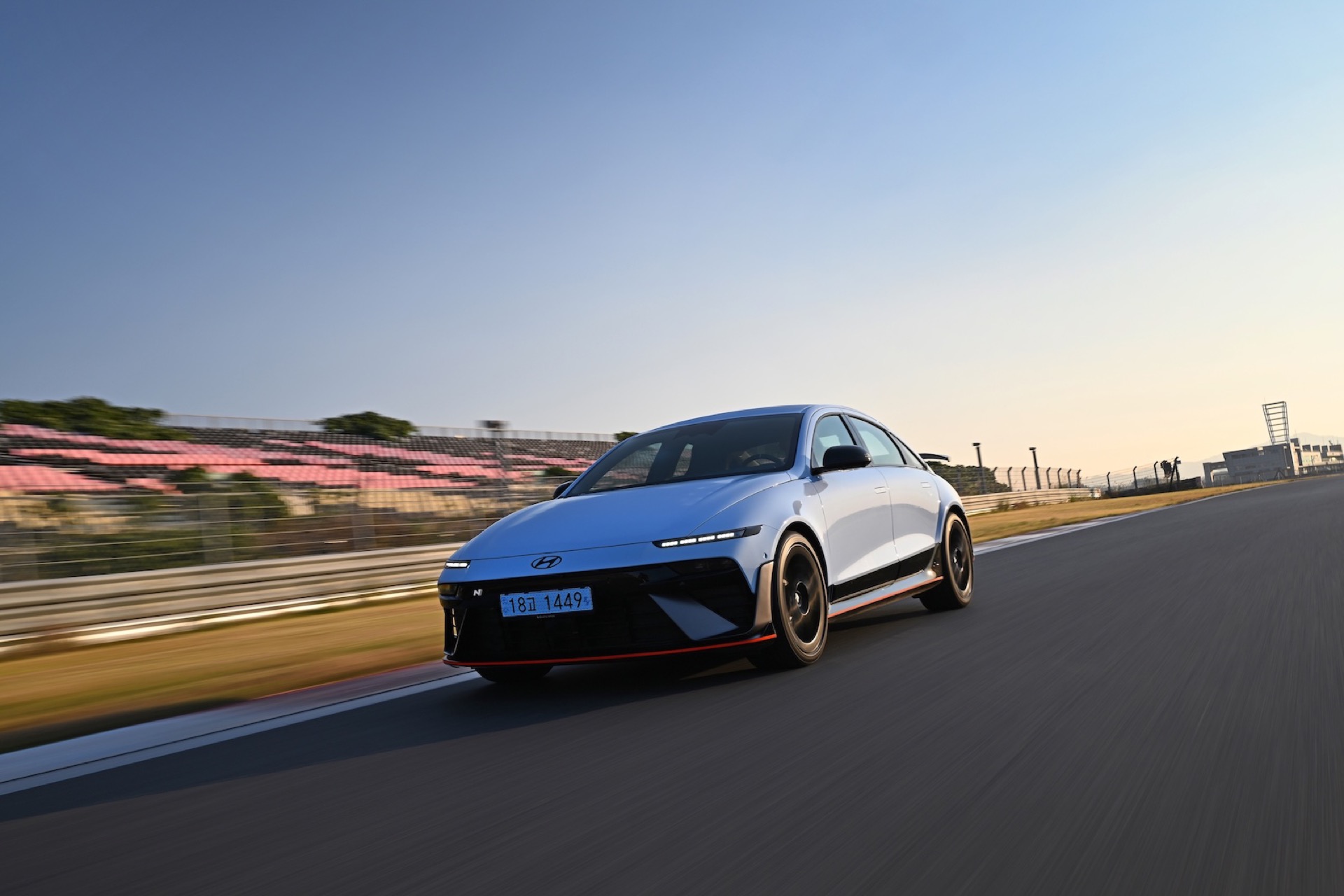
Electric cars are often accused of lacking emotion. But Hyundai’s Ioniq 6 N proves otherwise — delivering noise, grip and genuine driving fun.
Electric cars are quiet. That’s usually a good thing, especially for long-distance driving or when cruising through residential streets. But when it comes to excitement, silence can be a letdown. Noise is a core part of motorsport, after all. It’s no surprise that Formula E’s high-pitched whirring fails to inspire in the way that a V10 screaming through a street circuit does. Without sound, speed becomes abstract — and many electric performance cars fall short on drama.
That’s where the Hyundai Ioniq 6N steps in. With a top speed of 257 km/h, it’s already quick by EV standards. It sprints from 0–100 km/h in 3.2 seconds thanks to 448 kW (609 PS) of all-wheel-drive muscle — or up to 650 PS briefly in Boost mode. At around €77,000, it’s not cheap, but given the performance and standard equipment, it looks like a bargain. The similarly quick Porsche Taycan GTS starts at €148,800 before options. With Hyundai, only a handful of extras cost extra.
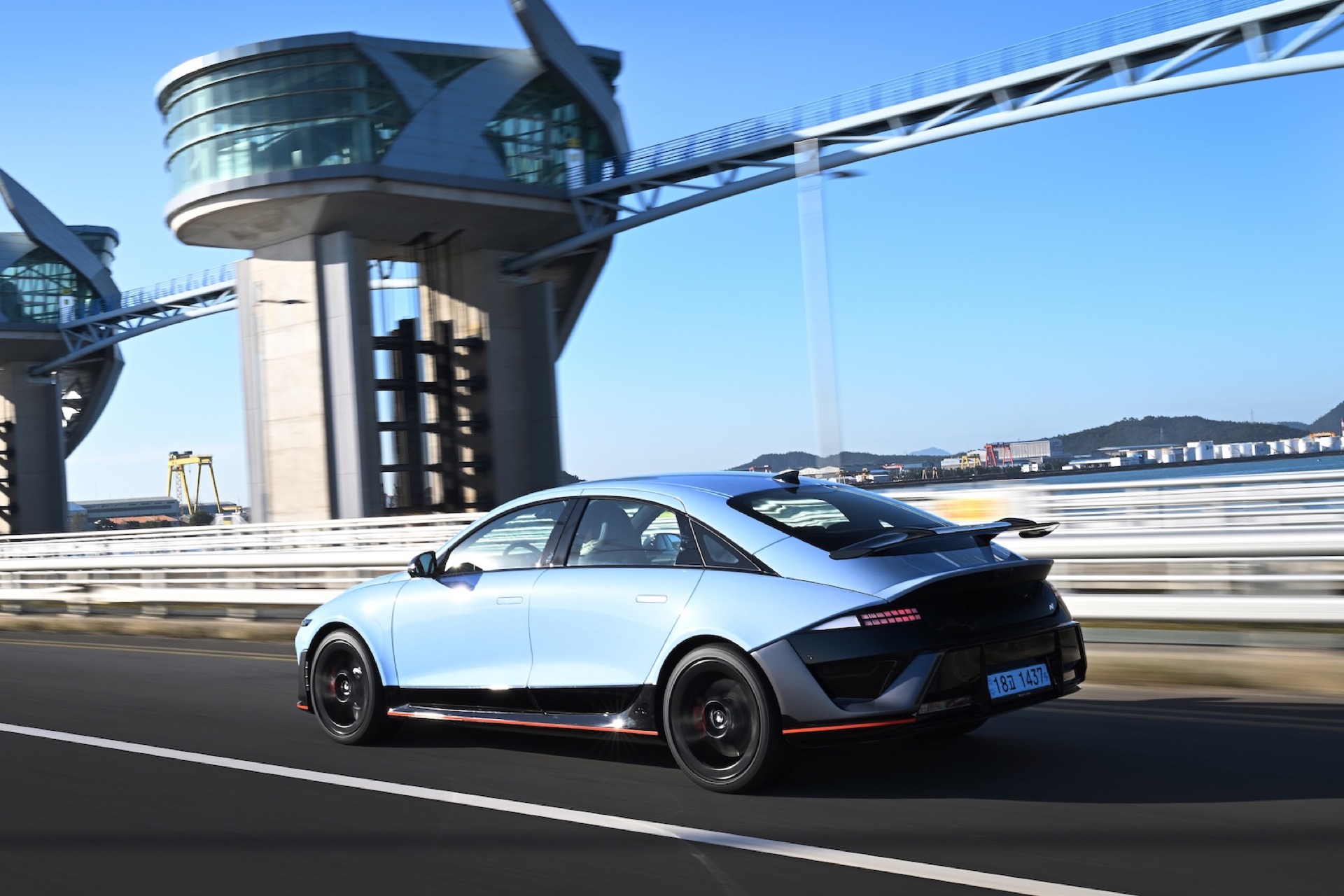
Both are four-door saloons. The Taycan is larger, but the Ioniq 6N still measures just under five metres and has a wheelbase of almost three metres, so cabin space is generous. The exterior, though, is more divisive than you’d expect from Hyundai. Its flowing, aerodynamic form is deliberately different — and in N trim it gets a black rear panel (regardless of body colour) and a dramatic swan-neck spoiler. Compared to those, the muscular wheel arches look subtle.
But this is no styling exercise. “We built it for real track driving,” says Manfred Harrer, head of Hyundai N’s performance division. That means proper cooling for battery and drivetrain, tested on the Nürburgring. Harrer makes the point clearly: “Power is easy these days. What matters is endurance, braking and cornering.”
So the Ioniq 6N gets large brake discs, variable pedal response depending on drive mode, and strong, confidence-inspiring deceleration. In the most aggressive setting, regenerative braking can reach 0.6 g — enough to feel the seatbelt tug when lifting off the throttle.
Underneath, it’s almost an entirely different car to the standard Ioniq 6. Suspension mountings have been reengineered and adaptive dampers added. The result is a lower centre of gravity — even lower than the Ioniq 5 N — and outstanding dynamics. On bumpy B-roads it’s compliant, while on circuit it stays flat and composed. It even absorbs kerbs with remarkable poise. Torque is split across all four wheels with a rear bias, and 770 Nm in total. A sophisticated torque vectoring system sharpens corner entry and exit, giving the driver real confidence.
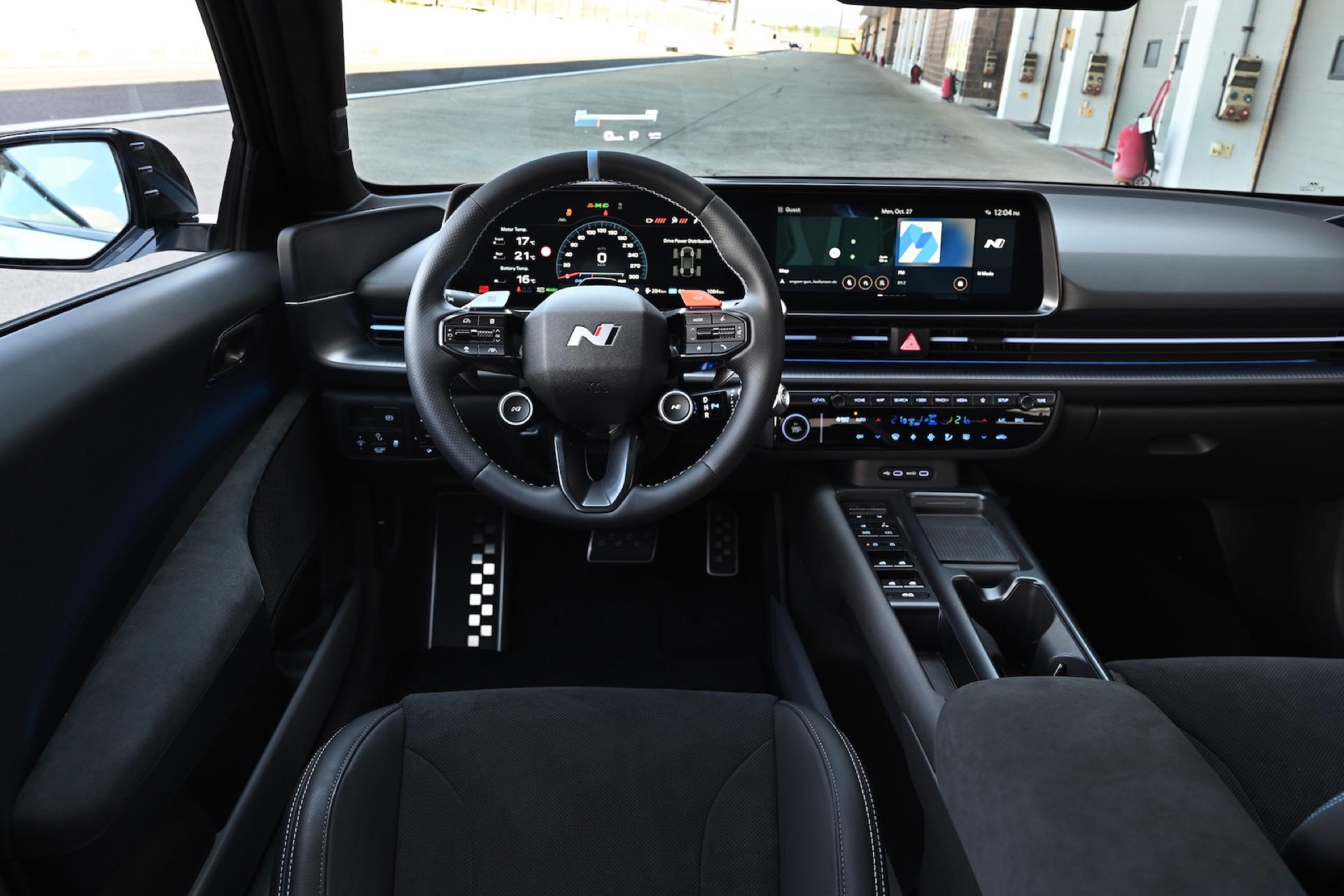
Until now, the Ioniq 6N is simply a fast car. But Hyundai wanted it to be fun too — and in that regard, it pulls off something the Taycan doesn’t. The secret is in its electronics, which transform it into a kind of rolling games console. Central to that is the sound module. It doesn’t make the car faster, but it makes it feel faster. The artificial engine note — raspy and raw — is more for the driver than pedestrians, but it adds character. Fortunately, it can be turned off if it becomes tiring.
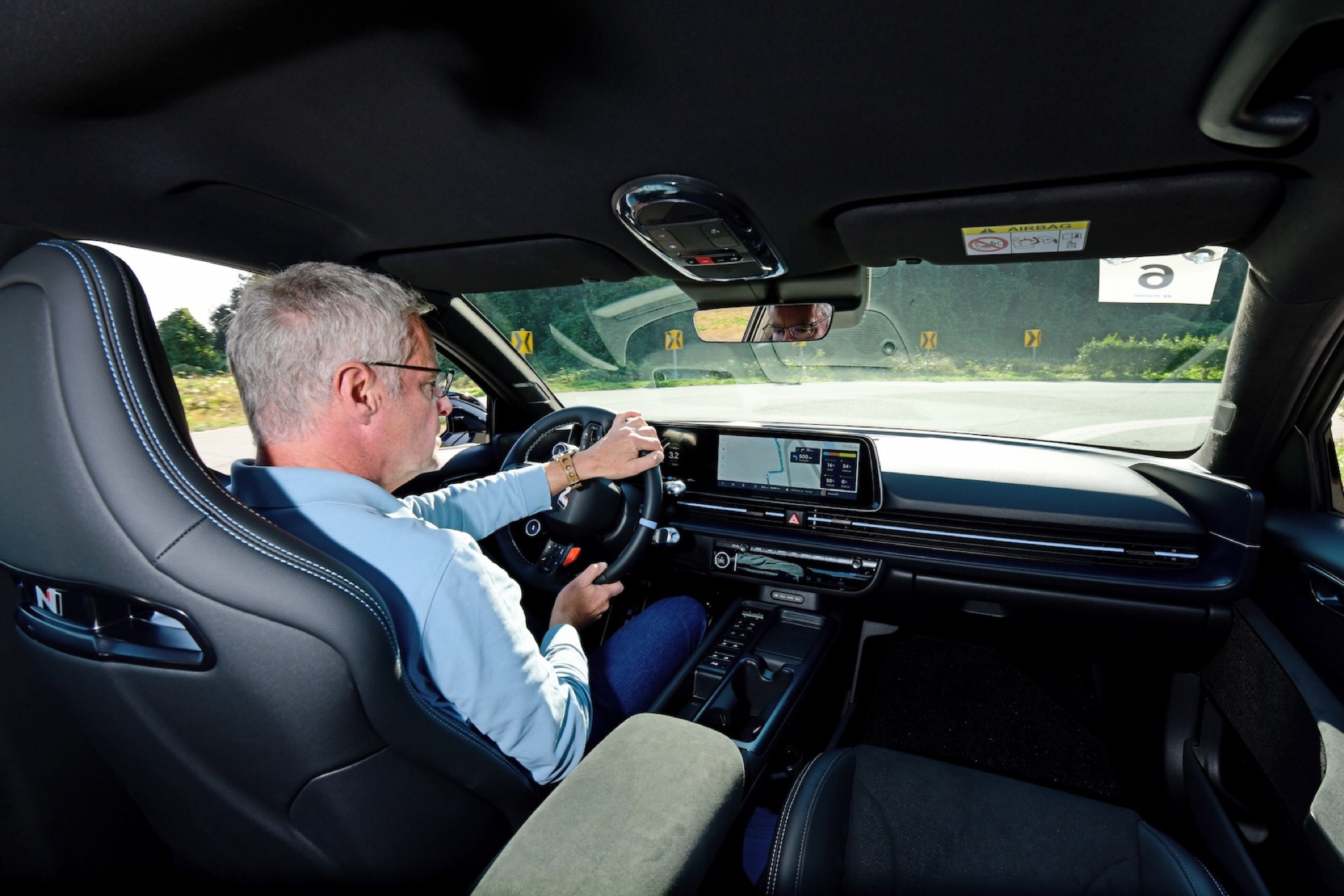
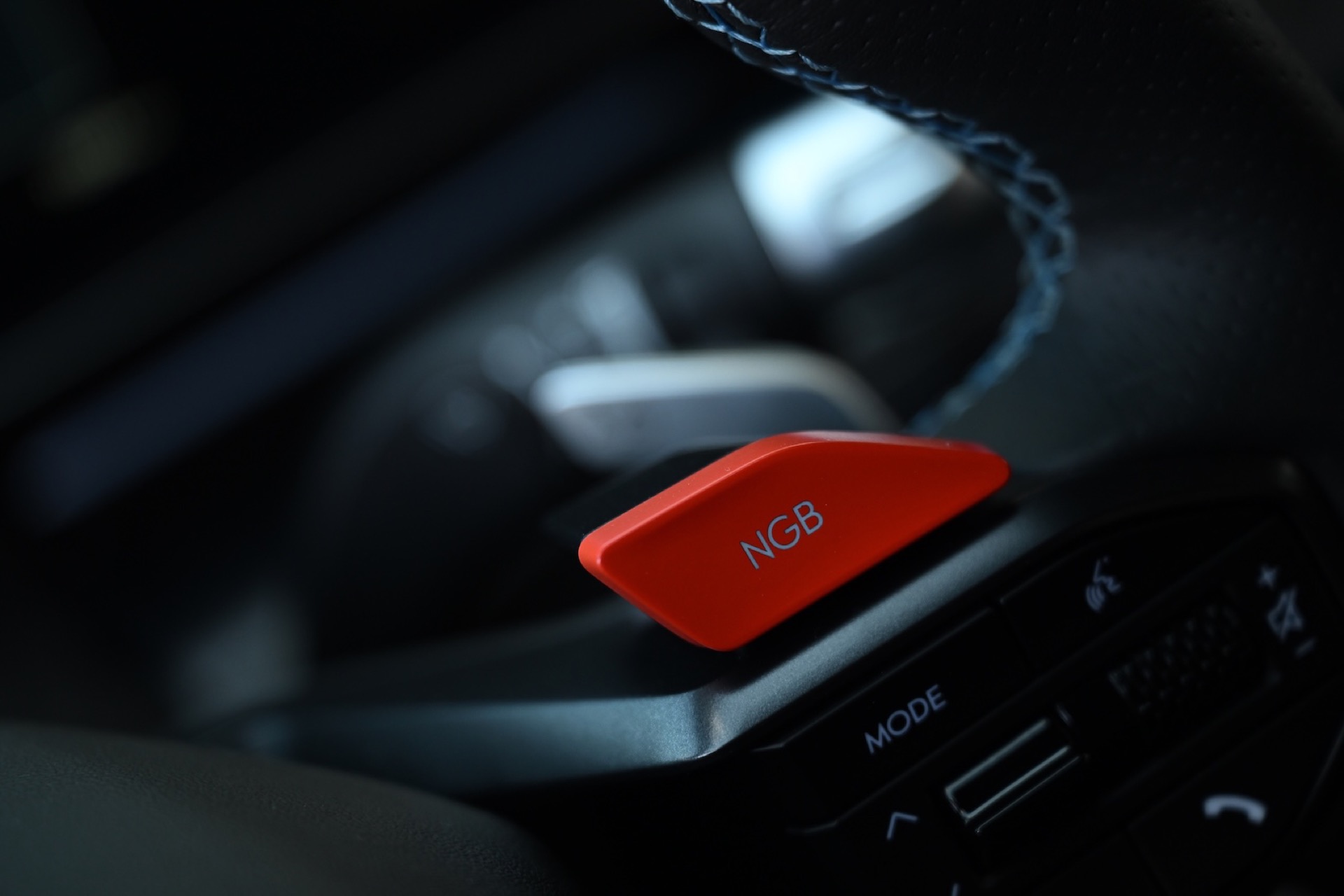
Then there’s N e-Shift, a virtual paddle-shift gearbox. It’s not technically necessary, but it mimics gear changes and adds interactivity — like a well-designed arcade game. The N Track Manager in the infotainment system adds even more depth. You get a ghost car on-screen to chase your previous lap, and drift parameters that help even novices slide with confidence. It’s nerdy, yes — but that’s the point.
At €77,000, it’s not a toy. But for under-30s who grew up racing virtual cars, the Ioniq 6N brings that digital world vividly into the real one. Think of it as a Taycan for the PlayStation generation — and in the best possible way.
IF YOU DON’T BELIEVE IN AN OFFSEASON, the best 4 season toy hauler RVs are built with you in mind. These RVs are designed for year-round camping, featuring upgraded insulation, enclosed and heated underbellies, and advanced climate control systems to handle more extreme temperatures.
Just remember—four-season doesn’t mean weather-proof. Your comfort still depends on your prep. Simple add-ons, such as RV skirting, heated hoses, or tank heaters, can help protect your systems and keep things cozy when temperatures drop.
Key Takeaways
Four-season toy haulers feature enhanced insulation, enclosed and heated underbellies, and advanced climate control systems—though add-ons like skirting, heated hoses, and tank heaters are still essential for extreme temperatures.
Top four-season models include the Forest River Wolf Pack, Jayco Seismic, Keystone Raptor and Carbon, Forest River Rogue Armored, Grand Design Momentum, Heartland Cyclone, and Forest River XLR Boost, all offering rugged insulation packages, heated systems, and versatile garage layouts for every season.
Leading insulated RV manufacturers stand out for their premium weather protection packages, making them top choices for RVers who want to camp comfortably in any climate.
What Are the Key Features of a 4 Season Toy Hauler?
Image by Camping World
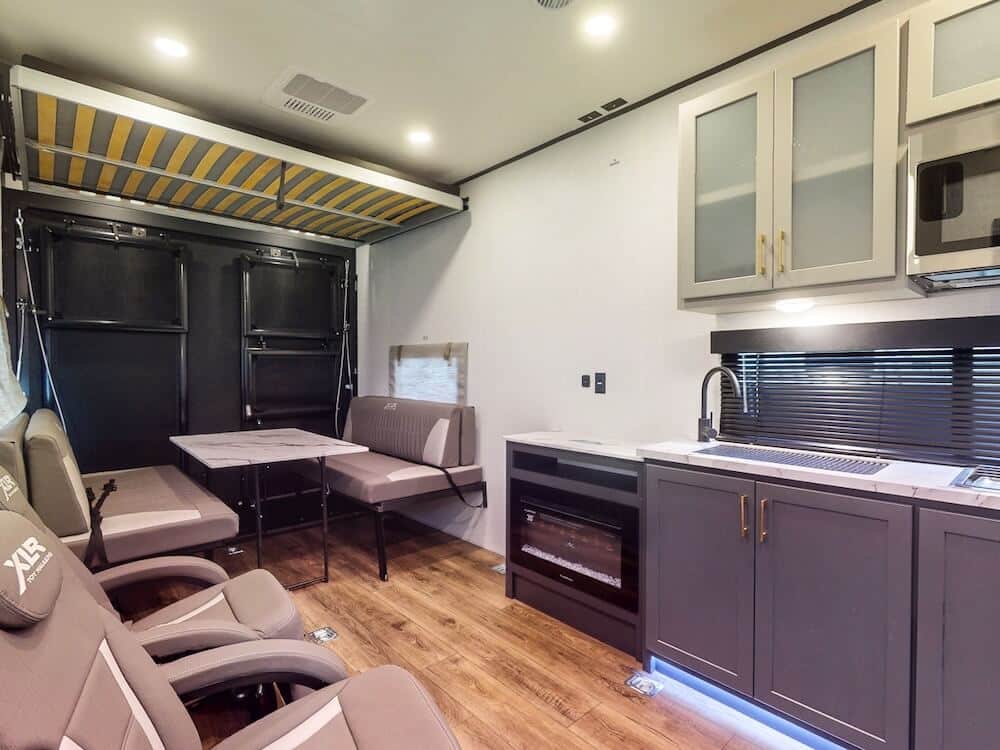
Four-season RVs are designed to withstand heat and cold. Weather protection packages vary by manufacturer, but common features of a 4 season toy hauler include added block foam or radiant barrier insulation, forced air heat to the underbelly and storage compartments, 12-volt heating pads on holding tanks, and high-output heating and cooling systems.
Because conditions vary by location, remember that you may still need extra precautions, such as RV skirting and heated hoses, to keep your RV and gear safe on extended-season adventures.
Best 4 Season Toy Hauler Brands
Ready to take your adventures year-round? Check out these 4-season-capable toy hauler RVs.
Forest River Wolf Pack
Images by Camping World
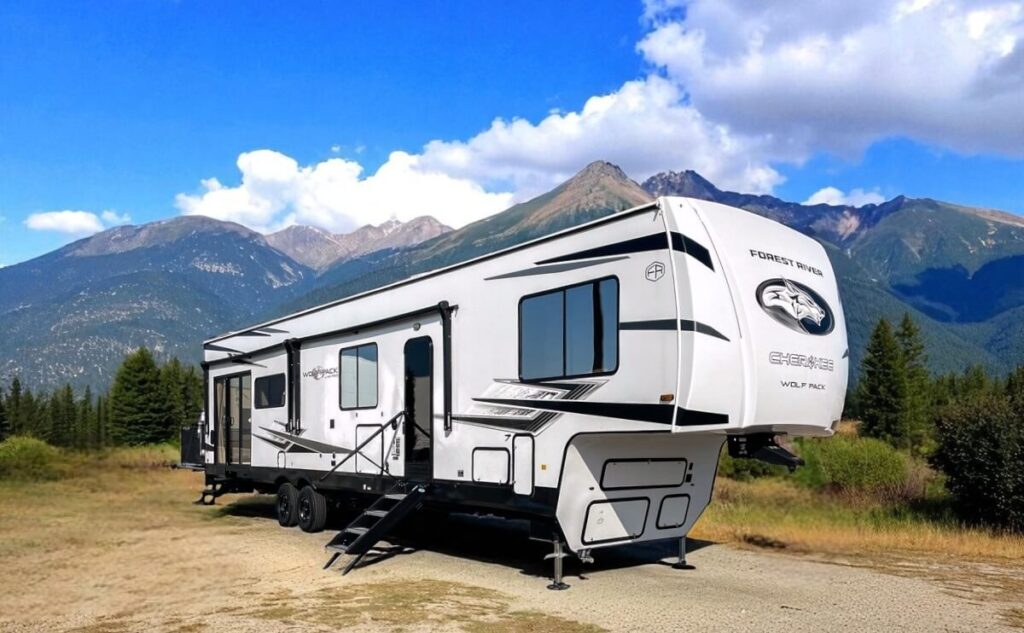
The Forest River Cherokee Wolf Pack combines rugged construction with innovative climate control features. Each 4 season toy hauler model features an enclosed and forced-air heated underbelly, along with 12-volt tank heat pads, to help protect plumbing and holding tanks in cold weather conditions.
The ducted heating and cooling systems enhance comfort in both the cold winter months and the warm summer months. Models with the Limited Package add even more cold-weather capability with features like a forced-air heated underbelly and 12-volt tank pad heaters, making the Wolf Pack a strong choice for extended-season travel.
Featured Floor Plans
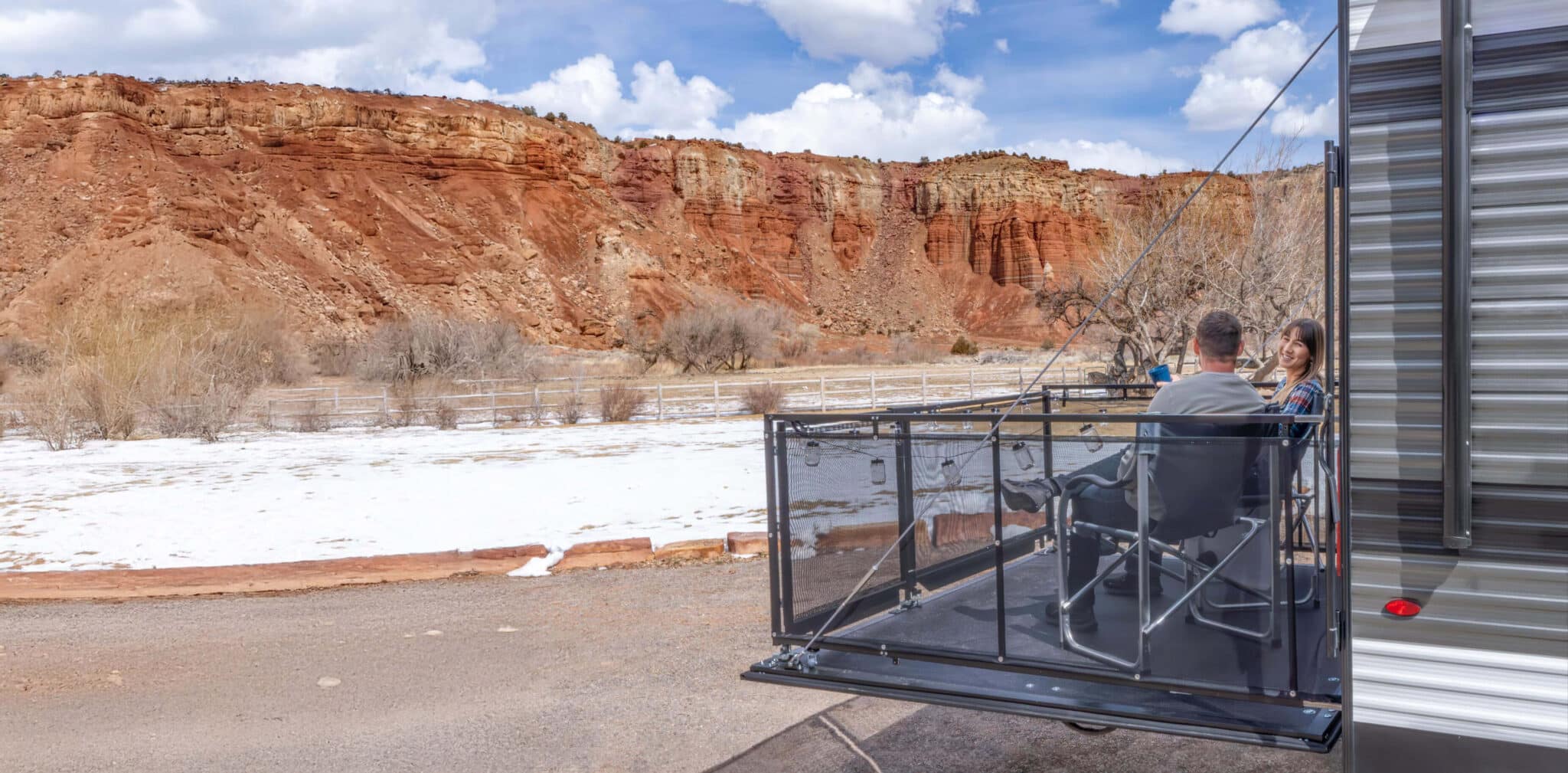
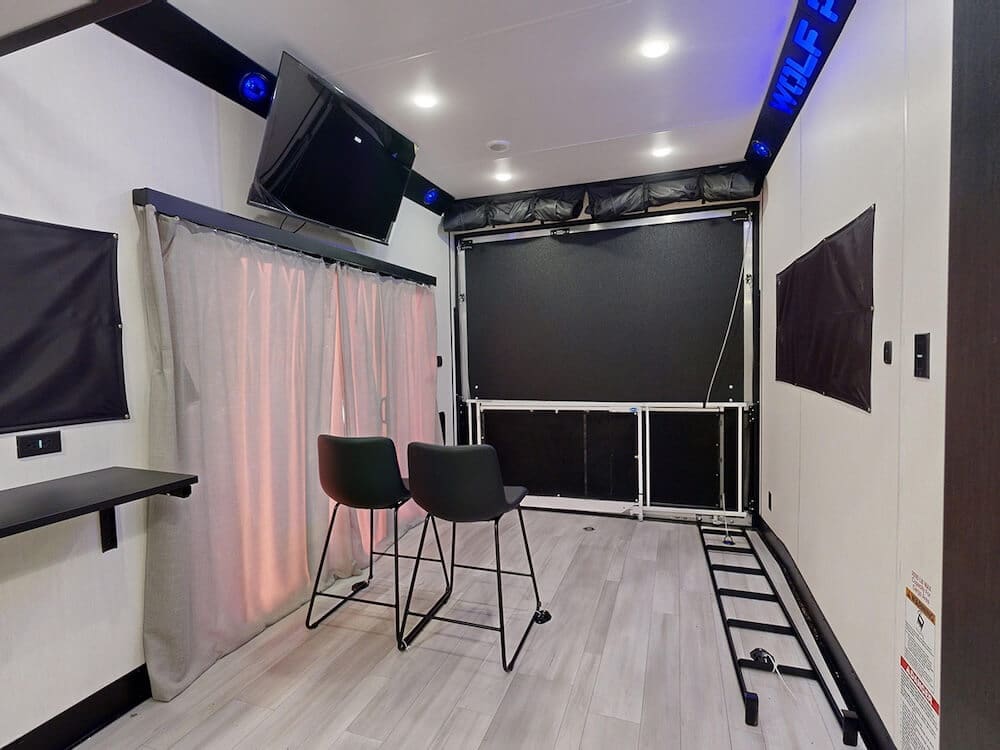
350PACK15 – This 45-foot floor plan features a spacious 15-foot garage with a flip-up desk, bar stool seating, and an optional Murphy bed system.
365PACK15.5 – This layout adds folding walls to create an optional half-bath in the 15’6” garage, in addition to a quick-set bed system and the flip-up bar top with stool seating.
25-14 – A more compact and easily towable option that still offers a functional 14-foot garage, a king-sized bed, and the same rugged construction features found across the Wolf Pack series.
27-12.5 – A mid-size model that balances interior space and towability, a king-sized bed, with a separate 12’6” garage featuring industrial rubber garage flooring.
411STAY – This expansive new floor plan features a loft above the garage, while the garage itself features a rare slide-out with a sofa across from a built-in entertainment center.
Jayco Seismic
Image by Camping World
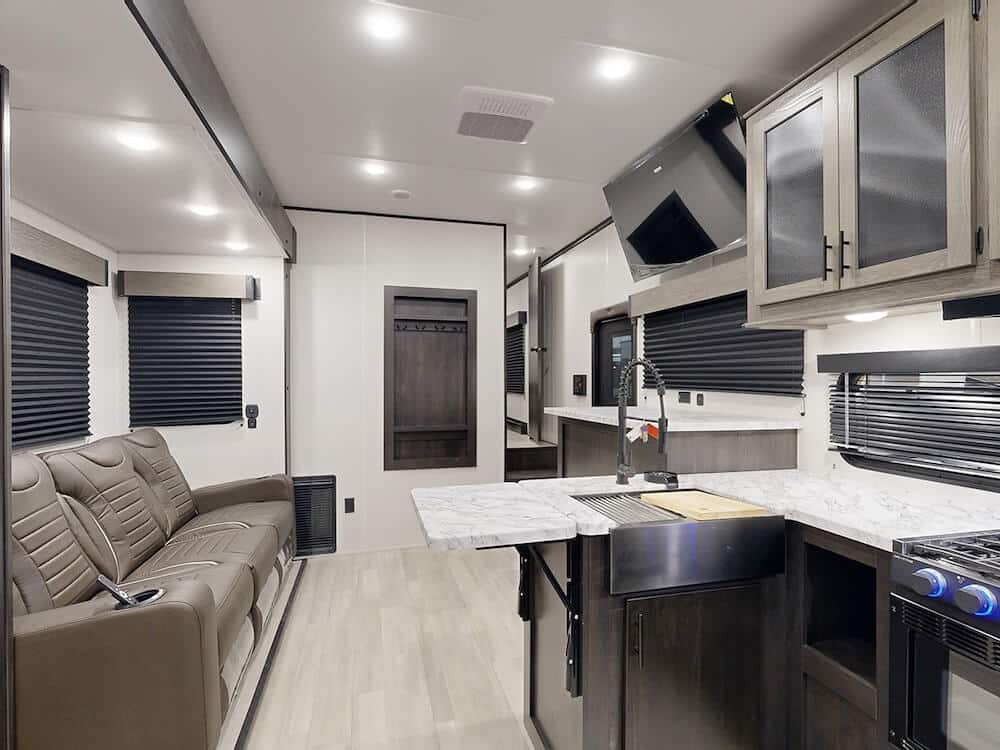
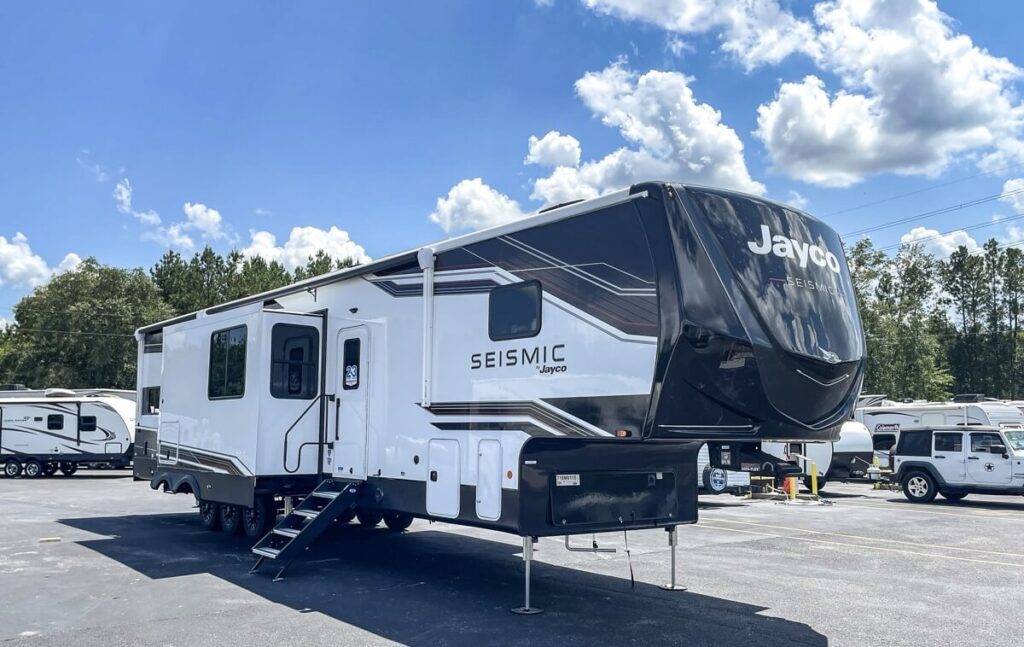
Whether you’re chasing fall colors in the mountains or sunshine on the coast, the Jayco Seismic delivers residential comfort with true four-season durability.
Its heated underbelly helps protect plumbing lines and holding tanks from freezing temperatures. Plus, layers of padded duct insulation, double fiberglass batt insulation, and radiant foil barriers work together to maintain a cozy interior.
And with the JAYCOMMAND® Smart RV System, you can control heating, cooling, and tank functions right from your phone—because comfort shouldn’t take a day off, even when the weather does.
Featured Floor Plans
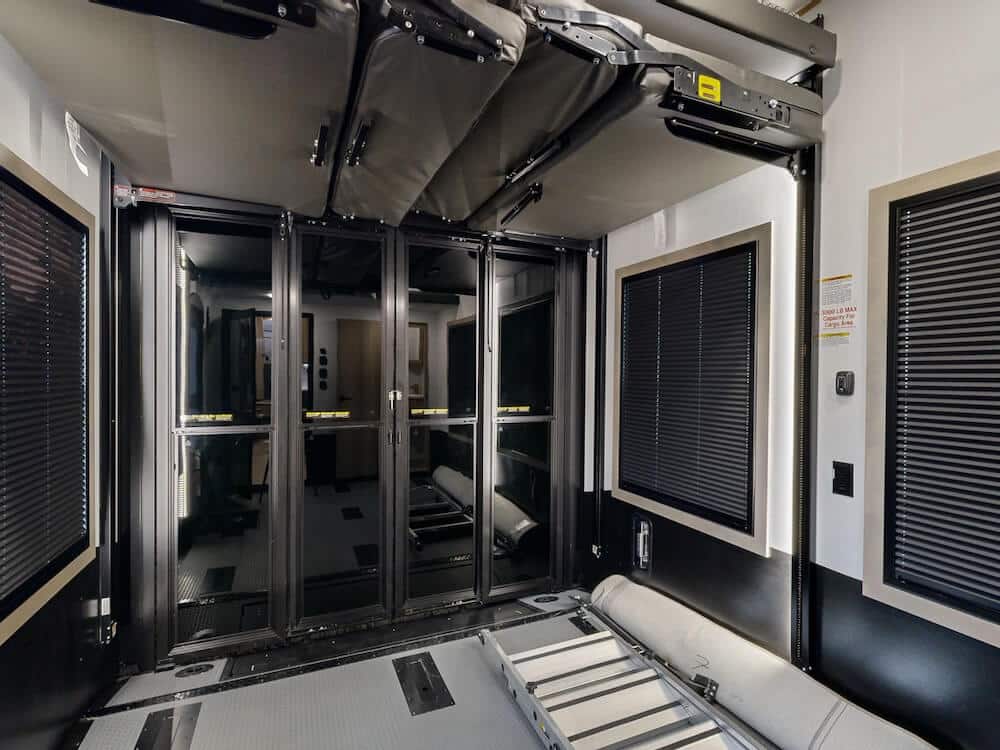
395 – With its roomy 14’ garage, residential-style kitchen, and luxury finishes like a walk-in closet and washer-dryer prep, the 395 is built for travelers who want to bring all their toys—and the comforts of home—on every adventure.
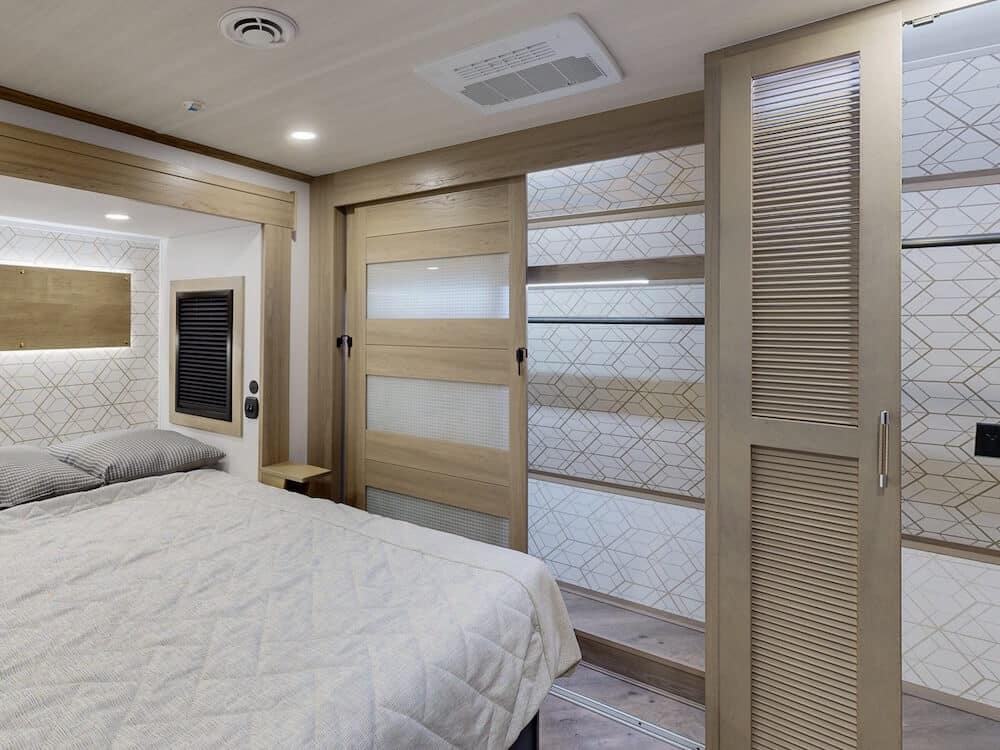
399 – This flexible floor plan makes it easy to haul gear in the 13’6” garage, lounge in style on the tri-fold living room sofa, or get a great night’s sleep on the 72” x 80” king bed.
413 – As the largest in the lineup, the 413 is packed with premium features, including a spacious 14’ cargo area, a private primary suite, and plenty of room to stretch out on a four-seater sofa in the living area.
Keystone Raptor
Images by Camping World
The Keystone Raptor combines luxury and muscle for travelers who want to camp in comfort, regardless of the season, thanks to its Extreme Weather Package. This package includes heated and enclosed underbelly components, insulated slide floors, and high-performance radiant barrier insulation in the roof, floor, and front cap to help regulate interior temperatures.
With its durable frame, vacuum-bonded sidewalls, and advanced climate control systems like Omni-Chill™ air conditioning and a Girard tankless water heater, this toy hauler is ready to keep the adventure going through heat, cold, and everything in between.
Featured Floor Plans
441 – The ultimate in space and flexibility: big garage zone, outdoor entertainment capabilities, and a layout built for hauling big gear or hosting big gatherings.
433 – An outstanding balance of size and comfort: dual baths, a large primary suite, and plenty of room to stretch out after the action ends.
352 – Compact in length but still heavy on features: a loft, island kitchen, bath & a half—ideal for those who want to tow more easily but still live large.
Forest River Rogue Armored
Image by Camping World
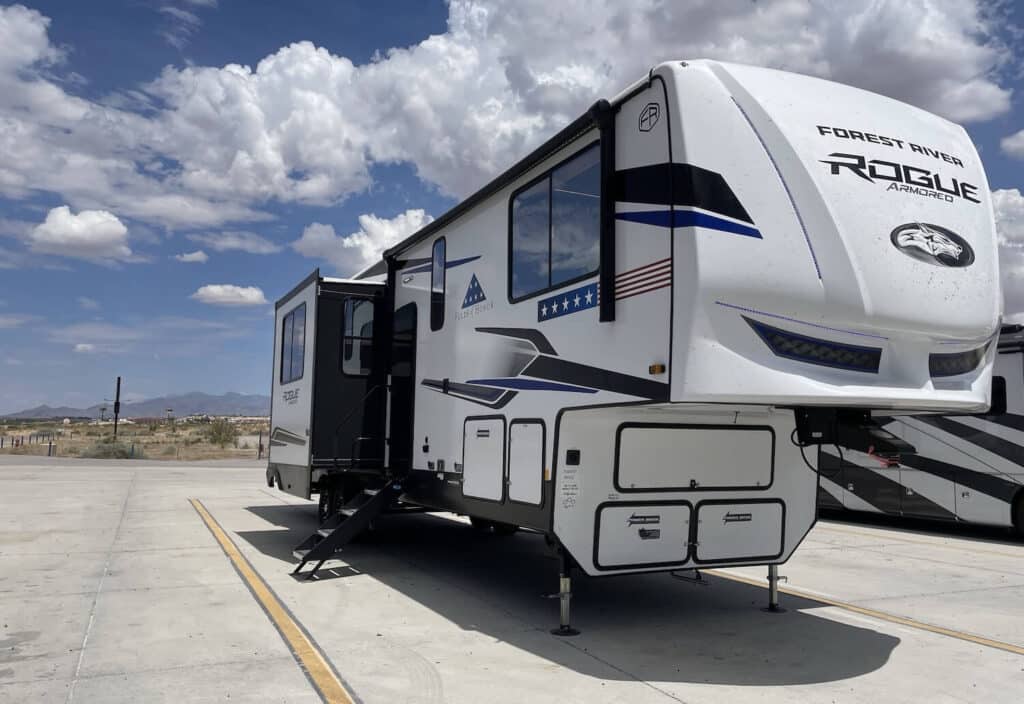
The Forest River Cherokee Rogue Armored is built for adventurers who demand serious capacity and seasonal resilience. With its 102-inch wide-body frame, laminated sidewalls and slideouts, as well as weather protection features like heated and enclosed holding tanks with 12-volt heat pads and dual “Super H” ducted air conditioners, this four-season toy hauler is ready for whatever weather and terrain you throw at it.
The high-gloss gelcoat fiberglass finish protects the aluminum-framed and laminated sidewalls, while the NTXT composite substrate offers added resistance to moisture, mold, rot, and delamination. Plus, solar reflective windows help to minimize heat transfer.
Featured Floor Plans
351G2 – Includes a 13’ garage, bath & a half, three slides, and a king-bed suite for premium comfort and storage.
4015 – A spacious floor plan that has a 15’ garage that includes a queen bed and a separate loft space.
341GS11 – A more compact yet capable option, featuring Euro recliners in the 11’ garage and a flip-up dining table perfect for two.
Grand Design Momentum
Image by Camping World
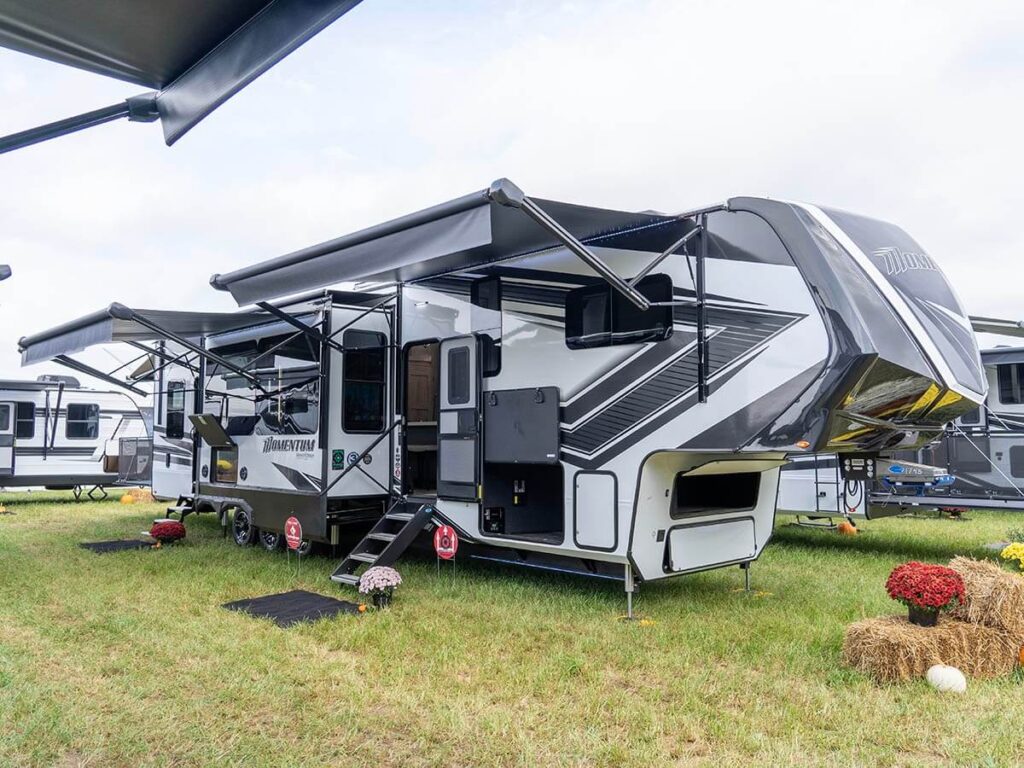
The Grand Design Momentum series combines toy-hauler power and climate-smart construction, allowing you to camp longer and in more places. From the ground up, the Momentum G-Class and Momentum lines feature fully laminated walls with rigid foam insulation, a heated and enclosed underbelly with suspended tanks, and a high-output furnace.
Additionally, their thermal roof design features fiberglass and radiant barrier insulation. The main floor and garage floor are triple-insulated, and radiant foil insulation is added to the gooseneck. Furthermore, the baggage doors are equipped with rigid foam insulation.
Plus, Grand Design’s wide-body chassis options and garage-ready layouts mean you’re not just hauling gear — you’re creating a mobile basecamp built for all seasons.
Featured Floor Plans
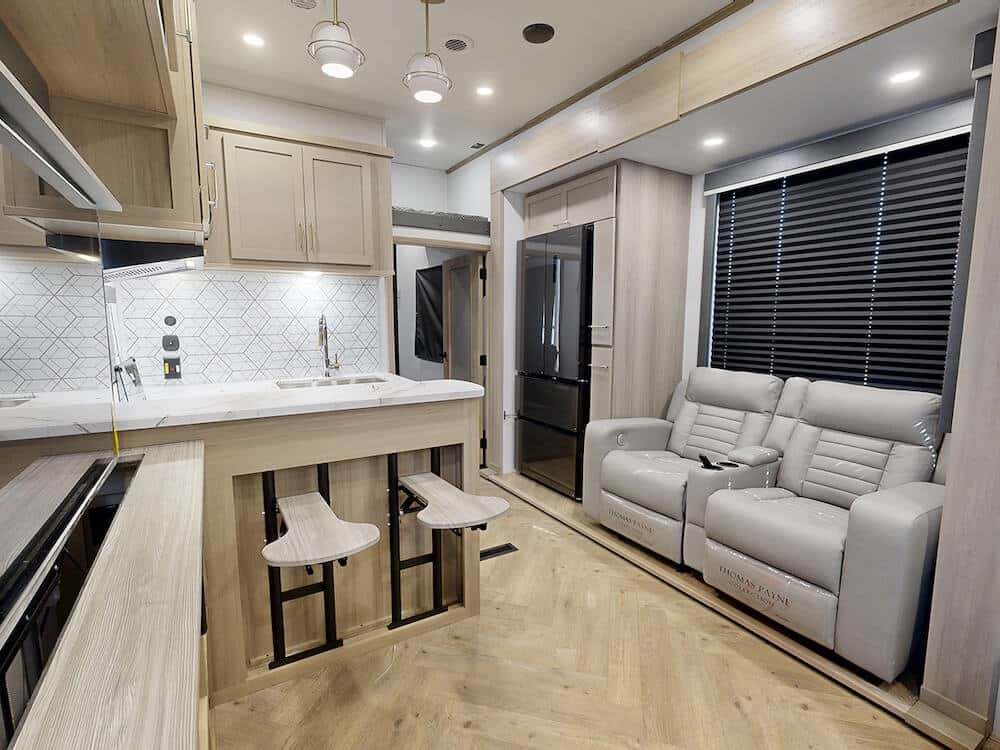
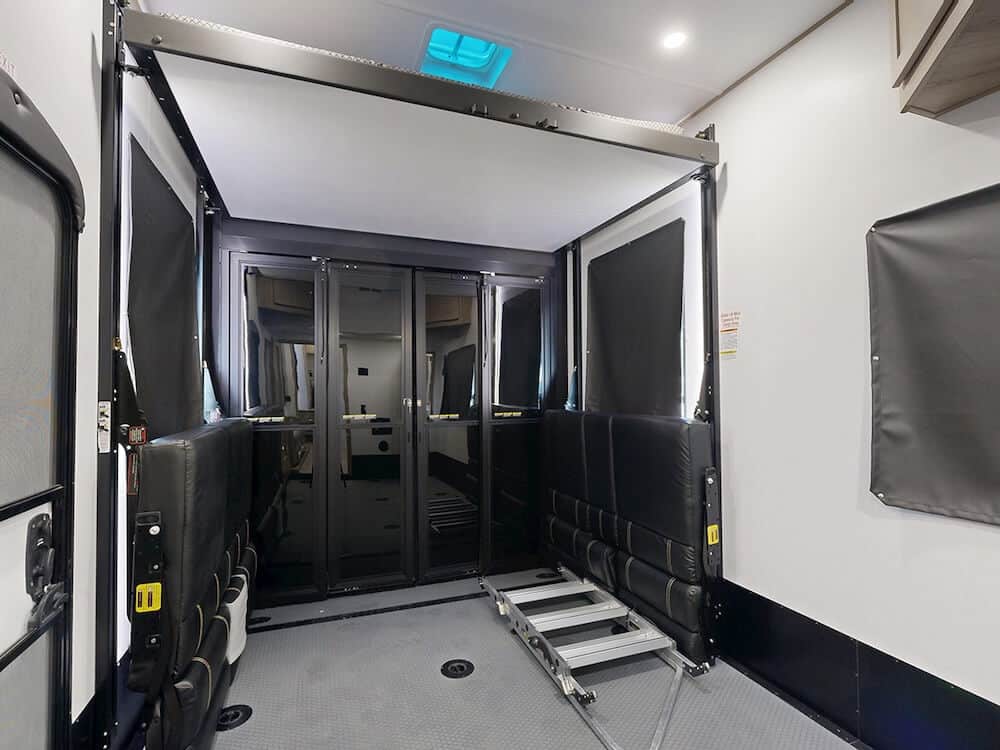
350G – An expansive layout with plenty of cargo and living space, including theatre seating and entertainment center; perfect when you want full-sized comfort plus gear room in its 14’6” garage.
27G – The perfect in-between—a pull-behind model that’ easy to handle on the road yet fully loaded with features such as a queen-sized bed, and a Happi-Jac rollover sofa & table in the garage.
27MAV – This model raises the bar with its 13’6” multitask garage space and an open floor plan that features a rollover sofa and table with a top bed.
344M – Larger footprint, more slides, and all the insulation and features such as washer/dryer prep in the garage, a hybrid desk and dinette in the living room, and a king-sized bed in the garage that make winter or shoulder-season camping feel like home.
320G – Compact yet capable, this fifth wheel model delivers Momentum build quality in a more manageable size that includes an 11-foot garage, a king-sized bed, and an entertainment center with a fireplace.
Keystone Carbon
Images by Camping World
The Keystone Carbon line gives “go-anywhere” a boost—whether that means deep trail systems in early spring or crisp mountain air in late fall. Built with solid 4-season RV construction in mind, it features frame-welded tie-downs and a rugged layout designed for serious gear hauling.
Keystone’s Carbon lineup also comes equipped with the brand’s Extreme Weather package, also known as Climate Guard™. This package includes a heated and enclosed underbelly, ducted heat and A/C that extend into the garage, and heated pass through storage to protect tanks and gear from freezing temps. With upgraded insulation in the roof, slides, and front cap, plus radiant foil barriers to help regulate interior temps, the Carbon is ready to roll through chilly mornings, hot afternoons, and everything in between.
Featured Floor Plans
360 – With a 13-foot garage layout and open seating plan, this one’s built to haul big gear and still host friends for good times afterwards.
338 – A slightly more compact hauling machine, but still feature-laden with a power reclining sofa, washer/dryer prep, and a drop-down electric bed in the garage.
368 – Perfect when you need maximum space and flexibility, whether you’re loading up the toys in its 14-foot garage or relaxing on the power reclining sofa with lumbar support and tilting headrests.
Forest River XLR Boost
Images by Camping World
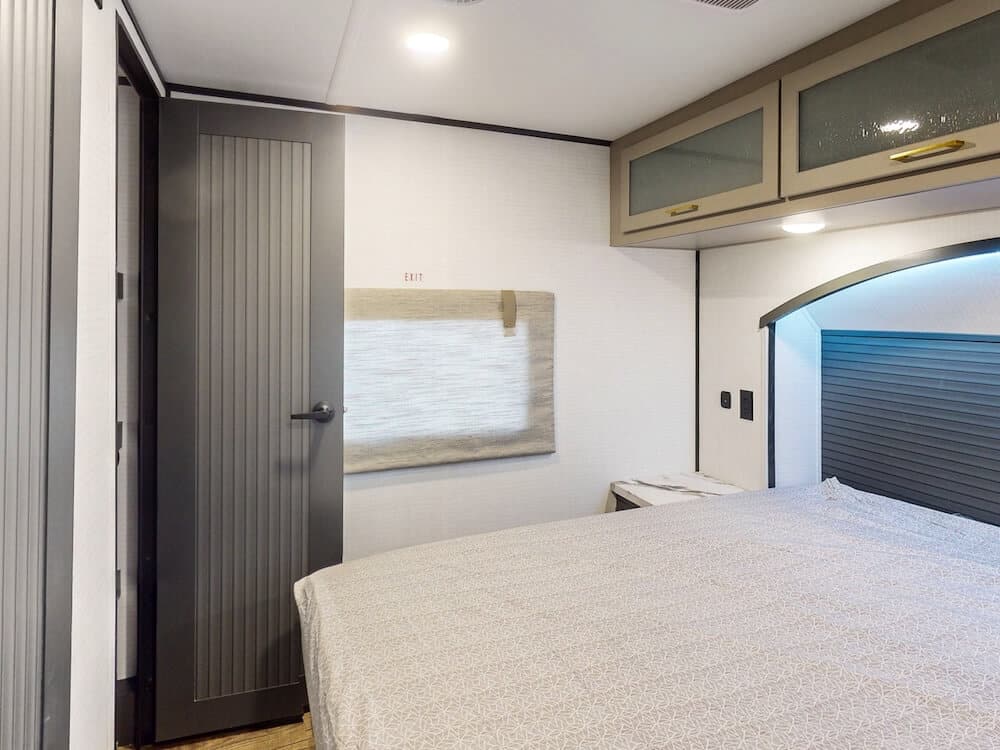
The XLR Boost line is made for go-big, play-hard adventures—and thanks to smart construction, it’s ready for more than just summer fun. Built on a 102-inch wide-body platform, this 4-season toy hauler comes with serious insulation technology—think foam-insulated sidewalls, a fully enclosed underbelly, and a 30” electric fireplace to take the chill off.
Add in features like high-efficiency ducted A/C, prep for solar power, rugged garage space, and optional 12-volt holding tank heating pads, and you’ve got a toy hauler that doesn’t just haul gear — it hauls every season of your life.
Featured Floor Plans
363BX – A spacious fifth wheel layout with a large 13’6” garage, wide-body interior that includes a hidden pantry behind the entertainment center, and enough room to make basecamp comfortable even in colder stays.
286B – More compact but still loaded: this plan offers big-toy capability with a 16-foot multipurpose garage, and all the same climate-smart features in a more manageable bumper-pull size.
2714B – This mid-sized model features a 14-foot garage, all-weather insulation, and a fully enclosed underbelly—built for riders who aren’t ready to call it quits when the temperatures drop.
3113BX – Stepping up size-wise: this 37’1” long toy hauler features extended living space, dual slides, and a 13-foot garage for big gear + big comfort during any season.
Heartland Cyclone
Image by Camping World
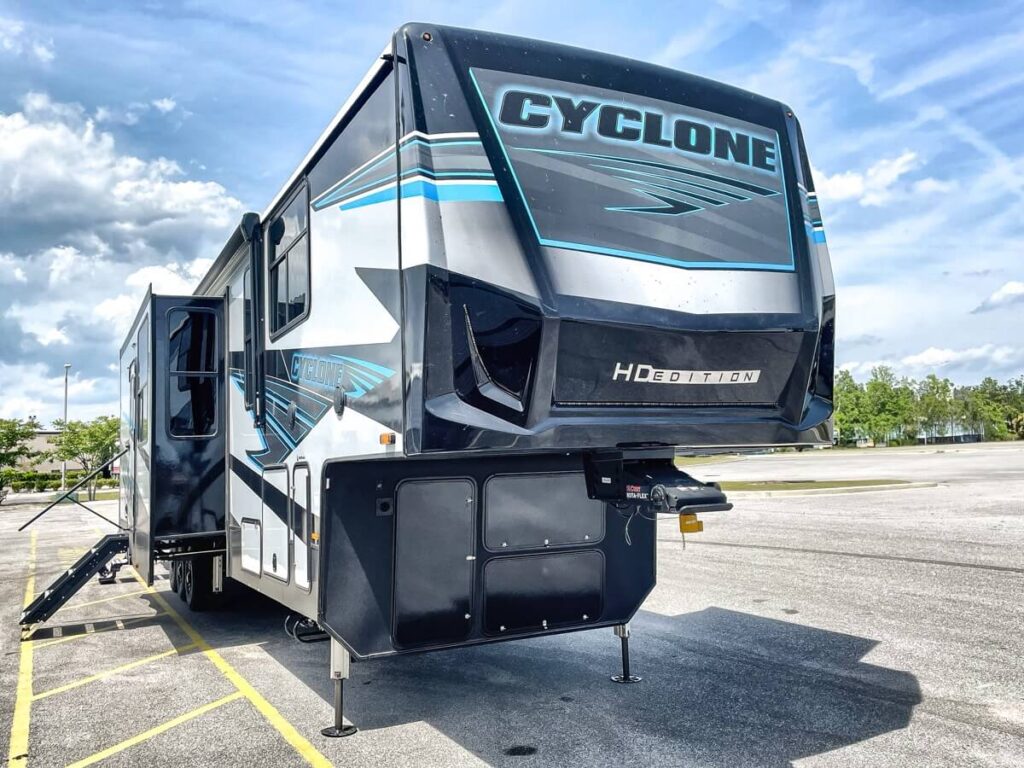
The Heartland Cyclone merges luxury and ruggedness to serve as a basecamp that doesn’t clock out when summer’s over. With wide-body construction and a zero-degree tested Therma Shield™ weather protection package, the Cyclone is built to help you roll into cooler seasons with confidence.
That package includes upgraded construction, such as double-layer fiberglass batt insulation in the ceiling and floor, double-sided radiant barrier insulation in the roof and floor, and a fully enclosed underbelly with ducted heating—reducing heat transfer and adding protection to plumbing and holding tanks.
Featured Floor Plans
3913 – A big-footprint layout offering comfortable living space, a generous 13’6” garage for your toys, and living space features such as a large L-shaped sofa and a separate 4-person dining table make this fifth wheel adventure-ready any time of year.
3511 – Slightly more compact but still loaded—this model offers features, including a U-shaped kitchen that includes a full-sized refrigerator and a large sink. The garage space consists of a 3-season door and a HappiJac™ power bunk. All of this in a more manageable size, making it easier to tow and still tough enough for shoulder-season camping.
3914 – Similar to the 3913 in scale, but with layout differences such as a loft space in the 14-foot garage and plenty of seating in the living room—ideal if you want a full-sized space and rugged construction that follows you beyond summer.
Honorable Mentions
Who Makes the Best Insulated RV?
When it comes to staying cozy in the cold or cool in the heat, Grand Design, Keystone, and Jayco lead the pack among popular RV manufacturers. Grand Design’s Arctic Insulation Package, Keystone’s Climate Guard™ and Four Season Living Packages, and Jayco’s Climate Shield™ all add extra insulation, heated underbellies, and tested protection against the elements.
These 4-season RVs are built for adventurers who don’t believe in an offseason—and still want to travel in comfort, no matter where the road (or weather) takes them.
How Cold is Too Cold for RV Camping?
Most RVs can handle temperatures down to around 33°F before things start getting tricky—but it really depends on the exact construction. Four-season RVs, equipped with insulated walls, heated underbellies, and dual-pane windows, can significantly lower that limit.
Once temps dip below freezing, you’ll want to watch for frozen pipes and condensation buildup. With the proper preparation—think skirting, space heaters, and tank heaters—you can comfortably camp even in temperatures below freezing. It’s all about knowing your setup and being ready for a little adventure in the chill!
Whether it’s crisp mountain air or sun-soaked coastlines, these four-season toy hauler RVs make it possible to chase adventure in every climate. With the right gear—and the right toy hauler—you’ll be ready to roll all year long, proving that the best memories aren’t made in one season—they’re made in all of them.
Ready to chase adventure all year long? Find your four-season toy hauler at Camping World and keep the good times rolling—no matter the forecast.
Kerisa is a full-time travel writer and RV’er who travels with her husband Anthony, adventure dachshund Butters, and senior homebody turned adventure cat, Tiskies. She has been to all 50 states, 49 of them in an RV! You can find her telling her stories from RV life at travelingtiongsons.com.
Support CleanTechnica’s work through a Substack subscription or on Stripe.
China is supposedly a communist country, but its economy is the closest thing the world has ever seen to bare knuckle capitalism where “kill or be killed” is the modus operandi. BYD understands this better than most and is doing everything in its power to win King Of The Mountain bragging rights.
Build a better mouse trap and the world will beat a path to your door, conventional wisdom says. But if a thousand people are trying to build a better mouse trap, not everyone is going to be successful. At the present time, there are dozens of erstwhile automakers in China whose market share is below 1 percent — often well below.
The Chinese government may have provided significant financial and policy support to the electric vehicle sector, but that is because of a national determination that electric transportation is the essential to taming the country’s enormous emissions. It has no intention of propping up unprofitable companies. It has made it perfectly clear that if they wither and die because they are uncompetitive in the marketplace, the government will not step in to rescue them. It doesn’t get more “free market” than that.
Market share is a wonderful thing, if you have it. It allows you to take a loss on your products in the short term in order to realize profits in the long term. Many years ago, I was in a Cumberland Farms store early in the morning. The manager was on the phone to the district office, reporting that Bob’s Discount Gas across the street had just lowered its price for gasoline. The office instructed the manager to set his price a penny below the competition. Today there are hundreds of Cumberland Farms locations but few Bob’s Discount Gas. That’s the power of market share.
BYD Targets Foreign Markets
Image Credit: BYD
While its peers in China are beating each other’s brains out — selling cars for less than they cost to manufacture in many cases — BYD is looking across oceans and planning to invest where the competition is less ferocious and the possibility of making a profit is greater than it is at home.
According to Bloomberg, BYD is aggressively pursuing a plan to build factories, create dealer networks, and provide charging infrastructure for customers in Europe, led by the companies indefatigable vice president Stella Li, who seems to be everywhere all the time and putting in more hours than Elon Musk.
Some readers may recall the early 50s when Japanese brands began targeting the US market. It was only when they started producing cars in North America that their sales took off and they were able to challenge the Detroit Big Three successfully.
As part of a press tour in Zhengzhou recently, Stella Li said BYD is in the process of installing the production machinery at its first European factory in Hungary. That factory is expected to begin pilot production in the first quarter of 2026, with full production scheduled to begin before the end of the second quarter.
That factory is part of a global production shift that includes new BYD factories in Brazil and Turkey to complement an existing factory in Thailand that has been shipping vehicles to Europe since August. While acknowledging that initial production costs in Hungary will exceed those in China, Li stressed that this investment is fundamental to achieving the long term objective of establishing a trustworthy, sustainable brand in the region. Once that objective is achieved, it will drive down production costs costs and help mitigate potential volatility from tariffs.
Although the company has not yet decided whether to build another factory in Europe, Li confirmed that the team is actively scouting additional sites, with Spain currently the leading contender. Spain has an active auto manufacturing sector, thanks to the SEAT brand that is now part of the Volkswagen Group. “We’ll ramp up our Hungary plant first, then the Brazil facility, and the Turkey one,” Li said. “Then we’ll see what’s next, but we don’t have a clear plan yet.”
Further reinforcing the commitment to regional needs, BYD CEO Wang Chuanfu recently directed that research and development leaders be dispatched to Europe, Latin America, and the Middle East to tailor vehicle design and technology to specific local conditions.
Strong Sales In Europe
BYD is already getting significant traction in major European markets. In October, the company registered over four times as many vehicles as Tesla in Germany and nearly seven times more than Tesla in the UK, according to respective federal and trade authority data. Of course, BYD offers plug-in hybrid models in many European countries to avoid tariffs on battery electric cars — something that Tesla cannot do.
Despite strong overseas sales, BYD deliveries in China slipped 1.8 percent in the third quarter, despite a strong increase in battery-electric car sales, as competition from other Chinese competitors like Nio, Xpeng, Leapmotor, Great Wall, Li Motors and others is putting pressure on BYD. Stock analysts are warning the company may miss its estimated total shipments for 2025 of 4.6 million units.
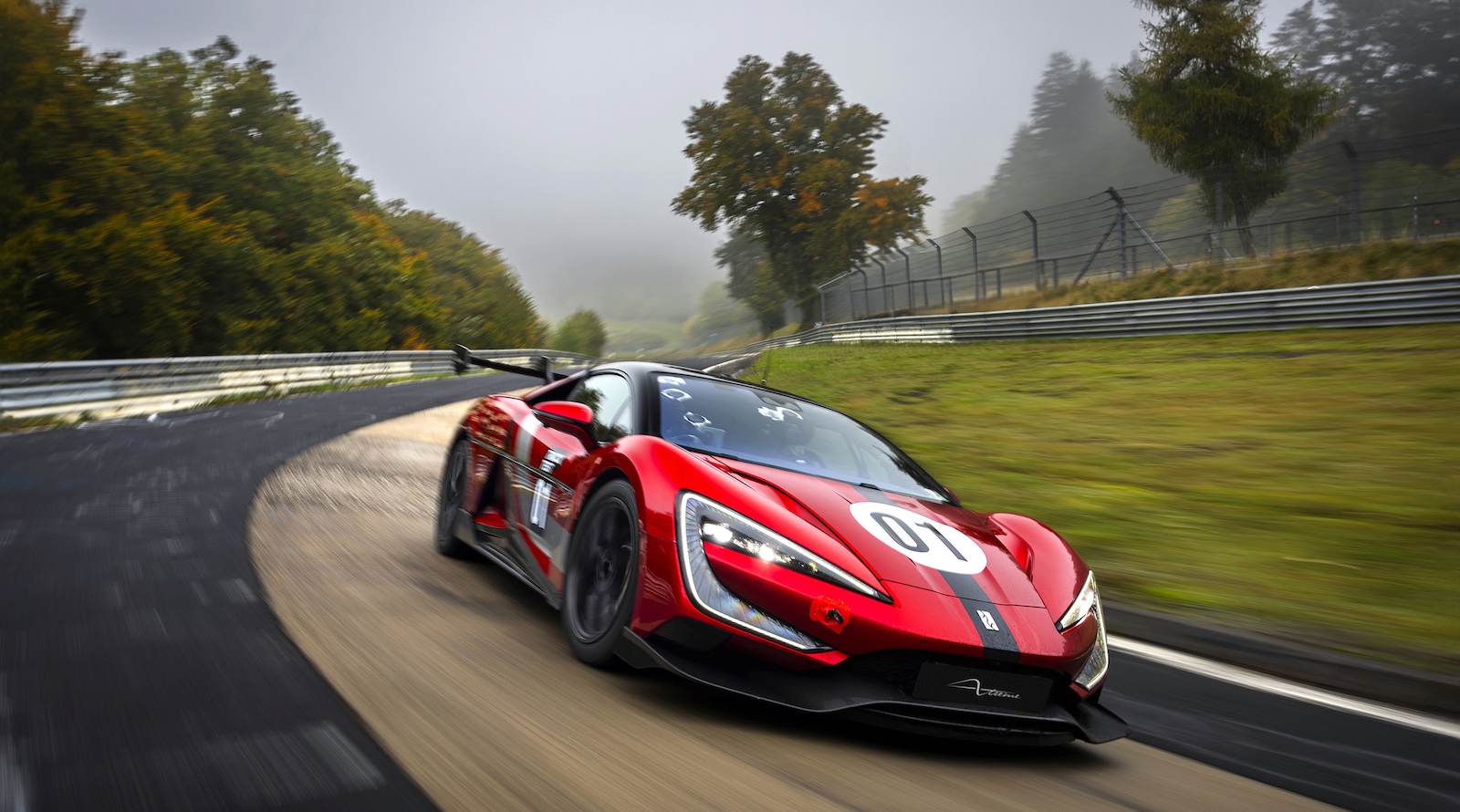
To elevate its image and bolster profit margins, BYD is preparing to launch its premium Denza and luxury Yangwang brands in Europe, targeting marques ranging from Volvo to Ferrari. The upscale offerings will operate through separate, dedicated stores, Li said. The reference to Ferrari is no joke. The Yangwang U9 Extreme is the fastest production car in the world. It was clocked at 308 mph in testing and recently became the first production car to complete a lap at the ultra-challenging Nurburgring Nordschleife in under 7 minutes.
Credit: BYD
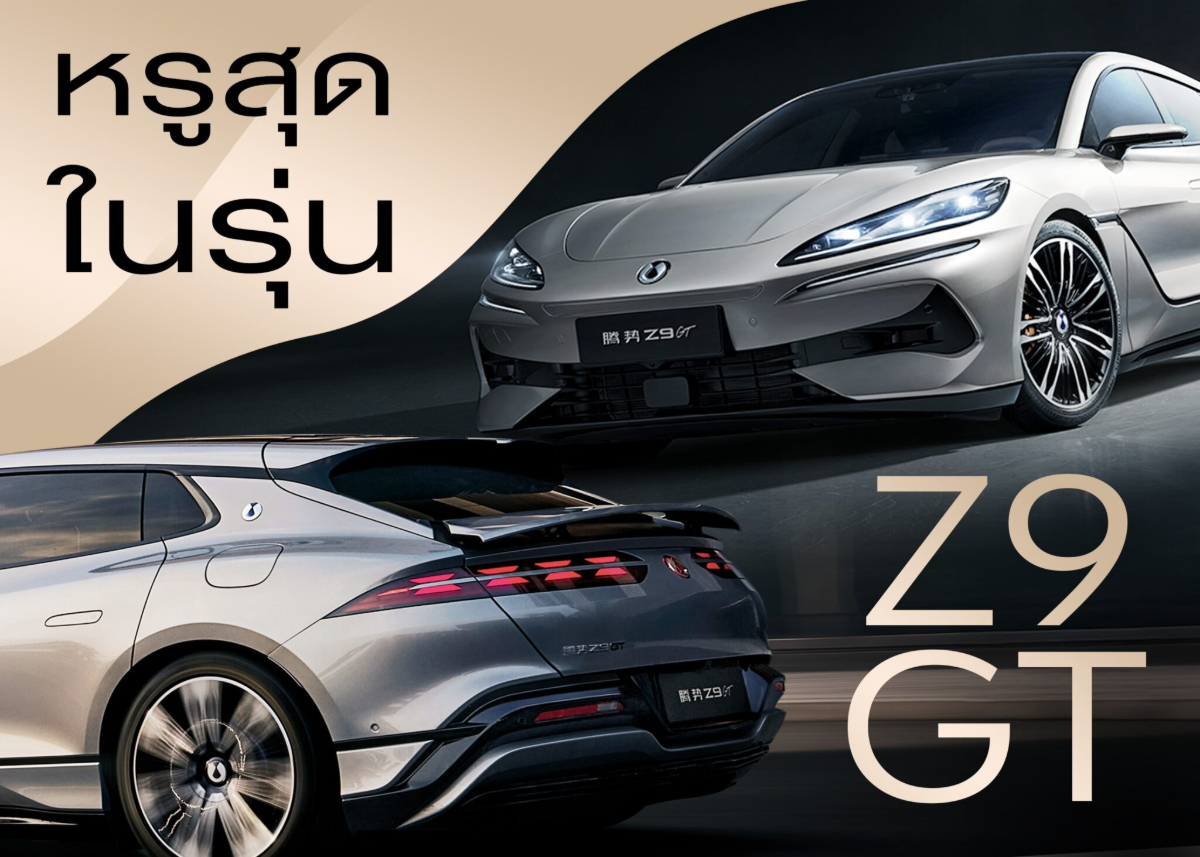
BYD is targeting upscale buyers with its Denza Z9 GT, a flagship model positioned to challenge luxury cars like the Porsche Taycan Sport Turismo and the BMW i5 Touring. Unveiled earlier this year at design showcases, the Z9 GT will be available as a battery-electric or plug-in hybrid. Pricing details are expected soon.
The luxury Yangwang brand, representing the pinnacle of the group’s technology, will follow Denza into Europe likely in the second half of 2027, following its debut in the Middle East next year. “I told my team that I’ll give them one year, then I’m going to go to the supermarket and ask people whether they know BYD,” said Li. “I hope the answer is 100 percent.” If she asks those same people which brand of plug-in or battery-electric car they would buy, she says she expects 45 percent to say “BYD.”
Electric Cars & Flash Charging Too
Complementing the vehicle rollout is a proprietary flash charging solution, which boasts a peak power delivery of 1,000 kilowatts, a figure that substantially exceeds most existing European fast chargers. Li aims to have 200 to 300 flash charging stations deployed across Europe by the second quarter of 2026, with an aggressive target to expand that network to 3,000 sites by the end of 2026.
To make that happen, BYD is employing battery storage at many of those flash charging stations. It is also prioritizing the rapid installation of dealer locations and existing Chinese corporate facilities, allowing the company to bypass protracted approval procedures.
Does anyone else besides me see that what BYD is doing is exactly what we expected Tesla to do a few years ago, before it decided not to be a car company but become a robot and AI company instead? If the world needs to transition to electric transportation, BYD is showing how to make that happen. Tesla? Not so much.
Sign up for CleanTechnica’s Weekly Substack for Zach and Scott’s in-depth analyses and high level summaries, sign up for our daily newsletter, and follow us on Google News!
Advertisement
Have a tip for CleanTechnica? Want to advertise? Want to suggest a guest for our CleanTech Talk podcast? Contact us here.
Sign up for our daily newsletter for 15 new cleantech stories a day. Or sign up for our weekly one on top stories of the week if daily is too frequent.
CleanTechnica uses affiliate links. See our policy here.
RRG Group has been awarded the Menopause Friendly Accreditation, recognising the dealer group’s commitment to creating an inclusive and supportive working environment for its employees.
The Menopause Friendly Accreditation, launched in 2021 by Henpicked: Menopause in the Workplace, recognises organisations that meet clear, independently assessed standards for supporting colleagues through menopause.
RRG Group said the accreditation aligns closely with its values and reflects the benefits of being menopause friendly, including improved wellbeing, better retention, reduced absenteeism and a stronger, more inclusive culture.
To secure accreditation, RRG was assessed across five areas: culture, policies and practices, training, engagement and the working environment.
Key initiatives that contributed to its success include hosting Menopause Lunches three times a year, delivering a ‘Men O Pause’ workshop to its all-male cohort of general managers, and developing a menopause policy tailored specifically to the organisation.
“I am incredibly proud that we have achieved the Menopause Friendly Accreditation,” says Sarah Cooney, head of people and development at RRG Group.
“This recognition reflects our ongoing commitment to creating an inclusive, supportive workplace where every colleague feels valued and empowered at every stage of life. We believe that open conversations and meaningful support around menopause are essential to employee wellbeing and we will continue to build on this foundation to ensure lasting change.”
“Achieving the Menopause Friendly Accreditation is a significant milestone for the RRG Group,” says Arran Bangham, vice chairman, RRG Group.
“At a leadership level, we recognise the importance of fostering a workplace culture where everyone feels seen, supported and understood. This accreditation reflects our commitment to breaking down stigmas, encouraging open dialogue and ensuring our policies and practices genuinely support colleagues through every life stage.
“Being Menopause Friendly is not just the right thing to do it’s essential to building a truly inclusive organisation,” he added. “I would like to personally thank our Menopause Action Planning Group, Sarah Cooney, Colette Murray and Andrea Atkinson, for all their commitment and hard work.”
“The RRG Group demonstrated to the independent panel its genuine commitment to supporting its employees,” said Deborah Garlick, CEO of Menopause Friendly by Henpicked.
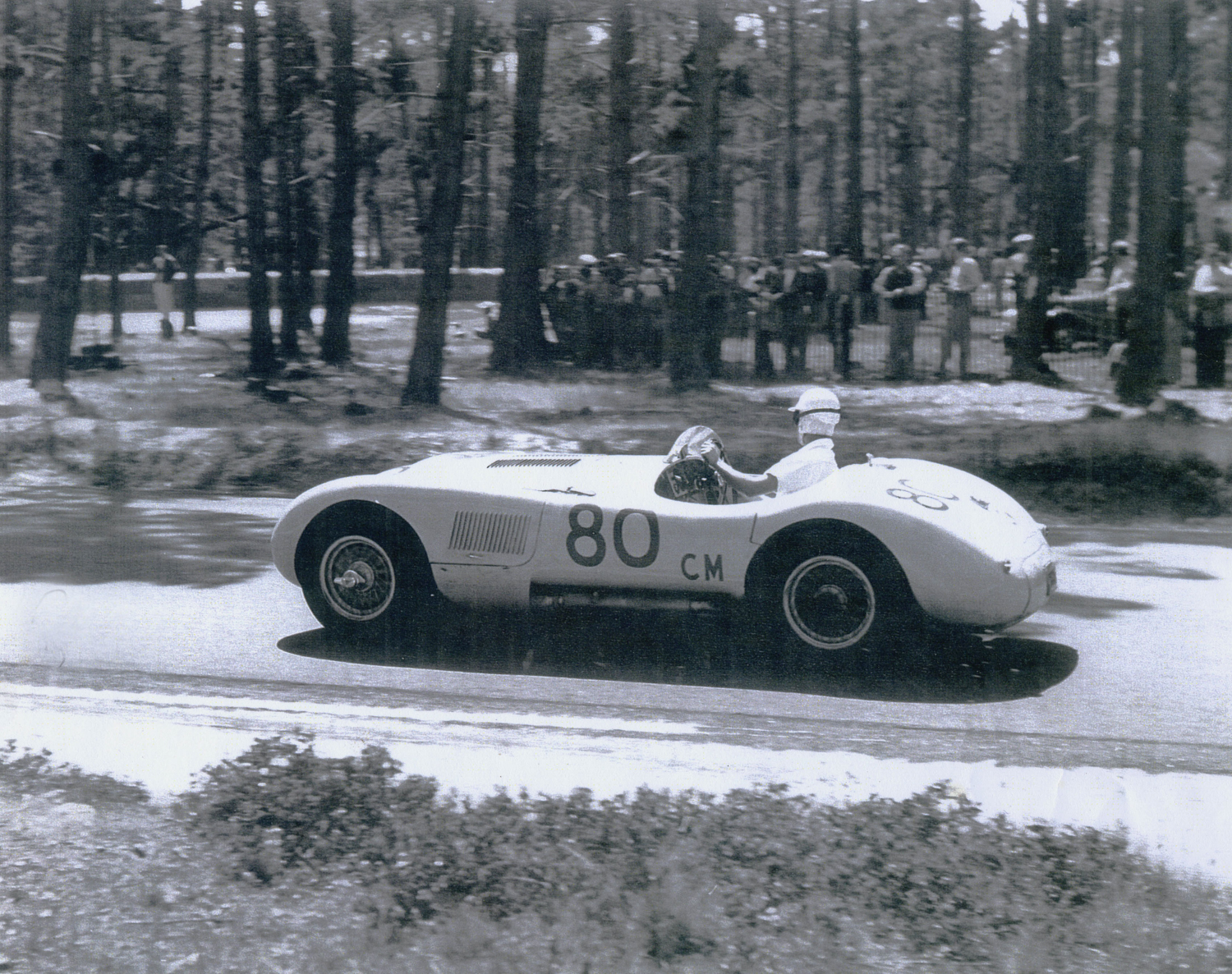
Riddelle Gregory at Pebble Beach 1954 where he placed 3rd in the main event. His pit crew included Phil Hill and his brother Maston
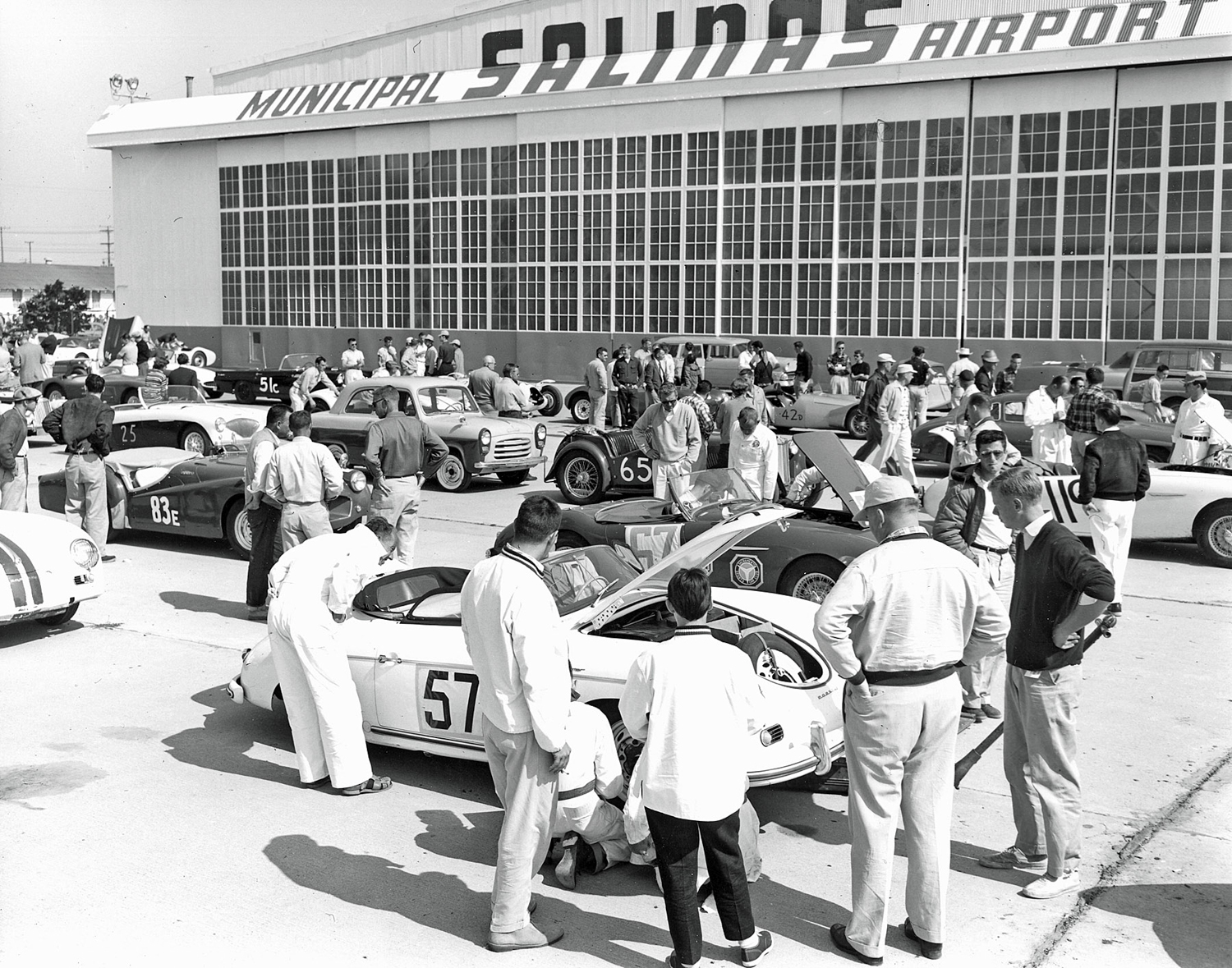
The first few years of the 1950s saw sports car events evolve from chummy club gatherings for “gentlemen racers” into more serious competition as interest in the sport gained traction. With the growing number of cars and drivers, more races were needed up and down the west coast to satisfy the demand. As a result, several venues had been added to the race calendar including Pebble Beach, Golden Gate Park, Palm Springs, Torrey Pines, Santa Barbara and Stockton Airport, all of which were in California. In the Pacific Northwest, early races were held at Bellingham Airport, Shelton Airport and Paine Field, each in Washington State. Sports car racing was on its way, just four years after the first organized road race was held at Buchanan Field in Northern California, in late 1949.
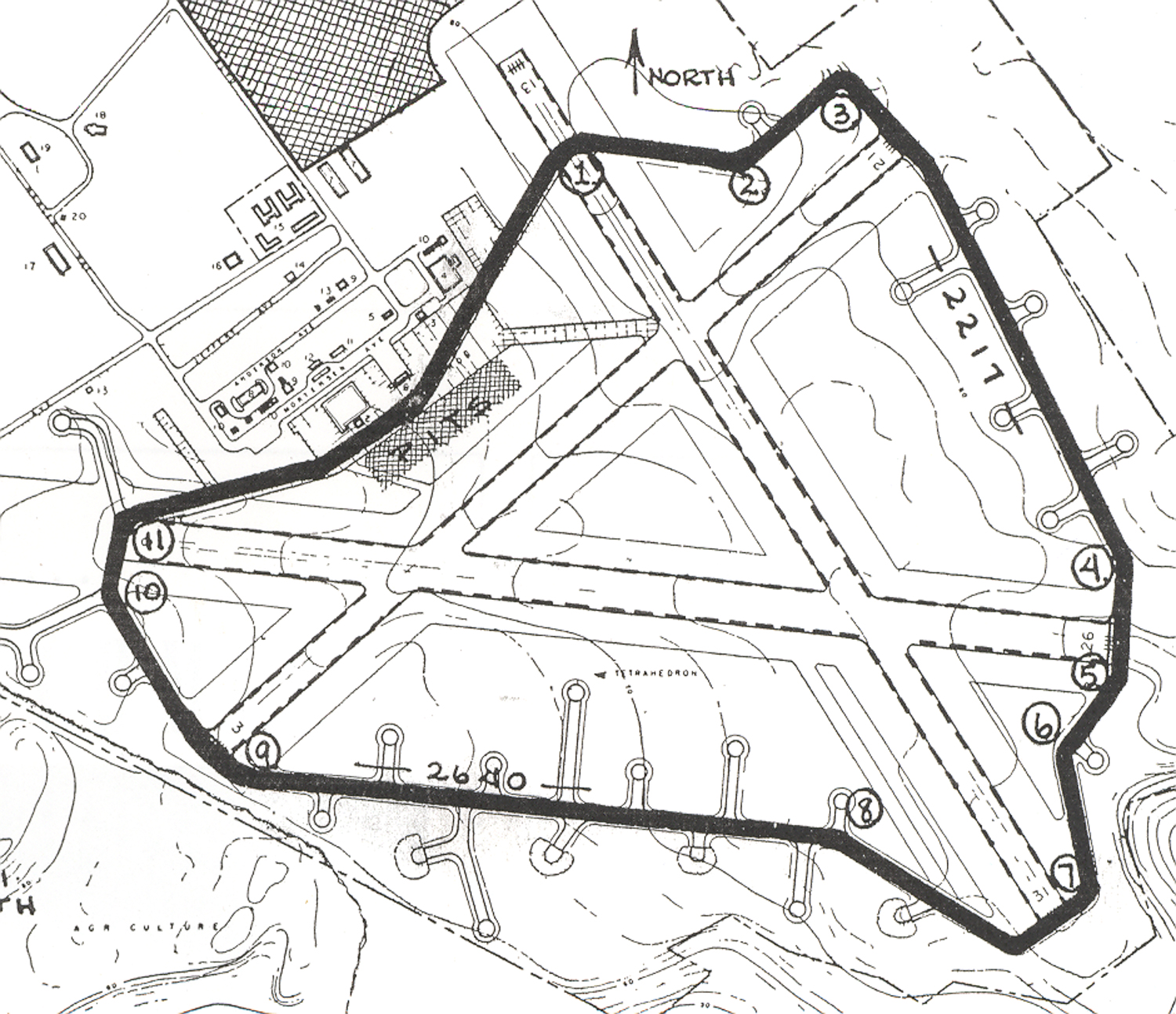
The Salinas Airport course layout was unusual since it did not use the runways but all the surrounding access roads. Challenging and fast.
The clubs that organized and sanctioned most of the events were the Sports Car Club of America (Northwest and San Francisco Regions) and the California Sports Car Club of Southern California (Cal Club). Each club continued their search for additional, suitable locations on which to race. Even though some races were held on city streets, the majority utilized municipal airports, creating road courses from a combination of runways and access roads. While the landscape was flat and featureless it was ideal for airplanes but not for race cars, however, until a better solution could be found, airport circuits were the best alternative.
This post may contain affiliate links. See our affiliate disclaimer here.
After RVing to all 50 states, I set my sights on RVing across the world. First stop: renting an RV in Europe.
I had no idea which countries even had RVs, let alone what they called RVs in different languages. Now I’ve RVed in seven European countries and on four continents worldwide.
As we’ve planned these major trips, we’ve struggled to find much information online from other Americans making the trek across the pond and renting an RV in Europe. RVing (or caravanning or motorhoming) in Europe is just as popular as it is in the States, if not more so.
We put together this brief guide with everything you need to know before booking our RV rental and flying across the world.
RV Rental Companies in Europe
There are endless options for RV rental companies in Europe. Here are a few companies to consider:
And there are peer-to-peer RV rental options (think Airbnb but for RVs) like:
There are undoubtedly many more RV rental companies out there, but these are some of the most popular options, listed in no particular order. I’m not affiliated with any of these rental companies and don’t make any money for mentioning them.
However, I know many people who have rented campers in Europe. From their experiences and reviews, I would never rent from Indie Campers, which is known to be one of if not the most popular rental companies. I would also avoid McRent. Both of these larger rental companies have reputations of having horrible customer service and support.
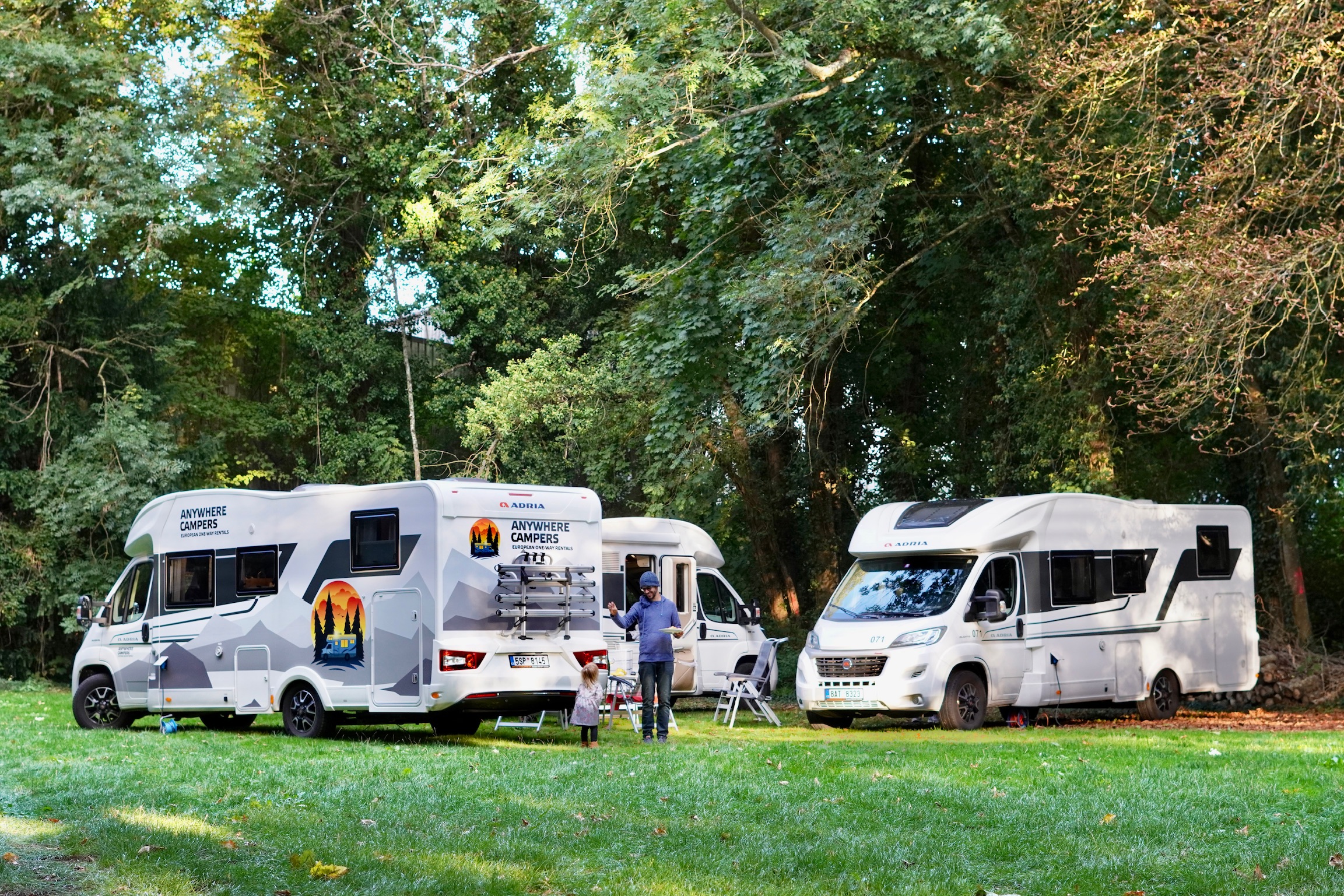
I have rented twice with Anywhere Campers and the next time we hop across the pond, I’ll likely choose to rent with them again for a few key reasons. Keep these considerations in mind as you choose which rental company is best for you.
1. Rental Inclusions
We chose Anywhere Campers during our first trip RVing in Europe because they included sheets, dishes, pillows, etc. and many rental companies don’t. They even include bikes, camping chairs, an outdoor table, and a grill.
I don’t like the idea of starting my holiday with a trip to buy multiple sets of sheets and towels and pillows just to leave them in the rental because they won’t fit in my suitcase on the way home.
As you look for a rental company, be sure to see what is included with the rig. I always look for:
Bedding and pillows
Towels
Cleaning supplies
A “Fully Equipped Kitchen” (This should include a coffee pot, dishes and silverware, pots and pans, utensils, etc.)
Toolbox
We had a latch on a cabinet that kept coming loose, so having a screwdriver handy is one small, unexpected thing you’ll want in your rental. And, of course, making sure a coffee pot is included is a must!
Picking up motorhome rentals outside of London
2. Mileage and Distance Limits
Some rentals will have caps on your daily mileage driven, although unlimited mileage isn’t too hard to find.
This is something we prioritize when booking any camper rental, especially if we’re planning on taking a multi-week or multi-month trip. It’s an easy way to avoid the stress of monitoring daily mileage limits that some rentals impose.
During one previous camper rental, we covered over 5,000 kilometers in our motorhome. That’s over 3,000 miles! If your rental has a daily mileage limit or a maximum distance you can travel, there will likely be a fee for additional kilometers driven. I’ve seen fees as high as $.50 for each kilometer driven over the limit. Since a kilometer is a little more than half a mile, you can incur a hefty fee bill if you go over your limit.
If you’re opting for a shorter rental in a small region, you can probably stay within mileage limits, but if you’re going for a cross-country European road trip, book a rig with unlimited mileage.
3. Vehicle Transmission
In the States, you’d be hard pressed to find a manual transmission RV. It can be difficult to find a manual car these days!
But abroad, manual transmissions are the norm—even in RVs. In our rental experience, we’ve had both. In Italy, Heath had to quickly learn stick shift in the Dolomite mountains…and it was stressful to say the least!
Even if you’re used to driving a manual transmission, driving an extra large vehicle on tiny European roads in a foreign country is a load of extra stress. If you can, I highly recommend opting for an automatic transmission motorhome for your rental to give yourself one less thing to think about as you tour Europe.
Read Next: Full Van Tour of Anywhere Campers Campervan Rental (Video)
4. Fuel Type
All of the RVs we have rented abroad have been diesel engines and diesel is easy to find every gas station we’ve seen.
Diesel, however, is not called diesel depending on the language. In France, it’s known as gasoil or gazole. Pretty confusing when gas in English is a totally different type of duel! In France, diesel is usually noted by a yellow pump (black and orange are also used). Unleaded gas or petrol, labeled with the numbers corresponding to the type of fuel it is, is often noted with green pumps in Europe.
If you’re traveling from the States, this is the exact opposite of the pump colors we use, where green always means diesel! Don’t mistakenly fill up your diesel motorhome from a green pump. Pumps are, in my experience, clearly labeled and you can ask an attendant for help if needed.
5. Fleet Availability
Book a few months ahead of your trip to make sure you can get the RV that best fits your needs. Our France trip was planned last minute and we took the only available rental left in the fleet. It worked for our family, but if we had booked sooner we could’ve gotten a slightly larger RV that would’ve fit our family of four a little better.
Keep in mind that most of the rental options I mentioned above service a good portion of Europe. That may mean that they don’t have any RVs available where you want it when you want it. It also means you can sometimes find good deals on “repositioning” rentals, when an RV needs to make it from Norway to Portugal for its next booking, for example.
Which brings me to what I consider the most important detail for any campervan trip…
6. One-Way Rentals
If I could impart one piece of advice to anyone who wants to rent an RV in Europe, it would be to choose a company that allows one-way rentals!
When we RVed in New Zealand and Canada, we had to drive all the way back to the starting point to return the RVs and it felt like we lost three days of our trip just returning to the drop-off city. Theoretically, you would take a different route back to the drop-off city than when you left it, but we’ve found that we always spend so much time exploring and adventuring that we wait until the last second to make the return trip back and are forced to rush through it.
If you’re RVing abroad, chances are this is a once-in-a-lifetime trip. It’s not every year that you’ll get to RV across the UK. Booking a one-way rental makes seeing everything you want to see at your own pace much more feasible.
In France, we booked our rental to be picked up Paris and returned in Barcelona, Spain. Since our rental was one month long, we loved the flexibility this one-way rental gave us. We were free to explore all over France without making a long return trip to the northern city of Paris. Plus, this allowed us to cross over and visit some of France’s neighboring countries as we explored. In Italy, we booked from Venice to Rome and loved being able to visit all the cities we wanted across the country.
If you can’t find a one-way rental option, I would recommend a longer rental so you have plenty of time to tour you country of choice and make the return trip.
Read Next: Here’s How to Do a One Way RV Rental in Europe
7. Insurance
The last consideration when it comes to renting is insurance. Insurance may or may not be included with your quote for a camper rental. It almost always is included with the quote or quoted separately.
For peace of mind while traveling, you may check to see if any travel credit cards you carry offer additional rental insurance or you may be offered additional insurance coverage from the rental company. This likely won’t cover if you break anything inside the RV, like the shower head or a door, but it will protect you in the case of an accident.
Types of European RVs
European RVs are significantly smaller than American RVs. While the smallest RVs in the States are around 21-24 feet long, the longest RVs in Europe will be 24-26 feet long.
The smaller the RV, the more comfortable you will be maneuvering it across Europe. Roads, campsites, and parking spots are smaller over there! Help yourself out by choosing a smaller RV.
Would you believe me if I told you this was a two-way road in Wales? Curse you, Google Maps!
European RVs will have cassette toilets instead of a black tank and probably won’t have any air conditioning. And they definitely won’t have slideouts! If you’re used to a motorhome in the US, a motorhome or camper in Europe will feel a lot more like van life.
Related: 16 Differences between RVing Abroad versus Rving America
Costs
Renting an RV (campervan, motorhome, camping car, autocaravan, insert country-specific name here) can be expensive. Average prices range everywhere from $100-$175/night. The season you travel in and the countries you visit will affect your price.
For a month, we paid around $4,000 USD, which breaks down to just under $145/night. This feels like a lot (it is a lot!) but is significantly cheaper than hotels or Airbnbs, plus it allows us to break away from the cities and see the countryside.
Gas prices are often higher than in the US (sometimes twice the price), but RVs are significantly more fuel-efficient in Europe due to their size.
Where you camp will be another major cost to factor into your trip, but I’ll cover that in more detail in a minute.
One perk of RVing when it comes to cost is that you often end up eating in or cooking meals in the RV. Sometimes this is simply because you’re in the middle of the wilderness and there is nothing around, but in general this is a small way to save money. Keep in mind that European RVs won’t have an oven or microwave, so you’ll have the stovetop for cooking or, if your rental offers it, a grill.
Countries Where You Can RV
The beauty of Europe is that you can easily cross most borders in an RV. Your RV rental may even come with the motorway permits required to drive in countries like Switzerland, Austria, and Czech Republic.
Most European countries are RV-friendly. You can find a complete list of countries around the world where you can RV here.
Best Times to RV in Europe
We always—ALWAYS—RV abroad during the “shoulder season.” For most countries around the world, that means April/May and September/October. Kids are in school, the seasons are changing, and campgrounds aren’t too busy.
With most RVs in Europe not offering air conditioning, I recommend skipping a summer rental if you can. A motorhome in Spain in August will be HOT. If you are locked into summer dates, head north, like Iceland or Norway.
One thing to keep in mind is what major attractions you’d like to visit in your camper. Many places may close seasonally. During our last visit to Italy, during the first half of our trip beaches were empty and there were only a couple of restaurants open regularly. By the end of May, the beaches were packed every day and everything (restaurants, amusement parks, mini golf) was slowly opening. We didn’t feel like we missed out on anything, but it was a little logistically difficult to figure out what businesses were open for the season.
Where to Camp in Europe
Just like in the US, there are an array of camping options with your motorhome—both paid and free.
Paid Camping
Campgrounds and RV Parks
A campeggio in Italy, a holiday park in the UK, referred to simply as “camping” in France—these are what you might call an RV park or campground in the States.
(You can get a glimpse of Italian campeggi in this video ⬆️ )
Generally, RV parks in Europe offer smaller sites that are usually electric only. There will be a dump station and water fill station somewhere else in the park, as well as a chemical toilet for dumping your cassette toilet. Your site may be nothing more than a stretch of fairly level grass.
But what the sites lack, the campgrounds make up for with other amenities.
Pools, hot tubs, on-site restaurants with real food (no convenience-store-style pizza is served at these restaurants! See the above video for what Italian campground restaurants are like), markets, laundry, private beach access, riverfront campsites, playgrounds, bathrooms for kids—completely with a baby bath and kid-sized showers, kids programming…the list goes on and on. We’ve had all of these at campgrounds and they’ve blown us away.
We’ve stayed in beachfront campgrounds and family campgrounds in the US…but they’ve always cost upwards of $100/night. In Europe they are about a third of that price. The most beautiful campsite of all time in any country we’ve ever visited has to be this one in France:
Free Camping
Europe has a reputation for plentiful free camping (also called wild camping) and it’s lived up to the hype in our book. There are a few options:
Aires
Aires are motorhome stopovers meet rest stops meet gas stations. You’ll see signs for aires about every 10 minutes on the highway in our experience and they have varying levels of niceness. Some are like picnic areas in the States—a place to park and some tables. Others are full blown gas station rest stops that connect the east and west sides of the highway with a sky bridge, offer multiple restaurants, and all the classic things campers need like dump stations and showers. It’s quite the range.
These are generally first-come, first-served parking spots. Many aires are free, but some may require a small fee (less than $10 and usually only if they offer services like electricity). You can find aires and other free camping on the Park4Night app.
Aires typically refer to free campsites in France, but the term is often used across Europe. You may see Area Sosta Campa in Italy or Area para Autocaravana in Spain.
Park4Night
This is our go-to app for free camping. We tried multiple apps during our first time RVing in Italy, but Park4Night had the most options, the most accurate listings, and was the most reliable.
Free camping in the Italian Dolomites
Not a bad view for a free campsite, eh?
Park4Night includes more than just Aires and free campsites. They also list campgrounds and agritourism campsites. The app is free to download and easy to use.
France Passion
Despite what the name might bring to mind, this isn’t a French dating app. French Passion is the equivalent of Harvest Hosts—a membership program where you can camp for free at farms and wineries across the country.
Before heading to France, we signed up for a membership online. Their online search function is a bit clunky and hard to use, but they mailed us a book with our membership card so we can use it to find free places to camp across the country. France Passion boasts over 10,000 parking spots and a membership is €30. (So not completely free, but definitely worth getting for all the free camping options it offers!)
Many European countries have the equivalent of this, like Brit Stops for the UK.
Driving in a Foreign Country
Before RVing abroad anywhere in Europe, take a moment and google “driving tips in _________”.
Signage and road laws will vary by country, so it’s best to take tips specifically for the country where you plan to RV. For example, Italy has ZTLs. Zona traffico limitato means motorhomes cannot drive in that area. This is a term and sign you will only see in Italy and something we wouldn’t have known if we hadn’t read a free ebook we found online sharing driving tips.
That’s also a good way to learn if the country you’re visiting (or countries) require any vehicle permits. Switzerland, for example, requires a driving permit on all vehicles. During our last trip to Italy, we actually thought about crossing the border into Switzerland for a quick trip. But we couldn’t figure out how to get the driving permit we needed! (Anywhere Campers provides one, so that was one less thing for us to think about when we cross over the French Alps into Switzerland during this trip!)
What you save in not needing to purchase a driving permit, you will quickly spend on tolls. Toll roads aren’t too common in the US (mostly in the cities or in the northeast), but many highways in Europe are toll roads. Most of these toll roads will accept credit cards and have a British flag icon you can push so that the screen prompts are in English. So while the tolls sound like they add a little extra driving trouble, they are easy to navigate.
One final thing to note as you may see it on rental agreements: You probably don’t need an international driver’s license. It depends on what countries you visit, but most countries don’t require one.
I Love RVing in Europe—Can I stay forever?
Nope.
You can enjoy RVing in the Schengen (list of Schengen countries here) for 90 days within a 180-day period before you need to:
A) Get a tourist visa, or
B) Strategically leave for a non-Schengen country like the UK or Ireland
RVing in Wales before hopping over to mainland Europe we didn’t go over our 90 day limit
FAQs About Renting an RV in Europe
Can I rent an RV in Europe?
Yes, RV rentals are available in most European countries with exceptions in the expected places (like Ukraine and Russia).
What is the largest motorhome rental company in Europe?
McRent is considered the biggest. But is bigger always better? I think not.
What are RVs called in Europe?
Campers, motorhomes, caravans (the equivalent of trailers), motorized caravans, autocaravan, camping car—there are lots of names! Camper is the best catch-all term.
Do you need a special license to drive an RV in Europe?
Check with your rental company, but most countries do not require any special license. You may need an international driver’s permit, which you can get from your local AAA for about $20.
Final Tips
To any and every newbie to RV life that I talk to, I give the same advice:
Travel slowly.
Once you hit the road, you may have an itinerary, but you will find so many gems off the beaten path when you give yourself the time to properly explore. (We’ve found the best option is giving ourselves at least a month in each country if we can!)
Travel slowly and enjoy the journey!
Questions about RVing in Europe? Drop them in the comments!
In 2024, public charging in California expanded at record levels
The state has double the publicly accessible chargers versus 2022
Nearly 30% of U.S. EV sales go to California customers
In California, drivers are now much more likely to encounter an electric vehicle charging connector than a gas pump nozzle.
The state reached 178,549 public chargers in 2024 (including shared private chargers), Governor Gavin Newsom’s office announced Thursday in a press release. That gives California 48% more publicly accessible chargers than gas pumps, according to the California Energy Commission (CEC), which estimates about 120,000 gas pumps in the state.
Installation of new chargers has increased significantly over the past few years. California now has twice as many publicly accessible chargers as it did in 2022, and it added 26,193 chargers since the last official update of the total in August.
Electric vehicle chargers in California in 2024
While California continues to devote funds to building more charging stations, part of the increased total for 2024 is due to keeping better track of ones that already exist. Of the 73,537 chargers added to its data set in 2024, 35,554 were installed before that year but were newly identified through additional data sources, according to the CEC.
Publicly accessible chargers are mostly Level 2 AC, at over 162,000, with nearly 17,000 DC fast-chargers, according to the CEC. The commission also estimates that more than 700,000 Level 2 chargers are installed at single-family homes in California for private use.
Those chargers—public and private—support what remains the largest fleet of EVs in any U.S. state. The California Air Resources Board (CARB) estimates that nearly 30% of U.S. “zero-emission vehicle” sales go to the state.
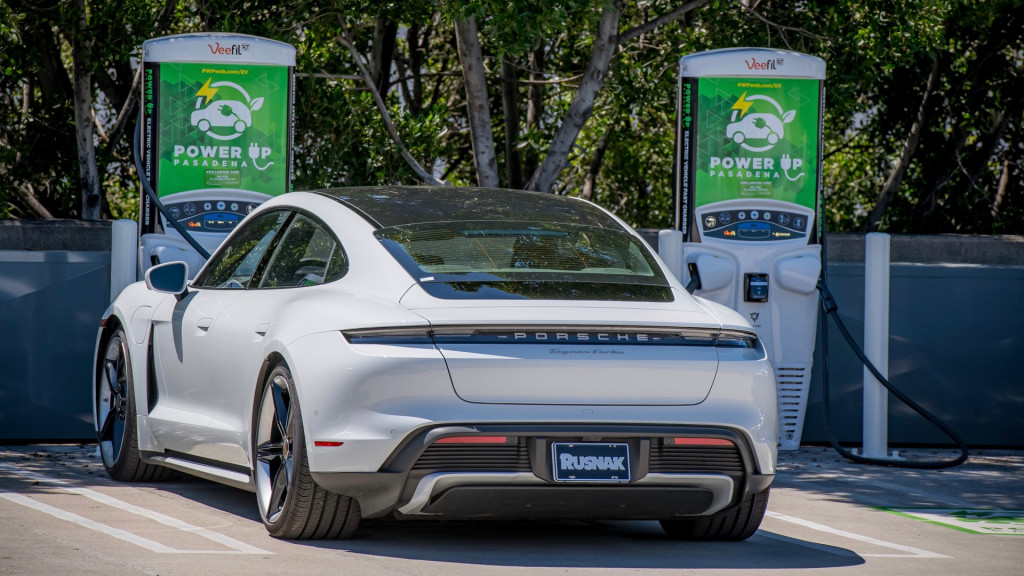
Marengo Charging Plaza, Pasadena, California
California may also bring back its own version of an EV tax credit—minus Tesla—if the federal credit is cut, something the Trump Administration is reportedly preparing to do. The Biden EPA officially approved restoration of California’s EV sales mandate prior to an expected Trump attack on the state’s rights, but the new government may still hold California’s solo carpool-lane access for EVs hostage.
In the meantime, California is also pushing ahead with its charger buildout as Trump freezes federal charger funding. Last month California announced a $55 million project, overseen by the CEC, supporting the installation of DC fast-charging stations at retail sites throughout the state. It’s a small part of a $1.4 billion EV charging and hydrogen program announced in December.
“We’re embracing our clean car future and providing consumers more choices—no matter what ‘big government’ mandates come out of Washington,” Newsom said in a statement.
BMW has officially become the first automaker in Germany to receive approval under the new UN Regulation No. 171 for Driver Control Assistance Systems (DCAS), clearing the way for its “hands-off” Motorway Assistant to expand across Europe. The move gives the iX3, and soon other BMW models, access to a more advanced suite of Level 2 driver assistance features that bring true long-distance comfort to the brand’s electric SUV.
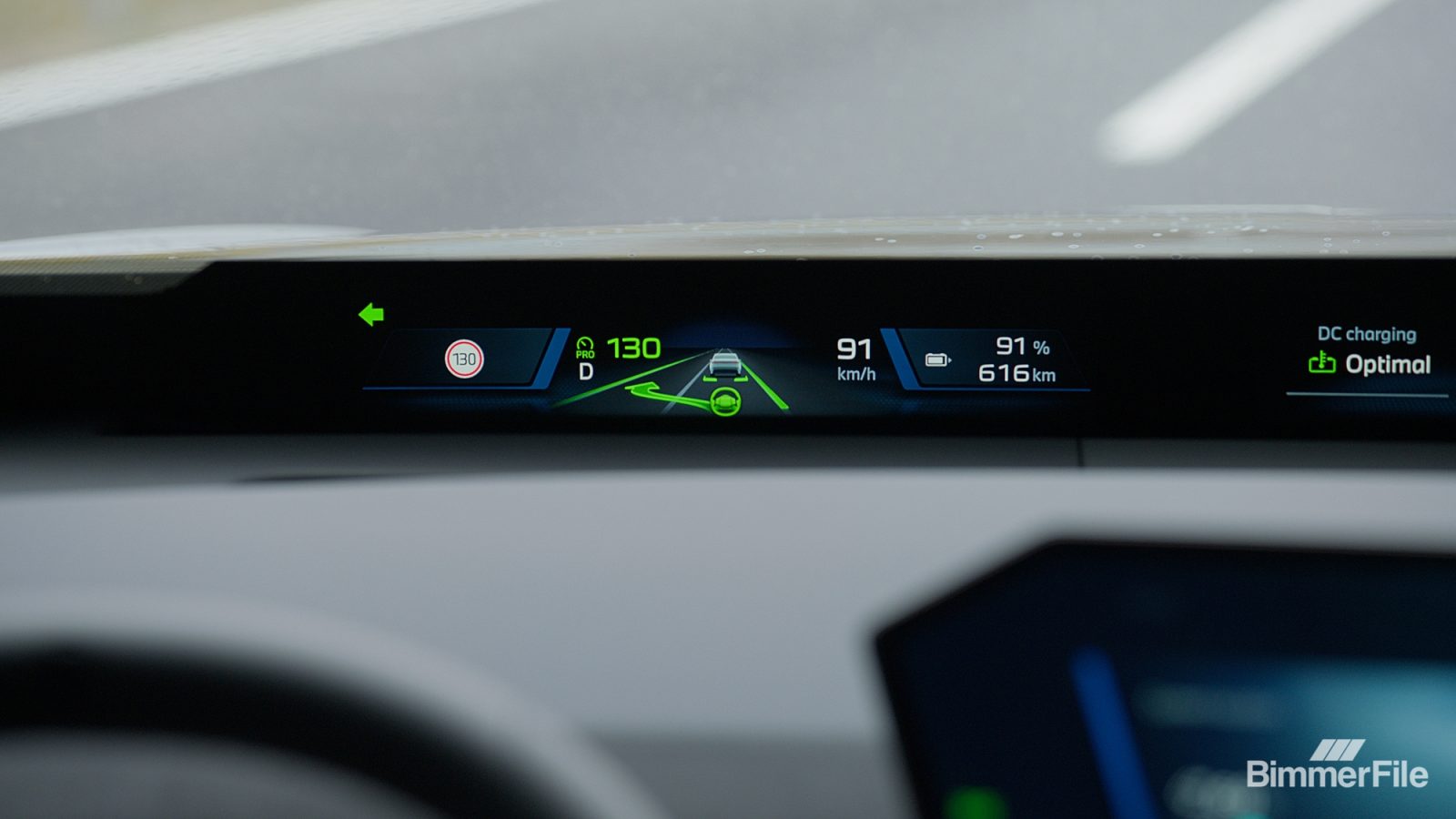
For drivers who spend serious time on the Autobahn or long highway stretches, this type of semi-autonomous functionality is a godsend. It is not about checking out; it is about easing the grind of long-distance travel while keeping the driver alert and in control when it matters most.
A Smarter Kind of Hands-Off
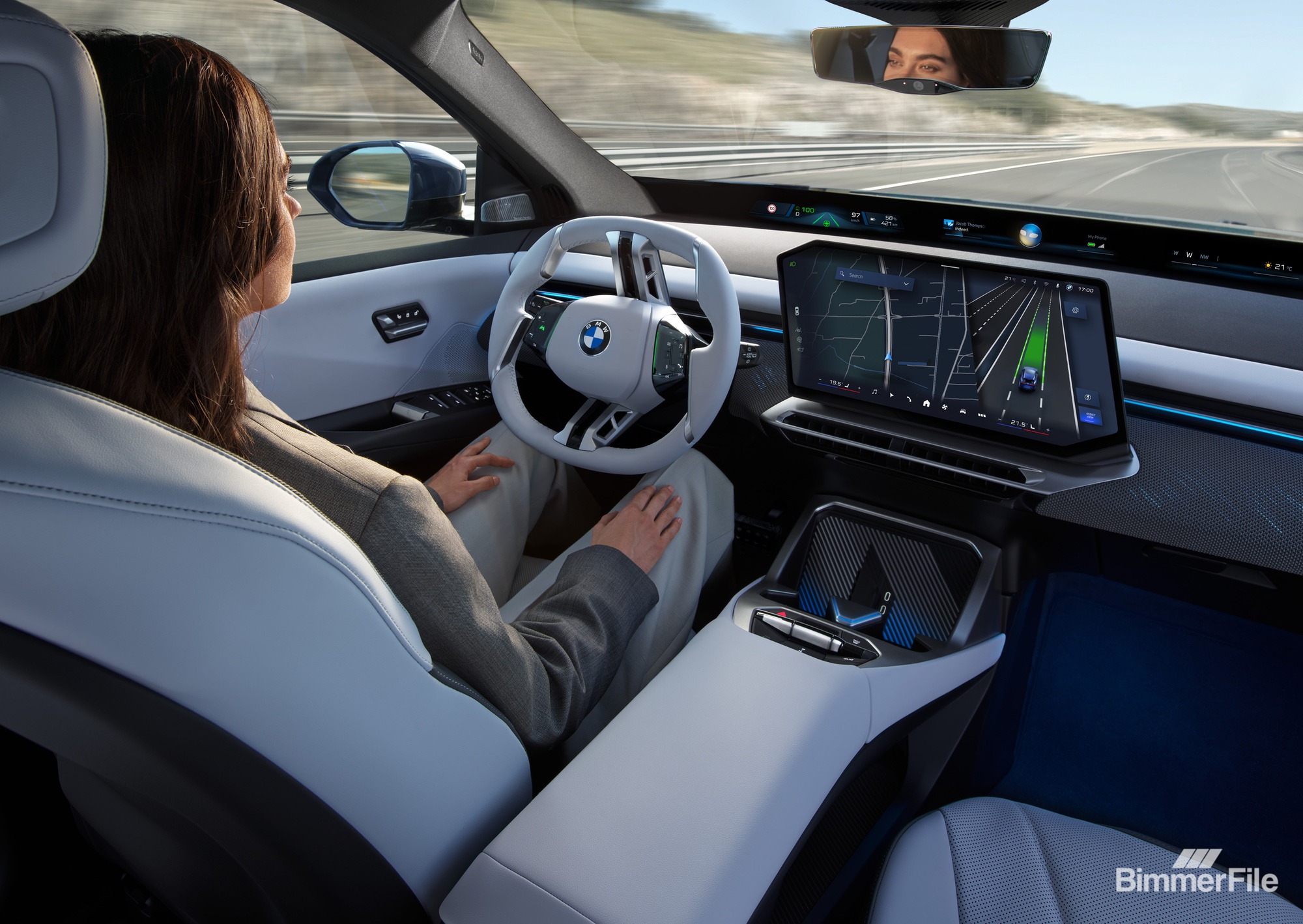
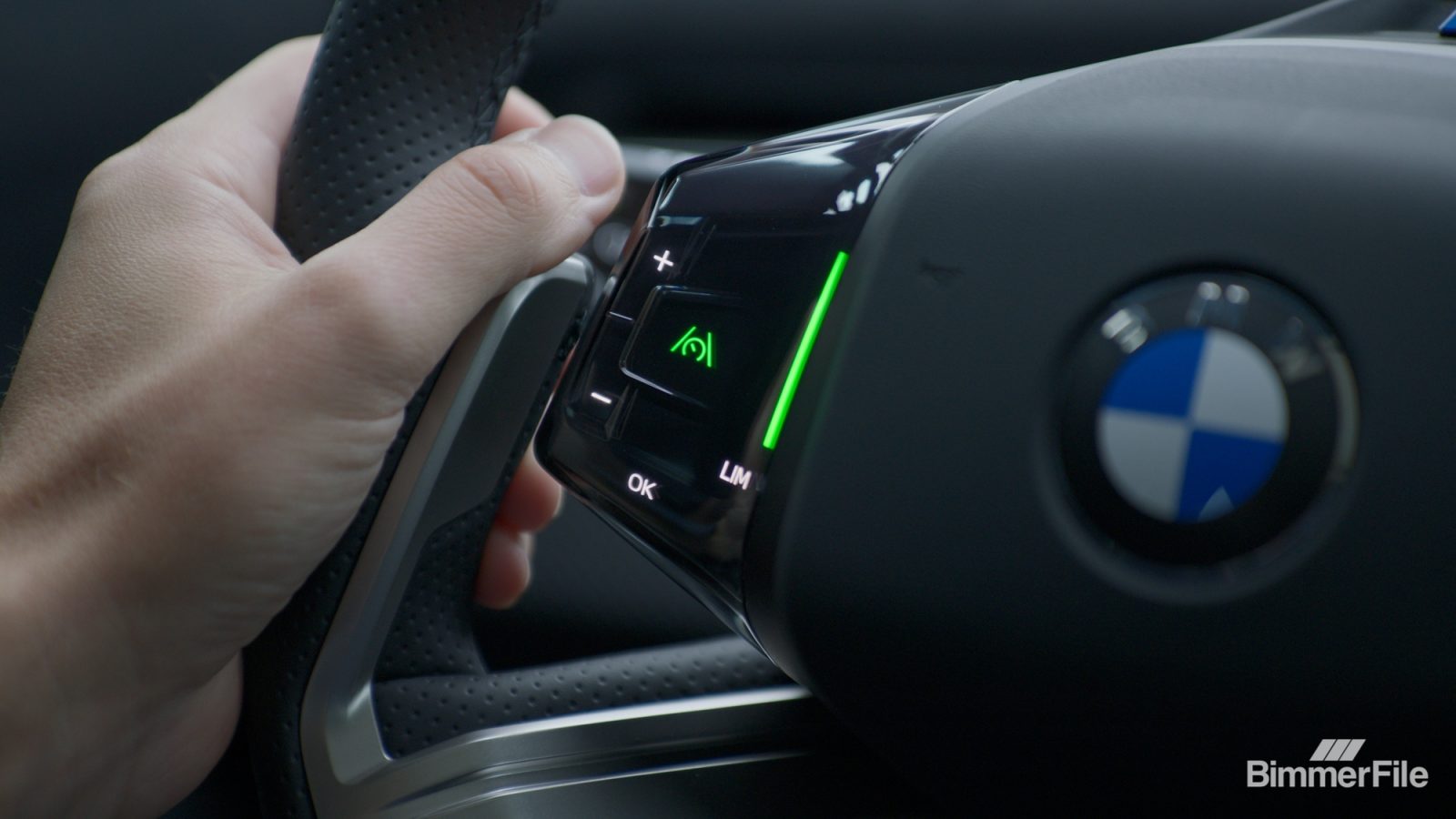
The latest version of BMW’s Motorway Assistant allows drivers to remove their hands from the wheel entirely at speeds up to 130 km/h, provided they stay attentive and ready to take over. The system keeps the vehicle centered in its lane and can even perform lane changes automatically, confirmed by something as simple as a glance in the side mirror.
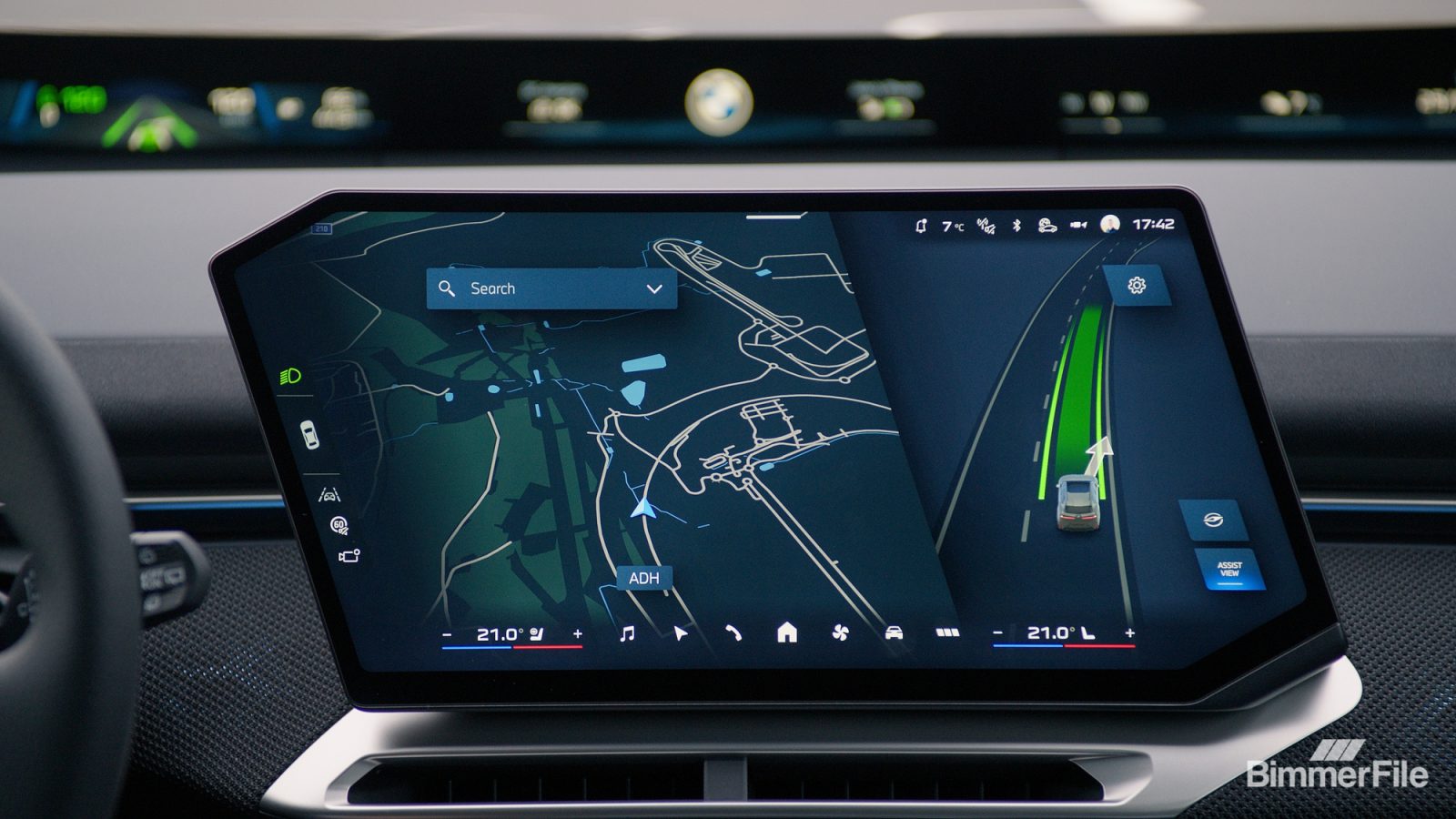
New under the DCAS approval is the ability for the system to stay active through highway junctions and exits, as well as make proactive lane-change suggestions using BMW Maps route guidance. This kind of predictive awareness marks another step toward what BMW calls Symbiotic Drive, a philosophy that blends rule-based logic with AI to create a cooperative relationship between car and driver rather than a handoff of control.
From Motorway to City Streets
While the Motorway Assistant has already earned auto motor und sport’s Tech Award in the “Comfort Assistance Systems” category, BMW is not stopping there. The iX3’s expanded driver assistance suite now includes early-stage “City Assistant” features, such as automatically stopping at red lights and resuming once traffic moves again. Over-the-air updates will continue to add more functionality over time.
The Broader Implication
This approval means BMW no longer needs special exemptions to roll out its advanced assistance systems. Instead, it can now deploy them across Europe and other ECE countries, setting a new benchmark for what Level 2 autonomy can feel like when it is executed with precision.
BMW’s long-term vision, seen most clearly in its upcoming Neue Klasse models, is to make this “symbiotic” approach foundational. The iX3 even debuts the world’s first symbiotic braking system, allowing drivers to subtly guide the vehicle through steering and braking inputs without disengaging assistance. It is a small but meaningful detail that shows BMW’s continued focus on creating systems that support rather than replace the driver.
For highway travelers, it is simple: this kind of intelligent assistance transforms long drives from a chore into something approaching calm. And for BMW, it is another step toward a future where human and machine do not just coexist, they collaborate.
If someone in the bar even brings up the topic of ‘mid-engined supercar’, a heated commotion will erupt with everyone eager to chime in. Everyone loves talking about those elusive supercars that many could only ever dream of attaining. Amongst all the ludicrous supercars though, two particularly venerated marque arguably stands on top: Lamborghini and Ferrari. With Ferrari recently introducing the new 488 GTB, and the Aventador remaining as the flagship for Lamborghini, these two may just be intriguing subjects for a bit of top trump or performance comparison.
• Quick Facts
Of course, the biggest disparity between the two is the model year introduced. While the Aventador is beginning to show its age, being initially introduced in 2011. However, the original Aventador isn’t actually made anymore, as the facelifted model, the Aventador S, completely replaced the original model in 2016. The Ferrari 488 GTB was originally incepted in 2015, so it’s more modern overall.
The contrast in model year is apparent when you peek into the engine bay. While the modern Ferrari 488 GTB features a fully-aluminium 3.9-litre twin-turbocharged, twin intercooled V8, the Aventador boasts an engine that now seems archaic in comparison, a 6.5-litre naturally-aspirated V12. However, the power output is actually very comparable as the 488 GTB produces 661 horsepower and 561 lb-ft of torque with the aid of forced induction while the Aventador outputs 690 horsepower and 509 lb-ft of torque entirely through brute force.
Ferrari’s twin-turbo V8 is then married to a proper 7-speed dual-clutch automated manual transmission offers one of the quickest gear shifts on the market. To reduce weight though, Lamborghini decided to opt for a 7-speed single-clutch semi-automatic transmission instead. It is one of the best single-clutch units you can find, but it’s still single-clutch. That said, the 488 GTB is rear-wheel driven compared to the Aventador which delivers power to all four wheels. Both cars will propel themselves from 0-62 mph in around 3 seconds though.
• The Ferrari 488 GTB
It can definitely be argued that both cars are built to suit different crowds. The Ferrari 488 GTB, relatively speaking, is the pragmatic Italian mid-engined supercar to have. Its high-tech turbocharged V8 engine touts one of the best horsepower/litre figure we have seen so far. That, combined with the comparatively light 1,470 kg kerb weight and massive 305/30 rear ultra-high performance tyres mean that the 488 GTB will absolutely fly in a straight line, all the way to over 205 mph.
Of course, it wouldn’t falter on even the twistiest canyons. With massive carbon-ceramic brake rotors and complementary beefy brake callipers, it will shed all of its impressive speed in seconds. Being a track-focused road car, it will still dance graciously from corner to corner with a natural rhythm on normal roads, but thanks to the variable driving modes with adaptive dampers 458 Speciale, it can sharpen up drastically for smooth tracks. Its corner aptitude is apparent from its 7:21.63 Nürburgring Nordschleife lap time.
• The Lamborghini Aventador
The Aventador is definitely the showstopper here though, especially when it first came out. In traditional Lamborghini flagship tradition, it was made with the specifications sheet in mind. Big 6.5-litre naturally-aspirated engine, 690 horsepower, 509 lb-ft of torque, 3-second 0-62 mph time, 217 mph top speed and an almost half-million price tag. It’s a heavy car too, even though the engine is rather lightweight at 235 kg, tipping the scales at nearly 1.6 tonnes. With four-wheel drive and launch control, the Aventador will absolutely pin you to the seat if you stomp on the throttle.
Certainly, in terms of dynamics, the 488 GTB will best the Aventador. But you will still be startled when you throw the bull around corners, it will turn itself nicely with lots of traction but ever so biased towards oversteer. It also has massive brakes that’ll halt itself on a dime. While it clocks a slower Nürburgring time at 7:25.00, it’s unlikely that you’ll ever be complaining about that.
You won’t ever find yourself worrying over handling because of the V12 symphony behind you. The Aventador has one of the most distinctive exhaust note amongst all supercars, and it revs all the way to 8,500 rpm rewarding you with a spectacular orchestral crescendo. With ever-stringent emissions law, this type of large-displacement, many cylinder naturally-aspirated engines are being threatened to extinction, and the Aventador takes the cake for being something special.
• The Verdict
Both the Ferrari 488 GTB and Lamborghini Aventador are unique in their own ways. That said, in terms of outright performance, the 488 GTB will outclass the Aventador. But then again, the Aventador is now defunct, and the replacement Aventador S is a different beast, and there’s always the ridiculous Aventador SV. With naturally-aspirated engines making less and less sense though, it’ll be intriguing to see where Lamborghini brings their flagship lineup of poster cars. Thanks for our friends at 777 Exotics Car Rental in Los Angeles who penned this comparison and provided the original images of the Ferrari and Lamborghini. Awesome fleet guys!