Whether you’re in the market to buy your first RV, ready to upsize to your next, or simply hoping to rub elbows with other RVers who just get it, RV shows are some of the most powerful and fun events for people in the RVing lifestyle to experience. The biggest RV shows bring together thousands of RV enthusiasts, manufacturers, gear vendors and more, and there are plenty of different RV shows by region across the USA to explore.
At an RV show, you can be the first to check out new model reveals, hear expert seminars, get interactive with hands-on demos, and—best of all—meet and greet other RVers who enjoy taking to the road in just the same way you do. This guide breaks down the biggest and best shows in each U.S. region so you can plan your next RV show adventure. In fact, you may just be able to plan it so that you swing by an RV show during your next RVshare rental—which is also a great way to test-drive your dream rig before you go pick it up!
Why Attend an RV Show?
Once you’ve attended an RV show, you’ll understand exactly what makes them so exciting. But if it’s your first one ever, you may be wondering what the big deal is—and if it’s worth the trip. Here are some of the biggest benefits of heading to your local RV show, or even making a longer trip to get to one.
Discover the Latest RV Models and Gear
When you go to an RV show, you’ll get to see new RVs from top manufacturers before they ever hit the dealership floor. Many manufacturers set up several models for walk-throughs, which makes it easy to compare different RV types—such as Class A, Class B, travel trailers and fifth wheels—side-by-side.
Learn from Industry Experts
RV shows mean RV experts—many of whom may be offering workshops or seminars on insider RV maintenance tips, travel planning, and the latest and greatest in RV technology that makes the lifestyle easier than ever to sink into. Even amongst the crowd, you might find lifestyle RVers who have unbeatable advice on full-time RVing, budgeting, camping destinations, packing tips and so much more.
Great for First-Time Buyers and RV Renters
Although any RVer can benefit from attending an RV show, they’re really in the sweet spot for first-time buyers. If you’re new to RVing, what better way to suss out which type of RV might best fit your lifestyle than to walk through a bunch of different options back to back to back?
Pro Tip: If you find an RV (or three) you think you love, consider renting a similar rig on RVshare to test it out before you buy. That way, you’ll have an understanding of exactly what it’s like to travel, cook, and sleep in that specific type of RV from first-hand experience—no unpleasant last-minute surprises!
RV Shows by Region
Now, the moment you’ve been waiting for: the actual RV shows! We’ve broken down our list into four main regions: West, Midwest, South, and East Coast. For each show, we’ll include a brief description as well as a few critical details around when and where it happens and what to expect.
Buckle up—let’s go!
Western Region RV Shows
Here are our favorite RV shows in the western part of the U.S.
California RV Supershow (Pomona, CA)
One of the largest RV shows in the entire country, the California RV Supershow, which takes place in March at the Pomona Fairplex, features hundreds of RV models, camping gear, live entertainment and more. At the 2026 event, you’ll even be able to meet Spiderman at the entrance—and enter a sweepstakes to win an entire RV!
Washington State Evergreen RV Show (Monroe, WA)
Held in both Spring and Fall at the Evergreen State Fairgrounds, the Washington State Evergreen RV Show is a major Pacific Northwest event with a strong family camping focus. Along with getting to breeze through a variety of makes and models, attendees can also enjoy seminars and outdoor recreation exhibits. (There are several other RV shows in Washington state, too.)
Colorado RV Adventure & Travel Show (Denver, CO)
The Colorado RV Adventure & Travel Show, held each January in Denver’s Colorado Convention Center, is a perfect option for adventure travelers and mountain camping enthusiasts. (It is held, after all, right next door to Rocky Mountain National Park.)
Midwest Region RV Shows
The midwest is the heart of the U.S. It’s also home to some absolutely unmissable RV shows.
Chicago RV & Camping Show (Rosemont, IL)
The Annual Chicago RV & Camping Show is the largest indoor RV show in the midwest, and it features national RV brands and gear vendors as well as local dealers. Typically held in February at the Donald E. Stephens Convention Center, the Annual Chicago RV & Camping Show is the perfect opportunity to come in out of the Chicago cold—and prepare for upcoming summer adventures.
Ohio RV Supershow (Cleveland, OH)
Held in January, the Ohio RV Supershow showcases a vast array of the latest and greatest RV models from dozens of manufacturers, including the best-known brands in the country as well as lesser-known gear and equipment vendors you might not find anywhere else. Over the years, it’s become one of the largest RV shows in the country, and running from Wednesday to Sunday, there’s ample time to enjoy expert seminars and take advantage of special show pricing. Don’t miss any of the best RV shows in Ohio!
Minneapolis Ultimate RV Show (Minneapolis, MN)
Minneapolis’s Ultimate RV Show, held each February at the Minneapolis Convention Center, is a family-focused and friendly event with educational presentations as well as vendors and dealers. With many floor models to walk through and representatives ready to talk through beginner basics, it’s a great event for first-time RV owners—and also those looking for cold-weather travel tips.
Southern Region RV Shows
Things heat up down south at these three top-tier RV shows!
Florida RV SuperShow (Tampa, FL)
The Florida RV SuperShow is an event that many southern RVers wait for all year long. Taking place each January at the Florida State Fairgrounds in Tampa, this RV show features a huge variety of vendors and dealers, as well as on-site representation from campgrounds, finance companies, insurance carriers and more. Enjoy more than 1,500 showcased RVs, over 400 exhibitors, and daily live entertainment. (And, especially if you’re traveling in from out of the area, the beach!)
Houston RV Show (Houston, TX)
February is nice and warm (or at least relatively so) in Houston, Texas, where the Houston RV Show takes place each year about midway through the month. One of the largest shows in the south, this show features everything from luxury RVs to budget models, as well as expert seminars and local campground exhibits. Texas is home to several other RV shows worth checking out as well!
Nashville RV Supershow (Nashville, TN)
If you can’t make the California RV Supershow, you’ll have an opportunity closer to the east coast at Nashville’s version. The Nashville RV Supershow combines RV sales, camping accessories, and outdoor gear for a truly one-stop shopping and exploration experience. It’s ideal for RV travelers who are exploring the southeastern U.S.
Eastern Region RV Shows
East coasters, rejoice! Here are the best RV shows along the Atlantic seaboard.
Hershey America’s Largest RV Show (Hershey, PA)
If you’re an RVer—and especially one with kids—chances are you already have a trip planned to Hershey, Pennsylvania. Along with the eponymous chocolate factory (and theme park), you’ll also have the opportunity to explore Hershey America’s Largest RV Show, which is held each September and features opportunities for test drives, educational sessions, and special deals along with over 1,000 RVs on display from more than 30 manufacturers. (True to its name, it is the largest consumer RV show not just in America, but the world—though there are other Pennsylvania RV shows worth discovering.)
New England RV & Camping Expo (Boston, MA)
The northeast is rich with hidden gems for RVers, not least of which is the New England RV & Camping Expo held annually at the Boston Convention & Exhibition Center. Typically held in January, this is a popular event with regional campground exhibitors working alongside dealer representatives. It’s great for connecting with East Coast RV clubs and communities.
Richmond RV Show (Richmond, VA)
Virginia’s longest-running show, the Richmond RV Show is held annually in spring at the Richmond Raceway, and focuses on mid-size RVs (Classes A, B, and C) as well as family camping experiences. The price of admission gets you in all weekend!
Tips for Attending RV Shows
Now that you know the best RV shows to attend, here are our top tips for doing it right.
Plan Ahead and Book Early
Most RV shows do require you to purchase an entry ticket. (Usually there are discounts for seniors, children, and veterans.) To make your life easier at the gate and ensure there’s a spot for you in the convention center, consider buying tickets in advance online—and be sure to check out any parking or shuttle information you can find on the website. These events can get crowded, so consider weekday attendance (Wednesday, Thursday, or Friday) to hopefully wind up with smaller crowds and shorter lines.
Bring a Checklist and Notebook
RV shopping is fun—but it’s also a lot of work! Like any other big project, it’s a good idea to think through your goals ahead of time. We recommend listing out your must-see brands and floorplans based off of your previous research, as well as any questions you have for dealers and vendors. Then, once you’re at the show, you can take out your trusty notebook to note down any impressions or discoveries during the day. (Also keep your phone handy to take photos of your favorite RVs for later comparison.)
Rent Before You Buy
While attending an RV show is an incredible way to walk through and check out many different types of RVs in a short amount of time, the only way to truly know what any given model is like to camp in… is to camp in it. Renting a similar RV through RVshare before committing to a purchase helps you ensure you won’t end up with a style that doesn’t actually suit you in the long run. Best of all, you can rent multiple models for different RV trips until you feel totally confident that you’ve found a model that fits your travel style and needs.
Map Out Your RV Show Road Trip
Although an RV show is an excellent destination on its own, it’s easy to turn your RV show adventure into a whole regional road trip! For example, if you visited the Washington State Evergreen RV Show, you’d be easily set up to explore nearby wildernesses including North Cascades National Park or Olympic National Park. But there are amazing national parks and state parks across every corner of the country—so get out there and enjoy them along the way!
Common Questions About RV Shows (FAQ)
What’s the biggest RV show in the U.S.?
America’s Largest RV Show, held annually in Hershey, Pennsylvania, is the largest in not just the country but the world—and the Florida RV Supershow in Tampa is considered by many a close second.
Are RV shows good for finding deals?
Yes! Along with having the opportunity to see a lot of different types of rigs in a short time frame, many dealers offer show-only discounts and financing incentives that can help make them more affordable and accessible.
Can I camp at RV shows?
Sometimes! Some major shows, like the Tampa and Hershey events, have on-site camping or nearby RV parks. And at any RV show, you’ll be close to wilderness areas and local campgrounds that can help you make it into an adventure.
Should I rent an RV before buying?
Honestly, it’s a great idea. Although you can compare floorplans in a day or two at a show, renting an RV first through RVshare helps you truly understand how that model works for your travel style by seeing how it functions when the rubber meets the road.
RV shows are a great way to explore the latest trends, find great deals, and connect with the RV community. And don’t forget: Renting an RV through RVshare is the best way to understand exactly how a given model works for you in the real world. Happy travels!
SpaceX has reached an incredible milestone with its Starlink program, officially surpassing 10,000 satellites launched into low Earth orbit since starting the program back in 2019.
Last Sunday, October 19, SpaceX launched its 131st and 132nd Falcon 9 missions of 2025, one from Cape Canaveral, Florida, and the other from Vandenberg, California.
The 10,000th Starlink satellite was aboard the launch from California, which was Starlink 11-19, and held 28 v2 mini optimized satellites.
The achievement was marked by a satellite tracker developed by Jonathan McDowell.
With its Falcon 9 launch last Sunday, SpaceX officially has 10,000 Starlink satellites in orbit pic.twitter.com/xS5RVZ4ix0
The first Starlink launch was all the way back on May 23, 2019, as SpaceX launched its first 60 satellites from Cape Canaveral using a Falcon 9 rocket.
Of the over 10,000 satellites in orbit, the tracker says 8,608 are operational, as some are intentionally de-orbited after becoming faulty and destroyed in the atmosphere.
SpaceX has truly done some really incredible things during its development of the Starlink program, including launch coverage in a global setting, bringing along millions of active subscribers that use the service for personal and business use, locking up commercial partnerships, and more.
Starlink currently operates in around 150 countries, territories, and markets and is available at least somewhere on all seven continents.
Additionally, Starlink has over 5 million subscribers worldwide, and 2.7 million have joined the program over the past year. It has revolutionized internet access on commercial aircraft as well, as several high-profile airlines like Qatar and United, among many others, have already installed Starlink on some of their planes to deliver more stable connectivity for passengers and crew.
SpaceX has the approval to launch 12,000 Starlink satellites from the FAA, but it plans to bring over 30,000 to its constellation, giving anyone the ability to have access to high-speed internet.
The post SpaceX reaches incredible Starlink milestone appeared first on TESLARATI.
Nearly a decade ago, I had the incredible pleasure of riding with a friend from Alicante, Spain, north along the Mediterranean Sea to Barcelona before heading inland and across the Pyrenees through Andorra and into France. After a night in Orange, France, we continued north over the Alps, touching the eastern tip of Italy before entering Switzerland and eventually arriving at our destination of Niedereschach, Germany, Touratech’s world headquarters for their Travel Event–Touratech’s annual international rally. After a few days there, we traveled north to Berlin for a tour of the BMW Motorrad factory before returning home.
For much of the last 20 years, my wife had longed to visit Europe and Spain in particular. But for some reason, we were just never able to make it happen together. With that in mind, when I returned from my ride with Paul, I felt as though I was keeping a secret from her as I couldn’t tell her just how amazing that trip was.
Just over a year ago, given the opportunity to join an MOA tour of Spain and Portugal with IMTBike, we were finally able to visit Europe together and share a great adventure. The only caveat is that we’d be on a motorcycle, and Judy’s only previous motorcycle experience had happened about a decade earlier when she rode with me for about an hour. Though unsure of how or if she’d enjoy seeing these two countries from the back of a motorcycle, she was willing to give it a go. We were finally going to Spain together!
Relaying Judy’s apprehension to Scott Moreno, owner of IMTBike, he assured me that if she wasn’t enjoying her experience from the back of a bike, she would be welcomed into the chase van, where she could work on her Spanish with the driver. With that, our plans became real!
Our tour began with our flight into Madrid, where IMTBike has its headquarters. Once there, Judy and I caught a shuttle to our hotel for the evening and were pleased to find that the hotel staff were expecting us and had already received all our pertinent information from IMTBike. Our arrival packet described that afternoon’s introductory meeting, where we would meet the other riders on the tour before heading out for our first experience with authentic Spanish cuisine. Until then, Judy and I took the opportunity to get out and see a bit of Madrid.
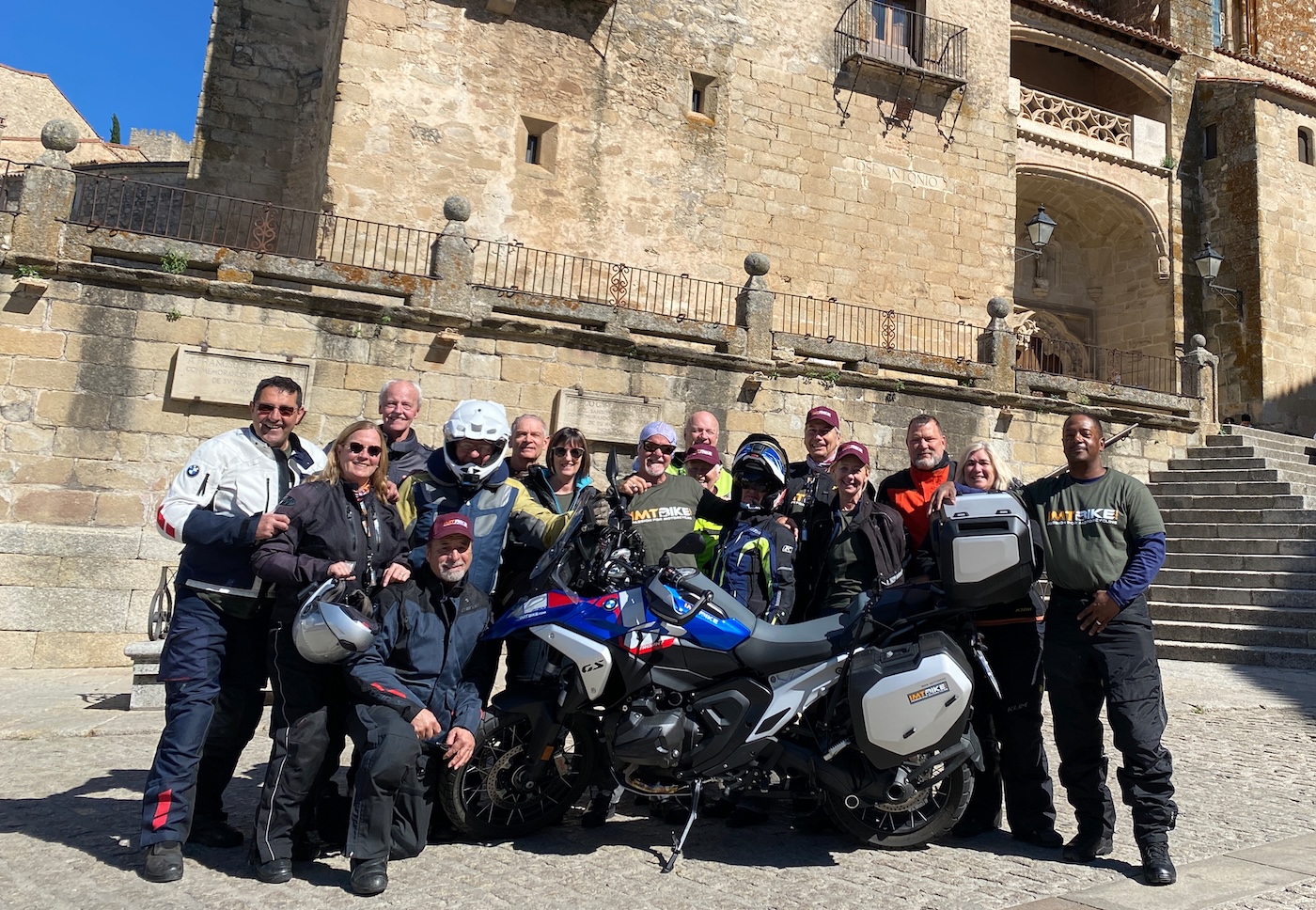
Later that afternoon, we met the 13 other riders we would be riding with over the next two weeks, along with our two IMTBike guides, Sergi and Chano. Except for a couple from Australia and another from New Zealand, all were MOA members from the USA. Once finished with personal introductions, Sergi and Chano gave us a brief introduction into traffic and safety issues for European riding and a 60-page tour handbook that not only explained what we could expect each day, but also gave us additional information including Spanish and Portuguese history and customs, along with details regarding climate, traffic, staying in touch and essential emergency information.
Spain shares borders with Portugal to the west, France and Andorra to the north and Gibraltar to the south. More than 60% of the land area, including the large central plateau, is mountainous, giving Spain the highest mean elevation of all Western European countries except Switzerland. These significant mountain systems include the Cantabrian and Pyrenean Mountains in the north and the Sierra Morena in the south. IMTBike emphasizes riding little-known secondary roads and our tour would begin and end in Madrid while taking us nearly 1,800 miles through breathtaking terrain to the easternmost point of Portugal before winding back to Madrid.
By the end of our initiation and giddy with the enthusiasm of what was to come, we made our way to El Retiro Park, one of the largest in Madrid covering more than 300 acres, for an introduction to Spanish cuisine at a tapas bar. During our dinner, we received our first lesson on Spanish culture and time.
As explained in our tour handbook, a typical Spanish workday begins at 9 a.m. and stops between 1:30 p.m. and 4:30 p.m. for lunch. The afternoon shift runs until about 8:30 p.m., when Spaniards enjoy socializing over a glass of wine, some cheese and ham before returning home to eat a light dinner around 10 p.m. The Portuguese follow a similar schedule. Following our late dinner, we headed back to the hotel to try to sleep before beginning our tour the next day.
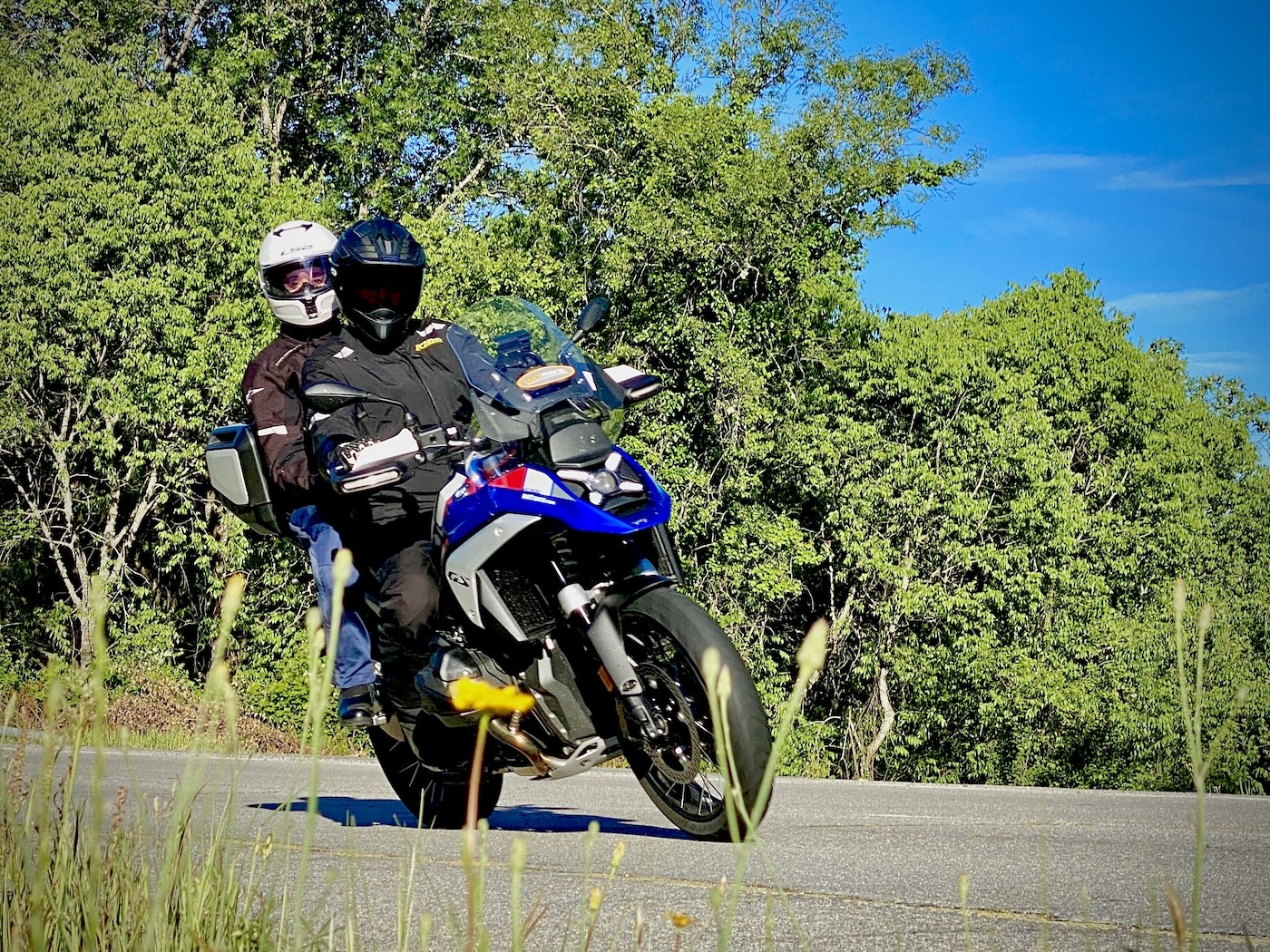
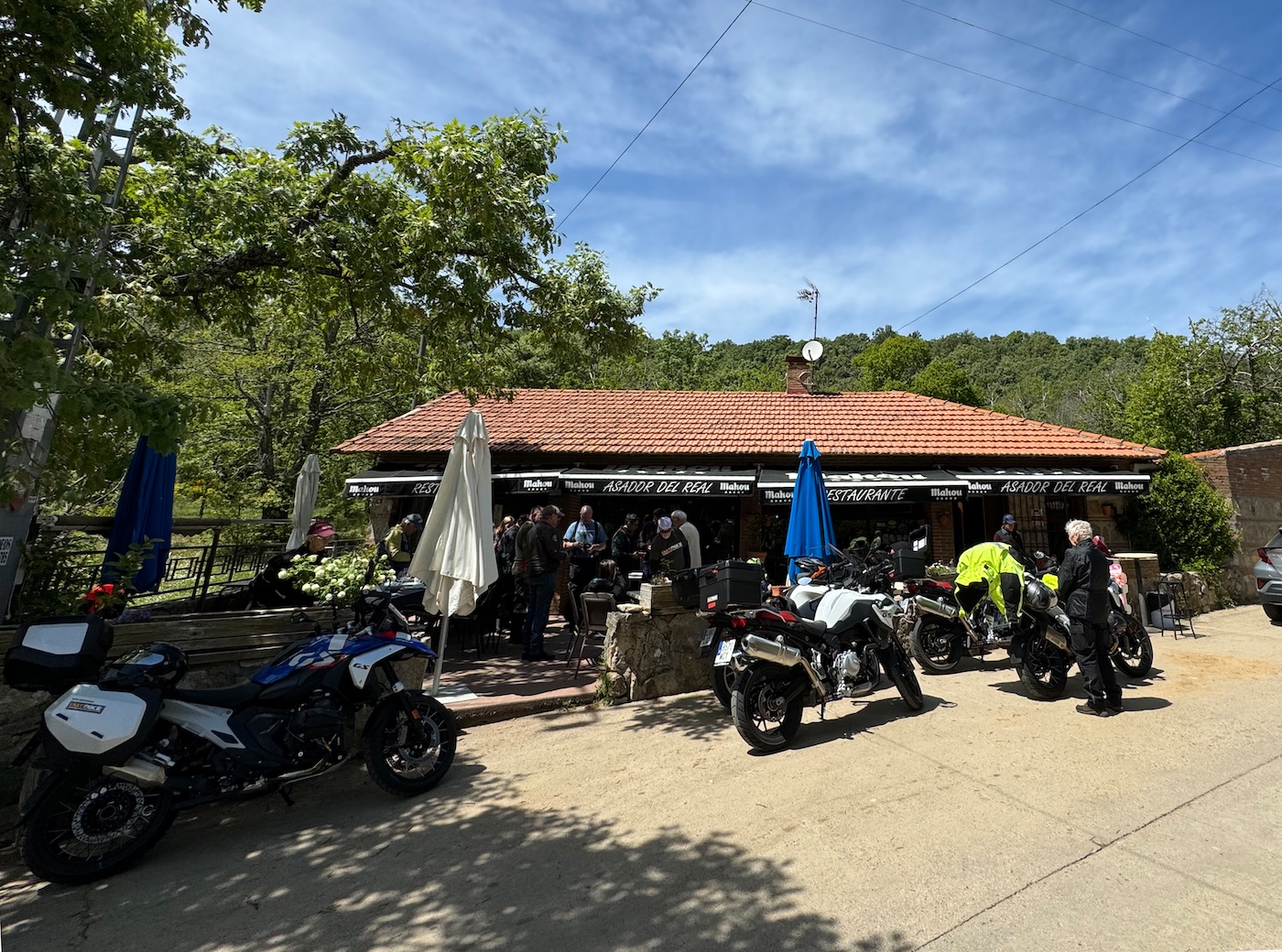
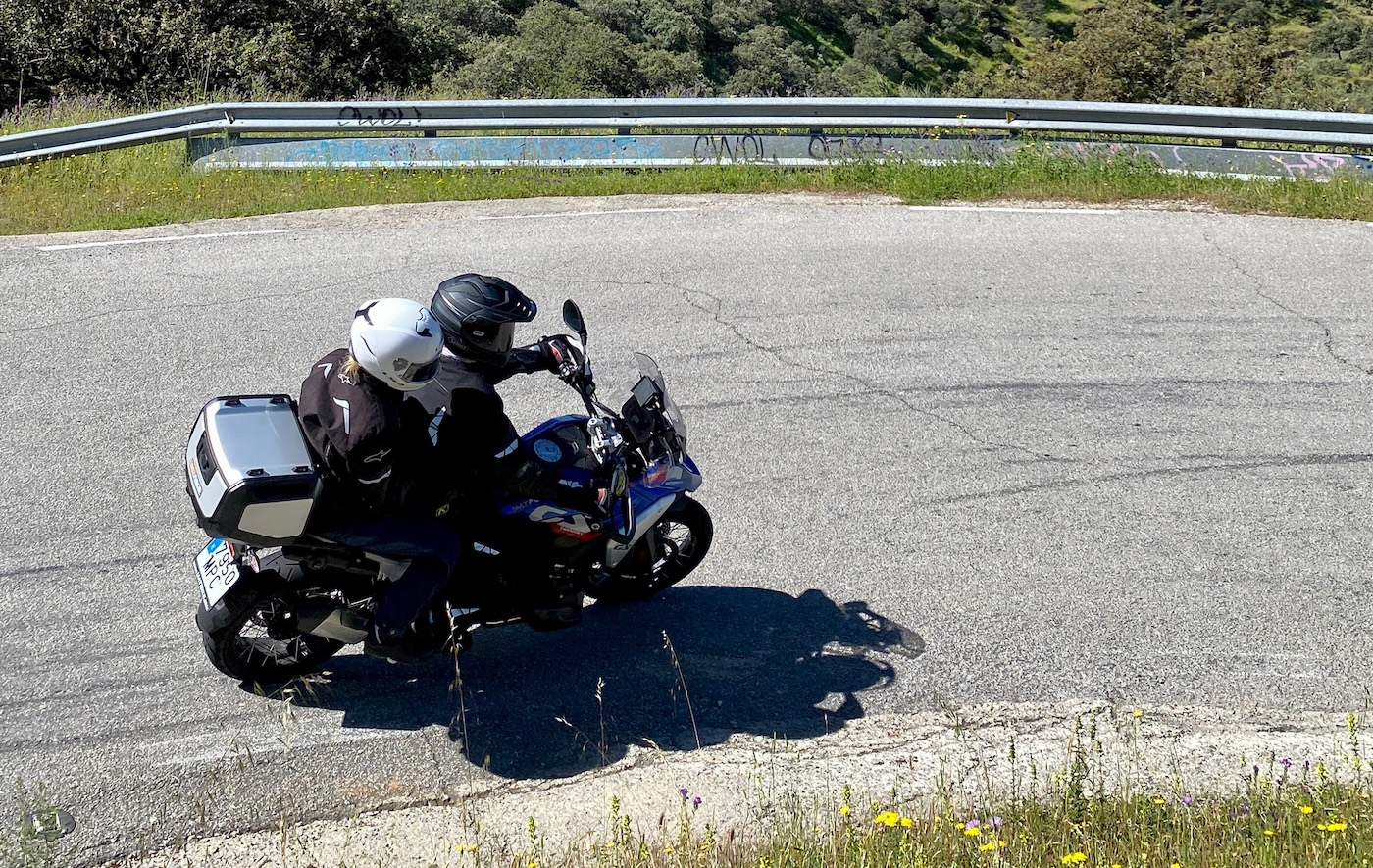
After breakfast the next morning, we were shuttled to IMTBike’s headquarters to familiarize ourselves with our rides for the next two weeks. Nearly all of IMTBike’s motorcycles are BMWs, and as a GS rider, I chose to ride a new R 1300 GS. This would not only be my first experience with the new 1300, but also the first time I’ve carried a passenger for more than an hour. Although I felt confident getting acquainted with the GS, riding with my wife behind me raised some concerns. Another concern was that it was April, and because Judy and I live in the northern United States, I hadn’t done any significant riding for the past six months–I was rusty.
Riding away from the IMTBike offices, we jumped on the freeway to quickly get away from the city. With the Guadarrama Mountains in the distance, we were heading toward our first stop of the day in El Escorial. The easy sweepers into the mountains reminded me of the Cherohala Skyway, which I’ve ridden many times during the MOA Getaways at Fontana. The sweepers provided an opportunity to both get used to the handling of the GS while carrying a passenger. Like North Carolina, pines and hardwood trees lined the roadsides of the beautiful asphalt we rode. According to our guides, this area is popular with motorcyclists escaping Madrid in search of twisty roads on the weekends. In the winter months, the area is popular with skiers. Luckily for us, midweek traffic was light.
It didn’t take long before the gentle curves became tighter, demanding more attention to speed and line as we continued our ascent. With each corner the last words my daughter said to me at the airport (“Don’t kill mom!”) repeated in my head. Being the first significant ride I’ve taken with Judy, I didn’t invest in a communication system for us. Instead, an occasional finger pointing to something interesting or an old-school punch in the ribs let me know what she was thinking as we rode.
After a brief break for coffee, we descended the mountains towards Segovia, a city famous for three landmarks: an ancient Roman aqueduct, the Cathedral of Our Lady of the Assumption and Saint Fructus towering high above the city and the Alcazar of Segovia. It is an 11th-century medieval castle and one of the most visited landmarks in Spain.
During the ride away from Madrid, I worried about how much Judy was enjoying her crash-course in riding. Later that day, I knew everything was going well when she said, “I see why you like this!” On our lunch break in Segovia, we wandered the city and enjoyed a delightful meal at a quaint restaurant off a side street. Though our waiter spoke no English, our basic Spanish skills were enough to be understood. We reminded each other that this was truly an incredible immersion into local culture and the best way to see Europe.
Continuing our exploration of Segovia, we eventually made our way back to the bikes just as the rest of our group did, and soon we were off toward the town of Avila, our destination for that evening, winding through the beautiful Spanish countryside.
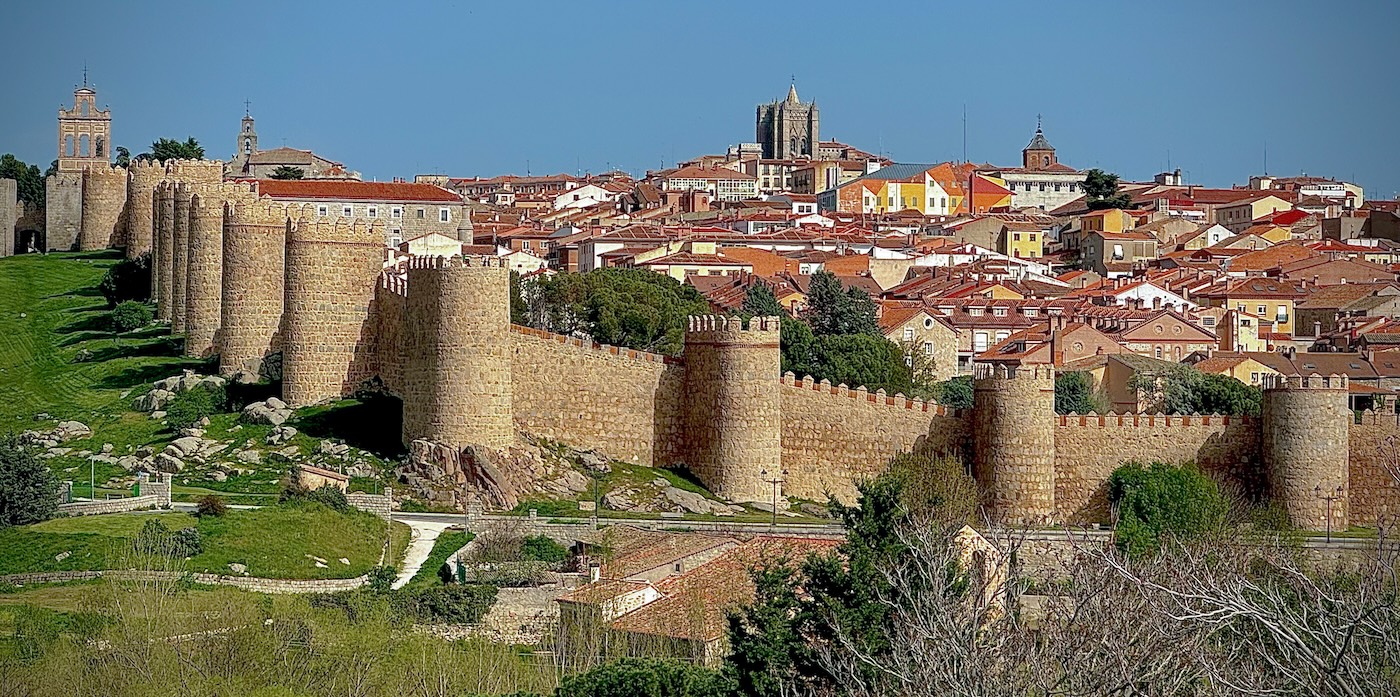
Avila is one of Spain’s best-preserved medieval cities and is known for its rich history and tradition. The walls of Avila stretch more than a mile and a half around the city and include 87 towers and nine gates. From the walkway atop the walls, visitors take in breathtaking views of the city and surrounding countryside, especially in the evening when the walls are illuminated.
Our accommodations for the evening were at the Parador De Avila. A Spanish parador is a state-owned luxury hotel typically located in buildings of historical significance such as castles, monasteries or palaces. Currently, 98 paradores stretch across Spain in a network established by King Alfonso XIII in 1928 with the primary purpose of rehabilitating empty historical buildings and using the revenue from the hotels to maintain them for future generations, all while giving visitors a unique experience into Spain’s rich history and culture.
A similar network exists in Portugal, where they are called Pousadas. Like their counterparts in Spain, pousadas both promote tourism and preserve historical buildings. All of the Spanish paradors and Portuguese pousadas we stayed at during our IMTBike tour offered first-class accommodations, delicious and authentic dining options and memories we will carry with us forever. For the evenings we didn’t stay at paradors or pousadas, we stayed at high-end hotels.
Leaving Avila, we continued west across beautiful twisting roads into the Sierra de Gredos mountains and a pine forest landscape dotted with boulders with snow lingering on the highest peaks seen in the distance.
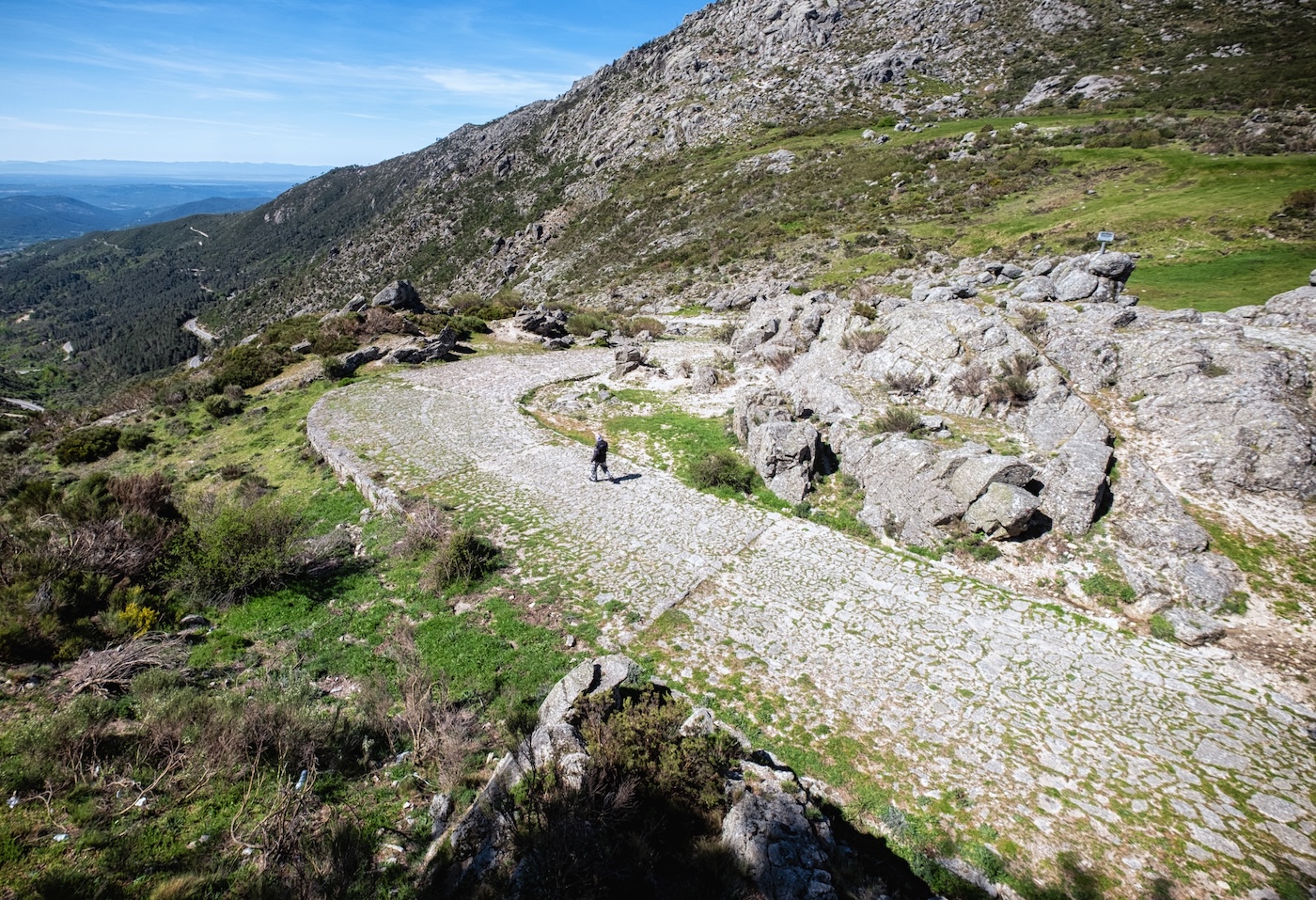
Along the way, Sergi and Chano lead us on a detour up a winding mountain road to get another glimpse into the region’s rich history–one of the ancient Roman highways still visible. Off the bikes, we took the opportunity to walk these ancient roads built with gravel, sand and tightly-fitting stones while wondering who may have traveled over them more than two centuries ago.
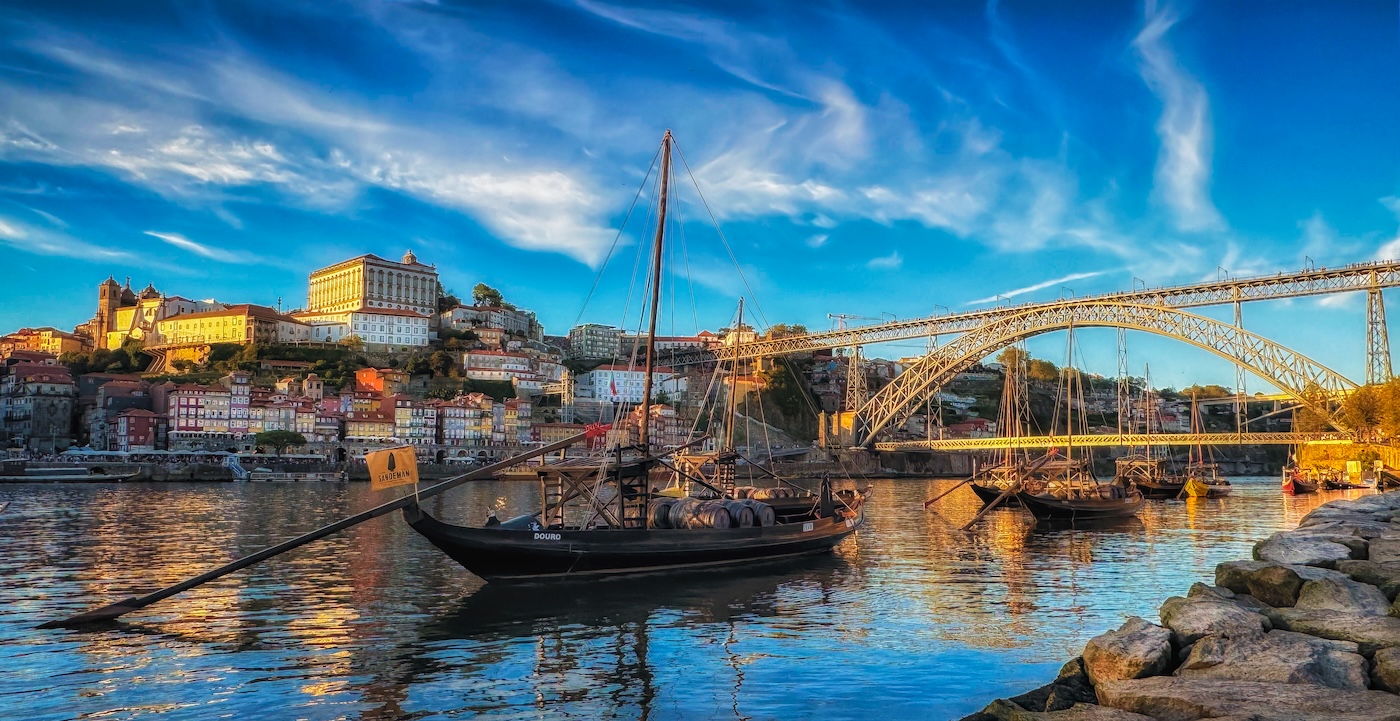
Back on the bikes, we continued our ride to Ciudad Rodrigo, our stop for the evening just miles from the border of Portugal, before pushing on to Porto the next day. Porto, the second largest city in Portugal, is located along the banks of a canyon cut by the Duoro River and is famous for its wine and beaches. Our rest day there offered us the opportunity to explore the city, eat fresh seafood and enjoy the beautiful views.
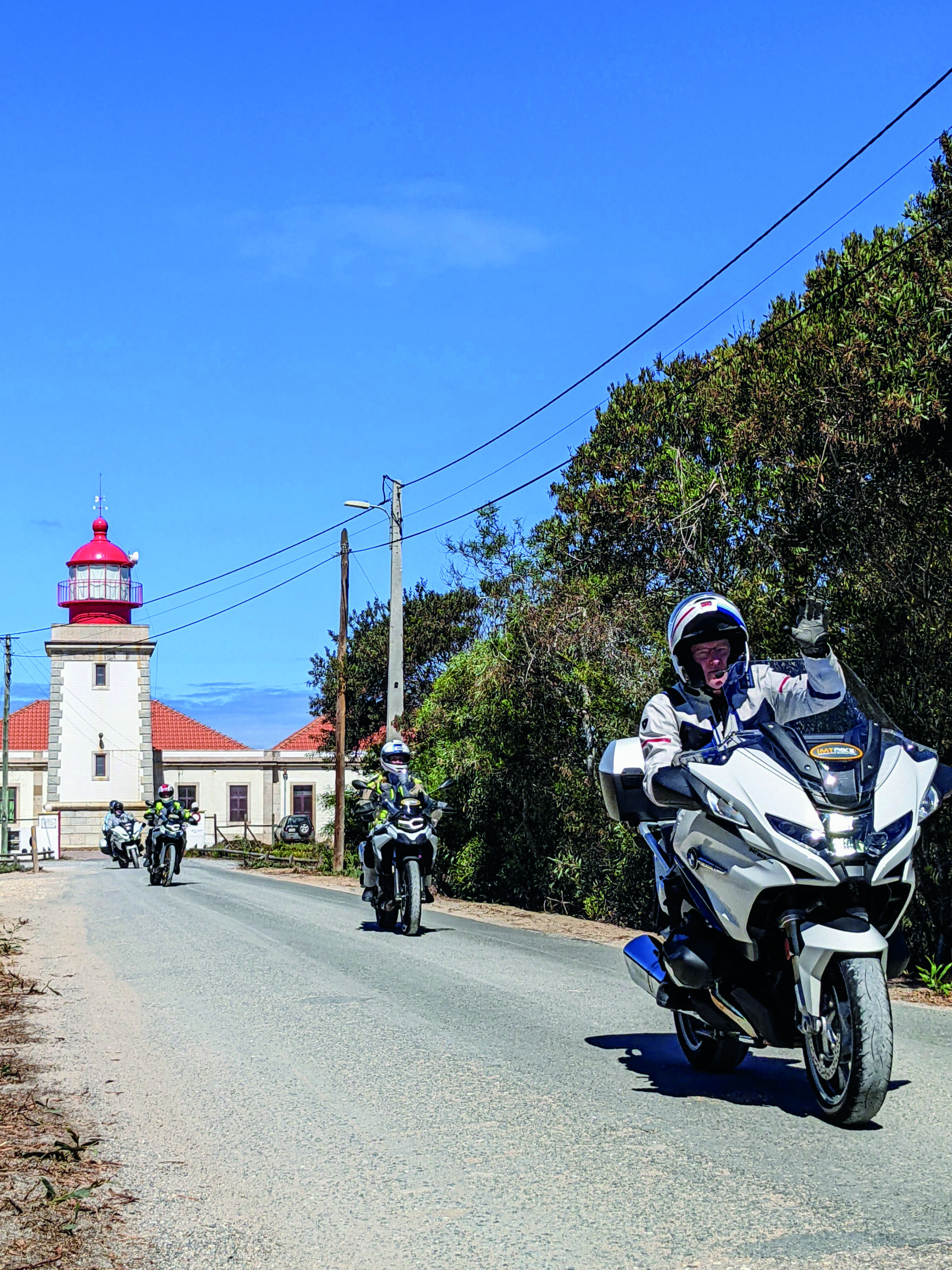
From Porto, we rode south to Tomar, then Cabo Da Roca along the Atlantic Ocean near the oldest lighthouse in Portugal and the westernmost point of Europe. We’d spend the next two days in the small fishing village of Cascais, which, legend has it, is the town where Ian Fleming came up with the idea for James Bond.
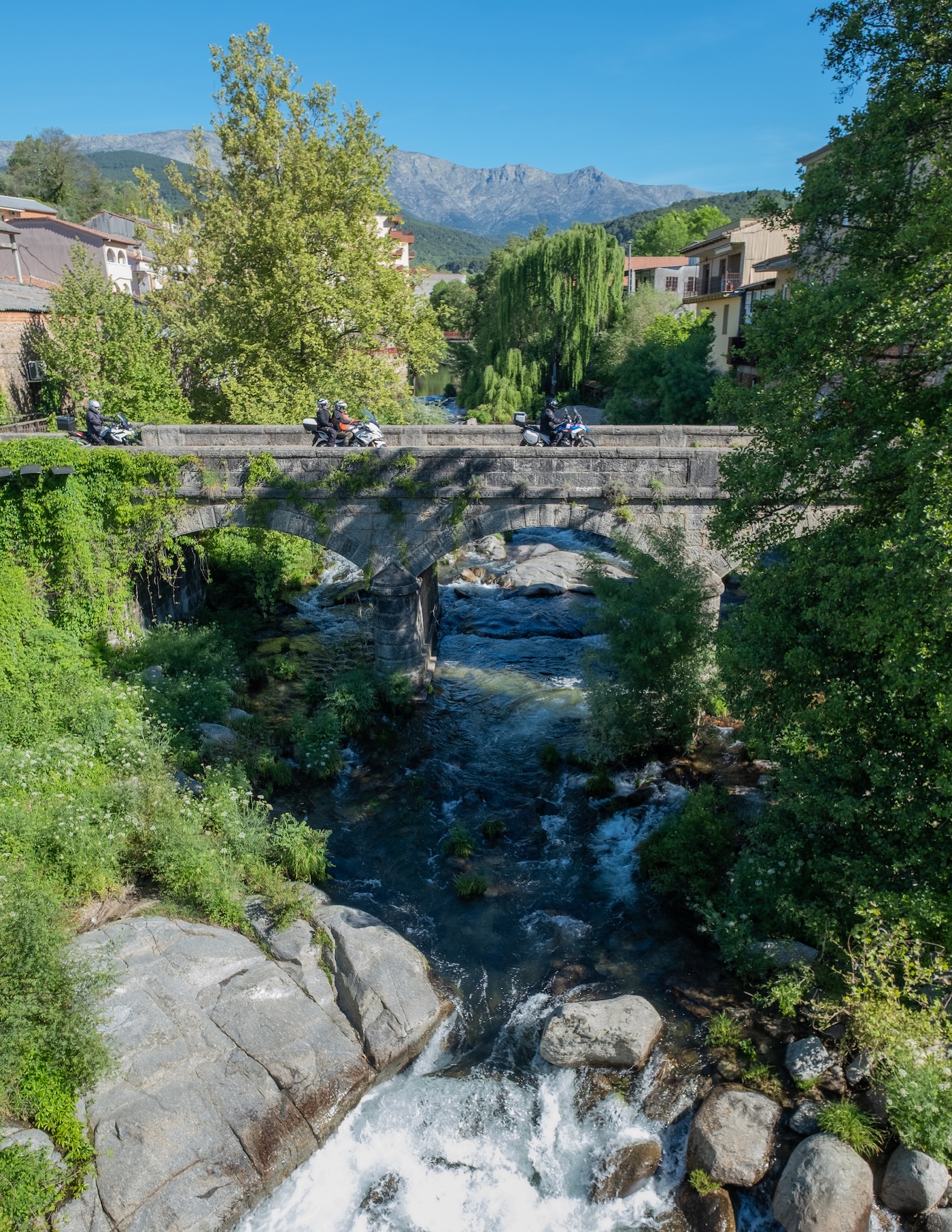
From Cascais and now just over halfway through our tour, we rode east to Merida, then north past olive groves and vineyards serving as a link to the region’s history shared with its ancient Roman inhabitants. Fields of lavender cover the rolling hills beside the road we travel.
Sergi told us to watch for Iberian pigs wandering the olive groves and oak trees found in this region. Jamón Ibérico is the meat of a cured rear leg of free-range black Iberian pigs specifically fed on acorns for the last four months of their 15-month life. Quintessentially Spanish and exclusive to four different areas of Spain, it is probably the most delicious and sought-after cured meat in the world.
Spring hadn’t yet arrived in the mountains as we approached Jerandilla and, as the temperatures kept our bodies cool, the heated grips blazed on to keep my hands warm. The cool weather brought with it a light rain as we prepared to leave the next morning. Pulling away, the temperature gauge on the TFT display read 7° Celsius, which I quickly calculated to be about 44° Fahrenheit. The beautiful mountain roads we rode reminded me of Colorado as we followed a river meandering through endless stands of tall pines. I thought to myself, this would have been a great ride in clear weather, but as it was the only rain we experienced during our tour, I couldn’t complain. As that thought passed through my brain, the rain picked up and the temperature dropped another degree. Chilled, our morning stop couldn’t come fast enough. Luckily, the coffeeshop we pulled into had a roaring fire to warm up next to–thanks again to Sergi and Chano and their local knowledge!
From Toledo, our route took us south along the Tejo River as colorful pastels colored the hills surrounding us as we rode toward Consuegra. This interstate-like ride through the arid countryside continued until, in the distance, we could see windmills perched high atop the hills near the town of Consuegra. This small La Mancha town is famous for its perfectly restored castle on the hilltop surrounded by windmills. Several of the windmills date back to the 16th century and were pivotal in developing the agriculture of the area.
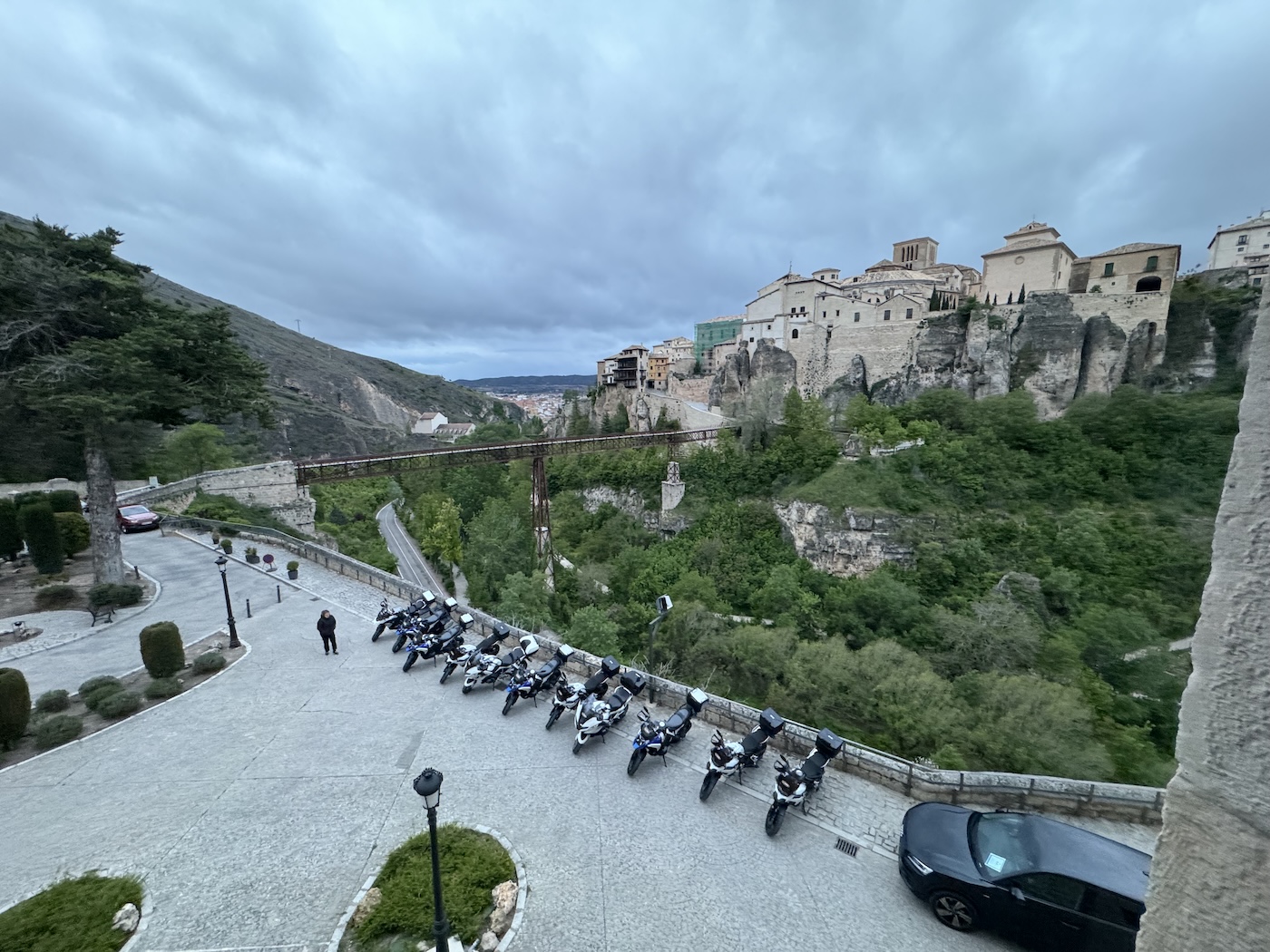
Leaving Consuegra took us on a path through lush fields of olive groves, vineyards and wheatfields. The terrain slowly changed to become hillier as we enjoyed the long sweepers breaking the monotony of the boring highway. We were on a fast run to Cuenca and a return to the lovely mountain roads we crave. Overlooking the Jucar River, the picturesque streets, antique facades and cathedral are all worthy sites, but Cuenca is really known for its hanging houses which seem to defy gravity as they hang out over the abyss below.
A feeling of melancholy grew within the group; we knew it was our last evening together. At dinner, we raised our glasses to toast a great ride, our two excellent guides and to new friendships. Once again, sleep was difficult as I recounted not only that day, but highlights of our previous days riding through the quaint Spanish towns, over breathtaking mountain roads and dining on incredible cuisine.
Our final day of riding took us into the spectacular Cuenca Mountains for a traffic-free ride with more stunning views and twisting roads of perfect asphalt. Late that afternoon, we were back to where our tour began, IMTBike’s headquarters in Madrid.
As long as I’ve been riding, I’ve never enjoyed riding in large groups and have always been more comfortable riding alone or with one or two others. With just a couple of riders, it’s easier to reach a consensus on where we’ll go, when we’ll stop and when we’ll return. Additionally, we typically all know each other and each other’s tendencies and riding style. We alternate leading with no defined alpha at the head of the pack. This ride changed my opinion of larger group rides.
On our tour, guides Chano and Sergi alternated between leading us and driving the chase van. Whoever was leading took care to make sure our group stayed together, and while the ride was spirited at times, I never felt the need to push beyond my comfort zone as the voice of my daughter warning me not to kill her mom played in my head!
During our initial meeting that first day in Madrid, we learned that in addition to their structured group tours like the one we were about to embark upon, IMTBike also offers bike rentals for those wishing to explore Spain and the neighboring countries alone, or with another rider or two. While those rentals included a GPS, maps and a list of suggested sites to visit, they don’t come with the local knowledge of our two guides–like the ancient Roman highway they brought us to. Because Sergi and Chano are both Spanish citizens and avid motorcyclists themselves, they know the local customs of our destinations along with the hidden, off-the-map must-see places to visit. On top of that, they speak the language, making it much easier when visiting the quaint, off-the-beaten-path villages we’d see every day.
Since our IMTBike tour, Judy and I have taken a Viking cruise up the Rhine River from Basel, Switzerland, to Amsterdam, enabling us to see even more of Europe. Comparing the two trips is like trying to compare an apple to an orange.
Photo courtesy of IMTBike.
Riding through Spain and Portugal offered an immersion into the towns and villages we rode. During our three rest days, we became more than simple sightseers, but were able to tour these cities, observe local culture and taste the cuisine to truly get an authentic experience of the places we were visiting. Each day of our two-week tour gave us a new perspective.
Aboard the Viking Cruise ship, our experience was much different. As motorcyclists, it’s best explained by defining the difference between riding a motorcycle, which engages our senses as we become part of the world we are riding through. On a cruise ship, we spent most of our time watching the world go by as we sailed through it. While we saw many beautiful landscapes and incredible castles as we sailed by, for the most part, we couldn’t truly experience what we were sailing past.
IMTBike gave Judy and me an experience we will never forget, and we are already looking forward to another tour in the future. IMTBike is offering another tour especially for MOA members this coming spring with their BMW MOA Best of Portugal Motorcycle Tour with MOA President Brian Dutcher and his wife Tricia.
If you are interested in joining Brian and Tricia on an unforgettable 15-day “Best of Portugal” tour in 2026, please visit IMTBike.com for complete details.
<br />
Why It Is Better To Rent A Supercar Rather Than Buying It – Super Car Guru<br />
Why you should rent a sports car today
Who has not thought about buying a sports car yet? The idea sounds charming, but why do most people end up not buying one? It is so much fun to drive, so beautiful to look at, so exciting listening to the engine and – pretty expensive, uncomfortable and impractical. Even if one can afford to buy a brand new Porsche, Ferrari, Lamborghini or whichever brand you prefer, is it really worth spending it on? At the end of the day, you will get a two-seat car, which is also highly expensive in maintenance and burns fuel like crazy. Well, some people will tell you it is definitely worth it. Of course, it depends on how much you want to spend on the fun these supercars provide. Luckily you do not need to buy a sports car yourself anymore, and can still enjoy the adrenaline rush of acceleration, high-performance braking systems and intense driving dynamics. How? Whatever car is your personal favourite, you can simplyrent a sports car of your choice today! It does not matter if it is just for a special day, a sunny weekend or maybe even a whole week – options are completely flexible. Basically, there is only one problem, which car to choose? Maybe the following can help you out.
The ultimate experience – Lamborghini
Only a few brands can be compared to Lamborghini. It has always been the most extrovert supercar brand overall, and that is exactly what these cars are loved for. Understatement is definitely not what you are looking for if you plan to rent a Lamborghini. Immense performance, unique design and roaring exhausts that perfectly fit the Italian temperament. Even the interior design is unmistakable, actually, you can´t be sure if you´re sitting inside a Lamborghini Aventador or the cockpit of a Jet. Driving a Lamborghini is exactly what it looks like – harsh, brutal and by no means relaxing. A real supercar that likes to be extreme, this really is not for everybody. But if you´re confident enough to rent a supercar, then you should definitely take a look at Lamborghini.
Nissan GT-R
Do you prefer to think outside the box? Ferrari, Porsche and Lamborghini are too mainstream? Then the Nissan GT-R is for you. Developed & built in Japan his nickname ‘Godzilla’ has become popular around the globe. The previous Skyline series could be seen in several movies like ‘2 fast 2 furious’ and were especially known for being really viable for tuning purposes. Today the latest model of the R35 series has state of the art technology, high-quality materials, and delivers a real supercar experience. Acceleration from 0 to 100 km/h in only 2.8 seconds is all you need to know. The Nissan GT-R is the perfect supercar for everyone who wants to experience something new, unusual and exciting.
Porsche
It is always a good idea to rent a Porsche to experience what a real sports car feels like. Perfectly driving dynamics, super sharp handling and a timeless design – the Porsche 911. This car really is something special, luxurious interior quality and the best of German engineering. Porsche always wanted to invent innovations from their racing cars to their stock cars. The boxer engine in combination with a rear wheel drive will give you a unique driving experience that only a Porsche 911 can deliver. Many Porsche fans will tell you that this really is the perfect sports car. One of the best options to rent a sports car is definitely a Porsche 911 in combination with a few laps on a race track of your choice, maybe you´re even brave enough to contest Germany’s most famous track, the Nürburgring Nordschleife? Still not convinced yet? Many people share their experience with their dream car on the internet, reading a Porsche Review also gives you information about the latest models & updates.
Mercedes AMG
Mercedes really is not known for building sports cars. The first thing that comes to your mind is big, luxurious and comfortable sedans. But AMG always knew that there are clients, who prefer to combine the comfort of a real Mercedes with the performance of a sports car. To be honest this is a great idea. You can make your way to the track, enjoy an intense racing experience and afterwards relax on your way home. AMG recently also released a pure sports car, completely developed by themselves, the AMG GT. It is supposed to replace the older model AMG SLS, and who already loved the SLS will also love the GT. The extremely long hood, flat design & rear wheel drive result in a perfectly balanced driving machine. Without doubt an extraordinary sports car!
Of course, this was just a small insight into the world of supercars. There are lots of other brands, many different concepts & styles. In the end, everybody has his own taste & preferences. But there is one thing that all of these cars have in common, and that is the most important thing: they are absolutely amazing and fun to drive!
Why It Is Better To Rent A Supercar Rather Than Buying It
The rise of collectible whiskies represents one of the most powerful strategies in luxury spirits today. Far from exquisite bottlings or rare casks, these limited editions often merge heritage and storytelling into tangible works of art. Distilleries have elevated scarcity into a luxury statement — releasing age-statement whiskies in hand-finished decanters, often in collaboration with artists or designers. In Asia, where connoisseurship and investment often overlap, these bottles are increasingly viewed not only as rare acquisitions but as assets that appreciate in value — fuelling a growing market for ultra-premium spirits.
Beyond exclusivity, these releases serve a broader mission — they make whisky aspirational again. By framing the bottle as both an artwork and an experience, brands are successfully drawing new consumers into the category. Collectibility has become the gateway to appreciation where limited releases invite curiosity about production techniques, cask provenance and flavour innovation. For younger Asian consumers, especially those less steeped in traditional whisky culture, such storytelling provides an accessible entry point into a once-elitist world. Through immersive activations and artist collaborations, brands position themselves as modern curators of taste — not just whisky purveyors. The result is a new ecosystem of engagement where the idea of owning a bottle extends into a shared narrative of craft and cultural identity.
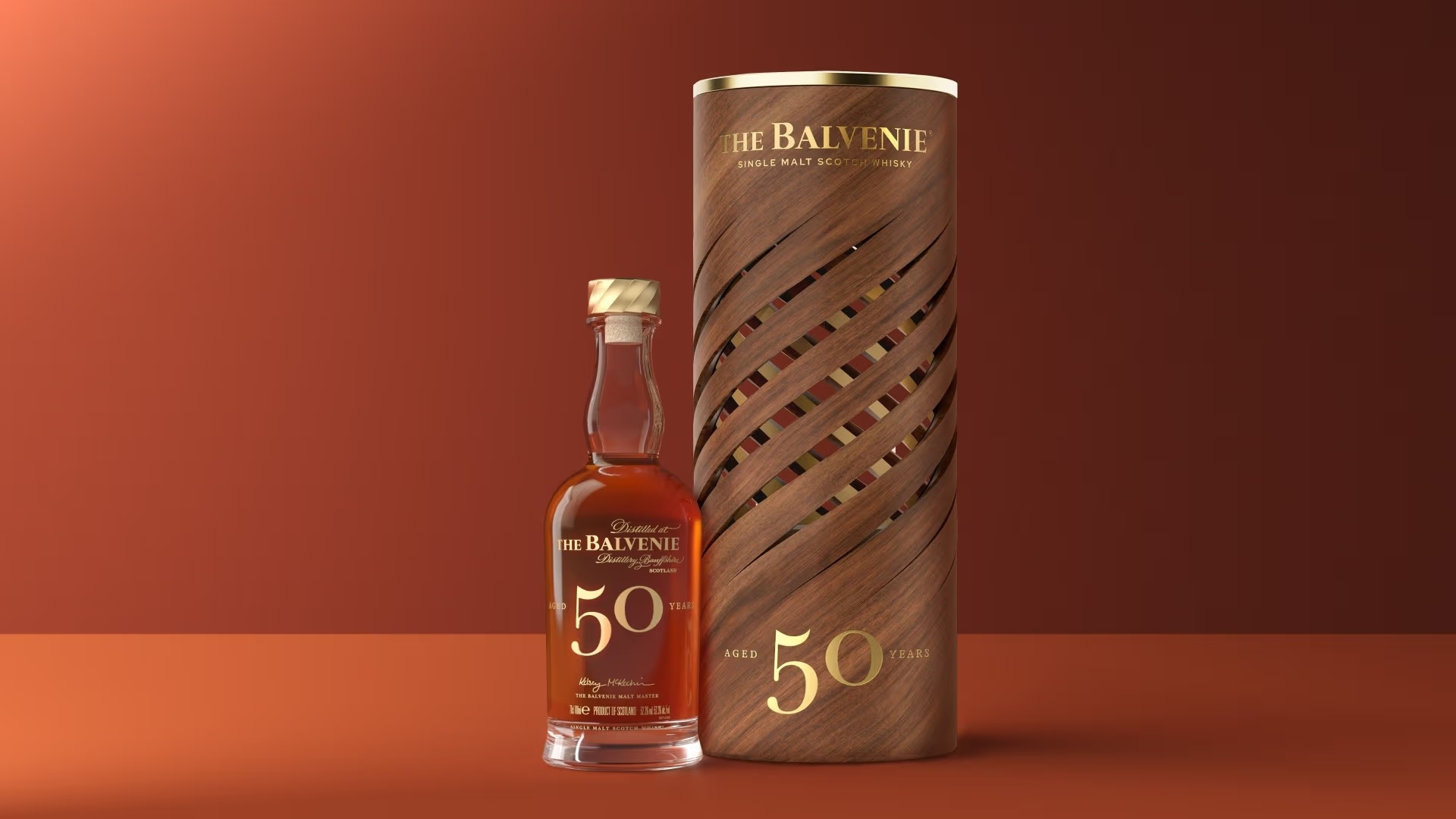
The Balvenie Fifty Collection – Second Edition
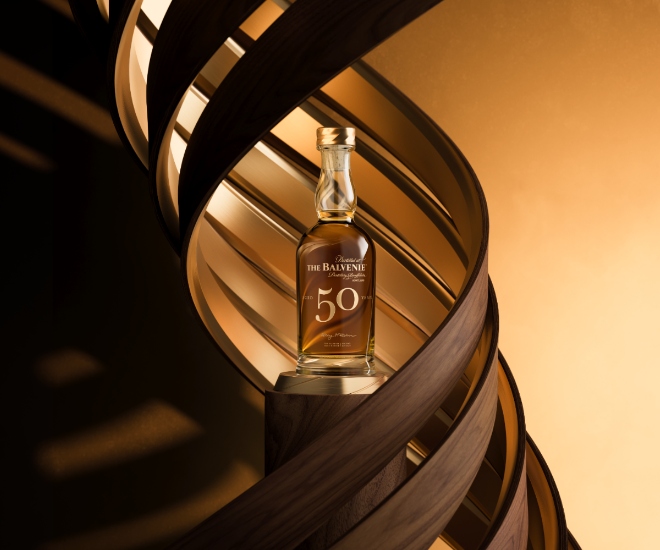
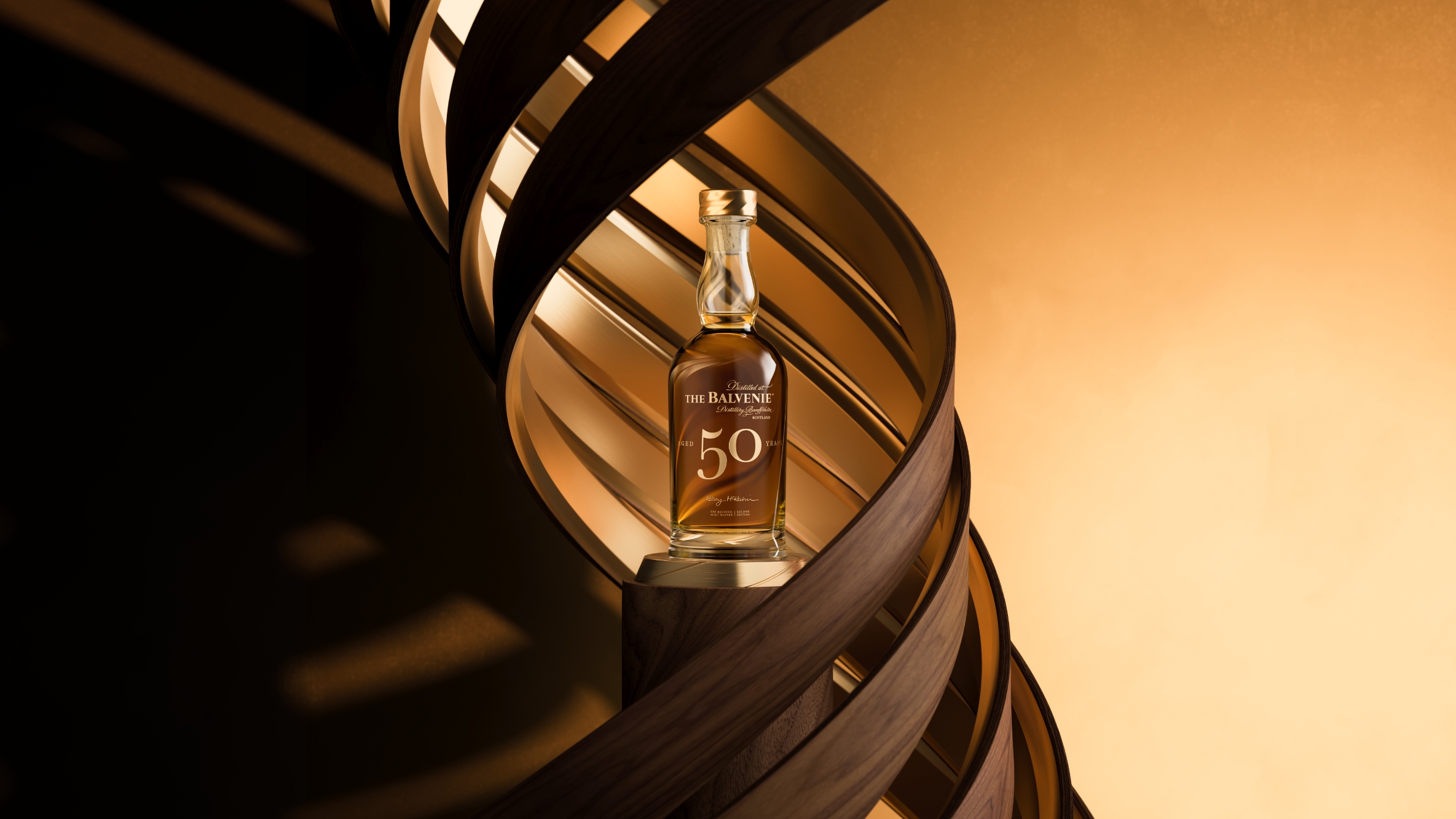
The Balvenie Fifty Second Edition marks the next chapter in the distillery’s rare Fifty Collection — a trilogy that traces five decades of artistry and devotion to detail. Following the success of the inaugural release in 2024, the Second Edition once again showcases the intimate connection between craft, time and the people who have shaped The Balvenie’s character across generations.
Hand-selected by Malt Master Kelsey McKechnie, only 97 bottles of this 50-year-old single cask whisky will be made available worldwide — underscoring its rarity and the distillery’s pursuit of excellence at every stage of its craft. Each bottle represents a distinct maturation journey and serves as a reflection of the many hands and minds that have contributed to The Balvenie’s story over half a century. On the nose, it reveals delicate floral notes of violet and rose interlaced with sticky toffee, warming oak and a hint of spice. The palate unfolds with remarkable depth — molten dates, sweet currants and subtle citrus zest evolve into layers of creamy honey and a soft buttery finish.
The Balvenie Fifty also comes in an exquisite packaging that was created in collaboration with Croglin, a bespoke craft workshop in Cumbria. Each display case incorporates more than 100 individually crafted components to create a conceptual helix structure, composed of four layers of wood with a precision tolerance of less than 1/10th of a millimeter that encases the bottle. The beautifully crafted display — adorned with 14-carat gold-plated brass — results in a collector’s piece that encapsulates the spirit of The Balvenie, one where every detail, from the liquid within to the vessel that holds it tells a story of dedication and enduring craft.
Read More: Luxury Spirits Industry in Motion
Glenfiddich 16- and 19-Year-Old Limited Editions Celebrate Partnership with Aston Martin Formula One Team
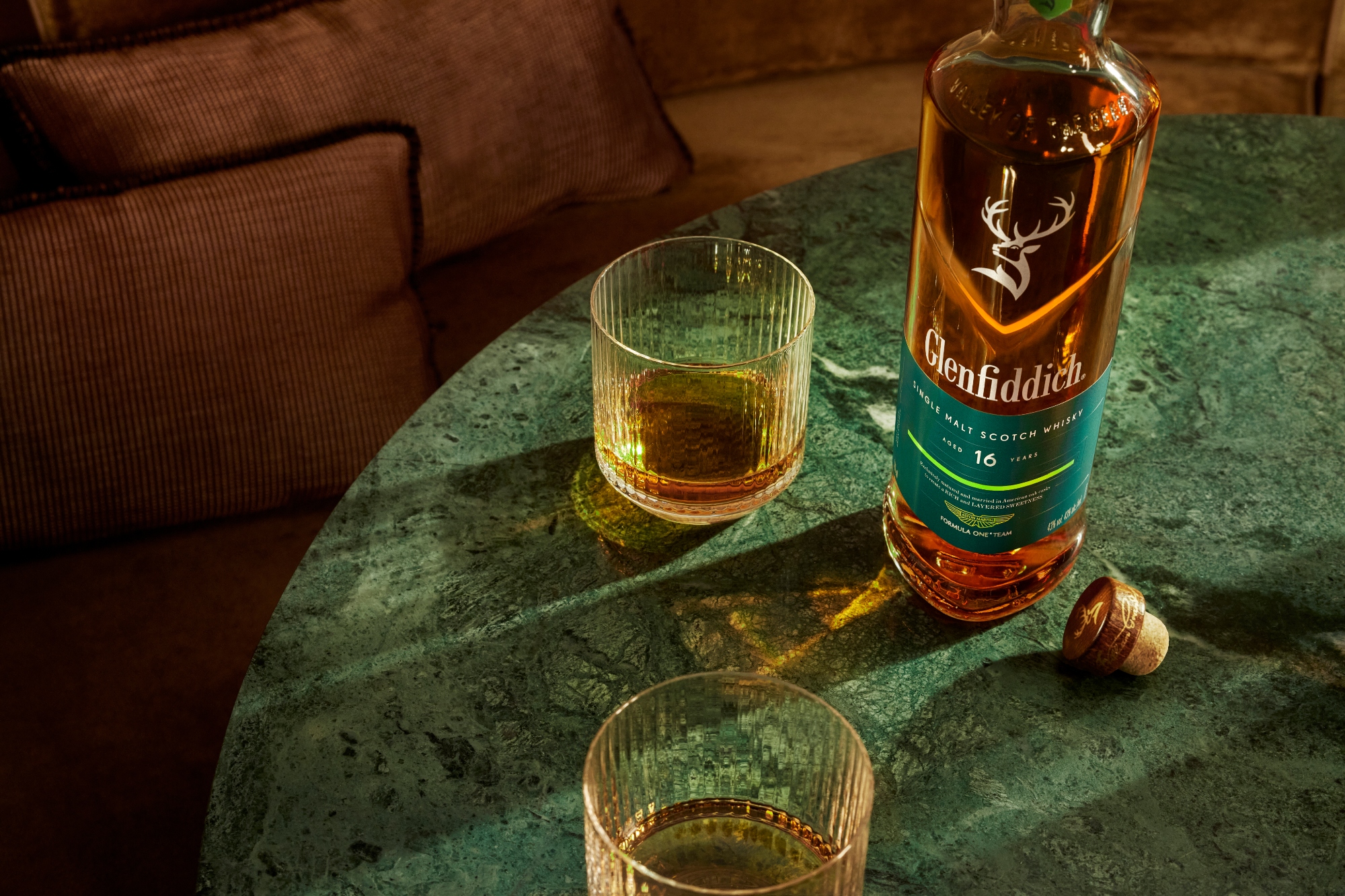
Glenfiddich 16 Year Old
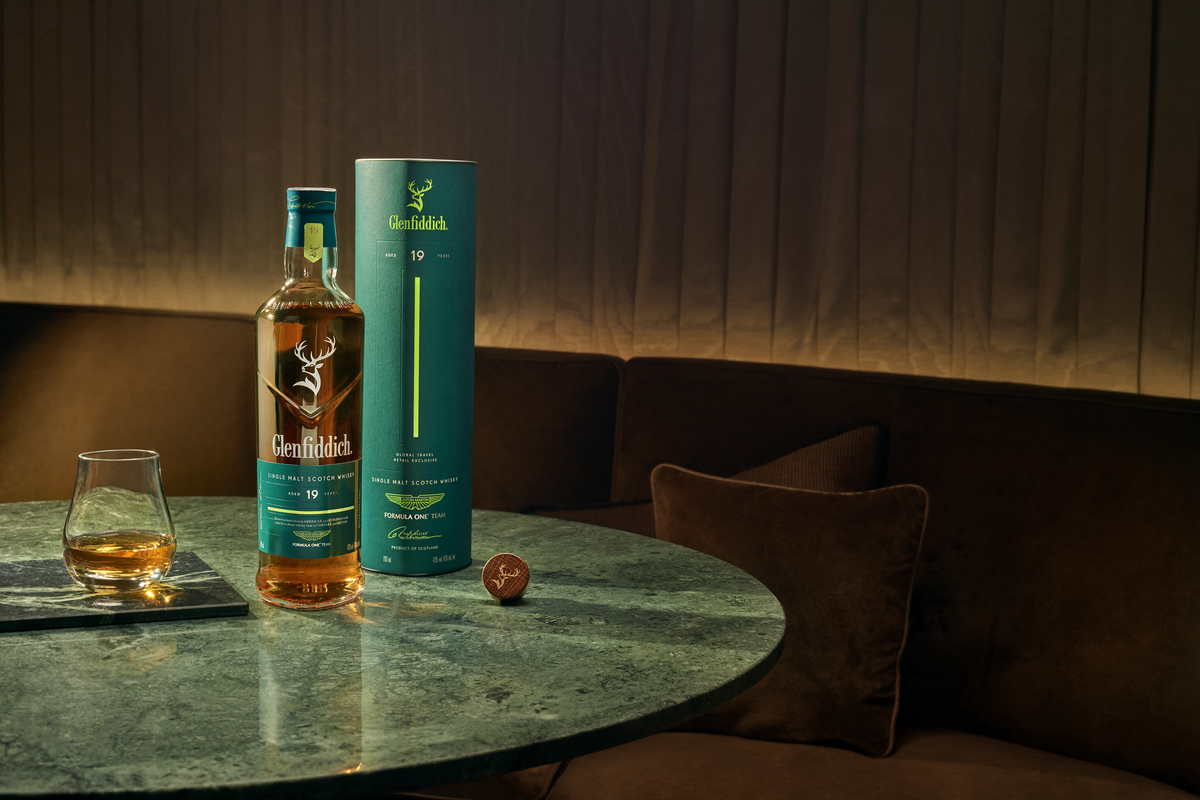
Glenfiddich continues to strengthen its position in the luxury spirits sector with the release of two new limited-edition whiskies — the Glenfiddich 16-Year-Old and the Glenfiddich 19-Year-Old — marking its ongoing partnership with the Aston Martin Formula One Team. The collaboration underscores a shared vision between two heritage brands united by performance and innovation. The 16-Year-Old — crafted from a meticulous combination of American oak wine casks, new American barrels and second-fill bourbon casks — offers notes of maple syrup, caramelised ginger and Chantilly cream. Meanwhile, the 19-Year-Old — exclusive to global travel retail — matures in American and European oak with a touch of Montilla wine casks, delivering a complex expression of Seville orange, warm spice and buttery pastry.
Glenfiddich 19 Year Old
Beyond the bottle, Glenfiddich’s marketing approach reflects the experiential direction luxury spirits are taking across Asia. In Singapore, the brand staged a full-scale city activation, including a takeover of the Warehouse Hotel during the F1 Grand Prix weekend and a Glenfiddich Race Experience pop-up at Changi Airport Terminal 3. The latter featured an Aston Martin Formula One replica car and immersive digital displays, effectively merging whisky appreciation with motorsport culture.
Available through select retailers such as Grand Cru Wine Concierge and 1885 The Bottle Shop, the Glenfiddich 16-Year-Old exemplifies how premium spirits are evolving beyond product craftsmanship to become lifestyle statements — connecting tradition with modern aspiration through storytelling and exclusivity.
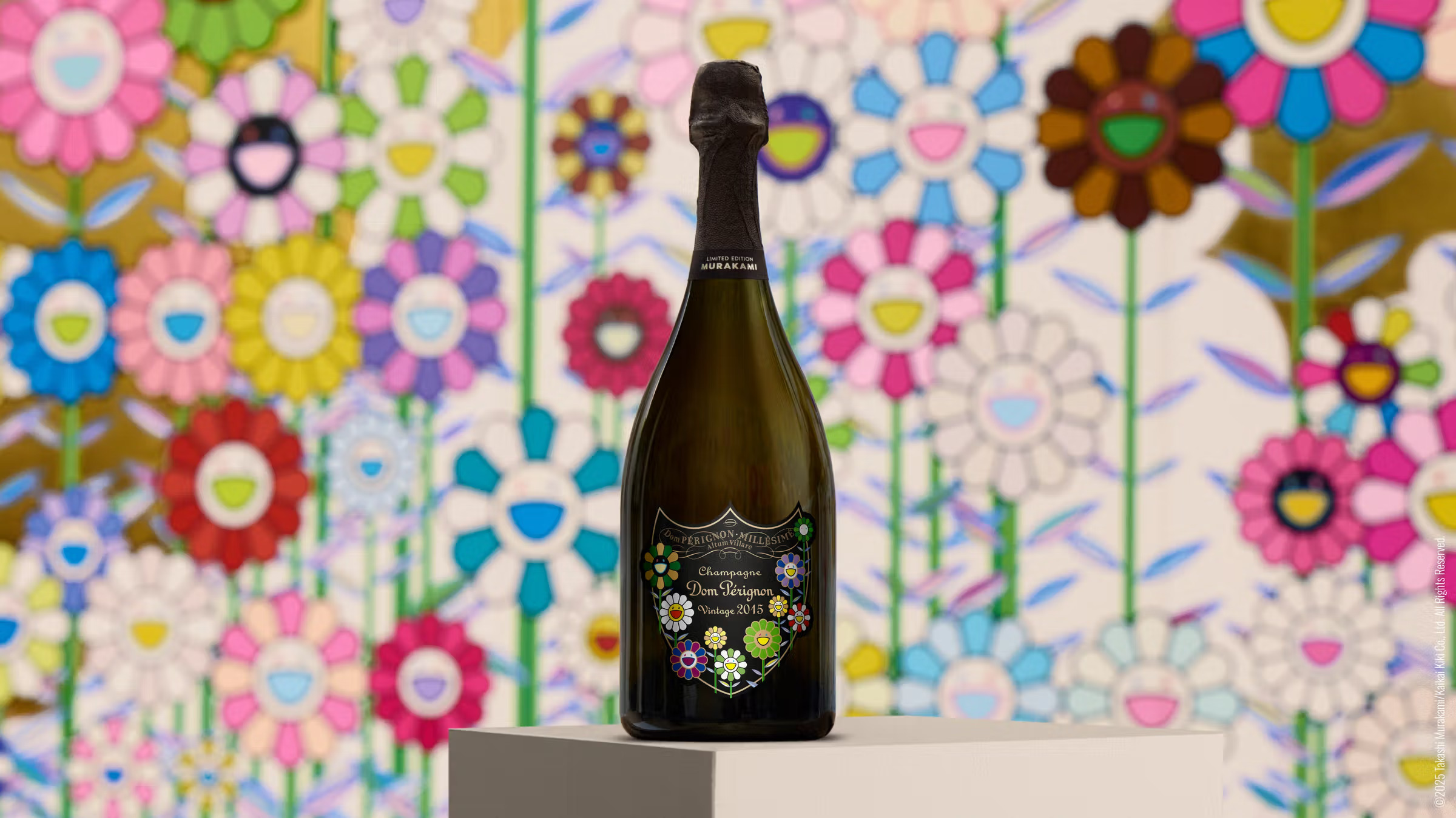
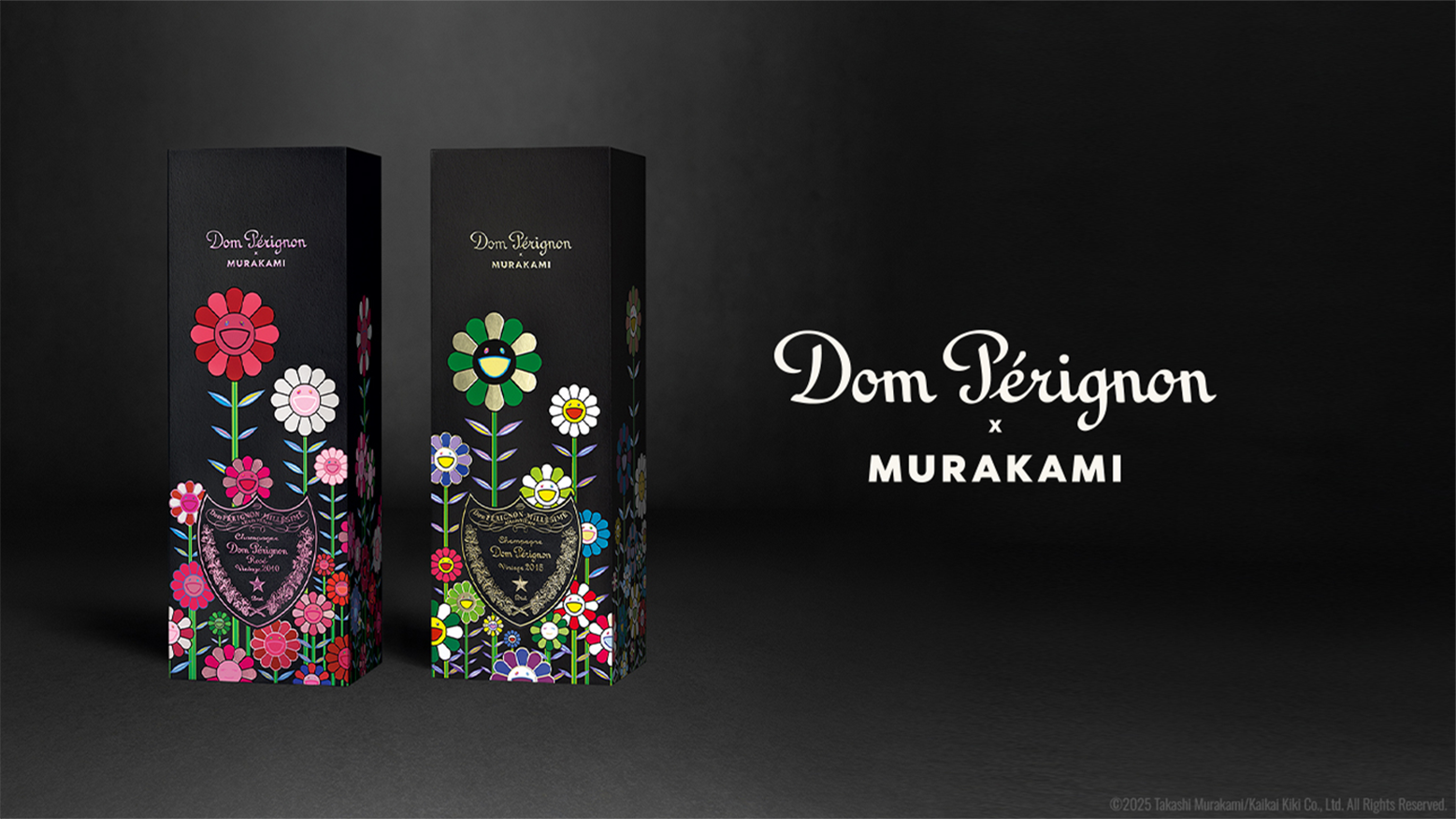
Dom Pérignon’s joyful collaboration with Japanese artist Takashi Murakami reimagines Dom Pérignon Vintage 2015 and Dom Pérignon Rosé Vintage 2010 for the 2025 year-end season. A visionary known for his “Superflat” aesthetic, Murakami brings his signature smiling flowers to the Maison’s minimalist design — transforming the dark, minimalist bottles into vibrant works of pop surrealism.
Murakami describes the collaboration as a meditation on time — an attempt to create “a form of time travel” that will remain meaningful for centuries to come. His luminous floral motifs — dreamlike and animated — embody the tension between refinement and exuberance, uniting Dom Pérignon’s design codes with his own kaleidoscopic imagination.
Both houses share a reverence for nature as a source of creation: for Dom Pérignon, it begins with terroir and transformation; for Murakami, it manifests as a hyper-synthetic world where emotion blooms through colour and play. Together, they celebrate creation as an ever-evolving journey between futurism and artistic legacy.
Johnnie Walker Partners with Luxury Fashion Designer Rahul Mishra
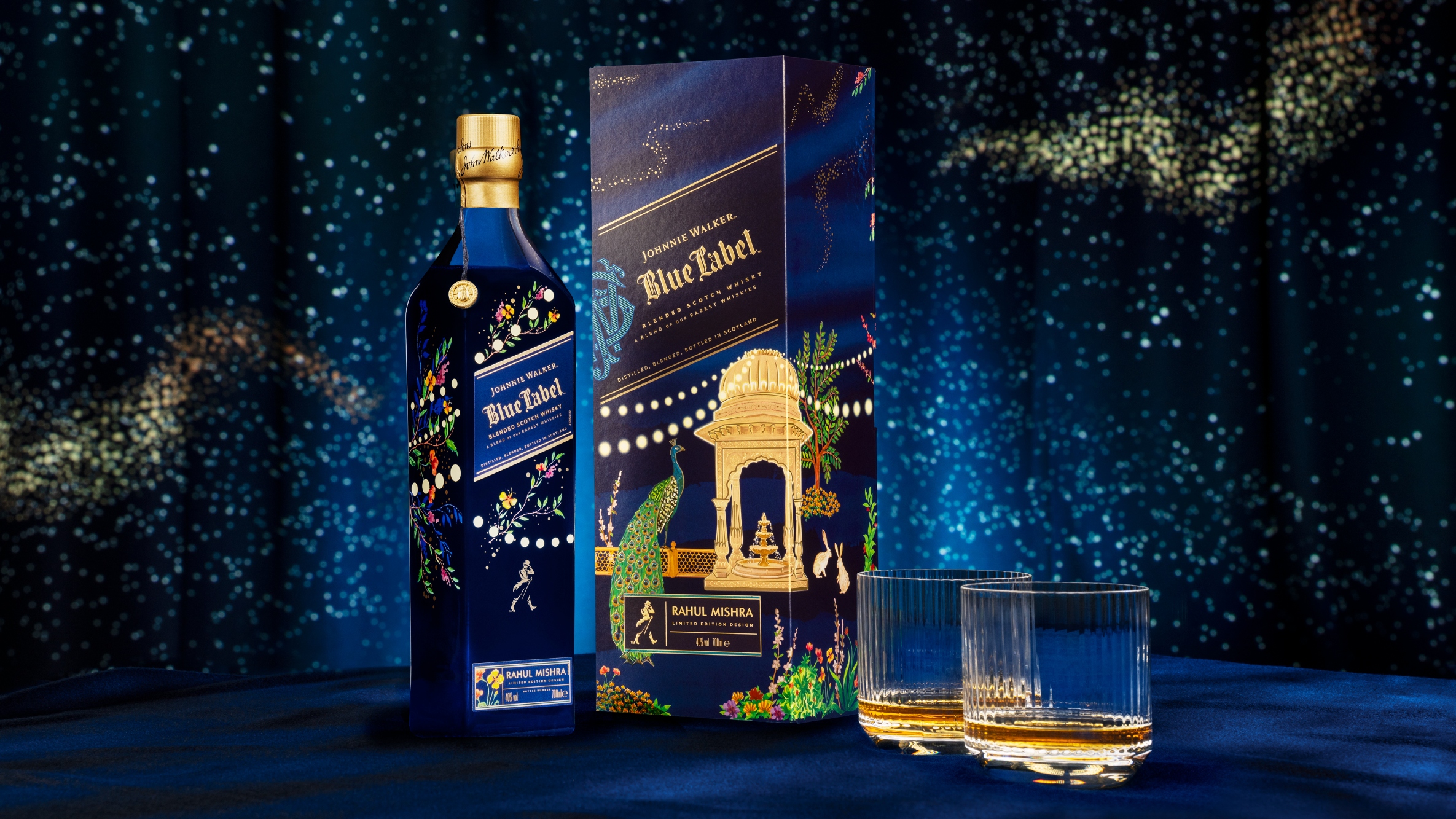
Johnnie Walker’s seasonal Blue Label collaboration with Indian couturier Rahul Mishra is a textbook example of how spirits brands use culturally specific partnerships to sharpen regional relevance and drive festive sales. Mishra — the first Indian designer to show at Paris Haute Couture Week and an advocate of artisan-led luxury — crafted a bottle and pack motif inspired by native flora and fauna, framed as a celebration of “bright beginnings” in line with the South Asian festive season.
Commercially, the release is targeted as it is priced and merchandised as a premium gift item for South Asian festivities. The design ties directly to two high-value consumer drivers in Asia — cultural resonance and artisanal provenance — while the Blue Label whisky carries the brand’s scarcity narrative (only one in 10,000 casks is selected for the blend). Available through select retailers in the region, the collaboration functions as both a limited-run revenue driver and a brand-building exercise that signals Johnnie Walker’s strategic focus on localised luxury moments.
The partnership illustrates a wider trend in the region as global spirit houses increasingly commission artists and designers whose cultural pedigree amplifies authenticity, gifting appeal and secondary-market desirability, without the heavy price points of ultra-luxury bottlings.
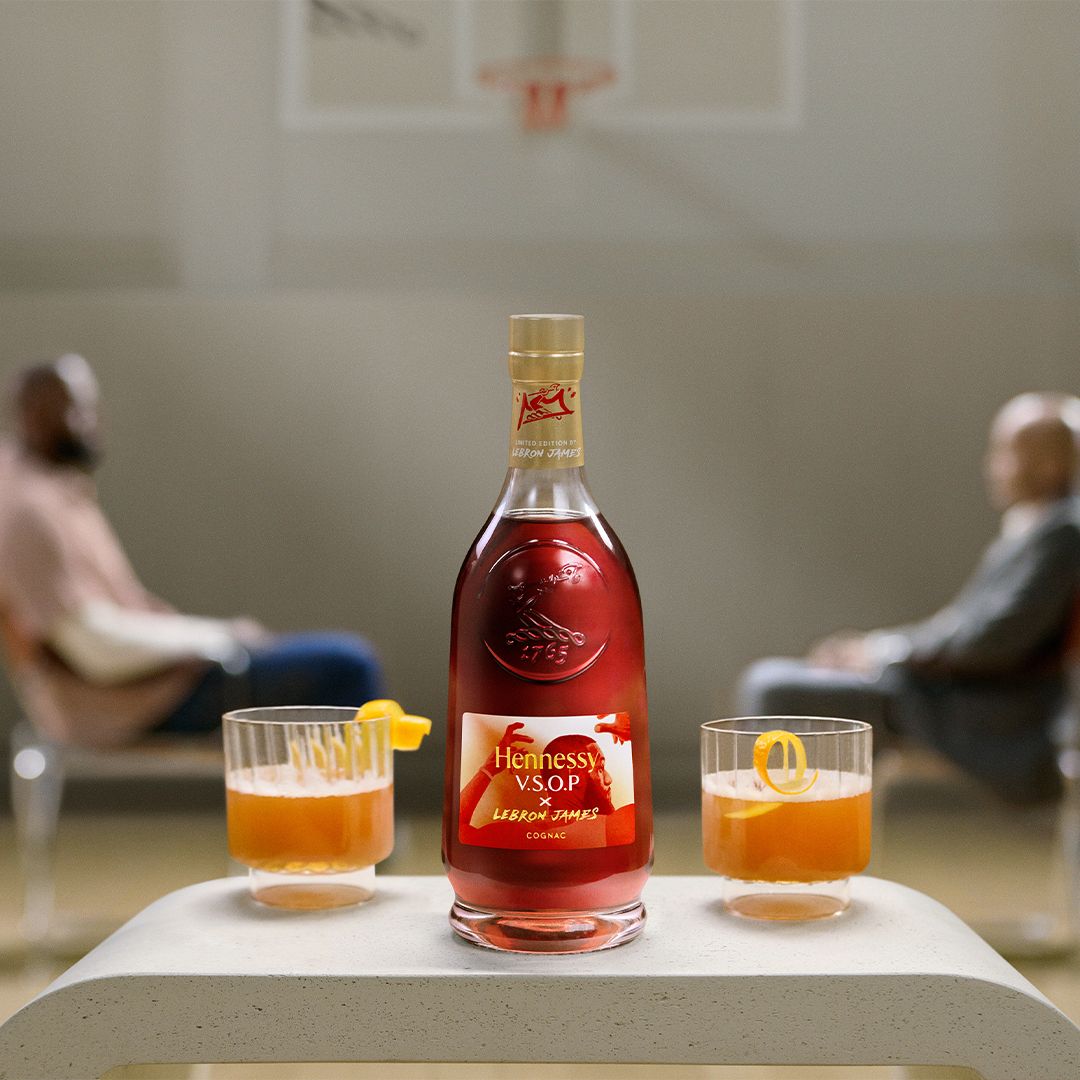
Hennessy V.S.O.P Limited Edition By LeBron James
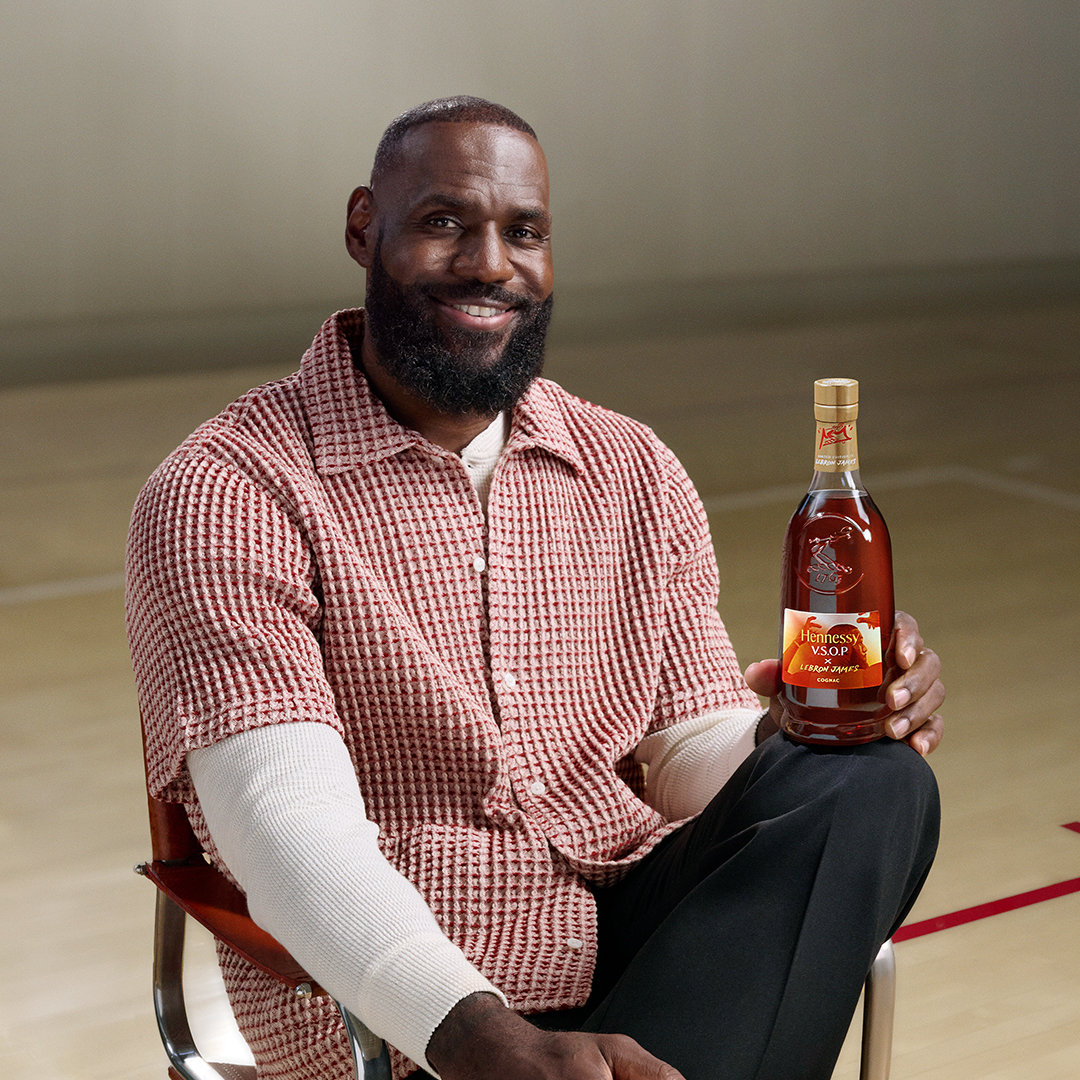
Hennessy continues its successful collaboration with global basketball legend LeBron James with the launch of the 2025 Hennessy V.S.O.P Limited Edition. Marking the second chapter in the partnership, the new collector’s bottle features a bold orange design inspired by LeBron’s signature “crowning” gesture — a motif that symbolises leadership and personal triumph.
Speaking about the latest collaboration, LeBron James said, “It’s an honour to continue this partnership with Hennessy. Our first collection was about a shared pursuit of excellence and boundary pushing, and this new limited edition is another chapter in that story. The design features my crowning gesture, which is special for me and stands for celebration and connection. That’s what this bottle is made for.”
The vibrant bottle captures LeBron’s dynamic energy. As with all V.S.O.P expressions, the blend offers a balanced and versatile profile, suited for sipping neat, on ice or as part of a classic cocktail such as the Hennessy Sidecar. To accompany the launch, Hennessy unveiled a digital campaign titled “The Second Decision”, referencing one of the most pivotal moments in LeBron’s career. The campaign reinforces the collaboration’s theme of confidence and connection, underscoring how Hennessy continues to evolve its cultural relevance through partnerships that resonate with global audiences.
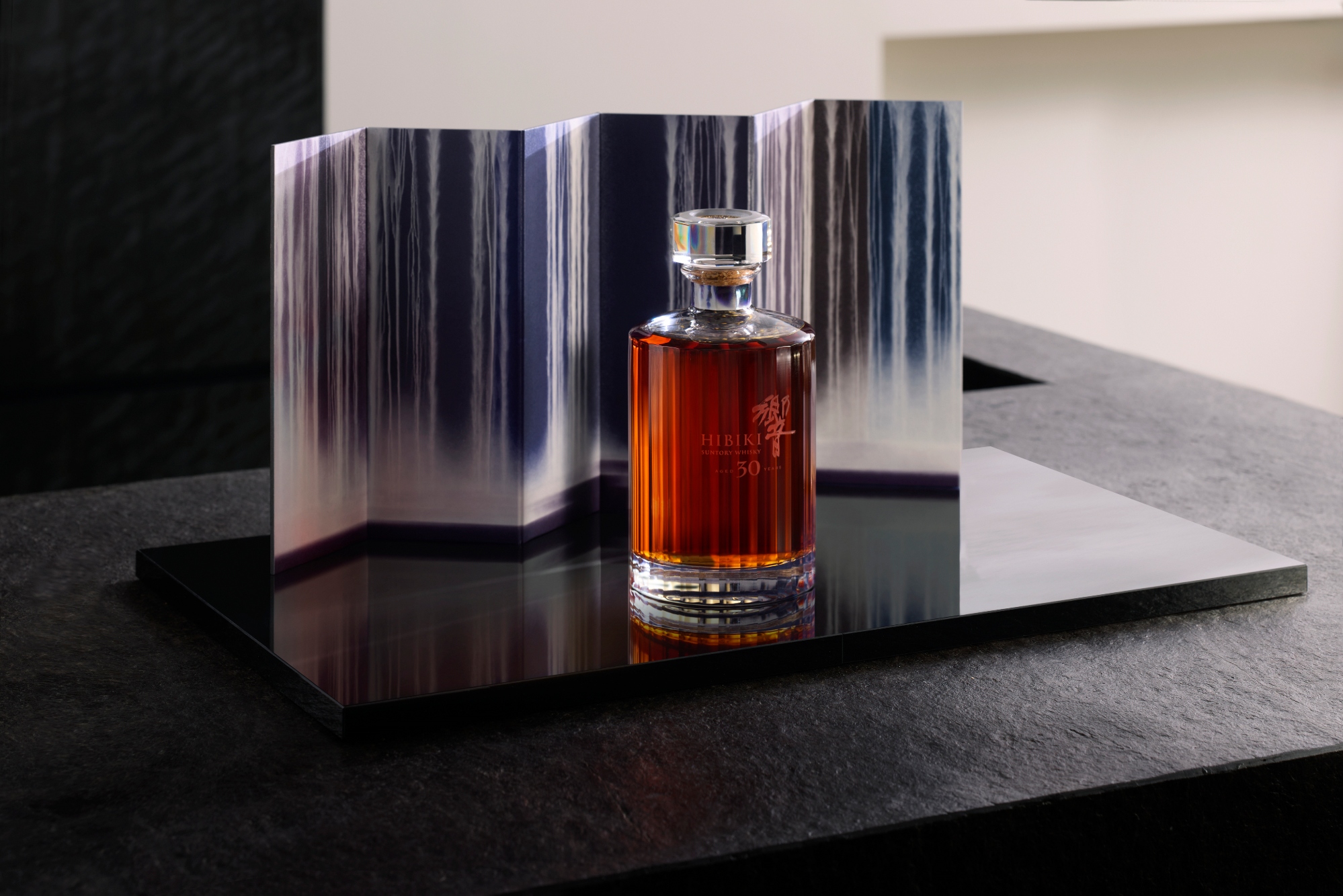
House of Suntory’s Collector’s Edition of Hibiki Whisky x Hiroshi Senju Collaboration
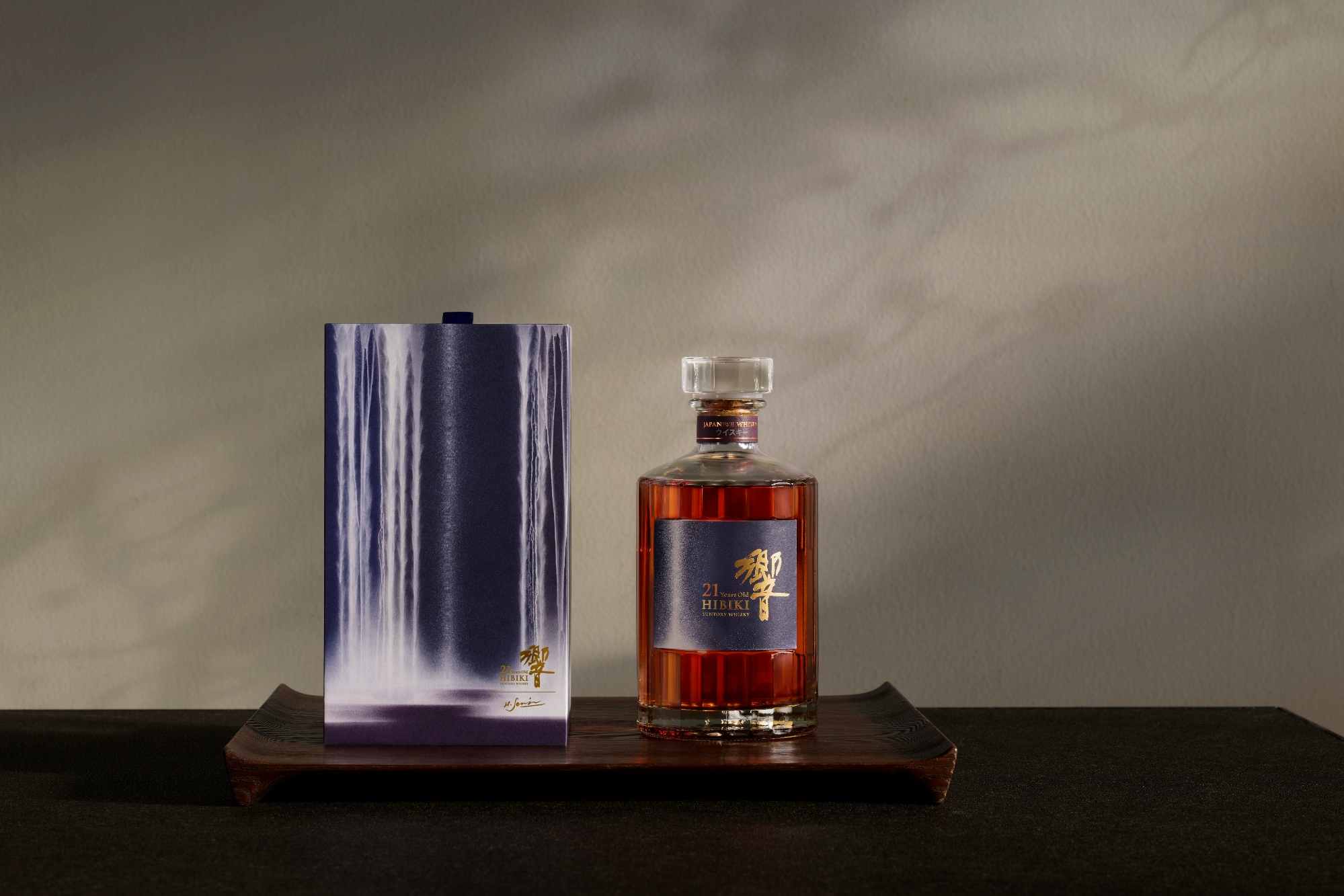
The House of Suntory presents a limited-edition collaboration between Hibiki, its renowned blended Japanese whisky and celebrated Japanese painter Hiroshi Senju. For this collector’s release, two expressions are presented: Hibiki 21 Years Old and Hibiki 30 Years Old. Each bottle is encased in a bespoke presentation box that transforms Senju’s signature waterfall motifs into a tangible homage to Japanese mastery. The 21-Year-Old features Senju’s cascading imagery across the label and box, echoing the whisky’s elegant balance. The 30-Year-Old is enshrined within a byōbu-style multi-panel screen with reflective surfaces, a waterfall wrap at the neck and a delicately etched Hibiki emblem — a collector’s treasure in both taste and design.
Senju’s artistry — rooted in natural materials and inspired by Japan’s landscapes — aligns perfectly with Hibiki’s philosophy of harmony between people and nature. Using flowing water and natural pigments, his ten-shade Kokimurasaki gradient captures the rare beauty and refined elegance mirrored in Hibiki’s flavour profile. Hibiki 21 Years Old opens with honeycomb, sandalwood and dried apricot, balanced by subtle Mizunara oak, finishing gracefully with an incense-like aroma.
Hibiki 30 Years Old delivers layered notes of brown sugar, dried fig, gingerbread and apricot jam, culminating in a rich, Mizunara-infused finish with a whisper of cinnamon. Both are bottled at 43 percent ABV. Limited quantities of the collaboration are available worldwide. Each release includes a Furoshiki scarf featuring Senju’s waterfall design, bringing the artistry of Japan into the hands of collectors.
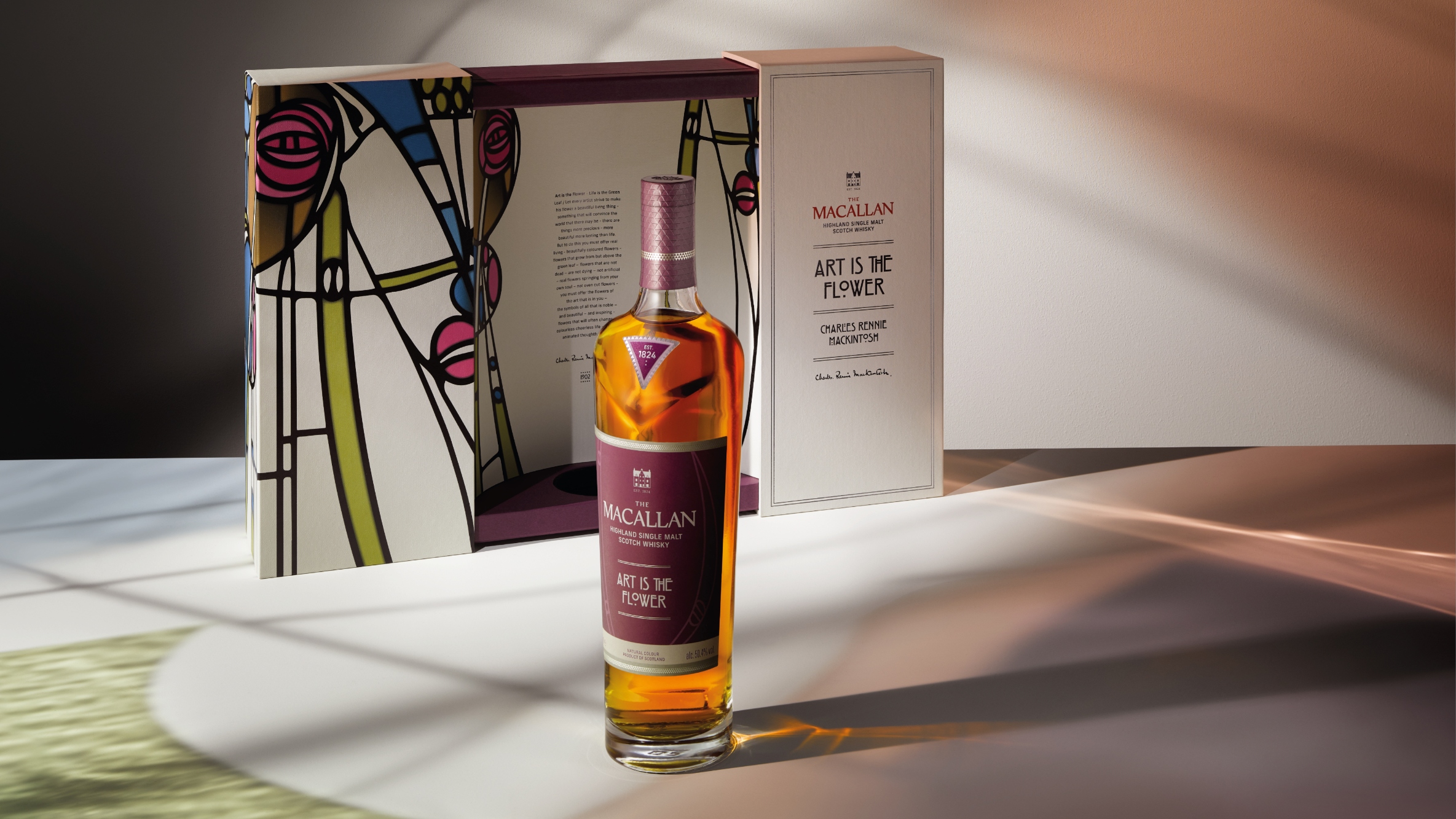
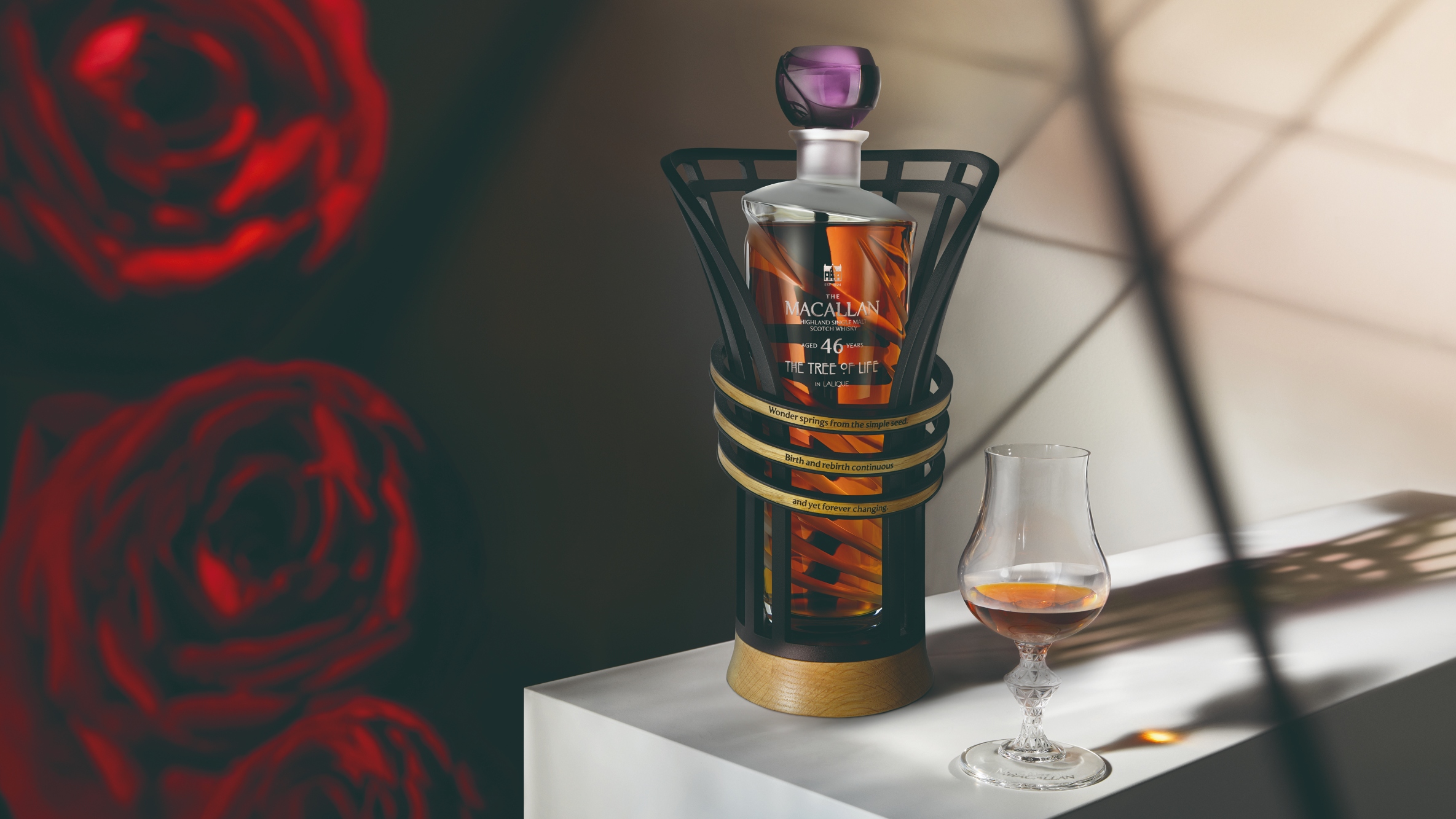
The Macallan The Tree of Life Collection
For its 2025 collector’s release, The Macallan pays tribute to Scottish visionary Charles Rennie Mackintosh with The Tree of Life Collection — two whiskies that mirror his artistic evolution through the lens of the brand’s own craftsmanship. The centrepiece, The Tree of Life by The Macallan, is a 46-Year-Old single malt drawn from two sherry-seasoned oak casks laid down in 1979. Its age is symbolic — Mackintosh was 46 when he abandoned architecture to paint the Scottish countryside, reconnecting with nature and producing some of his finest work. The whisky mirrors that period of creative renewal, with notes of tropical fruit charred over peat, antique oak and lingering smoke that speak to both maturity and reinvention.
Housed in a Lalique crystal decanter encased in sculptural metalwork echoing Mackintosh’s decorative motifs, it is limited to just 112 pieces worldwide. Its counterpart — Art is the Flower, named after Mackintosh’s 1902 lecture on the relationship between art and nature — leans into European oak and sherry-seasoned richness, delivering layers of raisin, fig, almond and cherry. Together, the pair capture The Macallan’s ongoing dialogue between whisky making and artistic legacy.
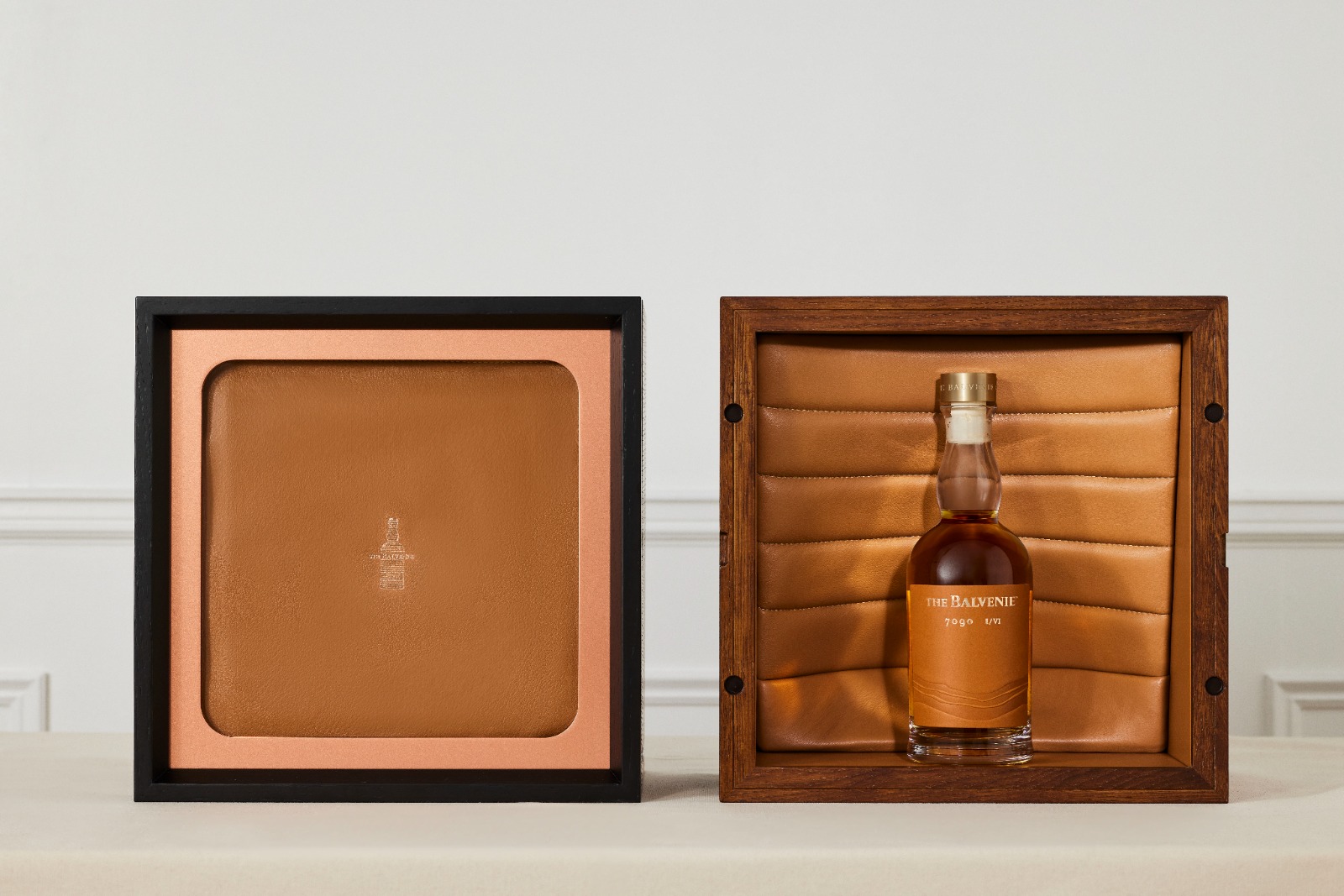
The Balvenie Cask 7090 Bill Amberg Palanquin Edition
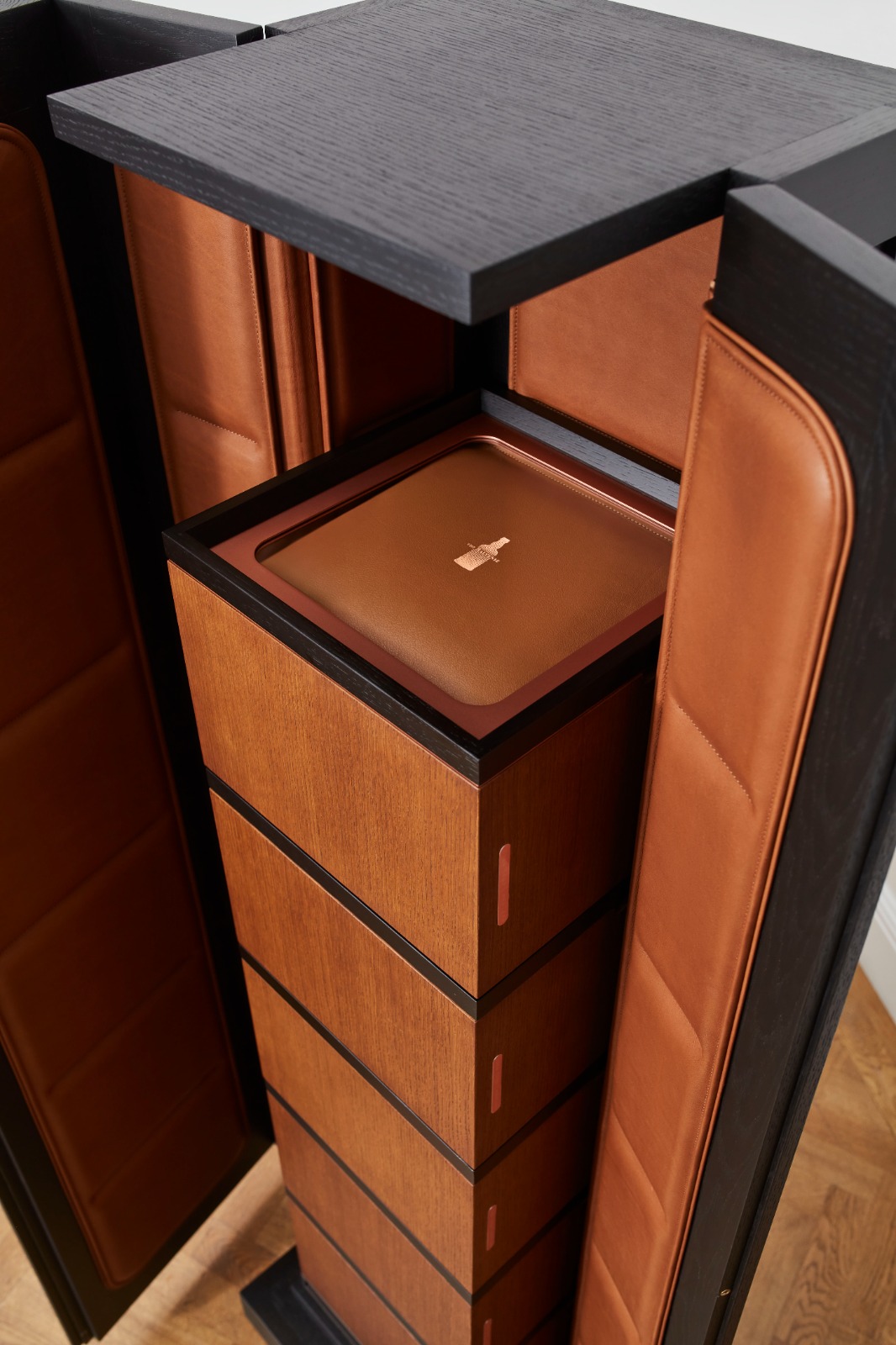
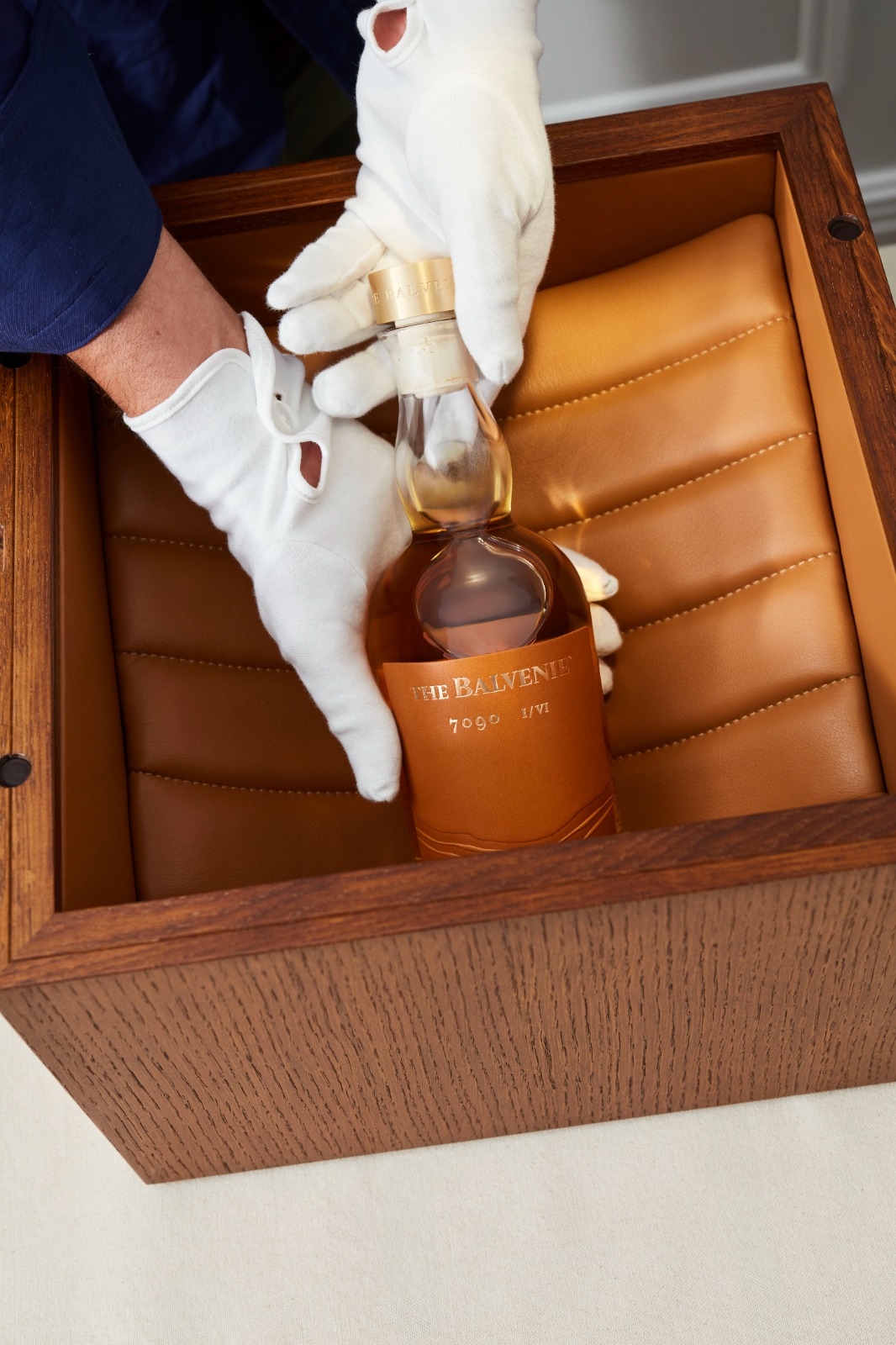
The Balvenie Cask 7090 Bill Amberg Palanquin Edition stands as one of the distillery’s most exceptional single cask releases. Aged for half a century at The Balvenie Distillery, Cask 7090 has been personally selected by Malt Master Kelsey McKechnie as a perfect reflection of the house’s enduring character. For this edition, The Balvenie partnered with celebrated British leather artisan Bill Amberg to craft a bespoke palanquin — a portable chest designed to cradle six hand-blown crystal decanters. The creation marries traditional Scottish whisky-making with Amberg’s design ingenuity, bringing together two worlds of meticulous handcraft.
Drawing inspiration from the alchemic transformation within The Balvenie’s copper stills, the element of copper features prominently across every design detail — from the decanters and caskets to the palanquin itself. Amberg’s “Copper Alchemy” technique adorns the front of each chest with a uniquely oxidised copper plate, its shifting hues a tribute to the natural reactions that occur in the stills.
Each casket is individually numbered and crafted with the same dedication found in The Balvenie’s own cooperage. The lid’s curvature echoes the silhouette of the distillery’s wooden casks, while rich wood tones and hand-stitched leather accents are chosen to harmonise with the copper trim. The decanters are made from premium lead-free crystal, their leather labels embossed with motifs that mirror the copper plate’s design — creating a cohesive piece of collectible artistry.
Inside, the whisky reveals a rich and expressive profile that exemplifies The Balvenie’s hallmark warmth. Notes of vanilla oak, honey and toasted apricot unfold alongside sweet butterscotch, balanced by dry oak tannins and silky layers of vanilla toffee. The finish lingers with an elegant oak resonance, embodying the perfect interplay between age, craft and flavour.
Glenfiddich 1959
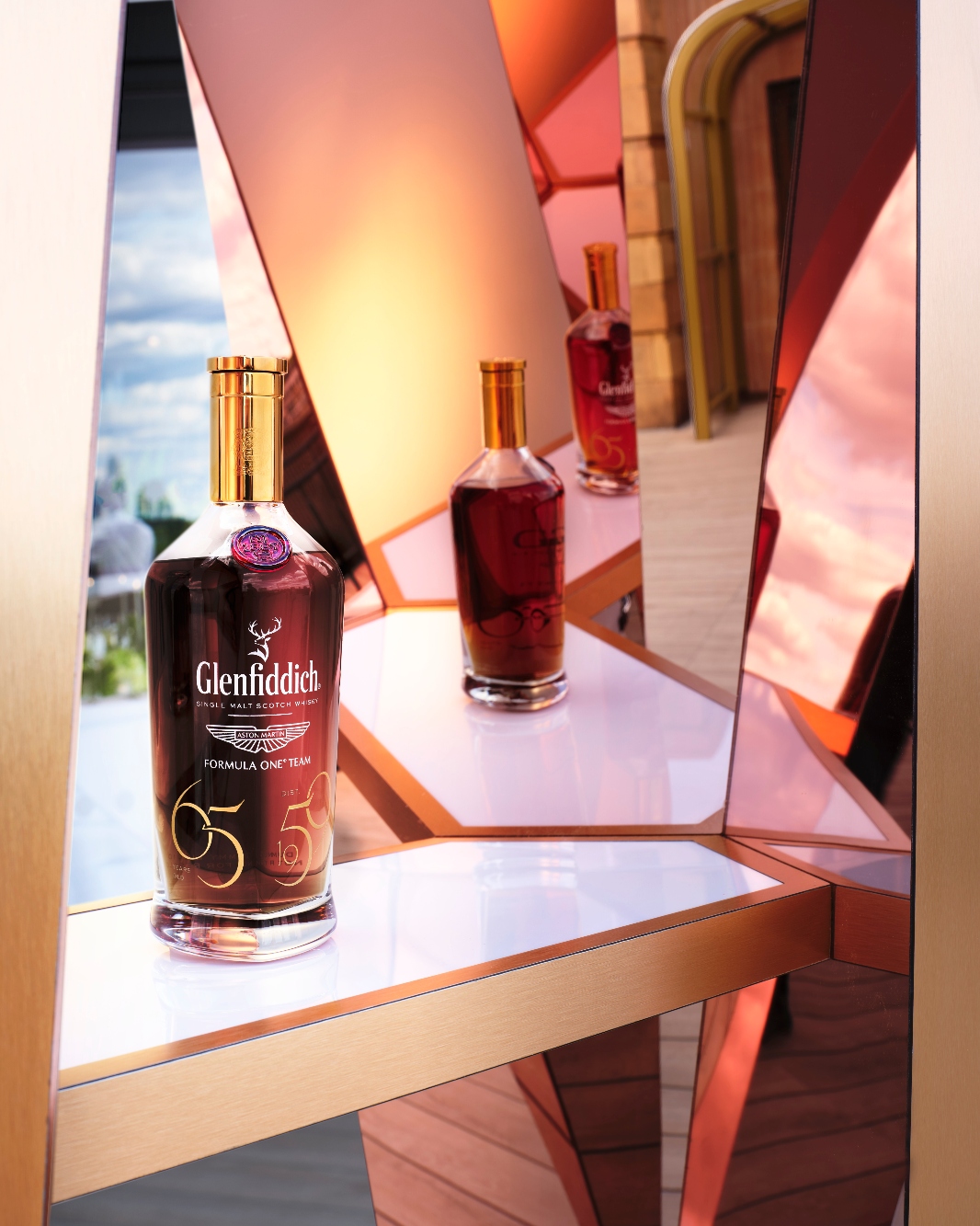
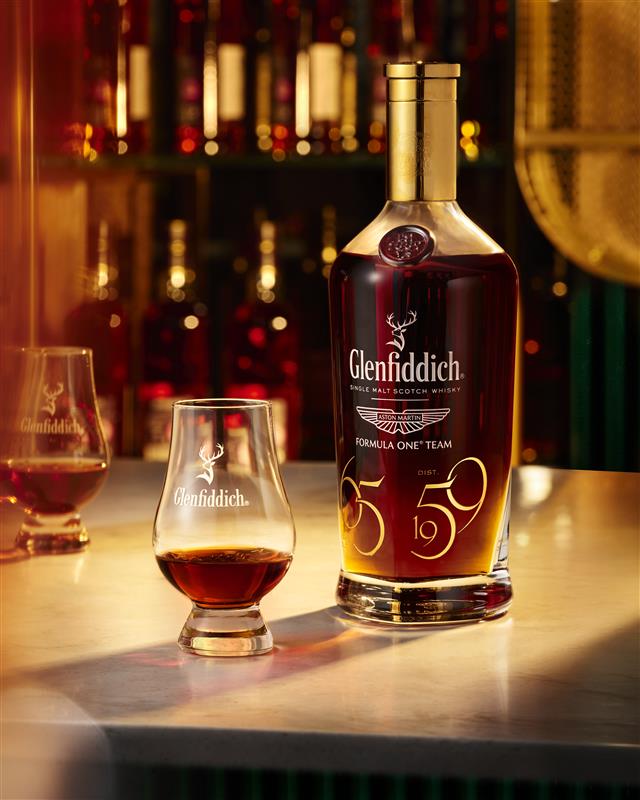
The Glenfiddich 1959 stands as a tribute to heritage and the spirit of excellence shared between two British icons — Glenfiddich and Aston Martin. Marking the beginning of a multi-year global partnership, this limited-edition release was revealed for the first time at the Las Vegas Grand Prix. The year 1959 holds deep historical resonance for both houses. It was the year Aston Martin first entered the world of Formula One, a defining moment that reflected the brand’s commitment to pushing boundaries. For Glenfiddich, it was a year that produced one of the distillery’s rarest and most complex expressions, now unearthed from its archives to honour this milestone collaboration.
Selected by Malt Master Brian Kinsman, the Glenfiddich 1959 is remarkable in its depth and intricacy — a whisky that unfolds with layers of flavour, each sip revealing a new facet of its long maturation. Rich, expressive and deeply nuanced, it mirrors the precision and artistry that define both Glenfiddich’s whisky-making and Aston Martin’s design ethos. “The Glenfiddich 1959 is a rare whisky that embodies the essence of this partnership,” says Kinsman. “It captures the shared pursuit of innovation and excellence that has shaped both our worlds, connecting past achievements with future ambitions.” Presented in a bottle that echoes the sleek, sculptural design language of Aston Martin, this collector’s piece is a meeting of two disciplines driven by vision and craftsmanship.
Johnnie Walker x Olivier Rousteing Couture Blend
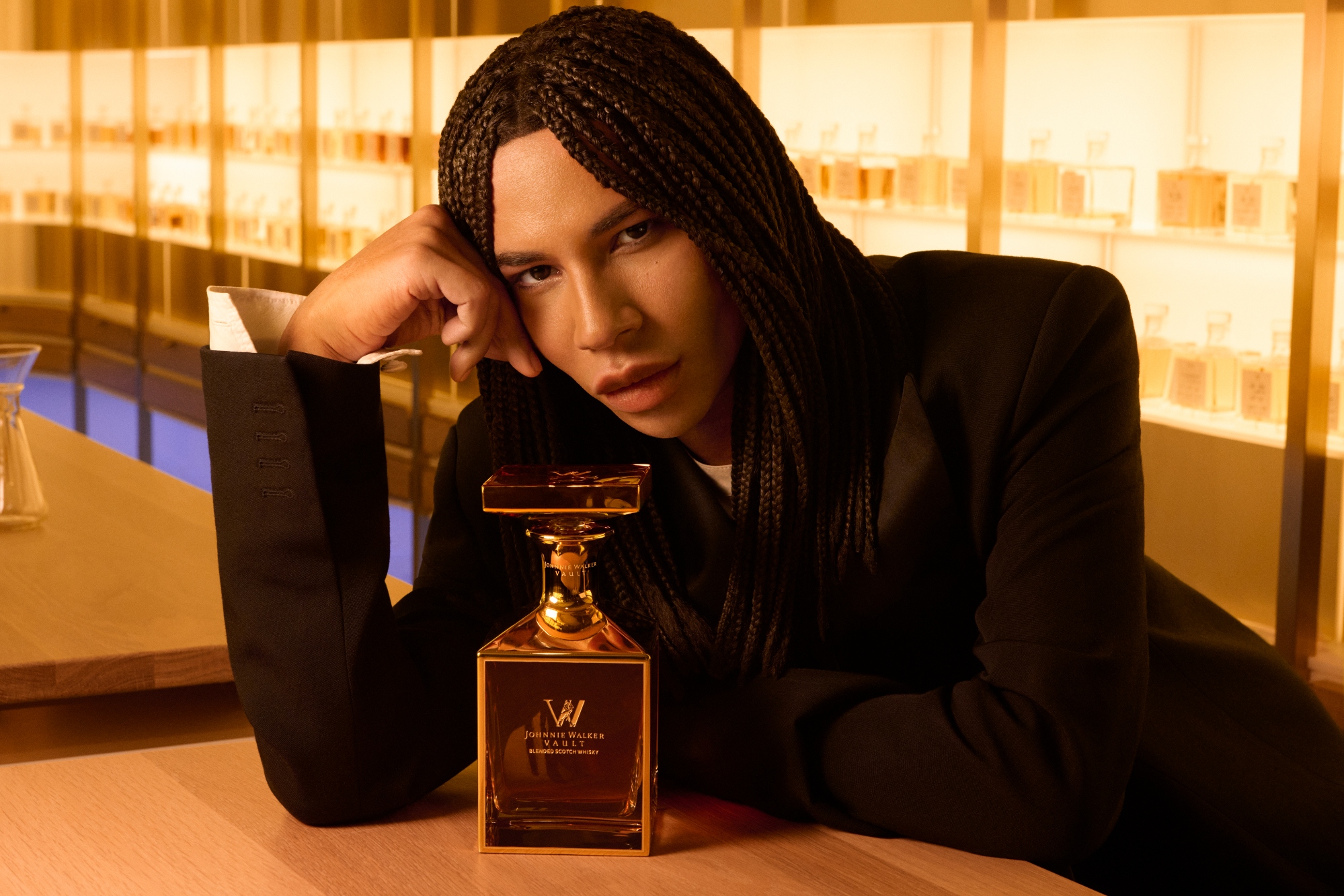
For their second collaboration, Johnnie Walker Vault and Olivier Rousteing present The Couture Blend — a celebration of the duality between whisky and luxury fashion. Released in conjunction with Rousteing’s 40th birthday, the blend explores dialogue between heritage and experimentation, mirroring the designer’s own journey of reinvention and self-discovery.
Crafted by Master Blender Dr Emma Walker deep within the Johnnie Walker Vault — the brand’s creative “atelier” beneath Princes Street, Edinburgh — the whisky draws from ten rare and experimental casks, including ghost whiskies from Port Dundas and Caledonian. The resulting expression includes notes from ex-wine casks, tropical malts and a smoky finish from Port Ellen.
Rousteing’s architectural decanter echoes his couture aesthetic. A sculptural, gold-accented design is anchored by a bold square crystal stopper that elevates how luxury whisky can be packaged and delivered to consumers. Only 1,500 crystal decanters exist globally — 39 of which are available in Singapore — each a testament to the intersection of craftsmanship and couture.
Completing the release is The Couture Flask, a wearable mixed-metal flask designed as a statement piece that transforms the ritual of whisky drinking into an act of self-expression. Like Rousteing’s collections for Balmain, it blurs boundaries between object and ornament — proving that in the hands of true creatives, even emblems from storied whisky Maisons can be translated into fashion.
For more on the latest in alcohol and luxury spirits stories, click here
Crisp fall weather has arrived, and winter is just around the corner. And that means cold days and even colder nights. That’s fine if your RV is winterized and sitting in storage. But if you’re living in your RV in the cold, you may be searching for ways to keep things warmer.
Unfortunately, RVs are notorious for their poor insulation. This can make it seem impossible to keep your rig comfortably warm during the coldest nights. The good news? It is possible to improve RV insulation in order to remedy this problem.
Insulate the Windows
Start with the windows. A good amount of warm air escapes through the windows. Plus, cold air can make its way in through the single panes installed in RVs. You can help prevent this issue by installing heat shrink window insulation.
I love this stuff because it adds a layer of insulation that is helpful in both cold and hot weather. And it doesn’t block your view of the great outdoors. It does require the use of a hair dryer though, so make sure you have one on hand.
Make Use of Reflective Insulation
Unfortunately, heat shrink window insulation isn’t always enough. In really cold temperatures, you will likely want to insulate the windows even more. A simple solution is by cutting some Reflectix to size and installing this in each window.
Like the heat shrink insulation, this can be used in winter or summer and it does an incredible job. That said, it does make it impossible to see out of your windows and isn’t very pretty to look at, so you may not want to keep it up all the time.
Hang Thermal Curtains, Wall Coverings, and a Door Cover
You can add even more insulation to your windows by hanging thermal curtains over them. This, in addition to the two insulation methods above, would certainly limit heat loss through the thin window panes.
You might also consider hanging a thermal door cover over the front door to keep cold from entering there. Some people even go so far as to hang tapestries or quilts on the RV walls to help insulate things and keep warmth in. When we had our motorhome, we hung a heavy quilt off the cab-over bunk to block the cab area from the living area in order to better retain heat. And it worked wonders.
Grab Some Weather Stripping
In addition to hanging a curtain in front of your door, you will also want to check the weather stripping around the door. This can be worn or crushed over time. And as such, it will eventually be ineffective at keeping drafts out and keeping warmth in. So, it goes without saying that worn weather stripping should be replaced.
You’ll also want to check around windows and other openings and close any gaps or openings with weather stripping or sealant.
Use Vent Covers
We all know that heat rises, so it’s super important to make sure there are no places for heat to escape toward the top of your RV. One of the most common places for heat to escape? RV roof vents. After all, these vents are literally made to help heat escape in hot weather, so it only makes sense that heat would continue to escape through them in winter—and yes, this does happen to some extent even if the vents are closed.
Luckily there is a super easy solution: an RV vent insulator. These are little square-shaped pillows that are made specifically for putting in your RV’s vents when they aren’t in use for extra insulation. They work quite well and even stay in place during travel.
Use Reflective Insulation on the Roof
Another way to keep heat from escaping out of the roof? Adding some insulation to the roof itself, of course.
To do this, I recommend using rolls of that Reflectix stuff I mentioned before. You can attach the Reflectix to the roof using velcro, so it can be removed for travel and repairs. You will have to work around vents, skylights, and the A/C, of course. But you should only have to cut it once before using it again and again.
Yes, this project will require a bit of effort, but it will help keep heat in during winter while also reflecting sunshine away during the summer. I think that sounds like a worthwhile tradeoff!
Put Down Foam Mats or Rugs
Our RV floors get unbearably cold, and I know that means a lot of cold is coming up through the floors and cooling our rig down significantly. For this reason, I went out and bought a rug to put down over the majority of our RV floor. The rug still gets a bit cold, but not as frigid as the actual floor, and I firmly believe it is helping.
You can find cute rugs at Walmart and on the internet, and you really don’t have to spend a fortune on one, making this a worthwhile investment. If you want to get extra fancy, consider putting a foam mat under the rug for extra insulation and a super comfy place to stand.
Create Underbelly Insulation
Foam mats and rugs on the floor are great for improving insulation on the bottom part of your RV, but they can do their job even better if the underbelly of the rig is insulated. There are some RVs that come with insulated underbellies out of the factory. Typically these are referred to as “four season RVs” and they will come with other features that improve wintertime usability, including tank heaters and improved wall insulation.
That said, the vast majority of RVs do not come with insulated underbellies, meaning if you want the underside of your RV insulated, you’ll likely have to take care of it yourself. The best way to do this is with foam board.
The video below demonstrates how you might go about this:
Add Skirting
Finally, there is the option to add some sort of skirting to your RV to help it retain heat. If you’re stationary, this is pretty much a no-brainer. That said, if you move often, taking the skirting down each time you move can become troublesome and you might want to stick to the aforementioned underbelly insulation instead.
Some options for RV skirting include:
Foam board around the exterior of the RV
Bales of hay stacked around the exterior of the RV
Tarps hung around the base of the RV
A product such as AirSkirts or EZ Snap, which can be easier to install and take down
Some RVers get rather crafty with their ideas, like this creative thinker on the irv2.com forum:
I went with oiled canvas, like the old farm truck type. can be cut and sewn to needs. Stainless snaps and eyelets to anchor to the ground and great temp skirting. To attach to camper, screw in stainless snaps or use the 3M stick on ones for camper. —travelorer99
The goal is to hold heat in under the RV and block cold drafts, which can come up through the RV floor. Many people choose to add a small space heater or heat lamp under the rig as well. This provides a heat source on the coldest nights, giving the skirt a little more heat to hold within in order to keep tanks and pipes from freezing.
Getting Warmer Yet?
These are, in my opinion, the best ways to add insulation to your RV in order to keep it warmer in winter and make winter camping a comfortable experience. Have a tip you’d like to add? Let me know about it in the comments.
Support CleanTechnica’s work through a Substack subscription or on Stripe.
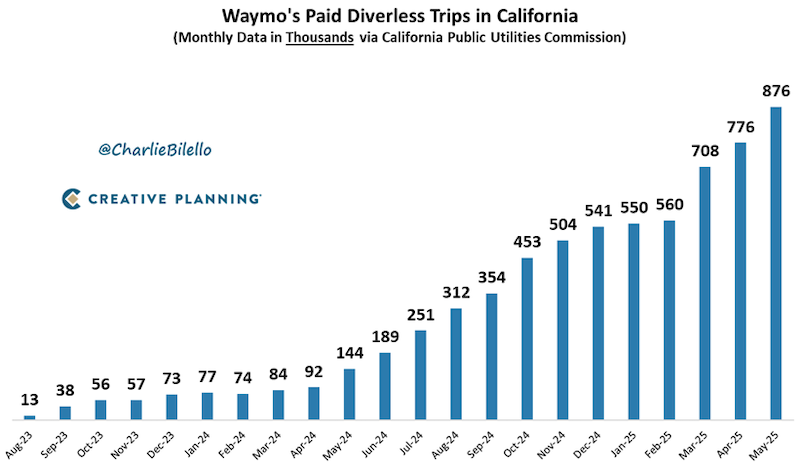
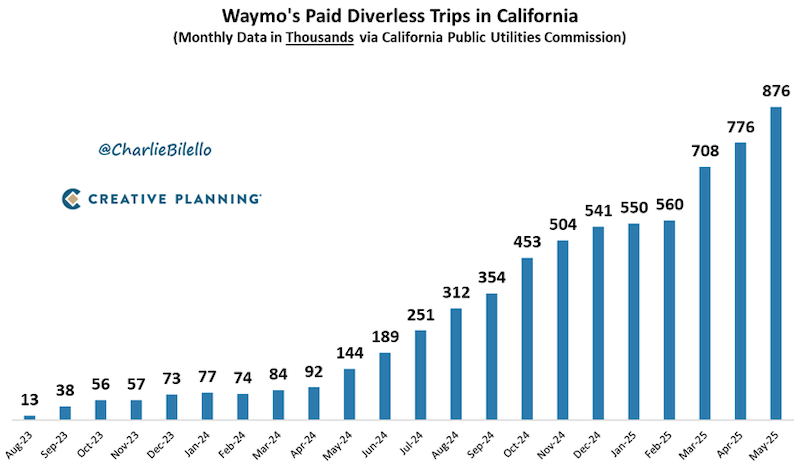
Waymo puts out big stats and milestones from time to time on social media and on its blog, but not actually that often. However, data on the company is available through the California Public Utilities Commission (CPUC). Charlie Bilello went and collected some of that data recently and shared how stunning the company’s growth has been in California.
He pointed out that Waymo was doing 876,000 paid driverless trips a month in California as of May 2025. Perhaps the company has even reached 1 million trips a month now. One would hope Waymo would share that milestone with the world when it reaches it, but we haven’t seen such an announcement yet. In the meantime, based on this publicly available data, Charlie had a couple of other numbers to highlight:
That May monthly total was a 6× increase over May 2024.
That May monthly total was a 69× increase over August 2023!
Self-driving taxi company Waymo is now doing 876,000 rides per month in California, a 6x increase over the past year and 69x increase since August 2023. pic.twitter.com/gJmhXQTu9w
Clearly, Waymo has been growing fast in the past couple of years. And that’s just the California market. The company is certainly at a “scaling up” phase of its development. It’ll be exciting to see how much that increases in the next two years.
Recent posts Waymo has made on social media include good news about continued testing in New York and a little marketing campaign in coordination with the Golden State Warriors.
And there’s also its new partnership with DoorDash and expansion into London.
What’s next?
Sign up for CleanTechnica’s Weekly Substack for Zach and Scott’s in-depth analyses and high level summaries, sign up for our daily newsletter, and follow us on Google News!
Advertisement
Have a tip for CleanTechnica? Want to advertise? Want to suggest a guest for our CleanTech Talk podcast? Contact us here.
Sign up for our daily newsletter for 15 new cleantech stories a day. Or sign up for our weekly one on top stories of the week if daily is too frequent.
CleanTechnica uses affiliate links. See our policy here.
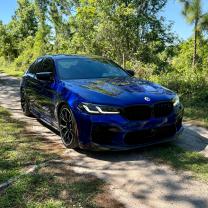
Me and my son watched this at breakfast this morning.
Is it me or did i spy suv bodies near the end?
I didnt think bmw made any of the suv in Germany.
__________________
2026 M3Cx, 2024 Audi RS etron GT (good riddance), 2023 M5C (MBB, Tartufo, CCB, MPE, splitter, skirts, diffuser and pro spoiler), 2022 X3MC (gone), 2022 M5C (gone, not forgotten), 2020 992S (gone), 2018 M3C (should have never let it be gone), 2015 550i (gone), 2013 550i M-Sport (gone), 2010 Panamera (good riddance) (this list is getting entirely too long).
Electric cars made by the Chinese car firm BYD are now a familiar sight on British roads. In September 2025, the company sold 11,271 vehicles in the UK – ten times as many as in the same month last year.
This level of growth means the UK is now BYD’s largest market outside of China. In an industry once dominated by long established brands, the company has become the biggest manufacturer of electric vehicles in the world. So how have they done it?
Generous subsidies from the Chinese government have certainly played a role, but BYD also appears to be a smoothly run operation which could end up revolutionising the automotive industry.
For example, it has secured the supply of the critical materials such as lithium and tungsten used to build electric vehicles and produces its own batteries, reducing reliance on external suppliers.
It has built large-scale gigafactories and industrial parks, and investments in research and development, especially in relation to batteries, have been very effective.
Another key factor is the company’s aggressive pricing strategy. A BYD Dolphin Surf for example, costs £18,650 in the UK – less than half the price of the entry level Tesla, the Model 3, which begins at around £39,000.
Older and more established car manufacturers will be painfully aware of BYD’s swift ascent towards the top of the electric vehicle market. And research I worked on with colleagues into how major companies react to new rivals suggests why some of them are being left behind.
Many make the mistake of ignoring customers’ needs and rely on past success to the extent that they become over confident. Others just seem to lack foresight.
In the car industry specifically, I have seen a variety of market forecasts and technology roadmaps – generated by both companies and industry associations – and been struck by some common themes.
To begin with, they are often linear – inevitably predicting that the speed, features and performance of cars will all gradually improve over time. But technological innovations often appear in leaps and bounds, and depend on a vast network of suppliers to implement, which makes development complex.
They also frequently show a surprising neglect for customers’ desires and fears – and budgets. The price of new cars has increased dramatically over the past two decades, outpacing growth in salaries. Yet many companies, such as Jaguar and Tesla, appear to be focused only on “premium vehicles” for wealthy customers, and will eventually end up competing for a small market.
Car companies also suffer in a similar way to big firms in other sectors (think Blackberry or Nokia), where there is often a clear lack of humility and awareness from many senior executives. As studies have shown, bosses who see their organisations as innovative and flexible are often at odds with more junior employees who view them as stale and slow.
For the high jump?
The need for industry-wide change reminds me of how athletes competing in the high jump evolved over the years. Many techniques were tried and tested, including the “scissors”, the “straddle” and the Fosbury flop, which was eventually deemed the most effective.
Some established car companies are desperately trying to hang onto their equivalent of the straddle jump (petrol and diesel cars), and avoiding a commitment to learning the Fosbury flop (developing electric vehicles).
Because of this, the days of established car companies leading the way seem to be over. Hoping to make decent profits from old models and creating electric vehicles only for the wealthy is a delusional strategy.
So what could established carmakers do?
Catching up. Real Sports Photos/Shutterstock
One option is to change the way they work with suppliers. The usual approach here is transactional and price based, with a carmaker buying components (seats or mirrors, for example) from a supplier but switching if it finds a cheaper deal. The problem is that innovation (and indeed supply chain resilience, as the microchip shortage shows) requires supplier and buyer to jointly invest in future developments. The transactional approach does not allow for this.
Second, they should develop new capabilities, not only in relation to batteries but also to other technologies. It is indicative that BYD wants to be predominantly known as a “technology company” whose ultra-fast charging system promises to be well ahead of its competitors.
Could VW, Toyota and BMW become technology companies? Probably not, but they could be part of a network of firms, including technology and AI ones, that would allow them to benefit from the latest developments in those fields.
Third, carmakers need to focus more on addressing customer needs. Besides understanding and improving their experiences as drivers and passengers, they could work more closely with local authorities and infrastructure providers as most users’ issues – and hesitation – about electric vehicles are related to the ability to charge them up.
These changes are substantial, but achievable, as long as carmakers are prepared to take a more open and collaborative approach to the road ahead.


 With its Falcon 9 launch last Sunday, SpaceX officially has 10,000 Starlink satellites in orbit