6.7 C
London
Friday, May 15, 2026
Home Blog Page 74

Proton eMas 5 spec-by-spec comparo – RM57k for 79 PS, 225 km Prime; RM70k for 116 PS, 325 km Premium

0
Proton eMas 5 spec-by-spec comparo – RM57k for 79 PS, 225 km Prime; RM70k for 116 PS, 325 km Premium


Proton eMas 5 spec-by-spec comparo – RM57k for 79 PS, 225 km Prime; RM70k for 116 PS, 325 km Premium

The Proton eMas 5 has just been launched, and with that comes the all-important pricing and full specifications of Malaysia’s cheapest EV. Doubtless you will want to know what you’ll be getting for your money with each variant – RM56,800 for the Prime and RM69,800 for the Premium (after a RM3,000 rebate, up to the end of the year).

Both models are rear-wheel drive, powered by a single motor that produces 79 PS (58 kW) and 130 Nm of torque on the Prime and 116 PS (85 kW) and 150 Nm on the Premium. Also different are the batteries – the Prime utilises a 30.12 kWh CATL lithium iron phosphate (LFP) unit for a range of just 225 km on the WLTP cycle, while the Premium’s 40.16 kWh pack delivers a more useful 325 km.

In terms of charging, the Prime accepts up to 53 kW of DC fast charging, while the Premium bumps this up to 71 kW; both can be topped up from 30 to 80% in 20 minutes. They will also accept up to 6.6 kW of AC charging, so charging from 10 to 100% takes 4.3 hours for the Prime and 5.9 hours for the Premium.

Proton eMas 5 spec-by-spec comparo – RM57k for 79 PS, 225 km Prime; RM70k for 116 PS, 325 km Premium

Proton eMas 5 Prime

Beyond the mechanicals, the two variants are also different in some key areas, namely the headlights (halogens for the Prime, versus LEDs for the Premium), wheels (15-inch steelies versus 16-inch alloys) and tailgate operation (manual versus powered). The Premium is also the only one to get a black roof and an Alabaster White interior option, the latter paired to the also-exclusive Marble Cream and Quartz Rose paints.

As for safety, both come with six airbags, blind spot monitoring, rear cross traffic alert, rear collision warning and a door opening warning. However, only the Premium gets the full suite of driver assists, including autonomous emergency braking, adaptive cruise control and lane departure warning.

Proton eMas 5 spec-by-spec comparo – RM57k for 79 PS, 225 km Prime; RM70k for 116 PS, 325 km Premium

Click to enlarge

The full spec-by-spec breakdown is as follows:

2025 Proton eMas 5 Prime – RM56,800
Gets as standard:

Mechanicals

  • Single rear motor
  • 79 PS (58 kW), 130 Nm of torque
  • Rear-wheel drive
  • MacPherson strut suspension (front), multi-link (rear)
  • Ventilated disc brakes (front), solid disc (rear)
  • 0-50 km/h in 4.4 seconds
  • 30.12 CATL LFP battery
  • 225 km range (WLTP)
  • 53 kW DC fast charging, 30-80% in 21 minutes
  • 6.6 kW AC charging, 10-100% in 4.3 hours

Exterior

  • Manual halogen headlights
  • LED taillights
  • Black plastic front bumper trim
  • Black window trim
  • Body-coloured roof
  • 15-inch steel wheels with 205/65 R15 tyres

Interior

  • Keyless entry and start
  • Slate grey interior with white stitching
  • Grey headliner
  • Manual air conditioning with touchscreen controls and rear vents
  • Cruise control with speed limiter
  • Manual seats
  • Faux leather upholstery
  • Urethane multi-function steering wheel
  • 8.8-inch digital instrument display
  • 14.6-inch infotainment touchscreen
  • Wireless Apple CarPlay and Android Auto
  • “Hi Proton” voice control with Bahasa Malaysia option
  • Navigation with integrated live charge map
  • 4 speakers
  • Two front USB ports (USB-C and USB-A)
  • Electronic parking brake with auto brake hold
  • Proton eMas app connectivity (vehicle status, remote control, navigation, EV charger roaming)
  • 375 litres boot space
  • 70 litres front boot space
  • 3.3 kW vehicle-to-load (V2L) function

Safety

  • Six airbags (front, side, curtain)
  • ABS with EBD and brake assist
  • Traction control and stability control
  • Hill start assist and hill descent control
  • Blind spot monitoring
  • Rear cross traffic alert
  • Rear collision warning
  • Door opening warning
  • Tyre pressure monitoring system
  • Reverse camera
  • Rear parking sensors

2025 Proton eMas 5 Premium – RM69,800
Adds on:

Mechanicals

  • 116 PS (85 kW), 150 Nm of torque
  • 0-50 km/h in 4.4 seconds
  • 40.16 CATL LFP battery
  • 325 km range (WLTP)
  • 71 kW DC fast charging, 30-80% in 21 minutes
  • 6.6 kW AC charging, 10-100% in 5.9 hours

Exterior

  • LED projector headlights
  • Chrome front bumper trim
  • Chrome window trim
  • Gloss black roof
  • 16-inch alloy wheels with 205/60 R16 tyres

Interior

  • Alabaster White interior option (Marble Cream and Quartz Rose only)
  • Faux leather-wrapped multi-function steering wheel
  • 6 speakers
  • One rear USB port (USB-A)
  • Powered tailgate

Safety

  • Autonomous emergency braking
  • Adaptive cruise control with stop and go
  • Lane departure warning
  • Traffic sign recognition
  • Front departure alert
  • 360-degree camera system with 3D view

Interested to know how the Proton eMas 5 drives? You can check out Jonathan James Tan’s first impressions of the car here. You can also watch Hafriz Shah’s walk-around of the car in the video below.

Proton eMas 5, official images

GALLERY: Proton eMas 5 Premium

GALLERY: Proton eMas 5 Premium colour options

AD: Drive the Proton model of your dreams. Submit your details and Proton PJ will get in touch with you.

Looking to sell your car? Sell it with Carro.


Source link

1965 Ford GT40 Roadster prototype that raced at Le Mans heads to auction

0
1965 Ford GT40 Roadster prototype that raced at Le Mans heads to auction


  • One of the 12 original Ford GT40 prototypes is headed for auction
  • The car, bearing chassis no. GT/109, is one of only two surviving roadster examples
  • The car was the only roadster prototype to race at Le Mans, which it did in 1965

A rare opportunity to own one of the original Ford GT40 prototypes is coming up soon.

The 2025 edition of Mecum’s annual auction in Indianapolis, scheduled for May 9-17, will see a 1965 Ford GT40 Roadster prototype go under the hammer.

The car, which bears chassis number GT/109, is one of 12 prototypes for the GT40 built between 1964 and 1965. Five of those prototypes were roadsters, and GT/109 is the only roadster to race in the 24 Hours of Le Mans. It competed in the 1965 race, with Maurice Trintignant and Guy Ligier as drivers, but retired after the 11th lap due to gearbox troubles.

After the race, it was shipped to Shelby American for a rebuild order. However, the plans changed, and the car ended up becoming a development car for Kar Kraft’s automatic transmission, Ford’s Weber-carburetor four-cam Indy motor, and numerous other engine and brake systems over the years. Eventually, Californian car customizer Dean Jeffries acquired the car from Ford in 1968, and its current owner, Mecum founder Dana Mecum, acquired it from Jeffries’ son in 2013 and had it restored to its original Le Mans configuration.

1965 Ford GT40 Roadster prototype bearing chassis no GT/109 - Photo via Mecum

1965 Ford GT40 Roadster prototype bearing chassis no GT/109 – Photo via Mecum

GT/109 is one of only two surviving roadster prototypes. The other, bearing chassis no. GT/108, went up for auction in 2019, fetching a final bid of $7,650,000. It wasn’t unusual for the GT40 prototypes to be used for testing and later scrapped. Even the first two GT40 prototypes built, GT/101, the example shown at the 1964 New York auto show, and GT/102, were both scrapped after being used for crash testing.

In its current specification, the car features a HiPo 289 V-8 engine that has been rebuilt and includes a Ford/Shelby experimental intake manifold, plus the original Shelby-designed “Bundle of Snakes” exhaust system. The 5-speed manual transmission was also rebuilt.

This will be the third time Mecum has attempted to sell GT/109. It was placed under the hammer at Mecum auctions in 2018 and 2020, and on both previous times was passed in.


Source link

What Are the Best RV Tire Covers?

0
What Are the Best RV Tire Covers?


RV TIRE COVERS shield your tires from harmful UV rays, heat, moisture, and road grime—maximizing the longevity of your wheels and ensuring your safety on the road. In this guide, we’ll cover why tire covers are worth it, how to measure for the right fit, and highlight the best RV tire covers for single-axle, dual-axle, triple-axle, and motorhome campers.

Key Takeaways

  • RV tire covers protect and extend tire life by blocking UV rays, heat, moisture, and grime—preventing cracking, hardening, and premature wear whether your RV is in storage or on the road.
  • Proper sizing is key—measure the full tire diameter (not just rim size) to ensure a snug fit that fully shields sidewalls and prevents exposure to damaging elements.
  • Top tire cover picks vary by RV type, including durable vinyl or polyester options for single-, dual-, and triple-axle trailers and motorhomes. These covers feature elastic hems, reinforced seams, and UV-resistant materials for long-term protection.

Why Do You Need Tire Covers?

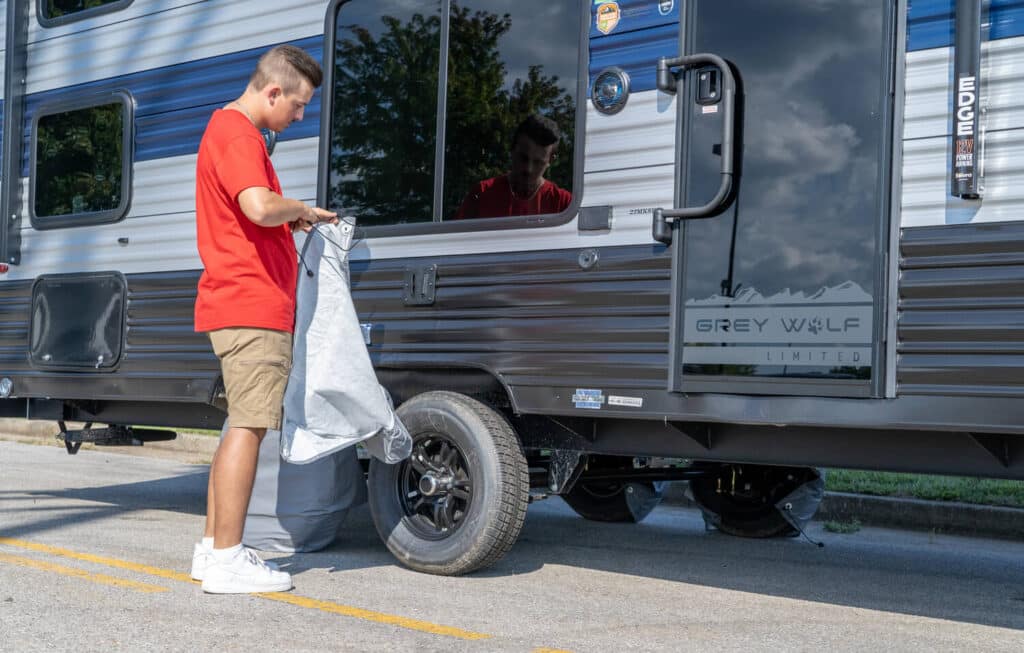
Man opening for tire on travel trailer
Image by Camping World

Whether your RV’s in storage or actively being used, its tires are constantly exposed to the elements. Sunlight (UV), heat, and other environmental factors gradually degrade rubber, causing sidewall cracking, hardening, and loss of pressure retention. That raises the risk of blowouts and premature replacement. 

A quality tire cover protects your investment by blocking UV, reducing heat absorption, and keeping dirt, salt, and moisture off the sidewalls. For RVers in specific locations, selecting the best tire covers for RVs in hot climates is particularly important. Good tire covers also maintain the polished look you worked so hard to achieve when cleaning your RV. 

How To Measure for RV Tire Covers

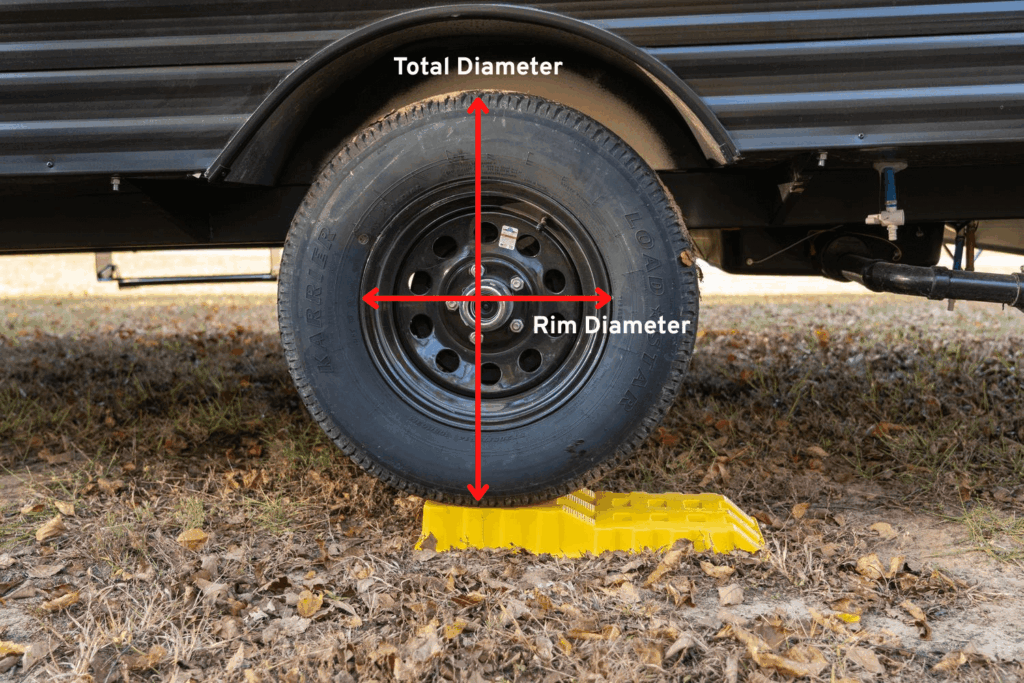
How to measure for an RV tire cover
Image by Camping World

Measuring correctly is the most critical step when selecting the best tire covers for your RV. Start by reading the tire’s sidewall: a code like ST225/75R15 indicates a 15-inch rim diameter. But that doesn’t tell the entire story. You’ll need a tape measure to note the full diameter of the tire from bottom to top or side to side. 

Most covers are designed for a range of tire diameters, similar to RV cover sizing. For example:

  • 14-inch RV tires are often around 26-28” in diameter
  • 15-inch RV tires around 27-29” in diameter
  • 16-inch RV tires around 29-31” in diameter
  • 19.5-inch RV tires around 33-35” in diameter
  • 22.5-inch RV tires around 39-42” in diameter

A proper fit stops sagging or gaps that let UV or moisture in—and you’ll be better aligned with a good RV tire cover size chart.

What Are the Best RV Tire Covers?

Man putting tire cover on single-axle travel trailer
Image by Camping World

Our choices for the best covers for RV tires are organized by axle configuration and tire size. 

Single-Axle RVs (14–16” Tires)

Elements Tire Cover Pair (Black, White, & Gray, Multiple Sizes) – This budget-friendly pair offers heavy-duty, flannel-backed vinyl construction, overlapping seams, and elastic hems to shield from UV and weather.

Snap Ring Tire Saver Two-Pack (Black & White, Multiple Sizes) – An upgraded design for easier installation, featuring an exclusive spring-steel ring design that snaps into place to hold the covers secure. 

Dual-Axle RVs (14–16” Tires)

Classic Accessories OverDrive RV Dual Axle Wheel Cover (White, 27” & 27-30” Sizes) – Designed specifically for tandem wheels, this cover offers full sidewall protection, weather-resistant fabric, and easy access.

Triple-Axle RVs

Elements Triple Tire Cover (White, 27-29” & 30-32” Sizes) – This cover spans across three tires, is built with the same heavy-duty materials as single-axle covers, and secures using elastic bungee cords.

Motorhomes / Larger Tires (19.5”, 22.5”, etc.)

Venture Forward Tire Covers Set of 4 (Gray, Multiple Sizes) – This set of four is made with heavyweight, double-stitched vinyl with flannel backing, overlapping seams, and reinforced grommets.

Tire Cover Buying Guide

buying-guide-best-rv-tire-covers
Image by Camping World

While sizing is arguably the most important criterion, here’s our complete breakdown to help you choose the best covers for your RV tires.

Material & UV Protection

When searching for the best-rated RV tire covers, prioritize materials like heavy-duty vinyl, PVC, or Oxford polyester. Vinyl tends to offer superior UV and weather resistance. If you’re in an area with intense sun or hot climates (such as the Southwest), look for covers labeled as UV-resistant or weather-resistant.

Fit, Size & Coverage

Fit is everything. The best RV tire covers fully enclose the sidewall and tread with no gaps. Look for elastic hems, built-in bungee cords, or reinforced grommets to ensure a secure hold. Double and triple-axle versions should span across all tires for seamless protection.

Axle Configuration & Number of Tires

Use covers designed specifically for your RV’s axle configuration, rather than multiple single covers. If your RV has a unique wheel setup, explore custom RV tire covers for the best fit and look.

Customization, Style & Storage

After you’ve determined the right size and protection level, you can explore personalization options. Custom or personalized RV tire covers let you add graphics, logos, or names for a unique touch. Just ensure the design provides complete UV protection.


Whether you tow a compact travel trailer or drive a Class A motorhome, tire protection should be part of your routine. Enjoy these additional resources to help you keep your tires in peak condition: 

What’s your take on the best RV tire covers? Let us know in the comments below!


  • Tucker Ballister headshot

    Tucker Ballister is our Content Strategist. He grew up RV camping in a Fleetwood Bounder with his parents and has lived and camped in two motorhomes and two travel trailers of his own. His current RV is a 2025 Forest River Campsite Ultra 26BW, which he loves taking on adventures with his wonderful partner and furry companion from their home base in Western North Carolina. Check out his adventures, gear reviews, and outdoor advice at thebackpackguide.com.

    View all posts


Source link

Charged EVs | Axalta launches EV battery coatings for heat protection and electrical insulation

0
Charged EVs | Axalta launches EV battery coatings for heat protection and electrical insulation


Axalta has introduced two new powder coatings—Alesta e-PRO FG Black and Alesta e-PRO Dielectric Gray—developed to address heat management and insulation requirements in EV battery applications.

Alesta e-PRO FG Black is designed for thermal stability and secondary fire protection in EV battery systems. According to Axalta, this coating resists ignition, expansion, and smoke generation even during thermal events at temperatures up to 1200°C. Technical features include the maintenance of thermal integrity under direct flame and extreme heat (600–1200°C), zero smoke emission at high temperatures, and robust corrosion protection either standalone or over electrocoated substrates.

Alesta e-PRO Dielectric Gray is an epoxy-based powder coating selected for its electrical insulation properties in high-voltage settings such as EV battery packs and stationary energy storage. It provides strong edge coverage for electrical insulation, high yield in high potential (hipot) testing, flexibility for complex geometries, and passes 6 kV hipot criteria. The company says this product also demonstrates superior lap shear strength for structural reliability under applied stress.

The Dielectric Gray coating has been evaluated for UL 94 V0 and IEC 60243-1 standards, while FG Black has demonstrated performance under direct flame exposure, single-cell thermal runaway and UL 2596 TaG tests. During direct flame exposure at 1200°C, the FG Black coating produced no smoke and did not ignite, according to the company.

“Our customers are looking for technologies that can withstand extreme environments and support their efforts to build safe and reliable battery systems,” said Dr. Robert Roop, Senior Vice President and Chief Technology Officer at Axalta. “These new coatings reflect our commitment to innovation and to partnering with customers to meet the challenges of next-generation mobility.”

Several leading original equipment manufacturers and Tier 1 suppliers are currently conducting additional validation tests based on their design and pre-production approval processes.

Source: Axalta


Source link

Detroit News: GM plans to axe hundreds of EV jobs

0
Detroit News: GM plans to axe hundreds of EV jobs


With US regulatory support for EVs cut off and demand anticipated to decline from Q4, GM is reportedly planning sector job cuts. By Will Girling

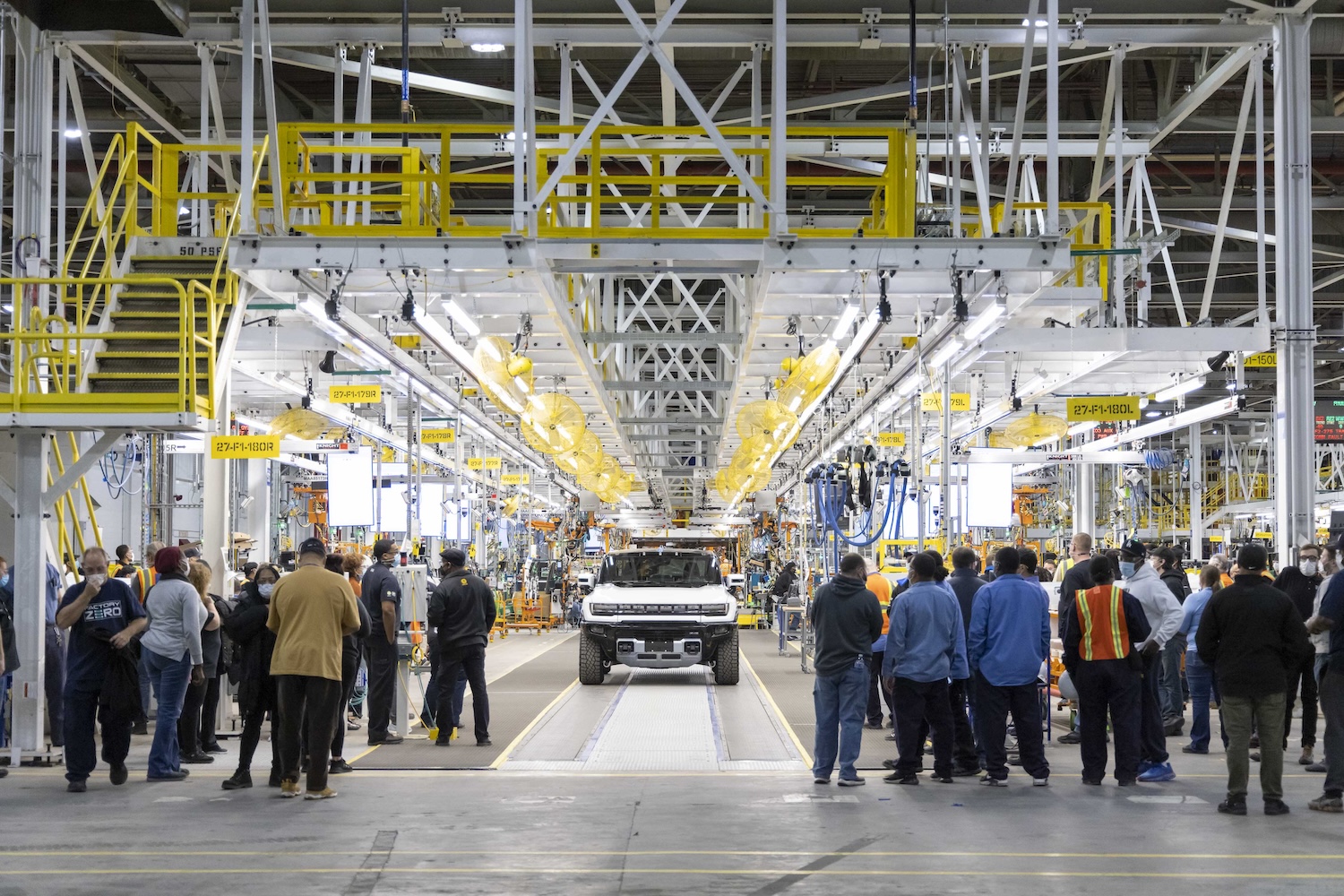
A 29 October 2025 article by Detroit News reports that General Motors intends to cut 1,200 jobs at its Factory Zero plant in Detroit, 550 jobs at its Ultium Cells battery plant in Ohio—with another 850 temporarily laid off—and 700 jobs at its Ultium site in Tennessee. This news comes shortly after the company cut 300 positions at its tech centre in Georgia.

Subscribe to Automotive World to continue reading

Sign up now and gain unlimited access to our news, analysis, data, and research

Subscribe

Already a member?

Detroit News: GM plans to axe hundreds of EV jobs


Source link

Pininfarina adds some Italian flair to the Honda NSX

0
Pininfarina adds some Italian flair to the Honda NSX


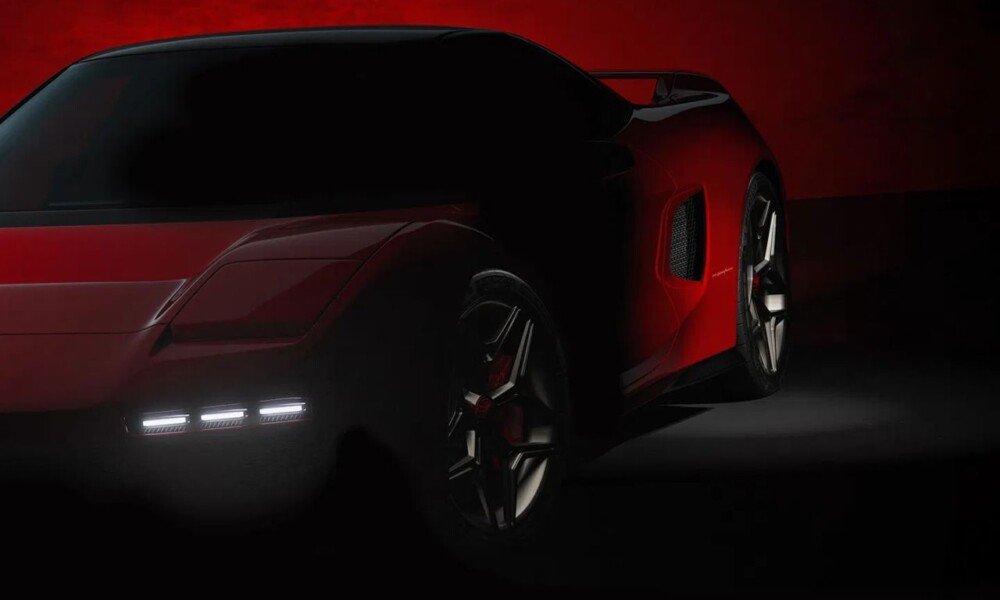
Pininfarina has revealed a carbon-bodied reimagination of the original Honda NSX. The restomod project was undertaken by the Italian design house in collaboration with JAS Motorsport – a company that has been associated with Honda since 1998.

The teaser images reveal a car that looks similar to the NSX. Pininfarina has made subtle changes to the exterior, accentuating certain design elements. While the pop-up headlamps have been retained, the front bumper now incorporates new LED daytime running lights. The vents on the sides have also been reworked.

Pininfarina JAS Honda NSX teaser-2

A few changes have been made to the rear as well. The new taillights add a retro look and feature the ‘JAS’ logo in the centre, while the rear spoiler blends into the fenders seamlessly.

Pininfarina hasn’t disclosed the technical details of the NSX restomod. What we do know is that the car will use a revised version of the NSX’s V6 engine. The car is expected to be unveiled in the first half of 2026.


Source link

What does it cost to motorhome in France?

0
What does it cost to motorhome in France?


This post may contain affiliate links. See our affiliate disclaimer here.

One of the most common reasons people don’t travel is the high costs. The cost to motorhome in France is often comparable to staying in hotels or even Airbnbs, with the added bonus that you can get away from the touristy spots and head into small villages and national parks.

I went through all of our credit card statements to put together a rough estimate of how much our one-month road trip across France cost. The answer: expensive. And worth it!

We are a family of four, with a one-year-old and a three-year-old. All of the prices include meals and food for four, plus additional costs that we incurred traveling with a baby. (Like diapers, wipes, and baby food!)

Disclaimer: During my last visit to France, the US dollar was stronger than the Euro, making the country more affordable than usual. Conversion rates change frequently, so your costs will vary based on your currency at the time of your visit. Every dollar amount here is based on the USD charged to my credit card. I specifically use a card with no foreign transaction fees—an absolute must before traveling.

Disclaimer #2: During our road trip around France, we also crossed into Switzerland, Italy, Monaco, Andorra and Spain. France borders eight European countries, making hopping over the border in your RV a breeze. When I say these were my costs for RVing in France, it also includes buying meals in Monaco, groceries in Italy, and tolls for crossing borders. I found it impossible to parse these specific expenses out of our records without making our month-long trip numbers seem inaccurate. So this includes RVing across six countries!

RV Rental

Our Anywhere Campers rental cost about $5,000 for one month, which breaks down to $165/night. This is a little more than other motorhome rental options; however, you get a little more with this particular rental company. This type of motorhome that sleeps four is perfect for families like ours, but you can find smaller vehicle rentals for couples or solo travelers.

Cost: $5000

You can watch our Anywhere Campers van tour here for more details on the motorhome itself!

Toll Roads

You will need a line in your budget just for toll roads because, holy moly, they are expensive. And ubiquitous. The equivalent to an interstate or highway in the US will be a toll road in France. On our most expensive day, we paid over $60 in tolls. This involved taking the tunnel through the French Alps and into Italy to escape an early-season snowstorm.

We used the “Avoid Toll Roads” feature on Google Maps to save on tolls. On days when we needed to cover a few hundred miles, we hopped on the toll road to save time and have access to aires.

Total spent in a month: $225

Campgrounds

Before I share our total cost spent on campgrounds, I want to note the number of nights we spent camping in France and our average nightly spend. During our one-month road trip, we spent 10 nights in French campgrounds. On other nights, we camped for free with our France Passion membership.

Campgrounds charge per person, so these fees are based on two adults and two small children. In most cases, we weren’t charged anything for our kids since they were aged three and under during our visit.

Three white motorhomes parked next to each other in a grassy campsite.

We spent, on average, $32 per night. So, specifically in France, we paid around $350 for camping fees. It’s worth noting that sometimes those camping fees included paying for laundry (around $10 a load 😬 ) and a few extra dollars when we ordered freshly baked croissants in the morning! That might be the biggest perk of French campgrounds.

The amount you spend on campgrounds depends primarily on how often you intend to stay in campgrounds. You can easily find alternative camping options to save money. 

Campground fees: $350

Read Next: 5 Camping Options in France (Free & Paid!)

Groceries

By far, groceries were our biggest expense. We cooked more often than we ate out so we could camp in more remote places.

When we travel abroad, my grocery store mindset is that if I want to try it, I buy it. This included buying a lot of macarons and gourmet chocolates from Le Clerc. (No regrets. They were always delicious and half the price of visiting a pâtisserie!)

Here, our grocery bill includes food and toiletries for our family of four, as well as wine, cooking utensils for the RV, and occasionally small toys for the kids. Most notably, this includes buying baby food, diapers, and wipes, which tend to be expensive and skew our numbers a bit.

Total spent: $900

Fuels

This includes diesel fuel for our motorhome and propane (GPL or LPG), as we filled up with both at gas stations.

As I mentioned earlier, we did travel across borders and fill up with gas in other countries. Specifically, our most expensive fill-up was outside of Barcelona, where we returned our one-way motorhome rental. Gas was a bit more expensive in Spain compared to France, but it is a good representation of a month-long road trip. We covered more than 2,500 km or over 1,600 miles. I was shocked that this number was so low!

Cost: $600

Restaurants

We didn’t eat out often—probably every couple of days. But our meals were always extremely affordable compared to eating out in America. Monaco, Andorra, Switzerland, and Spain were all significantly more expensive than France and Italy. We frequently found multi-course meals in France for around $15 USD per person. A trip to the bakery for coffees and pastries for the family cost about $10 each morning.

Naturally, our most expensive French meals were in Paris before we picked up our motorhome. But I was still pleasantly surprised at the affordability of restaurants as a whole. My personal favorite meal was roasted duck salad with champagne dressing, cassoulet, a traditional Toulousian dish of pork and white beans, and ice cream. $16 for all three courses and something I still think about and crave!

Cost: $400

(This total cost includes a meal of $100 in Geneva, Switzerland! Cheese is very expensive there.)

Champagne

Oh yes, this did need its own line item!

cost to motorhome in france champagne line

Even if you don’t tour the Champagne region, you will likely spend a pretty penny on wine. It’s Europe, after all! We purchased multiple bottles of champagne and a few tastings during our two-night stay in Epernay.

Cost: $150

Experiences

We often purchased admission tickets to family-friendly adventures like zoos, an aquarium, a cog train tour of the Alps, and food tours. We also opted for free experiences as often as possible, like walking the double-walled castle in Carcassone and hiking in the Pyrenees.

Cost: $400

Public Transport

Once in the camper, we only used public transport a few times. In many cases, bus tickets and shuttles were included with campground fees. However, we bought train tickets to visit Monaco while we were camping on the Côte d’Azur.

Cost: $20

SIM

I paid a one-time $100 fee for my Airalo eSIM. This covered me in France as well as bordering countries. However, it is data-only and doesn’t include calling.

My husband purchased an Orange SIM that included calling for $40, but it only lasted for 14 days and had to be reloaded multiple times, totaling around $100. This SIM also did not work in bordering countries, making it a less attractive option if you plan to venture outside of France during your road trip.

Total Costs: $200

Summary of Costs

Oh, I so don’t want to add up all these numbers! Traveling for a full month was an expensive trip.

Total spent: $8,595 or $277/day.

I always love breaking down these numbers by day because I know that if we didn’t cook our own meals and were in hotels every night for a month, our costs would be much higher! Of course, if we just bought an RV in Europe and didn’t have to spend 5,000 bucks on a rental, RVing abroad would be much more affordable… 😉

Was this number higher or lower than you thought? Share what you think in the comments!


Source link

Japan plays to strengths at Tokyo show as China threat looms large

0
Japan plays to strengths at Tokyo show as China threat looms large


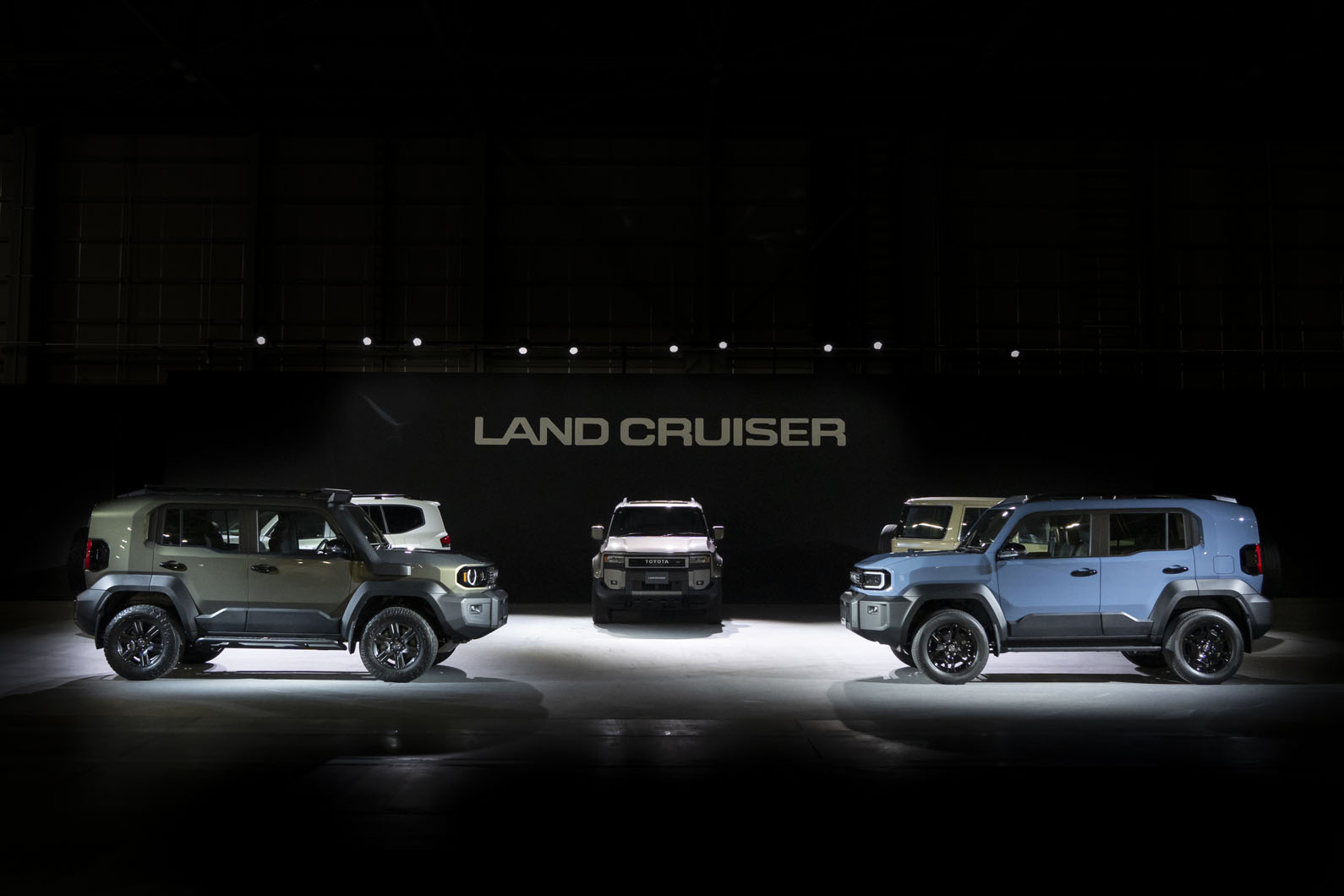
For example, Toyota-owned premium brand Lexus will showcase a wild six-wheeler concept that reimagines its LS flagship limousine as a luxury minivan. A new LFA supercar could also be revealed. Toyota will also reveal more details of its new flagship Century brand, expanded from the current range-topping luxury model.

The Japanese have traditionally been strong in sports cars, and they will look to play on that in Tokyo, with Subaru’s new STi cars – one electric, one petrol – returning the brand to its rally glory days.

Also looking to leverage its once-formidable position as a tech leader, Honda will show a new electric SUV to add to its 0 Series of EVs.

Perhaps most relevant to the UK is the unveiling of a new Toyota Corolla concept, potentially showing the replacement of the model that’s built for Europe in Derbyshire. The new model will be offered as both a hybrid and an EV.

That would be a step in the right direction, because right now the biggest weakness of the Japanese remains in plug-in hybrid and electric drivetrains. That’s exactly where the Chinese have directed most of their development and consequently are cleaning up in sales. 

In the UK in September, the Japanese share of the PHEV market dropped from 20% last year to just 9.7% after the Chinese captured a whopping 36%, up from almost nothing in 2024, led by the BYD Seal U and Jaecoo 7 SHS.

In the EV market meanwhile, the Chinese took a 18% share, compared with just 2.6% for the Japanese, down from almost 10% in September last year.

The Japanese remain dominant in the hybrid segment, with a 46% share, thanks to Toyota. But that number is down from 57%, because of the Chinese, who grabbed an 18% share in the month after MG expanded its hybrid line-up to three models.

The likes of Toyota, Nissan and Mazda and Suzuki are busy releasing new electric models in the UK and wider Europe region, but the delay is hitting the bottom line as the hit to CO2 emissions targets prevents them from maximising more profitable ICE car sales. Suzuki is a prime example of this, with sales in the UK down 31% in the year.


Source link

BMW’s Q3 Shows Global Sales Growth Continues, But Regional Realities Tell the Story

0
BMW’s Q3 Shows Global Sales Growth Continues, But Regional Realities Tell the Story


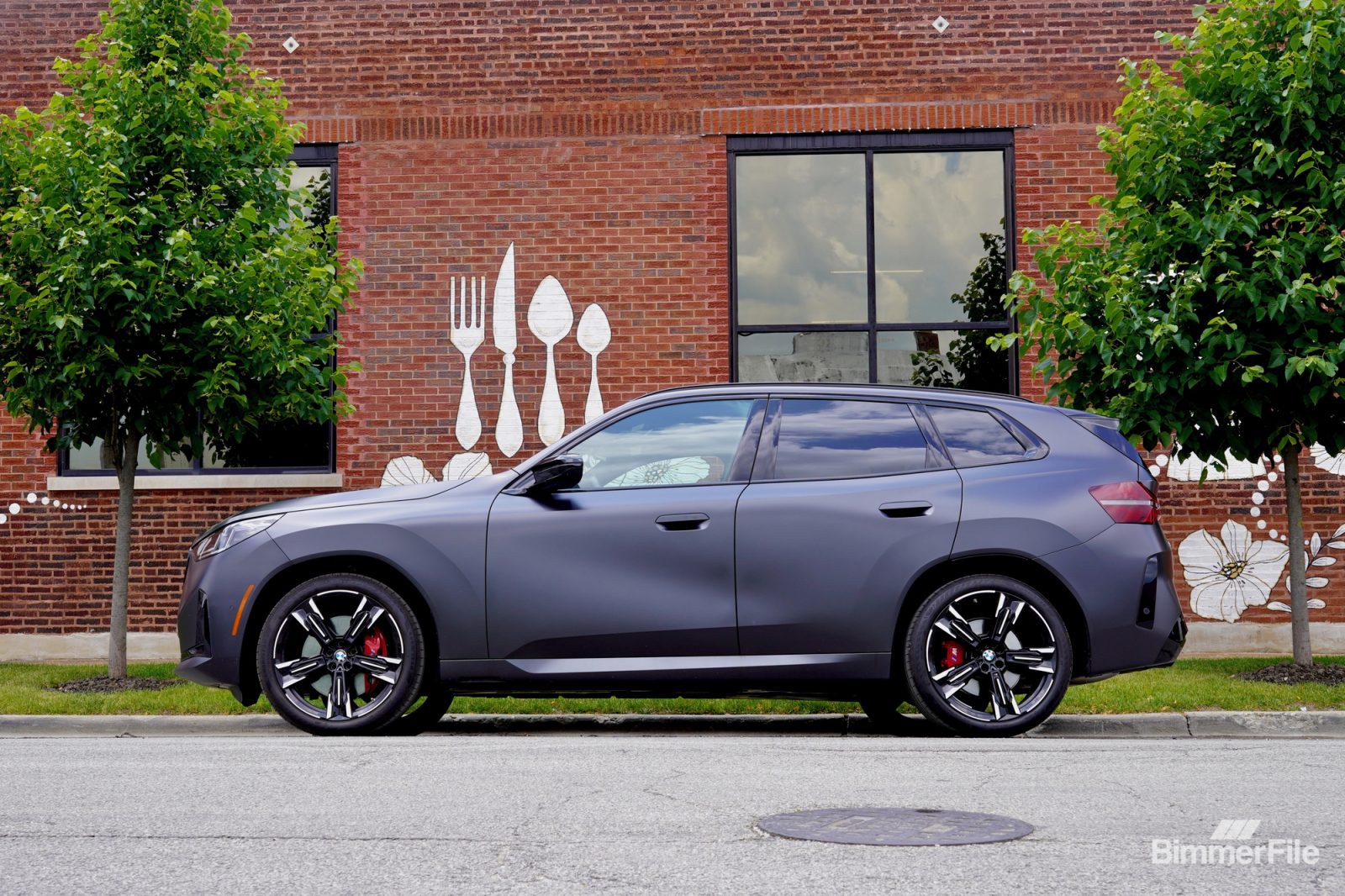
BMW Group’s global sales for the third quarter of 2025 paint a familiar picture: growth across most markets, steady gains in electrification, and yet, the continued complexity of a shifting global landscape. After reporting major gains in the U.S. last week, the global numbers now confirm BMW’s broader momentum—with some nuances worth unpacking.

From July through September, BMW Group deliveries rose 8.8 percent year-over-year, helped in part by a softer comparison to 2024’s supply-constrained quarter. Through the first nine months of the year, BMW Group delivered just over 1.8 million BMW, MINI, and Rolls-Royce vehicles—a modest but meaningful increase of 2.4 percent.

Electric growth remains a pillar, though its pace has leveled slightly. Fully electric BMW Group models climbed 10 percent year-to-date, reaching 323,447 units. When including plug-in hybrids, the total number of electrified vehicles hit 470,313—up a healthy 15 percent compared to last year.

“The strong sales performance in Europe and the Americas, as well as for the MINI brand, is particularly encouraging,” said Jochen Goller, BMW AG Board Member for Customer, Brands, Sales. “Demand for our wide range of electrified vehicles also remains strong.”

BMW Brand: Strength Outside China

The BMW brand itself moved 514,620 units in Q3, up 5.7 percent year-over-year. For the first nine months, global sales remain steady at 1,585,580 vehicles, essentially flat versus 2024. Growth in Europe and the Americas helped offset slower movement in China, where BMW’s “targeted sales increase” did not materialize.

Plug-in hybrids continue to surprise many observers, posting a 30 percent increase globally. That demand suggests many customers—particularly in regions with developing charging infrastructure—see PHEVs as the best bridge between ICE and full EV ownership.

Meanwhile, BMW M GmbH continues to be the powerhouse it’s always been. Following its strongest half-year in history, M sales surged another 11 percent in Q3, with 52,220 units sold. Year-to-date, M deliveries stand at 158,182—up nearly 8 percent year-over-year. The M3, M4, and M2 continue to anchor demand, but the addition of electrified M Performance models is clearly broadening the customer base.

MINI: The Momentum Brand

The MINI brand continues to surprise the industry. The third quarter saw an impressive 37.5 percent increase in deliveries, totaling 72,376 units. Year-to-date, MINI has moved over 206,000 vehicles worldwide—up nearly 24 percent. With the new MINI Cooper and Countryman families ramping up globally, MINI’s numbers reflect both the strength of the new generation and the brand’s renewed design and emotional appeal.

That mirrors the story we reported last week in the U.S. market, where MINI’s year-over-year growth outpaced almost every other BMW Group sub-brand. MINI’s expansion is especially important as BMW prepares for a major transitional period—phasing in its new generation of electric and combustion platforms while maintaining strong demand for current models.

The Big Picture

BMW’s global trajectory remains positive: growth across most regions, expanding M performance demand, and a MINI brand clearly hitting its stride. Electrification is up, even if its curve is beginning to flatten compared to the explosive gains of the past two years.

For all its scale, BMW’s strategy still hinges on flexibility—balancing strong ICE and hybrid demand with its long-term EV roadmap. That ability to pivot, and to meet customers where they are region by region, may be BMW’s greatest advantage as the global auto market continues to recalibrate.


Source link

The Electric TT is Coming After All

0
The Electric TT is Coming After All


Audi isn’t ready to walk away from the sports car just yet. Ahead of the IAA, the Ingolstadt marque is revealing an electric reinterpretation of the TT. Closely related to the next-generation Porsche Boxster, this new model is still nearly three years away from series production, but it hints at where Audi’s performance future lies.

The notion of reviving the TT or R8 has been floating around within Audi for some time. The challenge has never been the design or the technology, but rather the commercial reality. In today’s market, low-volume sports coupés and roadsters are rarely profitable. That’s one reason models like the BMW Z4, Toyota Supra, Mercedes SLC, and even Porsche’s 718 Cayman and Boxster have either left the market or are soon to do so.
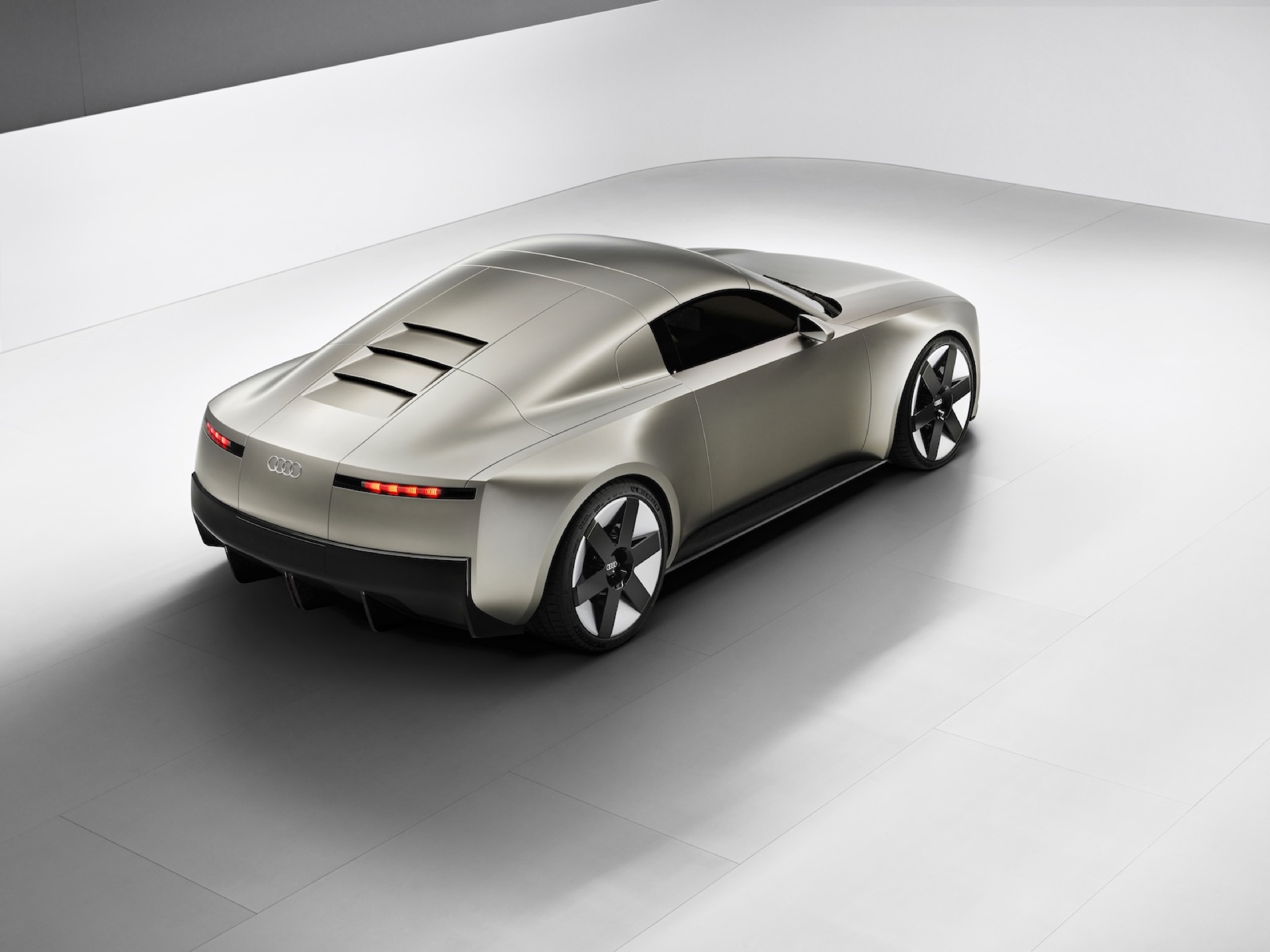
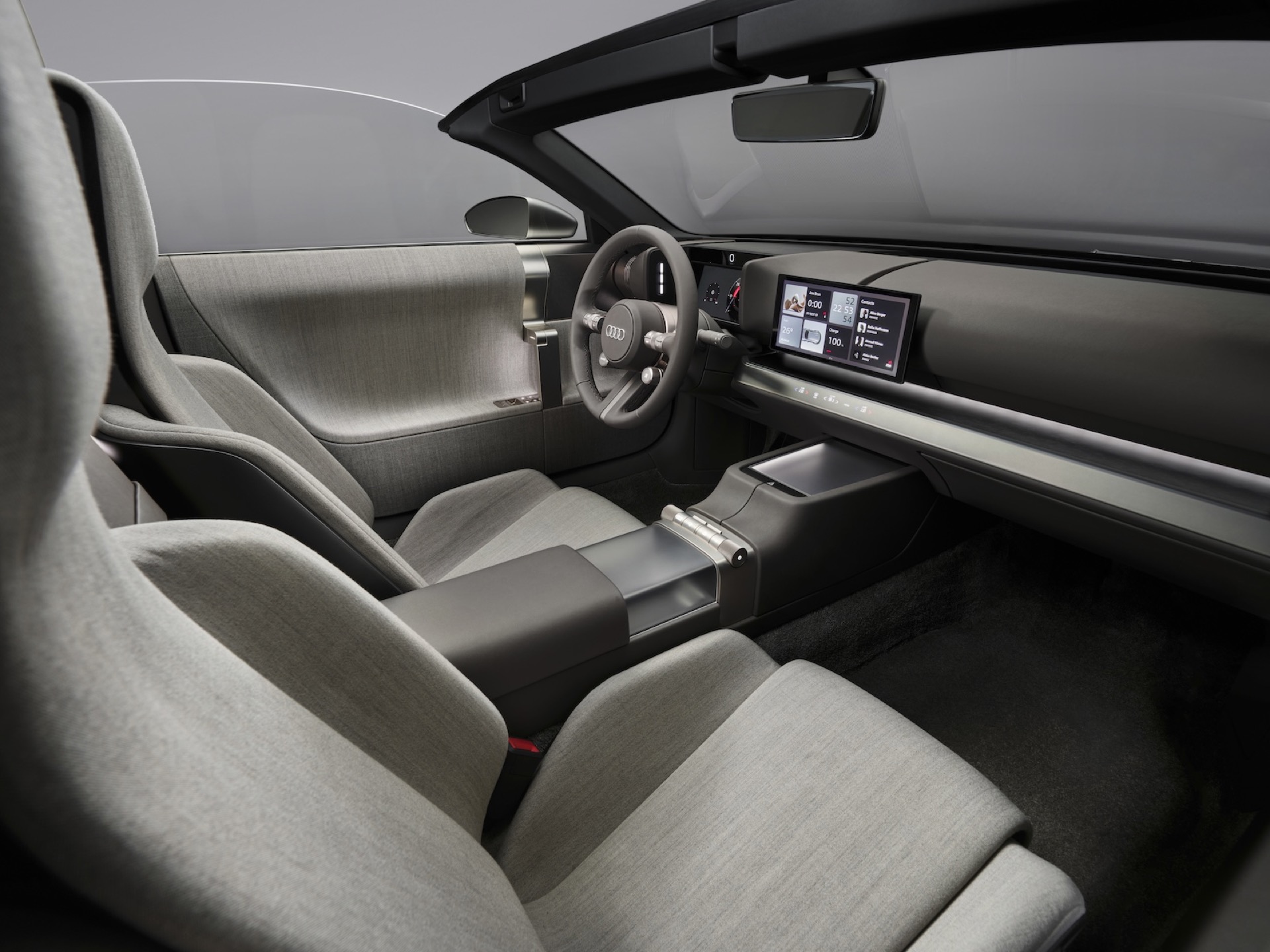
Now, Audi is attempting to change the narrative. The Concept C, unveiled just before the Munich motor show, previews a two-seater electric sports car with a folding roof that transforms it from coupé to targa at the touch of a button. This is intended as a spiritual successor to both the TT and the R8, filling the void left by both icons once they exit production.

Technically, it’s expected to share a great deal with the forthcoming Porsche 718, though Porsche has already delayed its launch. That means we’re unlikely to see either the new Audi or Porsche twins before the second half of 2027. And like the Boxster, the Concept C faces a core dilemma: buyers still want emotion from this kind of car. Most would still choose a powerful petrol engine over a silent EV, especially in a convertible or targa format.

This is the difficult task facing Audi. The Concept C’s minimalist, elegant silhouette marks a clear departure from previous Quattro-inspired concept cars, which looked promising but never made it to production. The tightly drawn waist and subtle wheel arches may suggest a rear-driven layout, with a single electric motor. For Porsche, that might be fine, since the 911 offers an all-wheel-drive halo. But it’s harder to imagine an Audi sports car without quattro traction.

GTspirit AudiConceptC 7

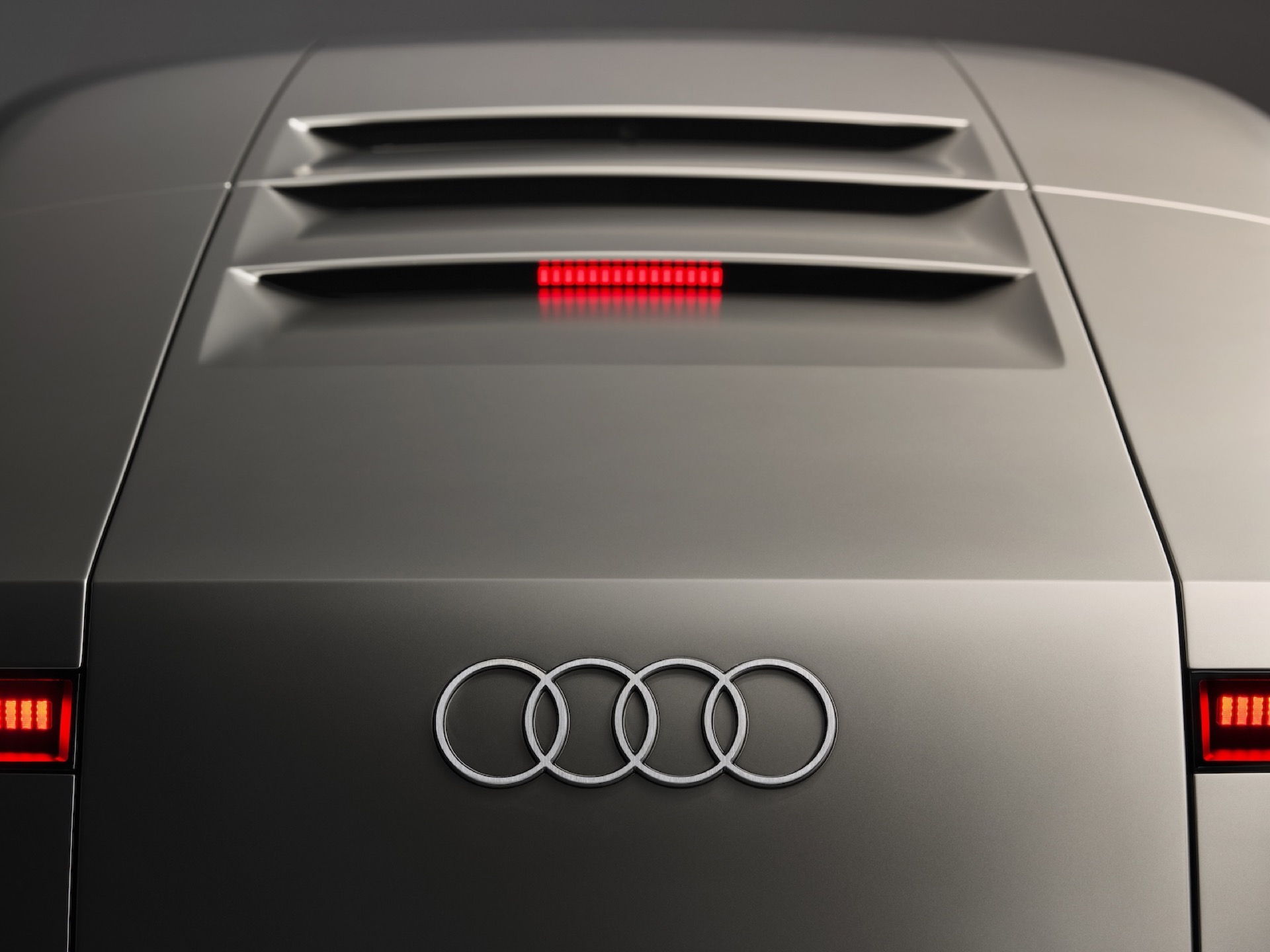
Audi insists the Concept C isn’t just a design study for the next TT. It’s a statement of intent for the brand’s future styling. The upright grille element, referred to internally as the “vertical frame”, and the slim lighting units are set to become familiar across saloons, estates, and crossovers. Inside, the minimalist theme continues. Traditional touches are avoided, and materials like warm leather have been replaced by clean, hard-surfaced seat shells that echo designs from Volvo or Polestar.

Digital displays are now a given, and the retractable 10.4-inch central screen seen in the concept is likely a showpiece rather than a production feature. The low seating position is made possible by the battery being mounted behind the cabin, rather than beneath the floor.

GTspirit AudiConceptC 12

It’s a layout that suits a proper sports car, but it could come at the cost of long-distance comfort or practicality. Whether that element survives into production remains unclear.

Ultimately, though, what matters most is that this concept signals serious intent. Audi has revealed countless striking studies in recent years, few of which made it to showrooms. With the Concept C, there is finally a chance for something bold and electric to become a reality.

GTspirit AudiConceptC 4


Source link