

The Model Y L’s launch coincides with record Q2 deliveries, as Tesla leans on safe variants rather than new models to sustain demand. By Stewart Burnett
On 2 July Tesla launched a six-seat, long-wheelbase version of its Model Y SUV in the US, priced at a relatively hefty US$61,990, as it looks to reignite demand amid growing competition—particularly for hybrid alternatives—and the loss of the US$7,500 federal electric vehicle tax credit. In addition to the US launch, the automaker confirmed that the extended-wheelbase model is now also available in the United Arab Emirates.
The Model Y L first debuted in China in August 2025 at a more palatable US$47,000, driving sales there despite stiffer and cheaper competition from local counterparts like BYD and Xpeng. The model was subsequently rolled out in adjacent territories like Australia, New Zealand and Southeast Asia. Tesla had confirmed the revamped seven-seater’s existence back in July 2025, and a US-bound prototype was spotted testing on local roads the following April.
Last August, Chief Executive Elon Musk had memorably cast doubt on the possibility the Model Y L might make it to US markets at all. This, he asserted, was due to the “advent of self-driving in America”—a prediction, like many of his, that has not borne fruit whatsoever. Tesla’s total self-driving fleet remains in the dozens and confined almost entirely to a single municipality in Texas.
Clearly, the automaker has made an about-face on this prediction, and the Model Y L does seem well-suited in some ways to current US appetite. The stretched variant has some noteworthy adjustments against its standard counterpart. Tesla has added around 150mm to the wheelbase and 180mm to the total vehicle length versus the standard Model Y, creating a 2+2+2, six-seat cabin with heated, ventilated captain’s chairs in the second row and power-recline, heated third-row seats with child-seat anchors. Tesla claims a 0-60mph time of 4.4 seconds and 325 miles of EPA-estimated range, alongside 89 cubic feet of cargo space, adaptive damping and FSD Supervised with integrated Grok AI.
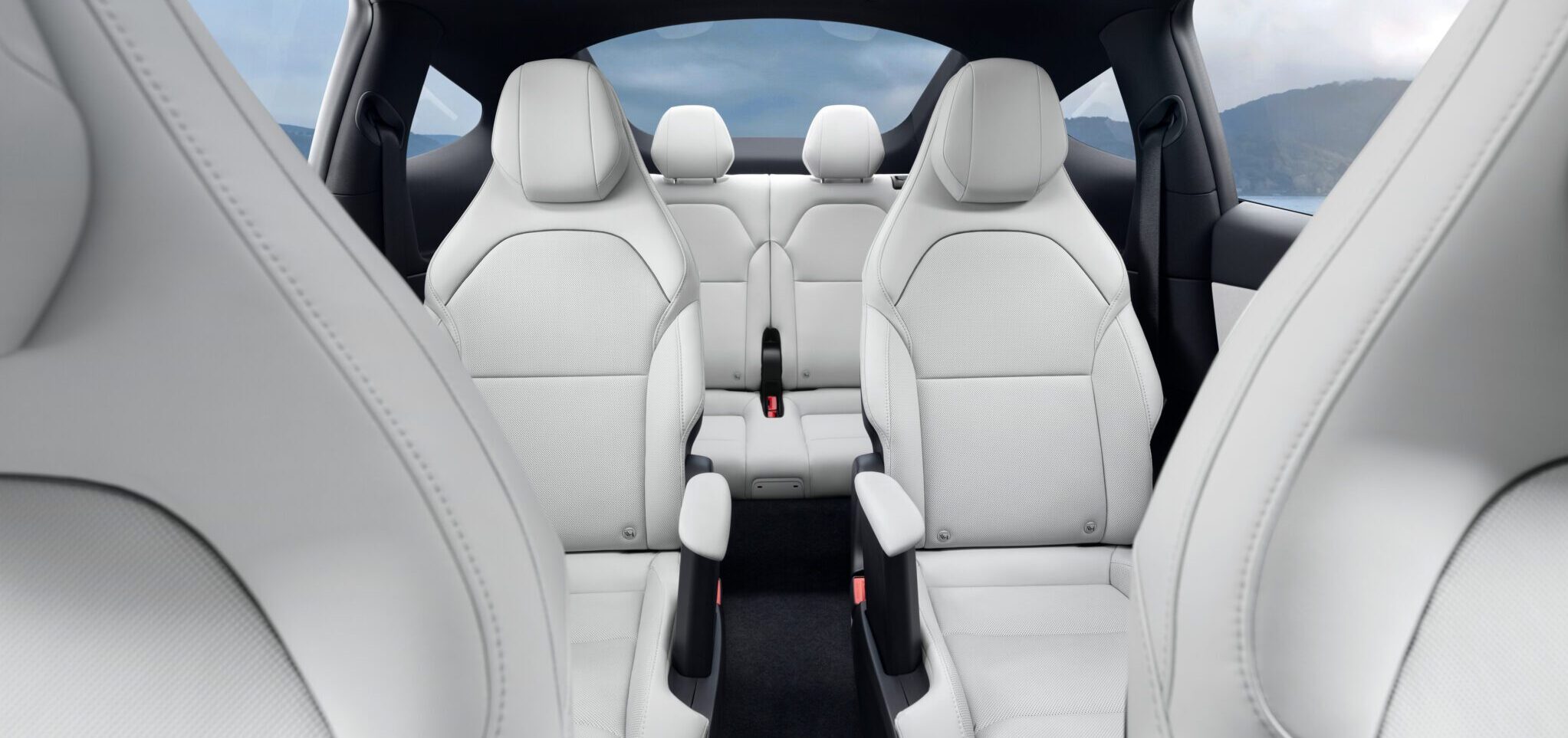
Consensus estimates for the US price had sat in the region of US$54,000 prior to the reveal, based on the roughly US$4,000 premium the L commands over the standard Model Y in China. Instead, Tesla launched orders with a fully-premium, all-wheel-drive Launch Series at US$61,990, appreciably higher than even the US$57,990 Model Y Performance. Whether cheaper trims follow—as they have with past Tesla launches—will determine how the model competes against proven alternatives in the segment like the Kia EV9—which starts at US$54,900—and Hyundai’s Ioniq 9, which comes in at US$58,955.
The launch comes as Tesla posted record second-quarter deliveries, beating estimates on a better-than-expected sales rebound in Europe due in no small part to surging gasoline prices. This has inevitably fed investor hopes that 2026 could end two consecutive years of annual sales declines, although it remains to be seen just how durable any sales recovery is for Tesla. The automaker is largely the beneficiary of broader geopolitical and economic circumstances, more so than it is reaping the rewards of any long-term strategic play.
This is readily apparent in the stagnation of its model lineup: rather than launching genuinely new models, the company has increasingly relied on variants of the Model Y and Model 3 to sustain demand. That reliance looks more pointed as the rest of Tesla’s lineup narrows; for example, the Models S and X have been wound down or steeply deprioritised, the Cybertruck has fallen well short of its original volume ambitions, and the Cybercab’s path to any meaningful deployment remains distant and unproven. Beyond the fact that consumers are reluctant to trust Tesla in particular’s self-driving technology—especially without the fallback of manual controls—there is the simple reality that no regulatory support yet exists for such a vehicle.
Iterating on the Model Y, still the world’s best-selling passenger vehicle, carries far less financial risk than developing an entirely new platform, letting Tesla lean on proven manufacturing scale rather than a fresh, multibillion-dollar bet. The Model Y L’s US arrival, then, looks less like fresh model diversity and more like Tesla concentrating its growth on the one line it knows will sell, while its more ambitious projects continue to underdeliver.