

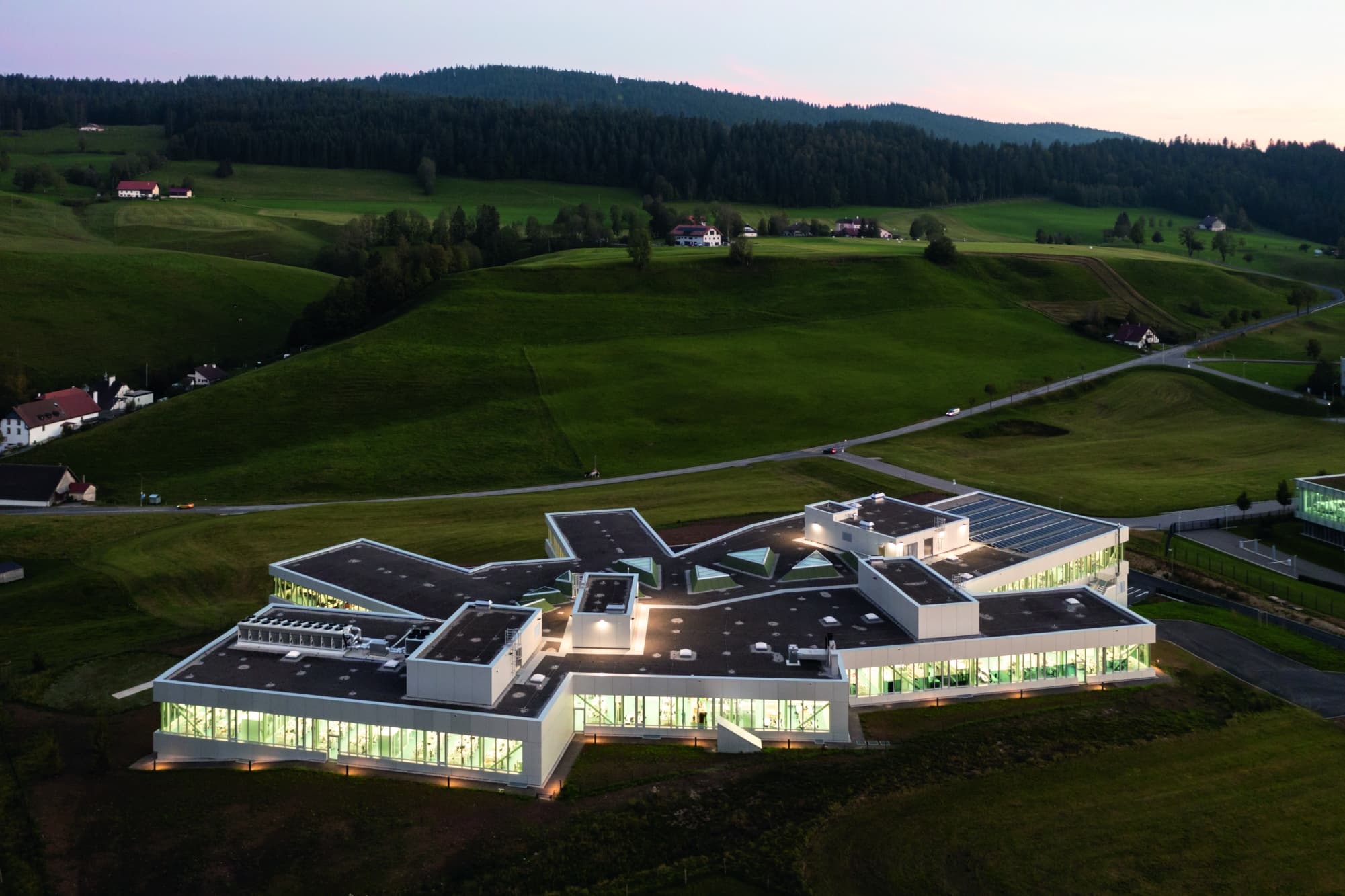
Nothing draws watch enthusiasts like a good factory visit. Ok, that is overstating the case so spectacularly that you might have laughed out loud. Aside from being a kind of hook – clickbait, basically – this really is the inspiration for this story, which promises to make you think about the multiple leisure, production and general work sites for Audemars Piguet. On this trip, not only did we get to see the new Arc facility that you might have read about recently, but also the old site at the main office, as well as the brand’s swanky museum. We will actually get into the weeds of all the sites, but this story is just an introduction.
The contrast between old and new – sometimes as much on the same craftsperson’s desk as between the restoration workshop and research and development – is striking, but the kinship between the two is perhaps the more interesting bit. Audemars Piguet watches are traditional kinetic precision instruments, but they are the result of what is possible at the pinnacle of contemporary manufacturing. As usual, we are getting ahead of ourselves and have not even spelled out the most interesting part about this visit: a tour of the Audemars Piguet facility at Le Locle, which collectors might recall as the former Renaud & Papi dream factory, and was known by the acronym APRP (guess why!).
Anyway, keep all that in mind and consider how a visit to the building where Giulio Papi and Dominique Renaud once ruled the roost might make you feel. In fact, Papi is still in the picture and you might actually catch him there. Even if you do not, just think on sharing the same space that he did when he did all his most important work for Audemars Piguet here. This is a kind of experience that not even everyone who owns an Audemars Piguet watch gets to have. Not even everyone who visits the home of Audemars Piguet gets to visit APRP, which now goes by the more atmospheric name Manufacture des Saignoles. Does all of that excite you? Does any of it? If not, why not? So many questions…
INDUSTRIAL ACTION
Seriously, though, why are collectors not more interested in visiting, especially if one has multiple watches from one brand? All these questions emerged after the visit as we were surveying all the materials and waiting for the news release on the official opening of the Arc facility in Le Brassus. That last bit resulted in more questions, this time about the newsworthiness of factory openings. Once more, our own perspective is biased in favour of such things, but it is all too easy to challenge this because the community may not be interested in the realities of industrial production. Since there is no real timeliness issue here, we settled on answering some of these questions in this story ahead of presenting the manufactures – there are at least two sites and Audemars Piguet has a casemaker and bracelet maker in Geneva that we did not get to.
To suggest an answer to why you should want to go to Le Brassus at least once, just give the images here a scan. While you do so, recall that watchmaking took root here in the heart of the Vallée de Joux as farmers sought out work to more productively while away the hours in winter. The environment in the village – it is still basically a village, with some startling industrial architecture in the mix – goes a long way to conveying the emotions behind this history. Perhaps you are of the school that prefers to consider the contributions of the Huguenots who settled across Protestant Switzerland, in exile from France. These gunsmiths, locksmiths, goldsmiths and other similar artisans would not have so easily taken to farming and will indeed have needed to adapt their skills – watchmaking would have helped. When you look out from the magnificent floor-to-ceiling windows at the Audemars Piguet museum, France is just over the horizon. That too is a very real link to this aspect of history and acts as a reminder that human capital was key, and remains so today.
The value of human work makes itself palpably felt at the Arc, even amidst all the fancy machinery you could want to see. We do love our CNC machines, as those familiar with this author will know, but we remind ourselves that the best tools are no substitute for the right watchmaking attitude, dedicated craftspeople and technical operators; the latter are absolutely necessary to the healthy running of a facility with cutting-edge technology, of course
WORKING SPACE
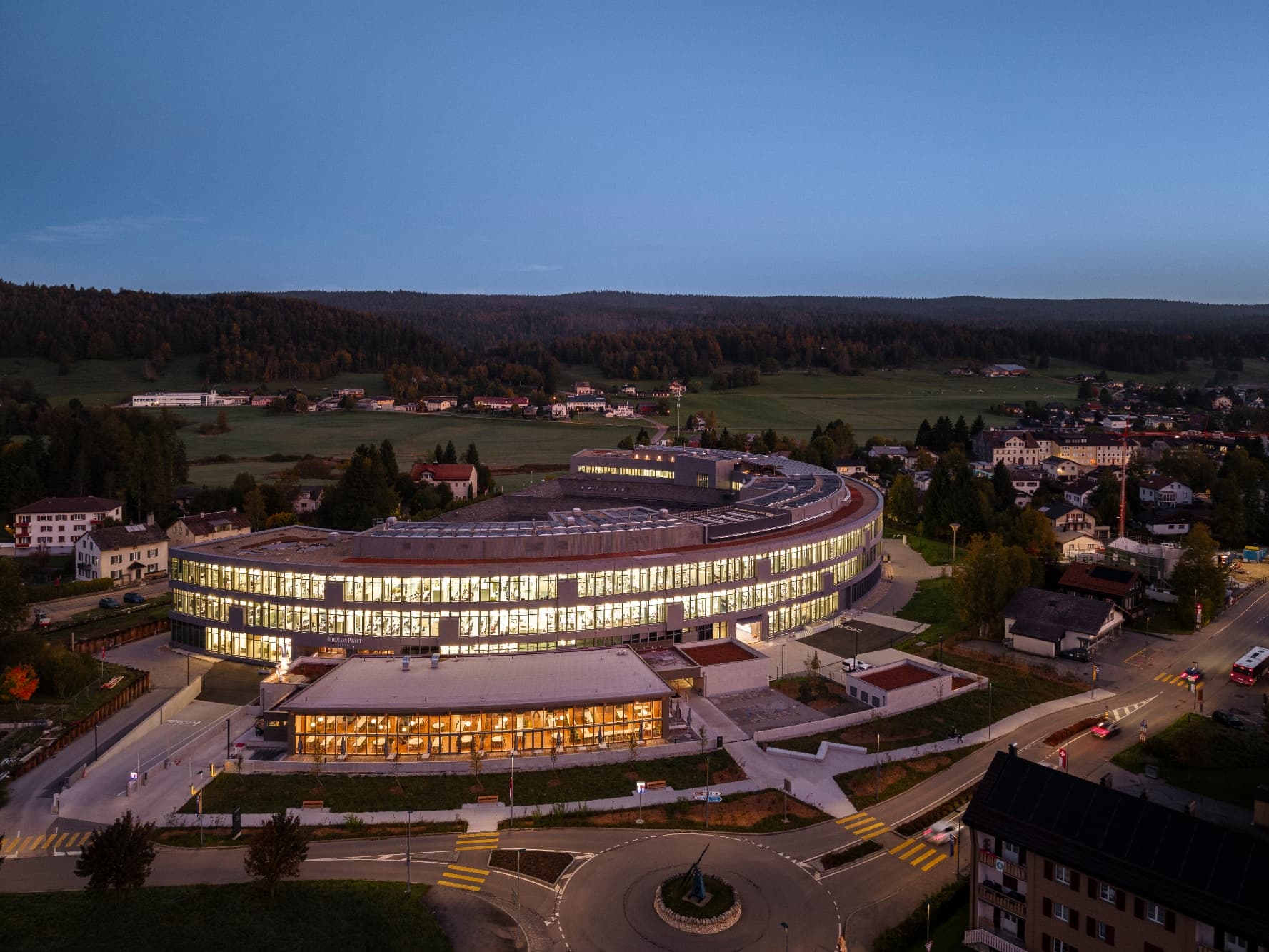
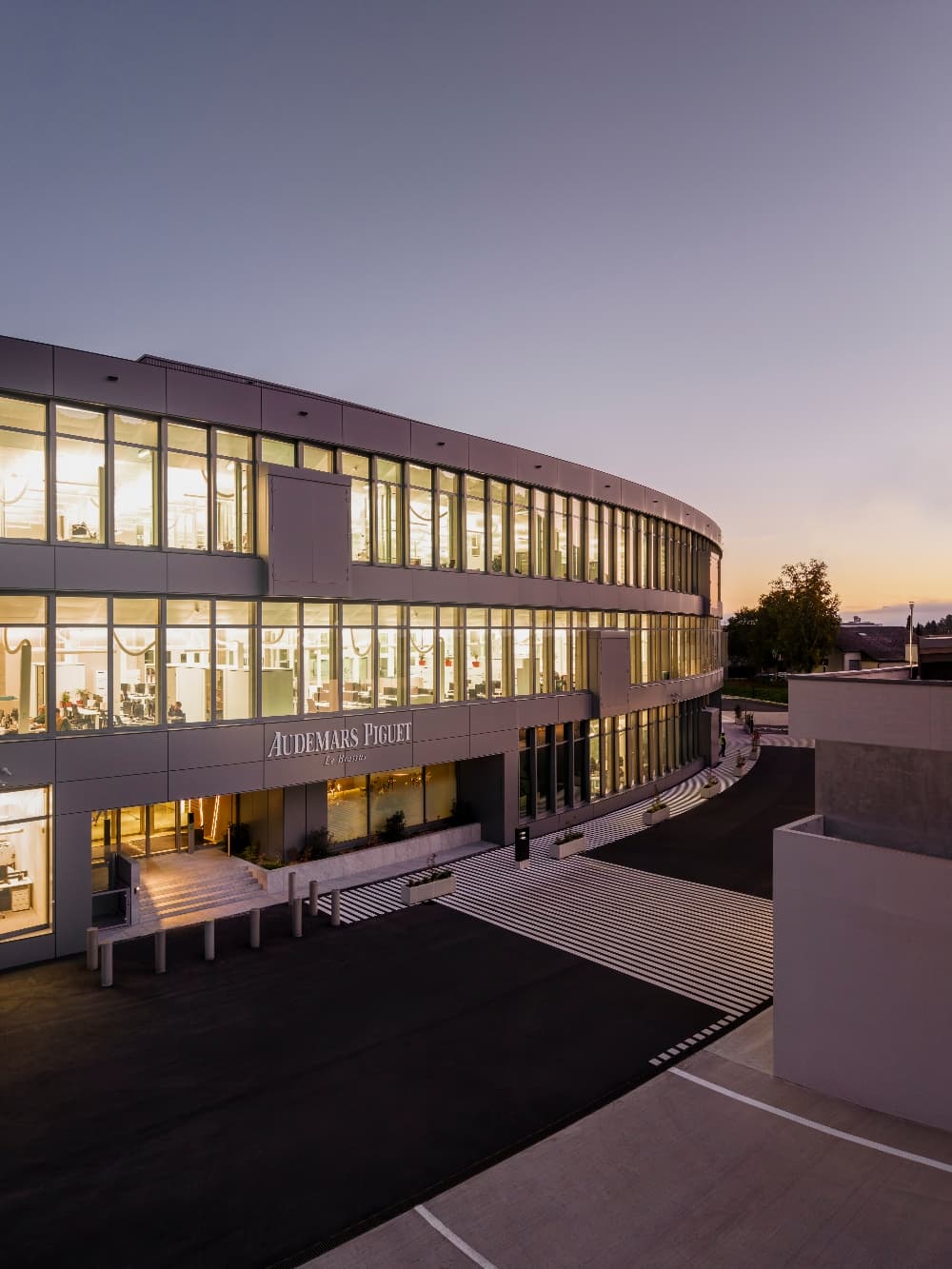
The Arc structure cuts an imposing figure with its crenelated and curved 321m façade; the building is curved like a ‘C’ or ‘U,’ which lends the place its name. It has scale to match at 23,700m2 and can accommodate up to 700 staff; this workforce had been split across multiple sites in the Vallée de Joux, including the former site at the Manufactures des Forges next door.
This is significantly larger than the 17,000m2 announced in 2021 when construction began, and it is unclear where the additional square footage came from. Is that last bit news? Is this the biggest production site in Swiss watchmaking? Not by a long shot, and it might not be the biggest watchmaking facility even in Le Brassus, never mind the Vallée. It does not claim such bona fides. Workspace is not the key measure here, although we should certainly care about the comfort of the people who make the watches we love.
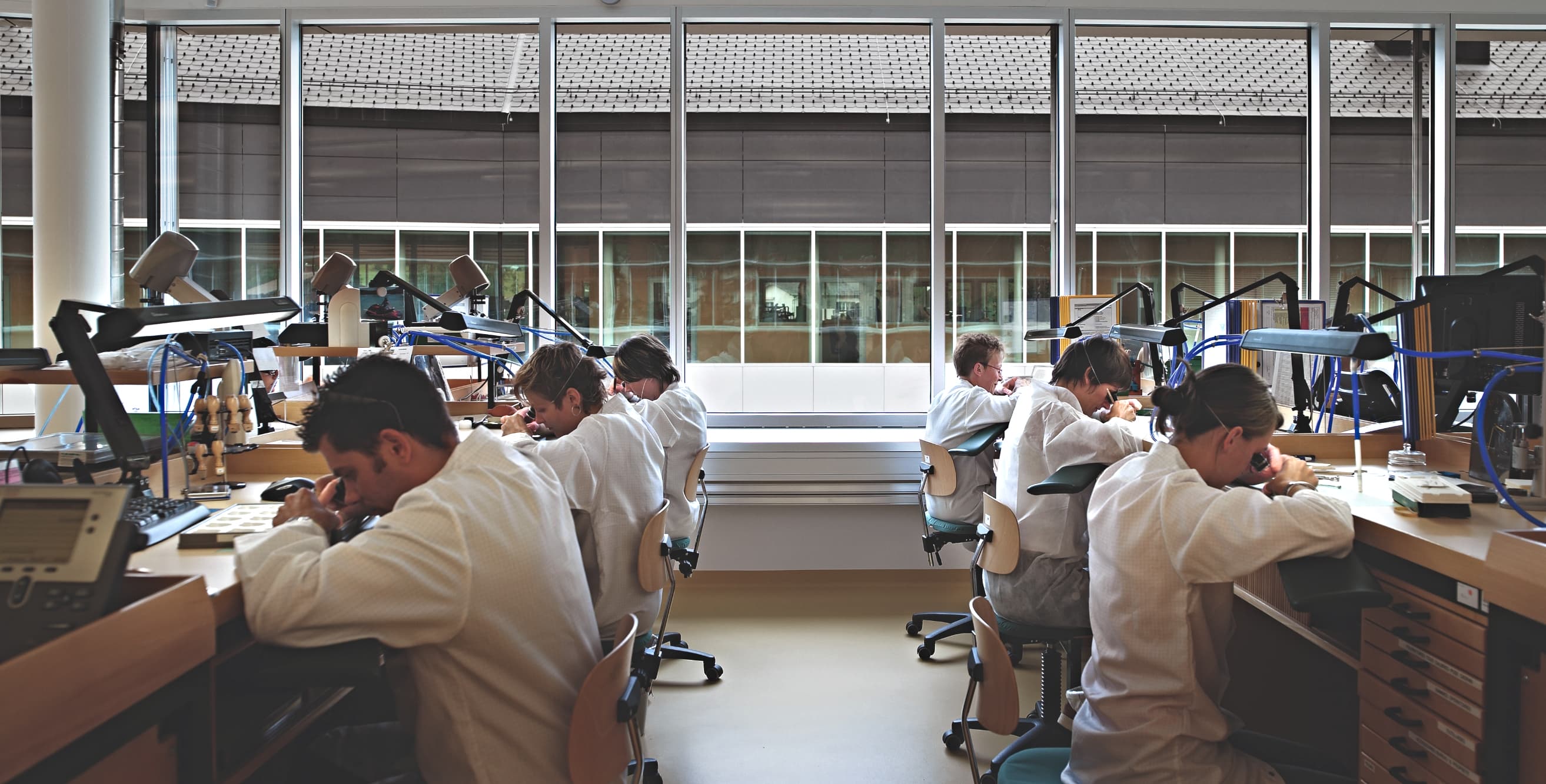
Well, you can decide for yourself how you feel, but Audemars Piguet has taken pains to provide both open areas for easy collaboration, and more traditional closed-off areas for added privacy. Those open areas include the parts of the assembly stations, where we saw the watchmakers hard at work on up to five movements at once. While some manufactures have delineated spaces where guests can freely observe but not intrude, Audemars Piguet has decided that if you are inside, then you belong there. That is in keeping with its broader messaging, which includes welcoming owners as members of the “AP family.”
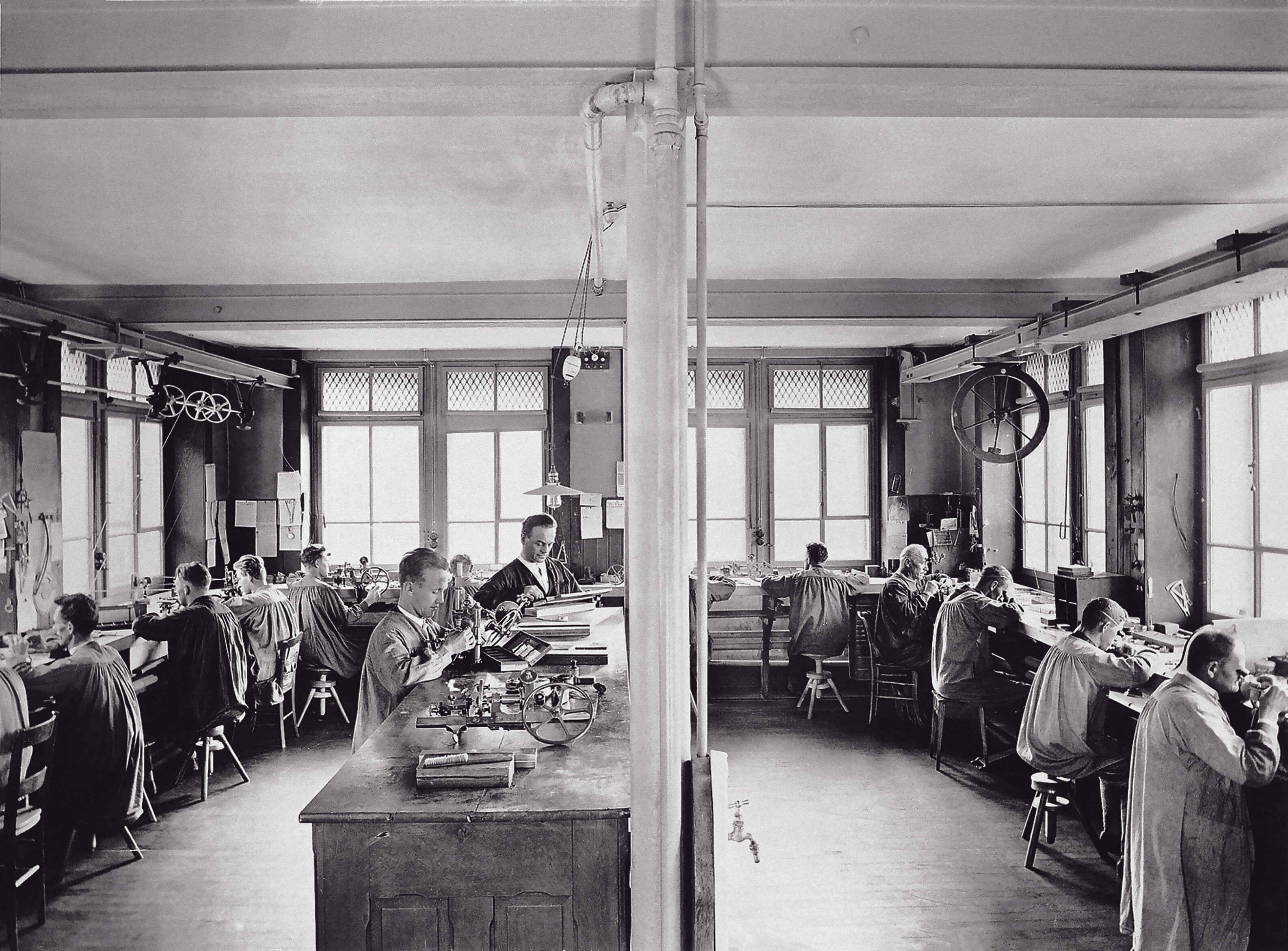
GLOWING UP
Of course, new facilities lack the warm glow of history – no Piguet or Audemars paced these halls while fretting about amplitude. For that, you will need to head back to the firm’s headquarters, which was where all the action took place. The museum – a postmodern behemoth of contemporary design – certainly fills in all the blanks on the brand’s history, including the family tree, if you are curious about all the old names. If you prefer your history to be a bit more physical, look out for a well inside the building. The manufacture used to share this resource with the neighbouring house. Again, the pertinent question is do you care?
While the opening of the Arc facility is news, because it is new, the worth of the story depends more on the small happenings at the manufacture. That means all its facilities, the entirety of its history and all its watchmakers because the brand’s place in the firmament of watchmaking depends on everything being aligned. So too the place of the brand’s watches on your wrist and in your collection. As this writer and Ruckdee Chotjinda have opined, there is nothing like some post-manufacture visit euphoria to shape some rather immediate acquisitiveness. If nothing else, that last bit probably explains the value of the manufacture visit succinctly.
For more on the latest in luxury watch reads, click here.