

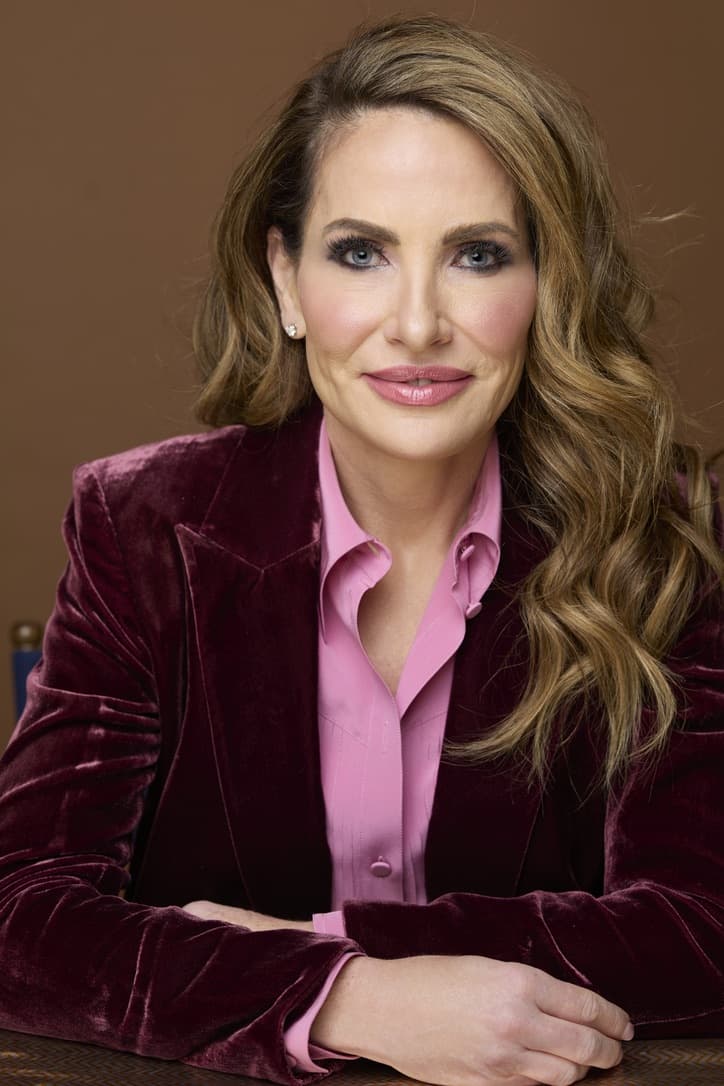
I want to tell you about someone I wasn’t looking for.
That’s always how it goes with the people who actually change the way you think. You’re not searching. You’re just moving through your day, and then something stops you , and afterward, you can’t quite go back to seeing things the way you did before.
That’s what happened with Danialle Karmanos.
I met her through work, by pure accident.
I knew going in that she was an executive leading a tech company. So I’ll be honest – I thought I knew what to expect. I had done this enough times. She would be sharp, driven, polished. The conversation would be focused, efficient, probably a little guarded. We would talk about the business, the vision, the market. I mentally prepared for that version of the meeting.
She called in, and it was nothing like that.
Not because she wasn’t sharp, she was, but because within minutes we were talking about things I hadn’t expected at all. About pregnancies, birth, and raising children. About babies in Detroit who needed someone to show up for them. About what it actually feels like to build something. About what family means and why most people don’t have enough of it or a community that cares. She was warm in a way that felt completely unperformed. Curious in a way that had nothing to do with the agenda (we spent most of the meeting talking about personal things and not business). And somewhere in the middle of that conversation I found myself thinking – wow, I wish more people had this depth and broadness.
The more I thought about it, the more it stopped me – why can we not have more reinessance women (and men)?

Here’s what got me. She’s the CEO of an AI and venture capital technology company. And when I say AI, I don’t mean it loosely – I mean the actual frontier of where technology is going, one of the most technically demanding, fastest-moving, and let’s be frank, male-dominated spaces that exists. The kind of room where the conversation is abstract and the stakes are large and most people in it have spent their entire careers becoming fluent in exactly this one field.
Danialle runs that room.
She also has four sons. She’s a philanthropist who built a yoga and mindfulness program that has reached over 40,000 children in Detroit. She founded a volunteer movement at a children’s hospital where people come in just to hold and comfort babies who have nobody – read that again – nobody to hold them. She created a natural birthing center at Beaumont Hospital after she had been told by her own doctors that her twins were not going to make it full term and unlikely would survive (they did and thrived). She built a social club for women in Birmingham, Michigan because she looked around and decided that women needed a real place to gather, to talk about the hard things and the funny things and everything in between.
She does all of this. At the same time.
And I know what just happened in your head. I know because it happened in mine too. That little voice that says ,okay, but something must be suffering. Something must be getting the smaller version of her. We’ve been so thoroughly trained to look for the sacrifice. To find the place where the trade-off lives. Because that’s the deal, right? That’s the story we’ve all quietly agreed on. You want the big career, you give something up – this is what we are told. You want to be fully present as a mother, you scale something back. You want to change the world through philanthropy, well – that’s a certain kind of person, and that person doesn’t also run the tech company.
Except she does.
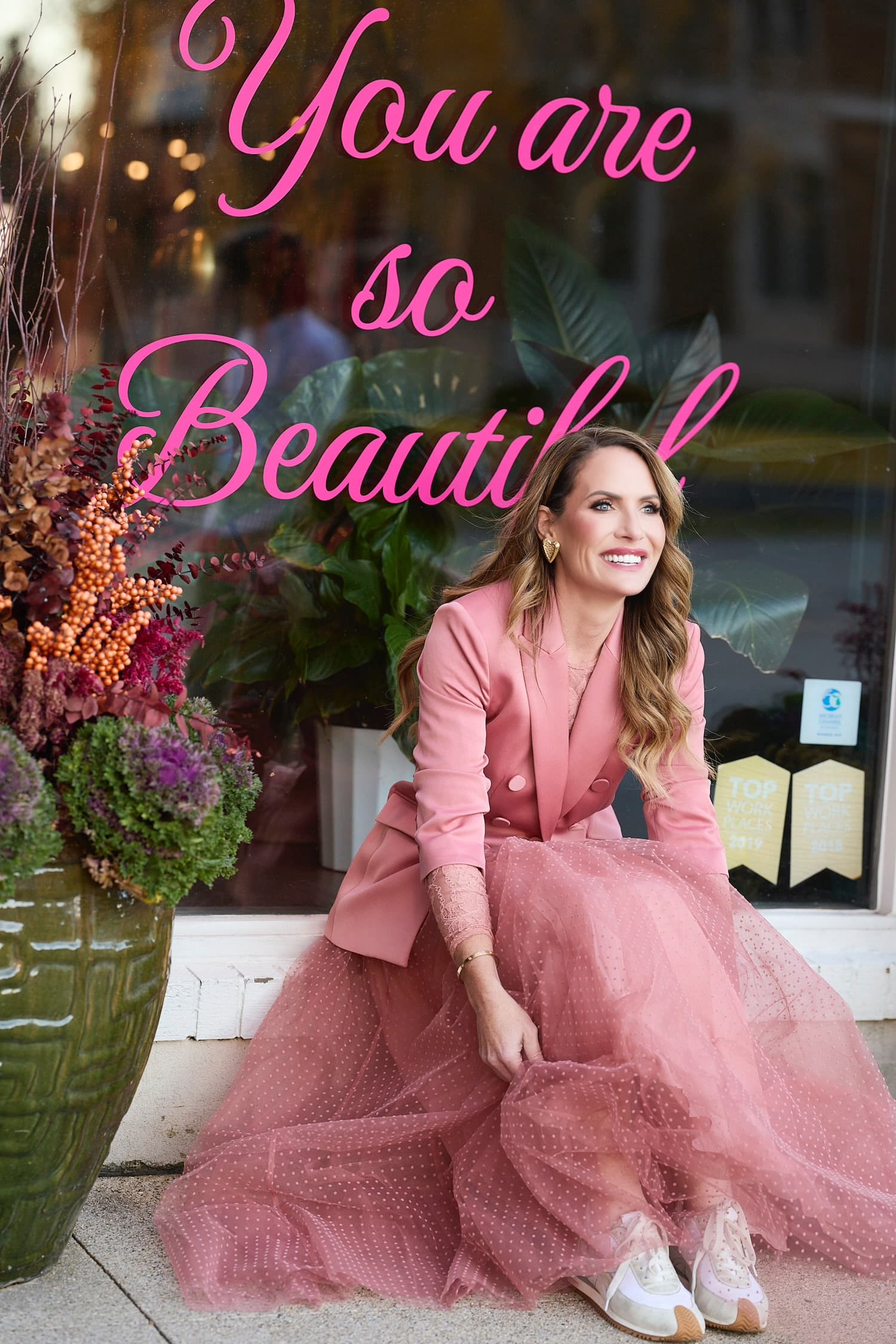
I think about where she came from: Detroit, raised by a single mother, and I think that’s actually the key to all of it. When the first woman you ever watched navigate life had no choice but to hold everything at once, you grow up without a ceiling. Not because someone told you the sky’s the limit. But because you never saw anyone stop at the ceiling in the first place. You just assumed you kept going.
The rest of us got a different education – though I’d like to think I was always at least suspicious of the trade-off and have been trying to fight it off my whole life. We watched people make trade-offs and we learned that trade-offs were the price of seriousness. Pick your thing. Go deep. Don’t spread yourself thin. And the advice isn’t wrong exactly – it’s just incomplete. Because it assumes that who you are in one part of your life is separate from who you are in the rest of it. And I’m not sure that’s true.
Think about what it actually takes to go into a hospital and hold a baby that no one else is holding. To sit with that. To build an organization around that impulse. That’s not soft. That’s an extraordinary capacity for human presence – and I would argue that capacity makes you a better executive, a sharper investor, a more honest leader than someone who has never had to be that present with another human being’s fragility.
Danialle isn’t doing many things. I think she’s doing one thing – living fully – just in a lot of different rooms.
And here’s why it matters beyond her, beyond this “profile”, beyond feeling good about an impressive person doing impressive things.
The decisions being made right now inside AI companies (what to build, what to fund, what problem is worth solving, what trade-off is acceptable) will shape how billions of people live for decades. These are not narrow decisions. They require the widest possible frame of human understanding to get right.
And yet the rooms where those decisions get made are, too often, full of people who have deliberately made themselves narrow. Who optimized early, specialized hard, and somewhere along the way confused depth in one area with wisdom about everything. The assumption being that the best person to build technology is the person who has done nothing but think about technology.

But here’s what that assumption misses. The skills that make someone an exceptional mother, holding multiple complex needs at once, making high-stakes decisions with incomplete information, understanding what someone requires even when they can’t articulate it, thinking in systems, building trust, sustaining something through relentless change, are not different in kind from the skills that make someone an exceptional technology executive. They are the same skills. Developed in a different room, but the same fundamental capability.
Leonardo da Vinci was a painter, a sculptor, an engineer, an anatomist, a musician, and a philosopher — not sequentially, but simultaneously. We don’t celebrate him despite that breadth. We celebrate him because of it. His understanding of the human body made him a better artist. His engineering mind made him a better scientist. Every domain deepened every other. The breadth wasn’t a distraction from the genius. The breadth was the genius.
We know this about Leonardo. We admire it from a comfortable historical distance. And then we go back to telling people to specialize.
Danialle Karmanos doesn’t just understand the technology. She understands what the technology has to serve. And that is a rarer, more valuable, and more urgently needed capability than most tech companies know how to hire for : because they’ve been looking for the narrow thing, and she is something else entirely.
There’s a question underneath all of this that I keep coming back to.
How much have we lost?
How many people quietly talked themselves out of the full version of their own capability because the world kept telling them to choose? How many extraordinary thinkers filed away whole parts of themselves to fit a job description, a category, an industry’s idea of what serious looks like – and left everything else unused?
The cost of that isn’t just personal. It’s collective. Every person who accepts the premise – who decides that the executive and the mother and the founder and the community builder cannot coexist – is a loss we never get to calculate, because we never see what they would have built if they would refused.
Danialle refused. And what she is building (across technology, across community, across every room she walks into) is the argument that the refusal was not just personally liberating but strategically correct. That the whole person isn’t a compromise.
The whole person is the competitive advantage.
Don’t be a cliché. Not as a slogan. As a serious, considered, almost defiant commitment to the idea that your breadth is not your weakness.
Leonardo knew it. Danialle lives it.
The question is what we do when we know how expansive we can become?
For more on the latest in business and leader reads, click here.