15.1 C
London
Tuesday, May 12, 2026
Home Blog Page 100

BILL MITCHELL – THE PASSIONATE DESIGN MAESTRO. – Rants

0
BILL MITCHELL – THE PASSIONATE DESIGN MAESTRO. – Rants


Editor’s Note: This week, Peter reminds us of just how different the automobile business was in Detroit’s heyday. It was a fleeting moment in time when the auto industry was on an upward trajectory and powering toward a future that appeared limitless. One of the legendary auto executives who embodied that era was Bill Mitchell, the iconic – and mercurial – design chief during GM’s most glorious era. We’re running one of Peter’s all-time most-requested columns, the one where he shares his personal remembrances of that era and of Bill Mitchell himself. After all, he lived just a block away from Peter… In On The Table, Mercedes-AMG demonstrated its next-generation technology by setting several impressive speed records with its CONCEPT AMG GT XX. And, from the affordable end of the auto spectrum comes the new 2026 Toyota Corolla Hatchback. Our AE Song of the Week is “We Just Disagree” by Dave Mason. In Fumes, Peter begins a new series reviewing his all-time favorite racing cars. And in The Line, we have INDYCAR results from the season finale in Nashville, and F1 results from Zandvoort in Holland. Enjoy! -WG


By Peter M. De Lorenzo

Detroit. To say that the ‘50s and ‘60s were a different era in automotive history is not painting a proper picture of just how different it was. Detroit was much more of a freewheeling mindset back then. Car executives were bold, decisive, conniving, creative and power-hungry personalities who inevitably went with their gut instincts – which could end up being either a recipe for disaster or a huge runaway sales hit on the streets. The only committees you’d find back then were the finance committees – and they never got near the design, engineering, marketing or even the advertising unless there was some sort of a problem. These Car Kings worked flat-out, and they partied flat-out, too, ruling their fiefdoms with iron fists while wielding their power ruthlessly at times to get what they wanted – and rightly so in their minds – as they were some of the most powerful business executives on earth. In short, it was a world that was 180 degrees different from what goes on in today’s rigid, namby-pamby, never-have-a-point-of-view-and-never-take-a-stand automotive environment.

No one represented the spirit of the business back then more than Bill Mitchell. He was bold, powerful, flamboyant, recalcitrant, maniacal, brilliant, frustrating and probably every other adjective you can think of for someone who was one of a kind. He was smart enough to know and he had the innate sense to understand that he had inherited the legacy of the great Harley Earl, and he never for a second forgot that fact – or let anyone else forget it either. And he played it for all it was worth with a swagger and strut that haven’t been seen since. He often bumped heads with the “suits” down at the corporation when they didn’t “get” one of his design recommendations – but he usually won the battles and got his way.

Mitchell was, in fact, his own potentate within the GM monolith, and he did outrageous things and spoke his mind and generally didn’t give a rat’s ass about any of the other bullshit that was part of corporate life at GM at the time. Mitchell was a larger-than-life personality, and it just didn’t sit well with a lot of the sober financial suits down on the “14th floor” of the old GM building. He swaggered and strutted his way around the Design Staff like it was his own personal kingdom – and make no mistake about it – it was.

To give you just a small glimpse into how Mitchell held sway over things at Design Staff, the Corvette was the one car that meant more to him than any other. And whenever a young designer did a version and started to gloat even just a little bit, Bill would always set things straight with the following famous Mitchell-ism: “Don’t flatter yourself, kid – I’m the one who does Corvettes here.” (As a brief aside, one of the most hilarious things I ever witnessed as a kid was watching the mercurial Mitchell attempt to play golf at the Bloomfield Hills Country Club. He was horrible at it, and his frustration level would grow exponentially with each hole – and you could see his complexion glow even more beet-red than it already was almost by the minute. He had absolutely no patience for the game whatsoever, and finally he’d inevitably storm off the course without finishing his round and jump into one of his concept cars – the original Sting Ray, the Mako Shark, the Monza SS – you name it, and then he’d peel out of the parking lot spinning the tires and grabbing gears all the way down Long Lake Road.)

I’ve heard countless firsthand stories about the man and his ballistic fits in studios while cajoling his troops to go further and reach higher – but I saw a slightly different side to him too.

Because, after all, he lived just a block away from our house…

And I’ll never forget the day I discovered that fact. I was still in my bike-riding days back then, but I remember resting with my buddies one blistering Friday afternoon on a corner in our neighborhood after a long, hot day of riding around aimlessly – we did that often back then – when we heard a rumble and roar coming from off in the distance. I knew right away that it wasn’t motorcycles and that it was more than one of whatever it was – and just then a pack of the most stunning cars we’d ever seen burst around the corner and came rumbling right past us – the sun glinting off the barking pipes and the canopy of trees shimmering off the perfect mirror finishes of the paint jobs. This “horsepower train” was led by the “original” 1959 Corvette Sting Ray racer in Silver, followed by the XP700 Corvette (a “bubble-top” show car with side pipes also in Silver – it was Mitchell’s favorite color), the first Mako Shark Corvette and a concept called the Corvair Super Spyder (also in Silver), a wild racing-inspired show car with dual cut-down racing windscreens and three pipes curling out and around each side in the back. They were so loud we couldn’t even hear ourselves screaming whatever it was we were screaming, but after a split second to think about it, we took off, pedaling our guts out after them. It was apparent that these machines were heading for our part of the neighborhood – and as we tried to keep them in sight I realized they were turning on to my cross street!

We came around the corner and saw them pull into a driveway, exactly one block from my house. We stopped right at the end of the driveway with our mouths gaping down to the asphalt, as the drivers of the other cars handed the keys to the driver of the Stingray and he took them up to the front door where a woman collected them. Then, an Impala pulled up and the four men got in it and were gone, leaving the cars sitting in the driveway all lined up ticking and spitting as their pipes started to cool.

This became the Friday Afternoon Ritual of the summer – at least when Bill Mitchell was in town.

He liked having his “toys” at his disposal on the weekends. And every weekend the collection was different, depending on the mood he was in when he made the call to the GM Styling garage. I would watch what cars would be delivered on Friday, and then I would ride over there on Saturdays and just linger out in the driveway studying every square inch of every car hoping to get an audience with The Man himself – and maybe, just maybe – a ride in one of the machines. One thing about Bill Mitchell is he never got tired of the cars, and he never got tired of seeing people’s reaction to them or answering questions about them. After about the third weekend of this, I finally got the nerve to introduce myself to him one Saturday morning as he was getting ready to go somewhere in the Super Spyder. From that moment on I was okay in his book because I was “one of Tony’s boys” and he said, “Hop in – I’m just running up to the drug store, but come on…”

I jumped in the passenger seat (the interior was done in Silver Metallic leather), and he made sure I fastened my seatbelt, even though he didn’t bother with his – and we were off. The Super Spyder was a revelation to me (although I had to look through the cut-down windscreen or off to the side to see) because it was the first time I had been in anything other than a production automobile. Thanks to my brother, I had ridden shotgun in plenty of fast cars, but this was different – this one was exotic to me. The ride literally lasted five minutes up to the store and five minutes back, but from then on I was a fixture in the Mitchell’s driveway for the rest of the summer.

I ended up riding in every one of GM’s Concept Cars of that era. All but one of them being chauffeured by none other than Bill Mitchell himself. Just for the record, my favorites were the original 1959 Sting Ray racer, the Monza GT Coupe in Silver and the Monza SS Spyder in Red (look them up – they were the stunning Corvair-based show cars with the front ends that ended up on the racing Chaparrals).

And the one not chauffeured by Bill Mitchell? That was an unbelievably wild Pontiac show car called the XP400. It started out as a 1964 Nassau Blue Pontiac Bonneville convertible that had more of a ’50s custom look to it (complete with a stowable hard tonneau cover that was way ahead of its time). Big deal, you say? Well, stuffed in the engine bay was a 421-cubic-inch, Mickey Thompson-prepared drag race motor with a 671 GMC blower producing, as Ken Eschebach (the gifted technician at “Styling” who basically kept everything running for Mitchell) said, “All Mickey said was that it had almost 700HP.” Oh, and one more thing – it had a lever that you could engage that would open up un-muffled side-pipes any time you felt the urge to.

Bill Mitchell had the XP400 dropped off one summer day in 1964 for my older brother to play with for the weekend. I have two memories of that weekend: 1. Sitting in the back seat with two other guys (a total of five in the car) rolling down a two-lane road headed for Woodward Avenue – in first gear. My brother punched it, and that beast shrieked and howled as it charged down the road, spinning its rear tires in the first three gears, our necks snapping in unison with every shift. The acceleration almost took the wind out of me. He backed out of it at 125 only because we had to stop for a light. The thing was brutally fast – a truly nasty-beautiful machine in every sense of the word. And 2. Pulling into gas stations and getting out to check the oil just so we could see the expression on the attendant’s face as we unlatched the hood. And we did that often because Mickey had set the motor up with “drag race piston rings” as Ken told us, so it used 21 quarts of oil in one weekend. Incredible…

Things weren’t all blissful in those years. I heard rumblings of things being “different” in the Mitchell household, and the next thing I knew he had gotten divorced – and then he got remarried to a woman who lived around the corner from us, one block away in the opposite direction! I guess he liked the neighborhood.

At any rate, Bill Mitchell’s new wife had a stepson (though several years younger than our crowd) who became part of our bike-riding gang. It was during this time that I really got to know Bill Mitchell beyond the occasional car rides. I used to hang out in his basement for hours with his stepson, and I’ll never forget what a shrine to the automobile it was – a virtual museum of automotive art and automobilia. The man had his favorite drawings plastered all over the place – beautiful illustrations from the time he first started drawing cars as a young boy that were lit with little spotlights. He had personally signed photos of most of the all-time great Grand Prix drivers from the ’30s, ’40s, ’50s and early ’60s. He had a Plexiglas case containing the helmet, goggles and gloves that the great Rudolph Carraciola wore in one of his last drives for the Mercedes-Benz factory racing team (I finally understood why Mitchell’s favorite color was Silver – he had Silver Mercedes-Benz and Auto Union stuff everywhere). He had other personal effects from famous drivers all over the place – a Stirling Moss helmet, gloves from the great Juan Manuel Fangio – you name the driver, and he had something personally signed by them and given to him. And there were countless models, original paintings, pictures, plaques and badges – a cornucopia of car stuff that is just staggering to think about now.

There were a few times when he would come down and spend time with us, and since I thought I wanted to be a car designer I’d pepper him with questions about anything and everything. I remember one particular day when he was in an expansive mood, and he took me on a personal guided tour of his collection of stuff – and it was one of the most fascinating experiences of my life. Here was a living automotive legend in every sense of the word taking the time to convey to a kid what all of this stuff really meant to him. What struck me right away was how he was as much of a pure fan and in awe of his favorite drivers as anyone. He expounded on every single piece of memorabilia – where it came from, how it came about, his personal experiences with the driver, etc. But the best part was when I’d ask him about a particular drawing he had done, and he’d go off for several minutes explaining every nuance, every line and every shape down to the last detail.

In that brief moment of time, I finally understood the passion, the intensity and the love for everything automotive that was Bill Mitchell. And I realized right then and there that my love for everything automotive had some sort of place in life – and maybe even a future – all because Bill Mitchell took the time to give a kid a tour of his personal automotive museum.

For all that has been said and written about Bill Mitchell – the tough-guy persona, the bluster, and all the stories and anecdotes of his temper tantrums in the studio – I think people forget what a truly gifted and talented man he was. And I also think people have forgotten how his relentless, unwavering passion for the automobile and automotive design inspired countless young designers and helped propel General Motors to the top of the automotive design world in his day. Something that was truly lost on this company for the longest time.

Right now, there are car guys and gals from many disciplines slogging away at every car company on the planet – and maybe even some will read this column. An elite few of them may have even managed to rise to the top in their car companies with their spirit and passion intact, which is no mean feat in this day and age.

But in the face of a business that grows more rigid, regulated and non-risk-taking by the day, there are still lessons to be learned from the legacy of Bill Mitchell. If anything, we must remember what really matters in this business above all else – something he instinctively knew in his gut – and that is to never forget the essence of the machine, and what makes it a living, breathing mechanical conduit of our hopes and dreams. And that in the course of designing, engineering and building these machines everyone needs to aim higher and push harder – with a relentless, unwavering passion and love for the automobile that is so powerful and unyielding that it can’t be beaten down by committee-think or buried in bureaucratic mediocrity.

Bill Mitchell had an uncanny knack for getting the best out of the talented people around him. And he led the only way he knew how – and that was by fueling creativity with his passion and by the sheer force of his will. What he believed in is as true and vibrant today as it was in his era – and hopefully, at least in some quarters of a few car companies, that will always be the case.

And that’s the High-Octane Truth for this week.
BILL MITCHELL – THE PASSIONATE DESIGN MAESTRO. – Rants

(GM Design)
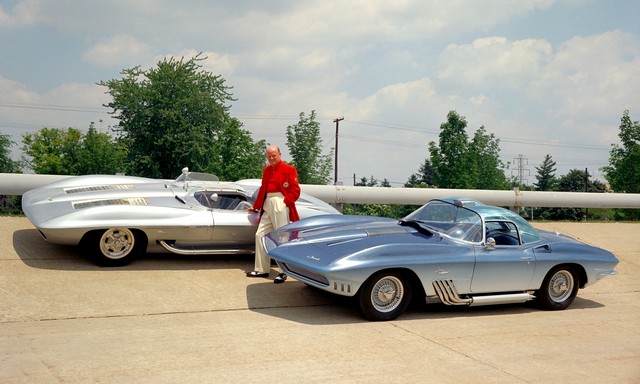
Bill Mitchell stands next to two of the most iconic GM designs under his reign: The 1959 Corvette Sting Ray racer concept (XP87), and the 1961 Corvette Mako Shark (XP-755) concept. A 19-year-old Peter Brock (who later went on to design the Cobra Daytona Coupe for Carroll Shelby), Larry Shinoda and Mitchell himself worked on the Sting Ray racer in 1957, which obviously influenced the fabulous ’63 Corvette Sting Ray production car, and Shinoda and Mitchell worked on the Mako Shark concept. One of the countless anecdotes from the Mitchell era? He caught a Mako shark on a fishing trip in Florida and had it mounted on a wall in his office. He kept telling the designers that he wanted the paint job on the Mako Shark concept to look exactly like the shark on his wall, with the same color gradations. After Mitchell rejected several attempts at painting the XP-755 concept car and amid growing frustration, a few designers sneaked into his office late one night while Mitchell was out of town and removed the shark from his office wall. They then had the paint shop paint Mitchell’s prized catch exactly like the latest paint job on the Mako Shark concept. They then put the shark back up on his wall and presented the new paint job on the Corvette Mako Shark concept to Mitchell, who pronounced it “perfect.” -PMD
(GM Design)
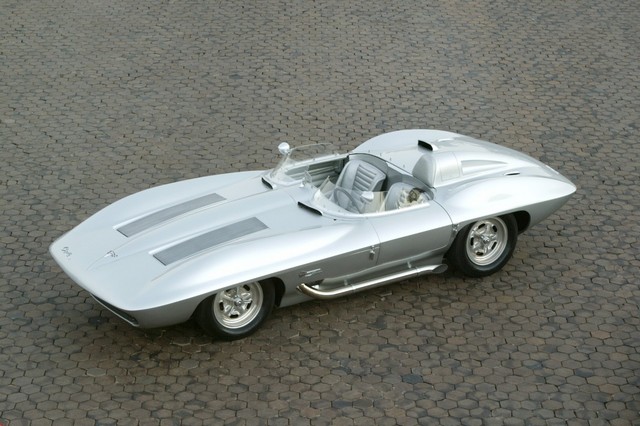
The stunning 1959 Corvette Sting Ray racer is still sensational to this day (and the Autoextremist’s all-time favorite car). When (now retired) Ed Welburn took over GM Design, one of his first orders of business was to commission the complete restoration of this iconic vehicle, and it remains the unquestioned jewel of GM’s collection of historic vehicles.
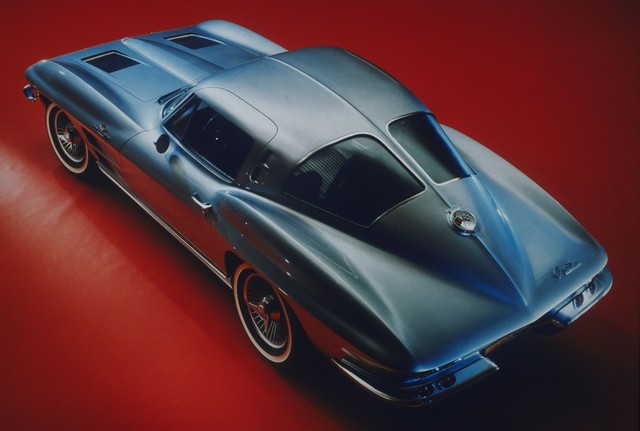
(GM Design)
The 1963 Corvette Sting Ray is still fabulous to this day. The “split” rear window design was one of its signature design elements but it only appeared for one model year. Zora Arkus-Duntov, the famous Corvette Chief Engineer in its formative years and an automotive legend in his own right, vehemently despised the design detail and fought with Bill Mitchell tooth and nail over it in one of the monumental internal battles in GM history. Mitchell won that battle but Duntov won the war, as the design detail was gone on the 1964 model Corvette.
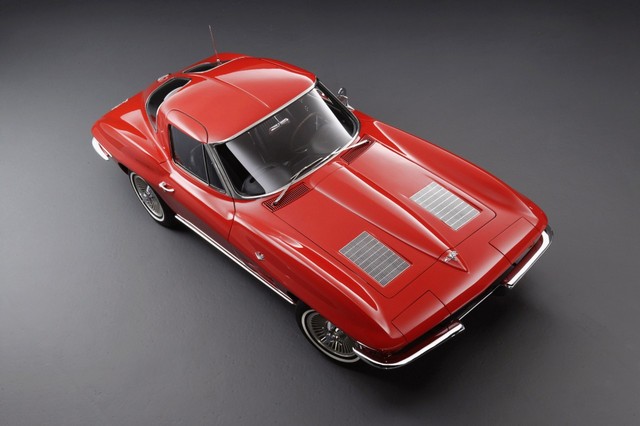
(GM Design)
The introduction of the 1963 Corvette Sting Ray remains one of the most memorable debuts in American automotive history.
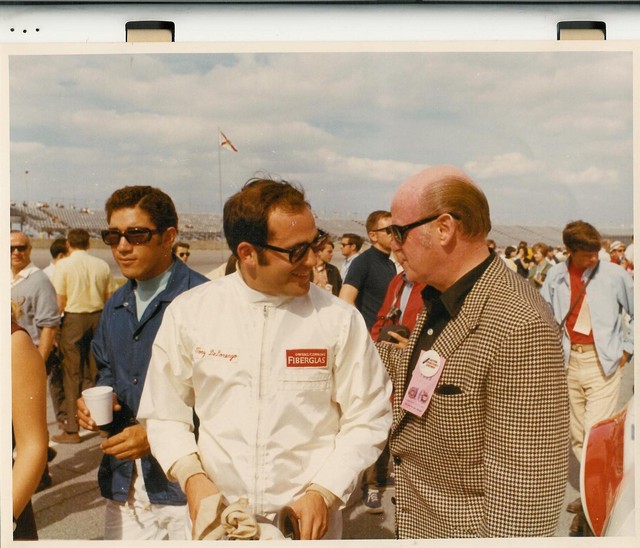
(Photo by Roger Holliday/The DeLorenzo Collection)
Bill Mitchell visits with Peter’s brother Tony on the grid before the Daytona 24 Hour race in 1969. The Owens/Corning Corvette Racing Team made its official international racing debut at Daytona that year and Mitchell stopped by to say hello. Mitchell loved being around race tracks and would often bring advanced GM concept cars up to Road America in Elkhart Lake, Wisconsin, to take the pulse of racing enthusiasts. The 1959 Corvette Sting Ray racer used a spare chassis from the ill-fated, one-off, factory-entered Corvette SS, which appeared at Sebring in 1957. Mitchell took the Corvette SS chassis and re-bodied it into the Sting Ray racer and raced it privately on his own dime, with famous Corvette driver Dick Thompson, “The Flying Dentist” at the wheel. The Sting Ray racer made its debut at Road America in 1959, painted in its original red (below). Once the development of the 1963 Corvette Sting Ray production car program started taking shape, Mitchell “retired” the Sting Ray racer and painted it in gleaming metallic silver, which was reminiscent of the Mercedes Grand Prix machines from the 50s, his favorite racing cars.
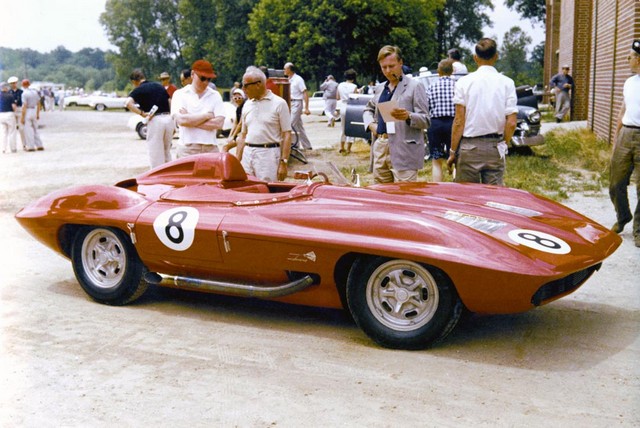
(GM)
The 1963 Corvair Super Spyder concept as it appears today – in black.

(GM)
The 1961 Corvette Mako Shark I and the 1965 Corvette Mako Shark II, two iconic concepts from the Bill Mitchell design era at General Motors.

(GM Styling)
Bill Mitchell pulling out of his driveway on Bradway Boulevard in Bloomfield Village, Michigan, in the 1959 Corvette Sting Ray racer. He drove his favorite cars all the time. 


Editor’s Note: Click on “Next 1 Entries” at the bottom of this page to see previous issues. – WG


Source link

Exclusive! Koenigsegg working on CCGT Le Mans car-inspired hypercar

0
Exclusive! Koenigsegg working on CCGT Le Mans car-inspired hypercar


Koenigsegg has lined up two new hypercars for next year. One of them will be a tribute to the CCGT Le Mans race car.

In the late 2000s, Koenigsegg was planning on entering the top-tier GT1 class at Le Mans. The company built a one-off prototype called the CCGT GT1 Competition Coupe. However, the project was cancelled due to changes in the homologation requirements.

Koenigsegg CCGT Le Mans racecar-3

The single prototype lived on as a reminder of the brand’s aspiration to challenge the likes of the Aston Martin DC9, Chevrolet Corvette C6 and the Ferrari 550 at one of the greatest races on Earth.

As a tribute to the CCGT, Koenigsegg is now planning a special edition hypercar. According to our sources, it will be called CCGT+ and will be limited to just 30 units.

Koenigsegg CCGT Le Mans racecar-2

In 2022, Koenigsegg revealed the CC850, which draws inspiration from the CC8S. The CCGT was a track version of the CCX, the successor to the CC8S. If we were to hazard a guess, the new CCGT+ might be a track-focused version of the CC850.


Source link

2026 Range Rover Velar successor caught on video

0
2026 Range Rover Velar successor caught on video


JLR has been spotted testing a prototype for an electric vehicle that will take a place in its Range Rover family of luxury SUVs.

JLR is known to be planning the reveal of an electric version of its iconic Range Rover shortly, though that isn’t the vehicle seen here. The electric Range Rover matches the design of its gas-powered sibling, apart from a few tweaks up front to improve aerodynamic efficiency. The same will also be true for an upcoming electric Range Rover Sport.

The vehicle seen here is much lower and sleeker than the Range Rover and Range Rover Sport, suggesting it might be a successor to the current Range Rover Velar. The Velar has been on sale since the 2018 model year and will be due for replacement soon.

According to our photographer, the prototype looked longer than the current Velar. It also looks lower and wider.

JLR last year said its new EMA (Electrified Modular Architecture) platform being developed for smaller SUVs would spawn its first model in 2025, and that the model would be a member of the Range Rover family. It’s likely that’s the vehicle seen here testing.

The EMA platform will also be used for next-generation versions of the Range Rover Evoque and related Discovery Sport.

JLR also has the MLA platform for larger SUVs. The MLA made its debut in the latest Range Rover and also underpins the latest Range Rover Sport.

Given the expected 2025 debut for the new SUV, an arrival in the U.S. as a 2026 model is likely. Other new JLR vehicles in the works include the first of Jaguar’s new ultra-luxury range, plus a Defender rally raid vehicle.


Source link

Cruising Past Seventy: The Inner Journeys: Similarities and Differences in Strategy: NonProfits vs. Businesses

0
Cruising Past Seventy: The Inner Journeys: Similarities and Differences in Strategy: NonProfits vs. Businesses


a strategic planning seminar UPAAA and UPAAAz sponsored


Strategy is
a plan of action for achieving an overall aim. An obvious example is how a good
strategy is crucial to winning a war. So is winning in business. And it’s no
different from achieving an association’s goals to serve a specific sector.

All
organizations, non-profits, or business entities, require strategic planning. Their
approaches, however, often differ due to fundamental differences, as illustrated
below.

                                            NonProfits                Businesses

Primary
Goal
                  societal good                  profits

Revenues                         donations                         sales

                                         grants

                                         fees

Stakeholders 
                 donors                              shareholders

                                         beneficiaries                     employees

                                         volunteers                         customers

                                         community                       suppliers

Metrics                            social outcomes               financial performance

                                         sustainability                    market share

                                                                                  customer satisfaction

The strategic
planning process is essentially the same between non-profits and businesses. Both
organizations conduct SWOT analyses to identify strengths, weaknesses,
opportunities, and threats.

The ability
to analyze each of these four factors in depth determines the success of the
planning process. I have participated in (and even led) some, and it has been
amazing to see the strategy emerge clearly when those analyses are thorough.

However, before
going through the SWOT analysis, we should consider the nuances in strategic
planning between non-profits and businesses. Precisely because of these
fundamental differences, there are factors to consider.

Primary
Considerations
.                                                                          

A non-profit
must prioritize its reputation for ethical conduct. If a nonprofit becomes
viewed as unethical, it will never survive as an organization working for some societal
good. In other words, the nonprofit must focus on building social equity and,
in doing so, further the sustainability of its mission.

A Board of
Directors is crucial to this consideration (please see the previous article on “Governance vs. Management”). If the Board of Directors is identified as one of
the weaknesses,  strengthening the Board
is the primary step.

On the other
hand, a business that loses its competitive advantage will soon be wiped out
from the market. That is why some for-profit organizations do not emphasize building
social equity or working for sustainability. Some may even state its aim
of financial success only in the short term.

A business may
also aim for long-term survival. In such a case, social equity and
sustainability must also be primary considerations.

Mission,
Vision, Values, and Goals

 Non-profits
emphasize goals that achieve societal or environmental good. In the UP Alumni Association
in Arizona, for example, we strive to provide scholarships to deserving but
disadvantaged UP students.

The other
goal is for the members to enjoy themselves in the process. Thus, events that
address both goals are prioritized. We have sponsored in-person Bingo and Other
Games Socials before the pandemic, virtual ones during the lockdowns, a hybrid Mini-Conference
on the Filipino, and in November this year, we organized a Fil-Am Gala Event.

Businesses
prioritize financial success. In MegaLink, for example, our goal was to
increase the transactions that go through the ATM switching facility we were
operating. Our revenues came solely from the fees we charged for those transactions.
Of course, we also had to control expenses.

Implementation
and Evaluation

Since there
are fundamental differences between both types of organizations, the metrics used
to measure success are also different.

For example,
the UP Alumni Association in America used to keep track of the number of
members and scholarships. After our strategic planning exercise, we identified
the creation of chapters as a key goal to find and serve more members, especially
in underserved areas.

Both
numbers, of members and chapters, will lead directly to more funds available for
scholarships. The strategy to organize more chapters will deliver larger
numbers faster.

Activities
that engage more members are keys to our success. The biennial Grand Reunion
and Convention is one major activity members always look forward to joining.
But enjoyable charter activities closer to members’ homes would probably reach
more members.

Businesses
are focused on financials. MegaLink earns from switch transaction fees. The
number of member banks, cardholders, and ATM locations was key to increasing that
activity. To ensure growth, we focused on all three metrics.

In addition,
to avoid attrition, employees and the representatives of the member banks had
to feel like they belonged to one big happy family.  To this end, we designed active enjoyable committees,
sponsored frequent well-attended socials, and organized joint foreign trips for
technology advancement.

In
conclusion, while the strategic planning process is similar for non-profits and
businesses, the primary considerations, goals, and performance metrics differ. This
is due to their fundamental differences as organizations. Understanding these
differences will prove crucial for developing effective strategies. 


Source link

African cars.: (SOUTH AFRICA) HALA MOTORS

0
African cars.: (SOUTH AFRICA) HALA MOTORS


A Green Revolution on the Horizon: Siphiwe Dhlomo’s Hala Motors Driving a EV Movement in South Africa!

The future of the local automotive sector is undergoing a transformative shift, and at the forefront is Siphiwe Dhlomo, the visionary founder and chairperson of Hala Motors, hailing from Soweto.

Dhlomo’s conviction is crystal clear: participation in the electric vehicle (EV) space is not just a choice; it’s an imperative. The boundless potential within the EV industry has spurred his innovative and forward-thinking approach.

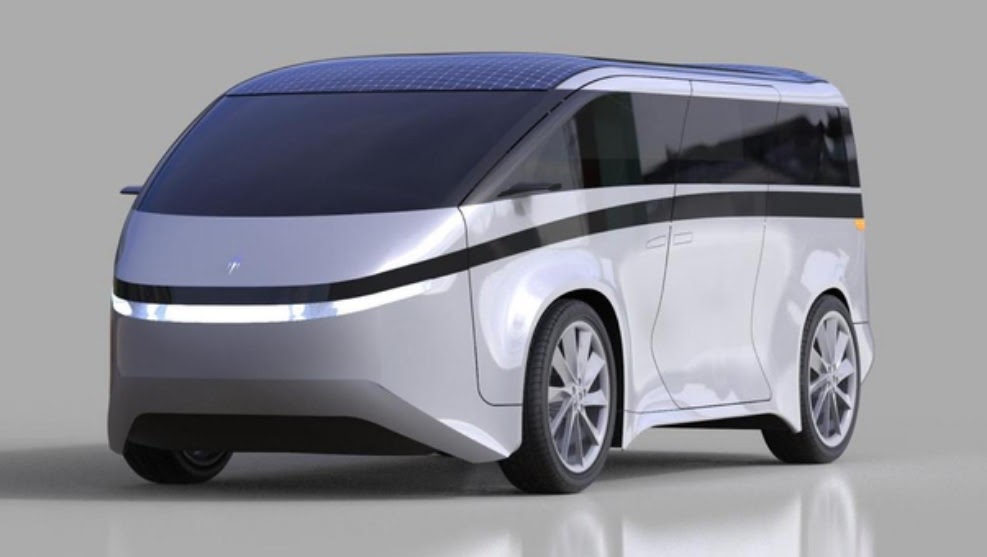
Based in Johannesburg, Hala Motors has set its sights on a momentous goal – becoming the first African manufacturer of electric taxis in South Africa. Specializing in the design, development, and production of electric passenger, commercial, and commercial vans, the company is a driving force in South Africa’s EV landscape.

Dedicated to extensive research and development over the last four years, Hala Motors is now on the cusp of introducing its electric minibus taxi to the South African market (Phase 1). Yet, the journey doesn’t end there. The company’s grand vision encompasses an impressive range, including light delivery vehicles (LDVs), sedans, sport utility vehicles (SUVs), trucks, and even ambulance vehicles.

As the team diligently plans the Vehicle Manufacturing Programme phase of their project, simultaneous efforts are underway to unveil the groundbreaking Konsep1 Minibus Taxi.

Courtesy of

https://halamotors.co.za/


Source link

Tesla Master Plan 4 Teases Possible Cybervan, Cyber-SUV

0
Tesla Master Plan 4 Teases Possible Cybervan, Cyber-SUV


  • Tesla quietly shows off two unreleased Cybertruck-inspired designs.
  • The teaser was shown in the latest Tesla Master Plan Part 4 video on X.
  • It’s unlikely these models will ever see the light of day since Tesla says it doesn’t plan to use the Cybertruck’s stainless steel on other vehicles.

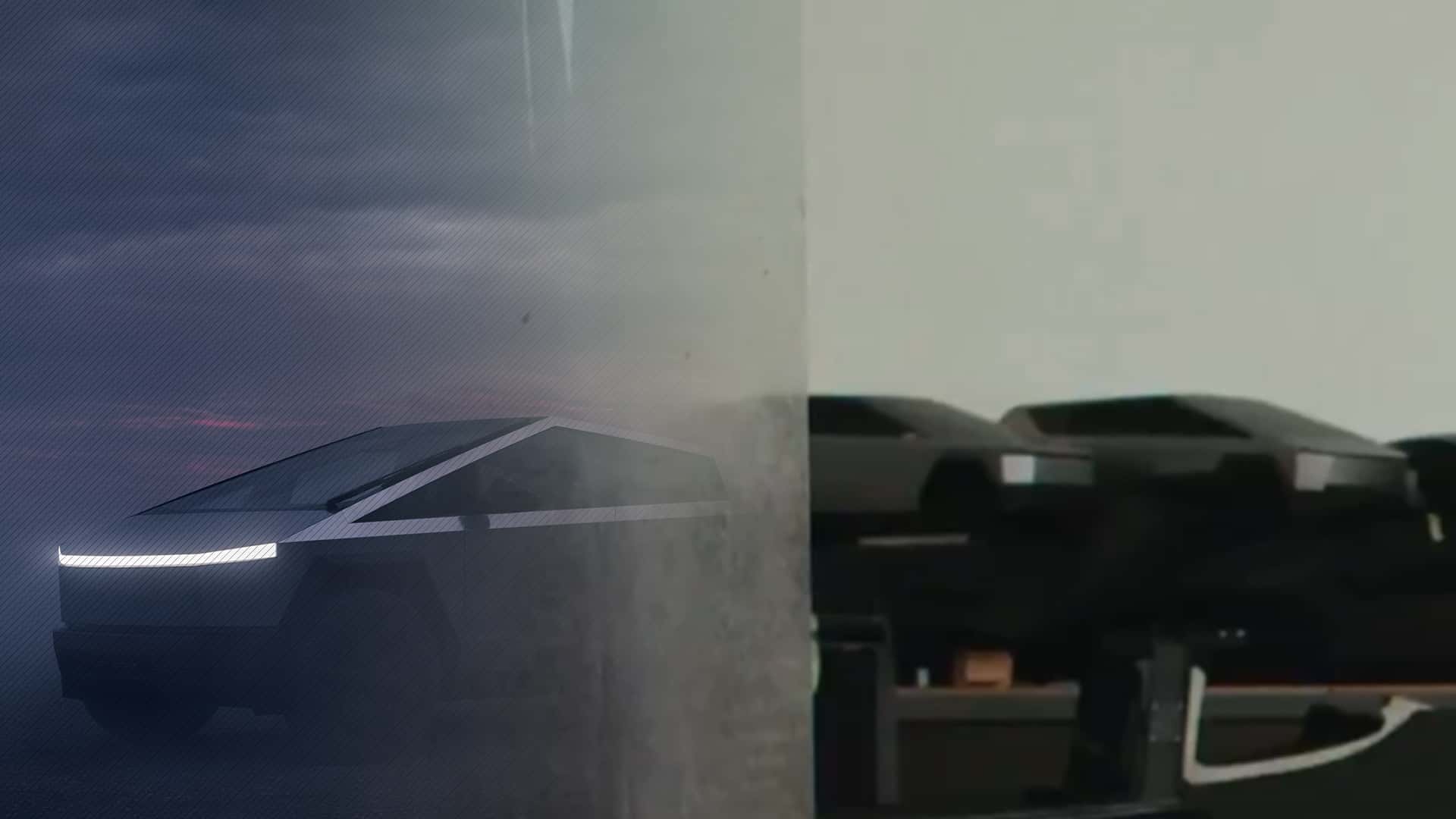
Tesla revealed its Master Plan Part 4 on Monday. And while it lacked actionable substance, it did have some rather interesting Easter eggs snuck into the video for a split second: additional Cybertruck-inspired designs.

These apparent design studies were caught by an eagle-eyed Redditor who noticed a small model during a short scene showing a Tesla Cybercab front end being shaped out of clay. And while it only appears for a brief moment, it shows that Tesla was considering at least two additional Cybertruck-inspired designs at some point.


Cybertruck Other Models Inline

Two additional Cybertruck-themed vehicle models can be seen in Tesla’s Master Plan Part 4.

Photo by: Tesla

During the clip, four Tesla models can be seen sitting on the shelf. The far-left model, obscured by a plastic sheet, is what appears to be the released Cyberrtuck. On the right is a more rounded model with its front end obstructed (which alone raises questions).

The middle two models are of particular interest. Both look like the Cybertruck’s design, but upon closer inspection, they’re clearly different body styles.

One appears to have a taller rear end that looks less like a pickup and more like an SUV. The model also has a blockier front fascia that appears to be styled more like an SUV as well.

The other model is more minivan-shaped. Tesla owners have been calling on the automaker to build a van for some time now, especially since the automaker pledged to build vehicles for all major automotive segments in its previous master plans.

Tesla has teased vans before and even revealed a so-called Robovan concept alongside the Cybercab robotaxi. I can’t help but wonder if this might have been Tesla’s initial concept for a Cybervan.

What we do know is that these concepts are unlikely to ever come to fruition. Tesla has openly stated that the Cybertruck is a testbed on wheels and that its guts will live on in future EVs through the downfitting of the truck’s underpinning tech (like its 48-volt architecture and steer-by-wire system). In the same breath, it also acknowledged that the Cybertruck’s stainless steel won’t be used in any future EVs. Plus, the new Master Plan makes clear that the emphasis is now on AI, robotics and energy, not so much cars.

Maybe we’ll see these designs put into place someday, but I’m not holding my breath. 


Source link

1990 Porsche 964 Carrera 4 Leichtbau – Chassis 001

0
1990 Porsche 964 Carrera 4 Leichtbau – Chassis 001


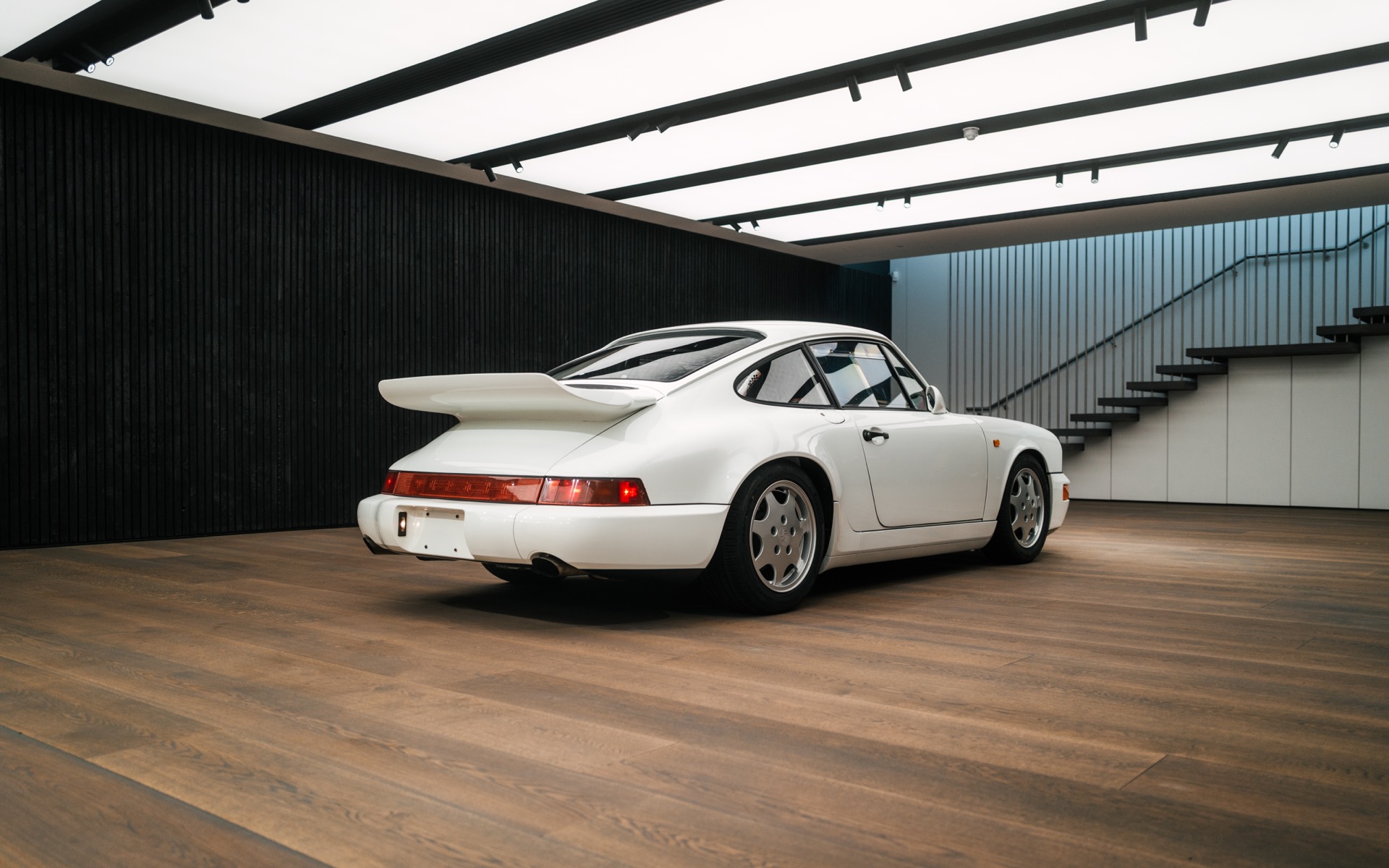
In the realm of rare Porsche 911s, some sit in a league entirely of their own. Of all the production 911s created over the decades, the 964 Carrera 4 Lightweight – or Leichtbau – must rank among the rarest. Just 22 examples were ever produced, all born of the vision of Le Mans winner and legendary Porsche engineer Jürgen Barth. This car, chassis 964 001, is the very first: a museum-grade prototype with unique, one-off details that set it apart even among this rarified group.

Barth, then head of Porsche Customer Racing, discovered a cache of spare four-wheel-drive systems from the 953 Paris-Dakar rally cars sitting in the motorsport department. These systems were advanced for their time, allowing for active adjustment of front-to-rear torque distribution and on-the-fly manipulation of the rear limited-slip differential’s lock-up. Barth saw an opportunity to create a lightweight, all-wheel-drive 911 for customer motorsport use.

Porsche selected standard 964-series body shells, removed from the main production line, and subjected them to seam welding for increased rigidity. Standard panels were replaced with lightened alternatives. The drivetrain from the 953 Dakar car was installed, mated to a short-ratio five-speed gearbox and paired with a naturally aspirated 3.6-litre flat-six producing 265bhp – the same engine that would go on to power the Carrera RS. The resulting car weighed just 1070kg and delivered extraordinary performance, with understated styling that concealed its motorsport potential.

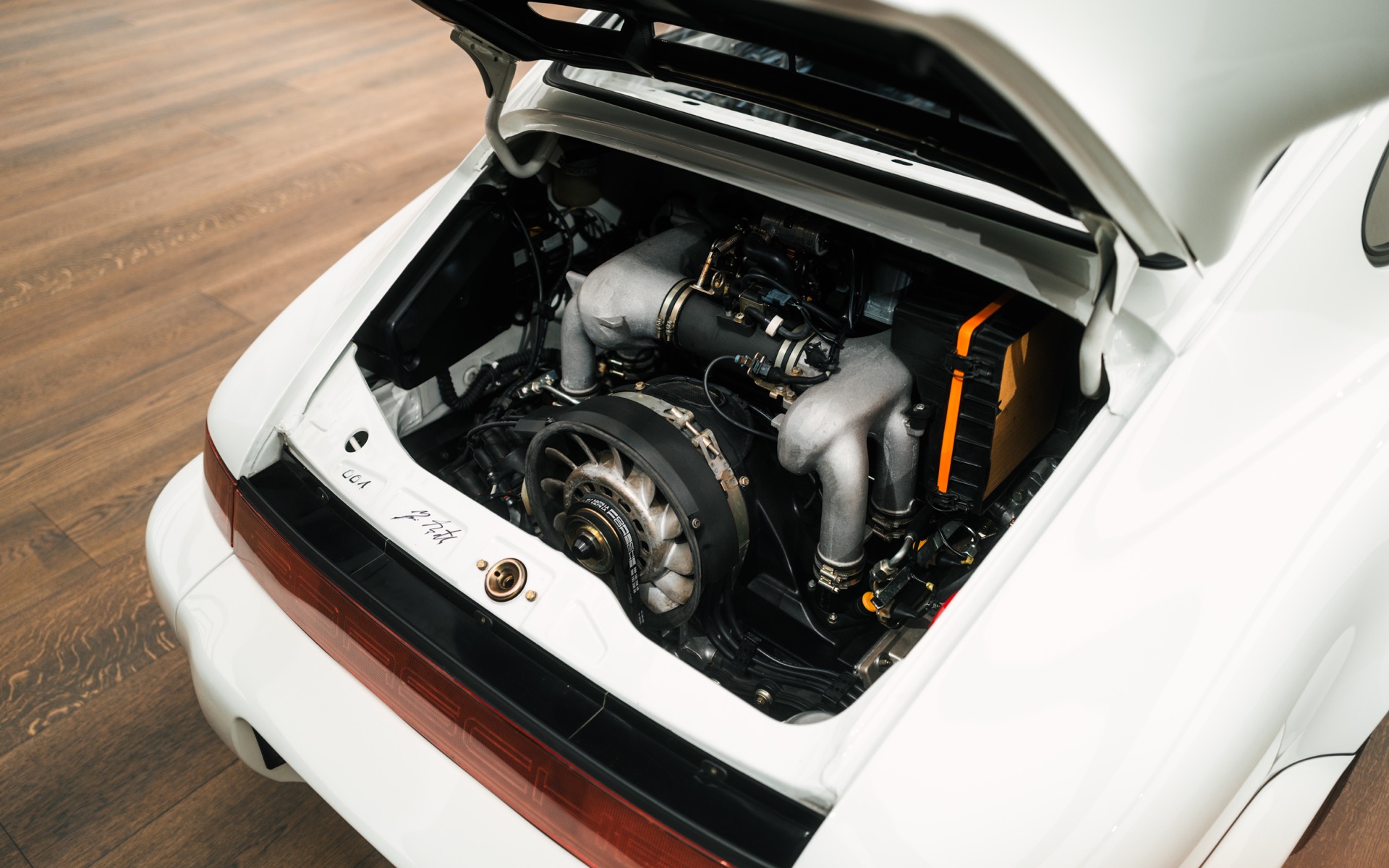
Chassis 001 is the most significant of the 22. As the factory prototype, it includes a wealth of unique, one-off features. These include early prototype gauges and labelling, a bespoke Matter roll cage, and special 934-style ‘lollipop’ seats – which would go on to influence designs used by RUF – trimmed in period-correct new old stock material. Many of the engine and auxiliary system fixtures differ from the production cars, offering a unique insight into Porsche’s development process.

GTspirit 964Carrera4L 2

Even the four-wheel-drive control labels appear handmade, with embossed tape straight from a 1980s stationery drawer. From its unusual fittings to its understated character, 964 001 exemplifies the experimental creativity of Porsche’s motorsport division at its best.

This car has known ownership from new and an impeccable provenance. It was initially sold to Kerry Morse, a close friend and collaborator of Barth himself. It later passed through the hands of notable American collectors including Frank Gallogly of Englewood, New Jersey; Dr. William Jackson of Denver, Colorado; the Ingram Collection; and Matthew F. Ammirati of Bridgehampton, New York.

GTspirit 964Carrera4L 11

Acquired by the current owner in 2017 and imported into the UK in 2022, the car has covered just over 1,000 miles from new. Its odometer remains in kilometres. The drivetrain is entirely original and matching, the paint remains factory-applied and in excellent condition, and the interior architecture is complete and correct. Though the original seats were retrimmed, they use the exact correct material and patterns.

In 2024, the car underwent a full service at Richard Tuthill, including new Bridgestone tyres.

GTspirit 964Carrera4L 3

As part of the sale, the car comes with a bespoke report by Jürgen Barth himself, compiled after a personal visit to see chassis 001 again in the UK. Reunited with the machine he helped create, Barth recounted the story of its development and its journey. Those recollections are now captured in a document that adds even more weight to this car’s already historic status.

In short, chassis 001 is not just the first and finest of the Carrera 4 Leichtbau cars. It is a reference example – pure, original and storied. A cornerstone in any Porsche collection, and a once-in-a-generation opportunity. It is currently being offered for sale with Kiklo Spaces in the UK.

GTspirit 964Carrera4L 22


Source link

10 Great Camping Gadgets for RV Living

0
10 Great Camping Gadgets for RV Living


experienced camping woman in rv camper enjoying life with rv organization and camping gadgets

These are Some of the Best RV Accessories

Whether we’re on a road trip or we’re at a campsite, RV life is supposed to be about fun and relaxation. While there are lots of RV accessories designed to help us achieve this, some are better at it than others. That said, the best camping accessories help make life easier, whether we’re on the road or at a campsite. They also have a small footprint and are tough enough to withstand the rigors of travel and camping life.

We did the research for you and found 10 must-have camping gadgets that seasoned RVers won’t hit the road without. Keep reading to find essential additions for your camp kitchen and must-have tools for RV organization and safety. All are RVer-tested and approved.

Camp Kitchen

No one loves a cluttered kitchen. However, there are a few RV kitchen accessories that no RV should be without. From hassle free coffee making to keeping your plates from smashing to pieces during transit, we found camping gadgets designed to make your RV kitchen into a culinary haven.

Portable Infrared Cooktop

Adding a portable electric cooktop will add versatility to your RV’s existing cooking setup. With that said, an energy efficient two-burner infrared cooktop can be used inside the RV or as a handy addition to your outdoor kitchen setup. Infrared cooktops can be used with any type of cookware because (unlike induction cooktops) they don’t rely on magnetic waves to work. Portable infrared cooktops are perfect for RV life because they’re lightweight and they offer precise temperature control. They’re also easy to clean, easy to store, and relatively durable. A good example is the Salton infrared cooktop. It’s designed to be used anywhere, making it perfect for camping.

Stove-Top Toaster

There are a few reasons seasoned RVers often prefer a stove-top toaster over an electric toaster for camping. That’s because electric toasters use a lot of electricity and take up a lot of more room in the RV than a stove top toaster. Stove top toasters work as well outdoors on a camping stove or grill as they do indoors, giving them greater versatility than their electric counterparts. The best ones are simple, taking up very little space. You just sit the toaster over a stove burner, add bread, and let the burner flame toast it to perfection. In a few minutes, flip the bread and do toast the other side. The whole toasting process is accomplished in under 3 minutes. This simplicity just makes sense when we’re camping, whether we’re boondocking or plugged into the grid. Camp-A-Toaster offers the simplest design and toasts bread quickly and easily.

Camco Stack-A-Plate Holder

Do you ever get tired of eating beautiful meals from plastic or paper plates? The Camco Stack-A-Plate holder was designed to keep your plates stacked firmly in place while you travel down the road. When it’s time for a meal, you can enjoy it from ceramic plates like you use at home. The Stack-A-Plate works so well that plates don’t move around, chip or break under normal driving conditions.

RV Organization Accessories

It doesn’t take long for an RV to get cluttered. That said, when it does, finding anything in the RV can become an adventure in itself. However, if looking for your stuff is not your idea of a good time, you’ll want to consider some of the following RV organization accessories.

Command hook on RV wall with flashlight and remote controlCommand hook on RV wall with flashlight and remote control
Photo courtesy Lynne Fedorick.

Command Hooks

One of the challenges of organizing an RV is that you have to be very careful about drilling into walls or hammering nails into them. That’s because it can be hard to discern where wires or metal studs happen to be. Drilling into the wrong spot can lead to electrical issues and worse. Most of the time, it’s much safer to simply use peel-and-stick hooks designed for damage-free hanging. Command makes a wide variety of products that safely attach to RV walls. Not only do Command hooks attach firmly onto smooth surfaces like RV wallpaper or cabinets, they can also be removed without wrecking them. Whether you need a handy spot to hang dish-towels or your favorite jacket, Command hooks are a must-have for RV living.

Under-table Drawer

It’s pretty safe to say that finding storage in an RV is often a challenge. Perhaps especially when it comes to convenient, yet out of the way storage small items. An under table drawer adds handy storage space that’s both out of the way and just right for storing tableware, office supplies or other small items. Installing an under table drawer is something anyone can do and doesn’t require any special tools. All you do is measure, carefully mark drilling points, drill and screw the rails in place with the supplied screws. There are a few under table drawers on the market, with different dimensions. That said it’s a good idea to decide how much storage capacity you need and then balance that with your dinette size.

Electronics cord organizer case

Charging cables can wind up in a big mess if they aren’t stored separately. An electronics cord storage case provides an excellent solution for this all-to-common issue. Not only that, but if everybody in the RV has a storage case for their own electronics cords, it often makes life a lot simpler.

Other Cool Gadgets That Make Camping Better

There are definitely too many useful camping gadgets to list in one article. However, here are some essentials that will make you wonder how you lived so long without them. I know I did.

Surge Protector

The sensitive electronics in your RV need to have a stable electrical supply in order to function. Power anomalies caused by bad power poles, power outages, or power surges can fry expensive electronics in seconds. A surge protector can prevent damage to RV electronics in the event of such an occurrance. That’s why a surge protector is one of the most sound investments you can make when it comes to RV gadgets.

Portable Power Station

Portable power station allows group of young campers to power lights at their campsite Portable power station allows group of young campers to power lights at their campsite
Photo courtesy Bluetti.

Camping off grid has never been easier, thanks to a new generation of portable power stations that can provide enough power to operate appliances and electronics for days at a time. And they can do this without ever being plugged into the grid. Today’s power banks use an eco-friendly LiFePO4 battery, so you can easily charge them using a solar panel. After your power station is charged up, you can use it anywhere you need power, inside or outside the RV. A good example is the 22 pound BLUETTI AC70 1,000-watt power station. This the perfect size to meet the majority of boondocking power needs but it’s still small enough to pack easily into almost any RV cabinet.

Rechargeable Headlamp

Having a flashlight is a prerequisite of camping. WIth that said, a good headlamp is a necessity when you’re camping, offering the ability to use your hands for other things. That way, you won’t be juggling the flashlight and the dog leash, and/or whatever else you might be carrying. The 2,700-lumen Fenix HM71R rechargeable headlamp does double duty. When you need to have both hands free, it’s a headlamp, but the light detaches when you need precision lighting.

Camco Rhino Sewer Adapter Pro

If you’ve ever experienced gross odors or (even worse) accidents when emptying RV waste tanks, you’ll appreciate the Camco Rhino Sewer Adapter Pro. It’s a relatively new product that creates a secure, leakproof and odorless connection between your camper sewer hose and the public sewer inlet. That said, it allows you to empty your waste tanks with precision and ease, eliminating the potential for odors and gross messes.

The Sewer Adapter Pro has a flexible rubber gasket that provides a reliable and snug fit in most sewer inlets. It also boasts a handle that makes it a lot easier to get everything lined up correctly.

Final Thoughts

Most RVs come equipped with almost everything we need for a fantastic camping experience. Even so, packing these 10 camping gadgets will add convenience and safety to your RV adventures, wherever they take you.


Source link

Proportionally Challenged Conundrum – Car Design Blog

0
Proportionally Challenged Conundrum – Car Design Blog


Proportionally Challenged Conundrum – Car Design Blog

Introducing the 2018 Toyota Mirai, one of the newest blunder in the Toyota lineup, brought to you by the design team of the company also responsible for the demise of the once-awesome Toyota Prius.

Not sure what the thought is behind this archaic model design;  It gives me the impression that Toyota has just given up the “appeal” race against formidable competitors like Kia.

Key elements of the Toyota Mirai’s design are very much out of proportion.

Let me break this down for you.  The pictures shown below are a mix of the 2016 to 2018 Toyota Mirai models.

NOW FOR THE NITTY GRITTY!


FRONT & HEADLIGHTS
  1. Let’s start with the good.  I like where Toyota is going with the headlights.  They represent what I would deem to be “electric”.  The square lights are a nice touch.  Proportion issue, slightly small compared to the front silhouette, but not a big deal.
       
  2. Next, you’re greeted by the big block bumper.  Now we’re seeing the proportional issues with this car.  But wait, there’s more…


      
  3. As if the bumper wasn’t big enough, it’s flanked by two gaudy side openings (fog lights? air intake? apartment building for smurfs?)

The whole front looks to me like a big ‘ol Stormtrooper helmet!


SIDE

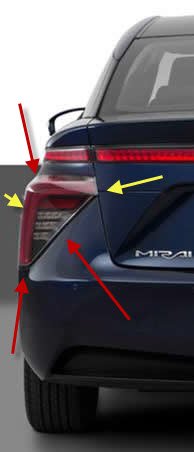
The side actually looks decent.  big doors and windows give the impression of safety and roominess.  The part that looks awkward is where the top meets the trunk area, emphasized by the weird looking tail lights.

The wheels also look small compared to the size and height of the car, but that seems to be the norm for all of Toyota’s hybrid and electric vehicles.


BACK & TAIL LIGHTS

And now… for the worst part of the car, the back, and the tail lights.  What is going on there?  Are we being punk’d?

Clearly, the only explanation for this disaster is the person designing this tail light missed a whole bunch of meetings with the overall car design team, drew something on his own without knowing what the rest of the car looks like, and then, just squeeeeeeeeezed this awful tail light onto the back of the car.  Completely ruins the whole area.

Enter **Facepalm** here!

To end this section on a positive note, there’s a cool element that graces the middle of the rear bumper, and kudos to the designers for this nice finishing touch.


IN CONCLUSION

Dear Toyota, I’m a long time fan, and we’ve had many Toyotas in our family, but you’ve got to admit, this isn’t your best work.  The Mirai design takes Toyota’s reputable design capabilities back to the 1970’s, 1980’s with quirky styling in order to stand out;  Instead, it does the opposite.  

My score is 2 out of 10, for at least having cool headlights.

Looking forward to your comments on this review of the Toyota Mirai


Source link

Labor Day Green Deals on EVs, power stations, tools, more

0
Labor Day Green Deals on EVs, power stations, tools, more


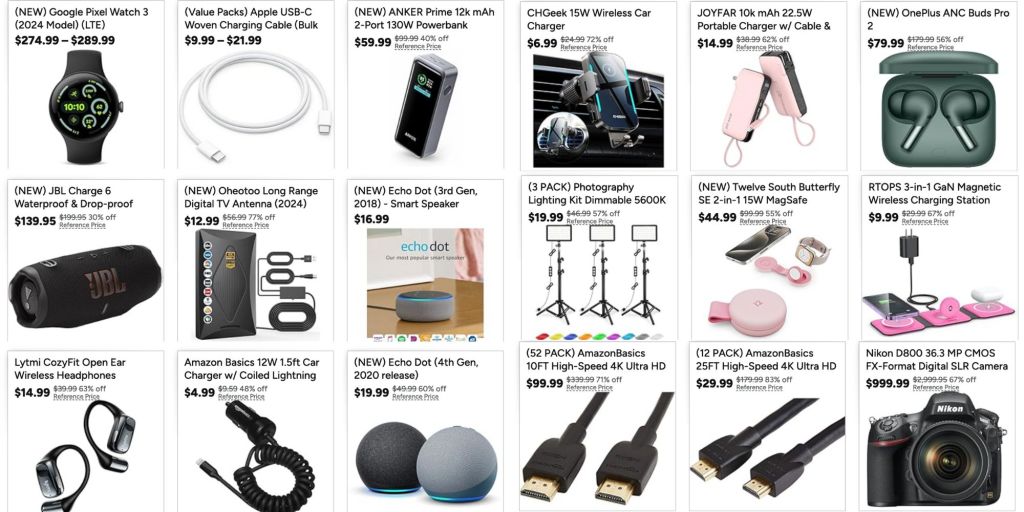
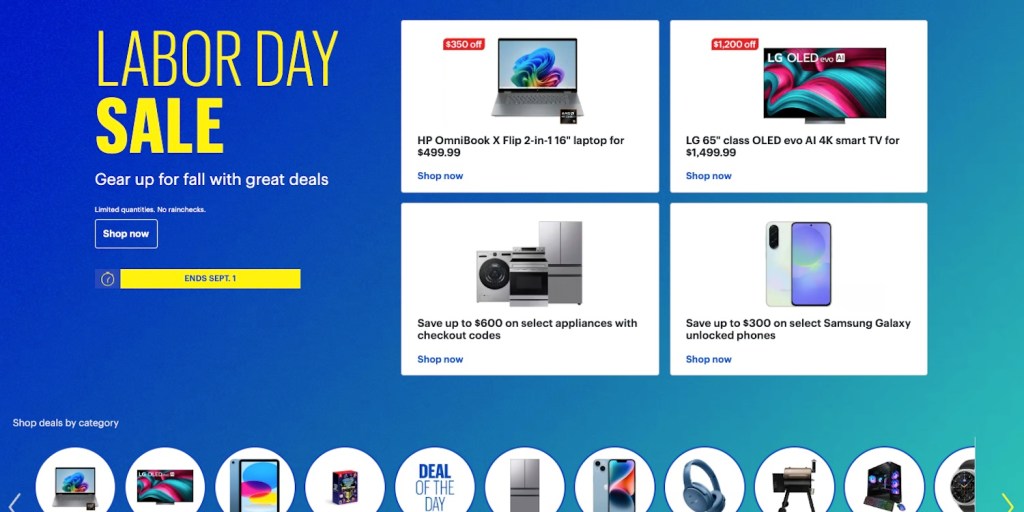
It’s officially Labor Day and we’ve had an exciting few weeks of solid Green Deals leading up to the holiday – and these sales aren’t over yet! Through the rest of the day and further into the week, you’ll find some amazing opportunities to get discounts on EVs, power stations, tools, appliances, and more – and we’ve rounded up all the deals that are still ongoing into this one-stop shopping hub for you. One thing to note, the power station sales may have been deemed as ending before today’s arrival; however, as is often the case, these sales have been extended and/or had their official names changed, so be sure to browse through those for hangover savings. Head below to browse and take advantage of all these ongoing Labor Day savings before they’re gone.

man approaching Lectric ONE e-bike
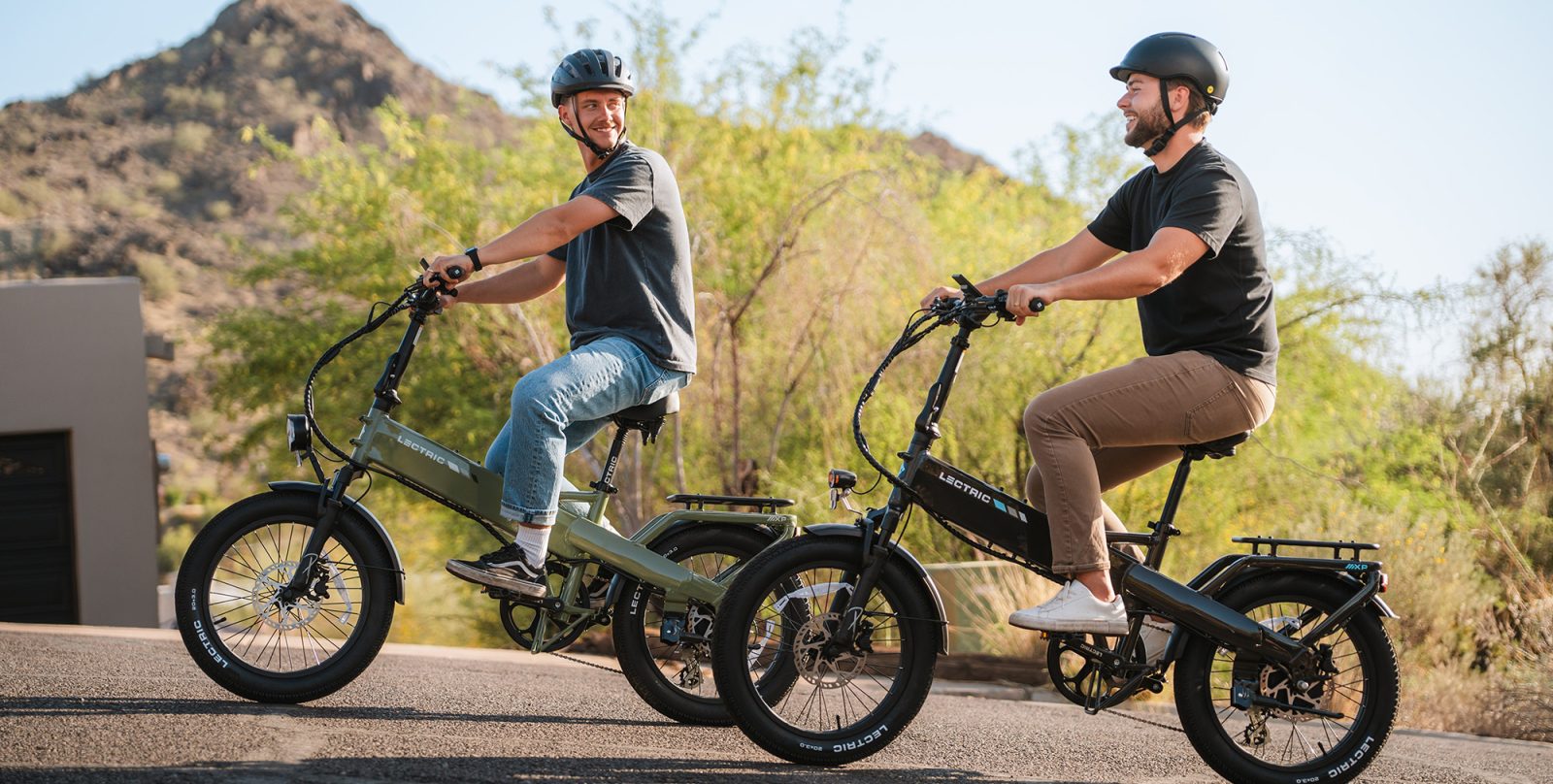
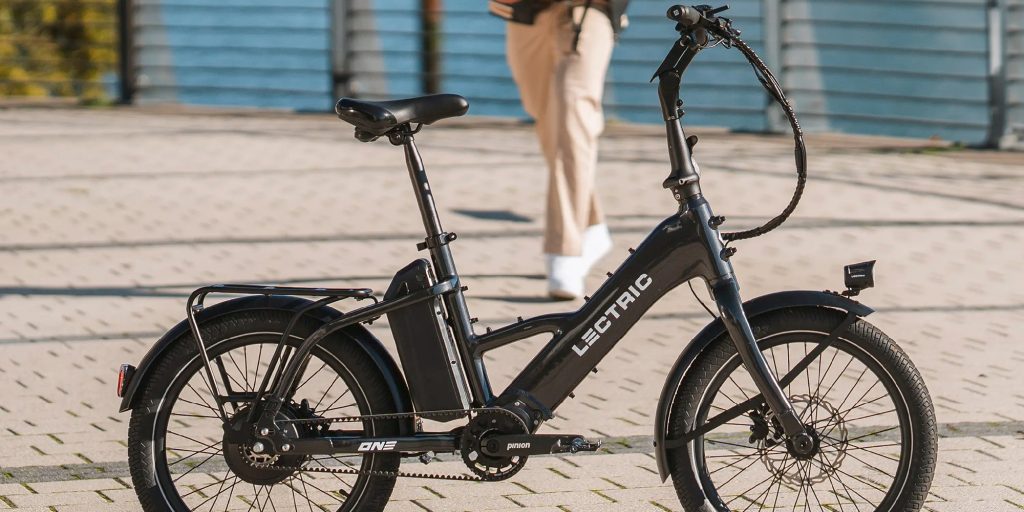
  • Lectric’s ONE long-range belt-drive commuter e-bike gets $220 bundle and $500 price cut to new $1,899 low in Labor Day sale
  • Lectric launches upgraded XP Trike2 750 long-range eTrike for preorder with a $493 bundle at $1,799, more
  • Lectric’s new XP4 750 folding utility e-bikes get biggest bundle of $404 in free gear at $1,299 in Labor Day Sale
  • Head off-road with $434 in free gear on Lectric’s XPeak2 long-range e-bike at $1,699 for Labor Day
  • Autel’s newest and most powerful MaxiCharger AC Pro 80A level 2 EV charger drops back to $899 low (Reg. $1,299), more
  • Prime members can score Schumacher’s new 12A level 1 portable EV charger at a new $116 low (Reg. $160)
  • Rad Power’s Labor Day Sale takes up to $600 off three legacy e-bikes starting from $999 + 25% accessory discounts
  • Rad Power officially drops prices on Radster Trail and Road e-bikes back to all-time lows w/ hundreds in savings
  • Celebrate National Dog Day with these Rad Power pet-focused add-on accessory deals starting from $21.75
  • Aventon’s final summer sale gives the new Abound SR smart cargo e-bike its first discount to $1,799, more from $999
  • Aventon slashes $200 off new Soltera 2.5 lightweight commuter e-bike for first time, now $999
  • Aventon cuts the price further on its Aventure 2 all-terrain e-bikes to best price of 2025 at $1,499 (Reg. $1,999)
  • Ride1Up’s Labor Day Sale offers first savings on new VORSA modular multi-use e-bike with Apple Find My and more at $1,595
  • Velotric Labor Day Sale drops lightweight T1 ST urban commuter e-bike to $1,299 with free gear (Reg. $1,649), more from $899
  • Bundle Velotric’s new Fold 1 Plus or Nomad 2X smart e-bikes with EcoFlow power stations at up to $370 off, more from $899
  • Clock out and ride with up to 45% discounts on Segway’s electric kickscooters starting from $150
  • Head to classes on Navee’s ST3 Pro e-scooter with free carbon fiber bag starting from $684 in latest sale (Reg. $950), more
  • Navee’s latest 47-mile travelling GT3 Max electric scooter gets further price cuts to new $561 low (Reg. $750)
  • Commute on streets and dirt alike with Tenways’ AGO X e-bike that gets $307 in free gear at its $1,899 low (Reg. $2,499), more
  • Segway’s new entry-level Ninebot E2 Plus II eKickScooter with a 16-mile range drops to $300 in latest sale (Save up to $100)
  • Aventon’s new security-packed Pace 4 smart step-through cruiser e-bike gets second-ever discount to $1,699 low
  • Heybike’s Labor Day Sale offers free extra battery with its Mars 2.0 folding e-bike at $1,199 (Save $649), more from $999
  • Hop on Electric Bike Co.’s Model J e-bike with a $321 bundle at $1,649 for Labor Day ($2,170 value)
  • Save $500 on Luckeep’s C23 folding step-through e-bike with a removable passenger seat at a new $499 low
ecoflow labor day sale promo pic with man using grinder by power stations
  • EcoFlow’s Labor Day Sale takes up to 62% off power stations with free gifts, bonus savings, and more starting from $90
  • Save up to 62% on EcoFlow’s three power station bundles and dual solar panel deal starting from $479 in Labor Day flash sale
  • Save up to 47% on EcoFlow’s new RAPID series of 10,000mAh to 27,650mAh power banks starting from $86
  • Bundle Velotric’s new Fold 1 Plus or Nomad 2X smart e-bikes with EcoFlow power stations at up to $370 off, more from $899
  • EcoFlow’s RIVER 2 Pro 768Wh LiFePO4 power station tackles personal backup support at $359 (Reg. up to $599)
  • Get off-grid support with EcoFlow’s DELTA 2 solar generator bundle with a 220W panel at $699 (Reg. $1,299)
  • EcoFlow undercuts its own 48-hour flash sale pricing on the DELTA 2 Max 400W solar bundle at $1,349 (Reg. Up to $3,098)
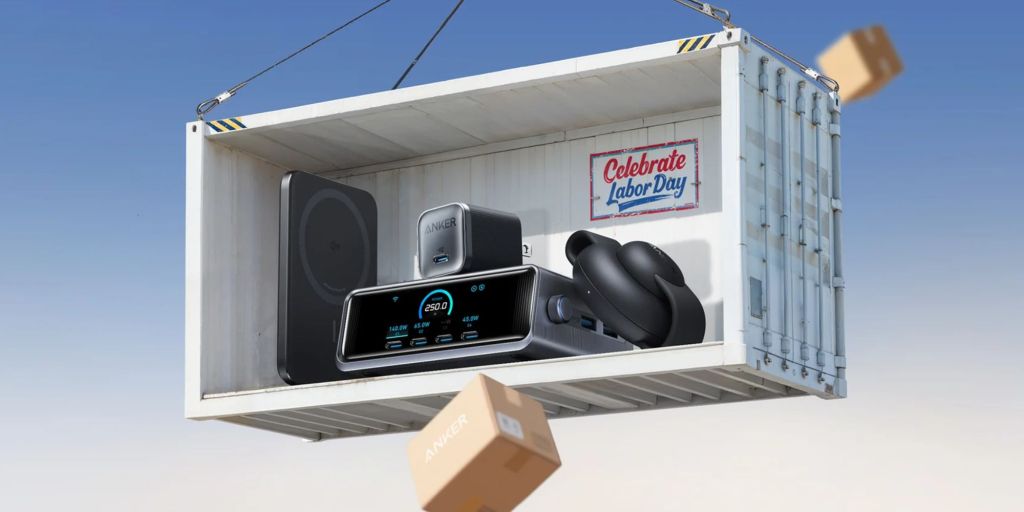
  • Save up to 61% on Anker SOLIX power stations and solar bundles during its Labor Day Sale – deals start from $120
  • Anker SOLIX introduces new C1000 Gen 2 power station with faster-charging tech and increased output [Deal]
  • Jackery’s Labor Day Sale offers up to 50% off on power stations and more with bonus 5% and 7% savings starting from $89
  • Keep devices and appliances running with Bluetti’s Elite 200 V2 200W solar bundle at $1,199 (Reg. $1,999)
  • Mango’s monstrous Power E 3,500Wh CATL station gets an exclusive $2,900 price cut to returning $899 low
  • Bring DJI’s Power 1000 or 2000 power stations on outdoor adventures starting from $499 (Reg. $699+)
  • Rare chance to grab EGO’s Nexus portable power station with two 7.5Ah batteries at $899 (Reg. $1,099)
segway robot lawn mowers

AirPods

MacBook

M4/Pro MacBook Pro

  • 14-inch M4 MacBook Pro 16GB/512GB from $1,299 (Reg. $1,599)
  • 14-inch M4 MacBook Pro 16GB/1TB from $1,499 (Reg. $1,799)
  • 14-inch M4 MacBook Pro 24GB/1TB from $1,699 (Reg. $1,999)
  • 14-inch M4 Pro MacBook Pro 24GB/512GB from $1,699 (Reg. $1,999)
  • 14-inch M4 Pro MacBook Pro 24GB/1TB from $2,099 (Reg. $2,399)
  • 14-inch M4 Max MacBook Pro 24GB/1TB from $2,899 (Reg. $3,199)

M4 iPad Pro 

  • M4 iPad Pro 11-inch
  • M4 iPad Pro 13-inch

iPad mini 7

M3 iPad Air

  • M3 iPad Air 11-inch
  • M3 iPad Air 13-inch
Site default logo image

Fire HD tablets

Kindle e-readers

Echo Hub

Amazon Echo smart speakers

Ring Battery Doorbells

Amazon Echo Buds

Updating…

FTC: We use income earning auto affiliate links. More.


Source link