11.3 C
London
Tuesday, May 12, 2026
Home Blog Page 109

Ferrari Daytona SP3 Tailor Made sells for $26 million at Monterey auction

0
Ferrari Daytona SP3 Tailor Made sells for  million at Monterey auction


A one-off Daytona SP3 Tailor Made has been sold at the RM Sotheby’s Monterey auction. Now, a regular SP3 would fetch around $5-6 million at auction. This one, though, was a bit special and went for an insane price of $26 million! The good thing is that all the proceeds from the sale will benefit ‘The Ferrari Foundation’.

The special Daytona SP3 features a two-tone carbon fibre finish and Giallo Modena bodywork. The front splitter, sills and rear diffuser are finished in gloss black.

ferrari-daytona-sp3-monterrey-gallery-5

One of the unique design elements is the Ferrari logotype in Giallo Modena that occupies the complete upper body. It’s the first time that the Ferrari logo has been applied to a livery in this way.

The interior of this Daytona SP3 is trimmed in an innovative fabric derived from recycled tires. The dashboard and steering wheel are made from a type of carbon fibre used in Formula 1.

Now, the Daytona SP3 was a limited-edition model with only 599 units produced. This one, though, will be numbered 599+1, as the planned production is already sold out.

The Daytona SP3 is powered by a heavily modified V12 engine that powers the 812 Competizione. The 6.5-liter unit has been tuned to produce 829 hp and 697 lb-ft of torque and comes paired with a 7-speed dual-clutch transmission. It can do 0-62 mph in 2.85 seconds and the top speed is 211 mph.

Source: RM Sotheby’s


Source link

Plan the Perfect Pet-Friendly RV Trip

0
Plan the Perfect Pet-Friendly RV Trip


Sponsored by Thousand Trails
golden retriever sanding in front of RVgolden retriever sanding in front of RV

These Campgrounds Roll Out the Red Carpet for Your Pet

Planning a pet-friendly RV trip means finding campgrounds that work for the whole crew, paws included. That might be as simple as a safe place for morning walks, or as memorable as watching your dog splash in a lake or trot down a forest trail. More than half of RVers (52% to be exact) travel with pets, according to recent studies., so it’s no surprise that some campgrounds have gone the extra mile to make pets feel welcome.

Why Pet-Friendly Amenities Matter

Traveling with a pet adds another layer to every decision you make on the road. The right campground takes some of that load off. Amenities designed with pets in mind make routines easier, give them a safe place to adapt to new surroundings, and create more ways to include them in your plans.

When those needs are met on-site or even nearby, you spend less time problem-solving and more time enjoying where you are. That’s the difference between a trip where your pet simply comes along and one where they’re truly part of the experience. The following four campgrounds show how thoughtful amenities, great locations, and local flavor can make a pet-friendly RV trip unforgettable for both you and your furry co-pilot.

Bethpage Camp-Resort – Urbanna, Virginia

Bethpage Camp-Resort in Urbanna, Virginia, is a great stop on a pet-friendly RV trip for travelers who enjoy being near the water. Located along the Rappahannock River, which flows into the Chesapeake Bay, the resort has a boat ramp where you can launch a kayak or canoe and explore the surrounding waterways with your dog.

On-site pet amenities include fenced-in dog parks and a designated dog-walk area with grass and shade for easy exercise and quick breaks. Pet-friendly cottages are available for visitors who aren’t in an RV.

For a treat, the resort’s ice creamery has outdoor tables where dogs are welcome. In town, restaurants like Portside Grill on Urbanna Creek offer pet-friendly patio seating with views of the marina.

“…pet friendly and two dog parks!”

Ann2mauibeach | RV LIFE Campgrounds

Mt. Hood Village Campground – Welches, Oregon

Set in northern Oregon’s Mount Hood National Forest, Mt. Hood Village Campground gives you and your dog direct access to the outdoors. Trails from the campground lead straight into the Wildwood Recreation Site, a scenic area with riverside paths and shaded forest perfect for leashed walks. Nearby favorites like Salmon River Trail, Pacific Crest Trail, and Tamanawas Falls Trail offer more ways to explore the region together. In winter, several sno-parks are close by, providing opportunities for snowshoeing and other cold-weather activities where dogs are welcome.

On-site, the campground is shaded by tall trees that help keep summer stays comfortable. Pet-friendly lodging options include yurts, cottages, cabins, and tiny homes for travelers without RVs. The camp store stocks essentials for both people and pets. And a grocery store is just a short drive away for anything else you might need.

“Nice quiet wooded campsites…Short hike to a beautiful river. Kid and pet friendly. Lots of amenities and activities. Staff is friendly and accommodating.”

Jpat34721 | RV LIFE Campgrounds

Pacific Dunes Ranch Campground – Oceano, California

For a pet-friendly RV trip with sand and surf just steps away, Pacific Dunes Ranch Campground is hard to beat. The campground borders the Oceano Dunes SVRA and is close to Pismo State Beach. Leashed dogs are welcome on the beach and designated trails. Morning walks can start with ocean views. And the wide, open shoreline gives pets plenty of space to stretch their legs.

A well-marked path from the campground leads directly to the sand. This makes it easy to enjoy the coast without packing up for the day. Guests who travel with horses can even arrange boarding at the resort, giving equestrians a rare chance to explore the nearby dunes and coastal trails on horseback.

“…the park is right next to the dunes, which makes it very special. Loved walking my dog over the dunes.”

Xoxo | RV LIFE Campgrounds

Plymouth Rock Campground – Plymouth, Wisconsin

Set next to Little Elkhart Lake, Plymouth Rock Campground is an inviting place to settle in with your dog. The lake is just steps from campsites. You can launch a kayak, canoe, or paddleboard right from the park, with your dog joining you for the ride. Calm waters and easy access make it a relaxing spot for pets to enjoy the shoreline or spend time on the water.

Around the campground, there’s plenty of space for walks under the trees. Open grassy areas provide room for leashed play. Pet-friendly cabin rentals give non-RV travelers a way to bring their dogs along without compromise.

“…The grounds are well kept and the staff is very helpful and friendly.”

MommaOlive123 | RV LIFE Campgrounds

Smart Pet Travel Tips for Your Next RV Adventure

Even the most pet-friendly campground can’t plan the whole trip for you. A little preparation makes it easier for your dog to enjoy the journey as much as the destination.

🐾Pack a “paw kit.” Include collapsible bowls, a portable water container, a leash and backup leash, waste bags, and any medications your pet needs. For coastal trips like Pacific Dunes Ranch, add a towel to dry off after beach walks.

🐾Protect their paws. Forest trails at Mt. Hood can be rocky, while summer sand and pavement heat up quickly. Consider paw balm or booties for comfort and safety.

🐾Know the local rules. Leash laws can vary between state parks, beaches, and recreation sites. Always check posted signs to avoid surprises.

🐾Plan for seasonal conditions. Sno-parks near Mt. Hood welcome winter visitors, but your dog may need an extra coat. In warmer months, aim for early morning or evening activities to avoid heat stress.

🐾Have ID on them at all times. A collar with tags and an updated microchip can help reunite you if you’re separated in an unfamiliar area.

🐾Locate a nearby vet. Whether you’re paddling at Plymouth Rock or strolling Urbanna’s marina, know where the closest veterinary clinic is before you need it.

Plan Your Next Pet-Friendly RV Trip

If these four stops have you picturing your dog trotting down a trail or curling up by the fire after a day outside, they’re just the beginning. Thousand Trails has more than 200 pet-friendly campgrounds across the US and Canada. This means you can plan adventures that fit your style, whether that’s coastal sunsets, forest hikes, or lazy days by the lake.

From a quick weekend getaway to a weeklong escape or a full season at an annual site, there’s a spot ready to welcome you both. Check out the full list of pet-friendly locations and start mapping out your next trip, paws and all.


Source link

(Africa) Artificial Intelligence as a tool for Automotive design style?

0
(Africa) Artificial Intelligence as a tool for Automotive design style?


While AI is still in its infancy when it comes to concept generation, its potential to reshape automotive design in Africa is undeniable. Rather than replacing designers, AI will demand a shift in their roles—elevating them to design managers who guide, curate, and refine AI-generated outputs. 

This evolution will allow professionals to focus more on vision, cultural context, and strategic decision-making while AI handles iterative tasks and data-driven experimentation. 

For Africa’s emerging automotive industry, this means local product development can lead to the creation of vehicle concepts deeply rooted in African identity, and storytelling appreciating the context yet embrace new ways to craft solutions. Over time, as AI tools become more sophisticated, they will serve as collaborative partners in building a design language that is proudly and unmistakably African.

To harness the full potential of AI in automotive design, African design institutions, startups, and OEMs must proactively invest in the right foundations.

 This includes upskilling designers in AI literacy, fostering multidisciplinary collaboration between technologists and creatives, and creating datasets that reflect African contexts—materials, environments, patterns, and cultural references. 

Establishing innovation hubs and partnerships with global AI research bodies can also accelerate this learning curve. By integrating AI into design education and practice early on, Africa can leapfrog traditional design bottlenecks and cultivate a new generation of creative leaders—those who can direct not just the tools, but the entire design narrative of the continent’s mobility future. 


All Images in this post are Ai generated.  


Source link

Royal Automobile Club of Queensland Pivots to EVs – E V O B S E S S I O N

0
Royal Automobile Club of Queensland Pivots to EVs – E V O B S E S S I O N


The Royal Automobile Club of Queensland ran its annual Motorfest day on the 19th June. Sadly, it was the same date as the Noosa EV Expo and I was unable to attend. Many of my friends did and they have graciously allowed me to use their comments.

RACQ Events Manager Tamara Van Der Walt said another highlight of this year’s event would be the Future Zone, which delves into the exciting technologies reshaping the motoring industry. “The Future Zone will showcase the latest in low-emissions vehicle technology and the future of mobility,” Ms Van Der Walt said.

“RACQ have been providing services to motorists for many years. I have been a member for over 40 years and have had to avail myself of their services. This was mainly for George, my 1964 Wolseley. It was at one of these visits that the roadside assistance mechanic also met Tess (my 2019 Tesla 3) and we had a discussion about RACQ’s plan to be future ready. He told me of the Roadside Assistance vans that were already equipped with battery chargers for EVs. I am thankful that I have not had to use one, though we did appreciate the RACQ tow truck when a large piece of steel went through the rear tire of our Tesla on the way to Warwick.”

Royal Automobile Club of Queensland Pivots to EVs – E V O B S E S S I O N
ride4U RACQ

Katrina tells me that June 19th was a great day with perfect weather and really well attended. There was something for everyone from classic cars, to the beautiful Jaguars to modern EVs in the Future Zone. EVs were well represented with a range of BEVs from Tesla, Hyundai, Porsche, Kia, and Mazda had a hybrid. There was a hydrogen vehicle from Queensland Transport as part of their future energy strategy.

There was even a Volvo truck and an electric scooter.

The EVs were nicely juxtaposed against the vintage cars, as well as the RACQ’s stand which featured a craft section for kids from the fabulous Reverse Garbage and of course the food, face painting, and rides for the kids. Charging infrastructure providers were also represented at the Futures area, ReGenEV, Plug Share and Chargefox.

Arran from ReGenEV tells me that there were a lot of very interested people in the Future Zone, and EVs in general. His Tesla Model X received a lot of attention, especially when it did its light show. ReGenEV received a broad variety of business leads from large apartment complexes to basic home installs.

ReGenEV even had a visit from ABC News. The segment was aired that night as part of their nightly weather time slot. The segment features a snippet of ReGenEV display and had a nice young kid for an up close interview in our Tesla Model X.

The Future Zone was popular

Next year, though, Arran will section of his X, for viewing only. Too many kids played with the screen, changed the settings, and left their foot and finger prints behind.

Adam suggested that soon his “Tesla” will be normal — so perhaps next year RACQ should rename the Future Zone to the Electric Vehicle Zone. He would like to see the Zone relocated to an area that is easier for the public to find. Of the 100 or so people that looked at his car, about 30 asked questions. Most were questions from the curious, some were provocative. “Come and join the cult!” someone shouted out.

The event was well supported by the EV community — including Australian Association of Electric Vehicles and the Tesla Owners Club. Well done RACQ, check out their reviews of EVs at the back of their club magazine. Six of the best indeed.

By David Waterworth with a little help from his friends


Source link

Xpeng P7 completes 24-hour endurance test – EV sets new distance record of 3,961 km, beats Xiaomi YU7

0
Xpeng P7 completes 24-hour endurance test – EV sets new distance record of 3,961 km, beats Xiaomi YU7


Xpeng P7 completes 24-hour endurance test – EV sets new distance record of 3,961 km, beats Xiaomi YU7

After a brief delay due to heavy rain, the Xpeng P7 has completed its 24-hour endurance test, achieving a distance of 3,961 km to set a new record. The attempt began on August 13 shortly after order taking for the P7 start in China, and comes a few months after the Xiaomi YU7 clocked 3,944 km in April.

The endurance tests by both Chinese brands were done under the supervision of the China Automotive Technology and Research Centre (CATARC), with the goal being to push electric vehicles (EVs) to their limits in terms of sustained performance and charging efficiency.

This involves driving an EV continuously to cover the most distance in 24 hours, which means high-speed driving that will stress the powertrain. During the attempt, there will be required stops to top up the battery and swap drivers, with the former being its own test of how fast the battery can be charged. Spend too much time at a charger and there is less available to pile on the mileage.

Xpeng P7 completes 24-hour endurance test – EV sets new distance record of 3,961 km, beats Xiaomi YU7

While Xpeng did not provide specifics on its attempt, CarNewsChina reports that the Xiaomi YU7 (a Max variant) maintained an average speed of over 210 km/h during its attempt and underwent 30 charging sessions, each lasting between 10 and 12 minutes.

If you’re wondering if this 24-hour endurance test for EVs is limited to Chinese models, it isn’t. In 2019, the Porsche Taycan managed 3,425 km and averaged 205 km/h, while the latest Mercedes-Benz CLA (the one with EQ Technology) covered 3,717 km with an average speed of 154.9 km/h and made 40 charging stops. Next came the YU7 with 3,944 km, and the P7 now holds the crown with 3,961 km.

Xpeng’s decision to take on this challenge comes after company co-founder and CEO He Xiaopeng revealed on August 10 via Weibo that Xiaomi founder and CEO Lei Jun suggested the EV endurance test to him. Seems like some friendly rivalry is going on between the two, much like how Rimac and Koenigsegg have their own battle going on.

GALLERY: Xpeng P7


Looking to sell your car? Sell it with Carro.


Source link

Lamborghini Fenomeno PHEV Revealed

0
Lamborghini Fenomeno PHEV Revealed


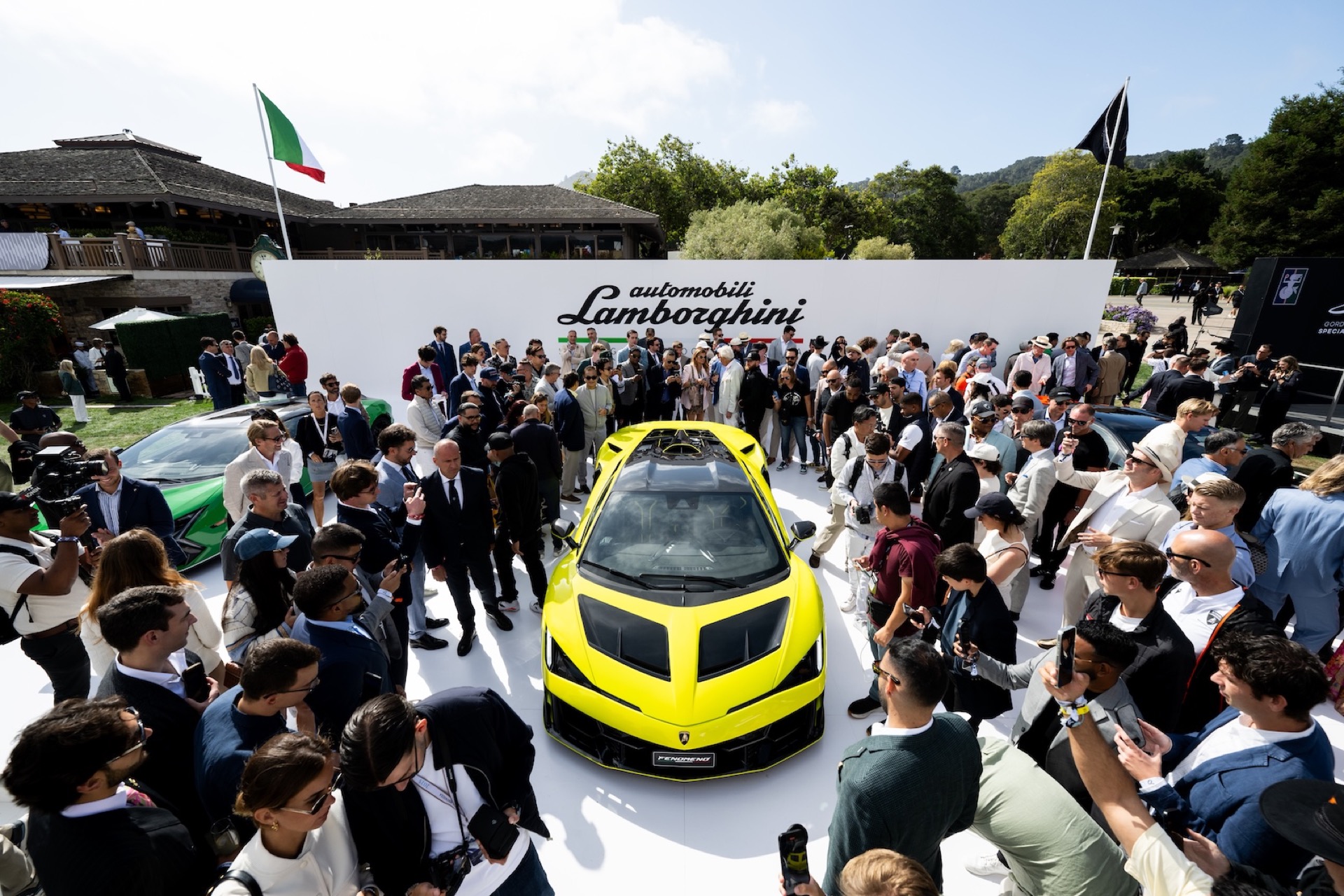
For Lamborghini, The Quail is the holy grail of luxury car events. The brand traditionally uses this exclusive Monterey Car Week gathering to debut its latest halo models—and this year is no different. Enter: the Lamborghini Fenomeno.

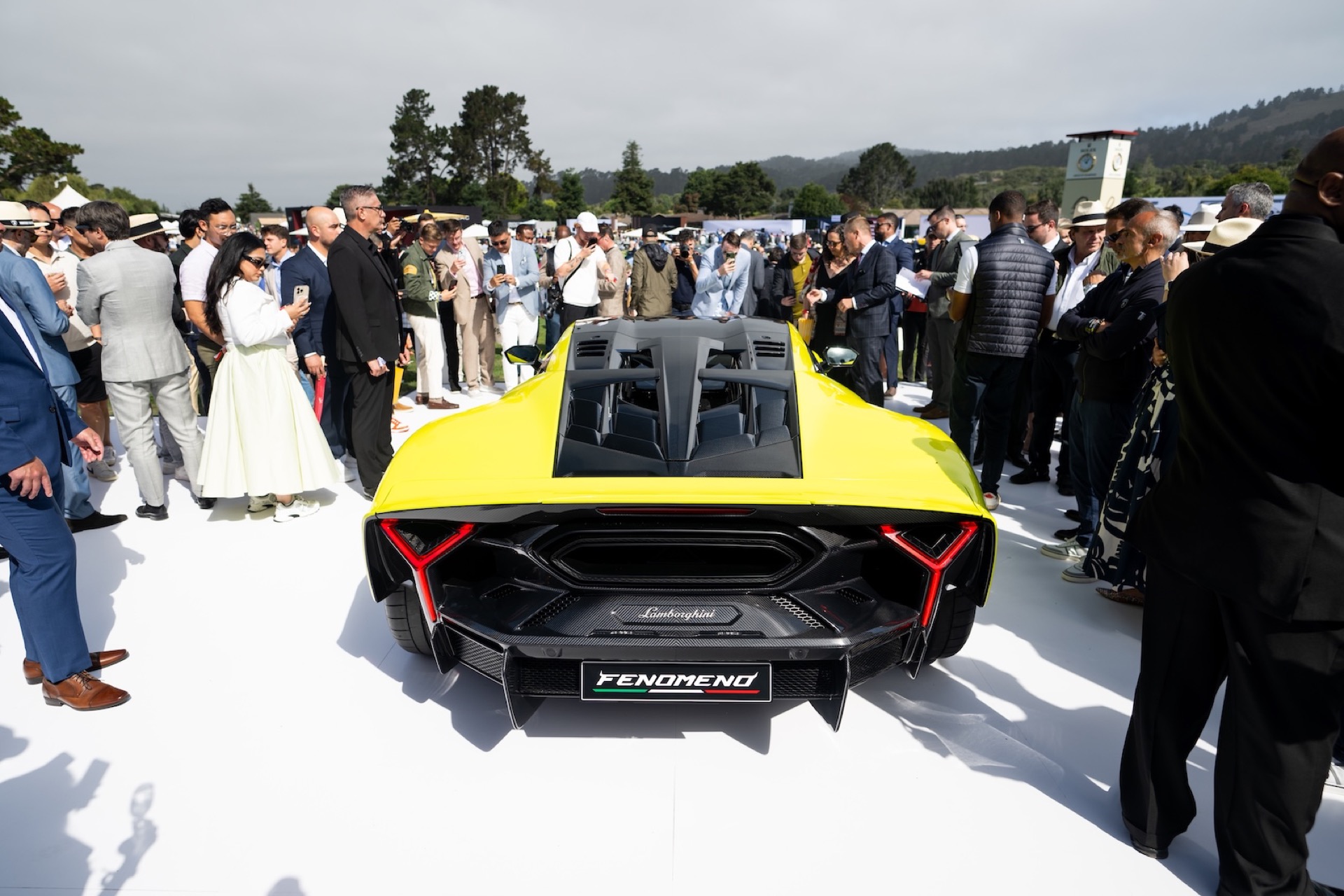
Bathed in sunlight, Lamborghini CEO Stephan Winkelmann strides confidently onto the stage. Each marque gets just seven minutes to present its latest to the moneyed crowd, and not even Lamborghini is exempt. Yet the North Italian supercar maker rarely misses its moment. The cover is pulled back, revealing the wild, bright yellow Fenomeno crouched on the pristine white stage. Applause follows. The price? Over €3 million per car, all of them tailor-made.

Packing 1,080PS from a combination of a naturally aspirated 6.5-litre V12 and three electric motors, the Fenomeno is the fastest and most powerful Lamborghini ever built. Thanks to all-wheel drive and 725Nm of torque, 0–100 km/h is dispatched in just 2.4 seconds. Top speed? North of 350 km/h. “All 29 units we will build have already been sold,” says Winkelmann proudly. He joined Lamborghini exactly 20 years ago and has since overseen a transformation—five times more staff, and seven times more cars built, all eagerly snapped up. The Revuelto, on which the Fenomeno is based, is sold out until the end of 2027.

The Fenomeno is the ninth model in Lamborghini’s Few-Off series, where exclusivity is the core mission. “When we launched the Reventón in 2007, the goal was to create a truly extraordinary supercar—one that represented the ultimate expression of Lamborghini,” Winkelmann explains. “This new Few-Off continues that philosophy of uniqueness and innovation, which lies at the heart of our DNA.”

GTspirit Lamborghini Fenemeno 11

Named after a victorious bull from the fighting arena, the Fenomeno delivers its colossal power via a hybrid powertrain: an 835PS V12 that revs to 9,500rpm, and three electric motors adding a further 245PS. Torque peaks at 725Nm at 6,750rpm, with 80% available from just 3,500rpm. The combustion engine powers the rear wheels, while two 110kW motors feed the front axle, and a third radial-flux motor sends additional torque to the rear depending on the selected drive mode. Whether in silent stealth or full-throttle fury, the Fenomeno offers electric precision with old-school theatre. Unlike the Revuelto, the Fenomeno features a newly developed 7.0kWh battery, neatly integrated within the central tunnel.

Braking comes courtesy of Lamborghini’s CCM-R Plus system, with carbon-ceramic discs tuned for both road and track. But while the Fenomeno shares its basic architecture with the Revuelto, its chassis is completely bespoke—borrowing components from a future GT3 racing derivative.

Damping is manually adjustable, not electronically controlled, offering compression and rebound settings tailored to the driver’s intent. It also features a new suspension-to-tyre size ratio, running 265/30 ZRF21 fronts and 355/25 ZRF22 rears.

GTspirit Lamborghini Fenemeno 4

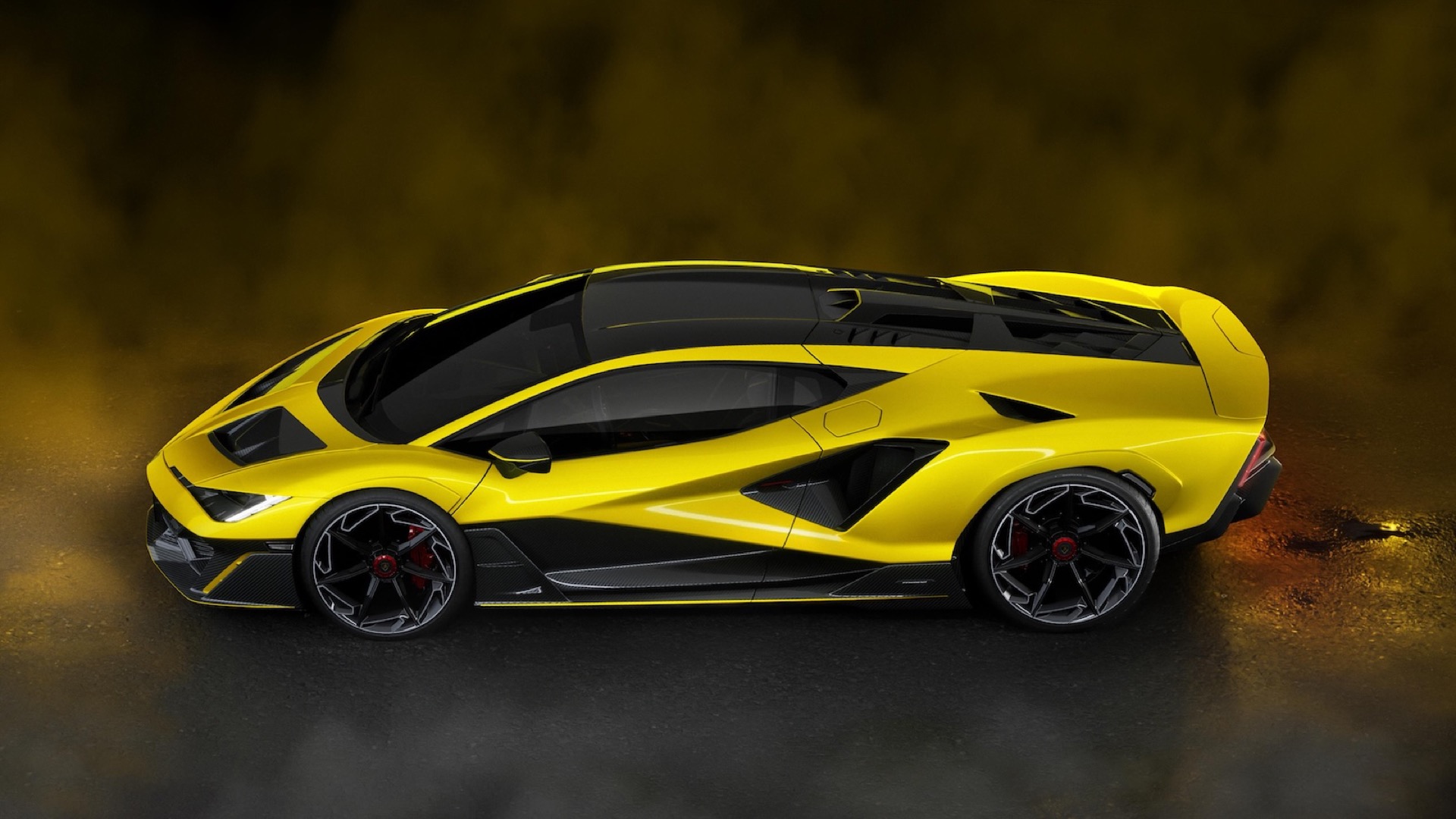
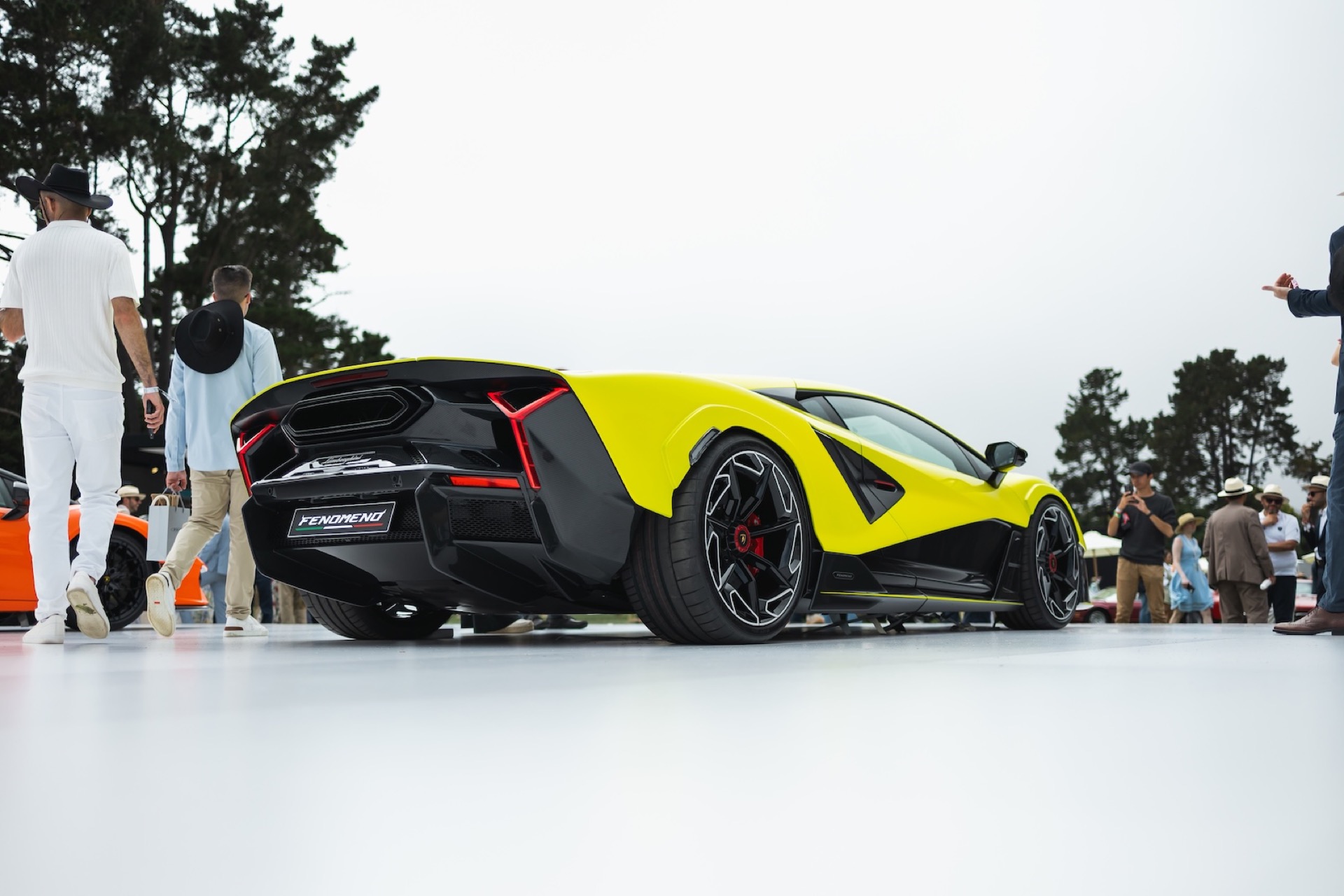
Yet beyond the hardware, Lamborghini’s design team has made bold strides. “With the Fenomeno, we are opening a new chapter in our unmistakable, forward-thinking design language,” says design chief Mitja Borkert. “It follows the same authentic and highly recognisable design principles that began with the original Countach LP500.” At 5.01 metres long, the Fenomeno is both a design statement and a brutal piece of rolling performance art.

GTspirit Lamborghini Fenemeno 12


Source link

What Is Dispersed Camping? Find Free Dispersed Campsites on Public Land

0
What Is Dispersed Camping? Find Free Dispersed Campsites on Public Land


Dispersed camping is a wonderful way to get out and explore natural, uncrowded areas, especially in the West. Most dispersed camping takes place on public lands, in spaces where there aren’t developed campgrounds. And we have a lot of those spaces in the vast, sweeping deserts, mountains, and other Western environments.

This article will answer the question: What is dispersed camping? You’ll learn the difference between dispersed camping, boondocking, and dry camping. You’ll learn where you can go dispersed camping. And you’ll learn what to bring and how to plan for a dispersed camping trip.

Why Dispersed Camping Is Worth Exploring

Dispersed camping is a wonderful option for two very big reasons. It’s cheap. And it’s secluded.

You don’t have to pay for a campsite when you are dispersed camping. As long as you follow the rules laid out by the Bureau of Land Management, you can pick a spot and set up camp. No official campground and no fancy campground amenities mean that there’s also no cost. There’s no overhead when you’re not providing electricity or water or even basic bathrooms that need to be cleaned. It’s camping at its most basic and most cheap.

About one-tenth of all United States land is Bureau of Land Management land – about 382,000 square miles. And while not every square mile is available for dispersed camping, that still leaves a lot of elbow room when you’re looking for a camping spot. Boondocking on BLM land does require more work and more research than pulling up to a private campground and hooking up your services. But that means you’re likely to find fewer crowds here as well. Campgrounds are developed, often paved, and sometimes full of people. But in certain dispersed camping areas, you might not see another person during your entire stay. There’s a very good chance you can find solitude if you’re looking for it.

What Is Dispersed Camping?

Dispersed camping is camping outside of a formal campground, with no hookups or amenities. No showers, no bathrooms, no trash removal – anything you bring with you into your camping area is going right back out with you when you leave. You’ll need to make sure you Leave No Trace. This means:

  • Plan ahead and prepare for your trip
  • Camp on durable surfaces
  • Dispose of your waste properly
  • Leave what you find
  • Minimize your campfire impact
  • Respect wildlife
  • Be considerate of others

In practice, this means packing out everything, including trash and waste, and scattering your campfire ring and ashes when you leave. The area where you camped should look like you were never there.

Dispersed Camping, Boondocking, and Dry Camping

Dispersed camping, boondocking, and dry camping are all similar types of camping but they have a few differences. Dispersed camping is about where you are, boondocking is about how you camp (off-grid), and dry camping is about what’s not provided, regardless of where you are. Here’s a chart to help you understand the differences and similarities between the three:

Term Basic Definition Typical Location Amenities Provided Vehicle Requirement Rules & Restrictions Common Use of Term Key Difference
Dispersed Camping Camping outside of developed campgrounds, usually on public lands National Forests, BLM lands, some state lands None Any (car, tent, RV, van), but must be self-sufficient Usually limited to 14 days; must follow “Leave No Trace” and land agency rules Used mostly by public land agencies like the U.S. Forest Service and BLM Focus is on location — outside designated campgrounds
Boondocking RV or van camping without hookups, often for free Remote public lands, big-box store lots, rest areas, urban stealth spots None RV, camper van, or similar self-contained vehicle Varies by location; public lands have time limits, private property needs permission Used mostly in the RV community Focus is on style — off-grid, often remote, no hookups
Dry Camping Camping without water, sewer, or electrical hookups Usually developed campgrounds None Usually RVs, vans, or campers; tents possible Depends on landowner or campground rules Common in RV parks and public lands Focus is on amenities — simply means no hookups, regardless of location

Where You Can Dispersed Camp Near You

Public lands managed by several different agencies usually allow people to disperse camp in certain areas. Here are a few agencies that usually allow dispersed camping, plus a few that do on rare occasions.

Agencies that often allow dispersed camping

  • U.S. Forest Service – Allows dispersed camping in most areas outside developed campgrounds. Head to the Forest Service website, select your national forest, and look for “Maps” or “Recreation → Camping → Dispersed Camping. You can also get Motor Vehicle Use Maps (MVUMs) that show where roadside camping is allowed.
  • Bureau of Land Management (BLM) – Allows dispersed camping in most areas not otherwise closed to camping. Visit the BLM website and select your state or district. Click on “Maps” or “Camping.” You can check out interactive maps or printable PDFs (a good option if you’re not sure about cell coverage in the area).
  • Bureau of Reclamation – This agency covers lands and water around reservoirs and dams. They sometimes allow dispersed camping, but it varies. Check the agency website to see if your reservoir or recreation area allows dispersed camping and where.
  • State land departments – Some state land departments allow dispersed camping in certain areas. Rules vary, depending on the state and you may need a permit. You can check for the state where you’re interested in camping by searching the state name + state land trust camping. You can also find the state’s Department of Natural Resources page and see if they have information for you.
  • State parks & forests – Like land departments, some state parks and forests allow dispersed camping but rules vary by state. State parks usually only allow camping in designated campgrounds, while state forests often allow dispersed camping with some rules. You can visit the state’s DNR website or visit the website for the state park you want to visit.
  • County/municipal open spaces – Some rural areas allow dispersed camping on local preserves or open space lands, but this is rare. Search the open space policies for the county where you want to camp.
  • National parks, U.S. Fish & Wildlife Service, U.S. Army Corps of Engineers – Areas managed by these agencies very rarely allow dispersed camping. A few national parks allow backcountry dispersed camping, and the other two agencies generally only allow camping in designated camping areas.

How to Pick a Safe, Responsible Spot

Once you’ve found an area to dispersed camp near you, it’s time to pick a safe, responsible place to set up camp. Here are a few tips for picking where to camp.

  1. Make sure it’s legal. Check the websites above to make sure you picked a good spot to camp. You can also look at sites like iOverlander, freecampsites.net, and Campendium for suggestions on where to camp.
  2. Look for an existing site. You’ll have less of an impact on the environment if you pick a spot that was already used. It will also likely be safer for you and clear of rocks, sticks, and other debris. Look for flattened dirt patches, tire marks, or old fire rings and set up camp in these areas.
  3. Have an escape route. Make sure you can turn around or drive out without getting stuck, especially when there is rain or snow. Even better – back into your site so that if you have to evacuate, you don’t need to spend time backing out and turning around.
  4. Check for hazards. Look for dead branches above that can fall. Watch for loose rocks or erosion that can make your campsite unstable. Look for steep drop-offs and any other hazards nearby. Avoid low-lying areas and dry washes that can flood during a storm. Avoid camping near patches of berries, carcasses, or other obvious sources of food for wild animals.
  5. Watch for a spot with level terrain. That will make setting up camp much easier after you pick your spot. Look for firm soil, and avoid sand, mud, or soft grass.
  6. When picking a fire ring or using an available one, make sure all flammable material nearby is cleared. Look for overhanging branches, grasses, and other vegetation near the ring. Also, check local fire restrictions to make sure you can have a campfire in the first place.
  7. Stay close to help. If you’re a dispersed camping beginner, start by camping within half an hour of a ranger station or nearby town. If you do camp in very remote areas, have a GPS communicator or satellite phone in case of emergencies.
  8. Be mindful of neighbors. You’re probably all out there to get some solitude, so try not to disperse camp too close to other campers.

What to bring

You’ll want to stock your RV for dispersed camping with many of the same items that you would for any other camping trip. But there are some items you’ll want to add to make your trip a success. Also, when you’re packing food and water for your trip, bring enough for at least one extra day and possibly more. You may show up and love it so much you want to stay longer. You may also be hit with an unforeseen reason why you can’t leave on the day you had planned (like bad weather). You’ll want to prepare for the unexpected as much as you can. From clothing to gadgets to essentials, here’s a packing list to get you started. You can download the list as well, so you can print it and use it as a checklist.

Water & Sanitation

  • Fill water tanks before leaving
  • Extra jugs or collapsible containers for refills
  • Portable water filter or purifier if you plan to use local water sources
  • Empty gray and black tanks
  • RV-safe toilet paper
  • Know where the closest legal dump station is
  • Wet wipes and hand sanitizer (to conserve water)

Power & Energy

  • Fully charged house batteries
  • Generator with extra fuel or solar setup
  • Extension cords and/or inverter
  • LED lanterns and headlamps
  • Extra batteries for all devices

Food & Cooking

  • Food for all meals and snacks, plus 1-2 extra days
  • Full propane tanks
  • Portable stove or grill
  • Cooler and extra ice
  • Cookware & utensils
  • Food storage

Navigation & Communication

  • Paper MVUM and BLM maps (good when there’s no cell service)
  • Offline navigation app like Gaia GPS or OnX
  • Two-way radios (if traveling with others)
  • Satellite communicator for emergencies

Safety & Emergency Gear

  • First aid kit
  • Fire extinguisher
  • Basic tool kit
  • Tire repair kit & air compressor
  • Jumper cables or portable jump starter
  • Weather-appropriate clothing + layers
  • Emergency cash

Comfort & Daily Living

  • Camp chairs & table
  • Shade or awning
  • Insect repellent
  • Extra bedding or blankets
  • Entertainment (books, cards, games)
  • Trash bags

Environmental & Wildlife Preparedness

  • Bear-proof food storage
  • Odor-free trash storage
  • Campfire gear: shovel, bucket for water, fire starter
  • Rake for smoothing campsite
  • Gloves for trash pickup

Dispersed Camping Rules & Regulations

Check with the agency that manages the particular area to make sure you’re following the dispersed camping rules for that area. Here are some of the most common:

  • Stay limits: Most areas allow you to stay for up to 14 days within any 28-30 day period.
  • Distance from roads or water: Camp at least 200 feet from lakes, streams, and trails when you’re not in a designated site.
  • Campfires: Follow local fire restrictions, use existing fire rings, don’t leave campfires unattended, and make sure campfires are completely extinguished.
  • Waste: Following Leave No Trace Rules, be sure to pack out all of your trash. If you don’t have an RV with a bathroom, bury human waste 6-8 inches deep and 200 feet from a water source.
  • Existing sites: Use existing clearings to avoid damaging vegetation and natural areas.
  • Vehicles: Drive on designated roads or spurs. Driving off-road is usually prohibited unless you’re in an area that indicates it’s allowed.
  • Noise: Respect standard quiet hours – usually from 10 pm. – 6 am.
  • No claiming spots: You can’t park your RV or tent on a spot for days without being present, in order to hold your spot.

Dispersed camping can be a wonderful way to create family memories while getting away from the rest of the world! Family bonds get stronger when everyone has to cooperate, rely on each other, and turn to each other for company while you’re camping. It’s true, it takes a little more planning and careful packing to go off the grid. But you gain freedom, flexibility, and a true connection to nature by being out in the wild. As an added bonus, campsites are free!

If you don’t have an RV, or don’t have one that will stand up to the rigors of dispersed camping, browse RVshare. They’ll likely have a rental that will meet your needs.


Source link

NSX – Car Design Blog

0
NSX – Car Design Blog


NSX – Car Design Blog

Imagine standing next to a very sexy car.  Now imagine being the designer of that very sexy car.  Michelle Christensen doesn’t have to imagine being that person; She IS that person!

With an amazing artistic talent combined with interest and knowledge of racing cars from a young age (her father was into hot rods and muscle cars), Michelle was inspired to be a car designer after her first car show visit experience.  She completed her studies at the Art Center College of Design in Pasadena, CA.

Michelle’s first role as lead designer was on the 2016 Honda NSX project.  Being motivated by her passions of “arts, cars, and making things for people” (her quote), she led her team in creating one of the hottest (and coolest, at the same time) road warriors of this decade, the Acura NSX.

The Acura NSX being Michelle Christensen’s first successful project, I can only imagine her future projects will have no limits to the beauty and ingenuity that will be produced. 

Anxiously waiting for what’s coming up next!

Watch this MotorWeek video of Michelle Christensen talking about how she did it!


Source link

Electric-car charging: The basics

0
Electric-car charging: The basics


Among those considering the purchase of a new or used battery-electric or plug-in hybrid vehicle, or just curious about EVs, charging can still be the EV dealbreaker. 

Unless you don’t have a way to easily install or access home charging, your excuses are quickly disappearing, though. In 2024 public charging kept pace—or better—with the number of EVs on the highways. New EVs are charging quicker and more consistently in road trips; the options along the way have become more reliable; and with Tesla and other brands’ EVs all soon compatible with the same charge connectors, nobody’s excluded. 

That said, keeping EVs charged requires a different mindset than you might use in fueling up gasoline cars—even though seeing electricity as fuel isn’t off the mark. 

A familiar starting point for EV charging

If you’re an EV newbie, or someone just feeling out EV ownership, you can look forward to a lifetime free of gasoline. But in order to enjoy it and shed the anxiety, you’ll have to break out of the running-on-empty and fill-’er-up mindsets of gasoline vehicles, replacing it with the charge-nightly-or-as-you-can approach you already use for smartphones or tablets.

Becoming comfortable with the routine of charging your EV—and when and where you need to plug in—is an important part of ownership. And it all comes back to what’s likely in your pocket or right next to you, if you’re not already reading this piece on it—your smartphone. 

Rivian adds Tesla Superchargers to trip planning app

Rivian adds Tesla Superchargers to trip planning app

Over time, some people learn to have confidence in the battery level of their phone, keep an eye on it, and simply plug it in when it gets down to 20% or 10%—the low battery warning—while others get in a routine to plug in every evening to charge up all or most of the way for the next morning, depending on settings. 

While EV batteries are bigger, and you can’t plug them in everywhere, keeping your EV charged up is all about what makes the best sense to you. Not everyone is going to come to the same conclusions, and that’s fine as EV ownership can fit all sorts of routines, as long as you first understand charging. 

With that starting point in mind, be forewarned: If you’re already an EV fan, much of this will be old hat. But to make the transition easy, Green Car Reports has rounded up some tips on how, where, and when how to charge up that new plug-in vehicle.

We’ve written this piece with the tech-curious newbies in mind—maybe not hitting all the fine details, but helping provide a lay of the land as you shift away from gasoline and toward charge ports and make sure all basics are in place. 
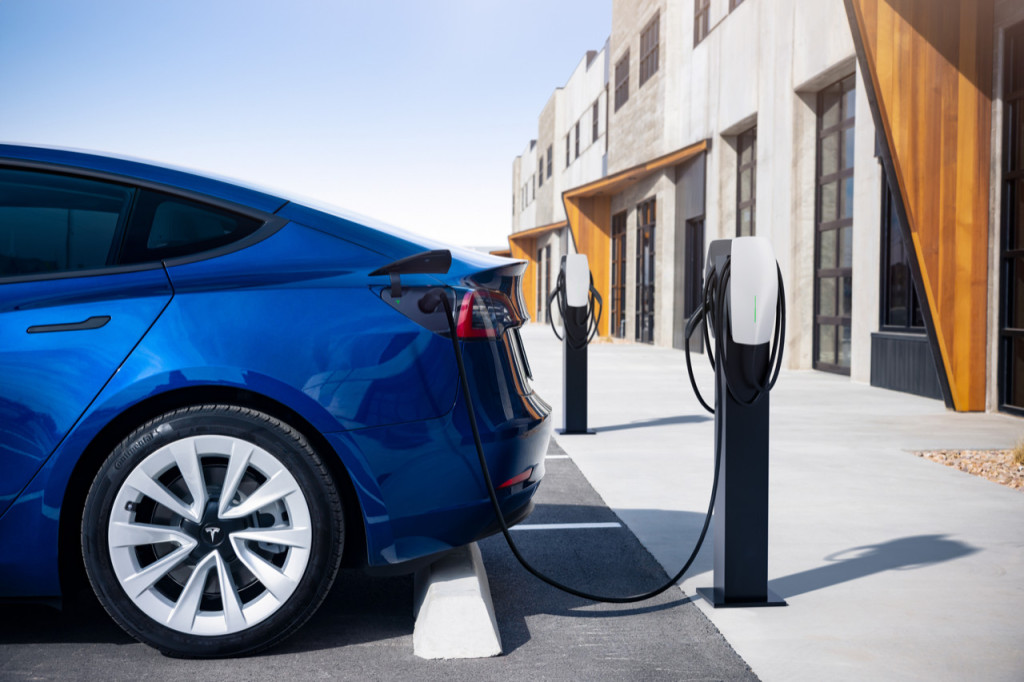
Tesla charging

Tesla charging

Types of Charging

AC or DC

Fundamentally, there are two types of charging, based on the format of the electricity—AC and DC. 

AC (alternating current) is what’s supplied to your home or what flows through a commercial electrical outlet—or the “destination chargers” that you might plug into for a few hours, or overnight. Whether you plug into it via a mobile connector or a wallbox, the actual charger that communicates with the battery and converts that AC current to DC (direct current) and is within the vehicle. 

The mobile connector or wallbox (sometimes called EVSE for the sake of tax credits, rebates, or electrical work) will test the circuit when you plug it in, to ensure that it’s properly grounded and the current is strong enough to power the charger. Even though these connectors and wallboxes aren’t delivering the electricity in any different format than what the outlet provides, they are confusingly often called chargers. 

DC itself, on the other hand, is typically supplied by commercial charging-station hardware designed for fast charging (or very specific uses like home backup). Hardware delivers DC current to the vehicle, with two-way communication fine-tuning exactly what voltage and current the battery pack gets in real time to get the fastest charge without overheating the pack or damaging it. 
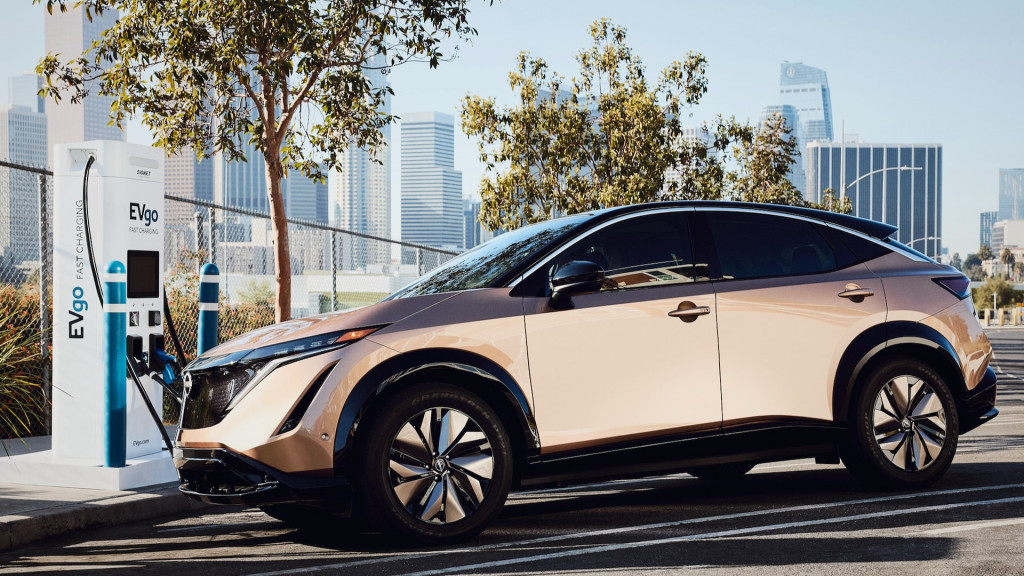
2023 Nissan Ariya at EVgo charging station

2023 Nissan Ariya at EVgo charging station

L1, L2, and L3

AC and DC charging breaks out into a range of rates, which leads to another way to describe the types of charging: Level 1 (L1), Level 2 (L2), and Level 3 (L3). 

Keep in mind that these levels are less relevant in Europe, but they persist in North America, because of the way our AC electricity is delivered. 

These roughly correspond to:

Level 1: Up to 2.4 kw
Level 2: 2.4 kw to 19.2 kw
Level 3: 24 kw and up

Fast charging today is shifting to refer to connectors capable of delivering 150 kw or more. Many charging station connectors remain limited to 50 kw, and some older hardware may only be capable of delivering 24 kw, but they still fall under what’s called L3. 

An L1 charging rate likely won’t be enough to keep a fully electric vehicle adequately charged up at home, unless commutes are short and it’s plugged in the vast majority of the time otherwise. But it might be fine for a plug-in hybrid. These tend to correspond with 120V AC delivery and thus are usually limited to 1.44 kw (120 volts x 12 amps — and we’ll get to why it’s 12A a bit later). Figuring in a reasonable 10% losses, you’re only putting about 1.3 kwh into the battery pack per hour—or about 5 miles of range per hour in more efficient EVs like the Tesla Model 3/Y or Chevy Bolt EV. 
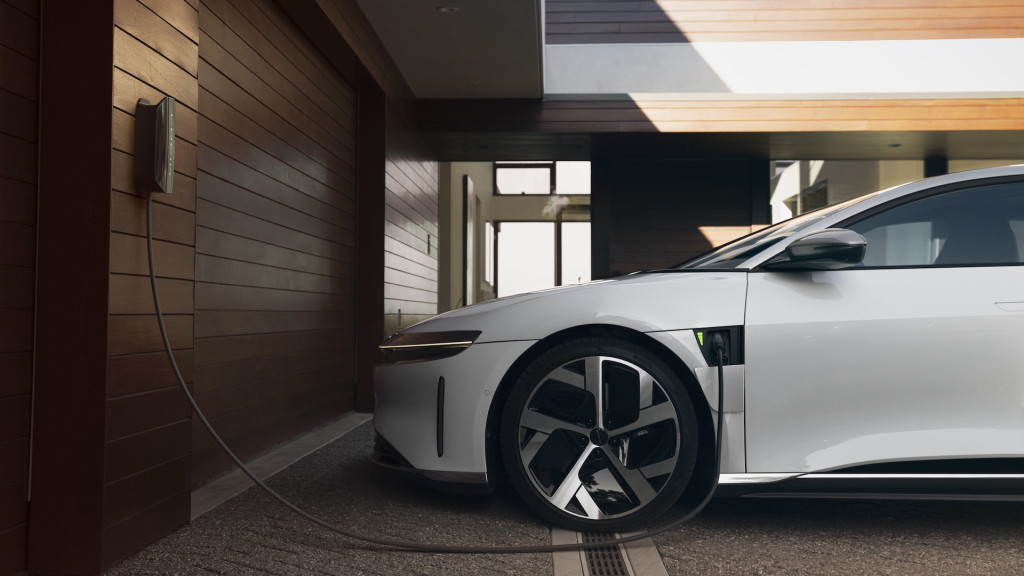
Lucid Connected Home Charging Station

Lucid Connected Home Charging Station

L2 is the easiest and best option to have for EVs, as it can provide a full overnight charge for nearly all EVs—all but those with the largest battery packs. These are typically wallboxes and essentially correspond with 240V AC delivery, and if you have a charging station installed at home, it will require the same type of wiring as an electric stove or clothes dryer. Tesla, for instance, points to up to 44 miles of range recovered per hour from its Wall Connector. 

EVs and plug-in hybrids have typically come with a “charging cord” allowing you to plug into 120V AC and get that slow L1 charging when needed. But those really weren’t used very frequently. So automakers have been switching toward 120V/240V mobile connectors, which are instead often optional on new EVs (and standard on a few premium-brand models) but do at an L2 rate add a very useful amount of range if you have access to a spare 240V outlet. Tesla’s mobile connector, for instance, is limited to 32 amps, which corresponds to up to 30 miles of range recovered per hour for the Model 3, according to the automaker. 

In the interest of simplification L3 and DC fast charging are one and the same. So keep reading for that. 

Subaru Solterra EV at Electrify America

Subaru Solterra EV at Electrify America

DC fast-charging basics

Fast chargers deliver direct current to your battery pack, while communicating with your vehicle. By varying the voltage and current, and accommodating for details like battery temperature and ambient temp, fast chargers deliver as much power as your battery can handle at a given state of charge—up to the rated maximum of the connector, cord, and charging cabinet. 

That effectively means that if you choose a charging location and connector rated at or above your vehicle’s maximum, generally, the hardware will be able to charge your vehicle up in as little time as possible. 

But the cells need to be in an ideal temperature zone to hit that peak rate. So leading up to a fast-charge session (and in many cases linked to its route planner), your vehicle may precondition its battery pack—which means warm it up to the low end of the ideal zone. They’ll heat up more when charging. 

In a DC fast-charging session, the charge rate tends to slow as you approach about 80%. For this reason, automakers typically give fast-charging times from 10-80%—an ideal window to seek on long road trips. Unfortunately that’s only 70% of the range, so for instance to spend the least time charging you’ll need to stop about every 175 miles in a vehicle that can go 250 miles on a full charge at real-world highway speeds (which might correspond to an EPA range rating of 300 miles or more).
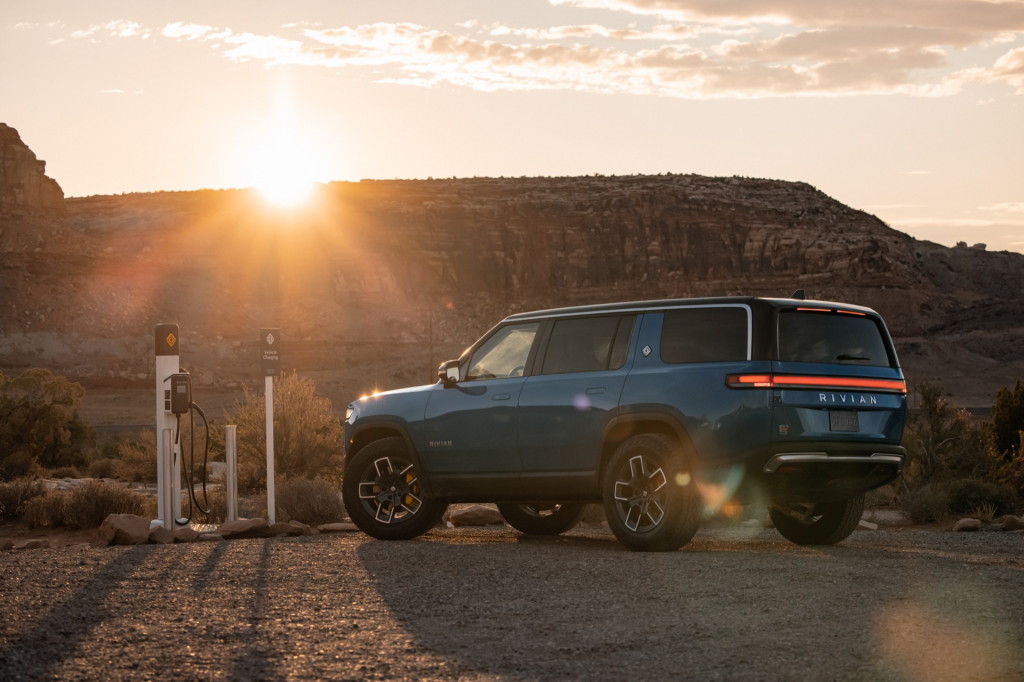
Under Canvas carbon-conscious camp with Rivian Waypoint chargers - Moab

Under Canvas carbon-conscious camp with Rivian Waypoint chargers – Moab

Where to charge: Home, destination, and fast chargers

Distilling AC and DC, L1, L2, and L3 down to some key points, what it amounts to for real-world use is that there are three key types of chargers at which to charge: 

  • Home chargers, or those that you keep at home or in your trunk (or frunk)
  • Destination chargers—often meaning Level 2 chargers that may be at the workplace, a shopping center, or a parking garage and provide a significant charge in a few hours
  • Fast chargers that are most likely along highway road-trip routes, to provide a significant charge in less than an hour
2024 Volkswagen ID.4

2024 Volkswagen ID.4

How to find chargers

We strongly recommend that you have, on the ready, a combination of methods to find your best charging-station options. So on your smartphone, install not just the official brand app for your vehicle but also an independent app focused on charging and route planning. 

Most of today’s EVs do come with some level of charger-savvy route planning that incorporates dynamic range estimates. Not all automaker apps and interfaces provide the tools for the quickest EV road trips, though. Independent EV charging apps we recommend for backing up your in-car interface and making sure you’re choosing the best stops along the way include Chargeway, PlugShare, and A Better Route Planner. Google Maps and Apple Maps do also now include some charger specs. 

You’ll then need to initiate the charging session—and pay for it, in many cases. Although in the case of Tesla, you’ll likely only need to plug in. For those with other EVs, Plug & Charge technology allows a similar level of convenience although it’s not yet working everywhere. In other cases you may need to provide a credit-card swipe or smartphone-based payment, but overall the days of separate cards, apps, fobs, and passkeys for each charging network are thankfully on the way to the history books—thanks in part to the federal government’s NEVI rules. 
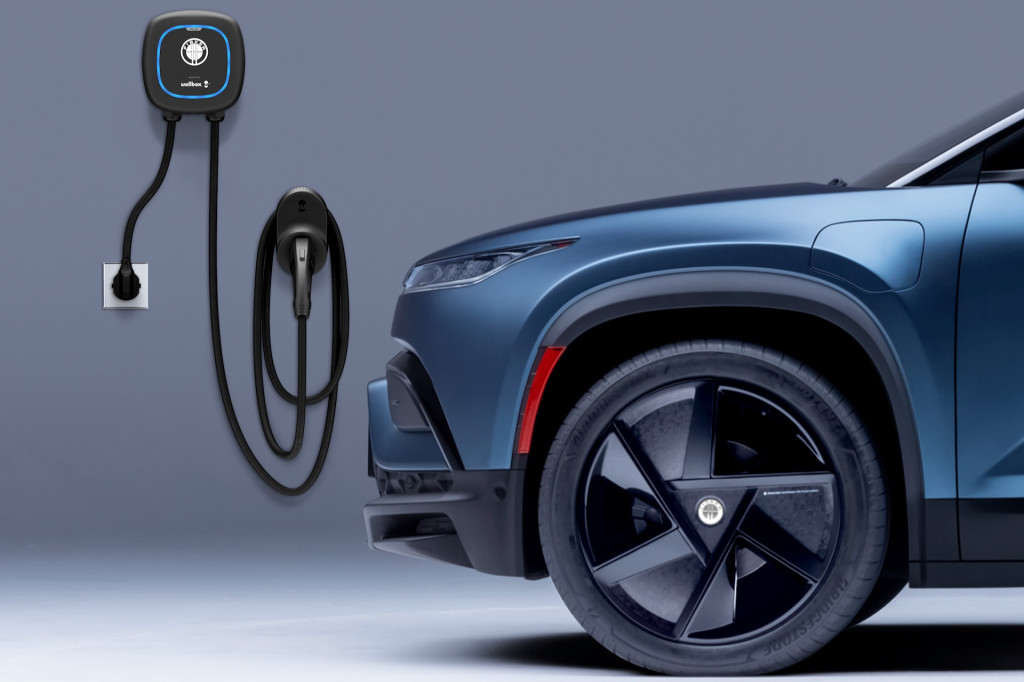
Fisker Wallbox home charger

Fisker Wallbox home charger

Installing a home charger

For all of these home chargers, whether they’re plugged into the appropriate socket or hardwired, the 80% rule applies—meaning that you shouldn’t be pulling a constant load that exceeds more than 80% of the max your circuit is wired for. So for instance, for a 50-amp circuit, you should be using a charger that won’t pull more than 40 amps. 

Some of today’s long-range EVs are capable of charging at up to 19.2 kw, which indicates an 80-amp charge connector, requiring (given the 80% rule) a 100-amp circuit. With 200-amp service for the entire house quite common today, and some smaller or older homes running on 125 amps or less, that’s an untenable amount to dedicate to EV charging without major (and costly) electrical upgrades. 
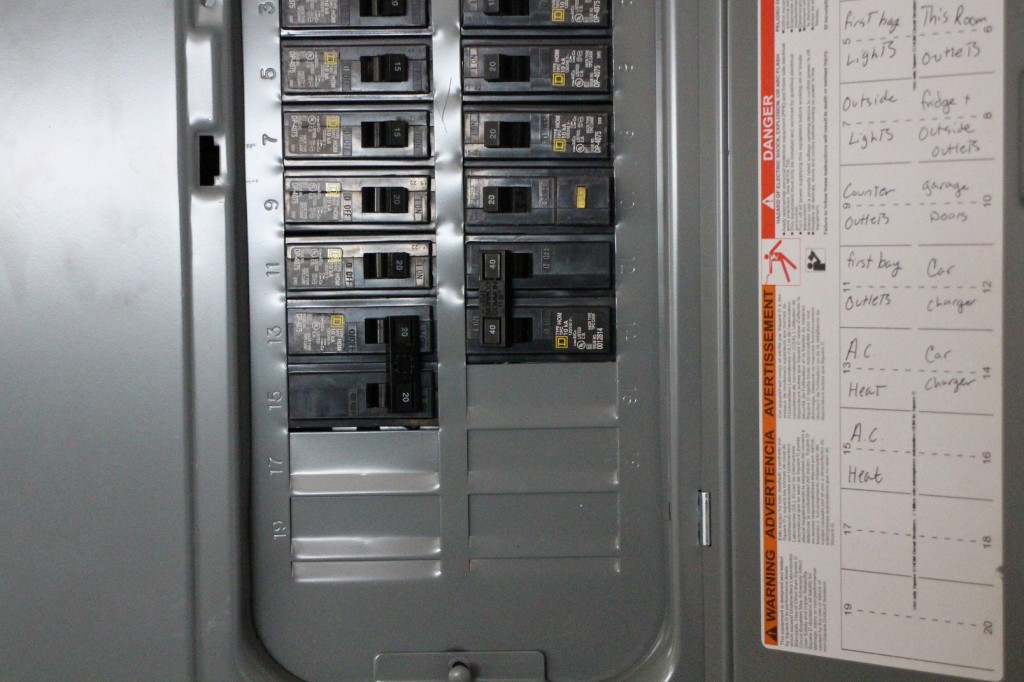
Circuit-breaker box showing 240-Volt circuit for electric-car charging station

Circuit-breaker box showing 240-Volt circuit for electric-car charging station

To be perfectly pragmatic, a 40-amp circuit and 32-amp home charge connector will be just fine, and plenty adequate for most EVs—amounting to a charge power of up to 7.7 kw. Even for many longer-range EVs, that’s enough for a full charge in 10-14 hours if you’re near zero charge remaining.

But step up the circuit if you can. A 60-amp circuit and 48-amp charger, for instance, will get you added speed for some of the biggest electric trucks or longer-range EVs, and moving all the way up to 100 amps for the circuit and 80 amps for the charger may have advantages for some models. 

One final note: It likely makes far more sense to install a 100-amp circuit versus adding two separate 50-amp circuits, as there are dual chargers that will split available amps between EVs. But there are load-balancing and power-sharing options, too. Talk to your electrician. 
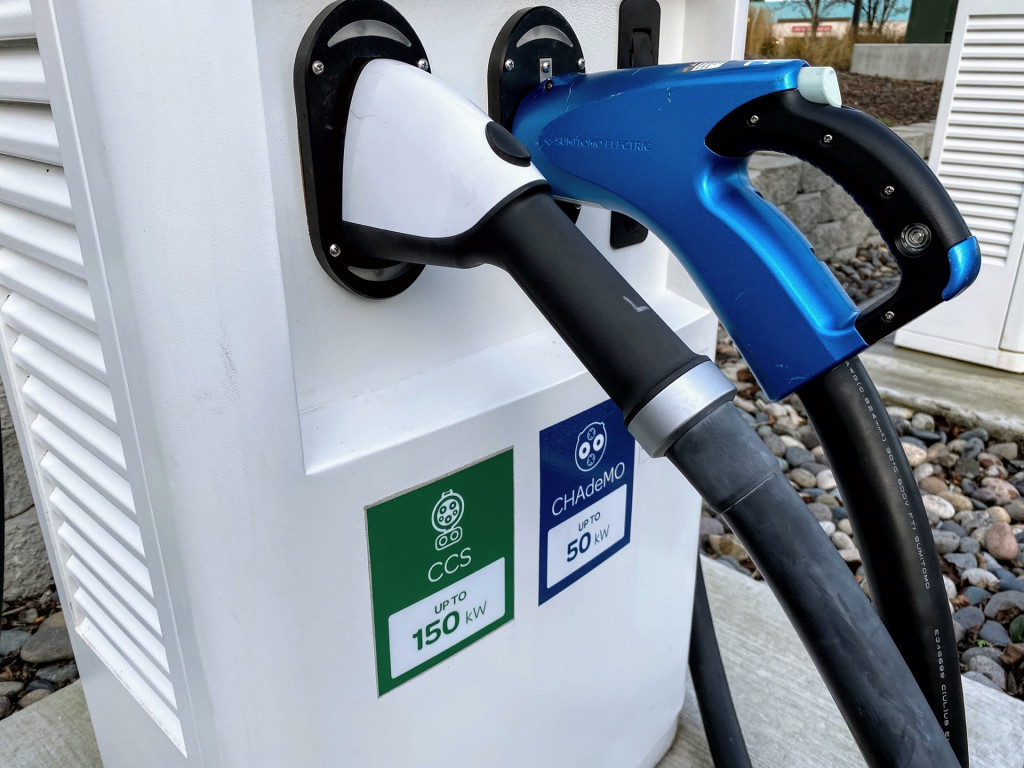
Electrify America DC fast-chargers - CCS and CHAdeMO

Electrify America DC fast-chargers – CCS and CHAdeMO

Charge connectors—J1772, NACS, CCS, CHAdeMO

Some of today’s EVs come with one charge port, while others come with two. The reason behind this is related to AC and DC charging, but it’s a little more complicated than that. 

Most AC charging comes via the round J1772 charge port—the “J” plug that’s become near-universal over the past 15 years in EVs and plug-in hybrids. The same port spans L1 and L2 charging, up to about 19.2 kw. 

U.S. market EV charging connectors - via ChargePoint

U.S. market EV charging connectors – via ChargePoint

CCS. The Combined Charging System, in the form Americans know it, is that same J1772 port, with two stout DC-charging prongs added just beneath, to enable Level 3 DC fast charging (or perhaps, in bidirectional charging setups, other slower kinds of DC power sharing). In the U.S., CCS arrived in late 2013. 

NACS. The North American Charging System, or J3400 as it was termed as an industry-wide standard in 2023, is an adoption and evolution of the Tesla charge port that’s been used since the introduction of the Model S in 2012. NACS is noteworthy for how it combines AC and DC charging together in the same compact charge port that some may simply find easier to use. 

CHAdeMO. Conceived in 2009 and 2010 by a group of Japanese companies, CHAdeMO was first rolled out for the U.S. in the 2011 Nissan Leaf. The only two new vehicles using the CHAdeMO port in 2024 are the Nissan Leaf EV and Mitsubishi Outlander Plug-In Hybrid. While the port and standard were ahead of the curve with bidirectional charging fully enabled starting in 2013, CHAdeMO was shunned in Europe. What’s also been rendering CHAdeMO moot is that the big, round port does not include AC/L2 charging—so in EVs the J1772 port needs to be included separately.
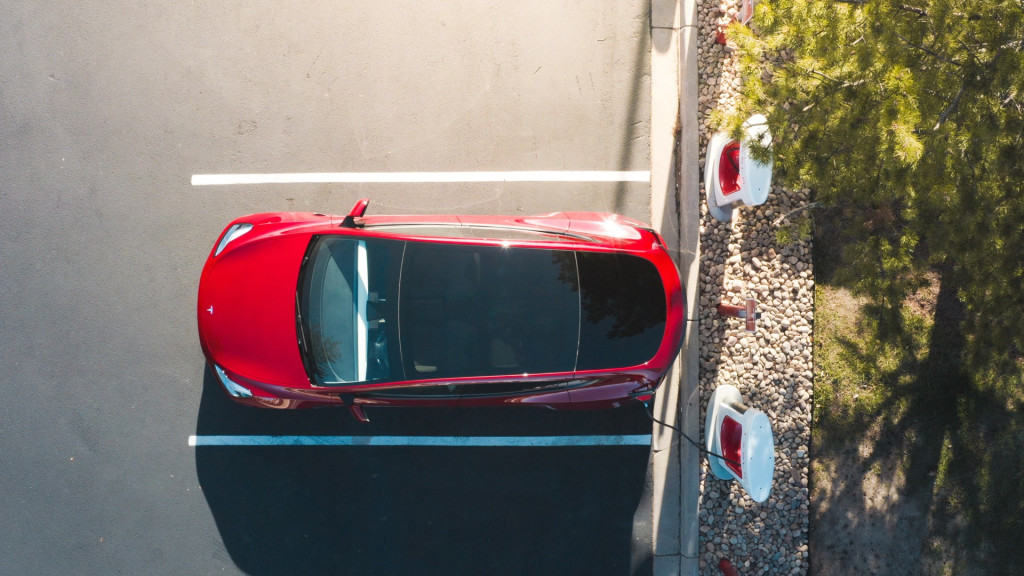
Tesla Supercharger

Tesla Supercharger

NACS or CCS: Two takeaways

The future of American EV charging is NACS. Throughout 2023, starting with Ford, every single volume U.S. automaker committed to the Tesla-based NACS format for future EVs—and, in the meantime, access to the Tesla Supercharger network with CCS-NACS plug adapters. But many of these EVs that switch to that format aren’t due until later in 2025 or 2026, 

Get used to adapters. While the future is NACS, you may be perfectly fine with CCS for home charging for many years to come. If you rely on public charging, even on road trips, you’ll probably want to have an approved adapter on hand. 
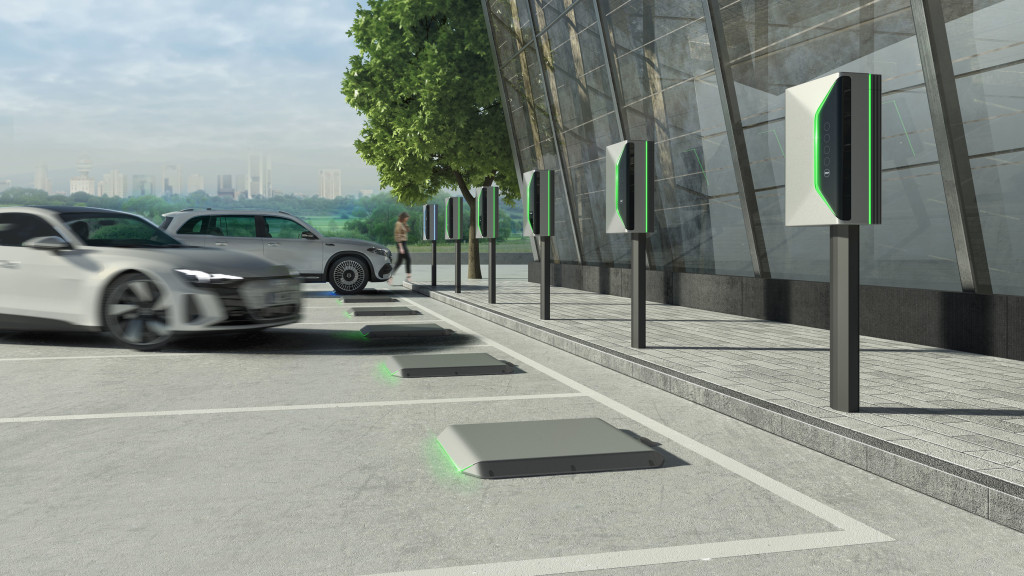
WiTricity and Siemens wireless charging station

WiTricity and Siemens wireless charging station

Some of the future of charging will be wireless

Cables and connectors might always remain a way of charging your EV, but they won’t be the only way. The technology for fully wireless vehicle charging—also known as inductive charging—has already arrived, and if you fast forward a few years into the future it’s quite likely some U.S. EV drivers won’t ever need to worry about remembering to physically plug in each night. 

The technology relies on a set of copper coils at either end—one in a pad on the garage floor, driveway, or parking space, the other at the bottom of the EV. The lower pad creates an oscillating magnetic field, which is then captured by the car’s coil and converted back to electricity. 

Why isn’t it everywhere? For one, it’s expensive, with the price tag of a complete wireless charging installation costing several times what a wallbox costs. When luxury EVs—and Tesla—adopt wireless charging, they’ll pave the way to economies of scale, and eventually public wireless charging stations that might make your road trip even easier.

Fast forward even farther into the future and dynamic inductive charging could mean that some EVs, on certain routes, might never need to stop to charge—as the tech might gradually charge your vehicle as you drive, through smaller embedded coils in the road.
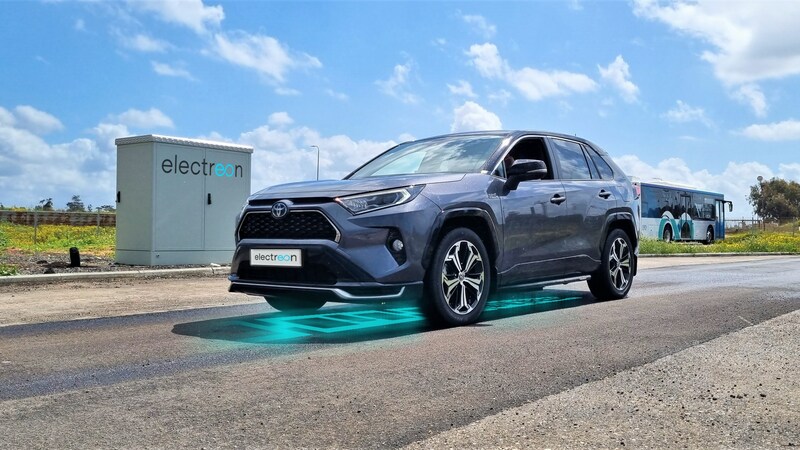
Toyota RAV4 Prime - Electreon dynamic wireless charging

Toyota RAV4 Prime – Electreon dynamic wireless charging


Bidirectional charging is the wildcard

In most cases, today, EV charging involves energy flow in one direction—from the grid to your vehicle. But in the future there might be much more give-and-take to charging as EVs, home hardware, and your public utility, perhaps, embrace bidirectional charging. With it, called out as V2H (vehicle to home), V2G (vehicle to grid), V2X (vehicle to everything), EVs might send power out to campsites or construction sites, power homes during brownouts or blackouts, or help balance energy at different costs or different levels of demand. 
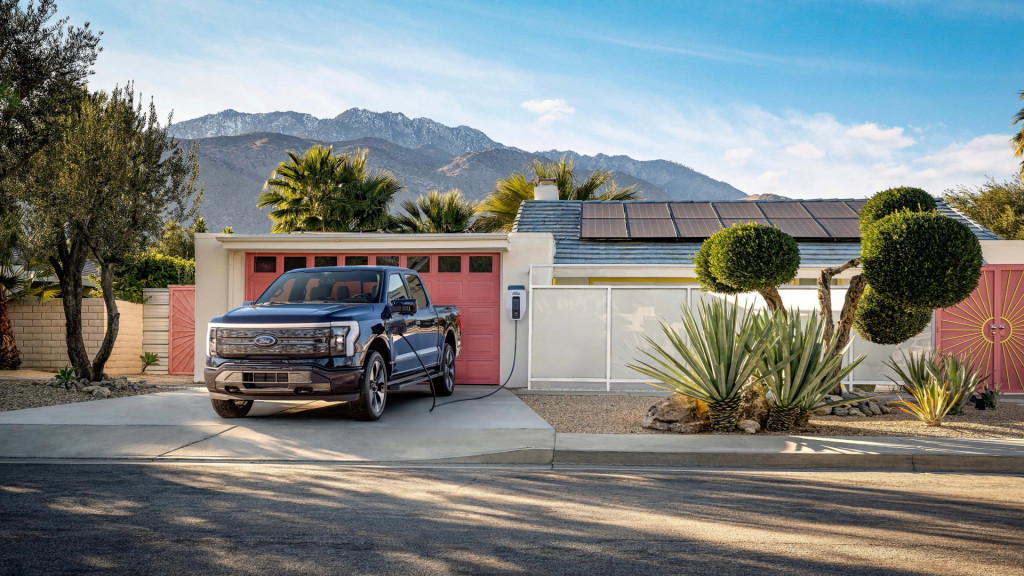
2022 Ford F-150 Lightning Intelligent Backup Power

2022 Ford F-150 Lightning Intelligent Backup Power

Farther off, a range of companies, with different terms, technical differences, and proposed rules, have floated the idea of an “open market” for bidirectional charging—in small amounts, over wireless charging. For instance, maybe the grocery store borrows just a kilowatt-hour or two from most of the vehicles in the lot—wirelessly, based on your settings—and in return gives you a discount for lowering its use of more expensive grid electricity on a hot afternoon. 

Some forms of bidirectional charging are here right now. CHAdeMO has been fully compatible with bidirectional charging for more than a decade, with the right hardware and software, of course. CCS has also offered this capability for several years. General Motors has expanded bidirectional charging capability to the entire GM EV lineup and it’s readied a GM Energy ecosystem including energy storage. And at present, the Ford F-150 Lightning, Nissan Leaf, and Kia EV9 and EV6 are among the EVs that are compatible with at least some bidirectional hardware. In 2023 Tesla said that within about two years—that’s this year—all Teslas will get bidirectional charging functionality. 

charging etiquette note - DC fast charger, Olympia WA

charging etiquette note – DC fast charger, Olympia WA

P.S. Don’t forget your manners: EV charger etiquette

The goal is for all of us just to get along. 

Green Car Reports has dug into this issue far more in the past, when driving an EV felt like an exclusive club of tech early adopters in the know. In 2025, it’s a very different scene than it was in say 2015—and the days of leaving passive-aggressive Post-It notes on vehicles or distributing zines to fellow EV drivers (I’ve seen both) are mostly left to stories of how it used to be. But some rules of politeness hold as much now as then. 

Don’t overstay your welcome. First and foremost, make sure that you don’t occupy the space longer than it takes your car to recharge. You wouldn’t abandon your car at a gas pump when it’s not fueling, would you? Most charging networks charge idle fees if you remain plugged in, and charging spots aren’t there to provide parking.

Match EV and connector. If you can avoid it, don’t use a connector/charger rated at much higher power than your EV can take advantage of. So Chevy Bolt EV owners, please don’t use the 350-kw connectors, if you can avoid it, while the Lucid Air or Chevy Silverado EV drivers who can make full use of it wait.

Respect! Don’t unplug anyone’s vehicle until the charge is complete, even if it’s just to insert the five minutes of charging you need to get home. Most EVs have interlocks that let you choose whether or not releasing the charge port requires the key present, so make sure you know your vehicle. 



Source link

Manual vs. Automatic: Which Rental Car Is Best for Your NZ and Australia Adventures?

0
Manual vs. Automatic: Which Rental Car Is Best for Your NZ and Australia Adventures?


Read Time:5 Minute, 12 Second

When planning an epic road trip through New Zealand or Australia, choosing between a manual or automatic rental car is a key decision. Each transmission type offers its own advantages and drawbacks, from driving ease and suitability for the terrain, to cost, fuel economy, and availability. Whether you’re tackling winding alpine passes or urban traffic, understanding the differences helps you tailor the rental choice to your comfort level, itinerary, and budget.

The Key Differences: Manual vs. Automatic Cars

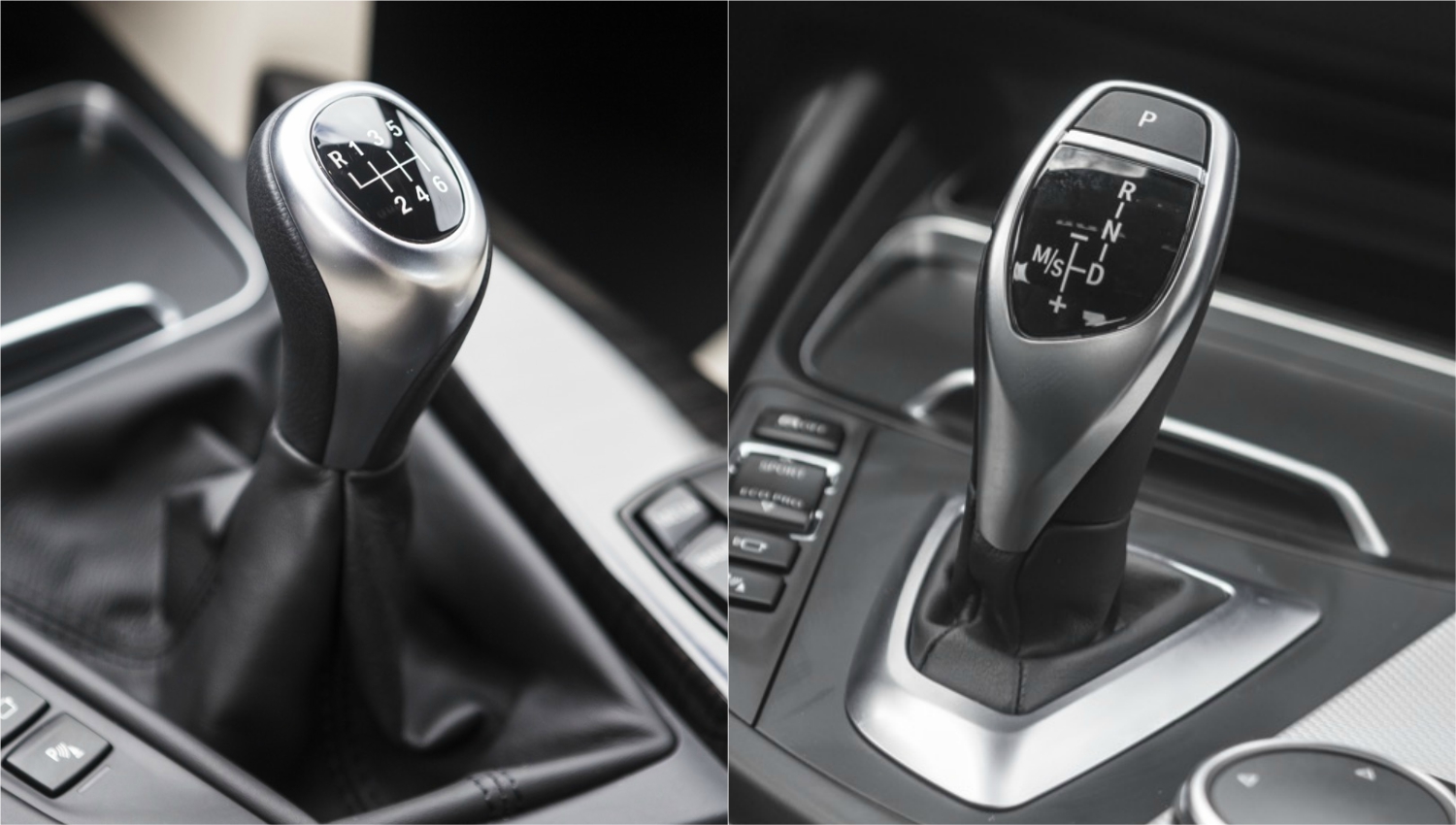
Manual (stick shift) cars require the driver to use a clutch pedal and move the gear lever manually. This gives you precise control over gear selection, engine braking, and acceleration, great for drivers who enjoy a hands‑on experience.

Automatic cars handle gearbox changes electronically; no clutch, fewer pedals, and smoother transitions. They’re popular for a stress-free driving experience, especially in heavy traffic or unfamiliar road environments.

In New Zealand, most rental fleets offer automatics, with manuals limited to smaller economy models, and often at a premium price or require advance request. In Australia, the vast majority of rentals are automatic, while manuals are less common and usually in budget segments.

Which Transmission Is Better?

There’s no one‑size‑fits‑all answer; it comes down to preference and driving context:

  • Comfort and ease: Automatic is clearly superior. No clutch, less multitasking, ideal for navigating left‑hand traffic or urban stops in cities like Auckland or Sydney.
  • Control and engagement: Manual appeals to those who enjoy a more involved driving experience, especially over twisty roads, mountain passes, or rural backcountry.
  • Availability: In both NZ and Australia, automatics dominate rental fleets, manuals are limited and may even cost more than automatics in NZ.

Fuel Efficiency and Cost: Which Saves You More?

Traditionally, manuals deliver better fuel economy: real‑world tests suggest 2–5 % better mileage, and up to 20 % with expert driving. That said, modern automatics, especially CVTs and dual‑clutch variants, now match or even exceed manual efficiency in many cases.

On cost, manual vehicles are generally cheaper to buy, insure, and maintain, thanks to simpler transmission mechanics. Insurance premiums may be lower, too since manuals are less complex. However, rental pricing doesn’t always mirror this: in New Zealand, manual rentals can be more expensive than automatics, likely due to limited supply.

What’s Best for Tourists and First-Time NZ/AU Drivers?

Driving on the left side in NZ and Australia can be tricky if you’re used to right‑hand traffic. Add a manual gearbox (clutch on the left, gear shift in your non‑dominant hand), and the learning curve increases.

Tourists and first‑time drivers in NZ/AU benefit most from automatic rentals:

  • Two pedals only – simpler coordination
  • Easier adaptation to traffic flow and left‑handed signals
  • Reduced cognitive load in cities or unfamiliar terrain

That said, experienced manual drivers or those seeking budget options might still choose manual, if they are confident, travelling lighter, or planning primarily rural drives.

Choosing the Right Rental Car for Your Adventure

Here’s how to decide what’s best based on your travel plans:

  1. Know your driver profile
    • Comfortable with stick shift? Manual is fine. Prefer simplicity or new to left‑side driving? Go automatic.
  2. Consider your route and terrain
    • Urban centres or heavy traffic: automatic helps reduce fatigue.
    • Alpine roads, long scenic cruising: manual offers gear control but comes with more physical effort.
  3. Budget considerations
    • While manuals are cheaper to run and insure, rental prices in NZ can make automatics more cost‑effective if booked in advance.
  4. Book early, especially for automatics
    • Automatics are in highest demand, particularly in peak travel seasons (SUMMER in NZ: Dec–Feb, and winter ski season).
  5. Rental company navigation and tech
    • Modern automatics often come equipped with Apple CarPlay, in-car GPS, or off‑line mapping support, which reduces stress when exploring remote regions.

Conclusion

Your choice between manual vs automatic rental in New Zealand and Australia comes down to weighing control, cost, and comfort. If you’re an experienced driver seeking engagement and potentially better fuel efficiency, a manual could suit you, especially if you’re travelling light and driving mostly rural roads. But for most travellers, especially visitors adjusting to left-side driving, urban stops, or simply wanting a more relaxed experience, automatic is the safer, more accessible, and increasingly fuel‑efficient option.

Planning ahead, especially for autos in peak seasons, is key. And whichever you choose, a well-selected rental will help you enjoy the scenic journeys, from NZ’s fjords and mountain passes to Australia’s coastal highways, with maximum ease and enjoyment.

Frequently Asked Questions

Do manual cars accelerate faster than automatics?

Not inherently – manuals allow faster gear changes in skilled hands, but modern automatics like dual‑clutch transmissions often match or exceed manual acceleration due to optimized shift timing and torque management.

Which type of car lasts longer, manual or automatic?

Manual transmissions are mechanically simpler with fewer moving parts, generally resulting in lower maintenance costs and potentially longer lifespan when properly driven. Automatics are more intricate and thus may require costlier servicing over time.

Is a manual car cheaper to buy than an automatic?

Yes. Manuals are typically less expensive to manufacture, purchase, and insure due to their simpler design. However, that doesn’t always translate to lower rental prices, particularly in NZ, where manual rental cars can sometimes cost more due to availability constraints.

Further reading

For additional insight on leasing and performance upgrades that may interest adventurous travellers or those considering longer‑term rentals, check out this detailed guide on BMW lease deals and another on enhanced M‑performance parts launch packages for the BMW M2 in Australia, both great resources to understand total cost of ownership and performance options:

These add-depth context around vehicle choice beyond just transmission, valuable if you plan to upgrade, extend rental terms, or are curious about premium vehicle considerations.

Whether you favour the hands‑on engagement of a manual or the effortless comfort of an automatic, choosing the right rental car transmission will help your New Zealand and Australian adventures travel smoothly, and make the road part of the joy.

Image Source: here


Source link