9.1 C
London
Monday, May 11, 2026
Home Blog Page 121

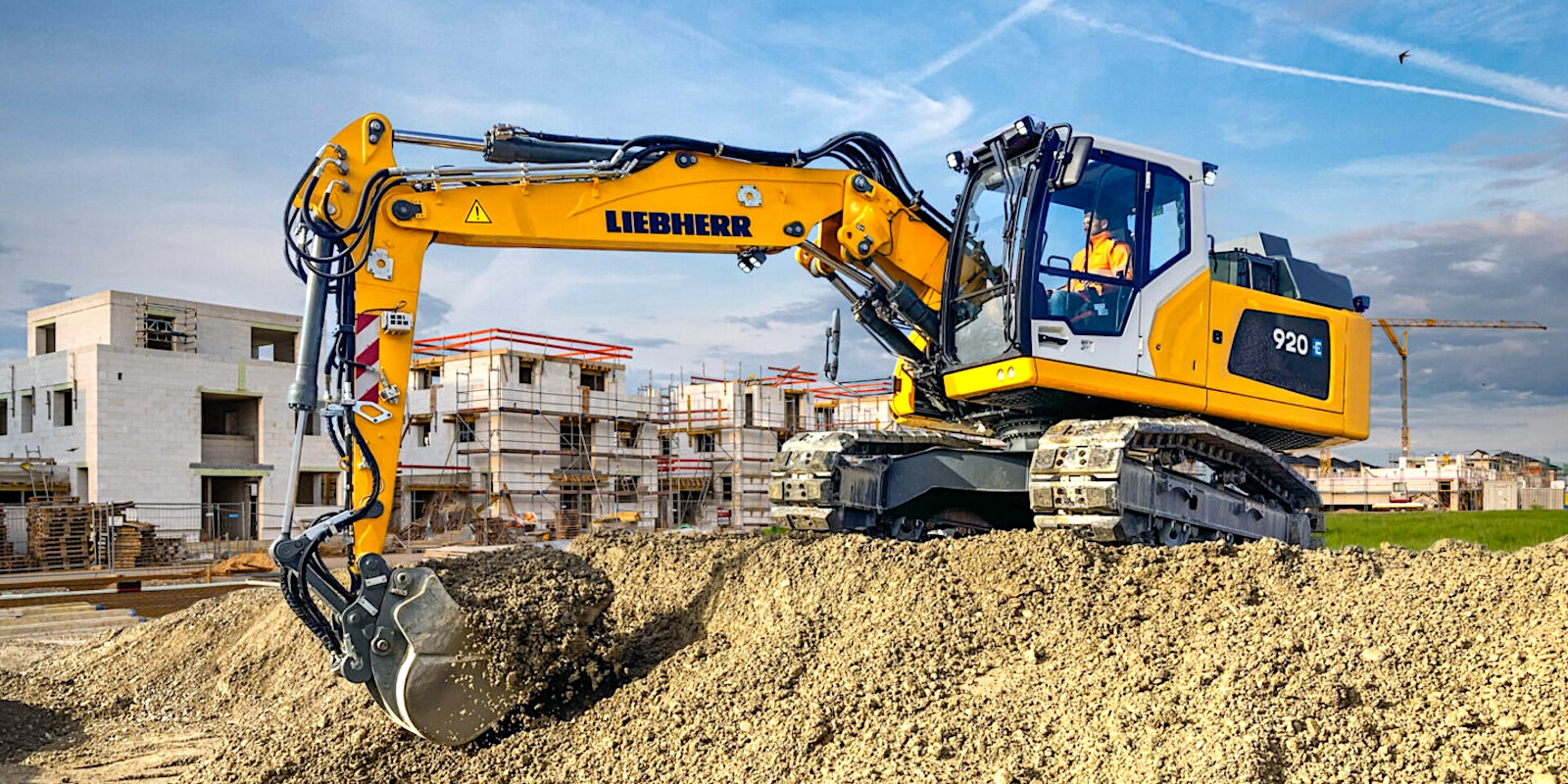
Liebherr R 920 G8-E electric excavator

0
Liebherr R 920 G8-E electric excavator


Global mining and construction equipment giant Liebherr recently rolled out its first-ever battery electric crawler excavator, setting a new standard in heavy earth-moving equipment capabilities with low noise levels and zero local emissions.

Liebherr has made headlines in the sustainability space with its massive electric haul trucks and stupefyingly quick 6MW cryo-cooled DC fast chargers, but its conventional mid-sized equipment lines haven’t electrified as quickly, leaning instead on hydrogen combustion and fuel cell efforts. That seems to be changing, however, with the launch of the 20-ton R 920 G8-E – the brand’s first-ever factory fresh HDEV.

The company’s official copy is characteristically low-key, with an emphasis on the facts and features instead of hype:

The new model completes the product range of Liebherr crawler excavators produced in Colmar (France). It is particularly quiet and emission-free. It generates the same output as a diesel machine in the same category and is particularly suitable for building sites that require low noise levels and avoiding exhaust gas emissions, such as in cities or underground operating locations.

LIEBHERR

Despite the lack of excitement in the release copy, there is a lot of excitement about the R 920 G8-E’s innovative new control cab philosophy.

Advertisement – scroll for more content

Liebherr INTUSI controls


Dubbed INTUSI (for INTuitive USer Interface), the system integrates intelligent control logic with advanced machine learning capabilities to give operators a highly customizable interface that can follow them from asset to asset, from wheel loader to excavator to haul truck, dramatically flattening the learning curve for operators on a given job site.

Liebherr says INTUSI improves both operational efficiency and user comfort on Liebherr job sites through the integration of a number of new features. From the press release:

  • Haptic feedback – vibrations alert the operator to critical conditions—such as reaching dynamic device limits—enhancing situational awareness and speeding up reaction times.
  • Optical feedback – integrated RGB LEDs on the joystick provide real-time visual cues about device status and servo control, ensuring clear communication without distraction.
  • Functional safety – control elements with status LEDs allow safe operation of critical functions—without requiring two-handed input—streamlining workflow while maintaining safety standards.
  • Hand detection – capacitive proximity sensor detects the operator’s hand automatically, enabling seamless activation of controls only when needed.
  • Display navigation – a mini-joystick embedded in the handle allows for quick and efficient navigation of the display interface, reducing the need to reach for external controls.
  • Ergonomics – multi-stage handle height adjustment ensures optimal comfort and usability, adapting to different operator preferences and working conditions

In addition to the INTUSI-powered custom cockpit, the new Liebherr R 920 G8-E electric excavator ships with your choice of either a 188 or 282 kWh high capacity li-ion battery, which is capable of 150 kW DC fast charging. Fast enough, in other words, to power up the machine during shift changes, if needed.

Electrek’s Take


R 920 G8-E electric crawler excavator; via Liebherr.

If the notion of a battery electric Liebherr excavator seems familiar, that’s because it should – the company first converted one of its ultramassive R9400 mining excavators last year, as a proof of concept co-developed with global mining giants Fortescue as they invest in new technology to decarbonize their mines.

Since then, Fortescue has used the machine to move millions of tons of dirt, and has ordered several more. And, because everything from excavators to loaders to heavy trucks are built to be powertrain agnostic, and manufacturers will often offer the same basic vehicle with Cummins, Detroit Diesel, or Volvo power, so there’s a degree of openness baked into those systems already. Liebherr is just taking that to the next level by installing an electric drive motor in place of an internal combustion engine, and I expect this excavator will be the first of many such machines from the brand.

SOURCE | IMAGES: Liebherr.


If you’re considering going solar, it’s always a good idea to get quotes from a few installers. To make sure you find a trusted, reliable solar installer near you that offers competitive pricing, check out EnergySage, a free service that makes it easy for you to go solar. It has hundreds of pre-vetted solar installers competing for your business, ensuring you get high-quality solutions and save 20-30% compared to going it alone. Plus, it’s free to use, and you won’t get sales calls until you select an installer and share your phone number with them. 

Your personalized solar quotes are easy to compare online and you’ll get access to unbiased Energy Advisors to help you every step of the way. Get started here.

FTC: We use income earning auto affiliate links. More.


Source link

African cars.: (England/ French) Africar update

0
African cars.: (England/ French) Africar update


The Africar  today shown in these images above is one of three existing examples, this one is owned by Boudewijn Poelmann . To answer the question of how Boudewijn came into possession of the Africar, we have to go back in time, to the period in which the designer and developer Anthony Howarth showed the Africar to the world.

In 1983, Boudewijn worked as a marketing coordinator at Novib an Non-profit Organization affliated with Oxfam, where he was involved in fundraising and publishing stories. He was tipped off by a friend, who at the time was working as an editor at a TV station on a program that featured Anthony Howarth’s project the ‘Africar’. When Boudewijn and Anthony met, there was an immediate click. Boudewijn had been to Africa many times during his work for Novib. His experiences with the circumstances there made him know immediately that Anthony was working on ‘a brilliant idea’. During the journey from the Arctic Circle to the equator, the convoy of Africar’s also visited Amsterdam. As a publicity stunt, the cars drove down the steps of the Tropen museum: an idea hatched by Boudewijn.

The Africar’s introduction stunt was a success. Not only did people indicate that they wanted to buy an Africar, they were prepared to pay a deposit for it. In the Netherlands, a potential importer came forward, the main dealer of Citroën in the Netherlands. A number of commercial parties and charities indicated there interest in the Africar, like Natuurmonumenten and the Red Cross. The market was there, all that was needed was production, Boudewijn recalls. 

However, Anthony was not concerned with marketing, but with technical matters, such as developing a drive train. The money that was intended as a deposit for cars to be delivered went into research and  development. Apart from the three previously produced ‘Proofs of Concept’, an Africar for full production was never built. All these troubles lead to the bankruptcy of the company behind the Africar in 1988, and the liquidation of the estate. What exactly happened to the three cars from the Arctic Circle-Equator trip is not entirely clear. In any case, the fact is that at the time of the bankruptcy the ‘pickup’ Africar was in the Netherlands. 

In France, the other cars were used regularly. Anthony continued to tinker with the vehicles. The pickup truck that is now in the Netherlands was converted to a left hand drive vehicle and completely restored. Boudewijn and Anthony remained in touch with each other.  The Africar remains relevant as a sustainable solution emboding the full potential of social impact for mobility in Africa.

Courtesy of

www.citroen-forum.nl


Source link

Charged EVs | Webinar: Leveraging Vector and CSM measurement technology throughout EV development

0
Charged EVs | Webinar: Leveraging Vector and CSM measurement technology throughout EV development


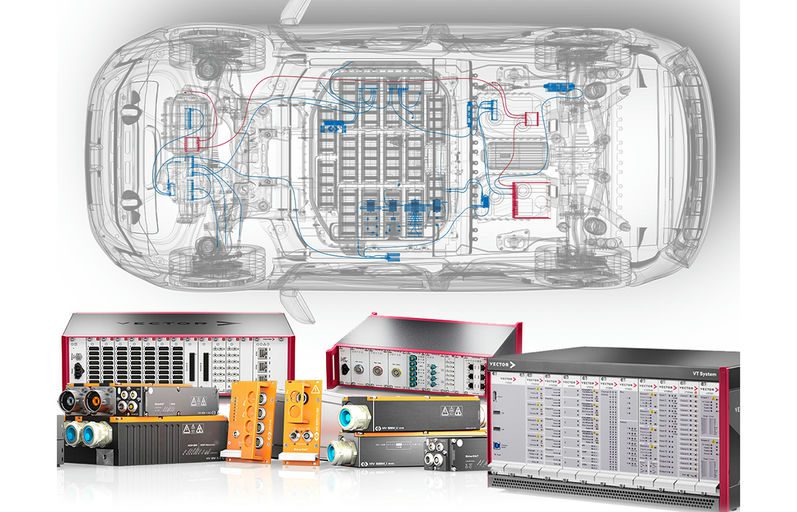
Join this webinar at our September Virtual Conference on EV Engineering, presented by CSM, where we will introduce the various measurement technologies available from Vector and CSM, and discuss when to use which tools for your software testing, ECU development, calibration and validation tasks.

Join us to learn about systems like VT, VX, VIO and CSM’s ruggedized measurement modules—what each is for, and even how to use them together.

September 17, 2025, 11:45 am EDT
Register now—it’s free!


See the complete session list for the Virtual Conference on EV Engineering here.

Broadcast live from September 15 to 18, 2025, the conference content will encompass the entire EV engineering supply chain and ecosystem, including motor and power electronics design and manufacturing, cell development, battery systems, testing, powertrains, thermal management, circuit protection, wire and cable, EMI/EMC and more.


Source link

Maximilian Missoni on Polestar Cars’ Design Ethos

0
Maximilian Missoni on Polestar Cars’ Design Ethos


Maximilian Missoni has been head of design for Polestar Cars since 2018. After joining Volvo Cars 2012 and subsequently being promoted to VP of exterior design in 2014, it was a natural progression for Missoni to become Polestar’s design director following Thomas Ingenlath’s appointment as CEO of the premium electric vehicle brand.

In this candid FORCMAST interview, Missoni speaks with Eric Gallina about his career path — from the early days of discovering design, his time as a student at the RCA and his first job at Volkswagen — as well as his time at Volvo and Polestar’s design ethos and its future design direction. He also provides some guidance to designers navigating through this changing automotive landscape

LISTEN

WATCH

Subscribe to the new FORMCAST YouTube Channel

SHOW NOTES

00:00 – Intro
01:00 – Max Background and Starting Out
10:00 – RCA Projects
12:40 – Working at Volkswagen
16:00 – Frustration and Resilience
20:00 – Joining Volvo
26:45 – Starting Polestar
33:00 – What Makes Polestar Different
38:40 – The Role of the Designer
42:00 – Polestar Design Competition
50:00 – Why the Competition?
54:00 – Breaking into Design
01:00:00 – Future of Design (Changing Business Model)
01:10:00 – Personal Hobbies
01:15:00 – Electric Emotions
01:25:00 – Management Style
01:30:00 – Advice to Designers

See also