Editor’s Note: This is a special week here at AE, as we’re sharing Peter’s top-secret interview with industry icon Al Cantara. In On The Table, Peter offers up another installment of “Farley’s Follies.” Chevrolet has unveiled its new Corvette Grand Sport for 2027, and we take another look at the bold, fully-electric BMW 3 Series “Neue Klasse.” And we have another historic racing video to share. This week, it’s the 1968 Daytona 24 Hours. Our AE Song of the Week is “Shiny Happy People” by R.E.M. In Fumes, Peter presents the next chapter of his series, “The Great Races” focusing on the 1964 Road America 500, in Elkhart Lake, Wisconsin. And in The Line, we have F1 results from Suzuka, Japan, INDYCAR from Barber Motorsports Park in Birmingham, Alabama, and MotoGP from the Circuit of The Americas, in Austin, Texas. Onward! -WG
By Peter M. De Lorenzo
Editor’s Note: Peter has been trying to get this interview for years, and with the recent national political chaos, the window of opportunity to get this “get” with the reclusive Mr. Cantara finally presented itself. This Zoom interview was conducted in secrecy from an undisclosed location. -WG
Detroit. As anyone in the automobile industry knows, “Alcantara” is the brand name given to a commonly used synthetic textile material that’s known for its soft, suede-like microfiber pile. Famous for its durability, Alcantara is often used in automotive applications – especially in high-performance luxury automobiles – as a substitute for leather and vinyl, but it also has applications in the design, fashion, consumer electronics and marine and aviation industries.
Some versions are even designated as flame retardant in order to meet certain fire standards for both furnishings and automotive applications, including seats made for F1 racing cars.
As the “official” story goes, Alcantara was developed in the early 70s by Miyoshi Okamoto, a scientist working for the Japanese chemical company Toray Industries. It was based on the same technology as another product from the same company named Ultrasuede. Shortly after, a joint venture between Italian chemical company ENI and Toray formed Alcantara SpA in order to manufacture and distribute the material. That company is now owned by Toray and Mitsui.
According to Wikipedia, Alcantara is “produced by combining an advanced spinning process (producing very low denier bicomponent ‘islands-in-the-sea fiber’) and chemical and textile production processes (needle punching, buffing, impregnation, extraction, finishing, dyeing, etc.), which interact with each other.”
Again, this is the “official,” well-documented description of how Alcantara came to be, but I often suspected that there was more to this story. Much more. And as it turns out, I was right.
I stumbled upon the “Alcantara” story through my dealings with Mr. James “Jimmy” Fu, (now 78), and Mr. S.L. “Sonny” King, (now 76). As longtime AE readers may recall, the two figures had operated in the shadows of the burgeoning Chinese industrial machine for years. Mr. Fu started manufacturing model cars in the late 70s, and it has now been confirmed that he controls every toy making concern in China through a labyrinthian network of mom-and-pop factories and several other large conglomerates that he lords over. Mr. King became partners with Mr. Fu after initially supplying the elaborate wheels and carefully detailed tires on Mr. Fu’s model cars. The two have been partners for going on more than five decades now.
I first got to know Mr. Fu and Mr. King after they approached me at the Los Angeles Auto Show one year. Apparently, they had stumbled upon Autoextremist.com after they first became familiar with the Internet, and they regaled me with the fact that they both learned English by having my ‘Rants’ columns translated for them. When I first met them, it turned into an uproarious encounter as they blurted out some of my patented phrases that they had learned phonetically, like ‘notgonnahappen.com’, ‘halle-frickin’-luja,’ and ‘the Answer to the Question that Absolutely No One is Asking.’
Mr. Fu and Mr. King have remained in close contact with me ever since. In fact, I was still working with them on their latest projects at Fu-King Motors, which included a six-wheeled, all-electric, giant SUV (Jimmy has code-named the project ‘Godzilla’), a high-performance, hydrogen fuel cell-powered supercar (Sonny says that it will be ‘better than McLaren for 1/3 the price!’) and an all-electric semitruck that looked eerily like the Bison advanced long-haul trucking concept that GM Styling created for the 1964 World’s Fair. All of those projects have since come to a screeching halt, as the financial realities of the current political-economic scene have decisively crushed Jimmy and Sonny’s automotive dreams.
(GM)
The GM Bison truck concept shown at the 1964 World’s Fair in New York.
As I’ve gotten to know Jimmy and Sonny, their frenetic pace and boundless energy never cease to amaze me. The calls I receive at 3:00 p.m. my time are usually booze-filled stream-of-consciousness skype rants by Jimmy with Sonny yelling things over his shoulder, accompanied by stylish model types dancing to disco music in the background at their secretive Shanghai lair. And their appetites are even more boundless. In fact, Jimmy is still fond of aspiring female pop stars, while Jimmy is a very generous sponsor of a female gymnastic academy. Fast American muscle cars are overflowing in their underground garage, which is an enthusiasts’ cornucopia of greatest hits, which now include two Corvette ZR1s; two original “narrow-hipped” 427 street Cobras, matching number ‘68 L88/FIA-style Corvettes and a couple of specially-built 1200HP Willys Gasser replicas from the 60s (one in Purple, one in Black), reserved for terrorizing the neighbors in the middle of the night). Michter’s 25-Year Bourbon (2023 release) is now their drink of choice, and in a nod to belt tightening, they traded-in their twin Gulfstream G650s (Jimmy’s was Jet Black; Sonny’s was Chaparral White) for one spectacular Gulfstream G700 in Midnight Blue and White.
Despite all of this flamboyance, Mr. Fu and Mr. King nonetheless pride themselves on avoiding the limelight. And over the years I’ve seen an introspective side to them too. In fact, it was one of those introspective nights – albeit after two bottles of bourbon were consumed between the three of us – that the real story of Al Cantara was revealed.
It turns out that one day back in 1971, a young salesman by the name of Al Cantara was granted an appointment with Jimmy and Sonny in their 30’ x 30’ office (they sit on opposite sides of a giant, Pentagon-shaped desk and yell over the phone and at each other all day long). The man got the invite by promising Sonny that he had a “breakthrough” fabric design that would be perfect to line the specially-built cases for their most expensive models. When the man arrived, it was clear that he was very young. In fact, he was a fresh, high school graduate from Sherman Oaks, California. Jimmy told me that night that “after fifteen minutes of this kid showing us his stuff, Sonny and I looked at each other and yelled ‘Deal!’ at the same time.”
The problem, Jimmy, said, slurring his words, is that the kid didn’t have a clue as to how to ramp up to make a quantity of the stuff, so, “We helped him!” Sonny and Jimmy said in unison, which they often do. “We loved his mouse fur!” From then on, Al – with Jimmy and Sonny’s support and tutelage – became known as the father of an invented fabric that achieved recognition far and wide literally overnight. It was then that Jimmy and Sonny made Al a deal that would make him a very rich man. The problem was that when Al signed the deal, even though he got 20 percent of everything in perpetuity, he also signed over all rights to the fabric, which would be named, in tribute to him “Alcantara.”
You know where this is going, of course. Al became disenchanted with the constant grind of partying and the yelling – always the yelling – and went back to the U.S., never to be seen again. Jimmy and Sonny say that they continued to make deal after deal for the fabric, and that Al gets electronic direct deposits in the multi-millions every year, which are sent to a bank in the Cayman Islands.
But I digress. I have been enchanted and intrigued with this story ever since, and part of my deal with Fu-King Motors is that Jimmy and Sonny would help me track down “Al Cantara.”
And so, here we are.
After a series of unanswered emails, cryptic texts, and four years of delaying, denying, endless obfuscation, and much pleading – I suspect Jimmy and Sonny sent him a special “gift” – Al Cantara finally agreed to sit down to a Zoom interview from an undisclosed location.
When the video first came up, I could see that Al wasn’t going to fully reveal himself to me, so though I had to peer through the darkness and occasional revealing shards of light, I got a picture of a burly guy with a full beard and longish hair, sort of like Francis Ford Coppola, circa 1980.
I can’t say that he was all that cordial, but he seemed to warm up a little as time wore on.
Autoextremist: Thank you for doing this Mr. Cantara; I know you were very reluctant to talk to me…
Al Cantara: Yeah, whatever; I decided it was time to clear the air a little.
AE: Your story has fascinated me for a long time now. And when Jimmy and Sonny told me how it all came about, I was even more intrigued. Did you really develop your fabric in your parent’s garage?
AC: I did. I was a real nerd in high school, but I was really interested in chemistry and physics. My girlfriend was a real nerd, too, and she was lamenting the fact that she had to get some sort of dress to wear to our senior prom. I, for some reason, had been trying to invent a sweat band for the tennis team, which I was on. And after months of experimentation, I came up with this fabric that was unlike anything I had ever seen anywhere else. But I also thought I was just a kid with warped dreams, and I didn’t really think much of it beyond that. But my girlfriend loved it enough, and we found a seamstress who turned it into a pretty attractive dress.
AE: Where is that girlfriend now, do you know?
AC: Last I heard she was a bigwig at Microsoft, but we lost touch with each other a long time ago.
AE: What possessed you to go to China and cold-call Jimmy and Sonny?
AC: I was a pretty accomplished model car builder in high school, and I developed a pretty good business selling my completed models. People were paying serious dollars for my work, and by the time I went to Stanford I had $50,000 in the bank. I had researched all of the manufacturers of model kits, but the one frustration for me is that I had to build special crates for my models so they could be shipped and delivered. That’s when I started experimenting with finding a fabric that I could line my model crates with. It was during this time that I discovered Fu-King Industries, and I just felt compelled to go meet those guys.
AE: What was it like when you first met them?
AC: Man, it was frickin’ wild. I mean I was barely eighteen and these guys were like aliens from a different planet. I remember that they had a very young – and hot – translator there and she could barely keep up with their yelling, but we established a rapport pretty quickly. I guess they appreciated the balls it took for me to get myself to China and track them down.
AE: It must have been a heady time.
AC: It was flat-out crazy town. Those guys have hearts of gold, but the frenetic pace was stupefying. But I learned so much from them. It was the best time of my life.
AE: Yet, you had a falling out?
AC: Not initially. I mean the deal I signed was for $2 million – in cash – plus 20 percent of everything after that. I thought they were crazy to pay me that much, because how many model boxes could they sell? But what they did after that with “Alcantara” is just amazing. If anything, I was just mad at myself for not having the vision that they did. I’ve mellowed quite a bit, which is why I decided to do this interview. I mean Jimmy and Sonny have made me a very rich man, and in retrospect, it’s hard to be mad at them. In fact, because of your persistence, we’ve resumed communicating, and I must say the late-night drinking – and yelling sessions – are something I now very much look forward to.
AE: So, I have to ask, do you have anything with “Alcantara” in it, by any chance?
AC: As a matter of fact, I do. I have a 2019 Porsche 911 GT3 RS in Purple – in honor of the boys – and every time I grip that “Alcantara” steering wheel I get “as hard as a diamond in an ice storm” as Ricky Bobby once famously said.
AE: Well, on that note, I am glad things have come full circle for you, and I am glad you’ve gotten reacquainted with Jimmy and Sonny. They’re worth staying in touch with. And thank you again for agreeing to do this interview. I’m sure our readers will appreciate the rest of the story.
AC: Thank you for being persistent. I am in a much better place now and you’re responsible for that. So, stay safe over there and be well in these difficult times.
And that’s the High-Octane Truth for this first day of April.
Editor’s Note: Click on “Next 1 Entries” at the bottom of this page to see previous issues. – WG
BUDGET-FRIENDLY travel trailers make a ton of sense for first-time RV owners. They provide an affordable way to explore RV camping, user-friendly systems that make it easier to set up and break down camp, and many of the best travel trailers under $20,000 can be towed by a wider range of vehicles. Plus, travel trailer depreciation is typically lower than that of other affordable RVs.
So, let’s dive into the best inexpensive travel trailers under $20,000.
Key Takeaways
Budget-Friendly Entry Point: Travel trailers under $20,000 offer an affordable way for first-time buyers to enter the RV market. They have lower depreciation and are ideal for first-time owners, featuring lightweight builds that can be towed by many standard SUVs and user-friendly systems that take the “scary” out of setup.
A Layout for Every Lifestyle: Whether you’re a solo traveler looking for a garageable off-road teardrop or a large family needing a bunkhouse that sleeps 10, there is a specialized floor plan available for under $20,000.
High-Value Construction: Budget-friendly doesn’t mean “cheaply made”; many of these models include premium features like on-demand tankless water heaters, solar power prep, and walkable roof systems with long-term warranties.
Picks for the Best Travel Trailers Under $20,000
These inexpensive, small travel trailers offer layouts to suit small and large families, couples, solo travelers, and even those who need to store their RV in a residential garage. While many of these lineups are extensive, ranging from ultra-compact, affordable floor plans to larger, feature-packed layouts, our focus today is solely on the models under $20,000.
*Specs below are only for models in these lineups that start under $20,000.
Keystone Coleman & Coleman Light
Coleman Specs
Subscribe to the Camping World YouTube channel, and never miss a video.
Length: 15’11” to 27’6”
Hitch Weight: 352 to 528 pounds
Dry Weight: 2,506 to 4,519 pounds
Cargo Capacity: 994 to 1,981 pounds
Sleeping Capacity: 2-6
Coleman Light Specs
Subscribe to the Camping World YouTube channel, and never miss a video.
Length: 20’2” to 20’5”
Hitch Weight: 300 to 325 pounds
Dry Weight: 2,695 to 2,771 pounds
Cargo Capacity: 1,229 to 1,305 pounds
Sleeping Capacity: 3-5
Keystone offers some of the lightest and most affordable travel trailers in the Coleman and Coleman Light lines. While the interiors are minimal, the amenities are not. Smart features like a high-rise faucet, a glass stove cover, and dedicated trash-can storage make even the smallest trailers seem large and livable.
Construction is the primary distinction between the Coleman and Coleman Light models. The Coleman models feature aluminum siding and a walkable roof, while the Coleman Light features aluminum framing, a front cap, and fiberglass sidewalls. The Light models also feature upgrades such as a black tank flush and an entry-assist door handle.
Whether you choose a Coleman or a Coleman Light, you can be ensured you will have a well-equipped travel trailer. All come standard with tinted safety glass windows, blackout night shades, and power awnings to provide extra protection from the elements. Simply select the Furrion® backup camera of your choice, and the pre-wiring makes installation easy.
Starting under $20,000, the Coleman 13R, 17R, and 19R are perfect couples’ campers, with some floorplans offering fold-down dinettes for additional sleeping space for kids or guests.
Families seeking dedicated bunks should explore the 13B, 13S, 17B, and, amazingly, even the nearly 28-foot 23B can often be purchased for under $20K, offering a dinette, sofa, and double-over-double bunks.
In the Coleman Light lineup, the 17RX and 17BX offer the same layouts as the standard 17R and 17B, but in a lighter package
Finally, the new Coleman 13T is something I’ve never seen before: a hybrid toy hauler with a pop-out tent bed, fold-down Murphy bed, and large rear-entry ramp for loading bikes and gear–all in a 16-foot trailer weighing less than 3,000 pounds.
Jayco Jay Flight SLX & SLX Sport
Standard SLX Specs
Subscribe to the Camping World YouTube channel, and never miss a video.
Length: 21’7” to 29’5”
Hitch Weight: 305 to 635 pounds
Dry Weight: 3,395 to 4,745 pounds
Cargo Capacity: 1,260 to 1,7555 pounds
Sleeping Capacity: 4-10
SLX Sport Specs
Subscribe to the Camping World YouTube channel, and never miss a video.
Length: 16’1” to 23’7”
Hitch Weight: 220 to 495 pounds
Dry Weight: 2,500 to 3,705 pounds
Cargo Capacity: 725 to 1,095 pounds
Sleeping Capacity: 2-8
Jayco’s Jay Flight SLX and SLX Sport lineups offer a number of RVs under $20,000 with impressive construction inside and out, with solid hardwood cabinets and a Magnum Truss™ roof system topped by a seamless PVC roofing membrane with a limited lifetime warranty. Because of this, Jayco campers have a reputation for being among the best used travel trailers. My first camper was a Jay Flight SLX, and we have never regretted that decision.
With the SLX models, you get additional features, like MORryde® StepAbove® steps, Keyed-Alike™ doors, an entry grab handle, a more robust tankless water heater, backup camera prep, and more. The 160LK, 175FQ, and 210QB are entry-level SLX models that sleep up to four, while the 175BH, 197MB, and 260BH offer additional bunks or convertible beds for larger families.
The SLX Sport Edition models help you save on both weight and cost. Despite the savings, you’ll still find desirable features, including a power awning, solid hardwood cabinet doors, a detachable power cord, large-capacity tanks, and an on-demand tankless water heater.
Is it possible to sleep a family of four and have an enclosed bathroom and kitchen in a 16-foot trailer? Jayco delivers on this challenge with the new SLX Sport 130BH. Larger bunkhouses are also available, including the 170BH, 172DB, and 178DBS. For couples or small families, check out the 130RD, 140TB, and 170FQ to find the layout that’s just right for you.
Forest River Salem FSX & Wildwood FSX
Subscribe to the Camping World YouTube channel, and never miss a video.
Specs
Length: 16’ to 21’8”
Hitch Weight: 365 to 535 pounds
Dry Weight: 2,504 to 4,299 pounds
Cargo Capacity: 706 to 1,441 pounds
Sleeping Capacity: 3-7
The Forest River Salem FSX and Wildwood FSX are sister lines offering many inexpensive, small trailers with identical floor plans and amenities, with minor distinctions in exterior graphics and interior decor.
As someone who regularly researches RV floor plans, I’m continually impressed by Forest River’s innovation. The company creates many unique layouts, offering a variety of interesting options. While traveling, I often miss my recliner, so I was thrilled to see the 163RDSK and 164RBLE offer theater seats and queen beds, making them great for couples.
For a layout with more bedroom privacy, check out the 161QK, which separates the bedroom and living space with a pass through bathroom. A fold-down dinette expands the sleep options. The 169RSK is perfect for couples who want additional bedroom floor space, with a queen bed in a slide-out.
Other desirable amenities include the nimbleness of the 16-foot 135ICE; the convertible Murphy bed in the 167RBK; and the new lounge/dinette in the 164FBLE. For families, the 174DBLE is an excellent option with double-over-double bunks.
While amenities vary, you will find features like pass through storage, high-rise kitchen faucets, on-demand water heaters, and large panoramic windows across these budget-friendly RV lineups. Both also offer a Platinum Package with laminated sidewalls.
Grand Design Transcend One
Image by Camping World
Specs
Length: 15’10” to 19
Hitch Weight: 364 to 490 pounds
Dry Weight: 2,950 to 3,600 pounds
Cargo Capacity: 820 to 1,470 pounds
Sleeping Capacity: 2-5
Grand Design describes the Transcend One line as “compact road freedom.” While compact, these nimble units offer impressive construction and exceptional amenities. Grand Design uses upgraded insulation, provides a heated and enclosed underbelly, and offers a TPO roof membrane with a limited lifetime warranty.
Other thoughtful features include a walkable roof, pull-out pet dishes, oversized tanks, JBL sound systems, and motion sensor lights. These trailers also come prepped for a solar controller, inverter, and panels, making it easy to add the system of your choice.
A Murphy bed is one of the best ways to make a small trailer feel larger. The 16-foot 131DL offers a queen-size mattress that tucks away and converts to a couch. The 151RB is another Murphy bed model that is great for couples, featuring a dinette and a rear bathroom. The convertible dinette adds another sleeping spot.
If you’d like to sleep five in a 20-foot trailer, check out the 151BH, which offers a front queen bed, a pair of bunks, and a convertible jack-knife sofa. The lack of a dinette is no problem, thanks to the interior-exterior folding table.
Keystone Hideout Sport & Mini
Image by Camping World
Specs
Length: 15’11” to 22’10”
Hitch Weight: 340 to 565 pounds
Dry Weight: 2,620 to 4,029 pounds
Cargo Capacity: 865 to 1,330 pounds
Sleeping Capacity: 2-6
Is Hideout the king of inexpensive travel trailers? With several floor plans under $20,000, you can find a Hideout Sport or Hideout Mini trailer that checks your boxes. Do you want a bunkhouse or couples coach, breakfast bar or dinette, walkaround or corner queen, slide or no slide? This lineup has traditional and creative layouts.
No matter which layout appeals to you, these Keystone RVs feature standard amenities, including durable Tru-Fit™ Slide construction, a tankless water heater, solid hardwood cabinet doors, and solar power prep. Keystone’s 3-year structural warranty adds peace of mind.
Even though they’re ultralight RVs, models like the 120BT and 123BB offer a full bed paired with either a breakfast bar or bunks. The 161BH, 175BH, and 176BH are great for families, with bunks, a queen bed, and a dinette.
Couples may like a rear bath layout. The smaller 166RB has no slide, while the larger 179RB does. If you would like a U-dinette, the 177RD has one. The large slide on the 186SS expands both the floor space and sleeping capabilities, with a fold-out booth dinette and sofa allowing it to sleep up to six.
Compare similar floor plans in the Springdale and Springdale Mini lineups.
Forest River Wolf Pup
Subscribe to the Camping World YouTube channel, and never miss a video.
Specs
Length: 12’5” to 21’10”
Hitch Weight: 320 to 475 pounds
Dry Weight: 1,944 to 3,619 pounds
Cargo Capacity: 861 to 2,161 pounds
Sleeping Capacity: 2-5
With many lightweight, easy-to-tow units starting under $20K, the Wolf Pup is a great choice for new RVers. You’ll find models equipped with a power awning, an 8K BTU air conditioner, quick-drop stabilizer jacks, and a one-piece decked roof. Upgrade to the Adventure Package to add off-road tires, diamond-plated skirting, and a lifted frame. Several floor plans have a rear access door, making it easy to load bikes and other camping gear.
If you’re looking for the smallest self-contained camper that you can stand up in, check out the 12-foot 9CELP, which features a queen bed, full bathroom, and kitchen. Solo travelers and couples may also like the 14RKLP, which has more floor space and a couch. The 14CCW and 16FQW offer fold-out dinettes for an additional sleeping spot.
Families can find bunkhouse models towable by SUVs or lightweight trucks, like the 14BHLP, which has a dry weight under 3,000 pounds. For more space and amenities, consider the identical 16BHSW or 16LP floor plans, with the 16BHSW featuring upgrades such as a larger two-door refrigerator, a flush-mount sink with cover, and a MORryde® stable step.
Jayco Jay Feather Air SL
Image by Camping World
Specs
Length: 17’6” to 21’3”
Hitch Weight: 230 to 250 pounds
Dry Weight: 2,615 to 2,885 pounds
Cargo Capacity: 865 to 885 pounds
Sleeping Capacity: 2-6
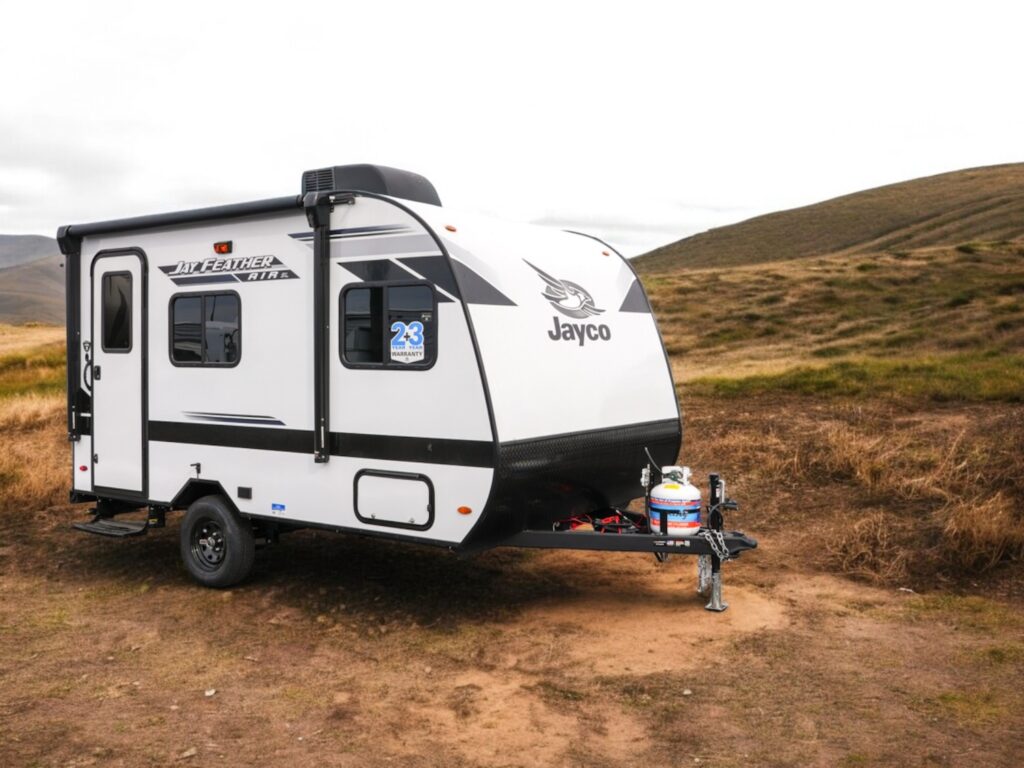
Added in 2026, the Jay Feather Air SL is Jayco’s newest lightweight, budget-friendly lineup. Despite the price tag, these units offer the same respected construction Jayco is known for, including the durable Magnum Truss™ roof system topped by a PVC membrane with a lifetime warranty. Plus, they’re easy to outfit with upgrades, since they’re prepped for solar power, slide toppers, and a backup camera.
Currently, the Jay Feather Air SL lineup features two layouts. The 15TBSL offers a unique layout I haven’t seen elsewhere, with a pair of 32” x 74” front twin beds that can convert into either a king bed or a dinette. Built for families, the 17BHSL offers a front queen bed, a pair of bunks, and a convertible dinette.
Both feature vinyl flooring throughout, a shower surround, solid wood cabinets, and a power awning. Other impressive features include an on-demand tankless water heater and the optional 200-watt solar package.
Bontrager Outdoors Drifter 10ROK
Subscribe to the Camping World YouTube channel, and never miss a video.
Specs
Length: 13’2”
Hitch Weight: 140 pounds
Dry Weight: 1,700 pounds
Cargo Capacity: 1,440 pounds
Sleeping Capacity: Up to 2
Perhaps you’re ready to bring some adventure into your life. The Drifter 10ROK is an ultra-compact teardrop trailer built to go off-road and off the grid. It may be the best off-road camper trailer under $20000. Plus, it is a rare model that can be parked in most residential garages, allowing you extra security or compliance with HOA standards.
Equipped with a wall-to-wall mattress, it sleeps two. Despite being a mere 13 feet long, it offers an exterior kitchenette with a microwave, a slide-out Blackstone® Griddle, and a 12V refrigerator with a 26-gallon fresh water tank and 12V pump.
The 10ROK can go off the beaten path thanks to its all-terrain tires, high ground clearance, and Torsion-Flex® 3,000-pound independent suspension axle. When you’re far from campground conveniences, you’ll appreciate the portable toilet and outdoor shower.
A power-coated platform holds two batteries, a generator, and a propane tank to supply the energy for the Truma Combi® heater/water heater, the three-speed roof vent, and the 13,500 BTU air conditioner. The 10ROK comes prepped for solar, providing another optional energy source.
Honorable Mentions
Explore the following floor plans for new and used campers under $20K:
What Is the Cheapest Month to Buy a Camper?
Late fall and early winter are often the cheapest times to buy a new RV, with many discounted new RVs and upgraded used RVs under 20k. Dealers are ready to move the prior-year models to make room for the newly released units.
Plus, many RVers are wrapping up their camping season and preparing to winterize, making them less likely to buy new rigs. Used RVs may also hit the market as people sell before storing their RVs for the winter.
Can I Buy an RV for $10K?
You can buy new and used RVs for under $10K, including models like the fully enclosed Keystone Coleman 13B and several pop up campers. Larger travel trailers and those outfitted with upgraded amenities are also available on the used market.
If nothing on this list of the best travel trailers under $20000 catches your attention, here are a few other collections of featured travel trailers:
Which would you select for your next (or first!) travel trailer? Let us know in the comments below.
Kerri Cox is a teacher and freelance writer. After hating the outdoors for much of her life, an RV trip with her in-laws to Colorado changed Kerri’s life. She soon bought an RV for cross-country family trips. Her sons are now grown, so she and her husband have entered the next stage of their journey as empty nesters. She especially loves to visit mountains and national parks.
Off-the-shelf controllers with safety certifications are giving e-mobility engineers a false sense of security.
An off-the-shelf BMS with a third-party functional safety certification sounds like a solved problem. SIL-rated, ASIL-rated, ready to drop into your e-mobility battery pack. But according to Rich Byczek, Global Chief Engineer for Batteries at Intertek, that certification probably doesn’t cover what you think it covers.
“Certified BMS systems, meaning certified systems that have functional safety certifications from a third party, don’t necessarily address these functions,” Byczek told Charged during a recent webinar (now available to watch on demand). “They just look at the controller as a more generic electrical system.”
The problem: most certifications evaluate the controller hardware against a general integrity standard (IEC 61508, ISO 26262 or ISO 13849). They verify that the electronics are reliable. They don’t verify that the controller monitors individual cell voltages, manages cell-level temperature limits or handles the specific failure modes of lithium-ion chemistry.
Fuses don’t protect at the cell level
The gap is sharpest with passive protection. A pack-level fuse can interrupt a gross overcurrent event, but it’s blind to an individual cell in a series string being driven past its voltage limits. That requires active, per-cell monitoring, and a generic certified controller may not have the inputs and outputs to deliver it.
For e-mobility systems specifically, Byczek stressed that the failure modes and effects analysis (FMEA) must evaluate overvoltage, undervoltage, overcharge, overdischarge, over- and under-temperature, short circuit and excessive current, all at the cell level. “We look at those at the cell level, not only at the macro or battery pack level,” he said.
This is a different world from portable devices, where legacy standards like IEC 62133 rely on type tests and single-fault evaluations. Those standards were designed for products a user could set down and walk away from.
E-mobility doesn’t work that way. “You’re literally riding on top of that battery, potentially going at a fairly high speed,” said Byczek. “You can’t just get away from it.”
Start with the FMEA, not the certificate
The fix isn’t complicated, but it does require work. Start with an FMEA that covers every safety-critical function your BMS must perform, at the cell level. Then verify that your controller (certified or not) actually has the architecture to deliver each one. A certified controller is a starting point, not a finish line.
The standards themselves can be mixed and matched. SIL, ASIL and Performance Levels don’t map one-to-one, but regulators accept cross-framework approaches as long as your risk assessment demonstrably covers every identified hazard. For BMS systems, you’re typically targeting SIL 2, ASIL B or PLc, but the specific level matters less than proving your system can fail safely when a sensor drifts, a resistor opens or a communication link drops.
For teams pivoting from automotive EV programs into adjacent markets like forklifts, floor scrubbers and personal mobility devices, this is the adjustment that matters most. The batteries may be smaller, but the safety obligations are not.
Watch the full webinar: Rich Byczek’s complete presentation on applying functional safety to e-mobility battery systems is available on demand.
The Koenigsegg Gemera has finally entered production 6 years after it was first revealed to the public.
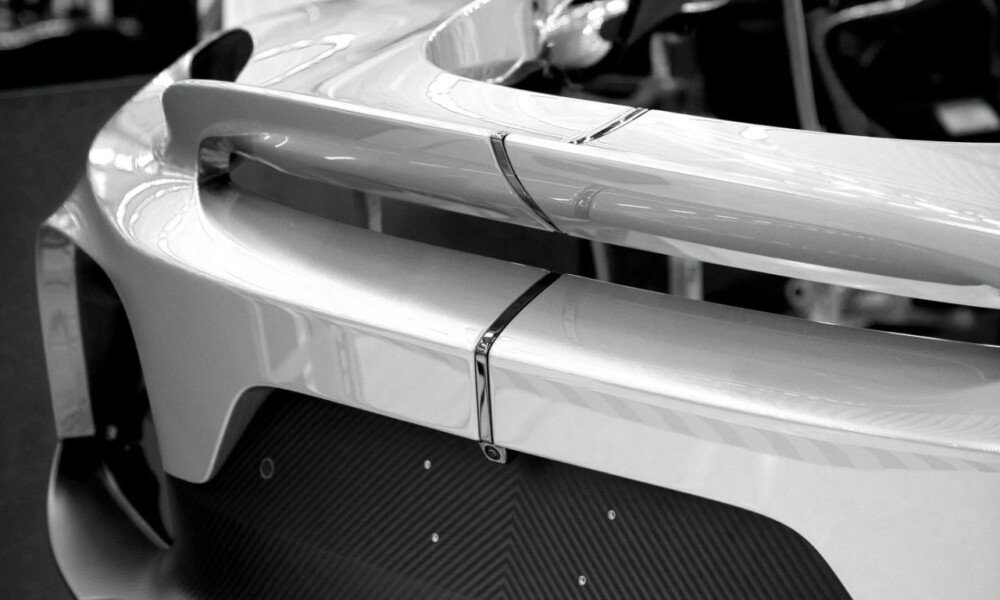
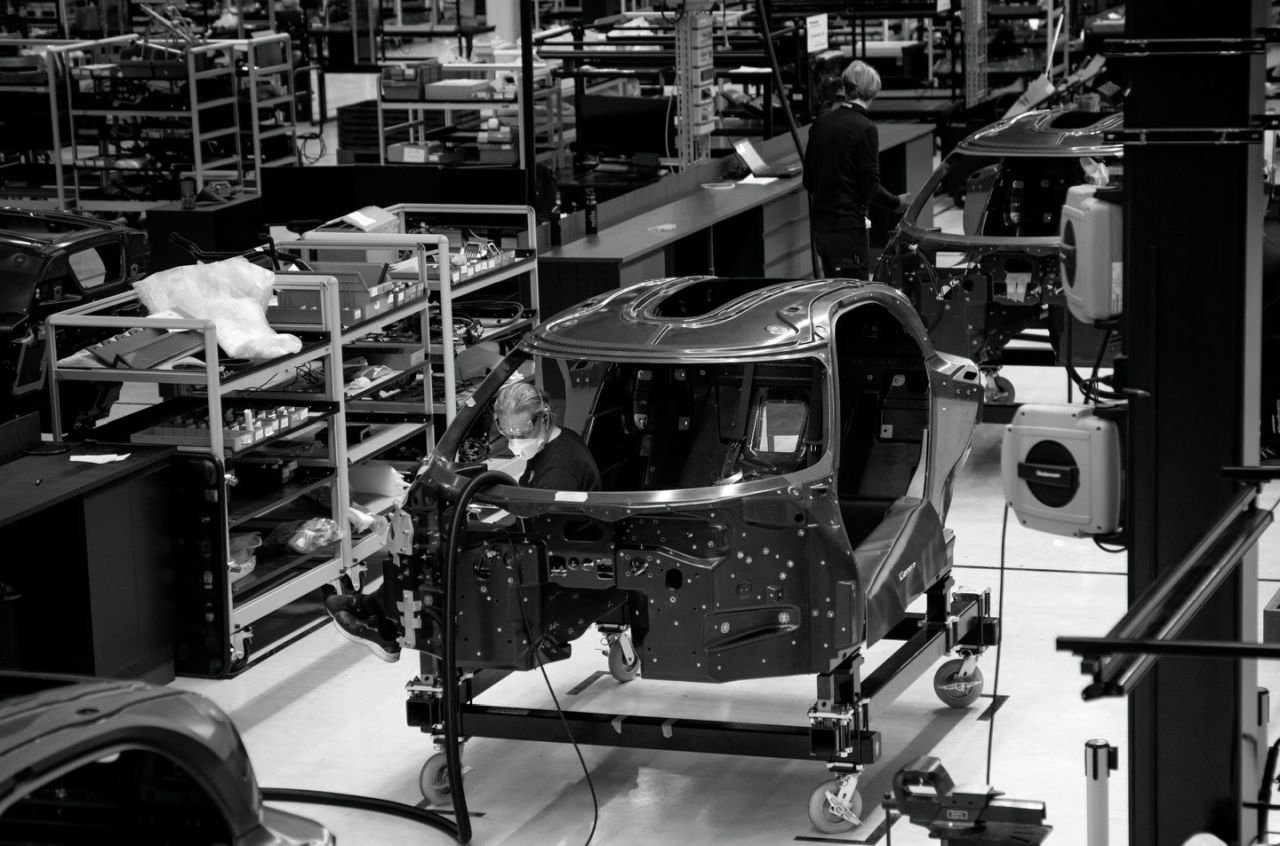
Koenigsegg has announced that the Gemera assembly line is now running side-by-side with the CC850. Images shared by the company show multiple Gemera carbon fibre monocoques waiting to receive parts.
Unveiled in 2020, the Gemera is a four-seater hypercar. Koenigsegg calls it “Mega-GT”. It was initially supposed to use a 2.0-liter, twin-turbo, 3-cylinder plug-in hybrid.
However, the production-spec Gemera is powered by a 5.0-litre twin-turbo V8 paired with three electric motors. It makes 2300 hp and 2028 lb-ft of torque and is paired with a 9-speed Light Speed Tourbillon Transmission, which sends power to all four wheels.
The production version also features several exterior changes, such as conventional wing mirrors instead of cameras, and a rear wing, an aggressive front splitter, an S-duct and other aero bits as part of the optional Ghost Package.
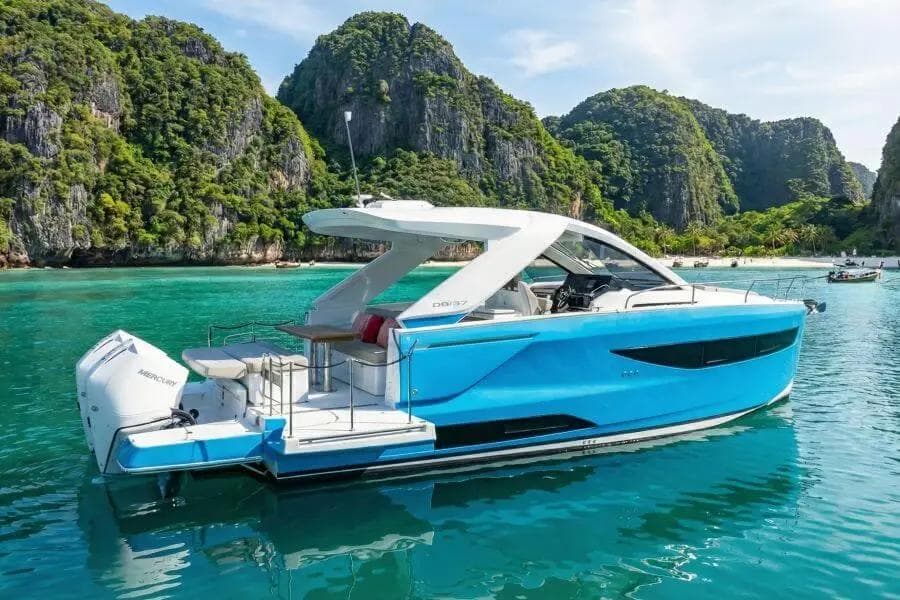
When you see Dreamer Marine’s blue-hulled Jeanneau DB/37 anchored by a white-sand beach near Phuket and surrounded by tropical-green forest, it’s easy to think that Southeast Asia is the ideal home for the new wave of luxury dayboats.
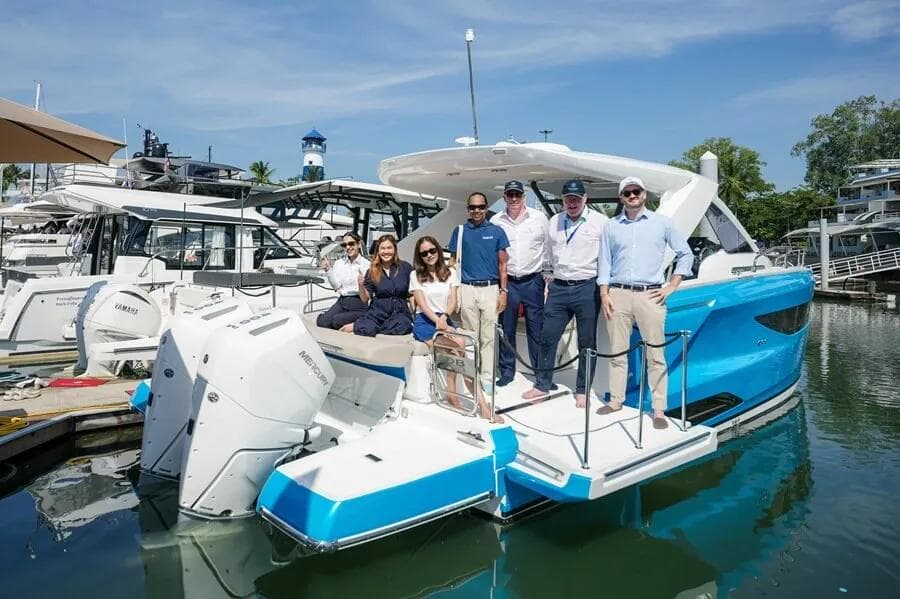
Araya Banlang, the boat’s owner, believes so. Her DB/37 was among the most talked-about yachts at this year’s Thailand Boat Festival, with the four-day event at Phuket Boat Lagoon also marking the official launch of Dreamer Marine, the charter and yacht-share company founded by Araya.
“We wrapped the hull in a distinctive blue to make the positioning unmistakable and to build instant recall as the best dayboat charter in Phuket,” she says. “The result was immediate, as it was one of the most talked-about boats at the show in the 30-40ft category.”
Araya ordered the DB/37 through Jeanneau dealer Boat Lagoon Yachting, which hosted the boat as part of its in-water display during the show.
Araya Banlang (third left) with Dreamer Marine, Boat Lagoon Yachting and Jeanneau staff at Thailand Boat Festival 2026
“Watching visitors walk past, pause and turn back for a second look, we knew we had made the right call,” Araya continues. “Brokers and professionals in the yachting community repeatedly described the concept as a brilliant idea – a fresh, modern way to stand out in a crowded market where many boats can look similar at first glance.”
FAST, FUN AND POPULAR
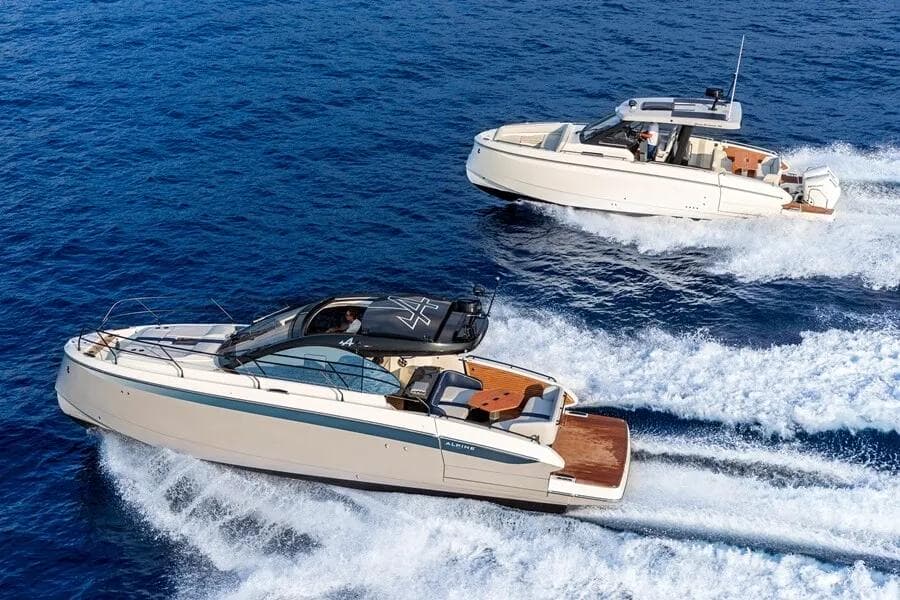
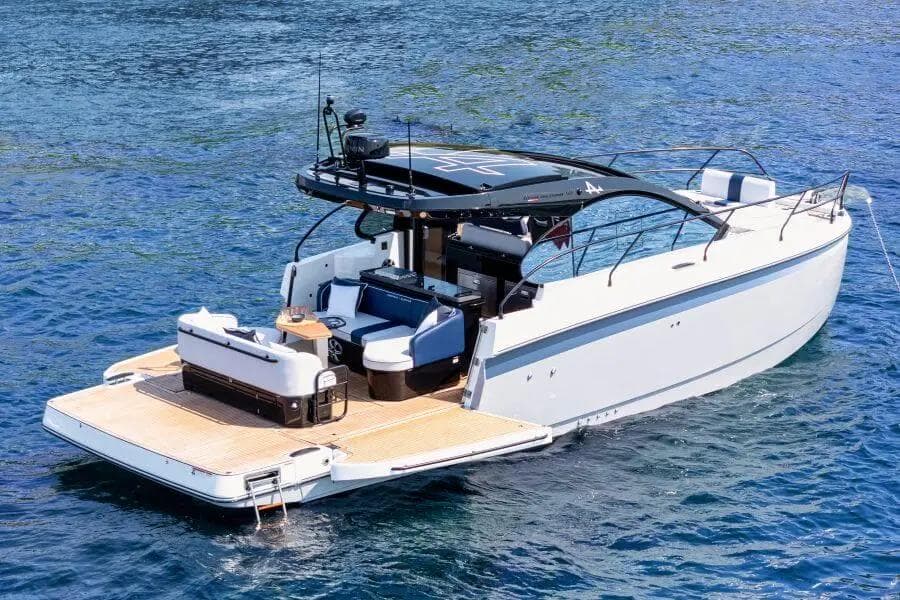
Thailand, Japan and Australia are all home to multiple yachts from the DB Yachts series, which was introduced in 2022 and currently comprises the DB/37 and DB/43, each available with inboard or outboard engines.
Premium dayboats have been enjoying a new surge of popularity in recent years. While many leading builders of 60ft-plus motoryachts focused less on speed and more on volume and deck space, a fresh demand emerged for stylish, fast boats that could reach beaches and islands quickly, and offer an open platform for sunbathing, watersports and socialising. With a decent cabin or two and full bathroom facilities, overnight stays can also be part of the plan.
Axopar debuted its first boat in 2014 and its best-selling model lines have sold in the thousands, while the success of Saxdor, which premiered its first boat in 2020, further underlined Finnish brands as a new customer favourite. Sweden’s Nimbus, dating back to 1968, revelled in the new popularity of Nordic styling, offering multiple versions of its 8, 9, 11 and now 12 series with inboard and outboard options.
In Italy, Pardo and Invictus have both driven and benefited from the sector’s growing appeal since entering the market about a decade ago.
And all this time, the big companies were watching. Post-Covid, Galeon debuted its GTO series of ‘grand touring outboards’, initially focused on the US but proving popular around the world. Sunseeker debuted the Superhawk 55, the smallest model in its fleet. Brunswick Group created a new dayboat brand, Navan.
Groupe Beneteau responded with multiple new offerings, launching Jeanneau’s DB Yachts line and Wellcraft’s Explorer series before recently reinventing Beneteau’s Gran Turismo range.
Even if the numbers of such boats in Asia are far from those seen cruising around the Mediterranean or powering off the Florida coastline, all these brands are now represented in Asia, with many models already here and many more coming.
BENETEAU’S JAPANESE INFLUENCE
Beneteau’s new-look Gran Turismo series started with the 35 and 40 models that debuted at the Cannes Yachting Festival last September. In late November, the 50 was shown at the Paris Nautic Show before making its ‘international’ premiere at this year’s Boot Düsseldorf show in Germany.
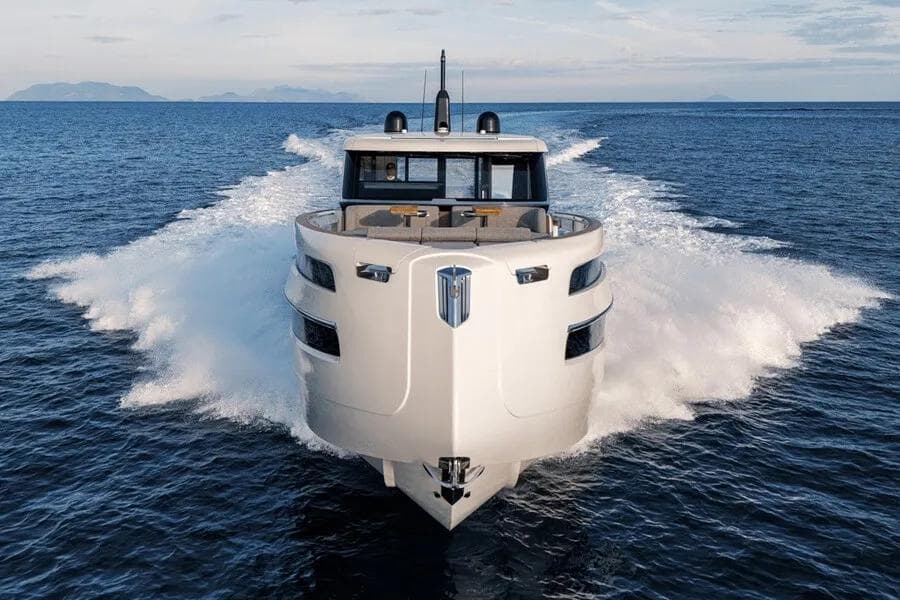
Beneteau Gran Turismo 50 at Boot Düsseldorf 2026
Styled by Italy’s Andreani Design, the Gran Turismo models are inspired by Japanese design principles: yūgen (grace) influencing the exterior and kanso (simplicity) infusing the interiors. Beneteau describes the boats as ‘luxury crossover cruisers’.
Howard Prime, co-founder and CEO of Primus Marine, Beneteau’s Thailand dealer since late 2024, is convinced the new-generation Gran Turismo models are an ideal fit for their target market.
“The new Gran Turismo models are the epitome of the luxury dayboat feel. It’s a great sports range, with a sleek design and great seakeeping,” Prime says. “The versatile folding terraces significantly widen the usable aft deck space, offering an ideal platform for warm, calm Thai waters. They also have nice accommodation, suitable for short getaways.”
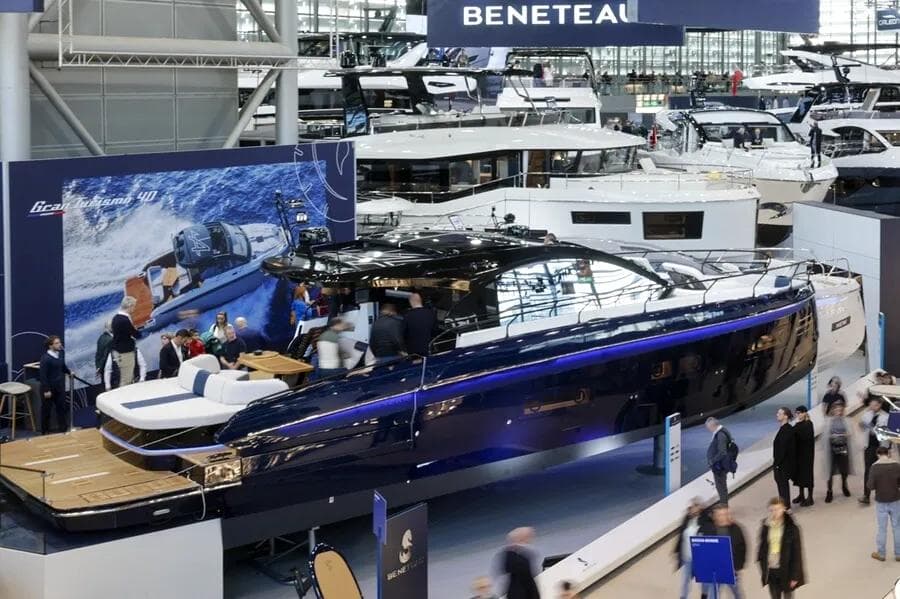
Beneteau Gran Turismo 40 and 35
NextWave Yachting, which started representing Beneteau’s motorboats in early 2024, describes the three new Gran Turismo motorboats as a “big jump” compared to the former models.
“They’re more luxurious, use premium materials and the overall quality is better. The design is more modern, sleek and sporty, and the hull is very efficient and stable,” says Jeffrey Chan, NextWave’s co-founder and Sales Director.
“They also have a lot more exterior space, especially when you open the side balconies at anchor, as this makes the aft cockpit a lot more spacious.”
Beneteau Gran Turismo 40
Chan says appealing options include inboard or outboard engines, and a gyro for the 40 and 50. And although there’s a significant variety in size, he says the three models have a consistent, family feel. “The models differ by length, space and number of cabins, but the design theory is the same.”
INVICTUS AIMING HIGH
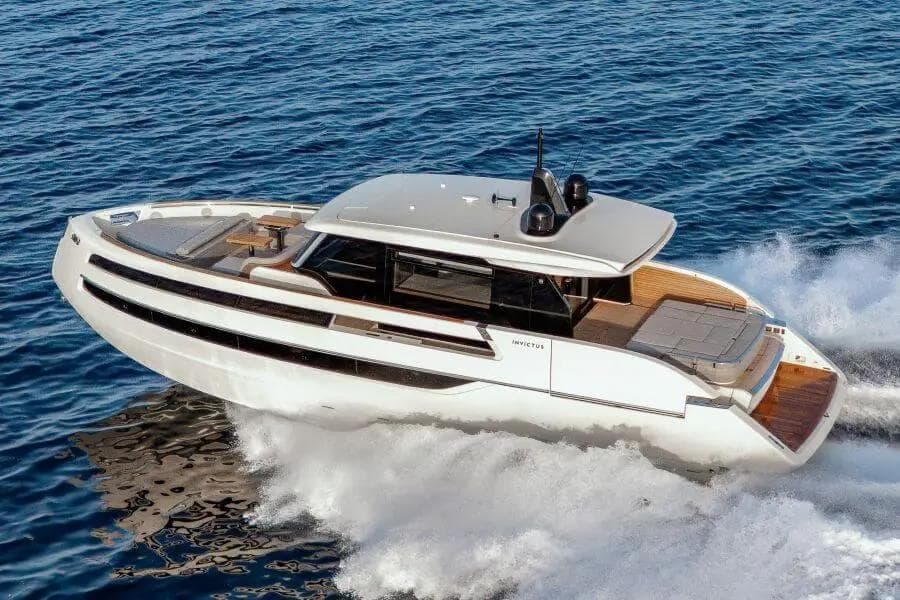
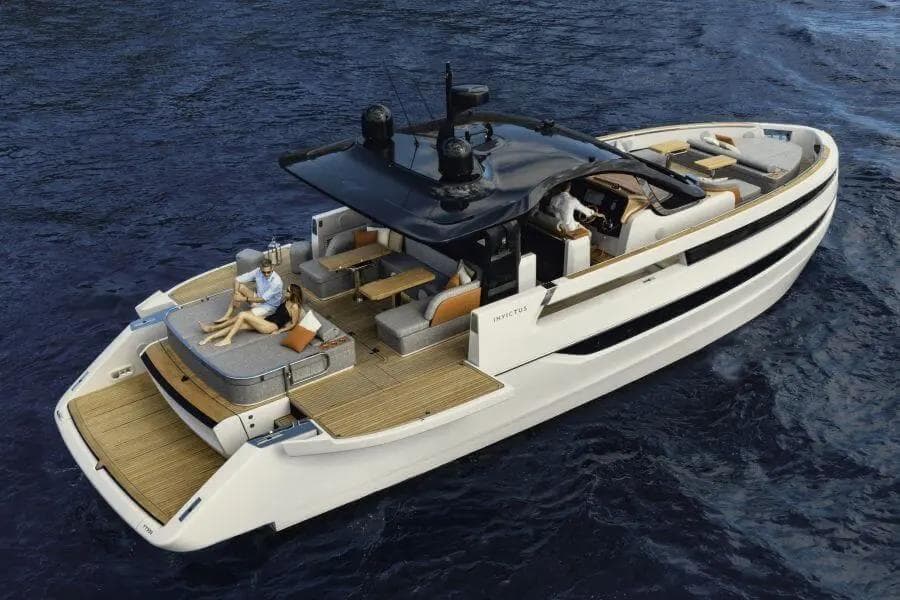
NextWave has represented Invictus (29-55ft) and sister brand Capoforte (20-28ft) in Hong Kong since 2023, with all models designed by Christian Grande and built by Cantieri Aschenez in the Calabria region of southern Italy.
Invictus ST550
As well as Capoforte models, NextWave has sold the GT280 – the updated version of the first Invictus model, which debuted in 2015 – in both inboard and outboard (GT280S) versions. “Invictus yachts are distinguished by their design, build quality and detailing,” Chan says.
The TT280, GT320, GT370 and TT420 are also offered with inboard or outboard engines, while it’s inboard only for the TT460, which was upgraded last year, then shown in its Shell Edition at Boot Düsseldorf this January.
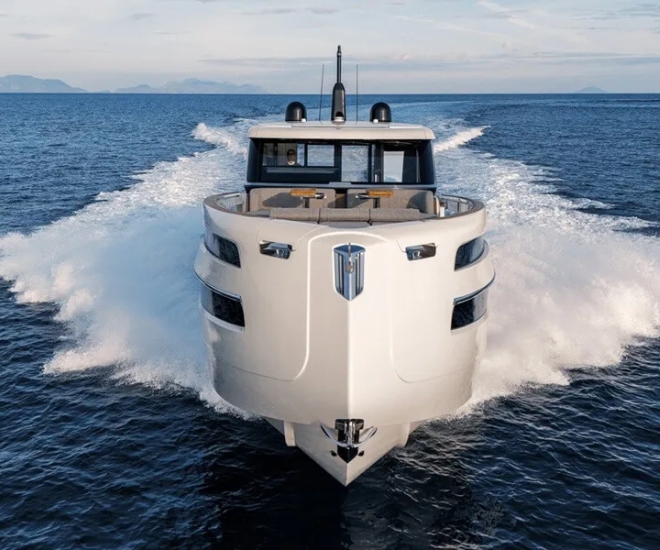
However, Invictus’s biggest leap came last year when it moved into a new market sector with its joint flagships, the TT550 and the ST550, the brand’s first enclosed model. The 17m motoryachts both debuted at Cannes, feature teak, mahogany and stainless steel, and are roughly twice the price of the TT460.
Invictus TT550
Available with either twin Volvo Penta IPS800 or IPS950 engines, both models are customisable through Atelier Invictus, the brand’s in-house creative workshop.
Rosario Alcaro, founder and General Manager of Invictus, explains: “The creation of these two models has been a significant challenge a decade after the opening of Cantieri Aschenez. Our company has grown in production capacity, experience and expertise. The ST550 and TT550 embody the evolved synthesis of this journey.”
We use cookies on our website to give you the most relevant experience by remembering your preferences and repeat visits. By clicking “Accept”, you consent to the use of ALL the cookies.
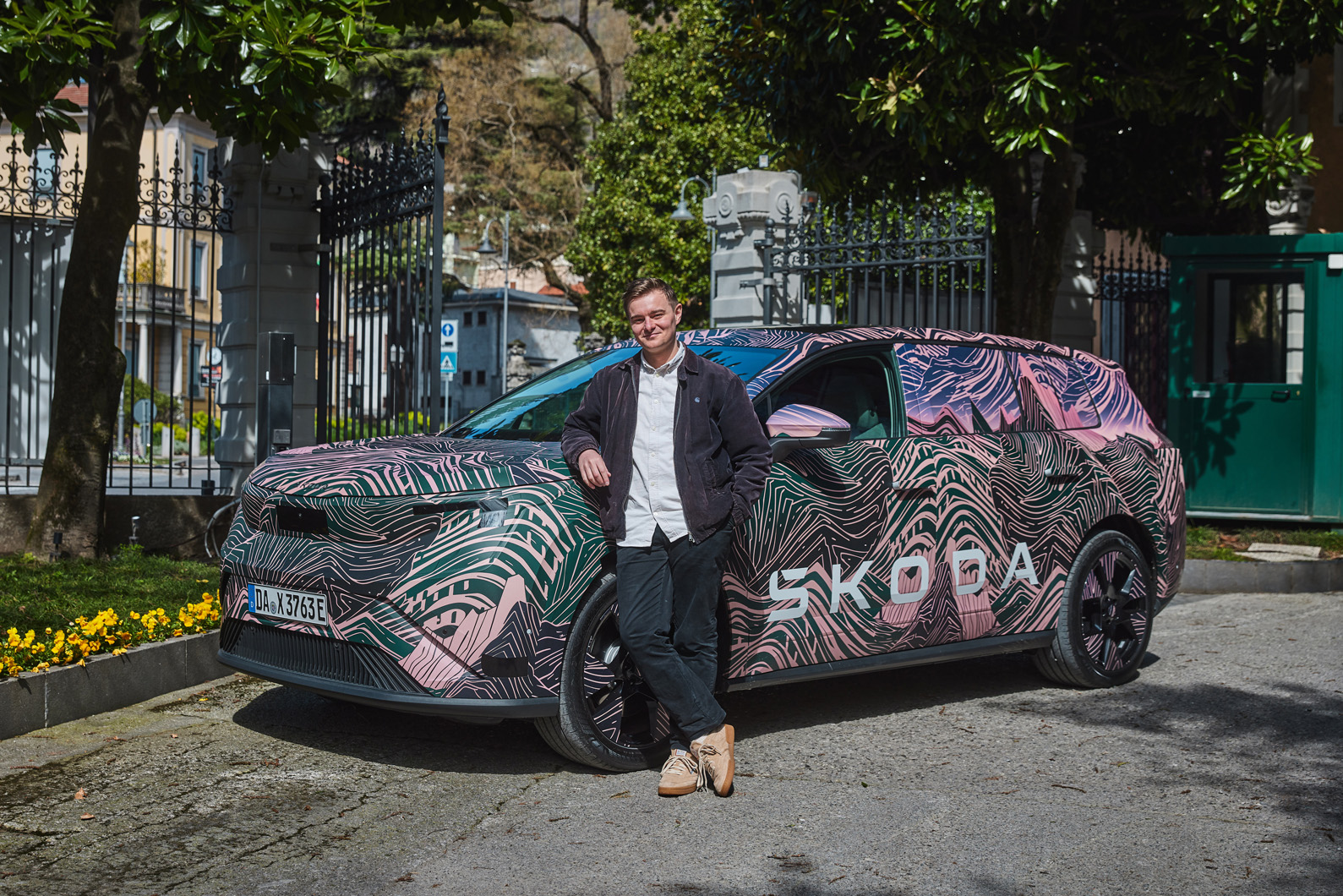
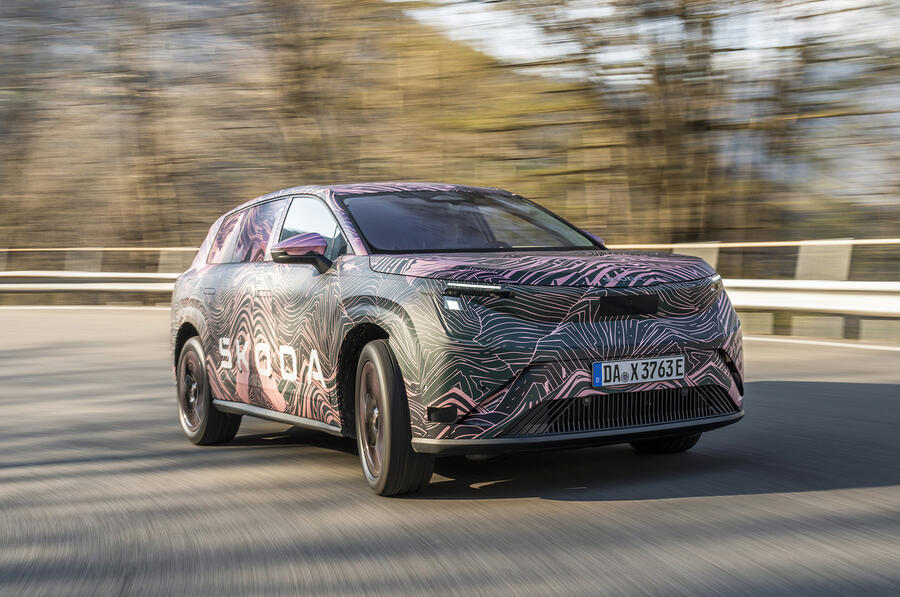
So far, so familiar – but aside from being its biggest model yet, the Peaq does introduce a number of significant firsts to the Skoda range: there’s a one-pedal driving mode, vehicle-to-load charging functionality, an electrochromatic panoramic roof, a pair of magnetic phone chargers, a Relax package with a reclining seat and fold-out table, a jazzy Sonos sound system, and the door handles are electrically retractable (don’t worry, they have a hammer function to bash themselves out when frozen, and will deploy automatically in the event of a crash).
The 13.6in touchscreen is vertically oriented for the first time, as well, which Skoda says allows for clearer segmentation of content: you can have the map or camera views at the top, in your line of sight, and the buttons at the bottom, so you can reach them easily without lifting your arm from the sliding centre armrest – which does feel much more natural and gives you a better chance of jabbing the icon you were aiming for.
Otherwise, though, the crisp graphics and logical menu structures are all familiar from other Skoda models, so broadly speaking the upright screen makes little difference to how you interact with the car while moving, the only real negative being that installing the screen this way meant there wasn’t enough space for the neat, clicky Smart Dials from the Superb and Kodiaq.
A 170mm increase in wheelbase and flatter floor translates to a tangibly roomier cabin than that of the Kodiaq: Skoda claims 58mm more legroom in the second row and a significant 84mm increase out back. I had to slide the middle row all the way forwards to get comfortable in the rearmost seats, so they’re definitely still off limits for taller passengers, but kids will find them plenty spacious – and there’s still a decent 299 litres of capacity behind them (measured to the roof). That rises to a whopping 935 litres with them folded – slightly up on the Kodiaq – and there’s a 35-litre front boot, too, but that’s best just used for the charge cables.
As a passionate car enthusiast or business owner with a fleet of trucks, you may be familiar with chip tuning. It has nothing to do with fads or fancy upgrades. It is a proven technique to access more of your engine’s potential by increasing horsepower and torque.
Today on the blog, we’ll talk about chip tuning for BMW vehicles and heavy-duty trucks. We’ll explore why it’s worth your attention, why truck tuning is often easier and more accessible than many people think, and at the end, we’ll share some useful insights about a company that delivers these services at a truly professional level.
Chip Tuning in a Nutshell
On diesel engines and high-performance gasoline motors, professional chip tuning removes factory restrictions related to emissions, boost pressure, and fuel maps. This is relevant for BMW engines, which are often delivered from the factory with conservative calibrations designed to meet the emissions requirements and manufacturer safety margins. The result: +18–35% more power and torque, along with noticeably improved throttle response. However, the process requires precision since every engine (N47, B58, N55, etc.) comes with its own specifics and tuning nuances.
But here’s an interesting fact: chip tuning isn’t limited to passenger cars.
Trucks are actually a gold mine for this type of upgrade. The owners of the semi-trucks, buses, tractors, and heavy machinery search for methods to enhance engine efficiency and decrease fuel expenses under demanding working conditions.
And this is where chip tuning really shines — often solving several problems at once:
Increased power and torque (especially at low RPM)
5–12% fuel savings in real-world driving conditions
Longer engine life thanks to more efficient operating parameters
Most importantly — truck tuning is often simpler and faster than many people expect.
Why Truck Chip Tuning Is Easier Than You Think
Unified Engine Platforms
Truck engines from the same family (for example Volvo D11/D13, Mack MP8, or Renault DXi) often share nearly identical software across large production batches.
In other words, tuning files are already validated through thousands of installations, creating predictable and dependable processes.
BMW platforms, on the other hand, vary widely between models, production years, and ECU hardware. Each setup often requires a custom approach, making it difficult to reuse the same files across different vehicles.
Economics Come First
Saving just 1–2 L/100 km on a truck that drives 150,000–200,000 km per year can translate into tens of thousands of dollars in annual savings.
In most cases, the tuning investment pays for itself in 1–4 months.
Additionally, removing emissions systems can extend engine life in regions with lower fuel quality.
For passenger cars, chip tuning is often about driving excitement. For trucks, it’s about operational efficiency and profitability.
Fewer Electronic Restrictions
Modern BMW passenger cars often have complex anti-tuning protections.
Trucks typically have fewer electronic limitations, and since they are used primarily for commercial purposes, the focus is on operational efficiency rather than strict adherence to factory software restrictions.
Remote Tuning Capabilities
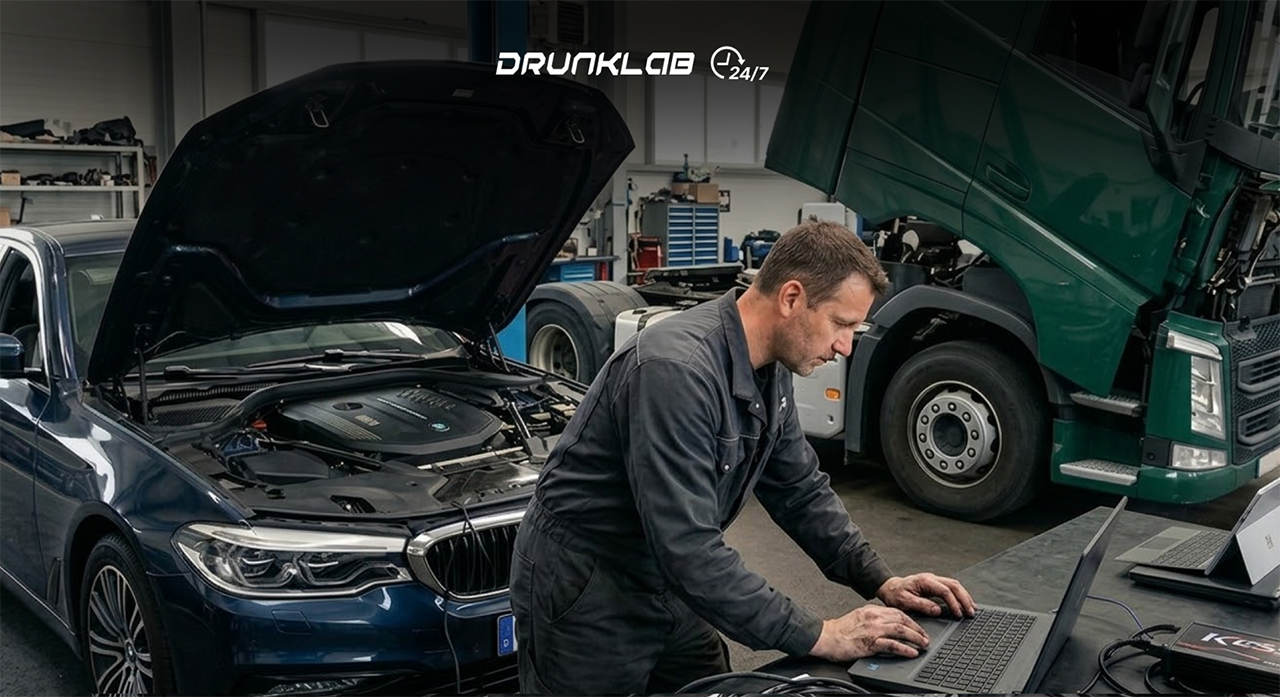
Most trucks can be tuned remotely via the internet using tools such as the Mochester App (M4 App) or other specialized software (Cummins INSITE, Detroit Diesel DiagnosticLink, etc.) via TeamViewer.
Remote tuning is sometimes possible on BMW vehicles as well, but it is generally more complicated due to stricter security protections.
Conclusion: If you want to experience chip tuning without unnecessary complications, start with a truck. The process is faster, more affordable, and the benefits are often much more noticeable — a power increase of up to 20–40%, fuel savings, and fewer service visits.
DrunkLab — Truck Tuning Experts with Convenient Remote Solutions
Supported brands include Volvo, Mack, Renault, UD Trucks, Volvo CE, Volvo Penta, Prevost, as well as engines from Detroit Diesel, Cummins, and PACCAR.
Their services include:
Complete DPF / EGR / DEF / SCR (AdBlue) removal
Stage 1–2 performance tuning for increased power and improved fuel economy
Remote tuning solutions through the proprietary Mochester App (M4 App) — a powerful software tool for reading and tuning ECU parameters in real time.
Using this method, you don’t need to take the truck to a shop, you don’t lose billable hours, and you don’t incur costs due to downtime.
Simply connect your truck to a Windows laptop via a diagnostic adapter, then install the Mochester App. The app promptly identifies tuning options tailored for your truck using the VIN and chassis number. Add funds to your account, choose the tuning solution you want, and the Mochester App will do the installation for you. Once the process is complete, you’ll receive a full tuning report. If any issues arise along the way, our engineering support team is available 24/7 to assist you.
For truck owners operating in distant regions, this solution is especially convenient.
Depending on the complexity of the job, the entire process usually takes from 20 minutes to a couple of hours.
DrunkLab Partner Program: Save Up to 30% — or Start Earning
DrunkLab has built a very flexible system for regular customers and professionals who want to perform tuning themselves.
Key Advantages
Volume-based savings The more you order, the more you save. With larger orders, regular jobs, or significant balance top-ups, discounts can reach up to 30%.
This isn’t a temporary promotion — it’s a cumulative discount system, where higher volume translates into greater long-term savings.
A partnership for tuners and workshops Independent tuners and repair shops get:
Technical support
The ability to perform tuning services for your own customers
To unlock the first 15% discount, simply keep shopping with us. Once your spending reaches $5,000, you’ll automatically qualify for this exclusive discount! The more you spend, the bigger your discount, with a maximum of 30%!
For large fleet owners, the benefits are even greater: once the process is established, tuning additional trucks becomes significantly cheaper.
If you’re a mechanic, a workshop owner, or simply an enthusiast capable of connecting an adapter and tuning a few vehicles per month, this can become a solid additional revenue stream.
And for large fleets — it means direct savings across the entire operation.
More details, current terms, and information on how to join are available on the official website.
Time for an Upgrade
Chip tuning isn’t a luxury — it’s an investment in your vehicle. If you’re ready to increase power and reduce operating costs, visit dl.ge and get started today.
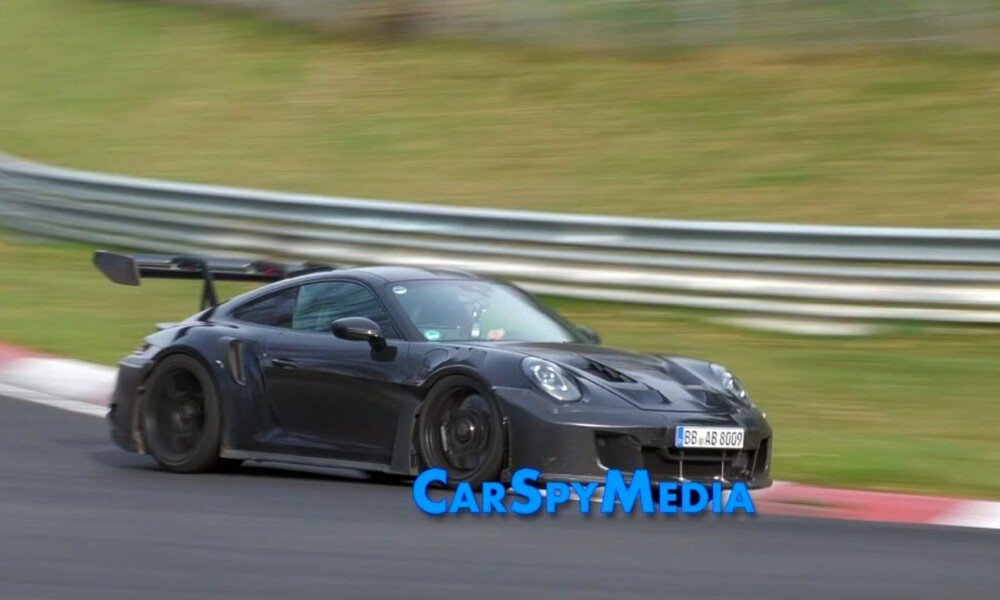
Mercedes is gearing up to introduce the new AMG GT Black Series. It will take on the mighty Porsche 911 GT3 RS, which is also due for an update later this year. Rumours suggest that the 992.2 facelift could be revealed in August 2026.
The upcoming 911 GT3 RS facelift has been spotted testing quite a few times. Spy images have revealed a brand-new diffuser with dual exhaust and a pair of additional tailpipes on either side. It will also feature a new active rear spoiler with three elements and a DRS function.
Up front, the air intakes appear to be slightly larger. The ducts on the bonnet have also been reworked. In addition to the functional changes, the new GT3 RS will also get redesigned headlamps with integrated LED DRLs.
However, a lot has changed under the skin. The new GT3 RS will be powered by a 3.6-liter flat-6 engine, but for the first time, it will feature two turbochargers. According to the latest rumours, the new twin-turbo unit delivers around 650 hp @ 9,000 rpm. It is also likely to get a ‘Boost’ mode.
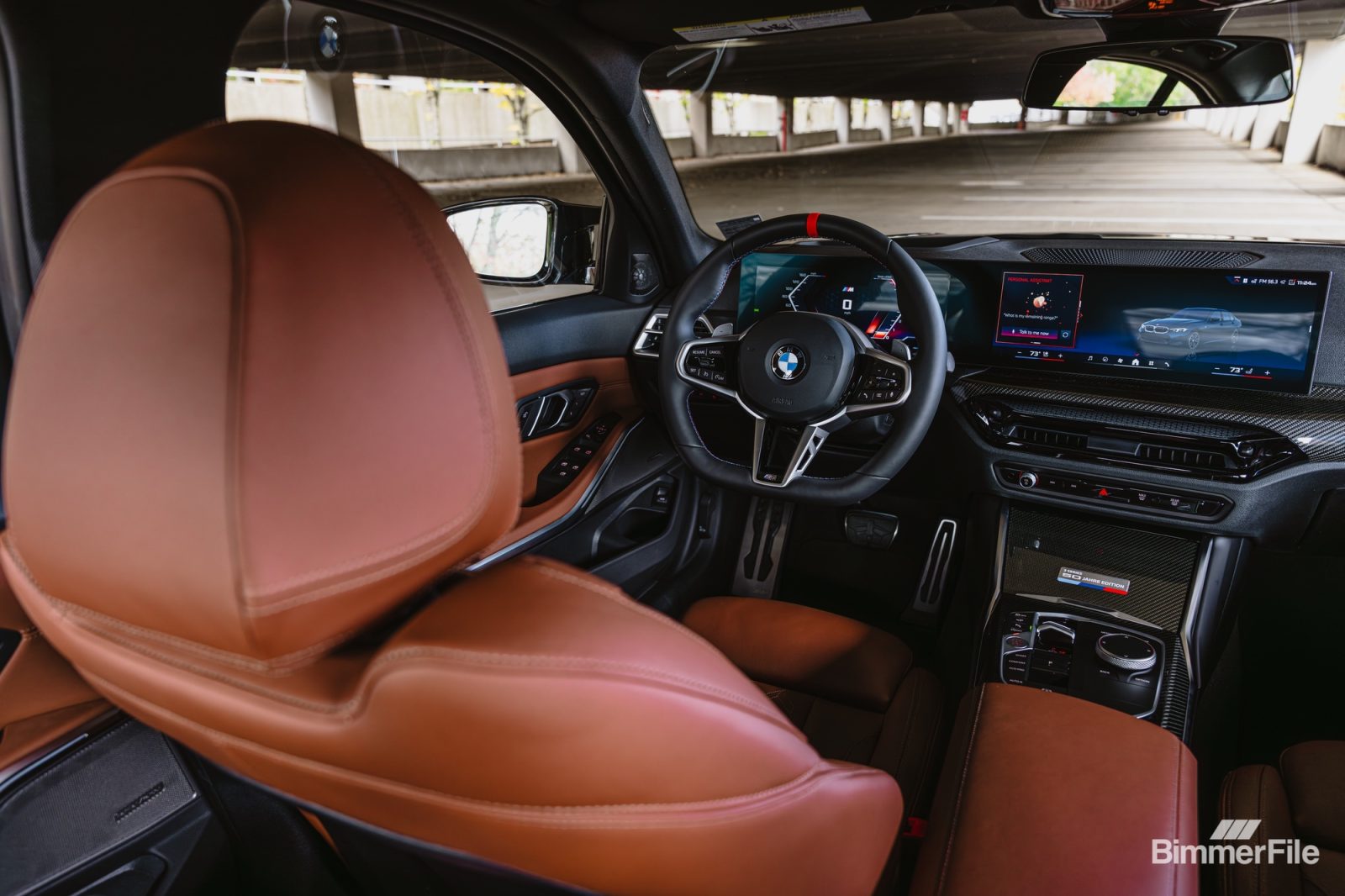
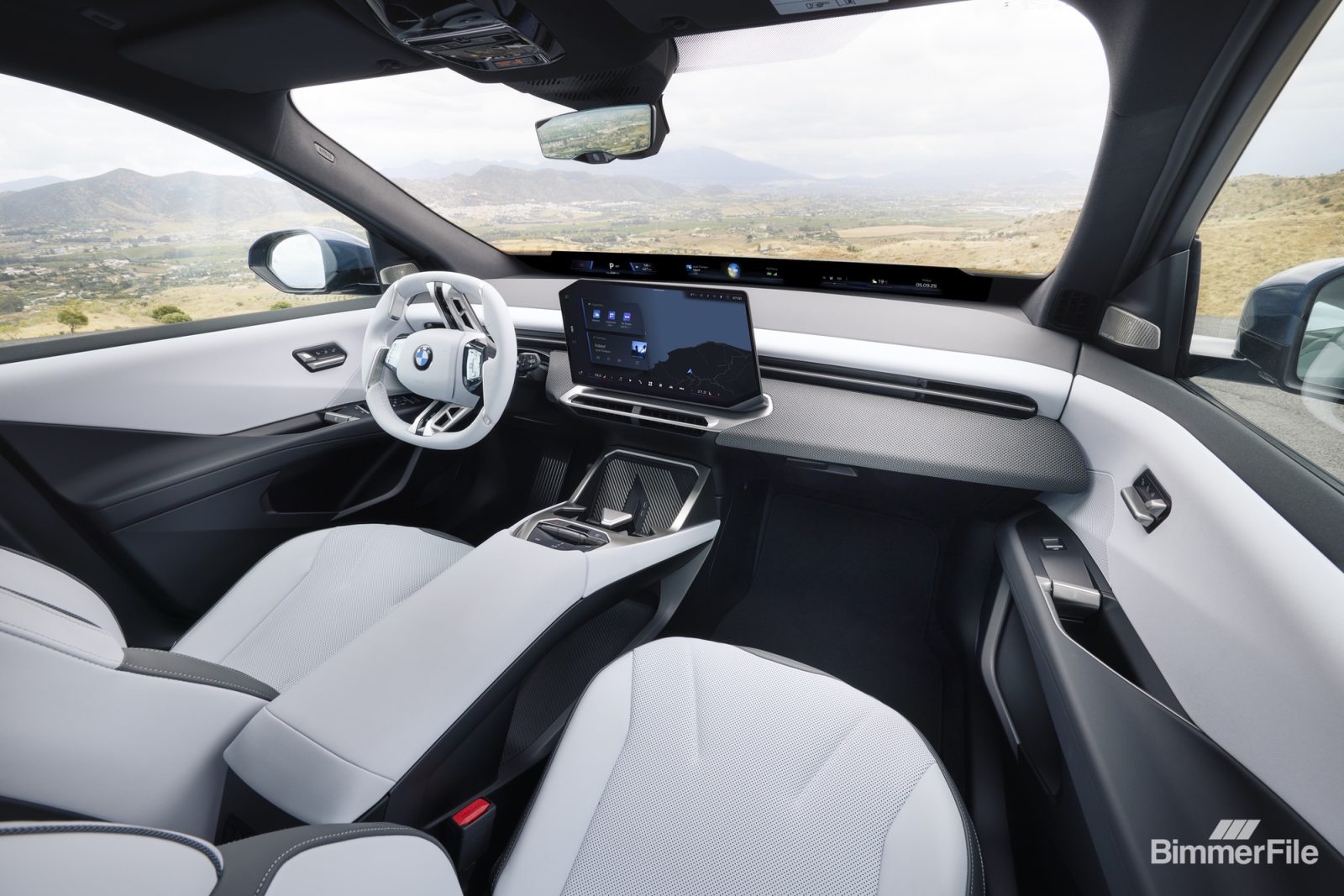
For decades, enthusiasts have joked about “new BMW smell.” Open the door, drop into the seat, and there it is. That faint mix of leather, plastics, and fresh materials that signals a car has just rolled out of Munich or Spartanburg. It feels premium in a way that’s hard to explain but instantly recognizable.
What most owners don’t realize is that BMW engineers treat that smell as a serious engineering problem.
It turns out the air inside a car is a surprisingly complex environment. Every material inside the cabin releases microscopic emissions over time. Plastics, adhesives, fabrics, foam, leather treatments. Heat, sunlight, and humidity all change how those materials behave. Put the car in the summer sun and those emissions increase. Park it overnight in winter and they drop.
BMW has spent more than twenty five years studying exactly how those materials interact inside the cabin. The goal is not just comfort. It is health, sustainability, and the overall experience of being inside the car.
Sustainability in the auto industry usually starts with batteries, tailpipes, and recycled materials. BMW takes a wider view. The company looks at the entire life cycle of a vehicle from raw materials to production, driving, and eventual recycling. That philosophy reaches further than most people expect, all the way into the air you breathe while driving.
To manage that, BMW operates something that sounds almost fictional. An odor laboratory dedicated to testing interior components and complete vehicle cabins.
This is where science meets the human nose. Engineers use specialized equipment to measure emissions from materials. At the same time, trained evaluators literally smell interior components to assess scent quality. It is part chemistry lab and part sensory panel.
BMW does not add artificial fragrance to the cabin. Instead the company tries to eliminate problematic emissions and create a neutral, natural scent profile. That subtle smell you notice in a new BMW is not perfume. It is the result of carefully chosen materials behaving the way engineers intended.
The reason this matters goes beyond luxury.
The human sense of smell connects directly to the limbic system, the part of the brain that handles emotion and memory. Smell shapes how we perceive spaces in ways we rarely notice consciously. A cabin that smells clean and neutral feels calmer, healthier, and more premium even if drivers cannot explain why.
As BMW pushes deeper into sustainable materials and electric vehicles, this kind of thinking becomes even more important. Future interiors will rely more heavily on recycled materials, alternative fabrics, and new manufacturing processes. Each of those changes affects how materials behave inside the cabin.
Which means the engineers in that odor lab are going to stay busy.
It is the kind of invisible engineering BMW rarely advertises but enthusiasts end up appreciating anyway. We talk about steering feel, chassis balance, and engine character. Yet part of what makes a BMW interior feel right happens before you even touch the wheel.
You open the door, sit down, and breathe in. The experience feels clean, precise, and unmistakably BMW.