You Asked, They Answered — Introducing the Coleman 18OG
Isn’t it nice when an RV manufacturer makes practical changes spurred on by direct customer feedback? In many ways, that has been the bedrock of Keystone’s approach to relaunching the Coleman lineup since they brought it under their wing a couple of years ago, leading them to introduce an all-new, off-grid-capable version of their family-favorite 17B floor plan. New for 2026, the Keystone Coleman 18OG brings impressive solar and suspension upgrades to this layout, designed in direct response to customers who asked for a “17B with better solar capability.”
Images by Camping World
Here’s the rundown of the major changes and additions:
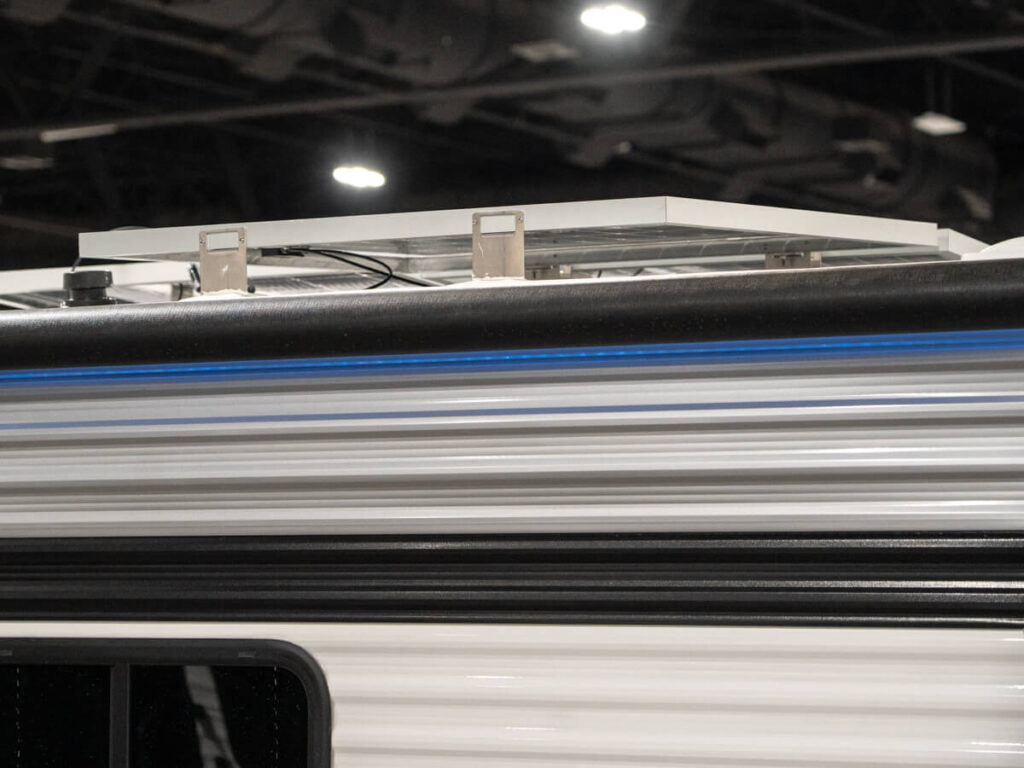
Three 220-watt, roof-mounted solar panels for a total of 660 watts of solar capture capability
Two 100-amp-hour lithium batteries in a heated enclosure
A 2,000-watt inverter and inverted outlets throughout
A 30-pound tongue-mounted LP bottle (upgraded from 20 pounds on the 17B)
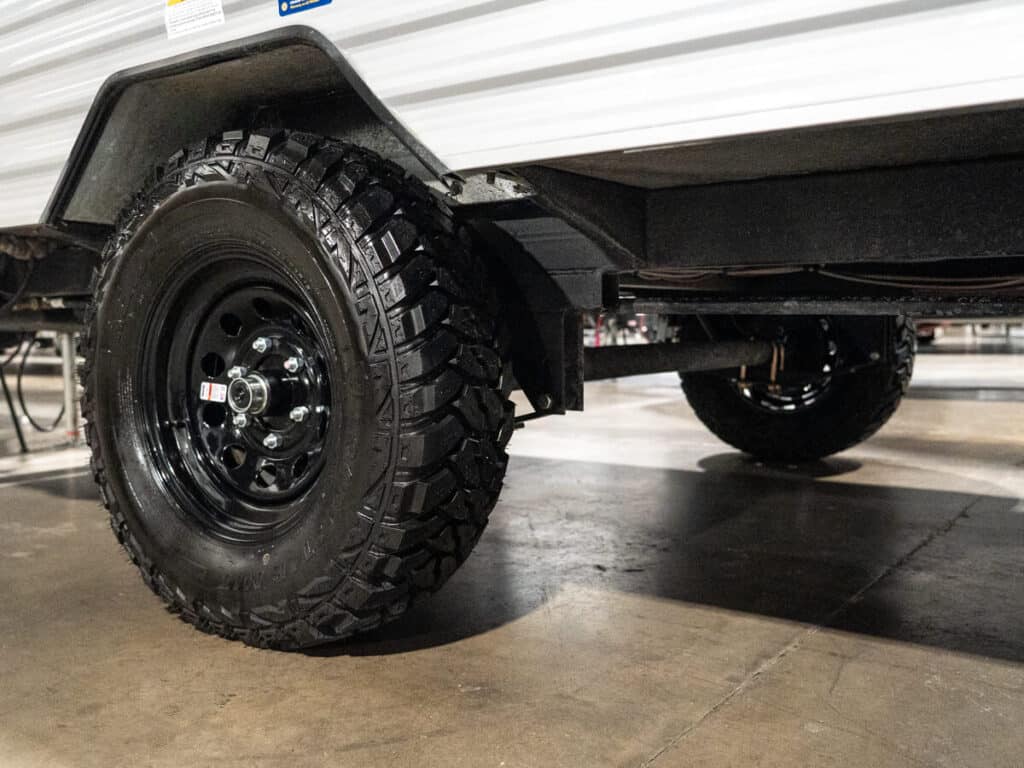
Higher ground clearance and rugged off-road tires
Upgraded suspension with shocks
An upgrade from a 4,000-pound axle to a 4,400-pound axle
A 46-gallon fresh water tank (upgrade from the 21-gallon tank on the 17B)
Image by Keystone
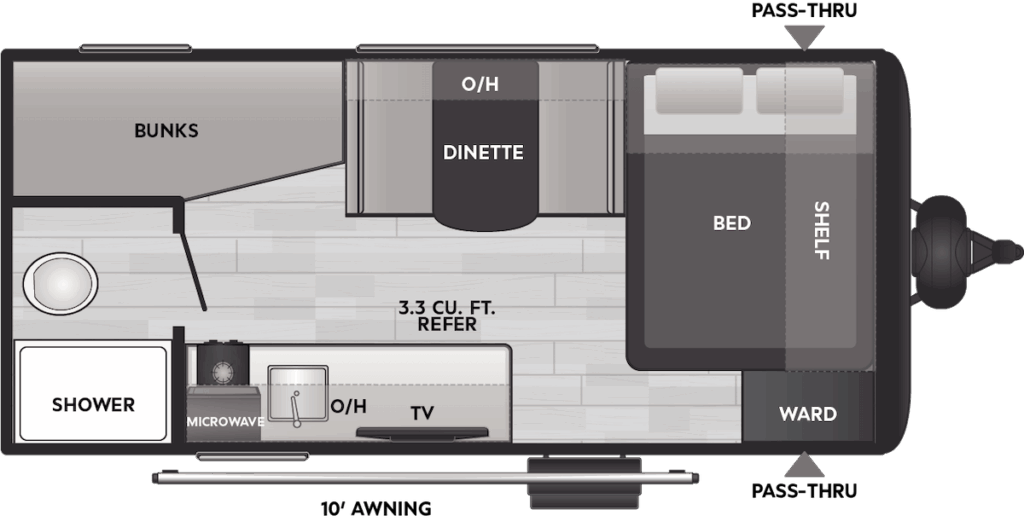
Inside, the Coleman 18OG delivers the same interior comforts that attract many families to the 17B—stacked single bunks for smaller kids, a larger front bed for parents, a cozy dinette that converts for extra sleeping space, a functional kitchen, and a small rear bathroom with a larger-than-average 30” x 36” shower.
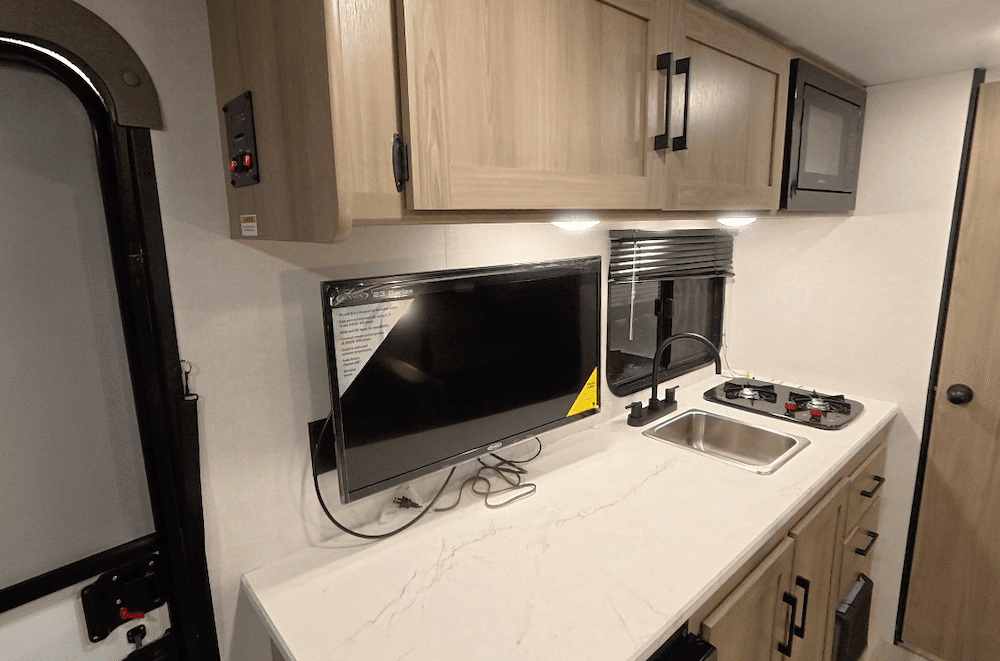
Additionally, Keystone made several smart layout changes to improve livability. They added a driver’s side baggage door for easier access to the storage area under the bunks. They extended the kitchen countertop for more prep space and installed a 32” TV above it for optimal viewing from pretty much anywhere inside—front bed, bunks, or the dinette.
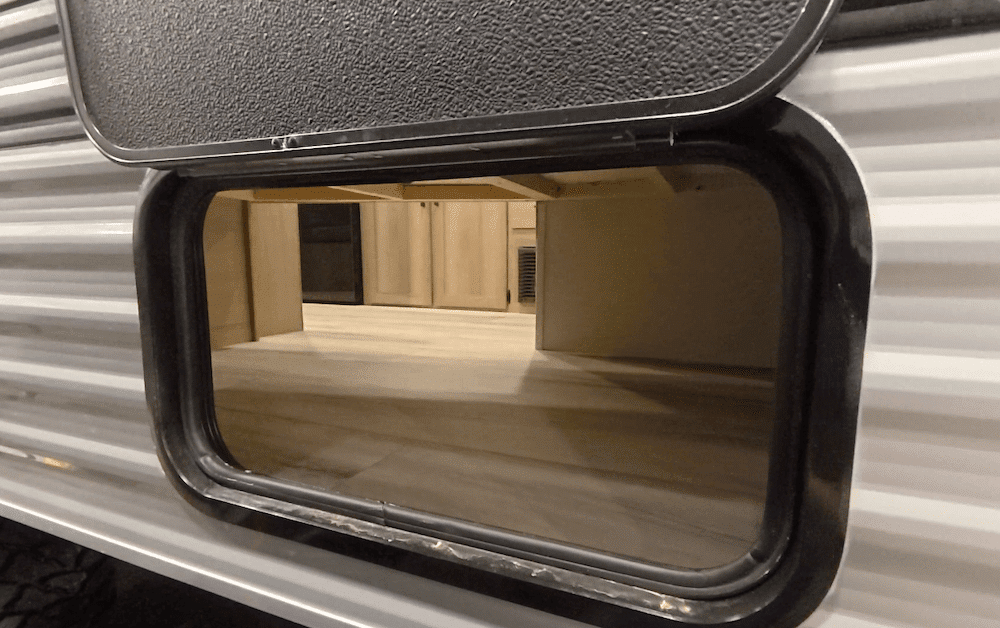
Speaking of that dinette, they added a 56” x 29” window over it and increased the size of the overhead cabinets above it, as well as those in the kitchen.
Images by Camping World
Kevin Horoky, National Sales Manager for Keystone Coleman, shared how the 18OG proved itself in real-world conditions:
“We used this camper at outdoor shows completely unplugged and were running the A/C in the middle of the day in Arizona — powered strictly from the sun. That was one of the best demonstrations I’ve ever seen of how usable this unit really is. It’s not just capable on paper. It works in the real world. On top of that, you’re getting higher ground clearance and upgraded off-road suspension. So now you’re pairing serious solar capability with a platform that can actually get you where you want to camp.”
Overall, the Keystone Coleman 18OG showcases smart, practical changes that dramatically improve this trailer’s off-grid capability. And the best part? Keystone did it while staying true to one of their most important core principles: affordability.
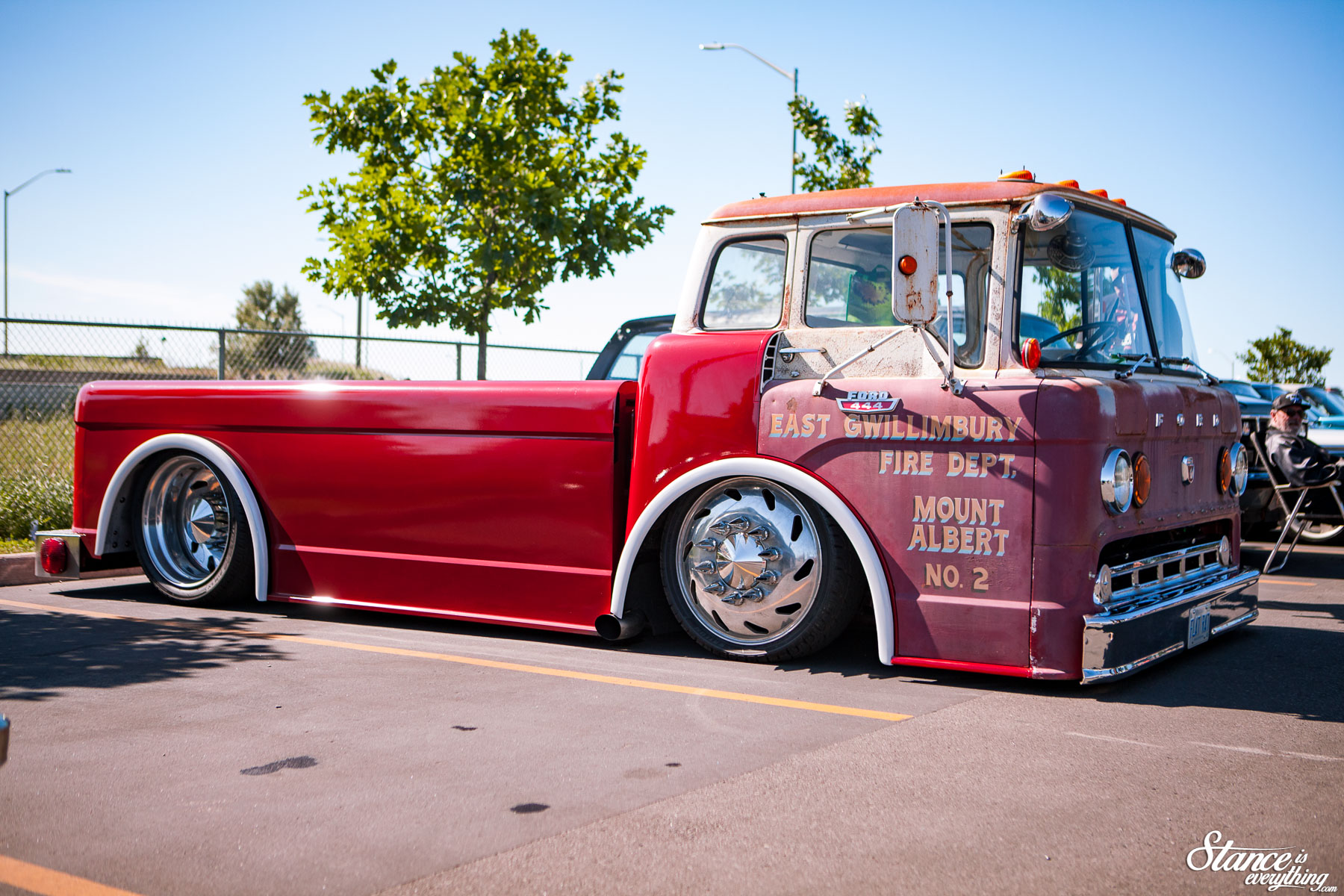
I know, I know, I said I’d post more of this 1950 Ford COE just over a week ago. My bad, I got a little distracted. I’ll reveal why soon. But, take these additional photos of my penance.
This truck, known as the Flat Rat hails from Keswick Ontario and was built by it’s owner Scott Badger (@keswickscott).
Scott has owned the truck cab about ten years now. Things really got going on the truck about five years ago, with significant progress being made during the pandemic.
From behind the tilt cab to where the custom four-link starts is most of a widened Chevy 3500 chassis. Forward of the front wheels is mostly factory Ford with signficant modifications done to make the steering work at the truck’s new height.
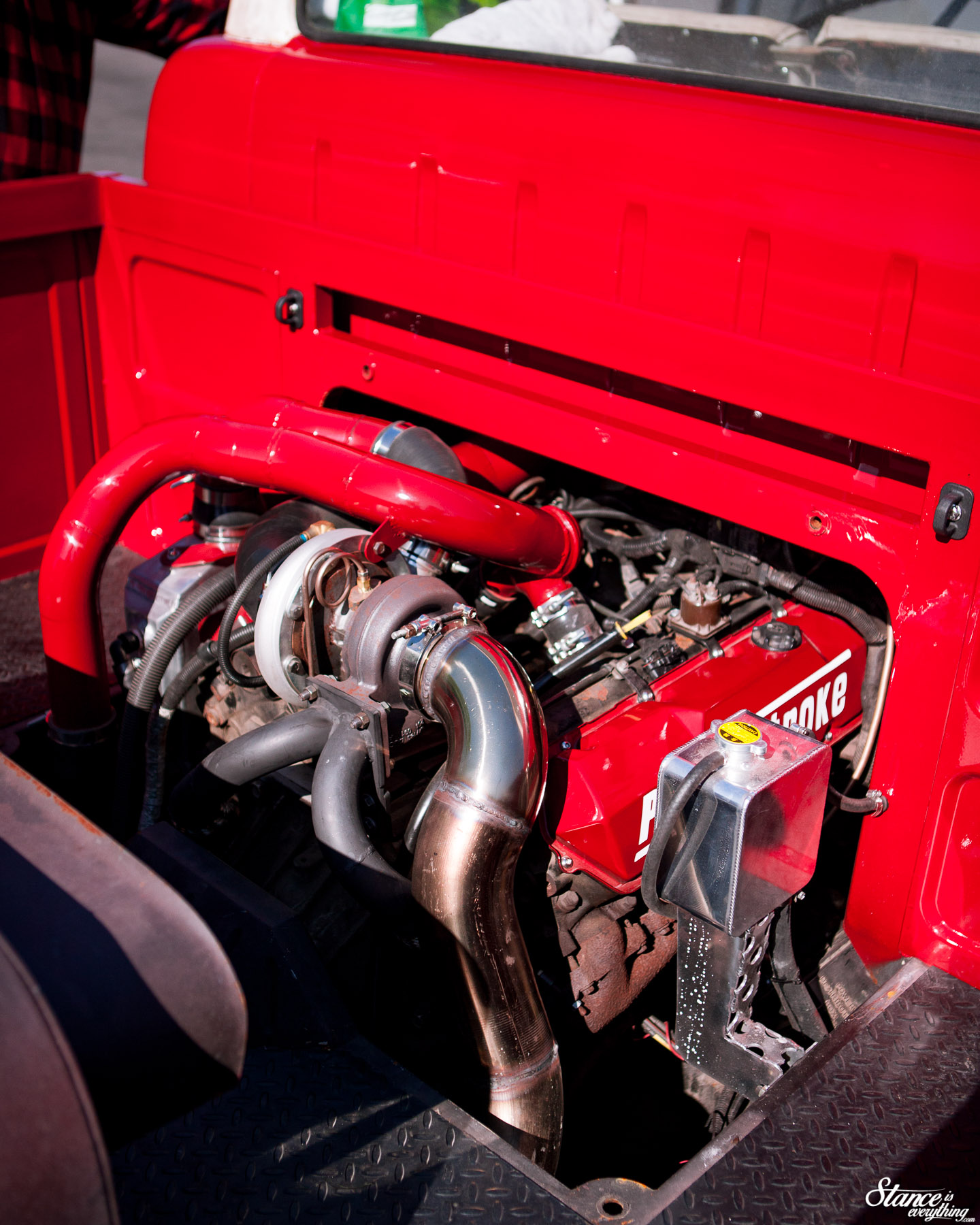
The motor is a 7.3L Powerstroke with a T4 turbo upgrade backed by an automatic transmission.
Scott managed to keep as much original as he could, but he did have to replace a bit of sheet metal here and on the cab. The new additions were sprayed by Scott in either white or red.
Scott and his son also made all 11 feet of the bed from scratch.
Nothing more than an English wheel and a Princess Auto bead roller was used in the bed construction.
In fact, the entire truck was built in a rather humble home garage. Proving once again that where there’s a will there’s a way when it comes to do-it-yourself fabrication. Something that certainly provided a bit of motivation for my own project.
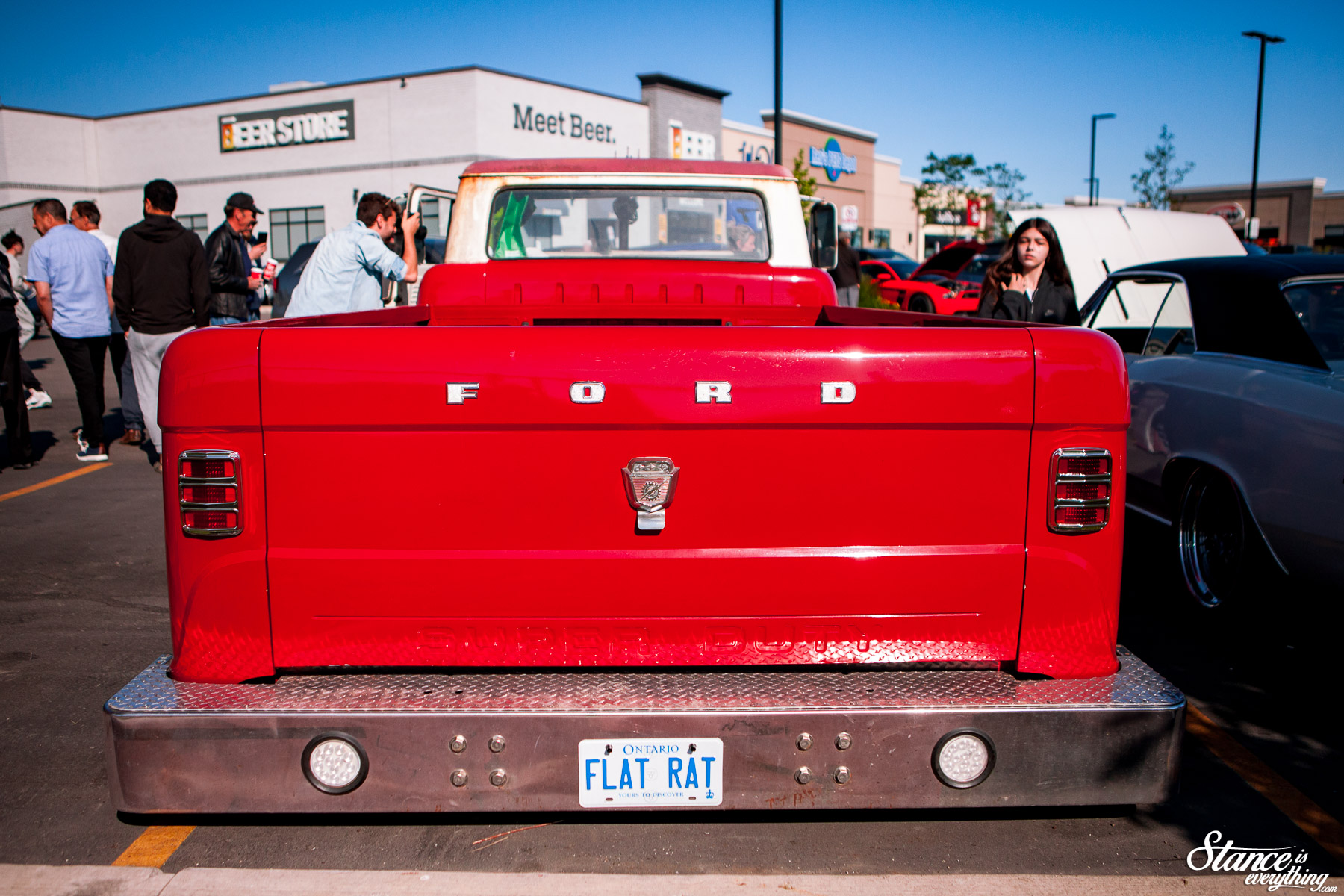
The tailgate of the truck is actually a second COE front end that has been modified to create a tailgate. Scott filled the grill, made it hinge and took the Super Duty embossing from a late model ford.
“If this isn’t Super Duty I don’t know what is,” Scott said.
For the eagle-eyed, yes the tail lights are rotated versions from a 65 Ford Mustang, Pretty clever if you ask me.
Obviously, this truck is very much up my alley and I hope to see more of it again soon.
Ontario is back jamming again and I’m absolutely here for it!
Elon Musk’s bankers are looking to trim the debt that xAI has taken on over the past few years, following the company’s merger with SpaceX, a new report from Bloomberg says.
xAI has built up $18 billion in debt over the past few years, with some of this being attributed to the purchase of social media platform Twitter (now X) and the creation of the AI development company. Bankers are trying to create some kind of financing plan that would trim “some of the heavy interest costs” that come with the debt.
The financing deal would help trim some of the financial burden that is currently present ahead of the plan to take SpaceX public sometime this year. Musk has essentially confirmed that SpaceX would be heading toward an IPO last month.
SpaceX IPO is coming, CEO Elon Musk confirms
The report indicates that Morgan Stanley is expected to take the leading role in any financing plan, citing people familiar with the matter. Morgan Stanley, along with Goldman Sachs, Bank of America, and JPMorgan Chase & Co., are all expected to be in the lineup of banks leading SpaceX’s potential IPO.
Since Musk acquired X, he has also had what Bloomberg says is a “mixed track record with debt markets.” Since purchasing X a few years ago with a $12.5 billion financing package, X pays “tens of millions in interest payments every month.”
That debt is held by Bank of America, Barclays, Mitsubishi, UFJ Financial, BNP Paribas SA, Mizuho, and Société Générale SA.
X merged with xAI last March, which brought the valuation to $45 billion, including the debt.
SpaceX announced the merger with xAI earlier this month, a major move in Musk’s plan to alleviate Earth of necessary data centers and replace them with orbital options that will be lower cost:
“In the long term, space-based AI is obviously the only way to scale. To harness even a millionth of our Sun’s energy would require over a million times more energy than our civilization currently uses! The only logical solution, therefore, is to transport these resource-intensive efforts to a location with vast power and space. I mean, space is called “space” for a reason.”
The merger has many advantages, but one of the most crucial is that it positions the now-merged companies to fund broader goals, fueled by revenue from the Starlink expansion, potential IPO, and AI-driven applications that could accelerate the development of lunar bases.
The BMW 3 Series has accomplished what very few models have been able to in automotive history: reach five decades of production. This luxury sedan has graced the roads since 1975, and each of the seven generations has been better than the last. To see the high-performing and elegant 2026 model, stop by Fields BMW Northfield.
Five Decades of Innovative Luxury
Over the last 50 years, the BMW 3 Series has been produced at cutting-edge plants across the globe. The model’s story began in Munich, and now 18 plants in 13 different countries are involved in providing one of the world’s favorite vehicles to drivers everywhere. Here’s a brief look at its history:
1975-1983: The first-generation luxury sedan is produced in Germany.
1983-1994: Convertible, Touring, M3 Coupe, and M3 Convertible models are added to the BMW 3 Series lineup, and production begins in South Africa.
1900-2000: The third generation is produced, bringing manufacturing to the United States.
1997-2006: Advancements in luxury, technology, and safety are incorporated into the fourth generation.
2004-2013: Chinese production of the BMW 3 Series begins.
2011-2021: The BMW 3 Series lineup includes Sedan, Touring, and Gran Turismo models.
2018-Current: Sedan, Touring, and M3 models are available worldwide, and a fully-electric model is produced in China.
Future plans for the lineup include broader production of the EV and incorporation of the NEUE KLASSE concept. However, there’s no need to wait. Both pre-owned and new BMW 3 Series models are available now, and you’re welcome to peruse our inventory.
Build Your BMW 3 Series Near Chicago, IL
A 50th anniversary doesn’t come along very often, and when it does, it’s time to celebrate. Join the fun by visiting our BMW dealership near Chicago, IL. We’ll help you find the BMW 3 Series model you’ve been dreaming of!
Today, we have an update on the Sonderwunsch Porsche 911 S/T, which was delivered in June last year. It’s the only 911 S/T painted in a special shade of pink called ‘PTS Plus Fraise. But what makes it truly unique is the recent modification that the factory made on the customer’s request.
What you see here is the world’s first Porsche 911 S/T with a factory-fitted roof tent. The Porsche roof tent was never designed for the S/T, nor is it physically possible to mount it on any of the GT, Cabriolet and Targa models. The owner tells us that it will remain the only 911 S/T converted to accept roof rails.
If you recall, this is the same 911 S/T which had the duplicate limited-edition number plaque – a rare goof-up by Porsche. The original 911 S/T #1724 was delivered to Pedro Solis Klussmann of Guatemala.
Instead of brushing it under the rug, Porsche was quick to acknowledge the mistake and invited both customers to the factory to commemorate the double rarity. It has even been documented in the brand’s archives.
Only 1963 examples of the 911 S/T were built. Each one was customized to the owner’s preference, but some, like this Fraise 911 S/T, are more special than others.
This post may contain affiliate links. See our affiliate disclaimer here.
Hi there 👋
If you’re new here, in December we bought a new business! We’ve started something like five businesses over the years and you know what? It takes a loooooong time to go from 0 to making money. So we decided to buy one instead! (Spoiler alert: if this is the first acquisition update you’ve read, it’s been going better than expected!)
Our goal is to share the ups and downs of our experience buying our first business (so you can learn from our mistakes!).
The business we purchased is called RV Inspiration, which consists of two websites: RVInspiration.com & RenovatedRVsforSale.com.
As a whole, the blog is focused on helping you make your RV feel like home and the renovated RV marketplace helps people sell their beautifully restored RVs.
Okay, let’s get into it!
Photo Credit: Jeff Myers, who sold this beautiful RV on our marketplace 🙂
Things That Went…Well?
We always title this section things that went well, but we’ve never had a section for things we focused on/worked on during a month. But that’s what I want to share today: what we focused on in June that (hopefully) makes big positive impacts on the site.
Site Audit (Pretty much as boring as it sounds)
In June, I got super technical looking into RVinspiration.com. Heath and I use Semrush to look at all sorts of information about the website. The tool’s primary focus is SEO, but SEO encompasses so many things that they have like 50 tools within their SEO tool.
We used Semrush years ago for a couple of months, but it is CRAZY expensive. Upwards of $100/month! 😱
Heath mentioned maybe canceling it because of the cost, but before we did that, I decided to use the fancy expensive tool that, let’s be honest, is a little out of my scope of genius.
Fortunately, I still had all of the (unread) onboarding emails that teach you how to use the different features. I studied them all over the course of a few days. The emails covered so many things—from how many clicks it takes for someone to find a webpage (which we actually were doing good on!) to giving me a list of “competitors” with stats on their backlinks and ideas on how to compete.
The site audit I ran looked like this. (Lots of warnings! And the student in me is dying that I could score a 0% in something! 🙊 )
Here’s what I learned:
1. So many broken links!
The tool told me how many links on our blog posts were broken links. These were all internal links—so links to other blog posts on the site. Some of them were posts that got deleted. Some were outdated URLs that had gotten changed at some point over the years.
There were a lot of these and to fix them, I had to locate the link (weirdly difficult) and then remove or update it. We’ve mentioned previously that we’ve been updating all of the existing articles. This has included optimizing SEO, correcting typos, changing copy, and updating photos. But I never once thought to make sure all the links worked correctly… 🤦♀️
Now they have all been updated! 😁
2. We are highly toxic 🦠
You can put a backlink to RVinspiration.com on your website. Anyone can link to us in fact. Even the lovely spammers! This can hurt your domain authority and make you seem like a spam site if you have too many highly toxic sites (AKA spam sites) linking to you…
WE HAD 10,000.
The green number is the “toxicity” score. The sites in this screenshot aren’t rated as toxic, but they still aren’t legit sites.
10,000 toxic sites were linking to us! Thousands of them with “highly toxic” scores in the 90s.
My favorites were: yousuckatmarriage.com (awwww!!!) and clownswilleatyou.com (probably not wrong).
Of the 10,000+ URLs that I sifted through, about 50 were legitimate. But it wasn’t until I got down to about 1,500 left to review that I started seeing any legitimate sites, including friends’ sites. Fortunately, we’ve been RVing long enough to recognize many RVer URLs and I could look at them and say, “Okay, that’s Julie, that’s Camille, that’s Tina…”
When I say legitimate, I don’t just mean that they are a real site. I also mean that they are relevant to our content and genuinely linked to it. Some of these sites just copy-paste our articles onto their own sites (bad!) and some just steal photos (with no context) and they link to our site with the photo.
Once I “disavowed” all these links on Semrush, I exported the list and sent it to Google’s disavow tool.
This can negatively impact your website for a short while when you suddenly lose all these backlinks. But we didn’t notice any dip in traffic or ad revenue. Plus now our site isn’t associated with any more bad sites, only the good ones!
In case you’re wondering…this took about four hours. Not fun. But beneficial.
3. We are slooooooooooow.
Have you ever run a speed test on your website? Especially if you have a bunch of photos, you’ll see your site can load pretty slowly… You know, like thousands of photos of renovated RVs…
I don’t understand everything in this report, but I understand the color red pretty well. I passed this info off to our tech support guy. (You should always have a guy. No one wants to do this themselves.)
Things That Did Not Go Well 😬
Leaving Money on the Table
We bought this business in December which I do not recommend. Do you know what your brain is like at Christmas time? Full of cookies. You have cookie brain.
Due to cookie overload, we missed a handful of transitional items in our first month. For instance, I found a few plugins/accounts that I had never logged into before…even though I swore I went through all of them! (I kept getting automated emails addressed to Ashley, the previous owner, which is how I figured out I had never updated the information on these accounts.)
But the best one was when Ashley emailed and said she was getting checks from Amazon. As it turns out, I never updated any of the tax or payment information. This meant all of our monthly payments were still being sent to Ashley. 🤦♀️ Lots of face palms in June.
I finally got this updated and Ashley sent us our missed payments.
No money was lost, but just one more thing we missed…for seven months 🤦♀️
We’re Missing $2,000?!
After realizing all of the aobve, we also noticed other missing payouts. Namely, our ad revenue from RenovatedRVsforSale.com.
Earlier this year we switched ad networks for this website in an effort to bring in better revenue. This has worked and now ads bring in enough money to cover all of our site expenses. MAJOR WIN!
Except money wasn’t going into our bank account…
Because someone didn’t ever add our banking info…
And it only took us four months to notice.
Good news: We got a couple extra grand in July when all those waiting payments were finally processed.
Progress Report!
Last month I found an interesting journal note (shared more about it in last month’s update). I wrote it shortly after Heath left his full-time job at Camping World, which had been our primary source of income.
We knew that when Heath left, we’d only be making a couple thousand per month. In the journal, I wrote that in one year our goal would be to find a way to get this number up to around $10k/ per month.
Drumroll please…
June Revenue Breakdown
RV Inspiration Ads: $5,637
RV Inspiration Marketplace Ads: $897.33
Listings: $1,821
Amazon Affiliates: $1,612.39 + $1,200 bonus
Other affiliates: $88
Total: $11,255.72
(Yay! New record!)
Revenue Deep Dive
Amazon Bonuses!
We were randomly(?) selected to participate in a bonus program for all of Q2 for Amazon. If our affiliate links resulted in $30,000 worth of shipped products, we earned a $1,200 bonus. We hit this all three months in a row for a sweet $3,600 bonus in total.
We also hit our highest month ever of Amazon affiliate commissions in June. This has been a huge boost for us, but also we love seeing that even without the bonus, we would’ve hit that 10K mark.
Ad Revenue: Best Month Ever
This was our best month ever for ad revenue on both sites. I don’t know what to attribute this to… Fixing SEO issues? Writing new content? Starting to share email newsletters twice a week? All of the above? 🤷🏻♀️
Probably a combo of all of the above.
Listings Revenue 😱
Listings revenue refers to when people buy a for-sale listing on our marketplace. Most customers opt for the Premium listing, which is $100. That means we got about 18 new RVs listed on the site in June. We currently have 54 listings total on the site!
This is a huge improvement, considering we had about a dozen listings on the site when we bought. Our ultimate goal is to get 1 new listing a day, so it feels like we are about halfway there. The more listings we have, the more time people spend using the site shopping for beautiful RVs, the more credibility we have as a marketplace. At least, that’s the goal.
Key Takeaway
I’m having a great time.
It may sound silly as a key takeaway, but it’s the truth. I am so enjoying running this business. It’s just outside my “zone of genius” (a term we stole from Jill Sessa) to feel challenging, but not so difficult that it’s paralyzing.
Meanwhile, Heath is focused on our Youtube channel while I run RVI and he’s loving it.
We share an office right now, so I hear him bursting out laughing as he watches our videos. It feels so good to be in a place where we both love what we are doing and it brings in money. Well, not Youtube. That brings in next to nothing. But that’s okay. We’re crushing our growth goals with RVI right now, so we can keep playing on Youtube 🙂
Looking Forward
Our goal set in January was to grow our income by $1,000 each month.
I had this chart in January to project what it would look like if we added $1,000 each month. So far we’ve been close to or exceeding these numbers and were almost $2K ahead in June!
But who knows what the future holds? Especially once we are traveling again in a few weeks!
Time will tell. In the meantime, we’re enjoying the ride 🙂
One thing I would love to hear from you after reading this:
Are you enjoying running your business? What parts do you love? What parts do you hate? Share in the comments 🙂
Support CleanTechnica’s work through a Substack subscription or on Stripe.
Or support our Kickstarter campaign!
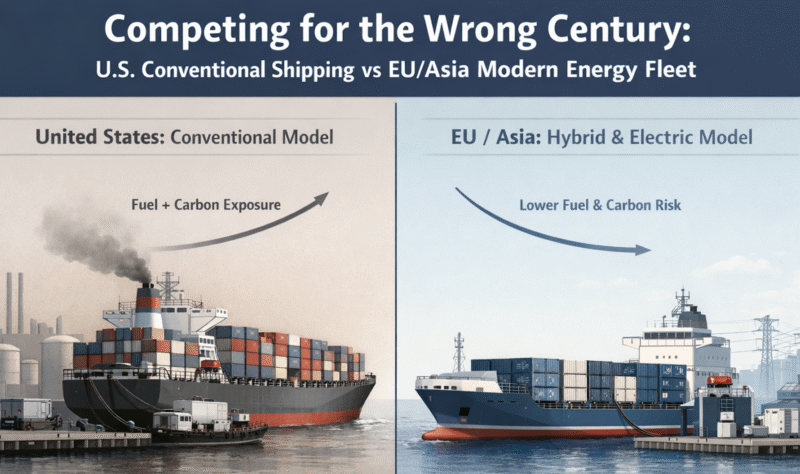
The new U.S. Maritime Action Plan, available from the White House Maritime Insights page, is serious policy work. It acknowledges that American commercial shipbuilding has withered to less than 1% of global output and that only a handful of domestic yards can build large oceangoing vessels. It recognizes workforce shortages, fragmented procurement, and brittle supply chains. It calls for multiyear contracting, yard recapitalization, and supplier development. On its own terms, it is coherent. Its diagnosis of the situation is realistic, as far as it goes. The problem is not that the plan lacks effort. The problem is that it is trying to restore competitiveness using a 20th century framework in a shipping market that is already shifting under it.
Global shipping economics are changing because energy architecture is changing. The European Union has incorporated maritime into its Emissions Trading System, phasing in coverage from 40% of emissions in 2024 to 100% by 2027. FuelEU Maritime imposes a declining lifecycle greenhouse gas intensity requirement on energy used on board ships beginning in 2025, tightening over time. The IMO’s 2023 strategy sets a net-zero direction for international shipping by or around 2050, with indicative checkpoints of at least 20% (striving for 30%) by 2030 and at least 70% (striving for 80%) by 2040 versus 2008. The legally binding package to implement that direction, a global fuel standard paired with a pricing mechanism, has been delayed in negotiations, featuring strong U.S. opposition, but the direction remains and regional rules like the EU’s are already forcing fleet and fuel decisions. China has strong domestic targets, a strengthening and broadening carbon price, is electrifying shipping, and building strong low-carbon fuel industrial ecosystems. These are not symbolic targets and actions. They attach cost to carbon intensity. A vessel trading into Europe or Asia will face a rising compliance bill if it burns fossil fuel in a conventional architecture. That cost will be embedded in charter rates, asset valuations, and financing decisions.
Battery electric and hybrid propulsion are not moral statements. They are cost structure shifts. If a short sea vessel consumes 10 tons of marine fuel per day at $700 per ton, that is $7,000 per day in fuel. At 300 operating days per year, that is $2.1 million annually. If hybridization cuts fuel burn by 30%, that is $630,000 per year saved before accounting for carbon pricing exposure. If EU ETS adds an effective $100 per ton of CO2 on 3.1 tons of CO2 per ton of fuel, that is an added $310 per ton of fuel burned. On 10 tons per day, that is $3,100 per day or $930,000 per year. Hybridization that reduces fuel use by 30% reduces that exposure proportionally. The economics are not subtle.
Battery system costs have fallen sharply, making most studies on the subject obsolete as I noted recently. Containerized battery energy storage systems are being procured in competitive markets at $80 to $150 per kWh for delivered modules at port. Gravimetric densities at the system level are in the range of 140 to 175 Wh/kg. A 10 MWh installation at $120 per kWh is a $1.2 million capital item. At 150 Wh/kg, that 10 MWh weighs about 67 tons. On a 5,000 ton vessel, that is about 1.3% of displacement. If that battery displaces fuel burn equivalent to 3 tons per day and operates 300 days per year, it offsets about 900 tons of fuel annually. At $700 per ton, that is $630,000 per year. The simple payback is under two years before carbon pricing and maintenance effects. Not every vessel pencils out that cleanly, but many inland and short sea segments are already within this range.
The new U.S. plan acknowledges innovation in automation and digital systems. It addresses autonomous vessels and regulatory modernization. It calls for improved procurement efficiency and better requirement definition. Those elements are aligned with current practice. What it does not do is treat energy architecture as a core competitiveness lever. There are no electrification targets for vessel classes. There is no integrated strategy for port electrification. There is no defined domestic industrial base for maritime power electronics, battery integration, or high capacity shore connection hardware. Energy appears as background modernization, not as the organizing principle of the next generation fleet.
Protection is the dominant instrument in the plan. It proposes strengthening cargo preference rules and imposing fees on foreign built vessels entering U.S. ports. It calls for expanding U.S. flag tonnage and building a Strategic Commercial Fleet supported by federal funding. This is mid 20th century maritime doctrine. It assumes that domestic build origin is the foundation of security. In a world where lifecycle operating cost under carbon constraints determines asset value, that assumption is incomplete.
The productivity gap remains central. Large commercial vessels built in South Korea, Japan, or China often cost 2 to 4 times less per compensated gross ton than comparable U.S. builds. That gap reflects continuous production lines, supplier density, standardized designs, and yard automation. If a Korean yard can deliver a 3,000 TEU feeder for $40 million and a U.S. yard requires $120 million for similar tonnage, protection can force domestic procurement but it cannot erase the cost differential. If the $120 million vessel also carries higher fuel and carbon compliance exposure because its energy architecture lags, the lifecycle gap widens further.
The universal per kg fee proposal in the plan illustrates the risk. At 1¢ per kg, a 20,000 kg container load would incur $200 in additional cost. On 10 million containers, that is $2 billion. At 25¢ per kg, that same container would incur $5,000. On 10 million containers, that is $50 billion. These costs would not be absorbed by shipowners. They would flow through freight rates into food, electronics, appliances, and construction materials. If the purpose is to raise $66 billion over ten years at 1¢ per kg, that $6.6 billion per year is a tax on trade. It does not improve yard productivity. It shifts costs, and not externally, but to American consumers. As James Carville helped then future President Clinton articulate, “It’s the economy, stupid”. This plan will take a long time to rebuild capacity and put the costs on voters who are already paying over $1,000 per year on average for new protectionist tariffs.
Energy transition is also a security issue. A hybrid coastal fleet that reduces liquid fuel consumption by 30% reduces exposure to supply disruption. Shore power allows vessels at berth to draw from domestic electricity rather than imported fuel. Maritime shipping fuels used in the United States are refined primarily from a mix of domestic crude oil and imports, with Canada by far the largest foreign supplier. In recent years, roughly 50% to 60% of U.S. crude oil imports have come from Canada, followed by smaller volumes from Mexico, Saudi Arabia, Iraq, and Colombia, according to U.S. Energy Information Administration data. Gulf Coast refineries, which produce most U.S. marine bunker fuel and marine diesel, typically run blends of domestic shale crude and heavier imported grades, especially Canadian heavy crude, to optimize refinery configurations designed for high sulfur residual fuel and distillate production. Current US policy is antagonizing or actively overthrowing foreign sources of crude, and the global energy market is making them economically non-viable, creating a strategy energy risk for US shipping fuels. A fleet designed around flexible energy inputs is harder to constrain through fuel embargo or price spike. If security is the core justification for maritime policy, then energy architecture should be central, not peripheral.
The Jones Act is the structural variable shaping American maritime economics, as I’ve returned to a few times. It requires U.S. built, U.S. owned, U.S. crewed vessels for domestic coastwise trade. It is not mentioned in the plan. Not once. This is not oversight. It is avoidance. A maritime revival plan that will not even name the rule that defines the domestic market is policy shadowboxing. If the Jones Act strengthens security and competitiveness, say so and defend it. If it distorts cost and slows modernization, confront it and reform it. Silence is not strategy. Refusing to engage directly with the Jones Act in a comprehensive maritime plan is intellectual cowardice.
The world market will not wait for American political comfort. A vessel ordered in 2026 will likely operate into the 2050s. If that vessel enters European waters in 2030, it will face ETS exposure and FuelEU intensity requirements. China is heading in that direction, having 700 TEU container ships operating domestically. If the ship’s energy architecture is fossil heavy, it will carry a rising compliance burden over its life. Asset values reflect expected cash flow. Cash flow reflects operating cost. Operating cost increasingly reflects carbon intensity. These are mechanical relationships.
If the United States rebuilds yard capacity primarily to produce conventional fossil heavy tonnage, it risks creating a protected domestic niche that depends on preference rules and tariffs rather than export competitiveness. If it rebuilds yard capacity while integrating battery, hybrid, and shore power readiness as baseline design elements, it can compete in the emerging regulatory environment. The difference is not philosophical. It is economic.
Competitiveness in the 2030s maritime market will be defined by three variables. Build cost per ton. Lifecycle operating cost under carbon constraints. Regulatory compliance flexibility. The current plan addresses build cost partially through procurement reform and supplier development. It addresses lifecycle cost only indirectly. It does not address compliance flexibility in a structured way.
Avoiding the energy transition question does not freeze the market. It shifts the cost to later years. Retrofitting hybrid systems onto ships not designed for them is more expensive than integrating them at build. Retrofitting shore connection systems onto vessels not designed with appropriate electrical architecture adds complexity. Building tonnage that requires future modification to remain competitive is not industrial strength. It is deferred liability.
A serious competitiveness strategy would treat maritime battery integration, high power conversion, thermal management, and shore infrastructure as core industrial base components. It would tie federal procurement to energy performance metrics. It would set measurable goals for hybrid penetration in coastal and government fleets. It would align port infrastructure funding with vessel electrification timelines. It would address the Jones Act openly in the context of energy architecture and global competitiveness.
The United States might be able to rebuild shipbuilding capacity. It could modernize yards and train workers. It could protect domestic trade. But if it defines competitiveness using 20th century metrics while the rest of the world prices carbon and redesigns vessels around new energy systems, it will find itself defending a fleet that is structurally expensive to operate. It’s also subject to the ongoing policy flipflops in the country. Industrial policy without energy realism is incomplete. Maritime security without energy architecture is fragile. Competitiveness built on insulation rather than adaptation will not endure.
Support CleanTechnica via Kickstarter
Sign up for CleanTechnica’s Weekly Substack for Zach and Scott’s in-depth analyses and high level summaries, sign up for our daily newsletter, and follow us on Google News!
Advertisement
Have a tip for CleanTechnica? Want to advertise? Want to suggest a guest for our CleanTech Talk podcast? Contact us here.
Sign up for our daily newsletter for 15 new cleantech stories a day. Or sign up for our weekly one on top stories of the week if daily is too frequent.
CleanTechnica uses affiliate links. See our policy here.
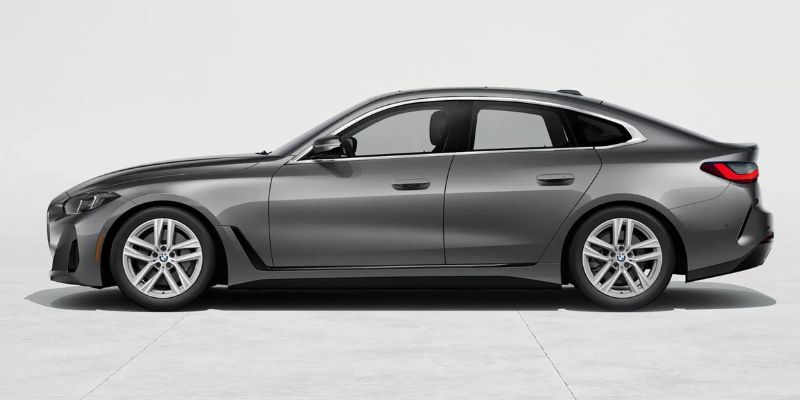
The 2026 BMW 4 Series Sedan takes all of your expectations, exceeds them, and just keeps going. With its refreshing design, forceful performance capabilities, and intuitive in-cabin technology, the new 4 Series Sedan asks us: “Why settle for less?” If you’re interested in a full rundown of the new BMW 4 Series Sedan, keep reading.
A Quick Look at the 2026 BMW 4 Series Sedan
Performance
The new 4 Series Sedan delivers a comfortable blend of power and capability from the moment you get behind the wheel. With its 2.0L turbocharged inline‑4 with mild hybrid engine producing 255 horsepower, the new 4 Series Sedan defies all expectations. Whether you’re trying to turn tight corners or gracefully glide down the highway, the new 4 Series Sedan’s updated handling configurations have got you covered. This list includes other performance features you should be aware of:
Front suspension with spring struts and anti-roll bar
4-wheel ventilated disc brakes with Anti-lock Braking System (ABS)
Any luxury coupe worth your time should be able to keep your passengers safe while keeping them entertained. The newest model is available with the latest safety innovations from BMW, which will help you watch the road and cover your blind spots. Every new 4 Series Sedan comes available with an intuitive infotainment system featuring smartphone compatibility, ensuring you and your passengers are always connected. There are a number of standard and available technology features for this car, including:
Auto Start-Stop function
Automatic high beams
Anti-lock Braking System (ABS)
Design
Whether you’re behind the wheel, in the back seat, or outside of the car altogether, one thing is clear: BMW didn’t pull any punches when designing the new 4 Series Sedan. Every inch of the new 4 Series Sedan’s exterior is used to bolster its sleek, athletic profile. We don’t want to say that the new 4 Series Sedan’s interior redefined our expectations of how comfortable sports car interiors should be, but it came close. Below are a few more available design features of this car:
18″ Dual-spoke Bicolor 853 Wheels with All Season Runflat Tires
Satin Aluminum exterior trim
Anthracite Headliner
Drive the 2026 BMW 4 Series Sedan near Upper Marlboro, MD
At Passport BMW, we’re proud to list the 2026 4 Series Sedan in our portfolio of vehicles. Browse our inventory of new BMW cars for sale near Upper Marlboro, MD to zero in on your favorite model. Remember to stay up to date on our new BMW specials, and schedule a test drive at your convenience.
*MSRP: Starting price represents the manufacturer’s suggested retail price (MSRP) for the trim. The MSRP does not include destination and handling charges, taxes, title, license, options, and dealer charges. Actual prices are set by the dealer and may vary. Photo is for marketing and example purposes only. Photo may not reflect starting MSRP or trim level.\n**EPA-estimated MPG for City/Highway for 2026 BMW 4 Series Sedan . Actual mileage will vary. Displayed MPG is based on applicable EPA mileage ratings. Use for comparison purposes only. Your actual mileage will vary, depending on how you drive and maintain your vehicle, driving conditions, battery pack age/condition (hybrid models only) and other factors.
Posted in
BMW Information |
Comments Off on The 2026 BMW 4 Series Sedan Is Here, Waiting for You
A car accident can turn a normal day upside down in seconds. One moment, everything is fine; the next, injuries, car repairs, time off work and calls from insurers. It’s common for people to wonder if they really need a lawyer or if handling the claim themselves will be easy. While every situation is different, having the right legal support often makes the process more straightforward and far less stressful.
When Hiring a Car Accident Lawyer Makes Sense
Not every accident needs a lawyer, but there are plenty of situations where getting advice early on can protect both your finances and peace of mind—and potentially get you compensated for the accident.
Serious Injuries or Long Recovery Times
If someone has suffered broken bones, back injuries, head trauma or anything that needs ongoing treatment, costs can add up quickly. Medical bills, rehab and time away from work often last longer than expected. A lawyer helps make sure current and future expenses are properly considered, not just the first few bills that arrive.
Disputes About Who Caused the Accident
When the fault is unclear or the other driver denies responsibility, things can get complicated fast, especially when the blame game begins. Evidence matters in these situations. Statements, photos, reports and expert opinions can all play a role. A lawyer knows how to gather and present this information so the full story is properly understood.
Pressure from Insurance Companies
Insurers are businesses, and their goal is to limit payouts. Early settlement offers may sound reasonable, but often do not reflect the actual impact of the accident. Without legal guidance, many people accept less than they should simply because they want the matter finished.
Time Off Work or Loss of Income
Missing work after an accident can cause severe financial stress. Proving lost income or reduced earning capacity is not always straightforward. A lawyer ensures paperwork is accurate and that all losses are included, not just the obvious ones.
Fatal Accidents
When a crash leads to the loss of a loved one, the legal side can feel overwhelming. A lawyer can guide families through the process with care, helping them seek compensation for funeral costs, lost financial support and the emotional impact of their loss.
The Benefits of Having a Car Accident Lawyer
Legal support is not just about paperwork. It is about having someone in your corner who understands how the system works.
Better Understanding of Compensation
Many people underestimate what they can claim. Compensation may include medical costs, future treatment, lost income, pain, suffering and long-term impacts on daily life. A lawyer looks at the whole picture, not just the immediate damage.
Less Stress During Recovery
Recovering from an accident is hard enough without constant phone calls and forms. A lawyer handles communication with insurers, deadlines and negotiations so the injured person can focus on getting better.
Stronger Evidence and Preparation
From police reports to medical records, details matter. Lawyers know what evidence strengthens a claim and how to present it clearly. This preparation often leads to better outcomes, even before the court is considered.
Protection from Unfair Tactics
Delays, low offers and pressure to settle quickly are common tactics. A lawyer recognizes these moves and responds appropriately, making sure clients are not rushed into decisions that hurt them later.
Support If the Court Becomes Necessary
Most claims settle without going to court, but sometimes legal action is the only option. Having a lawyer ready to take that step can encourage fair negotiations and ensure proper representation if the case proceeds.
Can a Claim be Handled Without a Lawyer?
In very minor accidents where no one is injured and fault is clear, handling a claim alone may be possible. Even then, small mistakes can still affect outcomes. A short consultation can help people understand their options before making a decision.
Local Support Matters
Accident laws and processes can vary, and local knowledge matters. Working with lawyers who understand the area, regional courts and insurers can help claims move more smoothly and with fewer surprises.
Where Can You Hire a Lawyer?
Looking for experienced guidance close to home is advised. If you’re in Queensland, Australia, for instance, Smiths Lawyers, car accident lawyers in Townsville, provide local and national support for people dealing with the aftermath of a crash.
Having a team that understands both the legal process and the local community can make the journey feel far more manageable.
Final Thoughts
A car accident can leave lasting impacts long after the vehicles are repaired. While it may seem easier to handle a claim alone, the right legal advice often leads to better outcomes and less stress. Knowing when to ask for help can make all the difference in moving forward with confidence.
Tesla Malaysia has announced it has delivered its first vehicles in Kuching, marking the start of its presence in East Malaysia. This comes after the company set up a pop-up showroom in Vivacity Megamall in the Sarawakian capital early last month.
This expansion to Borneo is the company’s sixth outlet locally, following locations in the Klang Valley, Penang and Johor Bahru. We should point out, however, that there are no service centres in Sarawak just yet. Tesla Malaysia also confirmed that as of early 2026, it operates 18 Supercharging stations with 76 Superchargers and 17 Destination Charging stations with 79 Destination Chargers; again, none in East Malaysia.
The move continues Tesla’s renewed push in Malaysia, having retained prices for 2026 despite CBU tax exemptions ending last year. Last month, the country introduced the Model Y Premium RWD and the Model 3 RWD (née Standard), the latter now the cheapest Tesla in Malaysia at RM147,600.