Coming up on ten years ago, I purchased Project Why Wait, my 1951 GMC pickup, as a personal challenge to myself. On paper, it sounded simple enough. In reality, I was asking a much bigger question: Could I, with my assorted — and largely untested — automotive knowledge, actually build a vehicle from the ground up?
Initially, the build was documented here on Stance Is Everything (later earning it the SIE GMC moniker), before I branched out to a few forums and eventually Speedhunters for some global exposure. What started as a personal experiment slowly became something people were watching.
Between Speedhunters posts and Instagram updates, I also started a YouTube series dedicated to the truck. It was there that I documented getting the collection of parts to the point where it was finally drivable, along with the first few thousand kilometres of shakedown.
Last winter, after a summer spent chasing down bugs, I was presented with the opportunity to debut the truck at the 2025 Motorama Custom Car & Motorsports Expo.
The opportunity really came together thanks to my friend Jeff Wybrow of Issyfab Speed LTD.
ZEHR Insurance was looking for vehicles for their booth in the Motor Mayhem area of Motorama to showcase the kinds of vintage cars they could provide coverage for. Jeff suggested my project, not knowing it was actually already insured through ZEHR.
Insuring the truck with ZEHR had been a genuinely painless process, and I’d recommended them to quite a few people over the years, so the pairing felt organic.
ZEHR contracted STATUS Logistics Group to transport the truck to the event, and from that point on, the experience felt surreal. STATUS picked it up right from my front door and delivered it to the entrance of the hall where it would sit on display.
When I pulled into the show later, I was welcomed with prime positioning in the Motor Mayhem back room, complete with custom signboards and ZEHR branding. Seeing my truck presented that way — under lights, with signage, like it belonged — was something I hadn’t quite prepared myself for.
As a bonus, it also became a convenient home base while I covered the event. But if I’m being honest, every time I walked back to it, I had to remind myself it was the same truck that was nothing but parts for the better part of a decade.
Initially, these photos were part of a pretty extensive series I had planned for Speedhunters. Unfortunately, the same day I submitted everything was the same day I was told it was unlikely the site would return.
All of the content I generated at Motorama 2025 was quietly shelved… until now.
Now, I can properly thank ZEHR — and STATUS — for allowing me to be part of their booth. The experience was incredible, and it was surreal to present the truck, unfinished as it still is, to a wider audience.
After the show, the truck went right back into the garage for more work before another season of shakedown. And while I’m happy to say it’s performing well, surprise, surprise — it still isn’t “done.”
But maybe that’s the point.
The truck has never really been about being finished. It’s been about the process. The challenge. The growth — both mechanical and personal.
That said, it’s almost time to start wrenching on it again. High on the priority list is finally colour- and patina-matching the bed — something that’s been looming over me for far too long.
Look for more on the SIE GMC — or Project Why Wait, if you prefer — in the not-too-distant future. Until then, expect to see a lot more from Motorama 2025 before we roll fully onto this year’s show, which takes place March 13-1,5 2026 at the International Center.
Thermal imaging firm Raythink has released a white paper outlining a three-layer approach to monitoring thermal risks across the lithium-ion battery lifecycle, from production and testing through charging, energy storage and end-of-life recycling.
The system centers on infrared-based thermal monitoring. The first layer uses thermal cameras rated for harsh environments, deployed at production lines, storage facilities and other critical areas. The second layer, a cloud platform called VIS3000, centralizes thermal data for trend analysis, incident review and compliance documentation. The third integrates with existing safety systems—including BMS, fire alarms and distributed control systems—to create a unified monitoring network.
According to the company, most thermal monitoring solutions in practice remain fragmented, with different stages of the battery lifecycle relying on independent systems. Raythink’s approach consolidates data from all environments onto a single platform, which the company says also yields process and quality insights beyond safety monitoring.
“The system addresses key gaps in traditional lithium-ion battery safety monitoring and enables proactive, full-lifecycle management of EV battery thermal risks,” according to the company.
The white paper is available for download at raythink-tech.com.
The RWD M135i feels closest to BMW’s classic formula: compact size, straight-six power, and throttle-adjustable balance.
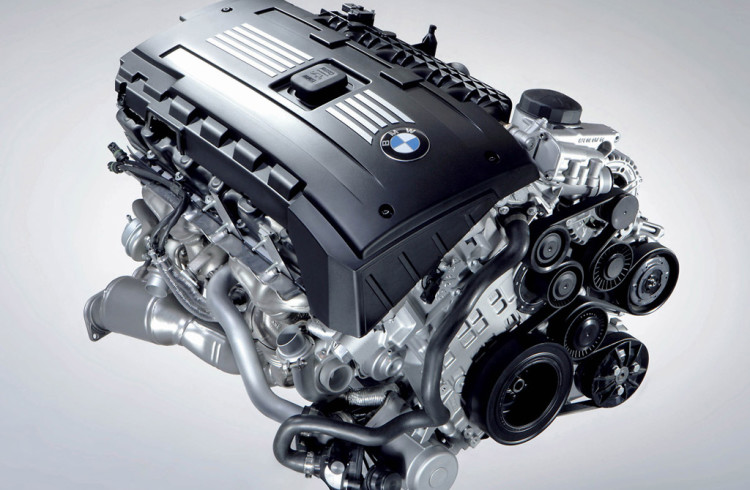
The N55 delivers smooth, eager performance with a broad powerband and a redline that encourages you to use it.
Factory setup uses an open diff with brake-based e-diff behavior; a mechanical M Performance LSD sharpens exits, but the stock car is already lively and willing to slide.
I get why the F20 BMW M135i slips through the cracks. It never got the full ///M mythology, it wasn’t sold everywhere, and on paper it looks like “just” an M Performance car from the early 2010s. But the first time you drive a rear-wheel-drive M135i the way you’re supposed to—really commit to an entry, breathe off the throttle, let the rear take a slip—you realize BMW maybe accidentally built something special.
Not special in the “future classic” way people toss around too easily. Special in the more meaningful way: it feels like a BMW from the era when the company still obsessed over balance and adjustability, not just traction and lap-time heroics.
Yes, there was an xDrive version later on, and I’m not going to pretend that isn’t appealing if you live somewhere winter is half the calendar. But the RWD M135i is the one that stays closest to the “Ultimate Driving Machine” idea. It’s the one where the front axle is allowed to focus on steering, and the rear axle is allowed to have a personality.
And it helps that the car looks right even before it moves. The F20 has that classic BMW stance: a long hood, short overhangs, and a cabin that sits back on the wheelbase like the engine actually matters. In hatchback form it’s an unusually cool shape—compact, usable, and still unmistakably BMW in its proportions. You get the practicality without losing the layout that makes a BMW feel like a BMW.
The numbers still land
The M135i isn’t a “big number” car by today’s standards, but the spec is still the kind that makes enthusiasts nod: 320 hp, 450 Nm (332 lb-ft) from the 3.0-liter N55 inline-six, paired with either a six-speed manual or an eight-speed automatic. In period, BMW quoted 0–100 km/h in 5.1 seconds with the manual and 4.9 seconds with the automatic. That was properly quick when this car showed up—especially wrapped in a compact hatchback body.
Weight matters here more than people admit, and the M135i didn’t arrive bloated. Depending on how you measure it (DIN/EU figures), it sits around the 1,400-1,500 kg range. That doesn’t sound shocking until you drive it back-to-back with newer “hot” cars and realize how much lighter it feels in transitions. The M135i doesn’t have that modern sensation of carrying mass into every corner like a backpack you can’t take off.
The N55 is the reason the whole thing works
I’ve driven the N55 in a bunch of places—the 335i, 435i, and the M135i—and it’s one of those engines that keeps proving itself. It has torque everywhere, but it doesn’t feel like a torque-only appliance. It’s smooth, it’s eager, and it rewards you for using the top half of the tach.
The best part is how linear it feels for a turbo motor. The power doesn’t arrive like a light switch. You roll into the throttle and it just builds—cleanly, predictably, with enough urgency that you don’t need to “set it up” to make it fast. And when you keep it pinned, it doesn’t go flat. It stays happy all the way to the 7,000 rpm redline, which is exactly why people still rate this engine so highly.
Then there’s the sound. The N55 doesn’t need fake noise to have character. It has that straight-six metallic edge, especially when you’re hard on it, and it makes the M135i feel like it’s punching above its class.
Steering and chassis: it’s not a museum piece, it’s a tool
The M135i runs electric power steering, and no, it’s not going to give you E46-style hydraulic poetry. But it’s quick, accurate, and it lets you place the car without second-guessing. That’s what matters once you start driving it hard.
Where the M135i really shows its personality is the chassis balance. It doesn’t just grip and go. It moves. It reacts to weight transfer. It will rotate if you drive it like you mean it.
We spent time tossing one around on track and it clicked almost instantly. The car likes commitment. Turn in with some intent, settle it, and you can feel the rear axle getting light in a way that makes you smile instead of sweat. You can steer it on a lift. You can tighten a line with a touch of trail brake. And when you pick up throttle early, the M135i doesn’t always take the “safe” route—sometimes it will start to come around, and you can catch it and hold it. That’s the kind of fun a lot of modern cars are missing.
It’s tail happy, but not in a scary way. It’s the kind of tail happy that comes from a compact chassis, a real rear-drive layout, and enough power to adjust the car mid-corner without much effort.
The diff question, explained like an enthusiast
From the factory, the F20 M135i doesn’t get a mechanical limited-slip differential. It uses an open diff, and BMW relies on electronic intervention—brake-based torque control—to manage wheelspin and help the car put power down. People call it an “e-diff” effect, because the system can brake an inside wheel and influence where the torque ends up.
When you’re hard on throttle at corner exit, the electronics can create a moment where the car rotates more than you expect. Sometimes it feels like it’s helping you. Sometimes it feels like it’s nudging you into mischief.
A mechanical LSD does a similar job in principle—biasing torque and improving traction—but it does it more directly and more quickly, without relying on braking. That’s why BMW offered a dealer-installed M Performance mechanical LSD as an accessory for these cars. If you’re tracking the car, tuning it, or you just want cleaner exits and more consistent throttle adjustability, it’s one of the upgrades that makes immediate sense.
RWD vs xDrive: The point isn’t the spec, it’s the feel
The xDrive M135i exists for a reason. If you deal with snow, ice, or rough weather half the year, it’s a smart option. But the RWD car is the one that feels most like a traditional BMW compact performance machine. It’s also the version that makes you understand what BMW was doing in that era: building a compact car that could do daily life without sacrificing the driving feel that made the brand famous.
Why it’s underrated
The M135i is underrated because it’s easy to mislabel. It’s not a halo car, so people don’t talk about it like one. It’s an M Performance car, so some enthusiasts assume it’s just an appearance and badge package. And for a lot of readers, it’s also a “forbidden fruit” BMW—one they didn’t get in their market (like in the U.S.), so it never became part of the shared ownership culture the way an E82 135i or 1M did.
If BMW had brought the RWD M135i to the U.S. in its prime, I’d have been first in line. Straight-six, manual option, compact hatch practicality, and a chassis that’ll happily rotate when you push it—this is exactly the sort of BMW that reminds you why we care in the first place.
Bulova Super Seville Precisionist 38mm in stainless steel
The title says it all and we think these watches really do not break the bank or leverage you like an AI start-up. The modern market is teeming with what we call “guiltless pleasures” — timepieces that offer robust engineering, historical significance, or impressive complications without the extra zeroes. Whether it is the pragmatic durability of Super Titanium, the retro charm of a TV- shaped case, or the technical marvel of a perpetual calendar that will not put your BTO dreams on hold, value is the order of the day. Here, we curate six standout models that prove you can build a serious collection with a clear conscience.
Citizen Zenshin Automatic Small Seconds 40.5mm in Super Titanium
CITIZEN ZENSHIN AUTOMATIC SMALL SECONDS
We begin with the first model for this article: the Citizen Zenshin Automatic Small Seconds. It is heartening to see Citizen giving this model a proper name, rather than just a string of letters and numbers, as it helps establish a distinct identity for the watch. This is seriously an issue with Japanese makers and we confess to being intimidated by the reference numbers. Rest assured, even the brand executives do not recall all the references nor what they might mean. Happily, we can tell you that, in Japanese, “Zenshin” means progress, a fitting reflection of Citizen’s forward-thinking vision. This brand was, after all, one of the first watchmakers to pioneer the use of titanium in timepieces, if not the first. That was way back in 1970.
The Citizen Zenshin features a 40.5mm case and an integrated-style bracelet, both crafted from what Citizen likes to call Super Titanium. A proprietary Duratect treatment is, of course, applied to enhance surface scratch resistance, which is what the “Super” refers to. While the overall design leans towards the sporty, the refined details ensure it can be worn suitably in a professional setting. That said, it is just as fitting for leisure activities, with a water-resistance rating of up to 100 metres. The watch is powered by a self-winding movement with a 42-hour power reserve.
With six dial colours of white, black, navy, blue, green, or, salmon, there is surely something to suit every style and occasion. Each version is priced equally at SGD 872 but deals abound so shop around.
BULOVA SUPER SEVILLE PRECISIONIST
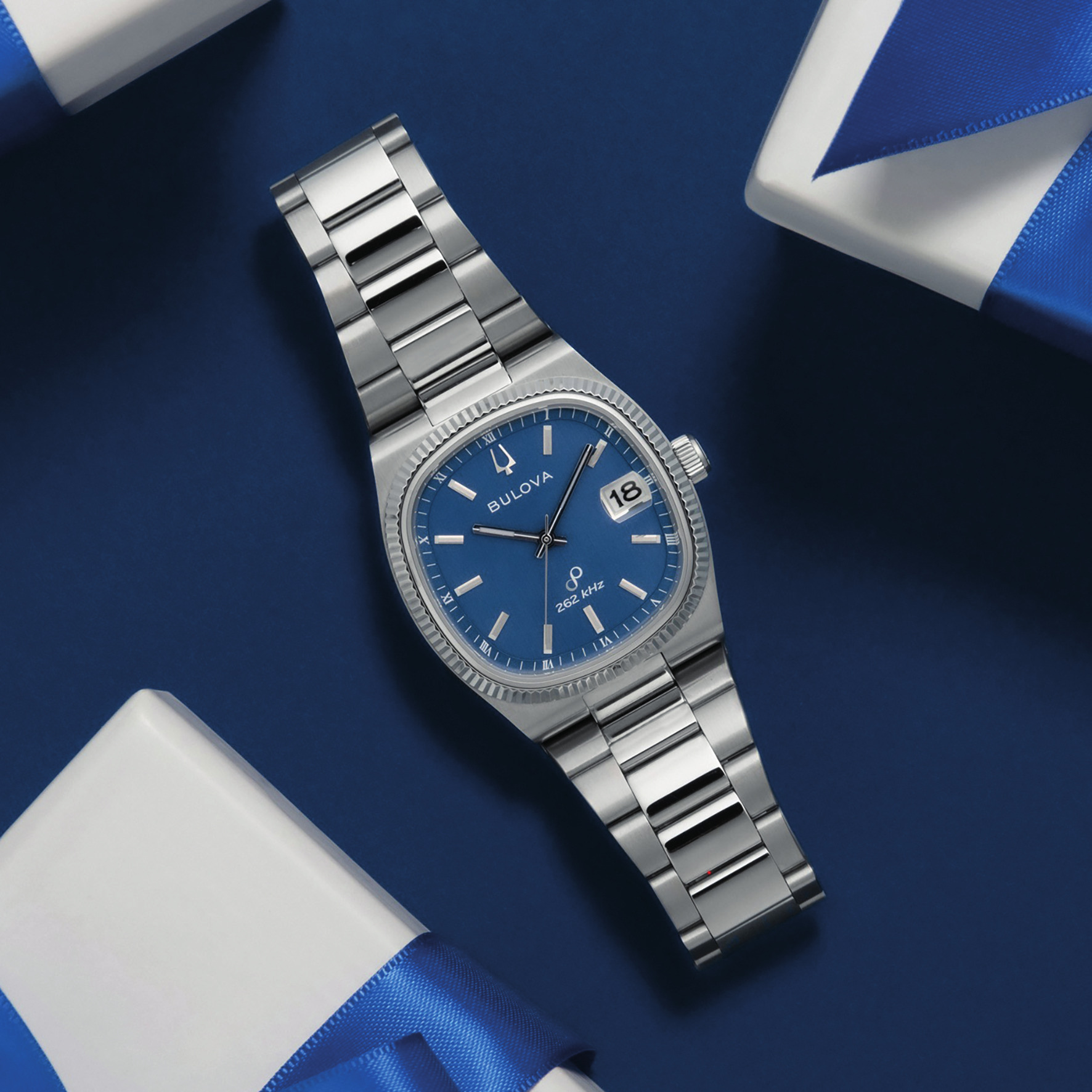
Bulova has returned to the Thai market in earnest under the management of LDI Enterprise (Thailand), which also distributes Citizen watches. In Singapore, Bulova remains under the Citizen banner but availability in physical stores is suspect. The inclusion of this watch was inspired by LDI’s first campaign initiated to reintroduce Bulova in Thailand; it features the Super Seville Precisionist as its highlight model, but this model is criminally underappreciated in Singapore. With a distinctive TV-shaped case that exudes our favourite kind of 1970s vibe, this watch comes in three core versions: stainless steel with a green dial, stainless steel with a blue dial, and yellow gold PVD-coated stainless steel with a silver dial. The model is suitable for both men’s and women’s wrists with a median 38mm case size.
The Super Seville Precisionist features a sapphire crystal with a date magnifier, framed by a fluted bezel reminiscent of a coin edge that is designed to catch the light. A closer look at the dial reveals the “P” logo and the marking “262 kHz” above the 6 o’clock position, referencing the Precisionist quartz movement within. This high-frequency movement offers superior accuracy with an annual deviation of no more than 10 seconds. If you fancy owning a retro-styled timepiece from a historic American brand (turned Swiss Made and now Japanese owned) that is celebrating 150 years of history, do check out this Bulova watch model. Prices start at a very approachable SGD 859.
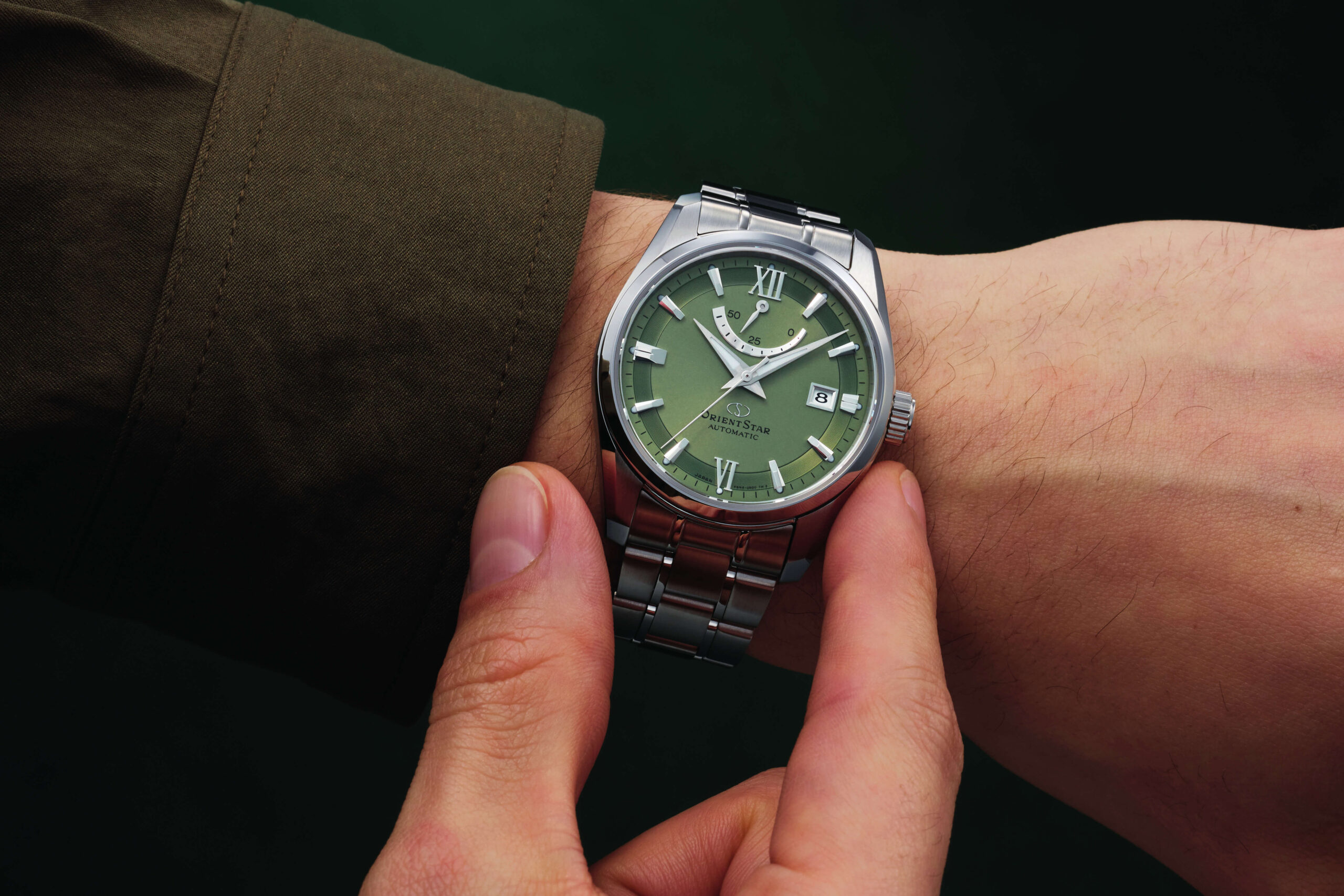
ORIENT STAR CONTEMPORARY DATE
Orient Star frequently catches our eye – true to their slogan, “Capture Your Gaze” – with the launch of multiple models in the first quarter of the year. Among them, the Contemporary Date collection stands out the most, featuring four earthy dial colours: leaf green, desert copper, clear water blue, and stone grey. These hues have been specially treated to soften their saturation, creating a unique and captivating visual appeal beneath the anti-reflective sapphire crystal. This makes the watch a versatile companion, suitable for any occasion, whether dressed formally or casually.
The Orient Star Contemporary Date is powered by the in-house self-winding Calibre F6N43, which boasts a 50-hour power reserve and a corresponding indicator at 12 o’clock. The case size is officially listed as 38.5mm, and on the wrist, it indeed feels true to size – perhaps even slightly larger. Unlike some watches that claim to be 38mm but wear closer to 36mm, this
one maintains its presence. If you need a refresher here, Orient Star is the premium line of Orient, a storied Japanese name that is often mentioned in the same breath as Seiko and, most notably, Grand Seiko. Confusingly, Orient and Orient Star are imprints owned by the Seiko Epson Corporation, which is not affiliated with Seiko.
For those seeking an effortlessly wearable daily timepiece, this model comes highly recommended, particularly given its attractive pricing of only SGD 966 for “Made in Japan” quality. Shopping around is recommended.
Mido Multfort Skeleton Chronograph
MIDO MULTIFORT SKELETON CHRONOGRAPH
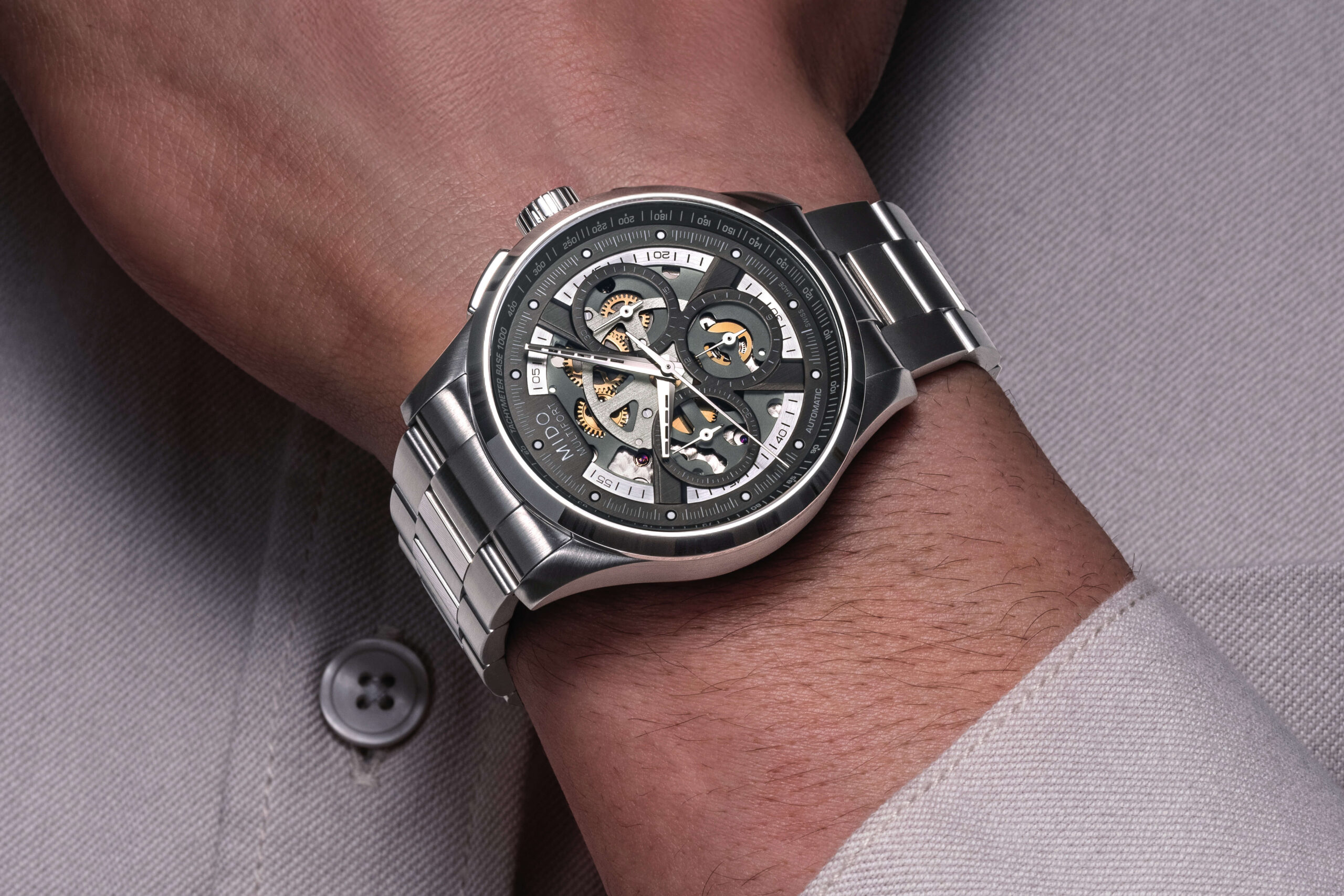
No story about big-name affordable watches would be complete without something from Mido. The Swatch Group-owned brand seems to have a well-thought-out strategy for rolling out new releases each quarter, ensuring they remain consistently in the spotlight, or at least not far from it. Whether it was last year’s Ocean Star 39 or the more recent Multifort 8 Two Crowns, there is always something exciting to admire and talk about. And now, they have introduced the Multifort Skeleton Chronograph… This is a watch that proudly proclaims your passion for mechanical timepieces through its openworked dial and movement.
Mido Multifort Skeleton 38.5mm in stainless steel Chronograph
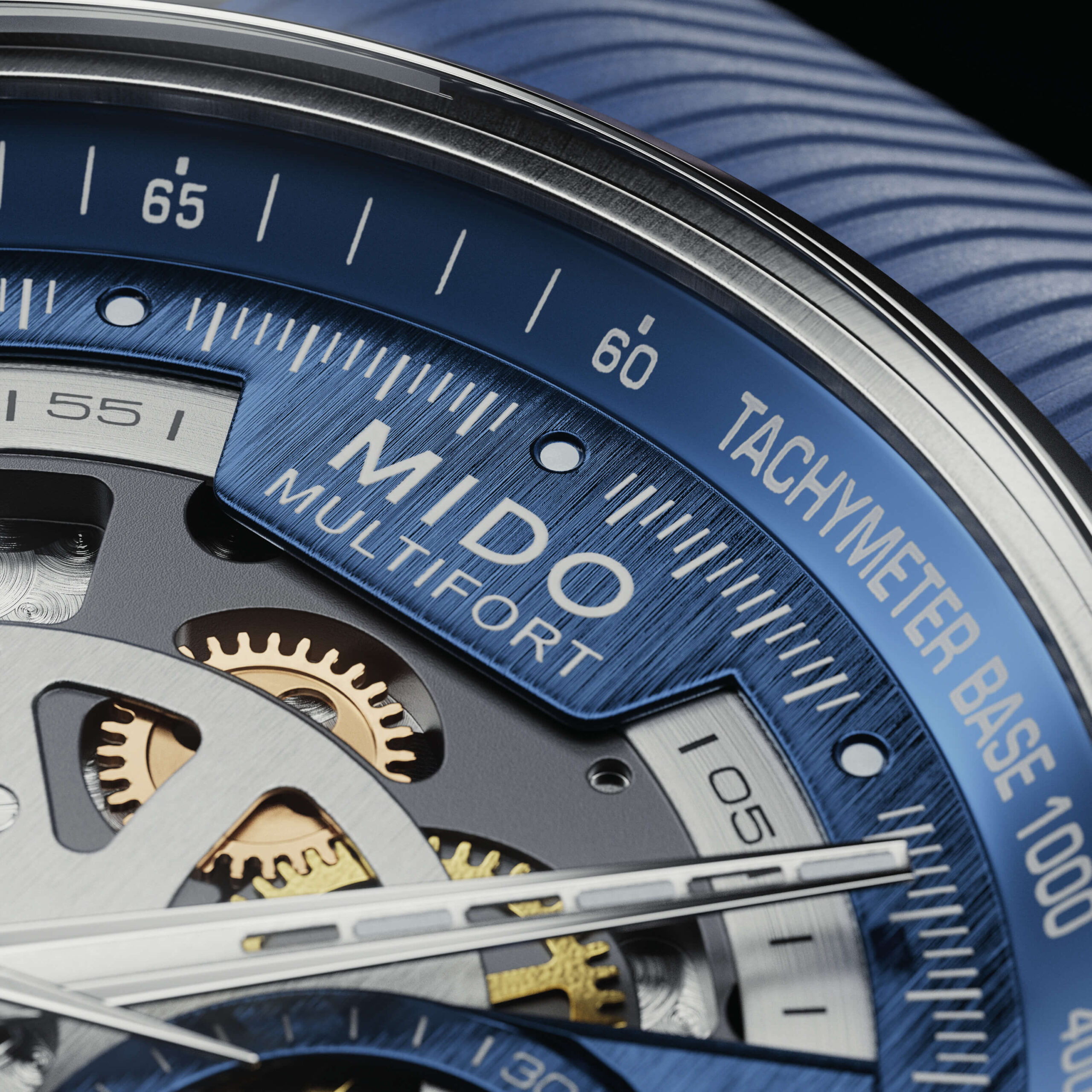
The Multifort Skeleton Chronograph boasts a 43mm case that is water-resistant up to 100 metres. It is a fully functional chronograph, as its name promises, with a 30-minute counter at 3 o’clock, a 12-hour counter at 6 o’clock, and a small second subdial at 9 o’clock. The self-winding movement inside is the Calibre 60, based on ETA A05.951. Its rotor, also skeletonised like the dial, winds the barrel to deliver a power reserve of 60 hours, which is very decent for this price segment (more on this shortly). The sapphire crystal is treated with anti-reflective coating on both sides to improve legibility, which is somewhat uncommon at this level. Currently, Mido offers the Multifort Skeleton Chronograph in two main variations: one with an anthracite dial on a bracelet (SGD 3,450), and another with a blue dial paired with a blue rubber strap (SGD 3,400).
Longines Spirit Zulu Time 42mm in stainless steel
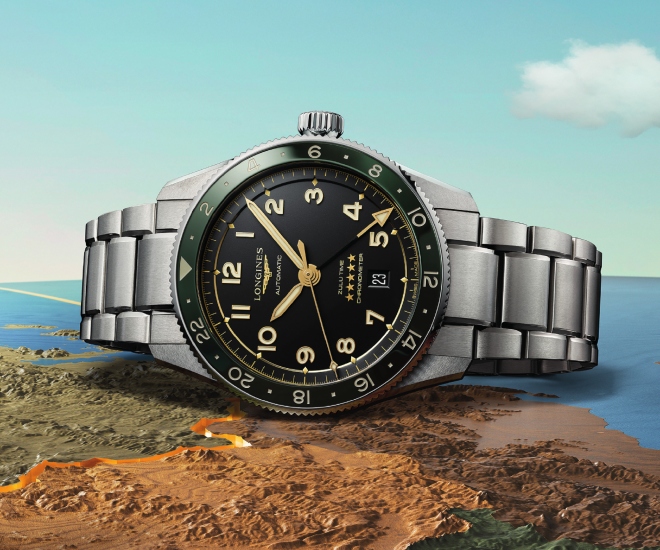
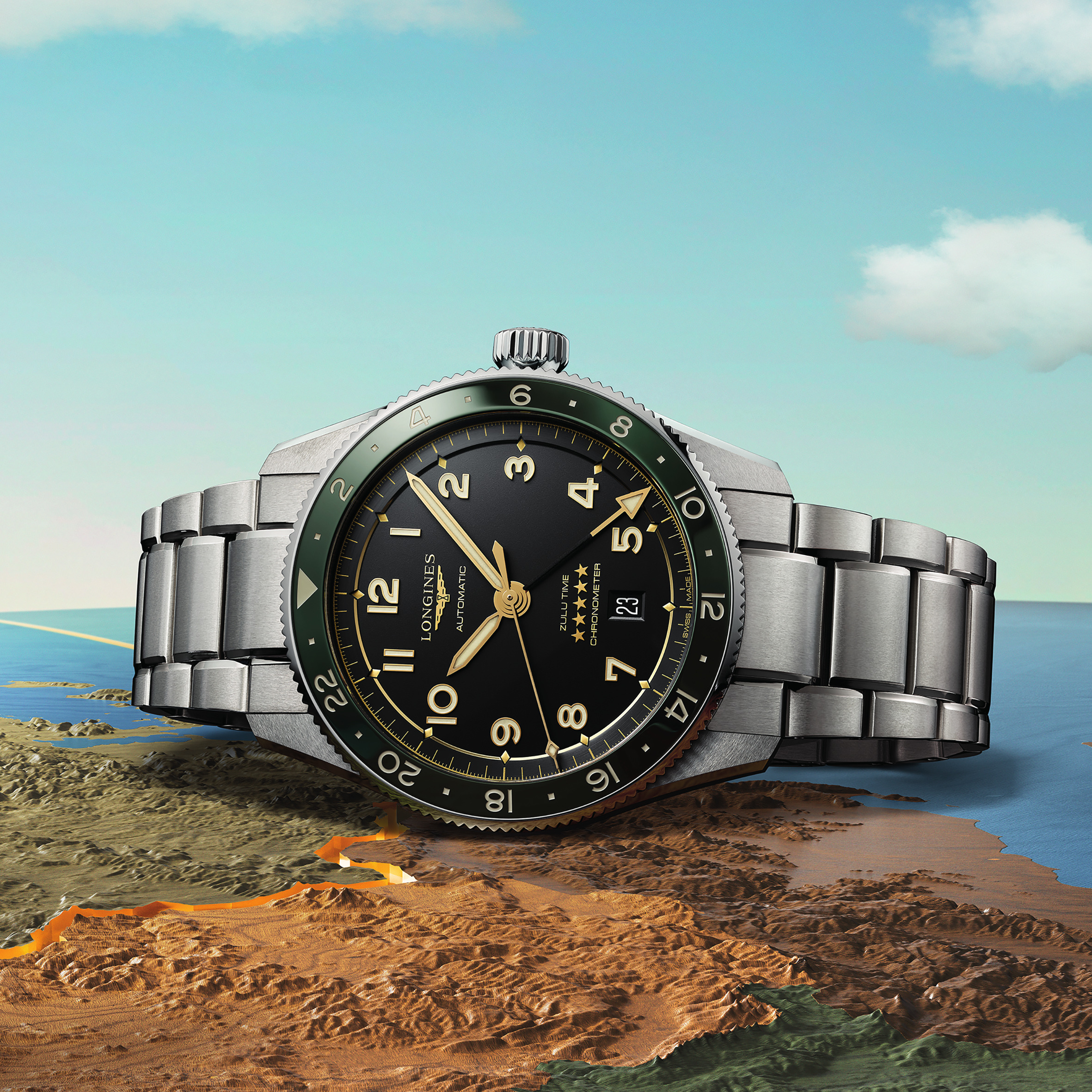
LONGINES SPIRIT ZULU TIME
Spirit is the name of the sports watch collection that Longines introduced in 2020, and it has been the subject of our cover stories multiple times since then; most recently, the Spirit Zulu Time 1925 took centre stage in the Legacy issue. Unhappily, that prevented us from using this story in the Legacy issue because the collection (but not that watch) was selected for inclusion here. In the end, the story covered the entire Spirit collection. No matter because a good watch deserves more than a few good turns.
As a quick recap, the design of the Spirit collection is fundamentally inspired by pioneering aviators and global explorers – individuals who embodied a strong spirit of perseverance in overcoming the challenges before them. The collection did not exist in the pioneering era of aviation, but it represents continuity for Longines with iconic models such as the Weems, the Hour Angle and the original Zulu Time.
One of the highlights from this collection is, thus, the Spirit Zulu Time, a true GMT watch built for international travel. While many GMT watches on the market feature a 24-hour hand, they often lack the ability to independently quick-set the regular hour hand to local time. The Spirit Zulu Time, however, offers this convenient feature. It is powered by the self-winding Calibre L844.4, which delivers a power reserve of 72 hours.
Longines currently offers the Spirit Zulu Time in two case sizes of 42mm and 39mm to suit wrists of varying sizes. The ceramic bezel insert is highly resistant to scratches and is available in colours such as black, blue, and, green. Prices start from SGD 4,620 depending on case size and strap type (i.e. stainless steel bracelet, leather strap, or fabric strap). Titanium and bicolour models are priced higher at SGD 5,900 and SGD 6,000, respectively.
Frederique Constant Classic Perpetual Calendar Manufacture 40mm in stainless steel
To close this article, let us turn to the most sophisticated type of calendar complication in watchmaking: the perpetual calendar. This mechanical invention is capable of automatically recognising whether a given month has 31 days or fewer, and even accounts for leap years. Traditionally, perpetual calendar watches have been reserved for the uppermost price tier, but a few watchmakers dared to buck that tendency. Frederique Constant was part of a new wave of brands that also disrupted this norm in 2016. It also managed this with rare class, developing and producing a perpetual calendar movement that was far more accessible to the broader public.
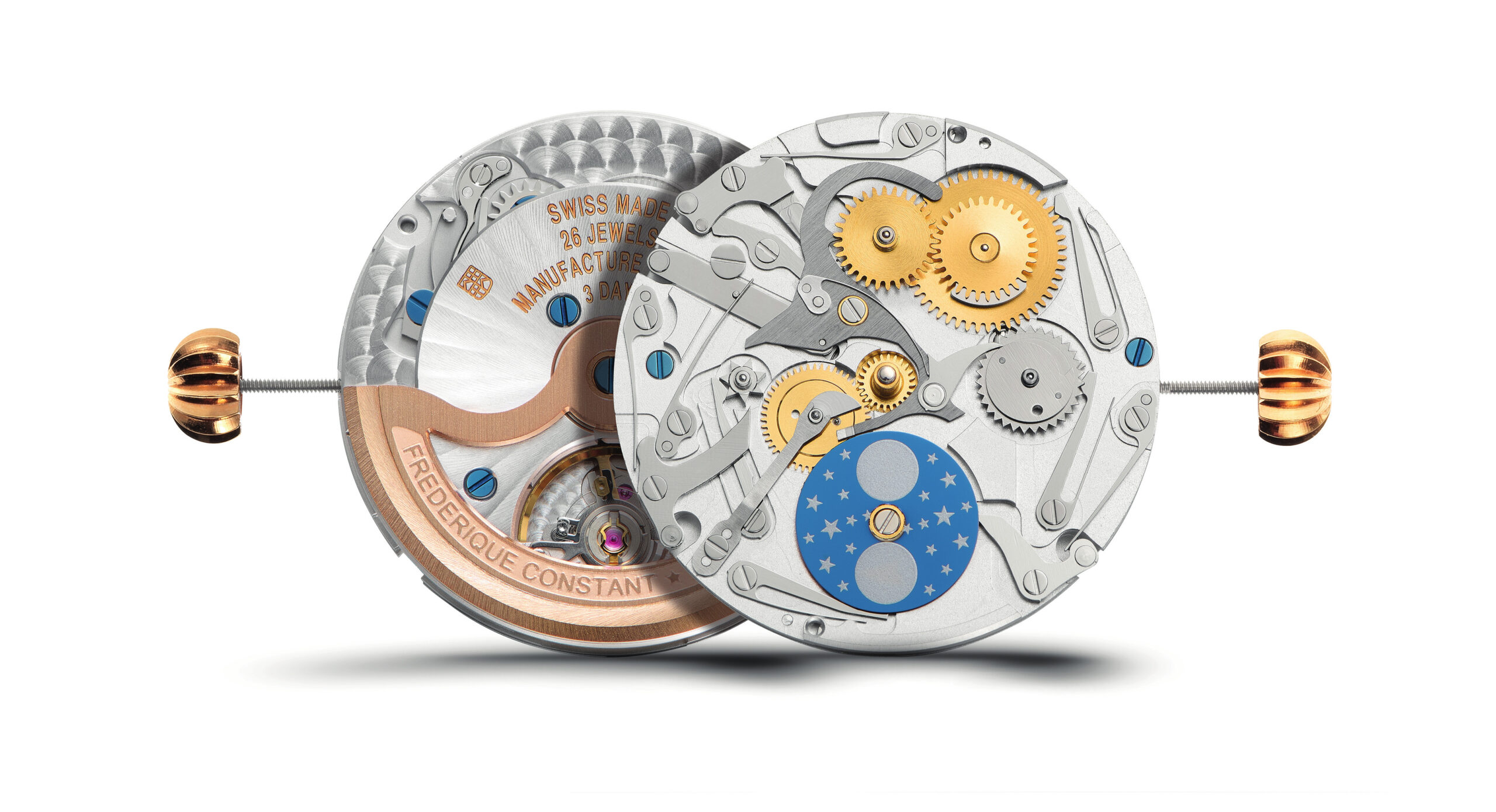
Frederique Constant’s new Manufacture FC-776 Calibre
This year, Frederique Constant has updated its Classic Perpetual Calendar Manufacture with the new in-house Calibre FC-776, which now boasts a power reserve of three days. The case has also been reduced in size, from 42mm to a more refined 40mm. This appears to be the first time Frederique Constant has introduced a salmon dial to this model. The three subdials that make up the calendar display are slightly recessed into the sunray-brushed dial surface, which plays beautifully with the light. They are framed by applied hour markers that complement the elegant dauphine-style hands. Paired with a brown alligator leather strap, the watch commands an official RRP of USD 17,440. It is a compelling option within the world of high complications indeed but the unbeatable value proposition here is well known. This means this model is frequently sold out, so be aware of this.
This story was first seen as part of the WOW #82 Festive 2025 Issue
For more on the latest in luxury watch reads, click here.
Game day always has a way of turning any campsite into a mini tailgate celebration. Whether you’re at a state park campground, boondocking with friends, or watching the action outside your rig in a posh resort, a solid portable grill makes game day food easier and a lot more fun.
If you’re thinking about upgrading your setup before game time, there’s still time. But it helps to know what actually matters in a portable grill for RVing. Let’s take a closer look at what to look for, along with a few of our favorite options that travel well and deliver on game day and beyond.
What to Look for in a Portable Grill for RVers
Not all portable grills are created equal, especially when you’re cooking in tight spaces or packing everything back into your RV. As you shop, keep these key factors in mind.
Grill Size and Cooking Area
Portable RV grills range from ultra compact to large enough to handle a full spread of burgers, brats, and wings. Bigger grills usually mean more cooking space, which is great if you’re feeding a crowd.
That said, larger grills are heavier and take up more storage space. If you love hosting campsite get-togethers or Big Game watch parties, the extra size can be worth it. If you mostly cook for one or two people, a smaller, lighter grill is often the better choice.
Freestanding or Tabletop?
Some portable grills are designed to sit on a table or picnic bench, using short feet for support. That works fine, but it also means you need to carry a table or be sure one is available wherever you camp.
Freestanding grills with longer legs can stand on their own, which is much more convenient. The tradeoff is that they tend to be bulkier and slightly harder to store in your RV.
BTUs and Cooking Power
The term “BTU” stands for British Thermal Unit, and it measures how much heat a grill can produce. Higher BTUs generally mean faster cooking and better searing.
For the most accurate comparison, look at BTUs per square inch rather than total BTUs alone. That gives you a clearer picture of how much heat you’re actually getting across the cooking surface.
Extra Features That Make Life Easier
Some portable grills come with thoughtful extras that can make a big difference at the campsite. Popular features include:
Side tables for utensils and plates
Built in thermometers
Drip pans for easier cleanup
Mounting options that attach directly to your RV
The right combination of features depends on how you like to cook and how much convenience you want on game day.
5 Great Portable Grills for RVers
Now that we know what to look for in an RV, let’s look at five great portable grills for RVing that you can buy right now.
Weber Q1200
First up on our list of the best portable grills for RVing is the compact Weber Q1200. This compact propane grill is for RVers who want a simple, classic setup for campsite tailgating. With an 8,500-BTU stainless-steel burner and 189 square inches of cooking space, it handles six burgers at a time, plus other game day basics you can think of.
Porcelain-enameled cast-iron grates deliver even heat and solid sear marks, while the built-in lid thermometer helps you cook with confidence. Two side tables give the campsite cook room for trays and prep. Weighing just over 31 pounds, the Q1200 is portable enough to move easily but sturdy enough to feel dependable on those wobbly campsite picnic tables.
Cuisinart Chef’s Style Stainless Tabletop Grill
The Cuisinart Chef’s Style Tabletop Grill is a great choice for RVers who want big grill performance in a portable package. With 20,000 BTUs and 275 square inches of cooking space, it can easily handle burgers, brats, and wings for a campsite tailgate party. Two independently controlled burners let campsite gourmets create separate heat zones, so you can cook different foods at the same time without juggling temperatures.
The built-in thermometer helps monitor heat without lifting the lid, and the stainless-steel finish is easy to clean after the game has ended.
The Monument Grills G22 Stainless Tabletop Propane Gas Grill is a sleek grill that delivers all-star performance at the tailgate party. With two burners producing 15,000 BTUs and a 200-square-inch cooking area, it can handle about 10 burgers at once.
The Clearview lid lets you check food without lifting the top and losing heat, while the built in temperature gauge helps you stay in control. Stainless steel grates heat evenly and clean up easily after the crowd clears out. Its locking lid, sturdy legs, and manageable size make it easy to transport and set up anywhere you park.
Flame King BBQ Grill
The Flame King YSNHT500 is built for RVers who want to avoid intentional grounding … of their grill. Designed to mount directly to the side of an RV or trailer, it keeps the cooking area off the ground and ready to sub in whenever kickoff approaches. The 12,000-BTU burner and 221 square inches of grilling space are perfect for burgers, hot dogs, and other game day staples.
For added flexibility, the hanging rack converts into legs so the grill can be used freestanding at a picnic table or tailgate spot. Locking retainer pins and a dual locking lid keep everything secure while traveling. Weighing just 22 pounds and including a carry bag, this grill is easy to transport, store, and fire up for any campsite tailgate party.
Blackstone On the Go Combo Grill
Need to call an audible and switch up cooking styles? With a rating of 12,500 BTUs and 267 square inches of grilling surface, the Blackstone On the Go Combo is just the ticket. Featuring a 17-inch griddle and a removable 17-inch grill box with cast-iron grates, this griddle/grill combo unit lets you cook everything from burgers and quesadillas to pancakes and grilled corn. The included grill grate adds char lines when you want them, while the griddle handles larger batches with ease.
Flexfold legs and a roll-and-go design make it easy to move and store between stops. Built-in grease management keeps cleanup simple, and electric ignition makes startup quick. With access to range top burners under the cooking surfaces, this combo handles grilling, boiling, and skillet cooking in one compact, travel-friendly unit.
A Portable Grill is a Must-Have for Your Game Day Campground Party
There’s a wide range of portable grills for RVing available on the market. Whether you want something to cook for two, or a grill big enough for the entire secondary, there’s an option for you. All that’s left is to pick-off your favorite from our list and start planning your next game day watch party!
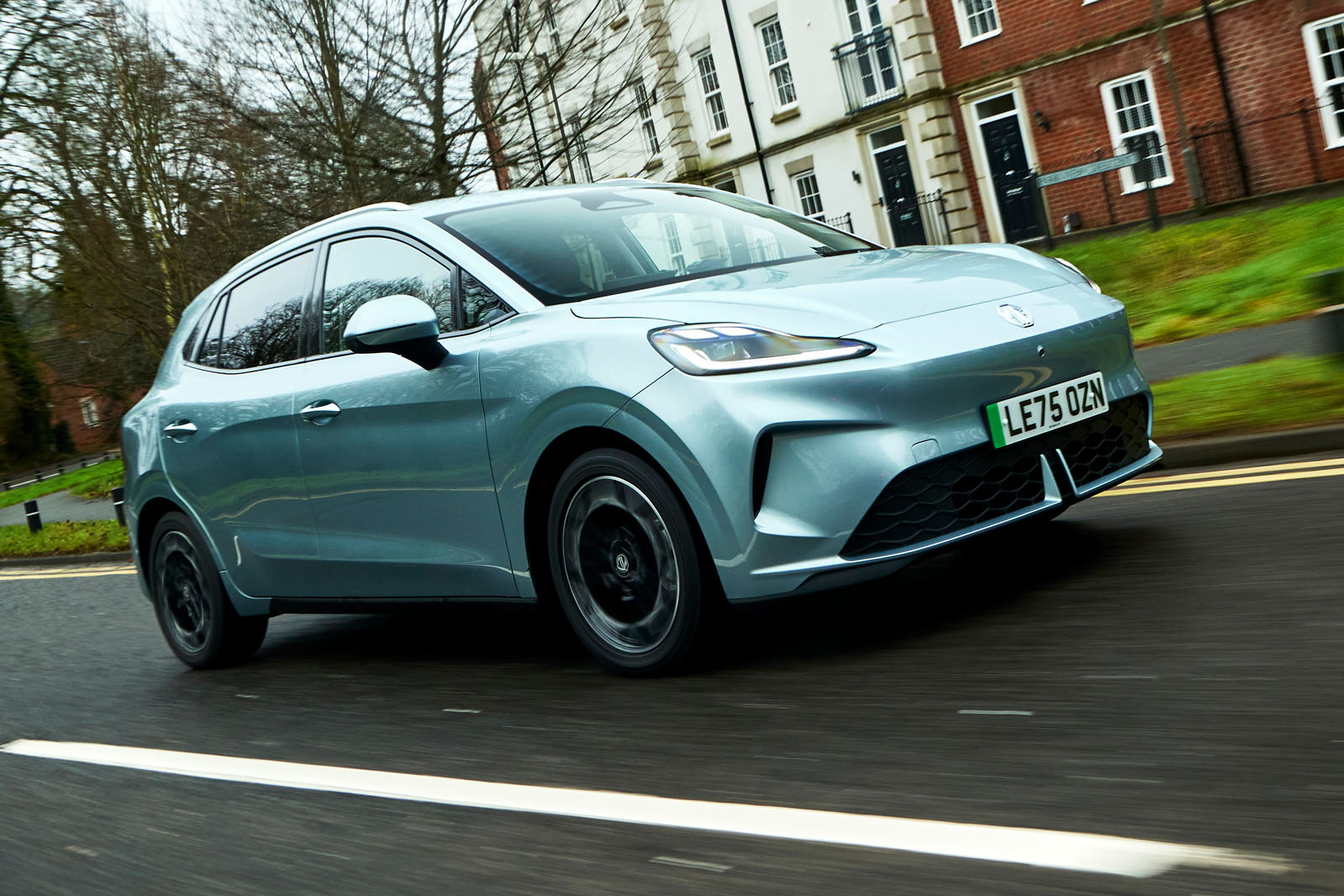
The Urban’s cockpit is expansive by the standards of EVs at this price, with a broad dashboard and a high centre-console that makes for a grown-up feel. The sense of space is enhanced by generous quarter-lights, although trunk-like C-pillars and a short rear window mean rear visibility is less impressive and the back row can seem gloomy.
In truth, the back row looks far gloomier than it is. The Urban is very generously proportioned in the back, with a degree of knee room that most rivals couldn’t dream of offering, as well as a flat floor that doesn’t feel conspicuously high. This will be a chief selling point of the car.
It’s a similar story in the boot. Initially the flat floor looks too high (if also useful for sliding luggage in, given it near enough matches the level of the lip), but it folds open to reveal a cavity of almost 100 litres.
Storage is generally good elsewhere too, with cubbies and bins aplenty and space freed up on the centre console by having the drive selector mounted on the steering column (which itself has fair adjustability).
Our Premium Long Rangetest car is as lavish as the Urban gets, with a synthetic-leather steering wheel, electric front seats and ambient lighting. You can’t escape the scratchy plastic on the dashboard upper, the doorcards and the sides of the centre console, but equally all the major touchpoints and switchgear have a good sense of solidity about them and a metal-dipped effect that avoids feeling cheap.
For a car so aggressively built to a cost, you couldn’t ask for a lot more, although the caveat is that we’ve yet to experience how the Urban’s cabin stacks up at the very base of the range.
The control panel beneath the new 12.8in touchscreen is also welcome: you get roundels for volume and ventilation, plus rockers for further HVAC controls. It’s all intuitive to use, much like the various menus and commands on the touchscreen.
And if you’re wondering where the USB-C ports are, they’re embedded in the huge storage deck that functions as the lower layer of the centre console (there’s a third port that serves the back row).
There has been a course correction at Mercedes-AMG. The 4-cylinder C 63 was an absolute disaster, and taking lessons from that mistake, the company has charted out its future product plan.
The M139 2.0-liter 4-cylinder turbocharged engine is dead, and it won’t be upgraded to meet the upcoming Euro 7 emission norms set to roll out in 2026.
The M139 unit will be replaced with a new inline 6-cylinder engine (M256 Evo). It will be offered in entry-level AMG models such as the C 53 and GLC 53.
The good ol’ V8 is back! Mercedes has confirmed that the M177 Evo engine, which debuted on the new S-Class, will be offered on a few other mid-range models. The 4.0-liter twin-turbo V8 engine features a flat-plane crank and is expected to power the new CLE 63 and perhaps even the E 63.
Mercedes is also working on a new limited-edition Mythos Series model based on the CLE 63. We saw its teaser recently. It is said to be a homage to the CLK DTM.
Finally, speaking of the Black Series, Mercedes-AMG CEO Michael Schiebe said, “The Black Series is definitely alive in the future. It’s an obligation and needs to be radical and convincing in performance.”
That’s where the new AMG GT Track Sport fits into the picture. This hardcore concept is expected to spawn the next roadgoing Black Series coupe.
Tax refund season is one of the best times of the year, and Fields BMW Northfield can help you put your reimbursement to great use. There are plenty of ways that you can apply that money toward a financing package for a new or pre-owned luxury model. Come chat with our friendly professionals about how to make the most out of every penny.
Increase Your Down Payment on a New BMW Model
If you’ve already picked out the brand-new luury convertible, coupe, sedan, or SUV of your dreams, our BMW finance center can help you put your tax refund toward your down payment. The more you put down toward your lease or loan, the less your monthly payments will be.
Put it Toward Your Pre-Owned Vehicle Financing Package
Many drivers prefer pre-owned or Certified Pre-Owned vehicles over new ones. And the team at Fields BMW Northfield can help you apply your tax refund to these models, too! Just visit our facility and peruse our inventory. Once you’ve chosen the one you want to drive home, we’ll incorporate your refund into your custom financing package.
Use the Cash to Cover Your Taxes and Fees
Regardless of whether you lease or buy your BMW vehicle, there will be some upfront costs that your refund might cover. Sales taxes, registration fees, and title transfer fees can add up, but you don’t have to worry. We’ll put your tax reimbursement toward these expenses to lower your overall costs.
Make the Most of Your Tax Refund at Fields BMW Northfield
This year, let your tax refund work for you. Put it toward a new or pre-owned luxury vehicle! Stop by our BMW dealership near Chicago, IL, today to pick yours out and get a custom offer.
RV MAINTENANCE doesn’t have to be intimidating. Following a few simple RV maintenance tips will keep your camper in great shape and minimize the chances of larger repairs down the road. This guide provides DIY camper maintenance tips that most beginners can comfortably tackle at home. However, you can quickly find professional RV techs to help using the link at the bottom of this RV maintenance guide.
Key Takeaways
Safety Inspections: Regularly monitor tire pressure (cold) and lug-nut torque before every trip, and perform a comprehensive roof-seal audit every six months to prevent costly water damage.
System Upkeep: Maintain longevity by sanitizing the fresh water tank twice a year, using RV-specific waste tank treatments, and running your generator monthly to prevent fuel from gumming up.
Protective Care: Extend the life of your RV by maintaining battery charge during storage, lubricating slide seals to keep them pliable, and ensuring awnings are dry and retracted during high winds or overnight.
Tip #1: Get Familiar with Your Documentation
Image by Camping World
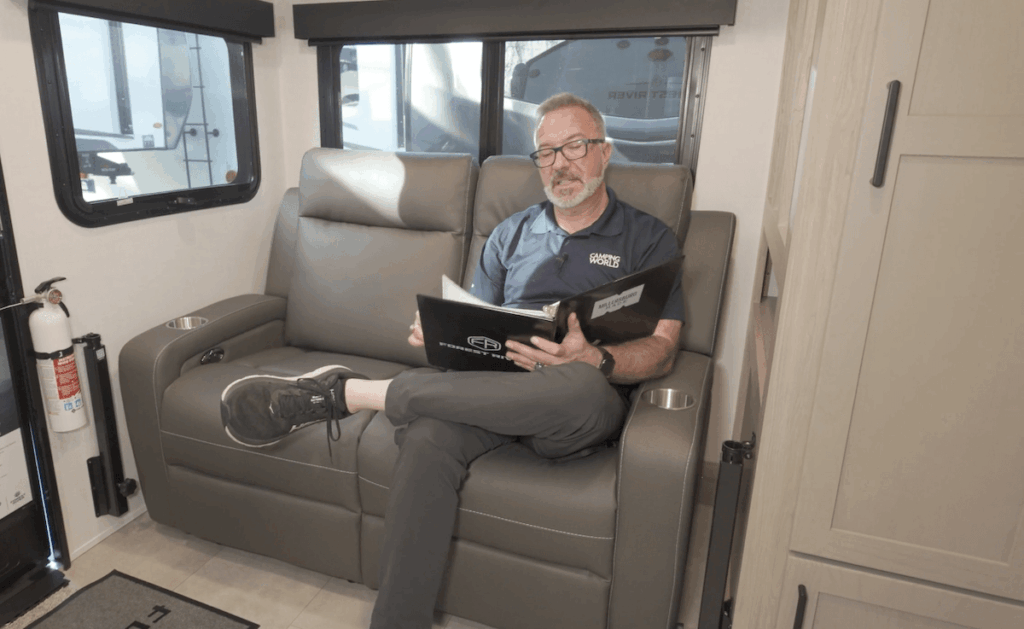
Before you even pull out of the driveway, locate and actually review your owner’s manuals. Many new RV owners skip this critical step, but these manuals offer the most helpful information about your RV. Most campers have a manual from the RV manufacturer, as well as specific manuals for the refrigerator, microwave, air conditioner(s), and other appliances.
These manuals are where you’ll find critical information such as model codes, torque specs, fluid capacities, and more. Knowing where to find this information when an issue arises will save you time and headaches.
Immediate Action: Create a digital folder with PDFs of your manuals for easy access from a computer or smartphone. This may require scanning the physical manuals, but many manufacturers are now offering QR codes to download digital versions.
Technician Tip: Write down your local Camping World Service Center’s info on the inside cover of the manual for quick reference.
Tip #2: Know Critical Tire Maintenance Info
Image by Camping World
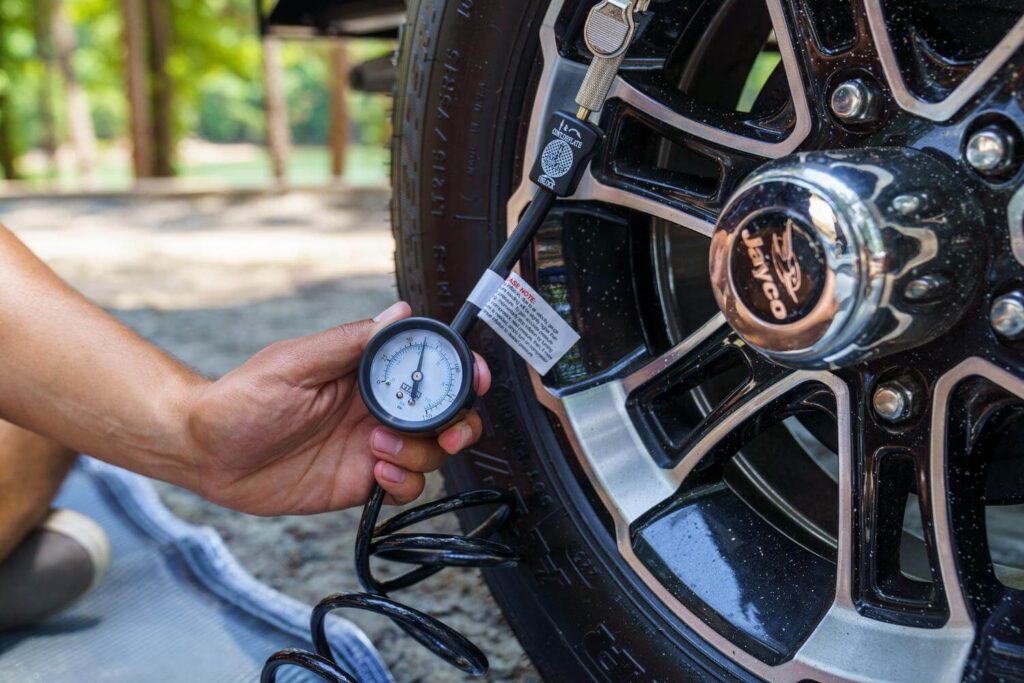
RV trailer maintenance starts where the rubber meets the road. Unlike cars, RV tires often age out before they wear out, since the average RV owner travels only 4,500 to 5,000 miles per year.
This means you’ll need to know where to find three critical pieces of tire maintenance information:
DOT Code (shows tire’s date of manufacture) – found on the sidewall of the tire
Recommended Tire Pressure – found on the vehicle certification label, and/or in your owner’s manual
Lug Nut Torque Specs – found in your owner’s manual
For tire pressure specifically, follow the manufacturer’s printed recommendation rather than the maximum rating on the tire’s sidewall. That vehicle certification label is typically found on the driver’s side exterior wall of towable RVs and on an interior wall in motorhomes.
Immediate Action: Check tire pressure when cold before every single trip. Changes in temperature and altitude will cause fluctuations.
Technician Tip: Don’t forget your lug nuts! New campers often have “settling” wheels; use a torque wrench to ensure they are tightened to the manufacturer’s foot/pound specifications before your first 50 miles.
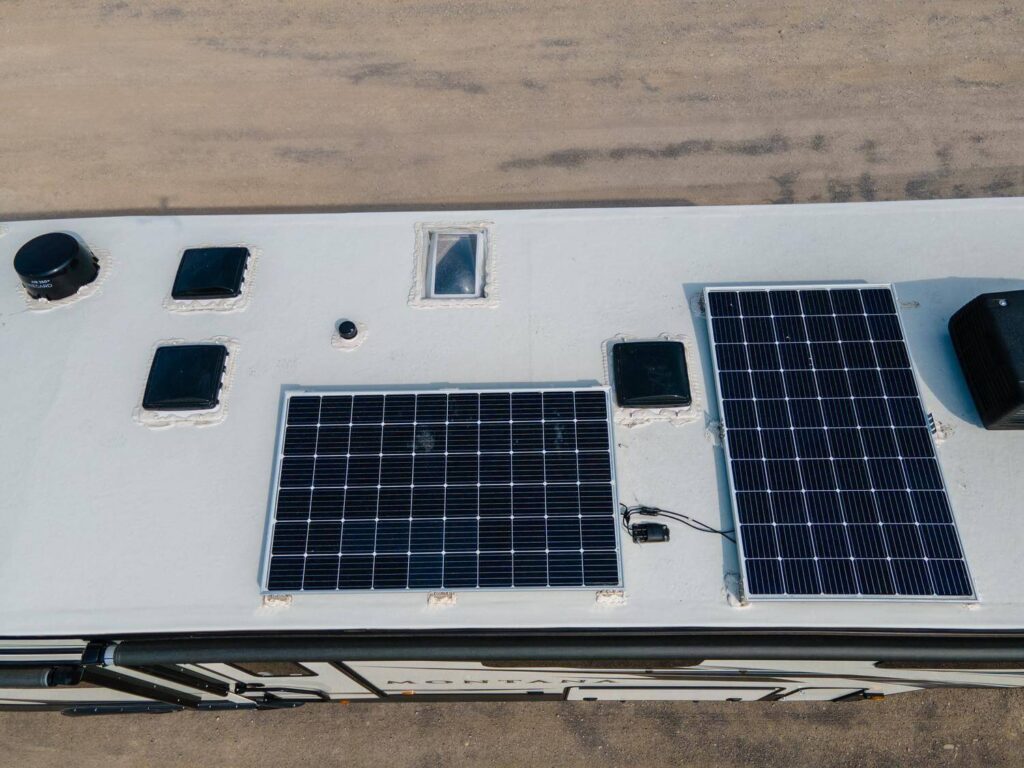
Tip #3: Perform a Roof Seal Check
Image by Camping World
RV roofs take a lot of abuse from harsh weather like hail, sun, wind, and rain. These are all natural enemies, but don’t let neglect be the unnatural catalyst that lands expensive camper roof repairs in your lap. Whether you have a motorhome or a travel trailer, your roof requires an “eyes-on” inspection every six months.
Immediate Action: Check if your roof is “walkable” (factory ladder = yes). If not, use a stable extension ladder to inspect from the side.
If your RV comes equipped with a factory-installed ladder or ladder prep, your roof is most likely walkable. If not, use a stable ladder to check your roof from the side. Keep your roof clean by washing it with a light solvent and water. Parking under sappy trees warrants a wash as soon as possible.
Technician Tip: Look for cracks or peeling in the lap sealant around vents, skylights, and edges. A small tube of Dicor (or the manufacturer-recommended sealant) can save you thousands in water damage repairs later.
Thoroughly washing and rinsing your roof seasonally will also help to slow deterioration and prevent black streaks from forming on your RV’s exterior walls. After cleaning, it’s the perfect time to touch up the sealant around roof-mounted appliances and along seams.
Here are a few more resources to help you care for your camper’s roof:
If you don’t feel safe getting on your roof to inspect or apply sealant, schedule a roof inspection service with your local Camping World.
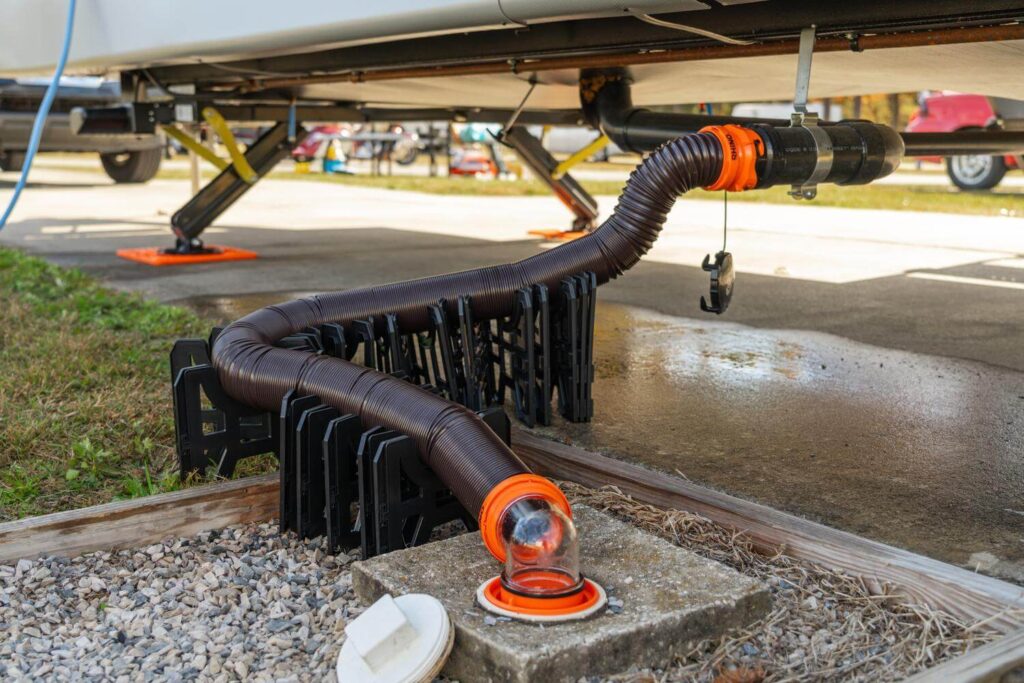
Tip #4: Manage Your Waste Management System
Image by Camping World
Camper maintenance includes the “stinky” parts, too. Most RVs have three main holding tanks: fresh (potable), gray (sinks & shower), and black (toilets).
Fresh water tanks simply require a bi-annual flush, typically when bringing your RV out of seasonal storage. Bacteria can build up in a moist environment, so a gentle bleach-and-water solution can sanitize the tank, and a few system fills and flushes will clear out the bleach.
Gray water tanks require less maintenance. However, it’s still common for gray tanks to develop a smell with normal use. If your tank starts to smell, consider an odor blocker to keep foul odors at bay.
For your black tank, use only approved RV-friendly toilet paper and holding tank treatments to break down solids. Using your black tank flush (if equipped) or a tank cleaning wand will help keep sensors clean and reading accurately.
Immediate Action: Learn how to properly empty RV holding tanks (first black, then gray) and use holding tank treatments during each trip, along with your black tank flush (if so equipped), to avoid tank issues.
End of Season Task: Sanitize your fresh water tank with a mild bleach-to-water solution before your first trip to kill any lingering bacteria from the factory or storage.
Technician Tip: Never leave your black tank valve open while at a campsite. This leads to the “poop pyramid” (solids drying out). Keep the valve closed until the tank is at least two-thirds full, then flush.
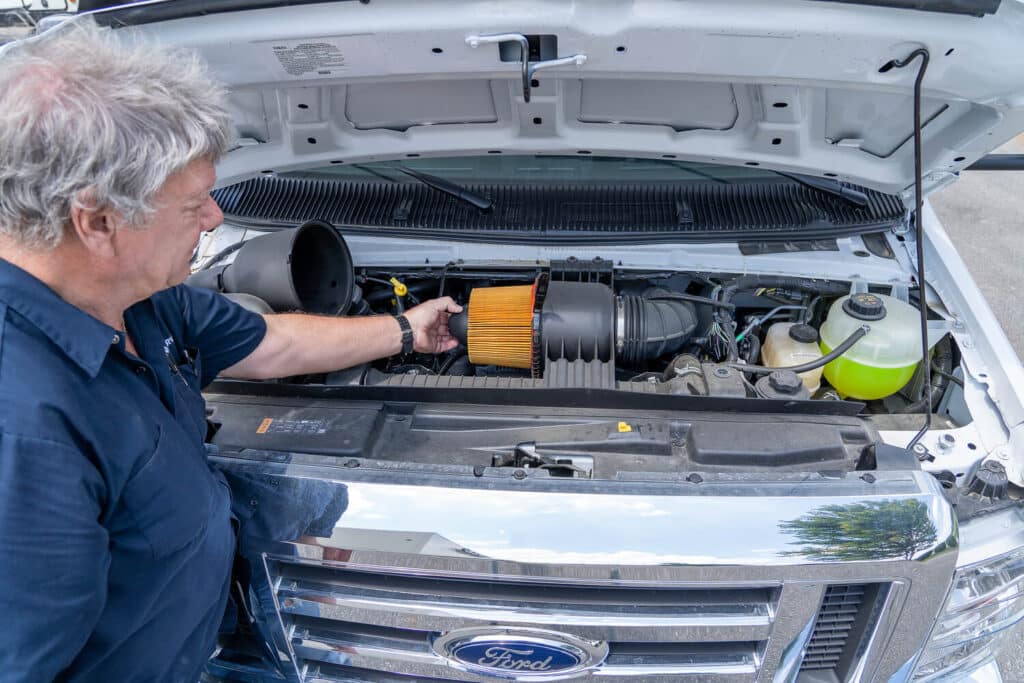
Tip #5: Make Seasonal Fluid and Filter Swaps
Image by Camping World
For motorhome maintenance, your engine and chassis need the same love as your daily driver—just on a stricter schedule, because they sit for longer periods. Refer to your motorhome’s manual to learn how frequently you should change fluids and replace filters.
Immediate Action: Check oil, coolant, and transmission fluid levels before your inaugural trip.
Technician Tip: Plan for an oil and filter change every 3,000 to 4,500 miles. If you’ve reached the end of the season and haven’t hit the mileage, change the oil anyway to prevent acidic buildup from sitting over the winter.
Additionally, your motorhome’s air, fuel, coolant, and hydraulic filters should also be replaced according to the manufacturer’s recommendations. Failure to service these regularly can lead to increased fuel consumption, overheating, and oxidation of the hydraulic system.
Furthermore, regular brake inspections are critical to your safety—and the safety of others on the road. Just like your daily driver, ensure your brake pads and rotors are professionally inspected regularly and replaced or serviced as recommended.
Enjoy these additional RV care resources:
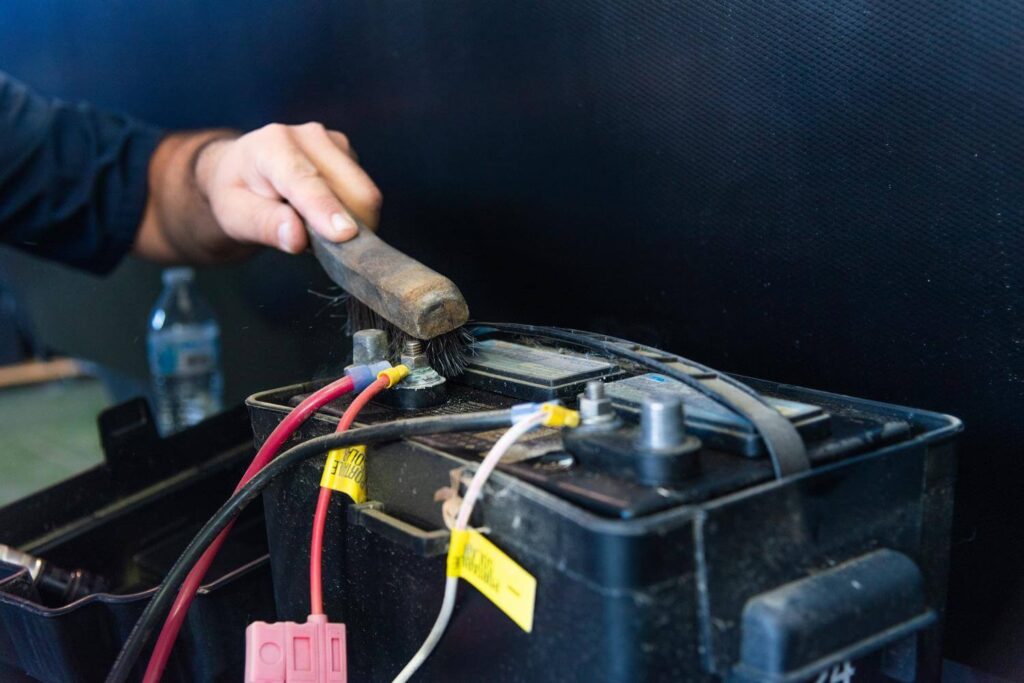
Tip #6: Practice Preventive Battery Care
Image by Camping World
Nothing kills a camping vibe faster than a dead battery. RV preventive maintenance for batteries is all about keeping them charged. That requires checking their charge before each trip and monthly while your RV is in storage.
Generally, flooded lead-acid batteries last 2-7 years, and should be replaced when their life cycle is complete, or they no longer hold a sufficient charge. Other battery types, such as AGM and lithium, can last longer.
However, your battery must be stored properly to prevent parasitic drains. In the warmer months, that may be as simple as using your RV’s battery disconnect switch, if so equipped. In winter, it’s recommended to remove your battery and store it in a warmer place, such as your garage. In either case, it must be recharged regularly to avoid a deep discharge.
Immediate Action: Know where your “Battery Disconnect” switch is. Turn it off when the RV is in storage to prevent parasitic draws (like CO2 detectors) from draining the battery.
Technician Tip: If you live in a freezing climate, remove your deep-cycle batteries and store them in a garage on a trickle charger during the offseason to prevent the cases from cracking.
Use these guides to learn more about maintaining RV batteries:
Tip #7: Exercise Your Generator
Image by Camping World
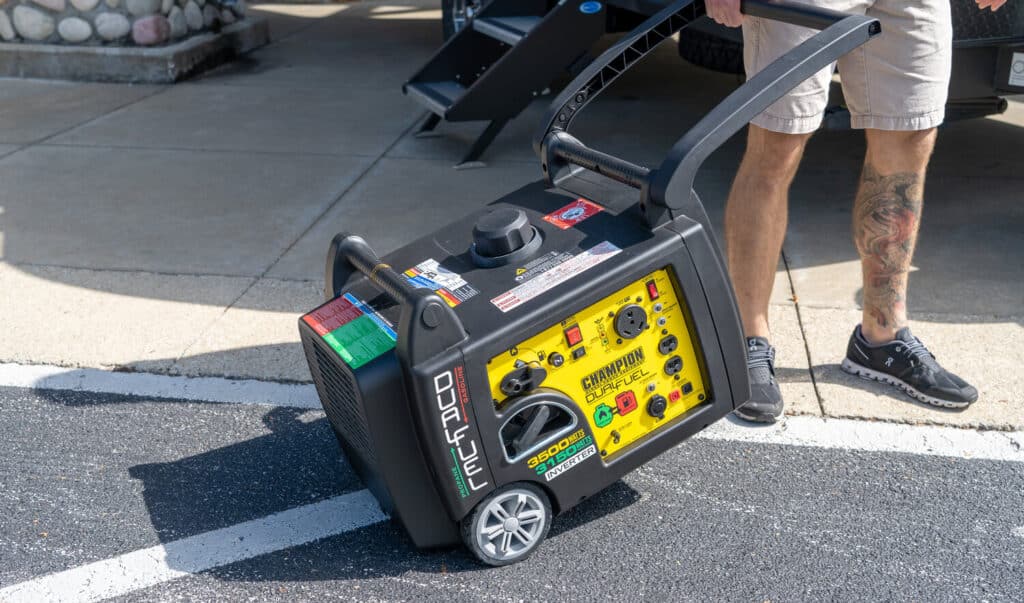
A generator that sits is a generator that quits. If you don’t run it, the fuel in the carburetor can gum up, leading to an expensive repair bill. This is true during the camping season and when your RV is stored during the offseason. It also applies to portable and onboard RV generators.
Immediate Action: Run your generator for 30 to 60 minutes once a month at half-load (e.g., running an air conditioner or space heater). This keeps the internal components lubricated and ensures the fuel stays fresh.
Technician Tip: Service your RV generator according to the manufacturer’s recommended maintenance schedule for oil changes, filter replacements, and other maintenance.
Learn more about using and caring for camping generators:
Tip #8: Drain & Flush Your Water Heater
Image by Camping World
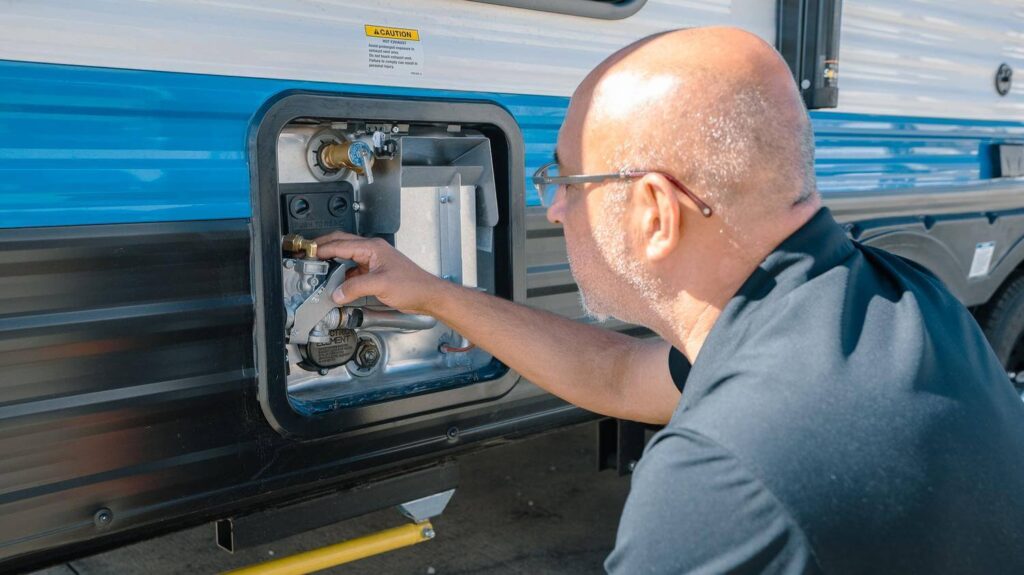
RV water heaters often get ignored until hot water runs out. To prevent this, it should be drained and flushed at the end of every camping season. This helps to remove sediments and other debris before winterization.
Depending on whether you have a tankless or traditional water heater, your checks will differ slightly. For traditional models with an anode rod, this rod must be inspected seasonally and replaced as needed. For tankless models, you’ll need to descale the unit seasonally to prevent mineral buildup.
First Offseason Task For Water Heaters with Anode Rods: Check your anode rod (in Suburban® heaters). This sacrificial rod corrodes, so that your tank doesn’t. If it’s down to the wire, replace it.
First Offseason Task for Tankless Water Heaters: Check with your water heater’s manufacturer for their specific descaling recommendations.
Technician Tip: Use a tank rinsing wand to wash out sediment and calcium buildup from the bottom of the tank annually to keep the heating element efficient.
Use these additional resources to learn more about water heater maintenance tips:
Tip #9: Lubricate Slide Seals
Image by Camping World
If your RV has slide-outs, the rubber seals (bulb seals and wipers) keep the rain out of your living room. Slide rooms are often neglected, but they can lead to costly repairs if not properly maintained. Before retracting your slide, visually inspect the seals to ensure they are free of debris. In addition, apply RV-rated slide-out lubricant at least twice a year (or every 3-6 months with more regular use).
Immediate Action: Before retracting your slides, ensure the slide roof is clear of sticks, pinecones, or other debris that could tear the seals.
Technician Tip: Apply a specialized slide-out lubricant to the seals to keep them pliable. This prevents them from “sticking” to the coach walls and tearing during operation.
These resources will help you learn more about slide operation and maintenance:
Tip #10: Protect Awnings and Slide Toppers
Image by Camping World
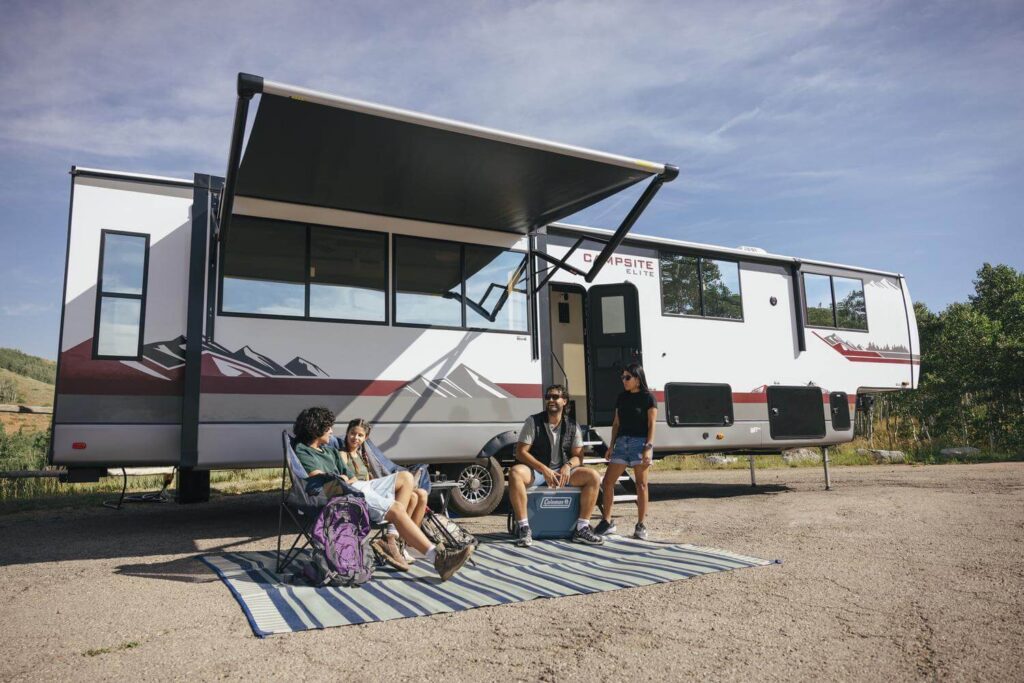
Your awning is a giant sail. If the wind picks up, it can easily bend the arms or rip the fabric. Never extend an RV awning in high winds, as this can damage its alignment and prevent it from storing effectively.
Additionally, awnings can develop damage, mold, and mildew over time if not properly cared for. Before putting your RV into storage, give your awning a wash and let it dry before retracting it.
Immediate Action: Never leave your awning out overnight or when you leave the campsite. A sudden gust can cause thousands of dollars in damage in seconds.
Technician Tip: Always wash your awning and let it dry completely before rolling it up for storage to prevent mold and mildew growth.
Use these guides to learn more about caring for RV awnings and slide toppers:
When Professional Assistance is Needed
RV maintenance isn’t rocket science. In fact, it’s quite simple and usually requires focused attention a few times a year to maintain your resale value and avoid costly repairs. However, certain RV systems (e.g., propane, electrical, and plumbing) should be regularly inspected by a certified RV technician.
If your RV maintenance schedule says it’s time for professional service, use the link below to find a service center near you:
Looking for more help? Explore these other helpful RV maintenance guides:
If you have questions or concerns, leave a comment below!
When Falcon Heavy lifted off in February 2018 with Elon Musk’s personal Tesla Roadster as its payload, SpaceX was at a much different place. So was Tesla. It was unclear whether Falcon Heavy was feasible at all, and Tesla was in the depths of Model 3 production hell.
At the time, Tesla’s market capitalization hovered around $55–60 billion, an amount critics argued was already grossly overvalued. SpaceX, on the other hand, was an aggressive private launch provider known for taking risks that traditional aerospace companies avoided.
The Roadster launch was bold by design. Falcon Heavy’s maiden mission carried no paying payload, no government satellite, just a car drifting past Earth with David Bowie playing in the background. To many, it looked like a stunt. For Elon Musk and the SpaceX team, it was a bold statement: there should be some things in the world that simply inspire people.
Inspire it did, and seven years later, SpaceX and Tesla’s results speak for themselves.
Credit: SpaceX
Today, Tesla is the world’s most valuable automaker, with a market capitalization of roughly $1.54 trillion. The Model Y has become the best-selling car in the world by volume for three consecutive years, a scenario that would have sounded insane in 2018. Tesla has also pushed autonomy to a point where its vehicles can navigate complex real-world environments using vision alone.
And then there is Optimus. What began as a literal man in a suit has evolved into a humanoid robot program that Musk now describes as potential Von Neumann machines: systems capable of building civilizations beyond Earth. Whether that vision takes decades or less, one thing is evident: Tesla is no longer just a car company. It is positioning itself at the intersection of AI, robotics, and manufacturing.
SpaceX’s trajectory has been just as dramatic.
The Falcon 9 has become the undisputed workhorse of the global launch industry, having completed more than 600 missions to date. Of those, SpaceX has successfully landed a Falcon booster more than 560 times. The Falcon 9 flies more often than all other active launch vehicles combined, routinely lifting off multiple times per week.
Falcon Heavy successfully clears the tower after its maiden launch, February 6, 2018. (Tom Cross)
Falcon 9 has ferried astronauts to and from the International Space Station via Crew Dragon, restored U.S. human spaceflight capability, and even stepped in to safely return NASA astronauts Butch Wilmore and Suni Williams when circumstances demanded it.
Starlink, once a controversial idea, now dominates the satellite communications industry, providing broadband connectivity across the globe and reshaping how space-based networks are deployed. SpaceX itself, following its merger with xAI, is now valued at roughly $1.25 trillion and is widely expected to pursue what could become the largest IPO in history.
And then there is Starship, Elon Musk’s fully reusable launch system designed not just to reach orbit, but to make humans multiplanetary. In 2018, the idea was still aspirational. Today, it is under active development, flight-tested in public view, and central to NASA’s future lunar plans.
In hindsight, Falcon Heavy’s maiden flight with Elon Musk’s personal Tesla Roadster was never really about a car in space. It was a signal that SpaceX and Tesla were willing to think bigger, move faster, and accept risks others wouldn’t.
The Roadster is still out there, orbiting the Sun. Seven years later, the question is no longer “What if this works?” It’s “How far does this go?”