I am officially two weeks into Tesla ownership, having picked up my Model Y Long Range All-Wheel-Drive on Saturday, August 30. I have many things I really love, and I’ll do my best to come up with a few things I don’t, although I find that to be very difficult currently.
With any new car, I don’t really find things I dislike within the first few months; the novelty of a shiny new vehicle usually wears off eventually. In the past, I’ve had a car I only kept for nine months, but I loved it for the first two months. I am sure down the road, some things about the Tesla will bother me, but right now, I don’t have too much to complain about.
As for the things I love, I’ll try to keep it to just five, and as I continue to write about my ownership experience in the coming months, I’ll see if these things change.
A Quick Rundown
In the two weeks I have had my new Model Y, I have driven 783 miles. I have driven it manually, used Full Self-Driving, navigated tight city streets in Baltimore, and driven spiritedly on the winding back roads of Pennsylvania.
I traded my ICE vehicle for a Tesla Model Y: here’s how it went
I have had the opportunity to put it to the test in a variety of ways, and I feel like I have a great idea of this car and how it handles and drives just two weeks in.
Here’s my vehicle ownership lineage:
’98 VW Jetta K2 > 2002 Ford Taurus > 2008 Ford Escape Hybrid > 2019 Honda Civic > 2021 Ford Bronco Sport > 2026 Tesla Model Y https://t.co/BXTC9XThwe
I am only going to pick a handful of things, but do not take this list as a complete one. I truly have so many things I love about this car, but I want to mention the ones that are not necessarily “novelties.” I love the A/C seats, but it’s not something I feel deserves a mention here, because it would not likely sway someone to consider the car.
Instead, I want to highlight what I feel are things that truly set the Model Y apart from cars I’ve had in the past.
Tesla Full Self-Driving
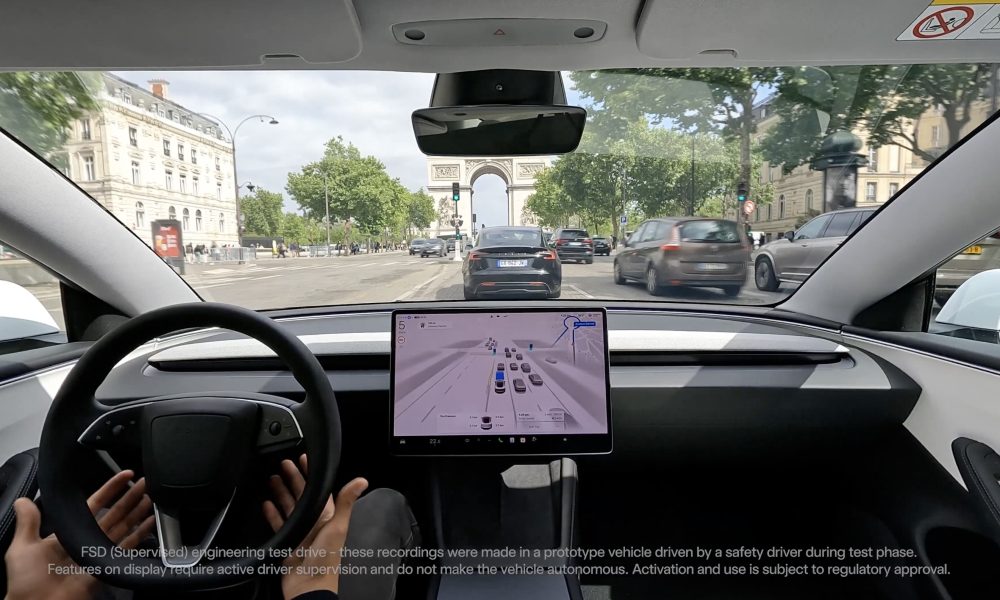
Available on all Teslas, Full Self-Driving is something I use every day. It is not only a convenience thing, but it is also truly a fun feature to track improvements, and it’s been fun to show a lot of my friends who are not familiar with its capabilities just how safe and impressive it is.
My Fiancè and I have watched Full Self-Driving make slight changes in performance in the two weeks we’ve been using it. I tracked one instance on a Pennsylvania back road when the car stopped at an “Except Right Turn” Stop Sign. Initially, the car stopped, holding up traffic behind it. Just days later, FSD proceeded through that same Stop Sign cautiously, but without coming to a complete stop, which is the proper way to navigate through it.
I took the same route home last night as I did when I took this drive last week. FSD has *already* improved.
✅ Model Y did not stop at the “Except Right Turn” Stop Sign, and instead proceeded through at a confident, yet careful rate of speed in a safe manner
This quick adjustment was very impressive, and it even caught the attention of my better half. I will say it has been very fun to watch her fall in love with this car after being very reluctant to watch me get rid of our Bronco Sport.
The Handling
Tesla refined the suspension with the new Model Y, and you can surely feel it. Coming from a larger SUV, I did miss being able to really push the limits of my car on a beautiful, sunny, and warm day, and the winding roads of Pennsylvania are calling me for a drive.
The way this car hugs turns and genuinely puts a smile on my face when I’m pushing it. Dare I say I like driving it more than I like it driving me?
Interior Storage
One of my biggest complaints about my Bronco Sport was that, despite being an SUV, it felt smaller than it was supposed to be. I had trouble fitting golf bags and luggage in the back without having other storage options. It led me to install a roof rack and get a cargo container. I would have to put longer clubs in the back seat so the bags could lie without clubs getting bent.
I don’t seem to have a significant problem with this in the Model Y. Plus, the frunk and the additional cargo under the floor of the trunk are great for bags and other things. It offers 10 cubic feet more of space with the seats down than the Bronco Sport does.
The Entertainment
Not only is the sound system in this car absolutely unbelievable, but I also really enjoy the Tesla Theater, which is really something that has revolutionized how we spend our time in the car.
Charging at the Superchargers has become a new way for us to spend time together. Even if it’s just 30 minutes, my Fiancé’s busy work schedule at the hospital means we don’t get to spend as much time together as we would like. The charging lets us go grab a snack, watch a movie or show in the car, and just be with each other.
It’s honestly my favorite thing about the car so far, that we’ve both truly enjoyed what it has done for us. It put a smile on my face to hear her say, “It’s just so much fun to be in this car” last night when we met friends for dinner.
What I Don’t Love
I’m just going to get nitpicky here, because I don’t have much to complain about.
The Paint
I love the Diamond Black, and it gets so many compliments. However, it sure does get dirty fast. I feel like I’m going to have to invest in a car wash membership or set aside time each week to clean it. This is not a Tesla-specific problem, of course.
Climate Control
Another “first-world problem,” but sometimes I do have trouble getting the A/C to go right where I need it. I feel like, to feel the air, I have to put the fan speed to 7 or higher.
Swing Mode has been a real savior in this sense, but my Fiancè sometimes complains that my cold air will hit her when she’s already freezing. I think this is just something I need to get used to, as the vents are significantly different than any other car. It’s really not that bad, but it is worth mentioning that we’ve both said we are still adjusting to it early on.
Words by: Glen Smale. Images by: Virtual Motorpix/Glen Smale
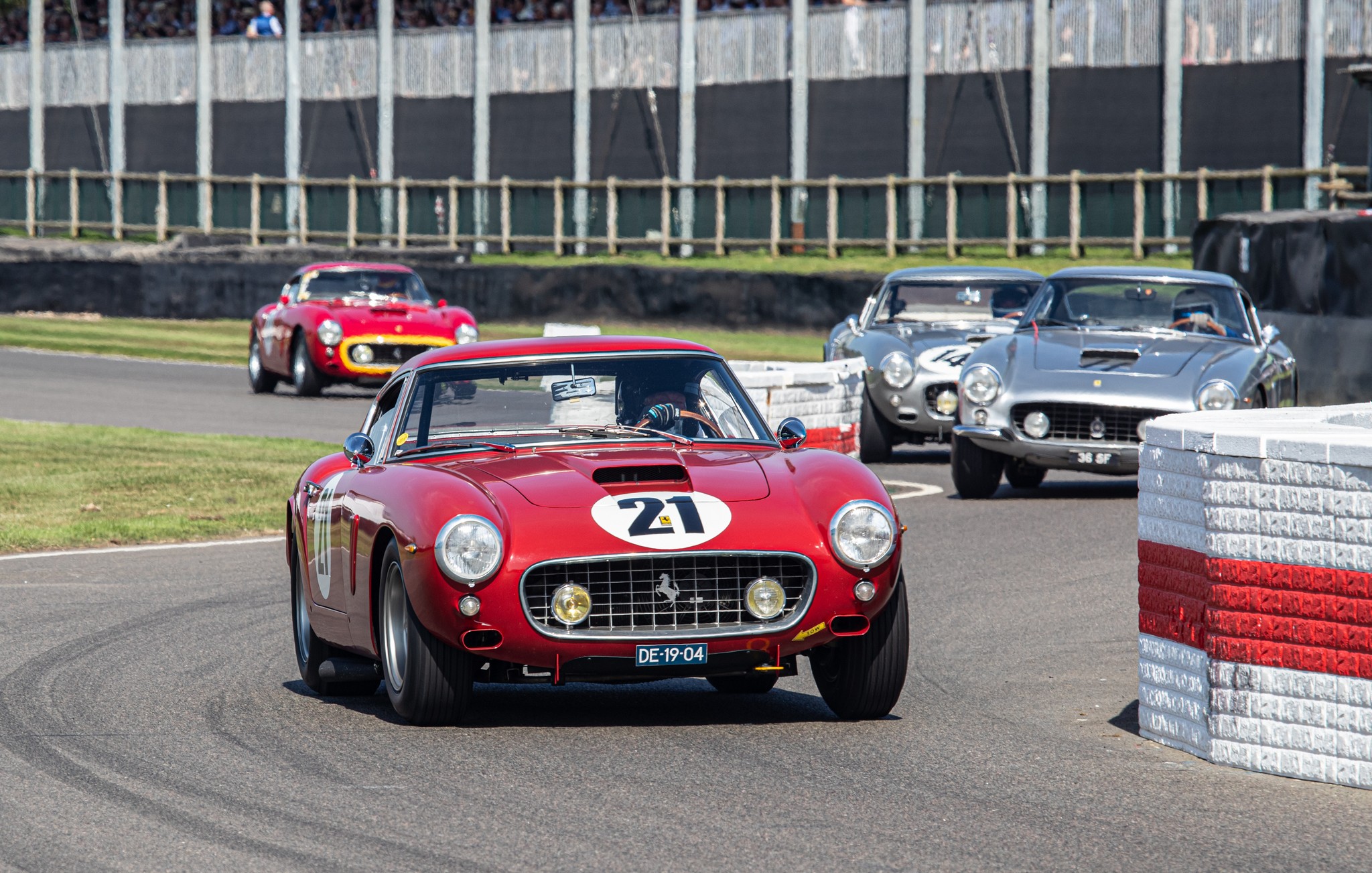
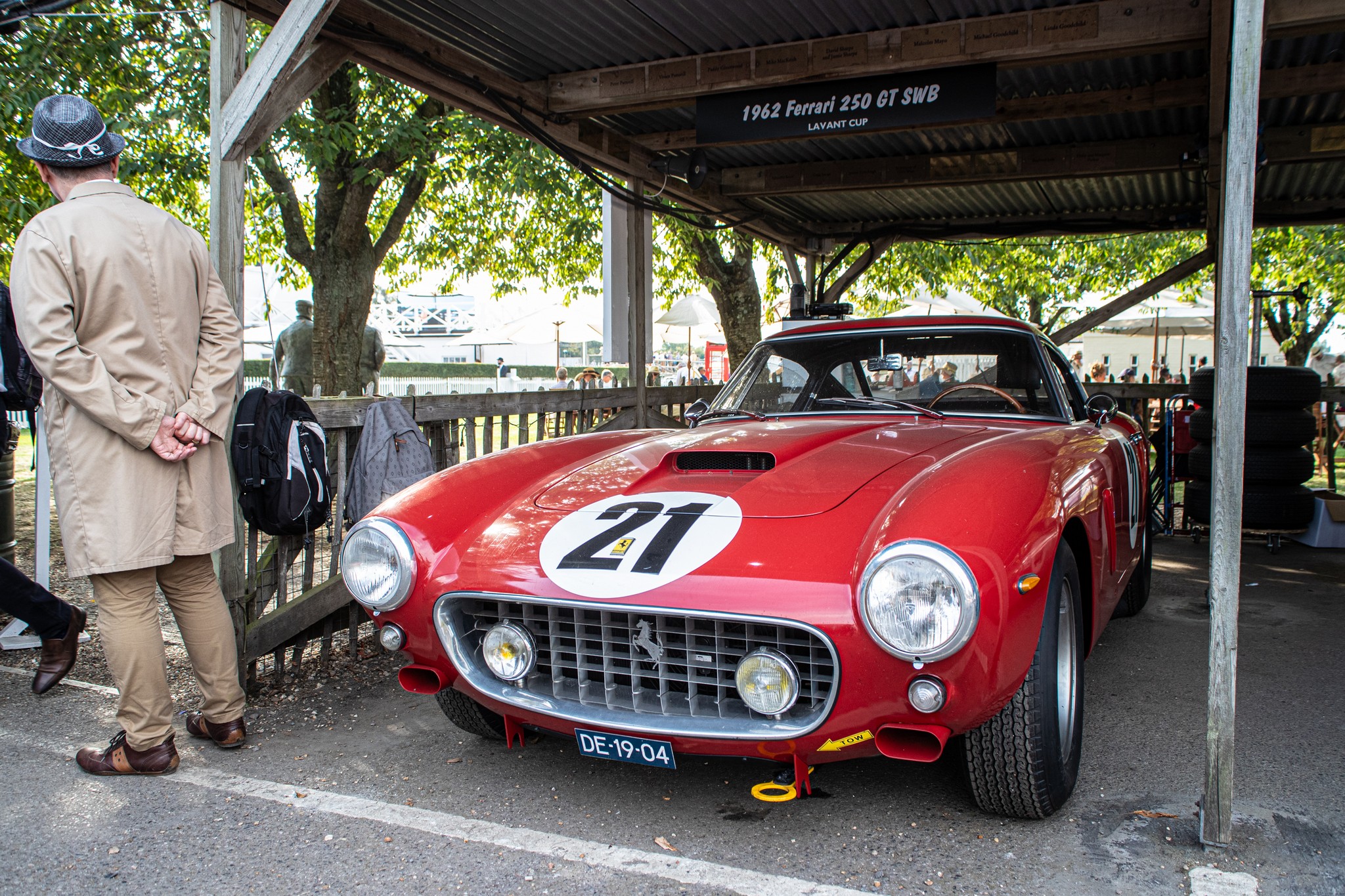
The No. 21 Ferrari 250 GT SWB (1962) of Alexander van der Lof leads a group of Ferraris through the Chicane during the Lavant Cup (Virtual Motorpix/Glen Smale)
First of all, it would be worthwhile to recognise the significance of the event that took place at Goodwood this last weekend. This year marked the 75th year since Goodwood Motor Circuit opened its doors to the sport back in September 1948. Adding to that important milestone is the fact that this year also marked the 25th running of the now famous Goodwood Revival, the finest and most characterful automotive garden party in all the world.
The No. 21 Ferrari 250 GT SWB (1962) of Alexander van der Lof leads a group of Ferraris through the Chicane during the Lavant Cup (Virtual Motorpix/Glen Smale)
Then there were the other anniversaries such as the 75th birthday of Lotus, it was also the 100th year since the birth of the legendary Carroll Shelby. In addition, the Fordwater Trophy was this year dedicated to the Porsche 911, marking 60 years since the launch of that evergreen sports car model back in 1963.
Over the years, the Lavant Cup has been dedicated to a variety of different cars such as the D-type Jaguar, and the MG-B, but this year the honour fell to the Ferrari brand, specifically the GT cars that raced between the years 1960 to 1966. As if to recognise the closeness of the action on the track, the weather delivered three of the most glorious warm, sunny and bright days that could be wished for.
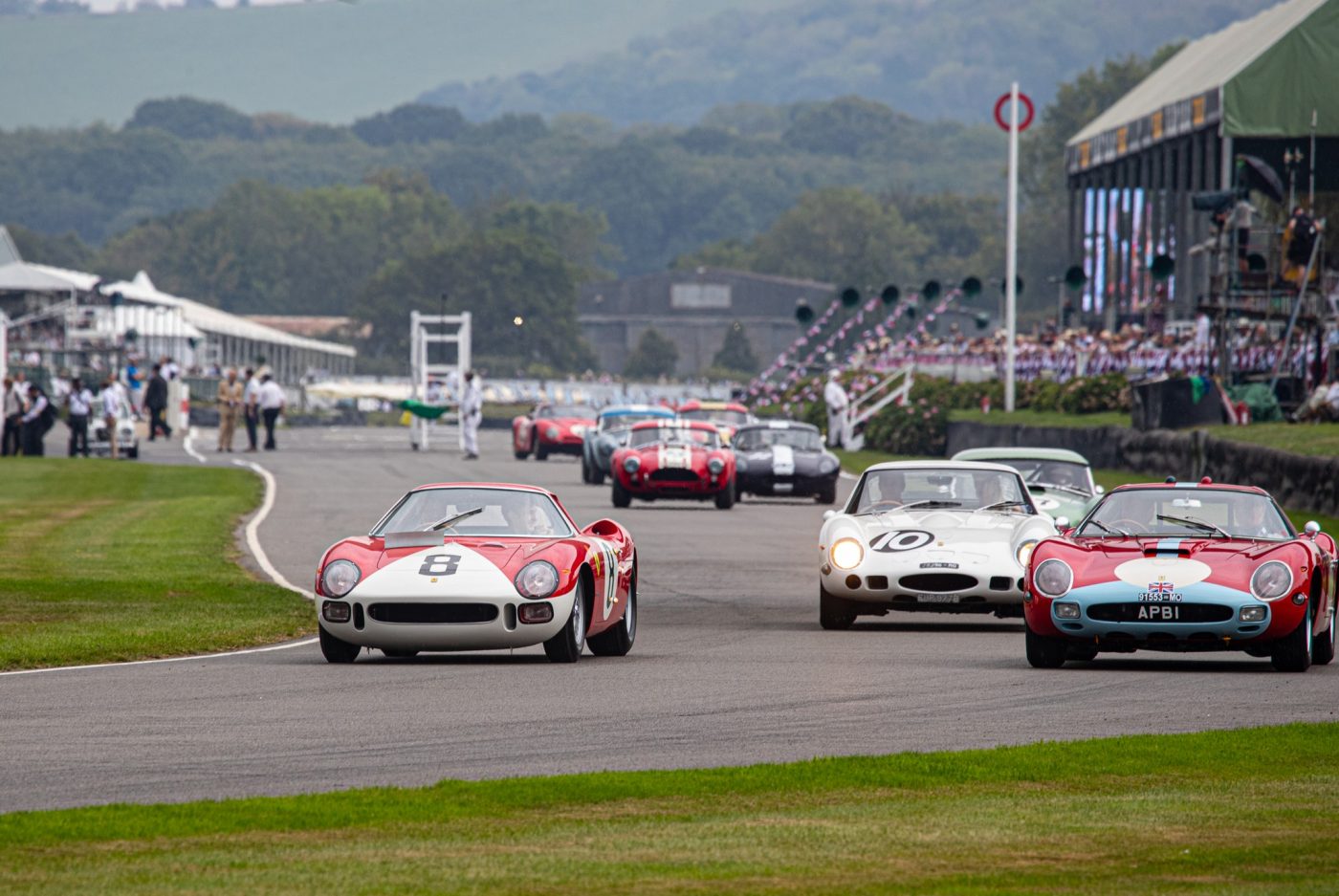
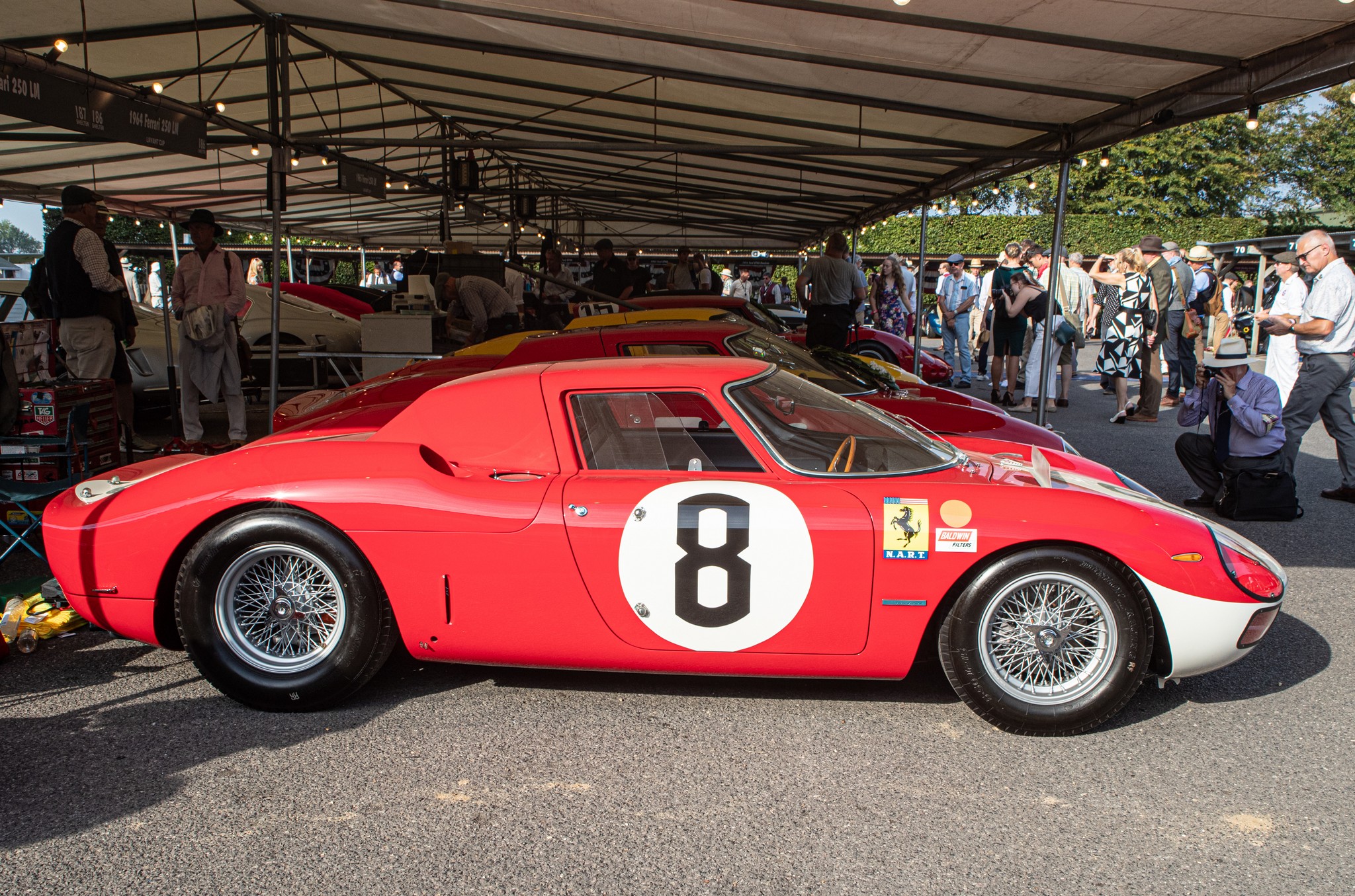
This stunning No. 8 Ferrari 250 LM was one of three iconic Ferraris that completed demo laps ahead of certain races (Virtual Motorpix/Glen Smale)
Official practice for the Lavant Cup took place on Friday at 11h45 on Friday, followed by the race on Saturday at 14h15. Eighteen cars in all were on the entry list, and a stroll through the paddock revealed pit after pit of the most striking cars from the Maranello brand, with a seemingly constant stream of enthusiastic admirers milling around. There were the inevitable ‘selfies’ being taken, along with proud parents taking innumerable snaps of their offspring standing next the father’s (or mother’s) favourite Ferrari.
Some History
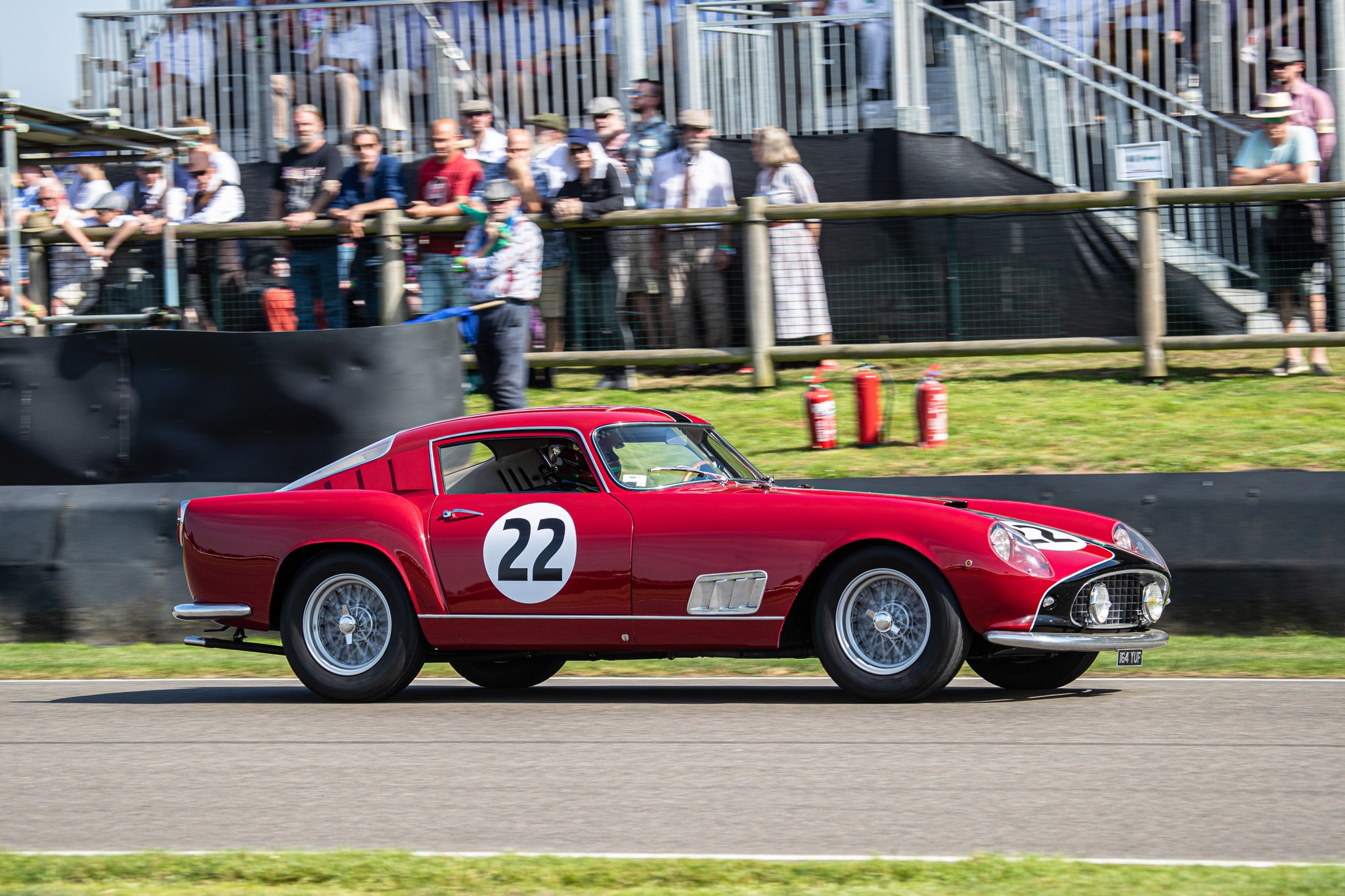
Approaching the Chicane, the No. 22 Ferrari 250 GT Tour de France (1957)of Richard Cook would finish 12th in the Lavant Cup (Virtual Motorpix/Glen Smale)
GT racing in the early 1960s was almost the sole domain of Ferrari’s greatest and star-studded family of road and race cars. Starting in the mid-1950s, the 250 GT Competizione (better known as the ‘Tour de France’) set the stage for the GT onslaught from Maranello, and this was followed by the 250 GT SWB in 1959 and the 250 GTO in 1962. This latter model was dominant in competition around the world, but when Enzo Ferrari constructed the 250 LM in 1963 and tried to get it approved as a GT car and successor to the 250 GTO, the FIA would not hear of it. Ferrari argued that it was powered by the same engine, but by moving the engine from the front of the car to behind the driver, in the eyes of the FIA, this made it a different car altogether and it would be considered a new model. The 250 LM was a truly striking mid-engined race car, but the body sported a completely different and new body design.
The FIA was, however, familiar with Ferrari’s tricks. Incensed by the FIA’s attitude, he had to re-engineer the 250 GTO and using some of the design cues from the 250 LM, the beautiful 250 GTO/64 was created. The body of the new GTO/64 was both shorter and lower, but a fraction wider.
The No. 21 Ferrari 250 GT SWB (1962) driven by Alexander van der Lof finished sixth in the Lavant Cup (Virtual Motorpix/Glen Smale)
As it happened, the 250 LM was a very different machine, too different in fact for the FIA’s liking to be considered as a development of the 250 GTO. It was shorter and significantly lower and lighter than the 250 GTO on which Ferrari had tried to get the new model homologated for the 1963 season. It was powered by a 3.3-litre version of the GTO’s engine, and as a result, with the car’s characteristics and low production numbers, the FIA required this race car to be treated as a new model, forcing it to race as a prototype and not a GT. As it happened, the Ferrari 250 LM would go on to become a very successful racer in its own right.
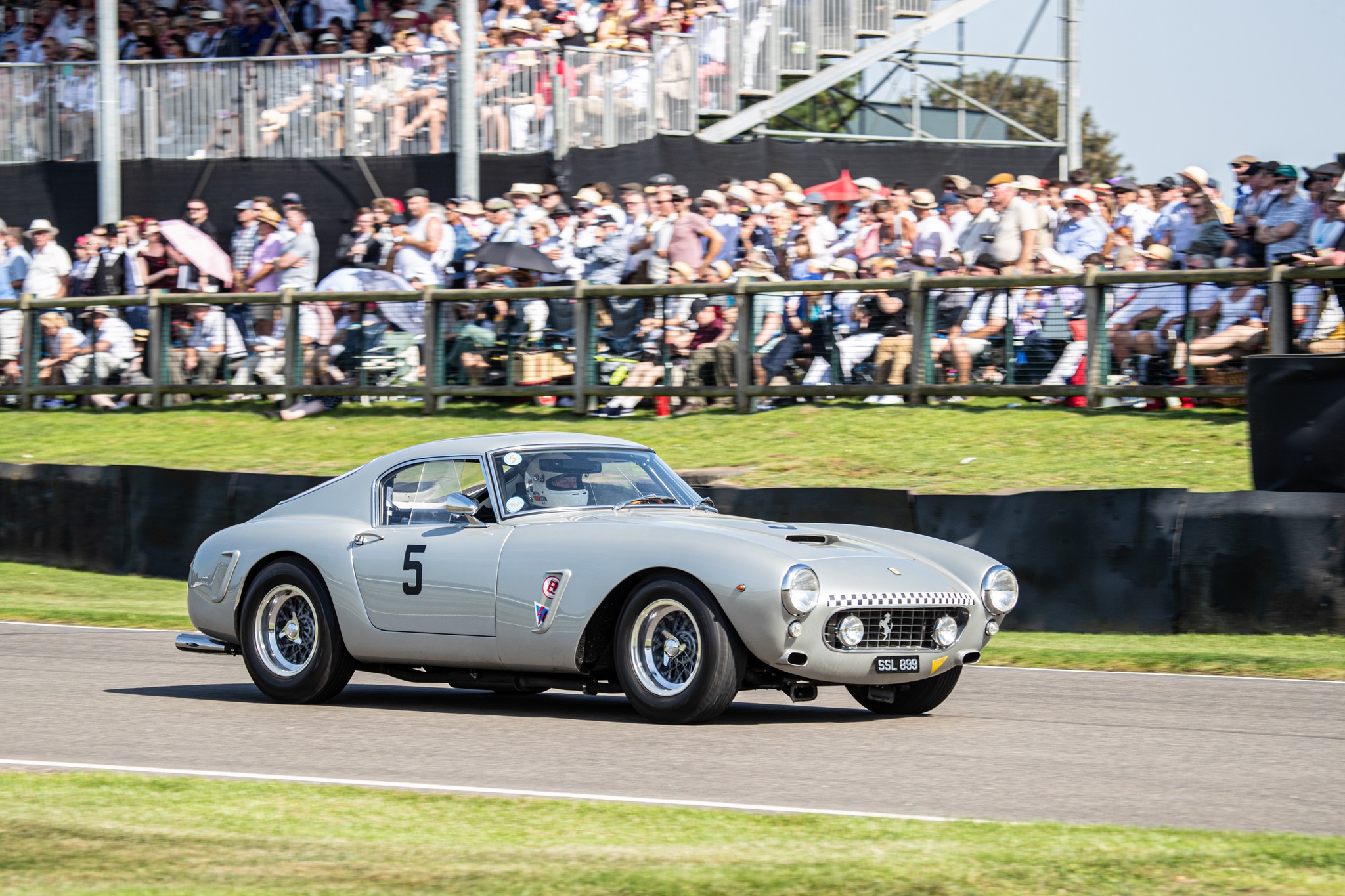
The Lavant Cup was watched by thousands of eager spectators in brilliant sunshine. Here Adrian Beecroft in the No. 5 Ferrari 250 GT SWB/C (1960)approaches the Chicane on his way to 13th place overall (Virtual Motorpix/Glen Smale)
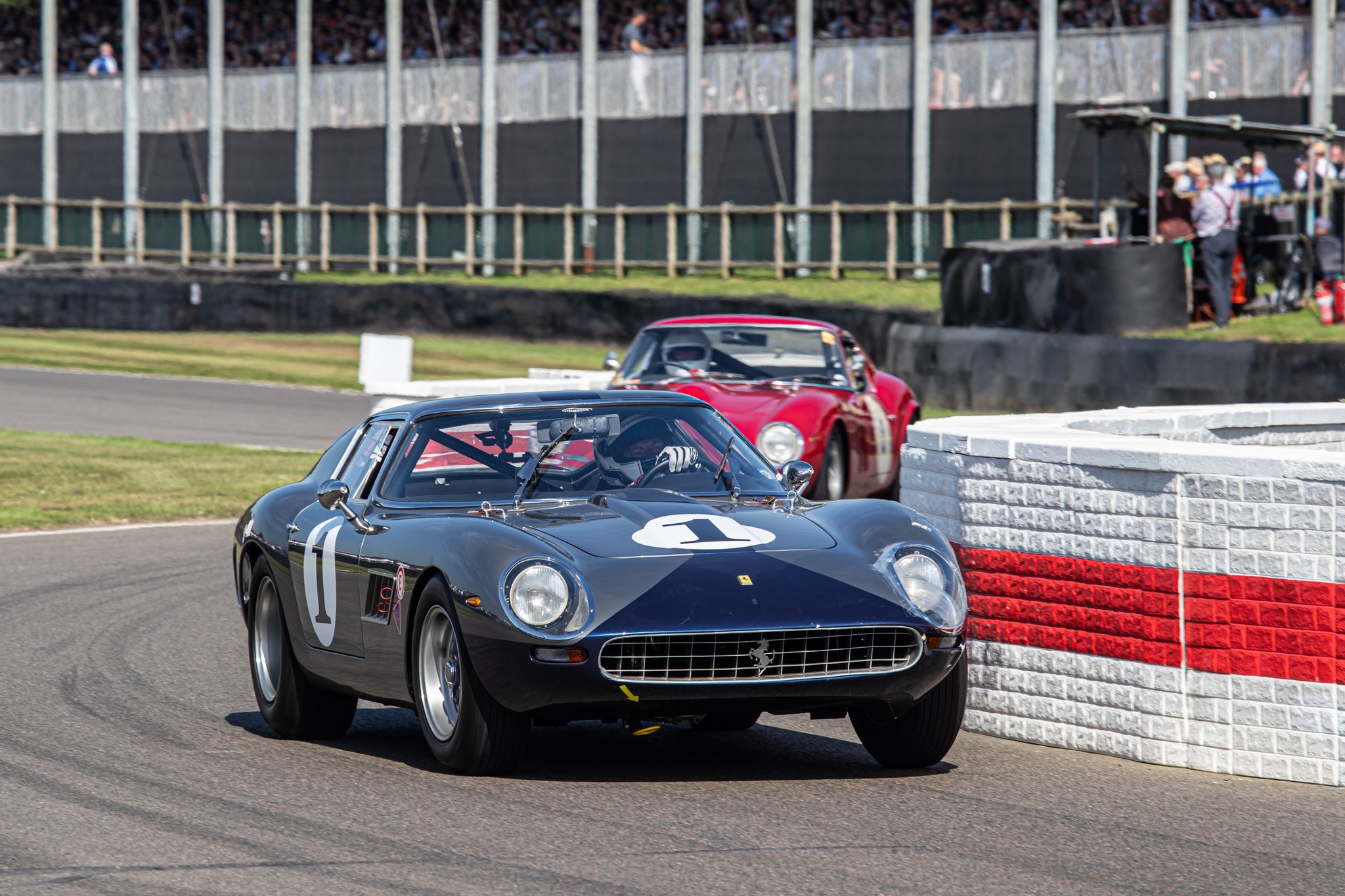
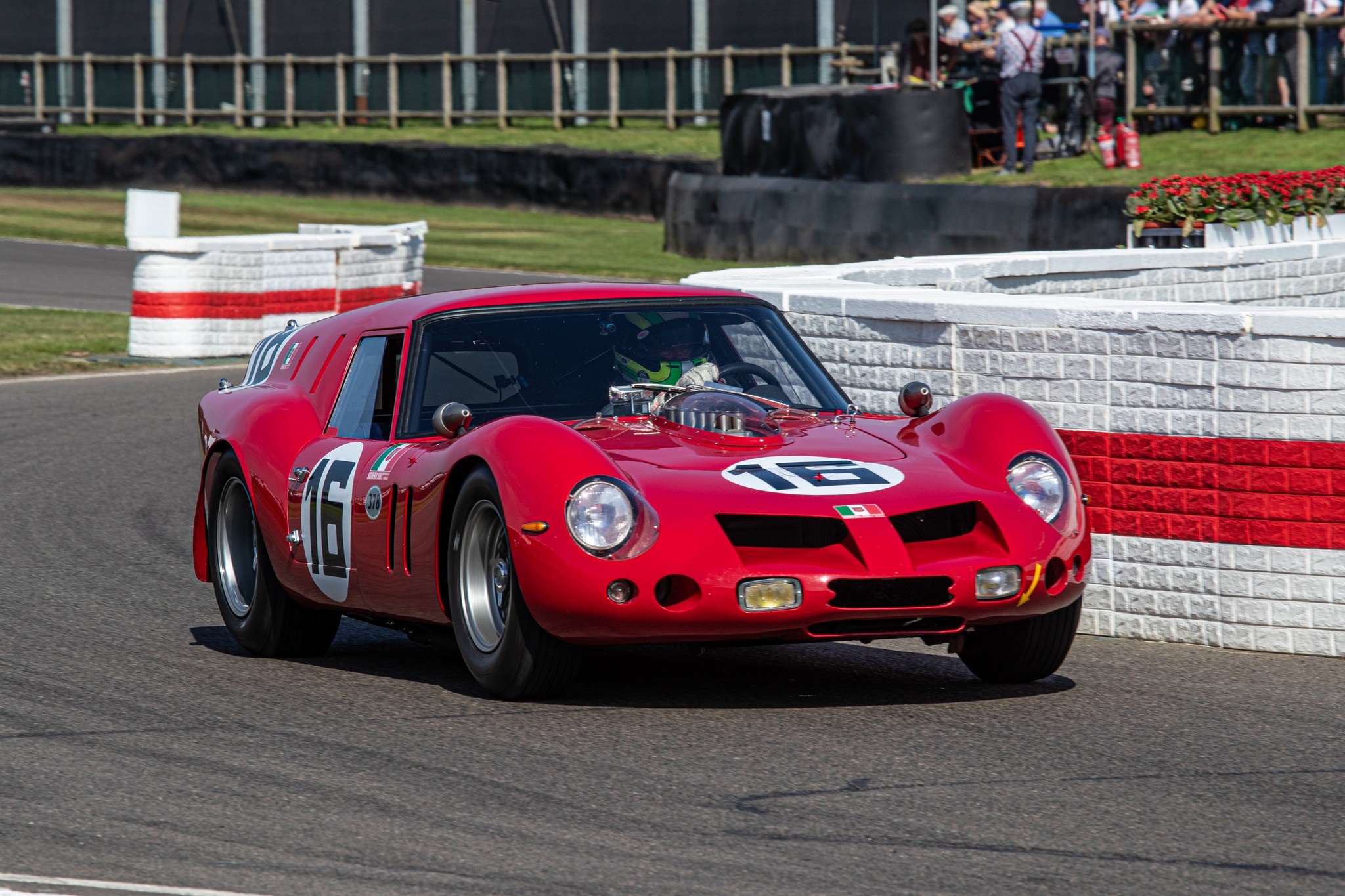
Giotto Bizzarrini was one of the engineers fired by Ferrari during the ‘palace revolt’ of 1961, and being an engineer of such talent, he was immediately hired by Count Giovanni Volpi. Still seething following his mass firing of employees, Enzo Ferrari stubbornly refused to sell a GTO to Count Volpi. Volpi wanted to compete with a new 250 GTO, as without one he would be at a disadvantage, and so he hired Giotto Bizzarrini and Piero Drogo to modify an older Ferrari 250 GT SWB Competizione so it would be competitive. The result was the distinctive ‘Bread Van’ which is still highly competitive in today’s historic racing circles.
The No. 1 Ferrari 250 Drogo (1960) of Christophe van Riet negotiates the Chicane on its way to eighth place (Virtual Motorpix/Glen Smale)
In 1963 Ferrari launched a new GT model, the 330 LMB, also sometimes referred to as the 330 GTO.The 330 LMB used the 250 GTO chassis and body, but it was fitted with the larger 4.0-litreengine as used in the 400 Superamerica. The car was as a result longer and wider, but the much bigger engine was more than capable of handling the added weight.
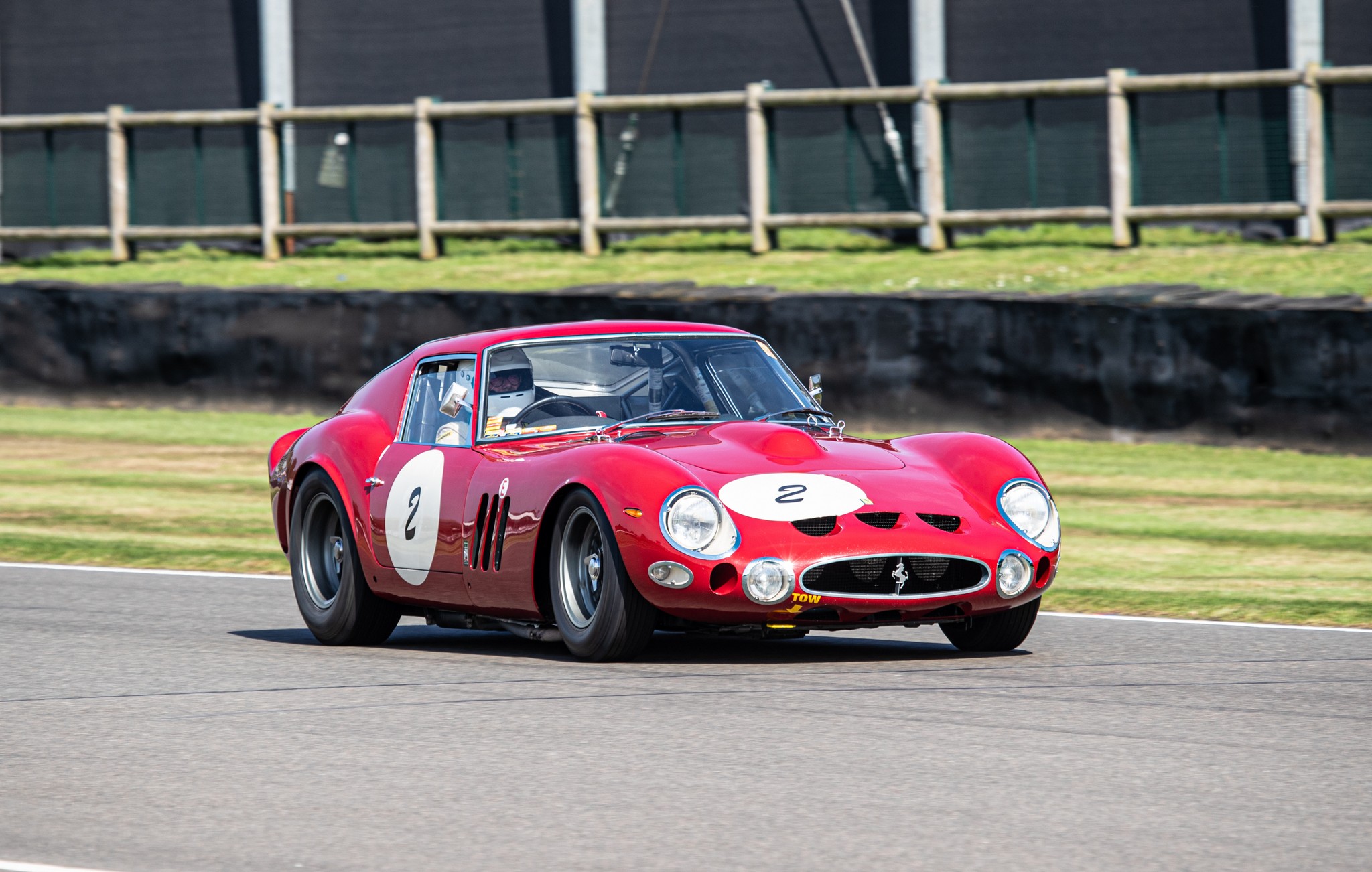
Boasting a more powerful 4-litre engine, this No. 2 Ferrari 330 GTO (1963) of Carlo Vogele finished inninth place (Virtual Motorpix/Glen Smale)
The Entry List
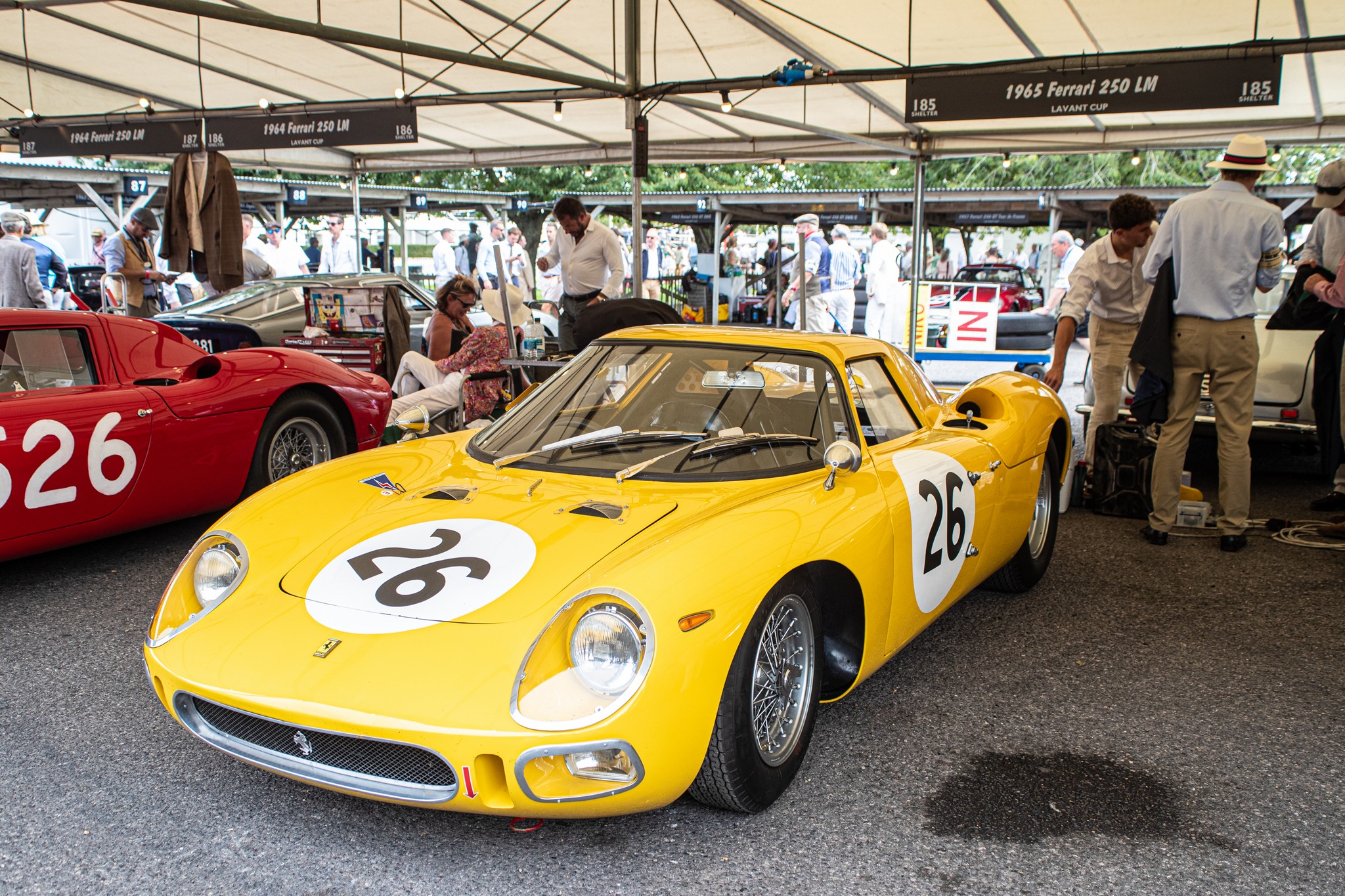
The Lavant Cup was a 25-minute race for Ferrari GT cars that raced between 1960 and 1966. On the race card were no less than ten 250 SWBs,one250 GTO,a 250 GT Lusso, a 330 LMB and a 250 Drogo, as well as the ever-popular 250 GT SWB ‘Bread Van’.Arguably three of the most muscular looking sports racers of the era, the 250 LM, were to be seen in the paddock, but only one would actually take to the circuit. The No. 26 250 LM of Gary Pearson was not able to take to the track due to an engine issue that the team discovered after practice, and that sadly wasn’t fixable in time for the race.
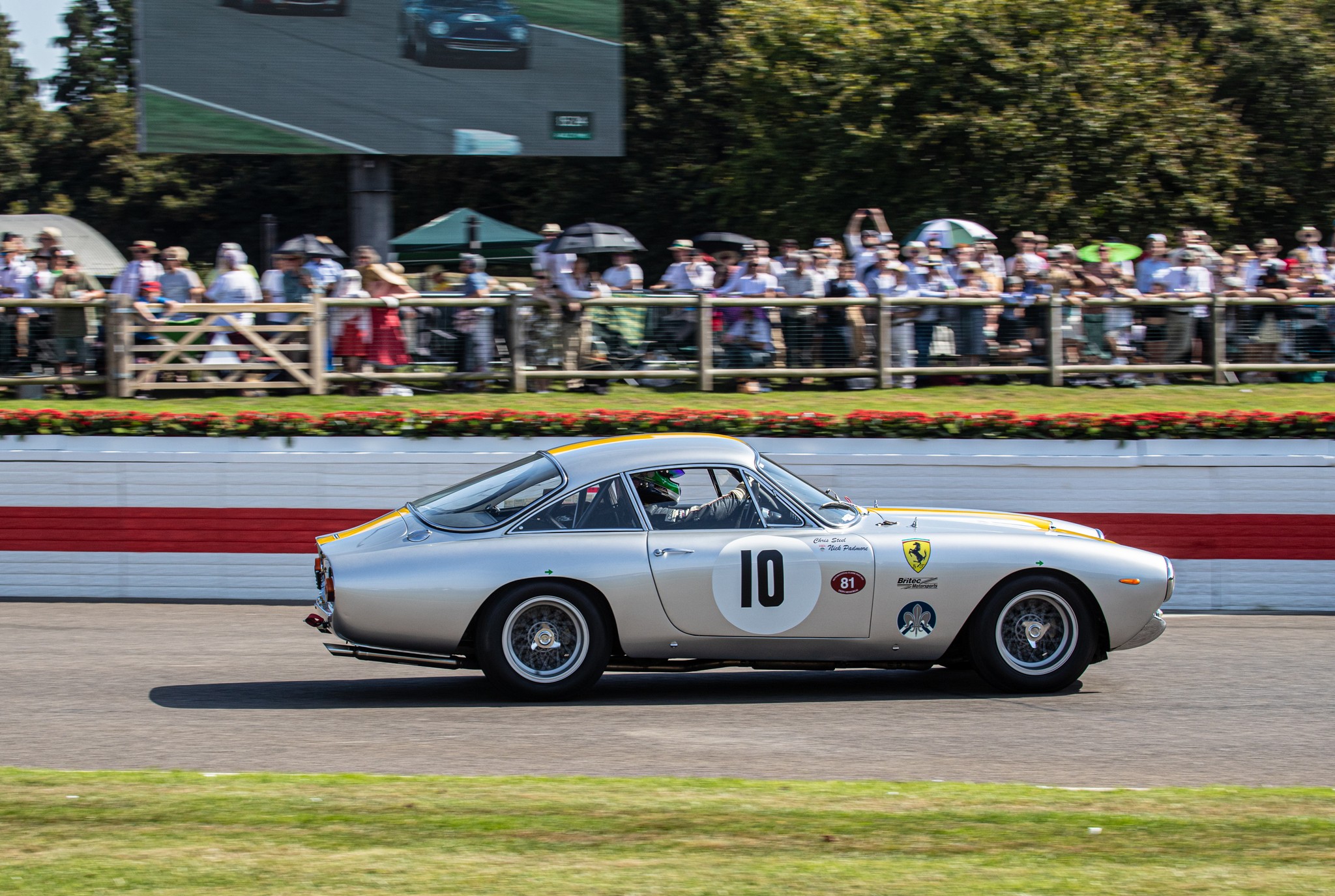
This No. 10 Ferrari 250 GT Lusso (1961) of Nicholas Padmorespeeds through the Chicane on its way to seventh place (Virtual Motorpix/Glen Smale)Unfortunately the No. 26 Ferrari 250 LM (1965) of Gary Pearson posted a DNS in the Lavant Cup (Virtual Motorpix/Glen Smale)
The Race
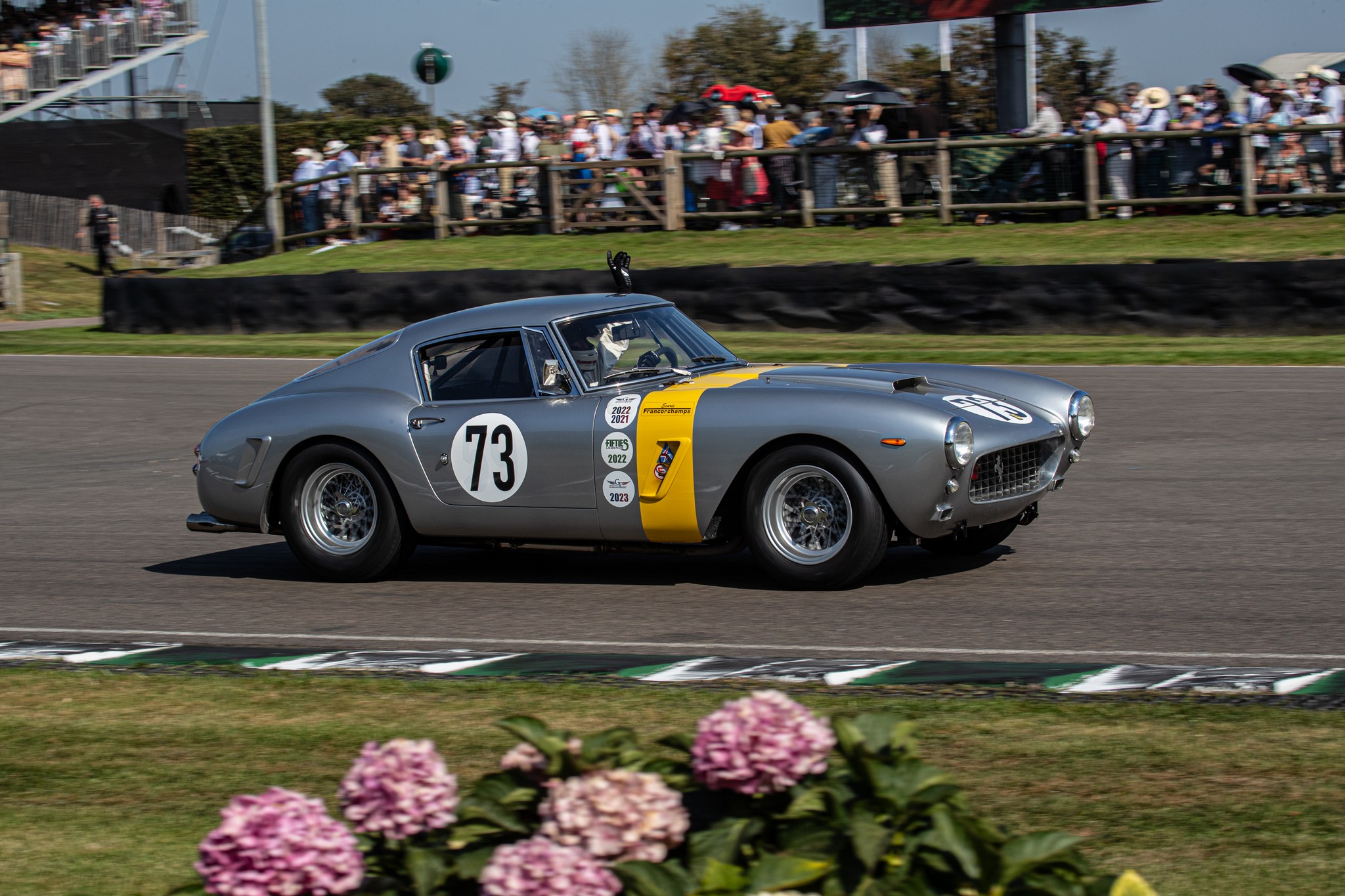
Rob Hall was on pole in the No. 526 250 LM with the No. 73 250 GT SWB Competizione of Emanuele Pirro alongside. Despite the 250 LM possessing a significant performance advantage over the older 250 GT SWB, it was Pirro who got away first, and led the 250 LM into Madgwick. It looked as though Pirro might head the field onto the back straight, but Hall was having none of it and quickly regained his number one spot.
Due to a technical infringement the 250 GT SWB ‘Bread Van’ had to start from the back of the grid, but this extremely fast car had a storming start, and was up to seventh by the time the field had all made it through Madgwick on the first lap. It continued to slice its way through the pack and after a couple of laps was lying third.In their eagerness to get a good start, the Nos. 7 and 21 250 GT SWBs were penalised ten seconds each for jumping the gun.
The extremely quick No. 16 Ferrari 250 GT SWB ‘Bread Van’ (1962) driven by Alexander Ames posted a finethird place overall (Virtual Motorpix/Glen Smale)
A few laps later, Rob Hall spun out onto the grass to the left in the area of St. Mary’s dip, the back of the car striking the tyre wall a glancing blow. A small amount of oil had been deposited on the track, and the Rob Hall car hit it first, and faster than anyone else. It was an excellent ‘save’ by Hall, and he guided the 250 LMsafely back onto the track almost without losing a breath, but it had slipped down the order and he was now in seventh place. During this time Pirro, always ready to pounce, took the lead in the No. 73 250 GT SWB Competizione, but before Hall’s misdemeanour with the tyre wall could have a lasting effect on the race, he had brought the 250 LM back into contention and soon retook the lead.
Emanuele Pirro waves to the crowd as he brings theNo. 73 Ferrari 250 GT SWB/C (1961) home insecond place (Virtual Motorpix/Glen Smale)
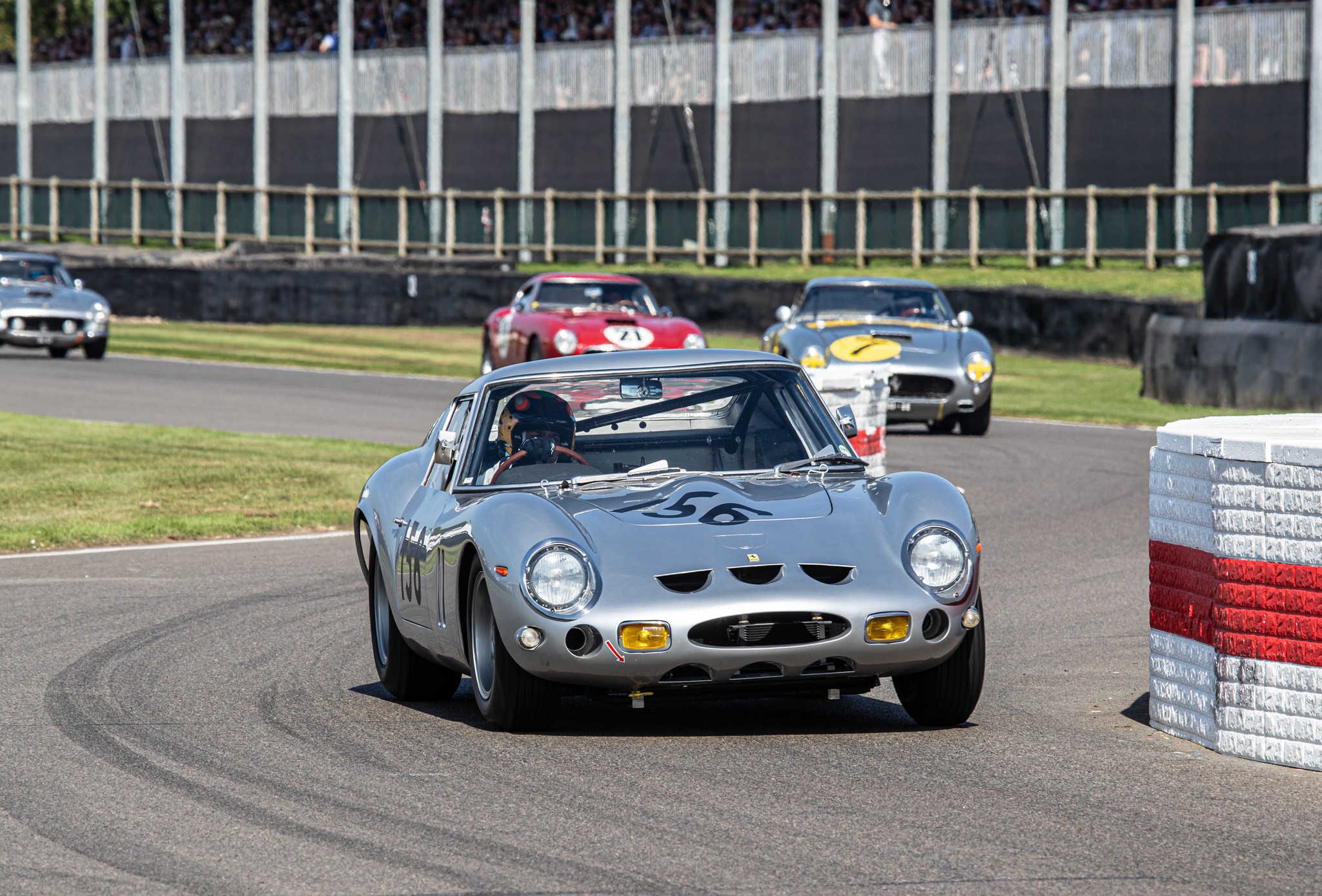
On the ninth lap, about half distance, the No. 156 Ferrari 250 GTO of Karun Chandhok suddenly locked up going down the back straight. A huge flame burst from under the car as the £30-million Ferrari performed a 360 degree spin and as Chandhok gathered himself, he somehow managed to control the car by steering it onto the grass, whereupon he exited the car very quickly. By now the flames had subsided but smoke was still coming from under the car, and as the marshals arrived, any remaining fire was quickly doused with an extinguisher. The cause was an engine failure which resulted in a hole in the block, and the escaping oil is what caught fire. Fortunately, the onboard fire extinguisher system did its job, and Chandhok was praised for his quick reactions and for keeping the car out of the way of those competitors following him. He escaped the fiery incident but was mightily disappointed that he couldn’t complete the race, and suffering no more than a melted racing boot, he also very relieved that both he and the car were safe.
Karun Chandhok negotiates the Chicane in the No. 156 Ferrari 250 GTO (1962). Sadly the car would post a DNF due to a fire (Virtual Motorpix/Glen Smale)
There were two further retirements, these being the No. 11 Ferrari 250 GT SWB driven by Ben Cussons and the No. 6 Ferrari 250 GT SWB/C of Martin O’Connell which were both out with ‘mechanical’ problems.
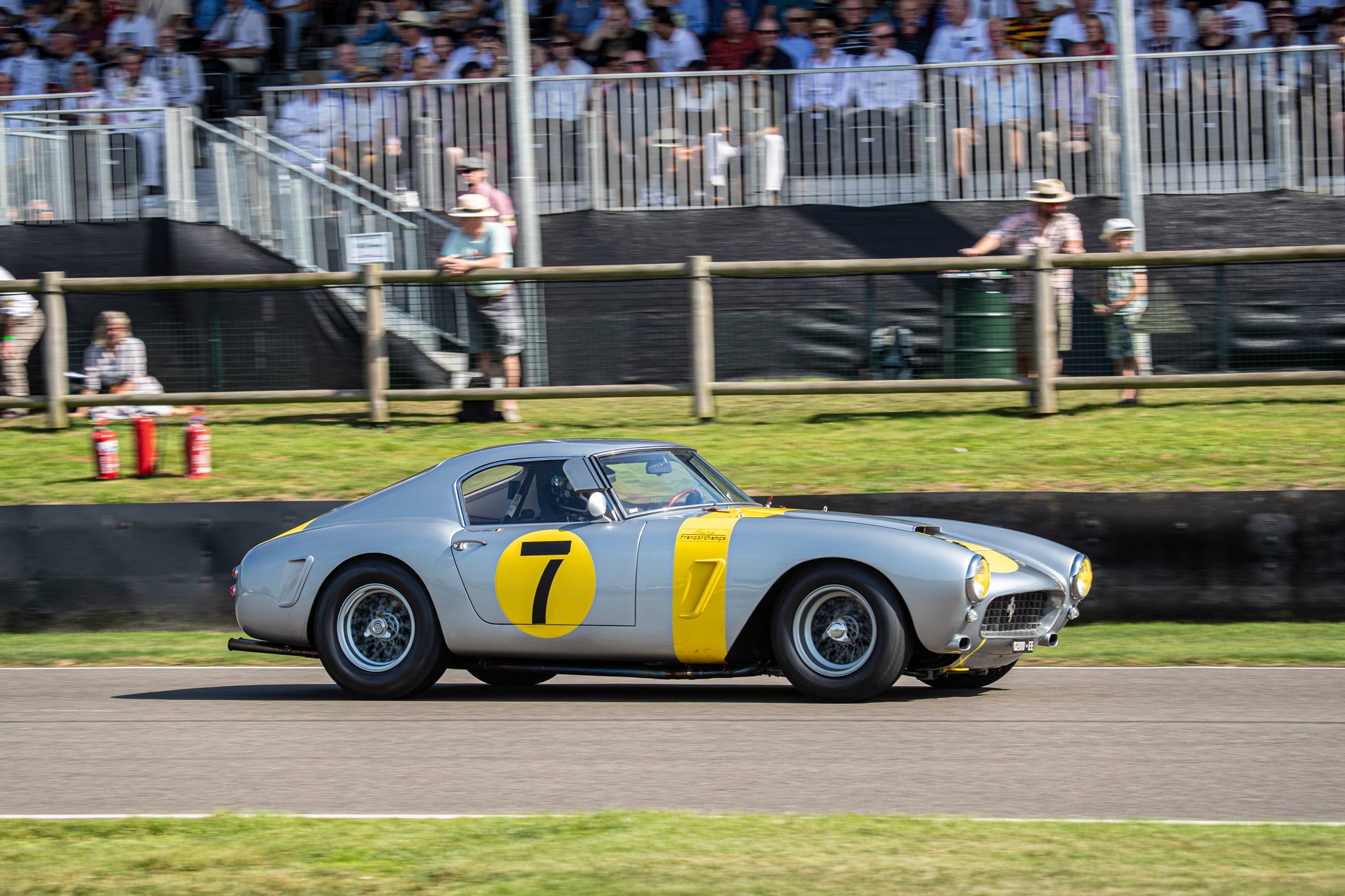
The No. 7 Ferrari 250 GT SWB/C (1960) of Vincent Gaye passes the crowd in the Woodcote grandstand on its way to an overallfifth place (Virtual Motorpix/Glen Smale)
While the remainder of the race went off without too much drama, this in no way infers that the racing was processional. Despite the extremely high value of these cars, the drivers did not hold back and drove their steeds with enthusiasm and commitment, sliding around corners and really pushing the cars to their limits. This is of course what the paying public had come to see, their favourite race cars being driven at full chat.
Race Results
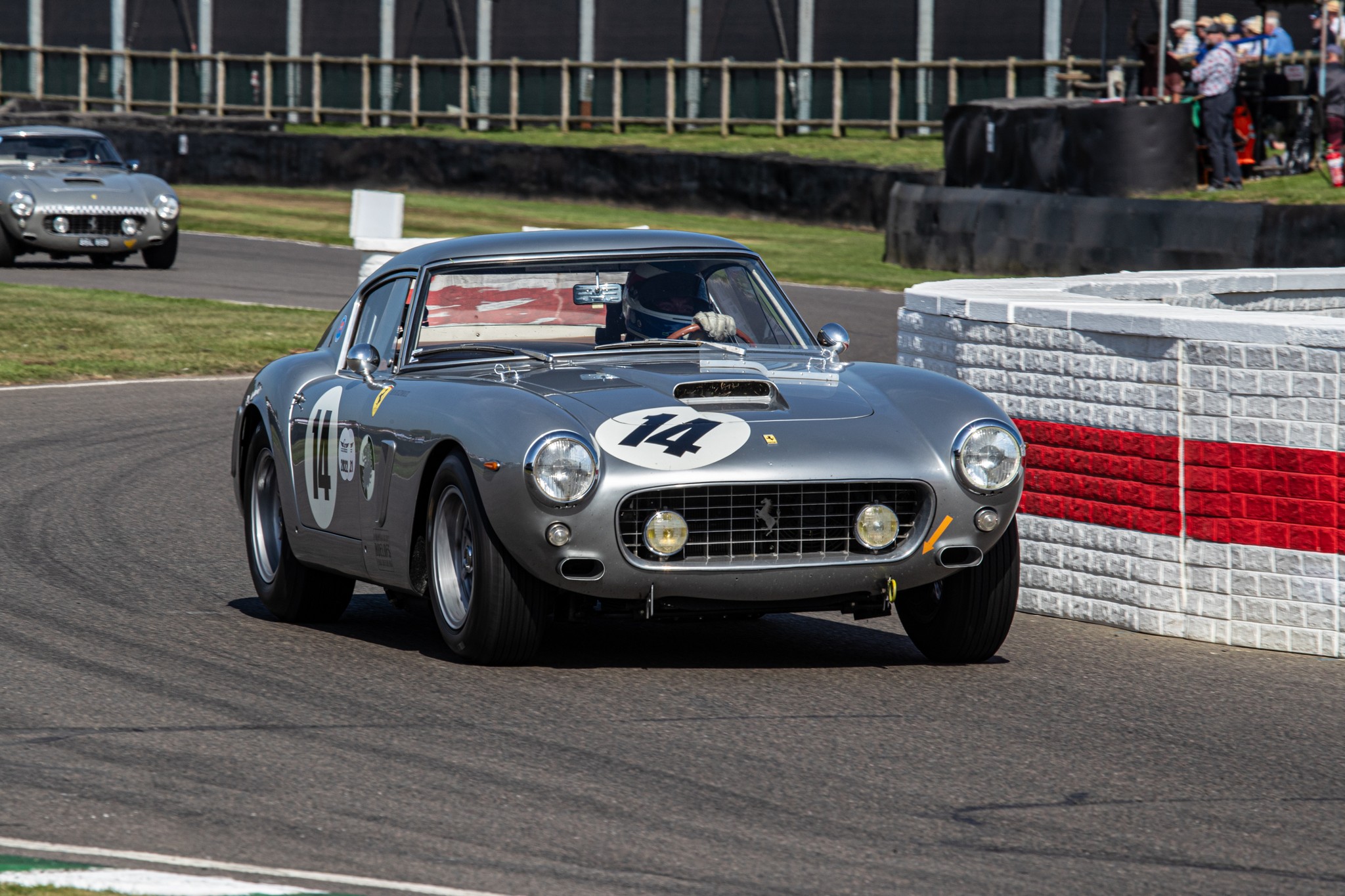
Pirro stayed in touch with the lead 250 LM but in reality he was not going to beat the more powerful Ferrari for pace. It came then as no surprise to see Rob Hall cross the line first in the 250 LM, followed closely by Pirro in the No. 73 GT SWB/C, with the No. 16 250 GT SWB ‘Bread Van’ in third place. These top three finishers were separated by just five seconds, but the gap to the fourth place No. 14 GT SWB/C was a further thirteen seconds. To the drivers, winning is everything, but to the spectators, just seeing these prized gladiators on track was everything.
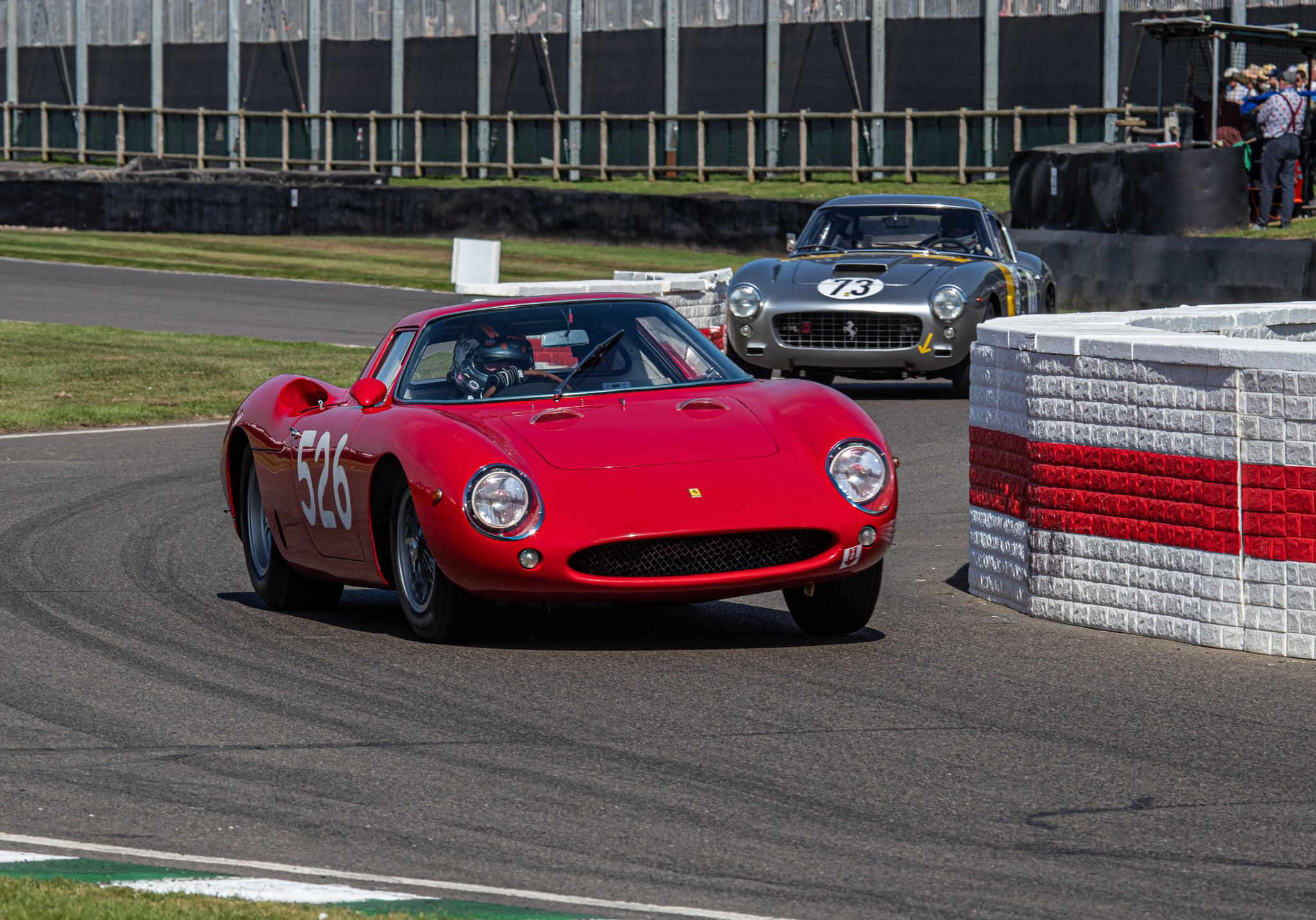
Rob Hallspeeds through the Chicane in theNo. 526 Ferrari 250 LM (1964) on his way to overall victory. In the background can be seen the second-placed car of Emanuele Pirro(Virtual Motorpix/Glen Smale)
Author’s Note
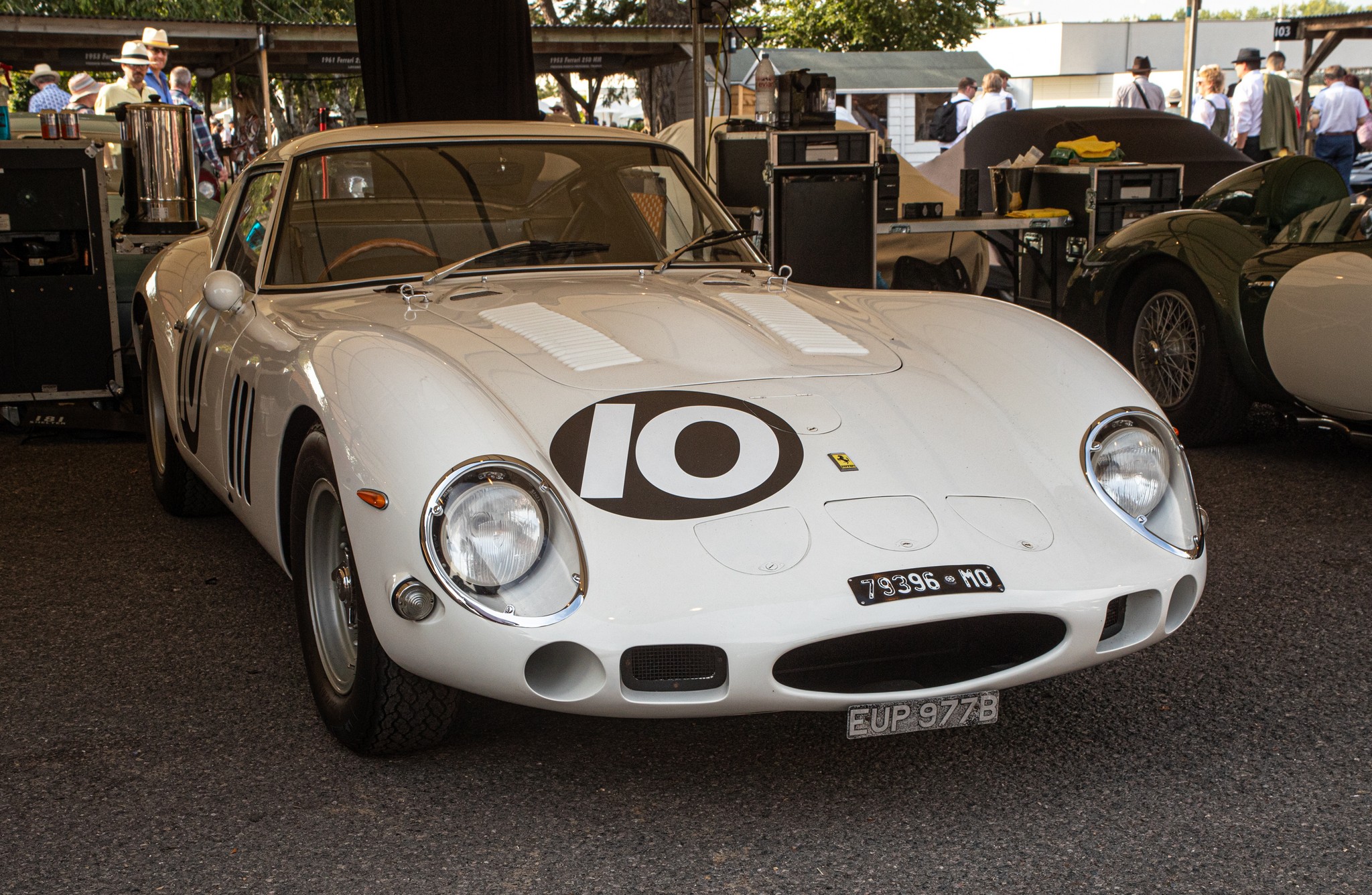
Spectators will have noted three other beautiful Ferraris were languishing in the paddock, that were not entered in the race, these being the red/white No. 8 Ferrari 250 LM, the white No. 10 250 GTO and the familiar red/blue 250 GTO/64.The fact is that none of these three cars were due to race, they were present in order to lead the field on the formation lap.
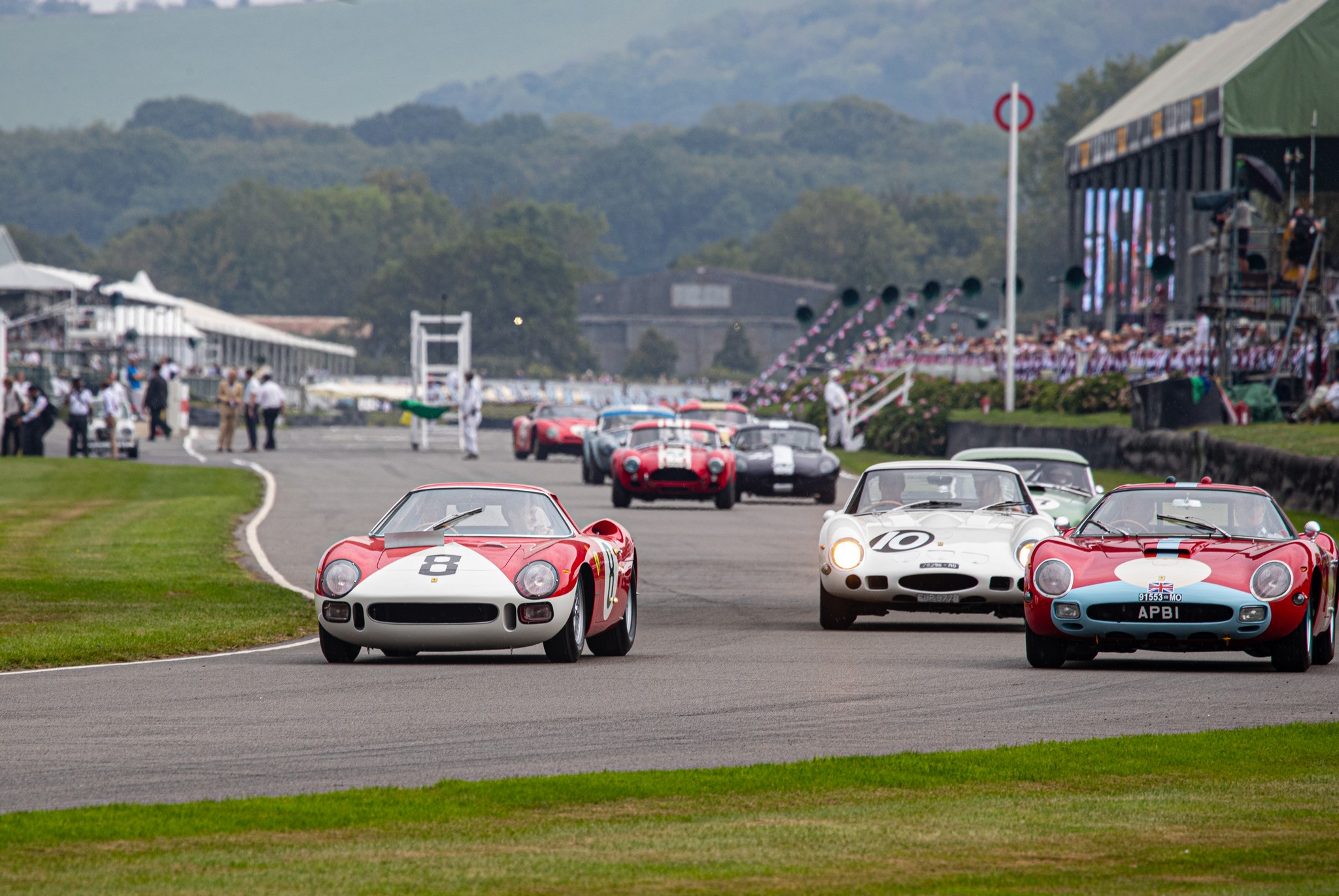
The trio of fantastic Ferraris lead the pack of competitors on the formation lap of the Royal Automobile Club Tourist Trophy race (Virtual Motorpix/Glen Smale)
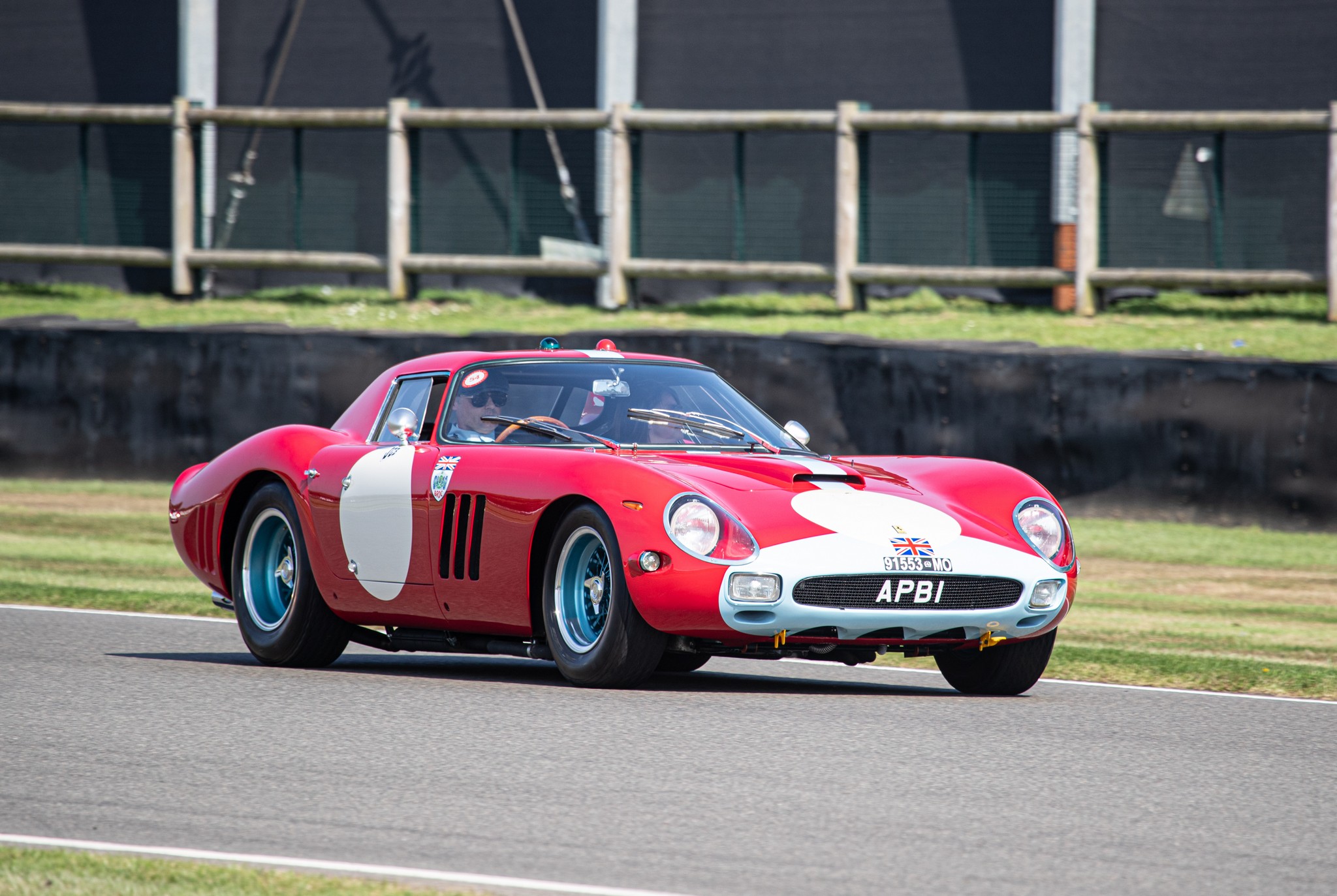
The first was red/white No. 8 Ferrari 250 LM which is the ex-John Surtees, Jochen Rindt, LorenzoBandini, David Piper, Umberto Maglioli car that, among other results, came second in the 1964Reims 12 Hours in the hands of Surtees/Bandini. The next car was the white No. 10 250 GTO, this car originally being owned by John Coombs and raced in period by a Roy Salvadori, Graham Hill andJack Sears, among others. The third car in this group was the 250 GTO/64 “APB 1” in its familiar red with light blue flashes. This car was in fact the reason why Goodwood held this race, to celebrate 60 years since a Ferrari GT car won at Goodwood for the last time in period, when Graham Hill won the TT back in 1963.
After the
award ceremonies and parties, I planned a trip to Siargao. But the universe
conspired against my BFFs and me.
One after
the other, three unexpected things happened. We had to rebook our flight and change
our villa reservation to January.
As a stroke
of luck, one BFF the PR maven Jingjing Romero owned vouchers for stays and
other goodies at the historic Manila Hotel. I had never stayed there!
Alas, her
vouchers had expired on July 31, 19 days prior! She called her friend, the
editor of the Manila Bulletin, the hotel’s sister company. It worked!
After she
renewed her subscription for another year, her vouchers were extended until the
end of October.That was the key to unlocking a unique two-night staycation together with Ann, another BFF.
Tired from
our early morning ordeal at the airport, we had arroz caldo, lumpia, and bibingka
at the Lobby Lounge. The large comfy chairs around the tables underneath the
exquisite chandeliers were a haven to wait for the paperwork.
Soon we were ushered into a superior deluxe room. There was a large Welcome Basket of fruits. Then my eyes feasted on the lovely wooden lattice on the cabinet doors and the large picture window. Uniquely Filipino!
What got me most
was the unique TV housing whose header board bore the hotel’s bragging rights: “A
Historical Landmark Built in 1912.” That was when the hotel was opened to the
public.
It was built
in 1909 to rival the stateliness and elegance of Malacanang Palace, the
official residence of the President of the Philippines originally built in 1750.
It added first-class lodging for the
country’s distinguished guests.
During WWII,
the Hotel was used as the Japanese military headquarters. It suffered heavy
damage but was restored to its former glory as one symbol of the country’s
resilience.
Most
prominent is the historic MacArthur Suite which became the former home of Gen.
Douglas MacArthur. Its premier Presidential Room has hosted many global celebrities
and dignitaries.
A
much-needed rest kept us in our comfortable room. We waited for Gari, another BFF, to
bring Chinese delicacies from around the area: siopao, hopia, and congee. Room service
added more to the impromptu feast.
Then the
night faded into a deep restful sleep. One remark said what everybody felt: “There’s a
reason we pay for luxury.”
But the
following day was busy. We had breakfast at the Tap Room, an old English pub
outlet which features live music at night. Wall-to-wall dividers that separate
it from the Lobby are of the same wooden lattice design I had come to love.
And off we
went to another brush with history, just three kilometers away. I had
previously been to the main areas of Malacanang Palace for official functions
and the staff buildings for meetings.
So we
visited parts that must have inspired the building of the Manila Hotel. But
first, we visited the new Bahay Ugnayan (Malacanang Heritage Museum) that exhibits
the sitting president’s rise and the return of the Marcoses to the halls of
power.
From there,
we boarded the ubiquitous tricycle to go from one beautiful mansion to another.
The Laperal Mansion is the President’s Guest House and the Goldenberg Mansion is
the Ambassador’s Guest House. Both are beautiful architectural pieces
surrounded by lovely gardens.
Nearby is
the Teus Mansion, the Presidential Museum of the Last 16 Presidents. You can also find Emilia, a great dining place
known as the House of Filipino Food. Finally, there is the National Shrine of
St. Michael and the Archangels.
Then we were
on our way for a visit to Antipolo Church. En route, we stopped for lunch at a
friend’s Bistro atop his office building in Pasig. But then rains poured,
creating traffic, so we returned to the hotel.
We dressed
up for our special dinner at the Champagne Room, dubbed the most romantic room
in Manila. With Old European-style dining, we savored each dish we ordered:
French onion soup, organic market salad, roast lamb rack thyme juice, and sous
vide beef short ribs.
The next
morning, we tried Café Ilang-Ilang, renowned for its dazzling international buffets.
There seemed to be infinite options, but I chose the traditional corned beef
breakfast I had missed for so long.
But when we
were looking for change at the end of the meal, one of our wait staff said, “Kahit
po walang tip, ang mahalaga ay naserbisyuhan at napangiti namin kayo.”
Yes, Manila
Hotel is renowned for its historic elements and understated luxury. But it
showcases Filipino hospitality at its best!
Two nights
is too short, though.
The Hotel is
in Km 0 where the city of Manila begins, right at the heart of where the
country started. Within walking distance are Rizal Park, Intramuros, and the
National Museum.
Across from
the Manila Hotel, I found a vintage “kalesa” (see headline photo). So I took a short joy ride before
we briefly enjoyed Manila Bay from the grounds of the former Army and Navy Club of
the US, now the Rizal Hotel,.
The Manila
Ocean Park, San Agustin Church, and the Manila Cathedral are just minutes away.
Farther away, Binondo, Malate, and Ermita are great for shopping, food
tripping, and nightlife. And then there is the great Mall of Asia, and casinos, too.
We didn’t have
the time to experience all the hotel offers. Another night would have been good
for Red Jade, known for its authentic Chinese dining. Another day could have
been spent luxuriating at the Spa, adult pools, and Health Club.
We still need to set foot in the Heritage Museum. However, we were impressed with the
pieces at the Art Gallery and loved the huge Japanese Festival lobby display.
This stroke
of luck has led me to a decision. The Manila Hotel is where I will stay whenever
I am in Manila!
Happy holidays to you all! I have an interesting treat for you on this Xmas holiday. I often mention that my very full time career means a lot less posts appearing here. During 2021 an interesting solution to this appeared – in the form of another contributor. I was very pleased to be contacted by a talented vehicle designer called Marco Braun. Marco offered to write a few guides to car design that complimented my own. Today I publish these guides in a festive gift bundle! I ask that you also check Marco’s own web portfolio and contact him if you are interested in working with Marco! Marco was one of the designers responsible for the recent Lexus LF-Z Electrified Concept car and I am very pleased to have his expert contribution to this blog.
byLee
byLee
braunmarco.com
Marco Braun is an expert in the field of Automotive Design. In February 2017, he graduated with a B.A. in Transportation Design from the University of Pforzheim. In the past, Mr. Braun has worked on experimental concepts, advanced, competition, and production design for the Lexus and Toyota brands, in Tecno Art Research, a design studio in Nagoya-shi, Japan. Since the start of my professional education, it has been my vision to play a part in the development of transportation and mobility designs of the future. E-Mail info@braunmarco.com
Support CleanTechnica’s work through a Substack subscription or on Stripe.
Brett Christophers has put his finger on an uncomfortable truth. Renewable energy has reached the point where it is often cheaper to generate than fossil fuels, yet the rate of investment is still far below what climate targets demand. His book, The Price is Wrong: Why Capitalism Won’t Save the Planet, explains why.
Investors follow profit, not need, and renewables are structured in a way that turns falling costs into falling revenues. Solar panels and wind turbines produce power at near zero marginal cost, so competition drives prices down. That is good for consumers and good for emissions, but it makes for wafer-thin profit margins that are not attractive to capital looking for steady, high returns. Fossil fuels by contrast remain in many cases more profitable because their scarcity can be controlled and their markets are designed to reward incumbents. Christophers’ conclusion is stark. If profitability is the bottleneck, then leaving the transition to private capital will not work at the speed required. The state must take on a far larger role.
The core of his argument is hard to dispute. If companies and financiers do not see an acceptable return, they will not deploy capital. He documents how even record low bids for renewable projects have been followed by cancellations or pleas for more support when inflation or supply chain pressures squeeze margins. He reminds readers that what has been built so far has leaned heavily on subsidies, tax credits, or guaranteed contracts, not on free market enthusiasm. Without that scaffolding, private developers walk away. It is a useful correction to the triumphalist narrative that renewables will sweep the board simply because they are cheaper on paper.
Christophers’ prescription for action is that governments must move beyond reliance on markets and take a leading role by building and owning renewable infrastructure themselves, or through public utilities and agencies. Where private developers are involved, he insists that the state must guarantee returns through long-term contracts, subsidies, or price supports that stabilize revenues.
He frames electricity as a public good ill-suited to volatile spot markets and better managed through planned, coordinated investment in generation, grids, and storage. In short, he calls for a decisive expansion of state leadership and ownership, with private capital relegated to a supporting role under strict public frameworks, on the grounds that only by bending or bypassing the logic of profit can the transition proceed at the pace the climate crisis demands. Basically, he calls for socializing electrical generation and removing markets from the equation.
However, credible critics have pointed out that the story is not quite that simple. Renewable profitability varies by technology, geography, and market design. A rooftop solar installation in Germany is a different investment proposition than offshore wind in the North Sea or utility-scale solar in Texas. Many economists note that market design can be reshaped to stabilize revenues. Contracts for difference, long-term power purchase agreements, and capacity payments already exist in many jurisdictions and have drawn in billions of dollars of private capital. Others stress that non-financial bottlenecks such as lengthy permitting, overloaded interconnection queues, and grid congestion slow the pace of deployment even when investment appetite is strong. Christophers is right to highlight profit as a barrier, but it is not the only brake on progress.
There are also fair cautions about his solution. Public ownership can deliver long-term capacity, but state-run utilities have mixed track records, and governments face their own constraints, from budget limits to political interference.
The real question is not whether capitalism must be abandoned but how far it must be bent to public purpose. History offers a guide. Almost every major infrastructure build in the past century combined public rule-setting with private execution. Railroads, highways, telecommunications networks, and electricity grids were all made possible by government interventions that made them investable. The clean energy transition will be no different. The challenge is to design frameworks that unlock capital while ensuring deployment at the necessary pace.
One tool is market design that ensures adequate returns. Electricity markets that rely on energy-only spot prices expose renewable projects to extreme volatility. When the sun is shining or the wind is blowing, prices collapse, sometimes to zero or even negative, and investors cannot rely on a steady cash flow. That makes banks reluctant to lend without charging a high premium. Instruments like contracts for difference in the UK solve this by guaranteeing a fixed price for generation over 15 to 20 years. Developers bid competitively, which keeps costs down for consumers, but they know exactly what revenue they will earn, which makes projects financeable.
Long-term corporate power purchase agreements play a similar role, although Christophers notes that large buyers often negotiate very low rates that squeeze developers. Capacity markets and ancillary service payments can also provide steady income for being available to the grid, not just for producing power in a given hour. These tools stabilize cash flows and lower the cost of capital, which is critical for capital intensive technologies like wind and solar.
Another tool is public support for finance. Governments can use green banks, loan guarantees, or co-investment funds to take on part of the risk that deters private lenders. A green bank providing low interest loans, or a public entity taking the first loss in a project portfolio, can make the difference between a renewable project being bankable or shelved. The Inflation Reduction Act in the United States was an example of public money creating private profitability. Generous tax credits and direct payments made clean energy projects attractive to investors, and as a result the pipeline of solar, wind, and battery plants expanded dramatically. This is capitalism with a thumb on the scale, and it shows that policy can shift capital quickly when it aligns profits with climate goals.
There is also a role for direct public investment in infrastructure the market will not build on time. Transmission lines, interconnectors, and large-scale storage are expensive, slow to permit, and often unprofitable for private firms to build on their own. Yet without them, renewable projects remain stranded. Governments can and should take the lead on these backbone elements, whether by funding them outright or by creating regulated monopoly frameworks that guarantee returns. The payoff is that private developers can then connect new projects without prohibitive delays. Public ownership is justified in these cases because the social value of expanded grids and storage far exceeds the private return.
Carbon pricing and clean energy standards are additional levers. By making fossil fuels more expensive or mandating a rising share of renewables in electricity supply, governments tilt the economics decisively. A robust carbon price or an enforceable renewable portfolio standard creates predictable demand for clean power. That demand, in turn, gives investors confidence that their projects will have a market. These policies are not without political difficulty, but they are well within the toolkit of capitalist economies.
Reducing soft costs is another area where policy can raise effective returns without raising consumer bills. Every month cut from permitting timelines or interconnection delays improves the net present value of a project. Standardized contracts, transparent grid data, and faster regulatory processes all contribute to making renewables more attractive investments. This is not about subsidies or public ownership, but about making the system function more efficiently.
There are selective cases where public ownership makes sense. Grid infrastructure is one. Repowering old coal sites with renewables where transmission already exists is another. Early stage offshore wind zones or large storage projects may also benefit from public build-own-operate models, especially if private capital is hesitant. The key is to ensure such ventures are governed transparently, with clear mandates to deliver reliable, low-cost clean power, not to serve as political tools.
Evidence from around the world supports this blended approach. The UK’s offshore wind boom was driven by contracts for difference that de-risked investment. The United States is seeing a surge of projects thanks to the Inflation Reduction Act’s tax credits and loans. China’s massive build-out of wind and solar is guided by state planning and executed by both state-owned and private firms. Each case shows that when government sets the ground rules and shoulders part of the risk, private capital will scale clean energy. The common thread is that markets are not left on their own. They are bent to serve a public purpose.
As a note, this is one of a select group of books I’ve read which does an excellent job of assessing a complex space and clearly identifying issues, then veers off course into fairly bad prescriptions for action. Marx’ Communist Manifesto did an excellent job of identifying issues with capitalism, then offered a terrible alternative. Naomi Klein’s No Logo‘s first half was a master class in branding, and I learned a lot from it, but the second half was a laundry list of mostly meaningless resistance, not a useful alternative. The Price Is Wrong falls into this category, and for anyone seeing a trend here, you aren’t wrong. All three are worth reading for the diagnosis of the problems, but the strategic policies and plans are shaped by bias, aren’t relevant, and are clearly better resolved within the framework of market economies than through removing markets from the equation.
The conclusion is straightforward. Addressing Christophers’ challenges does not require abandoning capitalism. It requires writing rules that make clean, reliable power profitable to build and cheap to buy. Capitalism will not save the planet on autopilot, but it can be harnessed if governments are willing to set the terms. The measure of success is not ideology but delivered clean terawatt-hours at stable prices. The faster policymakers align markets with that outcome, the faster the transition will proceed.
Sign up for CleanTechnica’s Weekly Substack for Zach and Scott’s in-depth analyses and high level summaries, sign up for our daily newsletter, and follow us on Google News!
Advertisement
Have a tip for CleanTechnica? Want to advertise? Want to suggest a guest for our CleanTech Talk podcast? Contact us here.
Sign up for our daily newsletter for 15 new cleantech stories a day. Or sign up for our weekly one on top stories of the week if daily is too frequent.
CleanTechnica uses affiliate links. See our policy here.
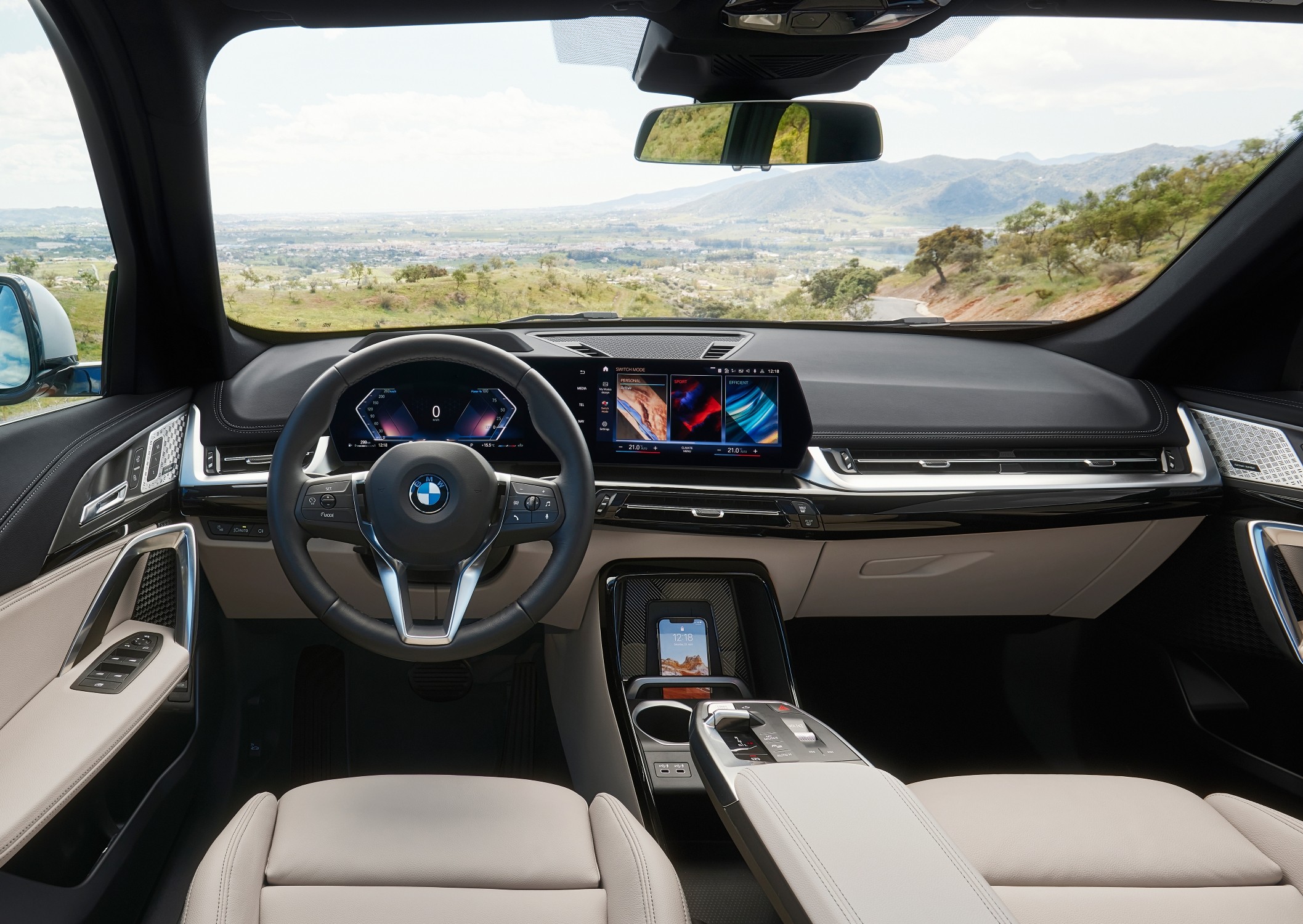
SUV drivers who want to be immersed in a luxurious, cutting-edge environment can’t get enough of the 2026 BMW X1. The cabin is designed to pamper you and up to four passengers with premium amenities and state-of-the-art technology. Take a closer look at the design and technology highlights of the 2026 BMW X1.
Luxurious Design Amenities
Every time you slide inside the 2026 BMW X1, you’ll be enveloped in plush seats upholstered in luxurious Veganza faux leather. Available colors include Black with Blue contrast stitching, Smoke White perforated, and Castanea perforated. Each will pair beautifully with any of the accent options, such as black high gloss, aluminum, and eucalyptus open-pored fine wood.
From the driver’s seat, you’ll have all the controls at your fingertips thanks to the ergonomic and impeccably designed console, even when you’re grasping the leather-wrapped steering wheel. Your lucky passengers can gaze through the panoramic moonroof, which makes the already massive cabin feel even larger.
Futuristic Technology Features
The 2026 BMW X1 enhances your driving experience with the latest in automotive technology. The BMW Curved Display™, Apple CarPlay®, Android Auto™, Bluetooth® connectivity, a built-in navigation system, and a wireless device charging pad all come standard.
Add the optional technology package for features like video augmented reality for navigation, a head-up display, a heated steering wheel, a 3D 360° surround view, Parking Assistant Plus, remote engine start, and an anti-theft recorder.
Experience Modern Luxury in the 2026 BMW X1 in Northfield, IL, Near Chicago
There’s a long list of design and technology features to be excited about in the 2026 BMW X1. Visit our BMW dealership near Chicago, IL, to meet one in person. We can’t wait to discover your favorite amenities and help you drive your SUV home!
The McLaren ‘Longtail’ lineage
personifies the brand’s identity at its bravest, purest, and most extreme.
The newest, and certainly more
than worthy, member of the McLaren ‘Longtail’ (or LT) family is the gripping
McLaren 600LT.
Extreme weight reduction, flame spitting
top-exit exhausts, and immaculate steering – the McLaren 600LT is deserved of
the LT label, as brave and as bold as a track-focused, road-legal car can be.
In over two decades of ‘Longtail’
existence, seldom has McLaren labelled its cars with the historic and
prestigious LT tag. The 2018 McLaren 600LT is only the fourth car to sport the
name and it
encapsulates the expected performance-driven ethos of its
predecessors.
All LT models are raw, thrilling
and absolutely ground-breaking. Their shared focus consists of optimised
aerodynamics, reduced weight, increased power and a track-centred connection
with the driver.
The 600LT is no different,
pushing engineering and design possibilities to their limits in order to
provide an invigorating, intoxicating driving experience.
Heritage: The ‘Longtail’ Bloodline
The story began with the McLaren
F1, which was ironically never designed with the intention of track racing. However,
something quite spectacular happened when it did eventually take to the track.
The McLaren F1 GTR dominated and
won the famous 24 Hours of Le Mans in 1995, with McLaren becoming the only
manufacturer to win it at the first attempt. The F1 GTR then evolved into the
iconic ‘Longtail’, which came about two years later.
From there, the ‘Longtail’ family
continued to grow with the stunning achievements that are the McLaren 675LT
Coupé and McLaren 675LT Spider in 2015-16.
Next up is the new McLaren 600LT
– a real head-turner that has all the makings of a true ‘Longtail’.
McLaren 600LT Specs
The 600LT maintains the agility
and dynamism of McLaren’s Sports Series but has been injected with the
spine-tingling, adrenaline-pumping nature of the ‘Longtail’.
McLaren have crafted the 600LT in
carbon fibre, using extreme weight-saving measures – including the carbon fibre
MonoCell II Chassis – to achieve a weight reduction of 96kg.
The bodywork is stiffer yet
lighter, more aerodynamic and generates an incredible amount of downforce due
to its many minute details.
Thanks to its twin-turbo V8
engine – which has a capacity of 3,799cc – the 600LT is the most powerful McLaren
Sports Series vehicle ever, generating 592bhp and 620nm of torque.
The chassis is so sharp that you
are able to dissect corners on your way in as if in slow motion, aided by the
controlled and accurate steering that provides super clear feedback.
McLaren 600LT Stats and Figures
– Top speed of
204mph
– 0-62mph in
2.9 seconds
– 0-124mph in
8.2 seconds
– Lightweight
for a supercar at a mere 2,749lbs (1,247kg)
– Low priced
for what it offers, starting at $240,000 (£185,500) when it was released
The McLaren 600LT Vs. The 675LT
The 600LT is no match for the
675LT in a straight line; however it does generally have the edge on the track
due to its superior cornering speeds.
Priced at almost $330,000, the
675LT is relatively expensive for a supercar, whereas the 600LT starts at a far
lower $240,000 for those who are fortunate enough to afford it.
The McLaren 600LT Vs Ferrari 488 Pista and Ferrari 488 GTB
The 600LT’s value for money is
demonstrated here once again, matching the $316,300 Ferrari488 Pista with a 0-62mph time of 2.9
seconds, despite not being direct rivals.
McLaren’s 600LT has a quicker
0-62mph and 0-124mph time than the more directly comparable (yet still more
expensive) earlier model, the Ferrari 488 GTB.
The McLaren 600LT Vs. The Porsche 911 GT2 RS
The 600LT has a better 0-124mph
time than the Porsche911 GT2 RS, measuring times of 8.2 and 8.3 seconds
respectively.
To be able to compete with and
match some of these great hypercars is impressive, but the numbers were not
necessarily at the forefront of the engineers’ minds when sculpting the 600LT.
They wanted to create the most
engaging driving experience possible, and they did just that. There aren’t
many, if any, supercars that provide the same unforgettable exhilaration as the
600LT.
Just to add to the excitement, this
limited-edition model is expected to be succeeded by a Spider version in 2019, just
as its older sibling, the 675LT, was.
Design and Aerodynamics
The 600LT’s designers set out to
lay a benchmark for sports cars and have done so emphatically.
Everything about the car has been
included to prompt the most stimulating experience possible, including its
extraordinary top-exit exhaust and its long, wide and low physical appearance.
The designers found inspiration in
the 675LT and the original ‘Longtail’, building the 600LT with full intention
of using it on the road and track. Though comfortable on the road, the track is
where it comes to life.
The 600LT’s Flame-Spitting Top-Exit Exhausts
Having a dominant presence and demonstrating a real sense of the
wow-factor is what sets apart great supercars from good supercars. The McLaren
600LT is absolutely a great supercar.
Its most eye-catching and unique feature is the mesmerising top-exit
exhaust system, which illustrates the bravery of McLaren to break boundaries
with this new addition to the Sports Series.
Staying true to their ‘form follows function’ mantra: the exhausts
reduce the 600LT’s weight significantly, improve engine responses and provide
better powertrain cooling. The exhausts also practically breathe down the neck
of the driver, amplifying the roar inside the car.
Despite providing many practical benefits for the 600LT, the
exhaust system’s most memorable characteristic is that it shoots flames upwards
from the car – which looks seriously cool. The party trick is definitely worth
a watch; you’d be missing out if you didn’t!
The exhausts perfectly encapsulate the need for exhilaration,
demonstrating the extreme measures that McLaren have taken to offer the best
driver experience possible.
The 600LT is certainly a showman as well as a finely tuned,
well-balanced whippet on the track.
Aerodynamics
McLaren have a knack for making great track-focused road cars with
pioneering aerodynamic features, and the 600LT is no exception.
Some of the features that aid its aerodynamics are:
– A new front splitter and side splitter
– An extended rear diffuser
– A fixed rear wing
– Carbon fibre flooring with integrated break
ducts
These features consequently make for increased downforce, with
over 220lbs being produced at 155mph.
The 600LT is long (as you’d expect from a ‘Longtail’), wide and
low, improving its control under pressure, agility at low speeds and stability
at higher speeds.
The longer rear of the car also enables the new fixed rear-wing to
be pushed back further, once again maximising the aerodynamic efficiency of the
vehicle. McLaren really left no stone unturned with this one.
Its appearance is somewhat aggressive due to its dimensions, but
is arguably easier on the eye than the McLaren Senna – which
is purposely built for track performance.
A large portion of the 600LT’s features improve the aerodynamics, including
the Carbon Fibre Aero Winglets that are located behind the front wheels,
cooperating with the carbon fibre side skirts.
These are also included on the masterpiece that is the McLaren P1,
but that car starts at a slightly
higher $1.15 million – over six times the price of the 600LT.
The final characteristic that aids the 600LT’s aerodynamics is its
“shrink-wrapped” bodywork design, which helps the fluidity of the ride as it
gently guides the airflow over every panel.
McLaren 600LT Interior
Due to its track-based focus, the interior is relatively basic in
comparison with the high-tech gadgets and displays of today’s cars.
Its basic nature is not necessarily a downfall though, as the
controls are perfectly aligned for a free-flowing ride and the steering wheel’s
positioning and design provides great comfort whilst on the track and road.
Weight-reducing carbon fibre seats are fitted as the standard –
identical to those first seen on the P1 and then the 675LT – saving a significant
46lbs whilst also offering a great driving position and a fully optimal view of
the road ahead.
McLaren also offer the popular LT Super-Lightweight CF seats found
in the Senna, which reduce
an even more impressive 54lbs. It’s more about personal preference with the
seats, so be sure to check your options if you are ever going to own or drive a
600LT.
Another interesting feature of the interior is its use of delicate
Alcantara – a microfibre material – throughout the cabin, which once again
keeps weight to a minimum for maximum performance.
It honestly is stripped back to the basics. There is no carpet in
the footwells or under the seats, and if you really want to reduce weight, you
can even remove the air conditioning, audio system, and navigation system.
That, of course, is the car in its most bare form. All features
mentioned above can be added as optional additions should you want them.
What is it like to drive the 600LT?
The McLaren 600LT maintains a constant connection with its driver,
providing an engaging, thrilling experience while remaining incredibly accurate
and precise. You stay in full control of the vehicle without fail and its
handling is smooth and well-balanced.
Brilliant on corners, the car offers clear feedback and crisp
steering. You will get a rush of energy knowing that you’ll ace the corner,
with additional reassurance from the narrow – yet exceedingly grippy – Pirelli
Trofeo tyres.
It responds instantaneously so that you are able to correct
mistakes easily, as the car adjusts with great clarity.
A natural on the circuit, this is where the 600LT comes to life –
accelerating effortlessly whilst remaining in touch with the driver’s commands.
McLaren have succeeded in personifying the identity of the Sports
Series through the 600LT, and its balanced and controlled nature does not deter
it from offering an enthralling experience to match the best hypercars.
The 600LT (pictured) is currently for sale with InternationalCollectibles, with many special features including the Senna’s lightweight
seats and the unusual amethyst paint, giving it an extra unique look.
Our Summary and Verdict
The McLaren 600LT is a raw representation of the company at its
most extreme, existing purely to deliver the most heart-pounding,
adrenaline-pumping sensation possible from a road-legal car.
At first glance, it will catch your eye – especially with that
exceptional top-exit exhaust – but actually driving it is what seems to make
its users fall in love with it.
It is a product of brave engineering and intrepid design, sculpted
for thrill-seekers to enjoy and for petrol heads to be in awe of.
The 600LT lives up to the expectations put in place by its
predecessors, and even offers something different through its brilliant control
on the track and its unique design quirks.
The McLaren 600LT preserves – and perhaps even strengthens – the
legendary tale of the ‘Longtail’.
North America is blanketed in all kinds of landscapes and natural beauty. Several areas have also been designated as National Parks, where the natural beauty can be preserved and enjoyed by everyone. So if you’re checking off bucket-list items and want to camp somewhere absolutely stunning, you may be searching for campgrounds near Glacier National Park.
This park occupies a good chunk of Northern Montana and part of it stretches into Canada as well. It’s a huge area, covered in pine forests, rugged mountains, and glacial lakes. Outdoor enthusiasts of all types flock to this area every year, so there are plenty of campgrounds to meet the demand.
But how can you narrow down where to stay? With so many choices available, we wanted to create a guide for some of the best campgrounds near Glacier National Park. These recommendations come from the most reliable source … word of mouth! Visitors have shared their thoughts on RV LIFE Campgrounds, and the following parks stand out thanks to their great reviews … some of which we’ve included.
Montana Campgrounds
Northern Montana is a gold mine of RV parks and campgrounds. The majority of Glacier National Park is within this state as well, so you can stay just about anywhere around or within the park. It was difficult to whittle down all the great options, but here are our top four recommendations for Montana campgrounds near Glacier National Park.
West Glacier KOA Resort
Address: 355 Halfmoon Flats Road, West Glacier, Montana 59936
Number of RV sites: 227
RV LIFE Campgrounds Rating: 9.6/10
If you’re looking for something a little more luxurious than a standard campground, then the West Glacier KOA Resort is a great option! It’s a fairly large park, with enough amenities to keep every visitor comfortable and entertained. If the glacial lakes are a little too chilly for you, take a dip in the park’s pool, or relax in one of the many lounging areas. There’s even an on-site ice cream shop!
But even though it has plenty of modern conveniences, the wilderness is still the focal point here. The whole park is surrounded by tall pine trees and you can enjoy gorgeous sunsets and mountain views.
“This KOA is a magnificent resort very close to the park. From the staff in the office to the bartender at the “Beer Stream Bar” (bar in an Airstream) to the servers in the restaurant—everyone was wonderful. It is immaculate; the sites are wonderful; the pools are gorgeous; the flowers everywhere are wonderful and the ice cream store is good too. This place is worth every penny!”
Looking for a place with some variety? Then the North American RV Park & Yurt Village might do the trick! This campground has a mix of RV sites, rental cabins, and yurts. If you want to take a break from living out of your vehicle, then you may want to book one of the different sites for a new experience.
This park is also open all year long, so if you want to visit Glacier during the winter (brrr!) then you’ll have options here. Just be sure to bundle up warm!
“Loved this park. We stayed 12 days. 10 minutes to Glacier National Park entrance. Plenty of trees, grass and space. Really friendly and helpful people. Park was full the first weekend but not at all the rest of the time here which actually was really nice. Cute towns, even drove to Waterton Lakes National Park in Alberta, 2-1/2 drive but well worth it. Got to Glacier at 6:00 am, on a weekday, still no parking at Logan’s Pass but the rest of the Going to the Sun Road was no problem stopping all along the way. Beautiful.”
Donald & Janet
West Glacier RV Park and Cabins
Address: 350 River Bend Drive, West Glacier, Montana 59936
Number of RV sites: 102
RV LIFE Campgrounds Rating: 9.2/10
Glacier National Park is full of lakes, ponds, and rivers. But if you want easy access to the water without hiking or driving, then the West Glacier RV Park & Cabins could fit the bill. This campground is situated on the banks of Flathead River’s Middle Fork. It’s a fairly large river that’s ideal for fishing, rafting, and wading.
The park is also quite spacious, with lots of open air to give you a break from the looming pine trees that grow around Glacier. Enjoy the views of wide open sky while camping in comfort with amenities like full hookups, laundry machines, and pet-friendly features.
Moose Creek RV Park and B&B
Address: 11505 Highway 2 East, West Glacier, Montana 59936
Number of RV sites: 68
RV LIFE Campgrounds Rating: 9.2/10
When you’re looking for campgrounds near Glacier, you might see the biggest ones first. But smaller locations like the Moose Creek RV Park and B&B have plenty to offer as well. This charming RV park perfectly blends rustic woodland camping with the comforts of modern life.
RVer Tip from Finn:Do Going to the Sun Road as early as you can! We were at Going to the Sun entrance at 6am, drove straight up to Logan Pass without stopping. The Logan Pass parking lots were full and crazy! Headed straight to Many Glacier from there at it was even worse.
In addition to RV sites, there are also glamping pods that resemble rounded log cabins! These join the list of thoughtful accommodations, which also includes things like EV charging stations, indoor and outdoor dining areas, ebike rentals, outdoor games, and much more!
Alberta Campgrounds
If you’re willing to bring your passport and hop across the border, there are also some wonderful campground destinations in Canada! Glacier National Park reaches far enough North that some of your dream destinations might be just out of reach if you only stay in the USA. So if you want the full experience and are ready to see what Canadian RV parks are like, check out these four great options!
Townsite Campground
Address: 200 Vimy Avenue, Waterton Lakes National Park, Alberta T0K 2M0
Number of RV sites: 237
RV LIFE Campgrounds Rating: 9.4/10
The Townsite Campground is quite large, so there’s plenty of room for visitors throughout the year! It’s located directly on the shores of Upper Waterton Lake. This lake is enormous and it’s perfect for adventurous types who want to cross the water and explore distant shores.
This RV Park is also home to several handy features such as the Akamina Hiker Shuttle Stop, a gift shop, an ice cream parlor, and a marina. Wildlife sightings are also common in and around this campground, so keep your eyes open and your camera ready!
Covered Wagon RV Park
Address: 234 West 5th Avenue S, Magrath, Alberta T0K 1J0
Number of RV sites: 60
RV LIFE Campgrounds Rating: 9.4/10
Sometimes you may not be searching for the biggest and most adventurous campgrounds near Glacier. If you need a place that’s quiet and peaceful, then the Covered Wagon RV Park could be the getaway you’ve been searching for. It’s just a classic woodland campground that covers all the basics.
Guests can enjoy clean restrooms and shower facilities, as well as full service RV sites. The park is also charmingly decorated with antiques and horse-drawn vehicles. It lives up to its “Covered Wagon” title! Fishing, hiking, and other outdoor activities are within easy reach when you stay here, but it’s also a great place to just settle down and relax.
“A very peaceful and secluded campground. Sites have full hookups and a cement deck and picnic table and are somewhat close together but acceptable. Access to a very well kept paved path. Plenty of deer to see.” —Ti-be
Lee Creek Campground
Address: 695 2nd Street West, Cardston, Alberta T0K 0K0
Number of RV sites: 72
RV Life Campgrounds Rating: 8.8/10
Lee Creek Campground is in an ideal location that gives visitors easy access to both Glacier National Park and Waterton National Park. It’s also close to the small town of Cardston, which has plenty of charming attractions of its own. The park itself is spacious and each of the RV sites have a good amount of personal space.
Many of the trees around the park are deciduous, so they change colors with the seasons. Lee Creek Campground is an excellent place to visit in the fall for this reason! Get ready to capture some beautiful photos of the mountains, framed by all the beautiful trees.
“Excellent campground with clean washrooms and laundry. Well maintained by hard working, pleasant staff. Campground was not busy which is a bonus for me. There were three sites empty on either side of me. Very quiet and peaceful. Other campers were all seniors. Could be because of the time of year.I’m so happy to have found this campground. I’ll be back!” — Paul Winstanley
Granview Recreation Park
Address: 602 Dufferin Street, Granum, Alberta T0L 1A0
Number of RV sites: 37
RV LIFE Campgrounds Rating: 8.8/10
Finally, we have a small-but-mighty campground called Granview Recreation Park. There are only 37 sites here, but they are all arranged around a pond at the center of the park, giving almost everyone a waterfront view. It’s a peaceful place that’s great for families.
Lots of activities and adventures are available in the surrounding area, but you can also enjoy some features right inside the park. These include a playground, a disc golf course, a dog park, and fun water features. It’s a fun and safe environment that everyone can enjoy.
We’re always looking for more feedback from RVers! If you’ve stayed at campgrounds near Glacier and have some recommendations, head over to RV Life Campgrounds and share your experiences. This is a great place to network with other travelers, get tips for worthwhile attractions, and give honest feedback for campgrounds you loved (and those you didn’t). Let us know what you think!https://campgrounds.rvlife.com/regions/alberta/granum/granview-recreation-park-14302
The Norway auto market in January 2022 saw more EV sales and fewer gas car, diesel car, and hybrid EV sales yet again, OFV reported in its recent analysis of Norwegian January car sales. CleanTechnica also published a report and original charts on these results.
In total, there were 7,957 new passenger cars registered in Norway. Although this is 2,344 fewer than January 2021, the lowest registration total for January was back in 2009. Also keep in mind the first quarter of the year is usually the weakest in terms of sales.
What’s most notable is that out of the 7,957 new passenger car sales, 6,660 of those were zero-emissions vehicles. This marked a 21.9% increase compared with January 2021. There were a total of 1,495 new vans, with 371 being new zero-emission vans in both Classes 1 and 2.
🇳🇴 Plug-in hybrid share plummeted from 27.9% in 1/21 to only 6.8% in 1/22 after 🇳🇴 increased PHEV taxes in Jan. to better reflect PHEV emissions
PHEV share could recover some later in the year but their days are numbered with market quickly approaching 100% full #EVspic.twitter.com/LUCONv8as9
In total, there were only 175 gas car sales in Norway in January, 212 diesel engine car sales, 910 hybrid sales, and 6,660 battery-electric vehicle sales. OFV (Road Traffic Information Council) reported that in January, 19 of the top 20 new car sales were electric. The article also touched upon the aforementioned decrease of total sales in January 2022 as compared with January 2021, noting that electric cars were the exception in this case.
The article also noted that of all new passenger cars so far in 2022, 6.8% are rechargeable hybrids. The year is still young and that number could grow, but it may not grow by much if BEVs continue to expand.
Øyvind Solberg Thorsen of OFV pointed out that the only vehicle in the top 20 that isn’t an electric car is the Toyota RAV4. OFV also noted that new car registrations are continuing to reflect how Norway is different from the rest of the world in the context of electric cars. Although more countries are having an increase in EV sales, only Norway can point to such a brand and model distribution in the top 20 in a month. Thorsen added that the six best-selling vehicles didn’t exist in Norway this time last year.
This shows that Norwegian new car buyers are buying the very latest in a similar fashion as many do with mobile phones. He added that the way we buy a new car is about to change radically thanks to being able to order and shop online before a new car is picked up at a dealership. Thorsen noted that many people don’t test drive the new car as they used to.
Welcome to Passport BMW, your destination for luxury and performance vehicles. We are excited to announce our July Special, featuring the exceptional 2023 BMW 330i xDrive Sedan. With its unrivaled combination of style, power, and advanced technology, this BMW model sets the standard for driving pleasure. Join us as we explore the key features and benefits of this incredible vehicle, available for just $589 per month for 36 months.
Unmistakable Design: The 2023 BMW 330i xDrive Sedan boasts an iconic design that effortlessly blends elegance with athleticism. From the signature kidney grille to the sleek LED headlights and taillights, every detail exudes sophistication. The sporty lines and aerodynamic contours give the 330i an aggressive stance that commands attention wherever it goes.
Dynamic Performance: Under the hood, the 2023 BMW 330i xDrive Sedan houses a potent 2.0-liter TwinPower Turbo inline 4-cylinder engine, generating an impressive 255 horsepower. The xDrive all-wheel-drive system ensures superior traction and handling, allowing you to conquer any road with confidence. Paired with the smooth-shifting 8-speed automatic transmission, the 330i delivers exhilarating acceleration and a thrilling driving experience.
Cutting-Edge Technology: Step inside the 330i xDrive Sedan, and you’ll find a tech-forward interior that seamlessly integrates convenience and connectivity. The BMW Live Cockpit Professional features a 12.3-inch digital instrument cluster and a high-resolution 10.25-inch central touchscreen display, providing access to an array of infotainment and vehicle settings. With the latest iDrive 7.0 system, you can control navigation, entertainment, and communication effortlessly, thanks to intuitive voice commands and gesture control.
Luxurious Comfort and Versatility: Designed with the driver and passengers in mind, the 2023 BMW 330i xDrive Sedan offers a refined and comfortable cabin. The SensaTec upholstery, available in a range of colors, envelops you in luxury, while the 14-way power front seats ensure optimal support during long drives. With generous legroom and ample cargo space, this sedan proves to be versatile enough for daily commuting or weekend getaways.
Advanced Safety Features: Your safety is of utmost importance, and BMW has equipped the 330i xDrive Sedan with an array of cutting-edge safety technologies. The Active Driving Assistant suite includes features such as Lane Departure Warning, Blind Spot Detection, and Frontal Collision Warning with City Collision Mitigation. Additionally, the available Parking Assistant takes the stress out of parking by autonomously guiding the vehicle into parallel and perpendicular spaces.
The July Special at Passport BMW presents an incredible opportunity to experience the 2023 BMW 330i xDrive Sedan, a vehicle that seamlessly blends luxury, performance, and technology. With its striking design, exhilarating performance, and advanced features, this sedan provides a driving experience like no other. Don’t miss out on this limited-time offer of $589 per month for 36 months. Visit our dealership today and discover the joy of driving a BMW. Click here to view all of our July offers.
Through July 31, 2023, lease offer available on new 2023 BMW 330i xDrive Sedan models from Passport BMW through BMW Financial Services NA, LLC, to customers who meet BMW Financial Services’ credit requirements. Monthly lease payments of $589 per month for 36 months is based on an adjusted capitalized cost of $44,600 (MSRP of $49,795, including destination and handling fee of $995, less $4,195 capitalized cost reduction, $0 security deposit, and suggested dealer contribution of $1,000). Actual MSRP and dealer contribution may vary and could affect your monthly lease payment. Cash due at signing includes $4,195 capitalized cost reduction, $589 first month’s payment, $925 acquisition fee and $0 security deposit. Lessee responsible for insurance during the lease term, excess wear and tear as defined in the lease contract, $0.25/mile over 30,000 miles, plus disposition fee of up to $495 (not to exceed an amount permissible by law) at lease end. Not all customers will qualify for security deposit waiver. Tax, title, license, registration and dealer fees are additional fees due at signing. Advertised payment does not include applicable taxes. Purchase option price at lease end is $28,383, plus the purchase option fee disclosed in the lease contract. Additional tax, title, and government fees may also apply. Offer valid through July 31, 2023 and may be combined with other offers unless otherwise stated. Models pictured may be shown with metallic paint and/or additional accessories. Visit Passport BMW for important details.
Posted in
Uncategorized |
Comments Off on Experience Luxury and Performance with the July Special: 2023 BMW 330i xDrive Sedan









 Having a dominant presence and demonstrating a real sense of the
 Its basic nature is not necessarily a downfall though, as the

 The McLaren 600LT is a raw representation of the company at its