I do not
have any project management certification, be it PMP, CAPM, or CSM. Still, I
have ensured that the job gets done in every assignment. I have used two tried and tested guiding principles in managing projects.
The first is to clarify the project goal and then pursue it
doggedly as a team. The second is to take a long view and to make project outcomes
sustainable. Here are the practical implications of both.
Getting
the Job Done
There are two
parts to getting the job done. The first is clarifying the goal. The second is pursuing
it doggedly as a team. The two are intimately connected.
In MegaLink, the Board’s goal was clear: Launch ahead of BancNet. There was no time
to waste, and the process of deciding when to launch had to be implemented from
the very start. At monthly meetings with the Board, I reported about the
technical bugs that were still present and the risks associated
with launching with those bugs. It became their decision to launch.
The BIR was
also straightforward: Ensure the agency automation is widely supported. Acceptance
must be so widespread throughout the organization that there would be no chance
of sabotage. The change management dictated broad and targeted buy-in campaigns at all
levels.
Only when a
project goal is crystal clear will the entire team doggedly pursue it. Everyone
on the team can quickly appreciate it. It gives you more time to explain why that
is the goal rather than what it is. When they know why, they will do their part
well. No one wants to derail a meaningful project.
This is
especially true if the significance of your project is not readily apparent. Every project has meaning, and it can be traced to the organization’s
broader goals. You must find the connection and articulate it. When the meaning
is thus exposed, it is easier for everyone to be motivated.
Making
Outcomes Sustainable
This begs
the question of ends vs. means. More is needed than getting a job done (ends). Every
project manager has to ensure that the goal is achieved in such a way (means)
that the sustainability of project outcomes is achieved.
This
involves three aspects: ensuring the users’ continued use of the system, safeguarding
the organization’s wealth to do more, and protecting the team members’ health
for continued work.
In MegaLink, we could have launched ahead of BancNet but done a sloppy job that
the ATM cardholders discontinued using it soon after. Or we had to throw so much money into the project that the business of operating the switch could not be sustainable in the long run. Or the team members burned out that they left
right after the launch (if not before), taking their knowledge and expertise
with them. Maintenance becomes more problematic.
Similarly,
BIR could have been launched with widespread initial support because of the
buy-in campaigns. But what if it dissipated because the system proved too cumbersome? Given that the BIR project was the automation of a largely
graft-ridden bureaucracy, widespread support must include the user’s enduring acceptance
and use long after the launch.
In other
words, how the system is built around the user’s convenience will ensure sustainability. It is as important as
the special change management programs to get buy-in or minimize resistance.
Getting
the job done is the stuff of project management. However, ensuring
sustainability has become increasingly important as well. The principles that
make these two happen remain front and center in my project management mind. Anyone
on my team must do the same. They must dictate all our project decisions and
actions.
Bugatti has announced its Solitaire program, an exclusive new offering dedicated to creating truly bespoke, one-of-one vehicles. The first model created under the new program is called ‘Brouillard’.
The Solitaire program sits above the brand’s highly exclusive Sur Mesure customization program, and enables customers to create their dream Bugatti from the ground up.
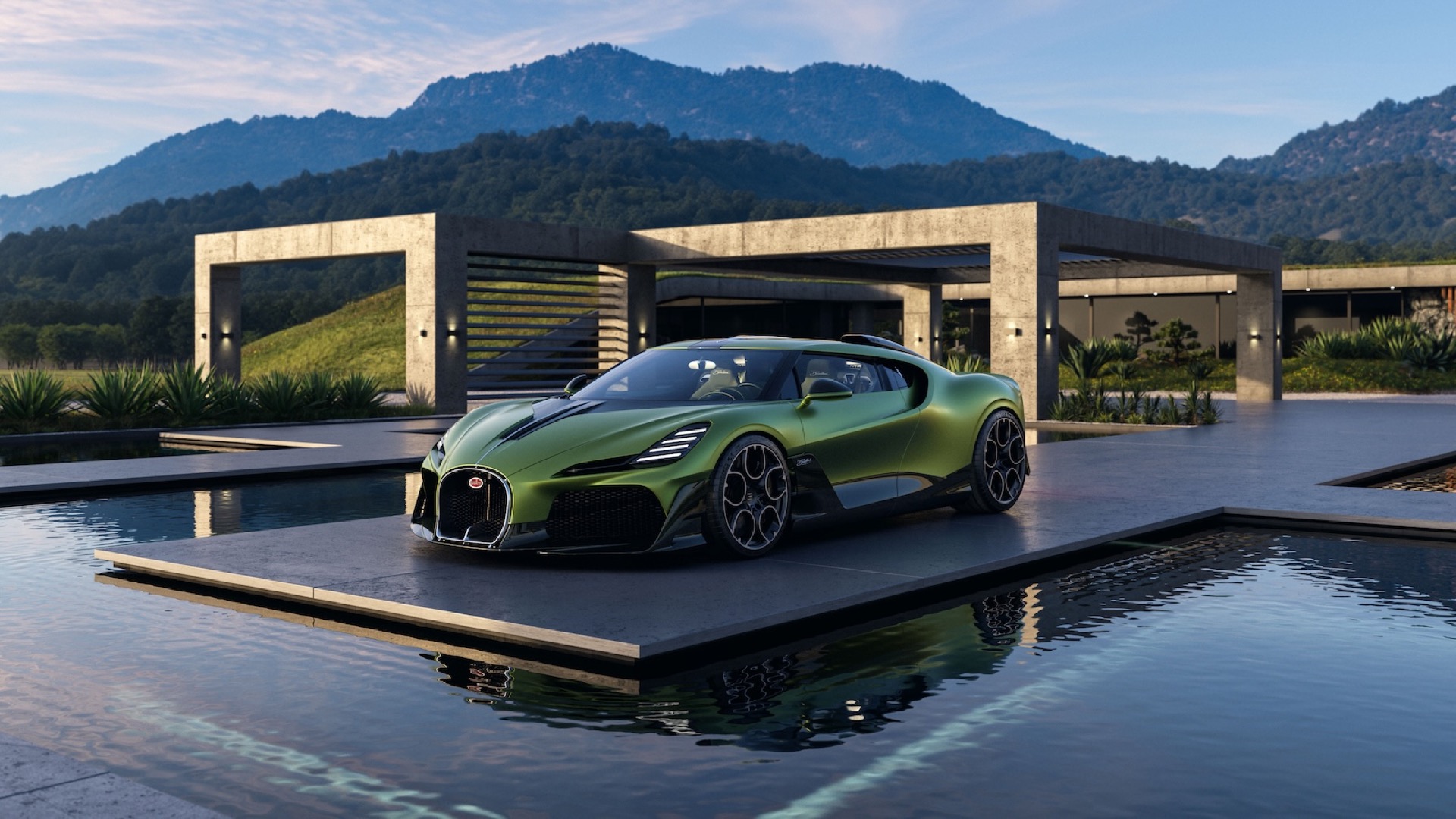
The new Bugatti Brouillard is a custom one-off coupe based on the Chiron platform. It borrows design cues from both the Chiron and Mistral.
As you can see, the front and rear ends of the car are heavily inspired by the Mistral. It has a large horseshoe grille and vertically stacked LEDs as well as a more prominent front splitter and aero elements along the sides. The rear features the X-shaped LED taillights and a fixed wing similar to the Chiron Profilee.
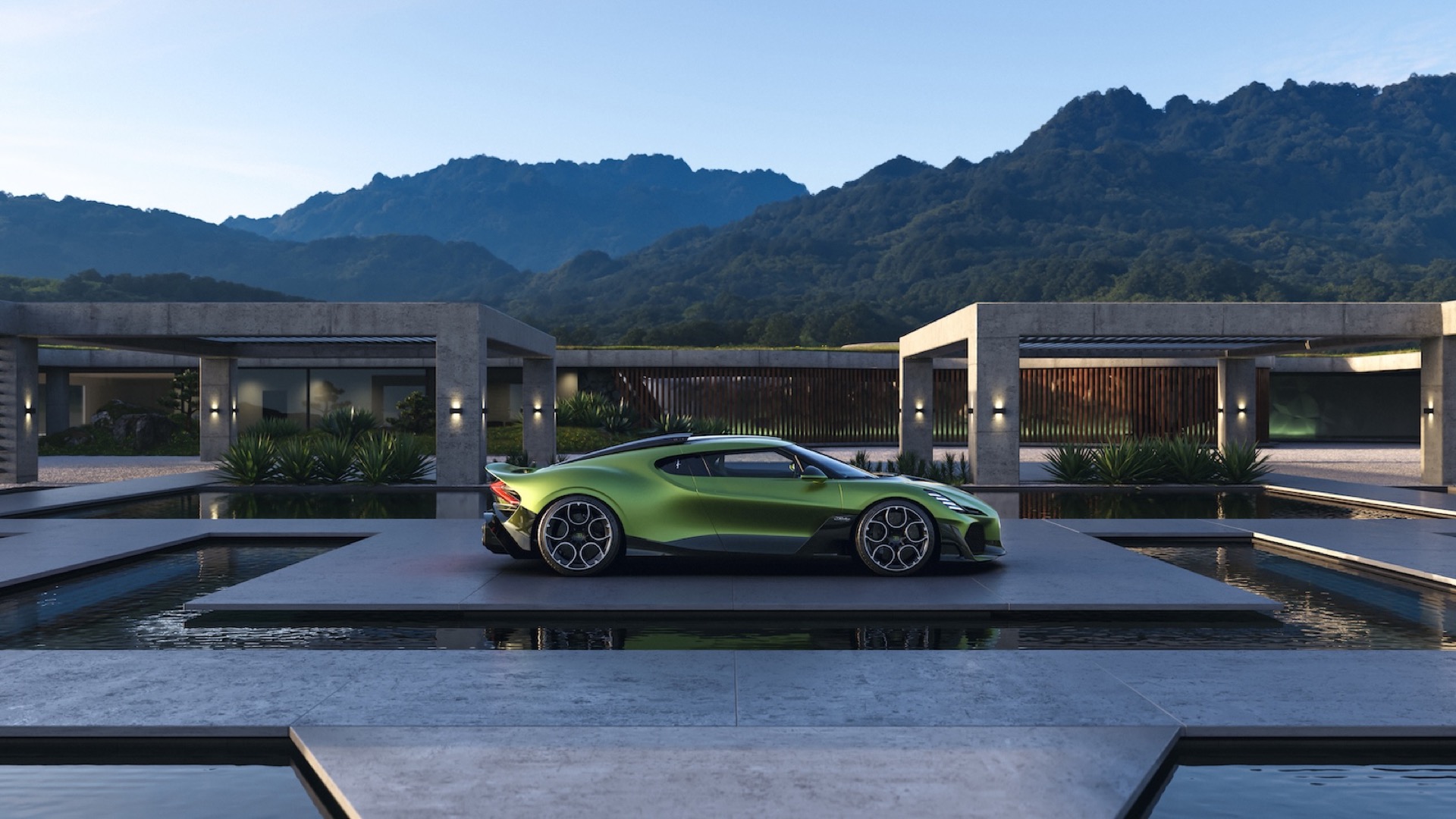
Unlike the Mistral, the Brouillard has a fixed roof with a glass panel and dual intakes. The quad exhausts at the back are similar to those on the Chiron Super Sport.
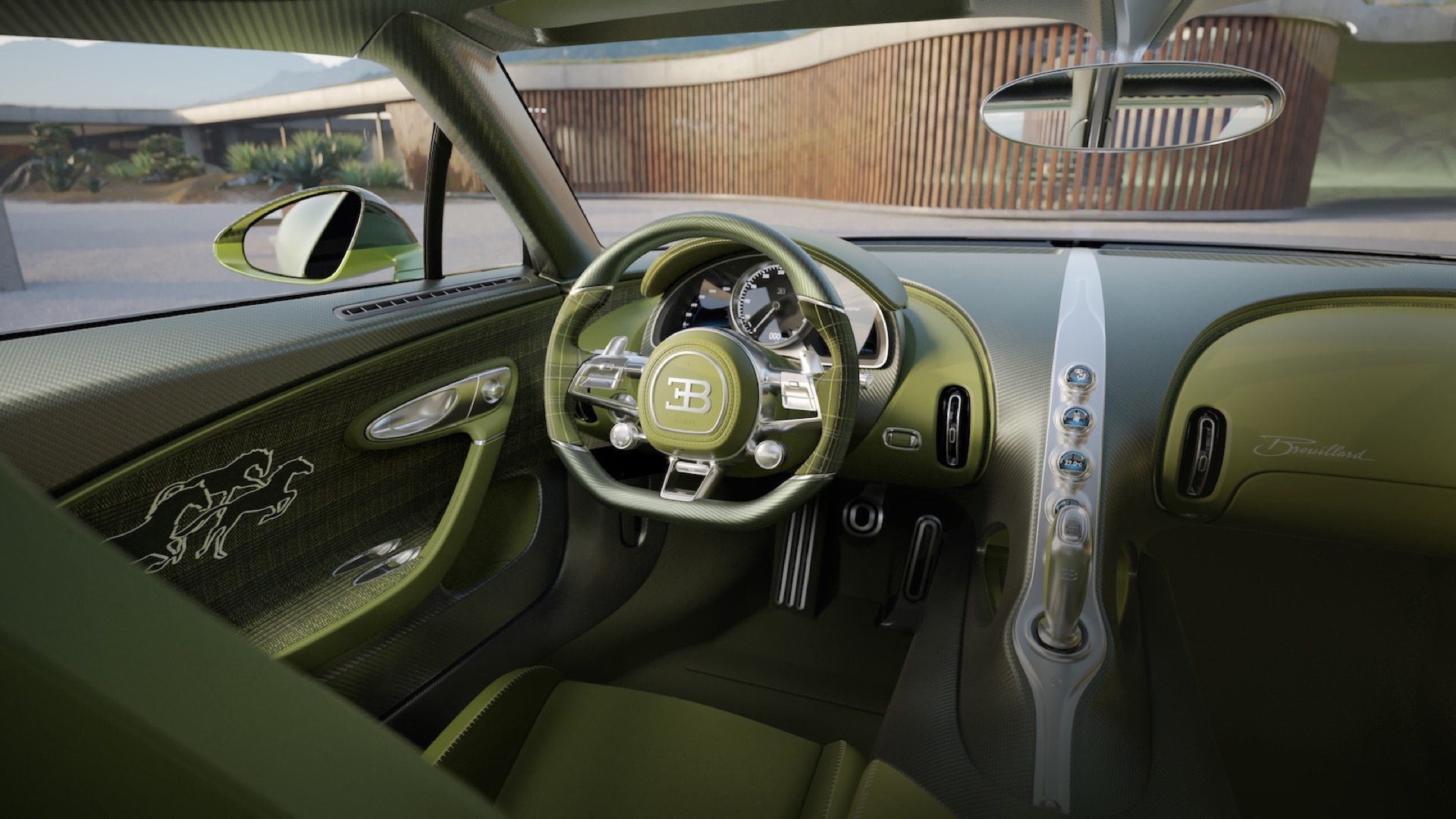
The exterior of the car is finished in a metallic green shade, with an exposed carbon fibre lower section and bespoke black wheels. The interior is wrapped in custom-woven fabrics with green-tinted carbon fibre and aluminium trim.
As expected, the Bugatti Brouillard uses the same 8.0-liter W16 engine that powers the Mistral. The quad-turbocharged unit delivers 1600 hp to all four wheels.
The Bugatti Brouillard will make its public debut at The Quail during the Monterey Car Week.
Are you experiencing difficulties with starting your BMW? Do you have a problem with stalling or your car misfiring? If so, then it could be due to a crankshaft position sensor problem.
The crankshaft position sensor commonly referred to as the CPS, is an important mechanism that enables the checking on the crankshaft position by feeding the engine control unit or ECU with information regarding the crankshaft position to enable it to control the fuel injection and ignition timing. Without this sensor, the engine of your BMW will not start or run smoothly. When the crankshaft sensor is bad, it will bring various complications that will worsen as time passes.
How To Know That Your BMW’s Crankshaft Sensor Is Failing
Starting Problem: One of the most evident symptoms of crankshaft sensor problems is when the car struggles to start or even fails to start. Since the sensor is responsible for ignition timing, a failure of this component can result in your engine cranking but not starting.
Car Stalls While in Motion: If your BMW car stalling issue occurs while driving or idling, it could be because of a faulty crankshaft sensor. A faulty sensor sends wrong signals to the ECU which leads to the sudden cutoff of power.
Check Engine Light: The most common symptom of a failing crankshaft sensor is the illumination of the Check Engine light on your car’s dashboard. However, this light can mean many things, but a scan of the car’s computer will show a crankshaft position sensor code, such as P0335 or P0336.
Misfires and Rough Idling: When this crankshaft sensor is not working as it should, the timing of the engine is affected, resulting in misfires, vibrations and rough idling of the vehicle. You may observe that your BMW is vibrating or stalling at certain speeds or when you are accelerating.
Acceleration and Performance Decrease: As with any other part of the BMW, a faulty crankshaft sensor will also impact acceleration, and your vehicle will not respond as you expected when you step on the accelerator pedal. Since the ECU is not getting the right information, it cannot adjust the fuel injection or the timing of ignition.
High Fuel Consumption: A damaged or faulty sensor will make the engine consume more fuel. If you see your gas mileage decreasing, it can be attributed to wrong timing adjustments brought about by the said sensor.
What to Do If Your BMW’s Crankshaft Sensor Is Failing
Get a Diagnostic Scan: The mechanic can check the vehicle’s error code which might be linked to the crankshaft sensor. This is the best way of diagnosing the problem before replacing any part of the system.
Perform Electrical Check: In the case that the scan indicates a problem with the crankshaft sensor, the next step is to check the sensor and the wiring. At other times, it may be a matter of a loose connection or a wire that has been cut or frayed that needs to be fixed.
Replace Sensor: If the sensor is damaged beyond any possibility of being repaired, then it will have to be replaced. This is a fairly easy procedure, but it should be carried out by a qualified BMW mechanic to make sure that the part is fitted correctly and that the car’s settings are adjusted accordingly.
There might also be other related problems that the mechanic should look for since crankshaft sensor issues are sometimes associated with other engine parts.
Ultimate Bimmer Service Can Help Fix Your BMW In Addison
At Ultimate Bimmer Service, we have expertise in identifying and repairing crankshaft sensor problems for BMW automobiles in Carrollton, Addison, Dallas, Denton, Frisco, Irving, Richardson, Plano, and the surrounding communities in Texas. Our team has worked for many years on BMW engines and it means that your car will receive the best care from us. We use efficient diagnostic techniques to solve the problem quickly; whether it is the wiring, the sensor or any other issue that may be causing the problem. If you have noticed some of the symptoms related to crankshaft sensor failure on your BMW, do not wait for the problem to worsen. Call us now and let us assist you in fixing your BMW so you can enjoy your car the way it’s meant to be!
If you’re looking for a Kentucky RV park near Red River Gorge, there’s no shortage of places to park for the night. But Firefly Hills offers a little more than the basics. It’s a small, family-run campground where kids can get muddy, guests can help feed the chickens if they want to, and there’s a historic farmhouse on-site that’s been part of the local landscape for a hundred years.
Set just outside Beattyville, this park was built by full-time RVers who wanted to create a space that felt a little more connected, both to the land and to the people passing through. It’s the kind of place that works for all kinds of travelers: families with kids, couples on a weekend getaway, or groups gathering to celebrate something special. However long you stay, it’s the kind of stop that feels easy to enjoy.
Close to Red River Gorge Without the Crowds
Firefly Hills sits on a quiet ridge near the South Fork of the Kentucky River. It’s close to Red River Gorge but removed from the traffic and crowds. Major climbing areas like Muir Valley, PMRP, and Miller Fork are just 15 to 20 minutes away. Natural Bridge State Park, underground kayaking tours, and trails in Daniel Boone National Forest are also nearby.
For RVers exploring eastern Kentucky, the location strikes a good balance. You get peaceful, mountain scenery with easy access to everything around you.
Zip lines, horseback rides, off-road parks, and scenic drives are all within reach.
Beattyville and nearby Slade offer charming small-town stops for food, gear, and groceries. Restaurants like Miguel’s Pizza or the farm-to-table Hop’s let you dig into the local flavor.
Depending on the season, you might catch a festival, outdoor concert, or even a rally.
Whether you’re coming from Lexington, Cincinnati, Knoxville, or Louisville, Firefly Hills makes a comfortable, convenient basecamp.
So many great things to explore in this area. Be sure to explore the Moonshine Trail. Kentucky is known for its bourbon, but knowing where it came from is even better!
4CsinanRV | RV LIFE Campgrounds
Thank you for subscribing to the RV LIFE newsletter, keep your eye on your inbox for updates.
Ways to Stay at This Unique Kentucky RV Park
RV Sites
Each of the full hookup RV sites includes a 70-foot back-in gravel pad, an adjoining parking area, a concrete patio, and a picnic table. You’ll have metered 50/30/20 amp electricity, water, sewer, and Wi-Fi. The sites are easy to access and offer plenty of space to settle in without feeling squeezed.
On-Site RV Rentals
If you’re traveling without your own rig, Firefly Hills offers a few stationary RVs for rent. They’re already hooked up and stocked with the essentials: linens, cookware, a coffee maker, and even a few extras like board games and pantry basics. It’s a comfortable way to experience the campground without needing to bring your own setup.
The Farmhouse
The restored farmhouse is ideal for guests who prefer a traditional stay or need a little extra space for visiting friends or family. Bedrooms are private, and the shared upstairs bathroom includes a shower, bathtub, and double sinks. Downstairs, there’s a cozy living room, a full kitchen, a dining room, and a well-stocked library. The house also includes a hot tub, workstations with a printer, strong cell signal, and a peaceful back deck that overlooks the garden and fire pit area.
Coming Soon: Glamping Tents
Spacious, furnished safari tents are planned for 2026, offering another option for guests who want a camping experience with a few extra comforts.
A Kentucky RV Park with Character and Breathing Room
The experience at Firefly Hills is shaped by the small things that make daily life feel more connected. There’s a community fire pit for evening conversations, walking trails through the woods, and a stocked fishing pond where guests can cast a line. Heated bathhouses are open year-round. The park is pet-friendly, with a fenced dog area where pups can run off-leash.
Families will feel especially welcome here. Instead of plastic playgrounds, kids get natural spaces to explore. There’s a mud kitchen for messy outdoor play, a fairy garden with hidden corners and building materials, and forested spots for fort-building and log-jumping. The paracord Web lets kids (and adults) bounce, sprawl, or just chill in the trees. There’s even a gaga pit for fast-paced games.
This campground is amazing, especially if you have kiddos! The owners have spent a lot of time to intentional set up encouraging play spaces in the surrounding forest. There is a giant jumpy web in between the trees, tree stumps at differing heights to climb on, a hammock circle, and a large mud kitchen creating endless play opportunities for hours. Our kids loved it and were so sad to leave!
50PiesFamily | RV LIFE Campgrounds
Guests are welcome to join in the rhythm of the campground. That might mean feeding the chickens, gathering eggs, or picking a few fresh vegetables from the garden. Some guests cook with what they harvest, while others just enjoy the slower pace. Participation is always optional, but it’s there for those who want it.
Firefly Hills was started by Tonja and Troy Lesmeister, full-time RVers who wanted to create the kind of campground they had always looked for. Something personal. Peaceful. Connected to the land. They didn’t just install hookups and call it a day. They built a place where RVers could slow down, let their kids roam safely, and meet other travelers without feeling like they were in a resort or packed into a parking lot. That welcoming, lived-in vibe shows up in the layout, the pace, and the way guests are encouraged to join in.
Each year, Firefly Hills hosts a two-week Halloween and Día de los Muertos gathering. It includes trick-or-treating, face painting, a dance party, hayrides, a community altar, and even a murder mystery dinner. The event is designed for all ages, with crafts and hikes for kids and a few relaxed evenings just for parents. Firefly Hills also hosts small private events, including retreats, reunions, and even the occasional wedding.
…Firefly Hills provided an exceptional setting for our Full-time Families event, which was a resounding success! Firefly Hills offered the perfect blend of community spirit and natural beauty, making it an ideal destination for our gathering.The location was ideal for our group, allowing for natural socializing while respecting individual space. The community fire pits became organic gathering points each evening, where families shared stories and formed lasting connections.Children enjoyed the open spaces that provided opportunities to explore and make new friends, while parents appreciated knowing their families were in a safe and inclusive space…
4CsinanRV | RV LIFE Campgrounds
Thinking Long-Term? There’s a Membership for That
For RVers who visit the area often or just want a familiar place to return to, Firefly Hills offers a flexible membership program. Members get a reserved full hookup site along with a few thoughtful extras.
Each site includes a 12′ x 16′ cassita and extra storage space. Members also have access to the maintenance shop, which includes covered RV bays and tools. Shared areas like the farmhouse kitchen, co-working parlor, and hot tub deck are available too. You can store your RV on-site for up to 14 days. And if you’re not using your site, you’re allowed to rent it out.
A Kentucky RV Park That Feels Like Its Own Little World
Firefly Hills is close enough to Red River Gorge to keep your days full. But it’s different enough to make the downtime feel just as memorable. Kids build fairy houses instead of standing in line for a bounce pillow. Guests gather eggs in the morning and share stories around the fire at night. You can show up solo, with family, or as part of a group and still feel like you belong Whether you’re here for a weekend, a climbing trip, or something more open-ended, this quiet, creative little Kentucky RV park offers something thoughtful, simple, and just a little different in all the right ways.
Company’s 25 Zero-Emission School Buses Help District Shift to Clean Student Transportation
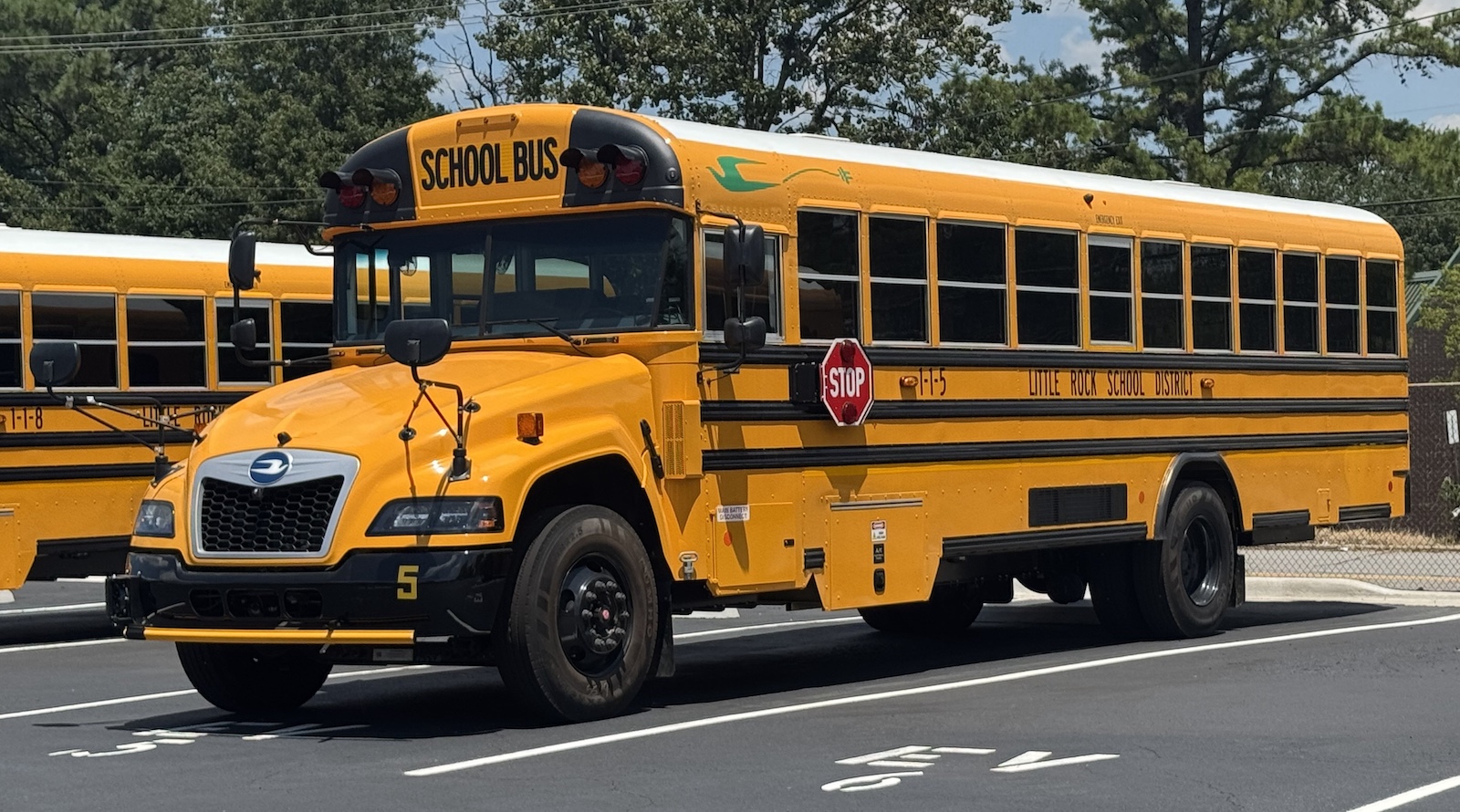
Blue Bird Corporation (Nasdaq: BLBD), the leader in electric and low-emission school buses, is delivering 25 electric school buses to Little Rock School District (LRSD) in Arkansas. The zero-emission school bus fleet marks a new era of clean student transportation for the school district. LRSD is the third-largest school district in the state and operates more than 40 schools serving over 19,000 students.
Blue Bird provides its most advanced Vision electric school buses to Little Rock School District. The state-of-the-art electric buses have a vehicle range of up to 130 miles on a single charge and can carry up to 69 passengers. The high-performance batteries take merely two hours to fully recharge.
Following the completion of the Blue Bird electric school bus order, LRSD will maintain a bus fleet of approximately 70 vehicles. LRSD’s zero-emission school buses will travel nearly 1,400 miles each school day, as they pick up and safely transport 500 students to and from schools.
“This is more than just adding new buses—it’s about doing what’s right for our kids and our community,” said Dr. Jermall D. Wright, superintendent of the Little Rock School District. “We’re proud to introduce Blue Bird’s electric school buses as a step toward a cleaner, healthier future. Every mile these buses travel means less pollution, cleaner air, and a stronger commitment to the well-being of our students and the neighborhoods we serve.”
“We are pleased that Little Rock School District continues to place its trust in Blue Bird to help the school district shift to clean student transportation,” said Albert Burleigh, vice president of North America bus sales at Blue Bird Corporation. “For more than 25 years, the school district has relied on Blue Bird and our local dealer partner to meet its school bus and service needs. We look forward to helping LRSD expand its school bus fleet with safe, reliable, and environmentally-friendly vehicles.”
LRSD received a $9,875,000 grant through the U.S. Environmental Protection Agency’s (EPA) widely popular and highly effective Clean School Bus Program to purchase its Blue Bird electric school bus fleet. The EPA has already awarded nearly $3 billion through the landmark bipartisan initiative. The program to date will enable more than 1,300 school districts nationwide to replace old diesel buses with nearly 9,000 electric and ultra-low emission vehicles.
LRSD can considerably lower its operating expenses by replacing diesel with electric school buses due to reduced fuel and vehicle maintenance costs. School districts have reported paying a mere 19 cents per mile in energy costs for electric buses compared to fuel costs of up to 79 cents per mile for their diesel buses.
Blue Bird is the only U.S.-owned and operated school bus manufacturer in the United States. The company remains the proven clean transportation leader with more than 2,500 electric-powered, zero-emission school buses in operation today.
LRSD purchased its advanced electric-powered vehicles through Blue Bird’s authorized school bus dealer Central States Bus Sales in North Little Rock, Ark.
About Blue Bird Corporation
Blue Bird (NASDAQ: BLBD) is recognized as a technology leader and innovator of school buses since its founding in 1927. Our dedicated team members design, engineer and manufacture school buses with a singular focus on safety, reliability, and durability. School buses carry the most precious cargo in the world – 25 million children twice a day – making them the most trusted mode of student transportation. The company is the proven leader in low- and zero-emission school buses with more than 25,000 propane, natural gas, and electric powered buses sold. Blue Bird is transforming the student transportation industry through cleaner energy solutions. For more information on Blue Bird’s complete product and service portfolio, visit www.blue-bird.com.
About the Little Rock School District
The Little Rock School District (LRSD) is the state’s third largest district, serving more than 19,000 students. The District has the distinction of having three national Blue Ribbon Schools of Excellence; nearly 200 teachers with National Board Certification; and historically within the past decade, the most National Merit Semifinalists in the state. LRSD is also home to the 2019 Arkansas Teacher of the Year and consistently ranks among the top award recipients in STEM-related competitions and the performing/creative arts. For more information, visit https://www.lrsd.org.
Sign up for CleanTechnica’s Weekly Substack for Zach and Scott’s in-depth analyses and high level summaries, sign up for our daily newsletter, and follow us on Google News!
Advertisement
Have a tip for CleanTechnica? Want to advertise? Want to suggest a guest for our CleanTech Talk podcast? Contact us here.
Sign up for our daily newsletter for 15 new cleantech stories a day. Or sign up for our weekly one on top stories of the week if daily is too frequent.
CleanTechnica uses affiliate links. See our policy here.
Launch Studio is the future of Mentorship driving best practices in embracing the power of Ai as a tool to aid discovery to the next level.
The philosophy “Design Doing” is at the heart of what Launch studio is all about. The founder Eric Stoddard introduces this timely and transformative approach to innovation —a mindset that emphasizes rapid execution using AI tools to move ideas from concept to reality faster than ever before. Unlike traditional design thinking, which often ends at ideation, “design doing” fuses AI technologies like ChatGPT, Midjourney, and Vizcom into the creative process, enabling professionals to prototype, visualize, and refine their concepts with unprecedented speed and precision. This philosophy is especially powerful for Africa’s growing automotive design ecosystem.
For African startups and institutions can now test bold ideas with minimal resources—exploring forms, functions, and narratives rooted in African culture without the high costs of physical modeling or global studio setups. AI becomes not a replacement for human creativity, but a catalyst that multiplies its impact.
Integrating this framework into design education across the African continent can empower a new generation of automotive thinkers. Imagine universities and maker spaces in Lagos, Nairobi, Harare to Kampala teaching students how to blend cultural research with AI-powered assisted sketching, visualization, and storytelling. With tools now accessible via a basic internet connection, students and professionals can produce work at a standard that resonates globally while staying grounded locally.
African startups can also benefit by embedding design doing into their business development strategies. Rapid iteration shortens time to market, and AI-aided research can guide market-fit decisions grounded in both user needs and cultural insight. The result is not just vehicles that look different, but vehicles that feel African—because their design DNA is drawn from local knowledge, yet refined through world-class processes.
Ultimately, design doing isn’t just a method—it’s a mindset that gives innovators permission to act boldly, test freely, and design fearlessly. With AI as an ally, the continent can shape a distinct, globally competitive design language—and lead the way in defining what the future of mobility looks like from an African perspective.
A limited production run isn’t exclusive enough for you? Bugatti, the most refined of all luxury carmakers, now has the perfect answer. The Bugatti Brouillard is a one-off—a hypersports car unlike any other and, incidentally, a tribute to Ettore Bugatti’s love of horses. The multi-million-euro collector’s item will be unveiled at the Monterey Car Week. Sadly, it’s already sold—but more will follow.
Through its personalisation programme “Sur Mesure”, Bugatti can already fulfil virtually every imaginable wish of its affluent clientele. But for something even more exclusive, more unusual—and arguably more outrageous—the answer lies in a one-off hypersports car like the Bugatti Brouillard. And because a car becomes even more compelling when paired with a good story, this green luxury coupé, with its dramatic 16-cylinder engine mounted in the rear, is named “Brouillard”—after Ettore Bugatti’s favourite horse, a dappled thoroughbred that was clever enough to open its own stable door via a special mechanism. Unlike the single horsepower of its equine namesake, the car version boasts 1,600 horsepower—with corresponding performance.
“The Solitaire programme enables us to explore our customers’ unique visions in a truly authentic way, giving us greater freedom to reinterpret the long-established Bugatti design language,” says Hendrik Malinowski, Managing Director at Bugatti. “With a one-off, we have far more creative freedom while still maintaining our absolute commitment to perfection in every detail—no compromises in performance, quality or design.” Under this programme, no more than two unique vehicles will be created per year, each for a very special Bugatti client—someone who already has everything.
The client behind this Bugatti Brouillard wishes to remain anonymous. He is a passionate Bugatti collector who owns not only modern examples but a vast number of historic Bugattis too. His collection also includes original Carlo Bugatti furniture and Rembrandt Bugatti bronze sculptures. With the Brouillard, he wished to unite the entire Bugatti family’s craftsmanship in one masterpiece—crowned by Ettore’s passion for horses.
Bugatti’s Solitaire personalisation programme is inspired by the brand’s coachbuilding roots, a tradition that flourished in the early 20th century when the finest car bodies were created through collaborations between automakers and specialist coachbuilders. Jean Bugatti revolutionised this approach by bringing the craftsmanship in-house, which led to icons like the Type 57 SC Atlantic. Though that may be the most famous, the Type 57 chassis was also fitted with a range of in-house body styles including Galibier, Stelvio, Ventoux and Atalante—offering everything from four-door saloons to two-door coupés and cabriolets.
Inside, the Bugatti Brouillard features bespoke tartan-patterned fabrics paired with green carbon fibre and aluminium elements, highlighted by an expansive glass roof. Embroidered horse motifs are stitched into the door panels and seat backs. The seats themselves feature a leather patch, while the aluminium gear lever houses a glass insert containing a handcrafted miniature sculpture of Ettore’s beloved horse. The value: several million euros—or, to the collector, perhaps even more. Quite simply: priceless.
The Australian Capital Territory (ACT) played host to the Australian Electric Vehicles Association’s (AEVA) annual conference earlier this month. Running from August 5 through to 7 and incorporating a conference with gala dinner and 2 days of exhibitions, the event was designed to provide knowledge on current and emerging electric vehicles in the market. Patrons and guests were able to access leading EV businesses and leaders as well as transition support organizations from both Australia and around the world. They were informed of the benefits that can be achieved for the environment, the hip pocket, and our way of life.
An EV can tow your caravan, won’t ruin your weekend! Photo courtesy Sam Moran.
AEVA is the oldest the oldest, continuously active, electric vehicles owner’s association in the world, formed in 1973. They previously organized successful conferences and expos in Brisbane (2018) with over 7,000 through the gate and Sydney (2019) where over 1,000 individual test drives took place, with drivers experiencing the EV-grin.
Participants were welcomed by the ACT minister for Energy and Emissions Reduction Shane Rattenbury . He noted that the ACT has the highest per capita uptake of EV’s in Australia. This is likely because of the Green Party’s progressive policies of: zero stamp duty, two years fee registration, and zero interest loans up $15,000 when purchasing a zero emissions vehicle. The ACT government has recently announced that it will ban the sale of new ICE vehicles by 2035. This territory has set an example that all Australian states may soon follow.
Over 30 exhibitors touted products ranging from light vehicles and charging solutions to caravans and gardening equipment. With a Gala dinner, panels and guest speakers there were plenty of opportunities to network and seek information.
Blast electric mower. Photo courtesy Sam Moran.
During the two days of the exhibition approximately 8000 people attended. The professionalism of the organization contributed to the success of the event. The Conference led directly into the expo and information sessions continued throughout. Politicians spoke from the heart with passion about the need to increase the number of EV’s on Australian roads, and what could be done.
Some of the EVs available in Australia today. Photo courtesy Sam Moran.
Sam Moran of Noodoe participated in the panel discussions, adding his expertise in meeting the challenges of strata title charging infrastructure. Sam commented: “I was impressed that so many well educated, talented and intelligent people are working on solving the problems and removing the barriers to EV charging and uptake.”
Next year, AEVA plans to hold its conference in Perth. Perhaps we’ll see you there?
Seems like Ford Mustang design team likes to play with our emotions when it comes to mid-design-version aesthetic updates. For the 2018 Ford Mustang, they’re at it again.
While the majority of the 2018 Mustang silhouette is still similar to the 2017 model (as expected), the major design changes are in the front.
COMPARED TO ITSELF:
2018 Ford Mustang vs 2017 – FRONT
To begin with, the awesome 2017 version of the headlight that made the Mustang stand out is, alas… gone:
… a heartbreaking goodbye to the 4-angle headlight that reminded us of a French rolled-up mustache, with the edges pointing up
… a disappointing hello to the 7-angle headlight, with rounded and downward edges, that would make Ron Swanson proud
FOG LIGHTS
On the 2018 Ford Mustang, the fog light is raised higher in position compared to the 2017, which makes the front profile of the car seem squeezed and squished.
Having more space between the fog light and the headlight gave the 2017 Mustang a more “confident” look, beauty in simplicity, making the aggressive look of the headlight stand out and be highlighted as the most attractive feature of the car.
The 2018 model has an unexplained gap at the corner of the headlight close to the grill, and the upper “eyebrow” reaching all the way to the grill makes the headlight more submerged in the body of the car. The combination of the 2018 Ford Mustang headlight and the close foglight makes the front profile look more and more like it’s other Ford siblings, such as the Ford Focus: you don’t want that for a Mustang!
COMPARED TO OTHERS
Comparing the 2018 Ford Mustang to look-alikes from other brands, two cars jump at me instantly:
The 2017 Dodge Charger, and
The 2017 Jaguar XE. Insert the cliche joke “If the Dodge Charger headlight and the Jaguar XE headlight had a baby, it would come out as the 2018 Ford Mustang headlight!”.
BACK
The 2018 Ford Mustang does have some changes to the back of the car, but the changes are very small to merit an elaboration
IN CONCLUSION: 2018 Ford Mustang
I’ve always been a Ford Mustang fan and will remain so. If I hadn’t seen the 2017 design, the 2018 model would have been an ultimate favorite; So, it’s a matter of timing and perspective.
Overall, great design, and I’m sure it’ll grow on me, as all previous models and mid-model changes have.
RVing doesn’t have to be an expensive endeavor. While it’s fun to look at luxury RVs with fancy finishes and amenities, you can also find motorhomes that are much more affordable. The cheapest RV brands include some quality makers like Jayco, Thor, Keystone, and Forest River. These makers have affordable, family-friendly rigs.
This article looks at inexpensive RVs to buy if you’re looking for the cheapest RV brands. You can also save considerably by watching for sales and discounts. But one of the biggest ways to save is by buying a used RV. In fact, while we share MSRP prices for some of these models below, you can find RVs for half that price and even lower in many cases.
Brand
Type(s) In Budget Category
Key Features & Popular Entry Models
Special Highlights
Avg. New Price Range
Jayco
Class A (Alante), Class C (Redhawk SE)
Alante 29F: Ford chassis, family bunk; Redhawk SE: heated tank pads, solar-prep
Off-grid ready; aluminum exoskeleton; solar power tower
$23,000 – $34,000
Affordable Motorhome Brands
There are lots of options for affordable motorhomes. Families and other travelers might be surprised at what it actually costs to purchase a new motorhome. Here are a few companies making inexpensive RVs to buy. Keep in mind that the MSRP may not be what you pay – watch for sales and discounts for lower prices. Also, if you choose a lot of higher-end finishes and upgrades, you’ll end up paying more than you would for a base model.
Jayco
Jayco is now part of Thor Industries and is known for both its Class A and Class C motorhomes. The company has a reputation for creating family-friendly rigs, with three-to-six dedicated beds and plenty of storage space. The Jayco Alante 29F is a great option for families. It’s built on a Ford chassis with a bunkhouse layout. Jayco is also a popular brand for first-time buyers. The company’s 2-year limited, 3-year structural warranty is twice the coverage of most brands.
Thor
Thor has motorhomes at a variety of price points – it makes our list of both the cheapest RV brands to buy, and our list of top luxury brands. The less expensive Thor models get good marks for being both family- and pet-friendly. The Thor Resonate has a variety of floor plans and can accommodate six to eight people. It has one or two slide-outs and one to three bunk beds, making it a great family option. The Freedom Traveler has a compact layout and is pretty gas-efficient for its size. Customers also say some of Thor’s models drive more like a car than a motorhome.
Entegra
Entegra makes quality, family-friendly motorhomes with bunkbeds, convertible dinettes, and residential-style kitchens. The Vision series is one many families choose, and there are a variety of layouts, all of which accommodate five to seven people. Entegra also has excellent warranties, and the company is known for the quality of its builds.
The cheapest RV brands for Class A motorhomes can often save you money in other ways as well. Less expensive rigs tend to be smaller and lighter weight, so you can save on gas. Gas-powered engines are usually cheaper to service and maintain than diesel engines. Cheaper motorhomes also tend to have less expensive insurance, and a smaller rig might mean you can fit into smaller campgrounds or drive roads that bigger rigs can’t. Options like fewer slideouts and fewer appliances, like washers and dryers, also mean fewer things that could break or require maintenance. They also mean your motorhome will weigh less overall.
Most Budget-Friendly Campervans & Van Conversions
As with motorhomes, campervans and van conversions can range from inexpensive, older used options to new vans that cost more than $200,000. Many campervans also have higher MSRPs, but you can often find them at dealerships for considerably less.
Winnebago
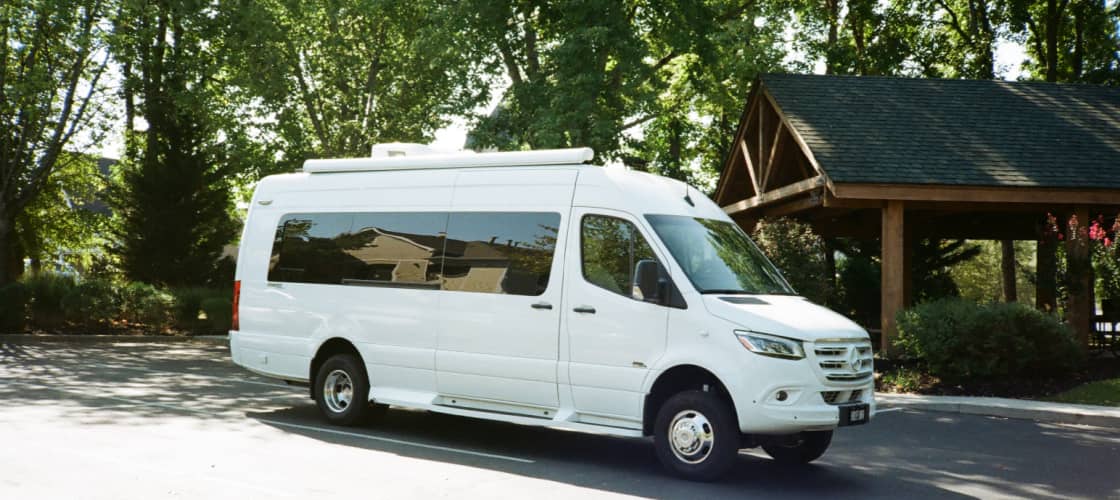
Winnebago is the top producer of campervans and makes both diesel and gas models. Some campervans are even available in a 4×4 version, so you can take them to even more exciting places. The Winnebago Solis is the least expensive of the Winnebago vans. Winnebago vans have full insulation, a surprising amount of storage, solar power, and even kitchens and full bathrooms. The company manufactures a lot of the van components in-house, so it can ensure quality control.
Winnebago uses either Ram ProMaster gas chassis or Mercedes-Sprinter diesel chassis for its vans.
Entegra and Thor both make some excellent, affordable RVs in the Class B category as well. The Entegra ARC 18C and the Thor Rize 18G are great choices for campervans.
Conversion Vans
If you’re a do-it-yourselfer, you can also purchase a van to convert into a camper on your own. Buying a new van and adding insulation, beds, storage, and even plumbing often costs less than buying a completed campervan. If you want to build your own conversion van, popular van models to consider include the Ram ProMaster 1500/2500, the Ford Transit, the Chevy Express / GMC Savana, or used Mercedes Sprinter vans. The cost of the conversion, after you’ve purchased a van, can run from $5,000 to $20,000, depending on how fancy you want to get. You might want to add a bed platform, a portable power station or solar kit, a camp stove or small kitchenette, a portable or cassette toilet, and possibly a water jug system with a pump.
Inexpensive Class C RVs
Class C RVs are a great size for a family traveling together. Class C campers are medium-sized RVs, usually with a sleeping bunk above the cab. They’re built on a regular van chassis – typically a Ford E-Series or Chevy 4500 chassis – and include all of the typical amenities you’d find in a Class A motorhome. You should expect to have a kitchen, a bathroom, and usually an onboard generator, although they usually have fewer slides than a larger Class A.
Coachmen
Coachmen Class C campers are excellent entry-level campers. They’re well-suited for families or couples, and some models have bunk beds, convertible dinettes, and over-cab sleeping areas. The Coachmen Freelander is one of the more affordable options. Models range from 24-33 feet long and sleep from six to eight people. Coachmen also features sturdy, durable interiors that can hold up to kids and pets.
Coachmen RVs are also intuitive to drive, making them a good choice for new RVers.
Gulf Stream
Gulf Stream is one of the cheapest RV brands you can find making quality Class C campers. The Conquest Class C is basic, functional, and quite inexpensive. You won’t find fancy finishes and upgrades, but you’ll reap the benefits when you pay for your rig. Most Gulf Stream campers are built with wood framing and vacuum-bonded laminated fiberglass walls.
Gulf Streams are also easy to drive and park, making them a great option for new RVers. They’re also a great choice for budget-conscious families. Because the materials are less costly, Gulf Streams aren’t the best choice for full-time RVers, but they’re a nice option for weekend and seasonal campers.
Cheapest Travel Trailers & Fifth Wheels
Travel trailers and fifth wheels are a convenient choice if you’re doing a lot of daytime exploring when you camp. You can unhook your tow vehicle and use it to drive all over, then hook up before heading on to your next destination. Here are a few excellent entry-level RV brands for travel trailers and fifth wheels.
Keystone
Keystone is also owned by Thor Industries, and their travel trailers are some of the most popular RVs in the US. They have trailers in a range of prices, and there are several options for cheap travel trailers. The Keystone Hideout sleeps from 3-10 people, depending on the model. Keystone is a great brand for family-friendly trailers, and many have bunkhouse floor plans and outdoor kitchens. Midweight trailers like the Hideout require a half-ton truck, like a Ford F-150, for towing.
Because they’re backed by Thor, there’s a good network of dealers and parts, which can save you even more over time. The less expensive trailers don’t have luxury finishes, and some of the smaller ones don’t have slideouts and offer less room.
Forest River
Forest River is one of the largest RV makers in the US, and you’ll find trailers in every size and price point. The company is owned by Berkshire Hathaway (yep, Warren Buffett’s company).
Trailers like the Cherokee are entry-level models at a lower price point, and they’re great for families as well. It has options for bunkhouses for the kids, plus basic but functional kitchens and bathrooms. You need a mid-size SUV or small truck to tow a Cherokee Wolf Pup, or a half-ton pickup to tow the larger trailers.
Affordable Truck Campers
Some of the most affordable recreational vehicles are truck campers. They’re also some of the easiest to drive, off-road in, and to set up camp for the night. Like campervans, truck campers are a good option for solo travelers or couples, especially those looking for adventure. You won’t find a whole lot of room in them, but some ingenious setups can pack a lot of storage and amenities into a surprisingly small space.
Four Wheel Campers
Four Wheel Campers has been building lightweight pop-up truck campers for more than 50 years. They’re built to handle year-round, off-grid camping. The aluminum frame won’t rot like wood and moves with the truck on uneven surfaces. It also lightens the load on the truck. Four Wheel Campers have a five-year structural warranty and are known for holding up for a long time.
There aren’t many fancy perks, but the campers will stand up to rough roads and the rigors of exploring off the beaten path.
There are three platforms and they fit a mid-sized truck like a Tacoma or Frontier, a full-sized pickup like an F-150 or a Tundra, and a 3/4- and 1-ton truck like a F-250 or Ram 2500/3500.
Scout
Scout Campers are relatively new – they began in 2020 by Adventurer Manufacturing. They have the lightest hard-wall and pop-up truck campers on the US market. Campers are made from aluminum, not wood, keeping them light and snug. They have a three-year structural warranty, which matches many popular RV brands. Instead of luxury finishes and sleek materials, Scout uses sturdy materials that will hold up to off-roading and exploring.
The company has truck campers that fit 5-foot midsize beds like a Ford Maverick or a Jeep Gladiator. They also make some that fit 5- & 6-foot midsize beds like a Tacoma or Ranger, some that fit half-ton beds like an F-150, and some that fit heavy half-ton to 1-ton beds like an F-250 or a Ram 2500/3500. Families with a half-ton can even get a roof-top tent that allows them to sleep up to six people.
Campers also have a cooktop, fridge, power, and water that can be removed to use at camp and to lighten the load while you explore areas around camp.
What Makes a Budget RV Brand?
RV brands looking to save money on a build may do a few things to bring down costs. Here are a few differences between a budget and a luxury RV brand:
Materials – Budget RVs tend to have wood framing and laminate flooring and walls. They also often use one-piece fiberglass roofs and simpler, cheaper finishes, trims, and other details. Higher-end units use composites or aluminum in their builds and more expensive trims and finishes, which makes them more durable and attractive … but also adds to the cost.
Chassis – Cheaper Class C campers use a Ford E-Series cutaway or a Chevy 4500 chassis, which have decent ride quality but aren’t as nice as a Mercedes chassis. Less-expensive models also skip upgrades and premium suspension packages.
Features – Less-expensive models have more basic interiors with vinyl upholstery, laminate countertops, and basic appliances. Higher-end models may use better-quality materials for kitchens, bathrooms, and other areas. They also have luxury touches like solid surface counters, tile backsplashes, and LED lighting packages.
Layouts – Budget RV models usually have fewer slides and more basic floorplans. You might find you have less room and less storage in a cheaper RV. There’s less variation in the layouts since one way to keep prices low is to order materials and do work in bulk.
When you’re looking for a less-expensive RV, you’ll want to make sure that your rig is simpler but was still made with quality materials. It doesn’t matter if you save on a motorhome if that motorhome isn’t safe or durable. Fortunately, many budget brands still have RVIA-certified composite sidewalls, good chassis, and quality insulation. Jayco gets great reviews for the consistency of its quality across price points.
Tips for Finding the Best Deal on an RV
One of the best ways to save even more on the cheapest RV brands is to purchase a used vehicle instead of a new one. Choosing an RV that’s even just a few years old can be much less expensive than buying a new one.
If you’re hoping to find a good deal on an RV, begin by doing some research. Find a reputable dealer with a good reputation when it comes to selling used RVs. Whether you’re buying from a dealer or an individual, you can hire an RV inspector to go over the vehicle and check for issues. You can also ask to see the maintenance logs for the vehicle.
You’re more likely to find deals at the end of the year. You may also find good deals at a local RV show, where you can talk to dealers about their vehicles and check out a variety of rigs all in one place.
If you find an RV you’re interested in, try it out by renting the same model through RVshare. Plan a trip and use the RV to see if you like the layout, the appliances, and the other RV features. You might even plan several trips and use a different RV model each time to see which features you like and which you don’t. You might find that something you thought was a deal-breaker really doesn’t matter … or that you love a feature you hadn’t considered.
Adventure is possible, even on a tight budget! If you watch for deals and do your research, you can get a great deal on a quality RV.