5.2 C
London
Tuesday, May 12, 2026
Home Blog Page 119

Porsche Cayenne GTS/Turbo (Second Generation) Buyers Guide

0
Porsche Cayenne GTS/Turbo (Second Generation) Buyers Guide


When the second-generation Porsche Cayenne was introduced for the 2011 model year, it marked a significant evolution for Porsche’s flagship SUV. Building on the success of the original Cayenne, this new iteration refined its design, improved performance, and introduced a greater focus on efficiency. Among the most exciting variants were the Cayenne Turbo and GTS.

At the heart of the Cayenne Turbo came a 4.8-liter twin-turbocharged V8, delivering 500 hp in its early years, later upgraded to 520 hp in the 2015 facelift. This power enabled the SUV to launch from 0 to 60 mph in just 4.4 seconds with the optional Sport Chrono Package.

The Cayenne GTS, which returned to the lineup in 2013, initially featured a naturally aspirated 4.8-liter V8 producing 420 hp but transitioned to a more efficient 3.6-liter twin-turbocharged V6 in 2015, boosting output to 440 hp. While the Turbo was all about pure power, the GTS was the more driver-focused variant, with a sportier suspension, a more aggressive exhaust note, and a lower ride height for improved handling.

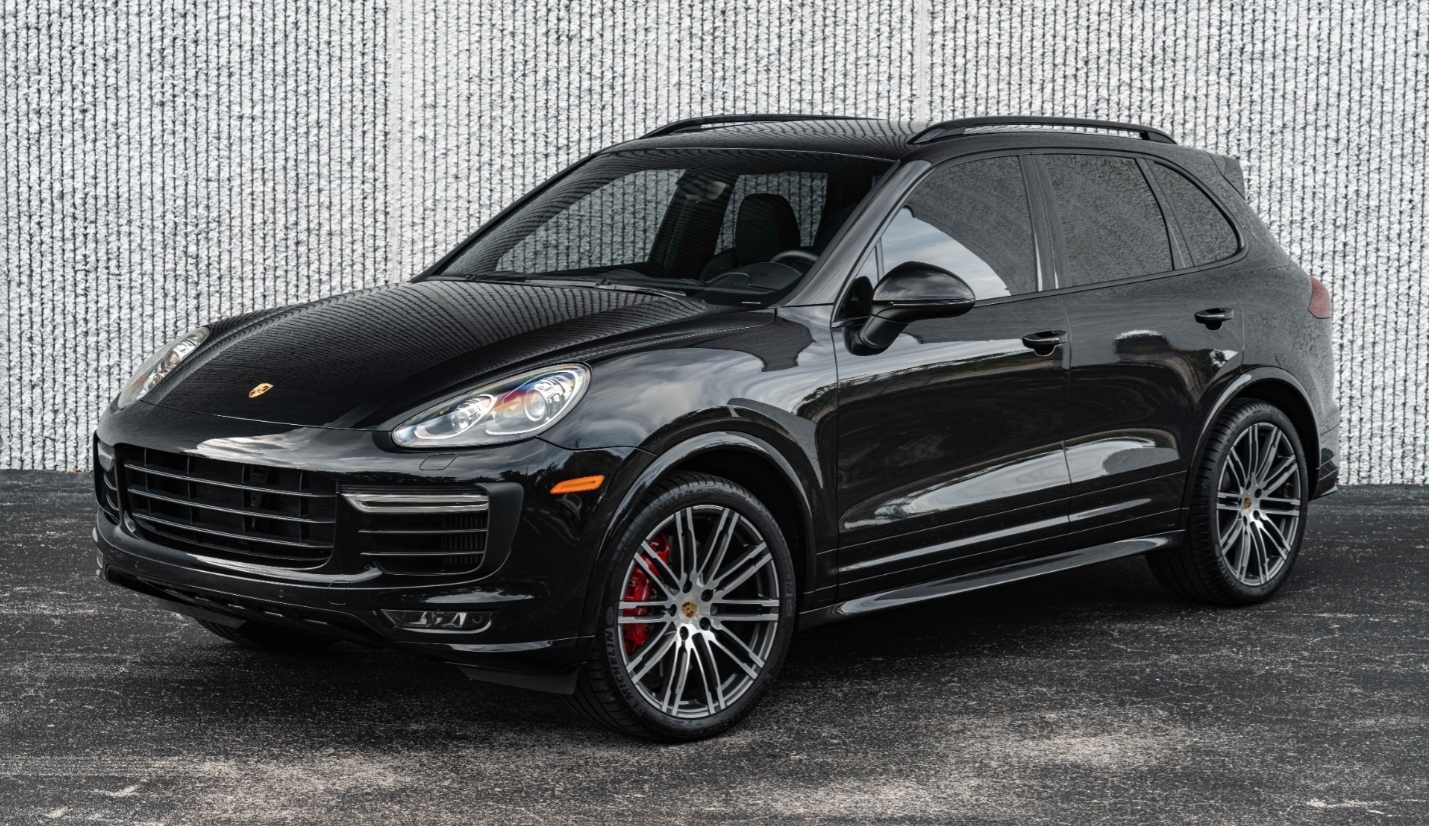
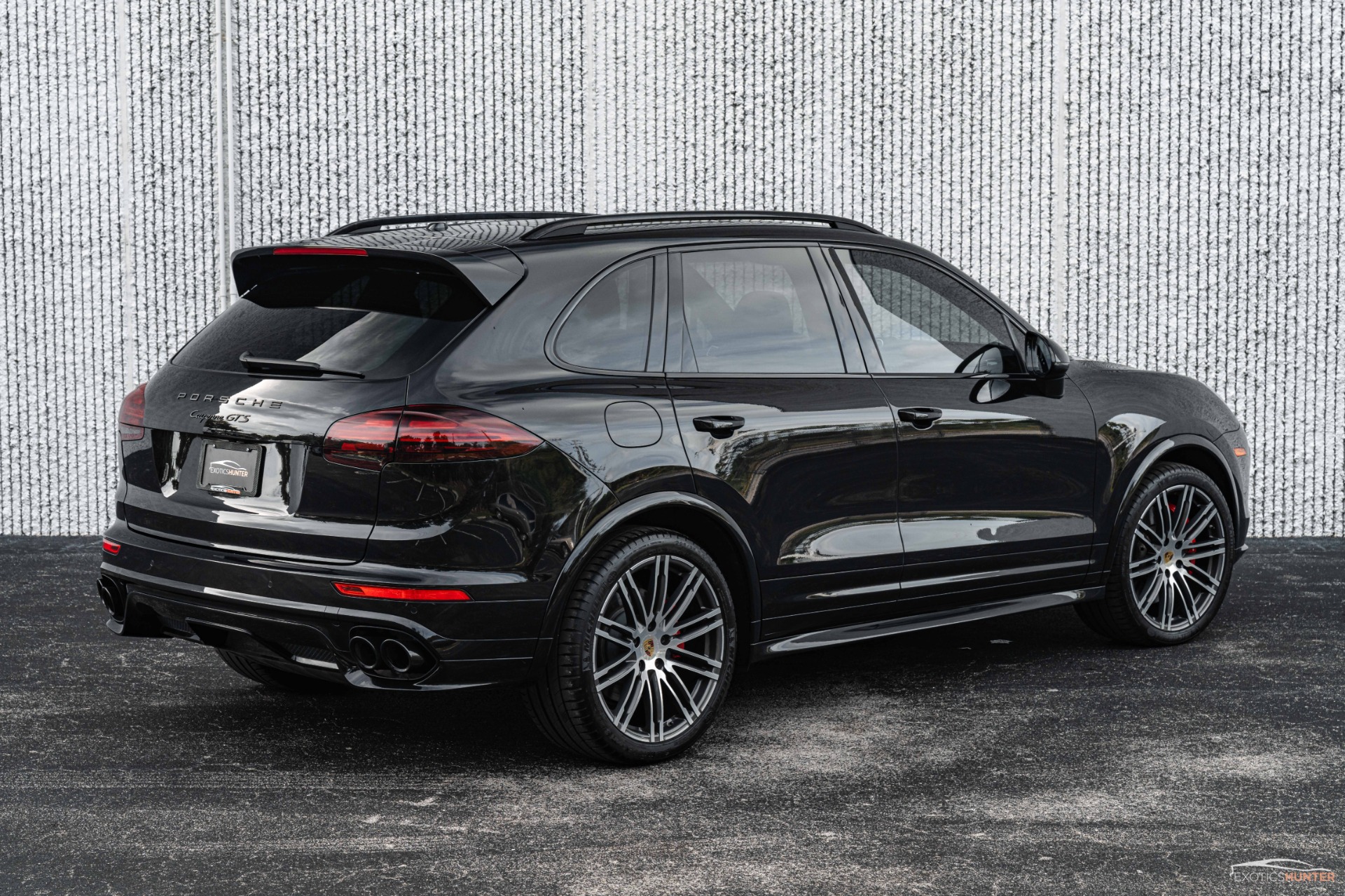
From the outside, the Turbo stood out with its larger air intakes, quad exhaust pipes, and adaptive rear spoiler. Meanwhile, the GTS took on a stealthier approach, featuring blacked-out trim, unique side skirts, and a lowered stance thanks to its standard Porsche Active Suspension Management (PASM) system. Both models rode on large, multi-spoke alloy wheels ranging from 20 to 21 inches.

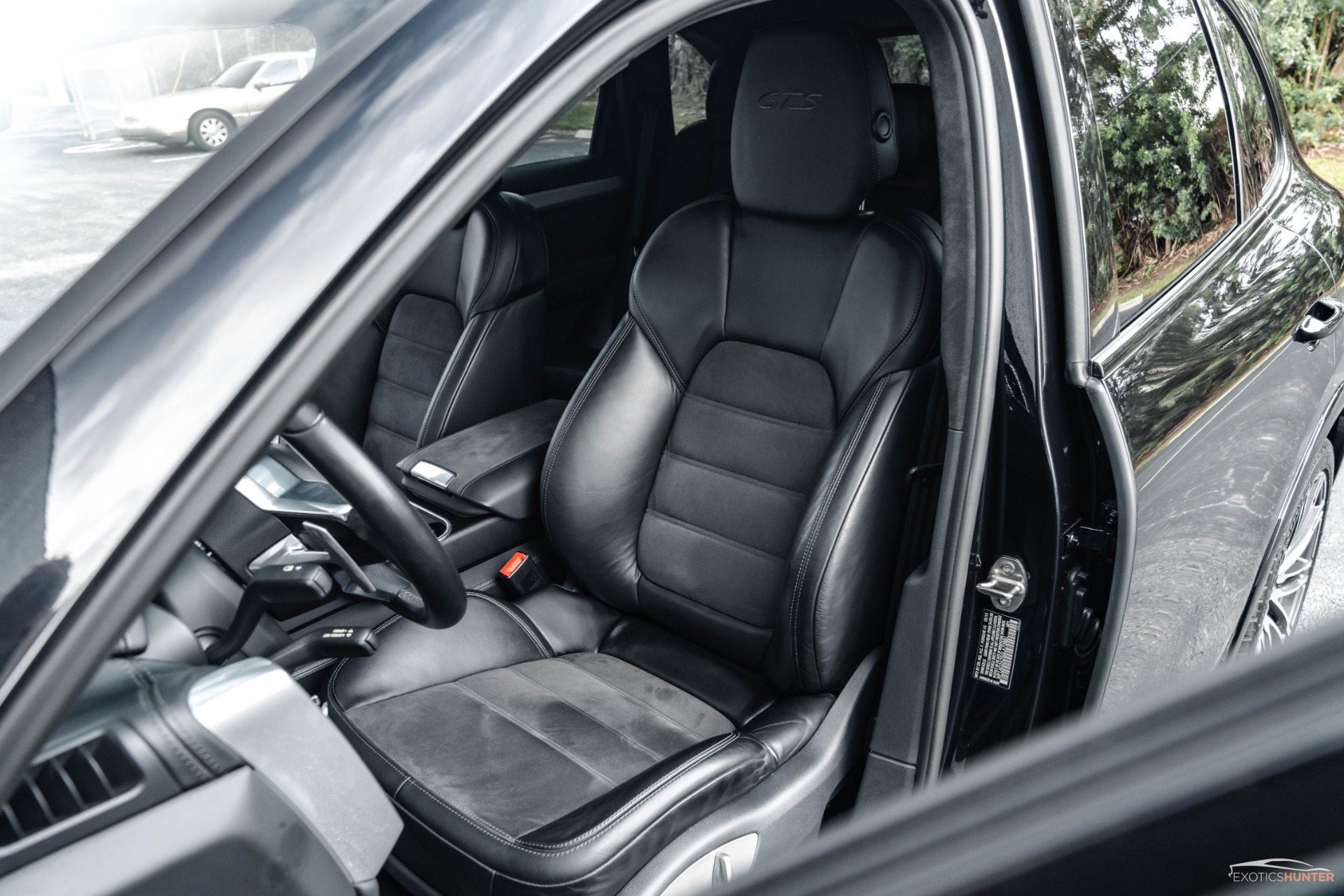
Inside, the Cayenne Turbo and GTS came with materials such as leather, Alcantara, and aluminum trim adorned the cabin, with the GTS offering a more driver-focused environment through its standard sport seats and race-inspired touches.

The cockpit featured Porsche’s latest technology, including a high-resolution touchscreen infotainment system with Porsche Communication Management (PCM), offering navigation, Apple CarPlay, and a premium sound system. Optional upgrades such as a panoramic sunroof, adaptive cruise control, and ventilated seats further increased the experience of driving your Cayenne.

Throughout its production run, the second-generation Cayenne Turbo and GTS faced stiff competition from other high-performance luxury SUVs. Rivals included the BMW X5 M, the Mercedes-AMG ML 63 (and later, GLE 63), the Range Rover Sport SVR, and the Jeep Grand Cherokee Trackhawk. Despite the competition, the Cayenne continued to set the benchmark for performance SUVs, combining Porsche’s signature handling, cutting-edge technology, and an unmistakable road presence.

Model Changes (Breakdown by Year)

2011 Porsche Cayenne Turbo

For the 2011 model year, the Porsche Cayenne Turbo debuted with a 4.8-liter twin-turbocharged V8 engine producing 500 hp. It came equipped with an 8-speed Tiptronic S automatic transmission, all-wheel drive, adaptive air suspension, and high-performance brakes, ensuring a blend of power and refinement. 

Buyers could further enhance the Turbo’s capabilities with optional features such as Porsche Torque Vectoring Plus (PTV+) for improved handling, Porsche Ceramic Composite Brakes (PCCB) for superior stopping power, and various \interior packages to elevate comfort and customization.

Among the available options, the Premium Package Plus, priced at $5,320, added four-zone air conditioning, lane change assist, adaptive cruise control, Porsche Entry and Drive (keyless access), a rearview camera, power side rear sunshades, the Light Comfort Package, and ventilated front seats. For those looking to enhance interior ambiance, the Light Comfort Package with Driver Memory Package, available for $250, included dimmable ambient lighting in the door trim panels, front and rear LED reading lamps, exterior mirror courtesy lamps, and an auxiliary power outlet on the rear center console.

To further personalize the cabin, Porsche offered a variety of trim packages. The Walnut Interior Package and Anthracite Birch Interior Package, both priced at $345, added wood trim to the dashboard, door panels, center console, gear selector, and front ashtray cover. For a more upscale feel, the Natural Olive Interior Package, costing $1,340, featured natural olive wood trim throughout the cabin. Alternatively, the Carbon Fiber Interior Package, also priced at $1,340, introduced carbon fiber accents for a sportier aesthetic. 

The 2011 Porsche Cayenne Turbo had a starting price of $106,975.

2012 Porsche Cayenne Turbo

For the 2012 model year, the Porsche Cayenne Turbo remained largely unchanged, carrying over its 4.8-liter twin-turbocharged V8 engine and existing features from the previous year. 

The 2012 Porsche Cayenne Turbo had a starting price of approximately $108,750.

2013 Porsche Cayenne Turbo and GTS

For the 2013 model year, Porsche reintroduced the Cayenne GTS, bringing back its performance-oriented characteristics with a 4.8-liter naturally aspirated V8 engine producing 420 hp. 

Designed for enthusiasts seeking a more dynamic driving experience, the GTS featured a sportier suspension setup, a lowered ride height, and a distinctive exterior with an aggressive front fascia and side skirts. Inside, sport seats came standard, reinforcing the model’s driver-focused nature, while a sport exhaust system provided a more exhilarating sound profile. 

Meanwhile, the Cayenne Turbo carried over from the previous year with no significant changes.

In 2013, the Porsche Cayenne Turbo had a starting price of $108,750, while the Cayenne GTS started at $83,025.

2014 Porsche Cayenne Turbo and GTS

For the 2014 model year, Porsche reintroduced the Cayenne Turbo S, which now features a 4.8-liter twin-turbocharged V8 engine producing 550 hp, an increase of hp over the standard Turbo model. 

In terms of performance enhancements, the Turbo S came equipped with Porsche Dynamic Chassis Control (PDCC), an active anti-roll system that reduces body roll during cornering, thereby improving handling and stability. Additionally, the vehicle featured Porsche Torque Vectoring Plus (PTV Plus), which enhances traction and agility by varying torque distribution to the rear wheels. The inclusion of the Sport Chrono Package as standard provided drivers with the ability to select performance settings tailored to their driving preferences.

On the exterior, the Turbo S was distinguished by larger front grille openings and brake cooling ducts flanking the fog lights, contributing to both aesthetics and functionality. The body was widened with fender flares and aggressive rocker panels, and it rode on 21-inch 911 Turbo II-style wheels wrapped in Michelin Pilot Sport tires, underscoring its sporty character.

Inside the cabin, the Turbo S came with features included adaptive cruise control, a premium sound system, and high-quality materials throughout, providing occupants with a comfortable and upscale environment. 

Meanwhile, the Cayenne GTS and Cayenne Turbo remained unchanged from the previous model year.

For the 2014 model year, the Porsche Cayenne GTS had a starting price of $83,025, the Cayenne Turbo started at $110,650, and the range-topping Cayenne Turbo S was priced from $146,975.

2015 Porsche Cayenne Turbo and GTS

For 2015, the Cayenne received a mid-cycle facelift that included updated front and rear fascias, new headlights, and revised taillights. The front bumper was reshaped with larger air intakes and a new grille design, while the hood adopted a more sculpted, aerodynamic profile. 

The headlights featured a sharper, more modern look, and the rear end received slimmer LED tail lights, a revised tailgate, and updated exhaust outlets for a cleaner finish. Interior changes featured a redesigned center console and the latest Porsche Communication Management (PCM) system. 

The Cayenne GTS replaced its V8 with a 3.6-liter twin-turbocharged V6 producing 440 hp. It retained its focus on sporty handling with standard PASM and a sport exhaust system. The Cayenne Turbo saw its power output increase to 520 hp and received the same exterior updates as part of the facelift.

For the 2015 model year, the Porsche Cayenne GTS had a starting price of $96,495, the Cayenne Turbo started at $114,595, and the Cayenne Turbo S was priced from $146,000.

2016 Porsche Cayenne Turbo and GTS

For 2016, the Cayenne GTS carried over without changes along with the Cayenne Turbo which also remained unchanged, retaining the updates from the 2015 facelift. 
The Cayenne Turbo S saw a power increase to 570 hp and came standard with high-performance features such as Porsche Ceramic Composite Brakes (PCCB) and Porsche Torque Vectoring Plus (PTV+).

For the 2016 model year, the Porsche Cayenne GTS had a starting price of $98,190, the Cayenne Turbo started at $118,765, and the Cayenne Turbo S was priced from $159,240.

2017 and 2018 Porsche Cayenne Turbo and GTS

For the 2017 and 2018 model years, the Porsche Cayenne GTS and Turbo saw no major updates. Both models continued with the same specifications introduced during the 2015 facelift, including their respective powertrains, suspension setups, and design features.

For the 2017 model year, the Porsche Cayenne GTS had a starting price of $97,200, the Cayenne Turbo started at $116,500, and the Cayenne Turbo S was priced from $159,600.

In 2018, the Porsche Cayenne GTS had a starting price of $98,600, the Cayenne Turbo started at $124,600, and the Cayenne Turbo S was priced from $161,600.

Porsche Cayenne GTS/Turbo (Second Generation) Common Problems

The second-generation Porsche Cayenne GTS and Turbo are solid performers, but they come with a list of known issues. Some are common wear items, while others can lead to expensive repairs if ignored. 

Below is a breakdown of the most frequent problems reported by owners.

  • Coolant Pipe Leaks (Early 2011–2012 models): Earlier second-gen models carried over the issue from the first gen, where plastic coolant pipes would crack and leak. Porsche later updated these to aluminum pipes, but earlier vehicles that haven’t been retrofitted may still be vulnerable.

  • Thermostat and Water Pump Failures: Both the GTS and Turbo models, especially with higher mileage, are prone to water pump and thermostat failures, leading to coolant leaks or overheating. Symptoms include temperature fluctuations and low coolant warnings.

  • Transfer Case Failure: The AWD system’s transfer case is a known weak point. Drivers report jerky acceleration, hesitation, or “shuddering” at low speeds. This often leads to expensive repairs or full replacement, sometimes covered under warranty extensions by Porsche.

  • Excessive Oil Consumption: Some Turbo and GTS models—particularly those with the 4.8L V8—have been noted for burning oil at a faster-than-normal rate. This usually isn’t catastrophic, but it requires regular monitoring and top-ups between services.

  • Ignition Coil and Spark Plug Wear: Misfires under acceleration or rough idling can often be traced back to worn spark plugs or failing ignition coils. This is a common wear item around the 60,000–80,000 mile mark.

  • Air Suspension Issues (Turbo & Turbo S): Models equipped with the optional air suspension (standard on Turbo and Turbo S) can develop leaks or compressor failures over time, especially in colder climates. This can lead to uneven ride height or warning lights on the dash.

  • PCM (Infotainment) Glitches: The Porsche Communication Management (PCM) system may suffer from screen freezing, GPS errors, or Bluetooth connectivity problems. Software updates typically resolve these issues, but some owners have needed hardware replacement.

  • Carbon Buildup on Intake Valves (GDI engines): As with many direct-injection engines, carbon deposits can form on the intake valves over time, especially in GTS models. This can result in reduced performance and fuel economy and may require walnut blasting for cleaning.

  • Brake Wear and Rotor Warping: Given the weight and performance of the Cayenne GTS and Turbo, brake wear is accelerated, especially if the car is driven hard. Some owners also report premature rotor warping, which can cause vibration under braking.

  • Fuel Injector Leaks or Failures: Fuel injectors can become clogged or leak, causing rough starts or poor fuel economy. This is more commonly reported in higher-mileage vehicles and may also trigger check engine lights.

Recalls

2011 to 2016 Porsche Cayenne GTS and Turbo vehicles

Loose Brake Pedal Pivot Pin (Recall No. 16V169000)

In March 2016, a recall was issued for 2011–2016 Porsche Cayenne models, including GTS and Turbo variants, due to a missing circlip on the brake pedal pivot pin. Without this clip, the pivot pin could move out of position, potentially causing the brake pedal to dislodge or fail to engage properly, increasing the risk of a crash. Porsche dealers inspected the brake pedal assembly and installed the missing circlip where necessary at no cost to owners.

2011 to 2012 Porsche Cayenne Turbo vehicles

Loose Camshaft Controller Bolts (Recall No. 17V368000)

In June 2017, certain 2011–2012 Cayenne Turbo models were recalled due to camshaft controllers that could loosen inside the engine. If the controller loosened during operation, it could cause the engine to stall, increasing the risk of a crash. Porsche dealers re-tightened and secured the camshaft controller bolts free of charge.

2013 to 2014 Porsche Cayenne and Cayenne GTS vehicles

Inaccurate Fuel Level Reading (Recall No. 13V506000)

In October 2013, Porsche issued a recall for 2013–2014 Cayenne and Cayenne GTS models due to a faulty fuel level sender. The issue could cause the fuel gauge to indicate a higher fuel level than was actually present, potentially leading to unexpected stalling from running out of fuel. Dealers repositioned the fuel level sensor to prevent incorrect readings at no cost to the owner.

Maintenance and Ownership Costs

Ownership costs for the second-generation Porsche Cayenne Turbo and GTS are comparable to other Porsche models, with routine maintenance being manageable but repairs can be potentially expensive since it is a Porsche.

It is important to remember that regular maintenance and repairs will be necessary to maintain reliability.

Annual Maintenance (Every 10,000 Miles or 1 Year)

  • Oil and Filter Change

  • Vehicle Inspection

  • Tire Rotation

Every 20,000 Miles or 2 Years

Every 40,000 Miles or 4 Years

Every 60,000 Miles or 6 Years

Every 80,000 Miles or 8 Years

16-Year Maintenance (Every 160,000 Miles or 16 Years)

Here is a rough estimate of typical service costs associated with the Porsche Cayenne GTS/Turbo (Second Generation):

  • Oil Change – The Cayenne GTS and Turbo require high-quality synthetic oil and a large oil capacity due to their V8 engines. An oil change typically costs between $250 and $400 at a dealership, while independent shops may charge between $150 and $250. This includes oil, OEM filter, and labor.

  • Minor Service – Minor service includes an oil change, fluid top-offs, brake inspection, tire rotation (if applicable), and multi-point inspection. These are usually done every 10,000 miles. Expect to pay $400 to $600 at a dealership, while independent shops charge between $250 and $400.

  • Major Service – Major service occurs every 30,000 to 50,000 miles, depending on use and model year. It includes spark plug replacement, air filter, cabin filter, transmission fluid check or replacement, brake fluid flush, and a full vehicle inspection. This service typically costs $1,200 to $2,000 at a dealership, and $900 to $1,500 at an independent shop.

  • Tires – The Cayenne GTS and Turbo come equipped with staggered high-performance SUV tires such as Pirelli P Zero tires, often 20″ or 21″ depending on the trim. A set of four performance tires (Michelin, Pirelli, or Continental) generally costs between $1,200 and $2,000, including mounting and balancing. Tire wear is moderate to high due to the weight and power of the vehicle.

  • Brakes – Brake costs vary significantly depending on whether the vehicle has standard steel rotors or Porsche Ceramic Composite Brakes (PCCB).

  • For standard steel brakes, replacing pads and rotors on all four corners runs $1,500 to $2,500 at a dealership, and $1,000 to $1,800 at an independent shop.

  • PCCB systems (standard on Turbo S, optional on Turbo/GTS) are much more expensive, with full replacements reaching $15,000+.

  • Clutch – The second-generation Cayenne GTS and Turbo models use an automatic Tiptronic S transmission, not a manual, so there’s no traditional clutch to replace. However, if you were referring to torque converter or transmission service, a full transmission fluid service can cost $600 to $900, while a full rebuild or replacement can exceed $6,000, depending on the issue and shop.

Options List

When shopping for a second-generation Porsche Cayenne GTS or Turbo (2011–2018), the options list plays a major role in overall value, performance, and appeal. These models offered a long list of factory options that significantly changed the ownership experience. Knowing which features to prioritize can help buyers avoid overpaying for unnecessary extras while securing the most desirable configurations.

Buyers seeking sharper handling often opted for Porsche Torque Vectoring Plus (PTV+), adaptive air suspension, or Porsche Dynamic Chassis Control (PDCC). These features improved body control and responsiveness, especially in the heavier Turbo models. The Sport Chrono Package was another key performance option, adding a dash-mounted stopwatch and selectable drive modes that enhanced throttle response and shift mapping.

Porsche Ceramic Composite Brakes (PCCB) were available on GTS and Turbo models and came standard on the Turbo S. While expensive to maintain, PCCB significantly reduced brake fade and unsprung weight. The GTS came standard with a sport exhaust system, but Turbo buyers could add a performance exhaust for enhanced sound and response.
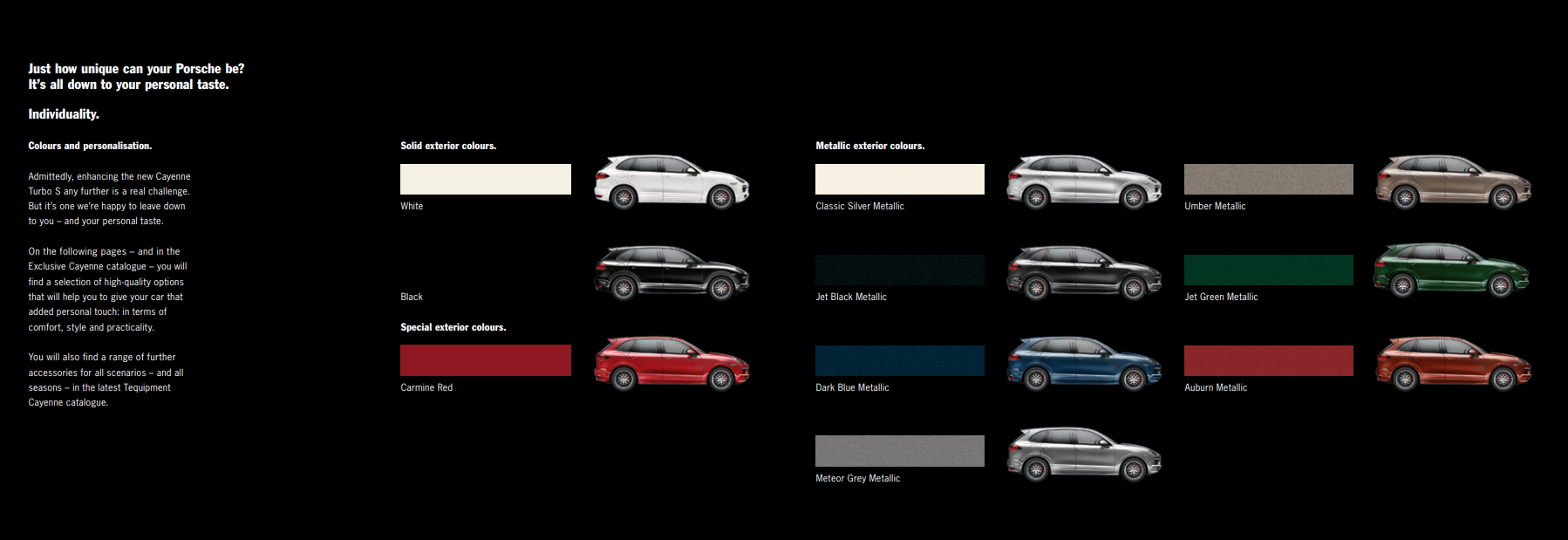
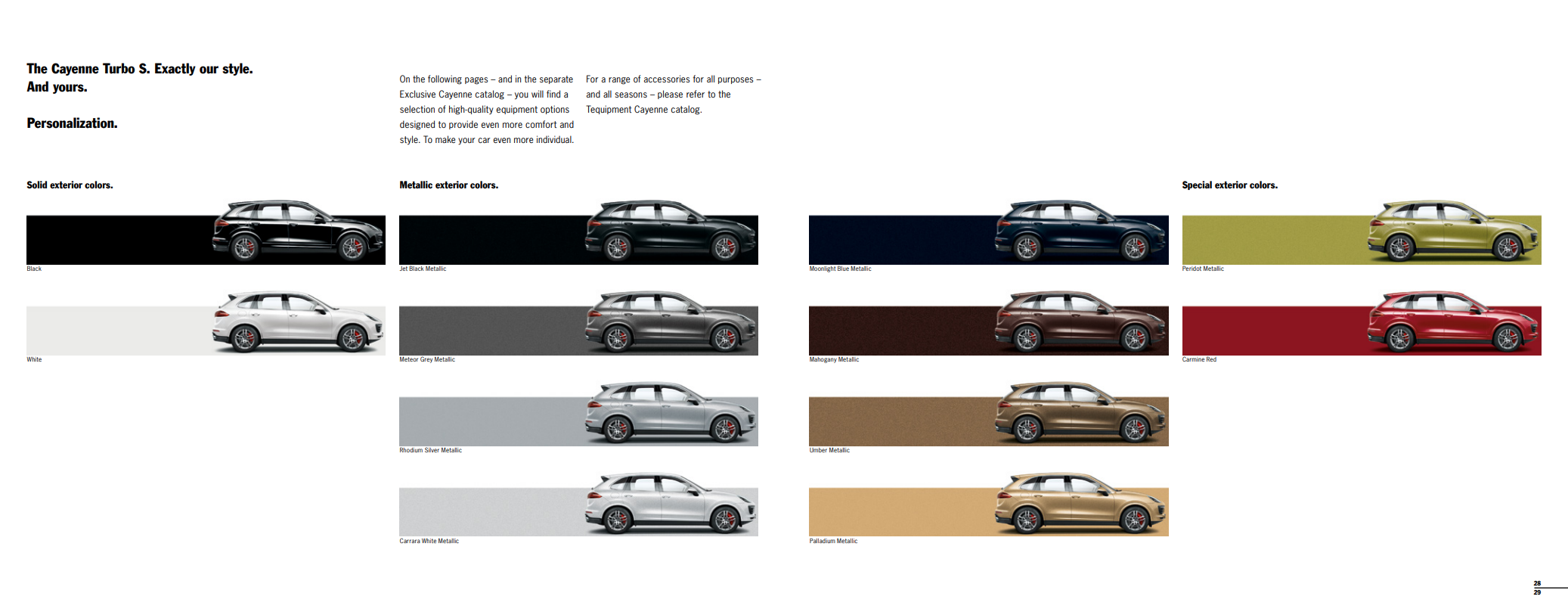
The exterior could be optioned with several wheel designs ranging from 19 to 21 inches. SportDesign packages included unique front and rear fascias, side skirts, and trim accents that gave the Cayenne a more aggressive look. LED headlights and tinted taillights were also available depending on the year and trim.

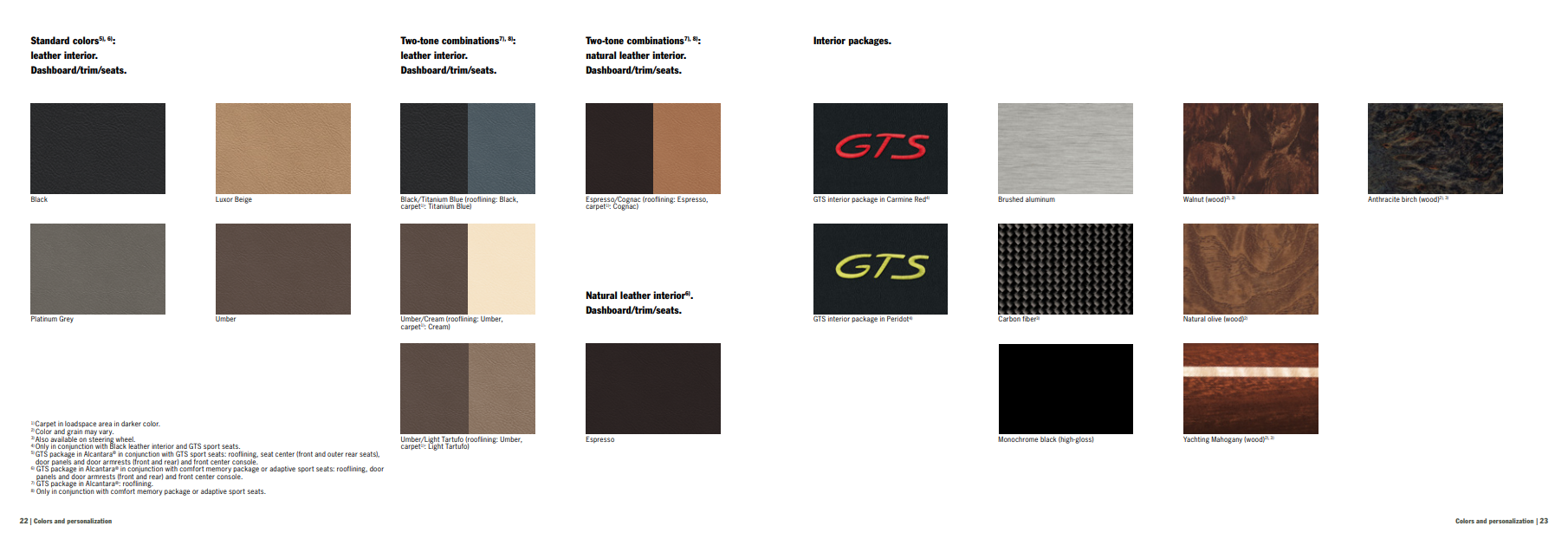
Interior options were extensive. Buyers could select from a variety of leather and Alcantara combinations, carbon fiber, wood, or aluminum trim, and contrast stitching. Ventilated and massaging front seats were available, along with heated rear seats. The Burmester high-end surround sound system was a standout option for audiophiles, though the Bose system was more common.

Adaptive cruise control, lane change assist, and blind-spot monitoring were among the most in-demand driver-assistance features. Entry & Drive (keyless access), a panoramic sunroof, and four-zone climate control were also popular. Some models featured a rear-seat entertainment system with dual screens, though this option is less desirable today due to outdated tech.

Well-optioned examples tend to include the Sport Chrono Package, air suspension or PDCC, upgraded audio, and 21-inch wheels. In the GTS, full leather with Alcantara and contrast stitching is highly sought after. In Turbo models, PCCB and LED headlights add long-term appeal.

2012 Porsche Cayenne GTS options list
2013 Porsche Cayenne Turbo options list
2015 Porsche Cayenne Turbo S options list
Key Options

Porsche Cayenne GTS/Turbo (Second Generation) Price and Value (Also includes other Cayenne models)

The Best Porsche Cayenne GTS/Turbo (Second Generation) to Buy

When it comes to choosing the best second-generation Porsche Cayenne GTS or Turbo (2011–2018), several factors come into play—including performance options, model year updates, and overall vehicle condition.
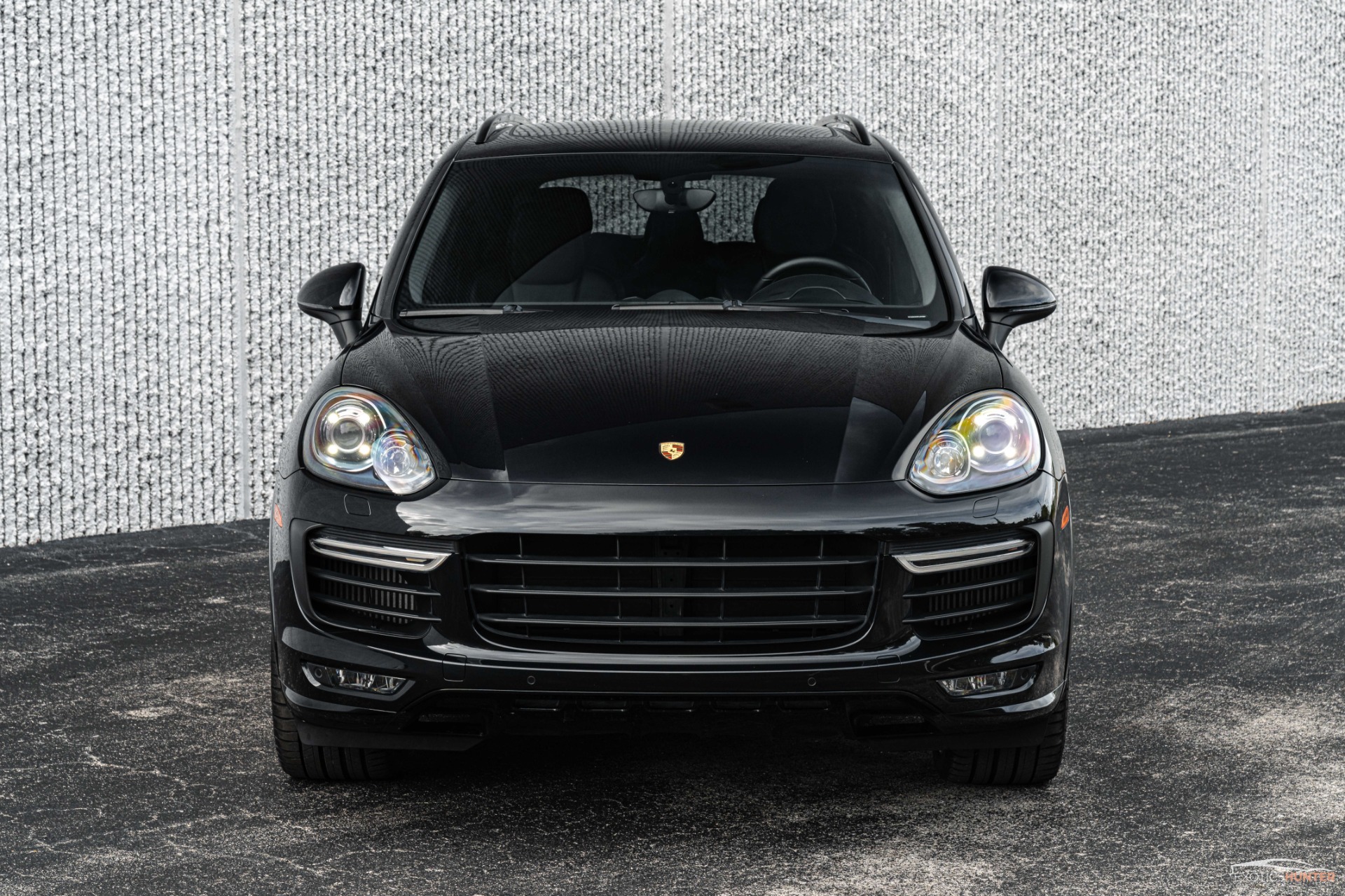
For those looking to get the most refined and well-equipped example, the 2016 model year stands out as a solid choice. By this point, the Cayenne had already received its mid-cycle facelift, which introduced updated front and rear styling, interior tech upgrades, and drivetrain improvements. 

The 2016 GTS and Turbo models benefited from years of incremental enhancements, and the Turbo S saw its peak performance output at 570 horsepower, with key features like Porsche Ceramic Composite Brakes (PCCB) and Porsche Torque Vectoring Plus (PTV+) included as standard.

Buyers should also consider build quality, service history, and mileage. Well-maintained examples with full service records and fewer miles are likely to hold their value better over time. Models optioned with desirable features like the Sport Chrono Package, PDCC, Burmester sound system, and 21-inch wheels tend to have stronger market demand.

A clean, low-mileage 2016 model with a strong option list and proper maintenance history offers the best balance of performance, reliability, and long-term value in this generation.

Don’t forget that the condition and mileage of the vehicle are crucial factors to consider when buying a Porsche Cayenne GTS/Turbo (Second Generation). Well-maintained cars with lower mileage tend to hold their value better and offer more reliable performance. 

It’s important to conduct thorough research, compare prices, and look for models with a documented service history if you are considering purchasing a Cayenne Turbo or GTS with long-term value.

Conclusion

In summary, with starting prices ranging from $28,000+, the second-generation Porsche Cayenne GTS and Turbo offer a compelling mix of performance, luxury, and practicality. These SUVs deliver serious power, engaging handling, and high-end refinement in a package that’s usable year-round.
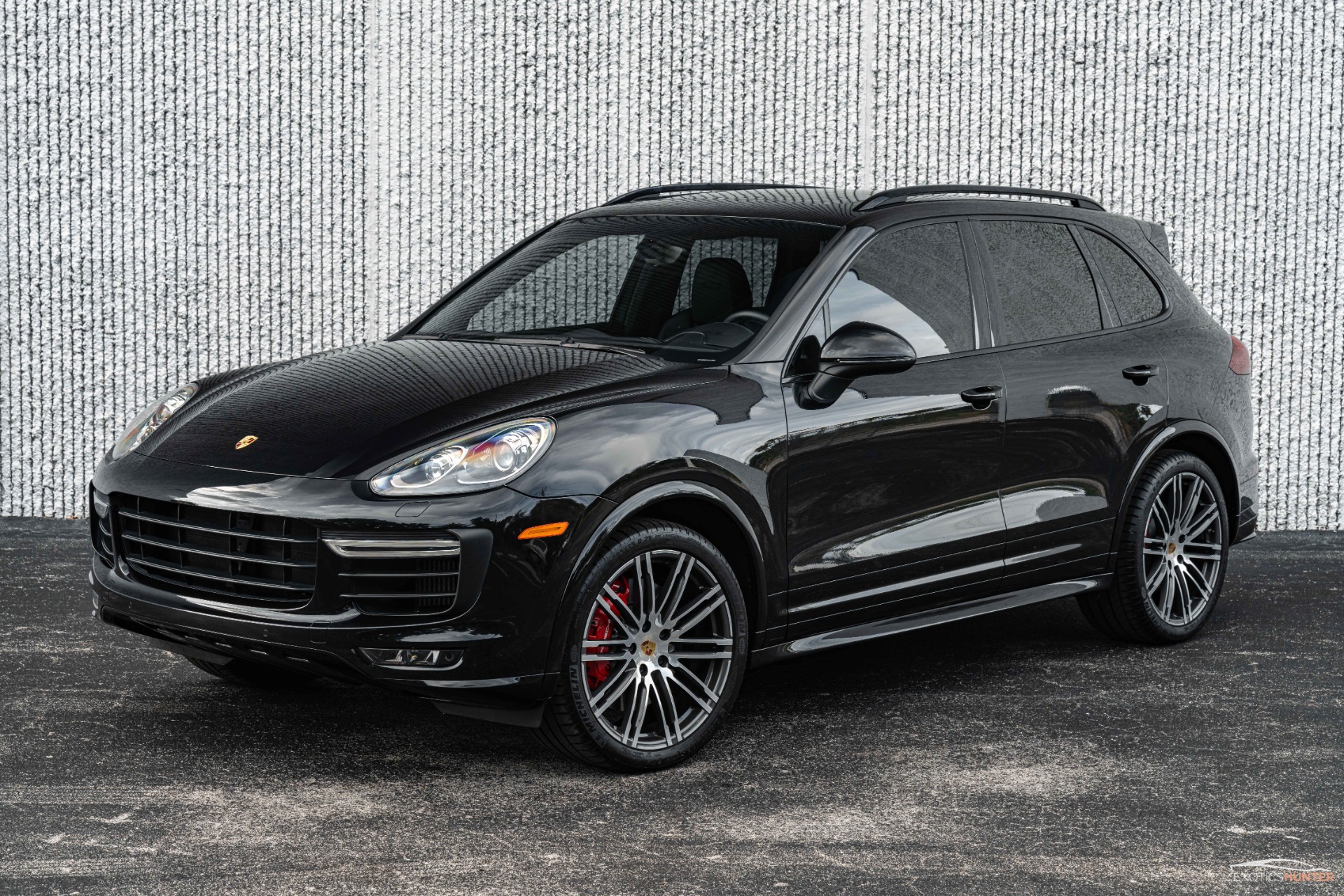
While alternatives like the BMW X5 M, Mercedes-AMG GLE 63, and Range Rover Sport SVR offer similar power and features, the Cayenne GTS and Turbo stand out with their Porsche driving dynamics, strong build quality, and extensive customization options.

For buyers seeking a high-performance SUV that blends sports car capability with everyday comfort, the second-generation Cayenne GTS and Turbo remain a strong choice.

Car Hacking Shortcuts

  • Look for models with Sport Chrono, PDCC, and air suspension for maximum performance and resale appeal

  • Prioritize 2015–2016 model years for updated styling, interior tech, and drivetrain refinements

  • Target well-maintained, low-mileage examples with a clean service history

  • Avoid models with Porsche Ceramic Composite Brakes (PCCB) unless priced appropriately, due to high replacement costs

  • Focus on builds with premium interior options (leather/Alcantara, Burmester audio) for stronger market desirability


Source link

The UK has published a ten-year industrial strategy to boost key sectors of the economy – here’s what the experts think

0
The UK has published a ten-year industrial strategy to boost key sectors of the economy – here’s what the experts think


The UK government has published a ten-year strategy outlining how it aims to boost productivity and innovation across eight key sectors of the economy. From the future of AI to energy security and net zero, it’s a broad and ambitious plan. Our experts assess what it tells us about how the UK economy – and the jobs it offers – could look in future.

Nuclear placed firmly in the centre of the UK’s low-carbon future

Doug Specht, Reader in Cultural Geography and Communication, University of Westminster

For clean energy and industrial growth, the strategy presents an ambitious and comprehensive vision. And it seeks to establish the UK as a global leader in clean energy manufacturing and innovation. A key strength lies in its substantial investment commitments, however this includes £14.2 billion for the controversial Sizewell C nuclear power station and more than £2.5 billion for a Small Modular Reactor (SMR) programme.

Nuclear energy remains controversial – nevertheless, the strategy firmly places it as a central pillar for low-carbon, reliable energy and national security.

The strategy also targets high-growth sectors, prioritises regional development and introduces support schemes and regulatory reforms to tackle high electricity costs for industry, and slow grid connections. Yet despite these potential strengths, there are notable challenges. Implementation risks are significant, given the ten-year timeframe and potential shifts in political priorities.

And regional disparities and social inequalities may not be fully addressed, as the focus is on high-potential city regions. Some areas could be left behind. Skills shortages in engineering and digital sectors persist, and there is not enough detail on reskilling and lifelong learning. The importance of supply chain resilience, especially for the critical minerals needed for the green transition is acknowledged but not fully assured.

Overall, the strategy is ambitious and well-structured. But a reliance on nuclear rather than true renewables is seeking a quick win with high risks and high costs. A more radical and inclusive plan that expanded green infrastructure, and provided details of resilient growth across all regions and sectors, would have been welcomed.


Read more:
Nuclear energy is a risky investment, but that’s no reason for the UK government to avoid it


An innovation boost for the UK’s world-leading creative industries

Bernard Hay, Head of Policy at the Creative Industries Policy and Evidence Centre, Newcastle University

The plan for the creative industries is a significant step forward for this critical sector. With multiple new commitments announced on areas ranging from scale-up finance and AI to skills, exports and freelance support, there is a lot to welcome for the sector. After all, it already accounts for over 5% of the UK’s annual gross value added (or GVA – which measures the value of goods and services) and 14% of its services exports.

One key aspect is boosting creative industries’ research and development (R&D), which is a driver of innovation, productivity and growth. This includes £100 million for the Arts and Humanities Research Council’s clusters programme, which supports location-based, creative R&D partnerships between universities and industry.

And by the end of the year, HMRC will publish clarification on what types of activity are eligible for R&D tax relief, to include arts activities that meet certain criteria. This is a nuanced change, but together with the other plans, it could have a catalytic effect on innovation in the sector.

Supporting regional creative economies is a golden thread running through this plan. A new £4 billion group capital initiative from the British Business Bank, announced earlier in the spending review, will be an important source of scale-up finance for small and medium-sized creative businesses that face barriers in accessing capital.

It is also welcome to see the government both increasing creative industries investment in several city-regions and supporting places to join up and work together through “creative corridors”. Coupled with the ongoing devolution of powers and funding in England, the next decade provides a huge opportunity for local policy innovation. This includes sharing and scaling proven strategies in growing regional creative economies.

An effective industrial strategy relies on high-quality data and analysis to support it. This is especially true when dealing with a rapidly evolving part of the economy such as the creative industries. The new plan includes commitments to strengthen the evidence base, including by increasing access to official statistics. This is good news not only for researchers, but for the whole sector.

exterior shot of the lowry theatre and gallery in salford
The Lowry in Salford is part of a creative cluster in the north-west of England.
Debu55y/Shutterstock

Advanced manufacturing: promising plans, but persistent problems

Michael Lewis, Professor of Operations and Supply Management, University of Bath

The government plans to invest £4.3 billion in advanced manufacturing. This covers research-driven production in sectors including automotive, aerospace and advanced materials (engineered substances that are especially useful in these industries). Some firms may also get energy cost relief through green levy exemptions.

A long-term plan is overdue, but the challenges are huge. Automotive production is targeted to rise substantially, but the sector will still depend heavily on a range of critical imports. The aerospace sector will start 40,000 apprenticeships by 2035, yet further education funding remains below 2010 levels. Much of the promised investment appears to be the repackaging of existing funding.

Most importantly, how to deliver these changes remains unclear. There are good ideas, like £99 million to expand the relatively successful Made Smarter Adoption programme to help small and medium-sized enterprises employ digital technology. But when helping small firms adopt basic digital tools counts as policy success, it shows how far UK manufacturing has fallen behind competitors. Likewise, when you need a new “connections accelerator service” just to help companies connect to the grid, it shows the scale of basic infrastructure problems that undermine grander ambitions.

Overall, the strategy marks real progress. However, without clear delivery plans, it reads more like a wish list than an action plan. This explains why industry reactions have been cautiously optimistic at best.

A chance to take the lead in the global AI race

Kamran Mahroof, Associate Professor of Supply Chain Analytics and Programme Leader for the MSc in the Applied Artificial Intelligence and Data Analytics, University of Bradford

From a digital and technologies perspective, the industrial strategy appears to signal a strong commitment to anchoring the nation at the forefront of the global AI race. The proposed Sovereign AI Unit shows an intent to ensure national control and access to critical AI infrastructure, computational power and expertise.

This is pivotal, not only for research and development, but also for national security and economic resilience in an increasingly AI-driven world. It points to a recognition that relying solely on external providers for cutting-edge AI capabilities carries inherent risks.

Besides, some of the world’s most innovative AI businesses are based in the UK. British companies are pushing the limits of what is feasible, from Synthesia’s advances in synthetic media to DeepMind’s developments in machine learning. In sectors including public safety, insurance and defence, smaller firms like Faculty, Tractable and Mind Foundry are also having a significant impact.

Complementing this, the AI Growth Zones are designed to act as regional magnets for investment and innovation, particularly in the realm of data centres and high-density computational facilities. By streamlining planning and providing preferential access to energy, these zones could accelerate the development of the physical infrastructure needed.

This decentralised approach has received more than 200 bids already from local authorities. It also has the potential to spread the economic benefits of AI beyond established tech hubs, encouraging new regional powerhouses and creating high-skilled jobs right across the UK.

Taken as a whole, these projects show a deliberate effort to develop core competencies and draw in private-sector funding. This puts the UK in a position to benefit from AI’s potential. This effort to develop national AI capabilities is not a new idea – it echoes the US AI executive order and the EU’s AI Act.

However, given the dominance of global tech giants, the UK needs to define “sovereignty” in practice and decide whether it is willing to provide large-scale funding. At a time when debates continue around the UK’s defence budget — a field now deeply intertwined with AI – more transparency is needed on how these ambitions will be funded.

Growth plans for financial services – and moves to share the benefits beyond London

Sarah Hall, 1931 Professor of Geography, University of Cambridge

One of the most striking elements of the new plan is that it places financial services much more centrally compared to previous approaches.

There are good reasons for doing this. Financial services are a vital component of the UK economy, contributing close to 9% of economic output in 2023. Clearly then, an industrial strategy without one of the most important economic sectors would make little sense.

There is also a welcome emphasis on the ways in which financial services can grow, not only as a sector in its own right, but also to be better integrated in supporting the growth of other parts of the economy. Some important policy moves have already been announced, such as changes to pension funds aimed at increasing their investment in large infrastructure projects.

In order to meet these ambitions, the strategy is right to note that financial services need to be supported, not only in London but also across the many clusters around the UK. These include, for example, Edinburgh, Manchester and Bristol.

There will be more details in the sector plan, released alongside Chancellor Rachel Reeves’ Mansion House speech on July 15. At that point, we will be able to assess the measures intended to grapple with two longstanding issues for UK financial services. That is, how does the government bridge the gap between finance and the “real” economy (goods and non-financial services)? And how does it bridge the gap between London and the rest of the UK?


Source link

Avoid Engine Damage With Timely BMW PCV Valve Repairs

0
Avoid Engine Damage With Timely BMW PCV Valve Repairs


There are certain components in your BMW that play a stellar role in ensuring the top performance of your car. The Positive Crankcase Ventilation (PCV) valve is one such part that helps the engine in churning out the raw power when you press the accelerator pedal of your BMW.

Avoid Engine Damage With Timely BMW PCV Valve Repairs

However, the PCV valve is among the most overlooked components when it comes to ensuring timely repair & service in BMW. Moreover, the efficient functioning of the engine in your BMW depends on the optimal working of the PCV valve. Here are the details of the PCV valve, which will be helpful for your BMW.

Importance of Timely Repairs for PCV Valve

At Ultimate Bimmer Service, through our years of experience, we have observed that BMW owners who ensure proper repair of their PCV valves are able to derive certain benefits from their car. Here are the advantages of timely repairs for your PCV valve:

Maintains Proper Engine Pressure

One of the best benefits of ensuring timely fixes for issues affecting the PCV valve in your BMW is that it helps maintain adequate engine pressure, necessary for the car’s smooth operation. The PCV valve is responsible for regulating the release of gases that accumulate in the crankcase of your engine.

Moreover, the PCV valve reintroduces these gases back into the intake manifold, which is used up in the combustion process of your luxury car. The malfunctioning of the PCV valve in your BMW can lead to a range of engine issues, including oil leaks and gasket failure.

By ensuring timely repairs, you make sure the pressure is always regulated in the engine of your BMW, which leads to better performance of the car and prevents issues from affecting the engine.

Averts Sludge Formation & Oil Contamination

The by-products of combustion, along with the presence of moisture in the engine, can lead to the formation of dangerous sludge if the PCV valve stops working. In fact, a properly functioning PCV valve helps in getting rid of moisture and by-products of combustion from the crankcase of your vehicle.

Now, due to the nature of the working of the PCV valve, it tends to get clogged with these contaminants, and a routine inspection & cleaning would ensure its optimal performance. Bring your BMW to Ultimate Bimmer Service, located in the city of Carrollton, TX, to get your PCV valve cleaned by our certified mechanics.

Avoids Engine Misfires & Carbon Buildup

The optimal functioning of the PCV valve in your BMW ensures proper air-fuel mixture balance, which is necessary for the combustion process to take place. Most of the time, rough idling, engine misfires, and a drop in fuel economy of cars, including your BMW, are caused by a disparity in the air-fuel mixture.

This disturbance in the air-fuel mixture of your BMW can be caused by a failed PCV valve. However, if you are adept at maintaining the PCV valve, then you don’t have to worry about encountering problems with the engine of your high-end car.

Signs of PCV Valve Failure in BMW

  • Unrestrained Exhaust Smoke: One of the most common signs that you are definitely going to come across due to a defective PCV valve in your BMW is the emergence of excessive smoke from the exhaust of your car. You will come across blue or white colored smoke due to a malfunctioning PCV valve under the hood of your car.
  • Drop in Performance: As the PCV valve has a significant effect on engine operation, any issues with your PCV valve will affect the engine’s performance, leading to a drastic drop in your BMW’s performance.
  • Unusual Noises: Generally, when driving your BMW, you are seldom going to hear anything unusual coming from under the hood of your high-end car. However, with a malfunctioning PCV valve, you are going to hear abnormal sounds in the form of whistling & hissing coming from your car.
  • Check Engine Light: The flashing of the check engine light on your BMW’s dashboard indicates issues with the engine or exhaust system. A failing PCV valve is going to trigger the warning light in your high-end car.

BMW PCV Valve Failure Signs

Why Opt for Ultimate Bimmer Service in Carrollton, TX?

At Ultimate Bimmer Service, located in Carrollton, TX, your BMW will undergo a thorough inspection to identify the exact issue with the PCV valve. In fact, our state-of-the-art auto repair facility is equipped with the latest tools & diagnostic equipment to help diagnose even the complex issues affecting your BMW.

Call or contact us at Ultimate Bimmer Service to make an appointment and get your BMW fixed by our team of certified mechanics to avoid the recurrence of the issues.


Source link

13 Auto Brands Saw Increasing EV Sales in California in 1st Half of 2025

0
13 Auto Brands Saw Increasing EV Sales in California in 1st Half of 2025


Last Updated on: 9th August 2025, 04:33 am

The California EV market is the biggest in the US by far. In fact, standing alone, it’s one of the biggest EV markets in the world. I’ve covered the top selling EV models in the state this year, the EV models doing well in their vehicle classes, and the top selling auto brands for EV sales in the 2nd quarter of 2025. To wrap up this series, let’s look at the top selling auto brands for EV sales in the first half of the year overall.

There is a bit of overlap with that last article, but there are also differences. If it was all basically the same story, I would have just combined the stories.

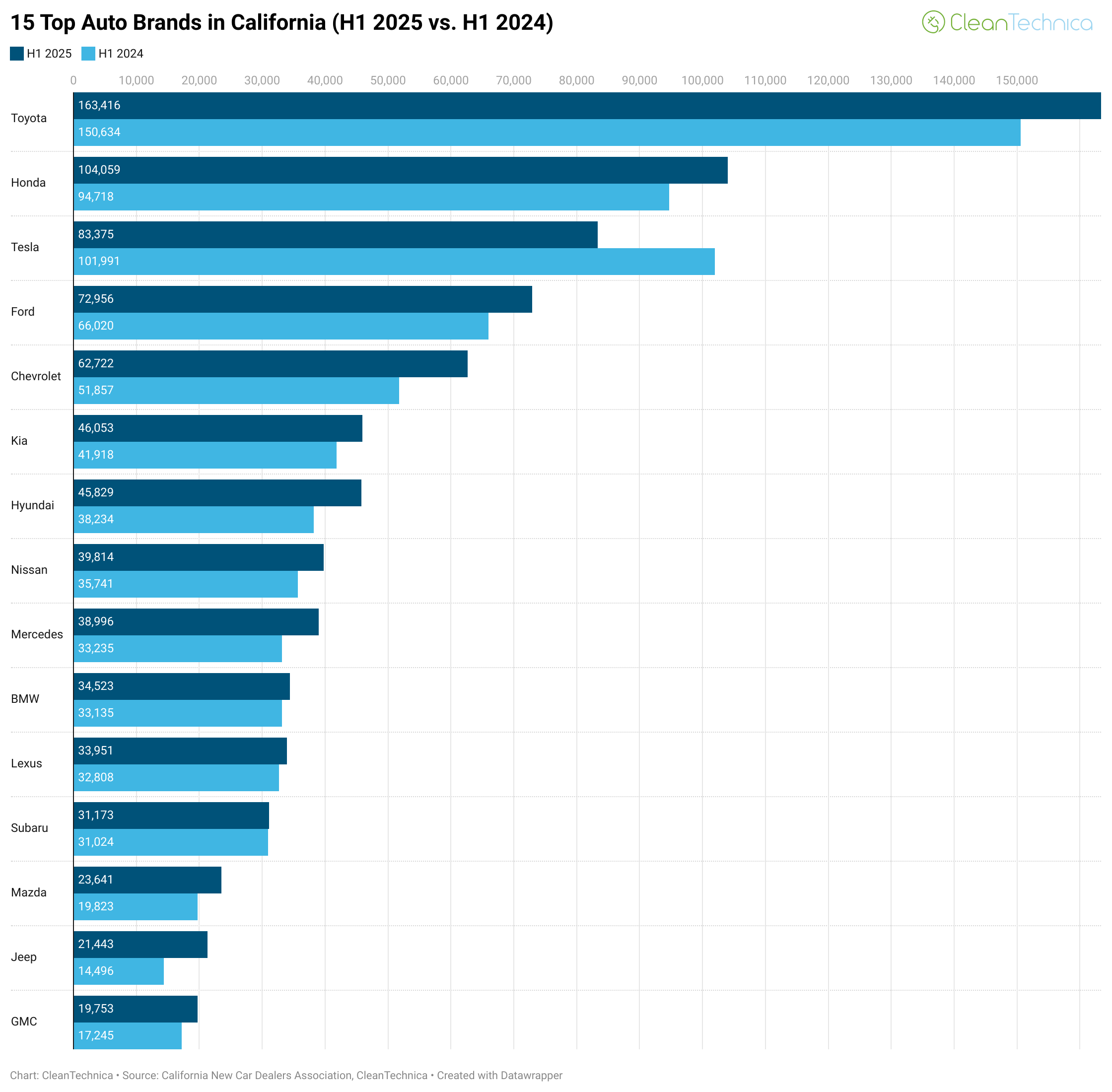
Overall, across the first half of the year, Tesla is down one place, from second place in 2024 to third place in 2025. The all-electric brand is quite far off of #2 Honda, but it also still has a decent lead over #4 Ford. Can Tesla hold onto 3rd place through the end of the year, or even climb back into 2nd? Or will it slip further as sales continue to drop in the Golden State? We’ll never know. Oh, wait, yes — we’ll know in 6 months. Drop your prediction down in the comments!

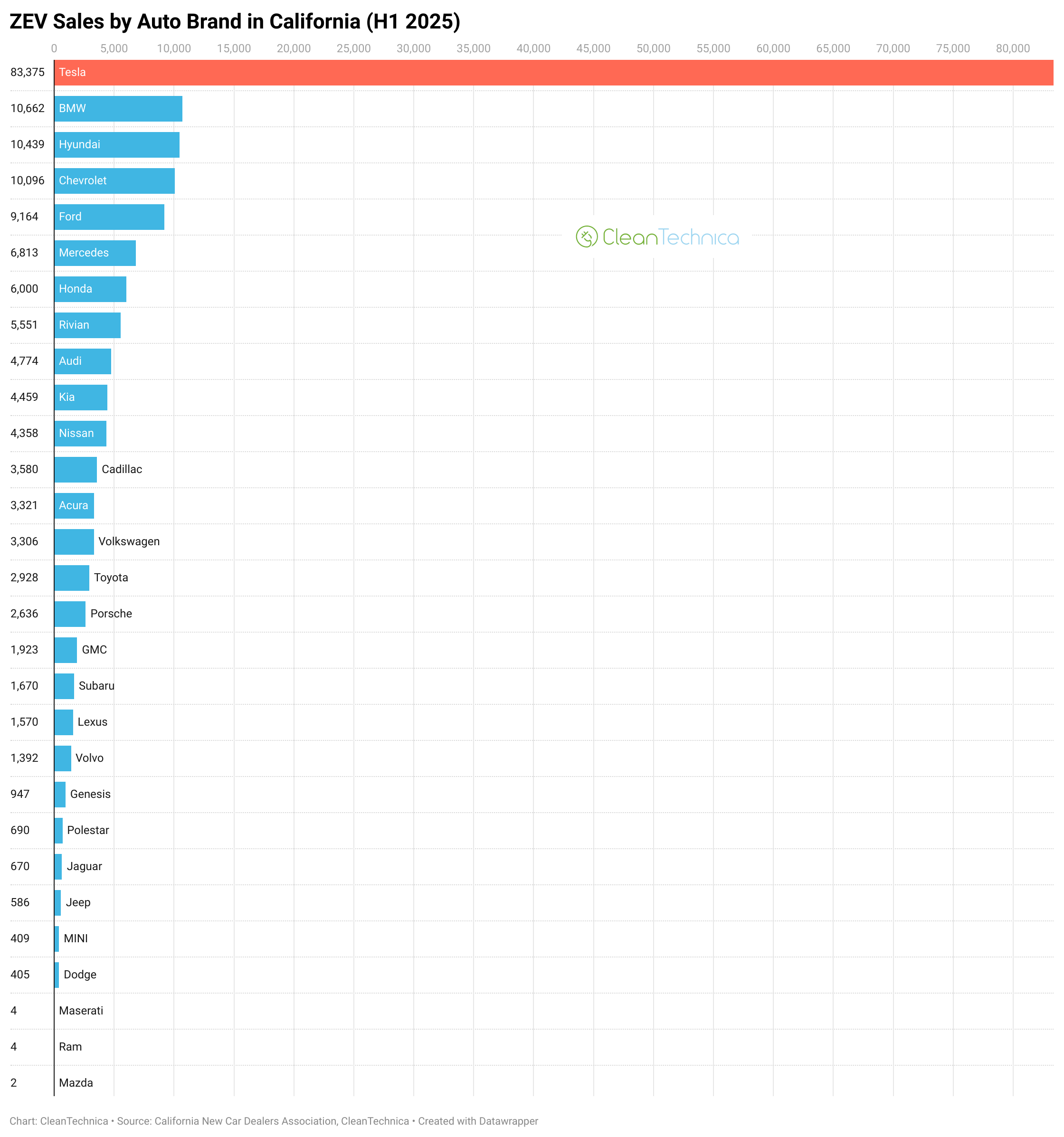
Looking just at ZEV sales, well, no matter how much Tesla drops, it’s got such a massive lead over the rest of the pack that it’s hard to even notice a drop. There’s no chance any other automaker is getting close to the (originally) California brand this year or next. Let’s just see if any other brand can get to 10,000+ ZEV sales a quarter in the coming quarters/years.

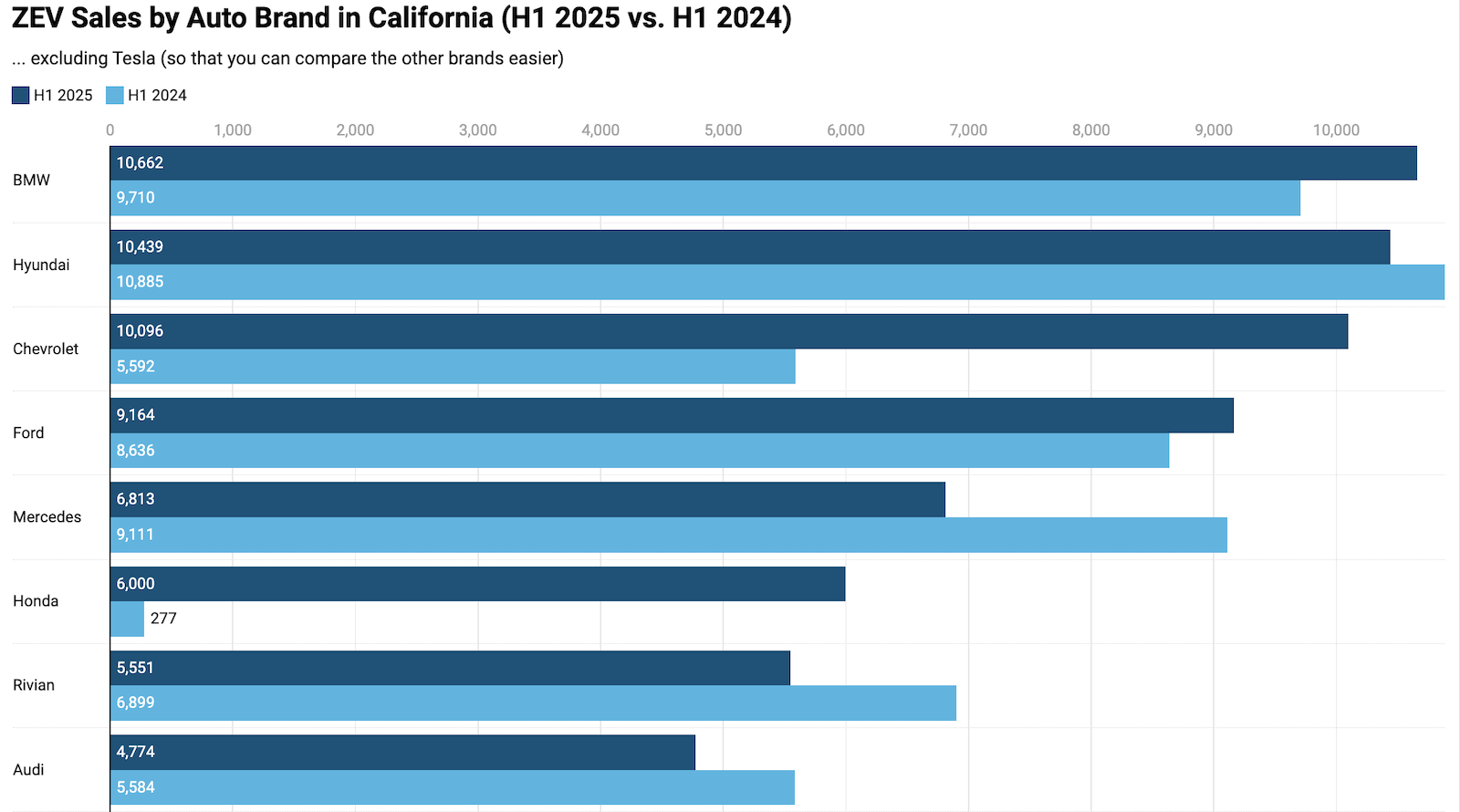
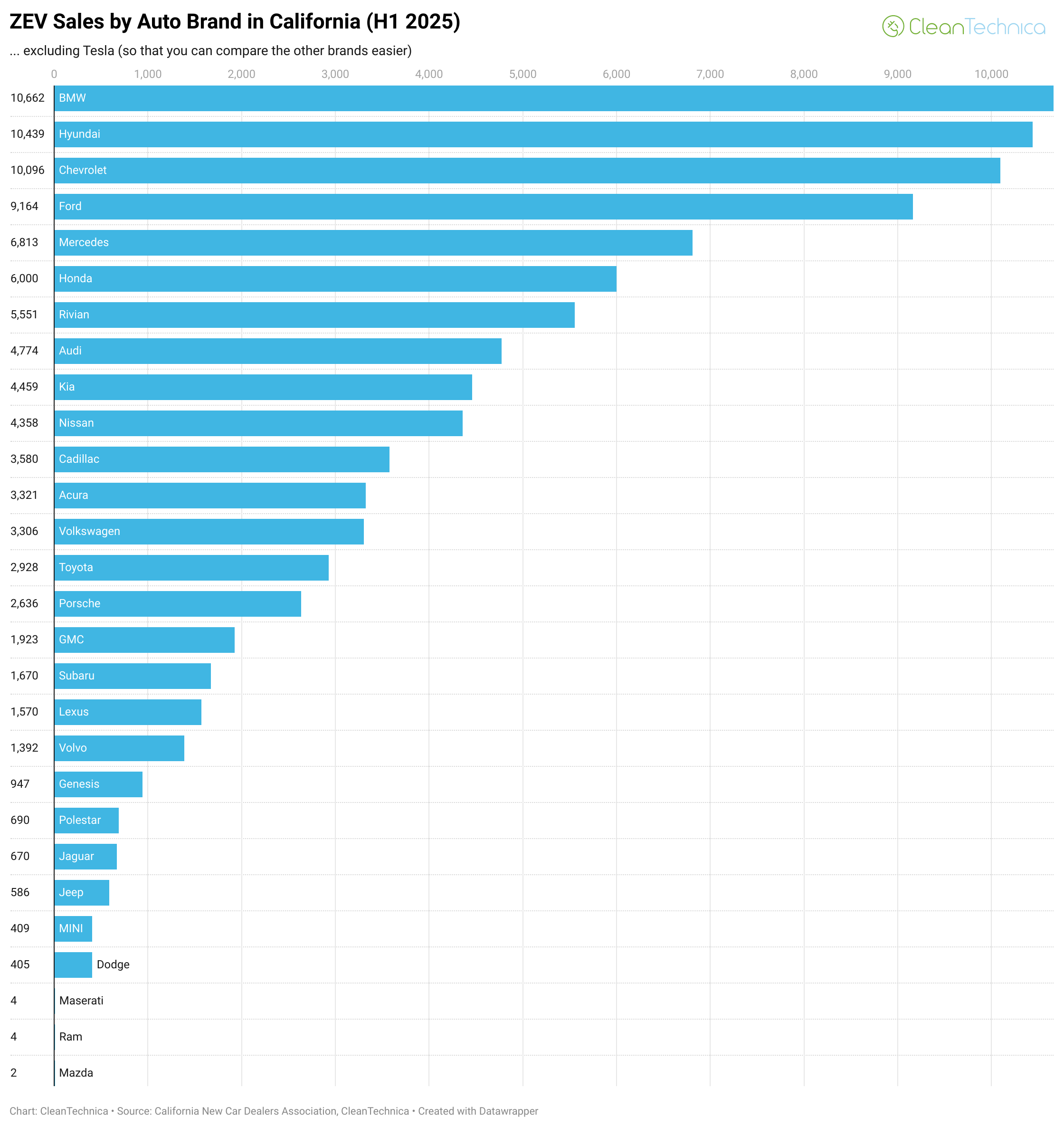
Excluding Tesla from the chart so that it’s easier to compare the others, we see a tight race for silver and bronze at the top, with BMW currently taking the silver and Hyundai currently taking the bronze, but Chevrolet right behind them. That’s different from the last quarterly report, where Hyundai is in 2nd, BMW is in 3rd, and Chevrolet is in 4th — but it’s even tighter. Ford is trying to climb up to the level of those three, but no other brand has a chance of competing for the podium.

Looking at how things have changed from H1 2024 to H1 2025, we see the massive drop-off from Tesla, with the company losing almost 20,000 sales (or 20% of sales) year over year. The brand may be years worth of sales ahead of the competition, but that stings.

Excluding Tesla so that we can see the rest of the chart better, we have a ton of variation. 13 brands scored sales rises, some big ones. However, another 12 had sales losses, some big ones. (Note: I excluded those bottom three brands from these tallies since their numbers are in the single digits.)

Chevrolet, Honda, and Acura had huge rises thanks to new, popular models. Nissan, Porsche, GMC, BMW, and Volvo also had big sales increases.

On the other hand, Kia lost a ton of sales, and Mercedes, Rivian, Audi, Volkswagen, Lexus, and Hyundai had notable and disappointing sales losses.

Clearly, there are changing preferences for EVs in the Golden State. It would be nice if all EV model sales were rising, some just more than others. But the reality is that some models and brands are struggling while others are growing their customer bases significantly. Survival of the fittest. Who do you think will have a strong second half of the year?

For extra fun, view interactive versions of three of the above charts here:


Sign up for CleanTechnica’s Weekly Substack for Zach and Scott’s in-depth analyses and high level summaries, sign up for our daily newsletter, and follow us on Google News!


Advertisement


Have a tip for CleanTechnica? Want to advertise? Want to suggest a guest for our CleanTech Talk podcast? Contact us here.


Sign up for our daily newsletter for 15 new cleantech stories a day. Or sign up for our weekly one on top stories of the week if daily is too frequent.


CleanTechnica uses affiliate links. See our policy here.

CleanTechnica’s Comment Policy


Source link

2023 Toyota C-HR vs the original. – thoughts on automotive design

0
2023 Toyota C-HR vs the original. – thoughts on automotive design


The success of the C-HR crossover model for Toyota means that a Mk2 model has launched 7 years on from the original design. This car marked the step-change in philosophy from Akio Toyoda to shift away from boring cars. The design story of the original astonished even the designers at Toyota Europe when they proposed various options and the management chose the craziest wild-card that the team could come up with. None of them expected it to be chosen! The Toyota C-HR was a response to the runaway success of the Nissan Qashqai but Toyota’s bravery really showed in the way it was even more sporty, with a coupe like rear roofline compromising interior space. I was enough of a fan of that design story and the exciting design it produced, that I decided to replace my BMW 5 series with a brand new C-HR in 2017. It was pure visual extravagance that drew me to the Toyota showroom, but to drive, the C-HR was just as bold a change for the brand. Dynamically, and in perceived quality it matched my BMW. The C-HR remained our family car for over 4 years, and was only traded for a larger car. I always wanted to deep dive into the design of the car, which had so many oddities about it, but they somehow all worked together. It felt like a work of manic designers, cramming in so many trends and ideas into one car it was perhaps overwhelming for many viewers but it certainly wasn’t boring. It also drew criticism from designer friends regarding the huge fake air vents up front and diffuser at the rear. All plastic, and with no function especially for my low powered hybrid model. One of my favourite aspects were the graphics, and I made sure to buy a white/black two colour scheme that emphasised the bold graphics the design team envisioned. The graphical treatment of the C-HR always strongly reminded of the 2009 Lotus Evora. This I believe was no accident… as the brief of the C-HR was to be a crossover coupe and the sporty look was so important to the car. The graphical treatment also very cleverly broke up the rather ordinary hatchback profile of the car. Yes it had quite a nice dropping rear roof line, to distance it from other upright SUVs and crossovers but overall it was quite an ordinary profile. Crossovers must be tall, so the graphic elements on all models – such as the shut-lines, DLO and black lower body between the wheels serve to visually break up the height and emphasise movement.

The new C-HR also aims to break up its slightly more practical shape with graphics. These are something that other Toyota designs have been developing, such as the AygoX, Yaris Cross, and Bz4r. The rear section being painted black is the main idea shown in the new cars graphics, explained by design lead Elvio D’Aprile to emphasise the forward motion of the car. This reminds me of classic BMW lower bodywork, which was described to me once as a scooping hand shape that pushes the car forwards. The original design had bold panel draw, with strong shapes but not very sharp creases so it seems Toyota have been working very hard to improve their metal pressing. I wrote another post here about how VW group have patents on this crease technology, and it was going to take a long time for others to catch up. The element I do find strange on this mk2 C-HR is to not use the same trick with the lower side graphics. Toyota designers used a negative light-catcher as is standard practice now, to cast a shadow which serves a similar purpose and is a similar shape. Why not use the original black panel to really make sure the lower part of the car tucks up between the wheels? I’ve created a few mock ups of what this new model would look like if it closely followed the graphics of its predecessor. The design is certainly more sophisticated and thanks to Complete Car for their video interview that reveals the detail work, particularly around rear aerodynamics. The first model had some interesting little aero add ons, a spoiler stuck to the rear lights like a gurney flap, for example. This latest design seems to have better integration of aero-forms.

Authors own car, an early 2017 model. Very bold graphics, inspired by Lotus perhaps?
Same graphic elements used here to reduce the visual height and weight of the Lotus Evora (first released in 2009).
Blacking out that lower feature to match the original C-HR. Surely helps reduce the visual height?
The green area drew my attention….
My mock-up of the same graphic treatment that the original model displayed.

Great video here from Complete Car with design chat from Elvio D’Aprile of Toyota Design Europe.

*UPDATE – all good things come to those who wait.

After seeing quite a few second gen C-HR models on the road, I noticed a one parked up and had a revelation. In the design previews and press of the replacement C-HR we only got to see the “Premium” model designation, as is usual. This top-tier model had a two tone paint finish, which was my main criticism in this article at the time. In production Toyota actually offers (in the UK at least) five trim models, and to my surprise three of these have a lower paint finish which is exactly as I would prefer and mocked-up for my design article! The lower sill is blacked out in the same way as the first generation model, and therefore looks much better. It is quite unusual, but not unheard of, to see the premium model of a range look worse than the cheaper versions. Here are some images (and the parked car that inspired me to relook at the C-HR!).

Toyota C-HR 2024 Design (trim/model spec)
5 trim levels of Toyota C-HR
Toyota C-HR Icon spec- photographed by author in Cornwall UK.


Source link

From Rue Royal To Riviera Dream: Fred’s Latest High Jewellery Collection Is Their Legacy Reimagined

0
From Rue Royal To Riviera Dream: Fred’s Latest High Jewellery Collection Is Their Legacy Reimagined


Soleil d’Or Sunrise necklace and transformable earrings in white gold and diamonds

If jewellery had a personality, FRED’s latest High Jewellery collection would be that effortlessly glamorous guest at the party—the one who catches the light just right, and always knows how to make an entrance. Aptly named The Sunshine Jeweler’s First Light, the radiant new offering is split into two chapters: 1936 and Soleil d’Or Sunrise—a sparkling tribute to joy and the pleasure of living beautifully. To understand how this Maison came about, we’ll have to look back at its origins. 

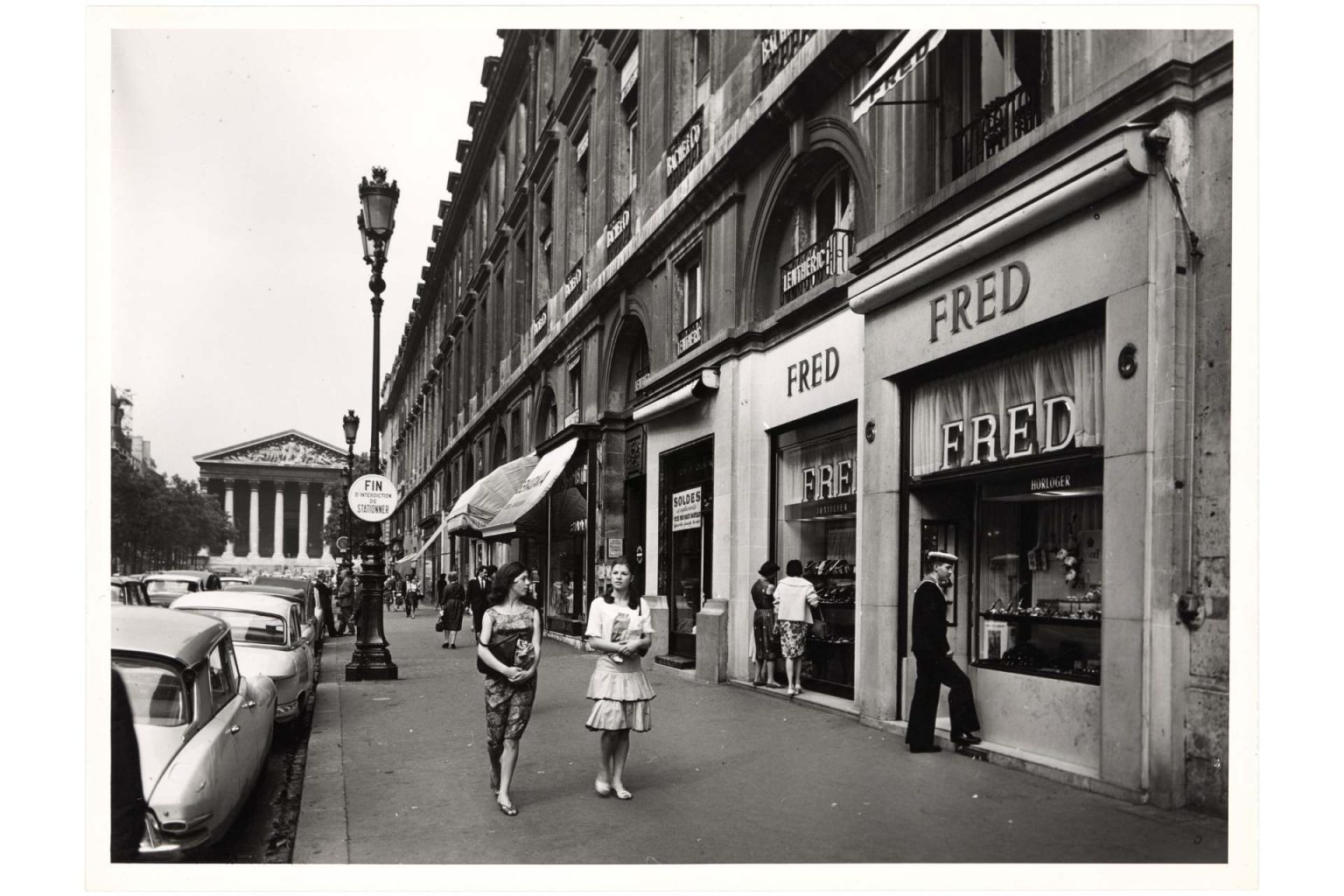
Fred Samuel was only 28 when he opened his first boutique on Rue Royale in 1936, but he already had a clear vision: to forget “safe”, stuffy jewellery locked away and only used for special occasions. He wanted movement, colour, and freedom. Jewellery that danced in the sunlight, lived for the Riviera, and felt just as right at a candlelit dinner as it did on a boat deck.

Born into a family of gemstone dealers, Samuel was captivated early on by the glow of coloured stones under the Argentine sun. Later, trained by renowned pearl merchants in Paris, he developed a passion for cultured pearls and was constantly inspired by light, sunlight in particular. 

Storefront of the 6, rue Royale FRED’s boutique, Paris, 1960 © Michel Cambazard

Chapter One: 1936

The 1936 chapter takes its cue from the very beginning, with crisp lines, bold structures, and a fresh spin on Art Deco. The key motif here is the arches, shimmering architectural curves.

One necklace, for instance, features a Colombian emerald from the legendary Muzo mines, nestled in a striking upturned arch. Matching earrings and a bold ring complete the look, all tied together with that distinctive arch detail. Elsewhere, Sri Lankan sapphires steal the show with deep, velvety blues paired with an elegant cascade of diamonds. 

1936 necklace in white gold, a 4.24 carat emerald and diamonds
1936 earrings and ring in white gold, sapphires and diamonds

And then there’s the ruby set: saturated Pigeon Blood red from Mozambique, set into supple chokers and show-stopping rings. The fire is real. Add to that a pearl necklace strung with softly tinted Akoya pearls—a nod to Samuel’s early days and still as chic as ever.

1936 necklace in white gold, rubies and diamonds

Chapter Two: Soleil d’Or Sunrise

Soleil d’Or Sunrise transformable earrings win white gold and diamonds

Where 1936 leans into drama and structure, Soleil d’Or Sunrise is all warmth and flow. From the very beginning, light has been at the heart of FRED. This fascination reached a new height in 1977, when the Maison encountered an extraordinary yellow diamond weighing over 100 carats. Its golden hue was so vivid, it looked as though it had captured the sun itself. Naturally, it was given a name to match: Soleil d’Or. The diamond became a symbol of the house, and after being welcomed back into the archives in 2021, it continues to influence the creative direction of the brand.

Margaux Hemingway and the Soleil d’Or, 1977 © Alain Dejean – Sygma via Getty Images
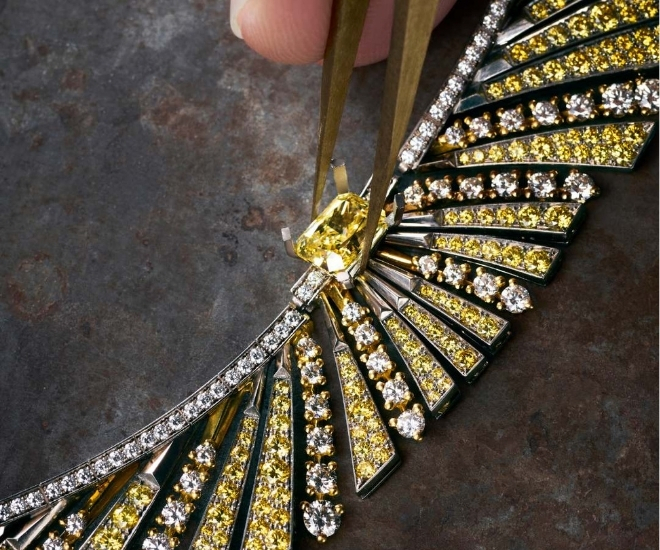
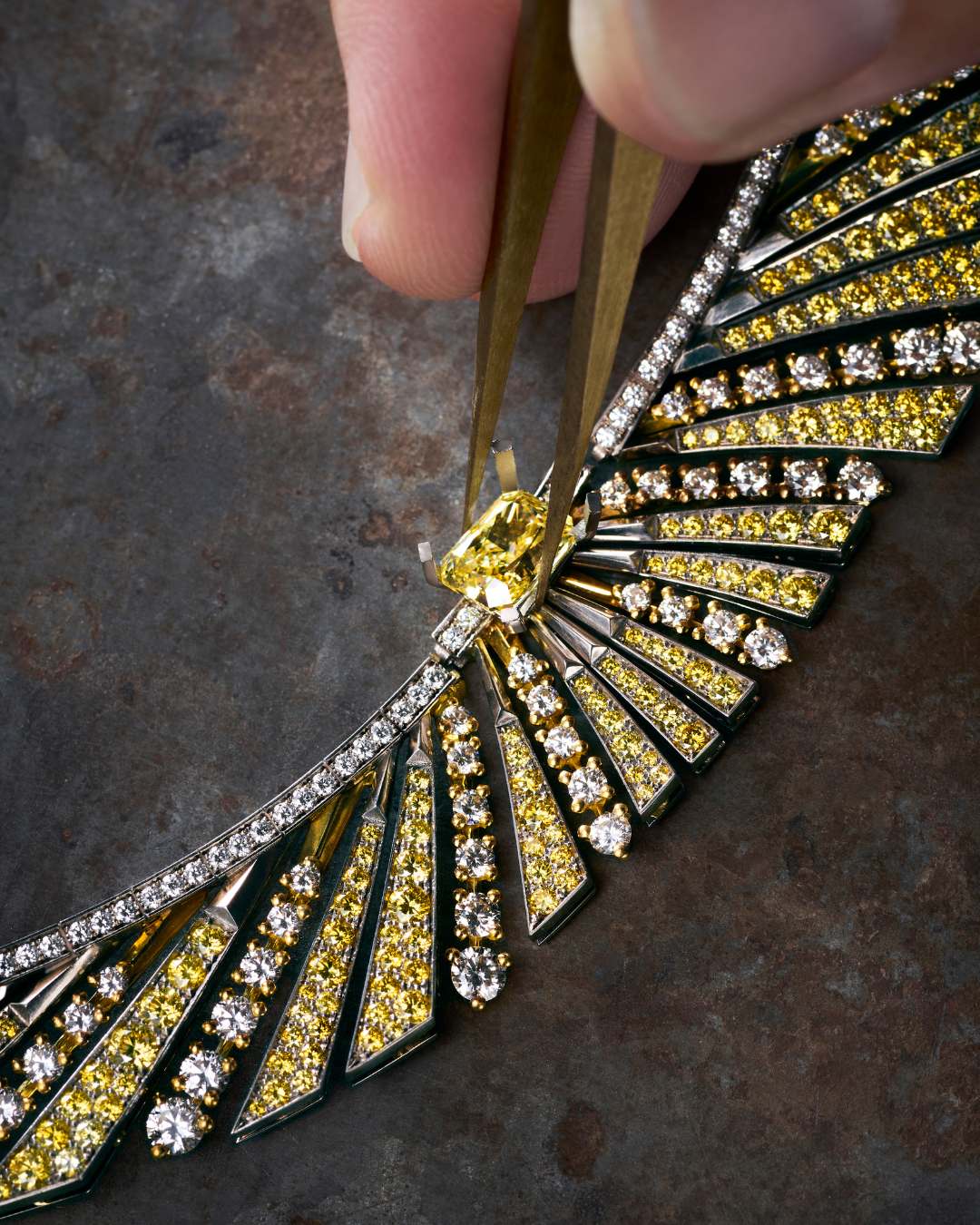
Setting of the Yellow Diamond on necklace

Channelling the soft glow of early morning light, a bib necklace catches the eye with its mix of grain-set yellow diamonds and claw-set white stones. The strands fall gently along the collarbone, leading to a standout centrepiece: a 2-carat diamond in a striking Fancy Intense Yellow—a quiet nod to the iconic Soleil d’Or.

Soleil d’Or Sunrise (bib) necklace in yellow and white gold, with yellow diamonds and white diamonds
Soleil d’Or Sunrise necklace and transformable earrings in white gold and diamonds

Nearly 90 years since Fred Samuel first opened his doors, FRED continues to light up the room with structured jewellery that still finds movement. Whether it’s the sharp geometry of 1936 or the golden softness of Soleil d’Or Sunrise, every piece captures something of Samuel’s original spirit: joy, colour, and a glow of something that’s always meant to be worn.

This article was first seen on GRAZIA MY.

For more on the latest in luxury jewellery reads, click here.


Source link

Saudi collector takes delivery of his Pagani Utopia Roadster ‘La Nonna’

0
Saudi collector takes delivery of his Pagani Utopia Roadster ‘La Nonna’


Saudi supercar enthusiast and collector @dhiaa070 recently took delivery of his one-off Pagani Utopia Roadster ‘La Nonna’. The car was handed over to him during a special event at the factory.

We first reported on the Utopia Roadster ‘La Nonna’ last month after the owner shared images of it being assembled. The unique spec pays tribute to the legendary Zonda ‘La Nonna’, which was used as a development prototype for all Zonda iterations.

Pagani Utopia Roadster La Nonna-2

‘La Nonna’, which is ‘The Grandmother’ in Italian, was conceived in the memory of the owner’s late grandmother. The car has a fully exposed carbon bodywork with a Nero Kajal tint. The black exterior is complemented by polished centre-lock wheels.

Pagani Utopia Roadster La Nonna-3

The interior is special too, with cream leather upholstery and exposed carbon trim. It even features handmade drawings by the owner’s son and daughter. 

At the heart of the Utopia Roadster is a 6.0-liter twin-turbo V12 engine, which produces 864 hp @ 6000 rpm and 811 lb-ft of torque @ 2800-5900 rpm. It is paired with either a 7-speed automated manual or a proper stick shift with three pedals. This special Utopia Roadster is equipped with the automatic option.

Pagani Utopia Roadster La Nonna-4

Source: @dhiaa070


Source link

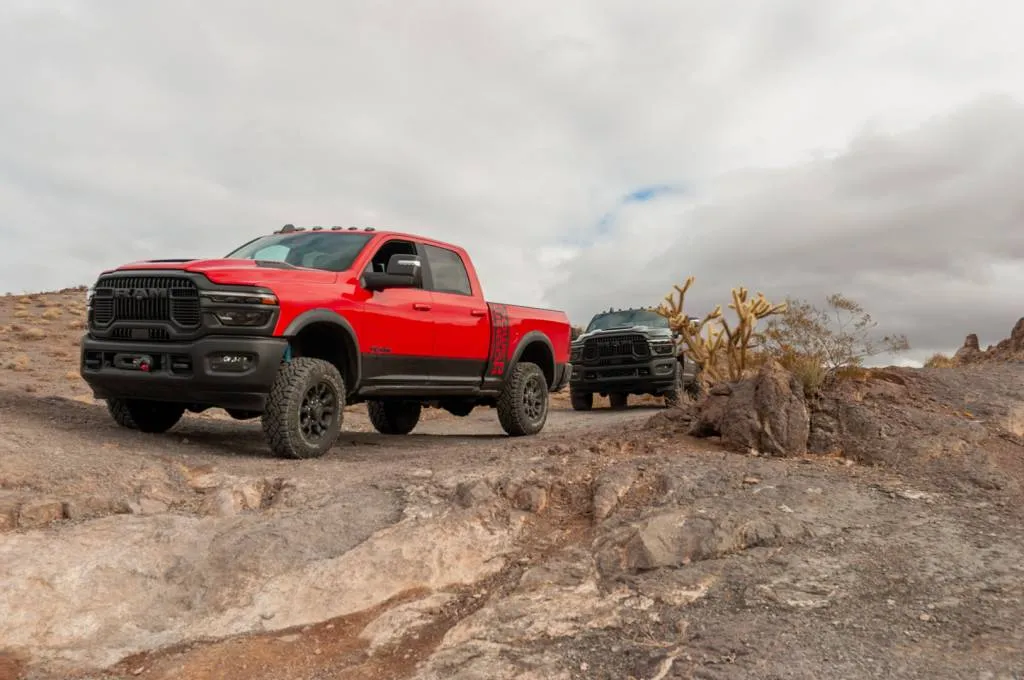
2025 Ram Power Wagon and Rebel HD defend their mountain

0
2025 Ram Power Wagon and Rebel HD defend their mountain


  • Mild design tweaks don’t change the off-road Ram trucks’ capabilities
  • Ram Power Wagon still has no direct competitor
  • 2025 Ram Power Wagon costs $74,235 and Rebel HD costs $70,740

The competition woke up and realized there’s room to play in the heavy-duty off-road sandbox. But Ram doesn’t want to give an inch of a segment it has defined for years. 

After the introduction of the Chevy Silverado HD ZR2 and a refresh of the Ford Super Tremor for 2023, the 2025 Ram 2500 Power Wagon and 2500 Rebel HD arrive with their own refresh. Both feature design and technology updates, while the Rebel gets major enhancements to its available turbodiesel engine option.

After spending time with the Power Wagon, it’s clear that it still stands alone in terms of off-road hardware in the segment, but the Rebel HD now feels significantly more competitive with its updated turbodiesel engine. However, the Rebel HD’s suspension remains punishing.

2025 Ram 2500 Power Wagon

2025 Ram 2500 Power Wagon

No Ram Power Wagon diesel, Rebel HD turbodiesel upgraded

Unlike the Silverado HD ZR2 and Ford Super Duty Tremor, the 2025 Ram 2500 Power Wagon cannot be optioned with a turbodiesel engine. At least for now, that’s what the Rebel is for.

The 2500 Power Wagon continues to be available only with a tried, true, and at this point old 6.4-liter V-8 rated at 405 hp and 429 lb-ft of torque. It’s fine, but Ford’s 7.3-liter Godzilla V-8 is more modern, more powerful, and more refined. 

The Rebel HD soldiers on with the gas V-8 as the standard engine, but it’s the optional $12,595 6.7-liter Cummins inline-6 turbodiesel that makes Power Wagon buyers take pause. It’s not the 430-hp rating, but the 1,075 lb-ft of torque that appeals to those who buy their trucks to do work. That’s more than Chevy’s 975 lb-ft but less than Ford’s 1,200 lb-ft. The Cummins turbodiesel has been heavily revised for 2025 with a new turbocharger and intake manifold, glow plugs replacing the old grid heater, a top-loading cartridge-style oil filter, and two top-mounted fuel filters. Ram also ditched the old 6-speed automatic transmission paired with the turbodiesel and replaced it with an 8-speed automatic.

The result of these changes is noticeably quicker acceleration—Ram said 0-60 mph now takes 6.9 seconds versus the outgoing turbodiesel truck’s 8.0-second sprint—quicker cold-starts, and easier maintenance. Just like when paired with the gas V-8, the 8-speed automatic fires off quick, smooth shifts and never gets lost in the shuffle. It’s also slightly less busy than Ford’s 10-speed while towing.

2025 Ram 2500 Rebel HD

2025 Ram 2500 Rebel HD

Is a turbodiesel Ram Power Wagon coming?

It might at some point. Ram Heavy Duty Chief Engineer Doug Killian told Motor Authority the team has heard loud and clear that Power Wagon buyers and owners would like a turbodiesel engine option.

Killian confirmed the substantial updates to the Cummins turbodiesel engine in no way resolved the issues that have, according to Ram, prevented the automaker from shoving the diesel engine into the Power Wagon. Those issues mainly involve the oil pan for the engine not fitting properly with the Power Wagon’s front suspension. The electronic disconnecting front sway bar gets in the way.

But the competition offers turbodiesel engines in their off-road trucks. Killian and his team are aware of the new competition and growing chorus of Power Wagon buyers asking for the engine upgrade. The executive noted there’s no engineering challenge the team couldn’t handle, it just costs money. He stopped short of confirming changes were in development for a turbodiesel in the Power Wagon. So you’re sayin’ there’s a chance.

2025 Ram 2500 Power Wagon

2025 Ram 2500 Power Wagon

2025 Ram 2500 Power Wagon and Rebel HD

2025 Ram 2500 Power Wagon and Rebel HD

Power Wagon remains soft and Rebel punishing

What hasn’t changed at all is how these trucks ride. On- and off-road the 2500 Power Wagon has a borderline plush ride thanks to soft Bilstein off-road shocks designed to crawl rather than haul rocks. The 2500 Rebel? Brutal. The Rebel also has Bilstein dampers, but they are tuned much firmer than the Power Wagon’s as a compromise in the name of capability. That capability comes in the form of towing and hauling capacity. The Rebel can tow up to 17,130 pounds and haul up to 3,320 pounds with the gas V-8. Those numbers increase to 19,890 pounds for towing and decrease 2,450 pounds for payload with the turbodiesel. 

The Power Wagon still only tows up to 10,530 pounds and hauls up to 1,570 pounds because that’s not its mission in life. That allows it to ride so much better. Those softer Bilsteins pay dividends both on- and off-road for ride quality. Riding on 18-inch wheels doesn’t hurt either.

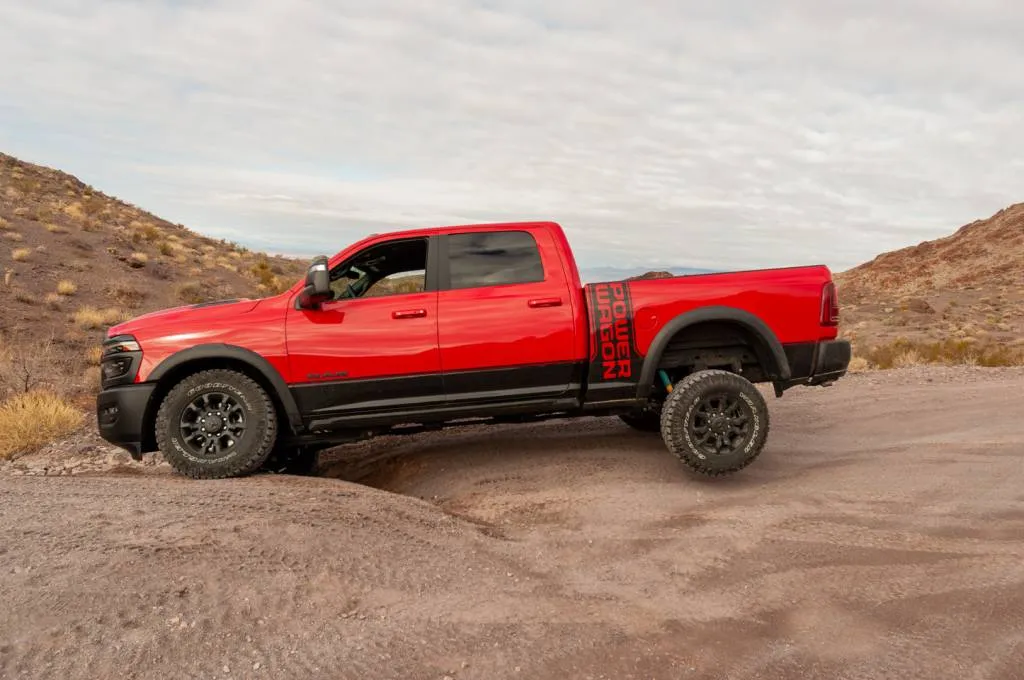
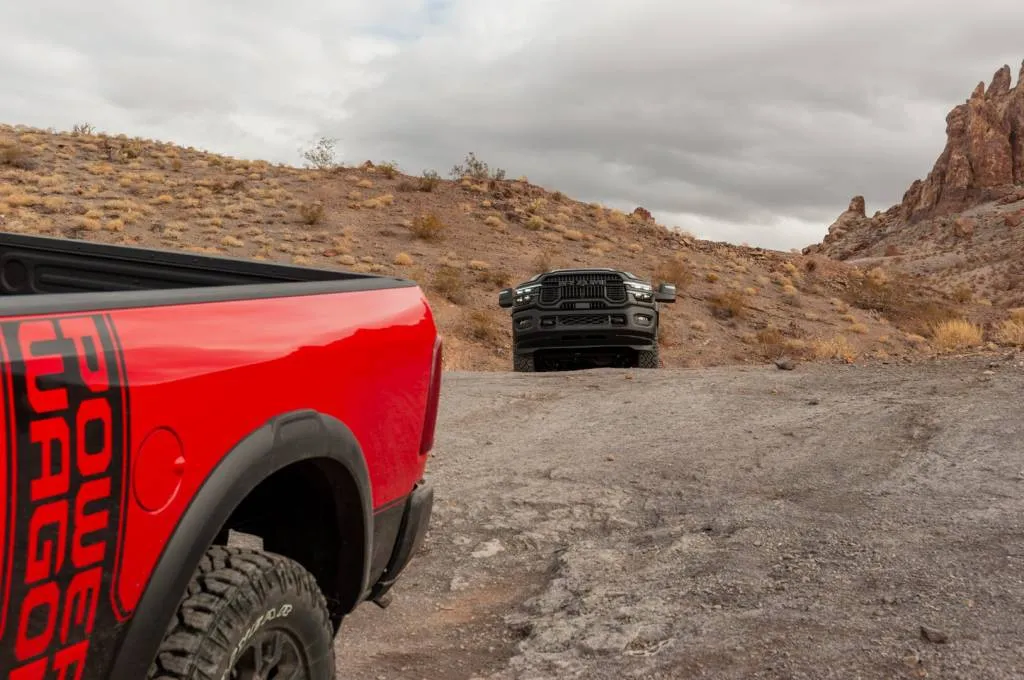
While off-roading in the Old Kingman Highway Recreational area in the desert of Nevada the two trucks set themselves apart twice. The first time was while climbing through some undulations. The Rebel lacks an electronic disconnecting front sway bar and front locker. This led to wheel spin and a wheel in the air. The Power Wagon kept its front tires on the ground and maintained traction. Both made it through the situation, but the Power Wagon did it more easily and with confidence.

2025 Ram 2500 Rebel HD

2025 Ram 2500 Rebel HD

The second was on a few miles of broken gravel roads where I had no issue going much quicker than necessary (ahem) thanks to the Power Wagon’s softer suspension. I lost sight of the Rebel, who’s driver was just trying to keep their fillings securely in their teeth.

The Rebel exists because the Power Wagon couldn’t take on the towing and hauling capabilities of the Super Duty Tremor and Silverado HD ZR2. Ford equips the Super Duty Tremor to tow up to 18,200 pounds via a conventional hitch and 23,000 pounds with a gooseneck trailer. It can also haul up to 4,384 pounds of payload. The Silverado HD ZR2 can tow up to 18,500 pounds and carry up to 3,397 pounds of payload, and it does all that with  advanced technology in the form of Multimatic DSSV dampers that are the most advanced shocks on a production HD pickup truck.

2025 Ram 2500 Power Wagon

2025 Ram 2500 Power Wagon

But it’s the standard front and rear electronic locking differentials, the electronic disconnecting front sway bar, and the standard winch that set the 2500 Power Wagon apart from everything else on the market. No competitor has the front locker or disconnecting front sway bar.

2025 Ram 2500 Power Wagon and Rebel HD

2025 Ram 2500 Power Wagon and Rebel HD

2025 2500 Power Wagon and Rebel look tougher

That’s a kind way of putting it.

The front of the Ram HD lineup has been revised with updated headlights and grilles. The headlights aren’t actually taller, but they look taller because they are stacked and bisected with trim now. It looks worse in photos than in person, but it still shouldn’t be filed as an upgrade. The grilles are indeed taller, which imposes a more intimidating stance. The Power Wagon and Rebel now have grilles with bars going both horizontally and vertically. It’s a lot to take in.

While the front became busier, the rear was streamlined. The updated taillights are simpler and lose their almost sideways cattle brand turn signal design. The entire lens is now red outside of the reverse lights, and it’s aligned with the updated 2025 Ram 1500’s rear end.

The Power Wagon still rides on 18-inch wheels wrapped in 33-inch all-terrain rubber, while the Rebel rides on 20-inch wheels and 33-inch all-terrain rubber. The promised 18-inch wheels that were to be available on the Rebel at its debut never arrived. Who buys 20s to go off-roading? Ram said 35- and 37-inch rubber still won’t clear the fenders of either of these trucks without rubbing. The Super Duty Tremor and Silverado HD ZR2 both come on 35s. Ford actually modified the front suspension for the 2023 update to ensure 37s would fit without rubbing on the Super Duty’s suspension.

2025 Ram 2500 Power Wagon

2025 Ram 2500 Power Wagon

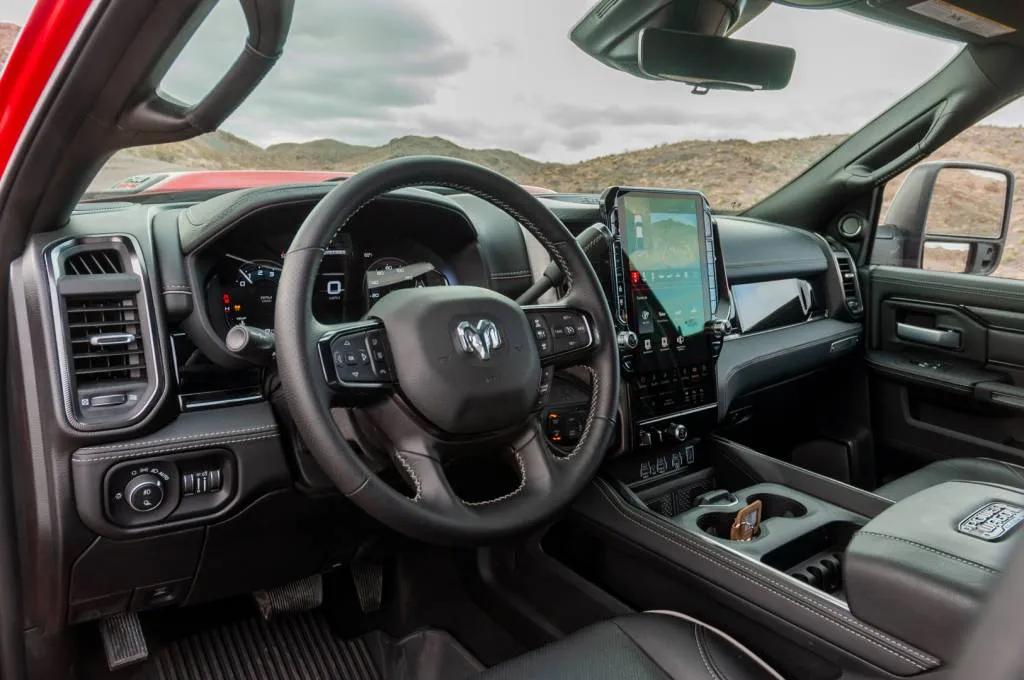
2025 Power Wagon and Rebel receive minor interior updates

Anyone who’s been inside a Ram HD will feel right at home in the updated 2025 trucks. Very little has changed. That’s not a bad thing because these trucks have the nicest interiors in their segment, by a mountain pass or two.

While the 12.0-inch touchscreen remains standard, Ram now offers a 14.5-inch touchscreen upgrade in both the 2500 Rebel and Power Wagon. The larger screen incorporates what would be some hard buttons and makes them digital buttons. It seems somewhat useless, but it also harms nothing. A 12.3-inch digital gauge cluster stands pat, and thankfully has a turboboost gauge when the turbodiesel is equipped in the Rebel 2500 unlike the Ram 1500 with a turbocharged inline-6 gas engine.

A rather large change for 2025 is the gear selector. Every Ram HD now has a column-mounted electronic gear selector. Previously, every truck equipped with the gas engine had a dash-mounted rotary shift knob while only turbodiesel trucks had a column-mounted shifter. Ram said customer feedback—sounds like loud complaining to us—drove the change. Rejoice column shifter fans. You won.

2025 Ram 2500 Power Wagon and Rebel HD

2025 Ram 2500 Power Wagon and Rebel HD

2025 Ram 2500 Power Wagon and Rebel struggle with value

The 2025 Ram Power Wagon costs $74,235 including an absurd $2,095 destination charge. That’s $4,105 more than a 2024 model for what amounts to mostly the same truck.

The story is the same with the 2025 Ram Rebel HD, which now costs $70,740 with the gas engine. That’s up $1,020 from 2024. Factor in another $12,595 for the turbodiesel, which is kind of the point of the Rebel, no?

The real issue is that a Ford Super Duty Tremor costs only $61,880 with a more modern gas engine. Slapping the $12,995 high-output turbodiesel in the Tremor brings the total to $74,305, which is about what a Rebel’s going to cost without a turbodiesel after an option or two.

Ford is severely undercutting Ram’s pricing, and really sticking it to the HD off-road pioneer once a turbodiesel’s factored into the equation. It also rides on 35s out of the box.

Despite the mildest of updates to keep pace with the fresh-face competition, Ram’s 2500 Power Wagon can still do things no competitor can, or can at least do them more easily. The Power Wagon stands alone with its hardware. The 2500 Rebel, on the other hand, has some opportunities ahead for a softer suspension, smaller wheels, and larger tires.

Ram paid for travel, lodging, and tacos in the desert for Motor Authority to bring you this first-hand review.


Source link

Lamborghini Temerario First-Drive Impressions—And How You Can Tame the Bull Next

0
Lamborghini Temerario First-Drive Impressions—And How You Can Tame the Bull Next


Lamborghini Temerario

1. Meet the 907-HP Hybrid That Replaces the Huracán

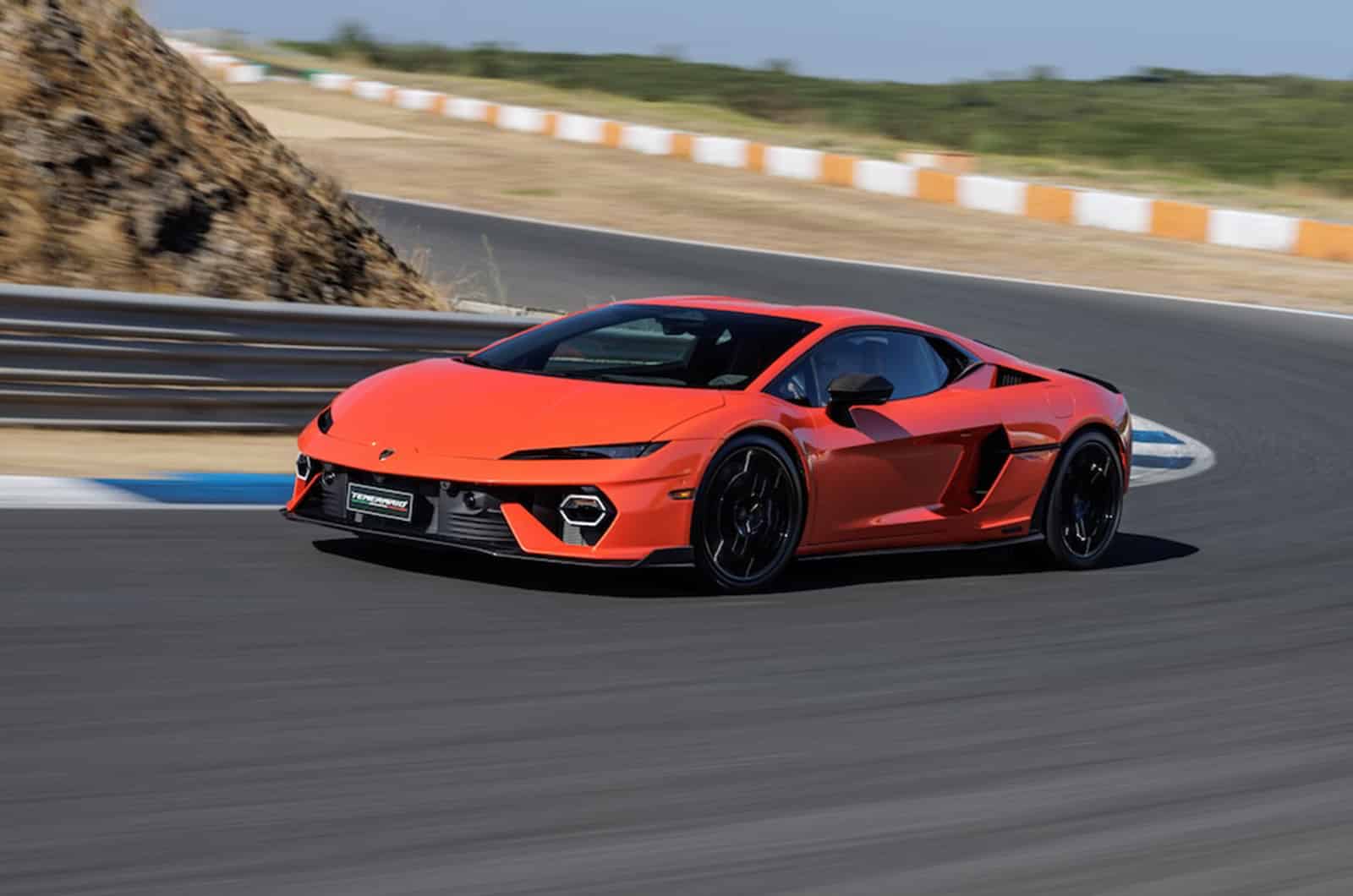
Lamborghini’s new Temerario (Italian for “the daring one”) is the second model in Sant’Agata’s High-Performance Electrified Vehicle line-up. Under its scalpel-sharp bodywork sits an all-new, flat-plane, twin-turbo 4.0-litre V-8 and three axial-flux electric motors for a combined 907 hp (920 CV) and 538 lb-ft of torque. A feather-weight 3.8 kWh battery feeds the front-axle motors and sits low in the central tunnel for a better centre of gravity. Lamborghini quotes 0-62 mph in 2.7 seconds and a top speed beyond 210 mph. Wikipedia


2. Design That Works Harder Than It Looks

Visually the Temerario riffs on the Revuelto’s Y-signature lights but introduces hidden active aero: flaps inside the rear diffuser can stall or energise airflow depending on mode to add as much as 25 per cent extra downforce over a Huracán STO. The cockpit keeps the fighter-jet theatre—flip-up start button, hex-pattern vents—while the “Direzione Anima” toggle now controls four drive modes: Recharge, Città, Sport and Corsa. Lamborghini.com


3. How It Drives (According to the First Reviews)

  • Steering & Balance – Testers praise the calmer, more neutral front end: “tolerant of big steering inputs and rock-steady under hard braking,” notes CAR magazine, even if understeer appears at the limit. Car Magazine
  • Weight vs Agility – The hybrid gubbins add roughly 551 lb, yet because the mass sits low and central, change of direction still feels keen. Henry Catchpole calls the compromise “a lot of fun” on Estoril’s fast corners. Hagerty
  • Brakes & Gearbox – Carbon-ceramics (410 mm / 10-piston fronts) combine with the Revuelto-style 8-speed DCT for “punchy, aggressive shifts” and a pedal that’s “surprisingly short and firm.” Top Gear
  • Lightweight Options – Spec the Alleggerita package (carbon roof, titanium exhaust, magnesium wheels) and you trim ~55 lb while upping downforce. SlashGear

Bottom line? Reviewers agree it’s a new flavour of Lamborghini—less shriek, more shove, yet still riotously playful when the front motors vector torque to crank up drift angles.


 Lamborghini Temerario

4. Huracán LP610-4 vs Temerario—Why It Matters Right Now

While the V-10 Huracán sings to 8,500 rpm in naturally-aspirated purity, the Temerario substitutes volcanic mid-range torque and electric punch. Numbers tell part of the story:

Huracán LP610-4 Temerario
Power 602 hp (N/A V-10) 907 hp (hybrid V-8)
0-62 mph 3.2 s 2.7 s
Weight (dry) 3,135 lb 3,725 lb*
Red-line 8,500 rpm 10,000 rpm

*before optional lightweight pack. Data sources: Lamborghini & media drives. WikipediaSlashGear

What never changes: both cars deliver all-wheel-drive security, dual-clutch snap-shifts and that signature “long-sword” Lambo steering response. If you love the analogue howl of the V-10, drive it now—because the future is turbo-electrified.


5. So, When Can You Drive a Temerario?

Lamborghini has confirmed first customer deliveries for late 2025. Our team at Xtreme Xperience is already in talks with the factory to add a Temerario to our 2026 fleet—complete with classroom briefing, helmet, and a pro instructor riding shotgun. Want front-of-line access? Join the Temerario VIP Waitlist at checkout and we’ll notify you the moment dates hit the calendar.


 Lamborghini Temerario

6. Feel the Raging Bull Today—Huracán Track Drives From $249

Don’t just read about 900-horsepower dreams—live the legend. Our current Lamborghini Huracán LP610-4 delivers 602 hp of naturally-aspirated V-10 fury, paddle shifters, and no speed limits on 40-plus racetracks nationwide. Three to four hot laps with a pro beside you, starting at $249. Book yours now and you’ll:

  • Learn the racing line in a quick-hit classroom.
  • Get real-time coaching from a championship-winning instructor.
  • Walk away with in-car video proof (optional) and bragging rights for life.

Reserve your Huracán drive today, tick the “Temerario VIP Waitlist” box, and you’ll be the first to tame Lamborghini’s hybrid future on track.

👉 Book the Huracán

7. Key SEO Phrases Worked Naturally Into This Article

Test-drive Lamborghini Temerario,” “Temerario first drive review,” “Lamborghini Temerario specs,” “Huracán vs Temerario comparison,” “drive a Lamborghini supercar on track,” “Temerario drift mode,” “Lamborghini plug-in hybrid V-8,” “Temerario Estoril review,” “how to drive a Lamborghini Temerario.”


8. Final Gear-Change

The press may be obsessed with horsepower graphs and hybrid debate—but at Xtreme Xperience we measure a supercar by the grin it leaves on your face when you climb out, heart hammering through your race suit. Whether you crave the last-of-its-kind V-10 symphony or the next-gen hybrid thunder, It’s Your Turn to drive the dream.

See you on pit lane.

👉 Book the Huracán

The post Lamborghini Temerario First-Drive Impressions—And How You Can Tame the Bull Next appeared first on Xtreme Xperience.


Source link

They don’t make them like they used to? 1993 Proton Wira in NCAP-style crash test is a grim safety reminder

0
They don’t make them like they used to? 1993 Proton Wira in NCAP-style crash test is a grim safety reminder


They don’t make them like they used to? 1993 Proton Wira in NCAP-style crash test is a grim safety reminder

This is not an easy piece to write although the premise is simple. Old cars are simply not safe for you and your family. They come nowhere near to modern crash safety standards and any new car, even the cheapest ones on sale today, are light years ahead in occupant safety. For your own sake, get a new car.

The above paragraph is a fact, one that was seared into my mind earlier this week when we witnessed the crash test of a Proton Wira, live at the Miros PC3 lab. Knowing something in theory is one thing, seeing the carnage with your own eyes is another altogether.

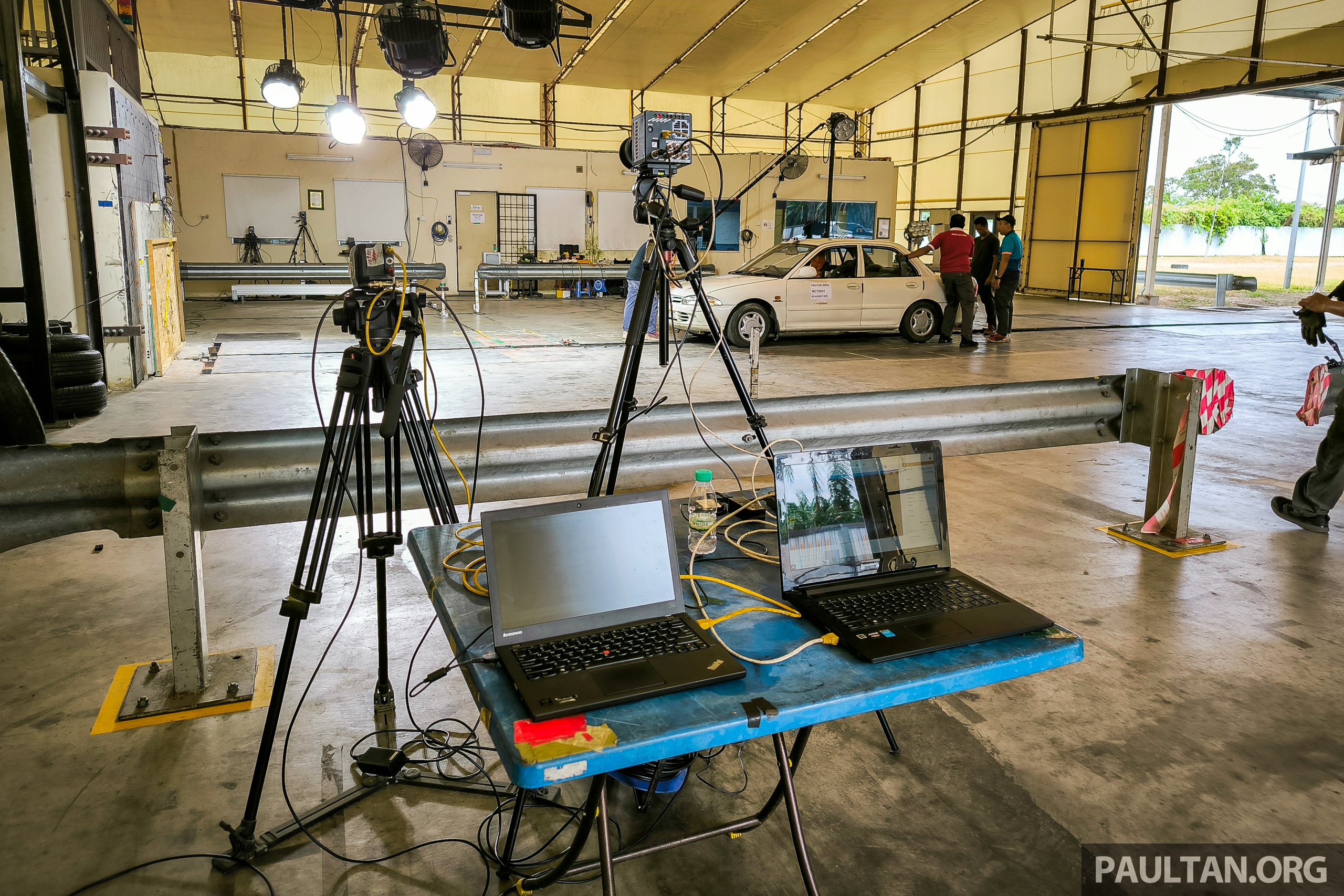
Here’s some background. This is not an official ASEAN NCAP test and there’s no rating to be earned, although we’re in the same facility in Ayer Molek, Melaka that hands out the stars and points we’re familiar with. The same high-speed cameras and lights, the same background, the same gear and the same wrecking crew, but with a vastly different subject.

They don’t make them like they used to? 1993 Proton Wira in NCAP-style crash test is a grim safety reminder
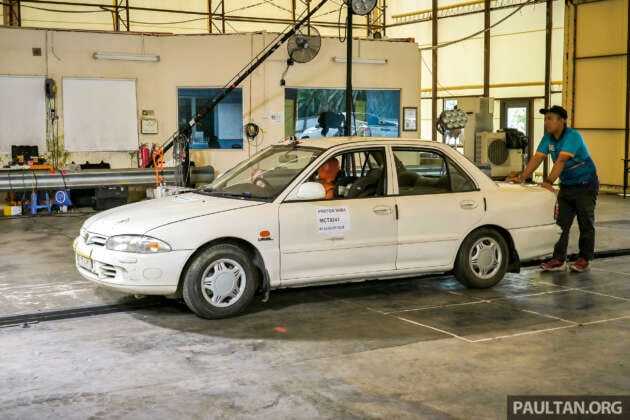
One that’s from the past. We have here a 1993 Proton Wira from the first batch of the super popular sedan based on the fourth-generation Mitsubishi Lancer. This white 1.5 GL was donated by Hezeri Samsuri, veteran motoring journalist and founder of Careta. Our friend purchased the Wira with the intention to restore it, but the man has way too many vehicles to work on/play with, and had a brilliant idea.

Crash it! He got in touch with Miros and here we are with a couple of other media outlets Hezeri invited to witness the death of a car in real time. He only has one Wira to give so there will only be one crash – the full frontal – instead of the usual front offset and NCAP’s gamut of tests. Also, we’re using the most basic of dummies (which are very costly things by the way), as the main intention is to show the damage to the car.

After a nervous wait from the viewing platform, we heard the countdown and then the sound of the Wira arrowing into the building at a recorded speed of 62 km/h (64 km/h is the norm). It hit the wall with a muted ‘doosh’ sound, creating a combustion of glass and trim.

They don’t make them like they used to? 1993 Proton Wira in NCAP-style crash test is a grim safety reminder

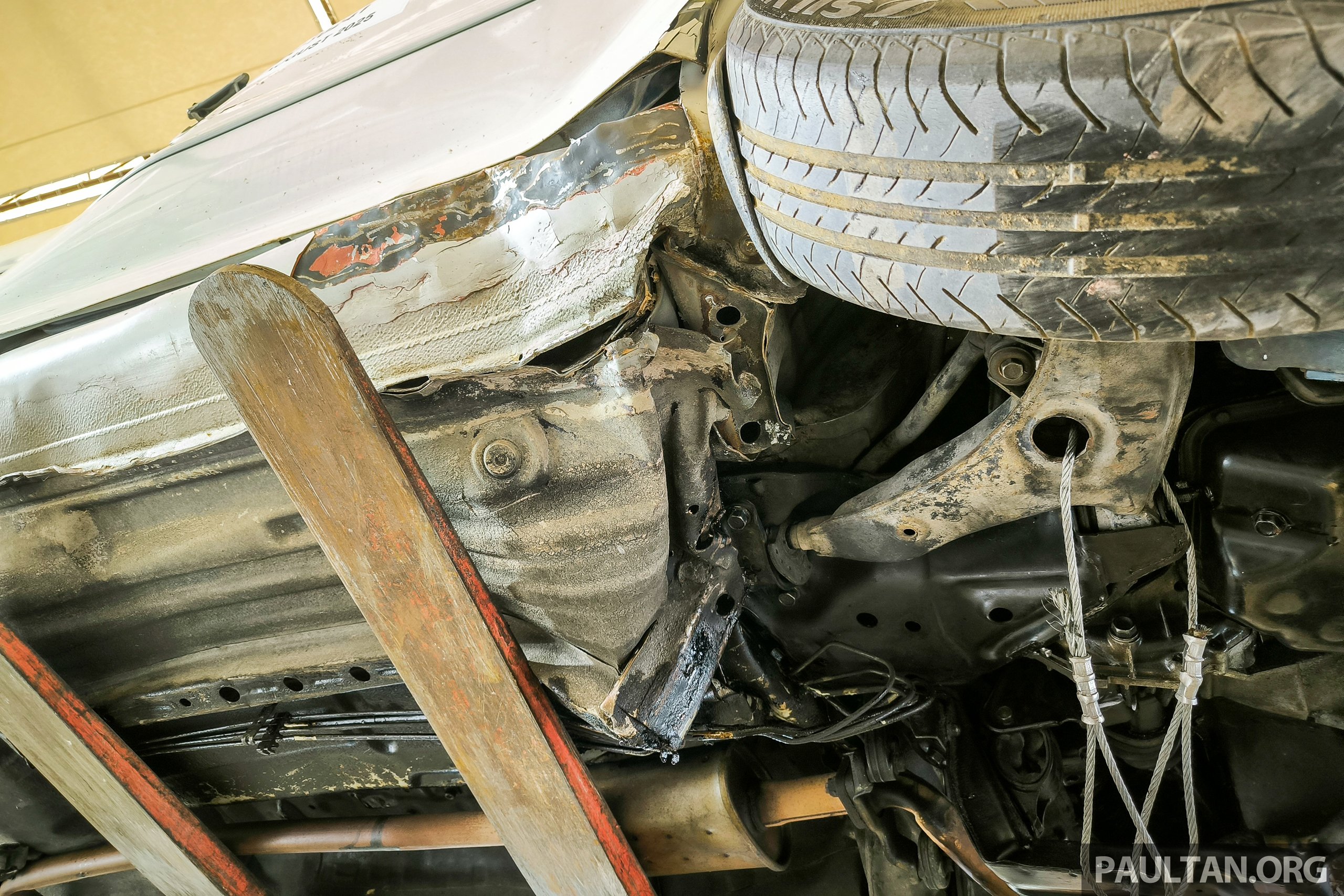
We rushed down to inspect the now-departed Wira (RIP, hero), and what immediately struck me wasn’t the completely crushed 1/3 of the three-box sedan, but the fact that the rest of the Proton – now minus the engine bay – appeared visibly shorter than the car that was alive moments ago.

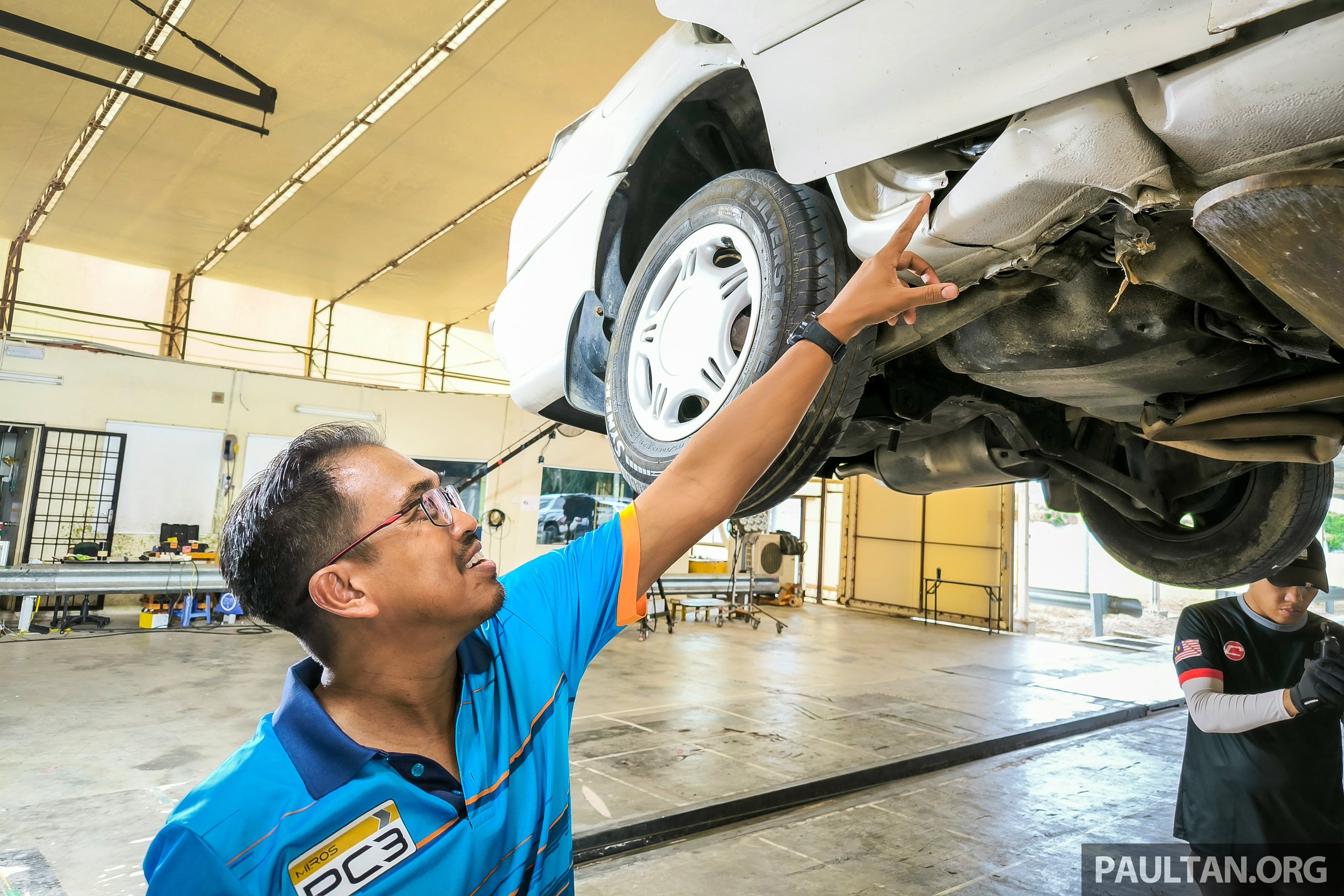
Perhaps not as pronounced in pictures, but the wheelbase of the sedan has been shortened, and the wrecked body appears slightly curved, like a Mercedes-Benz CLS. The crew later lifted the wreckage and pointed us to the broken weld points on the undercarriage.

This compression of the passenger cell has to be the biggest difference between a modern car and an older car built in the era where crash tests weren’t a thing. The engine bay of a modern car acts as a big crumple zone, designed to well, crumple upon impact, absorbing the energy of the crash, so to speak. Without this giant, actual ‘absorber bumper’ (remember the Nissan Sunny 130Y?) the massive energy is transferred to the cabin, as demonstrated by this Wira wreck.

They don’t make them like they used to? 1993 Proton Wira in NCAP-style crash test is a grim safety reminder

The safest cars on the road today are intact aft of the A pillars, which are reinforced to withstand the front offset crash test. The latter, where only one side of the car’s front end makes first impact, is a tougher test than the full frontal, where the impact is spread over a larger area. This is why you don’t see any A pillar damage here, but shocking scenes greeted us upon closer inspection.

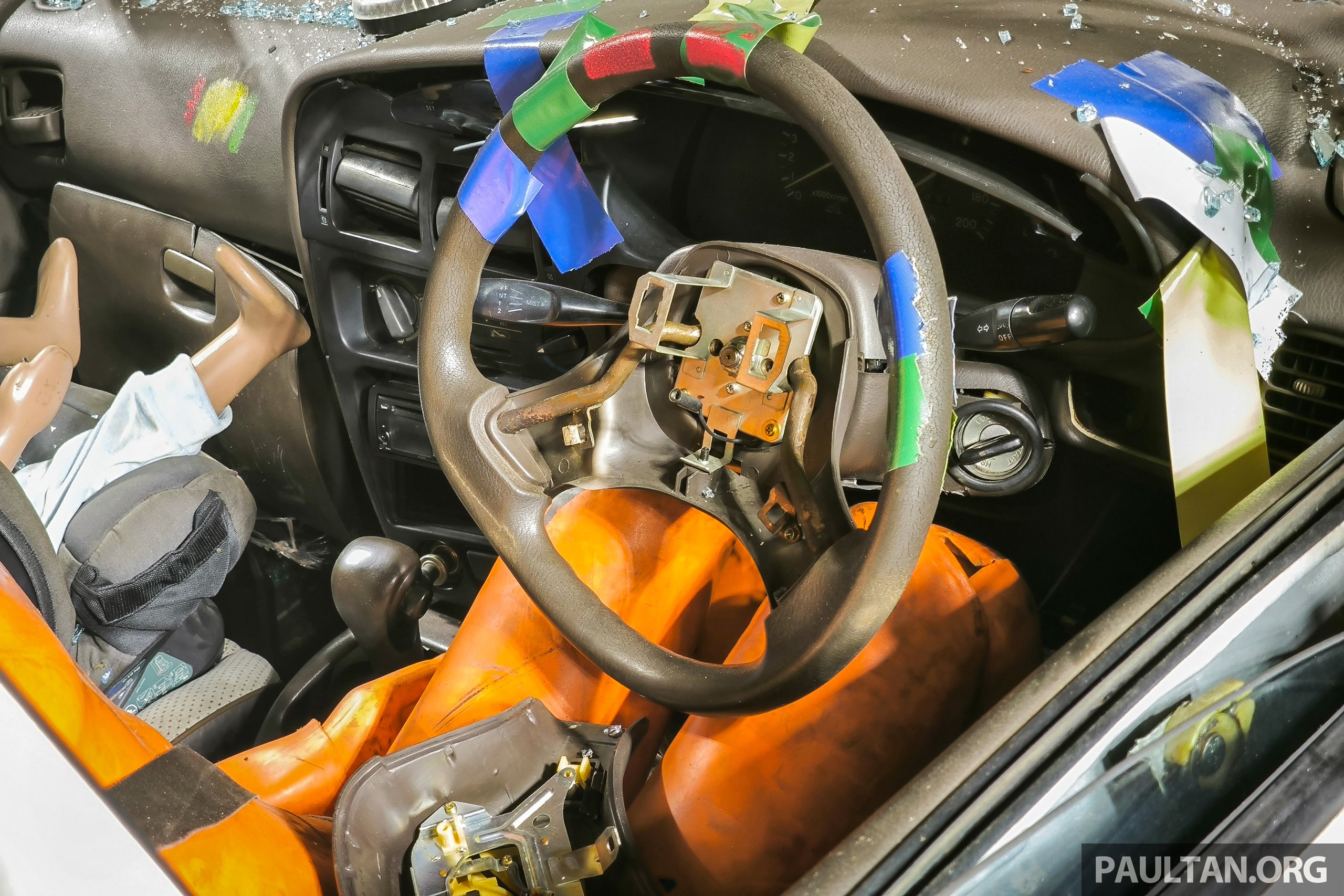
Without a crumple zone, the impact of the collision pushed the firewall – and dashboard – back into the cabin, drastically reducing what experts call the ‘cabin survival zone’. The adult driver dummy’s legs are pushed back to the seat base and his foot is flipped back towards his shin. The steering wheel is no longer round because the dented part ‘went into’ the dummy’s abdomen.

Possible impact areas were painted to literally highlight contact points with the dummy, and we see the colours on Mr Orange’s brow, nose and chin – with no airbag to cushion the blow, the dummy’s entire face collided with the stiff steering wheel. There’s also colour on the passenger side of the dashboard, which means that the head of the child – secured in a child seat – smacked the dash. Certain death if they were both human, we were told.

They don’t make them like they used to? 1993 Proton Wira in NCAP-style crash test is a grim safety reminder

The final nail in the coffin is that all four doors could not be opened by a crew of five grown men, who had tools and no shortage of experience with mangled cars. The compression of the passenger cell must have sealed the doors in place. If this was a real accident, it would be impossible for passers-by to help extricate the occupants before the bomba arrive with their Jaws of Life. The doors of modern cars are designed to be openable in the event of a crash.

Speaking of doors, if you happen to remember the side impact beams touted by Proton for the Wira (a new feature that wasn’t in the Iswara), they’re present – we peeked into the crevice and saw the horizontal metal tubes.

As confessed at the start, this wasn’t an easy story to write because quite a few of us love old cars here at paultan.org. PT BM colleague Farid drove to Melaka in a slammed Volvo 240 and yours truly’s previous two-door car was a Toyota MR2 three years older than the departed Wira. Many of us car guys have dream cars from that era, or at the very least, a fond memory of the family saloon that we grew up in. They don’t make them like they used to, right?

They don’t make them like they used to? 1993 Proton Wira in NCAP-style crash test is a grim safety reminder

Indeed! Today’s cars, even the most basic ones, were designed to meet modern crash safety standards that weren’t there in the 1990s, which means that even the Perodua Axia/Bezza or today’s Proton Saga – small and light as they are – will hold up better in a crash than old cars – there are no two ways about it.

And while we’re using the Wira as an example, it would be the same for a Honda Civic EG, Toyota Corolla SEG or any model from the era – the notion of ‘old cars are more solid’ or that they’re made of ‘harder steel’ is plain wrong.

Are we telling you then to ditch the old car and replace it with a fresh hire purchase loan ASAP? No, but if you can afford a modern car to serve as family transport, safety is always money well spent. If you’re keeping an old car for enthusiast or sentimental reasons, enjoy your old buddy responsibly with the realisation that its shell won’t offer much protection in a crash. Ensure that your brakes and tyres are in good condition and don’t take too much liberties. See the Wira’s death blow from all angles in the video below.

GALLERY: 1993 Proton Wira frontal crash test

GALLERY: Modern car wrecks at Miros PC3

Looking to sell your car? Sell it with Carro.


Source link