5.2 C
London
Tuesday, May 12, 2026
Home Blog Page 12

BYD’s Ridiculously Quick Charging Tech Just Hit Europe. But The Car Isn’t Cheap.

0
BYD’s Ridiculously Quick Charging Tech Just Hit Europe. But The Car Isn’t Cheap.


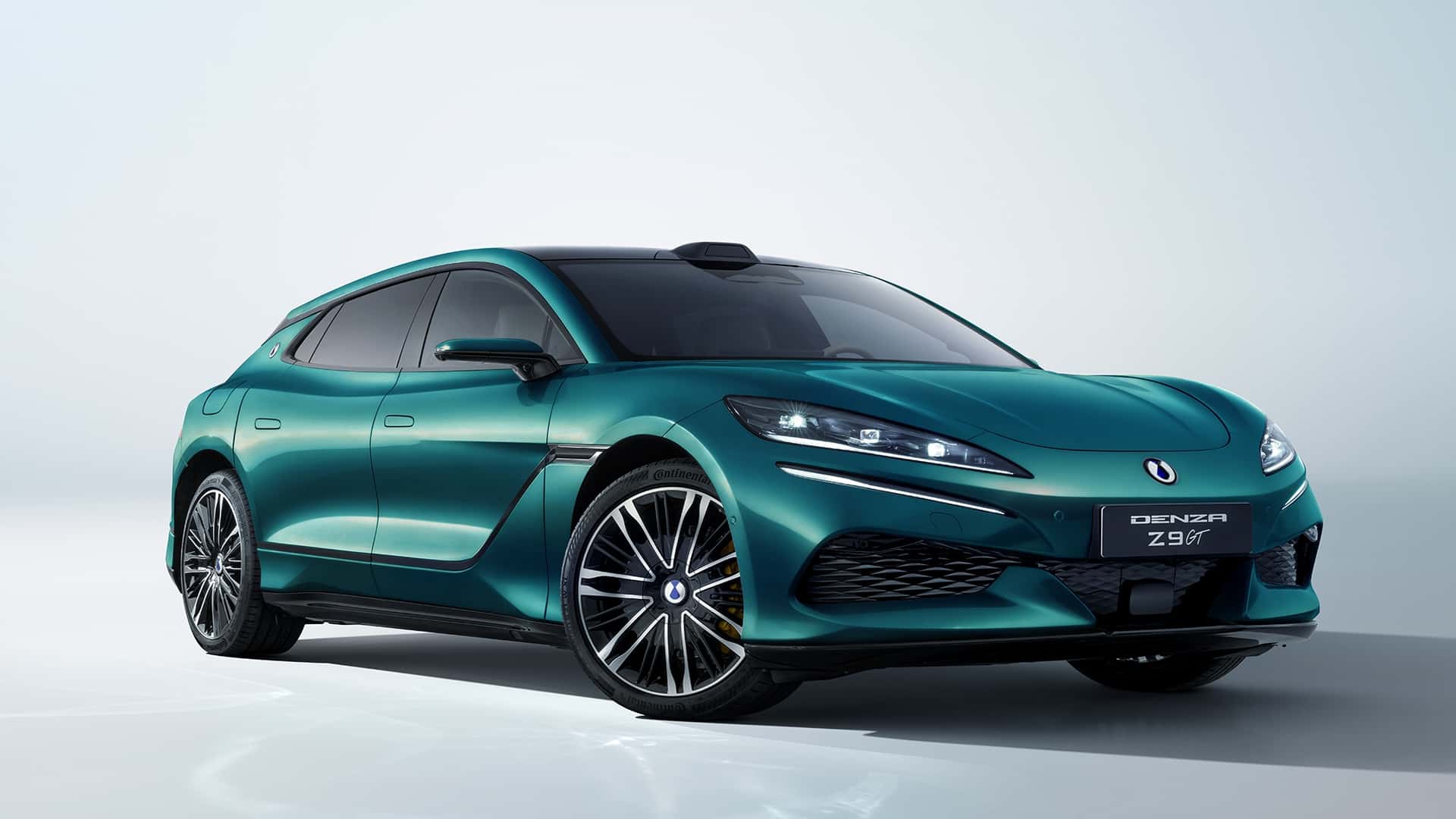
  • BYD launched the new Denza Z9GT in Europe. It’s the company’s first “Flash” charging EV in Europe. 
  • The sleek station wagon an recharge from 10%-80% in six-and-a-half minutes, and hit 97% in under 10 minutes. 
  • It costs 115,000 euros, more than a Porsche Taycan. 

Last year, BYD shocked the world when it announced its megawatt-capable “Flash” charging system, which could substantially recharge its latest and greatest cars in mere minutes. In March, China’s EV juggernaut followed that up with the second generation of those chargers, plus a new, faster-charging version of its Blade battery. The result: Blazing-fast charging performance that puts to rest, once and for all, the notion that refueling an EV will never measure up to filling a gas tank. 

Now that tech is making its way outside of China’s borders. On Wednesday at an event in Paris, BYD introduced its first vehicle capable of Flash charging to the European market. The new Denza Z9GT, a sporty station wagon from BYD’s premium brand, has charging times that put non-Chinese competitors to shame. But all that convenience doesn’t come cheap. 

The Z9GT starts at 115,000 euros—about $135,000 at current exchange rates—and is available to configure now across several European countries. A Porsche Taycan Sport Turismo costs 107,500 euros, so Denza is trying to go toe-to-toe with some of Europe’s most trusted high-end brands. While Chinese cars may seem cheap in their home market—the Z9GT costs under $50,000 in China—those bargain-bin prices don’t hold when the cars are exported to countries with higher incomes, tariffs, and the like. 

That six-figure outlay does buy you a whole lot, however. BYD says the Z9GT, equipped with its latest lithium iron phosphate (LFP) battery pack, can recharge from 10%-70% in five minutes and from 10%-97% in nine minutes. Even at -30 degrees Celsius, an environment where EV charging tends to slow to a crawl, the Z9 can recharge from 20%-97% in 12 minutes. 

These are astonishing figures, especially when compared to what is available in the United States. The norm for a 10%-80% charge here is 25-40 minutes. Some of the best performers, like the Taycan or Hyundai Ioniq 5, can manage that around 20 minutes. The Lucid Gravity, one of America’s quickest-charging cars, can charge at 400 kilowatts and add 200 miles of EPA-rated range in about 11 minutes.


It’s one thing to read the Z9GT’s numbers on a screen; it’s entirely different to actually watch the car’s battery level tick up at a previously unthinkable clip. BYD demonstrated the Denza’s charging performance at an event for European media this week. And according to one video from Felix Hamer (see above), the Z9GT nailed all of BYD’s big claims pretty much dead-on. Starting from a 10% state of charge, the wagon reached: 

  • 20% in 50 seconds
  • 33% in 1 minute 50 seconds
  • 40% in 2 minutes 30 seconds
  • 50% in 3 minutes 18 seconds
  • 60% in 4 minutes 20 seconds
  • 70% in 5 minutes 20 seconds
  • 80% in 6 minutes 32 seconds
  • 90% in 8 minutes
  • 95% in 9 minutes
  • 97% in 9 minutes 22 seconds

At the start of the session, the EV recouped about 10% of its state of charge every 50 seconds. In the middle, it managed about 10% every minute. Charging tends to slow down considerably after 80%, to manage heat and adverse impacts to battery health. But the Denza kept chugging along at 90% and beyond. (In the same video, Hamer takes the Denza to a different charging station and is amazed that it maintains a 300 kW charging rate even at an 80% state of charge). 


BYD Yangwang U7 And Denza Z9 GT at Flash Charger

A BYD Yangwang U7 And Denza Z9 GT at one of the company’s new Flash charging stations. 

Photo by: BYD

Remember that the Z9GT has a large, 122.5-kilowatt-hour battery. So this five- or 10-minute stop should yield a significant amount of driving range. BYD says the souped-up tri-motor version will offer a 600-km (373-mile) WLTP range, and that a rear-wheel-drive variant will have 800 km (497 miles) of range. (For the Americans out there, remember that WLTP figures tend to be a bit higher than the EPA numbers we’re most familiar with.)

That ultra-quick charging is nothing without stations that can supply the necessary power. BYD plans to build out 3,000 Flash charging stations across Europe in the next 12 months, the company’s head of charging for the region told Automotive News.

The novel, T-shaped charging hardware suspends the bulky cables so they are easier to handle and can’t fall to the ground. The charging plug can also reach either side of a vehicle easily thanks to the design. The stations utilize both grid power and stationary storage batteries—also made up of LFP Blade cells—to deliver up to 1.5 MW through one cable. BYD says it has already installed 5,000 of the stations in China. 

The European-spec Z9GT also claims a 2.7-second sprint to 62 mph. It has a refrigerated compartment for drinks. It has digital side-view mirrors. And it can swivel its rear end into a tight parking spot by spinning its back wheels in opposite directions. Those party tricks could help the Z9GT do battle with Porsche and the like. But Flash charging is its biggest differentiator.

Charging out in the wild is a top concern for EV buyers on the fence, especially those who can’t plug in at home. Ten-minute charging, even if it’s overkill for a person’s day-to-day, could go a long way toward calming those fears. And while the privilege may cost a lot now, history shows that the technology will probably trickle down over time. 

Contact the author: Tim.Levin@InsideEVs.com 


Source link

How Stable BMW Group Earnings Shape the Brand’s Future

0
How Stable BMW Group Earnings Shape the Brand’s Future


At first glance, BMW Group’s latest earnings announcement looks like a familiar piece of corporate housekeeping. Revenue figures, margins, and cautious guidance dominate the headlines. Yet underneath the spreadsheets is a deeper story about the BMW brand itself and how it plans to navigate one of the most disruptive periods in automotive history.

BMW Group reported earnings before tax of more than €10 billion for 2025, maintaining an automotive EBIT margin of roughly 7.7 percent despite tariffs, economic uncertainty, and a rapidly shifting global market. Those numbers matter not simply because they are large, but because they represent something rare in today’s auto industry: stability. For the BMW brand, that stability is not accidental. It is the direct result of a deliberate strategy that has prioritized flexibility over dramatic pivots.

While several competitors have rushed headlong into all-electric lineups, BMW has chosen a more measured path. The company continues to invest heavily in electric vehicles while simultaneously refining internal combustion and hybrid powertrains. Executives often describe this as a technology-open approach, a phrase that sounds bureaucratic but carries a practical meaning. BMW intends to offer multiple propulsion technologies and allow markets, regulations, and customers to determine the pace of the transition.

That strategy has shaped nearly every modern BMW product. Today the brand sells fully electric models such as the i4 and iX alongside plug-in hybrids and traditional combustion vehicles. Rather than isolating electric vehicles as a separate experimental branch, BMW has integrated electrification into the core of its lineup. In practice, that means buyers can choose an electric drivetrain without abandoning the design language or driving characteristics associated with the brand.

This flexibility has also allowed BMW to avoid one of the biggest risks currently facing the industry: committing too early to a single technological outcome. Electric vehicle adoption is growing, but the pace varies dramatically by region. Europe is accelerating, the United States is progressing unevenly, and China has become fiercely competitive with domestic EV manufacturers reshaping the market. A rigid strategy built around a single propulsion technology can quickly become a liability in such an environment.

BMW’s approach spreads the risk. By maintaining multiple powertrain options, the company can adapt production and product mix as market conditions evolve. That adaptability is becoming increasingly valuable as governments adjust emissions regulations, trade tensions reshape supply chains, and consumer preferences remain difficult to predict.

Tariffs and geopolitical pressure have already begun influencing the global auto industry. Trade disputes between Europe, China, and the United States are affecting the economics of electric vehicle production and export. For BMW, which operates a global manufacturing network stretching from Germany to South Carolina and China, these pressures require constant recalibration. A strategy built around flexibility allows the brand to shift production and sourcing more easily than a system locked into one technological direction.

Financial discipline plays an equally important role. Maintaining a solid profit margin while investing heavily in electrification requires careful cost management and an unwavering focus on scalable platforms. BMW’s Neue Klasse architecture, scheduled to debut soon, represents the next phase of this strategy. It is designed specifically for electric vehicles but incorporates lessons learned from the company’s existing multi-powertrain platforms. The goal is to combine efficiency, digital capability, and driving dynamics in a structure that can support BMW’s next generation of vehicles.

The Neue Klasse project signals how BMW sees the future of the brand. Electrification will become increasingly central, but it will be introduced in a way that preserves the qualities that have historically defined BMW. Engineers frequently emphasize that electric BMWs must still deliver the precise steering, balanced chassis behavior, and driver engagement that built the brand’s reputation. The challenge is translating those attributes into a world dominated by batteries, software, and digital interfaces.

Design is evolving as well. BMW’s recent vehicles reveal a shift toward simplified surfaces, digital interiors, and advanced user interfaces that place software at the center of the driving experience. Large curved displays, over-the-air updates, and increasingly sophisticated driver assistance systems are becoming standard features. These technologies are not simply aesthetic changes. They reflect a broader transformation in how cars are engineered and experienced.

Yet even as BMW embraces digitalization and electrification, the brand continues to emphasize its heritage as a performance-oriented manufacturer. The core identity built around driver engagement remains a guiding principle. This balancing act between tradition and innovation defines the company’s strategy today.

The significance of BMW Group’s stable earnings becomes clear when viewed through this lens. Financial resilience gives the brand something many competitors currently lack: room to maneuver. Rather than rushing products to market or abandoning previous technologies prematurely, BMW can develop its next generation of vehicles with a degree of patience.

That patience may prove to be one of the brand’s greatest strengths during the industry’s current transformation. Automotive history is filled with examples of companies that chased technological revolutions too aggressively or resisted them for too long. BMW’s strategy attempts to avoid both extremes. It is neither a sprint toward electrification nor a stubborn defense of the past.

Instead, it is a controlled transition shaped by engineering discipline, financial stability, and a willingness to adapt as the market evolves. If the company’s recent results are any indication, that strategy is working. For the BMW brand, the path forward is not defined by a single breakthrough moment but by a steady sequence of calculated moves that gradually reshape what the Ultimate Driving Machine will mean in the electric age.


Source link

2026 Honda Vario 125 Street in Malaysia, RM7,468

0
2026 Honda Vario 125 Street in Malaysia, RM7,468


2026 Honda Vario 125 Street in Malaysia, RM7,468

Now in Malaysia is the 2026 Honda Vario 125 Street scooter, priced at RM7,468. Previously retailing at RM7,268 in 2025, pricing does not include road tax, insurance or registration and two colour schemes are offered – Purple and White, with every Vario coming with a two-year or 20,000 km warranty against manufacturing defects.

Some upgrades in the chassis and engine for the Vario 125 Street, with a redesigned swingarm that is 10% lighter, while the L-cover and duct for the engine is now 11% lighter. LED lighting is now used throughout, with the new LED headlight featuring a 10% longer throw for the high beam, while the tail light gets a new ‘V’ shape.


Also new is the naked handlebar paired with a floating, separated digital speedometer, a design inspired by adventure style scooters. No changes otherwise in the specification for the Vario 125 Street in Malaysia, while stocks are expected in authorised Boon Siew Honda dealer showrooms beginning May 2026.

Motive power comes from a liquid-cooled single-cylinder mill displacing 125 cc and producing 11.5 hp at 8,500 rpm and 11.74 Nm of torque at 5,000 rpm, certified as an Energy Efficient Vehicle (EEV) with a three-star Malaysia Motorcycle Assessment Program (MyMAP) rating. Power goes through the rear wheel via CVT gearbox and belt drive to the rear wheel.

2026 Honda Vario 125 Street in Malaysia, RM7,468

Suspension for the Vario 125 Street is done with telescopic forks in front and single shock absorber in the rear adjustable for spring preload. As for braking, the Vario 125 gets a single hydraulic disc on the 14-inch front wheel, with a mechanical drum brake on the similarly sized 14-inch rear wheel, with combined braking system and parking brake lock.

Riding conveniences include a smart key system and USB charging socket for the rider’s electronics, while an 18-litre compartment is found under the street. The Vario 125 Street weighs in at 113 kg, with 5.5-litres of fuel in the tank, while seat height is set at 769 mm.


Source link

Why You Should Visit the Parc Animalier Des Pyrénées

0
Why You Should Visit the Parc Animalier Des Pyrénées


Why You Should Visit the Parc Animalier Des Pyrénées – Heath & Alyssa %

/* Error on https://heathandalyssa.com/wp-content/uploads/siteorigin-widgets/sow-button-flat-3dc4afe7d3e0.css?ver=6.9.4 : Invalid file path – outside allowed directory */


/* Error on https://heathandalyssa.com/wp-content/uploads/siteorigin-widgets/sow-button-flat-d94165862126.css?ver=6.9.4 : Invalid file path – outside allowed directory */

Home » Travel » Why You Should Visit the Parc Animalier Des Pyrénées

Manage consent


Source link

TSLA stock slides, Supercharger prices, and who’s REALLY behind Elon’s big chip fab

0
TSLA stock slides, Supercharger prices, and who’s REALLY behind Elon’s big chip fab


On today’s Tesla-tastic episode of Quick Charge, a TSLA bear thinks the stock is headed for a 60% slide before the year is out, Tesla launches a Supercharger configurator, and we find out what’s really going on at Elon’s proposed chip fab.

We also take a look at the NHTSA investigation into 159 incidents involving Tesla’s Actually Smart Summon (ASS) parking feature, and ask whether or not the Supercharger wholesale model will be able to stand up to increasing pressure from other EVSE manufacturers.

Prefer listening to your podcasts? Audio-only versions of Quick Charge are now available on Apple Podcasts, Spotify, TuneIn, and our RSS feed for Overcast and other podcast players.

New episodes of Quick Charge are (allegedly) recorded several times per week, most weeks. We’ll be posting bonus audio content from time to time as well, so be sure to follow and subscribe so you don’t miss a minute of Electrek’s high-voltage podcast series.

Advertisement – scroll for more content

Got news? Let us know!
Drop us a line at tips@electrek.co. You can also rate us on Apple Podcasts and Spotify, or recommend us in Overcast to help more people discover the show.


If you’re considering going solar, it’s always a good idea to get quotes from a few installers. To make sure you find a trusted, reliable solar installer near you that offers competitive pricing, check out EnergySage, a free service that makes it easy for you to go solar. It has hundreds of pre-vetted solar installers competing for your business, ensuring you get high-quality solutions and save 20-30% compared to going it alone. Plus, it’s free to use, and you won’t get sales calls until you select an installer and share your phone number with them. 

Your personalized solar quotes are easy to compare online and you’ll get access to unbiased Energy Advisors to help you every step of the way. Get started here.

Add Electrek as a preferred source on Google

FTC: We use income earning auto affiliate links. More.


Source link

BMW iX5 Hydrogen Gets New Flat Tank System, Range Up to 750 km

0
BMW iX5 Hydrogen Gets New Flat Tank System, Range Up to 750 km


Article Summary

  • The new Hydrogen Flat Storage system consists of seven carbon-fibre reinforced chambers connected as a single unit, storing at least 7 kg of hydrogen and filling in under five minutes.
  • The flat design is compatible with the Gen6 battery floor package, allowing the iX5 Hydrogen to share a production line with all five X5 drivetrain variants.
  • BMW is targeting 2028 to bring the iX5 Hydrogen into wider production, paired with the latest Gen3 fuel cell technology.

BMW has developed a new hydrogen storage system for the iX5 Hydrogen that pushes range up to 750 kilometers (385 miles) and does it without giving up any cabin space. The company calls it the Hydrogen Flat Storage system, and it replaces the previous arrangement of separate cylindrical pressure vessels with something considerably more compact.

Instead of separate cylindrical pressure vessels — which is how most hydrogen cars have done it — there are now seven chambers built from carbon-fiber reinforced composite, all joined together in a single enclosed unit with one central valve. They sit in a metal frame and are rated to 700 bar. Total capacity is at least seven kilograms of hydrogen. Fill time from empty is under five minutes.

A New Tech Design

BMW HYDROGEN TANKS 01

The flatter, more integrated shape is the whole point. It lines up with the same floor geometry BMW uses for the Gen6 high-voltage battery, which means the hydrogen drivetrain fits into the X5 platform without eating into the cabin or the boot. According to BMW, the rear passengers don’t lose legroom and the cargo area shouldn’t suffer from it.

Dr. Joachim Post, the board member responsible for development, described the packaging challenge as “installation Tetris.” If you recall, BMW is building the new X5 in five different powertrain configurations — full electric, plug-in hybrid, conventional combustion, mild hybrid, and now hydrogen — all on the same production line. For that to work, every variant has to fit within the same dimensional envelope.

BMW HYDROGEN TANKS 00

On the powertrain side, the iX5 Hydrogen gets the latest Gen3 fuel cell, which is more efficient and more powerful than the unit in the current model. It’s paired with a high-voltage battery, and the whole system runs through BMW’s Heart of Joy chassis software and Dynamic Performance Control. BMW says the driving experience is meant to be indistinguishable from any other X5 in the range, which has always been the harder part of the hydrogen argument to make convincingly.

BMW is targeting 2028 to bring the iX5 Hydrogen into its broader production network. The current generation has been running in a limited pilot fleet — mostly in Europe and California — so 2028 represents the first real move toward something people can actually buy. Whether the hydrogen refueling infrastructure keeps pace with that timeline is a separate question, and a harder one to answer.


Source link

Reuters: Stellantis, Leapmotor in talks to build Opel EV

0
Reuters: Stellantis, Leapmotor in talks to build Opel EV


Stellantis weighs using Chinese technology to defend a German brand against the Chinese brands that are threatening it. By Stewart Burnett

Stellantis is reportedly in advanced talks with Leapmotor to jointly develop an Opel-branded electric SUV using the Chinese automaker’s platform, with production expected to take place at the company’s joint plant in Zaragoza, Spain in 2028. Sources told Reuters that the project, codenamed O3U, would share architecture with the Leapmotor B10 compact SUV, which will enter production at Zaragoza later this year.

Under the terms being discussed, Leapmotor would supply electronic and electrical architecture and key components while Opel handles the vehicle’s exterior design. A significant portion of development would take place in China. An agreement could be reached as early as this month; if successful then around 50,000 units could be produced annually at the Spanish facility.  

Several conversations are reportedly ongoing between the two automakers; the O3U project is only the most advanced among them. Stellantis is also looking to engage Leapmotor for the next-generation Opel Mokka B, and has held preliminary discussions about an Alfa Romeo model based on the same architecture. 

Early-stage talks on A-segment models for brands including Fiat are also under way, although those would require different production infrastructure. Historically, Fiat branded cars are produced in Mirafiori, Italy, and local unions have pushed back extensively on any outsourcing of manufacturing to other regions like Serbia.

For those following Stellantis’ strategic pivot over the last few months, the Leapmotor discussions should slot comfortably alongside other developments. The automaker took a US$26.5bn writedown earlier in 2026 related to scaling back its electrification plans, having concluded that its in-house STLA platforms were too expensive for the mass market. Beyond electric vehicles (EVs), this pullback also led to the cancellation of the SAE Level 3 Autodrive programme.

The merits of leaning on Leapmotor, under such circumstances, are straightforward. As it stands, Stellantis holds approximately a 20% stake in the Chinese brand through a partnership formed in 2023. Developing vehicles alongside it would, in theory, offer faster development cycles and lower engineering costs than could be achieved by Stellantis alone. 

Opel forms a core part of Stellantis’ European strategy, accounts for around 21% of Stellantis’ European sales, with Germany as its largest single market. The brand dropped its target of going fully electric in Europe by 2028, and the Leapmotor deal provides a route to competitive EV pricing—targeting sub-€25,000 (US$29,250) and sub-€30,000 segments—that its internal development costs had made unviable. Exterior design and driving calibration will remain in Rüsselsheim; the underlying technology will not.

Whether European consumers will accept that arrangement is the open question. Opel has marketed itself on German engineering credentials for decades; the O3U will carry German styling over a Chinese platform developed largely in China. Stellantis is, in effect, using Chinese technology to defend Opel against the Chinese brands that have been eroding its market.


Source link

Charged EVs | Foxconn’s Pan-International invests €35.5M in Belgian axial flux motor maker Magnax

0
Charged EVs | Foxconn’s Pan-International invests €35.5M in Belgian axial flux motor maker Magnax


Pan-International Industrial Corp, a member of the Foxconn Group, along with Foxconn and incoming management co-investors, will invest €35.5 million in Belgian motor company Magnax. Pan-International will become Magnax’s largest shareholder following FDI approval and transaction completion.

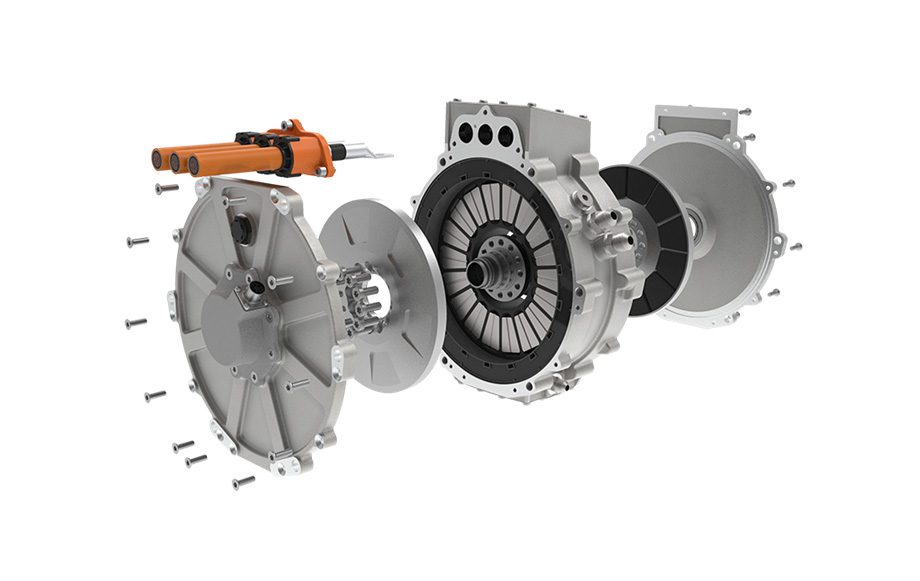
Magnax develops yokeless axial flux motors—a topology where magnetic flux runs parallel to the rotation shaft rather than radially outward, enabling a shorter, flatter form factor with higher torque and power density than equivalent radial flux machines. Removing the iron stator yoke further cuts weight and reduces core losses. Founded in 2015 and previously backed by €29 million across two earlier rounds, the company has 30 engineers in Belgium and operates Traxial, a subsidiary focused on e-mobility. Target markets include electric vehicles, industrial drives, robotics, machine automation and aerospace.

MORE: A closer look at axial flux motors

The new capital funds industrialization and high-volume production. Magnax’s headquarters and R&D stay in Belgium; volume manufacturing will be built in China using the Foxconn Group’s supply chain infrastructure and customer access. A new CEO from China with extensive international industrial experience will lead the commercial scaling phase.

“Axial flux motors have a fundamentally better value proposition in several high-performance use cases,” said Peter Leijnen, cofounder of Magnax. “Their high torque density and efficiency enable customers to reduce weight and size of their end products. Lower material usage and higher efficiency translate directly into lower system cost and reduced carbon emissions.”

“With Foxconn’s manufacturing scale and industrial ecosystem, Magnax gains the operational foundation required to deploy axial flux motor technology across global markets,” said Daan Moreels, cofounder of Magnax.

Source: Magnax


Source link

Riding for the year can begin!

0
Riding for the year can begin!


End at 64,938 (22 miles)

Checked the oil – good – and aired up the tires.

As of her PT appointment yesterday, my wife is cleared to drive. She still has to wear the boot for walking & general protection, but she can switch to a shoe for driving. We’ll go to the high school’s big parking lot on Sunday so she can practice a bit. I’m sure she’ll be fine. Now we have to get new tires on her car and get it inspected, then she’s all set. Met Kermit for lunch in Ashland. He’s still not allowed to ride after his shoulder surgery. I know he hates not riding, especially since he’s decided to retire.

The ride wasn’t long, but I’m staying off the freeways, so everything takes more time and more planning. I was out about five hours, but we’re in spring pollen season, so the bike was covered in a layer of that yellow shit after just a couple hours of being parked at the track.

We went to the flat track races there in Ashland. Watched practice sessions, qualifying and a few races before I had to leave. I neglected to bring a clear face shield for my helmet. Bad choice. Kermit said the racing got better after I left.

The bike is running GREAT since the upgrades we made to the ignition system. Really great. Sounds weird though—I can hear the thing on the end of the crankshaft whirring! (or at least I think I can) The bike is STILL a giant pain in the ass to start though, so obviously we didn’t fix that problem. I suggested a thorough carb clean to George; he countered with a full rebuild. Said it’s likely the O-rings, diaphragm, etc. are tired and worn out. Jets probably dirty too, and I guess it could probably use new gaskets and floats. About $300 for all the parts from EME—more money!

To get the bike to start, I have to have it on full choke, then goose the throttle (not too much) when it starts to catch. As soon as it barely starts to idle, I have to back off the choke to half, but use the throttle to keep the idle steady. Since the choke affects the air flow, I think George may be right about the rubber bits being bad (or worn at least) in the carbs.

After a giant rainstorm Sunday night into Monday morning, it’s cooled back down to the upper 40s and lower 50s. Good riding weather! Now that she can drive to work, it feels like my year of riding the Airhead can really get started. That sounds like I’ve been waiting—I haven’t, it’s just one of those things you do after 30 years of marriage. It’s not like spending 30 minutes in the car with her twice a day is torture; we listen to Were You Raised By Wolves and chat about Chad and Lisa and it’s been great having her home more and spending more time with her. I’m just ready to ride at will without having to plan, arrange for rides, etc. I’m sure she understands—I’ve been talking her ear off about this bike since November, after all!

Pollen!

AN ASIDE

Written while reading The Revenge of Analog, by David Sax (I liked this book so much I bought a copy so I could write in it instead of the one I checked out from the library!)

Is the current crop of high-tech motorcycles just another entry in throwaway consumer culture? Will a 2025 R 1300 GS or KTM 1290 or Harley-Davidson Ultra Glide still be viable to ride in 2075? The R 90/6 probably will be. It’s like a roach—impossible to kill as song as somebody somewhere still makes ball bearings and oil seals. But the computers powering a 2025 Indian cruiser will one day be obsolete, all the programmers will die and thus their useful life will have tome to an ignominious end. Mechanically viable but unable to function because nobody can crack the proprietary code on a 50- or 75-year-old ECU that manages fuel dispersion, airflow, traction control and antilock brakes.

A vintage bike is a social tool. You will require help at some point, and most likely you’ll be able to find someone to offer assistance.

END OF ASIDE


Source link

Lamborghini Revuelto Miura Edition may debut in August

0
Lamborghini Revuelto Miura Edition may debut in August


Lamborghini has four new models planned for 2026. We will witness the rollout of cars at regular intervals starting in May. Today, we are going to talk about a special edition, which is likely to be revealed at Pebble Beach in August.

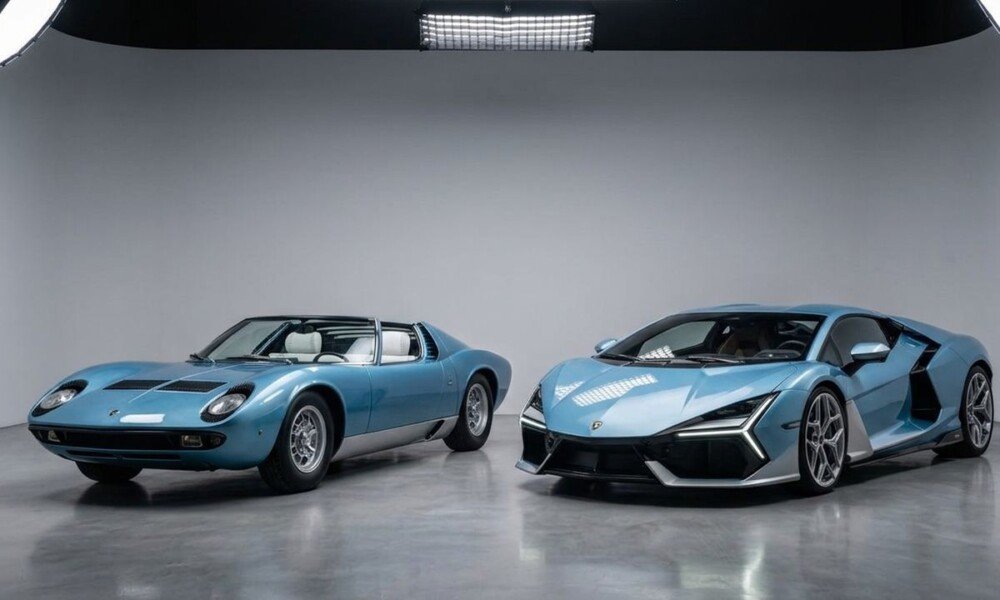
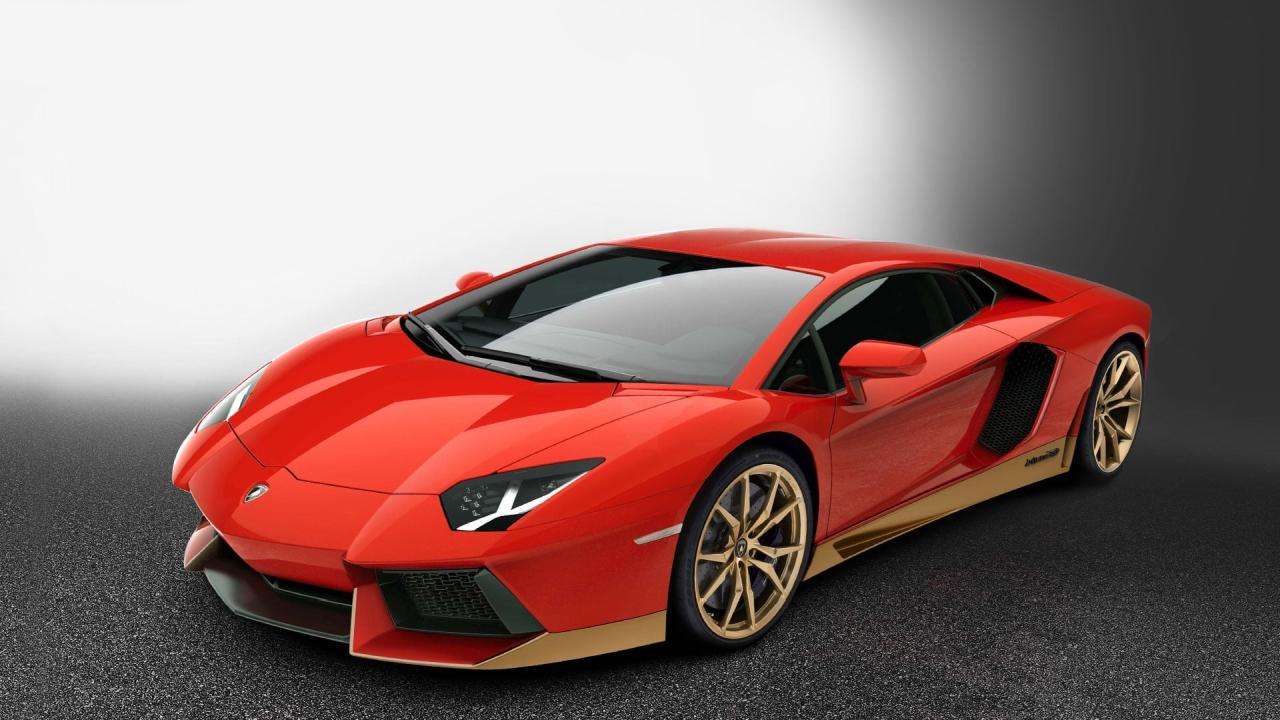
We’ve heard that Lamborghini is planning a Miura homage similar to the Aventador Miura Edition from 10 years ago. This time, it will be based on the Revuelto, obviously.

Lamborghini Aventador Miura Edition-1

The new Revuelto Miura Edition might feature a two-tone exterior just like the Miura. Besides, we might see a few other unique design bits inspired by the original. The interior might feature some retro elements with special upholstery and special edition badges.

Rumours suggest that Lamborghini plans to build 60 examples of the Revuelto Miura Edition. It is expected to be priced higher than the standard Revuelto.

But that’s not the only car that will be presented in August. Another special Revuelto is on the cards. We shall discuss it in a separate post.


Source link