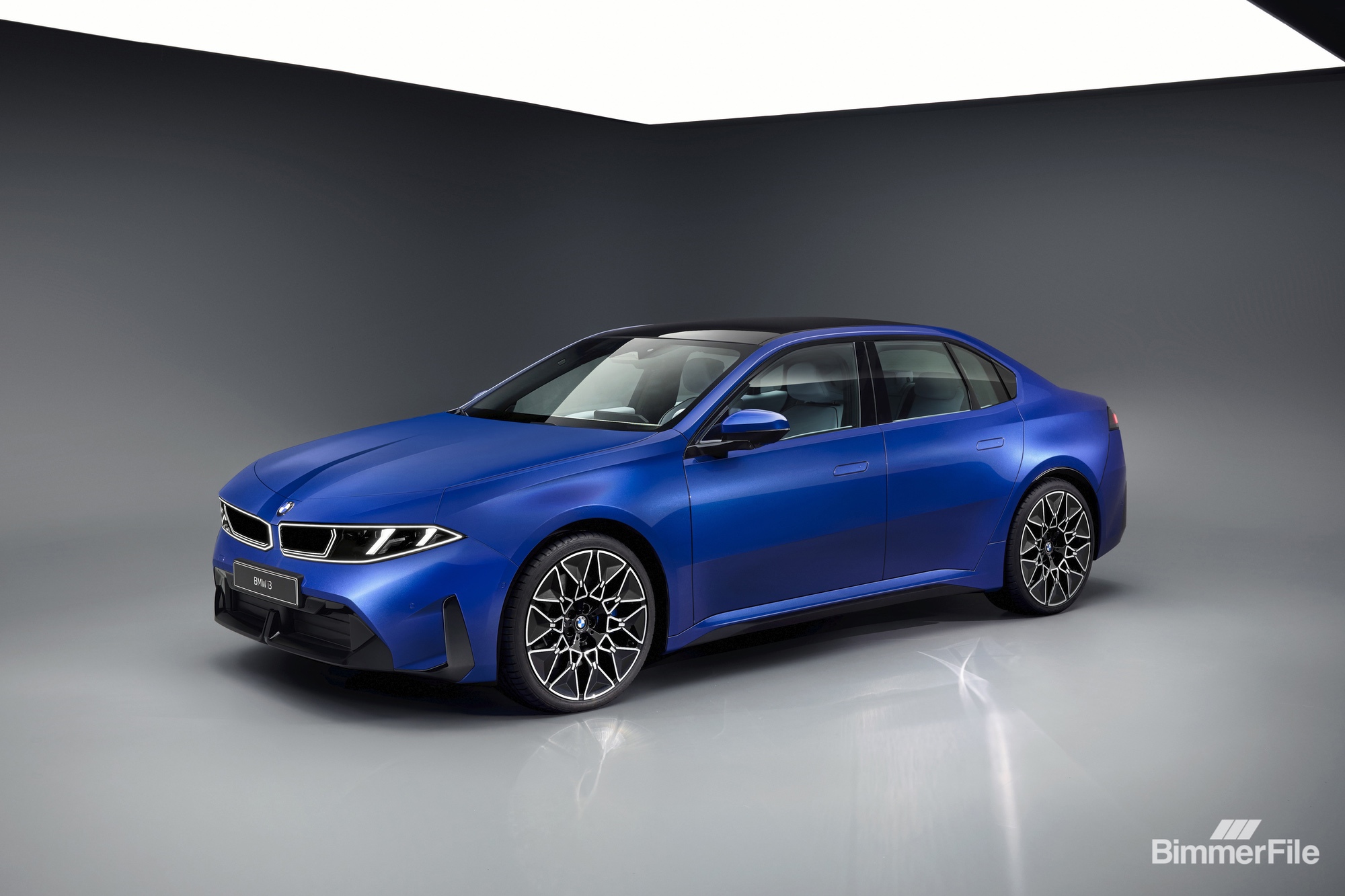
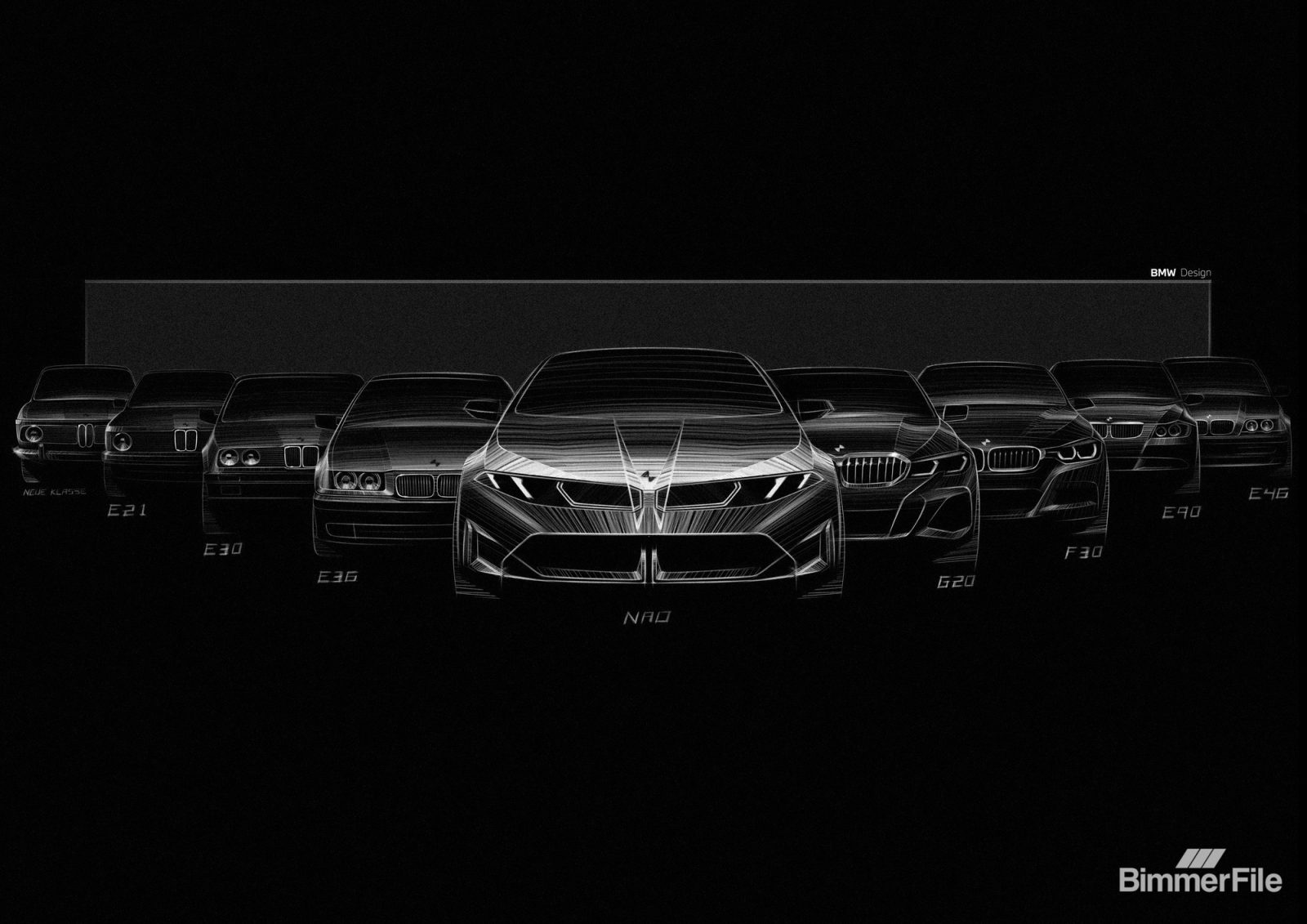
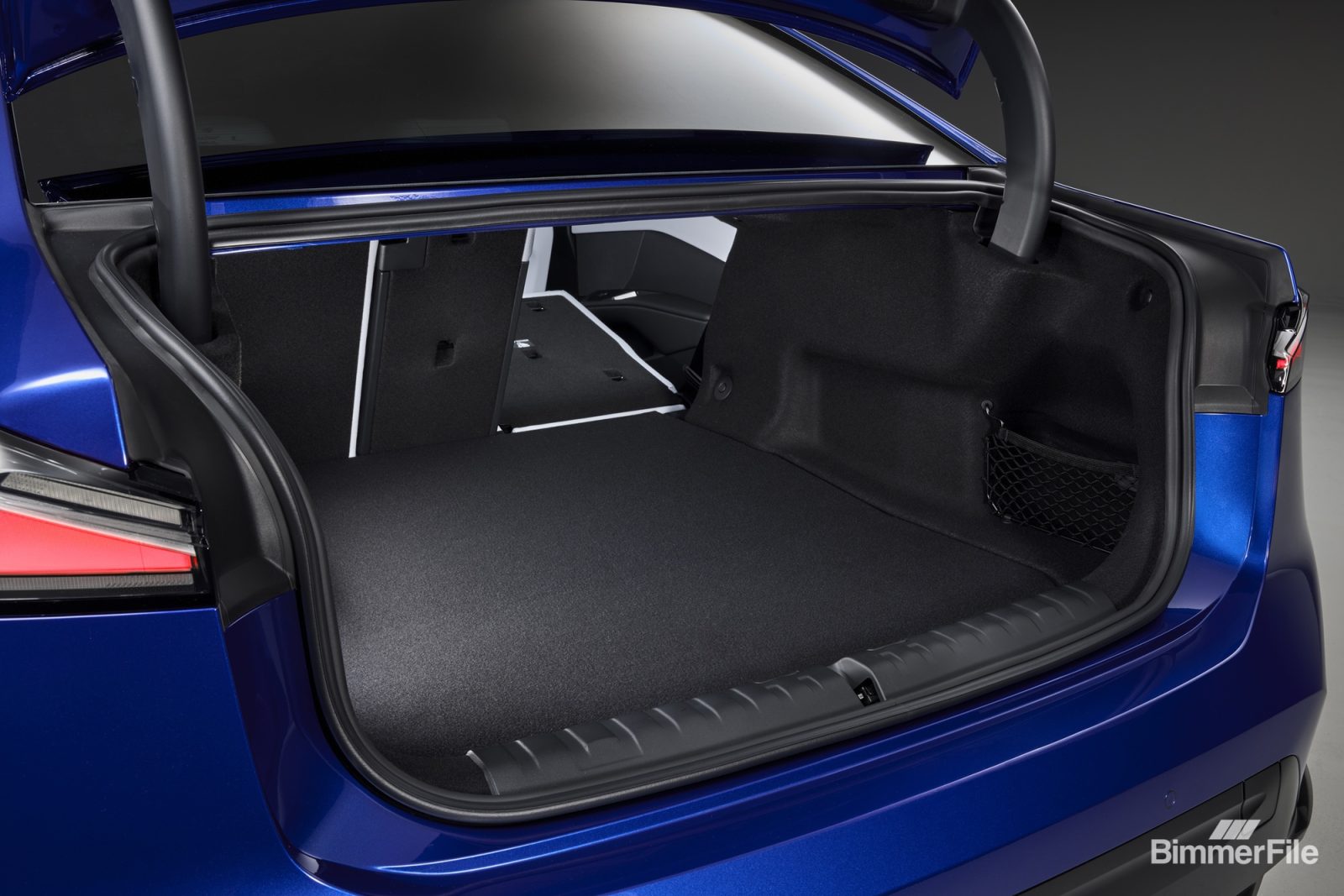
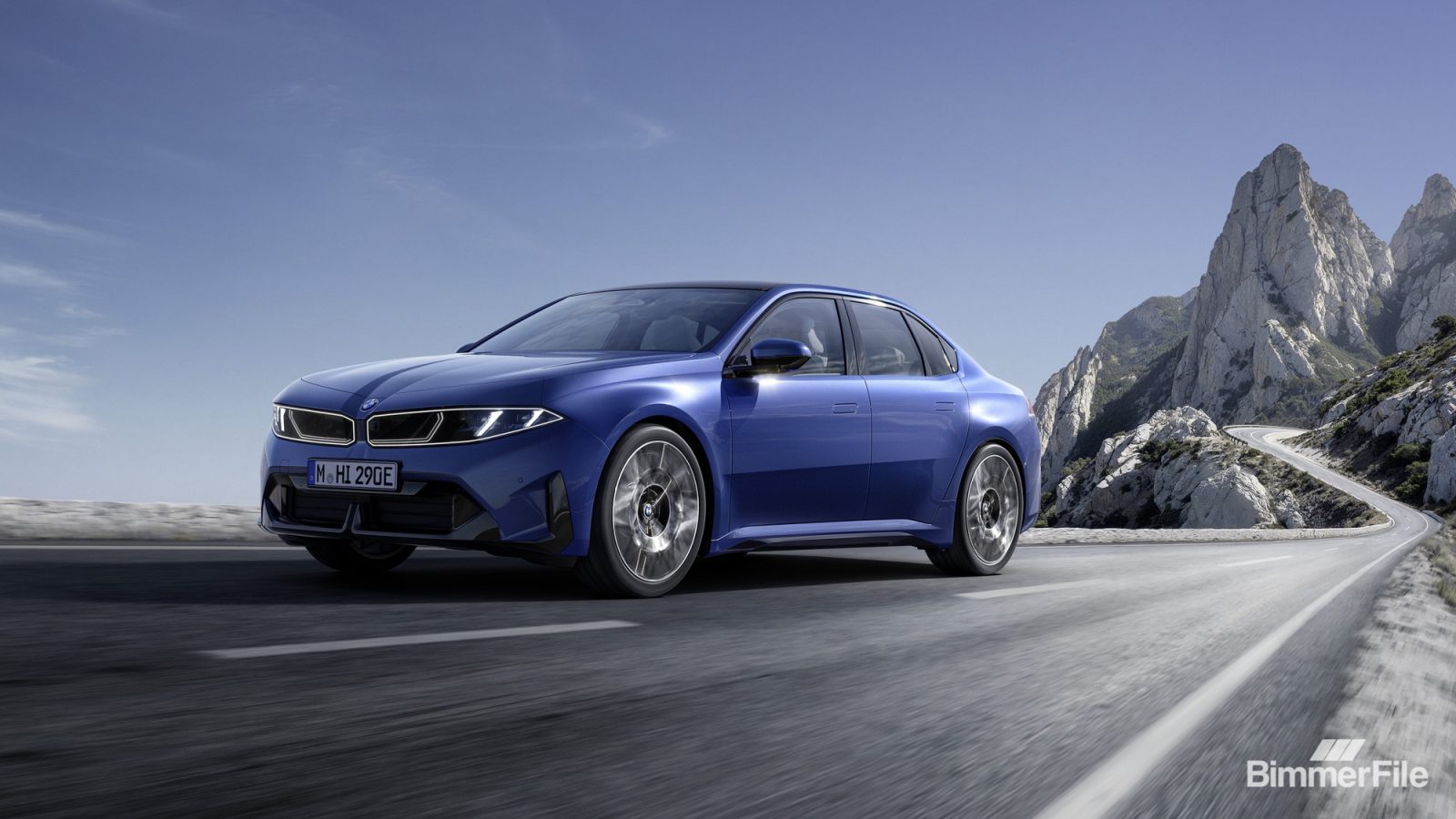
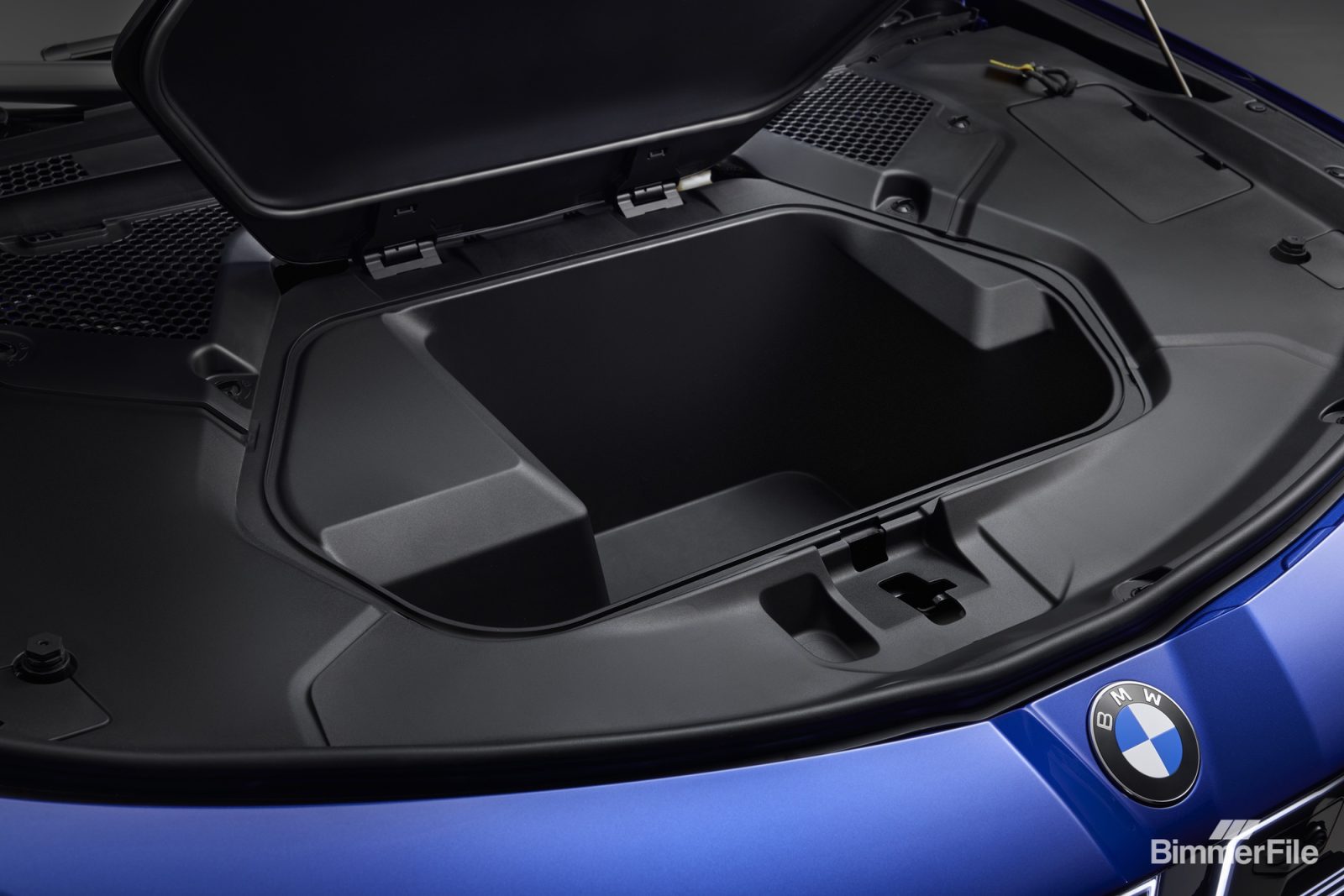
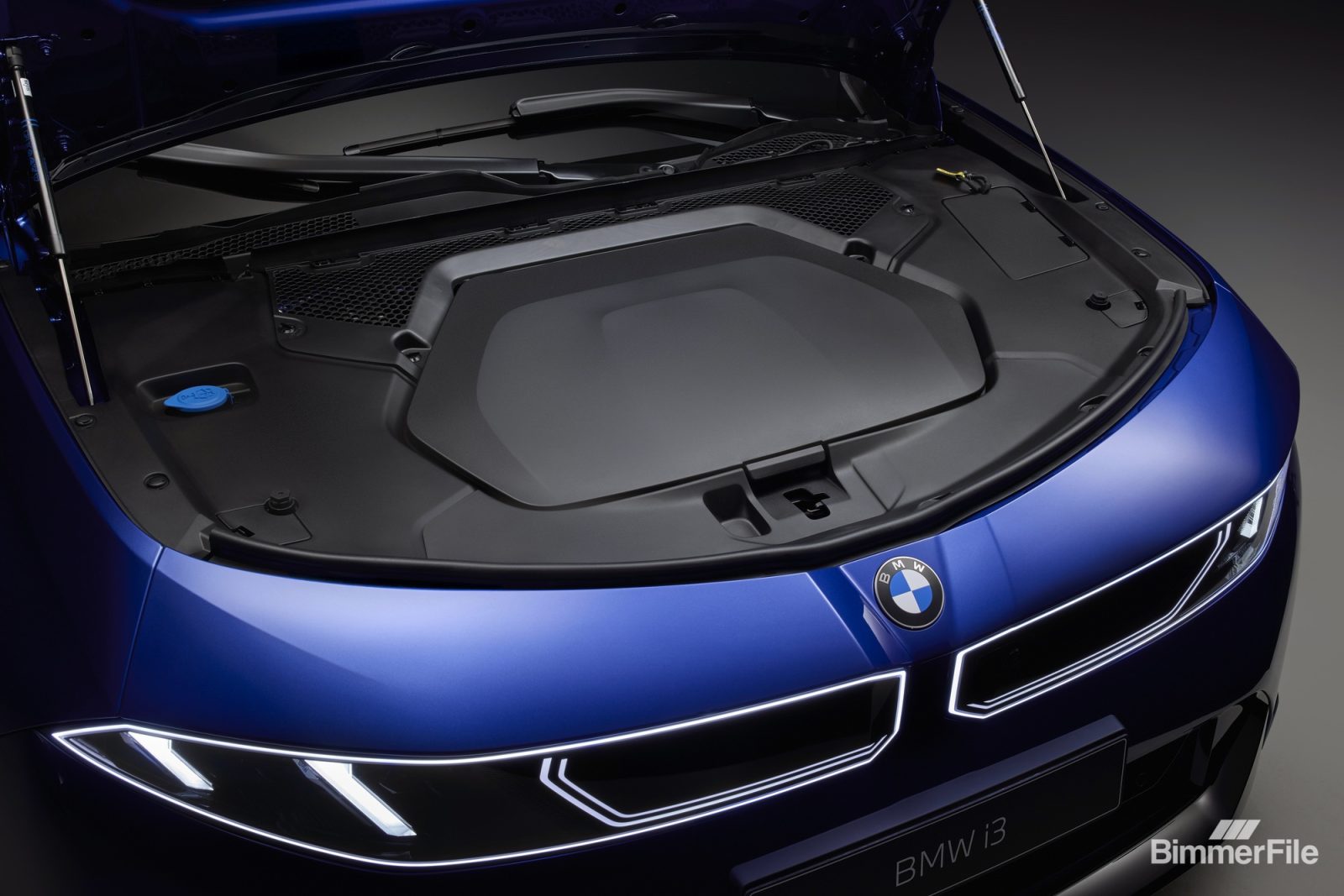
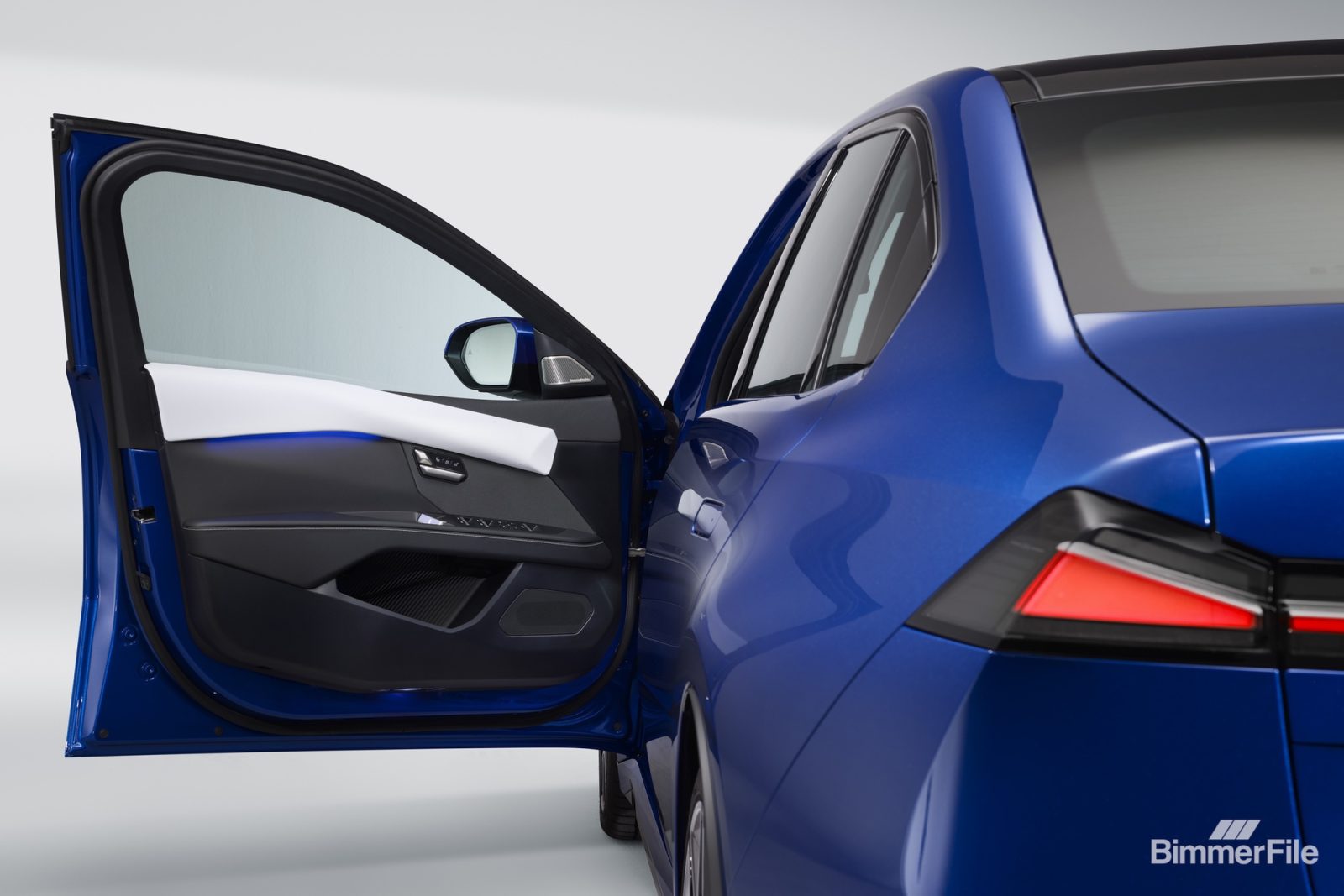
There are moments when BMW launches a car that feels bigger than a typical model cycle. The original Neue Klasse sedans did that in the 1960s when they rescued the company and defined the sports sedan formula. The E21 turned that formula into the first 3 Series. The E46 refined it into what many still consider the benchmark. Even the strange little carbon fiber i3 represented a bold experiment in how BMW might approach the future.
Now BMW is attempting something even more ambitious.
The new BMW i3 is not just another electric sedan entering the premium EV market. It is the first fully electric interpretation of the BMW 3 Series and one of the most important vehicles launching the Neue Klasse era. In many ways it is the car that will determine whether BMW can translate its core identity into the electric age without losing what made the brand special in the first place.
That makes this launch far more significant than the introduction of another EV. It represents BMW redefining its most important car for a completely different technological era.
The Electric 3 Series Finally Arrives
For more than five decades the BMW 3 Series has served as the nucleus of the brand. It is the car that distilled BMW’s philosophy into something tangible. A sedan that balanced performance, usability, and driver engagement better than almost anything else on the road.
Every generation has carried that responsibility forward. Now the i3 takes on that same role in the electric era.
The launch model arrives as the BMW i3 50 xDrive, equipped with electric motors on both the front and rear axles. Combined system output reaches 463 horsepower and 476 pound feet of torque, which places the new i3 squarely in the territory of serious performance sedans.
Those numbers are only part of the story. What makes the new i3 truly significant is the platform beneath it. This is one of the first production vehicles built on BMW’s Neue Klasse architecture, a ground up electric platform that will underpin the next generation of BMW vehicles across the lineup.
Rather than adapting an existing combustion platform, BMW started with a clean sheet. That allowed engineers to rethink everything from battery packaging to driving dynamics.
A Design That Looks Back at Past BMWs While looking Forward
One of the biggest challenges facing EV design is maintaining brand identity. Aerodynamics tends to push electric cars toward the same smooth shapes, which can make vehicles from different brands look surprisingly similar.
The new BMW i3 avoids that trap by leaning heavily on classic BMW proportions.
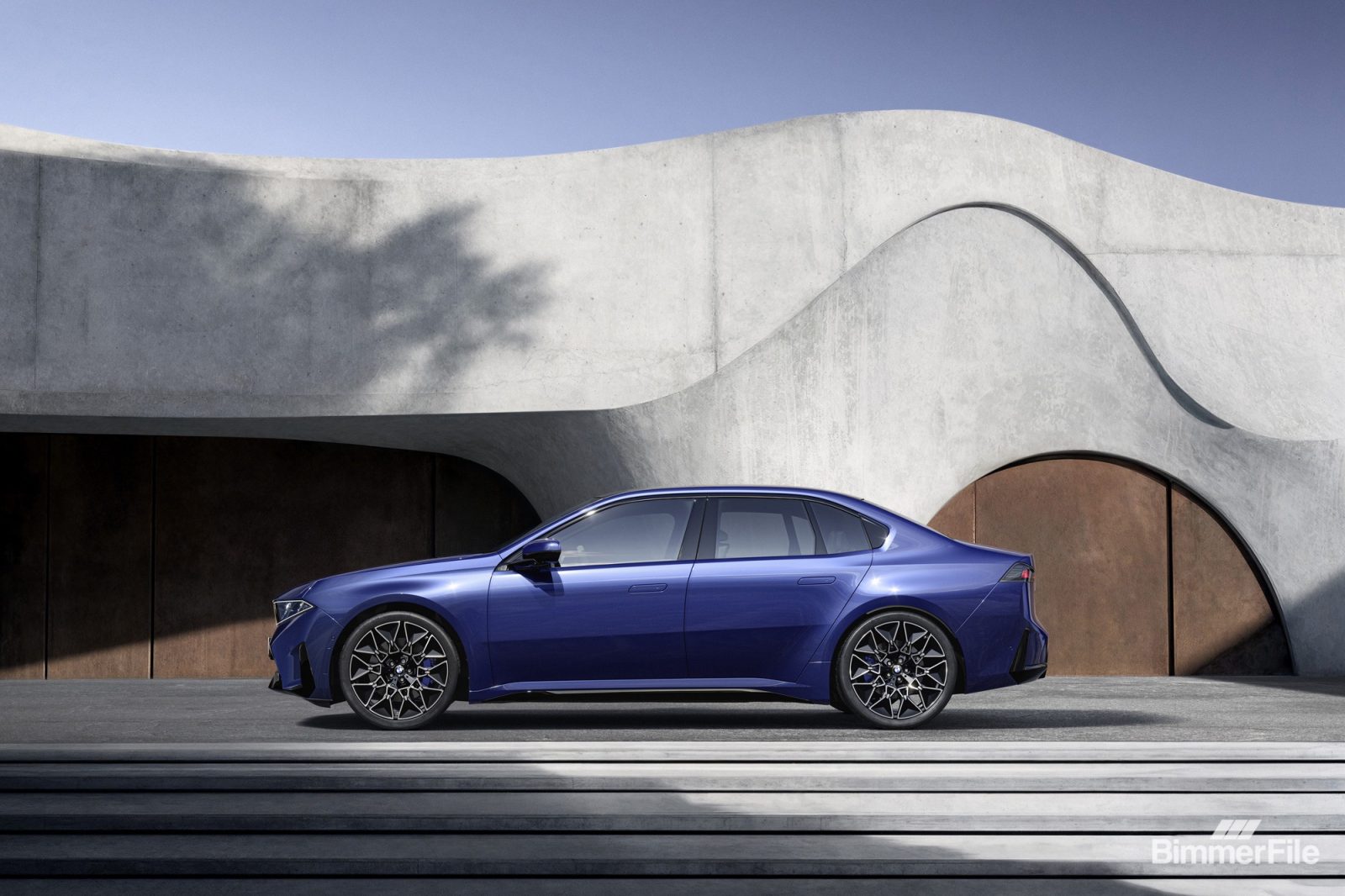
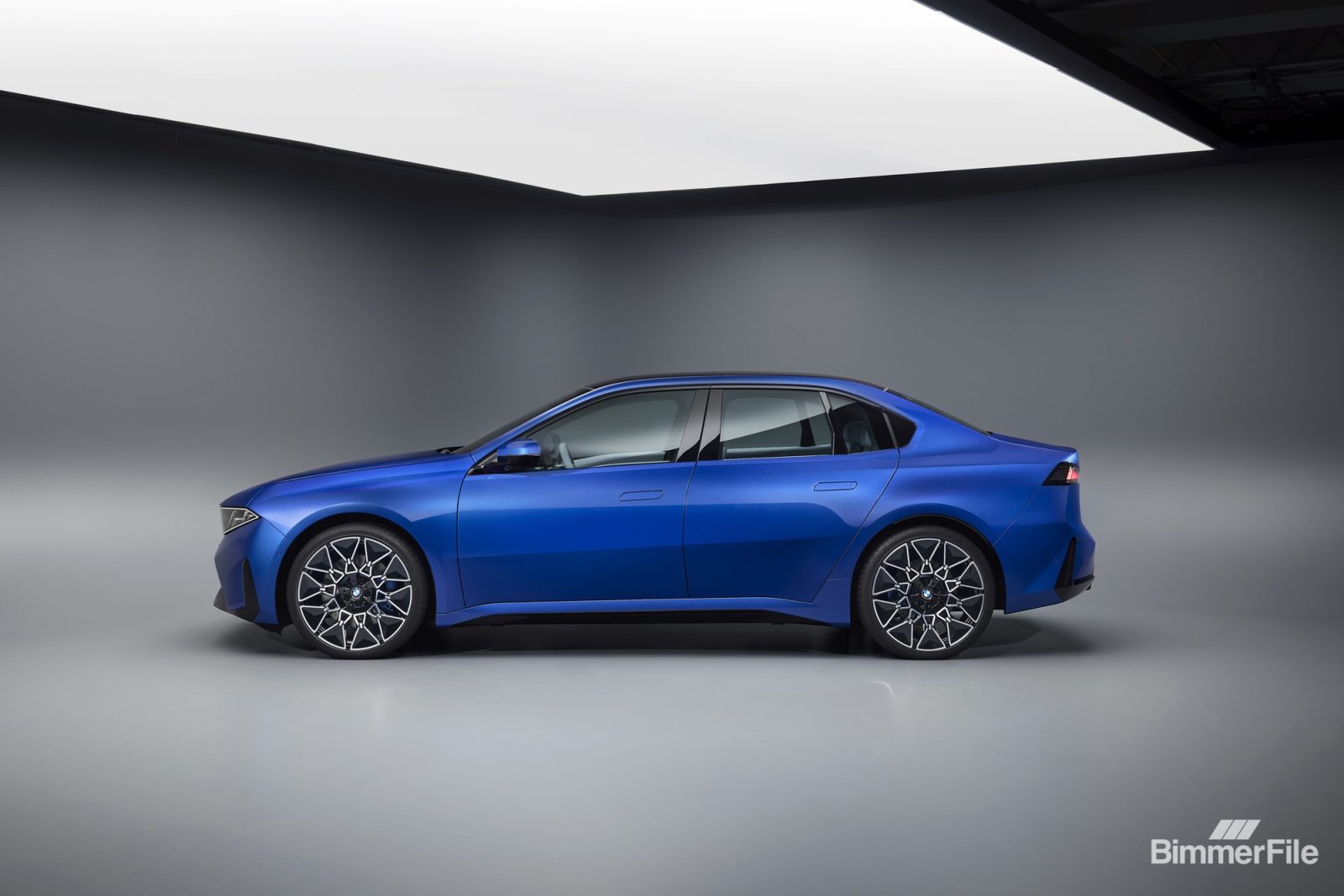
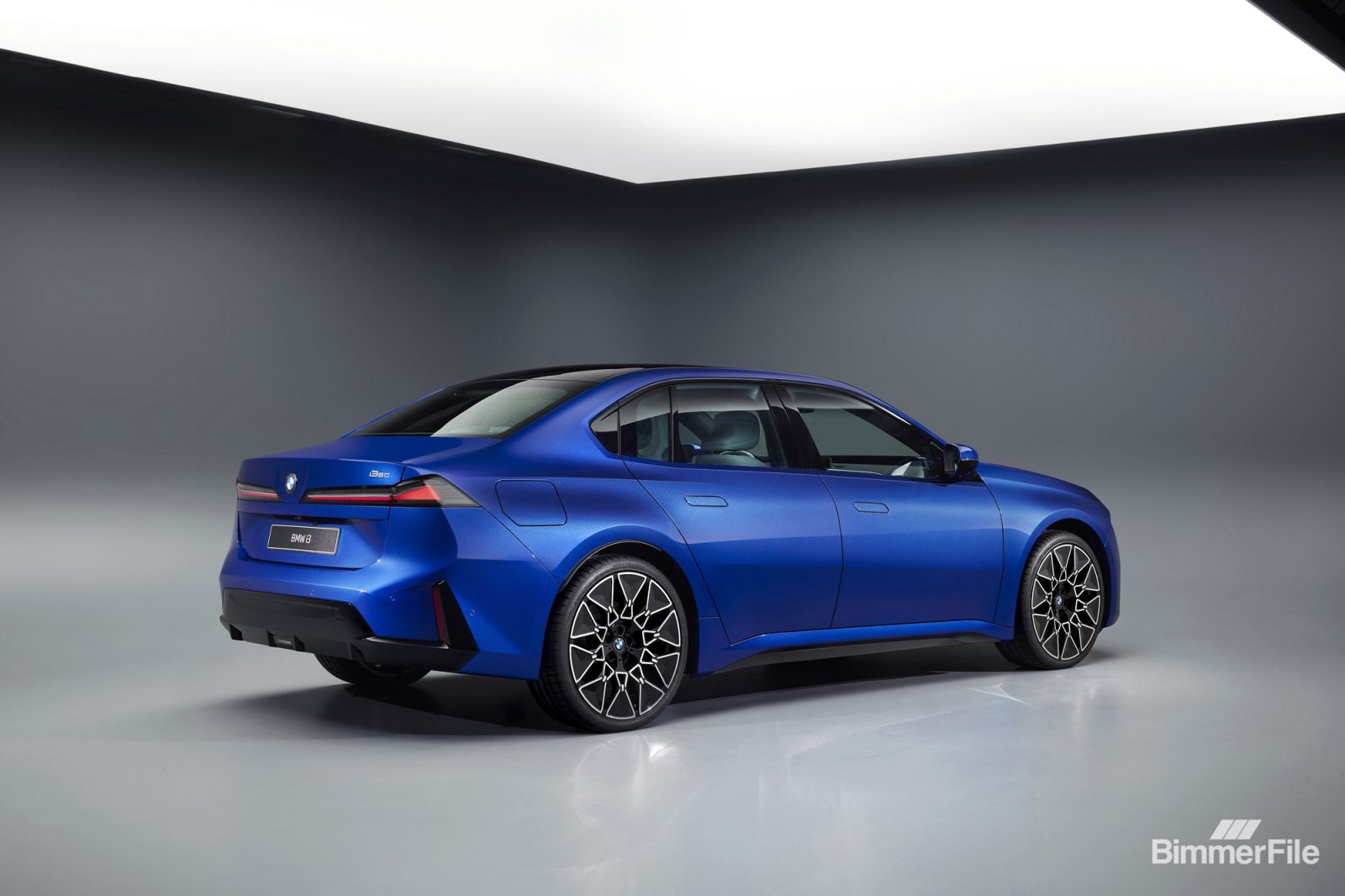
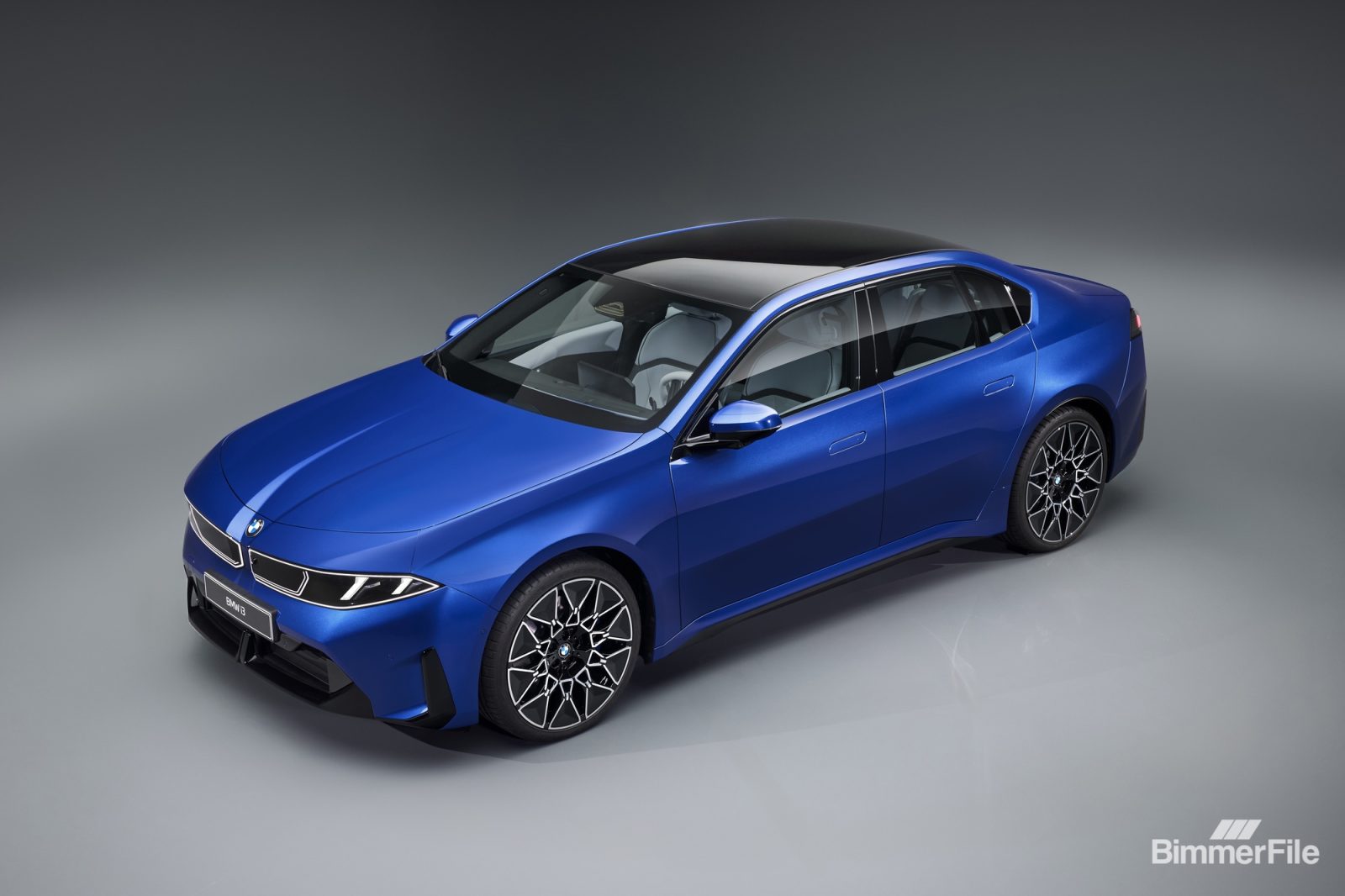
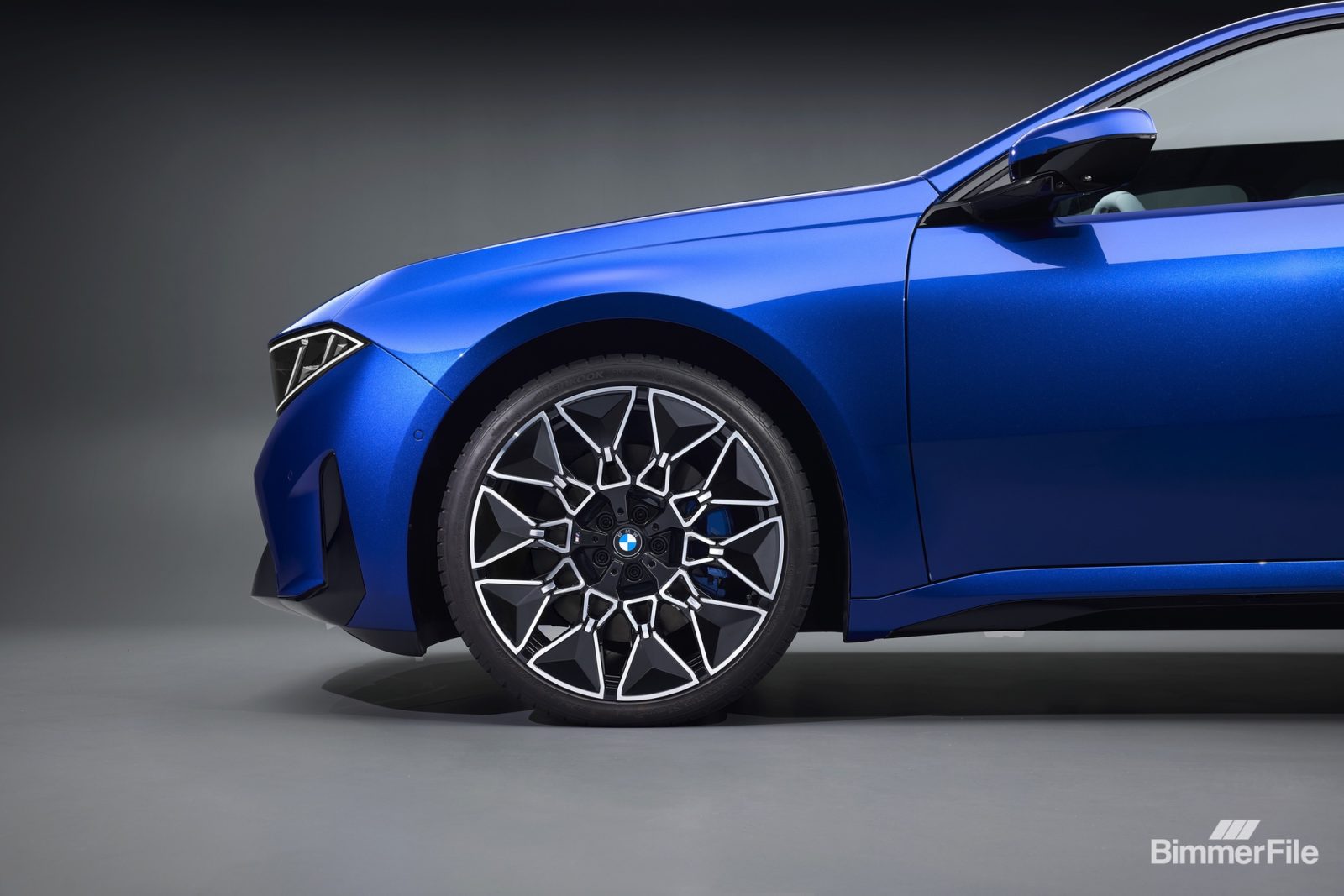
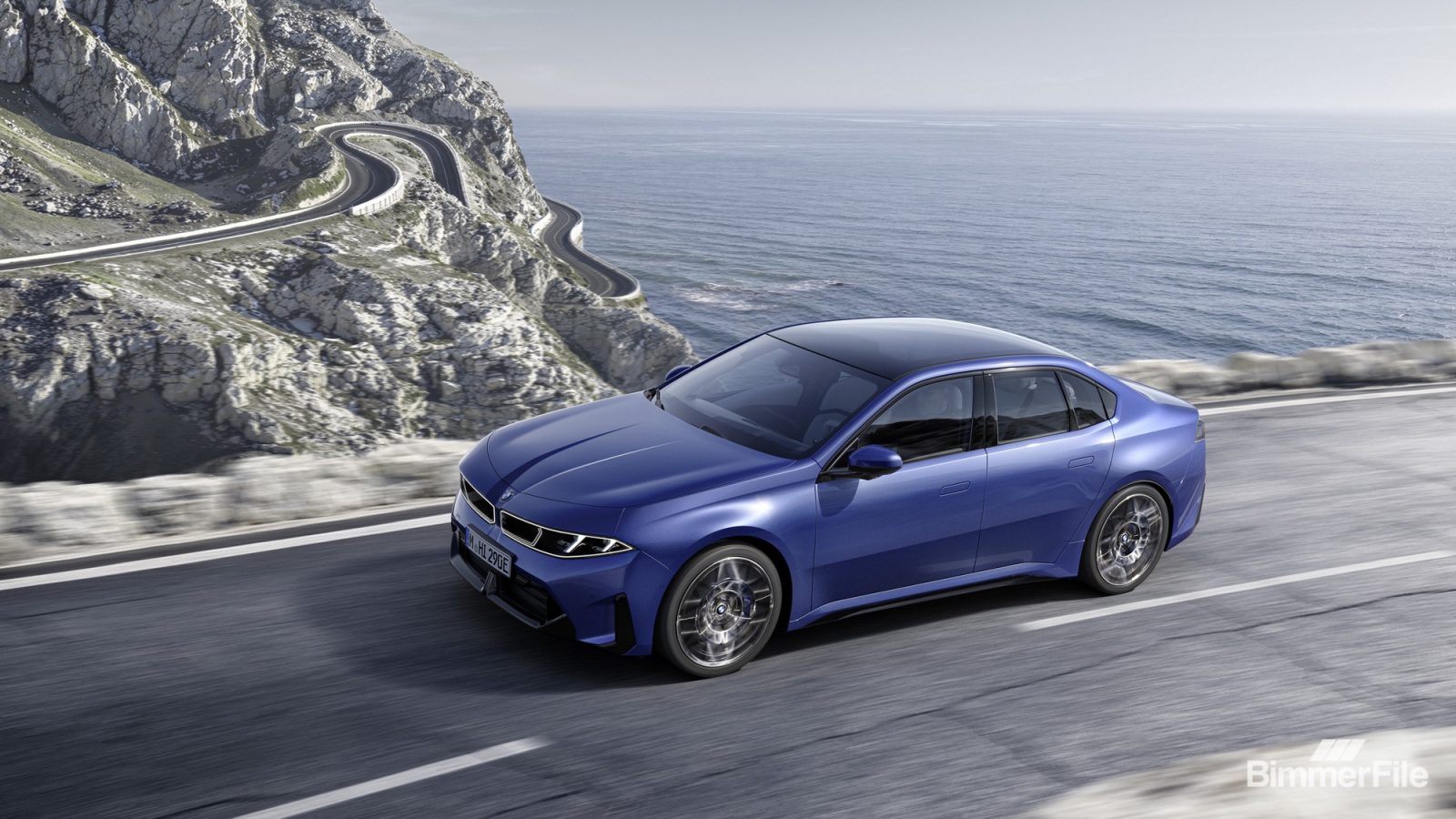
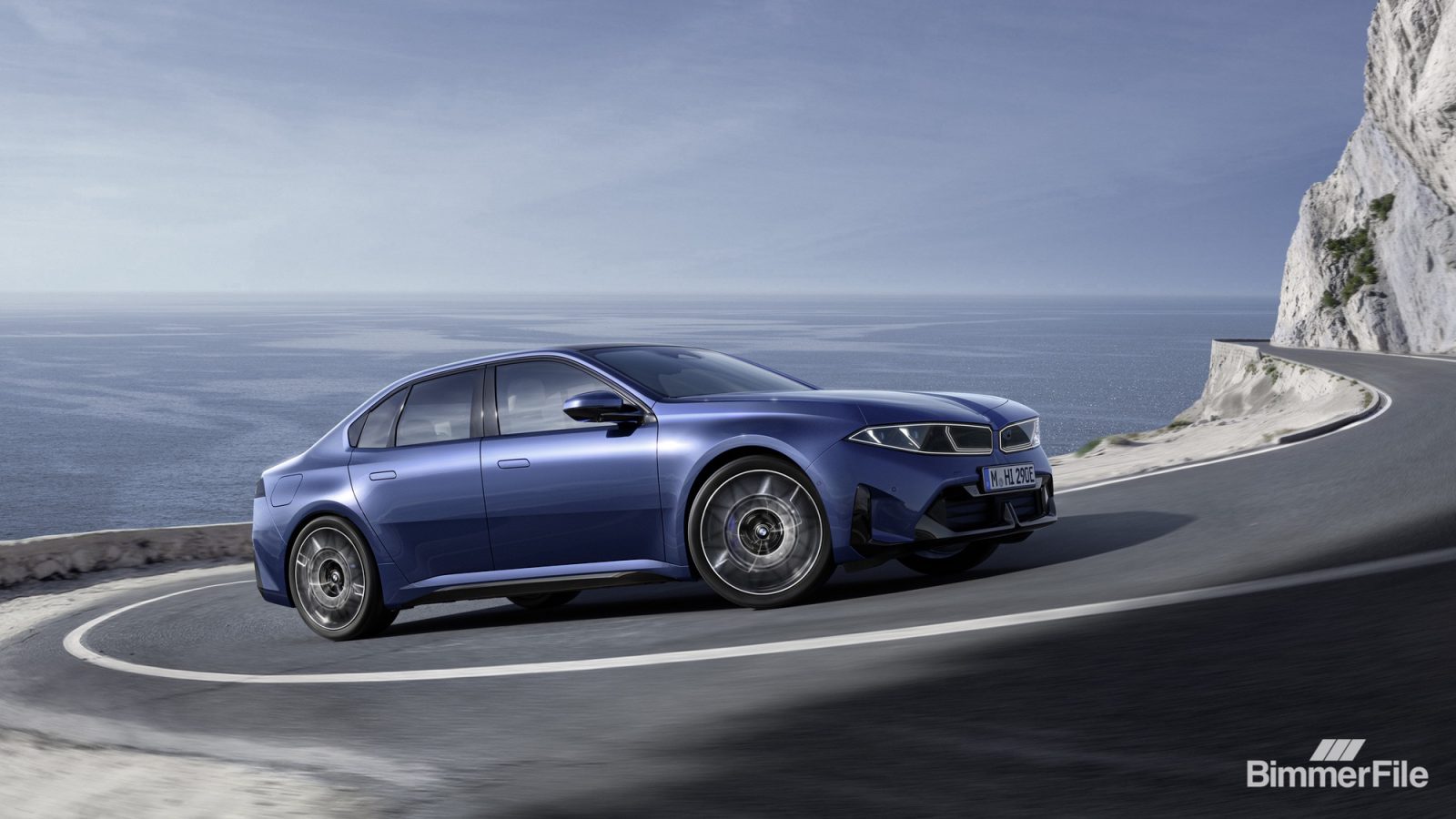
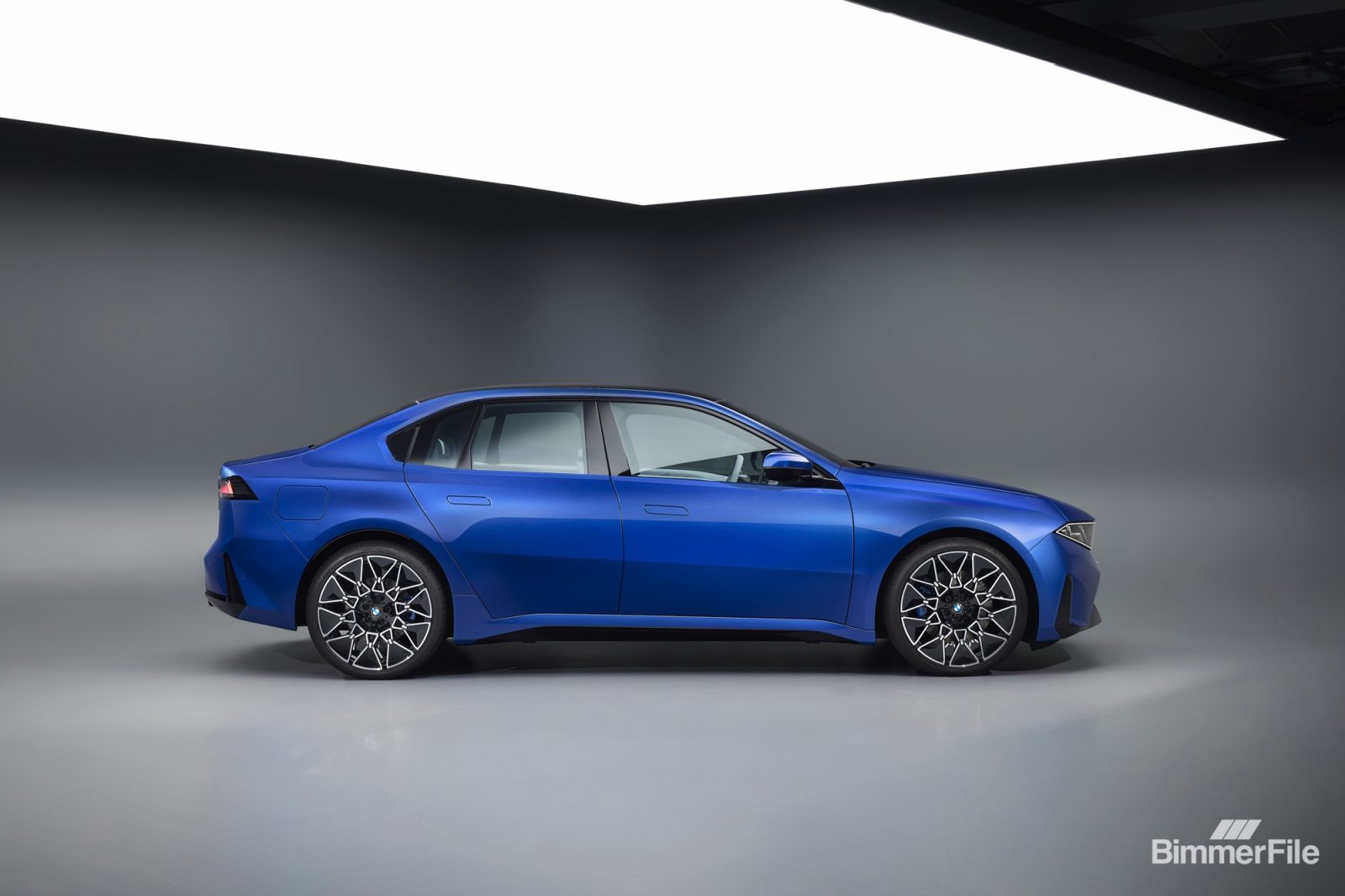
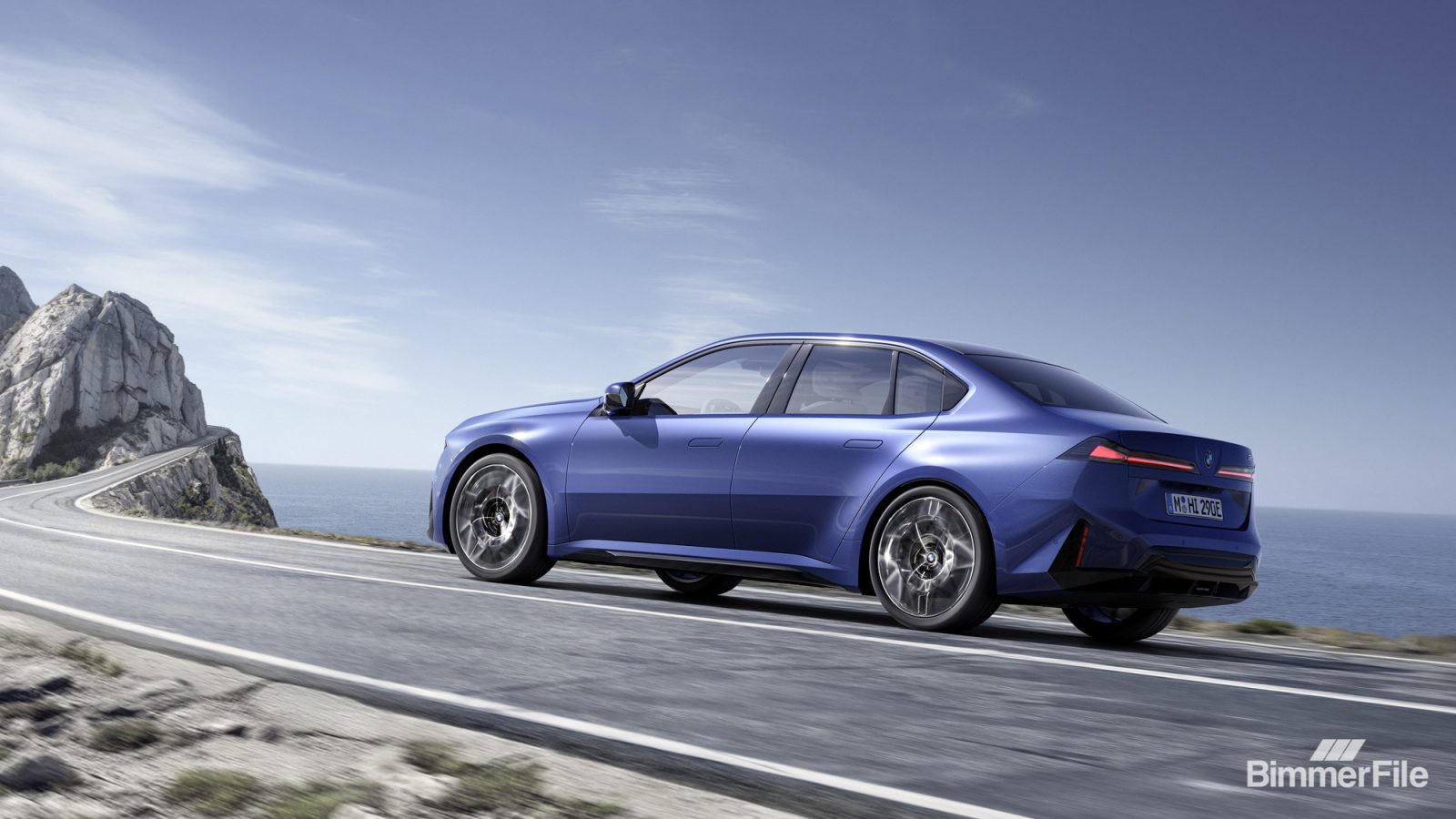
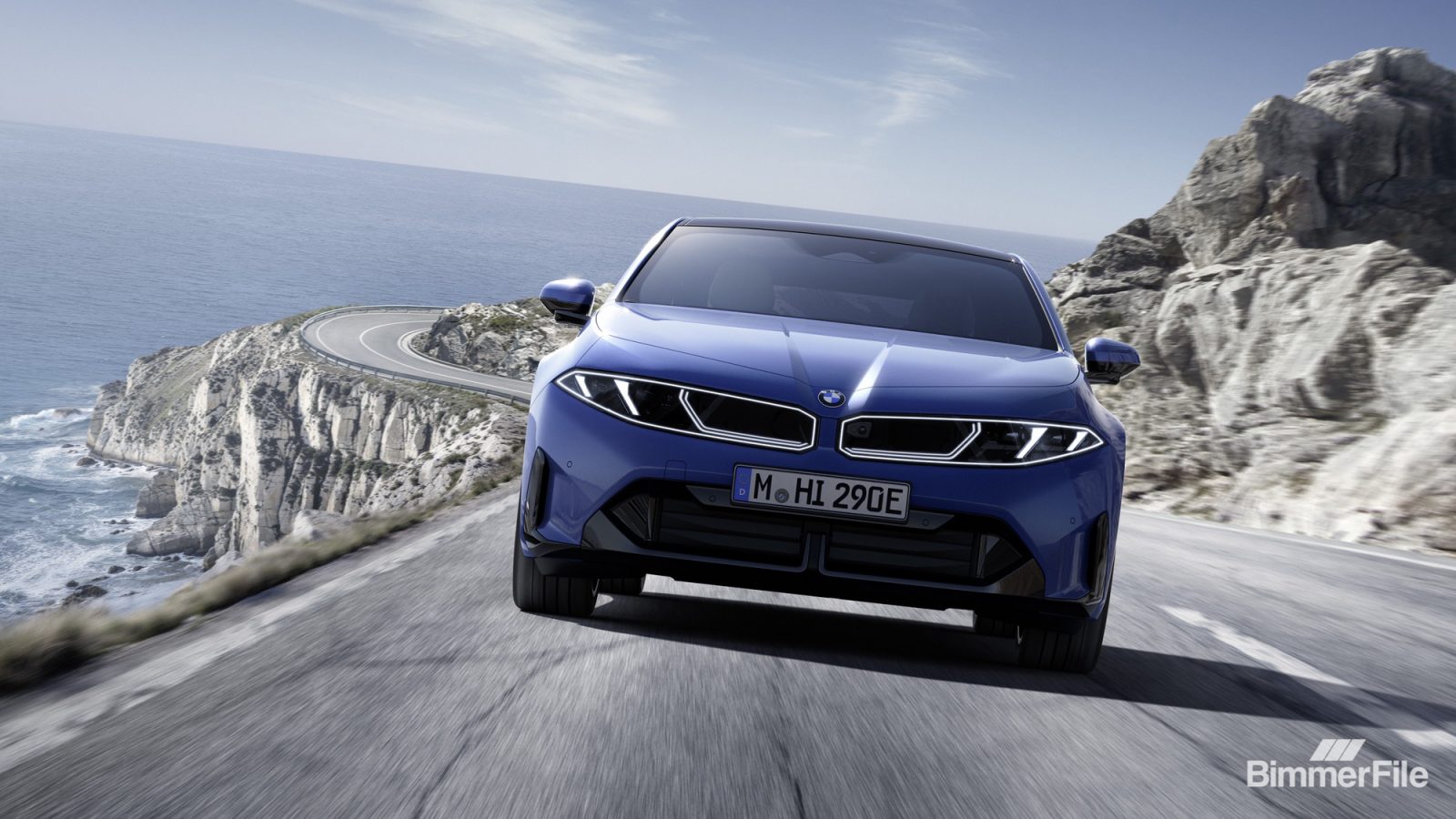
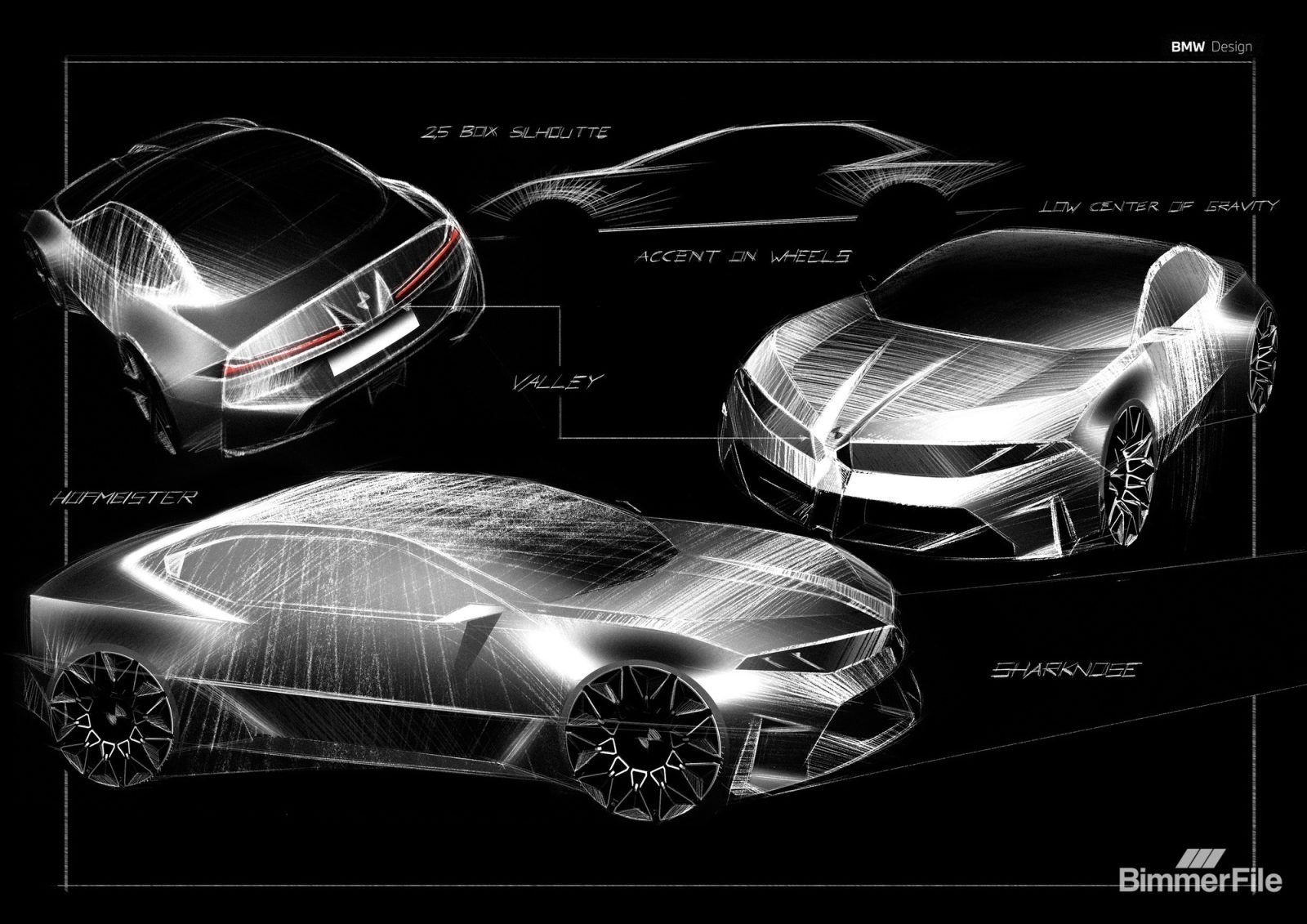
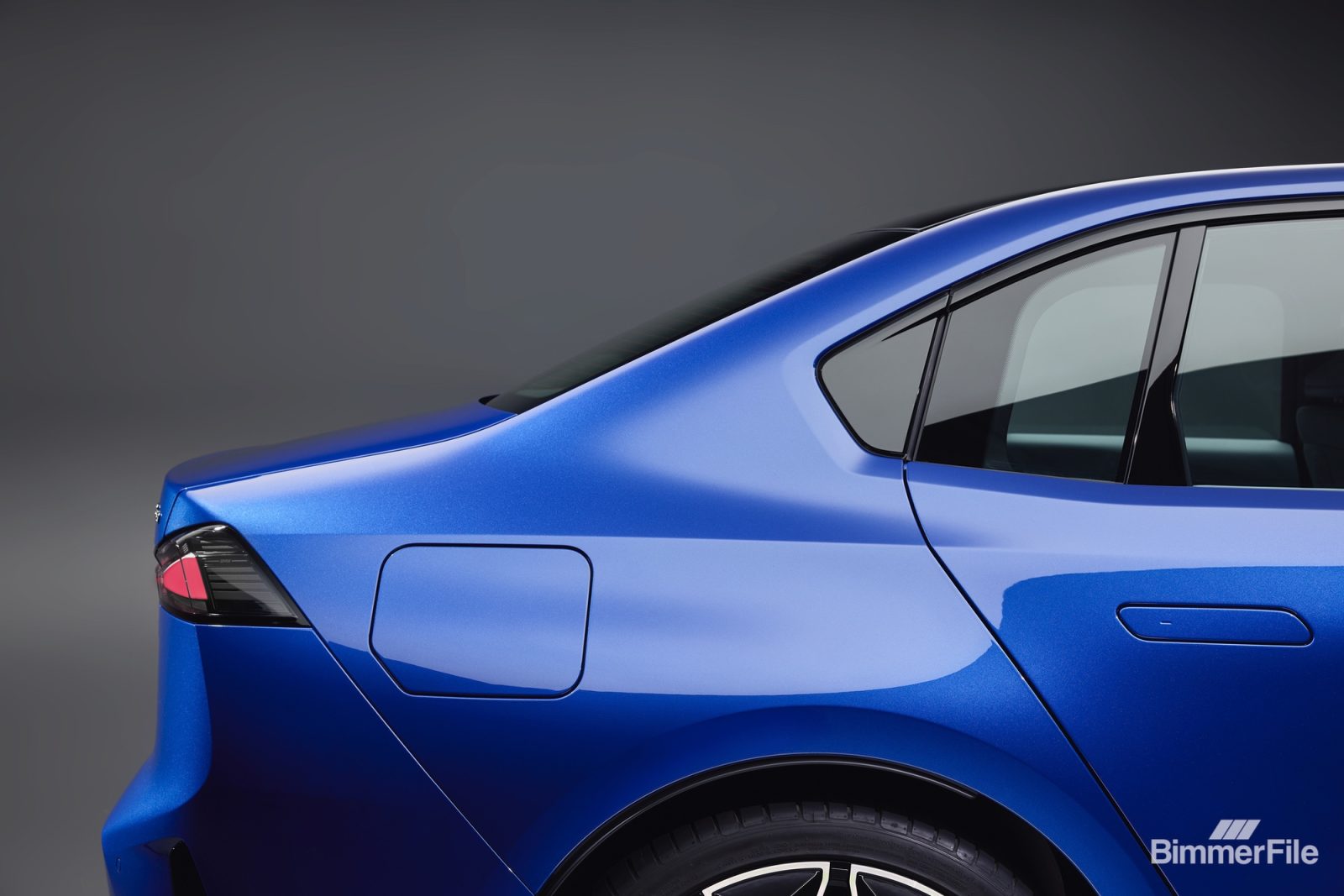
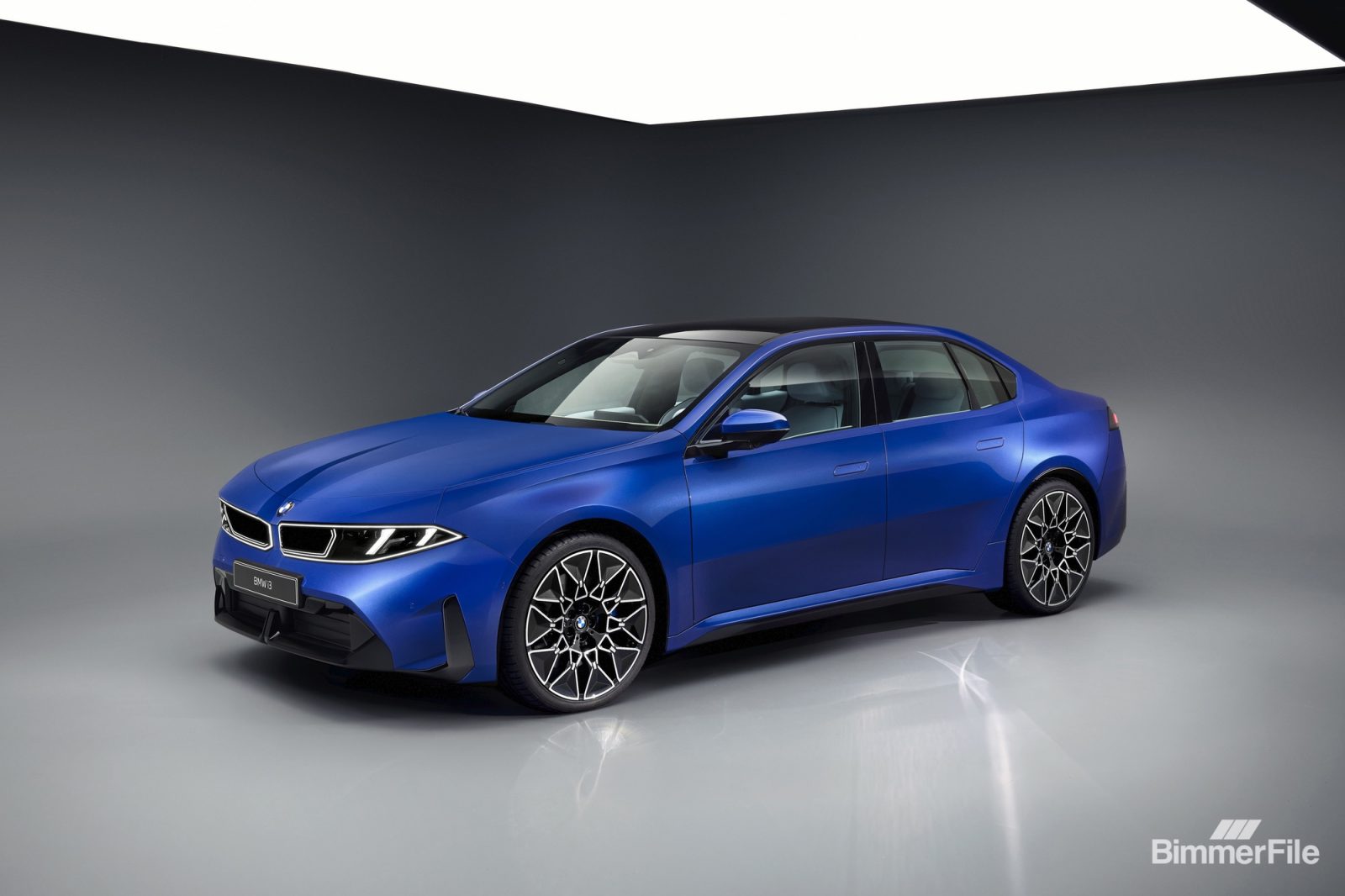
The sedan uses what BMW calls a modern 2.5 box silhouette with a long wheelbase, short overhangs, and a greenhouse that tapers toward the rear. Strong shoulder surfaces and flared wheel arches emphasize the car’s athletic stance while visually lowering its center of gravity.
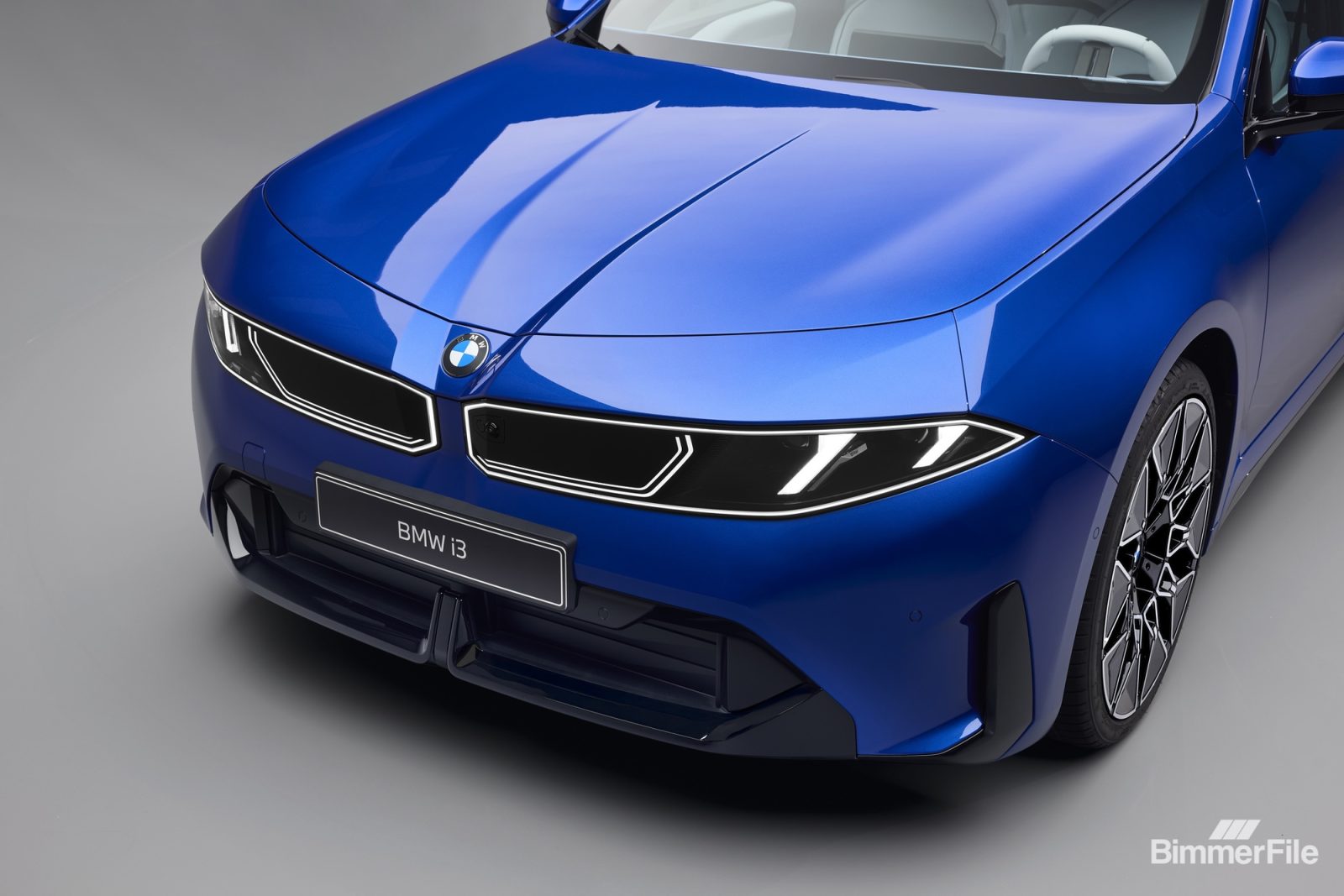
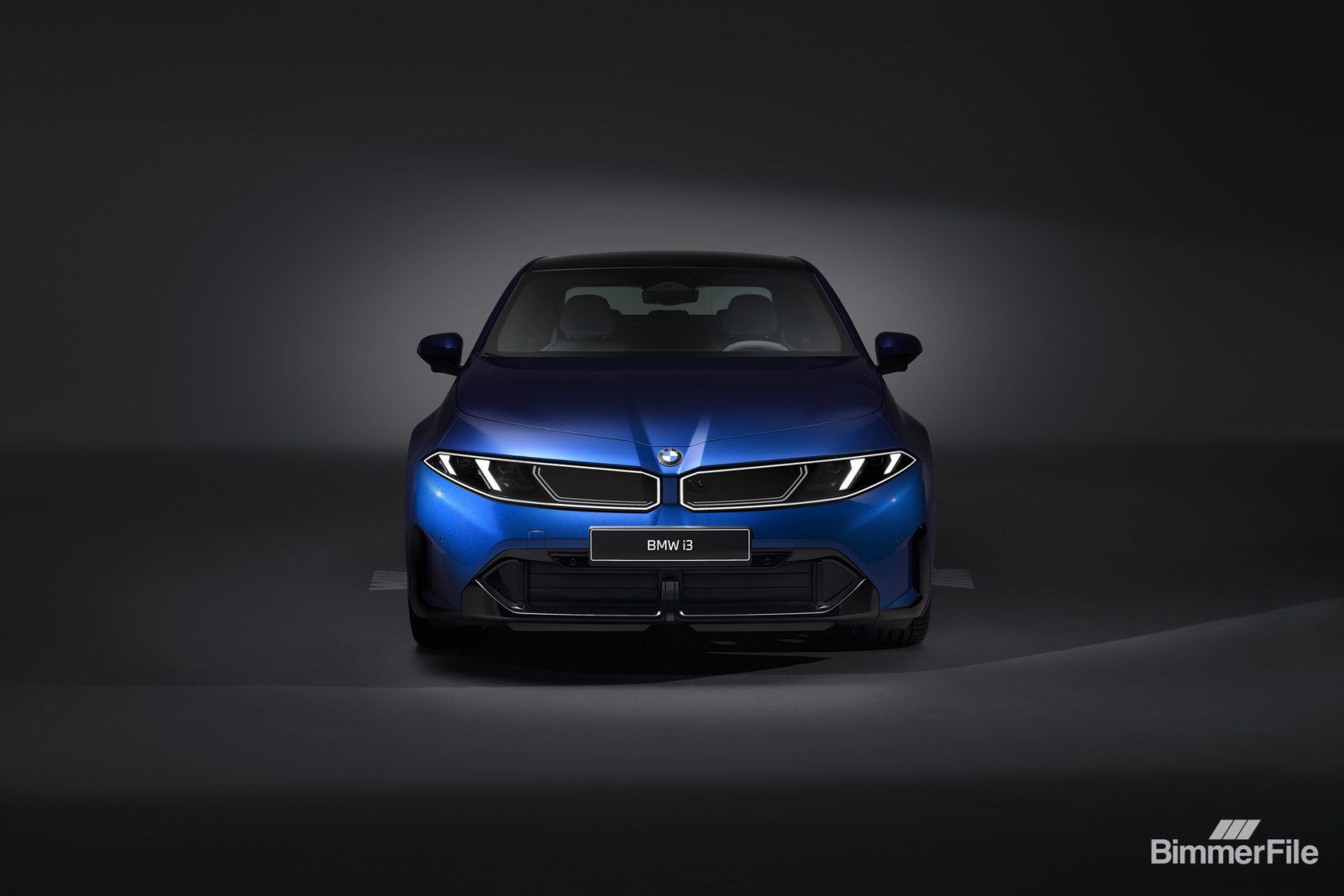
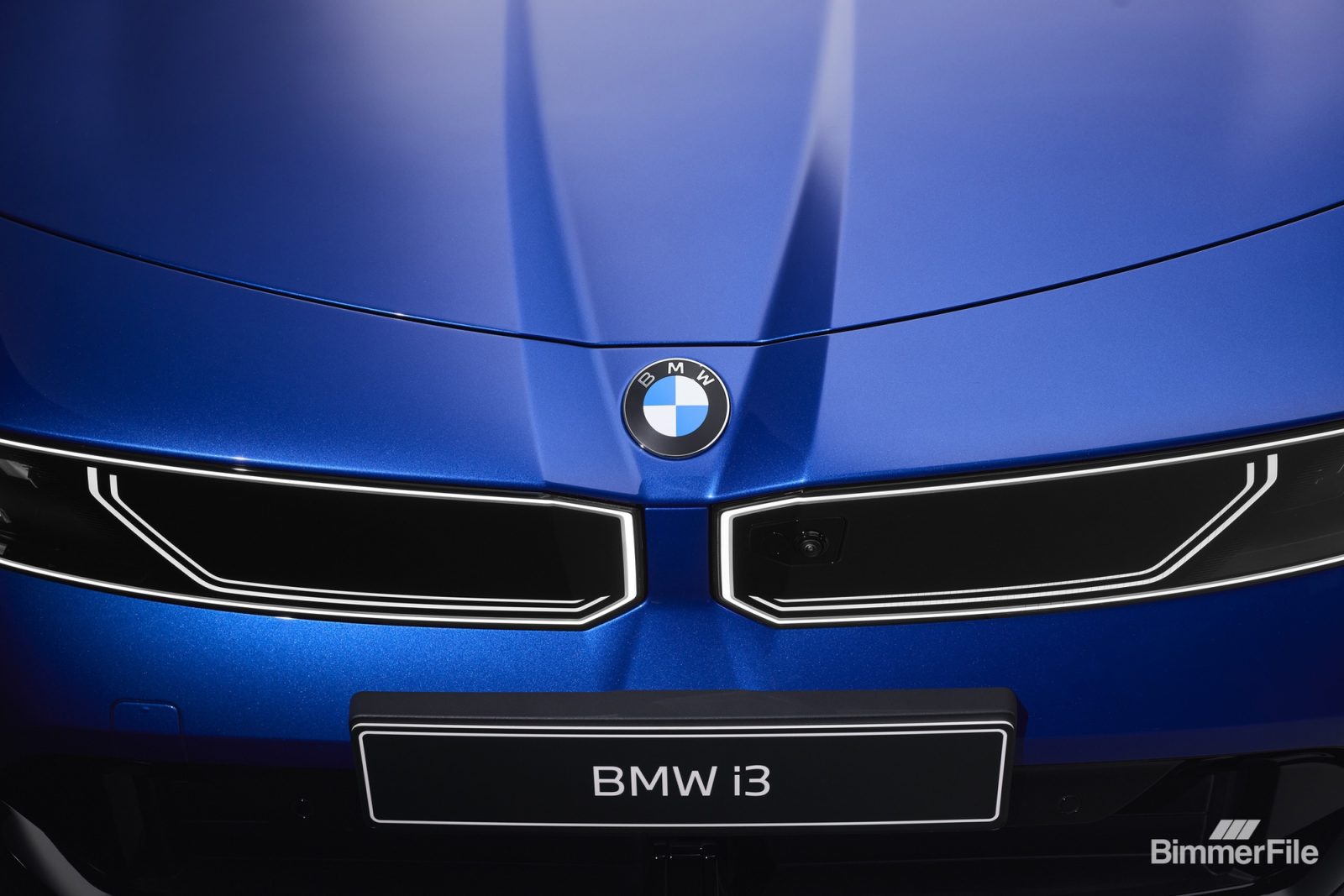
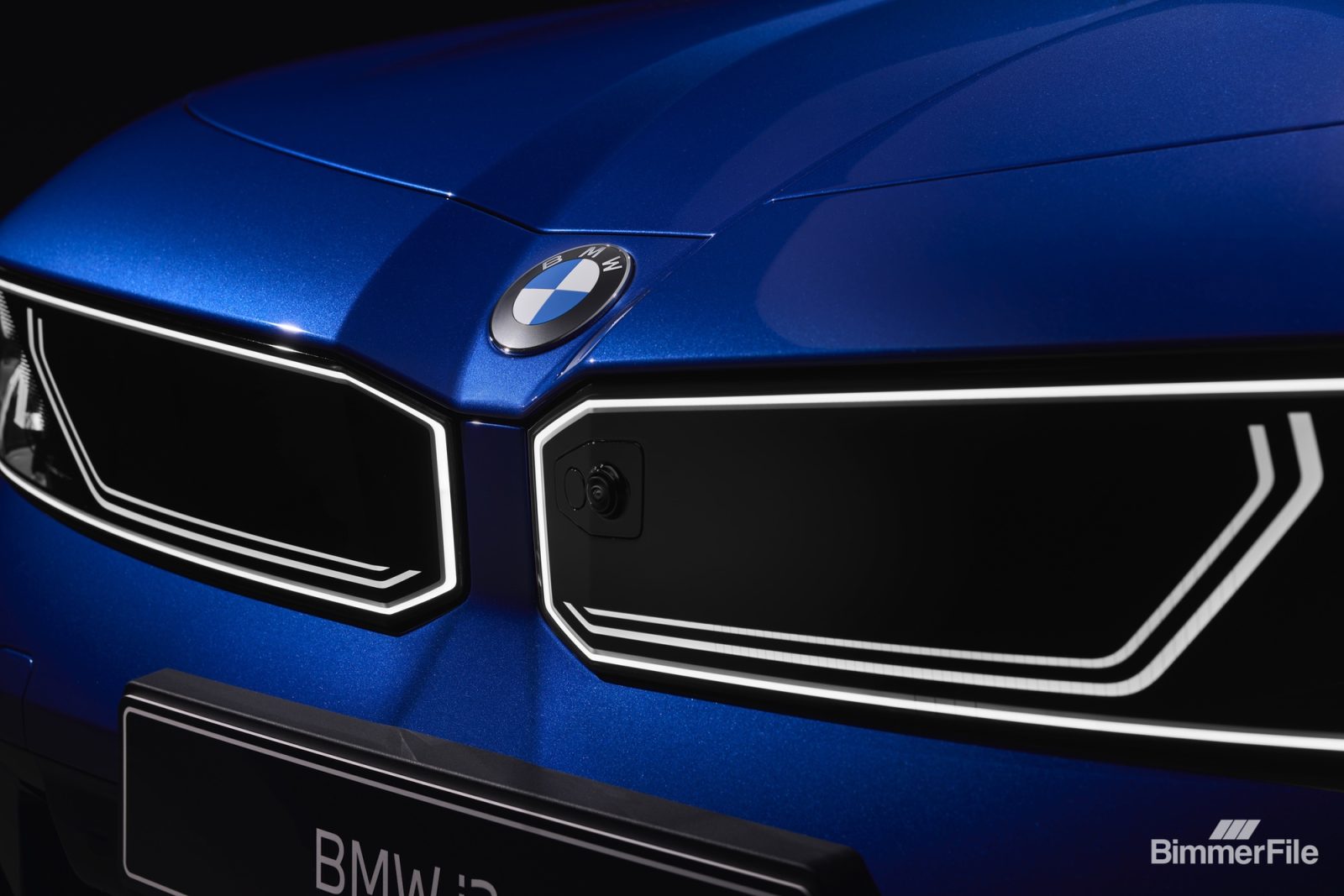
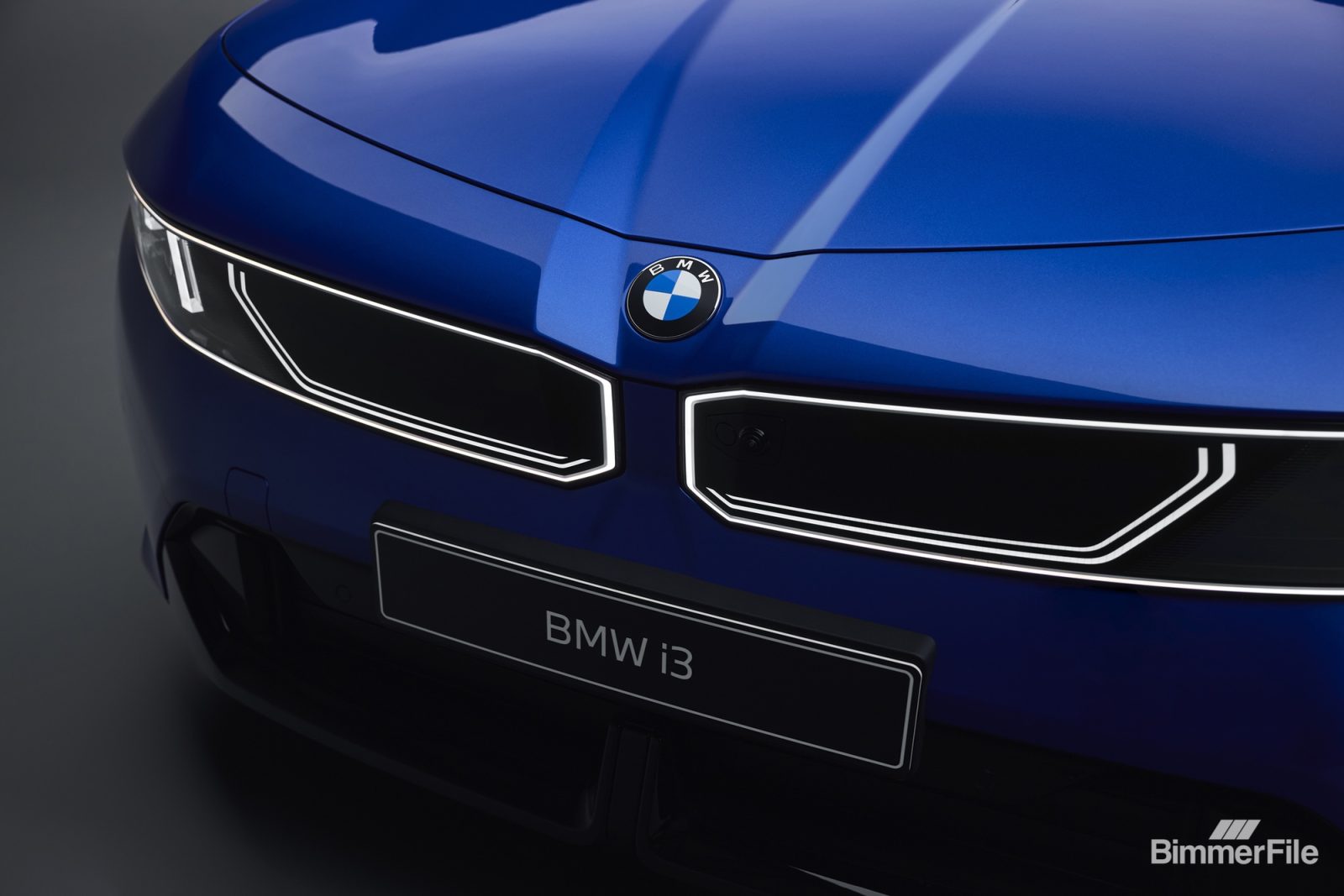
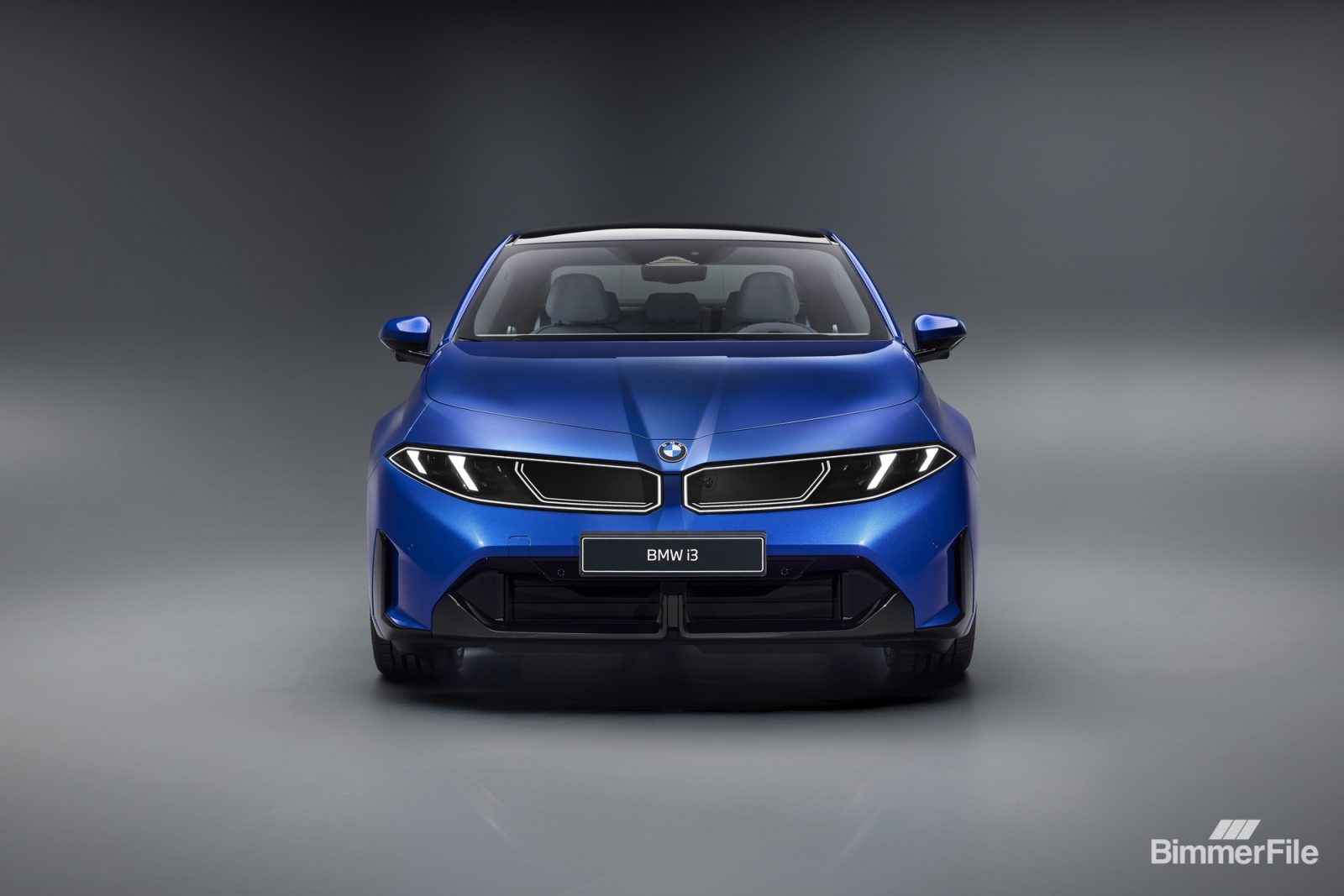
The front end introduces a fresh interpretation of BMW’s traditional face. The kidney grille and the familiar four eye light signature are integrated into a single visual element that blends lighting and geometry. The effect is modern but still instantly recognizable.
BMW designers also retained one of the brand’s most beloved details. The front of the car still carries a subtle shark nose angle that leans forward toward the road. It is a small touch but one that immediately signals sporting intent.
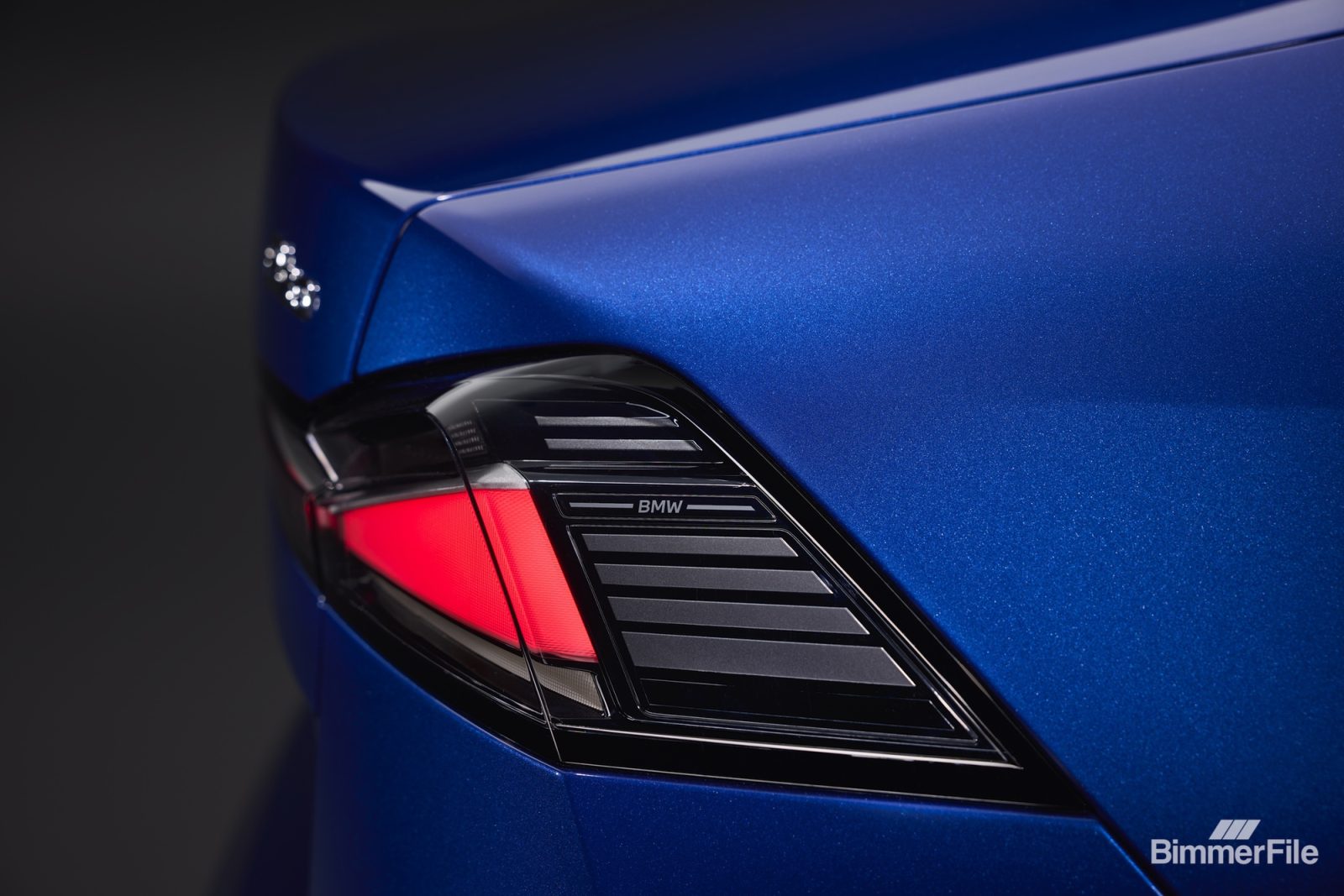
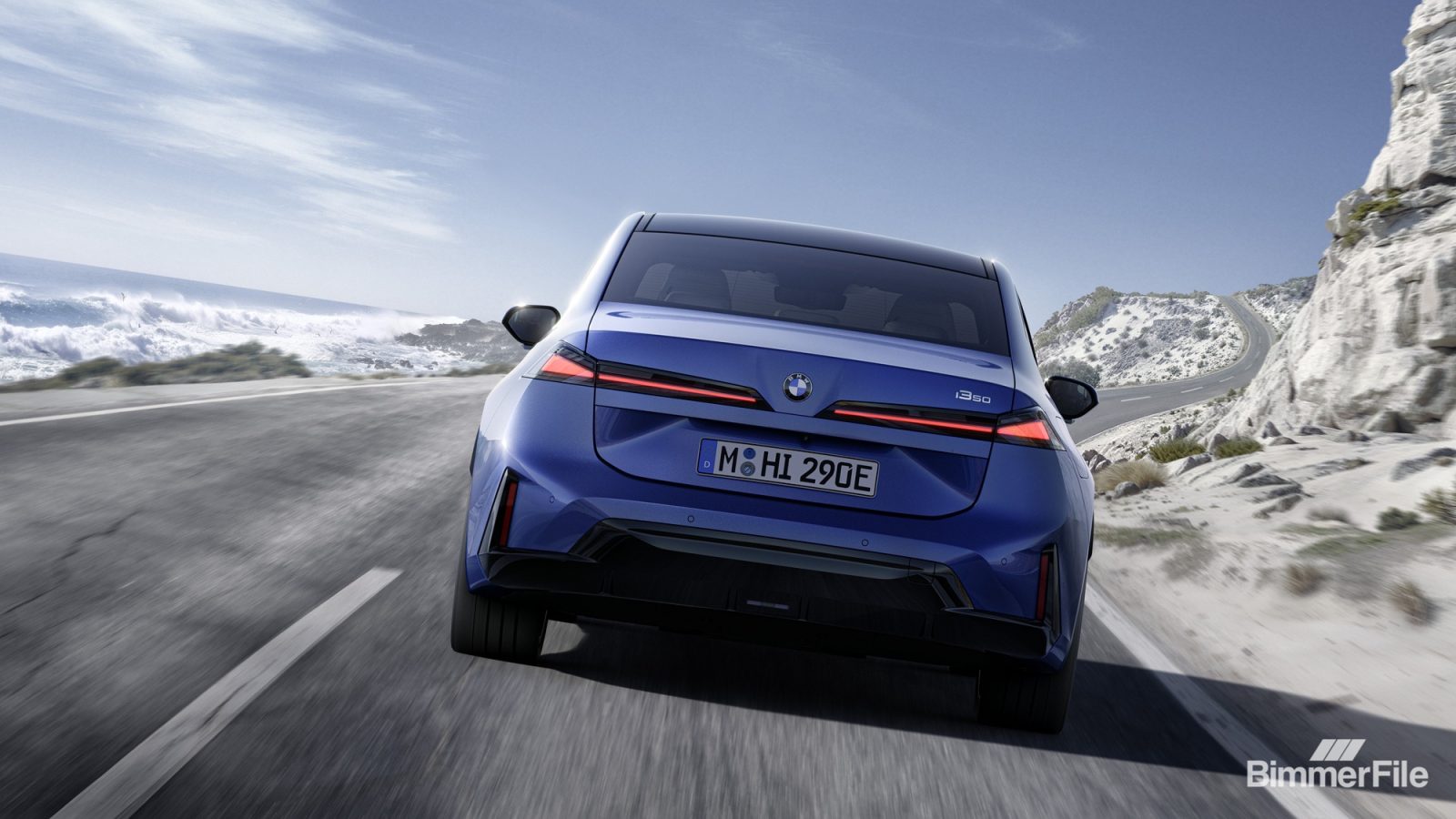
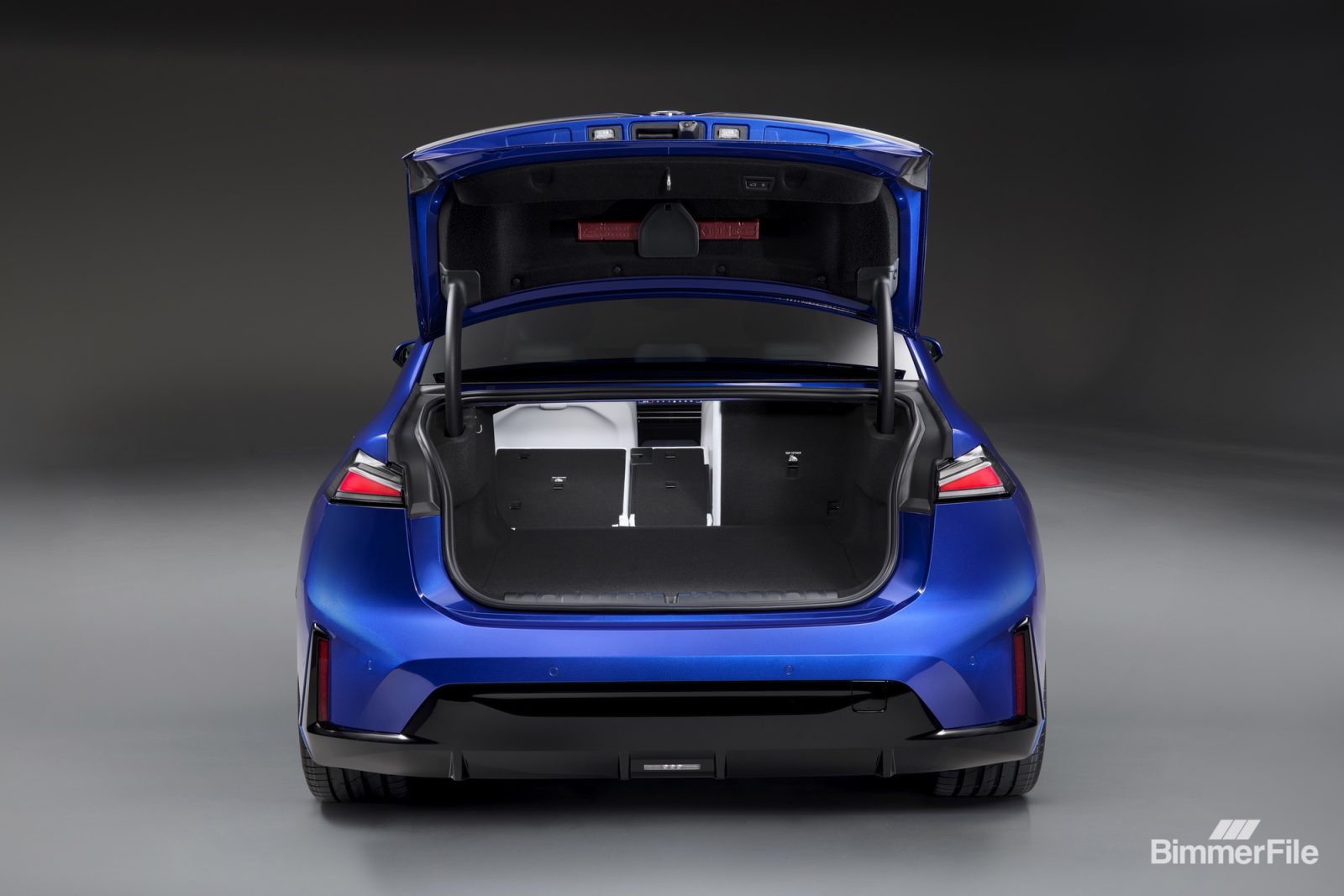
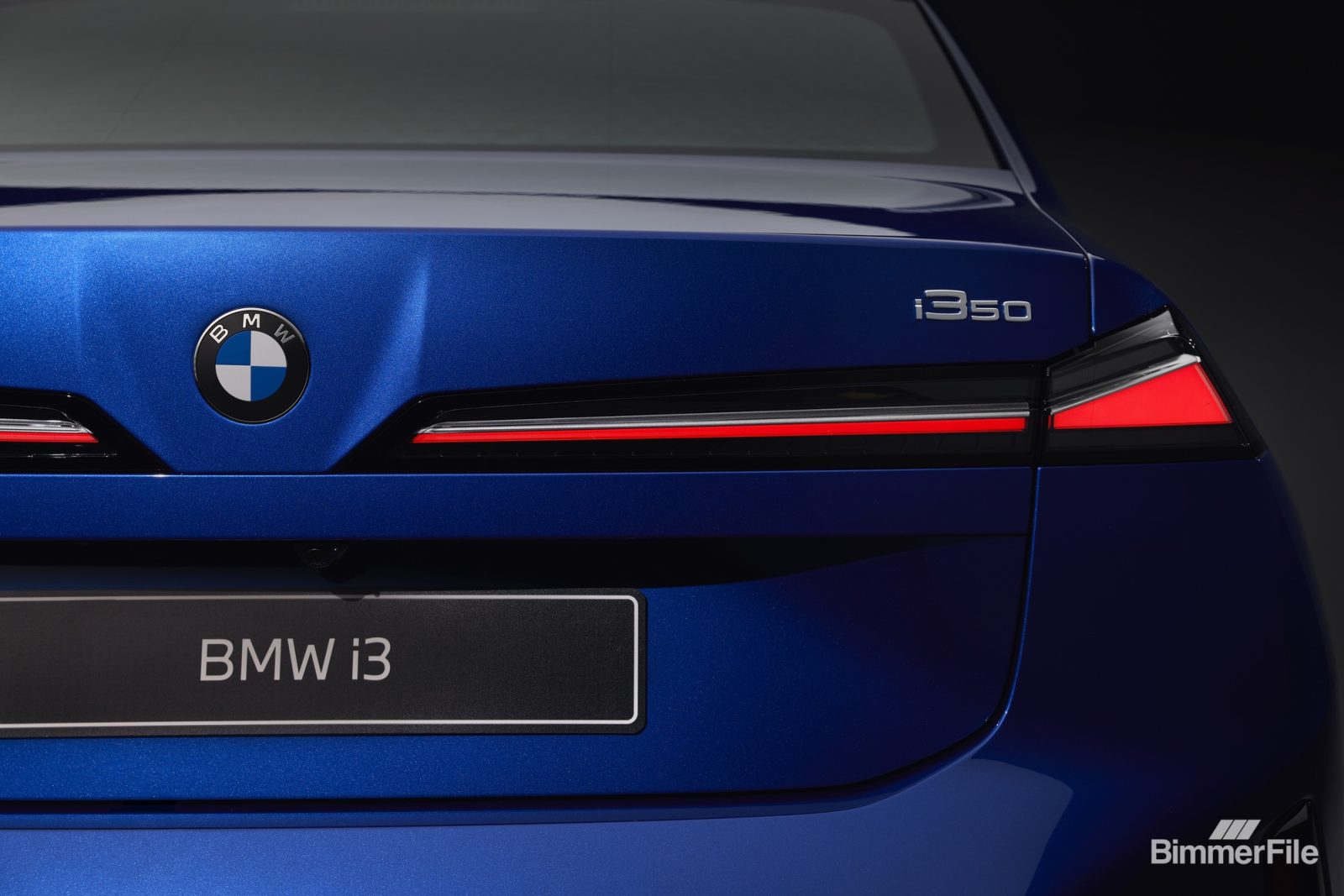
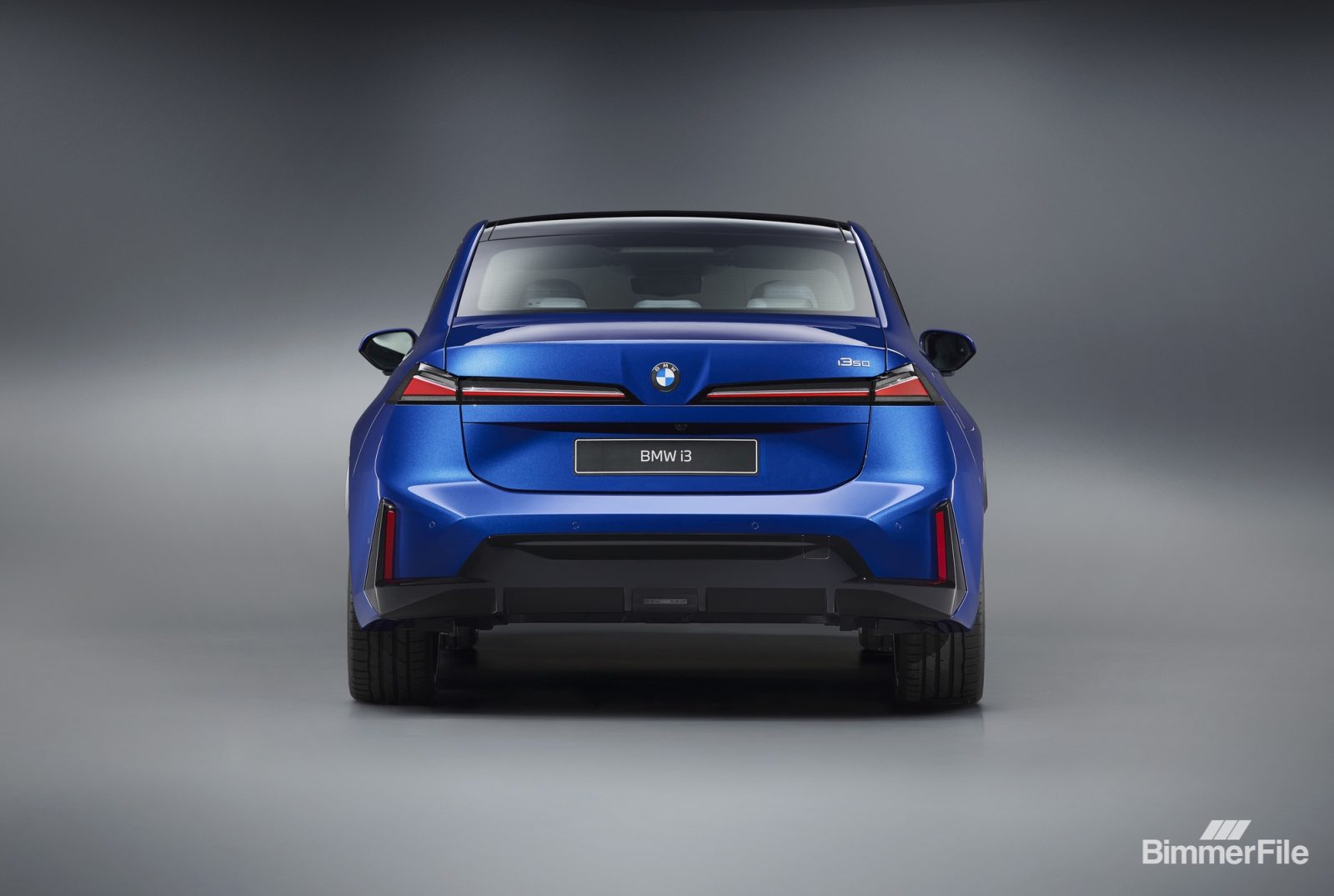
At the rear, horizontal lighting elements stretch into the wide shoulders of the body. The design emphasizes width and stability while reinterpreting BMW’s traditional L shaped taillight signature.
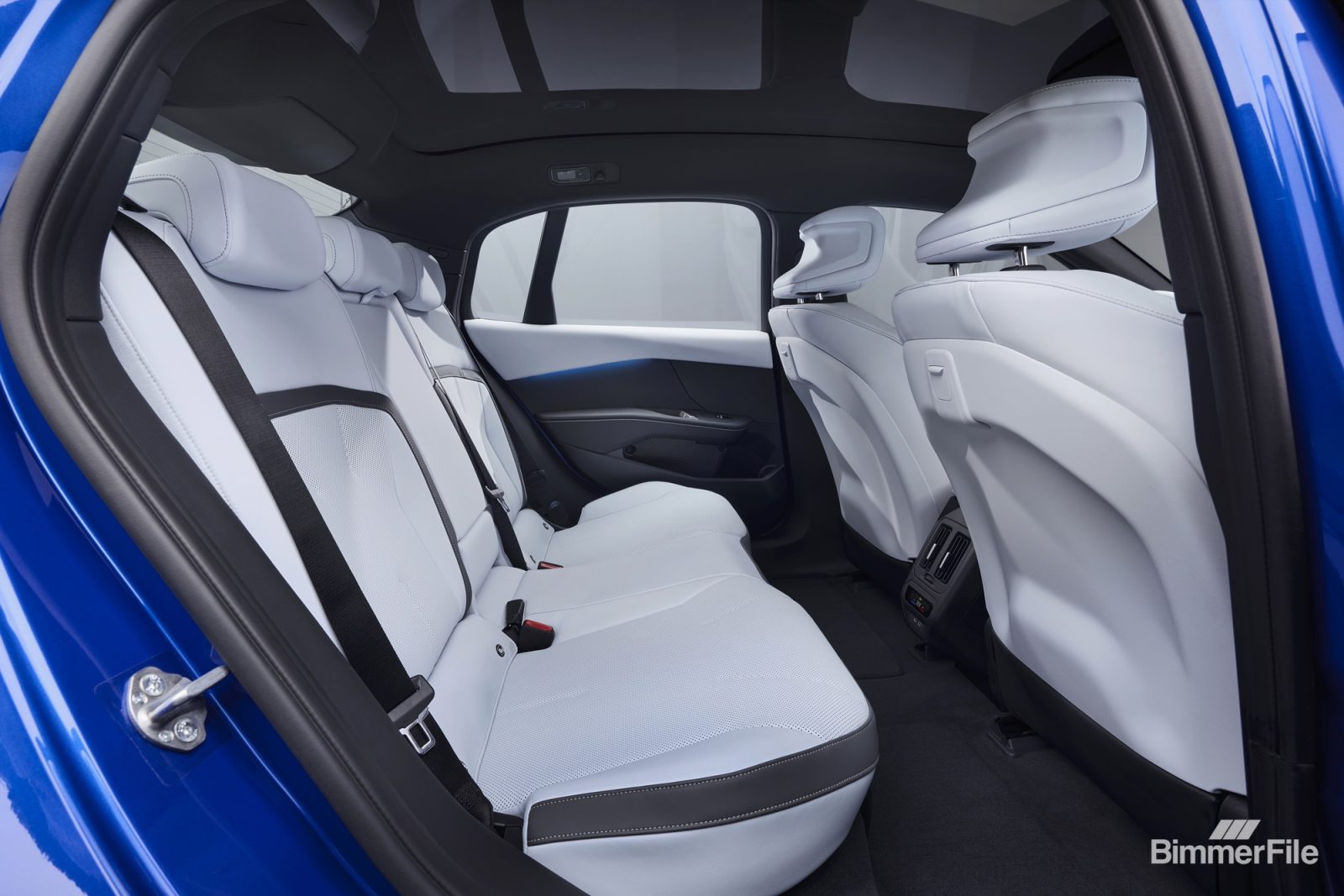
Dimensionally, the new i3 stays remarkably close to the current 3 Series sedan while subtly pushing the formula in a more planted, premium direction. At 187.4 inches long, 73.4 inches wide, and 58.3 inches tall, it is 1.5 inches longer, 1.5 inches wider, and 1.5 inches taller than today’s 3 Series. Its 114.1-inch wheelbase is also 1.6 inches longer, while the front and rear tracks grow to 63.2 and 63.5 inches, up 0.9 and 1.8 inches respectively over the current car. In other words, BMW has not reinvented the 3 Series footprint here. It has simply stretched it, giving the i3 a slightly longer, wider, more cab-rearward stance that should help with both interior packaging and road presence.
The result is a car that clearly belongs to the BMW family even as it introduces a new design language for the Neue Klasse era.
Inside the Neue Klasse Interior
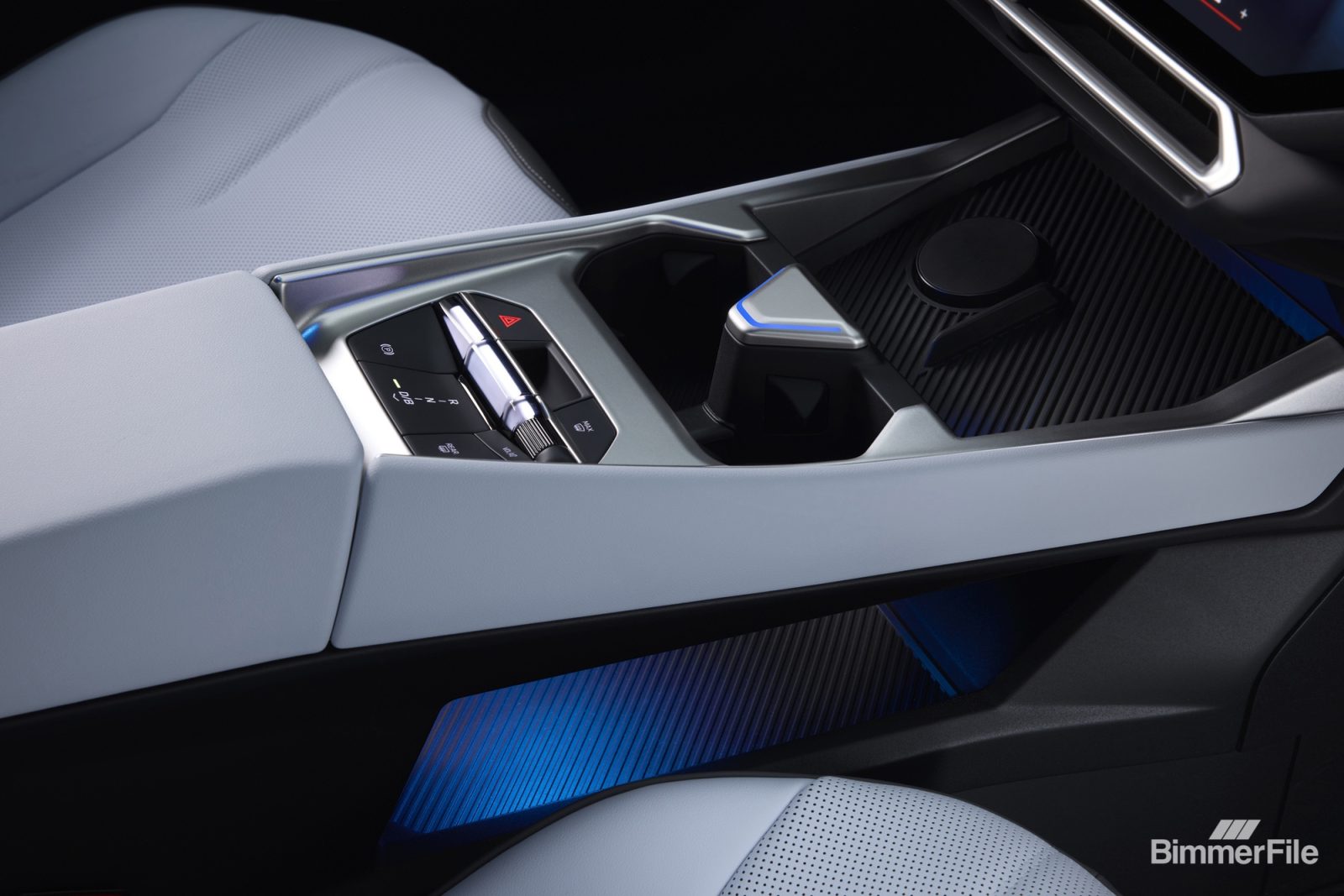
The interior of the new BMW i3 introduces one of the most significant changes to the brand’s cockpit design in years.
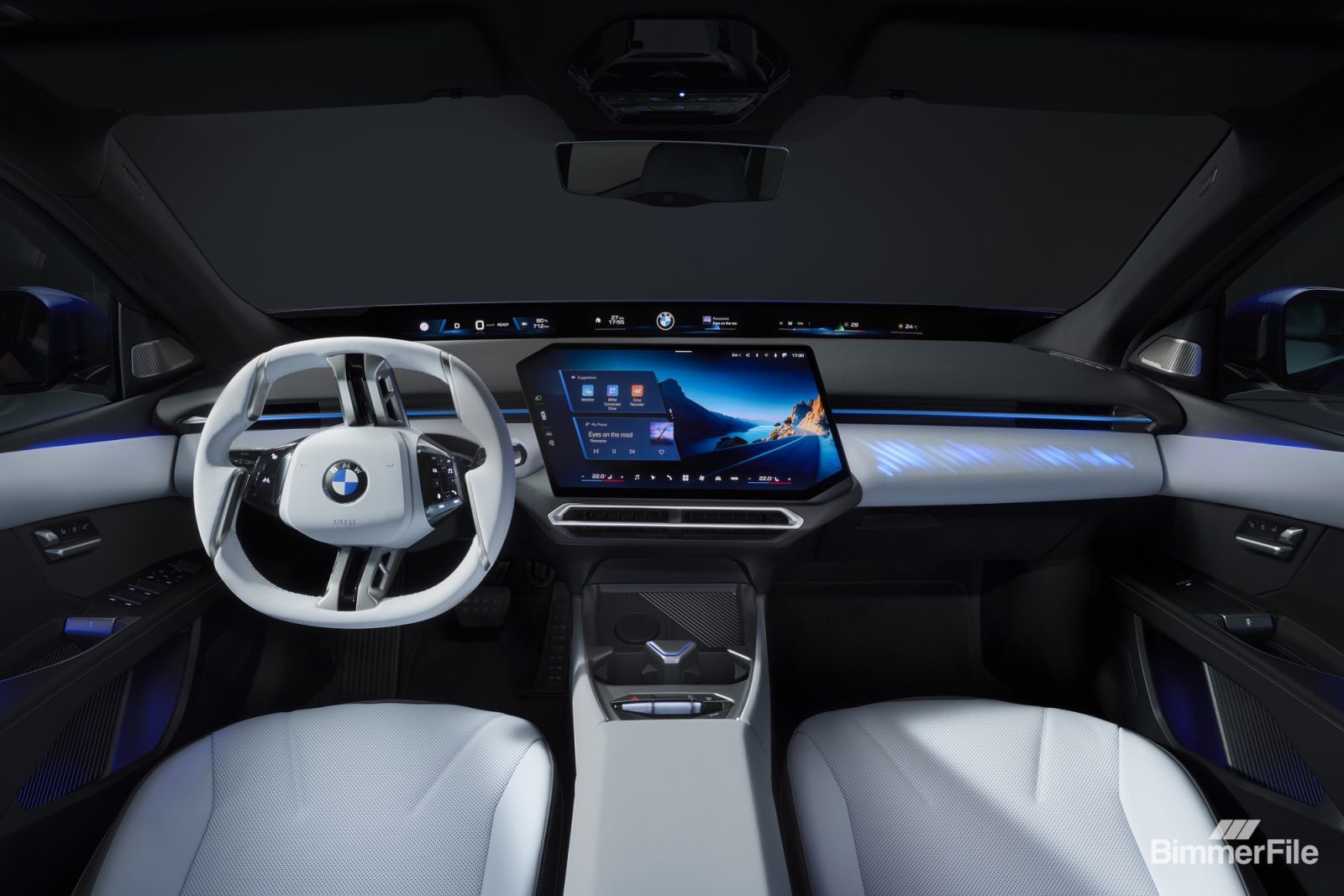
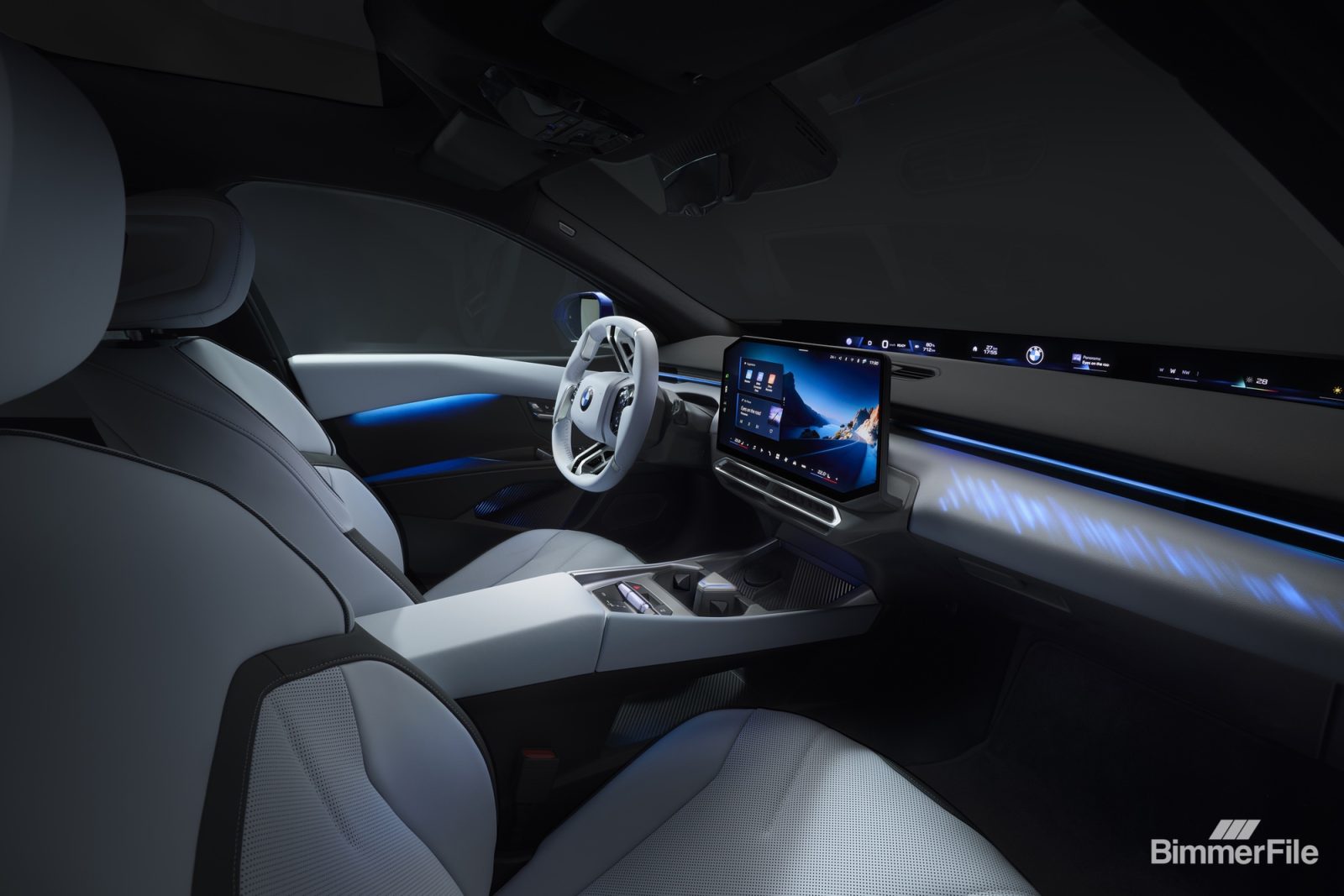
At the center of the experience is BMW Panoramic iDrive, a new display concept that projects information across the lower portion of the windshield from pillar to pillar. Driving information sits directly in the driver’s line of sight while additional widgets and vehicle data can be customized across the display.
A large central display sits next to the steering wheel and is angled toward the driver in the traditional BMW fashion. This screen measures 17.9 inches and serves as the primary interface for infotainment, navigation, and vehicle settings.
BMW has also redesigned the steering wheel with illuminated Shy Tech controls that only appear when the associated functions are available. This approach keeps the interface clean while preserving tactile interaction.
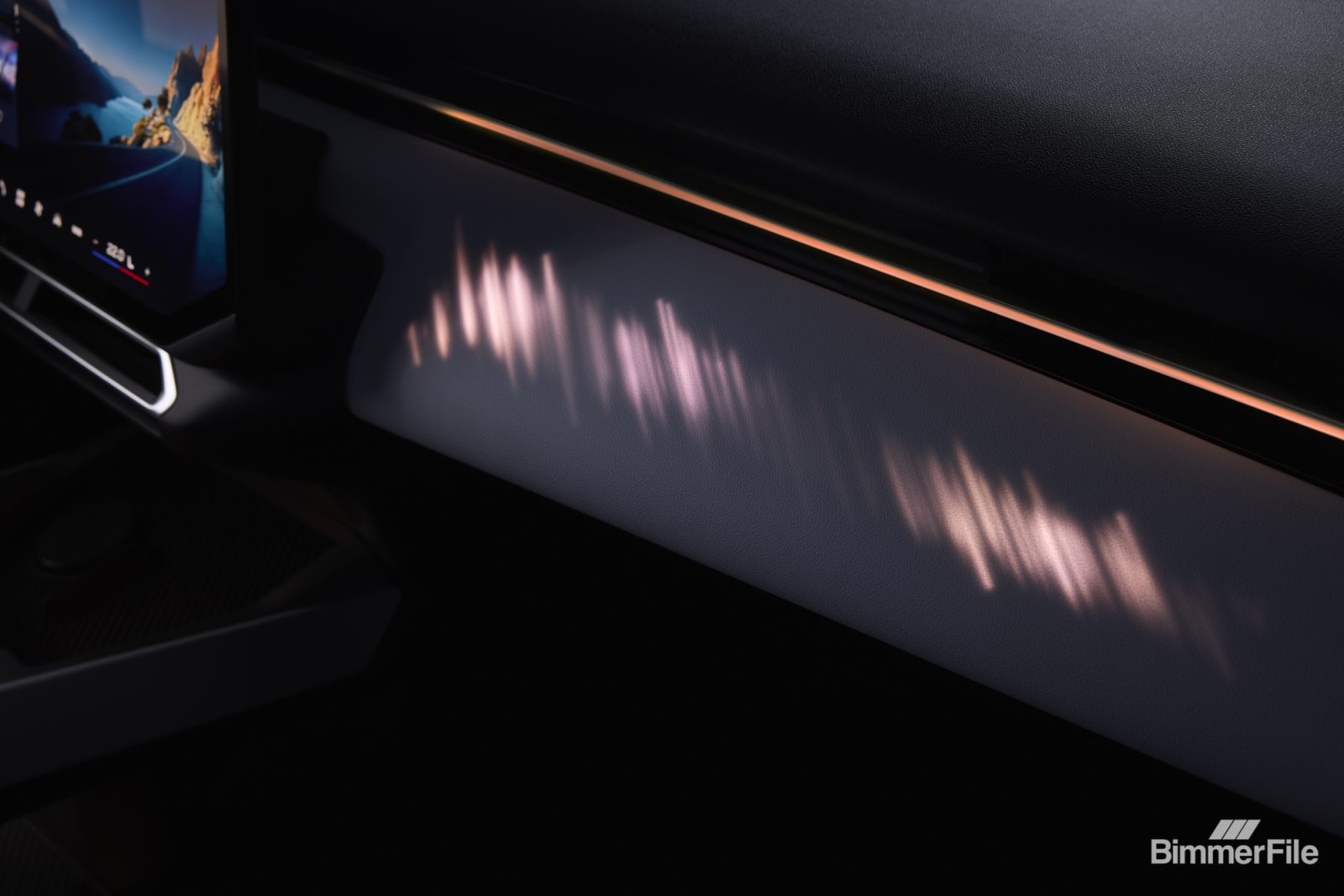
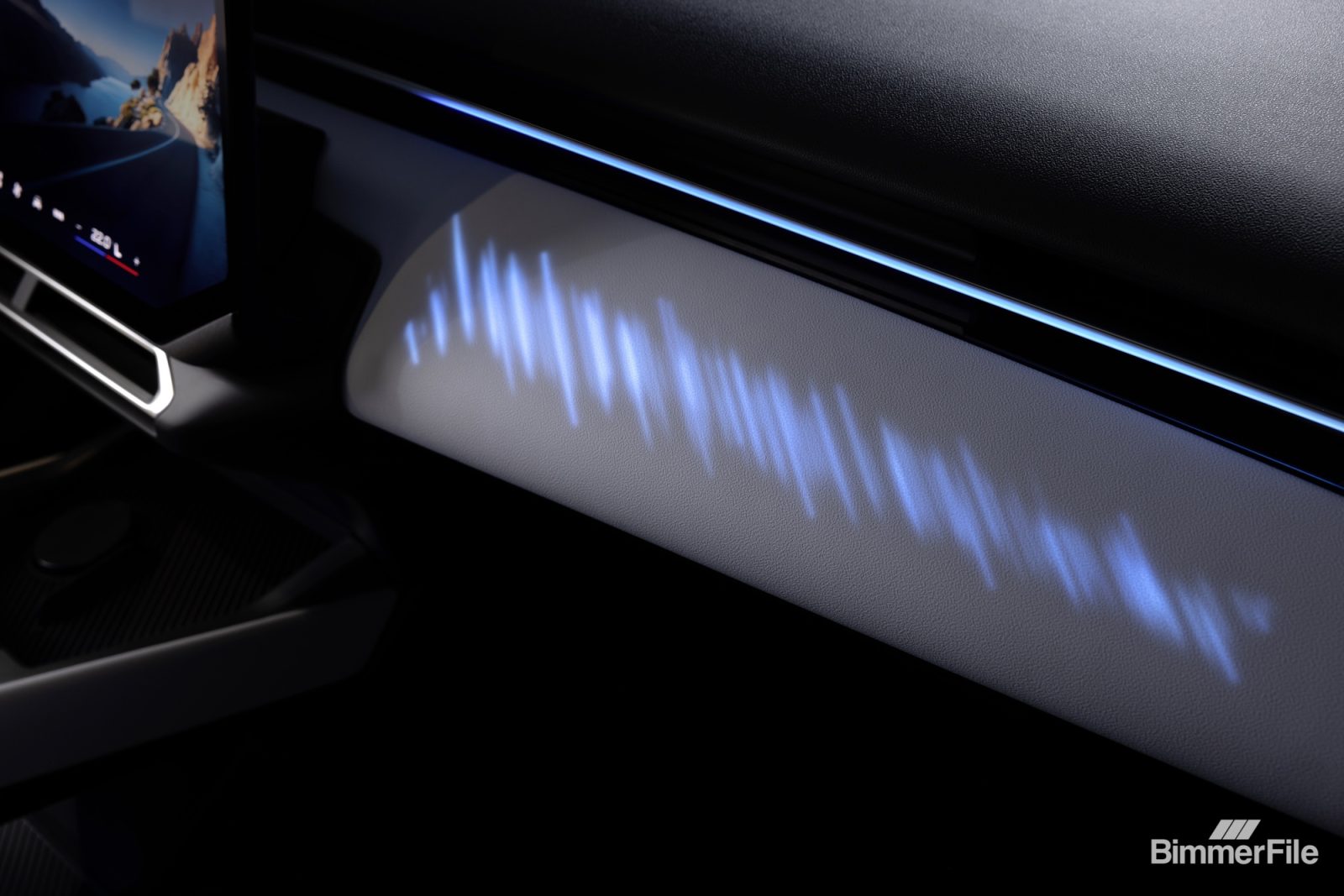
The cabin itself feels more open than previous generations of the 3 Series. Large window areas and a panoramic glass roof create an airy atmosphere while ambient lighting and digital graphics blend together to create a unified visual environment.
Despite all the new technology, the underlying principle remains familiar. The entire layout is still centered around driver orientation.
Gen6 eDrive Technology
Underneath the sleek sedan body sits one of the most important technological advancements BMW has introduced in years.
The new i3 debuts the sixth generation of BMW eDrive technology. This system combines a new electric motor design, an advanced battery architecture, and an 800 volt electrical system that significantly improves charging performance.
Compared with BMW’s previous generation EV technology, Gen6 eDrive increases driving range by roughly thirty percent while also improving charging speeds by a similar margin.
The high voltage battery itself uses cylindrical cells integrated directly into the battery pack using a cell to pack design. Eliminating traditional modules improves energy density and reduces weight while allowing the battery to sit flatter within the vehicle structure.
BMW has also integrated the battery into the body structure through a pack to open body concept. In this design the battery housing forms part of the structural underbody of the vehicle, improving torsional rigidity and contributing to better handling.
Heart of Joy and BMW Driving Dynamics
BMW knows that numbers alone do not define a great sports sedan. The real measure will always be how the car feels from behind the wheel.
That is where a system called Heart of Joy enters the picture.
This high performance control computer manages key aspects of the car’s dynamic behavior including drive power, braking, steering inputs, and regenerative braking. BMW says it processes data ten times faster than previous systems, which allows the car to respond more quickly and smoothly to driver inputs.
In everyday driving most braking is handled through regenerative braking from the electric motors. Conventional friction brakes are primarily used during aggressive driving or emergency situations.
BMW has also introduced a Soft Stop function designed to deliver extremely smooth deceleration when coming to a stop. Anyone familiar with the sometimes awkward brake transitions of EVs will appreciate how important that refinement could be.
Combined with a low center of gravity and a new suspension layout that includes a five link rear axle, the i3 aims to deliver the agile and balanced handling expected from a BMW sports sedan.
Range, Charging, and Long Distance Capability
The new BMW i3 also makes significant progress in the areas that matter most to EV owners.
BMW estimates a driving range of up to 440 miles based on preliminary testing using EPA procedures. That figure places the new i3 among the longest range electric sedans currently under development.
Charging performance is equally impressive. Thanks to its 800 volt architecture the i3 supports DC fast charging speeds of up to 400 kW, which dramatically reduces the time required to recharge during long trips.
The car also introduces several intelligent charging features. Route planning within BMW Maps automatically identifies charging stops when necessary and prepares the battery for fast charging before arrival.
The i3 also supports bidirectional charging functions. Owners will be able to use the car to power external devices, supply electricity to a home, or even feed energy back into the electrical grid depending on regional capabilities.
BMW has confirmed that the North American version of the i3 will include the NACS charging port as standard. That means owners will have access to Tesla’s extensive Supercharger network while still being able to use CCS charging stations through an adapter.
Our Take on the new BMW i3
The new BMW i3 is important not simply because it is electric. But electrification allows BMW to give this cars abilities that simply aren’t easily replicated in an ICE car. Take emotion out of it and look at what we have here; a non-M 3 Series that offers 463 hp, 476 ft-llb and 440 miles of EPA estimated range (not some WLTP dream).
It does all of this with vehicle dynamics that are rumored to be beyond anything we’ve seen in class. No it won’t have the sound of an inline six or a manual transmission to engage with. But in our view, if you’re going to move to electrification, you might as well go all-in. And that’s what BMW has done here.
The new i3 will be sold alongside a similar looking refreshed 3 Series along with new look. Beyond the 3er, the Neue Klasse architecture, the new digital operating system, the updated design language, and the sixth generation electric drivetrain will all appear across BMW’s future lineup. In that sense the i3 is more than a single model. It is the blueprint for the next generation of BMW vehicles.
Production will begin at BMW’s historic Munich plant in August 2026, with the first deliveries expected later in the year. Within twelve months the facility will transition to producing only fully electric Neue Klasse vehicles. That transition marks a turning point not just for a factory but for the entire company.
For many of us this new i3 must succeed in delivering the same balance of performance, usability, and driver engagement that defined the best 3 Series models. But for BMW their goal is nothing less than redefining what’s possible in the segment.
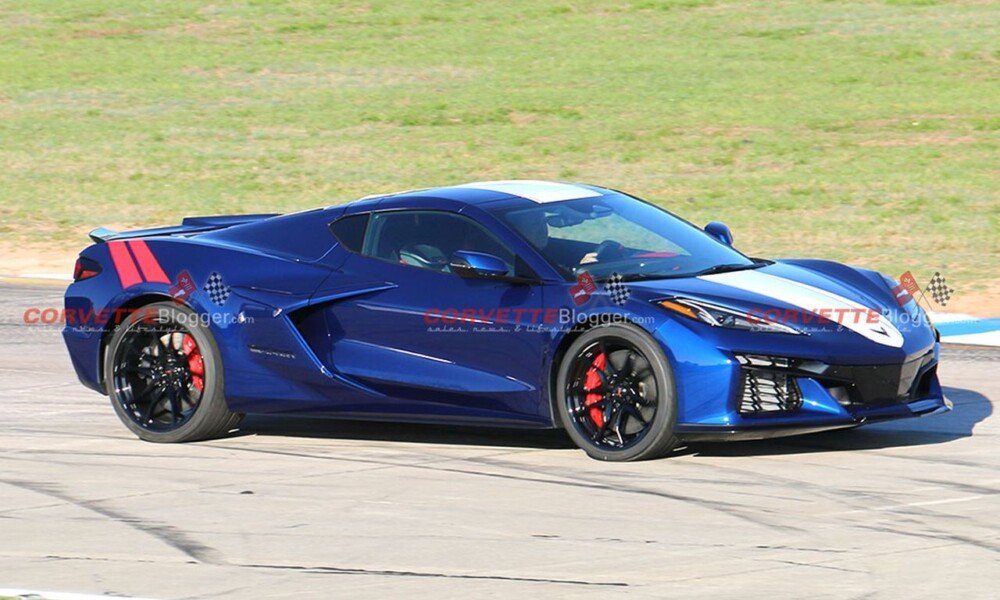
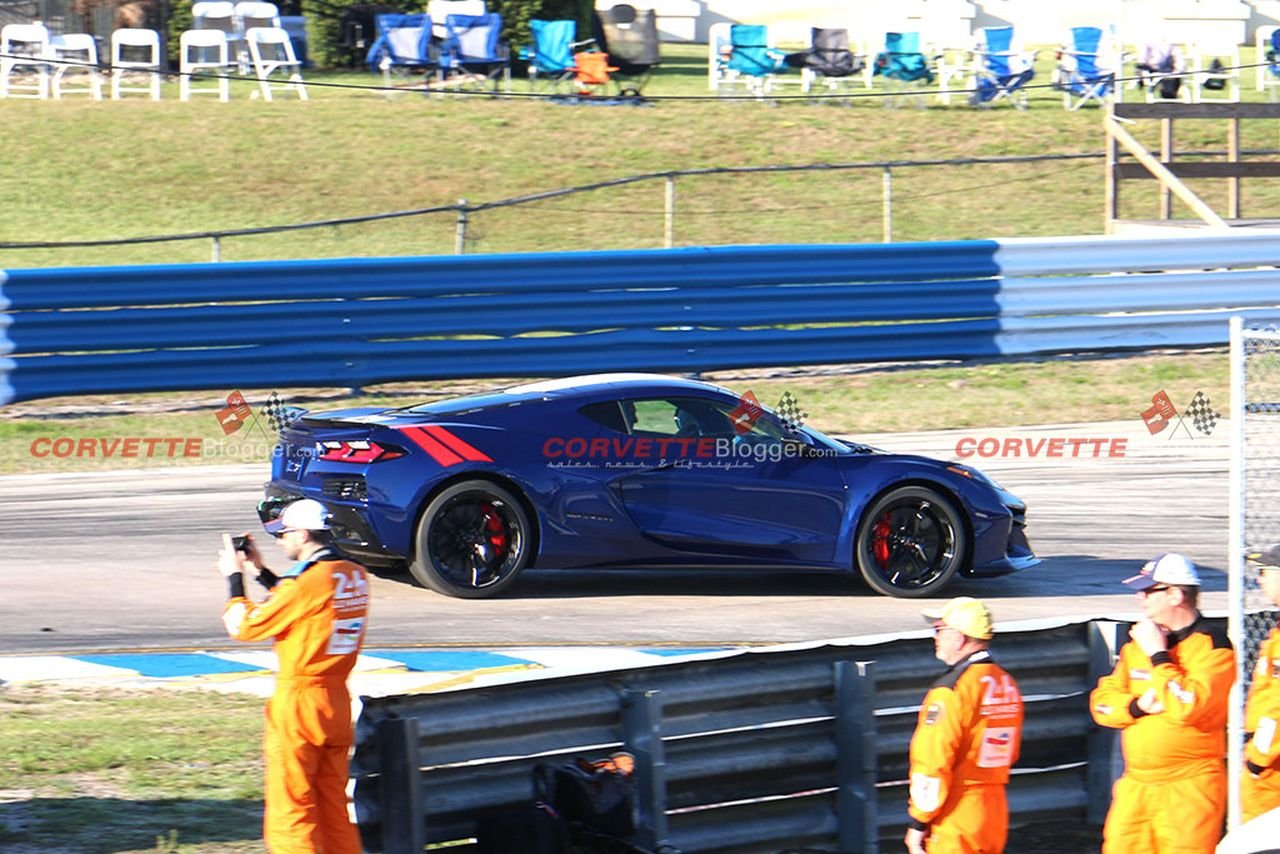
The 2027 Chevrolet Corvette Grand Sport recently made a surprise appearance at Sebring. It was joined by previous generations of the Grand Sport for a parade lap ahead of the 12 Hours of Sebring race.
The upcoming Chevy Grand Sport spotted this morning looked similar to the car that was captured on the Angeles Crest Highway in California during a photoshoot. It was sporting the historic Admiral Blue livery with a white racing stripe and red decals on the rear fenders. It was running on black wheels and had red brake calipers.
The new C8 Grand Sport is expected to debut sometime next year. It will be positioned below the ZR1 and ZR1X, offering a decent level of performance in an affordable package.
Speaking of performance, the Grand Sport could be powered by a new 6.7-liter V8 engine producing around 550 hp.
Chevy is also said to be working on a Grand Sport X, which is likely to use the same 6.7-liter V8 paired with a front-mounted electric motor, producing 720 hp.
The original plan for this feature was to meet David Durand a few miles west of Paris for a chatty trudge through some leafy woodland, before settling down next to an idyllic babbling brook for a light lunch and some snaps of us basking cheerily in the sun.
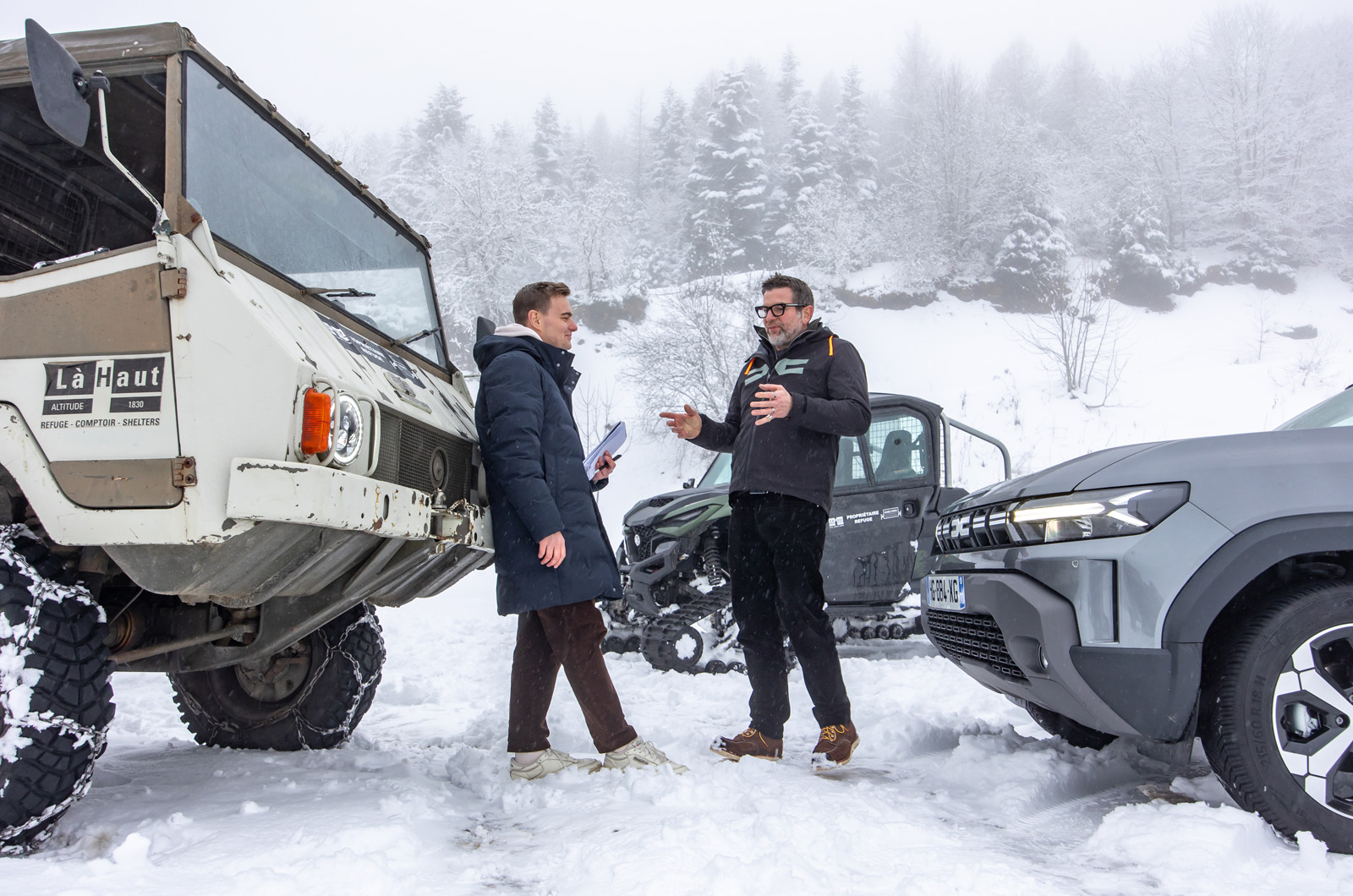
No dice. If we’re to really find out what makes Dacia’s design boss tick and dig deep into his vision for the brand, we need to aim higher. About 1830 metres higher, in fact, as he jovially remarks when he greets us halfway up a frigid, snow-covered Alpine pass overlooking Lake Annecy in the French Alps.
We’ve come to join the passionate outdoorsman for a relaxing couple of days in what he calls the “fresh air” (we’d call it bracing) so he can show us the sorts of environments and pursuits that have inspired his repositioning of Dacia as a maker of lifestyle-flavoured, activity-focused family cars that major on utility but without compromising a jot on ‘cool factor’.
It’s a theme that’s tricky to fully explore in the confines of a motor show hall or a gently heated design studio, so he’s invited us to the mountains he grew up on to demonstrate what it’s all about.
“For me, this is the perfect place,” says the keen sailor, cyclist, runner, climber and skier – not just for showing off the Dacia brand ethos but also because of the connection he has with the area. “It’s not the only place we could go, but for me it comes to my mind immediately because I’m from here. These are my roots,” he says.
Grenoble-born Durand is a Renault Group lifer. Joining the firm fresh out of college 29 years ago as an exterior designer, he made a name for himself with the rule-bending Koleos concept at the turn of the millennium and the wacky Ellypse, which previewed the Modus, two years later.
A subsequent stint in Renault’s satellite studio network included spending time with the design teams in Barcelona, Seoul and São Paulo, before he returned to base to take a leading role in shaping and positioning the Dacia brand.
As exterior design director in 2020, Durand shaped the Bigster concept, which previewed a chunky new 4×4-flavoured direction for the wider line-up and he’s been evolving that since becoming overall design boss four years ago, emphasising the brand’s no-nonsense approach by cultivating a rugged, outdoorsy image centred on the straightforward, intuitive practicality credentials of the cars themselves.
It was a dramatic shift for a brand that had hitherto been known, and celebrated, almost exclusively for its budget-friendly billing, with its cheapest models marked out by diddy steel wheels, black plastic bumpers and blanked-off centre consoles – and Durand says the revamp was a crucial component of former group CEO Luca de Meo’s transformative ‘Renaulution’ reinvention strategy.
BMW Group design boss Adrian van Hooydonk reveals that some of the early i3 design sketches had the vertical grille.
It works on the iX3 because it has a taller front section.
For the 3 Series, the design team went instead with the horizontal kidneys to better suit the sedan’s lower, sportier stance.
BMW has been designing cars for nearly a century, and we can’t even fathom how many sketches were left on the proverbial cutting room floor. Some secrets do emerge years, if not decades, later. However, in most cases, we don’t know the full story behind the creative process. But every now and then, the design team does spill the beans about a freshly launched product.
Case in point, BMW Group design boss Adrian van Hooydonk has shared a tidbit about the new i3. The electric 3 Series Sedan had a different grille in some of the early sketches. Speaking with journalists at the official debut this week, the design supremo said his team experimented with a vertical grille. However, the company ultimately went in a different direction. In the end, the tall and narrow kidneys were deemed unfit for the car’s front end.
“We tried it on the 3 Series as well. In the design phase, we looked at that, but we felt that for the 3 Series, and actually since many generations, the 3 Series has become sporty. That’s why, at some point we felt that if we had put the vertical grille, it would have maybe looked too retro. It wouldn’t have become as sporty as it looks today. We looked at both, and found the horizontal grille would fit the character of a 3 Series better.”
Expect to see the iX3’s retro-flavored kidneys on taller vehicles, such as the new X5/iX5 (G65) debuting this summer. Photos of prototypes have shown that the Neue Klasse iX1 (NB5) will feature a vertical layout when it arrives. Of course, the grille will remain proportionate to each vehicle’s front end, as there won’t be a one-size-fits-all solution.
As seen on the i3, lower cars will use horizontal kidneys. The next model to adopt this setup could be the 3 Series Touring, which BMW teased a few days ago. If the two-door i4 Coupe rumor holds water, it would make sense for the NA2 to also have a wide grille that blends with the headlights. The alleged NA1 hatchback would likely follow the same approach with horizontal kidneys.
However, these new grilles won’t make their way to all models. Ahead of its debut next month, the 7 Series facelift has been previewed with an evolutionary take on its supersized kidneys. Similarly, spy shots of the updated 5 Series, arriving in 2027, suggest it won’t fully embrace the Neue Klasse aesthetic either. BMW will also launch the second-generation X7 next year, and spy images strongly indicate it will retain a large grille flanked by split headlights, mirroring the upcoming 7 Series LCI.
Elsewhere in the vast lineup, several models will stick with their current grilles. Relevant examples include the 2 Series Coupe, 2 Series Active Tourer, 4 Series Coupe/Convertible, iX, and XM. Even so, the new kidneys seen on the iX3 and i3 will gradually spread across the lineup. Whether through facelifts or next-generation models, the less intrusive grilles are set to dominate the portfolio in the years ahead.
Pada 15 Mac lalu, ASEAN NCAP (Program Penilaian Kenderaan bagi Negara-ngeara Asia) umumkan bahawa pihaknya telah menurunkan penarafan keselamatan bagi Proton X90 MC 2026 kepada hanya satu-bintang, berbanding penarafan lima-bintang yang diraih SUV berkenaan menerusi versi awal ketika pertama kali dilancarkan di sini pada Mei 2023.
Alasan yang diberikan adalah kerana kurangnya fungsi dari sistem bantuan pemandu (ADAS) yang ditawarkan untuk model yang dikemaskini itu. Sebelum ini, X90 ditawarkan dengan ciri seperti AEB, amaran perlanggaran depan, amaran penukaran lorong, bantuan mengekalkan lorong, amaran lintasan trafik di belakang, peninjau titik buta dan banyak lagi.
Versi MC yang baru dilancarkan itu bagaimanapun menggugurkan semua ciri berkenaan, dengan ketiga-tiga varian yang ditawarkan langsung tidak mempunyai apa-apa fungsi ADAS. Menurut ASEAN NCAP, berdasarkan protokol 2021-2025, “penarafan bintang bagi sesebuah model akan diperketat sekiranya ia memberi prestasi teruk bagi mana-mana kategori yang dinilai, sekali gus bertujuan untuk memastikan perlindungan menyeluruh.” Penting untuk diambil maklum, penarafan lima-bintang masih sah untuk unit X90 tahun 2023-2025, sementara penarafan satu-bintang hanya terpakai untuk model 2026.
Sejak itu, topik ini menjadi perbincangan hangat di Internet, dengan ada sebahagian orang berpendapat bahawa penarafan semula itu tidak wajar, kerana pengguguran ADAS atau apa-apa ciri keselamatan aktif tidak mengurangkan kualiti sesebuah kenderaan, dalam hal ini merujuk kepada kekukuhan rekaan atau kelengkapan keselamatan pasif. Argumen kelompok ini, gugurnya ciri ADAS tidak bermakna sesebuah kenderaan itu menjadi tidak selamat sampai ke tahap penarafannya boleh diturunkan hingga kepada satu-bintang, memandangkan ia adalah model yang sama seperti unit yang diuji sebelumnya, dengan yang berubah hanya unit enjin.
Sebetulnya, tiada siapa yang mengatakan bahawa sesebuah kenderaan itu terus jadi tidak selamat tanpa sistem ADAS. Cuma, ujian untuk penilaian penarafan itu perlu mengikut parameter yang telah ditetapkan oleh protokol. Dalam kes ini, pengguguran ciri ADAS telah menyebabkan mata bagi bantuan keselamatan (SA) dalam penilaian itu jatuh ke tahap empat-bintang, dengan ciri keselamatan bagi kategori penunggang motosikal (MS) — yang banyak bergantung kepada ciri pengesan titik buta (yang juga telah digugurkan untuk X90 MC) menjadi faktor yang menyebabkan merudumnya penarafan kepada hanya satu-bintang. Pencapaian mata atau skor terendah itulah yang mencerminkan penarafan akhir.
Maksudnya di sini, sesebuah kereta boleh menjadi lebih selamat, sekiranya dilengkapi dengan sistem bantuan pemandu (yang pernah disertakan untuk X90 dulu) yang boleh membantu menghindarkan kemalangan daripada berlaku. Istilah “bantu” sangat penting di sini: umumnya, kemalangan berlaku akibat kesilapan pemandu, baik tanpa sengaja atau kerana kecuaian, serta sikap pemandu ketika mengendalikan kenderaan sangat mempengaruhi aspek keselamatan di jalan raya dalam kenderaan penumpang.
Apa pun, semua perkara yang terlibat ini memainkan peranan tersendiri dalam memastikan keadaan paling selamat bagi kenderaan yang bergerak. Ciri keselamatan pasif, sama ada dari segi rekaan atau kekukuhan struktur kenderaan, beg udara atau tali keledar — semuanya sama penting kerana akan melindungi penumpang ketika berlakunya impak. Namun, adalah silap sekiranya kita mengandaikan bahawa ciri keselamatan aktif tidak penting, kerana ia bersifat menghindarkan — ciri seperti AEB atau peninjau titik buta misalnya akan sangat berguna untuk mengelak kemalangan daripada berlaku.
Kesimpulannya, ciri keselamatan pasif dan aktif adalah sama penting, dan saling melengkapi untuk memastikan keselamatan penumpang ketika berada di jalan raya berada di tahap yang jauh lebih baik — yang satu untuk mengurangkan kecederaan, dan yang satu lagi untuk berusaha menghindari kemalangan daripada berlaku sama sekali.
Apa pun keadaannya, dunia terus berjalan, dan perkembangan atau penambahbaikan tidak boleh dielakkan. Standard juga semakin berkembang. ASEAN NCAP menyatakan yang protokol penarafan yang mereka guna mencerminkan peralihan dan perkembangan itu, dan kini lebih ketat berbanding ketika awal pelaksanaan program berkenaan. Matlamatnya hanya satu: untuk melindungi semua, termasuk penunggang motosikal dan pejalan kaki — dan ini tentulah sesuatu yang lebih baik untuk semua kategori pengguna.
Dengan tersedianya kemajuan dalam ciri keselamatan kenderaan hari ini, adalah tidak bijak untuk mengorbankan aspek keselamatan yang sudah sedia ada itu dengan alasan untuk mengurangkan harga kenderaan. Apatah lagi, jika kenderaan itu memang dihasratkan untuk kegunaan keluarga — tak ada siapa yang mahu memperjudikan keselamatan dan nyawa keluarga mereka ketika di jalan raya.
Untuk pengeluar kenderaan, ia sudah menjadi tanggungjawab yang wajib dipenuhi, walaupun mungkin ada segelintir khalayak yang merasakan pengguguran ciri keselamatan seperti itu tidak memberi banyak kesan. Kita tak akan pernah tahu bila ciri keselamatan aktif — seperti AEB dan peninjau titik buta — akan menjadi penting dan sangat membantu, sehinggalah ketika kita berada dalam situasi cemas yang memerlukan tersebut. Ketika itu, tentulah semuanya telah terlambat.
Keselamatan sepatutnya sentiasa menjadi keutamaan, dan tanggungjawab kita bersama — perkara nombor satu yang tidak boleh digadai.
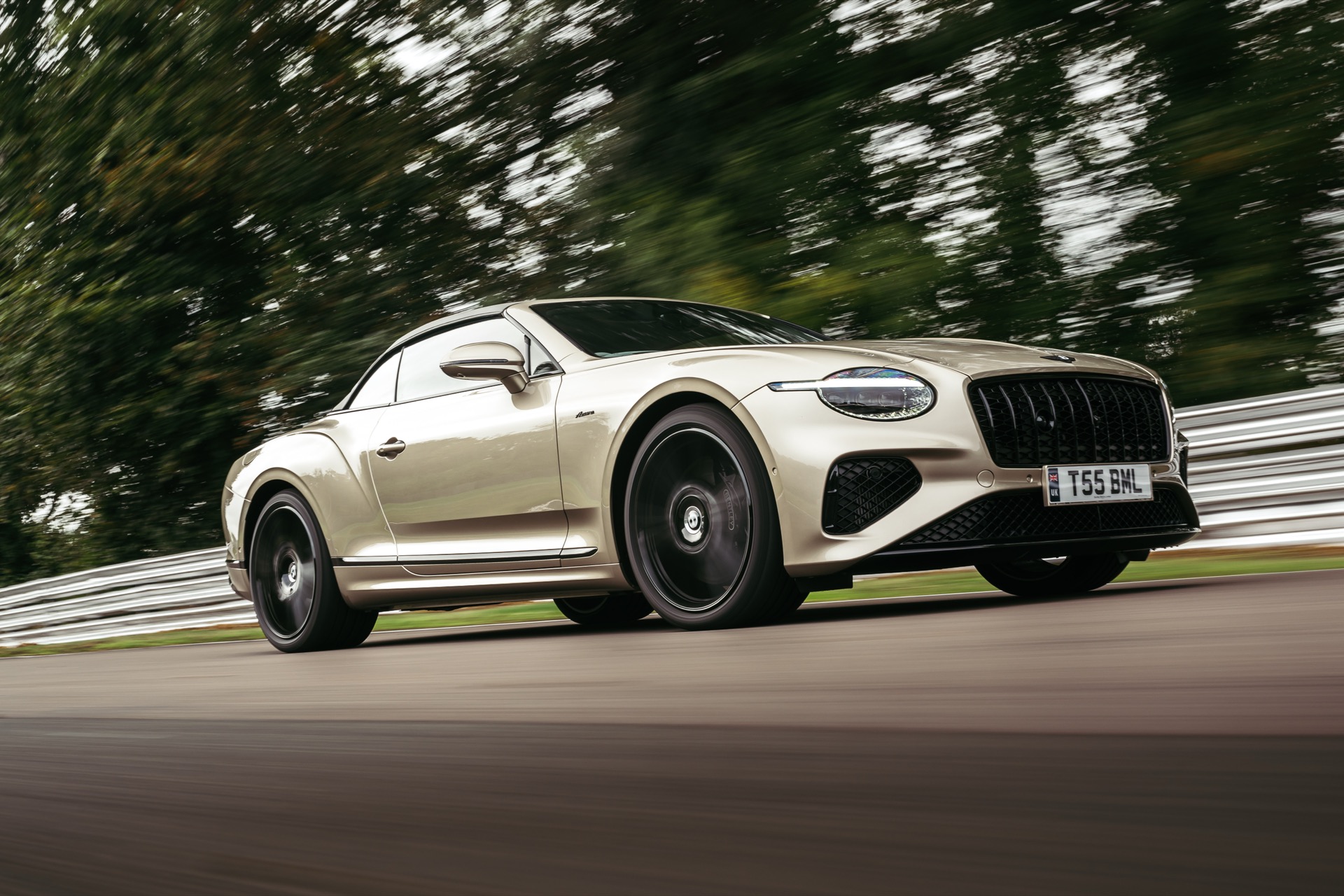
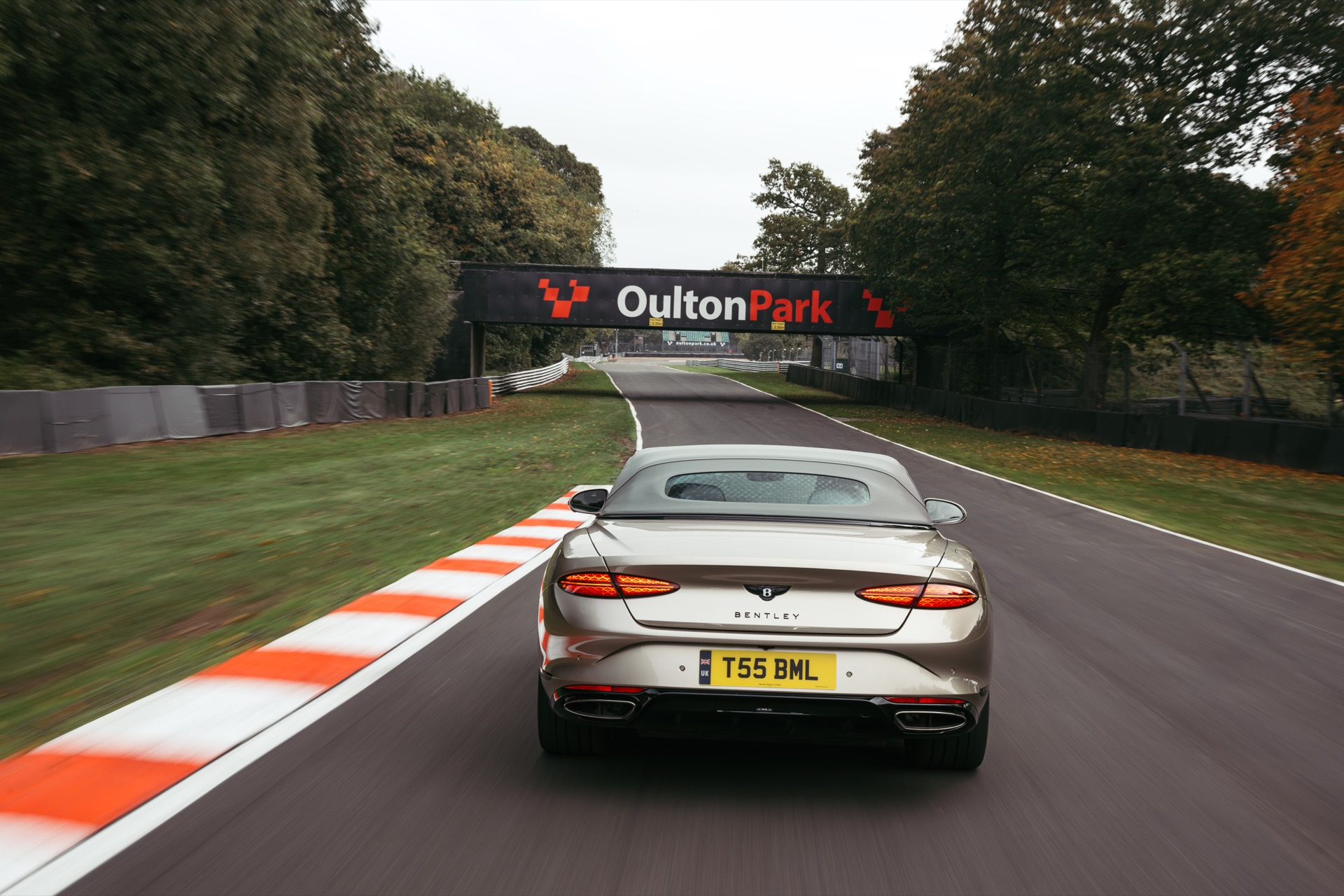
The Bentley Continental GTC Azure Hybrid is not the sort of car that begs to be wrung out by the scruff of its neck. It does not wake up every morning hoping to be treated like a 911 on a mountain pass, nor does it particularly care for that kind of expectation. And really, that is the point.
Because what Bentley has created here is something rarer than outright performance. The GTC Azure Hybrid is a luxury convertible that makes almost every journey feel like an occasion, whether you are crossing a continent, slipping through a city centre at dusk or simply taking the long way home because the evening feels too good to waste. It is a magnificent wafter in the truest sense, and one that exists in a class of one.
Bentley Continental GTC Azure Hybrid
On paper, the numbers are still deeply impressive. The new High Performance Hybrid powertrain combines a 4.0-litre twin-turbo V8 with electric assistance for a combined 680 PS and 930 Nm, enough to send this near-2.7-tonne convertible to 62 mph in just 3.9 seconds. But quoting the figures rather misses the magic. What stands out in the Azure is not the violence of its acceleration, but the layered way it delivers everything. There is the serenity of silent electric running at low speeds, the cultured thrum of the V8 when it joins in, and the sense that the whole car has been engineered to isolate stress rather than encourage it.
That suits the Azure brief perfectly. Bentley’s focus here is comfort, wellbeing and effortlessness, and it shows. Roof down, the cabin remains beautifully hushed. The ride, despite large 22-inch wheels, has that expensive, slightly uncanny ability to round off poor surfaces without losing composure. The seats, the detailing, the craftsmanship, the way every touchpoint feels dense and deliberate, all reinforce the idea that this is less a convertible GT and more a moving luxury lounge.
Try to drive it like something smaller, sharper and more singularly focused, however, and its limitations begin to show. Yes, the chassis is immensely capable. Yes, the active anti-roll system, rear-wheel steering and clever differentials do an admirable job of disguising the mass. But you are always aware that this Bentley’s true gift lies in flowing with the road, not attacking it. Push too hard and the illusion fades slightly. It is accomplished rather than playful, secure rather than intimate.
Even so, that feels less like a criticism and more like a reminder to enjoy the car on its own terms. Besides, nobody buys a Continental GTC Azure Hybrid because they need the last word in steering feel. They buy it because almost nothing else combines this level of luxury, craftsmanship, presence and open-air refinement.
The one genuine compromise is practicality. The hybrid battery has reduced boot space to a meagre 134 litres, which is laughably small for a car of this size and mission. But then the Continental GTC Azure Hybrid was never about travelling light in the literal sense. It is about making light work of travel itself.
A DESTINATION TRAILER isn’t about the journey—it’s about a mobile vacation space you return to again and again. The largest destination trailer RVs are built for seasonal or full-time living, offering the space and comfort needed to settle in without feeling like you’re downsizing your everyday life.
The biggest destination trailer layouts make room for real routines: relaxed mornings in a spacious living area, shared meals around a full-size dinette, and enough sleeping space for family and guests to come and go comfortably, all while still enjoying the great outdoors. Whether you’re setting up at a seasonal campground or planning an extended stay, large destination trailers feel less like a temporary stop and more like a space you can truly enjoy living in.
Key Takeaways
Residential Scale and Comfort: The largest destination RVs prioritize long-term livability over frequent travel, offering full-sized kitchens, residential-style bathrooms, and expanded sleeping capacities.
Innovative Multi-Level Living: Modern floor plans incorporate unique structural features, such as two-story exterior deck systems, toy hauler garages, and elevated lofts, keeping the main living areas open and uncluttered.
Stationary Advantages: Designed for seasonal or full-time use in one location, these 40-foot-plus trailers can last longer because they experience less structural stress than frequently towed RVs.
The Largest Destination Trailers
The largest destination trailers are for RVers who want space that truly functions over weeks or months at a time—not just for weekend escapes.
These spacious, over-40-foot destination trailer floor plans prioritize residential-scale living areas and construction choices that support extended stays in one location. From expansive living rooms to cozy bedrooms and generous cargo ratings, the largest destination trailer models showcase how extra length and weight capacity translate into everyday comfort, usability, and long-term livability.
Grand Design Foundation 42GD
Images by Grand Design
Specs
Length: 48’6”
Hitch Weight: 2,794 pounds
Dry Weight: 15,308 pounds
Cargo Capacity: 2,692 pounds
Sleeping Capacity: Up to 8
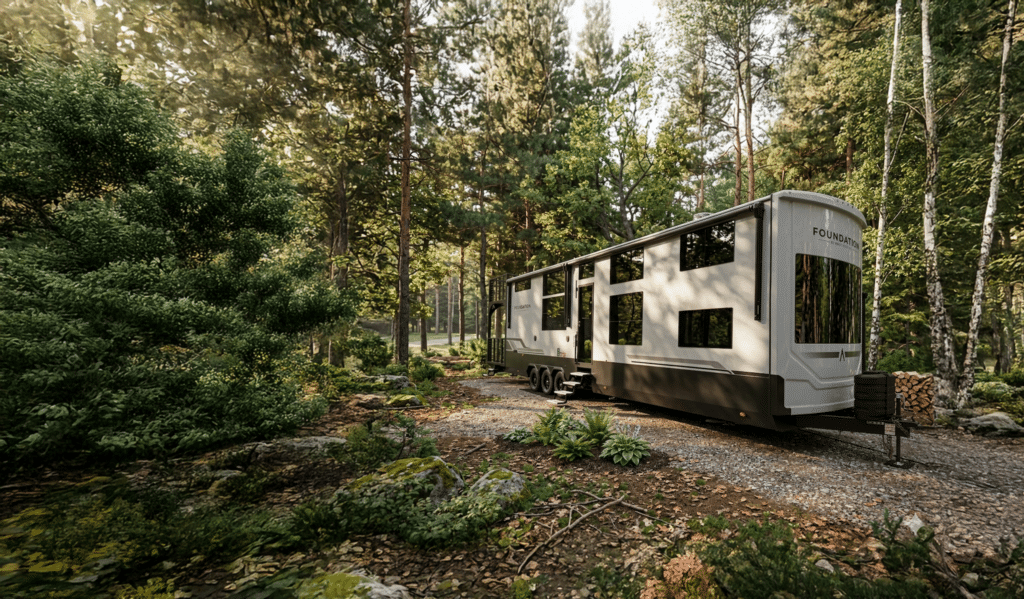
The Foundation 42GD marks a major milestone for Grand Design RV, serving as the brand’s first destination trailer and an immediate contender among the largest destination trailer options on the market. This floor plan uses its size with clear intent, prioritizing long-term comfort, defined living zones, and standout outdoor living features.
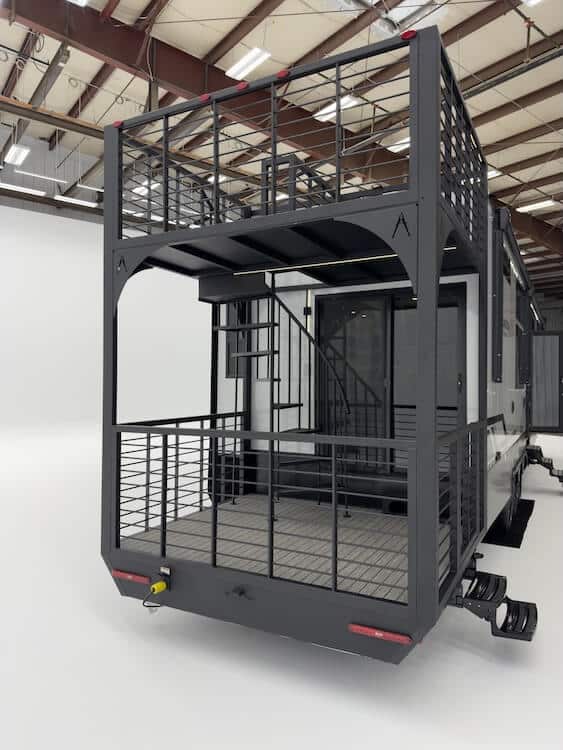
One of the most distinctive elements is the two-story exterior deck system, featuring a spacious lower patio and an elevated observation deck accessible by a spiral staircase. This design expands usable living space beyond the interior and supports the kind of indoor–outdoor lifestyle that appeals to seasonal campers.
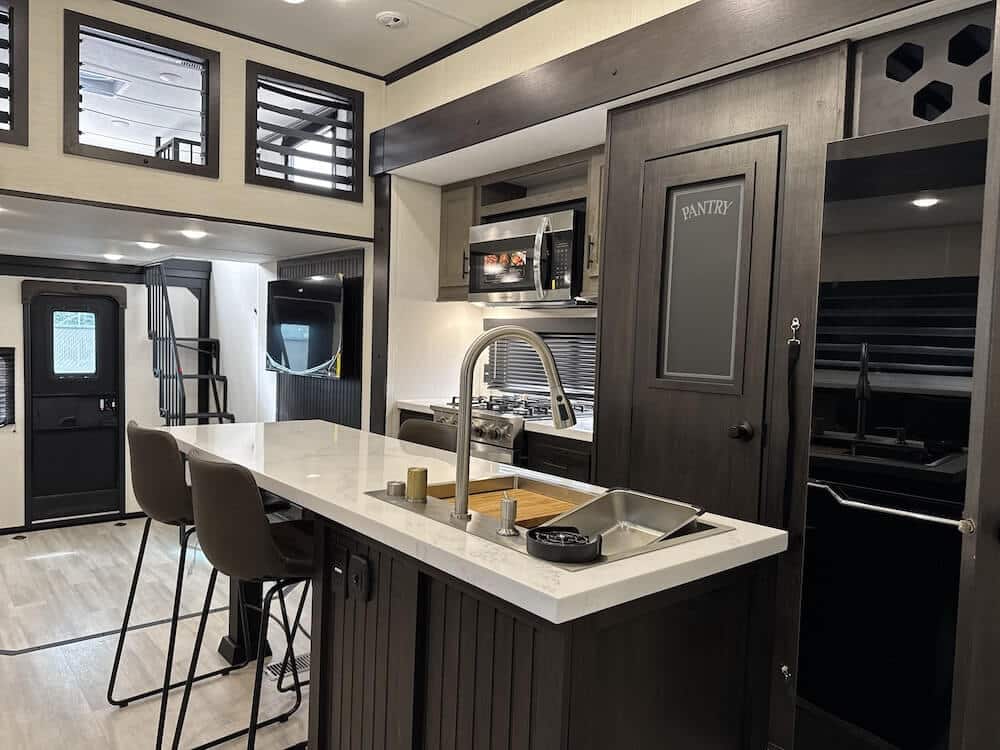
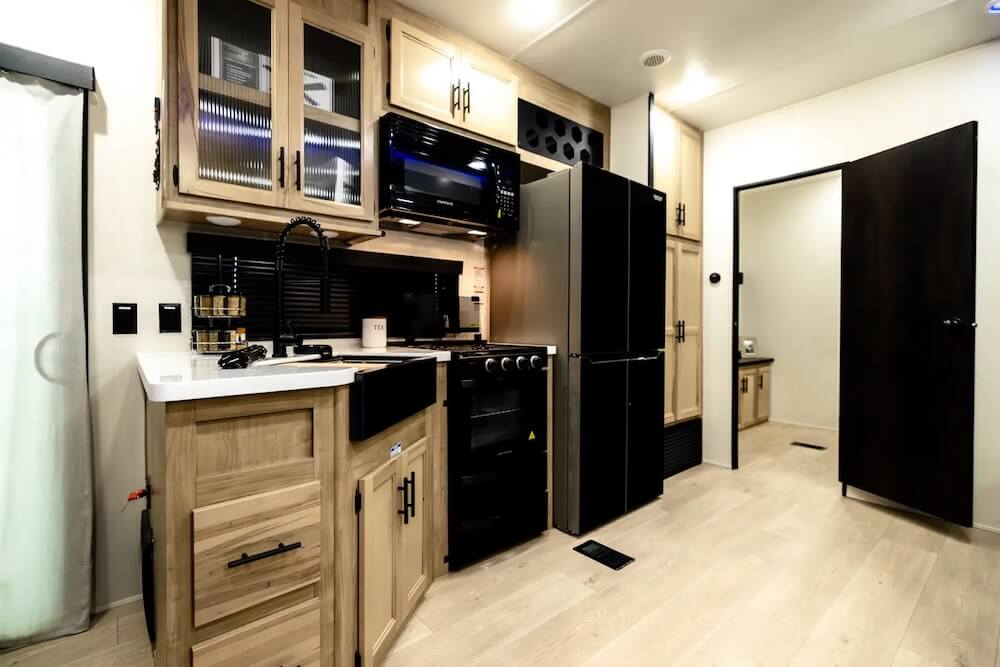
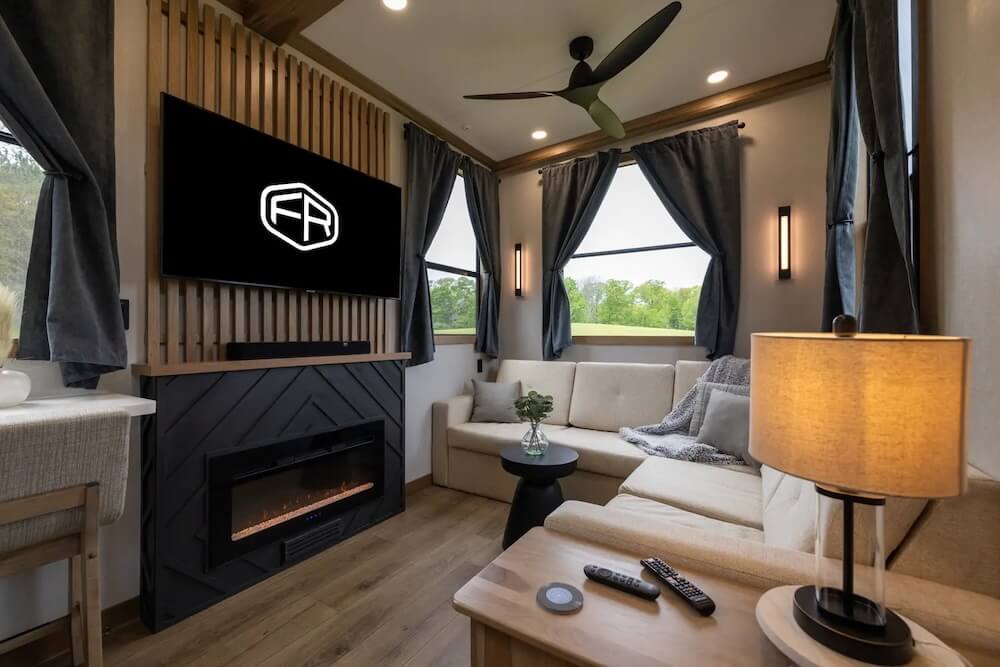
Inside, the central living area functions as a true gathering space, anchored by a large entertainment wall and fireplace that adds warmth and visual structure. A residential-style kitchen with an island and ample counterspace supports everyday cooking rather than occasional meals.
Sleeping accommodations are spread across a private front bedroom and lofted sleeping areas, creating separation that feels more residential than temporary. With generous cargo capacity and a hitch weight comparable to a 5th wheel destination trailer, the Foundation 42GD is best for RVers focused on long-term stays, stability, and livability over frequent travel—making it a strong option for those searching for the best destination trailer for full-time living.
Cherokee Wolf Pack 411STAY
Images by Forest River
Specs
Length: 45’
Hitch Weight: 3,310 pounds
Dry Weight: 14,884 pounds
Cargo Capacity: 2,426 pounds
Sleeping Capacity: Up to 6
The Cherokee Wolf Pack 411STAY from Forest River RV blends destination-trailer scale with the flexibility of a toy hauler, making it a strong option for RVers who want long-term comfort without sacrificing utility and functionality. At 45 feet long, it fits squarely among today’s largest destination trailer floor plans while offering a layout designed to accommodate extended stays, guests, and gear.
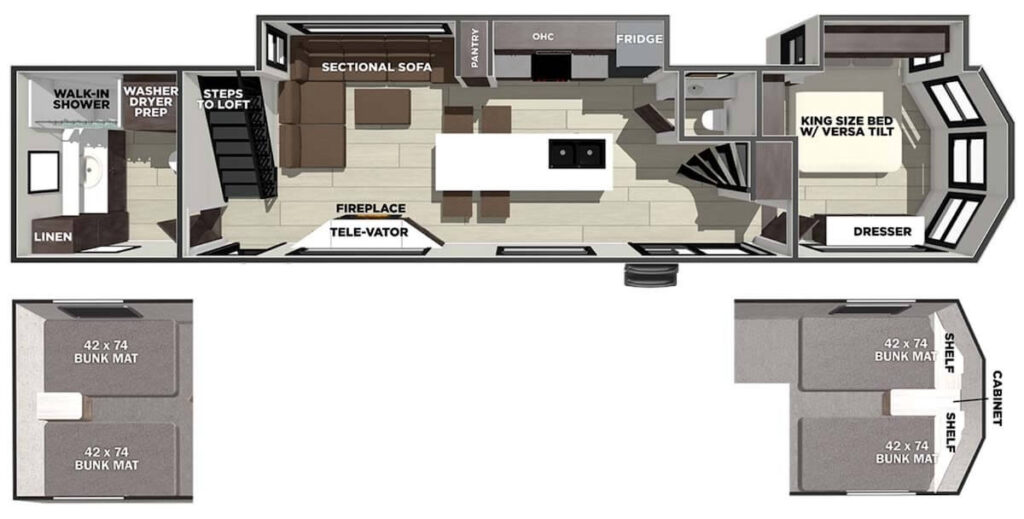
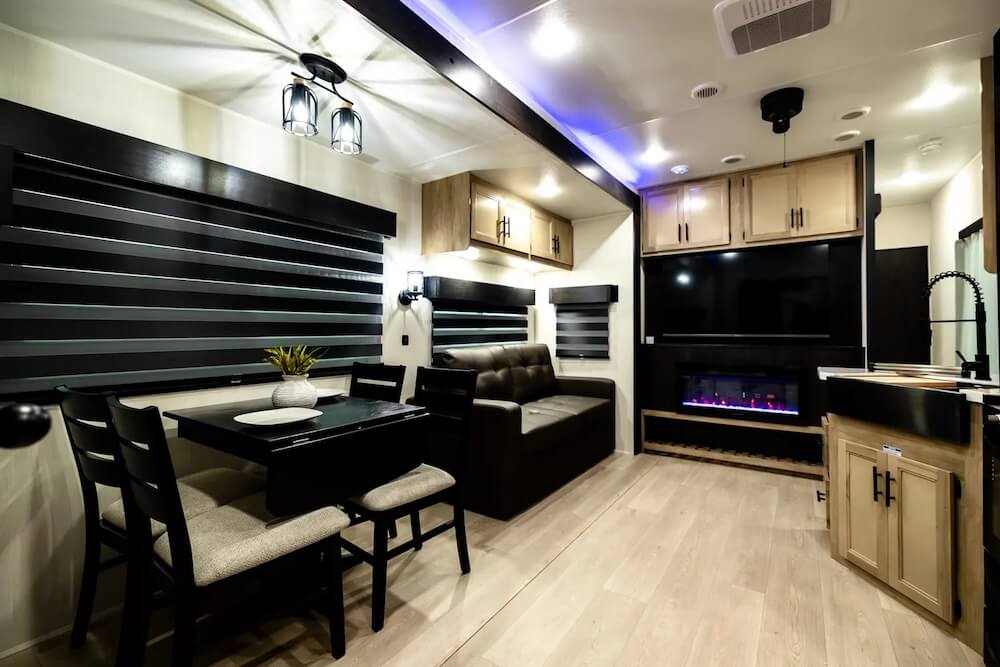
At the center, the combined kitchen and living area is built for everyday use rather than occasional meals. A large kitchen island provides ample prep space, while a deluxe pantry and bar-top seating overlooking a flip-up window make the space functional for cooking and gathering. A convenient half bath off the kitchen adds everyday practicality—especially when hosting guests or spending long days outdoors.
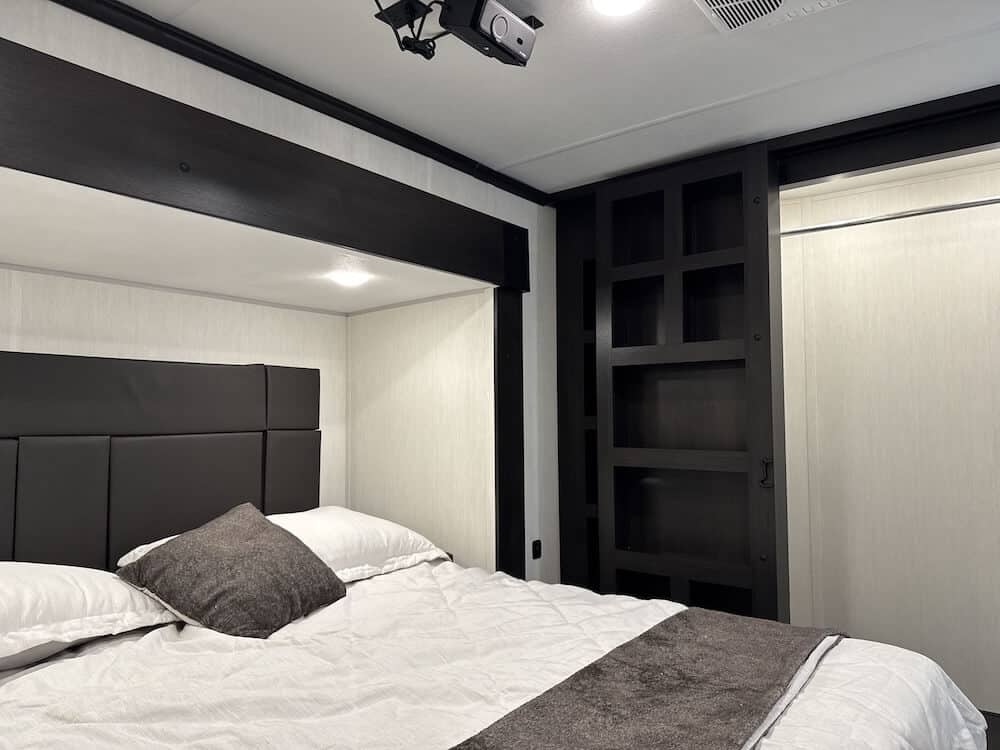
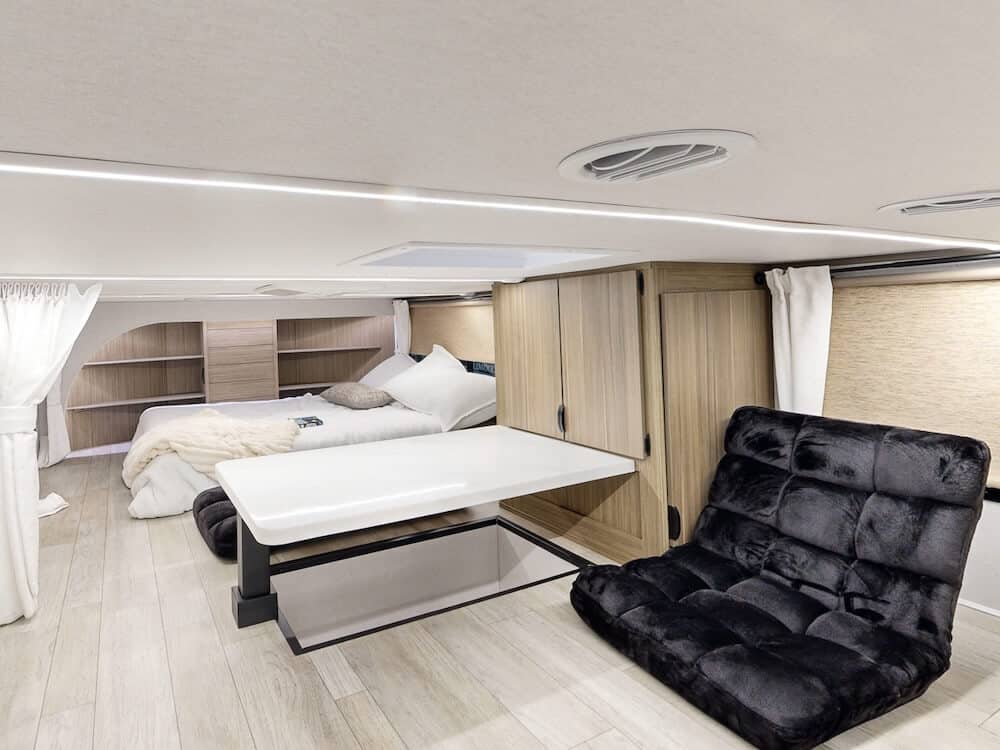
The rear garage is where the 411STAY truly sets itself apart. Once unloaded, this space converts into a secondary living or sleeping area with a sofa slide, an entertainment setup with a TV and fireplace, and fold-up steps leading to a loft with bunk mats, storage cubbies, and TV prep. The rear ramp door further extends the living space outdoors, adding versatility that many destination RV layouts lack.
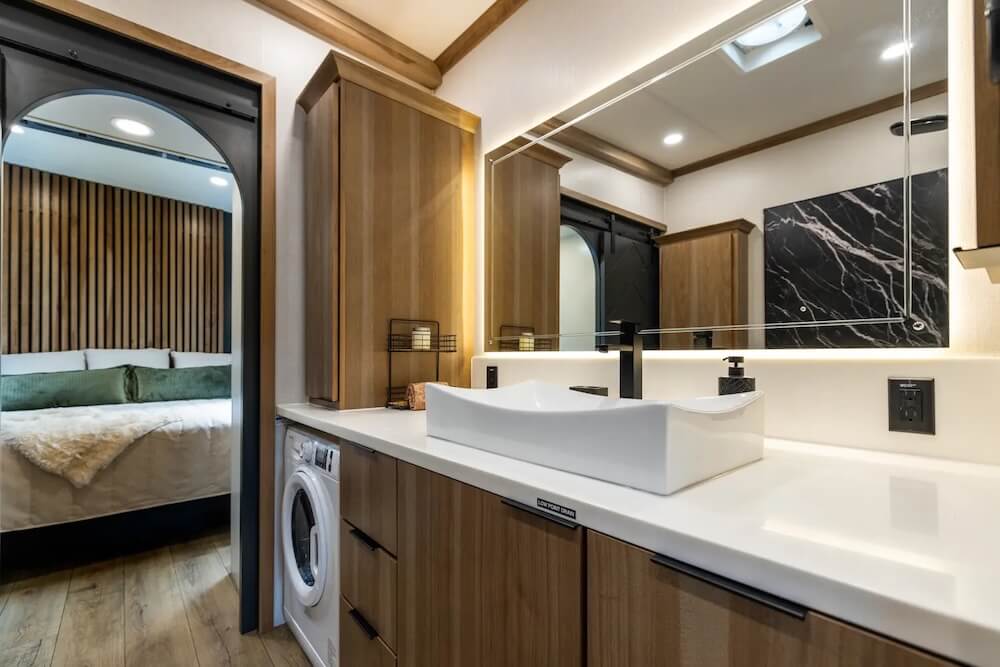
Up front, a private bedroom with an RV king bed slide, generous wardrobe storage, and a full bathroom creates a quiet retreat separated from the main living areas. With ample sleeping capacity and a hitch weight comparable to a 5th wheel destination trailer, this Wolf Pack camper is well-suited for RVers looking for a destination trailer toy hauler that supports extended stays, flexible living, and multi-purpose use in one thoughtfully designed floor plan.
Compare the 43’6” Wolf Pack 397STAY or check the availability of the sister 411STORE and 397STORE layouts in the Rogue lineup.
Wildwood Grand Lodge 42VERANDA
Images by Forest River
Specs
Length: 44’11”
Hitch Weight: 1,815 pounds
Dry Weight: 13,754 pounds
Cargo Capacity: 2,446 pounds
Sleeping Capacity: Up to 6
The Wildwood Grand Lodge 42VERANDA brings a resort-inspired feel to the campground with a focus on expansive indoor space and outdoor entertaining. Because it features an expandable rear patio, the actual interior living space is a bit more compact than other big destination trailers over 40 feet.
That standout rear veranda patio features an integrated grill that transforms the deck into a dedicated outdoor living area. This setup effectively expands the usable footprint of the destination trailer and reinforces its appeal for RVers who prioritize al fresco gatherings, cookouts, or simply enjoying scenic views without sacrificing comfort.
Inside, the main living area feels open and cohesive thanks to opposing slides that widen the kitchen and lounge zones. A central kitchen island offers a generous prep surface and extra storage. Opposite, a comfortable living area provides space to relax or host friends and family after a day outdoors.
Sleeping accommodations for up to six include a private front bedroom with a tilting king-sized bed, an upper loft with a queen bed, and a convertible sofa in the living area. It’s a great destination trailer with a porch, making it easy to enjoy the great outdoors and indoors without compromising comfort.
Check the availability of the sister Salem Villa Grand 42VERANDA destination RV.
Salem Villa Grand 44ZEN
Image by Forest River
Specs
Length: 44’11”
Hitch Weight: 1,605 pounds
Dry Weight: 14,309 pounds
Cargo Capacity: 1,891 pounds
Sleeping Capacity: Up to 8
The Salem Villa Grand 44ZEN is designed with capacity and livability in mind, making it a compelling option among today’s largest destination trailer floor plans. Measuring just under 45 feet, this 2 story destination trailer focuses on how space is allocated for everyday, long-term use.
An open kitchen and living room welcome you into a light, spacious floor plan, combined with a private bedroom and family-friendly sleeping capacity. But what immediately sets the 44ZEN apart is its two-loft design, which dramatically increases sleeping flexibility without crowding the main living areas. These lofts work well for kids, guests, or storage, keeping the primary bedroom and living space uncluttered—an advantage for families or seasonal campers planning extended stays.
Another standout is the spacious rear bathroom, which feels more residential than typical RV bath layouts. With generous room to move and convenient access from the common area, it’s a setup that supports daily routines rather than quick overnight stops.
The 44ZEN delivers a thoughtful balance of shared space, ideal for RVers seeking a destination trailer that prioritizes functionality, flexibility, and long-term living.
For options with an identical first floor and varying loft layouts, check out these floor plans:
Timberwolf 39HBA
Images by Forest River
Specs
Length: 44’3”
Hitch Weight: 1,330 pounds
Dry Weight: 10,774 pounds
Cargo Capacity: 2,556 pounds
Sleeping Capacity: Up to 6
The Timberwolf 39HBA is built for destination campers who want their space to feel genuinely livable—not just large. At over 44 feet long, this 2 bed, 2 bath destination trailer uses its footprint to create clearly defined rooms that function more like a luxurious tiny home than a traditional RV.
The main living area is the standout. Instead of feeling like a pass through space, the living room is laid out like a true seasonal home. It offers comfortable seating and room to relax without constantly rearranging furniture. It’s the kind of space that works just as well for quiet nights in as it does for hosting friends or family.
What truly sets the 39HBA apart is the separate bedroom suites, each with its own bathroom. This setup is ideal for families with kids, visiting guests, or anyone who values privacy while camping. With a bedroom at each end of the trailer, both sleeping areas feel intentional and comfortably separated from the main living space.
With two full bedrooms that are ideal for older kids or hosting friends, the Timberwolf 39HBA is a strong choice for RVers who want a destination trailer for seasonal setups or long-term stays for the whole family.
Lost Pines SEQUOIA
Images by Forest River
Specs
Length: 44’1”
Hitch Weight: 1,430 pounds
Dry Weight: 12,486 pounds
Cargo Capacity: 2,000 pounds
Sleeping Capacity: Up to 4
If you’re drawn to destination trailers that feel calm, comfortable, and easy to settle into, the Lost Pines SEQUOIA is worth a closer look. It offers a spacious layout without the “too much RV” feeling that can come with larger floor plans.
The living area prioritizes relaxation first. Seating faces the entertainment center, creating a natural focal point and making the room feel like a place you’d actually spend your evenings—watching a movie, reading, or catching up with friends.
Instead of crowding the space with extra bunks or convertible furniture, the SEQUOIA keeps things simple. It sleeps up to four, which keeps the interior open and uncluttered during longer stays. The full bathroom sits between the living area and the bedroom, making it easy to use without interrupting anyone’s routine.
The private bedroom tucked away from the main living space offers a quiet place to wind down. Paired with a lighter hitch weight for its size and enough cargo room for the essentials, the Lost Pines SEQUOIA is a solid option for RVers who value comfort, simplicity, and a destination trailer that genuinely feels easy to live in.
Compare all Lost Pines destination trailer layouts.
Campsite Reserve 39LA
Subscribe to the Camping World YouTube channel, and never miss a video.
Specs
Length: 43’9”
Hitch Weight: 1,305 pounds
Dry Weight: 12,194 pounds
Cargo Capacity: 1,806 pounds
Sleeping Capacity: Up to 8
The Campsite Reserve 39LA brings a thoughtful blend of comfort and character to the destination trailer lineup. With every space feeling purposeful, it appeals to RVers looking for a destination trailer that’s as livable as it is inviting.
Step inside to find a living area featuring decorative wood beams and warm accent lighting, details that elevate the interior from functional RV to a space you genuinely enjoy spending time in.
The heart of the 39LA is a kitchen and lounge space designed for everyday life and relaxed evenings. An L-shaped kitchen makes meal prep easy, and thoughtful storage—including a massive pantry—keeps clutter at bay. It’s little design choices like this that reinforce how this model supports longer stays where storage and organization matter.
Speaking of the loft, the elevated sleeping area adds flexible capacity without crowding the main floor, while the staircase doubles as practical storage with hidden drawers in the steps. With room to sleep up to eight, this layout works especially well for families or groups who value defined spaces and overnight versatility.
A private rear bedroom offers a quiet retreat, and with the loft and convertible sofas in the living area, the Campsite Reserve 39LA nicely balances open social space and comfortable beds for larger crews. With a lighter hitch weight and cargo capacity suited for seasonal gear, this Campsite Reserve destination trailer presents a well-rounded option for RVers who want destination-style comfort with thoughtful design details that feel homelike.
Compare the slightly smaller Campsite Reserve 39JD.
Wildwood Heritage Glen ROOST43
Subscribe to the Camping World YouTube channel, and never miss a video.
Specs
Length: 43’9”
Hitch Weight: 2,830 pounds
Dry Weight: 15,044 pounds
Cargo Capacity: 2,951 pounds
Sleeping Capacity: Up to 8
For RVers who want room to host, spread out, and truly settle in, the Wildwood Heritage Glen ROOST43 delivers a destination-style layout that feels ready for real life. This floor plan maximizes space and flexibility, making it especially appealing for families, seasonal campers, or anyone who plans to entertain guests frequently.
Instead of centering everything around a single multi-purpose area, the ROOST43 gives each room its own space to breathe. The kitchen, living area, and sleeping spaces feel clearly defined, which helps the interior feel calmer and more organized during longer stays. Whether you’re cooking, relaxing, or hosting visitors, the layout avoids that “all-in-one-room” feeling that’s all too common in other RVs.
The living area functions the way you’d expect at home, with enough space to relax comfortably without shifting furniture around. Nearby, the kitchen offers ample counterspace and storage, making everyday meals and group gatherings easy to enjoy. It’s a setup that supports daily routines just as well as weekend entertaining.
Sleeping space is thoughtfully distributed, giving guests and family members their own places to unwind while keeping the primary bedroom private and separated from shared areas. Add in the generous cargo capacity, and the ROOST43 is well-suited for hauling everything you need for extended or seasonal stays.
Overall, this is a standout Forest River destination trailer designed for people who want their RV to feel settled, social, and genuinely livable—an easy place to stay awhile rather than just pass through.
Compare the similar Salem Hemisphere ROOST43.
Honorable Mentions
Are Destination Trailers Bigger Than Fifth Wheels?
Destination trailers are often longer than many fifth wheels. While some luxury fifth wheels can match them in size, destination trailers are designed to stay parked longer, which allows for larger living areas, taller ceilings, and more residential-style layouts.
But choosing the largest destination trailer isn’t just about length—it’s about finding a floor plan that fits how you plan to live. Whether you value multiple bedrooms, lofted sleeping areas, outdoor living spaces, or a living room that truly feels like home, today’s destination trailers offer a wide range of options designed for long-term comfort.
What Is the Average Lifespan of a Destination Trailer?
With proper care and maintenance, a destination trailer can last 10-20 years on average. Because they’re typically moved less often than other RV types, there’s reduced stress on the frame, suspension, appliance, cabinets, etc., which can help extend their overall lifespan.
How Far Can You Travel With a Destination Trailer?
Destination trailers are meant for short, infrequent moves, not cross-country travel. Most owners tow them from the dealership to a campground or seasonal site and leave them there for extended periods. While they can be moved when needed, they’re not designed for frequent long-distance towing.
As you compare models, think about how you’ll use the space day to day, how many people you’ll invite into your home away from home, and whether the layout supports your version of extended camping. With the right destination trailer, staying put doesn’t mean giving anything up; it means settling into a space that’s built to last.
Is one of the largest destination trailers your ideal seasonal getaway? Let us know in the comments below.
Kerisa is a full-time travel writer and RV’er who travels with her husband Anthony, adventure dachshund Butters, and senior homebody turned adventure cat, Tiskies. She has been to all 50 states, 49 of them in an RV! You can find her telling her stories from RV life at travelingtiongsons.com.
OK … yeah … let’s have the oil discussion. I know we’re not supposed to because internet and reasons, but it’s got to happen sooner or later. Your Airhead needs two, maybe three different kinds of oil throughout an entire year of riding and there’s no sense in putting off the discussion any more. You’re becoming more mature as a rider and I’m sure you can handle this knowledge.
For the purposes of this discussion, let’s define “Airheads” as specifically the Slash 5, 6 and 7 generations; that is, BMW motorcycles produced for the 1970 to 1978 model years. These models have a lot of similarities, though later models are also called Airheads as well. Their names are followed by a /5, /6 or /7, but may instead be followed by an S or other letters from 1974 on. After the 1978 model year, BMW dropped the “slash” notation. “Pre-Airheads” are BMW motorcycles produced for the 1955-69 model years and consists of just a few variations: R 50, R 60 and R 69. These model names may be followed by nothing, a /2 or US. The vast majority of motorcycles produced by BMW during this period range from about 500 to 1,000 cubic centimeters of displacement, or about 30 to 61 cubic inches. Some of the information in this article will also apply to later Airheads, from 1980 through 1994, though there are subtle variations that may apply to your particular motorcycle. Refer to your owner’s manual or email me if you have questions.
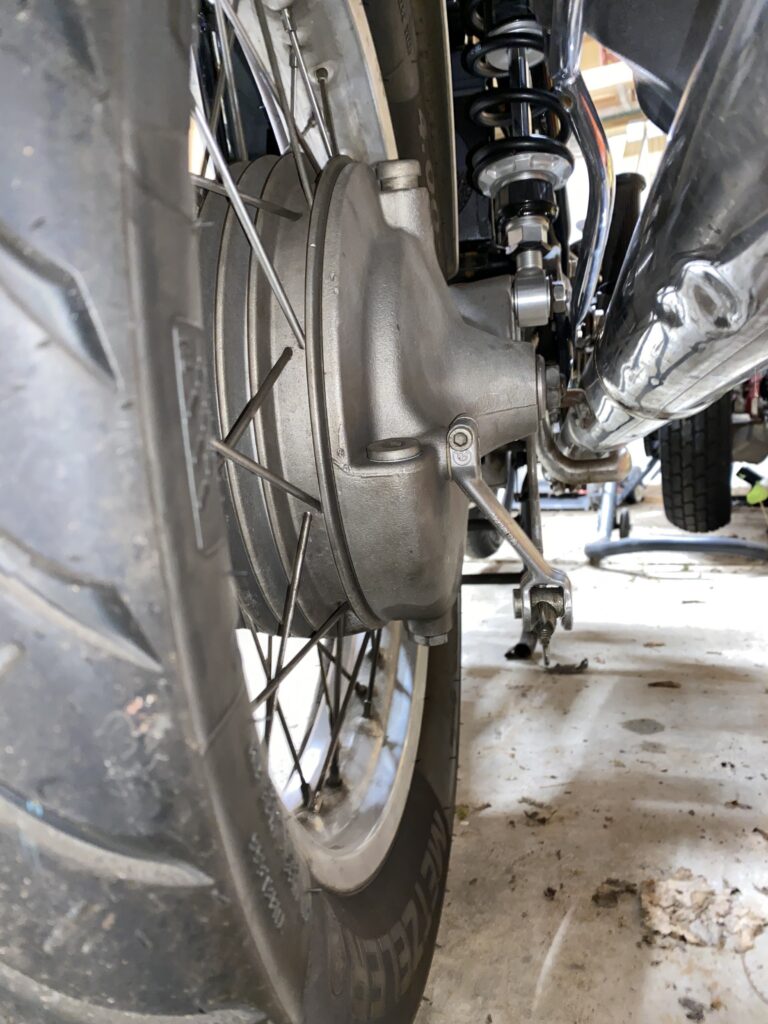
There are four systems which require oil in them for proper operation: the engine (of course), transmission, swingarm and final drive. The engine requires engine oil, while the other systems require gear oil. The swingarm doesn’t need the oil, it’s the lower end of the drive shaft that needs it, but you provide that oil by pouring it into the swingarm.
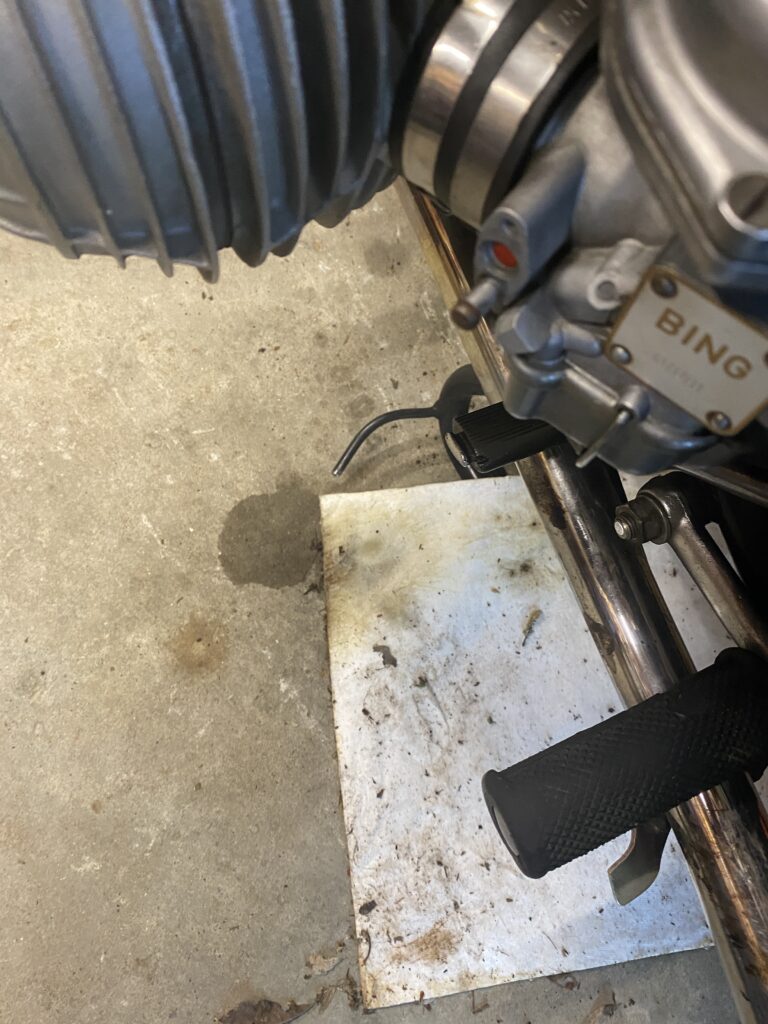
When you own a vintage motorcycle, it’s nice to have absorbent pads like this to catch oil and fuel emanations and prevent them from staining your concrete floor. One good option comes from New Pig.
Before I dive into this, a note: We live in a world in which excessive reliance on the opinions of random people on the internet both carries disproportional weight and runs a high risk of explosive disagreement. Rest assured I will be giving you conservative, middle-of-the-road advice here, because that’s my style. Better safe than sorry, in other words, and this is what I do with my two vintage Beemers, a 1966 R 60/2 and a 1976 R 90/6, and my 2015 R 1200 GS.
When people tell you not to start a discussion about oil in polite company, this is typically the kind of oil to which they refer. It’s easy to get confused or make assumptions these days, especially when we’re managing the modern technology of our newer bikes and other vehicles like cars, light trucks and SUVs while trying to hold onto the knowledge we need for our older bikes. It’s a little sad that my 2015 motorcycle is in some circles considered an older bike, but this is the world in which we live now.
First, I’ll get into some definitions for terms you’re going to see in this article and online discussions about the topic.
Dinosaur oil: Refers to any oil of a purely organic and/or mineral nature. The term comes from our usage of “fossil fuels,” give that those oil deposits various companies pull from under the earth’s surface were created over millions of years by decaying organic matter. Finding a true, 100% pure organic/mineral oil in the 21st century is not always easy, nor is it particularly inexpensive. These have become the boutique products as man-made production has taken over the industry.
Semi-synthetic oil: Refers to any oil that is a mixture of organic and man-made materials. Manufacturers typically do not disclose what the percentages are. These consist of an organic base oil supplemented with man-made materials or vice-versa. Unless the label says “fully synthetic” or “100% synthetic,” you’re using a semi-synthetic oil.
Synthetic oil: Refers to any oil with man-made base stocks rather than dinosaur bases.
SAE: The Society of Automotive Engineers is the group setting the temperature ratings and performance requirements of the oils we use in our vehicles. All oil ratings mentioned in this article should be assumed to have “SAE” in front of them.
W: Often mistakenly thought to refer to “weight,” the W in your oil refers to its “winter” rating, meaning how it operates at low temperatures. If your oil weight (viscosity rating) has two numbers separated by a W, the first number refers to its winter rating, the second to its standard rating. All oils of this type use viscosity index improvers whether the base oils are dinosaur or synthetic. Common designations are 10W40, 15W50, 20W50, 75W90, 80W90, etc.
Weight: Refers to the viscosity of a given oil used in its normal temperature range. Thinking of it as “thickness” or “flowability” rather than “weight” might help you form a more appropriate mental picture of the oil’s performance. ALL oil becomes more viscous as temperature falls; hot oil flows more easily, which is less viscous. Water has low viscosity; honey has high viscosity.
Semi-synthetic oils for automotive use go back further than you probably imagine, with the first multigrade oil appearing in Europe in the early 1950s, followed by the first true semi-synthetic oil coming in 1966. The first fully synthetic oil was produced in 1971. Mobil 1, possibly the most well-known synthetic oil, found wide distribution in 1976; its development was spurred by the oil crisis of the 1970s. While some manufacturers specified their use early on, most waited until these oils were more reasonably priced for consumers—i.e. their factories, not necessarily the end users.
Engine Oil
Before the widespread use of multigrade oils, most motor vehicles used “straight weight” oils rated 20, 30, 40 or 50—referred to as “30 weight” and so on. The first multigrade oils used in passenger cars in the 1960s were 10W40 and 15W40. Various iterations from there developed over time, and by the late 1980s and early ‘90s, when I was getting into motorcycling, I used both of those oils in addition to 20W50, which was the spec in my first BMW, a 1996 R 1100 GS. The owner’s manual recommended 10W40 in extremely cold temperatures, but suggested 20W50 was a better all-around choice.
There is a common misperception that, in an oil rating, the numbers refer to temperatures—that is, that “20W50” means “20 degrees.” That’s not correct. What it really means is that the oil meets the viscosity requirements of 20-weight oil at 14° F (-10° C) and 50 weight at 212° F (100° C). (NOTE: Some multigrade oils are tested at -30° F/-35° C to determine their lower designation. Refer to the manufacturer’s fact sheets.) Most oil bottles don’t tell you what those temperatures are, though! Here’s a handy reference chart for the various weights and ambient—that is outdoors wherever you are—temperatures. Naturally, the temperatures inside your engine will be higher once it gets going, sometimes reaching 200° F (94° C) or even a bit more.
Viscosity Rating
Minimum Temp (°F)
Maximum Temp (°F)
30
15°
95°
40
25°
115°
0W30
-30°
95°
5W40
-20°
105°
10W40
-15°
105°
15W40
-5°
105°
20W50
5°
115°
Between 68-140° F (20-60° C), straight 40 weight oil behaves quite similarly to 20W50. Below that (32-86° F or 0-30° C), it is more viscous and as expected, above that range, it is less viscous. As the temperature rises, the viscosity of 40 weight oil lessens more quickly than that of 20W50. You can make similar comparisons between 30 weight oil and 10W40. When you look at the original specs for BMWs from the 1950s and ‘60s, it should be no surprise to see 30 noted for winter use and 40 for the rest of the year.
BMW Motorrad specifies 5W40 oil for my 2015 R 1200 GS, with additional requirements that it be rated API SL and JASO MA2. (More on those designations later.) This type of oil is suitable for standard operation in ambient temperatures from -22° to 104° F (-30° to 40° C) However, the spec for my 1976 R 90/6 is 20W50 for most of the year and 10W40 in the winter during sustained low temperatures. I have never put 10W40 in it because I simply don’t ride under the minimum rating for 40-weight oil (25° F/4° C) on a regular basis.
Because straight-weight oils do not enjoy the enhanced chemistry and extended operating ranges of blended oils, they will deteriorate more quickly and lose their ability to lubricate all the internal moving parts and suspend the byproducts of combustion in solution. This is one of the reasons the older BMW motorcycles tending to use these oils have “slingers” in them. Slingers are discs with U-shaped lips on either end of the crankshaft that use centrifugal force to trap solids in the oil supply. The lips of the slingers eventually become packed full of these solids and must be cleaned or replaced; doing so requires removing the crankshaft from the engine case, no simple task. Every time you change the oil filter in your BMW from 1970 or later, thank all your icons and totems you don’t have slingers in your engine.
Motor oils are subjected to two types of “shear”—temporary shear, when the molecules are squashed but spring back into shape, and permanent shear, when the molecules are compromised to the point they break apart into their smaller component parts. Oil is sheared when it’s forced through a small opening; if the opening is too small, the oil molecules rupture. What determines whether an opening is too small or not is the viscosity rating of the oil and, of course, the operating temperature at which the squash occurs.
Resisting shear is exactly why multigrade oils exist. When your engine is cold, all the metal inside exists at a certain size. The metals heat up while you ride, so all those parts expand at some predictable rate, reducing the clearance between parts. A straight weight oil might be too thick to flow properly at low temperatures, but be perfect for higher temps. With multigrade oils, your engine gets the benefits of lower viscosity at low temps and higher viscosity at high temps, coming as close to the best of both worlds as manufacturing technology can get.
API and JASO
Let’s take a look at the other designations attached to the oil we use: API and JASO. The American Petroleum Institute rates the anti-wear additive packages and performance levels of oils at any operating temperature; these ratings will correlate more closely to the anti-shear characteristics than the viscosity ratings established by the SAE. They periodically update their ratings, which for engines burning standard gasoline have so far been two-letter marks starting with SA and ending with SP. One assumes they’ll have to dip into another starting letter or start adding letters or numbers after they get to SZ. All API ratings from SA to SH are considered obsolete in 2026; current ratings are SN (for 2020 and older vehicles) and SP (for vehicles built since May 2020, including those able to burn E85 fuels, but with some backwards compatibility with SN). Based on the API charts, my 2015 R 1200 GS should require SN-rated oil, but the owner’s manual specifies SL, which means BMW’s 2015 liquid cooled boxer engines are, in some ways, not made with tolerances and requirements too different from the first (air/oil cooled) 1200cc boxers.
In their days, my 1966 and 1976 Beemers required API SC and SE oils, respectively. Even if these oils were available in modern times, using them in modern vehicles wouldn’t be ideal. These older oils simply don’t have the additives needed to prevent the buildup of sludge in the oil, oxidation on internal surfaces or excessive wear in metal-on-metal situations. However, modern SL, SM, SN or SP oils may not have the levels of additives those 1960s and ‘70s German engineers were expecting, and in the case of the R 60/2, better-performing additive packages might actually be detrimental to the engine over the long term. This is one of the reasons I change the oil in the Slash 2 every 1,000 miles—but that’s a topic for a future article.
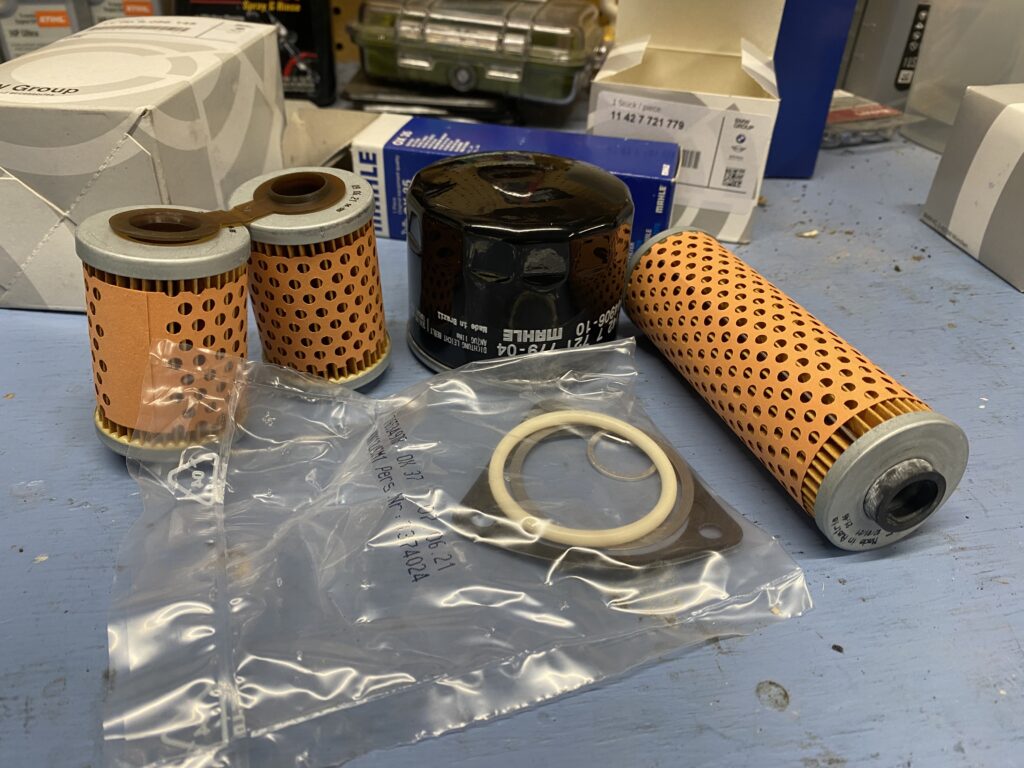
Don’t forget that when you change your engine oil, you also need to change your oil filter. I’ll get into filters in a future article. Pictured here (left to right) are a hinged cartridge oil filter for an Airhead, a screw-on oil filter for my R 1200 GS and a straight cartridge oil filter for my Airhead. In the foreground is a gasket/O-ring kit, which is a topic for yet another article.
While API designations are for any oil, the Japanese Automotive Standards Organization has designations specifically for motorcycles, largely because many (most?) motorcycles in the world use a wet clutch. Unlike BMW boxers before 2014—which certainly includes my vintage Beemers—Moto Guzzis and some Ducatis, which all have dry, automotive-style clutches, BMWs with wet clutches have to use oil that will both lubricate the internal engine parts and cool the clutch plates without causing them to slip. It’s a lot to ask, frankly, and it’s the main reason it’s critical that you know what kind of clutch your bike has before you change the oil in its engine. Bikes with dry clutches can use “regular” engine oil; those with wet clutches must must must! Use oils specifically engineered for that use case.
My R 1200 GS requires oil rated JASO MA2, which means the oil is engineered to function properly with a four-stroke engine and a wet clutch, and has acceptable levels of certain friction modifiers. MA and MA1-rated oils do not contain these friction modifiers. Oils rated MB are intended for use in dry clutch motorcycles. Additionally, to attain a JASO rating, the oil must also be API certified (SG to SM), or have a specific certification from ILSAC (a joint U.S.-Japan organization) or ACEA (Europe), further cementing the idea that JASO is really looking out for us motorcycle riders. The requirements underlying all of these ratings is JASO T 903:2006, which is so technical that I started to lose my mind within three minutes of trying to read it.
My Engine Oil Choices
I told you all of that so I could tell you this: As long as the oil you buy for your motorcycle meets the minimum standards of the above engineering institutions, it’s probably going to be OK to use with your motorcycle. Beyond that, you simply need to select the proper weight BMW specifies from your favorite brand name. I say brand name on purpose; don’t insult yourself and your motorcycle by buying off-brand oil if you don’t have to. Buying generic groceries is one thing, but when it comes to generic oil, unless you have 100% positive proof it’s made by a reputable manufacturer, spend the extra few dollars and get the name-brand stuff. Your motorcycle will thank you in the long run. This applies to gasoline as well, but that’s a subject for another time.
For my 2015 R 1200 GS, I use Castrol Power1 5W40 Full Synthetic motorcycle oil. It’s rated API SN and JASO MA2. I typically buy it in a six-quart “half case” for anywhere from $50-60, which gives me the four quarts I need for an oil change and two extra for topping up over the course of the next 5,000 miles. Fortunately, my bike doesn’t burn or otherwise use very much oil, so I generally get three oil changes out of two of these half-cases.
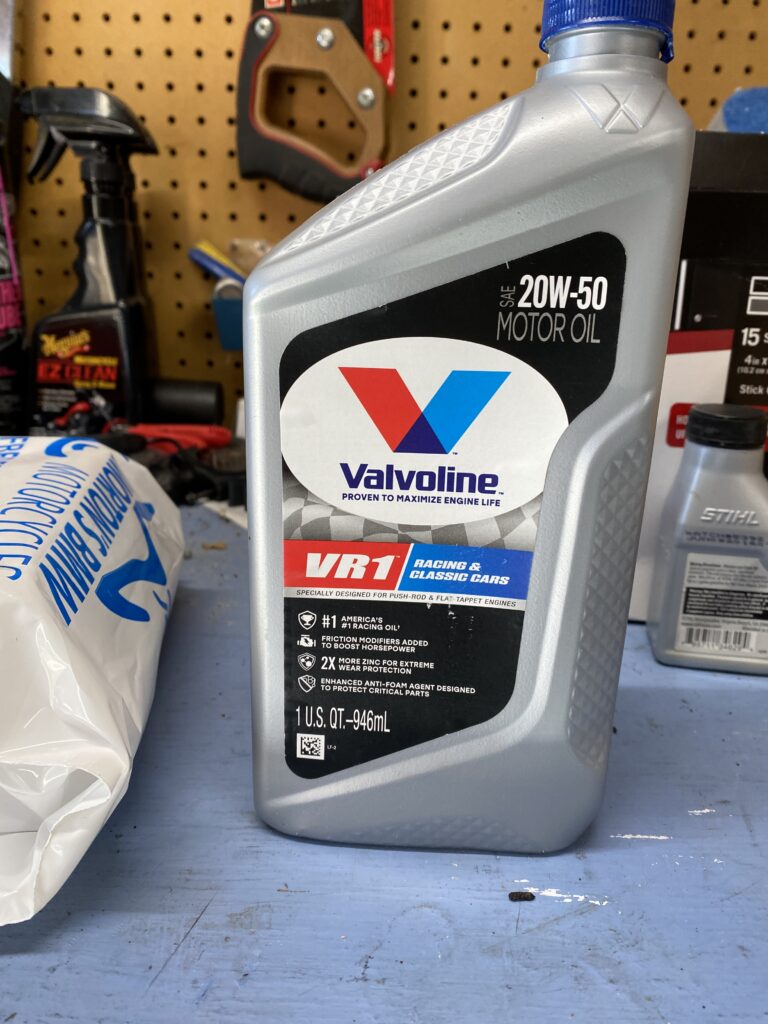
For the 1976 R 90/6, I use Valvoline VR1 20W50 Racing Oil. Valvoline has a full synthetic version of this oil, so I believe the oil I buy is semi-synthetic. There is no API or JASO certification listed, either. The primary reason I use this oil is because it has higher proportions of zinc and phosphorus, two additives critically important for these older engines. Both of them help prevent excessive wear. Valvoline claims this oil is great for engines using pushrods and flat tappets like those in our Airheads. I change the oil on this bike every 2,500 miles, and it takes about two and a half quarts. I burn about another full quart between oil changes, so a six-quart half case, which costs me about $50, lasts for two maintenance cycles. If I ever fully rebuild the engine on this bike, I’ll switch to the full synthetic 20W50 VR1.
For the 1966 R 60/2, I stick with Valvoline VR1, but I use the straight 40-weight oil, which is about $50 for a six-quart half-case. Like the 20W50, it’s semi-synthetic, lacks both API and JASO certifications, has elevated levels of zinc and phosphorus and is engineered for engines with pushrods and flat tappets. The Slash 2 takes two quarts for an oil change and I rarely need to top it up, so the half-case gives me three maintenance cycles. In a pinch, I wouldn’t hesitate to put 20W50 in this engine, or even 10W40, but because that’s not what BMW specified, I wouldn’t want to do that regularly or leave it in there for a long time.
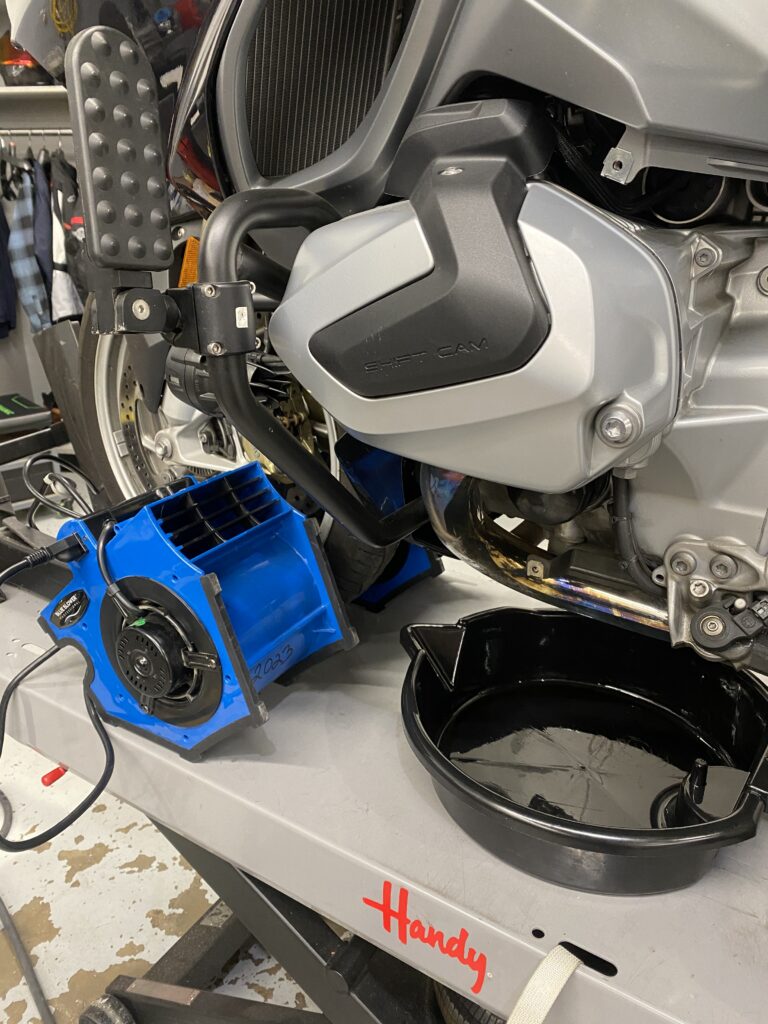
Changing your oil at home requires you have an appropriate catch pan. You should also recycle your used oil! Note the nifty fans blowing directly on the cylinders; this bike was being evaluated for something that required it to be running, but the mechanic doing the work wanted to make sure it didn’t overheat.
Part of the near-religious fervor with which people discuss oil when it relates to the Pre-Airhead (Slash 2) generation of motorcycles is whether or not the oil should have detergents in it. It’s a good thing to think about, but like many other aspects of motorcycle maintenance, those who scream the loudest often are the ones who people listen to, thus perpetuating myths that probably should have died decades ago. The reality is pretty simple, though. If your engine has been recently rebuilt, and the job was done properly, there is no reason to resort to the expense and hassle of tracking down non-detergent oil of the proper weight. If you’re sure the slingers are clean and you change the oil regularly, non-detergent oil is simply not needed. Having said that, if your bike’s odometer is over some multiple of 30,000 miles or was broken for some time before you bought the bike, you can’t know the condition of the slingers without cracking the engine open.
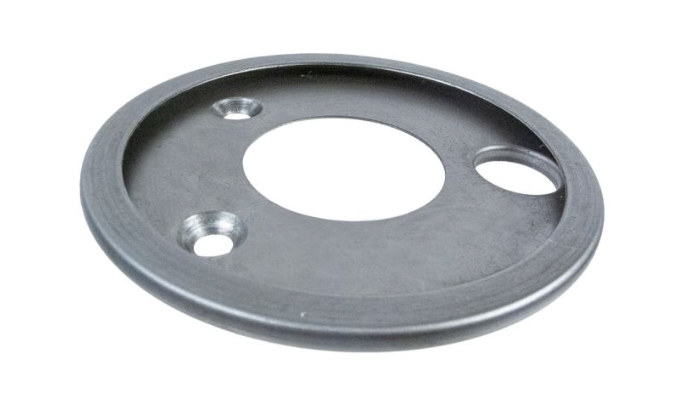
A typical pre-Airhead slinger, uninstalled of course. Note the lip under which sludge in the oil is trapped and the large, non-beveled hole through which the oil passes when the crank is spinning. There are two of these in each engine, one at either end of the crank shaft. Photo courtesy of Boxer2Valve.
If you have no idea when the last time your slingers were cleaned or replaced, you should consider using non-detergent oil to avoid dislodging the crap built up in the slingers. While evidence is largely anecdotal, there is a chance that as sludge in the slingers is dissolved by the detergents in the oil, it could clog the tiny oil passages in the engine, starving the engine of oil and cause a catastrophic failure. Once you rebuild the engine and clean or replace the slingers, you can safely use detergent oil again, provided you commit to a short maintenance cycle like mine of about 1,000 miles between oil changes. In all honesty, it’s not the presence of the detergents that is the real problem; it’s the possibility of kicking up debris in the oil faster than the slingers can trap it that’s the actual problem.
I should note that many racing oils have minimal detergents or even none at all because the manufacturers likely expect people using them to be changing the oil often and perhaps rebuilding the engines more frequently than a regular motorcycle rider might be doing. Because of those factors, the oil needs fewer detergents because the engine is undergoing regular and sometimes invasive maintenance.
While I’m not committed to any one brand with my R 1200 GS, I still stick to the majors: Amsoil, BMW Motorrad, Castrol, Liqui Moly, Motorex, Motul and Valvoline. The brands that cater to motorcycles tend to cost more—usually about $23 per liter—compared to the bigger brands that make oil for a wider variety of vehicles. Those tend to come in between $10-16 per quart. I trust Castrol partly because they used to manufacture the BMW Motorrad-branded Advantec oil; I don’t know if that relationship is still in place, but the fact that BMW at least used to trust Castrol says a lot to me.
When it comes to the two vintage bikes, I’ll continue using Valvoline VR1. It seems to be the best combination of features and cost, and is easily available via Amazon. My local auto parts stores usually have the 20W50 VR1 in stock, but nobody ever has the 40-weight on the shelf. Another brand I’ve seen some Airhead riders use is Driven GP-1 20W50 Synthetic Blend Racing Oil. It costs about $80 for a six-quart half case, almost 50% more than the Valvoline without appearing to provide better overall performance. Other brands producing oil of this type and weight include Castrol, Penn Grade, Lucas Oil, Schaeffer and VP Racing. Prices vary, as do additive packages, but I’m happy with the Valvoline and disinterested in doing more research to find an alternative.
Gear Oil
Engine oil certainly creates spirited discussions, but they often pale in comparisons to online discourse about gear oil. You’re likely to find just as many opinions about what gear oil to use, but many of them lack the basic research and reasoning most folks put into their engine oil choices. Many times, a rider’s gear oil choice boils down to “this is what I was told to use” and never progresses beyond that.
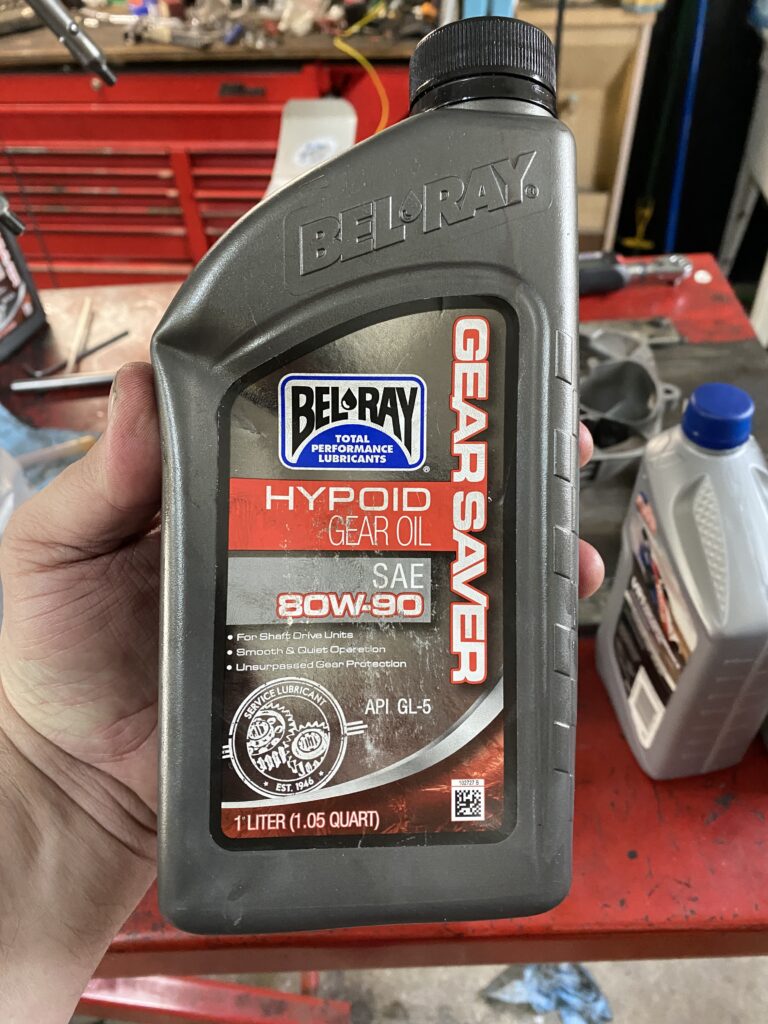
You’d think the owner’s manual would be helpful, but in the case of my 2015 R 1200 GS, what I get in the OM is the gear ratio (2.91, or 32/11 if you were curious). It’s only in digging through BMW Motorrad’s technical documentation—which not every rider has access to—that it’s possible to find the spec for this bike: 75W90 C-SAF-XO. Fortunately, this oil isn’t terribly expensive, but it comes in 200 cc bottles, which leaves little left after I put in the requisite 180 ccs. It’s more cost effective to buy a whole quart of something else and have extra for multiple maintenance cycles. Since most of the arguments on the internet revolve around whether you should use GL-4 or GL-5 oil and C-SAF-XO doesn’t tell you which of those it is, you have to dig if you want any info. (Spoiler: it’s GL-5 oil.)
One of the differences between GL-4 and GL-5 is the additive packages, which helps determine how suitable a given multigrade oil is at handling extreme applications. The GL rating comes from our old friends at the API. They set the most recent standards in 2013, and not much has changed since then. It’s really technical and I’m not sure I understand it all, but I’ll break down the basics for you.
GL-4 gear oil is designed for use with spiral bevel gears being subjected to “moderate to severe conditions of speed and load,” or hypoid gears subjected to moderate conditions. GL-5 gear oil is designed for use with hypoid gears subjected to “high-speed/shock load and low-speed/high-torque conditions.” Gear oil certified as SAE J2360 is an acceptable substitute, as the SAE spec exceeds the API spec. Basically what it comes down to is how the gears are constructed.
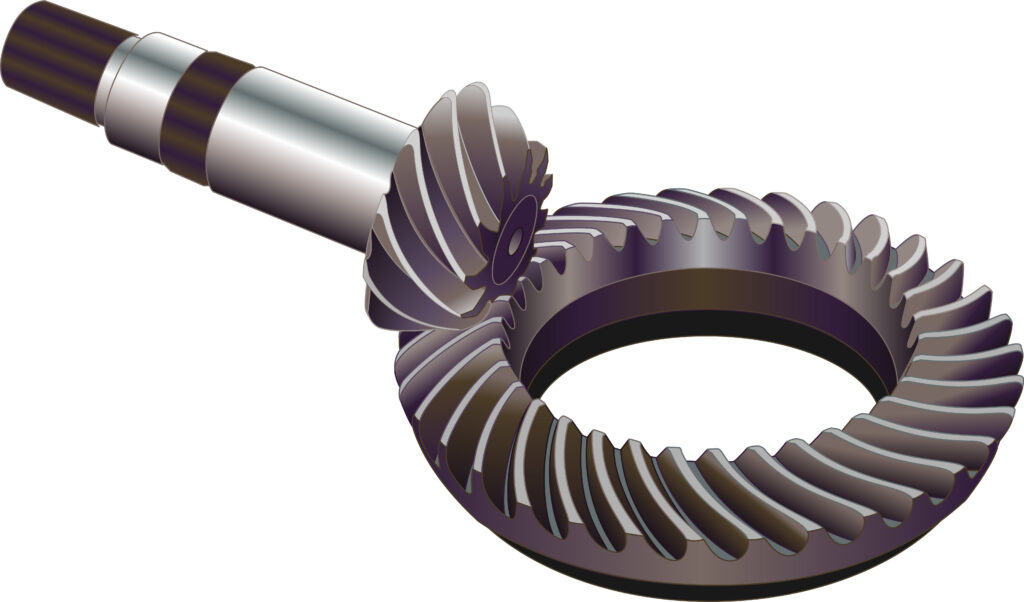
Spiral bevel gears are found in the vast majority of BMW motorcycle final drives. Hypoid gears are a variation of spiral bevel gears in which the pinion’s axis is offset from the gear to which it connects, thus creating a higher level of shear than in a standard spiral bevel gear. Hypoid gears can safely operate at higher torque than spiral bevel gears, which explains why BMW started using hypoid gearboxes on its later, more powerful models featuring drive shafts.
Bevel gears of the type found in a BMW final drive. Note that unlike hypoid gears, the pinion is aligned with the center line of the gear. By Myriam Thyes – Own work, Public Domain, https://commons.wikimedia.org/w/index.php?curid=4078185.
Because of the tighter tolerances required to effectively translate the spinning of the drive shaft into the spinning of the drive wheel—or in the case of a bike older than my 2015, the crank shaft—it’s important to use GL-5 gear oil for the most recently manufactured final drives. The good news is that GL-5 oils exceed the mechanical specs of GL-4 oils, which means you can use GL-5 in a slightly older system which requires GL-4, provided, of course that the additive package in the GL-5 oil is chemically compatible. The opposite is not true, however; if your system specifies GL-5, you must not use GL-4 oil. If you do, you risk damaging the system, and damaging your final drive on a motorcycle could mean serious injury or even death.
When it comes to the systems on my vintage bikes that require gear oils, they will do just fine with GL-4 oils, as they are equipped with a variety of straight and bevel gears. That gives me plenty of choices, except for one thing: brass. The transmission and final drive in the R 60/2 both have a few parts made from brass in them, and in case you don’t remember your high school science, brass is softer than steel by a wide margin. It also deteriorates at a different rate based on what chemicals come into contact with it.
One molecule of sulfur consists of eight sulfur atoms in a ring-like structure.
Many GL-5 gear oils contain active sulfur, which accelerates the deterioration of brass and bronze parts in older machines like my R 60/2, so I definitely have to be careful not to use that oil. GL-4 gear oils typically contain about half the active sulfur of GL-5 oils, which apparently isn’t a high enough concentration to damage the soft metals—but it’s still not ideal. It’s better to use a GL-4 gear oil fortified with deactivated or buffered sulfur, which will not damage brass or bronze.
When it comes down to the weight of gear oil, you’re going to find 75W80, 75W90, 80W90 and possibly 75W140 and 80W140. The 75/80 W 80/90 oils are going to pretty much perform the same; their temperature ranges are similar and their viscosity curves under temperature and pressure are quite close to each other. In that regard, it’s safe to choose whichever weight is made by a brand you trust. Use GL-5 for modern motorcycles and GL-4 for bikes older than 2000 unless you know for a fact your bike makes use of hypoid gears—or if the manufacturer specifies one oil or the other.
For my R 1200 GS and the R 90/6, I use GL-5 75W90 or 80W90 gear oil. I’m not picky about the brand as long as I’m familiar with it, and have used Liqui Moly ($17/ltr), Lucasoil ($12/qt), Mobil1 ($14/qt), Red Line Heavy Shockproof ($18/qt), Royal Purple ($20/qt) and Valvoline ($13-16/qt) over the years. While I only need about 180 ccs for the final drive on my GS, doing a full service on the Slash 6 requires more than a full quart; the transmission takes 800 ccs, the swingarm 150 and the final drive 250. I avoid mixing weights and brands in a single system, but it doesn’t bother me to use one brand in the transmission and another in the swingarm, for example, if I have a little left over from a previous maintenance cycle. For what it’s worth, the manufacturers recommend against mixing brands as well.
I know my R 60/2 systems have brass parts in them, so that rules out GL-5 oils completely. For that bike, I use VP Classic Hi Performance GL-4 80W90, which costs about $12 a quart. Take my advice and buy it direct from VP Racing to get the lowest prices. Retailers and e-tailers like Amazon all charge a hefty markup. Liqui Moly and Red Line both make GL-4 gear oils, but be careful to avoid anything marked “GL-4+” when it comes to your Slash 2 unless they are specifically stated to be safe for use with soft metals. Those formulations are usually cross-compatible with GL-5 systems, which means you have to pay really close attention to their formulations in order to avoid damage to any brass parts in your systems.
There you have it! All the oils I use for my various BMW motorcycles—plus why I use them—and what all the little letters and numbers on your oil labels represent. Hopefully you’ve got a deeper understanding of the whys and wherefores of motor and gear oil now and will be well equipped to hold your own the next time somebody asks, “So what kind of oil do you think I should use?” Naturally, you don’t have to take that bait, but I’m certainly not going to tell you not to do it!
Service Intervals and Cost
1966 R 60/2: Pre-Airhead engine oil change intervals are specified every 2,000 miles once the bike is broken in; I do mine every 1,000 miles, partly because the bike doesn’t get ridden as often as my other bikes, which means dirty oil tends to sit in the engine for longer periods. BMW also wants you to check the transmission, final drive and swing arm oils at 4,000 miles, but not to change them until 8,000 miles! I change them at every other oil change (2,000-mile intervals) just like I do with my other bikes. My thinking is you can’t be too careful with a bike this old and oil is cheaper than having to rebuild the engine or transmission. If for some reason I don’t ride the bike 1,000 miles in a year, I’ll still do a full maintenance cycle (all oils) during my regular winterizing schedule.
1976 R 90/6: For my Airhead, the owner’s manual specifies an engine oil change (and filter, of course) every 5,000 miles (“Minor Service”). When it comes to gear oil for the transmission, swing arm and final drive, the interval is every 10,000 miles (“Major Service”). Like the Slash 2, I use a more aggressive maintenance schedule. I do the engine oil and filter every 2,500 miles. Even though I don’t have to, tend to change the gear oils at the same time because I’m working on the bike anyway and again, oil is cheaper than rebuilding the transmission.
2015 R 1200 GS: BMW Motorrad’s engine oil change interval for my modern bike is 6,000 miles. I use a 5,000-mile interval because 5-10-15-20 is easier to remember than 6-12-18-24. This interval may be different for K bikes and the very newest boxers; refer to your owner’s manual. The oil change interval for the final drive is 12,000 miles, but it takes such a small amount of oil that I already have available that I just change it every 5,000 miles when I do the engine oil.
A typical Airhead final drive, which holds about 250 cc of gear oil.
It should go without saying, but I’ll say it anyway: Recycle your used oil. My local dump takes used oil and there are auto parts retailers out there that will take your used oil as well. You could also check with your local motorcycle dealer or repair shop. Some industrial businesses will also take your used oil, as they use it to heat their facilities, but you’d really have to research to find these or happen to know somebody who works there.
Now let’s take a look at the cost for a single full maintenance cycle. To me, that means any oil that can be changed gets changed, and the bike gets a fresh oil filter, too.
1966 R 60/2
1976 R 90/6
2015 R 1200 GS
Engine oil, qts*
2 ($20)
3 ($30)
4 ($40)
Oil filter
No
Yes ($22)
Yes ($26)
Gear oil, qts**
2 ($25)
2 ($25)**
1 ($14)**
Crush washers
7 ($8-10)
7 ($8-10)
1 ($2)
Other
N/A
Oil filter cover gasket ($9)
O-ring for final drive drain ($2)
Approx total
$55
$96
$84
* Refers to quarts needed to do the oil change, not the oil capacity of the system, which may be less than the quarts needed. ** I use the same gear oil on these two bikes, which mitigates the overall cost.
Before You Email Me
I am not claiming there is only one correct oil for a given application, because there are many brands and formulations that can work just fine. I am not claiming synthetic oil is harmful to older engines, transmissions or final drives; what really matters is additive packages, oil change intervals and mechanical condition. It doesn’t matter whether the base oil starts in the ground or a laboratory. I am not claiming detergent oil will damage older engines, but I am claiming you have to know what state your slingers are in if you’re going to use it. I am not claiming GL-5 gear oil is always unsafe to use in older motorcycles, just that you need to understand your gearbox components and the chemistry of your chosen oil. I am not claiming that name-brand oil is somehow magically superior to brands I’ve never heard of, but I will claim those oils have more consistency, better accountability and higher standards because the reputation and market success of the company on the label relies on it.
Above everything else, I am not claiming that oil discussions are simple. Oil is a complex substance and true experts spend years studying chemistry, metallurgy and real-world applications. I’m here to offer you honest, reliable information and practical, middle-path guidance. Don’t treat this article as definitive or the last word on oil.
References
American Petroleum Institute. “Oil categories.” https://www.api.org/products-and-services/engine-oil/eolcs-categories-and-classifications/oil-categories#tab-gasoline
“Castrol oil engineer Paul Beasley.” Chasing the Horizon from Wes Fleming, 6 May 2018, https://horizon.bmwmoa.org/2018/05/episode-21-paul-beasley/
Collins, Danielle. “Hypoid gearboxes: What are they and where are they used?” 18 October 2017. https://www.motioncontroltips.com/hypoid-gearboxes-what-are-they-and-where-are-they-used/
Haas, A.E. “Motor oil university,” 21 March 2011. https://bobistheoilguy.com/motor-oil-101/
Penrite Knowledge Centre. “Viscosity.” https://penriteoil.com.au/knowledge-centre/Viscosity/237/what-is-an-sae-viscosity/180
Widman International SRL. “Motor oils.” https://www.widman.biz/English/Tables/gr-motores.html
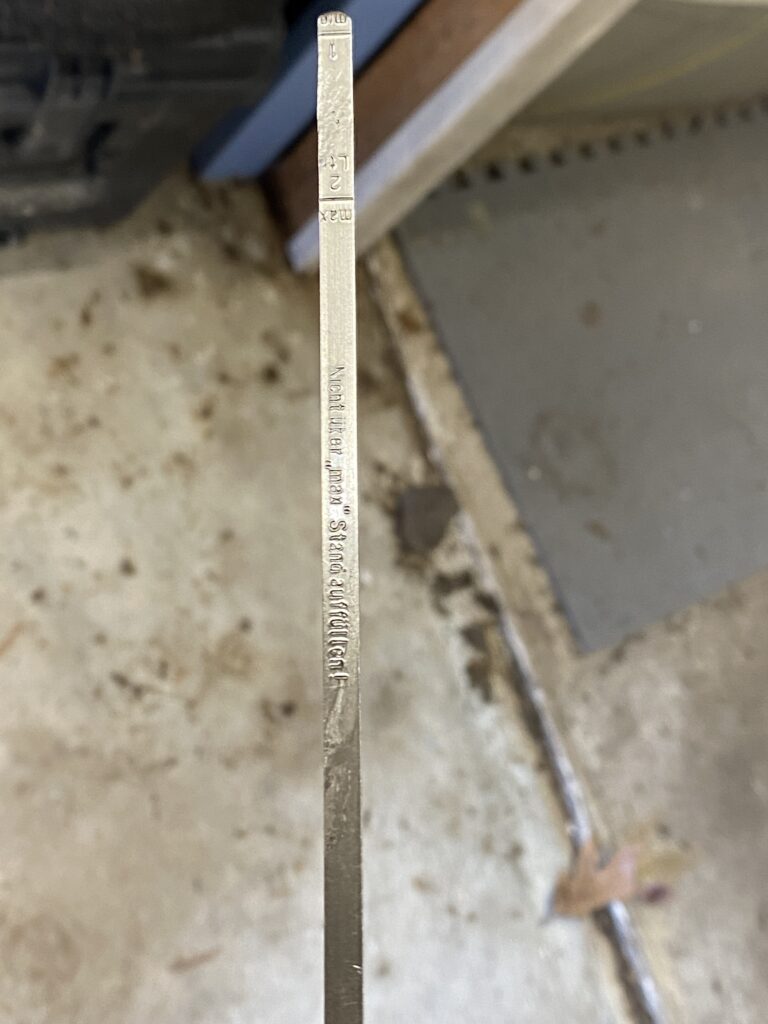
“Nicht uber max” is your warning not to overfill the oil pan.
Competition is heating up between incumbent global OEMs and their Chinese counterparts in South Africa. By Stewart Burnett
Great Wall Motor (GWM) is weighing local manufacturing options in South Africa, with regional executives confirming discussions with Mercedes-Benz over potential use of its East London plant and separate—unsuccessful—talks with Nissan, as well as interest in acquiring an existing facility outright. Managing Director Kevin Li said contract assembly, acquisition, and plant-sharing all remain live options, with a new greenfield build ruled out on the basis of time.
GWM was outbid by Chery for Nissan’s Rosslyn plant back in January 2026, which the rival automaker has agreed to acquire ahead of a planned mid-2026 transition. That deal has sharpened the urgency for GWM, which currently holds around 5% of the South African market and ranks sixth in total vehicle sales. This is a strong position by the standards of newer entrants, but one that local production would consolidate more firmly given the cost advantages Chery stands to gain.
Regional Chief Operating Officer Conrad Groenewald said the automaker is still assessing which model it would build locally, identifying a global product internally codenamed EC15 as his preference on the basis of its export potential and scope for localisation. “I think that’s a better product, giving us more opportunity for localisation and for potential exports into Europe,” he told reporters at a local launch event. GWM also plans to meet South African government officials during the upcoming annual auto show in Shanghai.
Mercedes-Benz South Africa declined to comment to Reuters on future production planning but noted that its East London plant had previously assembled vehicles for multiple brands and that customer and market requirements are “constantly changing”. The plant’s previous chief executive told the outlet in 2025 that there was technically no reason co-production could not happen again, lending some credibility to GWM’s stated interest.
The manufacturing race among Chinese OEMs in South Africa appears to be accelerating quickly. Beyond GWM and Chery, BAIC already operates a localised assembly facility in Gqeberha and began CKD production of its B30 SUV earlier in 2026, while national electric vehicle giant BYD is expanding its dealer network to 35 sites and rolling out fast-charging infrastructure nationwide.
Whether or not it can establish a local production footprint, GWM is taking regional expansion serious. The automaker launched a plug-in hybrid variant of the Haval H6 earlier in the week commencing 16 March, competing in a segment where Chinese players are competing hard against better-established—but more expensive and often less feature-rich—Japanese and European hybrids.
Having just attended the 19th iteration of what I will refer to as a “car culture phenomenon,” I assure you that The Quail, A Motorsports Gathering, continues to grow and mature in directions even its founder Gordon McCall couldn’t foresee.
From an analytical point of view, this year’s success could be measured by a whopping 19 automobile manufacturers that chose to present new models at this year’s event. More than double the debuts of last year, one attendee I spoke with contributed this leap in growth to the Geneva Auto Show being cancelled this year. I beg to differ.
A crossroads of luxury lifestyle and the celebration of the automobile, The Quail, A Motorsports Gathering, continues to evolve far beyond beautiful faces, rolling jewelry, and gossip-hungry press. My father always thought a round of golf was the ultimate business mixer; four individuals wanting to escape life’s daily grind with their guards down about “talking shop.”
Whether one of the five culinary pavilions where strangers often share tables or waiting in line for caviar at the Road & Track refuge, it’s apparent that The Quail provides a platform for cross-pollination between a multitude of people “in the know.”
This year’s event celebrated three unique classes starting with the 50th Anniversary of the BMW “M” Division, founded in 1972. Predictably, “M” stands for motorsport, with the division’s first project being a racecar version of the 3.0 CSL model.
Later came the M1 in 1978, followed by the 1979 release of the M535i, a high-performance version of BMW’s popular 5 Series mid-size sedan.
Next was “70 Years of Jaguar and their Wins at Le Mans.” You may recall the 1950s was a golden era for British motorsport, with 5 of the 10 Le Mans 24 races won by Jaguar).
This class received the most attention due to both the nearby Pebble Beach Concours and Rolex Monterey Motorsports Reunion also celebrating the start of the Le Mans 24’s 100th anniversary.
Lastly, with a spoonful of whimsical on top was “All Things MINI.” BMC manufactured the British pop-culture icon of the 1960s through 1971. Many regard the Mini as the British version of the VW Bug, and who could argue with over 5 million sold?
Porsche fans are ALWAYS satisfied at the Quail for several reasons. RUF Automobile from Germany displayed its new Bergmeister prototype, while Singer Vehicle Design’s display was packed, showcasing their “Turbo Study” inspired by the original 1975 930.
Guntherwerks of Southern California wowed everybody with both their Tornado and Exoskeleton commissions.
For those wanting to go a little faster, Hypercar manufacturer Pagani displayed an impressive collection of their ware, including 2 Huayra Rs, 3 Zonda Rs, 1 Zonda Revolución; 1 Imola, 1 Huayra BC Coupé, a Huayra BC Roadster, and the North American debut of the Huayra Tricolore.
Other notables included Czinger, who debuted the Longtail 21C V Max, and Gordan Murray Automotive, who unveiled the T.33 and T.50 supercar models.
While everyone has an opinion about how cars should be judged, I appreciate The Quail’s “modus operandi,” where entrants choose class winners in that class, and the Best of Show award is selected by all entrants.
This reduces stress for car owners as they are not forced to clean the bottom of their car with Q-tips worried about what the judges may find. Instead, their fee to enter includes two lawn chairs and lunch, thereby promoting enjoyment by all. This year’s winners included:
While each Car Week event on the Monterey Peninsula has its unique character, the overall experience at this year’s Quail continues to be unbeatable. Where else does your ticket include caviar, oysters, fine wines, and champagne?
With its great food, beautiful people, and a very astute selection of automobiles, the experience is world-class. Founder Gordon McCall once told me, “Cars are fun,” so it’s no wonder he left his judging duties at Pebble to create this great institution we can all look forward to every August.