11.3 C
London
Tuesday, May 12, 2026
Home Blog Page 22

Fixing the camshaft position sensor

0
Fixing the camshaft position sensor


During the year I took off from modern motorcycles, I got used to the simplicity of an Airhead. When something’s not quite right with my 1976 R 90/6, I have to figure it out by sound and feel. I’m getting better, but it’s not always easy to do because I simply don’t have a tremendous amount of experience with it. Typically what happens is I realize something is awry, check and adjust the things I know to check and adjust, and if that doesn’t fix it, I call somebody for help.

When something’s not quite right with the liquid-cooled GS, I take off the battery cover, uncoil the diagnostic port, plug in my Hexcode GS-911, press a few buttons, tap a few links on my iPhone and boom, I know exactly what the bike’s onboard computer thinks is wrong with my bike. It’s magic I’ve written about before. There are alternatives to the GS-911, but I find them lacking in features and Apple iOS compatibility. As with many things BMW—buy once, cry once and you get what you pay for.

My latest problem cropped up in late February, on a chilly and overcast day when I was headed to my local dealer for a presentation and to meet up with a friend for lunch. I pushed the big GS outside and got my gear on. It struggled to start, but it started. When I got back from closing the shed door, it had stalled. “That’s weird,” I thought, and started it again. After letting it warm up for about a minute, I rode off.

You know those long recipe pages? The ones where you get somebody’s entire history with one ingredient and why their kids are such picky eaters, but that’s OK because the whole neighborhood flocks to their kitchen when they make this thing you’re spending a lifetime reading before they ever tell you what even in it? Instead of that, you can cut straight to the video of me fixing what went wrong.

When I got outside my neighborhood and got on the gas to get up the first big hill, the bike acted like I hit the rev limiter—stuttering, sputtering and refusing to accelerate further. Surprised, I shifted up and continued. Same thing happened again right about 4,000 RPM, well below redline. I shifted again and the same thing happened at 4,000 RPM, and I noticed the yellow alert triangle and engine light illuminated on the dash. I turned around as soon as it was safe to do so and went back home, parked the bike and rode the R 90/6 that day.

I described the problem to James Carlisle, service manager at Morton’s Motorcycles, and he mentioned it to Mamie Frank, one of their master techs. I described the problem to George Mangicaro, my now-retired mentor of ex-Gridlock Motors fame. All three of them had good ideas, giving me plenty of things to start checking. The gist I extracted was that the least complicated problem it could be was me screwing up something when I put the new spark plugs in a few weeks prior as part of my “getting the bike ready to ride after a year of storage” process. (Check YouTube for a video on that.) I’m always going to start with the thing I might have screwed up!

A diagnostic tool like Hexcode’s GS-911 will enable you to quickly get to the bottom of why your bike isn’t running right. On the 2015 R 1200 GS, the diagnostic port is located near the battery, under a cover secured by one T25 bolt on the right side of the bike.

I have X-Head cylinder head guards from MachineArt Moto, those came off with T25 and T50 drivers. My aim was to check the coils and their associated wires, to make sure everything was clean, straight and snugly connected. The coil wires are barely as long as they need to be, and if you’re rough with them, you can strain or damage the ground connection. Everything was perfect on one side, but on the other, I noticed I could remove the coil by hand—no tool needed. That indicated my failure to properly and fully seat the coil after installing a new spark plug and could have been the source of the problem. The battery was about six months old and kept on a tender, so it was unlikely to be the problem. With everything checked, verified and reassembled, I started the bike again. Same problem at 4,000 RPM—stuttering, sputtering and refusing to rev any higher. The yellow triangle and little “check engine” lights remained lit on the dash, so I knew the problem wasn’t the loose coil.

With the easy stuff out of the way, I broke out my GS-911 and my iPhone. The process is simple: Take off the battery cover (one T25 screw), remove the diagnostic port from its holder, plug in the GS-911, turn the bike’s ignition on (but don’t start it), press the WiFi button on the GS-911, switch my iPhone over to the GS-911’s WiFi network and open the GS-911wifi app on my iPhone. A lot of steps, sure, but simple and intuitive.

Scanning the system took about a minute and returned two errors: 21FD31 and 21FD32. The first is “Camshaft sensor input signal, no signal edge detected, input level low;” the second is “Camshaft sensor input signal, number and position of edges implausible.” I cleared the codes and started the bike again. The yellow triangle and check engine lights came on immediately, and scanning the system again produced the same 21FD31 error code. This confirmed it was an active fault, so I texted the info to George and started searching the internet. I found a few forum discussions on the issue; George found a year-old YouTube video on the error from “The Bike Stig,” an Australian fella, and I found a two-week old one from “hongkongloki,” whom I assume is from Hong Kong. Both videos showed the same 21FD31 error code and the process to replace the sensor.

When you read a fault code, the “0x” at the front of them isn’t important—it’s everything after that you want to know. Note that only one of these camshaft position sensor fault codes triggered the “engine warning light.” Perhaps it’s the implausible nature of the second code that fails to warrant a yellow alert triangle. At any rate, only the code 21FD31 came back after I cleared the codes the first time.

While I hesitate to rely 100% on a computer’s diagnosis, the fault codes were undeniable: the most likely reason my bike was acting like it was hitting the rev limiter at just 4,000 RPM was because of a failed camshaft position sensor. Without the information coming from the sensor, the bike’s computer likely defaulted to a mode which reduced performance and limited RPM—not unlike the “limp mode” I’ve seen other riders talk about. I cleared the error code with the GS-911 and waited for Tuesday so I could order the parts.

Me being me, the next thing I did was investigate what a camshaft position sensor is and why it’s important. As it turns out, the camshaft position sensor on my ’15 GS is similar to the Hall effect sensor on my ’95 R 1100 GS. When the HES went bad on those bikes, you usually couldn’t start the bike after riding in the rain or washing the bike, but some measure of time later—when it dried out—the bike would fire right up. If that symptom wasn’t present, your bike might run poorly or stall at random times. Once I found the connection to the Hall effect sensor, I knew more about what I was dealing with.

(Note: Hall effect sensor failures on the 259 series of engines is probably where the myth of “don’t wash your GS or bad things happen” started. Also, there’s a new podcast about these bikes called Oilhead 259—be sure to check it out!)

The camshaft position sensor does exactly what the words say: It tells the electronic control unit (ECU—the bike’s main computer) where the camshaft is as it spins furiously around to open and close the intake and exhaust valves. The Hall effect sensor is one type of camshaft position sensor; other types are inductive, magnetoresistive and optical. I believe the one on my GS is inductive, as it’s passive as well as the most common type of CMP* used in modern vehicles. Optical sensors are the most accurate, but they’re also bulkier, more expensive and would have trouble operating in an environment slathered in oil and subjected to high vibrations.

(* Note: CPS could refer to either the camshaft or crankshaft position sensor, so we refer to the camshaft position sensor as CMP. The crankshaft position sensor is the CKP.)

The way the inductive CMP on my GS works is not unlike how the ABS sensors work. There’s a housing holding a permanent magnet from which extends an iron pin; the pin is surrounded by a coil of wires. The sensor reads notches or cutouts on a spinning wheel, and how often (and how fast) the different-sized gaps pass by the sensor tells the ECU exactly where the camshaft is in its rotation. The sensor is inserted through a hole in the engine—in my case, the underside of the left cylinder—and secured with a bolt. A rubber O-ring prevents any oil from seeping out through the hole.

Finding the camshaft position sensor on the bottom of the left cylinder (as you sit on the bike) is easy once you orient yourself. In this photo, 1 is the CMP; 2 is the camshaft chain tensioner; 3 is the oil filter. Note the zip tie securing the wiring for the CMP, it’s about halfway between the CMP and the camshaft chain tensioner.

Typically, the spinning wheel has one big gap in between its otherwise uniformly placed notches or teeth; it’s this big gap that causes enough of a fluctuation in the magnetic field generated by the sensor to trigger a signal to the ECU. These kinds of sensors, because they’re passive, tend to be reliable and durable, but as we all know, anything on the motorcycle can go bad simply from heat, vibration and use.

A Hall effect sensor and a magnetoresistive sensor have similar construction to each other, but their trigger is the opposite of the inductive sensor. Instead of measuring the big gap in a notched wheel, these types of sensors detect one “tooth” jutting off a spinning wheel. In other words, they detect the absence of a tooth rather than the presence of one. While these types of sensors also contain a permanent magnet, the electrical signal comes from an integrated circuit rather than a coil of wires around an iron pin. While these types of sensors are usually smaller than inductive ones, as well as being more reliable under ideal conditions and even more accurate, they are more susceptible to vibration damage. Because they may not have a sealed housing, water getting onto the sensor can cause problems with the IC. An inductive sensor’s plastic cover—provided it is intact—will remain waterproof throughout the unit’s life.

The camshaft position sensor doesn’t look particularly complicated, but it is a sophisticated part of the engine management system. Hiding inside are a magnet, an iron post and a coil of copper wires, all helping the bike’s computer fine-tune your spark timing and fuel/air mixture.

No matter the type of sensor used, the intention is the same. The sensor tells the ECU where the camshaft is, and that data point expands through the system to affect spark timing and the fuel mixture. If the sensor is bad, you might notice difficulty starting the engine, rough idling, poor overall performance, stalling, poor fuel efficiency and other problems, such as feeling like you’ve hit the rev limiter well before redline, like what happened with my bike. Because of how intimately the CMP works with the valves, timing and fuel delivery, it’s not ideal to operate a vehicle with a bad CMP for very long. When that check engine light illuminates on the dash, stop riding and check the engine error codes as soon as possible. If you have a GS-911 or other code reader, great. Otherwise, get thee to a repair shop.

Naturally, I was under a time crunch. I was headed for Daytona and the 50th Anniversary Superbike Celebration for the R 90 S the following Friday and didn’t run the codes and do my research until the Sunday before my departure. I wouldn’t be able to order the part until Tuesday. Even indicating the bike is “VOR”—BMW Motorrad’s internal code for “please ship the part as soon as humanly possible”—I might not get the part in time. I called Morton’s Motorcycles at 9:01 Tuesday morning—fresh from a painfully invasive dental procedure—and got the order in. The camshaft position sensor (p/n 12 72 8 523 317) was $114.99; the accompanying O-ring (p/n 12 14 1 748 398) was $6.99. My 10% MOA Parts Rebate got the parts cost under $110.

(Note: The same CMP and O-ring part numbers apply to multiple bikes, including the C 600 Sport; C 650 GT; F 750 GS; F 850 GSA and GS; HP4 Race; K 1600 Bagger, GT and GTL; liquid-cooled R 1200 GSA, GS, R, RS and RT; and S 1000 R, RR and XR. Each bike may use a different mounting bolt, so be sure to check with your dealer to ensure you get the right parts for your bike.)

Replacing the sensor was simple. I grabbed a disposable baking pan to catch the oil that would come out when I removed the sensor. I used wire cutters to nip off the head of the zip tie securing the sensor’s wiring to ensure I didn’t damage the wires. A T30 driver got the bolt out and I used a small flathead screwdriver to carefully dislodge the sensor—the O-ring makes it really snug. Nothing looked wrong with the sensor—no metal residue means no bad engine things going on—and the oil looked fine as well. Sensors just fail sometimes due to heat, vibration and time. Even though I found the loose coil, it wasn’t at fault and I felt pretty satisfied that I hadn’t done anything wrong to cause this problem.

I coated the new O-ring with a little of the escaped engine oil, put it on the sensor and put the sensor in place, using the bolt to hold it in place. The O-ring wants to squeeze the sensor out of place, so it got a little fiddly. I torqued the bolt to 8 Nm, and used a zip tie to re-secure the wiring after I plugged it into the sensor. After a wipe-down, I verified I’d gotten everything where I wanted it, topped up the oil and turned the bike on.

The bike started right up, the check engine light didn’t come back on and no oil leaked out from where the sensor goes. Over the course of a 20-mile test ride, I kept the bike above 4,000 RPM as much as I could, even pushing it towards 8,000 for a stretch on a wide, clear road. Everything seemed to be operating as it should and no oil was leaking, so I cautiously chalked this repair up as a success.

It poured down rain the whole day after I replaced the sensor, so the next time I rode the bike was to start my trip to Daytona. It’s not how I prefer to do things, but the short time meant some concessions to my comfort levels had to be made. As it turned out, I actually fixed the problem thanks to the GS-911, having the appropriate tools, some good advice from mentors and quick turnaround on the parts order from my nearest dealer. Over 1,500 miles later, including two long days on the freeway, the symptoms have not returned and the bike appears to be running fine!

 

I clearly made it to Daytona Beach and—more importantly—the 50th anniversary celebration of the year the BMW R 90 S dominated AMA Superbike.


Source link

Daimler doesn’t expect North America profit recovery in 2026

0
Daimler doesn’t expect North America profit recovery in 2026


Daimler doesn’t expect North America profit recovery in 2026 | Automotive World


Skip to content

Daimler managed to attain its 2025 guidance, but the next 12 months could prove challenging in terms of profitability. By Will Girling

Daimler Truck saw its revenue and sales continue to drop in Q4 2025, to €12.9bn (US$14.8bn) and 118,000 units respectively, sending its full-year figures below 2024’s total. Mercedes-Benz Trucks overtook Trucks North America as the group’s best-selling brand, as deliveries for the latter collapsed 26% year-on-year due to tariff uncertainty, weak uptake in the US and Canada, and changing emissions standards in Mexico.

Subscribe to Automotive World to continue reading

Sign up now and gain unlimited access to our news, analysis, data, and research

Subscribe

Already a member?

Daimler doesn’t expect North America profit recovery in 2026

Welcome back , to continue browsing the site, please click here


Source link

The best sports cars – driven, rated and ranked

0
The best sports cars – driven, rated and ranked


When choosing the best sports car for your own personal needs, you need to consider factors beyond just range and price.

Here’s what to look for:

Engine location

Why it matters: Sports cars are all about driving fun, but where the engine is located can make them can feel very different.

• Front: Traditional sports cars have a front-engined, rear-wheel-drive layout. This usually offers the most natural feel and predictable handling at the limit.
• Mid: The mid-engined layout offers outstanding balance and agility, but there are practicality downsides and sometimes twitchier responses when the car moves from grip to slip.
• Rear: There’s really only one car with this layout, the Porsche 911, and it makes for a unique driving experience. For driver challenge and satisfaction, there’s not much to beat it.

Powertrain

Why it matters: Most sports cars are ICE-powered, but they come in various different shapes and sizes. 

• Small capacity four-cylinder turbos: These often more efficient in day-to-day driving but lack the spine-tingling soundtrack you want from a sports car.
• Multi-cylinder engines: V6, V8 and flat-six configurations offer the most rewarding exhaust notes and plenty of performance, but there’s a price to pay at the pumps.
• Gearbox: Increasingly sports cars come with automatic gearboxes that provide fast shifts and ease of use. A manual still offers the greatest driver involvement, though.

Technology

Why it matters: A car is your second most expensive purchase and you will likely have it for at least three years, so you will want to make sure you’ve got enough equipment and technology to keep your car feeling modern.

• Navigation: Look for built-in route planners that include live traffic information.
• Assistance: Features such as adaptive cruise control, lane keeping assistance, blindspot monitoring and a 360deg camera make large cars easier to handle.
• Dynamic driver modes: Switchable traction control and the ability to adjust steering weight, suspension compliance and throttle response.

How to decide if you actually need an sports car

In reality, it’s hard to make a rational case for a sports car, but…

• You love driving and regularly get behind the wheel just for fun.
• You rarely travel with more than one passenger.
• You’re happy to put up with a little less comfort and higher running costs.


Source link

Top 5 Reasons to Use a Dealership for BMW Service

0
Top 5 Reasons to Use a Dealership for BMW Service


BMW Service

Author: Passport BMW

For BMW owners in Camp Springs, Alexandria, Upper Marlboro, Waldorf, Fort Washington, Suitland-Silver Hill, Arlington, and Clinton, trusting your dealership service center is essential. With over 30 years of dedicated service, Passport BMW not only understands the local driving conditions but also the unique needs of your vehicle. Choosing a dealership means having peace of mind, knowing that your BMW is in the hands of trained professionals who are familiar with its intricacies. This guide will explore five key reasons why dealership service is the best choice for maintaining the health and longevity of your vehicle, ensuring it continues to perform beautifully on your daily commutes and weekend adventures. Whether navigating busy routes like Allentown Road or enjoying a drive to National Harbor, your BMW deserves the best care.

The Expertise of Factory-Trained BMW Technicians is Unmatched

When you bring your BMW to our dealership, you’re choosing technicians who specialize exclusively in the BMW brand. Unlike general mechanics, these factory-trained experts have undergone rigorous training programs developed by BMW to gain a deep understanding of the engineering and technology specific to each model, from the high-performance capabilities of the BMW M series to the efficient hybrid features of the BMW 5 Series.

For drivers in Camp Springs and surrounding areas like Alexandria and Upper Marlboro, this specialized knowledge is crucial. Our technicians are well-versed in how local driving conditions, such as the stop-and-go traffic on Allentown Road or the humidity affecting air conditioning performance, impact vehicle maintenance. This expertise enables them to provide more accurate diagnostics and tailored maintenance plans, ensuring your BMW runs optimally for years to come. In contrast, generic repair shops may lack the specific insights and tools needed to service your vehicle to the same high standards.

Furthermore, BMW’s commitment to ongoing education means our technicians stay up-to-date with the latest advancements and model features, enhancing their ability to deliver exceptional service. This constant learning translates into enhanced care for your vehicle, allowing you to enjoy the ultimate driving experience. For more information about BMW and their offerings, visit BMW USA.

The Advantage of Using Genuine BMW Parts

Choosing the right parts for your BMW is just as crucial as selecting the right technician for your vehicle. When you opt for service at a BMW dealership, you can rest assured that only Genuine BMW Parts, also known as Original Equipment Manufacturer (OEM) parts, are used. These components are meticulously engineered to match the specifications of your vehicle, ensuring optimal performance and reliability.

For drivers around Camp Springs, using genuine parts means prioritizing quality and consistency. Whether you’re navigating the busy Capital Beltway or heading to Andrews AFB, having the right parts in your vehicle contributes to a smoother driving experience and peace of mind on the road. With OEM parts, you maintain the integrity of your BMW and enhance its performance, setting the stage for the detailed breakdown of benefits in the following section.

Why Do OEM Parts Matter for Your BMW?

Perfect Fit and Function: OEM BMW parts are designed to match the exact specifications of your vehicle, ensuring a seamless fit and optimal performance. This means when you’re driving your BMW X3 or 5 Series along Allentown Road, you can trust that every component works harmoniously with the rest of your car, maintaining the precision that defines the BMW experience.

Durability and Quality: Genuine BMW parts are manufactured to meet stringent quality standards, providing long-lasting durability that generic options often lack. Whether you’re navigating the winding roads to Oxon Cove Park or commuting to D.C., these parts are built to withstand the rigors of everyday driving, ensuring reliability and peace of mind.

Warranty Protection: OEM parts come with warranty coverage that aftermarket options typically do not provide. This means if a part fails, you can receive a replacement without additional costs, safeguarding your investment in your BMW. This added layer of protection is especially valuable for drivers in Camp Springs, where maintaining your vehicle’s performance is crucial for daily commutes.

While aftermarket parts may seem appealing, they come with risks such as improper fit, reduced longevity, and potential voiding of your warranty. For more information on vehicle quality and parts reliability, check out resources like Consumer Reports.

Maintenance12 - Service

Today’s BMW vehicles are intricate systems powered by advanced electronics and sophisticated computing technologies. To service them effectively, technicians require more than basic tools; they depend on cutting-edge diagnostic equipment specifically designed for BMW models. This specialized technology enables direct communication with a vehicle’s onboard systems, allowing for precise assessments of its condition and performance.

When warning lights illuminate your dashboard, dealership-level diagnostic tools quickly identify the underlying issues, streamlining the repair process. This capability is particularly advantageous for addressing intermittent problems that may arise due to the diverse driving conditions in Camp Springs, where local traffic patterns and weather can vary significantly. Unlike independent shops, which might lack access to proprietary BMW diagnostic tools, our technicians can avoid guesswork and ensure that your vehicle receives the accurate repairs it needs.

Dealership Service Protects Your Investment

When it comes to your BMW, maintaining its value is essential—especially in a competitive market like Camp Springs. Keeping a complete, dealership-stamped service log not only ensures that your vehicle receives expert care but also provides an official, verifiable record of all maintenance and repairs. This documented history becomes a powerful asset when you’re considering resale or trade-in, as it gives potential buyers confidence in the vehicle’s upkeep.

According to trusted resources like Kelley Blue Book, cars with detailed service histories can sell for more than those without. Buyers are often more inclined to pay a premium for a BMW that has been maintained according to the manufacturer’s rigorous standards. This transparency in your vehicle’s history fosters trust and enhances its attractiveness on the pre-owned market, making it a wise investment for your future.

BMW Warranty and Recall Support

When it comes to warranty repairs, your local BMW dealership is the most reliable hub. With in-warranty repairs typically covered at no cost to you for eligible components, the dealership efficiently manages all necessary paperwork directly with BMW. This means you can enjoy a hassle-free experience while getting your vehicle back on the road swiftly, whether you’re navigating the Capital Beltway or commuting along Allentown Road.

Additionally, dealerships serve as your primary contact for safety recalls. BMW automatically notifies them of any recall issues, ensuring that the correct parts and procedures are in place for timely service. This proactive approach keeps your vehicle compliant with safety standards, offering peace of mind for drivers in Camp Springs and nearby areas. For recall information, you can check the National Highway Traffic Safety Administration (NHTSA) website or the BMW Owners site, but remember, your local dealer is always ready to carry out the necessary repairs.

Frequently Asked Questions (FAQs)

Is dealership service more expensive than independent shops?

While dealership service might have higher upfront costs, the value it provides is significant. With trained technicians and genuine BMW parts, you’re investing in your vehicle’s long-term health, which can save you money in repairs and enhance resale value down the line.

Will servicing my new BMW at an independent shop void the warranty?

Servicing your BMW at an independent shop won’t void your warranty as long as OEM parts are used and you maintain detailed records of the work performed. However, dealership service ensures that your vehicle receives the specialized care it deserves.

How do I choose the right BMW dealership for service?

Look for a dealership with a solid reputation, positive customer reviews, and a commitment to transparency. A well-established dealership in the Camp Springs area, such as Passport BMW, is likely to provide reliable service and support.

What amenities can I expect at a dealership service center?

Dealerships often provide amenities like comfortable waiting areas, free Wi-Fi, complimentary beverages, and shuttle services. Some even offer loaner vehicles for longer repairs, making your service visit more convenient, especially for busy Camp Springs drivers.

Is it worth servicing my older BMW at the dealership?

Absolutely! Even if your BMW is out of warranty, dealership service offers the expertise of factory-trained technicians and genuine parts, which can help extend the life of your vehicle. Regular service can keep your older model running smoothly for years, especially if you’re navigating the busy roads around Camp Springs.

How can I check if my BMW has any recalls?

You can easily check for recalls by using your Vehicle Identification Number (VIN) on the NHTSA website or the BMW Owners site. Your dealership can also assist with recalls and any necessary repairs to ensure your vehicle remains safe and compliant.

Passport BMW

About Passport BMW


Since 1991, our family-owned team at Passport BMW has been dedicated to serving our community with a superior car-buying experience. Our commitment to excellence has earned us the prestigious Center of Excellence Award multiple times, highlighting our expertise in all things BMW. We offer unique benefits like no-haggle pricing, home delivery, and mobile service vans to make your life easier. As experts, we provide detailed information and a transparent process so you can feel confident in your decisions. Trust our award-winning team to deliver the quality and care you deserve for your automotive needs.


Related Articles:

A DC Driver’s Guide to Choosing the Right BMW Dealership


Source link

Stops from New Mexico to California

0
Stops from New Mexico to California


Route 66 crosses Arizona with some of the most scenic and historic stops along the entire highway.
Here’s how to plan your drive from New Mexico to the Colorado River, including national parks,
roadside icons and RV-friendly tips.

Arizona is Home to the Most Beautiful and Diverse Part of Route 66

The most famous highway in America is celebrating its 100th birthday! Route 66 opened in 1926,
connecting Chicago to Los Angeles while covering nearly 2,500 miles passing through eight states.
While most of “The Mother Road” has been replaced by freeways, you can still largely follow the
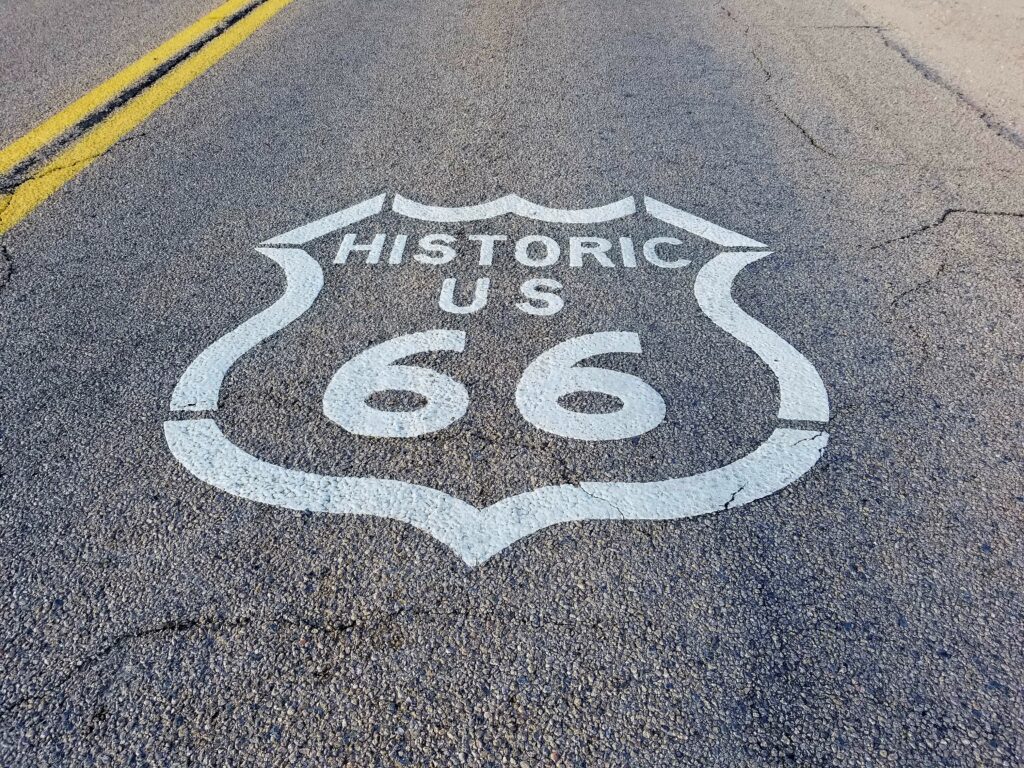
original path. Look for “Historic Route 66” signs on maps and along roadsides as you travel.
We think Arizona has the most inspiring section of Route 66. As it traverses the northern part of the
Grand Canyon State, the route passes through or near two national parks and four national
monuments. Then, there are classic Route 66 sites like the Wigwam Motel, Standin’ on the Corner
Park and Meteor Crater. It’s an unforgettable road trip defined by human history, geological wonders
and wild donkey meet ‘n greets.

What’s the Best Time of Year to Visit?

Northern Arizona sits at high elevation, and winters can be cold and snowy while summers are hot,
dry and dusty with occasional monsoons. So spring, fall and early summer are ideal for exploring.
West of Flagstaff, Route 66 and I-40 descend from about 7,000 feet to the desert below, and in
addition to elevation changes the temperature will be very hot in the summer. Be on alert for high
winds, too.

How Long Does It Take to Drive Route 66 in Arizona?

If you drove Route 66 across Arizona from the New Mexico border to California, the 385-mile trip
would take about 6.5 hours. But that’s without stopping. Here are twelve of our favorite can’t-miss
attractions. Some are located right off I-40 while others involve a lengthier detour. Depending on what
you choose to see, we recommend three to seven days for this road trip.

Highlight 1: Canyon de Chelly National Monument

Canyon de Chelly National Monument

From New Mexico, Route 66 crosses into Arizona as I-40, a busy freeway and major east-west
trucking corridor. At Chambers, 26 miles west on I-40, head north on US 191 to our road trip’s first
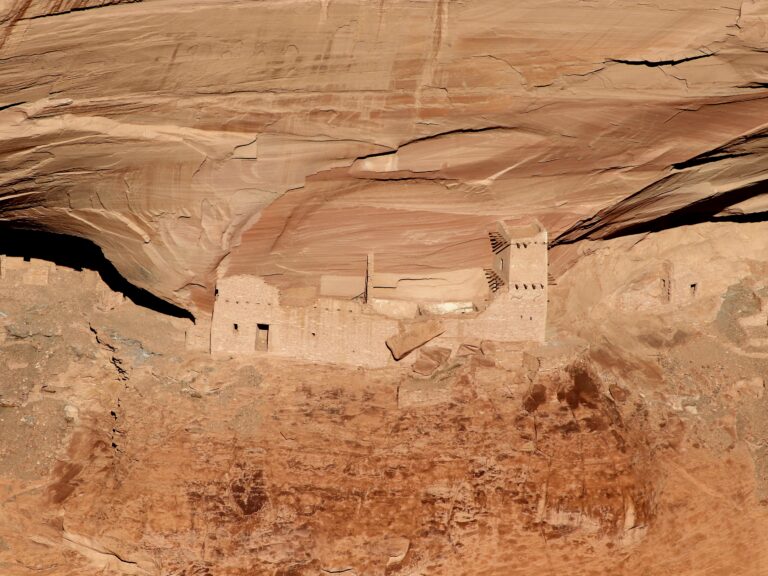
major site. Canyon de Chelly National Monument is located 77 miles north of Route 66, deep in the
Navajo Nation. But it’s worth the detour to drive high along the canyon’s rim, stopping at several
overlooks. Peering over the edge, you can see ancient dwellings built precariously into the cliffs. For
nearly 5,000 years, people have lived in these canyons and far below Diné families continue to live
and farm on the valley floor. Spider Rock Overlook is another highlight where a brief hike leads to a
stunning view of an 800-foot sandstone spire.

Time: Plan at least a full day to reach Canyon de Chelly and drive to the numerous overlooks. Tours
into the canyon by vehicle, horseback or hiking are also available.
RV driving and parking: US 191 and the park’s two roads, South Rim Drive and North Rim Drive,
are paved and well-maintained.
Camping: Located near the visitor center, Cottonwood Campground is a peaceful, shaded
setting with large, old-growth cottonwood trees. There are no showers, hookups or reservations: sites
are available first-come, first-serve.

Highlight 2: Petrified Forest National Park

Petrified Forest National Park

Back on Route 66 and I-40, it’s 22 miles from Chambers to another gem in the national park system.
All northern Arizona is a geological marvel, with natural forces sculpting the colorful landscape into
buttes, canyons and pinnacles. Petrified Forest showcases this terrain while featuring another
element: hikes past ancient fallen trees, transformed into stone over millions of years. Crystal
Forest is the premier trail for petrified wood, but many other hikes and short walks through grassland
and the Painted Desert give close-up views of nature’s artistry.
Time: The national park lies along Route 66 and connects directly to Petrified Forest Road, a paved
28-mile scenic drive leading to all major overlooks and trails. The road travels south, ending at US 180.

Go west 18 miles to Holbrook to pick up Route 66 and I-40.

RV driving and parking: Petrified Forest Road is an easy drive for RVs with ample parking at overlooks.
Camping: There’s no camping or overnight parking allowed.

Highlight 3: Holbrook & Wigwam Motel

Wigwam Motel

With campgrounds, restaurants, grocery stores and fuel, Holbrook is a welcome respite. It’s also
where you’ll find the Wigwam Motel, one of the most enduring attractions along Route 66. Officially
known as Wigwam Village #6, the fifteen concrete and steel teepees date back to 1950. They’re
modeled after Historic Wigwam Village #2 which opened in 1937 and still operates in Cave City,
Kentucky. Listed on the National Register of Historic Places, Arizona’s Wigwam Motel is open for
stays, too, and features original handmade hickory furniture, air conditioning and a small bathroom
and shower. The nostalgic theme continues throughout the motel’s grounds with a collection of
vintage automobiles and a museum displaying memorabilia from the original owner.

Highlight 4: Winslow & Standin’ on the Corner Park

Downtown Winslow

From Holbrook, continue 33 miles west to another important town along Route 66. In downtown
Winslow, you’ll find souvenir shops, a brewery and Standin’ on the Corner Park. In 1972 the iconic
American rock band, The Eagles, released the debut single, “Take It Easy” which includes the line,
“Well, I’m a standin’ on the corner in Winslow, Arizona with such a fine sight to see. It’s a girl, my lord,
in a flatbed Ford, slowin’ down to take a look at me.” To commemorate one of The Eagle’s most
famous songs, the town created a park with a mural, statues and flatbed Ford.

Highlight 5: Meteor Crater

Meteor Crater

This otherworldly site is one of Route 66’s most astonishing attractions. From Winslow, it’s 20 miles
west to the Meteor Crater exit and then six miles south to a large parking lot. Set against a hill, the
modern visitor center is the entry point for expansive views of a massive bowl-shaped depression
that’s 700 feet deep and stretches more than 4,000 feet across with a circumference of 2.4 miles.
Meteor Crater was formed some 50,000 years ago when a gigantic meteorite or a dense cluster of
meteorites struck the ground with a force greater than 20 million tons of TNT.
Time: It’s a quick and easy drive on a paved road to Meteor Crater. While it only takes a few minutes
to absorb the incredible view, the visitor center has a museum, theater and coffee house so plan on a
A couple of hours’ visit.
Camping: Meteor Crater has a campground with 71 RV sites and 36 full hook-up sites.

Highlight 6: Walnut Canyon National Monument

Walnut Canyon National Monument

Back on Route 66 and I-40, it’s 29 miles to exit 204 and Walnut Canyon National Monument. Located
just outside Flagstaff, humans have explored, lived and farmed in the canyon for centuries. During the
1100s, the Sinagua people constructed dwellings below the canyon rim. Walking the one-mile loop
trail gives up-close views of several cliff dwellings in a magnificent, forested setting.
Time: Located just off Route 66, this peaceful escape only takes a couple of hours to explore.
Camping: While there’s no camping at Walnut Canyon, the U.S. Forest Service runs several
campgrounds in Coconino National Forest and the Flagstaff area.

Highlight 7: Sunset Crater Volcano National Monument

Sunset Crater Volcano National Monument

As if breathtaking stone formations, petrified wood and a meteorite weren’t enough, volcanoes also
played a part in shaping northern Arizona’s remarkable landscape. From Walnut Canyon and Route
66, follow US 89 north for 15 miles to Sunset Crater Volcano’s entrance. A thousand years ago,
Arizona’s most recent volcanic eruption took place here, forming the lofty cinder cone. Loop Road
travels east through the park, where short hikes pass through lava fields. The route connects to our
next highlight as Loop Road is also Wupatki National Monument’s main highway.
Camping: Located across from the visitor center, Bonito Campground has 44 campsites.

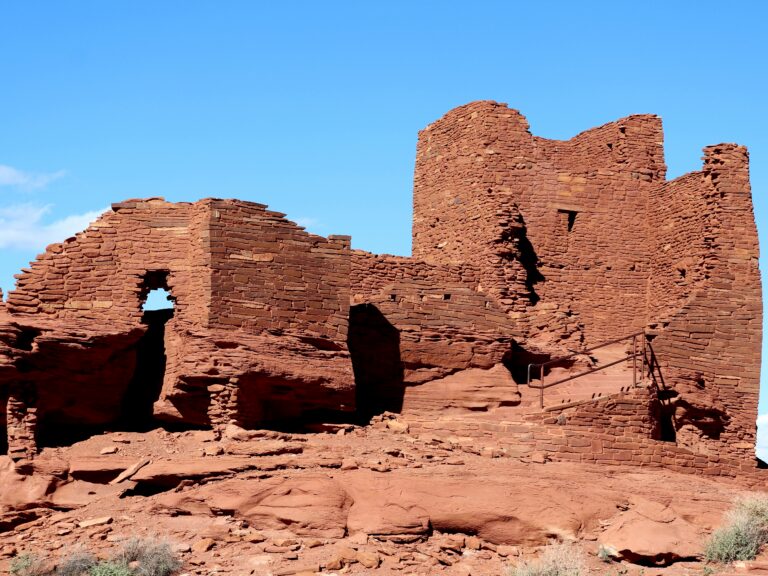
Highlight 8: Wupatki National Monument

Wupatki National Monument

Continuing north on Loop Road, from Sunset Crater Volcano, it’s about 17 miles to Wupatki and the
impressive remnants of a once-thriving community. At first, it might seem like the two neighboring
national monuments have nothing in common. And yet, the pueblos of Wupatki represent a time
when the area bustled with life. During Sunset Crater Volcano’s eruption around 1085 CE, people fled
the immediate area, causing nearby Wupatki’s population to boom. The volcanic ash also improved
soil moisture leading to successful crops. Wupatki became a flourishing regional trade hub with multi-
level masonry pueblos, such as the park’s namesake pueblo with 104 rooms, a ballcourt and natural
blowhole feature.
Camping: While there’s no camping at Wupatki, the Bonito Campground is located across from
the Sunset Crater Volcano visitor center.

Highlight 9: Flagstaff

Motel sign in Flagstaff, AZ

The largest city along Arizona’s Route 66 lies at the base of the state’s highest mountain, 12,633-foot
Humphreys Peak. Outdoor-oriented 7,000-foot-high Flagstaff is hip and happening with bike shops,
breweries, coffee shops and numerous campgrounds. For selfies, there are plenty of Route 66 road
signs and two downtown murals to photograph: the Phoenix Avenue Route 66 mural and another on
the side of the Amtrak train station. At night, cruise by Route 66’s many motels looking for neon signs,
like the Western Hills Motel’s famous stagecoach.

Highlight 10: Grand Canyon National Park – South Rim

Grand Canyon National Park – South Rim

Another monumental detour lies 80 to 90 miles from Flagstaff and Route 66, depending on which
highway you follow. From downtown, US 180 is the most direct approach to the Grand Canyon’s
South Rim, but you can also continue west on Route 66 and I-40 to Williams and then head north on
State Route 64. About the size of Delaware, the massive national park occupies a big chunk of
northwestern Arizona. The Grand Canyon is 278 miles long and averages one mile deep and ten
miles wide from rim to rim. Most people visit the South Rim with numerous overlooks providing bird’s-
eye views of this geological masterpiece, carved slowing over millions of years by the Colorado River.
Time: It’s an easy drive on excellent highways to the Grand Canyon. Desert View Drive, the highway
following the South Rim, is well-maintained although at 7,000 feet high, snowstorms shut it down from
time to time. Budget a full day to reach the park and enjoy the viewpoints and visitor center. Unlike
most other attractions along Arizona’s Route 66, this very popular park gets crowded so plan
accordingly. Summer and spring and fall school vacation periods are particularly busy. The park also
runs shuttle buses in spring, summer and fall.

Camping: The park operates seasonal and year-round campgrounds. Sites book fast and reservations can be made up to six months in advance.

Highlight 11: Oatman’s Wild Burros

Oatman’s Wild Burros

Returning to I-40, the westward journey on Route 66 continues. From Williams, it’s 19 miles to the
Ash Fork Route 66 Museum with exhibits and relics celebrating The Mother Road. Six miles farther
west, exit 139 leads to the longest remaining section of the original two-lane highway. Passing
through Seligman, Peach Springs and Valentine, its 107 miles of desert scenery before Route 66
reaches Kingman. This major hub has all the necessities and another Route 66 museum to boot. But
one of Route 66’s most fascinating sections still lies ahead. Continue southwest of Kingman another
29 miles toward Oatman.

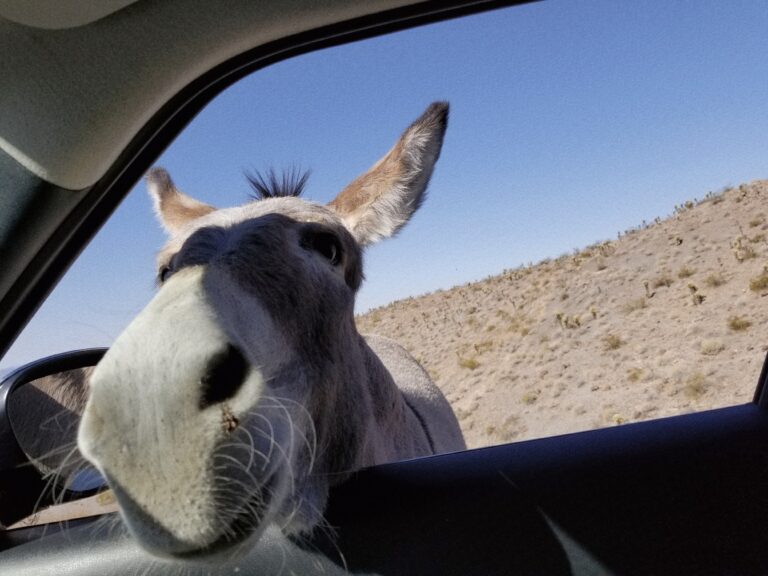
As Route 66/County Highway 10 winds up and through the Black Mountains, it encounters an eight-mile stretch with 191 curves, turns and switchbacks. Called “The Sidewinder,” it’s more fun than harrowing and the views are breathtaking. Obviously, the steep road grade may or may not be right for your RV. When Route 66 finally drops into Oatman, look for wild burros roaming the road and nearby hills. The friendly donkeys are descendants of burros brought to work local mines in the early 1900s. If you stop, the donkeys will likely approach your vehicle, looking for food – or a head scratch. They also wander around Oatman. Once a bustling mining town,
Oatman now thrives on tourism with Western-themed shops, restaurants and staged gunfights.

Highlight 12: Colorado River

Colorado River

From Oatman, Route 66/County Highway 10 continues southward another 25 miles to Topock,
situated on the Colorado River and Arizona/California border. The town is also surrounded by Havasu
National Wildlife Refuge, popular for fishing, boating, kayaking, hiking, birding and wildlife watching.
You’re now in the Mojave Desert so plan on very hot summer conditions and milder weather the rest
of the year.

Start your Route 66 road trip now!


Source link

Event Coverage: Motorama 2025 Latepass Gallery

0
Event Coverage: Motorama 2025 Latepass Gallery


If you’ve been following me here, or anywhere else, you already know that coverage from the Motorama Custom Car & Motorsports Expo is something I’m known for.

As an automotive generalist, the variety at this Ontario event makes it one of my favourites each year. In fact, in recent years, it’s been the only indoor show I’ve attended.


I can shoot from the moment I arrive to the moment I leave, and somehow still realize I’ve missed something when I get home.

Last year I was so eager I even started taking photos while driving — I was that desperate for my annual reprieve from the winter automotive blahs.

Sure, I had an additional reason to be excited thanks to Zehr including me in their booth, but that’s the exception rather than the norm.

Traditionally, like most attendees, I’m a spectator admiring the work of others.


If you’ve seen one or two of these photos prior to this post, it’s because I’ve dropped a few here and there between last March and now.

Most of them, though, I kept in the vault because at the time I was contracted to another publication.

Sadly, that outlet ground to a halt before the majority of these photos could go live. Because those articles remained in draft form, I was also unable to archive what I’d written.

Hopefully, posting over 50 unreleased photos from the event makes up for not quite remembering what I wrote.

Motorama has seen a lot of success since taking over the coveted early-March timeslot. Much of that comes from constantly working to make the event better, whether through the addition of special guests or new displays.

In 2025, it was awesome to see space on the show floor reserved specifically for lowriders. Typically, there are always one or two sprinkled throughout the show, but in 2025 they finally had a real home.

After such a strong showcase, there should be no doubt about the quality of the Toronto lowrider community.

As always, the front hall was an impeccable display of some of the best builders in the country.

These builds, with countless man-hours invested, competed for the coveted Motorama Grand Champion award.

Builders tend to keep these projects fairly close to the chest all year, so you never truly know what to expect before entering the show.

A front hall favorite of mine from 2025 was Fabrizo Cella’s C10-R. Sitting on a Porterbuilt chassis, powered by an LT4, and tucking Billet Specialties wheels, it was a beautiful build from bumper to bumper.


Much like essentially every other year, Mississauga’s Chassis Stop debuted a vehicle that had me returning for second, third, and fourth looks.

On my fourth visit, I finally took the time to read the nameplate of what I was looking at: a Mazda 13B-powered Autobianchi Transformabile.


It’s a make and model I have no shame admitting I’d never heard of before. Chassis Stop, true to their name, put it on a bespoke custom chassis. They didn’t stop at just an FR conversion, though. They tubbed the rear, chopped the top, and added suicide doors.

There simply isn’t another Autobianchi like it anywhere.

Finally, seeing my longtime friend debut the custom chassis arm of his shop, Issyfab Speed LTD at Motorama made a great 2025 event even more enjoyable.


I’m a big fan of seeing my friends do well, and seeing him succeed on such a big stage was outstanding.

I could likely continue to wax poetic about how great last year’s event was, but with the 2026 show approaching fast this Friday, March 13th, I think it’s best if I just leave you all with a few more photos to scroll through.

Unfortunately, I managed to break my foot and have surgery scheduled for this coming weekend, so I don’t think I’ll be able to make it to this year’s event.

But I might see if I can pin someone down for a bit of guest coverage. Cross your fingers for me — and maybe a toe, since I won’t be able to.


Source link

Humans Since 1982 Reimagines ClockClock 24

0
Humans Since 1982 Reimagines ClockClock 24


A million Times 96

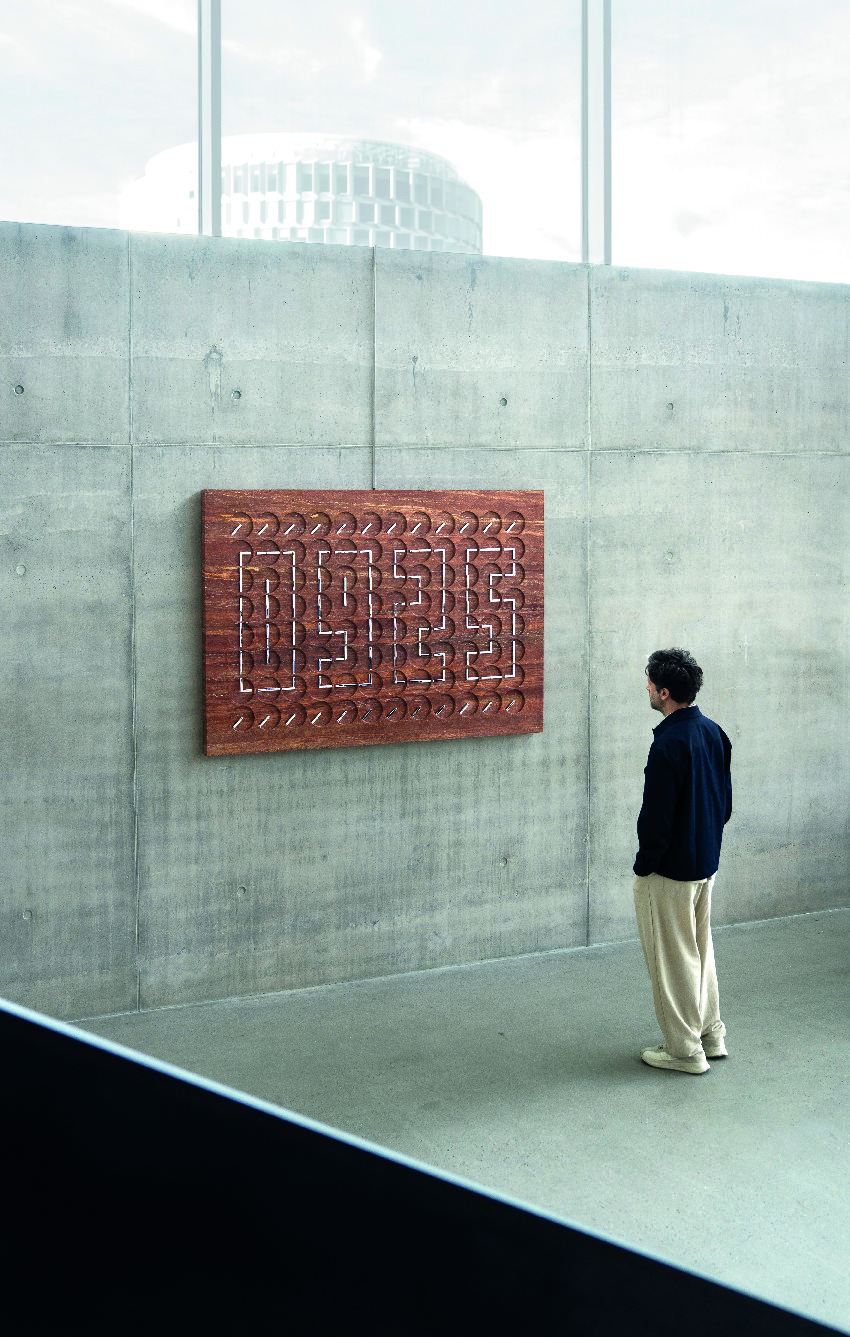
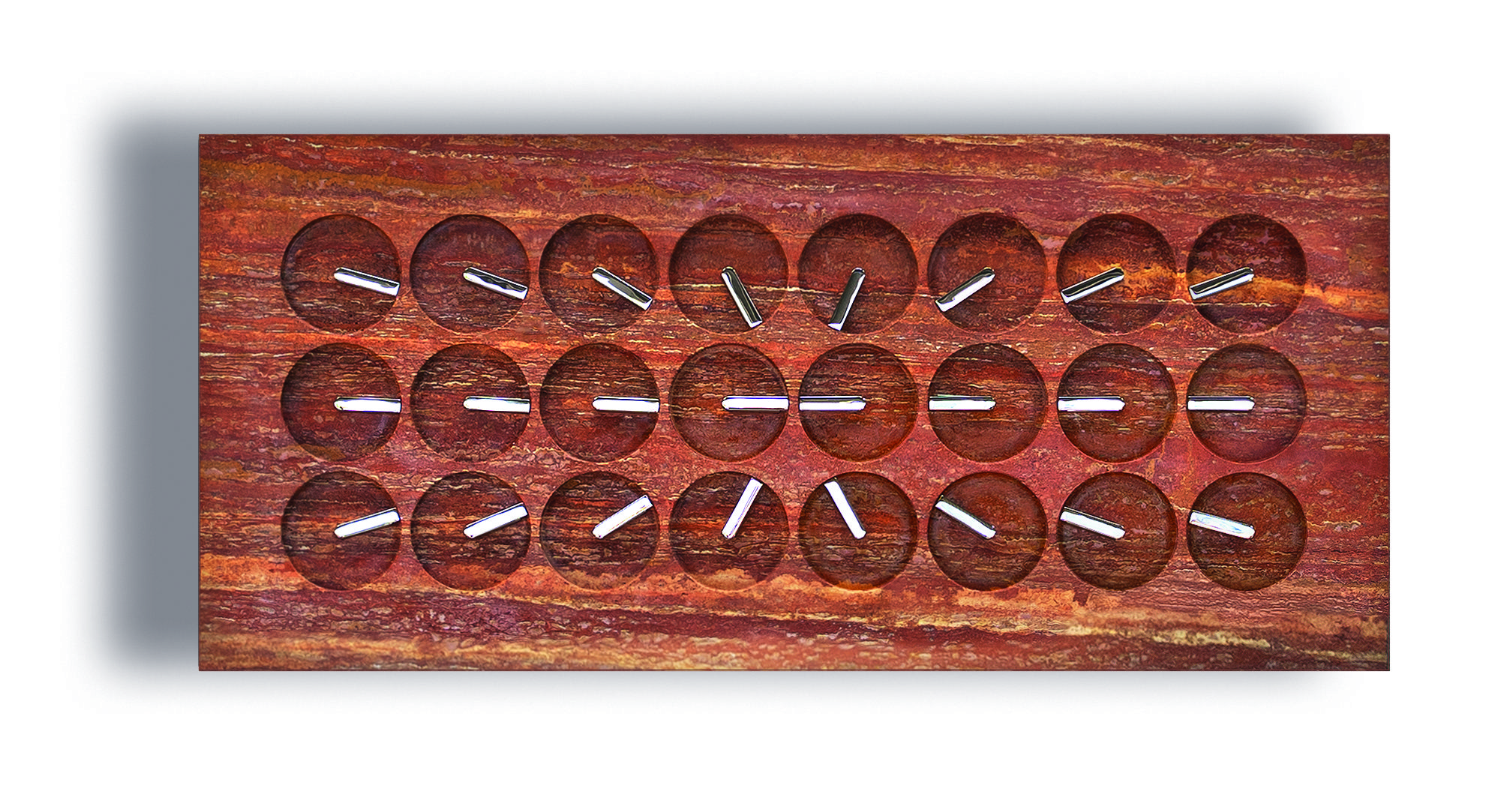
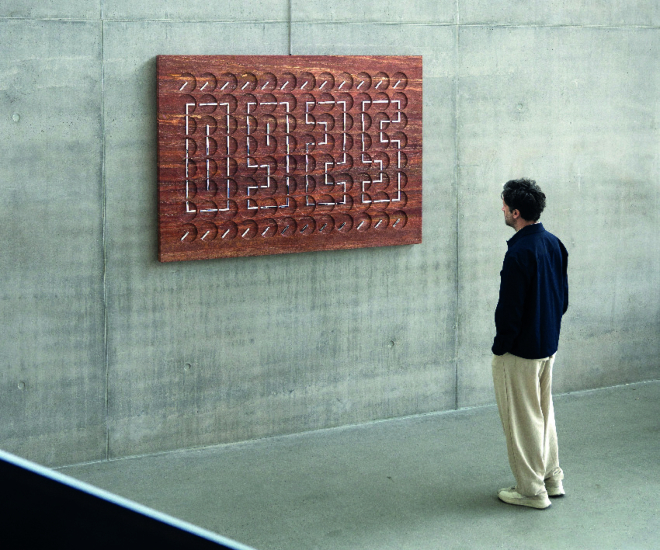
Blurring the lines between design and art, Humans since 1982 is a Stockholm-based studio whose works have graced major institutions and landmark venues worldwide. Founded in 2009 by Per Emanuelsson and Bastian Bischoff — with David Cox currently serving as Chief Technology Officer — the studio is celebrated for its kinetic artworks, Clock Clock 24 (below) and A million Times (above). These wall-mounted installations fuse horology with sculpture, transforming the pragmatic display of time into a mesmerising study of motion and visual rhythm.

In a recent convergence of disciplines, Humans since 1982 partnered with world-renowned architectural firm Bjarke Ingels Group (BIG) and leading natural stone supplier SolidNature. The goal: to elevate architectural expression through the union of design and nature.

This collaboration reimagines the studio’s signature works using travertine, a natural stone formed by the sedimentation of minerals in freshwater over hundreds of thousands of years. Porous yet robust, the material is available in neutral and warm tones, ranging from grey and beige to brown and gold. It carries distinctive patterns that are uniquely its own, with each slab serving as a record of geological time.

ClockClock 24

The Clock Clock 24 Bjarke Ingels Sunset Dune features 24 dials mounted on a 92 × 42 × 3.4 centimetre slab of travertine in ‘Sunset Dune’ hues. Each dial bears two sleek metal hands that do not track time individually; instead, they move in synchronised, flowing patterns for 60 seconds before aligning collectively to display the current time in four large numerals. This intricate choreography is driven by an intelligent system of circuit boards, motors, sensors and microprocessors, all engineered by the studio.

Limited to an edition of just 10 pieces, the Clock Clock 24 is priced at EUR 19,000 (excluding taxes).

Operating on the same principle but on a grander scale, A million Times 96 (Bjarke Ingels) measures 177 × 125 × 7 centimetres and features 96 dials. While it shares the conceptual foundation of its smaller counterpart, its motion sequences are far more complex and varied. This edition is strictly limited to five pieces, each crafted from travertine in a different natural hue, and priced at EUR 190,000 (excluding taxes).

For further information, visit www.humanssince1982.com.

This story was first seen as part of the WOW #82 Festive 2025 Issue

For more on the latest in luxury watch reads, click here.


Source link

Where To See Blooming Flowers This Spring

0
Where To See Blooming Flowers This Spring


Death Valley Wildflowers.

Plan an RV Trip to See Blooming Spring Flowers

There’s something about wildflower season that makes you want to keep the windows down and take the long way. One minute you’re rolling through ordinary desert or foothills, and the next the landscape is lit up in yellow, purple, and orange like somebody flipped a switch.

An RV is a pretty perfect way to do this. You can follow the blooms at your own pace, stay close to the action, and change plans when the weather (or the flowers) has other ideas. The stops below are organized west to east, with notes on what makes each place special, when to go, and how to handle the RV side of things without letting it steal the fun.

West

Death Valley National Park, California

2026 is a big bloom year

Death Valley is reporting its best bloom year since 2016, and many sprouts still have yet to flower. Lower-elevation flowers are blooming across the park and are expected to last into late March, depending on the weather. Higher elevations typically bloon from April–June.

Where the color is right now: North Badwater Road, South Badwater Road near Ashford Mill, Highway 190 between Stovepipe Wells and Furnace Creek, and the Beatty Cutoff.
Source:

In a strong year, Death Valley does not just have “a few pretty patches.” It has long stretches where the ground looks dusted in gold, with other blooms mixed in depending on where you stop. The easiest way to chase it is to camp in the park or nearby, then spend a couple mornings cruising the bloom corridors with coffee in hand and plenty of time for pullouts.

Note to RVers: Most of the main bloom corridors are on paved routes, but shoulders can be soft and uneven. NPS warns that Southern Badwater Road includes loose gravel, soft shoulders, and drops along the edge in places, which is exactly the kind of thing that can ruin your day if you pull off with a heavy rig. Use established pullouts when possible.

Nearby RV campgrounds:

Carrizo Plain National Monument, California

Wide open and quietly spectacular

Carrizo Plain feels like California’s secret spring show. When conditions line up, the rolling hills turn into big ribbons of color, and you can find stretches where you’re basically alone with the wildflowers and the sky.

BLM shares seasonal guidance and notes that dirt roads can become muddy after rain, with high-clearance vehicles recommended in muddy areas. That’s a good clue for RVers: It’s usually better to basecamp nearby and explore the monument with your tow vehicle or dinghy.

Note to RVers: Carrizo is absolutely doable as an RV trip, but it’s not a “drag the trailer everywhere” destination. You’ll enjoy it more if your RV is home base and the exploring happens in the smaller vehicle.

Nearby RV campgrounds:

Mount Rainier National Park, Washington

Meadows that typically wait until summer

If your idea of “wildflowers” includes mountain air and views that don’t look real, put Mount Rainier on the list. The park’s wildflower status updates note that many flowers bloom by mid-July, and meadows are often especially impressive into early August, depending on snowpack and weather.

Rainier is a great RV destination because you can camp outside the busy areas, then day-trip in when the light is good. When the meadows are popping, it’s worth arriving early and lingering.

Note to RVers: Paradise is one of the most popular areas, and parking can fill fast. NPS notes an overflow option labeled “Overflow Parking or Bus/RV Parking” along Paradise Valley Road (seasonal).

Nearby RV campgrounds:

Mountain West and Great Plains

Crested Butte, Colorado

The classic wildflower town

Crested Butte is one of those places that seems built for flower lovers. In 2026, the Crested Butte Wildflower Festival runs July 10–19 and celebrates its 40th anniversary, which makes it easy to plan around guided hikes and workshops.

Even if you skip the festival, mid-summer here is made for slow mornings, short hikes, and that moment when you crest a trail and realize the whole meadow is in bloom.

Note to RVers: Mountain roads around the area can be narrow and some routes require extra caution and clearance. Local guidance specifically notes that some mountain roads require high clearance and advises careful mountain driving. If you’re towing, set up camp first and explore in the truck or toad.
Source:

Nearby RV campgrounds:

Fort Pierre National Grassland, South Dakota

Prairie blooms and big horizons

If you love the kind of beauty that sneaks up on you, Fort Pierre is a great stop. The U.S. Forest Service lists it among wildflower viewing areas in its Rocky Mountain Region resources.

Prairie wildflowers are different from mountain meadows or desert carpets. The color shows up in pockets, along roadsides, and across wide open stretches. It’s the kind of place that makes a simple drive feel like the point of the trip.

Note to RVers: This is generally friendly territory for larger rigs because you’re not fighting tunnel clearances or tight mountain switchbacks. The main thing is planning for distance between services.

Nearby RV campgrounds:

Southeast

Biltmore Blooms (Spring at Biltmore), Asheville, North Carolina

Garden spring at its best

If you want flowers that are perfectly timed, carefully planned, and downright gorgeous, Biltmore is hard to beat. Spring at Biltmore runs March 26–May 21 in 2026.

This is a great RV trip because you can combine a garden day with a few days of Asheville fun, then keep rolling along the Blue Ridge.

Note to RVers: Biltmore’s FAQ says RV parking is available in Lot C, and you can use the complimentary shuttle pickup and drop-off area. It’s very doable as a day trip, but most RVers will be happiest camping nearby and driving in with their tow vehicle or dinghy.

Nearby RV campgrounds:

Mid-Atlantic

Shenandoah National Park, Virginia

Wildflowers with a Skyline Drive soundtrack

Shenandoah in spring is a mix of fresh green forests, overlooks that make you stop mid-sentence, and wildflowers popping up along trails. NPS says the typical spring season runs mid-March through the end of May.

Note to RVers: If you’re driving Skyline Drive, NPS warns you to confirm you’ll clear Marys Rock Tunnel, which has a maximum clearance of 12 feet 8 inches (mile 32.2). Also note that RVs and camping trailers are welcome, but you should be ready to shift into low gear on downhill grades.

If your RV is a tall one, double-check its true height (A/C units included). If you’re towing and don’t enjoy curvy mountain roads, camp outside the drive and explore in the tow vehicle. You’ll enjoy the views a lot more.

Nearby RV campgrounds:

Cranberry Glades Botanical Area, West Virginia

A rare bog with an accessible boardwalk

Cranberry Glades is one of the most unusual plant stops in the region. The US Forest Service notes the boardwalk is wheelchair accessible, and asks visitors to stay on the boardwalk and leave flowers where they are.

This is a great add-on destination for RVers because it’s the kind of place you can explore in a couple of hours, then head back to camp for a quiet evening.

Note to RVers: The area is reachable, but parking is not built for huge crowds or giant rigs. A tow vehicle or dinghy makes this stop easier.

Nearby RV campgrounds:

Northeast

Sugar Hill, New Hampshire

Lupines and classic New England views

Sugar Hill’s lupines are the kind of bloom that makes even a simple roadside view feel special. The town notes Annual Lupine Weekend is traditionally the first week of June, and highlights a 2026 event on Saturday, June 7.
Source: https://www.sugarhillnh.org/event/willing-workers-lupine-festival/

This is a great RV stop because it’s easy to pair with a longer New England loop, and you can keep things simple: camp, drive the scenic roads, and chase the best light.

Note to RVers: Parking near the most popular views can get tight, especially if you’re towing. Set up camp first, then explore with the smaller vehicle.

Nearby RV campgrounds:

Bonus bloom events worth planning around

Tulip Time, Holland, Michigan

Tulip Time runs May 1–10, 2026.

Note to RVers: This is a town festival, so the best move is camping outside the busiest area and driving in.

National Cherry Blossom Festival, Washington, DC

The festival is scheduled March 20–April 12, 2026. For peak bloom updates, NPS posts Bloom Watch information.

Note to RVers: DC is not a “wing it in a big rig” situation. Camp outside the city and use your tow vehicle plus transit or rideshare.

Start planning your trip

If you’re building a route, RV LIFE Campgrounds helps you compare parks near each destination, and RV LIFE Trip Wizard helps you plan RV Safe Routes with directions tailored to the height, weight, and length of your RV.

Been to a campground lately? Leave a review. It helps the next RVer Journey with Confidence.

Related articles:


Source link

Tesla VP explains latest updates in trade secret theft case

0
Tesla VP explains latest updates in trade secret theft case


Tesla Vice President Bonne Eggleston explained the latest updates in a trade secret theft case the company has against a former manufacturing equipment supplier, Matthews International.

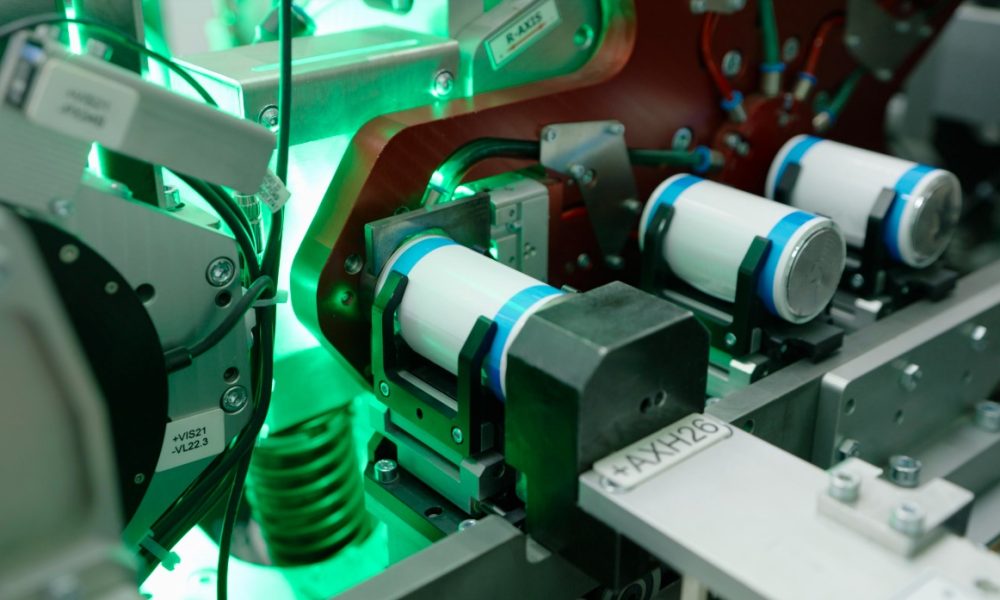
Back in 2024, Tesla had filed a lawsuit against Matthews International, alleging that the firm stole trade secrets about battery manufacturing and shared those details with some of Tesla’s competitors.

Early last year, a U.S. District Court Judge denied Tesla’s request to block Matthews International from selling its dry battery electrode (DBE) technology across the world. The judge, Edward Davila, said that the patent for the tech was due to Matthews’ “extensive research and development.”

Tesla is suing a former supplier for trade secret theft

The two companies’ relationship began back in 2019, as Tesla hired Matthews to help build the equipment for its 4680 battery cell. Tesla shared confidential software, designs, and know-how under strict secrecy rules.

Fast forward a few years, and Tesla reportedly caught Matthews copying the tech into machines that were sold to competitors, claiming they lied about doing so for three years, and continued to ship it. That is when Tesla chose to sue Matthews in July 2024 in Federal court, demanding over $1 billion in damages due to trade secret theft.

Now, the latest twist, as this month, a Judge issued a permanent injunction—a court order banning Matthews from using certain stolen Tesla parts or designs in their machines. Matthews is also officially “liable” for damages. The exact amount would still to be calculated later.

Bonne Eggleston, a VP for Tesla, said on X today that Matthews is a supplier who “exploited customer IP through theft or deception,” and has no place in Tesla’s ecosystem:

Tesla calls this a big win and warns other companies: “Buyer beware—don’t buy from thieves.”

Matthews hit back with a press release claiming victory. They say an arbitrator ruled they can keep selling their own DBE equipment to anyone and rejected Tesla’s request for a total sales ban. They call Tesla’s claims “nonsense” and insist their 20-year-old tech is independent. Both sides are spinning the same narrow ruling: Matthews can sell their version, but they’re blocked from using Tesla’s specific secrets.

What are Tesla’s Current Legal Options

The case isn’t over—it’s moving to the damages phase. Tesla can:

  • Push forward in court or arbitration to calculate and collect huge financial penalties (potentially $1 billion+ if willful theft is proven).
  • Enforce the permanent injunction with contempt charges, fines, or even jail time if Matthews violates it.
  • Challenge Matthews’ new patents that allegedly copy Tesla’s work, asking courts to invalidate them or add Tesla as co-inventor.
  • Seek extra damages, lawyer fees, and possibly punitive awards under the federal Defend Trade Secrets Act and California law.

Tesla could also refer evidence to federal prosecutors for possible criminal trade-secret charges (rare but serious). Settlement is always possible, but Tesla’s fiery public response suggests they want full accountability.

This isn’t just corporate drama. It shows why trade secrets matter even when Tesla open-sources some patents, confidential know-how shared in trust must stay protected. For the EV industry, it’s a reminder: steal from your biggest customer, and you risk losing everything.


Source link

Freightliner Cascadia Parts and Semi Truck Components for Fast Turnarounds

0
Freightliner Cascadia Parts and Semi Truck Components for Fast Turnarounds


Read Time:3 Minute, 27 Second

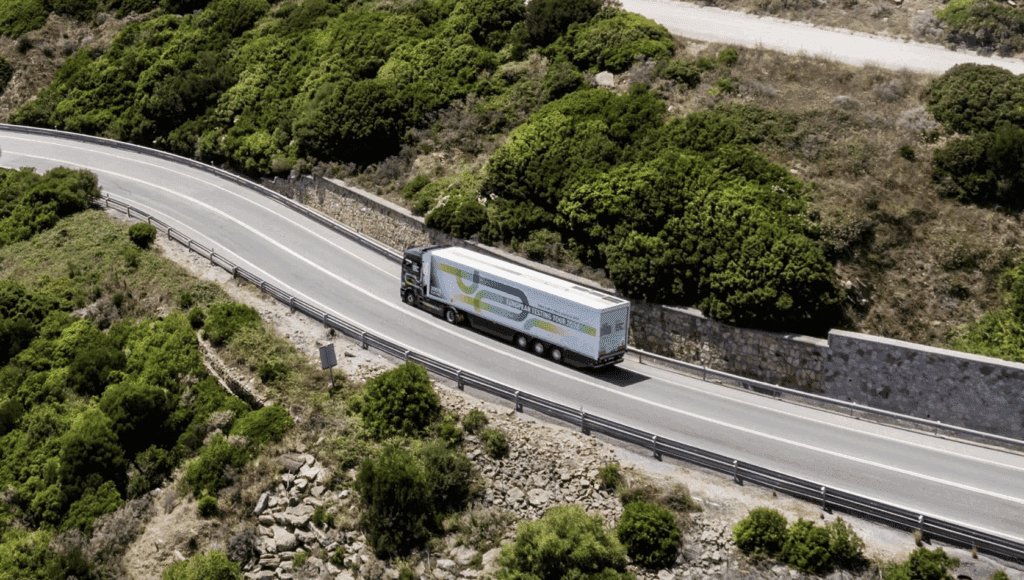
In trucking, the clock is always running. A late departure becomes a missed appointment, then a reshuffled load plan, then a stressed shop day trying to squeeze repairs between runs. That’s why buying semi truck parts is less about “placing an order” and more about protecting the schedule you already promised to your customers.

Most downtime doesn’t come from dramatic failures. It comes from routine reality: a low-speed front contact at a dock, debris on the interstate, vibration that finally loosens what was already tired, or a small crack that turns into a bigger problem at the worst moment. The fleets that stay calm under pressure are the ones that treat parts sourcing like a process—repeatable, quick, and built around correct fitment.

A strong parts workflow starts with clarity. When the catalog structure is logical and the categories match how technicians actually think, the shop moves faster. The goal isn’t to browse; it’s to identify the exact component, match it to the platform, and get the truck back into rotation without a second round of adjustments. That’s the difference between a clean install and a repair that drags on.

The Freightliner Cascadia is a perfect example of why structure matters. Cascadias are everywhere: regional lanes, long-haul routes, fleet pools, and owner-operator setups. They’re designed to work hard, but they also live in the real world—weather, road salt, daily vibration, and constant use. When the time comes to replace a key exterior or functional component, you need the selection process to be straightforward and the result to be predictable. That’s where targeted freightliner cascadia parts make a practical difference inside a busy maintenance routine.

What fleets want is simple: dependable availability and fewer mistakes. A wrong part costs more than shipping—it costs bay time, dispatch time, and driver time. A well-organized selection reduces those hidden costs by helping teams choose confidently, especially when multiple trucks are queued and every job is competing for attention.

Why Cascadia uptime depends on “small” parts decisions

On paper, many repairs look minor. In the yard, they can decide whether a truck runs today. A damaged front component can affect more than appearance; it can influence protection, alignment, and how other parts sit together. The same goes for wear items and exterior pieces that take daily hits. When these components are replaced with the right match, the truck returns to service cleanly and stays stable through the next miles.

For maintenance managers, the best scenario is consistency: the same selection logic every time, the same install expectations, and the same results across different units. That’s how you keep a fleet uniform and reduce surprises. It also makes training easier—new technicians learn the system faster when the parts path is clear and repeatable.

Owner-operators feel this differently, but the goal is identical. When the truck is your income, you can’t afford a messy repair cycle. You want a parts source that respects your time, helps you avoid wrong-fit purchases, and supports the kind of quick, confident fixes that keep you rolling instead of waiting.

Operational rhythm: order, install, return to route

Good operations have rhythm. Dispatch plans lanes. Drivers plan rest. Shops plan bay usage. Parts sourcing needs to fit into that rhythm, not interrupt it. When a catalog is built for heavy-duty needs, the selection process becomes a short step inside a larger workflow: diagnose, confirm, order, install, and return the unit to service.

That rhythm also improves budgeting. If you can predict the common replacements and source them consistently, your costs become easier to forecast and your downtime becomes easier to prevent. Over time, the operation feels less reactive and more controlled, even when workloads spike and schedules tighten.

The platform tacoma-truckparts.com is built for that day-to-day reality: clear structure, heavy-duty focus, and practical parts navigation for working fleets and working shops. When parts sourcing becomes predictable, Cascadia maintenance becomes faster, scheduling becomes smoother, and the business runs with more confidence—mile after mile, load after load.


Source link