12.2 C
London
Monday, May 11, 2026
Home Blog Page 7

Best OBD2 Scanners for Beginners and First Time Buyers (2026)

0
Best OBD2 Scanners for Beginners and First Time Buyers (2026)


Read Time:13 Minute, 11 Second

Full system scanners that do more than read codes — ranked, compared, and explained for first time buyers

Your check engine light is on. Maybe the ABS light too. You have already learned that a $150 dealer diagnostic fee just to plug in a scanner is one of the most frustrating expenses in car ownership. The good news: the right OBD2 scanner puts that exact capability in your hands  and in 2026, the best options for first time buyers are more powerful than ever.

This guide focuses on full system scanners  tools that go beyond basic engine codes to read every module on your vehicle, including ABS, airbags, transmission, TPMS, and body control. We cover seven of the most competitive options at every price point, with honest pros and cons on each. The best pick for most first time buyers is the YOUCANIC UCANII Pro, and we will show you exactly why and when the competition makes more sense.

Quick Pick Summary

Not ready to read the full breakdown? Here is where each scanner wins:

Category Pick Why
Best Overall YOUCANIC UCAN II Pro Full system, bi di, AI, no subscription
Best App Based BlueDriver Pro Polished app, full system, guided repairs
Best Mid Range Budget Mucar CDE900 Pro Full system + bi di under $200
Best Entry Level Tablet Autel MK808BT Pro 28+ services, wide coverage ~$549
Best Professional Tablet Topdon Phoenix Lite 2 Depth + coverage for advanced users
Most Affordable Full System ThinkCar ThinkDiag 2 Full system, watch the brand unlock fees
Best Basic Code Reader Foxwell NT301 Engine codes only, simple & reliable

What Separates a Good Full System Scanner from a Basic Code Reader

Most $30–$80 scanners on the market are code readers. They pull engine DTCs and not much else. A full system scanner is a fundamentally different tool. These are the things to look for when stepping up to a full system scanner?

  • Full system coverage: Not only should it scan only the powertrain but the transmission, ABS, airbag/SRS, TPMS, body control, climate, sunroof, and all other modules other then the powertrain.
  • Bi directional controls: The ability to command components to activate like cycle a relay, bleed brakes,or test a solenoid rather than only reading what the car reports. This is the difference between diagnosing and guessing.
  • Service functions: Oil reset, battery registration, TPMS relearn, DPF regeneration, throttle adaptation, steering angle calibration functions that may require a dealer visit.
  • Subscription model: Some scanners are free forever; others charge annual fees of $100–$300 to maintain full access.
  • Repair guidance: Does the scanner tell you what to do about the code it found, or just that the code exists?

The Scanners: Full Reviews

1. YOUCANIC UCAN II Pro  —  Best Overall for Beginners
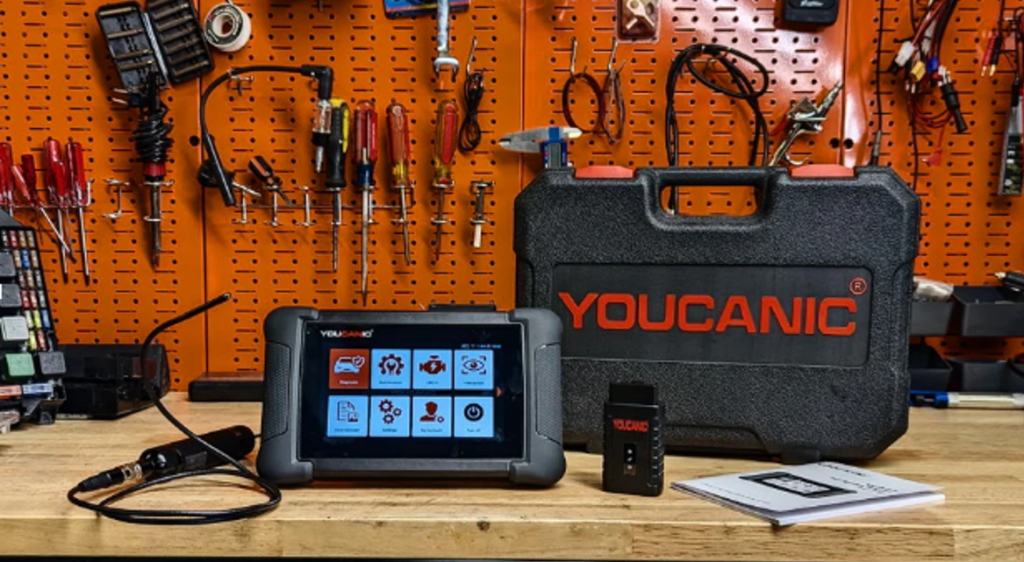
YOUCANIC UCAN II Pro
Why It Wins The YOUCANIC UCAN II Pro is the strongest all round package for a first time buyer who wants professional capability without a recurring subscription or a steep learning curve. It is the only scanner in this guide with built in AI guidance, a free repair video library, and US based support.

YOUCANIC is a US based company founded in 2016 and headquartered in Towson, Maryland. Youcanic platform reaches over 6 million visitors annually through free automotive repair guides and diagnostic walkthroughs  which means the diagnostic scanner comes backed by an entire education ecosystem, not just hardware.

Full system diagnostics: It reads and clears codes from every module not just from the engine but transmission, ABS, SRS/airbags, TPMS, body control, climate, sunroof, hybrid battery management, and more. It covers 99% of vehicles from 1996 to present across all major American, European, and Asian makes.

Built in AI:With this scanner each trouble code is accompanied by plain language AI explanations. It tells you what the code means, the most likely real world causes, and what to check first. This runs on thedevice with no internet connection and no subscription required. It is a standout feature no competitor in this guide offers.

Bi directional controls and active tests: Commands components to activate for testing. It can command the ABS pump, throttle body, cooling fans, injectors, and more. This confirms whether a component is actually faulty before you spend money on parts.

40+ service functions: Oil reset, battery registration, TPMS relearn, ABS bleeding, DPF regeneration, throttle adaptation, steering angle reset, injector coding, and more. All without a dealer visit.

No subscription, ever: Free lifetime software updates. No annual renewal fees. No brand unlock charges. You pay once, and the tool keeps working and even keeps improving.

Hardware: 5,000mAh battery, 64GB storage, ruggedized build, built in LED port light, wireless Bluetooth VCI adapter. The current UCAN II C hardware version doubles the memory and storage of earlier units.

Limitations: Does not support online coding or SCN coding as of 2026  the deep module programming some European vehicles require when replacing ECUs or certain safety modules. For the vast majority of diagnostic and maintenance tasks a DIYer will face, this never comes up. Pre 1996 vehicles require a separate adapter.

Price: approximately $400–500. No ongoing fees.

2. BlueDriver Bluetooth Pro  —  Best App Based Option

BlueDriver Bluetooth Pro

BlueDriver has been one of the most recommended Bluetooth OBD2 scanners for several years, and the 2026 version continues to be a strong performer at its price point. The hardware is a compact Bluetooth dongle that pairs with a polished, purpose built app on iOS and Android.

What it does well: It is a full system diagnostics across engine, ABS, airbag, and transmission on most makes. The Repair Report feature is genuinely useful. It queries a database of verified fixes from professional mechanics and returns the most common solutions for your specific code on your specific vehicle. The app interface is the best in class for phone based scanners.

Where it falls short: The BlueDriver has no bi directional controls. You can read every code the car reports, but you cannot command any component to activate for testing. Service functions are limited. For a beginner who wants to grow into deeper diagnostics, this is a ceiling you will eventually hit.

Best for: The BluDriver are good for first time buyers who just needs to read and understand codes, it gives you guided repair suggestions, and are comfortable working entirely through a smartphone app. Excellent value at ~$100 if bi directional capability is not a priority.

Price: approximately $100. No subscription fees.

3. Mucar CDE900 Pro  —  Best Mid Range Budget Pick
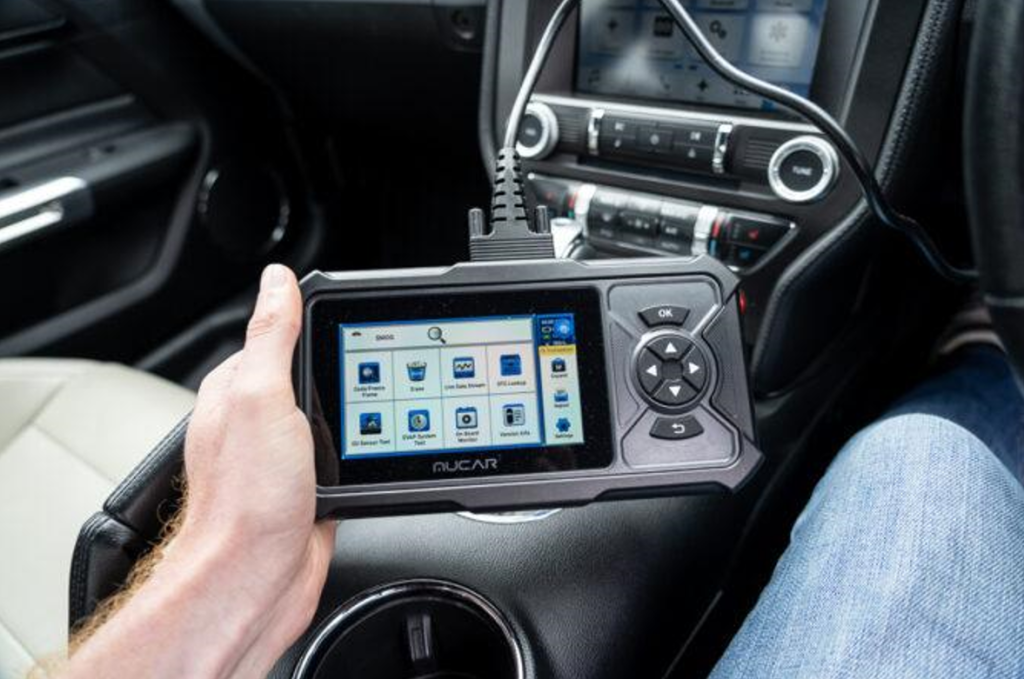
Mucar CDE900 Pro

The Mucar CDE900 Pro is one of the more competitive offerings in the $150–$250 range, delivering full system diagnostics and bi directional capability at a price significantly below most comparable tools. It has made inroads with DIYers who want more than the BlueDriver but are not ready to spend $500+.

What it does well: TheMucar’s coverage across most major makes, bi directional controls for active component testing, and 30+ service functions, including oil reset, battery management, ABS bleeding, and TPMS. The interface is straightforward to navigate for a beginner.

Where it falls short: Software updates are paid after the initial period, which is a meaningful cost over time. There is no integrated repair guidance ecosystem or video library to back up a first time buyer after the scan. US based support is not available, which matters when troubleshooting vehicle specific coverage questions.

Best for: Budget conscious buyers who need full system coverage and bi directional testing and are comfortable sourcing repair information independently. A solid tool for the price but the total cost of ownership goes up once paid update cycles begin.

Price: approximately $150–250. Paid software updates after the initial period.

4. ThinkCar ThinkDiag 2  —  Full System at Low Entry Cost, Watch the Fees
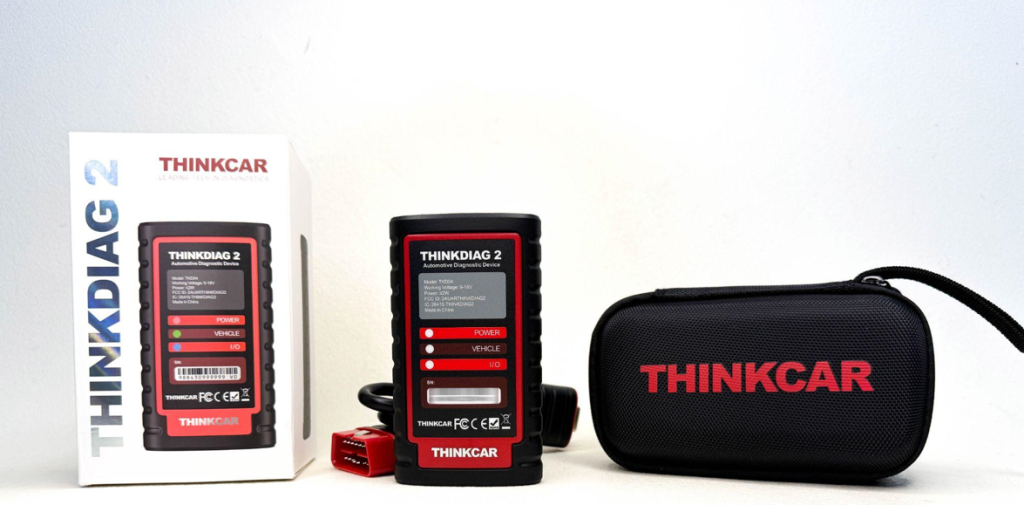
ThinkCar ThinkDiag 2

The ThinkDiag 2 is an app connected Bluetooth scanner that offers full system diagnostics and bi directional capability at one of the lowest entry prices in this category. On the surface it looks like exceptional value. The important caveat is in how ThinkCar structures its pricing.

What it does well: Full system diagnostics and bi directional control via a dedicated app on iOS and Android. Supports 25+ service functions. The interface is capable and reasonably easy to navigate, and the hardware is compact and wireless.

Where it falls short: ThinkCar uses a brand unlock model. You pay a separate fee to activate coverage for each vehicle make. What appears to be a $100 scanner can quickly become significantly more expensive if you own vehicles from multiple manufacturers, work on different makes, or need to add coverage down the road. The advertised price does not reflect the actual cost of full use.

Best for: Buyers who own a single vehicle from one manufacturer and plan to stick with it. If you own a Ford and will only ever work on Fords, the ThinkDiag 2 can be cost effective. If you have a mixed garage or want flexibility, the unlock fees add up fast.

Price: approximately $80–150 hardware. Additional brand unlock fees apply per vehicle make.

5. Topdon Phoenix Lite 2  —  Professional Depth, Professional Price
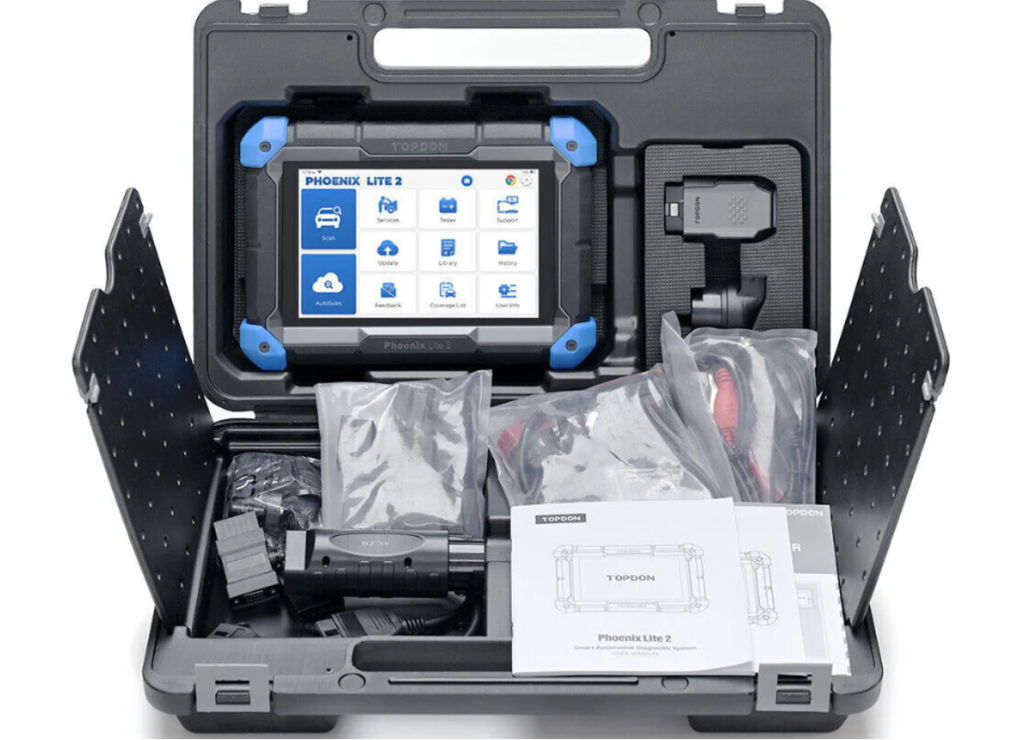
Topdon Phoenix Lite 2

The Topdon Phoenix Lite 2 is a genuine professional grade tablet scanner — well built, deeply capable, and targeted at serious enthusiasts and small shops rather than first time buyers. It is included here because it is frequently encountered in comparison searches and deserves an honest placement.

What it does well: Full system diagnostics with strong depth across European, Asian, and American makes. Excellent bi directional coverage. 40+ service functions. DoIP and CAN FD protocol support for 2020+ vehicles. A large touchscreen makes live data graphs easy to read. The hardware is built to shop floor standards.

Where it falls short: At approximately $800 plus around $300 per year in software update fees after the first two years, this is a significant investment that is hard to justify for a first time buyer or occasional DIYer. The tool’s depth is also its complexity there is a steeper learning curve than beginner focused scanners.

Best for: Experienced DIYers or small shop owners who will use the tool frequently across multiple vehicles and can spread the subscription cost over real world use. That said it is not right starting point for a beginner.

Price: approximately $800. Software subscription is approximately $300/year after Year 2.

6. Autel MaxiCOM MK808BT Pro  —  Strong Professional Option with Ongoing Costs
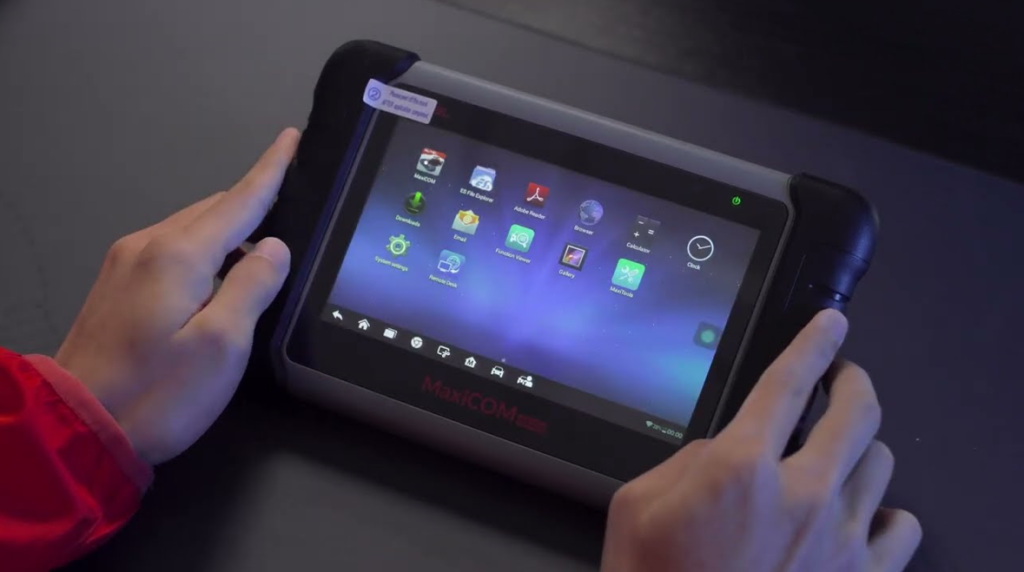
Autel MaxiCOM MK808BT Pro

Autel is one of the most established names in professional diagnostic tools, and the MK808BT Pro is a capable mid to professional scanner that frequently appears in best of comparisons. It is a serious tool with real strengths  but also a pricing structure that first time buyers should understand upfront.

What it does well: Full system diagnostics across 80+ vehicle makes. Strong bi directional support. 28+ service functions. AutoAuth access for FCA SGW protected vehicles. Android 11 based interface with Wi Fi connectivity. The brand has a long track record and broad community support.

Where it falls short: The MK808BT Pro carries an annual update subscription of approximately $125 per year after the first two years. There is no built in repair guidance or video library. For a first time buyer, the interface is more complex than it needs to be, and the cost of ownership over three to five years is meaningfully higher than the purchase price suggests.

Best for: Buyers who want a professionally recognized brand with a strong track record and are comfortable paying ongoing software fees. The MK808BT Pro is genuinely good but the YOUCANIC UCAN II Pro matches or exceeds its capabilities for most DIY use cases at a similar price point, with no subscription.

Price: approximately $549. Software update subscription is approximately $125/year after Year 2.

7. Foxwell NT301  —  Best Basic Engine Code Reader
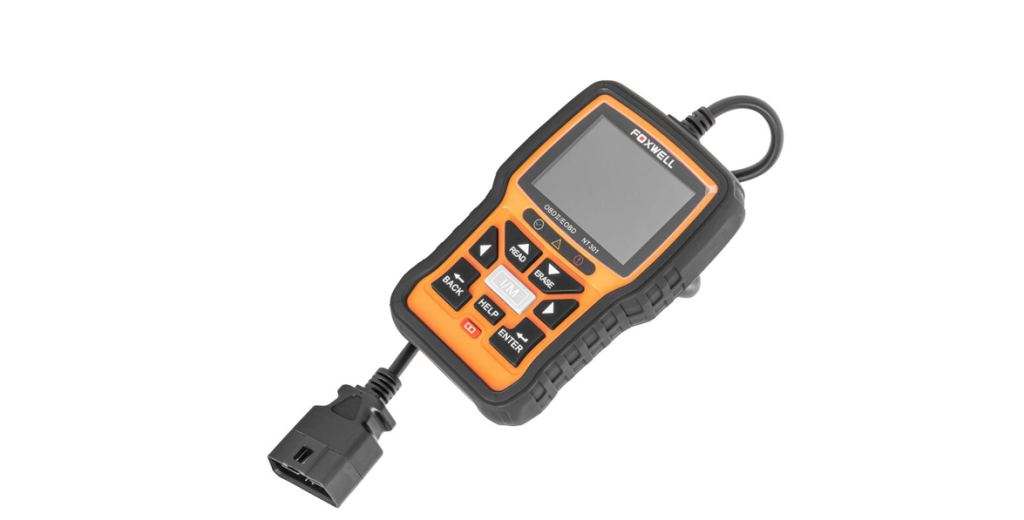
Foxwell NT301

The Foxwell NT301 is not a full system scanner it is included here because it is one of the most frequently recommended budget tools online and first time buyers often encounter it. Understanding what it can and cannot do prevents a purchase that falls short of expectations.

What it does well: Reads and clears engine codes quickly and reliably. Displays live data in text format. Checks I/M readiness for emissions testing. Boots instantly, runs off the OBD2 port (no battery needed), and has a screen that is legible in direct sunlight. At $55, it is a dependable glove box tool.

Where it falls short: Engine codes only. It will not read ABS codes, airbag codes, transmission faults, TPMS issues, or any module outside the powertrain. For a beginner whose ABS or SRS light is on, this tool is not the answer. No bidirectional capability, no service functions, no repair guidance.

Best for: A backup glove box tool for quick check engine light reads. If you already own a full system scanner and want something inexpensive to keep in a second car, this works well. As a first and only scanner, it will leave most buyers wanting more within months.

Price: approximately $55. No subscription fees.

Sideby Side Comparison
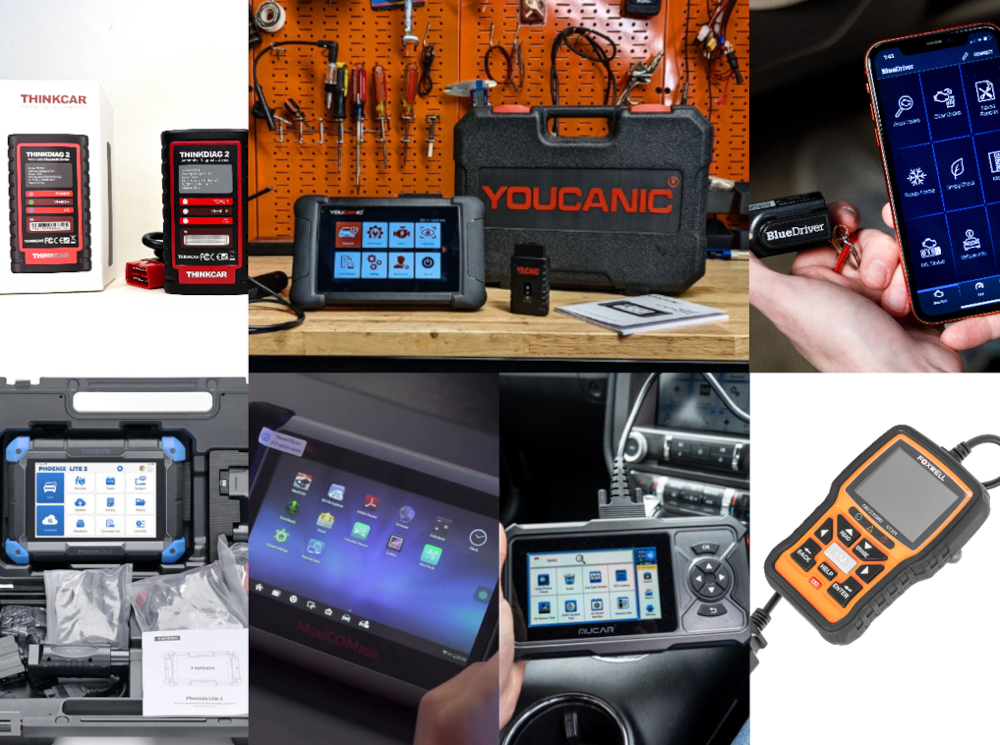
Comparison of diagnostic scanners
Scanner Full System BiDi AI Guidance Subscription Service Fns US Support Price
YOUCANIC UCANII Pro ✅ Yes ✅ Yes ✅ Ondevice ❌ None ever ✅ 40+ ✅ Maryland ~$400–500
BlueDriver Pro ✅ Yes ❌ No ❌ No ❌ None ⚠️ Limited ✅ Canada ~$100
Mucar CDE900 Pro ✅ Yes ✅ Yes ❌ No ⚠️ Paid upd. ✅ 30+ ❌ No ~$200
ThinkCar ThinkDiag 2 ✅ Yes ✅ Yes ❌ No ⚠️ Brand fees ✅ 25+ ❌ No ~$80–150
Topdon Phoenix Lite 2 ✅ Yes ✅ Yes ❌ No ⚠️ ~$300/yr ✅ 40+ ❌ No ~$800
Autel MK808BT Pro ✅ Yes ✅ Yes ❌ No ⚠️ ~$125/yr ✅ 28+ ❌ No ~$549
Foxwell NT301 ❌ Engine only ❌ No ❌ No ❌ None ❌ Minimal ❌ No ~$55

Which Scanner Is Right for You?

Buy the YOUCANIC UCANII Pro if: you want one tool that handles everything  full system diagnostics, bidirectional testing, service resets, and repair guidance  with no subscription and real USbased support behind it. The strongest all round value in this guide is for a first time buyer who is serious about doing their own repairs.

Buy the BlueDriver Pro if: your primary need is reading and understanding codes with guided repair suggestions, you are comfortable working entirely through your phone, and $100 is the right budget. Understand you will not have bi directional capability.

Buy the Mucar CDE900 Pro if: you need full system coverage and bi directional testing on a tight budget, and you are comfortable sourcing repair information independently and paying for updates down the line.

Buy the ThinkCar ThinkDiag 2 if: you own a single brand vehicle and plan to keep it that way. Calculate the brand unlock fees before purchasing if you own or plan to work on multiple makes.

Buy the Autel MK808BT Pro if: you want a professionally recognized brand with broad community support and are factoring in the annual subscription cost as part of your budget.

Buy the Topdon Phoenix Lite 2 if: you are an experienced user who will use it daily across multiple vehicles and can justify the professional price and subscription.

Buy the Foxwell NT301 if: you only ever need engine codes and want the simplest, cheapest reliable option. Do not buy it as your only scanner if dashboard warning lights beyond the check engine light are a concern.

Final Verdict

For first time buyers who want a full system scanner in 2026, the YOUCANIC UCANII Pro stands above the competition not because it shouts the loudest, but because it removes the most friction. No subscription. No brand unlock fees. No annual renewal. Built in AI that explains what each code means and where to start. A free library of repair guides and videos that walks you through the fix. And a US based company that has spent nearly a decade building exactly the kind of support system a new DIYer needs.

The competition is real BlueDriver is excellent at $100, the Mucar punches above its price, and Autel has decades of professional credibility. But none of them pair hardware capability with a learning ecosystem the way YOUCANIC does, and none of them do it without a subscription.

Start here. Grow from here.


Source link

Why Texture and Material Finish Matter in Luxury Furniture

0
Why Texture and Material Finish Matter in Luxury Furniture


The first five seconds inside a properly luxurious hotel lobby are almost never about the shape of the chairs. They are about the cool weight of a brass door handle, the faint give of a leather arm under a palm, the depth of lamplight absorbed by a plaster wall rather than thrown back off it. Luxury registers through touch before anything else registers at all. And yet the finish layer of a piece of furniture — months of hand sanding, lacquering, polishing, upholstering, patinating — is usually the last thing a buyer thinks about before committing. This is especially true online, where a screen erases exactly the qualities a maker has spent a career learning to refine. What follows is a closer look at why texture and material finish do the heavy work in luxury interiors, how to read them properly, and why digital commerce has made that literacy matter more, not less.

A Shape Can Be Copied in a Week. A Finish Cannot.

A shape can be copied in a week. A finish cannot be copied at all, only learned, and the learning takes decades. That is the part of the business that separates Europe’s serious ateliers from the high-street operations that rip off their silhouettes. You can measure a profile, reverse-engineer it, route it on a CNC machine in an afternoon. You cannot reverse-engineer a French polish. For that you need a craftsperson who knows when a shellac film has dissolved into the layer beneath it, who reads the light off the surface before deciding when to apply the next pass.

French polish itself makes the point well. Thirty to eighty layers of shellac, each thinner than a cigarette paper, applied by hand with a cloth pad called a tampone over three to five days. Every layer partly dissolves the one below, so what you end up with is not a stack of coats but a continuous film. That is the reason it has a visual depth that spray lacquers cannot fake. It also ages upward. Twenty to fifty years in, the tone warms into a richer amber; minor knocks integrate rather than reading as damage.

Other systems carry their own logic. Oil honours grain at the cost of surface protection. Wax builds a low sheen that rewards regular touch — the old Neapolitan workshops used to call it “living with the piece.” High-build polyurethane and catalysed lacquers put durability first and give up optical depth as the price. None of these is inherently superior to another. Each is a statement about how the piece is meant to age. Buyers who cannot read that statement are buying a silhouette and trusting the label.

The Material Vocabulary: From Bouclé to Burl

The lexicon of material finish runs deeper than most catalogues admit, and every word in it has a specific haptic signature. Take textiles on their own. Bouclé wool is a looped yarn, nubby and inviting, the texture Pierre Paulin and Eero Saarinen built reputations around. Mohair is shorter and denser, almost liquid under raking light. Cashmere and raw silk sit warm against skin in a way synthetic blends have never quite figured out. Velvet’s cut pile flips colour depending on which direction you stroke it. That is why a plain-dyed velvet sofa looks deeper than it has any right to. Full-grain leather keeps the top layer of the hide intact, freckles and scars included; if you have ever sat in a twenty-year-old Poltrona Frau armchair, that is what you were sitting in. Aniline-dyed leather stays translucent to its own grain. Corrected grain has been sanded flat, stamped with a fake pattern and sprayed with pigment. It feels slightly plastic under the fingers for exactly that reason, even though it is, technically, still cow.

Hard materials run the same way. Walnut takes oil and darkens into chocolate territory the longer it lives. Oak is lighter, the grain more open, a completely different proposition from the start. Rosewood and Amboyna burl, the timber Rolls-Royce used on its dashboards and the better Milanese workshops still use today, carry a swirl figure that cannot really be faked, though veneer presses have been trying for years. Stone has its own dictionary. Calacatta and Carrara at the pale end, in greys and whites. Nero Marquina in a dense carbon black. Onyx translucent enough to pass lamplight. Travertine warm and pitted. Density matters almost as much as colour in how a slab actually behaves. A Calacatta slab holds the warmth of a hand for a minute or two after you have moved away. Travertine loses it almost immediately. Brass and bronze add another register. Solid brass comes in at three to four times the weight of the zinc die-cast knockoffs sharing shelf space with it. It oxidises unevenly too. Warm bronze tones pool in the recesses, and the handled edges stay polished by the owner’s own thumb. Pallasmaa put this in The Eyes of the Skin: the hand works out a material’s authenticity a few beats before the eye is willing to sign off.

How Light Changes a Finish Through the Day

A finish is never seen alone. Half the job of reading a finish is done by the light the finish sits in, and light changes by the hour. Midday makes a matte plaster wall look chalky. Sunset makes the same wall look velvet. A high-gloss lacquer panel mirrors the ceiling at noon, then sinks into a dark puddle under evening lamps. Mass-market finishes tend to fail here because they are formulated to look consistent under the even, controllable lighting of a showroom, which is not the same thing as looking good in a domestic room as the afternoon moves across it.

The most atmospheric private interiors of the past decade have all leaned into this, though in quite different ways. Rose Uniacke’s London rooms rely on plaster, limewash and patina with almost no gloss in sight. Over in Milan, Vincenzo De Cotiis works almost exclusively in tarnished silver and cracked brass. In Antwerp, Axel Vervoordt has spent a career on weathered wood and a nearly monastic restraint. Those surfaces make a room age well across a single evening. Oiled walnut glows faintly from within at dusk. Patinated bronze picks up a single candle at thirty feet. Limewashed walls deepen as the shadows lengthen. A piano-finish lacquer, by contrast, punches a hard reflection straight through any attempt at atmosphere.

That is part of why matte and honed surfaces have taken over the serious end of the market so quickly. Matte cabinetry, honed stone, limewash, micro-cement, ribbed timber: each of them settles comfortably into the uneven domestic light of a room someone actually lives in. At the top of the 2026 market, texture has been pushing pattern out of the way as the dominant visual register. You can see it in new collections from Cassina, Gallotti & Radice, and Edra, and in the way Milan Design Week has been framing its own coverage this year.

The Digital Paradox: Buying Luxury Through a Screen

The contemporary luxury buyer runs into a genuine contradiction. Most high-end furniture purchases now begin online, on brand portals, design platforms, Instagram, Pinterest, and the screen is exactly the medium in which texture and finish lose the most information. Compressed JPEGs flatten grain. Phone displays clip the tonal range of a patinated surface. A render that has not been properly textured will show walnut burl as a brown smear and full-grain leather as painted plastic.

The gap between image and object is familiar to anyone who has ordered a sofa online. Colours shift. Softness reads differently in person. A finish that looked sumptuous on a laptop arrives reading as plastic-thin under an actual hand. The medium is not dishonest. It simply reports what a maker has bothered to capture, and until recently most makers have not bothered enough.

Serious houses have responded by investing heavily in what the visualisation trade calls material fidelity. Rather than photographing a finished piece under studio light and hoping for the best, they are building high-resolution digital libraries of their own woods, fabrics and metals — scanned, measured, and mapped so that a rendered surface behaves under virtual light the way the real surface behaves under daylight. Well-made 3d textures capture the cross-grain of a specific walnut flitch, the lay of a particular mohair’s nap, the oxidation signature of the exact brass alloy used in a hardware run. A studio can then test how a surface will read in situ without waiting for a physical prototype. A buyer can put finishes side by side with a precision no printed swatch book was ever going to offer.

For the buyer, the tell is what survives zooming in. A serious luxury render will show the micro-imperfections of grain, the catchlights of a waxed surface, the drape of a fabric that knows its own weight. A careless render will not. Learning to notice the difference at the research stage is the modern equivalent of learning to read a swatch in person. It also protects against the most common cause of buyer disappointment, which is rarely poor taste. Usually it is poor imagination, exercised on insufficient visual information.

How Rendering Entered the Luxury Pipeline

Material fidelity has outgrown its marketing origin. It now sits inside the production process, particularly for bespoke and limited-edition work, where a buyer commits months before a physical prototype exists. These days, specialist 3d model texturing services sit in the same production ecosystem as the marquetry bench and the upholstery room. A maison will use them to test how a carved walnut console or a hand-stitched leather banquette behaves in varied lighting, against a particular wall finish, well before any board gets cut or any hide tanned.

For bespoke work, the practical difference is real. Someone commissioning a Promemoria cabinet in figured walnut, or a banquette upholstered in hand-stamped saddle leather, can now sign off on a preview keyed to the exact grain, stitch and sheen of what will go into the piece. This is not a generic library swatch standing in as a placeholder. It is a digital twin matched to whatever stock the atelier has on the floor that month. Not a generic library asset — a digital counterpart tuned to the inventory the atelier is actually holding that month. The buyer commits on better information. The maker avoids the costly iteration cycle that used to follow a client’s first in-person reveal.

None of this displaces the hand. The digital layer is there to protect the hand’s decisions, not to replace them. A serious atelier still depends on a finisher who knows when a surface is done, a marquetry cutter who can read figure in a raw veneer, an upholsterer who can feel a seam through ten millimetres of fabric. What has actually changed is geography. The hand’s decisions can now be previewed, discussed and refined with a client on the other side of the world, which is one reason small European workshops have begun extending into markets that, a decade ago, belonged almost exclusively to the handful of brands with global showroom networks.

Patina Is the Real Return on Investment

If texture and finish are the layers where luxury is felt, patina is the layer where value compounds. The materials prized in high-end furniture are precisely the ones that improve with use. Full-grain leather softens and darkens. Solid brass oxidises into a warmer bronze tone. Walnut and mahogany deepen under UV. Waxed oak develops a honeyed lustre. Even marble behaves this way; a Calacatta top that has lived through thirty years of dinner parties reads differently, and better, than one that has spent those years in a showroom.

Synthetics do not do this. A polyurethane coat does not develop character. It develops wear. An MDF carcass under a melamine finish does not age. It degrades. This is the underlying reason the resale and heirloom economics of luxury furniture favour solid, natural, traditionally finished pieces so heavily. A Cassina LC4. A Poltrona Frau Chester. A Holly Hunt writing desk. A B&B Italia sofa in a decent hide. These hold a meaningful share of their original value across decades because their materials move toward their own best form with use, rather than away from it.

The finish is the pivot. A badly finished solid walnut table will stain and warp inside a year. A well-finished one will survive a generation of family dinners and read better for them. Patina is not a free dividend on quality material. It is the earned reward of correctly matched material and finish decisions, made by the maker at the outset and either preserved or ruined by the owner afterward.

Reading a Piece Like a Collector

A few small habits shorten the distance between the eye and the object. Run a hand along an edge. A high-end dining table, sideboard or writing desk will have eased, rounded edges that feel intentional under the fingertips, rather than the sharp stamped edges that signal a speed-run production line. Lift one corner. Weight concentrated in the base, not in the tabletop, signals solid structure underneath rather than a thin veneered shell over a lightweight frame.

Open a drawer. A fully finished interior, dust panels beneath the drawer bottom, dovetail or mortise-and-tenon joinery, a smooth glide, a confident stop at full extension — these are commitments a factory line cannot afford to make. Turn upholstery over wherever the piece allows it. Eight-way hand-tied springs, a hardwood frame with doweled joints, cushion casings that match the outer fabric in weight and weave. All of these tell the same story from another angle.

Finally, look at the finish under more than one light source. Cross the piece toward a window, then a lamp, then a raking side light. A surface that reads consistent and calm across all three has been built, properly, in layers. One that flashes, pools, and reveals sanding scratches under side light was cosmetic from the start.

Conclusion

The luxury buyer’s literacy in form is usually well-developed — silhouette, proportion, period, the familiar categories. Literacy in finish is not. And finish is where the craftsmanship actually lives. It lives in the weeks of hand-rubbing that follow the machine work, in the patience of building a surface up in thirty thin coats rather than one thick one, in the willingness to wait four days for a shellac film to cure properly before the next pass.

As digital commerce widens the reach of small European workshops, and as material rendering grows more faithful to the surfaces it describes, the gap between informed and uninformed buying will narrow. But the decisive moment stays what it has always been. A hand on a surface. A second of touch. The confirmation that the object is exactly what it claimed to be. That is the moment the word “luxury” earns itself, or fails to.

For on the latest in furnishing and decor reads, click here.


Source link

How to Take a First-Time RV Rental to Your Next Event or Festival

0
How to Take a First-Time RV Rental to Your Next Event or Festival


If you’re considering an RV rental for events, like a sporting event or concert, you’re in the right place — and you have the right idea. RV camping at events puts you up close and personal with the action and is also an affordable way to stay, especially once costs are split across your camping party. You can relax and socialize in your own private space, which also comes equipped with a kitchen so you can cook your favorite meals yourself.

In this article, we’ll walk you through first-time RV rental tips with a special focus on what you need to know to best enjoy events. We’re talking tailgating, skipping hotel surge prices, choosing the right type of RV for the job, and so much more. Let’s go!

Why Rent an RV for Events?

Renting an RV for an event, such as a big game or can’t-miss concert, allows you to:

  • Stay close to the action
  • Skip hotel shortages and surge pricing
  • Enjoy a built-in space for relaxing, cooking, and socializing

What kinds of events, you ask? RVs are ideal accommodations for:

  • Music festivals
  • NASCAR races
  • Baseball games
  • State fairs
  • RV shows
  • And so much more!

From brewer’s festivals to rodeos and beyond, there are so many events worth renting an RV for. Finding something to go to usually isn’t the problem — it’s figuring out the RV itself.

Which is exactly why we’re here.
What First-Time RV Renters Should Know Before Booking

First-timers, we’ve got your back. Here’s what you need to know before booking your first-ever RV rental for your favorite event.

Choose the Right Type of RV

When you first encounter the world of RVing, it may sound a bit like alphabet soup. Class A? Class B? Where do travel trailers fit in? All fair questions.

There are basically two different types of RVs: motorcoaches (which you can drive), and travel trailers (which are towed behind another vehicle, usually a pickup truck). 

Motorcoaches come in three different “classes:”

  • Class A motorhomes, the big, bus-style coaches you might associate with celebrities
  • Class B vans, also known as camper vans — smaller, more nimble vehicles good for stealth camping on city blocks or off-the-grid boondocking
  • Class C motorhomes, which are built onto a pickup truck chassis and are often easier for beginners to drive

Meanwhile, travel trailers come in a wide variety of sizes, but all pretty much work the same: they need to be towed behind a vehicle. Some are tiny with pop-up canvas sides, and some are enormous fifth-wheel trailers with lots of slide-outs.

So how do you choose? It really all depends on two main factors:

  • The size of your group (if you’ve got a big travel party, you’ll likely want a bigger rig for everyone to be comfortable)
  • The parking space available at your event (some arenas have restrictions on RV length) or chosen campground

Fortunately, every RVshare listing specifies how many people can sleep comfortably in a given rental vehicle, and any size restrictions are usually listed prominently on event camping or campground webpages.

Check Event Rules and RV Policies

Along with size restrictions, it’s important to be familiar with the overall event rules and policies around RVs. First of all, for example, you’ll want to double-check that on-site RV parking is allowed in the first place; many events offer space for this, but some do not.

On the event website, you should discover if the RV parking area offers hookups, or if it’ll be “dry camping,” i.e., camping without electricity or water connections. In that case, you’ll want to be prepared by filling your water tank before you arrive, and aligning your expectations with reality around electricity availability during your stay.

One way you can get electricity even without shore power: using the onboard generator. Most motorhomes and many travel trailers have one. However, this is another thing you’ll want to check with the event organizer about, as some camping areas have rules surrounding when you can use the generator. They’re noisy, so they may not be available to you during any dedicated quiet hours.

Finally (and this one’s easy to overlook), be sure you check into the specified arrival and departure times for your event’s camping area. They may open their gates well ahead of the scheduled event, but may also require you to leave by a certain specified time once the event is over. Knowing this information ahead of time can help you avoid feeling rushed or behind (or, worst of all, missing the event that was the whole point of the trip in the first place!).

While one of the major benefits of RV rentals for events is getting to skip out on the insane surge pricing that can occur with hotels, rental cars, and other travel services surrounding events, even rental RVs can sell out quickly if it’s a high-demand event — and the same is true of RV parking spots on-site (or in surrounding campgrounds).

Booking early is key. Getting your trip planned well in advance means:

  • A better selection of RVs to choose from
  • Lower prices on both the RV rental and sometimes even the campsite
  • Preferred campsite location, whether you’re staying on-site at the event venue or in a nearby public or private campground

How to Plan Your RV Trip to an Event

Now that you’ve got the RV itself on lock, let’s transition to other planning factors around the trip, such as the route, the packing list, and the campsite.

Reserve Your Campsite or Parking Pass

As mentioned above, you may be able to stay on-site at the event venue — or in a nearby campground. It’s easy to find available campgrounds in the area where the event will be; you can simply google “city name + RV campgrounds” and you should get a great list. (We also list lots of great campgrounds across the country here at RVshare; for instance, here are the top-10 campgrounds in the Houston area and the top-10 campgrounds in Portland, Oregon.)

Whether you’re parking on-site or camping nearby, though, you’ll want to reserve your campsite or parking pass as soon as you can. That’s doubly true if you’re planning to stay on-site. While lots of campgrounds will likely be busy around the event dates, the on-site parking passes usually go the quickest, and you may benefit from lower prices at surrounding campgrounds if you move fast.

Map Your Route Ahead of Time

You’ve got the RV booked and you know where you’ll be sleeping. Now for the real fun: mapping the way there.
Chances are you already know how to organize an incredible road trip, adding in worthy stops like roadside attractions or great restaurants along the way. But traveling in an RV is just a little bit different. Along with adding in these fun stops, you’ll also want to:

  • Avoid low-clearance, narrow, or unpaved roads, especially if you’re traveling in a big Class A motorhome (CoPilot RV and RoadTrippers can both help you with RV-specific filters and features)
  • Plan fuel stops for larger vehicles (truck stops are great for RVers)
  • Expect event traffic delays — and factor them in when you’re allotting how much time you’ll spend on the road

Pack Smart for Event Camping

No matter how you’re traveling, any ttrip is only as good as its packing list. For an RV trip to an event, your essentials checklist includes:

  • Tailgating accoutrement, such as folding chairs and an outdoor grill
  • Power cords and adapters so you can keep your phone charged (including a portable power bank if you’ll be dry camping)
  • Food and drinks to keep the party going all weekend long
  • Weather-appropriate gear for long days spent outside

Be sure to double-check your rental listing so you can understand what basics, like sheets or towels, are included, and which you’ll be expected to bring along for yourself. Your rental RV may also come stocked with kitchen basics such as pots, pans, serveware and cutlery, but again, you’ll want to check your specific listing.

What to Expect When You Arrive

Arriving is exciting! When you get there, you’ll likely find a friendly representative who can help you check in and show you where your campsite is. They may also be able to help you navigate tight parking arrangements or back-in spaces, which can present a challenge (but a totally overcomeable one!) to newbies.

The main rule of thumb: If you need help, ask. Everyone was a new RVer at some point. You’ll likely find that the people around you will be more than happy to connect.

Next up: some top tips for specific, popular types of events that people commonly RV to. Here’s what you need to know.

Music Festivals

Music festivals are one of the most common (and exciting) places to RV. However, you’ll want to be prepared for:

  • Limited hookups. At most fests, dry camping is the name of the game, and generator use is discouraged. (You may be able to find electricity hookups, but they may also come only with a significantly upgraded and more expensive parking pass.)
  • Lots of noise and late-night activity. Obviously, that’s kind of the entire point of a music festival — but if you want to get your beauty sleep, bring earplugs!
  • The need for portable power solutions such as cell phone power banks (some fests also offer charging stations). 
  • To pack out everything you pack in, including garbage.

Sporting Events and Tailgating

Game on! If you’re RVing to a sporting event and hosting a tailgating party, we recommend that you:

  • Arrive early to secure the best spot in the lot.
  • Set up your outdoor area to encourage guests to mingle and enjoy the party vibe.
  • Consider food prep ahead of time. The venue may have policies around outdoor grilling, for example, that could cramp your style… but not if you’ve made something amazing beforehand.
  • Keep an eye on venue alcohol restrictions, too. A tailgate party may seem like a moot point without a beer in hand, but some venues don’t allow open containers.

Races (NASCAR, IndyCar, etc.)

Talk about a classic experience. If you’re lucky enough to get to take a rental RV to a race, here’s what you need to know.

  • These races require multi-day camping setups — so if you don’t have hookups, be prepared to be out of power for a longer time (and make sure you have plenty of water onboard)
  • If you can, arriving early can help you find the best site to view the race from (although there’s usually not a bad seat in the house)
  • Be prepared for dust and changing weather conditions. Those cars can kick up some serious debris, and while rain can halt a race, you’ll still need to deal with it as a camper.

Fairs and Local Events

Smaller local events, fairs, and one-offs can still be great opportunities to camp. At these events, be prepared for:

  • Smaller spaces, which can also mean easier logistics for campers. (You likely won’t have to navigate a complex map, just one big field of rigs.)
  • Family-friendly setups that mean the happy sound of kids running around.
  • Flexible schedules that mean you won’t have to feel pressed for time to see and do it all (and can come and go more leniently).

First-Time RV Rental Mistakes to Avoid

Okay, all great information, you might be thinking. But what are the things that veteran RVers wish someone had told them before their first trip?

Some of the highest-key first-timer RV rental mistakes to avoid include:

  • Not checking power compatibility. Some rigs take 30 amps, and some take 50 — and you may be stuck in the dark (literally) if you don’t check which setup is available ahead of time.
  • Overpacking — or underpacking, which is less common but just as annoying. Again, we recommend taking a close look at your RV rental listing and only bringing what you know you’ll need for the specific amount of days you’ll be staying. 
  • Ignoring water and waste tank limits. Talk about a mess! Having an onboard plumbing system does come with its limitations. You’ll want to know how much your gray wastewater tank (which catches sink draining) and black wastewater tank (which catches toilet draining) hold, to arrive with them empty, and to make sure your potable water is full.
  • Not understanding how to use the generator. Ask the person you’re renting from to give you a demonstration. That’s the surest-fire way to ensure you aren’t stuck without electricity when you most want it!

RV Setup Basics for Event Camping

The good news: Most even campsites are pretty basic, which means setup is pretty basic, too. Still, there are a few steps that’ll help ensure a sweet and comfortable stay.

  • Leveling your RV. It seems like a small step, but it punches above its weight class in terms of comfort. Bring along leveling blocks and chocks to help ensure your RV is in the right position, which will both help you sleep better and ensure your appliances run correctly.
  • Connecting to shore power (if it’s available). This is where you’ll want to understand the difference between 30 amps and 50 amps!
  • Connecting to the water and sewer (if they’re available — which they likely won’t be, if you’re parking on-site at the event). A water and sewer connection allow you to basically use your RV’s plumbing system as you would one connected to a city sewer, but chances are you’re probably going to have to manage your water and wastewater tanks without hookups (i.e., not use too much water and overfill or totally drain your tanks).

How RVshare Makes Event Travel Easier

Renting with RVshare really is a game-changer, whether you’re RVing to a sporting event or a music festival. We offer a wide selection of RVs nationwide (and are one of the only platforms where you can choose from such an extensive range of classes and sizes), and you can even have your RV delivered and set-up on site ahead of time.

Our platform also offers built-in protection for both renters and rentees as well as roadside support so you’re covered every step of the way. It’s flexible and affordable, and no matter where in the U.S. you’re starting from and where you’re going, there’s a great RVshare vehicle near you.

Ready for Your First RV Event Experience?

With all these tips on board (along with your tailgating stuff and foam finger), you’re ready to tackle your first-ever RV rental event experience with confidence. Renting from RVshare means convenience, flexibility, and the ultimate freedom to travel your way. Explore RV rentals for your upcoming event today!


Source link

2027 BMW 7 Series Debut: Neue Klasse Tech Transforms

0
2027 BMW 7 Series Debut: Neue Klasse Tech Transforms


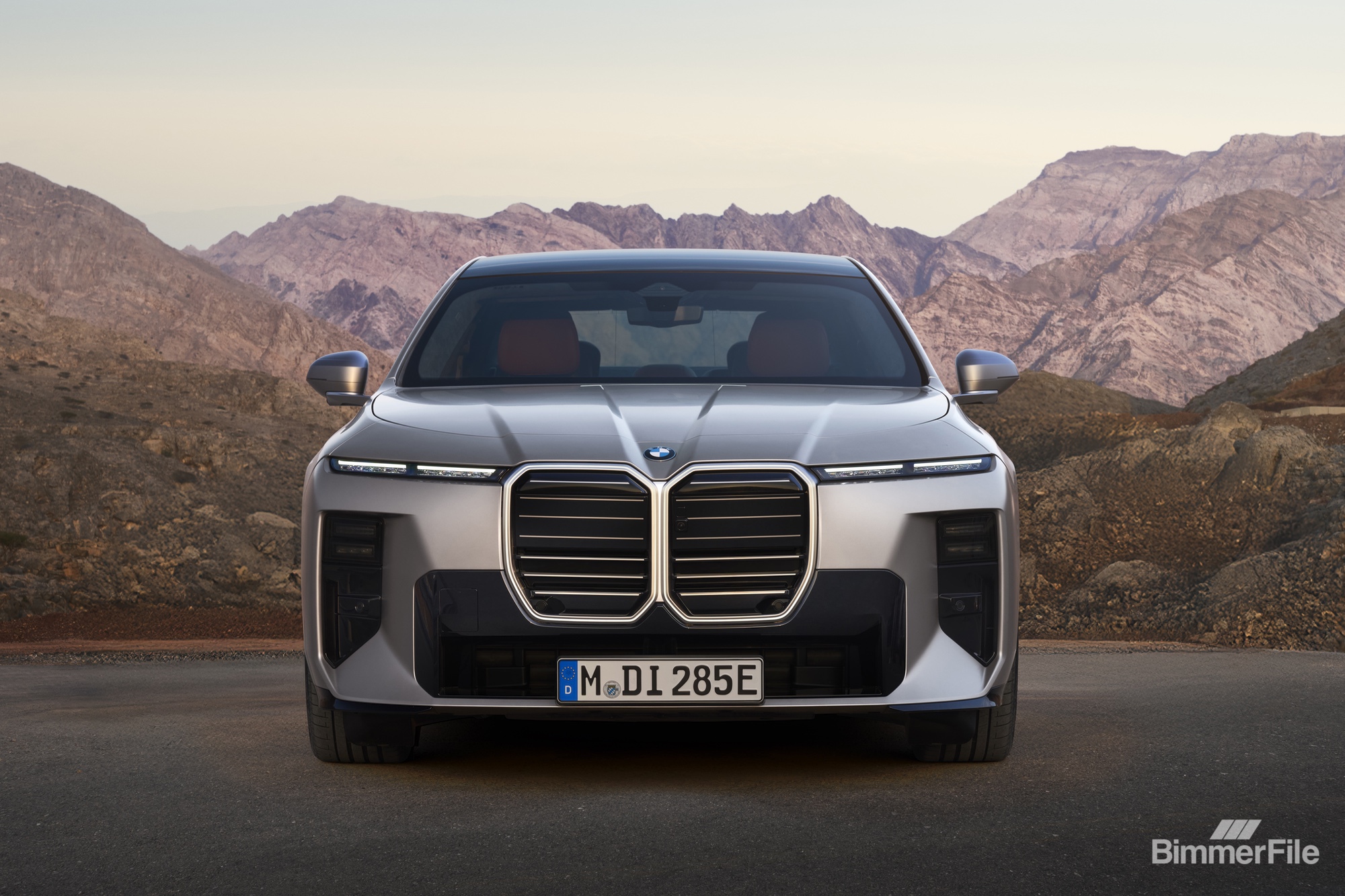
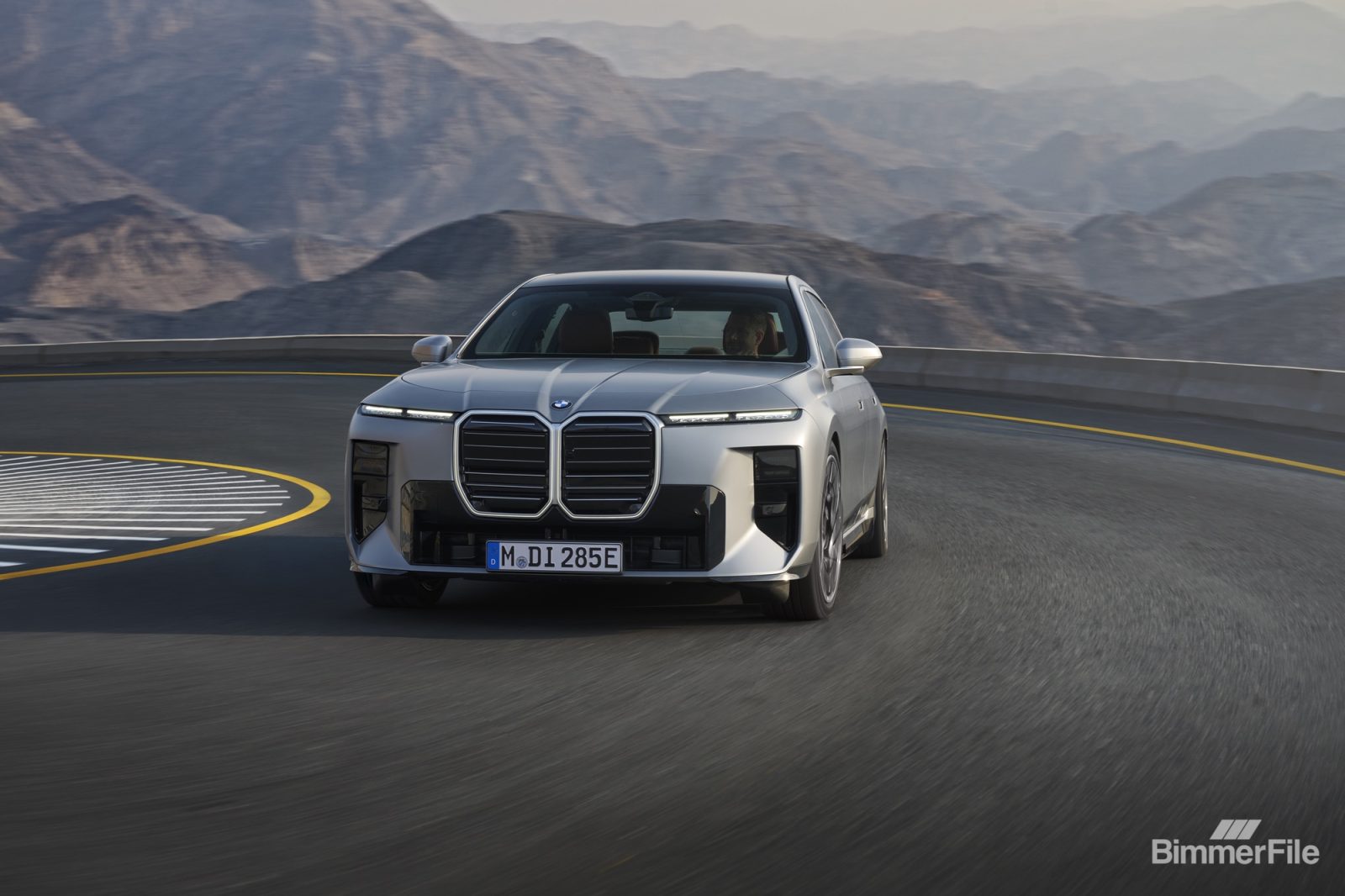
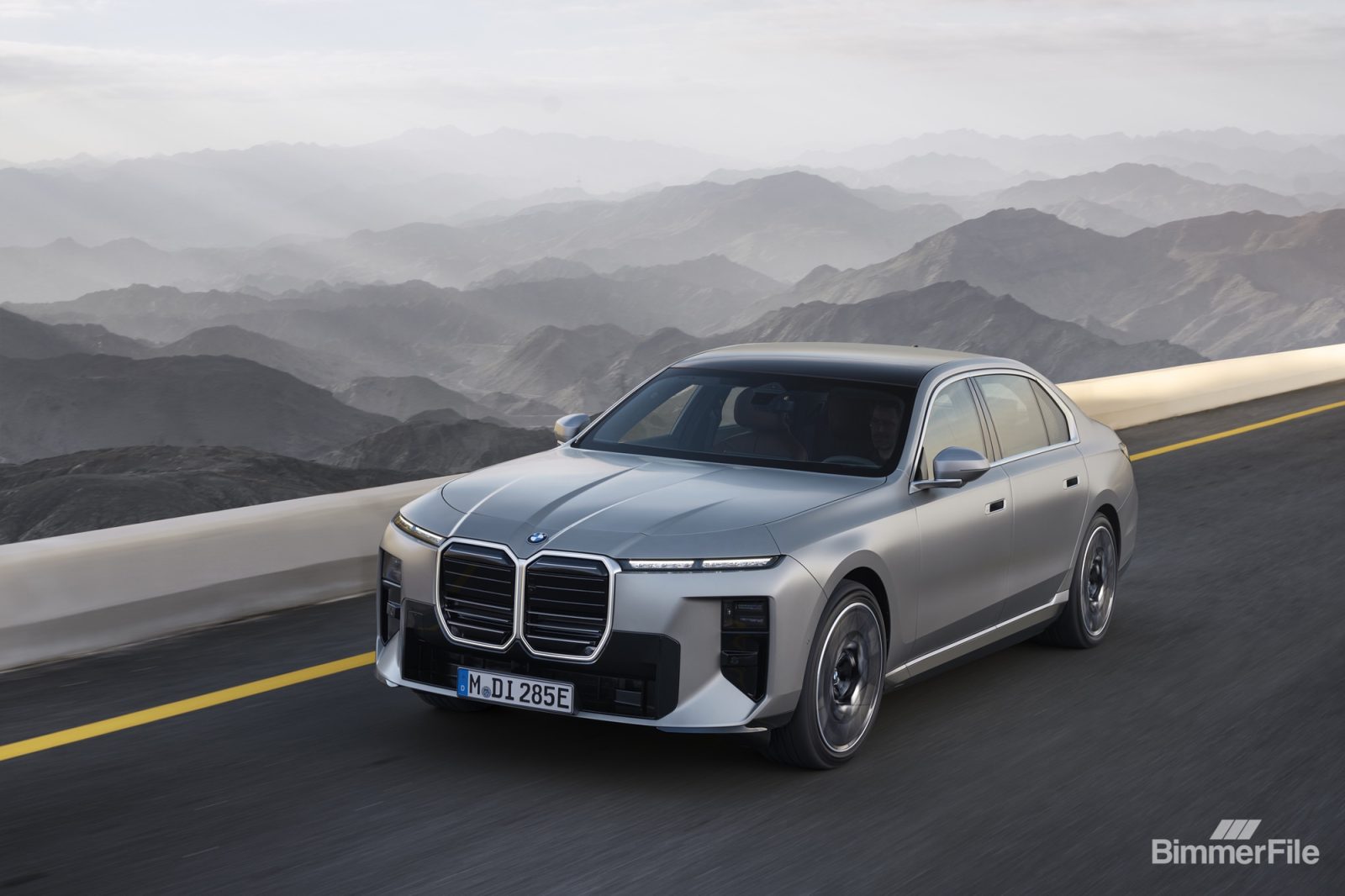
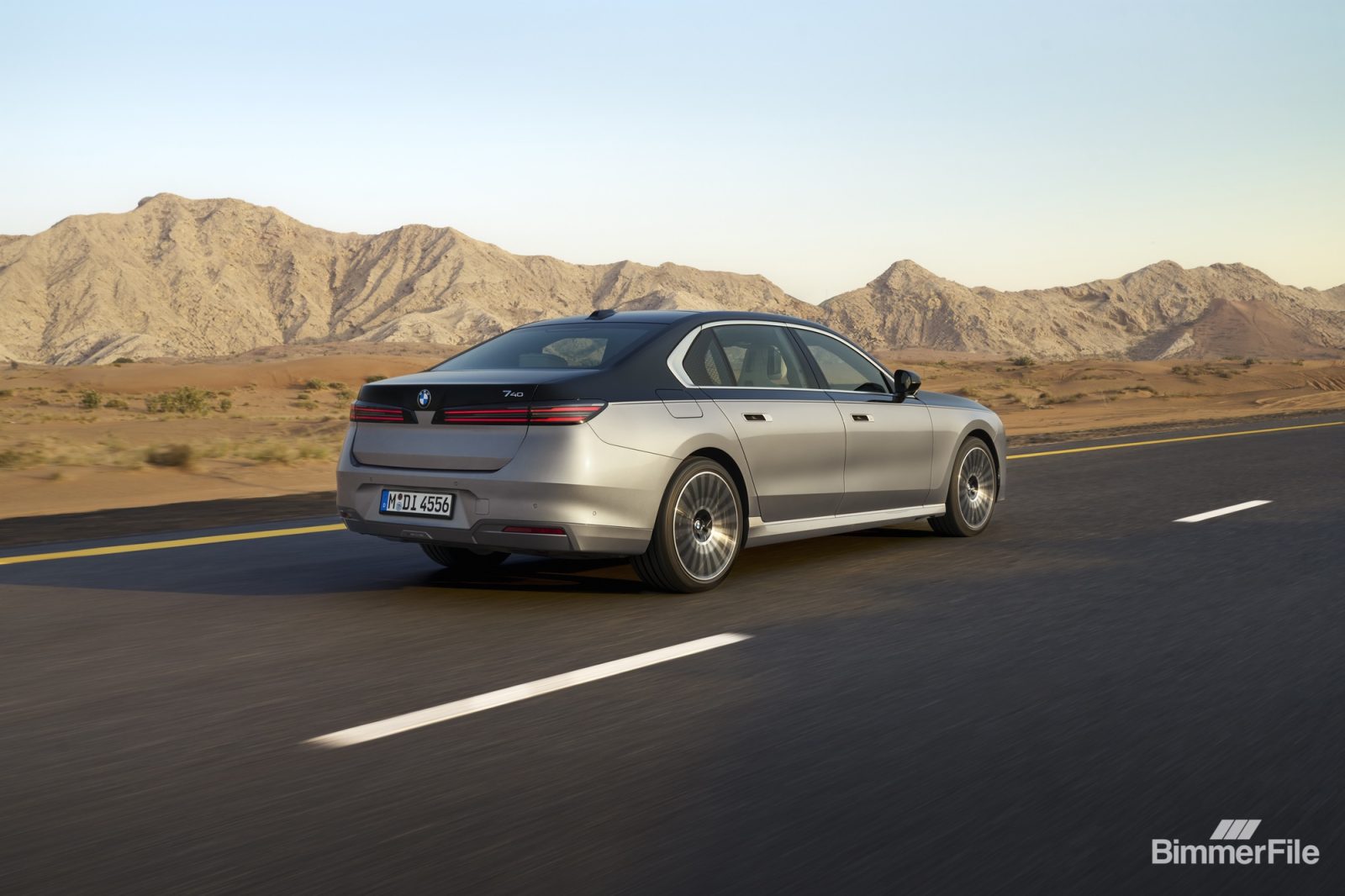
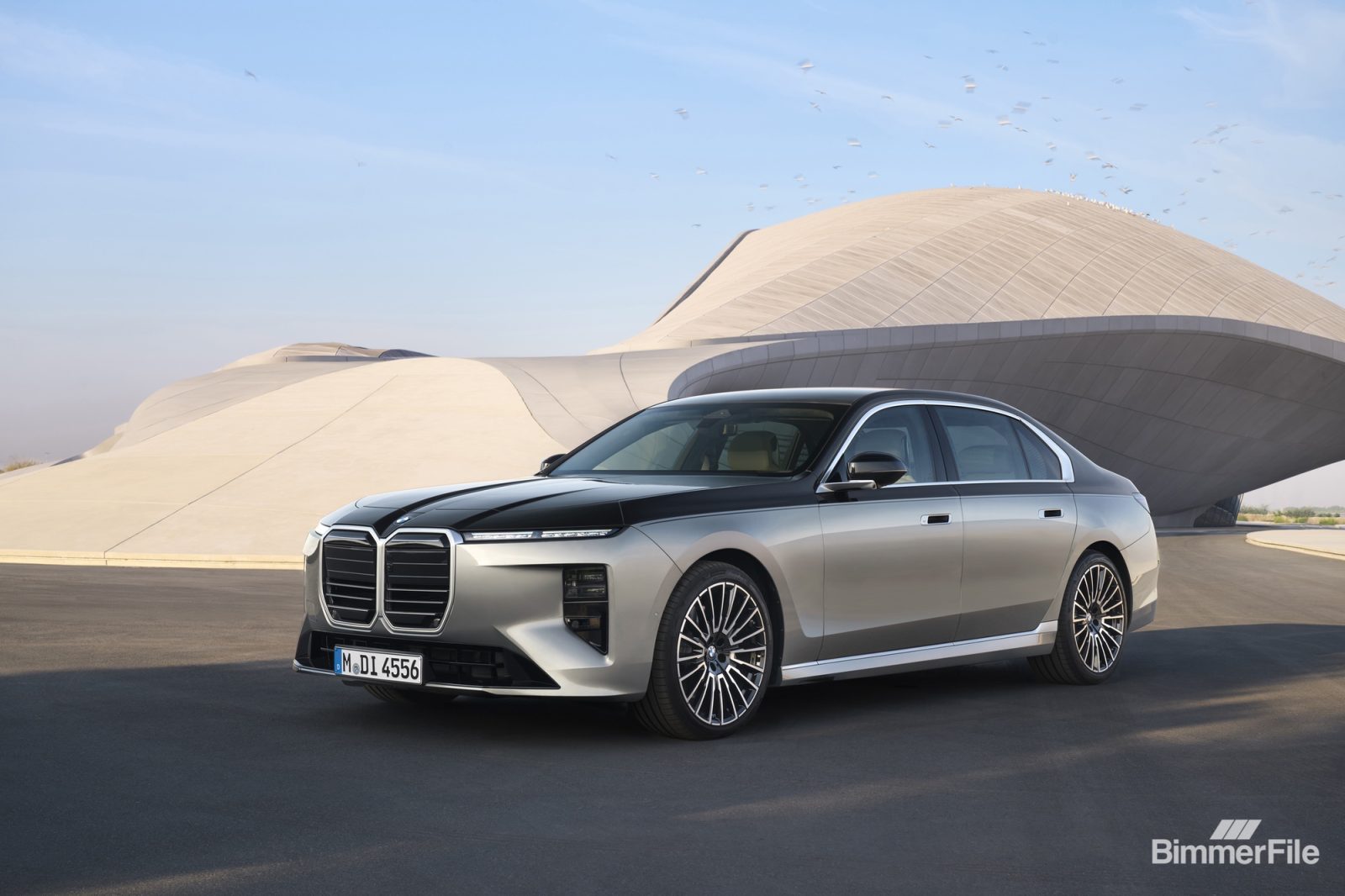
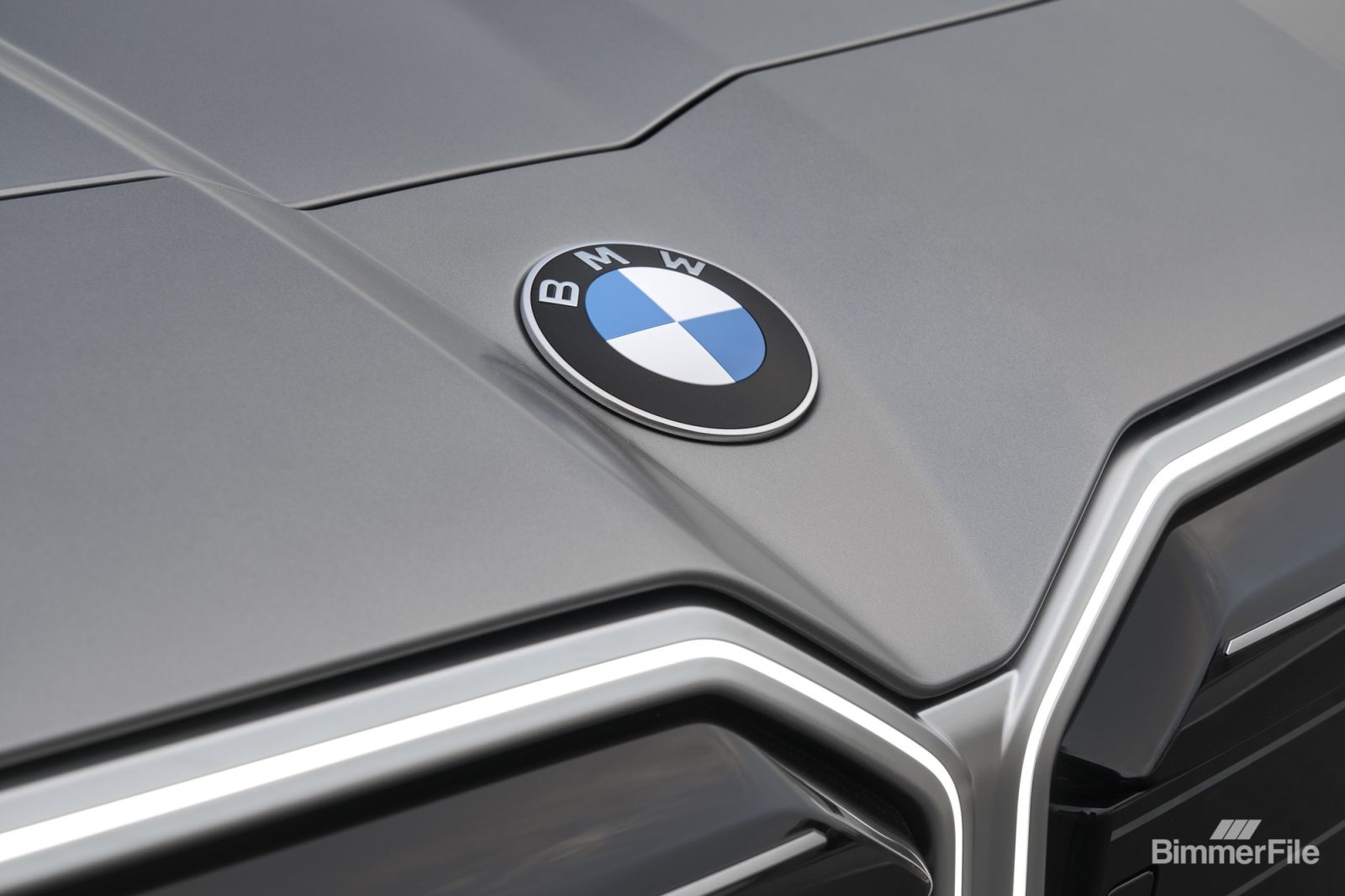
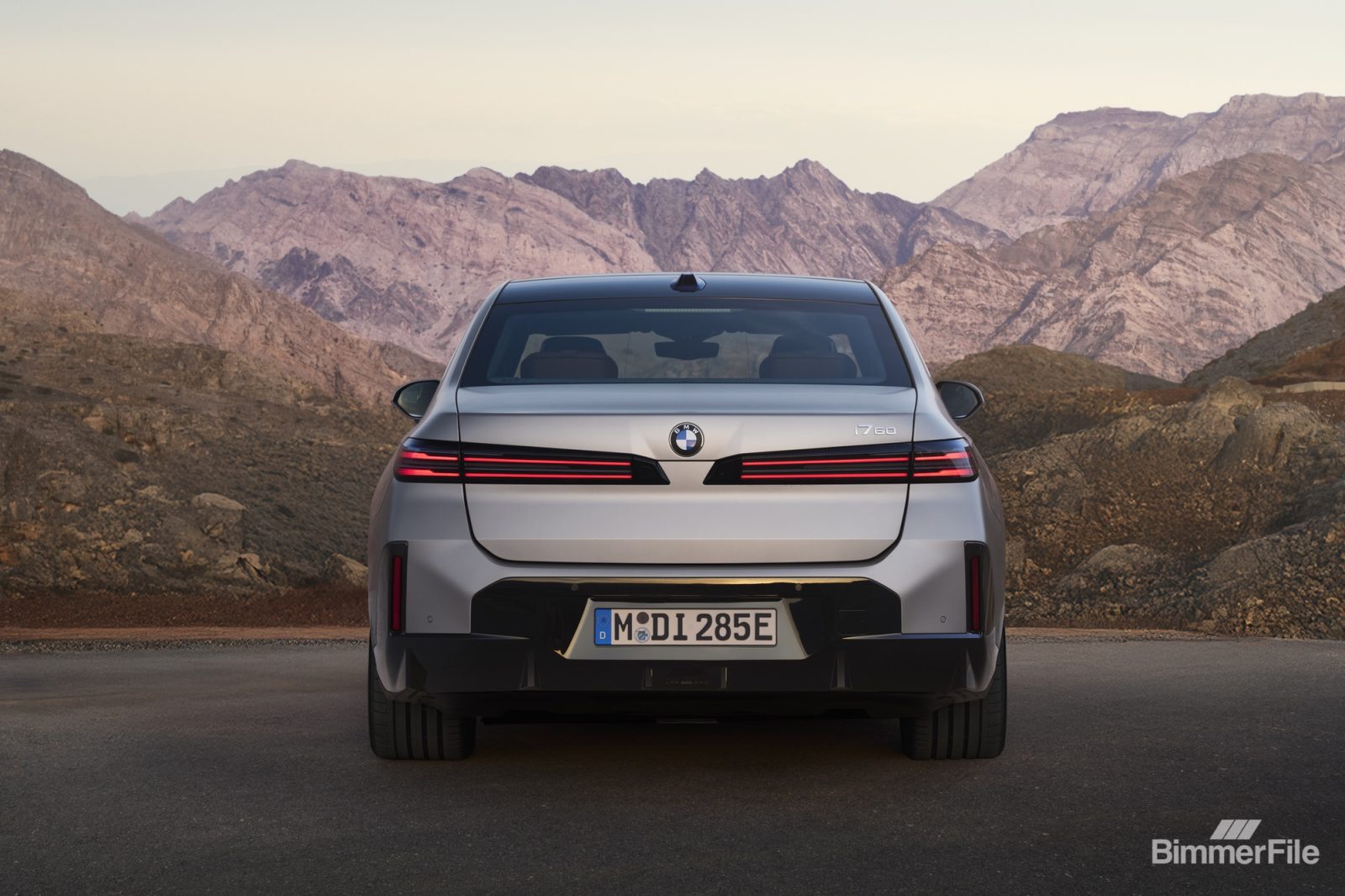
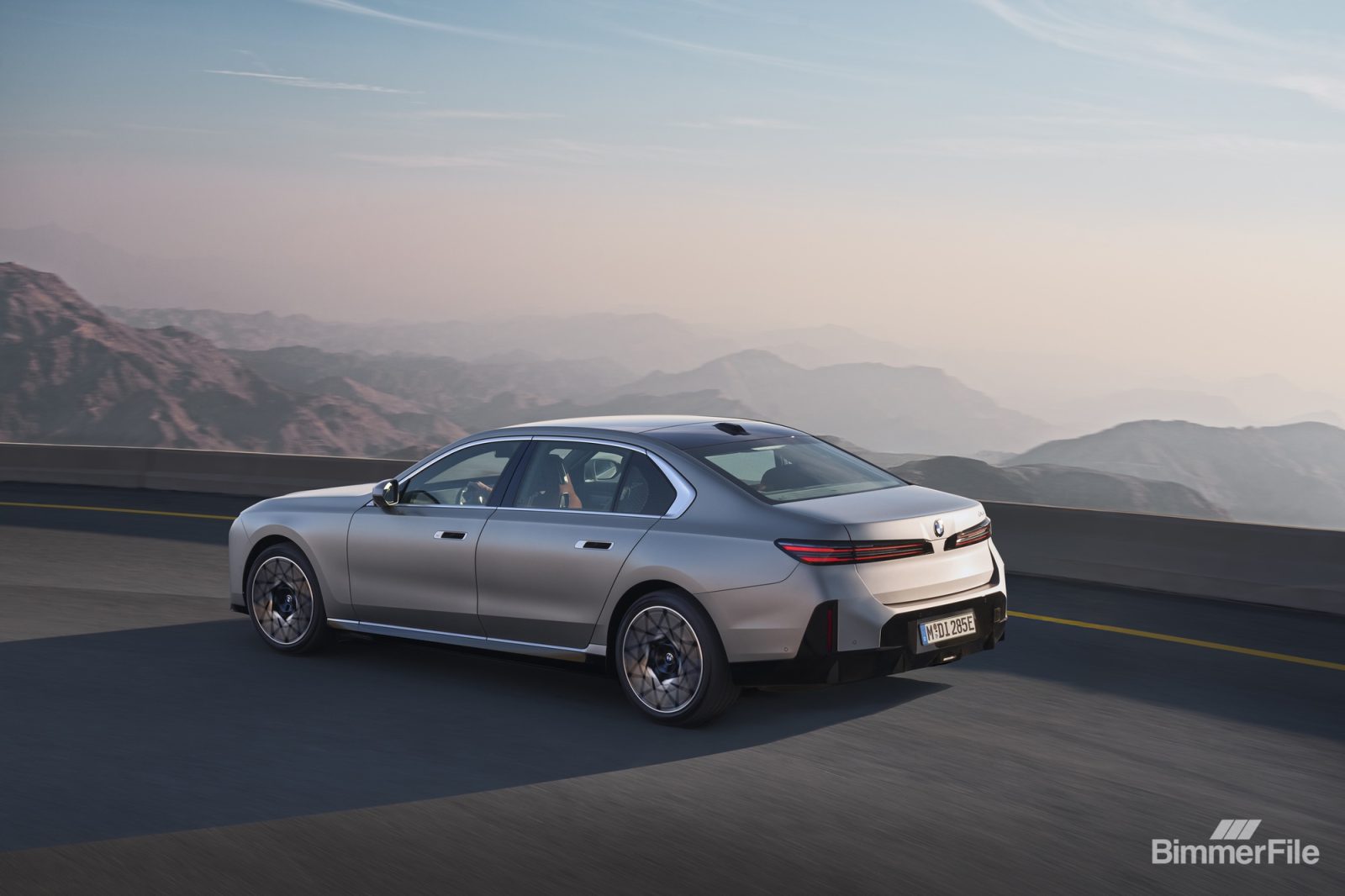
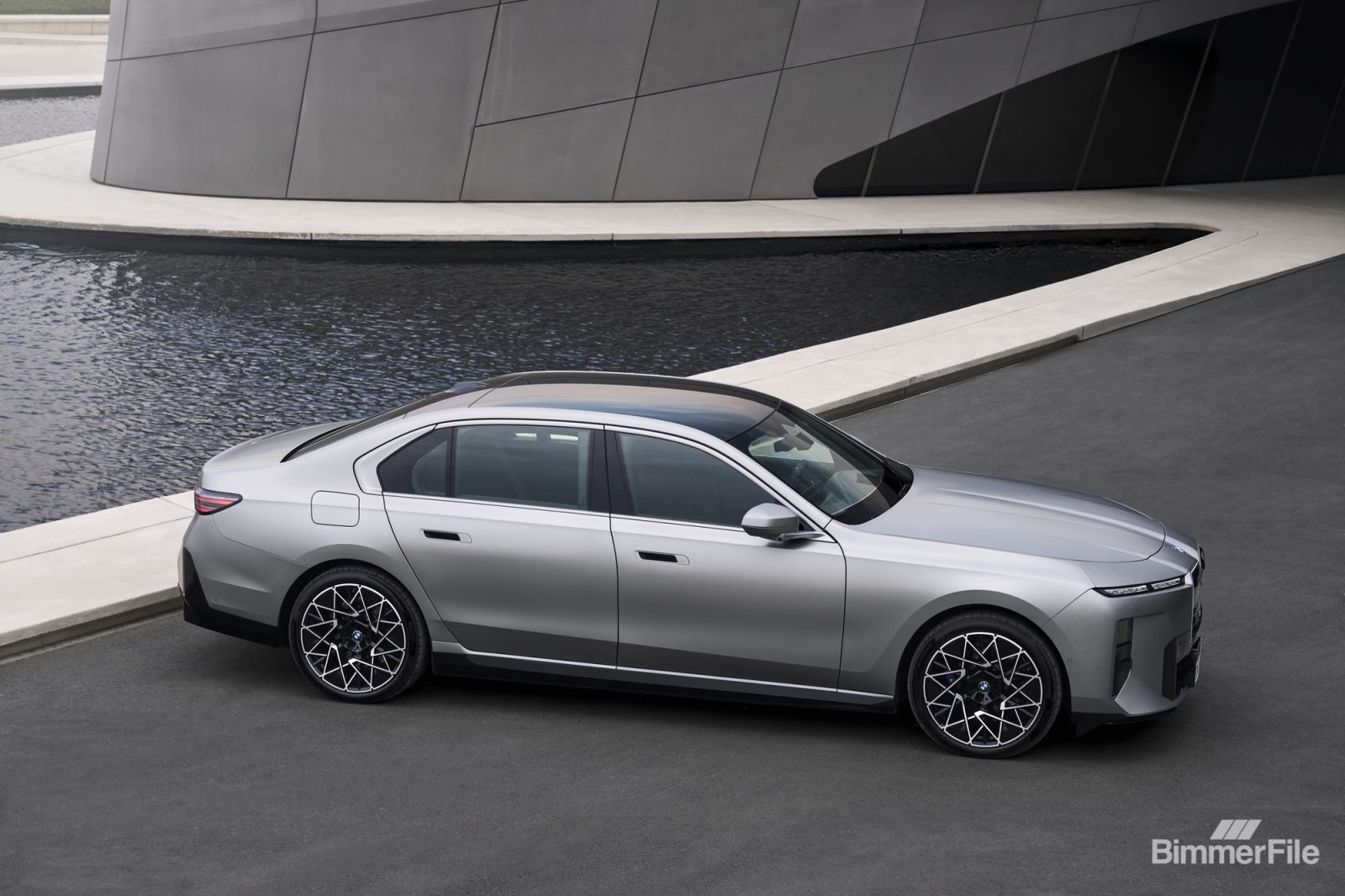
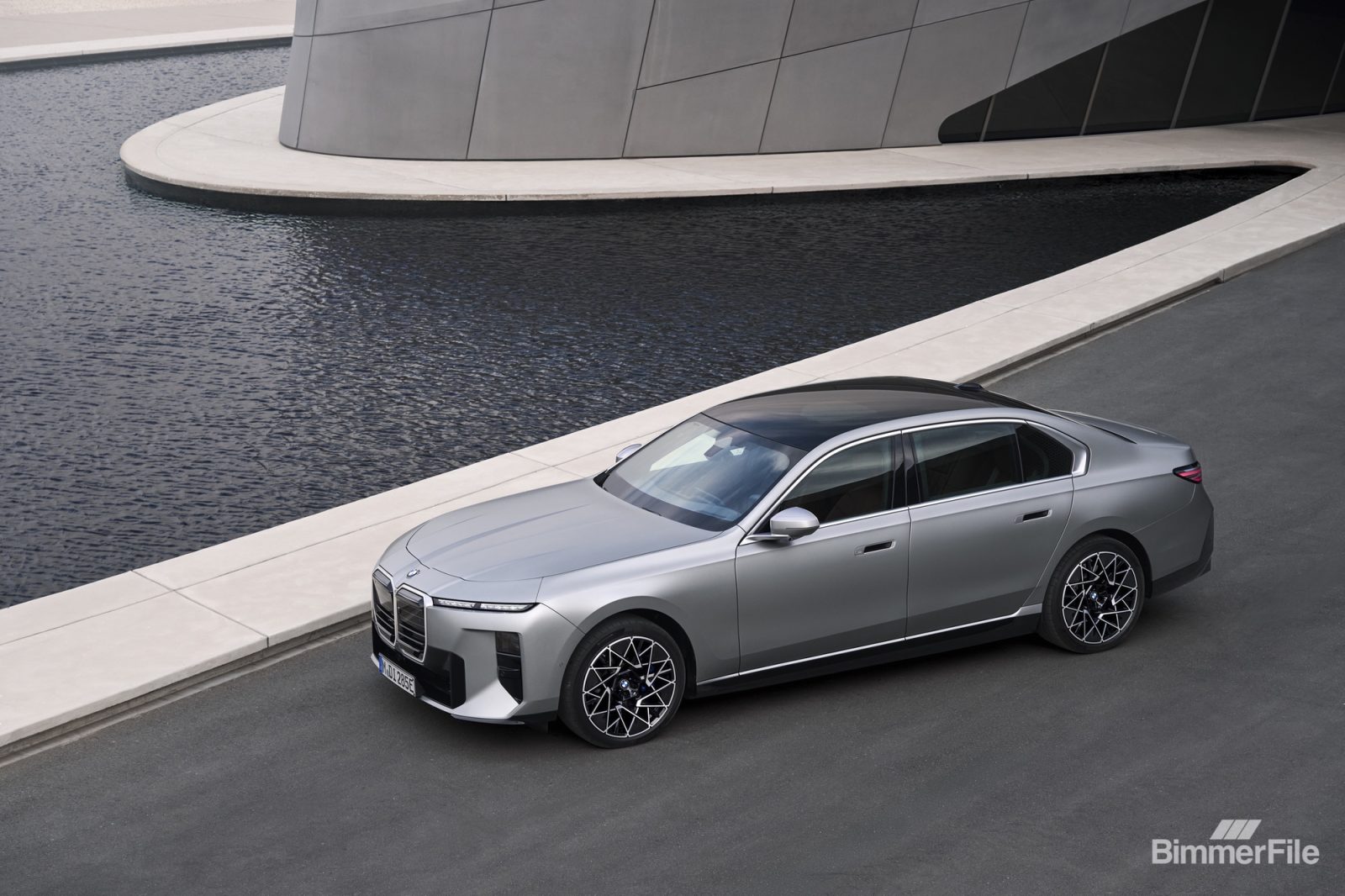
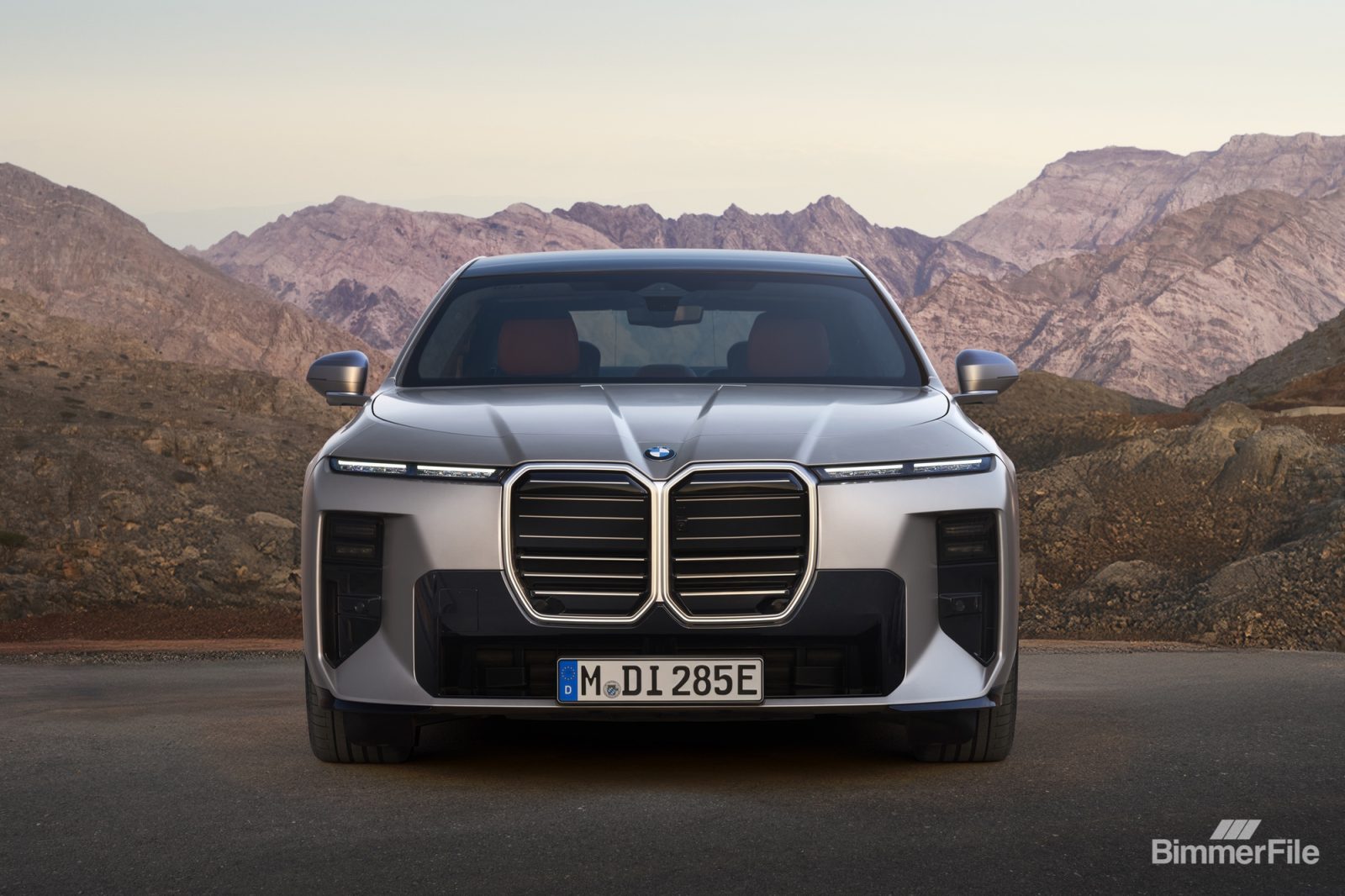
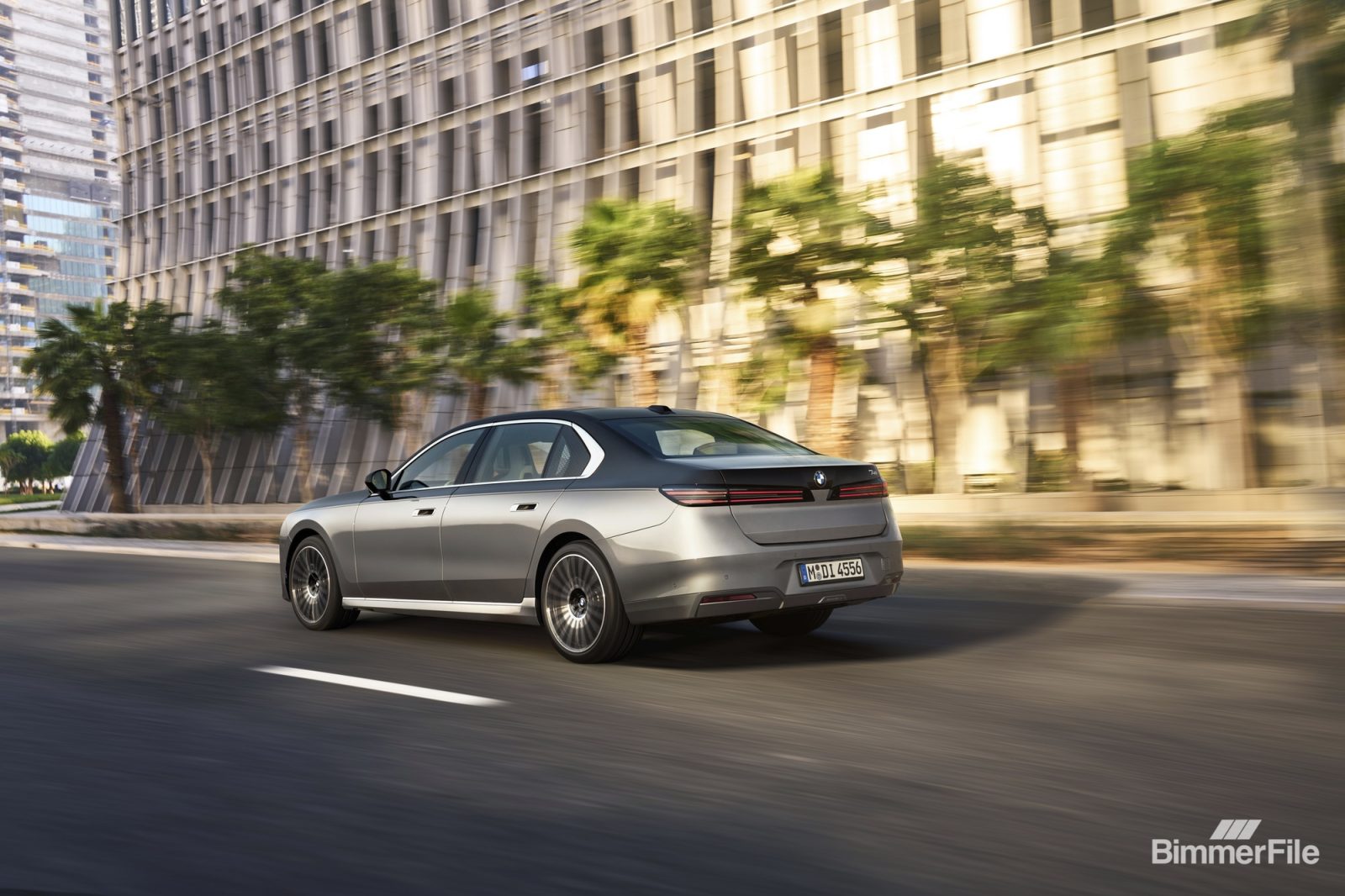
This is BMW’s flagship reimagined with Neue Klasse thinking woven deep into its DNA. While it may be an LCI on paper, there is serious substance beneath the refreshed look. The new BMW 7 Series sharpens its idea of progressive luxury, pairing a more resolved, monolithic design language with a clear push toward a software-defined future that feels fully integrated rather than layered on.

A Flagship Rewritten, Not Replaced

BMW has not torn up the 7 Series playbook. It has refined it, tightened it, and in some places quietly rewritten it. The goal is not disruption for its own sake, but clarity. This car is meant to set the tone for everything that follows, acting as a bridge between legacy expectations and Neue Klasse ambition.

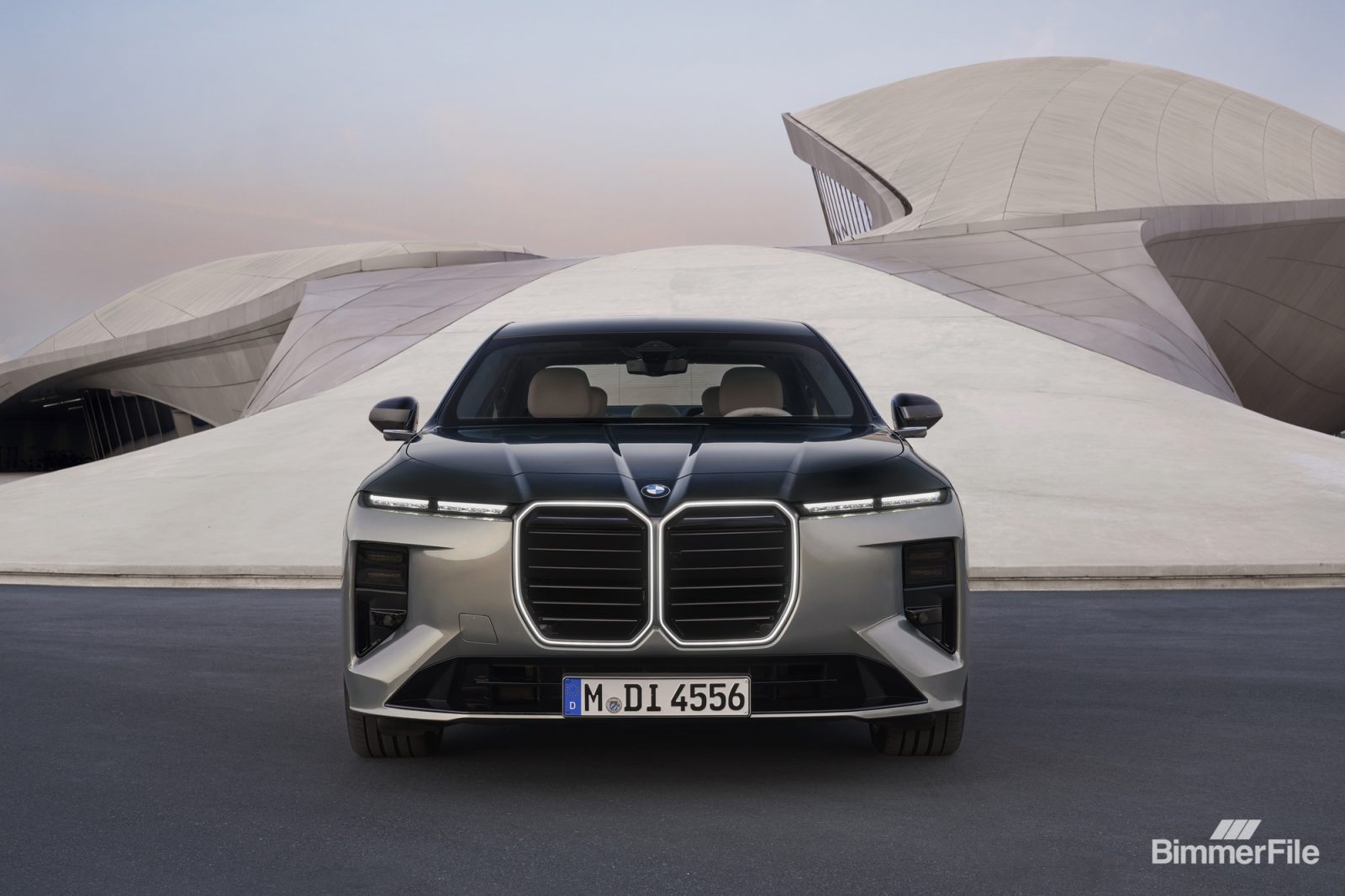
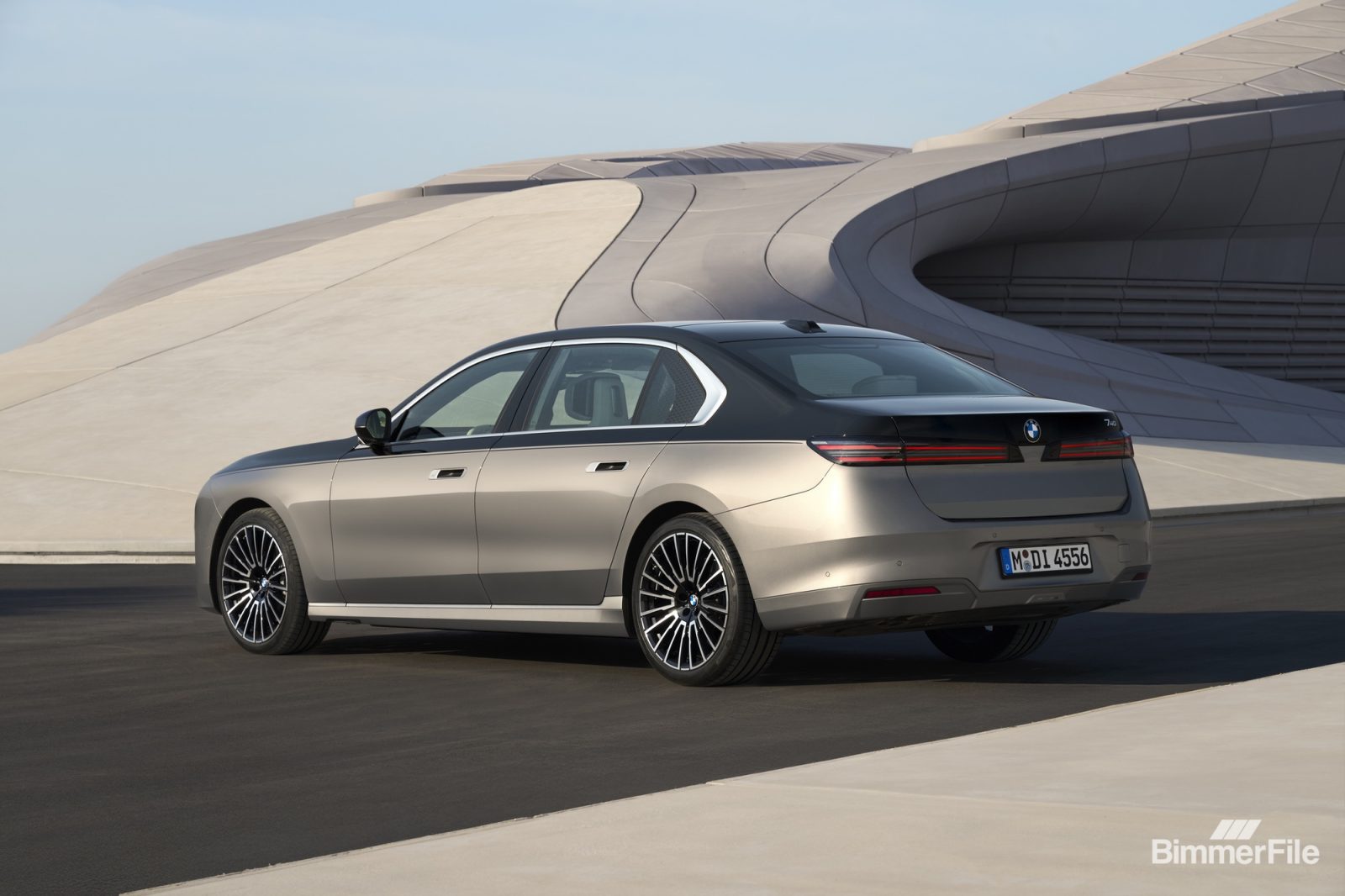
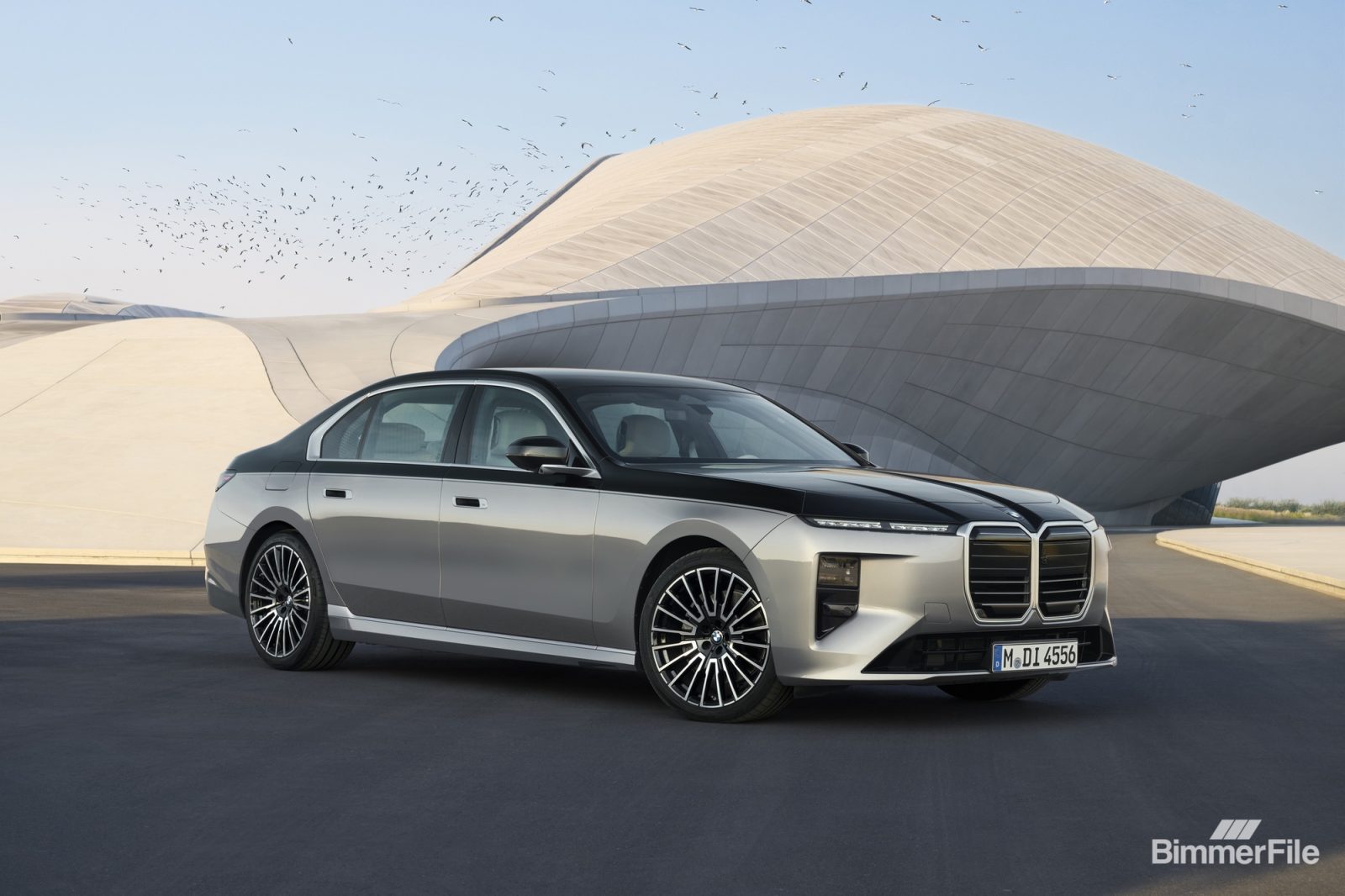
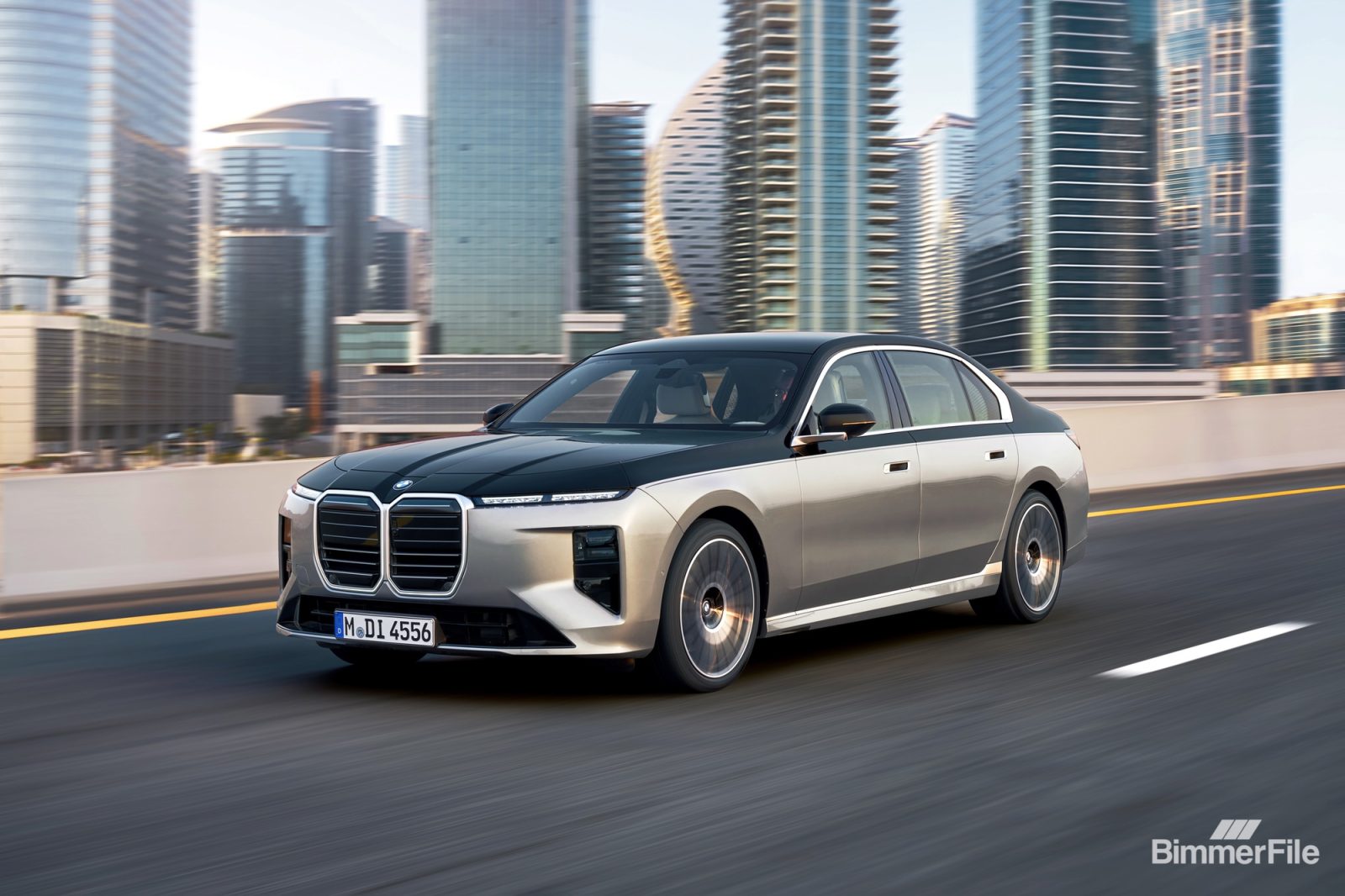
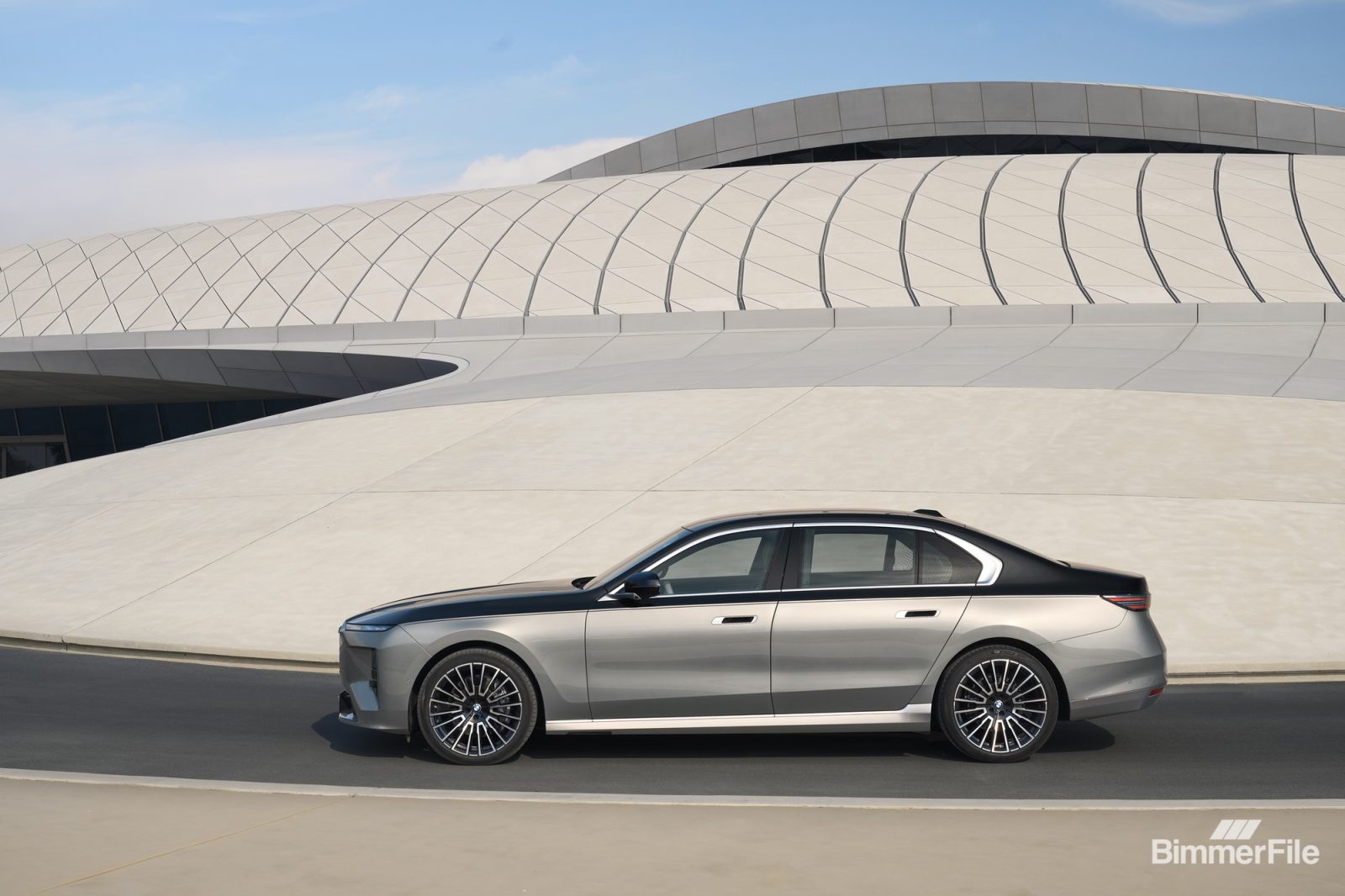
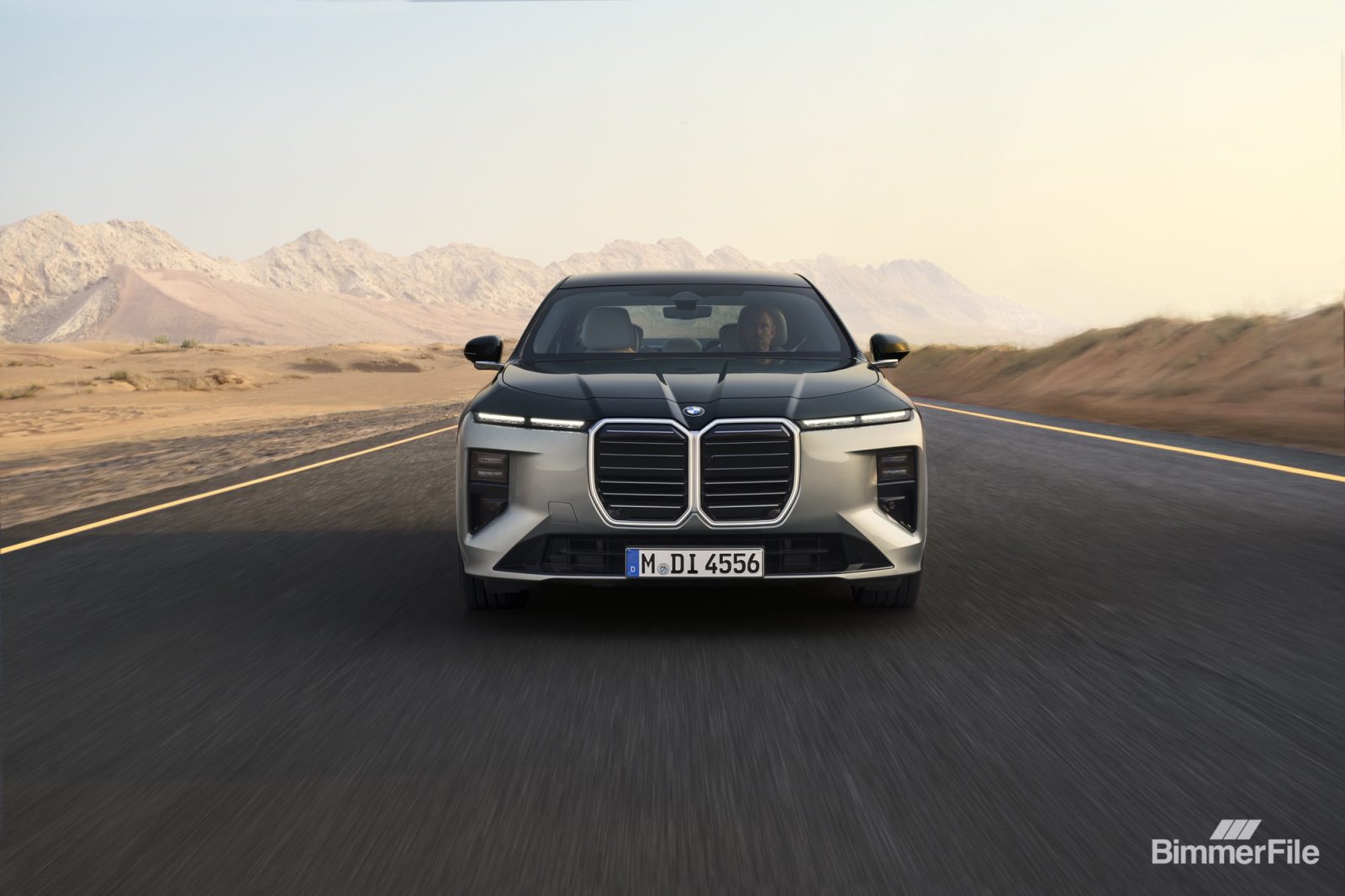
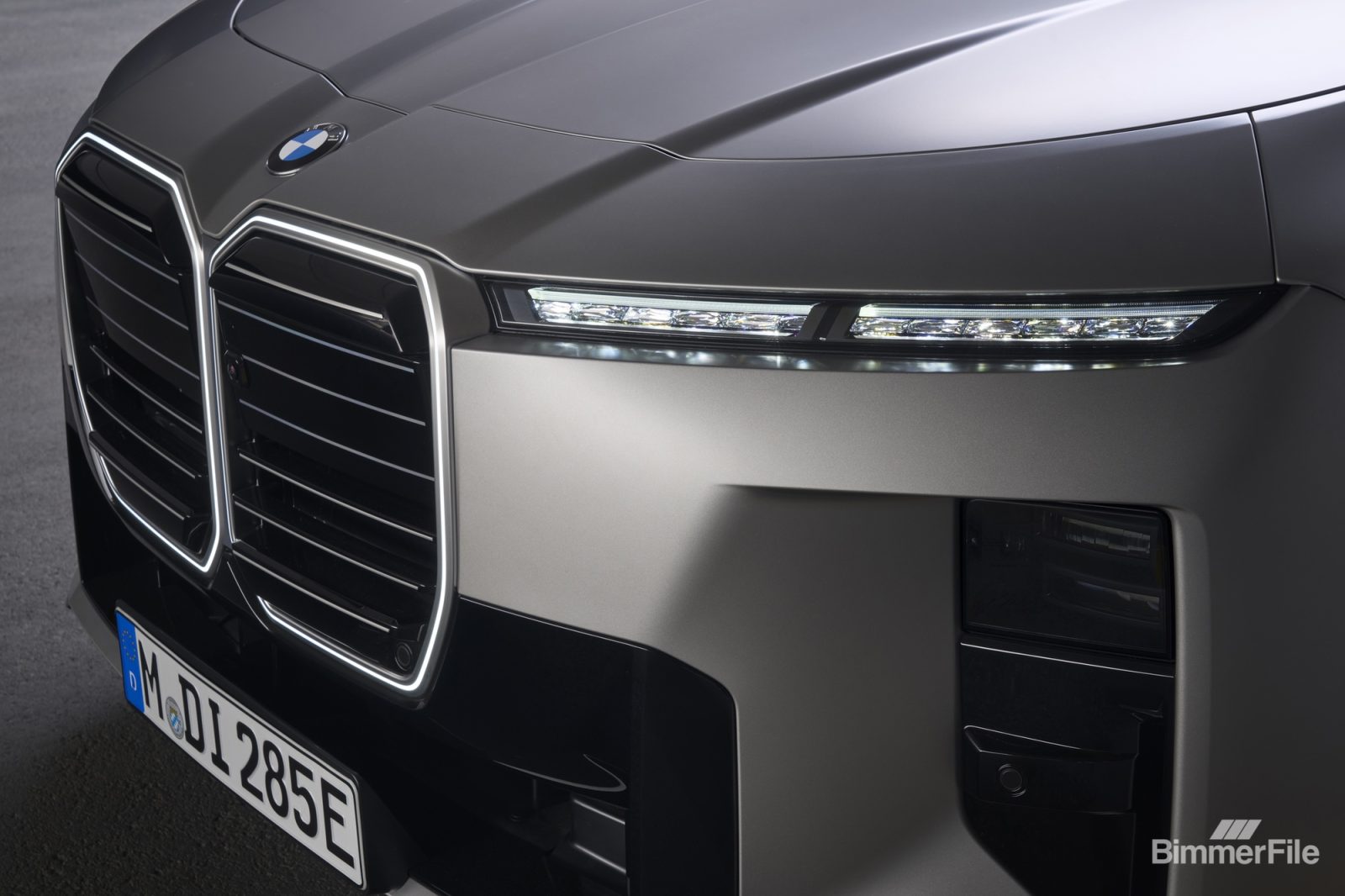
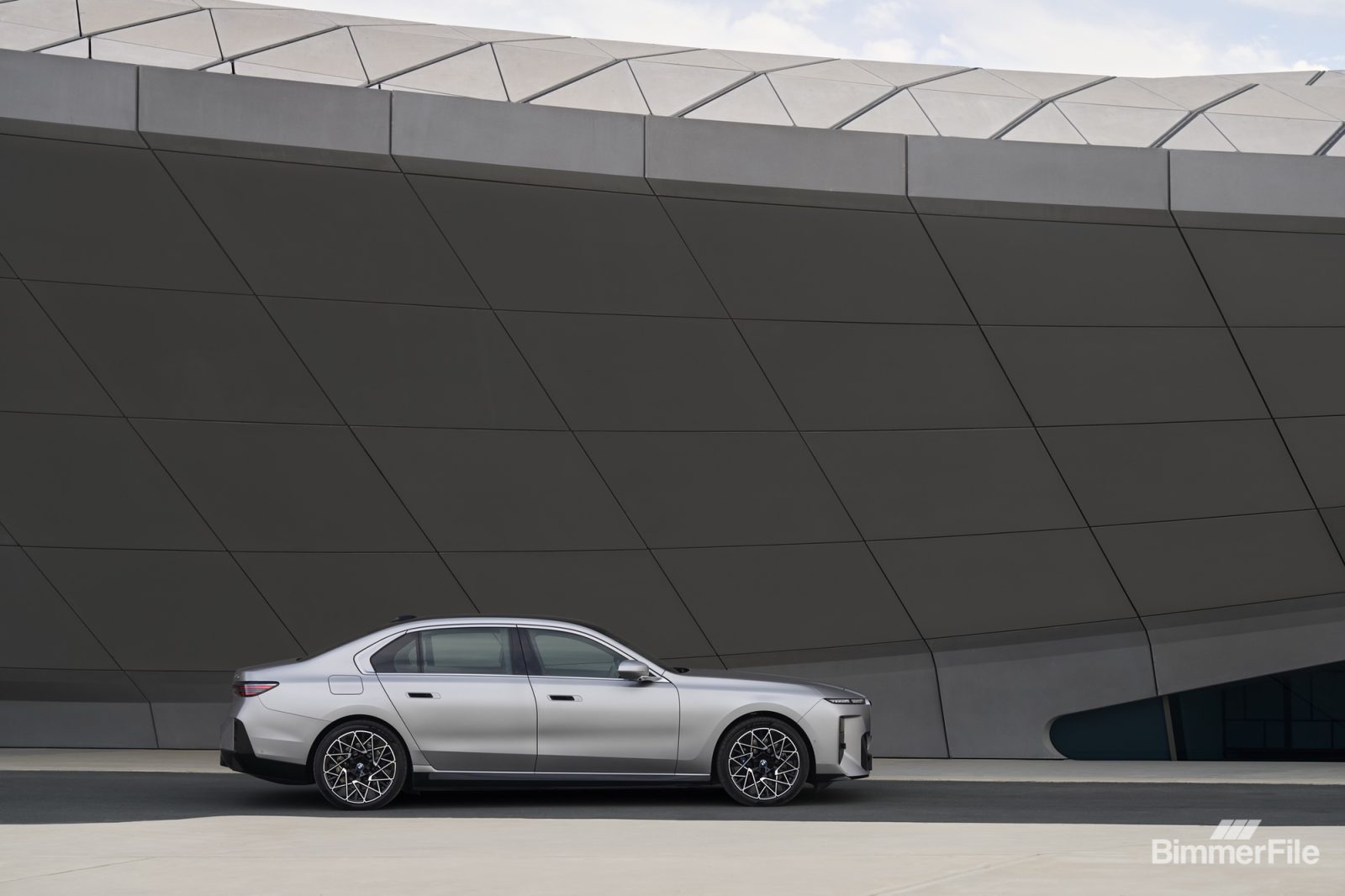
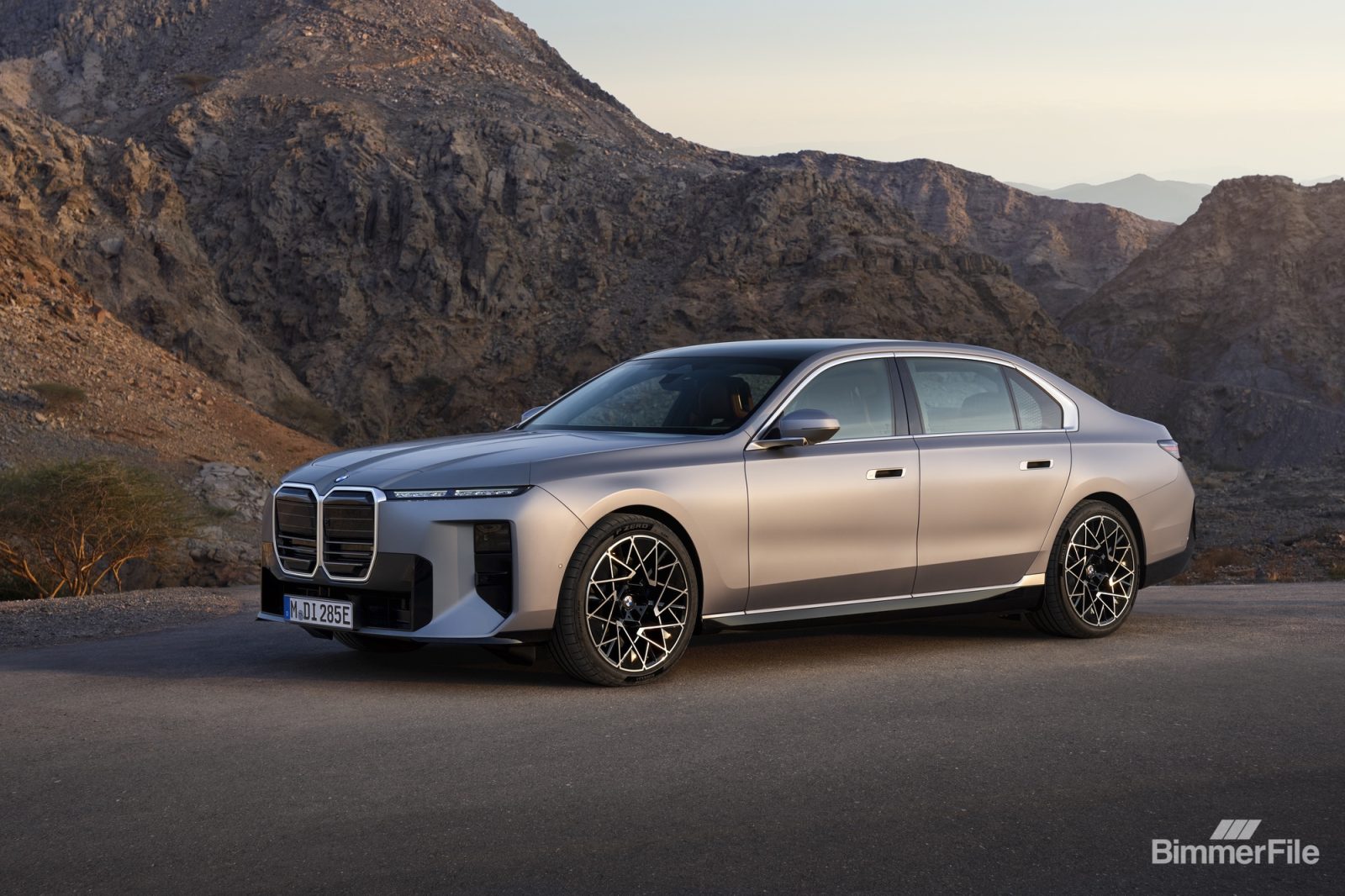
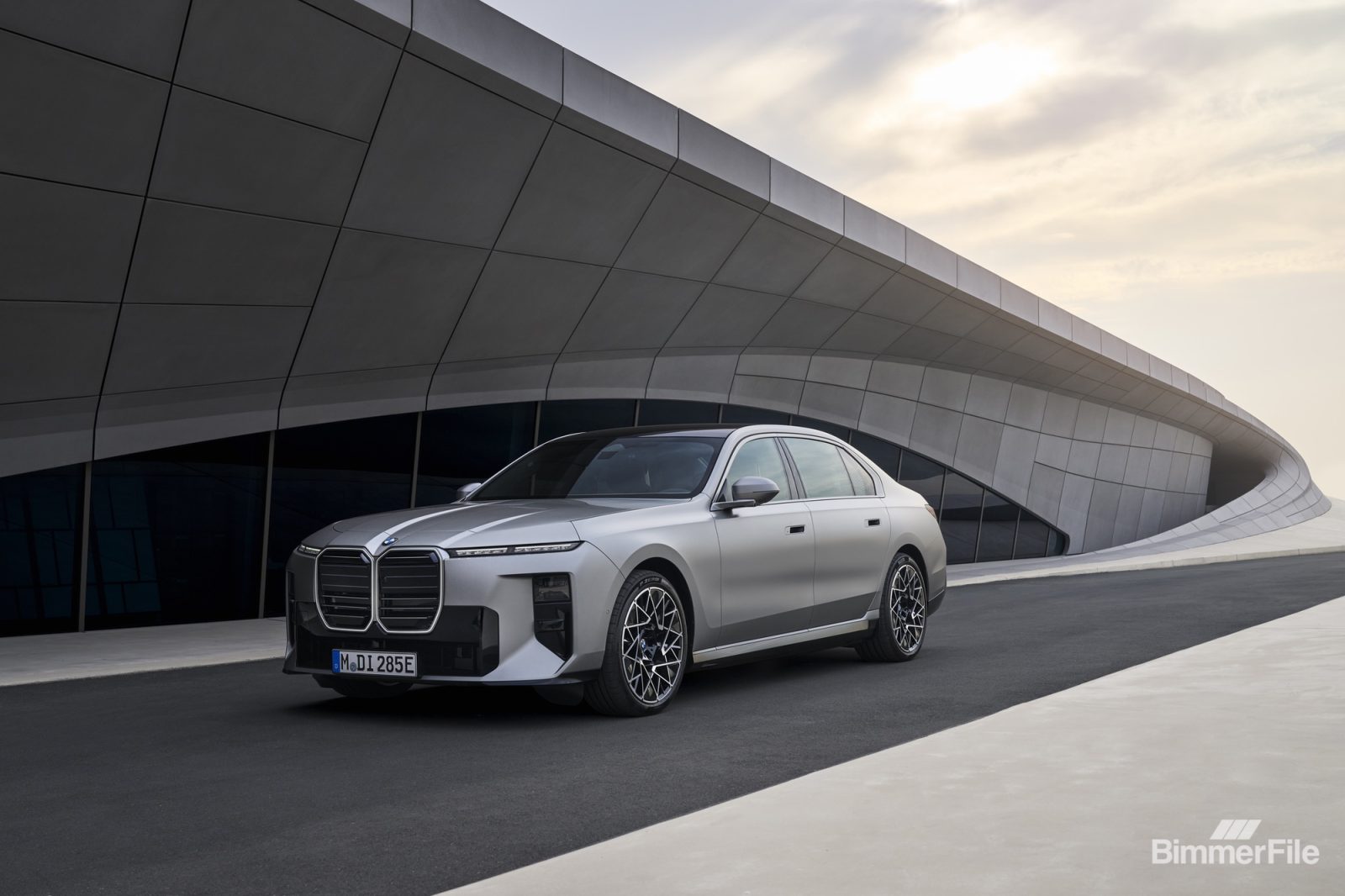
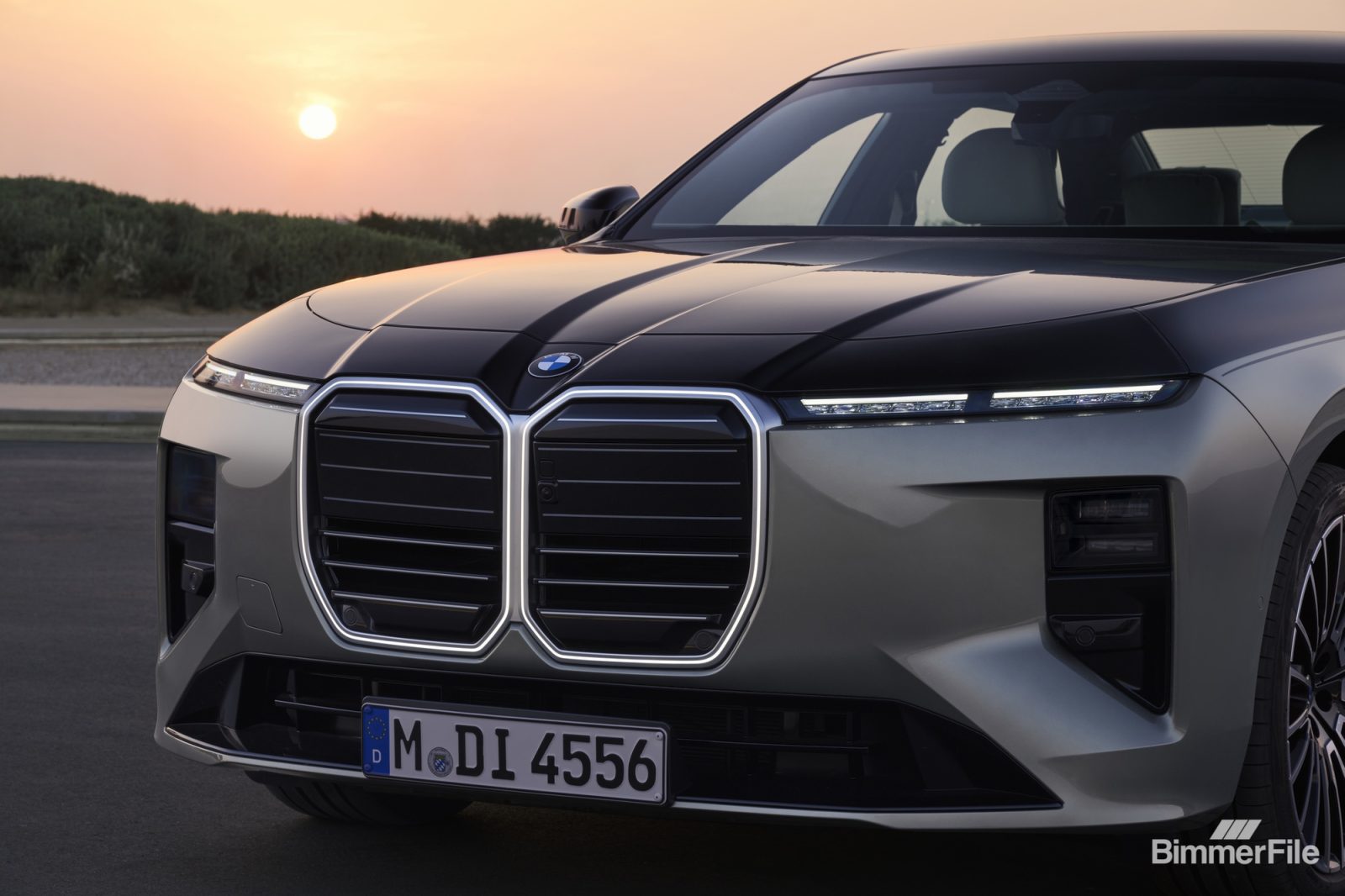
That intent is immediately visible. The surfacing is cleaner, the proportions more deliberate, and the overall presence trades visual aggression for quiet authority. This is BMW’s new face for the luxury class, a specific interpretation of its evolving design language that feels less about individual elements and more about cohesion.

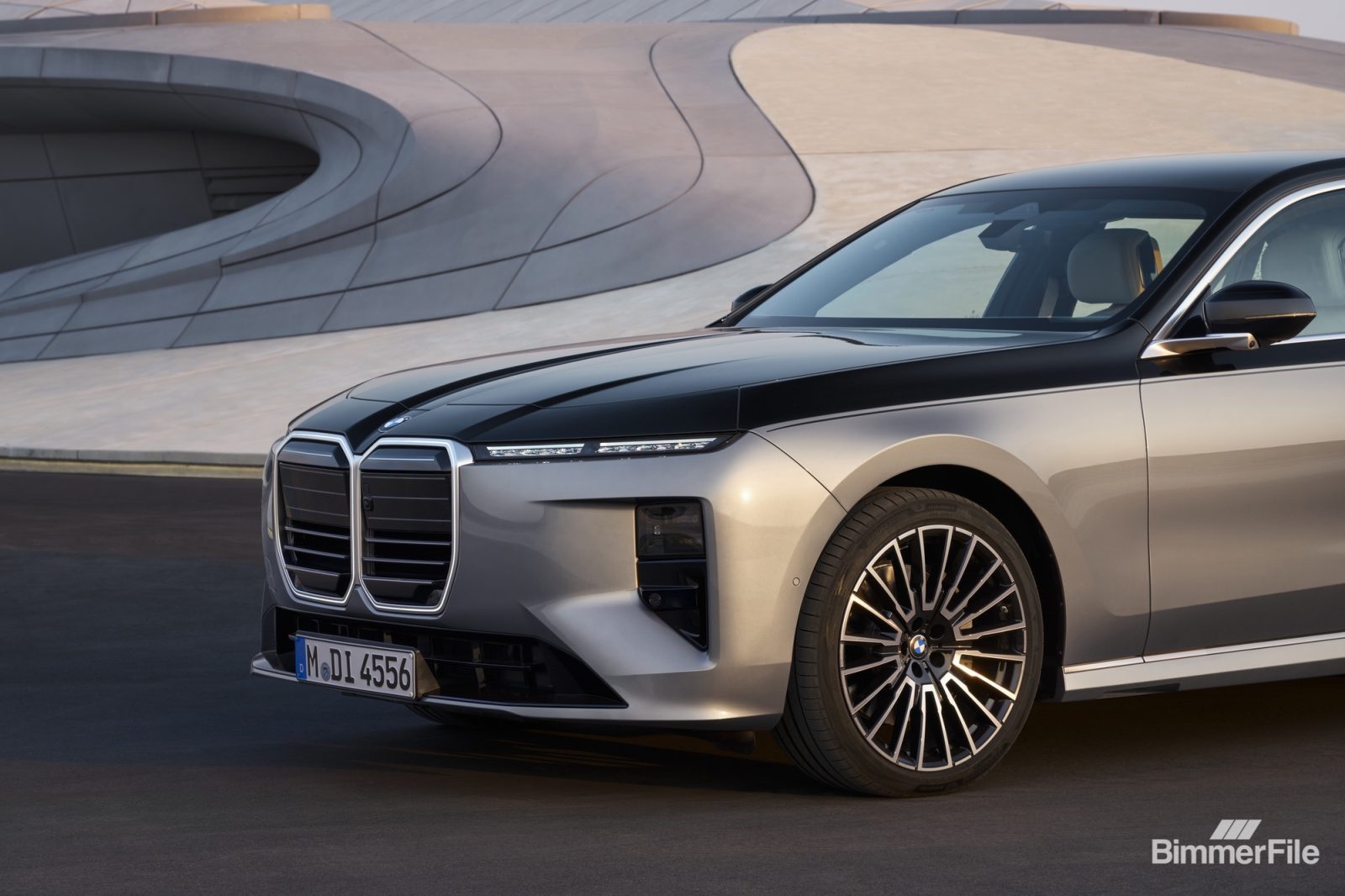
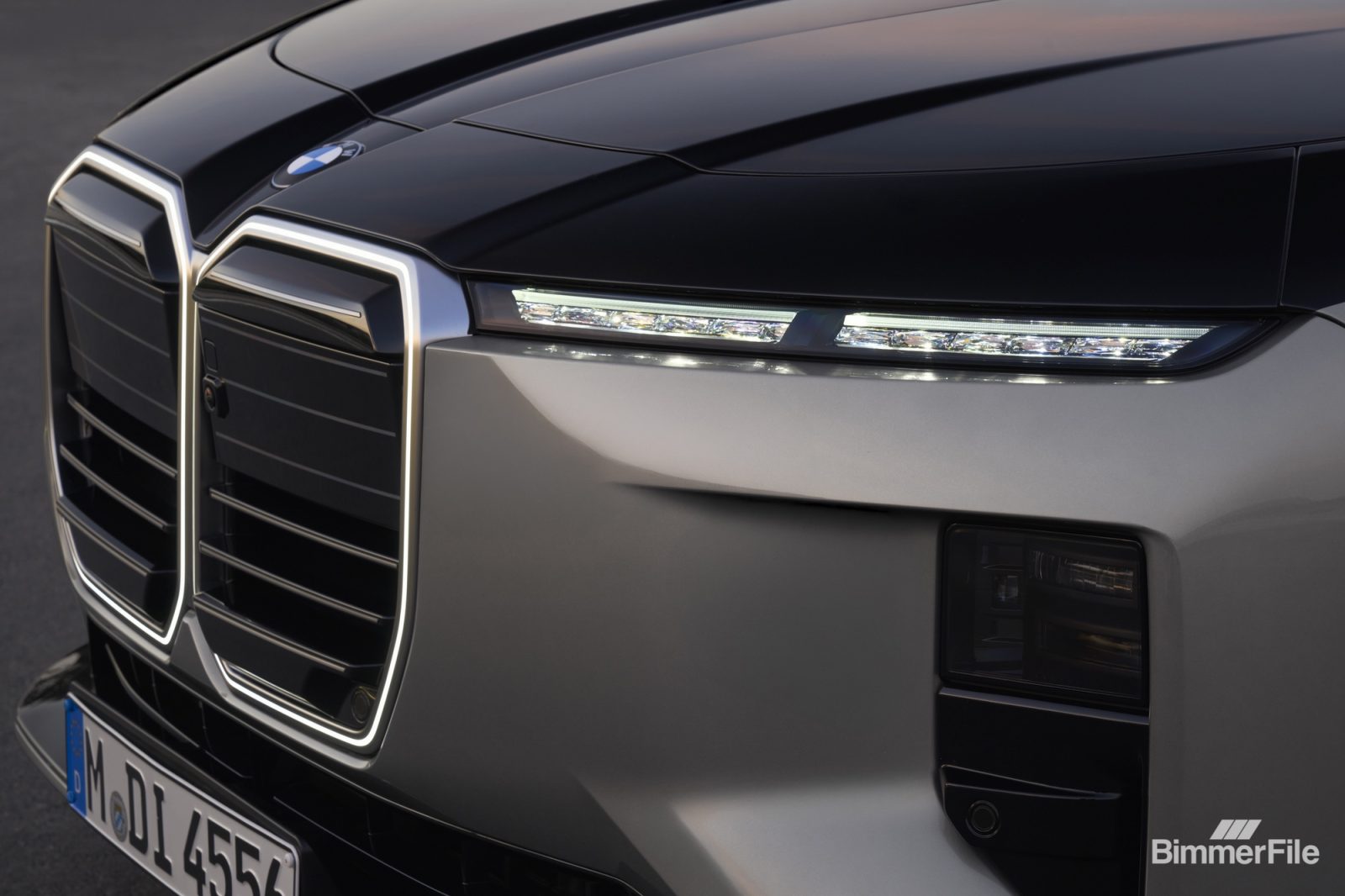
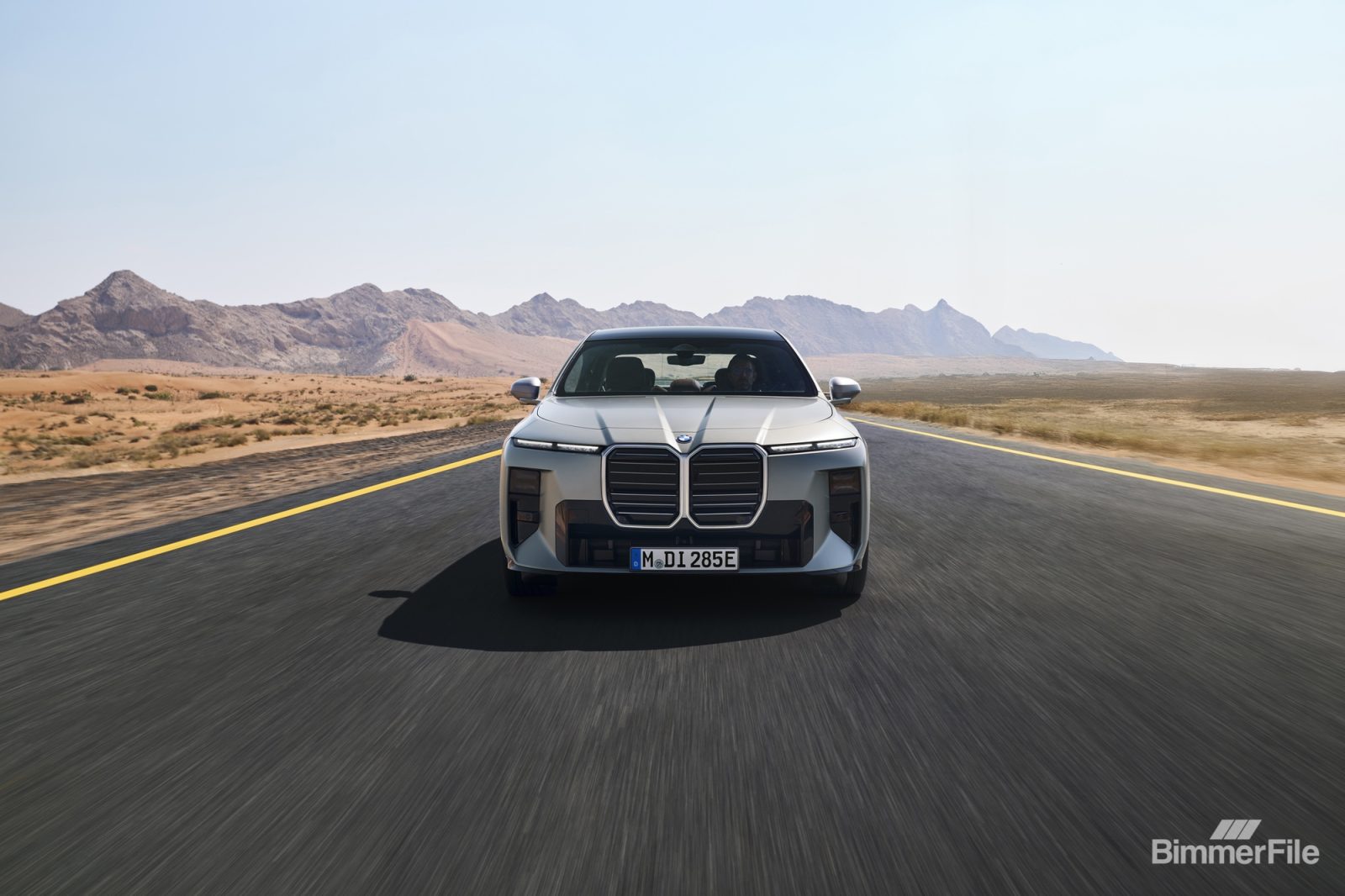
The illuminated kidney grille stands taller and more vertical, framed by ultra-slim lighting elements that shift the visual weight upward. There is a precision to it that feels almost architectural, less ornamental and more structural.

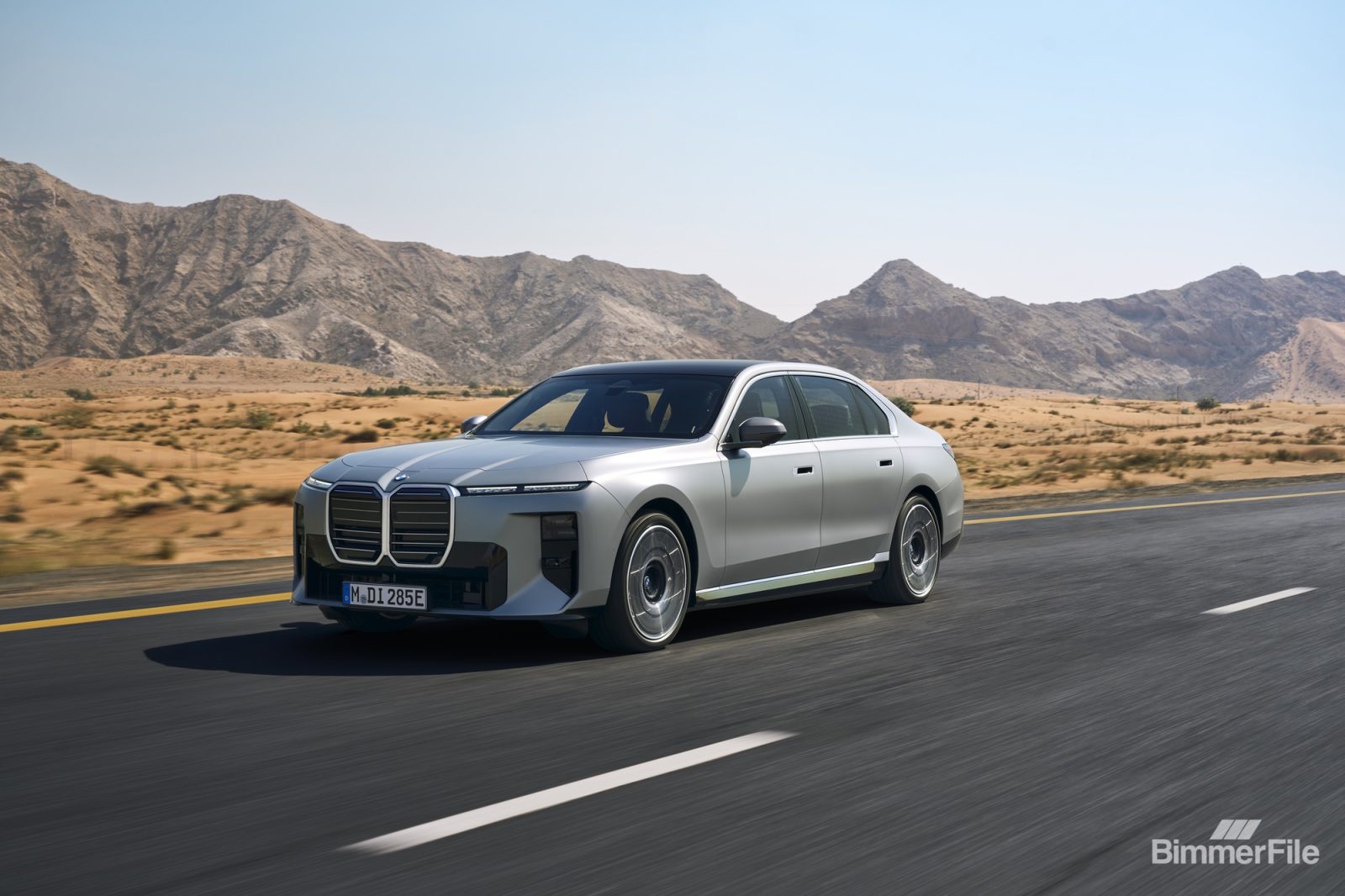
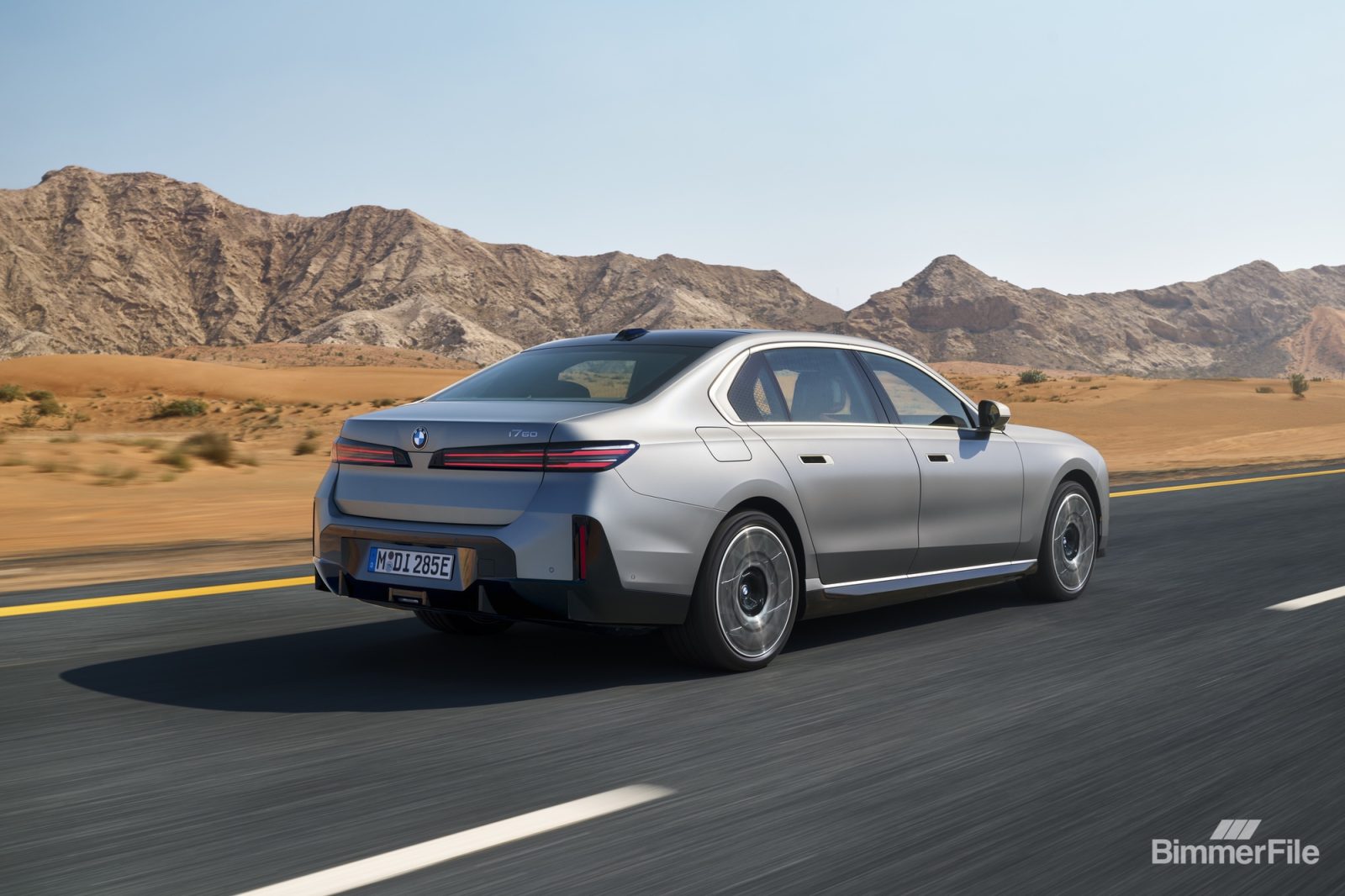
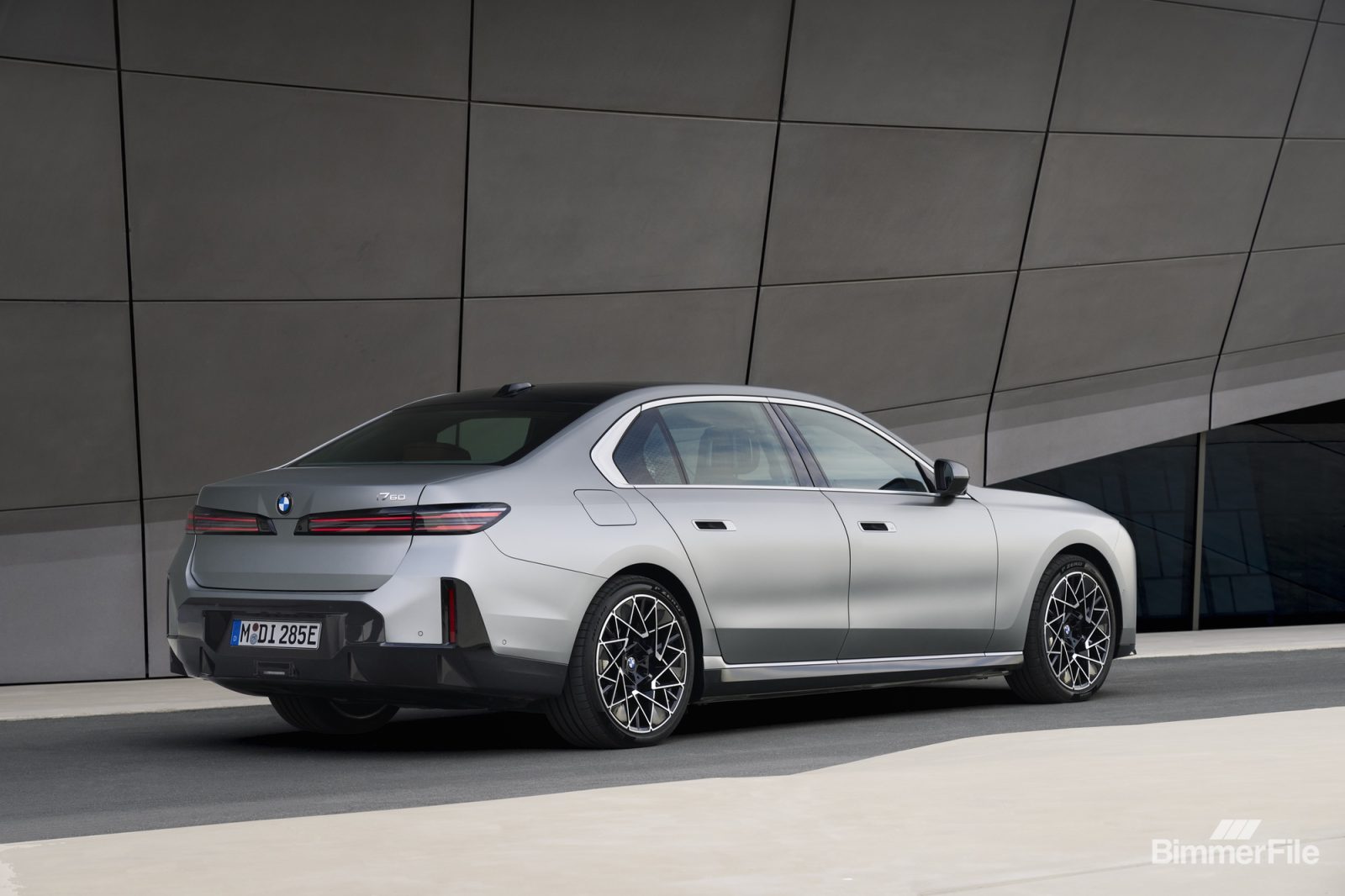
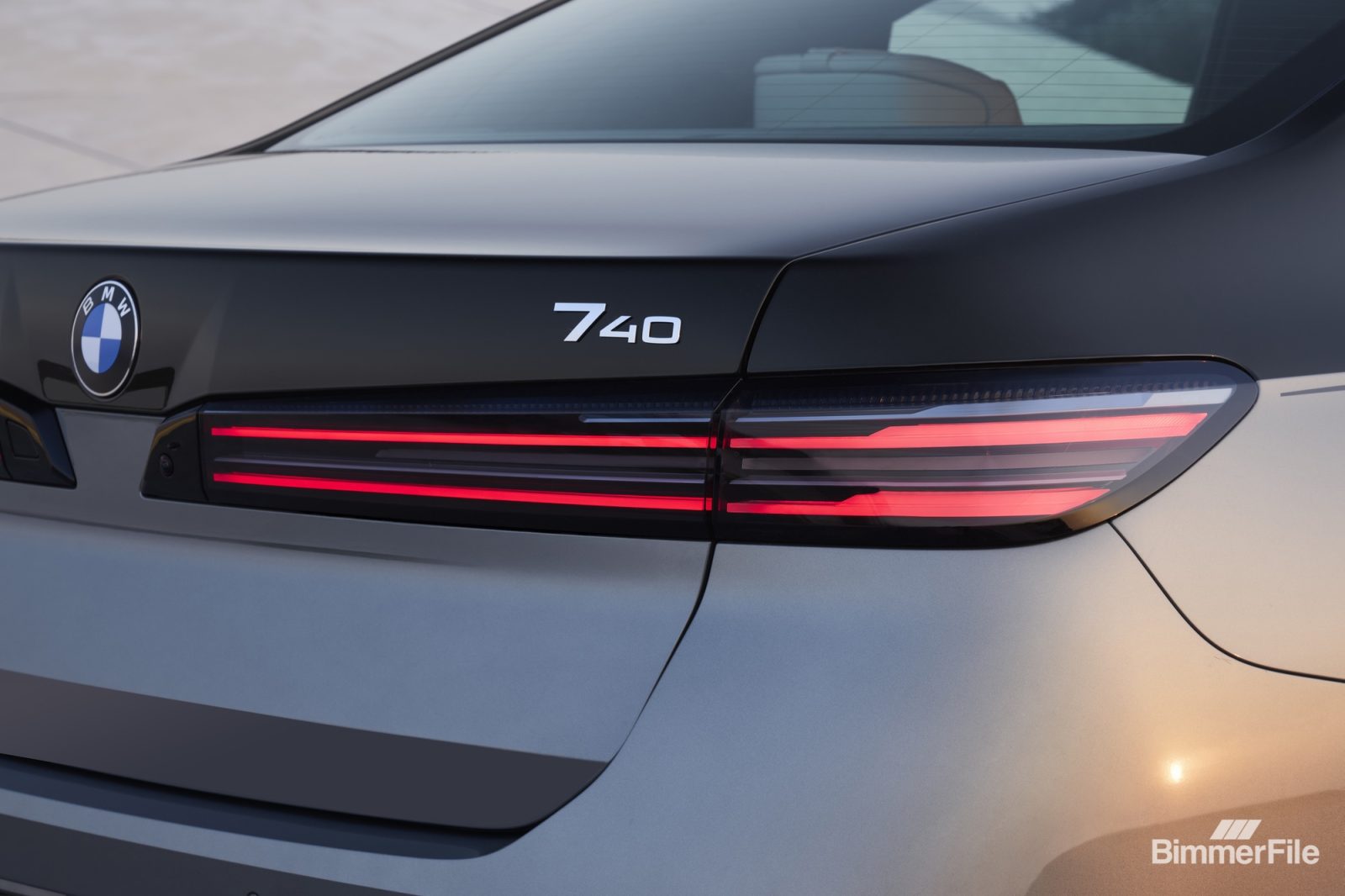
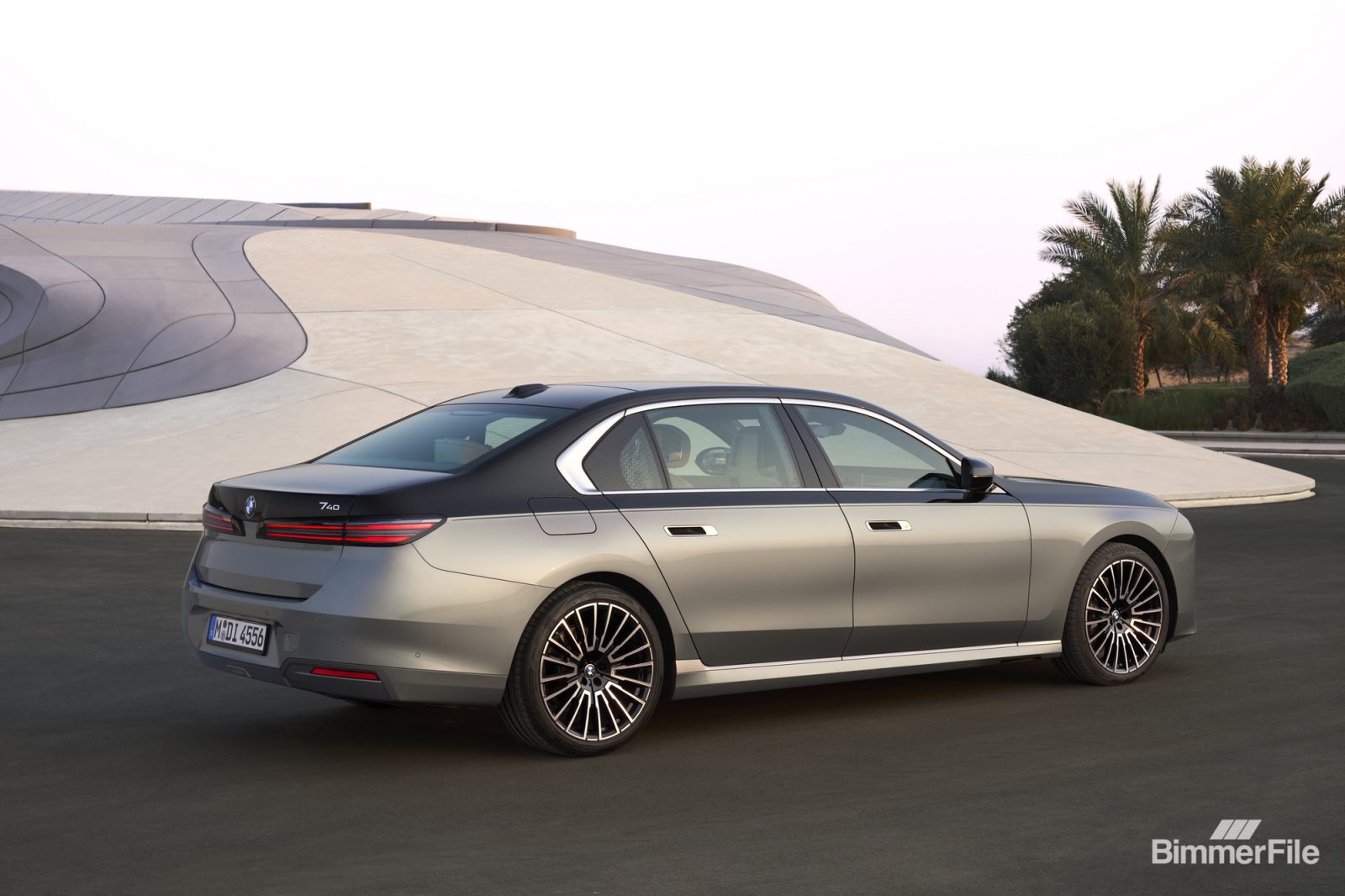
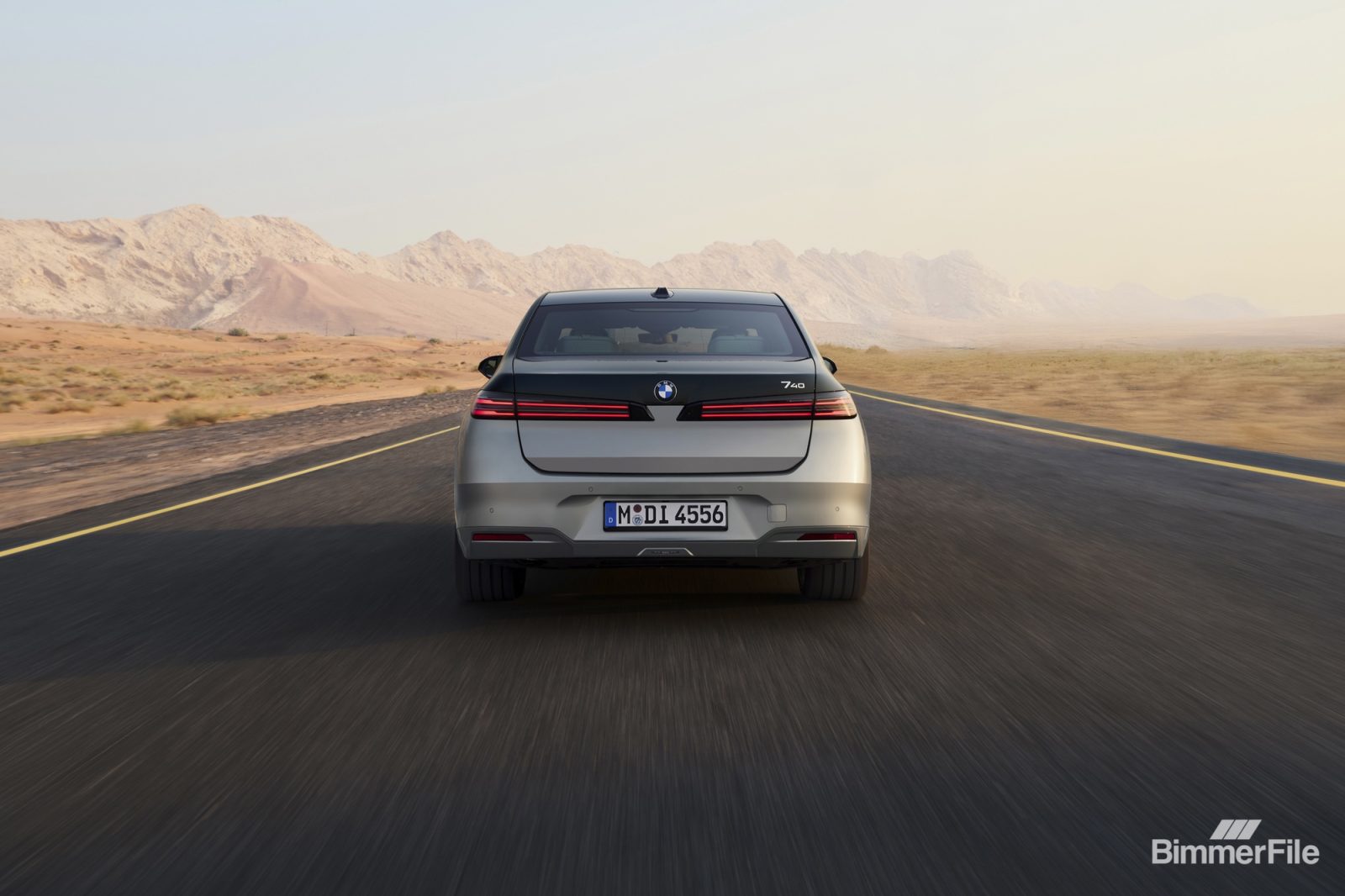
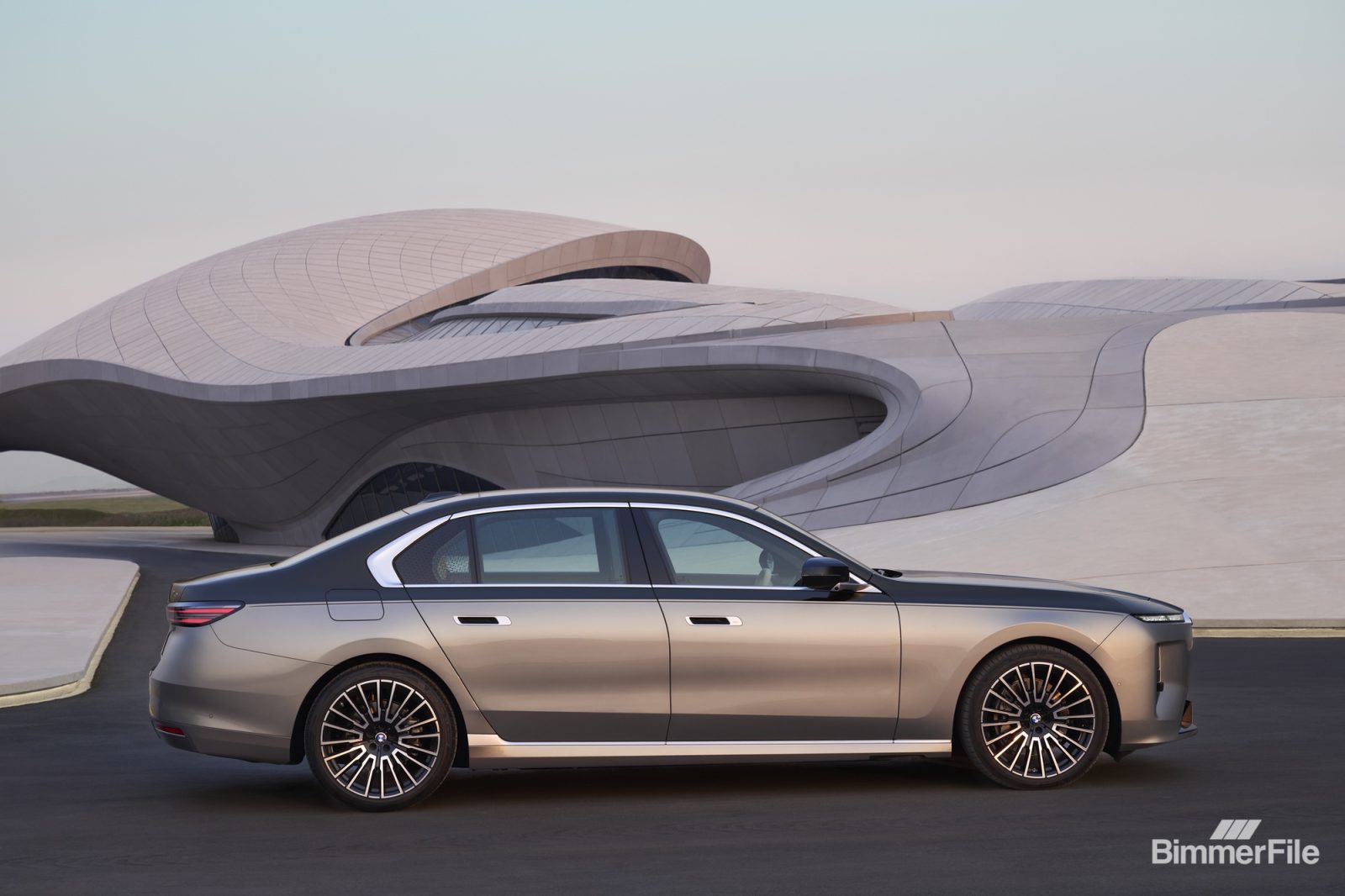
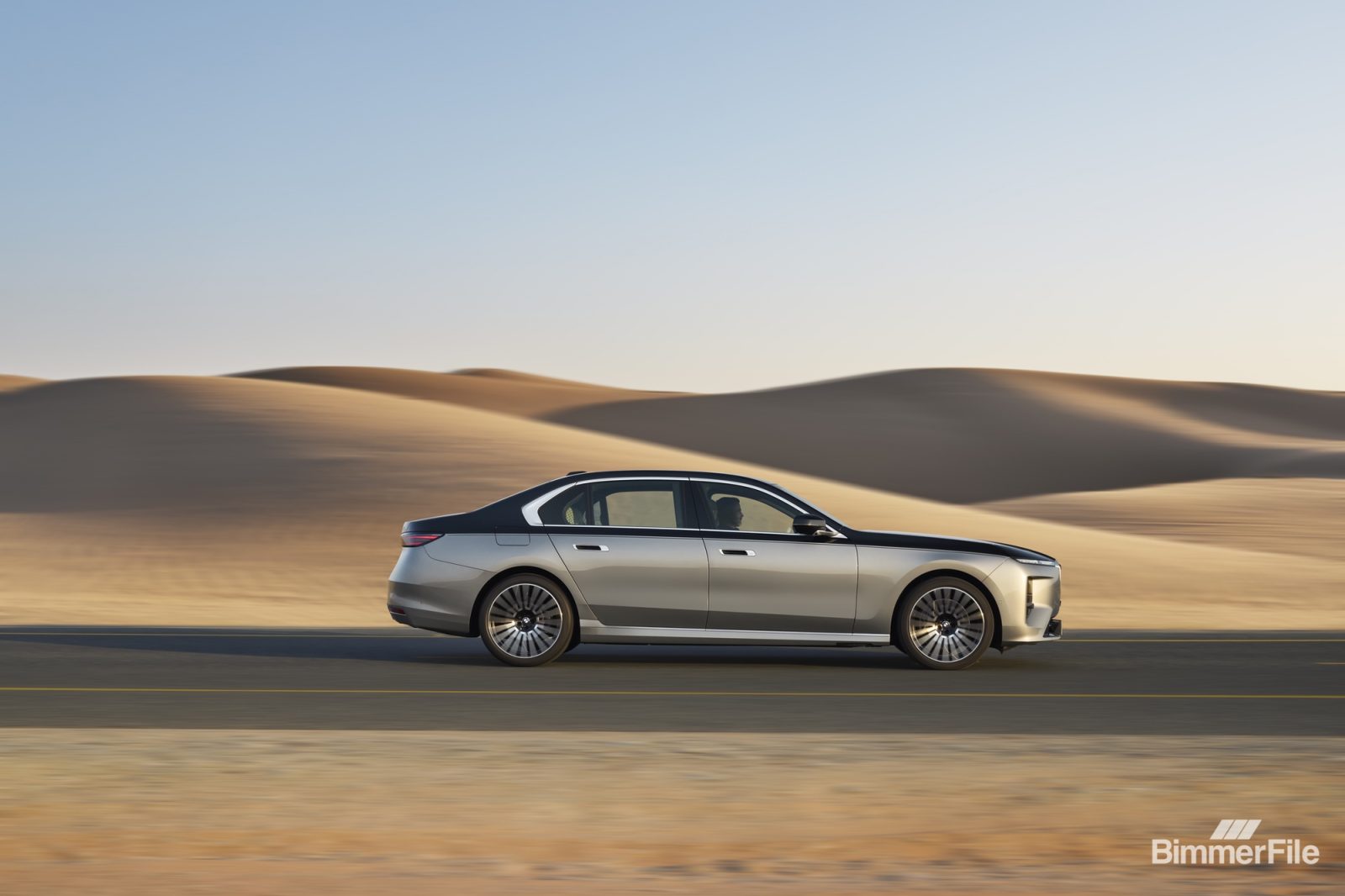
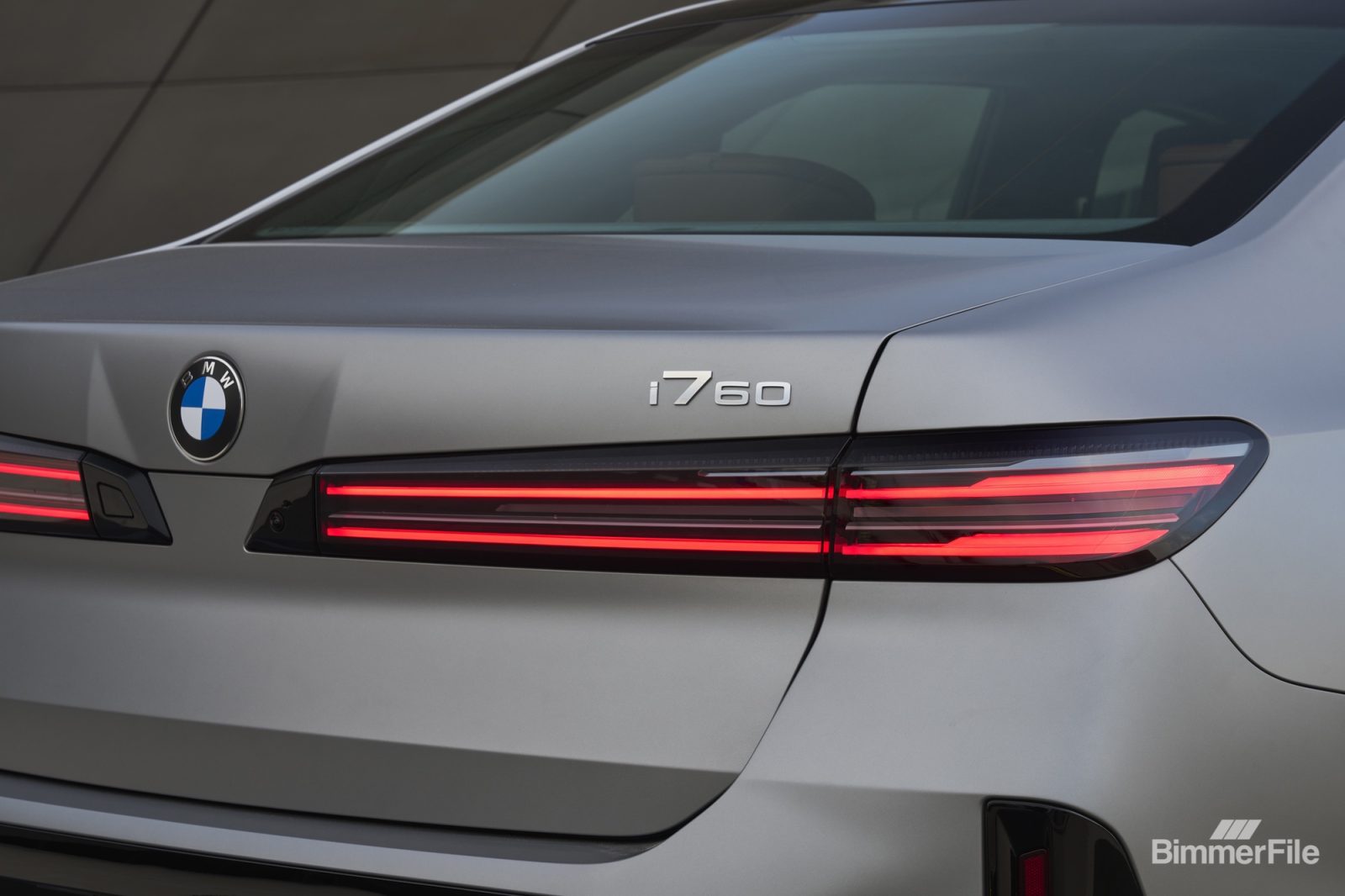
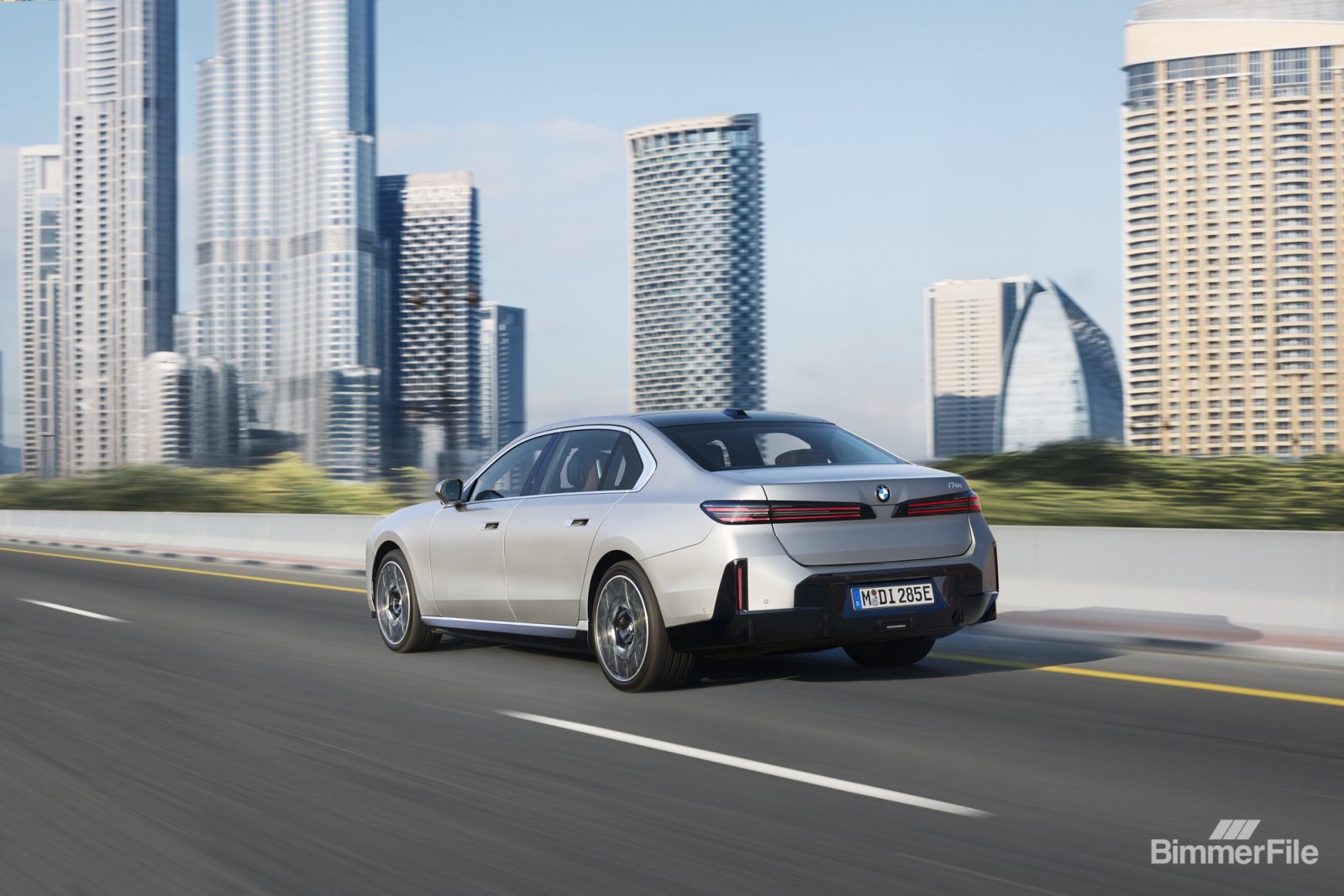
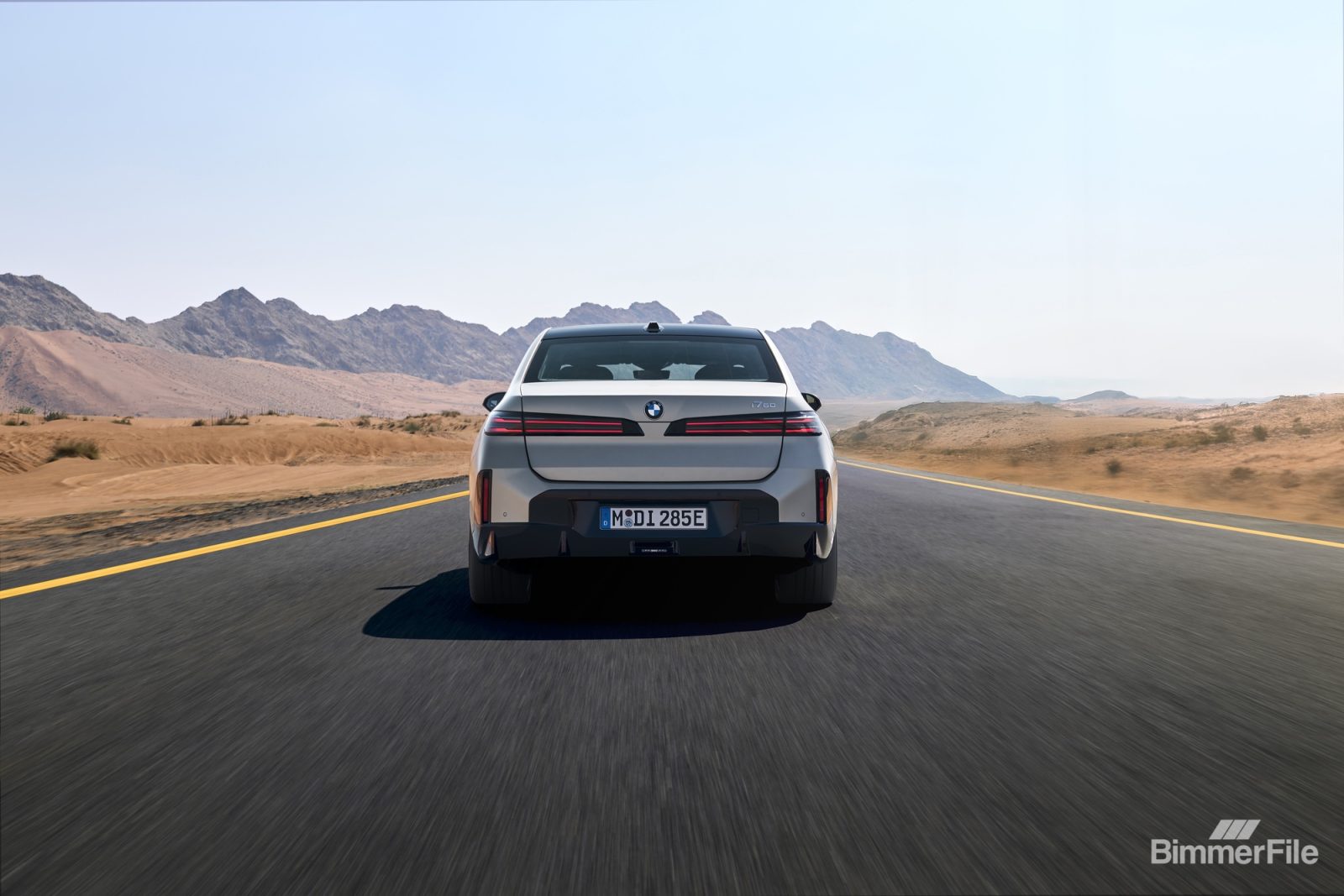
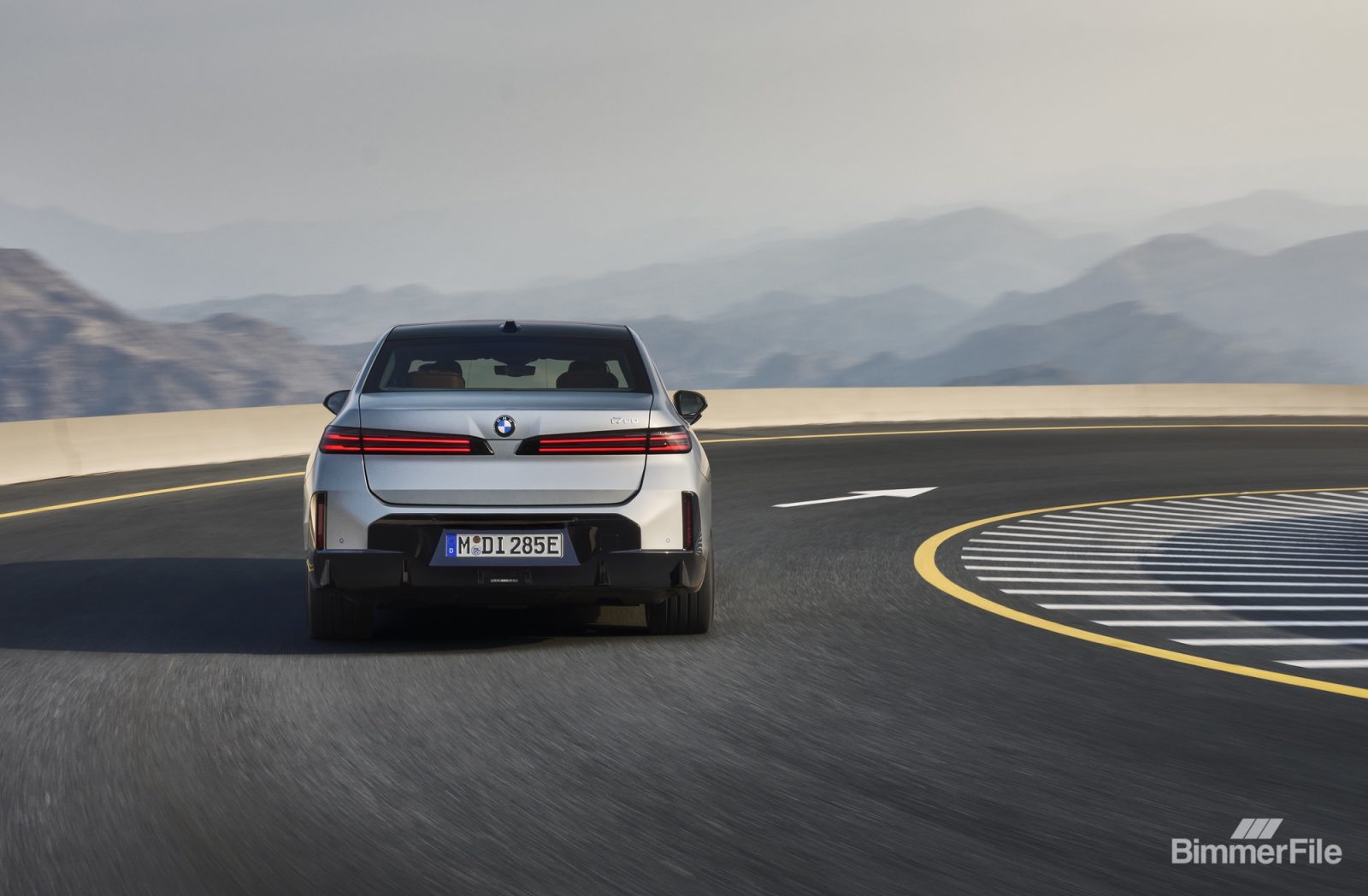
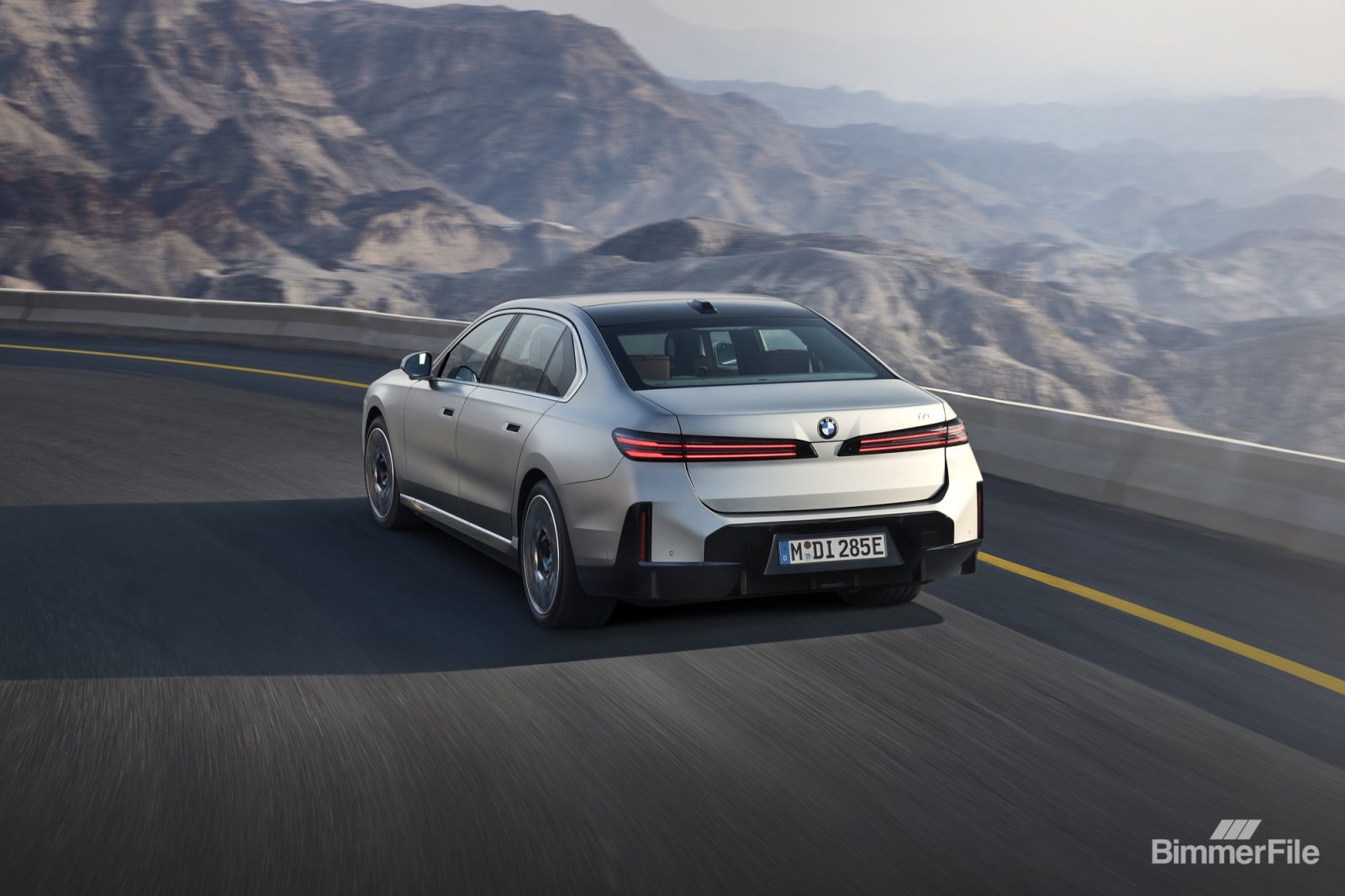
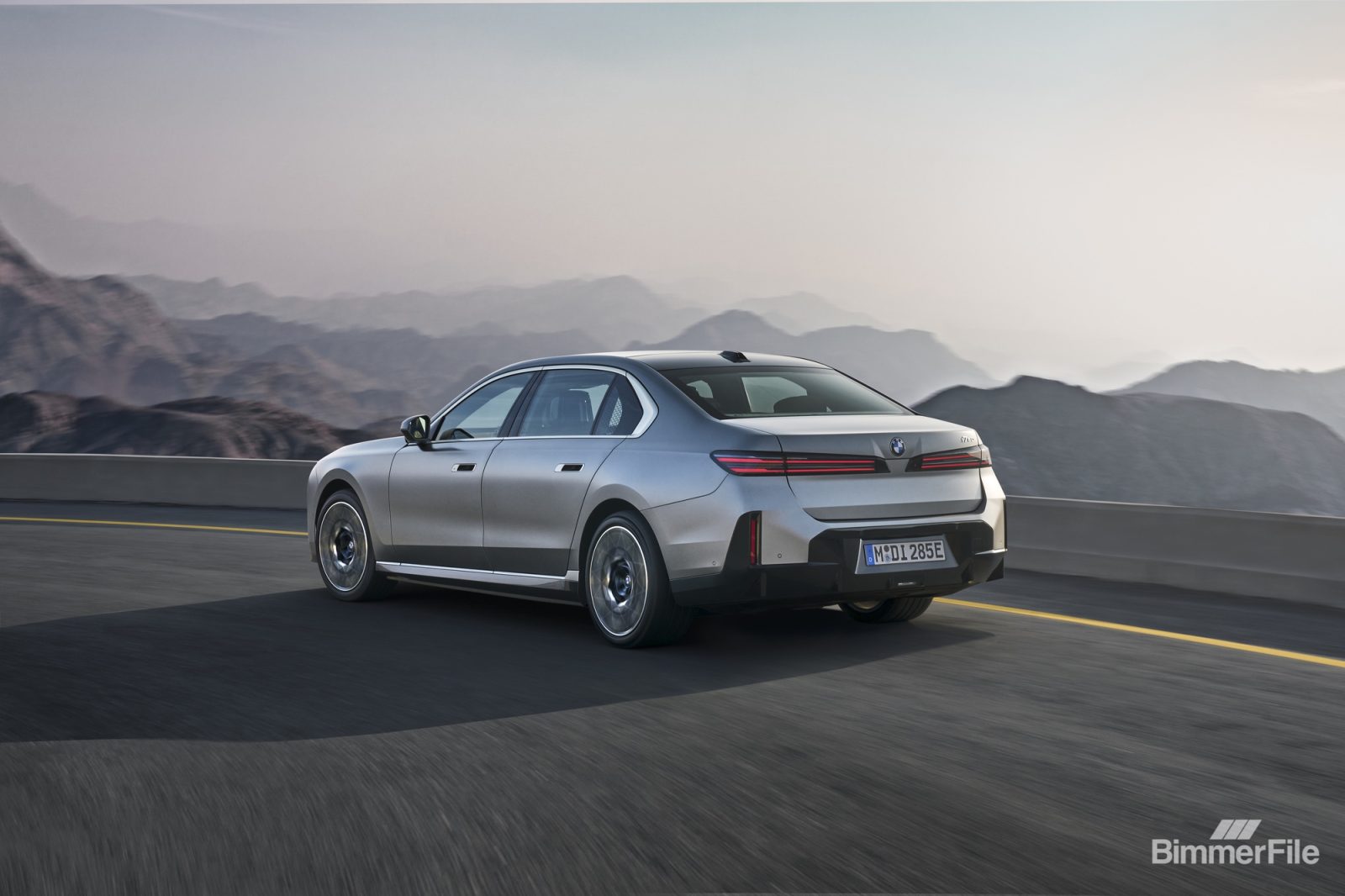
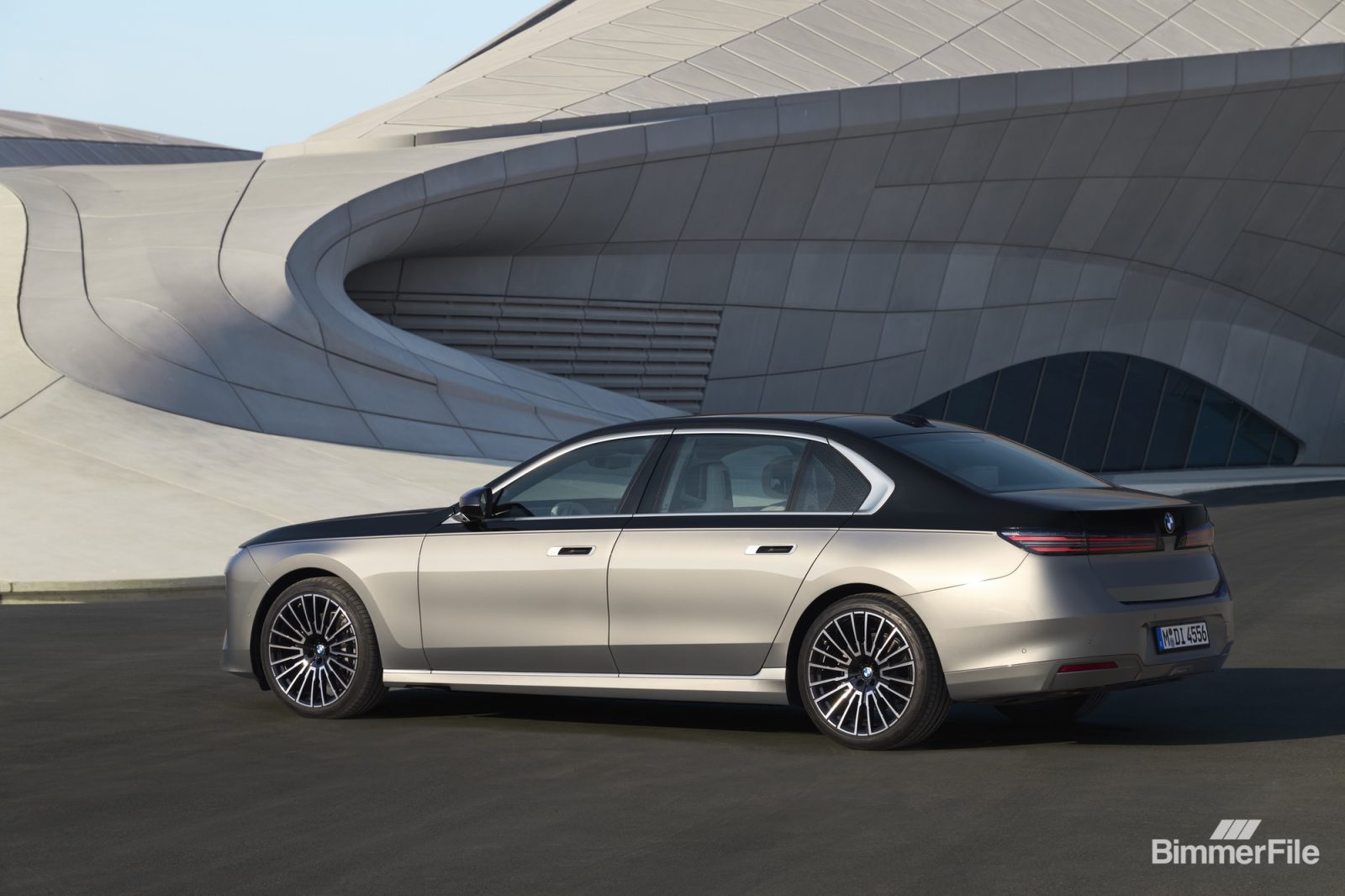
Walk around the car and that restraint becomes the story. Character lines are finer, surfaces broader, and details more controlled. Flush door handles, simplified forms, and a long, uninterrupted profile give the car a calm, confident stance. At the rear, slim light elements stretch wide, emphasizing presence over decoration while integrating functional elements almost invisibly.

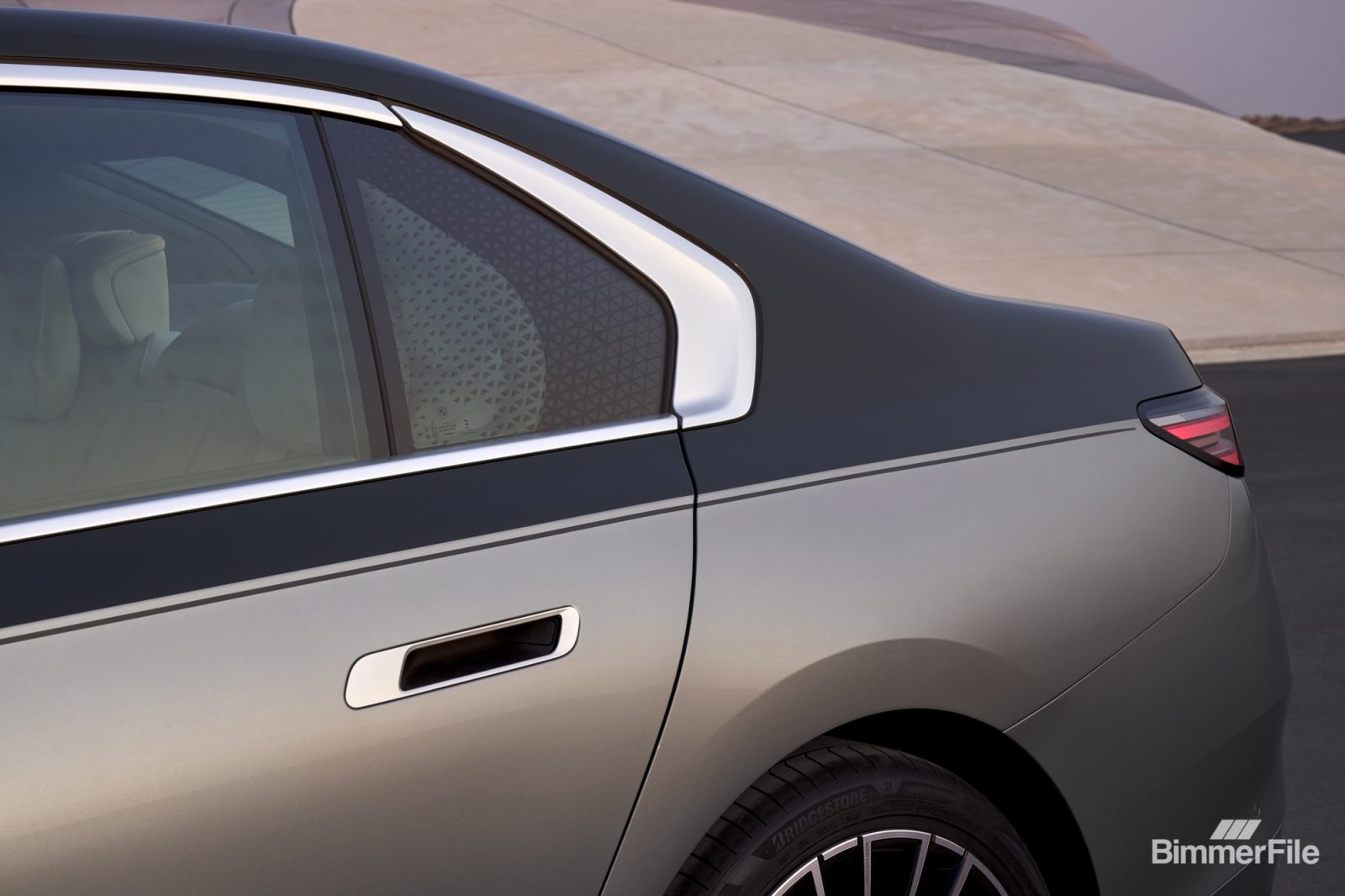
And yet the craftsmanship remains. Optional dual-finish paint, requiring extensive manual work, blends matte and metallic surfaces seamlessly. It is detail you notice over time, not at first glance.

A Cabin Rebalanced Around Experience

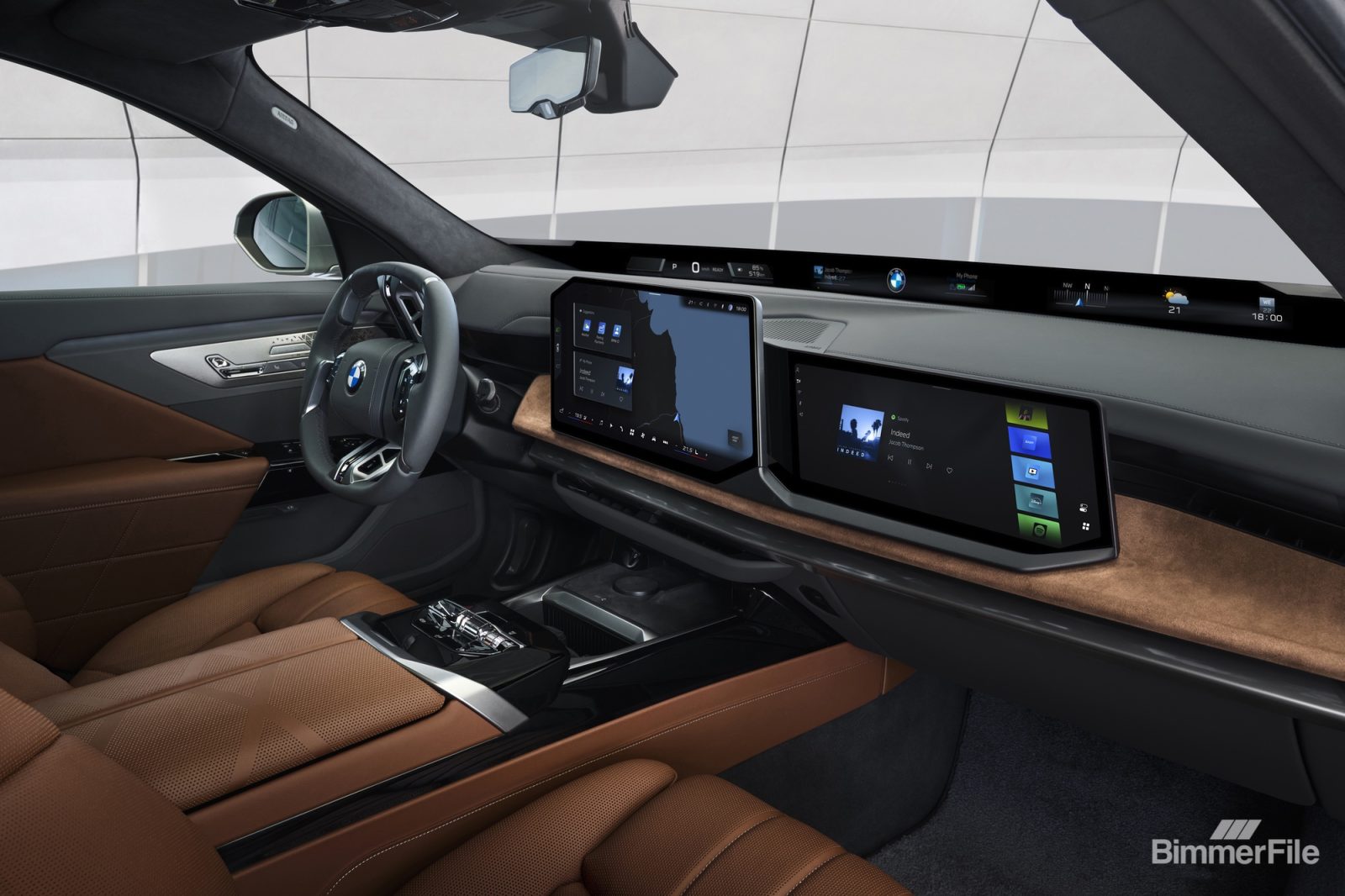
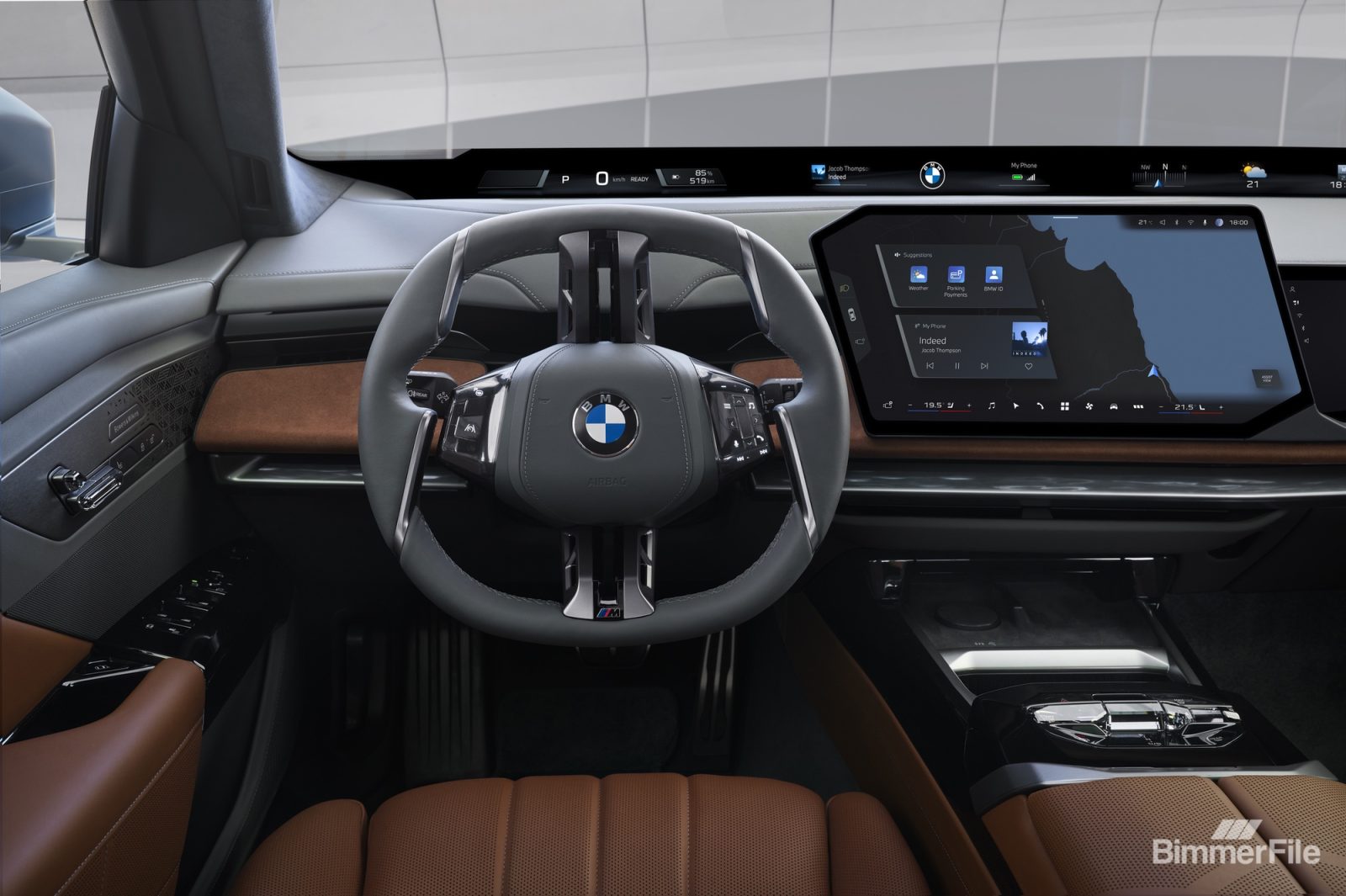
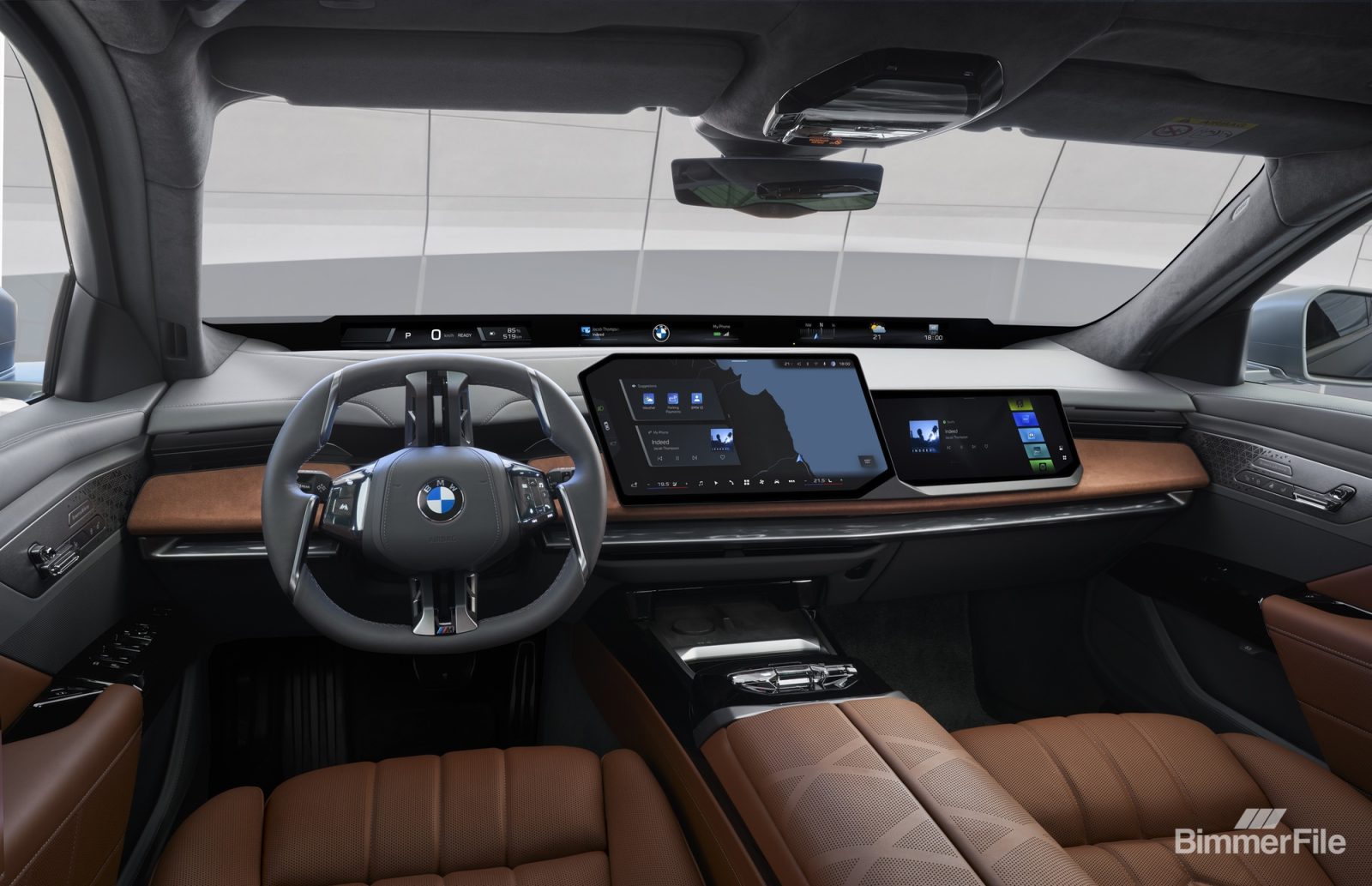
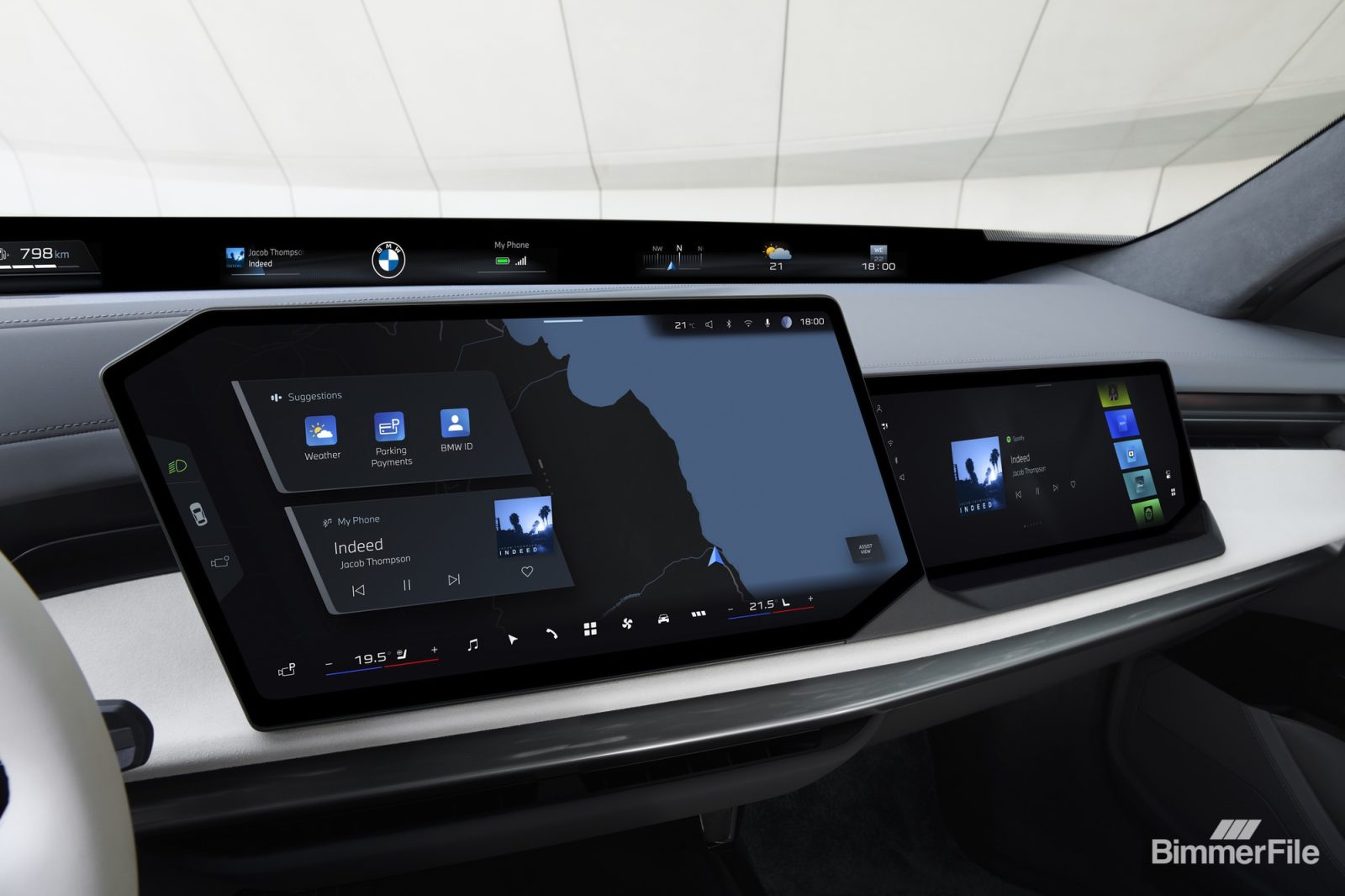
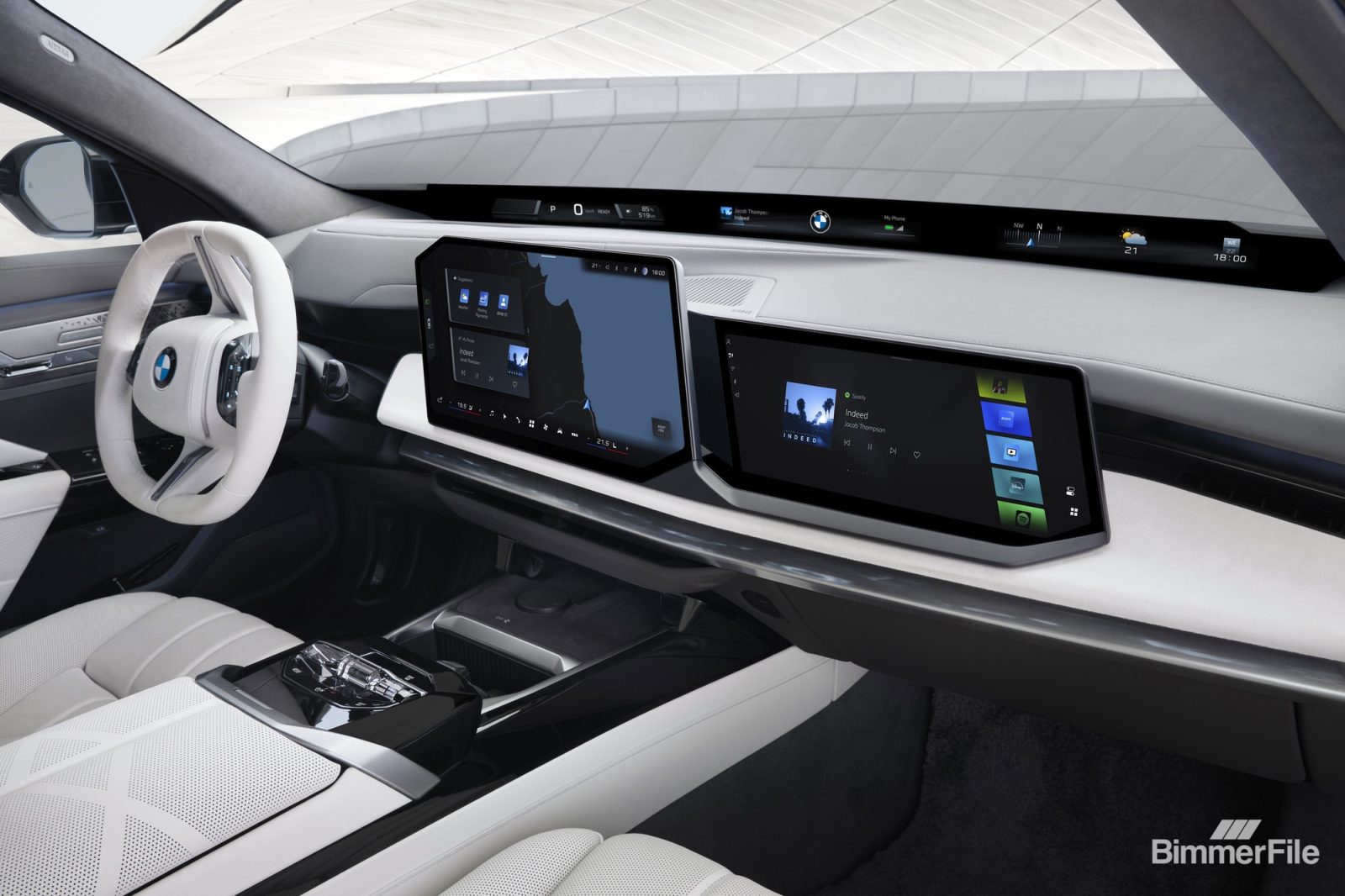
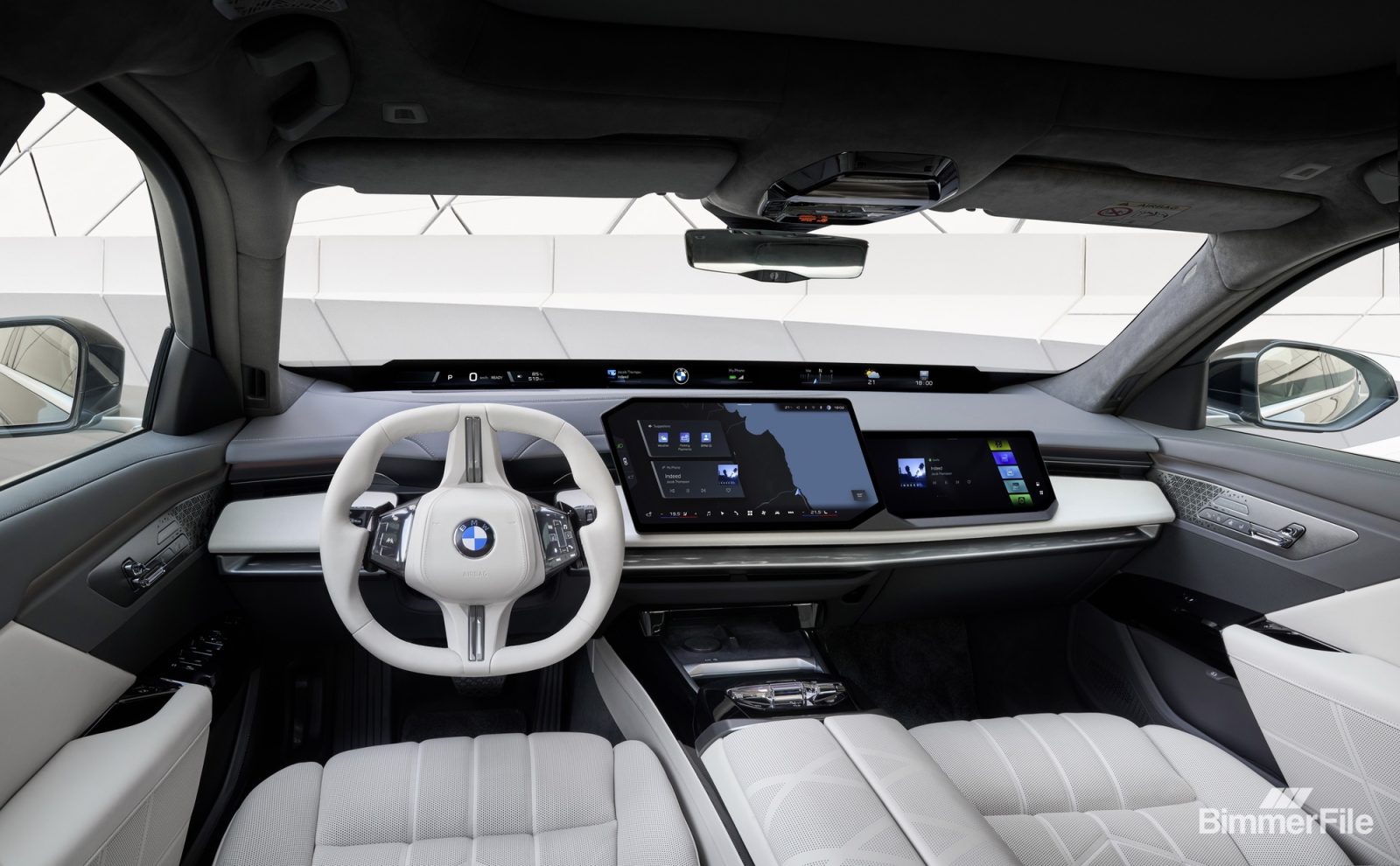
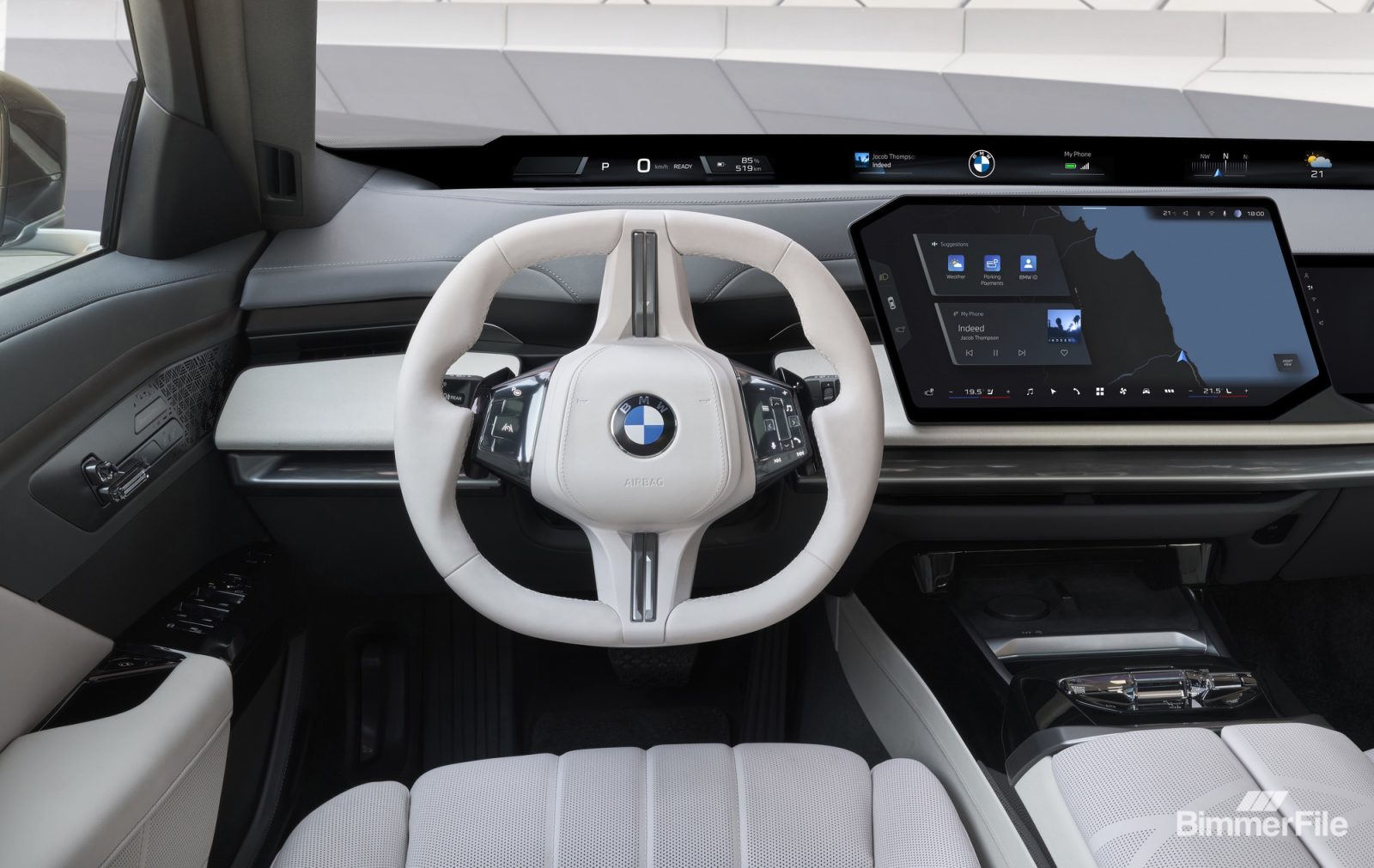
Inside, the transformation is more fundamental. BMW Panoramic iDrive reshapes the cabin around a horizontal layer of information that stretches across the base of the windshield.

It changes how the driver interacts with the car without forcing adaptation. Information sits where your eyes naturally go, reducing friction and creating a sense of flow. The central display supports this rather than dominating it, maintaining balance instead of competing for attention.

The addition of the passenger screen introduces a subtle but important shift. The front of the cabin is no longer a strictly driver-focused environment. It becomes shared, layered, and adaptable without losing cohesion. Both occupants can engage with the digital ecosystem without fragmenting the experience.

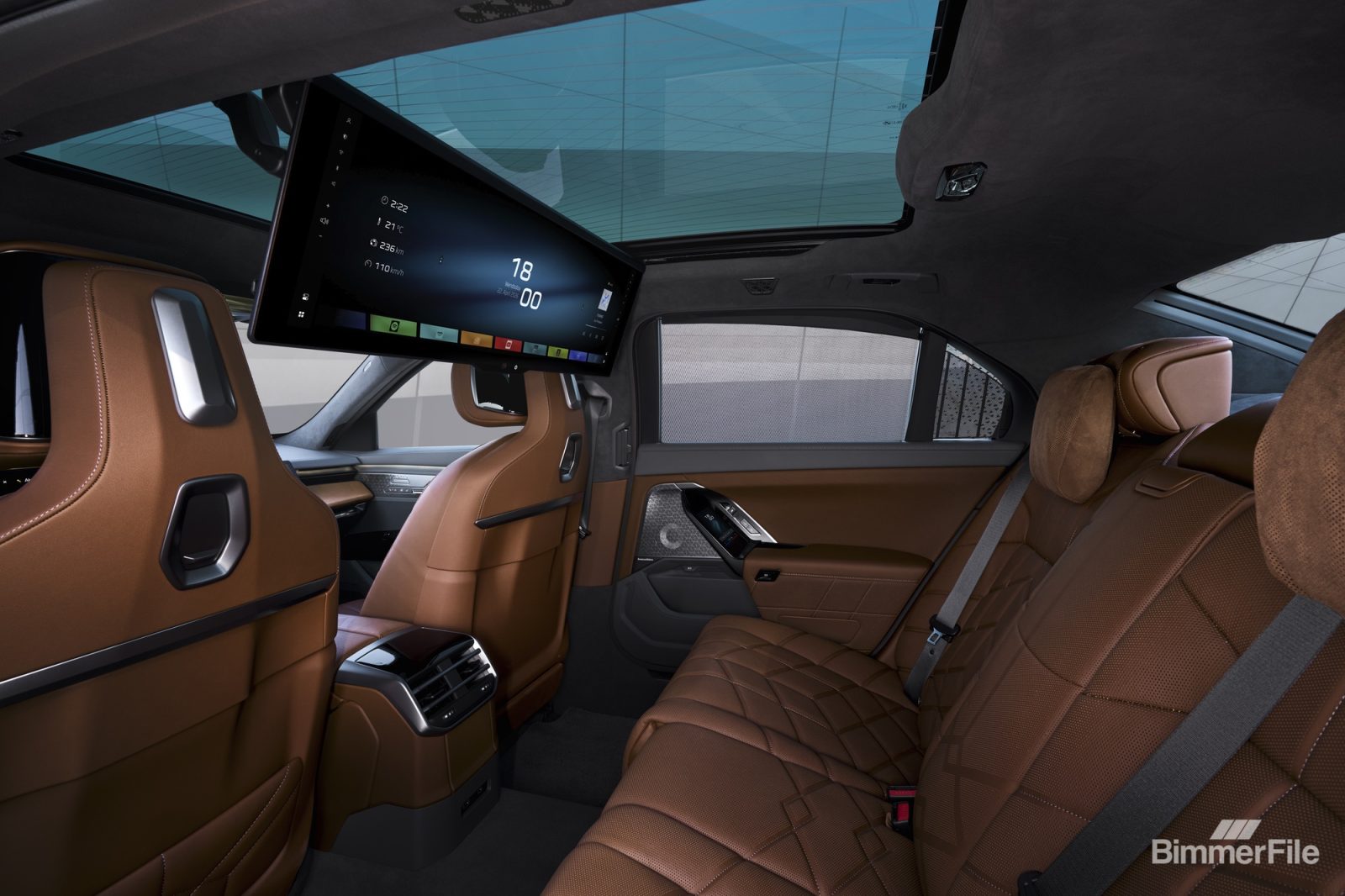
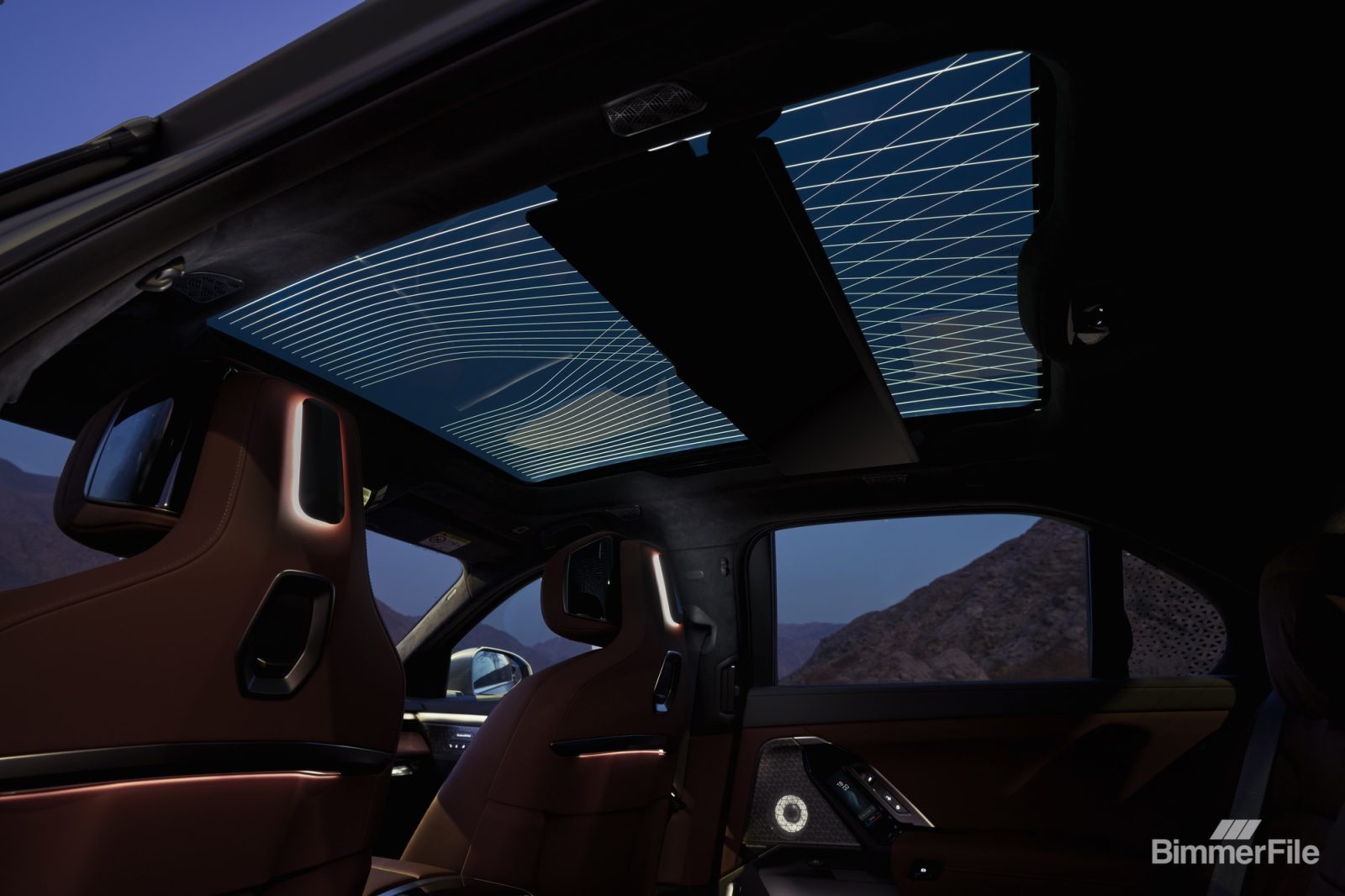
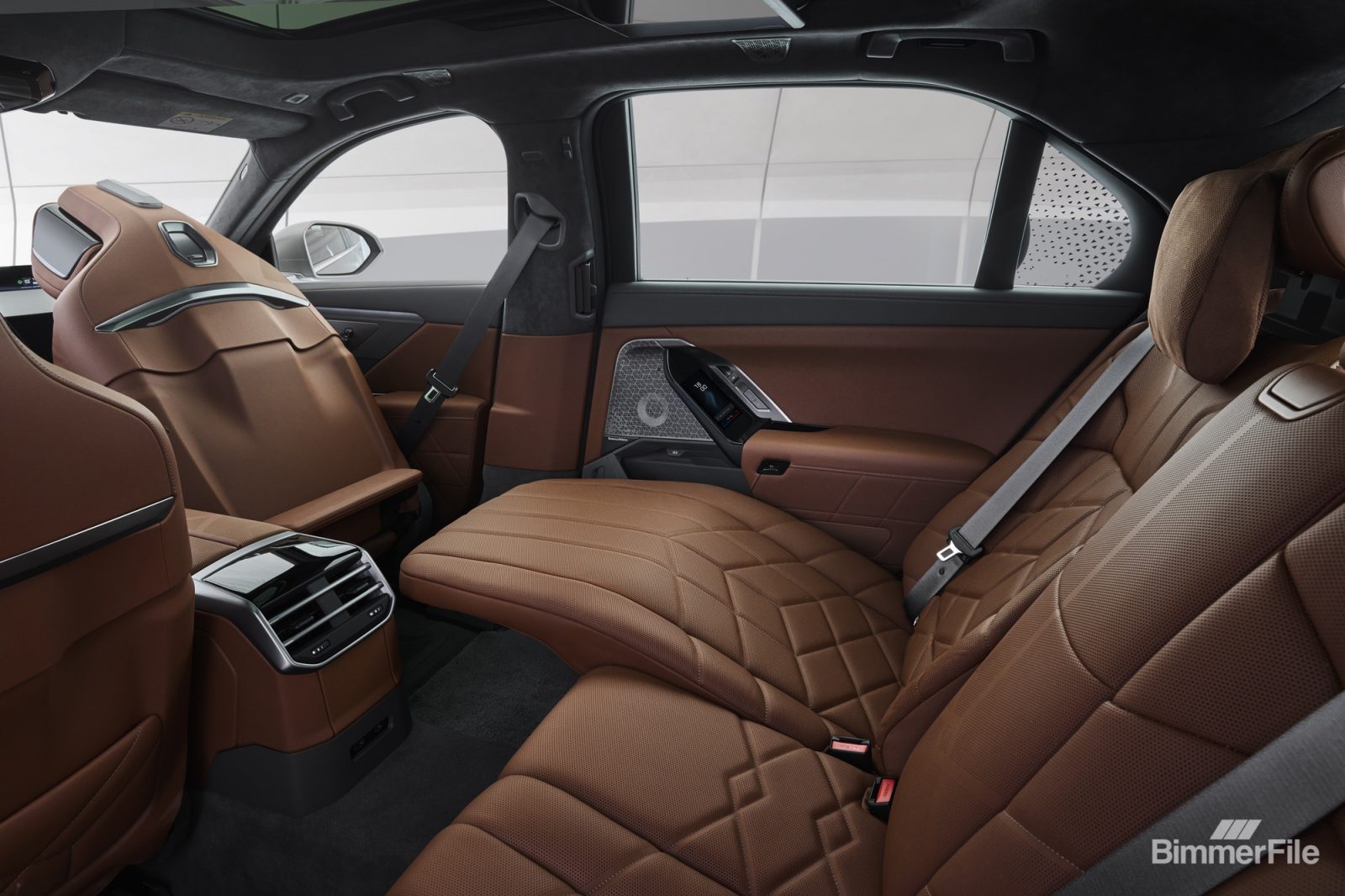
In the rear, that philosophy evolves further. The Theater Screen remains a defining feature, but it has matured into something genuinely useful. With integrated Zoom capability and Dolby Atmos audio, it supports both productivity and relaxation. The experience is choreographed, from lighting transitions to sound design, creating a space that adapts to how it is used.

Technology That Fades Into the Background

Underneath it all, the 7 Series moves decisively into software-defined territory. A new electronics architecture increases processing power while reducing complexity, allowing the car to evolve over time through updates rather than remain fixed.

This shift is felt in how the system behaves. The interface is more responsive, the assistant more natural, and the overall experience less dependent on explicit inputs. The technology does not present itself as a feature. It becomes part of the environment.
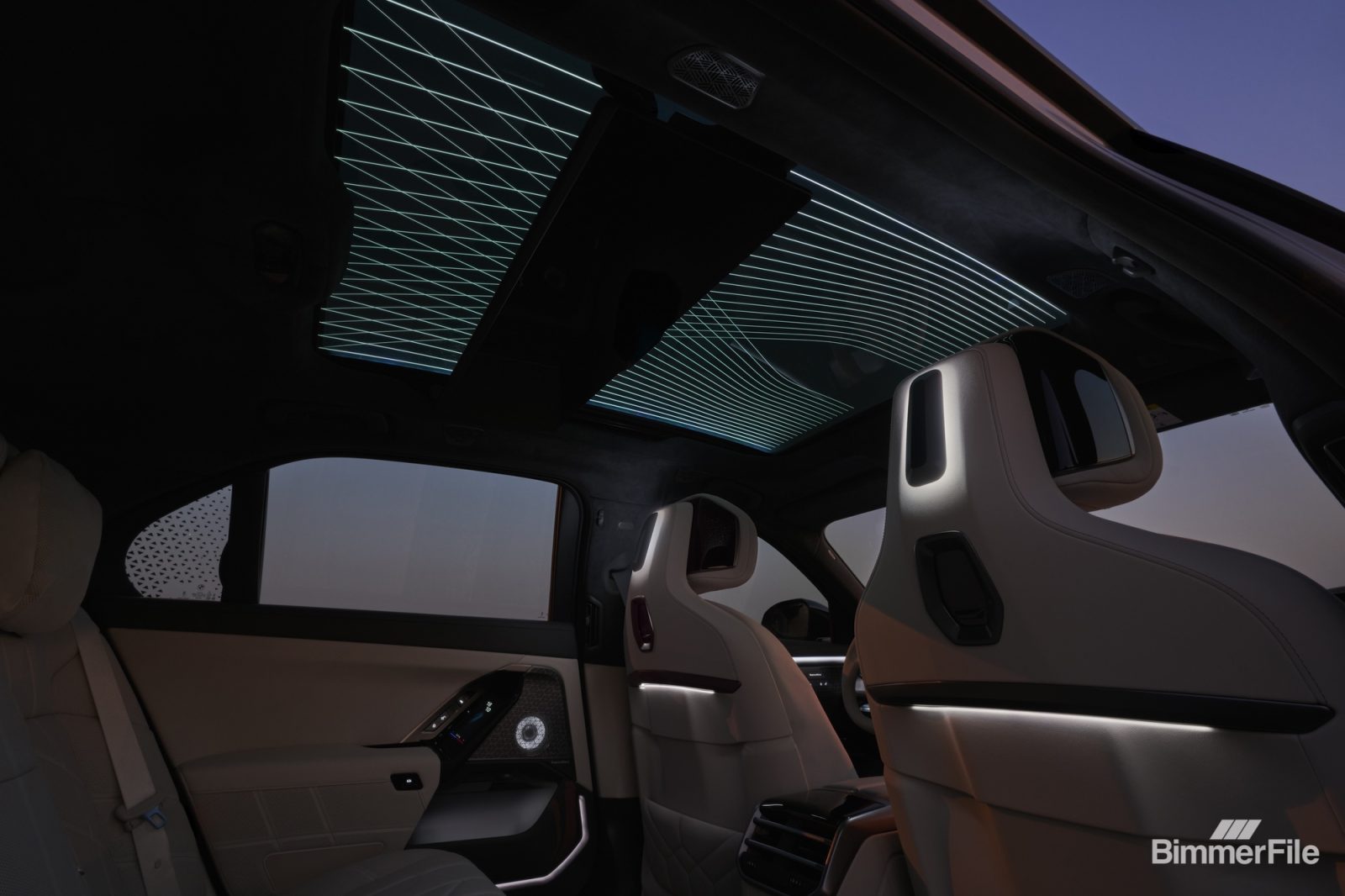
Powertrains, Performance, and Effortless Motion

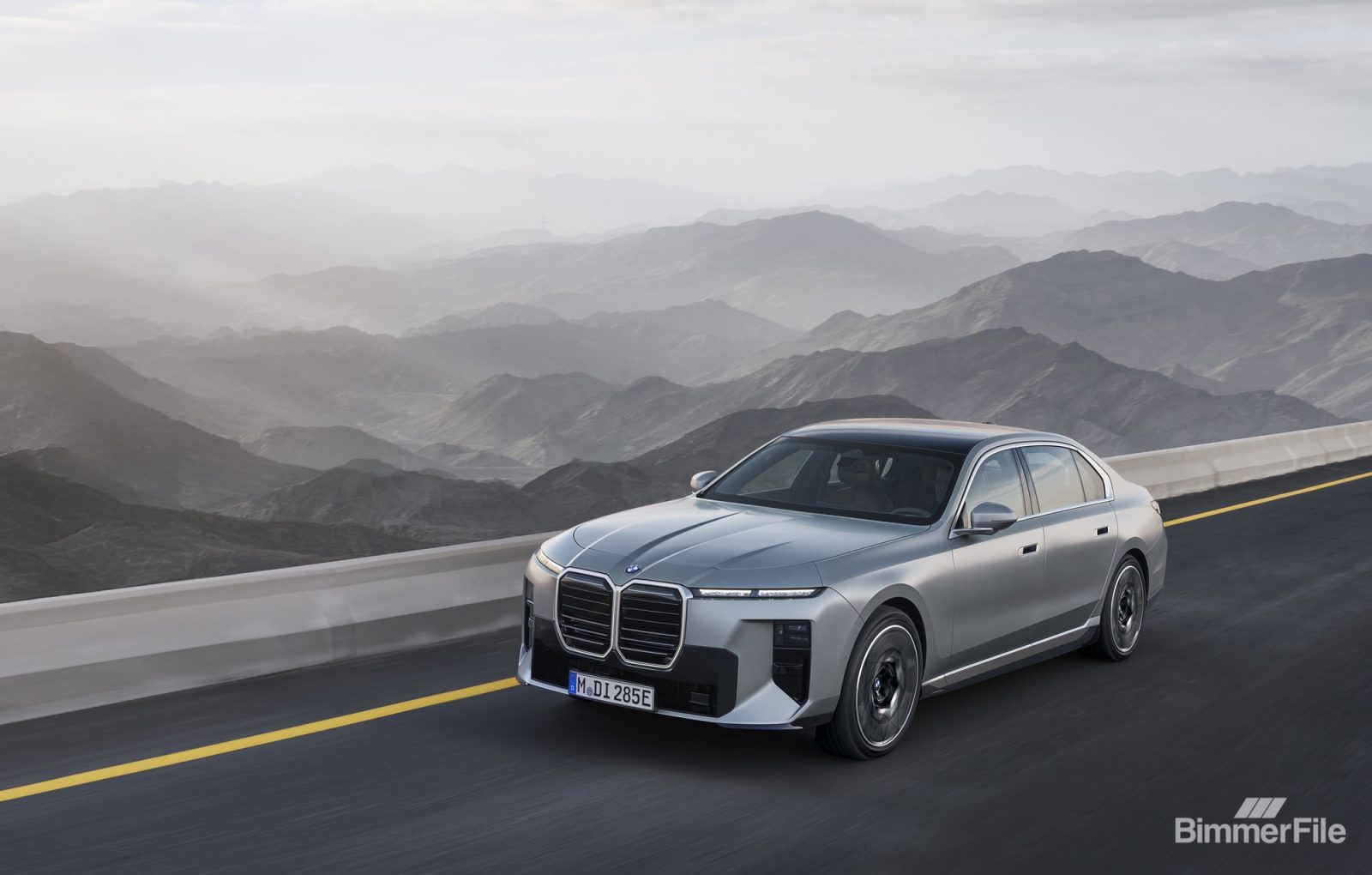
On the road, the electric i7 variants define the experience. Power arrives instantly and silently, delivered without drama and perfectly aligned with the car’s character. Acceleration feels seamless rather than aggressive, reinforcing a sense of effortlessness.
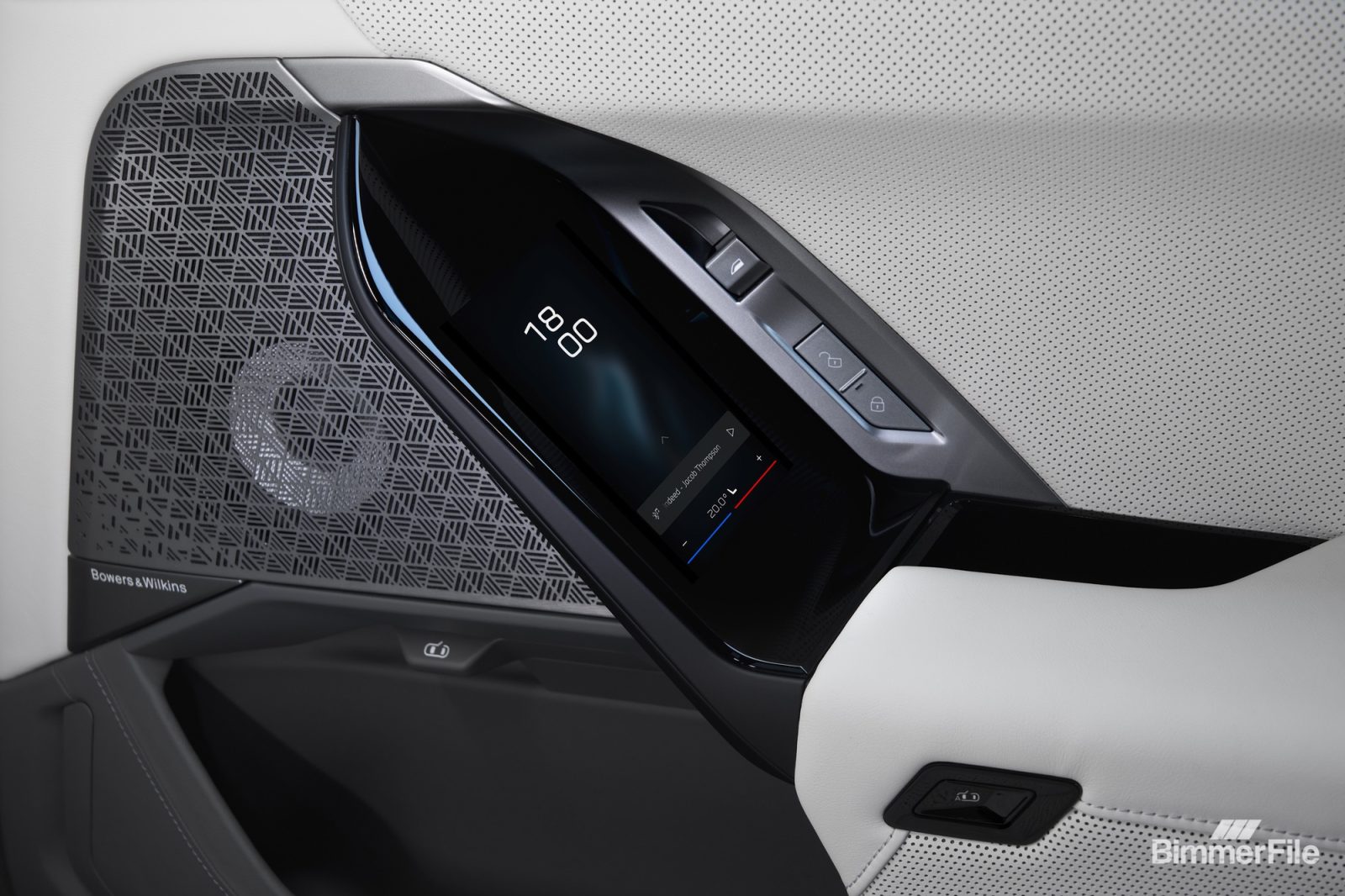
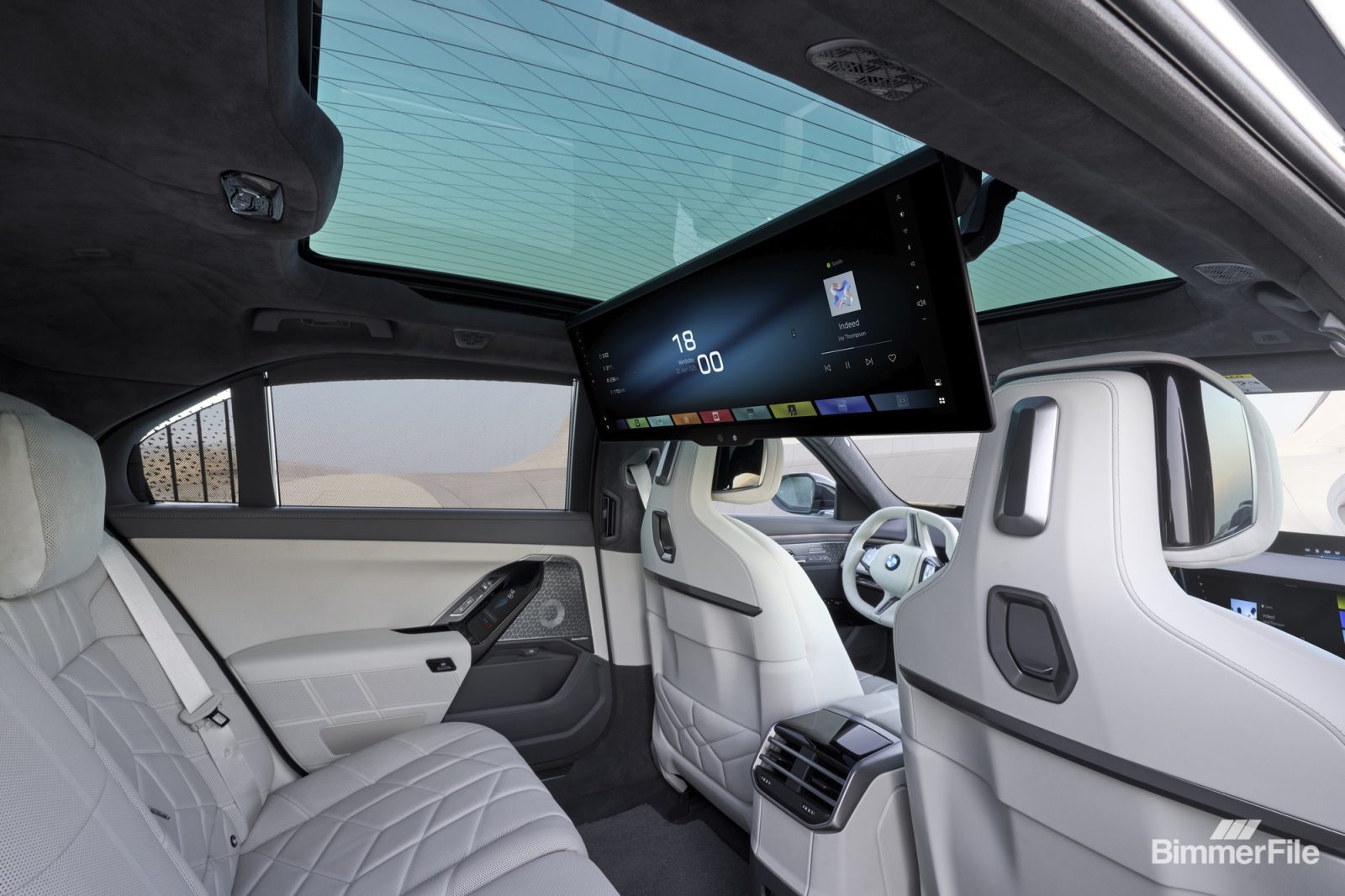
The move to cylindrical battery cells increases energy density and extends range, but the more important change is consistency. The car feels complete, not constrained. Charging, too, becomes part of a seamless system, with faster speeds, smarter route planning, and predictive battery conditioning reducing friction in everyday use.

BMW continues to offer multiple drivetrains, from electric to combustion to plug-in hybrid. This is not indecision, but flexibility. The 7 Series is designed as a platform that supports different paths forward while maintaining a consistent flagship experience.

Despite its focus on comfort and technology, it remains a driver’s car. Adaptive chassis systems, active roll stabilization, and rear-wheel steering ensure composure and precision, preserving the brand’s core dynamic identity.

The New Definition of BMW Luxury

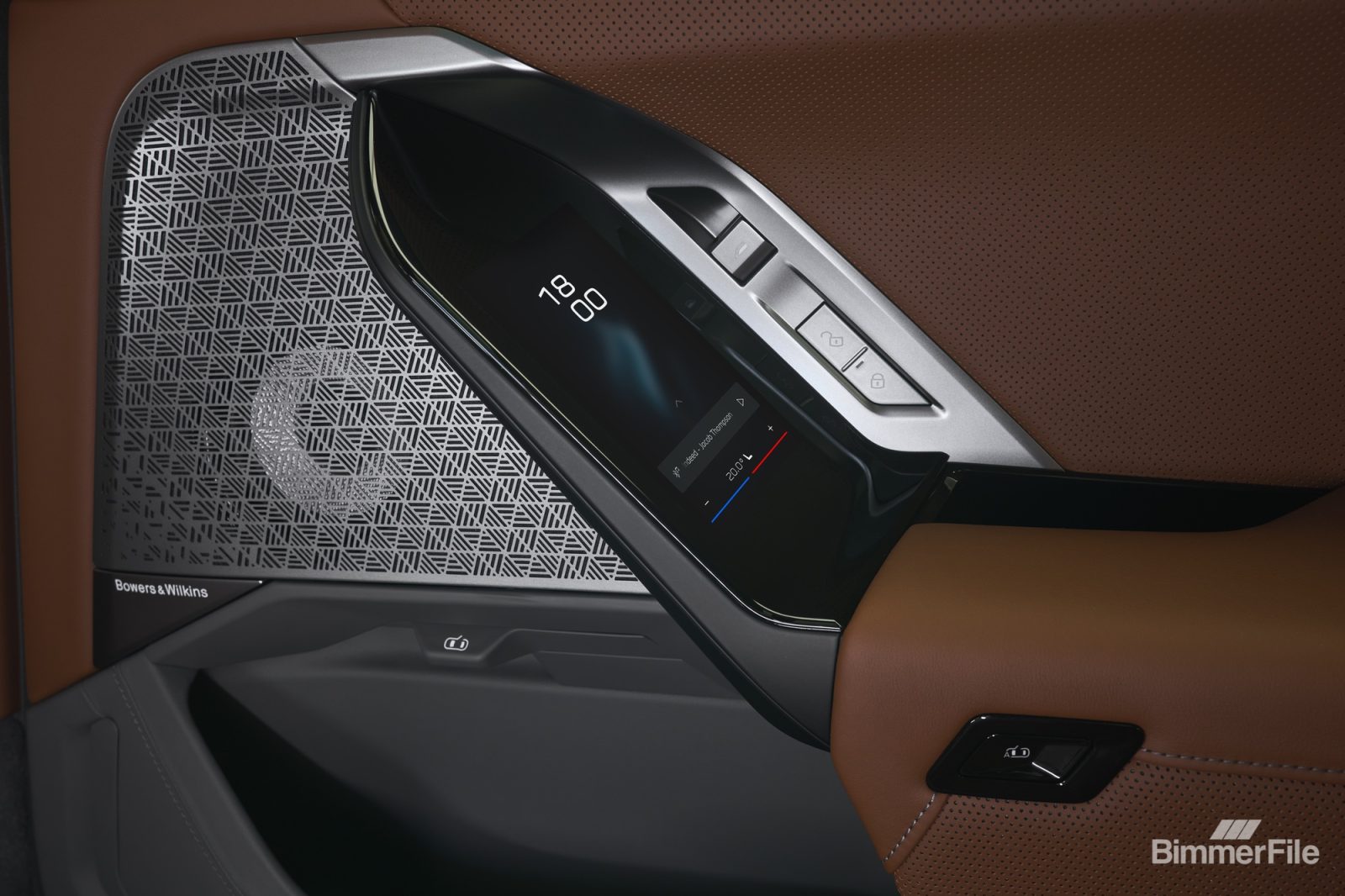
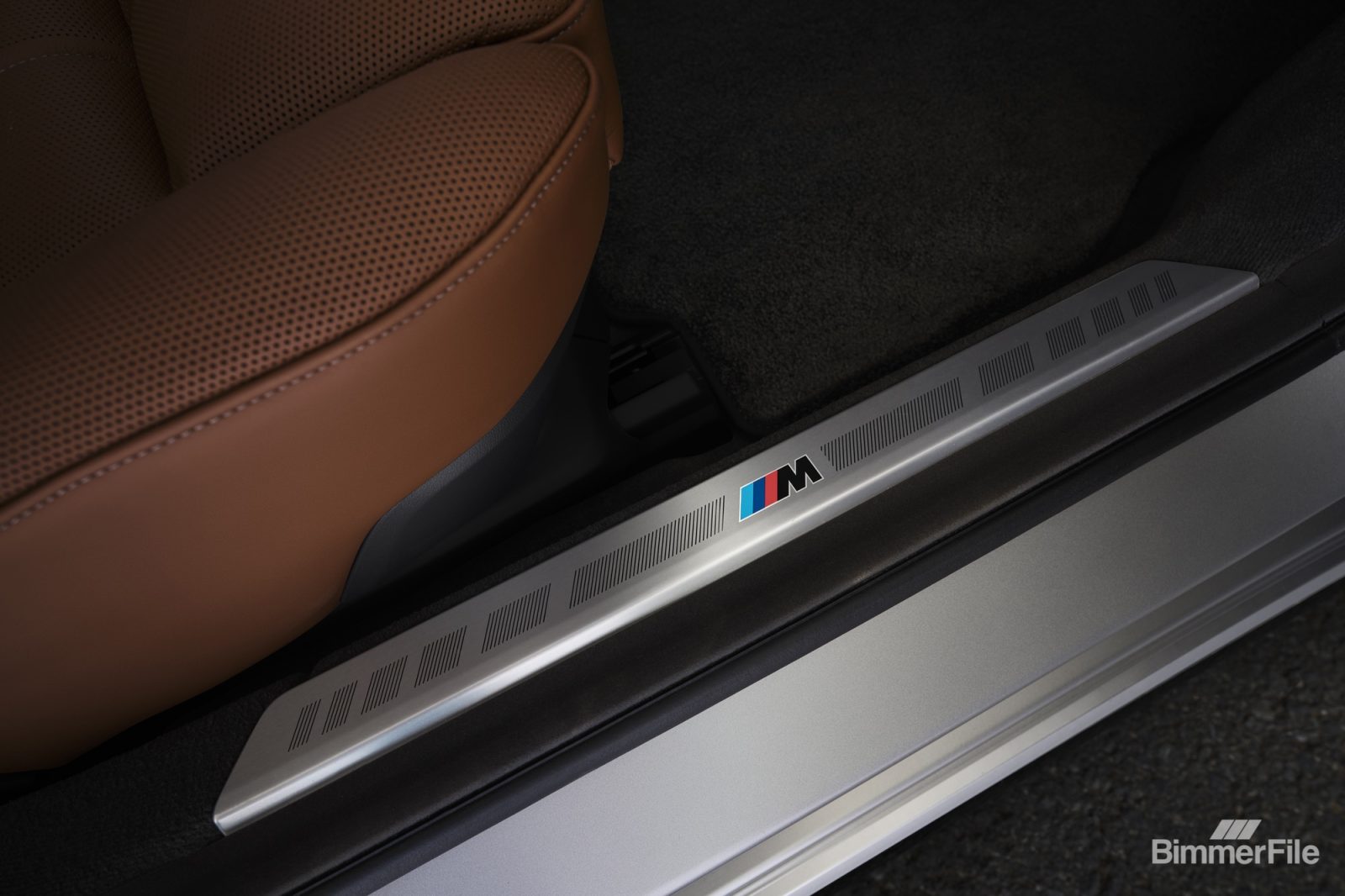
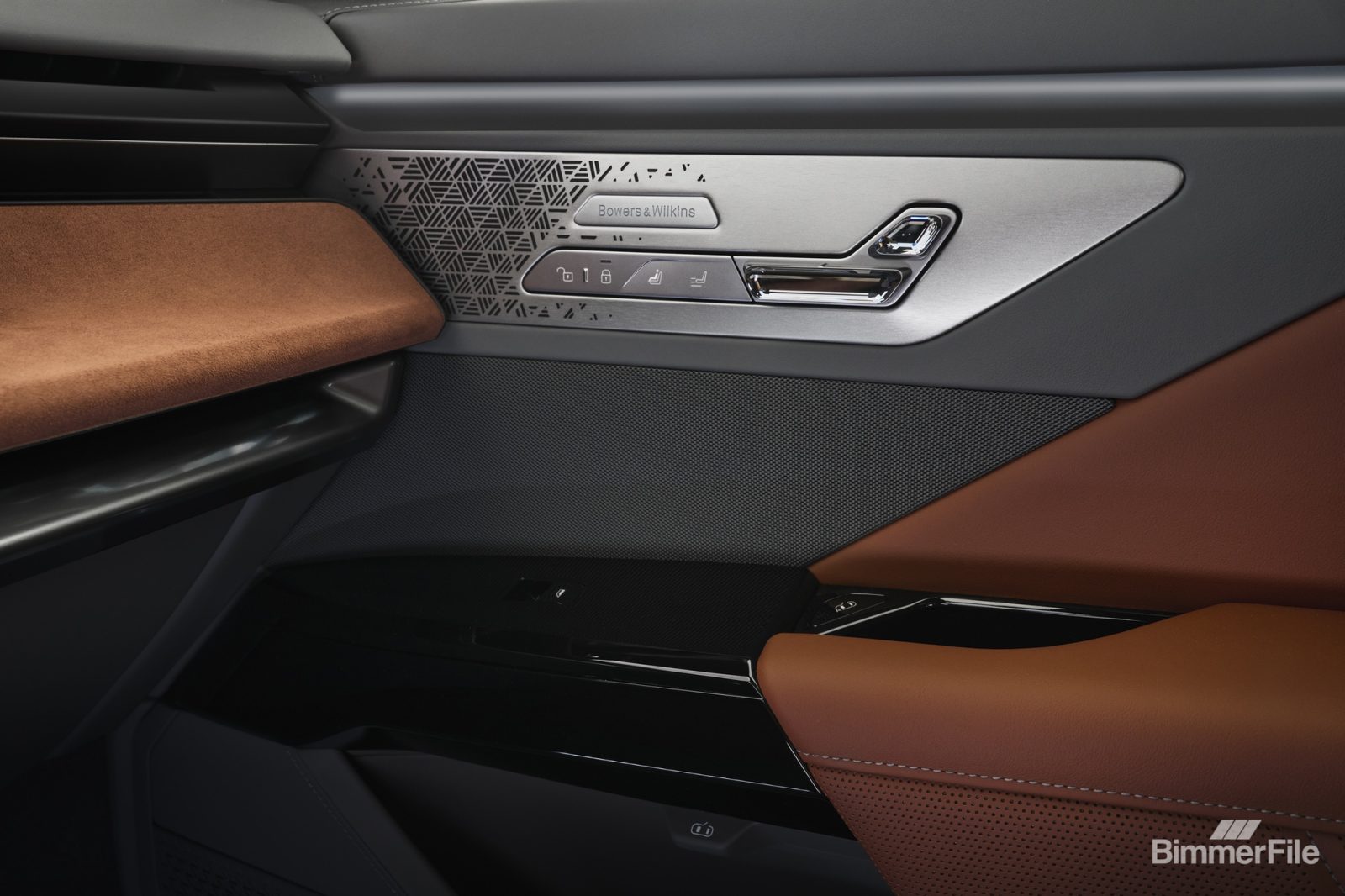
For all its digital capability, the 7 Series never loses its tactile foundation. Materials, textures, and physical interactions still matter. Glass elements, open-pore wood, and soft-touch surfaces provide essential contrast to the digital layers, grounding the experience in something tangible.

What ultimately defines this 7 Series is not any single feature, but the coherence of the whole. BMW is not chasing trends or overwhelming with innovation. It is integrating technology into luxury in a way that feels measured, intentional, and complete.

The result is a flagship that does not need to announce itself loudly. It simply exists with confidence, setting a new baseline for what BMW believes luxury should be.

2027 BMW 7 Series Gallery


Source link

Ferrari Luce EV prices could start at around $650,000

0
Ferrari Luce EV prices could start at around 0,000


The Ferrari Luce is all set to be unveiled next month. Now, a new report has emerged, claiming that the preliminary price of Ferrari’s first-ever electric car will be €550,000, which is approximately $647,000.

The Ferrari Luce, most certainly, won’t be cheap. It’s a Ferrari after all, and the brand isn’t chasing volumes. The Luce is likely to be positioned at the higher end of the performance EV range, way above the Porsche Taycan Turbo GT and Tesla Model S Plaid.

Ferrari Luce EV interior-1

Based on the Elettrica EV platform, the Luce will be equipped with two electric axles. The front axle delivers 282 hp and up to 3500 Nm to the wheels. The rear axle delivers 831 hp and 8000 Nm in Performance Launch mode, for a combined output of over 1100 hp.

Ferrari claims, the Luce will be capable of accelerating from 0-62 mph in 2.5 seconds, while its top speed will be pegged at around 193 mph. The 122 kWh battery will give it a range of around 530 km.

Source: Bloomberg / Image courtesy: @avarvarii


Source link

Best Small Chainsaw – 25cc VEVOR Chainsaw Review

0
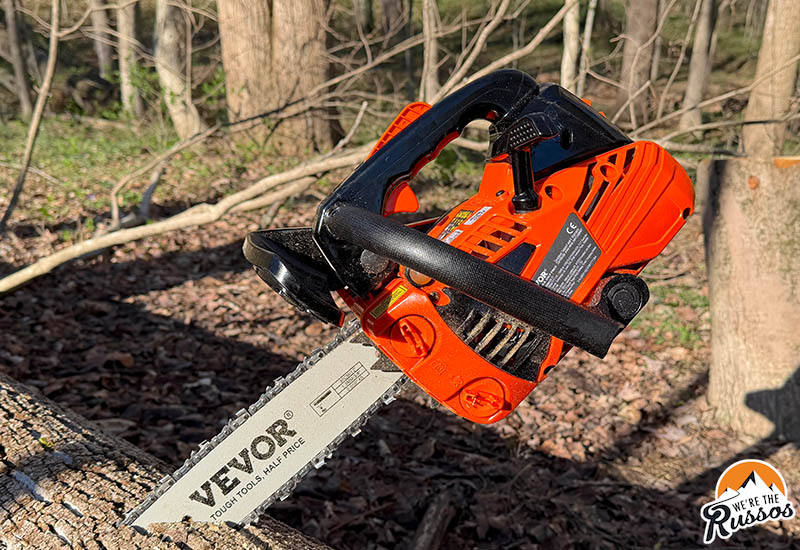
Best Small Chainsaw – 25cc VEVOR Chainsaw Review


Unboxing and First Impressions

For a sub-$100 chainsaw , I wasn’t expecting much—but the package actually came pretty complete:

  • Tool kit including a file to sharpen the saw blade
  • Bar cover
  • Gas mixing container (for 40:1 fuel)
  • Funnel
  • Earplugs

Assembly was straightforward. Installing the bar and chain took just a few minutes, and should be fairly simple for anyone even if you’ve never done it before.

Out of the box, the saw started after just a couple pulls and idled well. The start-up procedure is the same as most chainsaws – engage the chain brake, turn the kill switch to the on position, prime the full bulb until you see fuel, pull the choke out, pull the starter cord until you hear a pop from the engine, push the choke all the way in and pull the starter cord again until it starts.

After getting the VEVOR small chainsaw started, I let it warm up for a while and once warm, I noticed something when I pulled the trigger to rev the motor – the saw would bog down before climbing into higher RPMs.

At first I thought maybe the chain brake was partially engaged, but that wasn’t it since I was able to rotate the chain freely by hand. That meant there was an issue with the way the carb was tuned from the factory.

Instead of adjusting it immediately, I started cutting with it and ran a few tanks of 40:1 pre-mixed gas through to let everything break in. After some use, it did smooth out a bit, but the bogging was still there and seemed to have gotten a bit worse. So I grabbed a set of carb tuning tools and spent a few minutes dialing it in. That completely fixed the issue.

Now the saw is instantly responsive when you hit the trigger.


Source link

This Handbuilt BMW-Based Gran Turismo Does 300 km/h and Costs €369,000

0
This Handbuilt BMW-Based Gran Turismo Does 300 km/h and Costs €369,000


Article Summary

  • The Bovensiepen Zagato is built on the G83 BMW M4 Convertible platform, retaining the donor car’s structure under an all-new carbon fiber body — and its absence of B-pillars tells the whole story.
  • The S58 engine is tuned to 611 hp and 700 Nm, making it quicker to 100 km/h than even the M4 CS, with a 300+ km/h top speed.
  • Priced at €369,495, limited to 99 units, and fully configurable via bovensiepen-configurator.com, with first deliveries targeted for Q3 2026.

Bovensiepen has launched a configurator for its Zagato coupe and released official pricing: €369,495 ex-works Buchloe including 19% VAT. The car is limited to 99 examples worldwide, with first deliveries targeting Q3 2026.

The Bovensiepen Zagato is a handbuilt Gran Turismo developed by the family-run Buchloe-based company in collaboration with the historic Milan design house Zagato. The body is made almost entirely of carbon fiber, assembled from over 400 individual parts over more than 250 hours of build time per car.

Powered By The S58 Engine

BOVENSIEPEN ZAGATO S58 Engine

Beneath the carbon hood, the Zagato uses BMW’s S58 3.0-liter twin-turbo inline-six, reworked with a redesigned intake and exhaust system and new turbos. A 22 kg titanium Akrapovič exhaust is part of the package. Output is rated at 449 kW (611 hp) and 700 Nm — an increase of 79 hp and 50 Nm over the standard M4 Convertible. The sprint to 100 km/h takes 3.3 seconds, which is 0.4 seconds quicker than the G83 and a tenth quicker than the M4 CS. Top speed is listed at over 300 km/h. Since the car is based on the M4 Convertible, it comes exclusively with all-wheel drive and an automatic gearbox.

Buyers configure their car through the newly launched bovensiepen-configurator.com, where every detail can be tailored to order. Options include the Lavalina full leather interior — a bi-color interior treatment that requires over 130 hours of handwork on its own — exterior accents in clear-coated carbon fiber, and brake calipers in custom colors with milled Bovensiepen lettering.

The BMW M4 Convertible You’ll Never Recognize

BOVENSIEPEN ZAGATO THE QUAIL 2025 23

The company debuted the car in May 2025 at the Fuori Concorso event on Lake Como — a fitting venue given the Zagato connection. The Bovensiepen Zagato is built on the G83 BMW M4 Convertible — a deliberate choice. Bovensiepen chose the drop-top as the base because it didn’t want a B-pillar, which detracts from the experience of driving a fancy coupe. The result is a pillarless hardtop coupe wearing an entirely new carbon fiber skin over the donor car’s original structure.

That dual-layer approach is intentional. Removing the BMW panels would have required re-homologating the car as an entirely different vehicle — a costly process for a newly founded company. Keeping the OEM panels also means the coupe is just as safe as its BMW counterpart. Despite the added bodywork, the Zagato weighs 1,875 kg — about 50 kg lighter than the G83, thanks to ditching the convertible’s bulky roof mechanism.

BOVENSIEPEN ZAGATO VERDE MASONI 01

All design and engineering work, along with manufacturing and customization, is done at the Buchloe factory. The Zagato is Bovensiepen’s first model. Additional models are described as being in development.

The Bovensiepen Family and the ALPINA Connection

The Bovensiepen name will be familiar to anyone who followed ALPINA. Founded by Burkard Bovensiepen and guided into the modern era by his son Andreas, the small Buchloe-based company built some of the most characterful performance BMWs ever made. When BMW officially acquired ALPINA in 2022, many wondered what Andreas would do next. The answer is this car.

Here is our exclusive ride in the Bovensiepen Zagato.


Source link

Geely Preface, Xingyue L i-HEV – 1.5L hybrid, 1-speed DHT, up to 25.1 km/l; tech coming to Proton hybrids?

0
Geely Preface, Xingyue L i-HEV – 1.5L hybrid, 1-speed DHT, up to 25.1 km/l; tech coming to Proton hybrids?


Geely Preface, Xingyue L i-HEV – 1.5L hybrid, 1-speed DHT, up to 25.1 km/l; tech coming to Proton hybrids?

Following on from its announcement of a new i-HEV hybrid powertrain, Geely has now launched the first models fitted with the system in China – the Preface and Xingyue L (Monjaro in export markets) i-HEV. This system essentially brings Geely’s know-how from its plug-in hybrid models to more conventional self-charging hybrids, like the ones found in Japanese rivals.

Just like the eMas 7 PHEV, it uses an 11-in-1 single-speed dedicated hybrid transmission (DHT) that integrates the electric motor. The latter powers the car most of the time, with the engine – a hybrid-specific BHE15 1.5 litre four-cylinder – being used to charge the battery. However, the combustion mill can also clutch in to provide motive power at higher speeds where it is most efficient, similar to Honda’s e:HEV hybrids.

We should point out that the powertrains in the Preface and Xingyue L are not exactly the same. The sedan uses a detuned electric motor producing 190 PS (140 kW) and 240 Nm of torque, juiced by a 111 PS/136 Nm naturally-aspirated mill.

Geely Preface, Xingyue L i-HEV – 1.5L hybrid, 1-speed DHT, up to 25.1 km/l; tech coming to Proton hybrids?

Those outputs from the four-banger, by the way, are the same as those in the Chinese-market Galaxy Starship 7, which in turn is more powerful than the eMas 7 PHEV. It’s unclear if this engine is the latest version with a claimed thermal efficiency of 48.41%, vis-à-vis the Galaxy Starship 7’s 47.26%.

Meanwhile, the Xingyue L uses the Galaxy Starship 7’s electric motor (confused yet?) for the full 238 PS (175 kW) and 262 Nm. This motor – and the larger, heavier SUV body – obviously needs more electricity, so the ICE instead gets a turbo and makes 163 PS and 255 Nm.

The i-HEV’s positioning is complicated by the fact that the Preface and Xingyue L are both already offered with a hybrid powertrain, utilising the aforementioned turbo mill, a torquier 136 PS/320 Nm electric motor and a more complex three-speed DHT tuned to provide greater performance.

Geely Preface, Xingyue L i-HEV – 1.5L hybrid, 1-speed DHT, up to 25.1 km/l; tech coming to Proton hybrids?

The efficiency gains are minimal to say the least, with the Preface i-HEV boasting a WLTP-rated fuel consumption figure of 3.98 litres per 100 km (25.1 km per litre), versus 4.22 litres per 100 km (23.7 km per litre) for the existing Preface Hybrid. The difference is even slimmer for the Xingyue L i-HEV, achieving 4.75 litres per 100 km (21.1 km per litre) as opposed to the Hybrid’s 4.79 litres per 100 km (20.9 km per litre).

As expected, the main benefit is cost. With less moving parts, the Preface i-HEV is priced starting from 107,700 yuan (RM62,400), significantly lower than the 126,700 yuan (RM73,500) Preface Hybrid. Meanwhile, the Xingyue L i-HEV starts from 148,700 yuan (RM86,200), compared to 167,700 yuan (RM97,200) for the Xingyue L Hybrid.

The i-HEV powertrain will next be offered in the fifth-generation Emgrand (the successor to the car that spawned the Proton S70) and the Boyue (formerly known as the Boyue Cool). The Emgrand was the one that managed to hit 2.22 litres per 100 km (45 km per litre) in a highway test, as certified by Guinness World Records. With parts being shared with the eMas 7 PHEV, could we see the i-HEV system making its way to Proton’s hybrid models that were announced in late 2025 and set to arrive as soon as this year?

GALLERY: Geely Preface i-HEV

GALLERY: Geely Xingyue L i-HEV

Looking to sell your car? Sell it with Carro.


Source link

Top Picks for Every Style

0
Top Picks for Every Style


WHETHER it’s in your budget or you’re just curious, exploring the best luxury RVs is natural — and some might not be as expensive as you think. These luxury RV campers are designed for more than just comfortable travel. They’ll turn any destination into a lavish “glamping” experience.

From luxury fifth wheel trailers to full-size luxury motorhomes, let’s dive into the most luxurious campers for travelers who want it all.

Key Takeaways

  • Diverse Options: Luxury RVs span every category—from iconic trailers and massive fifth wheels to million-dollar Class A diesel pushers—characterized by residential-grade appliances, spa-like bathrooms, and advanced automation.
  • Premium Features and Design: Beyond high-end finishes like heated floors and handcrafted cabinetry, modern luxury RVs prioritize innovation and tech, featuring self-deploying patios, mini-split HVAC systems, and solar arrays for off-grid “glamping.”
  • Performance vs Practicality: While these rigs offer “glamping” comforts and off-grid capabilities, owners must navigate trade-offs, including limited campground access due to their size, the need for heavy-duty tow vehicles, and more complex maintenance.

What Is a Luxury RV?

why-choose-guide-to-luxury-rvs-06-2022
Image by Camping World

The top-rated luxury RVs aren’t necessarily defined by RV types. For example, there are luxury fifth wheels, travel trailers, toy haulers, and all types of motorized RVs. Some of their common traits include:

  • Spacious floor plans, usually with multiple slide-outs
  • Top-of-the-line RV furniture
  • Advanced control systems and entertainment options
  • Handcrafted cabinetry and residential appliances
  • Spa-like bathrooms
  • Unique amenities (self-deploying side patios, mini split HVAC systems, etc.)

Luxury RVs also tend to feature premium construction materials and components, such as upgraded suspension systems, improved shock absorption, and increased ground clearance. Many also include larger solar charging systems, outdoor kitchens, and more capable climate control. Today’s top luxury camper brands continue to raise the bar for what these rigs can offer.

Picks For The Best Luxury RVs

Whether you’re actively shopping for the best luxury RV or just craving a taste of decadence, check out these top picks from the industry’s finest luxury RV manufacturers:

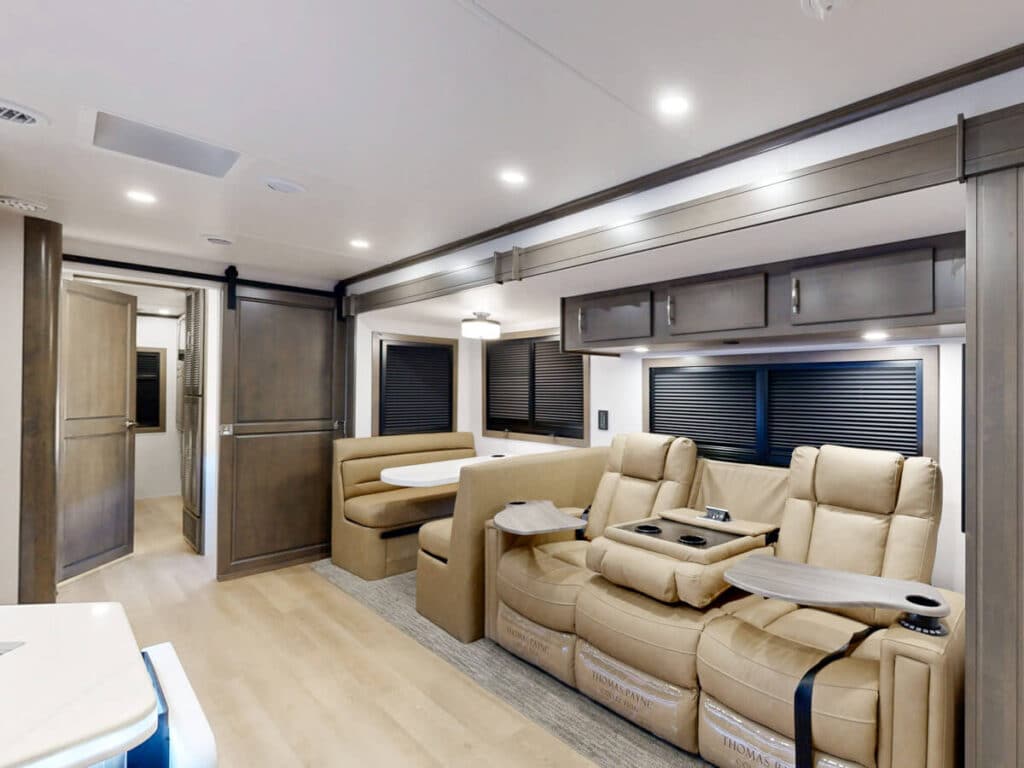
Fifth Wheel RV: Axiom Imperium

Images by Axiom RV

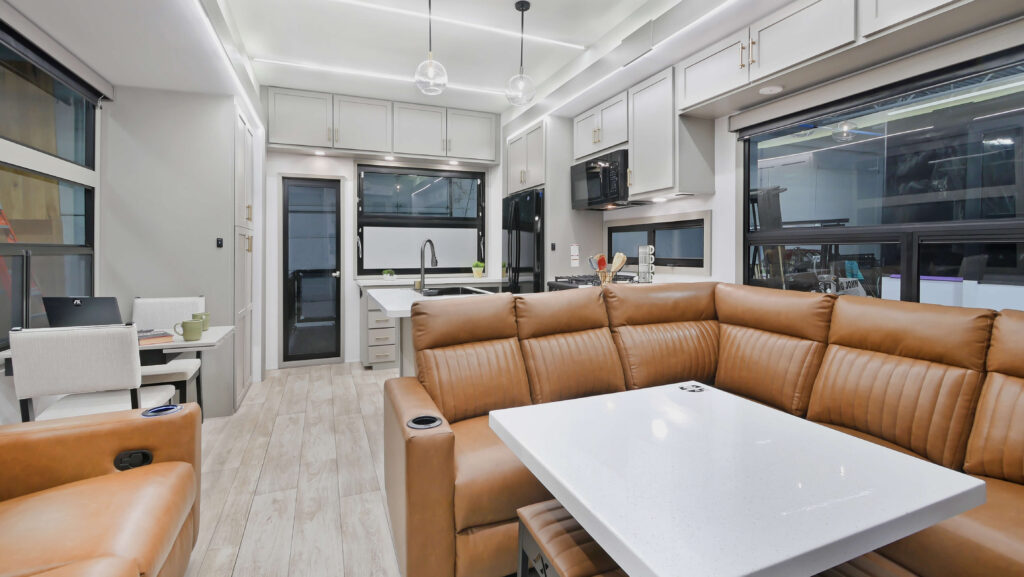
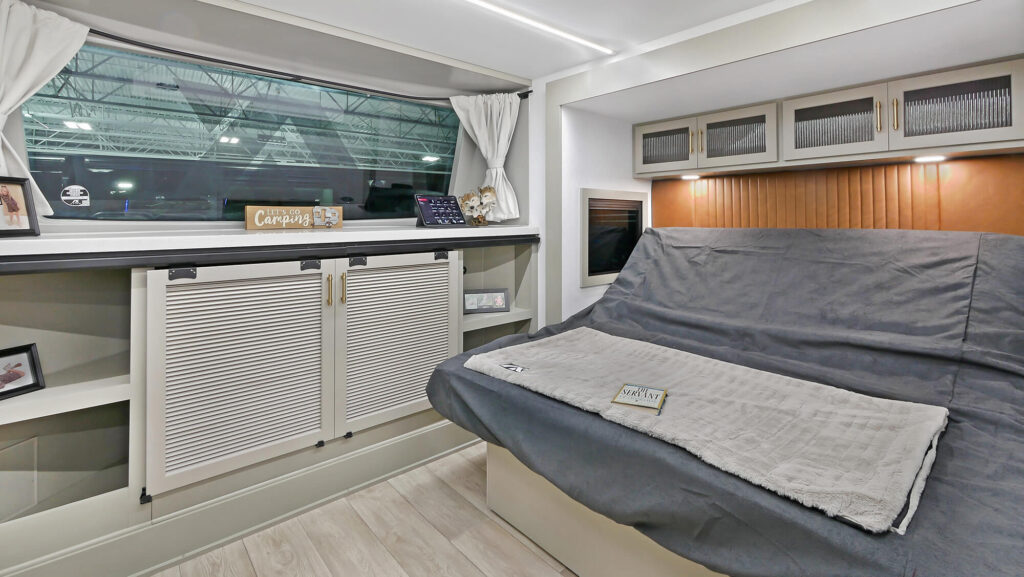
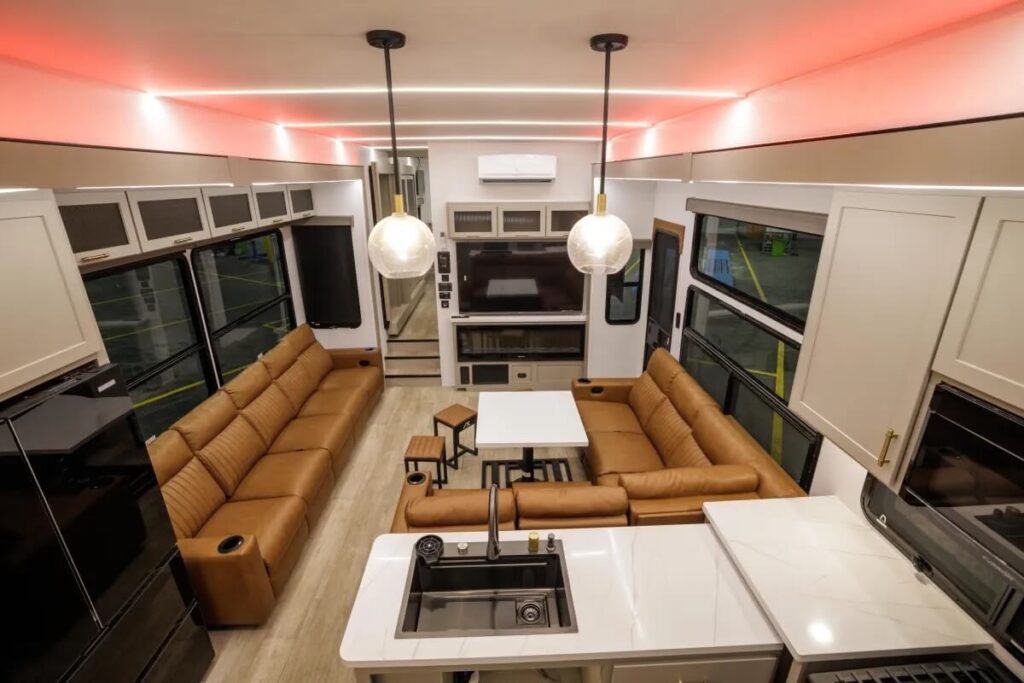
Designed by RV veterans who listened to years of customer feedback, the Axiom Imperium delivers expansive living, bold innovation, and residential comfort for full-timers and family travelers alike.

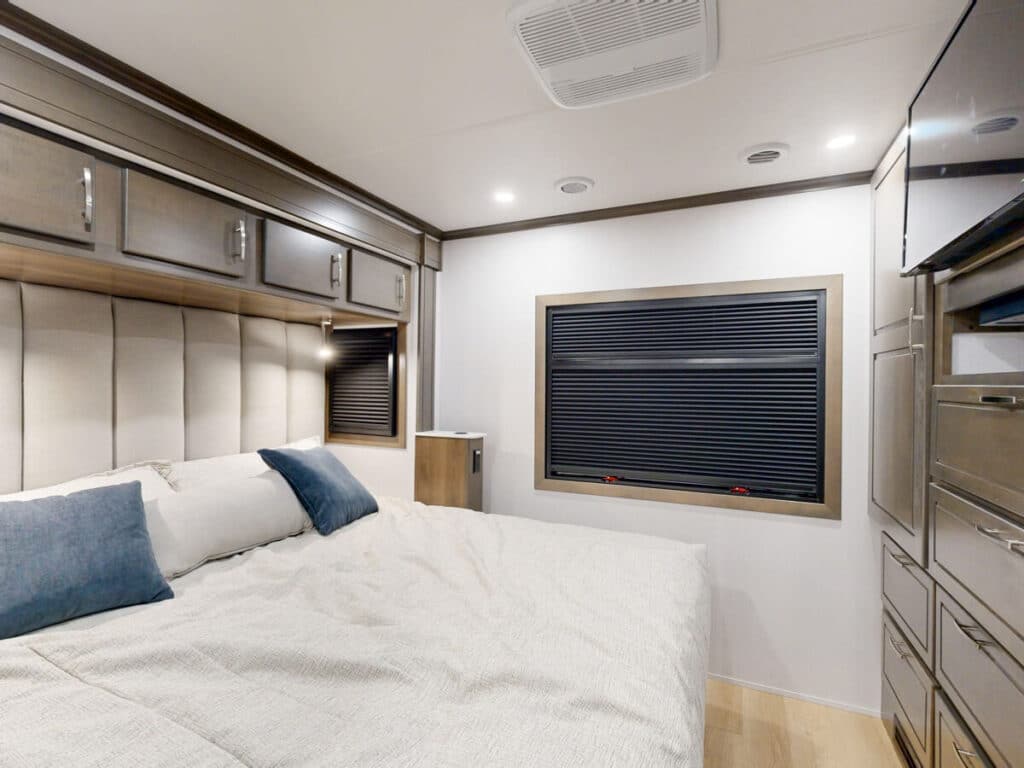
For 2026, three flagship floor plans lead the lineup. The I2900RK features an exclusive U-shape living area that seats up to 18 people—ideal for entertaining—along with panoramic windows, a king-size bedroom suite with dual opposing slides, a patent-pending rear-mounted generator option, and a massive rear kitchen. At 34 feet with four slide-outs, it packs residential luxury into a manageable footprint.

The I3800RPMS pushes the envelope further with an industry-first self-deploying side patio off the bedroom, a second rear patio, an innovative front bathroom with a front cap window, the option for side-by-side washer and dryer units, and a central half bath—all in a 42-foot package.

For families who need even more room, the I3900 offers similar living room seating to its siblings but adds a second rear suite alongside the front king suite. It gives couples or multi-generational families truly private quarters under one roof. A loft above the rear suite adds additional sleeping or storage space, making the I3900 the most family-capable floor plan in the Imperium lineup. 

Whether you’re a couple seeking full-time luxury living or a family creating unforgettable road memories, the Axiom Imperium is built for more.

Other Options In Luxury Fifth Wheels

  • Forest River Riverstone – A premier line of luxury fifth wheels, floor plans feature up to five slide-outs, king bed suites, full-size French door refrigerators with ice makers, solid surface countertops, and hardwood cabinetry. The Riverstone Legacy adds full-body paint, advanced solar and HVAC systems, and enhanced performance features for the most discerning travelers.
  • CrossRoads Redwood – A sophisticated luxury fifth wheel known for spacious, residential-inspired interiors. Redwood floor plans are designed with full-timers in mind, featuring chef-quality kitchens, spa-like bathrooms, and premium finishes throughout.
  • Grand Design Solitude – Renowned for its spacious interiors and residential amenities, Solitude is designed for extended stays and full-time living. It offers features like large kitchen pantries, comfortable living areas, and high-quality finishes. Its commitment to quality and customer satisfaction makes it a favorite among luxury RV enthusiasts.
  • Keystone Montana – A longtime leader in the luxury fifth wheel category, Keystone Montana delivers residential comfort with full-time RVers in mind. Signature features include expansive slide-outs, large kitchen islands, and spa-inspired bathrooms. That combines solid construction and innovative tech like solar prep and in-command systems.

Travel Trailer: Airstream

Images by Camping World

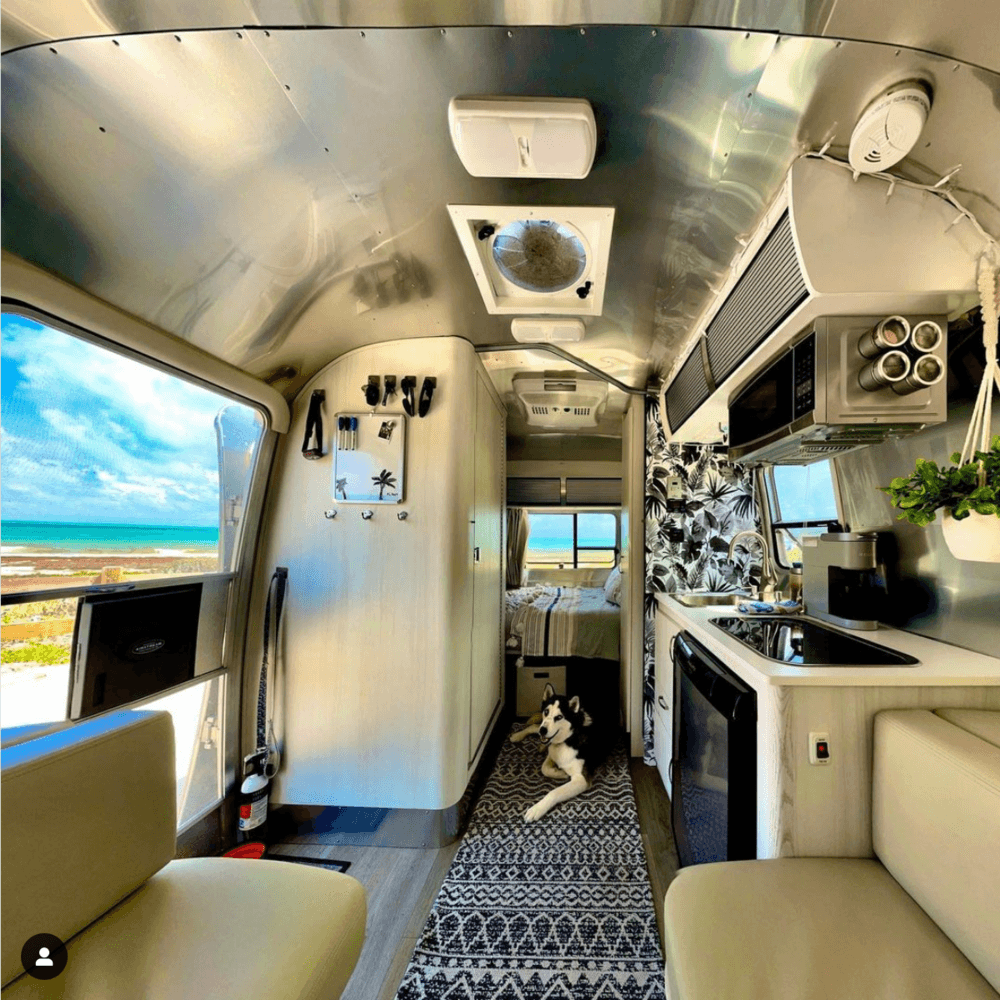
No luxury RV trailer carries more recognition—or road-tested credibility—than Airstream. With instantly recognizable riveted aluminum shells and aerodynamic silhouettes, Airstream travel trailers have turned campground heads for nearly a century. And while the look is timeless, the lineup has never been more diverse.

The Flying Cloud is the quintessential Airstream: lightweight, highly towable by half-ton trucks and full-size SUVs, and finished inside with Ultraleather® seating, seamless countertops, and handcrafted cabinetry. Floor plans range from 23 to 30 feet and sleep up to six.

Step up to the Globetrotter for a European-inspired design with premium two-tone interiors and refined finishes. The Classic is Airstream’s flagship—the most spacious and lavishly appointed brand in the lineup, with larger bathrooms and residential-grade upgrades throughout.

The International and Trade Wind offer clean, minimalist aesthetics with high-end materials at slightly more accessible price points. And for those who want something truly bespoke, the Flying Cloud Midnight Flamingo upgrade package and the Stetson+6666 collaboration model represent the pinnacle of Airstream craftsmanship.

Expect ducted climate control, Quietstream™ A/C with heat pump, USB and AC outlets, panoramic windows, memory foam mattresses, and an available solar package for adventures. Airstream builds for longevity—these trailers are designed to be passed down, not traded in.

Other Options in Luxury Travel Trailer

  • Rockwood Signature & Flagstaff Classic – Sister brands from Forest River, these luxury travel trailers deliver upscale finishes, residential-style kitchens, solid surface countertops, and premium furniture packages that punch above their weight class.
  • Wildwood Heritage Glen & Salem Hemisphere – Heritage Glen blends upscale design with practical livability, featuring wide-open layouts, solid surface kitchen counters, panoramic windows, and refined furniture packages—including a nearly 40-foot camper option for families who want maximum space. Salem Hemisphere adds a bolder exterior aesthetic with similarly well-appointed interiors.

Toy Hauler: Axiom Vendetta

Images by Axiom RV

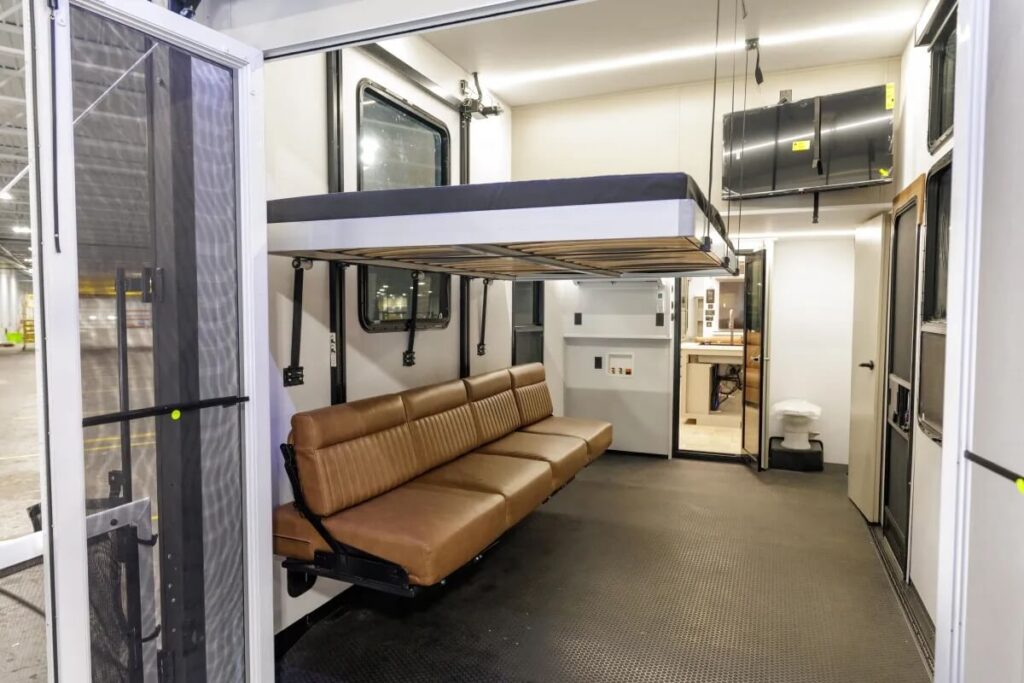
Designed to raise the standard for quality and innovation, the Axiom Vendetta doesn’t ask you to choose between rugged capability and refined comfort—these luxury toy haulers deliver both.

The headline spec is the class-leading 9’10” interior ceiling height, which creates a truly residential feel throughout. With a triple-axle configuration and a 27,000-pound GVWR, the Vendetta is built to haul serious gear without compromise. Sleeping capacity reaches up to 12 guests.

Inside, 12 reclining leather chairs anchor a living room with dual opposing slide rooms that boast an outstanding 8‘6” slide box height, creating a living space that rivals high-end motorhomes. Patent-pending generator mount and mini-split HVAC systems combined to increase pass through storage, off-grid capability, and class-leading heating and cooling efficiency. 

For serious adventurers and large families who refuse to settle, the Axiom Vendetta redefines what the best toy haulers can be.

Other Options in Luxury Toy Hauler

  • Grand Design Momentum M Class – One of the most popular premium toy haulers on the market, the Momentum M Class combines an oversized garage with a beautifully appointed living space. Expect residential appliances, theater seating, full-body paint options, and thoughtful storage.
  • Keystone Raptor – A rugged toy hauler fifth wheel built for serious adventurers who also love smart, refined touches. The Raptor features spacious garages, upscale living areas with premium furniture, residential kitchens, and multiple slide-outs.

Class A RV: Tiffin Allegro Bus

Tiffin Allegro Bus best luxury class a rv
Image by Tiffin & Camping World

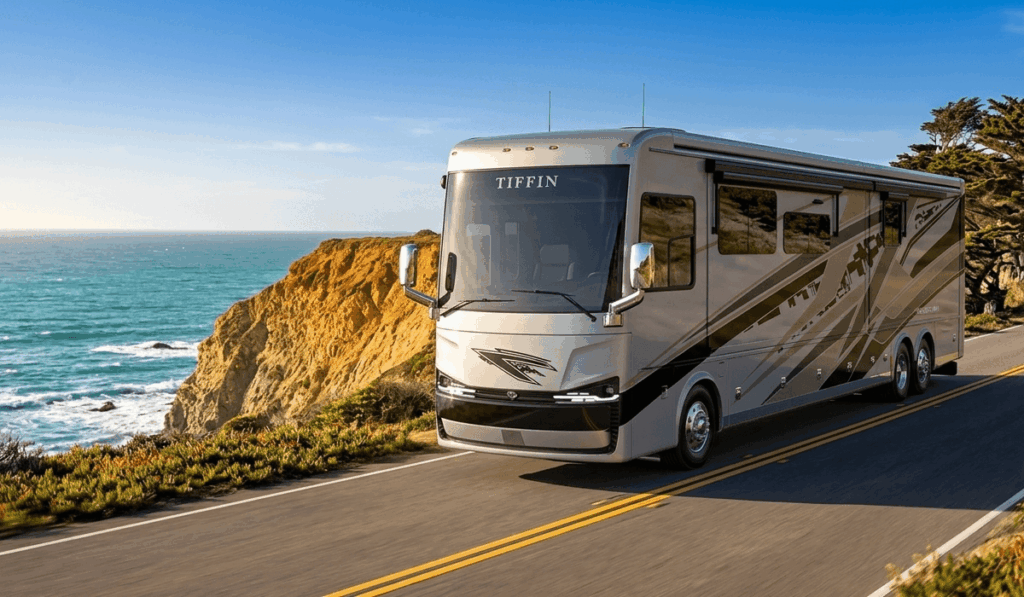
The Tiffin Allegro Bus represents the pinnacle of luxury Class A RV design from one of the most respected names in the industry. Handcrafted in Red Bay, Alabama, each Allegro Bus reflects Tiffin’s deep-rooted commitment to quality, innovation, and owner support—values that have defined the brand since its earliest models.

The standard Tiffin Allegro has long been a favorite for its reliability and comfort. The Allegro Bus takes that foundation and elevates it. Built on Tiffin’s proprietary PowerGlide® chassis—with a Spartan® K2 chassis also available—it delivers up to 450 horsepower and features air-ride suspension for a smooth, composed highway ride.

Inside, the Allegro Bus showcases Tiffin’s signature craftsmanship with heated porcelain tile floors, handcrafted hardwood cabinetry, and upscale residential appliances. Floor plans up to 45 feet include spacious king bed suites, spa-style bathrooms with dual vanities, and generous living areas that expand with multiple slide-outs. For RVers seeking the highest quality motorhome, the Allegro Bus delivers. 

Technology and comfort go hand in hand, with features like a digital dash, in-coach Wi-Fi, premium audio/visual systems, and advanced climate control. Whether you’re full-timing or enjoying extended getaways, the Allegro Bus is one of the best luxury motorhomes for life on the move.

Other Options in Luxury Class A

  • Newmar Dutch Star – A flagship diesel pusher from one of America’s most prestigious motorhome builders. The Dutch Star is renowned for its extensive residential features, handcrafted cabinetry, premium flooring, and Newmar’s signature Comfort Drive® steering system.
  • Newmar Ventana – An accessible entry point into the Newmar luxury Class A lineup, the Ventana delivers premium diesel pusher performance with residential interiors, full-body paint, and upscale amenities at a more attainable price point than other Newmar models.
  • Georgetown 7 Series – A premium gas Class A built for bold travel, the Georgetown 7 delivers luxury on a Ford F53 chassis. Its upscale interior features include solid surface countertops, modern cabinetry, and a spacious bath-and-a-half layout. With eye-catching full-body paint and advanced tech like a digital dash and multiplex control system, this coach is designed for travelers who want residential comfort without stepping up to diesel.
  • Thor Motor Coach Aria – A luxury Class A diesel motorhome that combines high-end residential comfort with robust performance. Built on a Freightliner® XC-R chassis with the Atlas™ foundation, it features a Cummins® ISB-XT 6.7L engine delivering 360 horsepower and 800 lb-ft of torque.

Explore the best Class A RV brands.

Super C RV: Jayco Seneca Prestige

Images by Camping World

The Dynamax DX3 emanates power, prestige, and precision—and its luxury RV interior backs up every bit of that reputation. A Cummins® L9 turbo diesel engine is paired with an Allison TRV® six-speed automatic transmission, delivering 20,000 pounds of towing capacity on a Freightliner® M2 chassis.

For 2026, standard features include a residential refrigerator with ice maker, convection microwave with air fryer, solid surface countertops with LED edge lighting, hardwood raised-panel cabinetry, and dual ducted 15,000 BTU A/Cs with heat pumps. A king bed with gel-infused memory foam, an 8,000-watt Onan® diesel generator with auto start, and an Aqua-Hot® radiant heating system round out the luxury package.

Tech features are equally impressive: a 10.1” HD touchscreen dash with wireless Apple CarPlay™ & Android Auto™, a Firefly™ multiplex control system, premium cab sound, a quad-view camera system, and a collision avoidance system. An available Xplorer Package adds lithium batteries and a 1,000-watt solar array for off-grid capability.

Whether you’re crossing the country or setting up a seasonal basecamp, the Dynamax DX3 delivers diesel muscle and residential luxury in equal measure.

Other Options in Luxury Class C

  • Dynamax Europa – Another standout Super C from Dynamax, the Europa delivers premium diesel performance on a robust chassis with upscale cabinetry, full-body paint, and residential amenities for extended-stay comfort.
  • Jayco Seneca Prestige – Built on a Freightliner® S2RV chassis with a Cummins® 6.7L turbo diesel engine, the Seneca Prestige offers exceptional towing capacity and residential-grade amenities, including a king bed, solid surface countertops, an 8,000-watt diesel generator, and the option for stackable washer and dryer units.

Class B RV: OGV Luxury Coach V-Tour

Images by OGV Luxury Coach

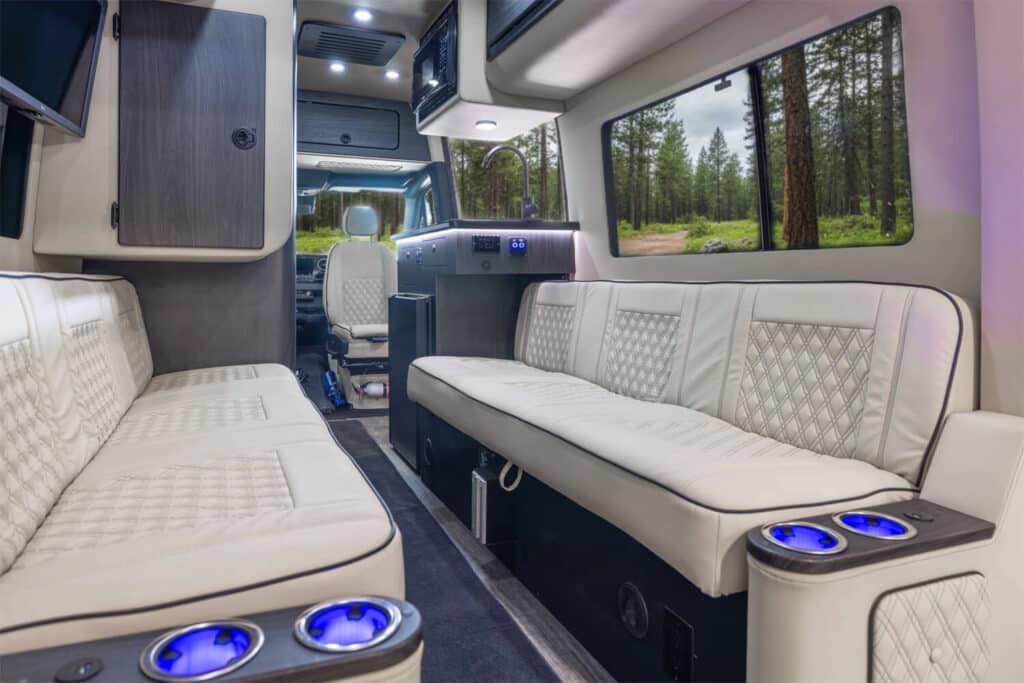
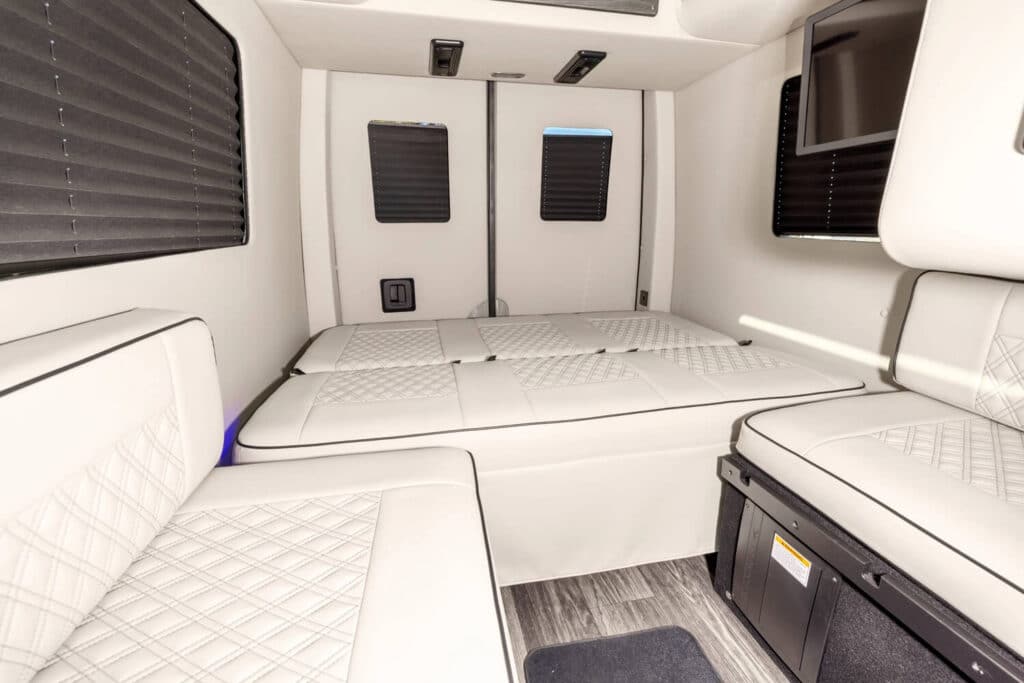
OGV Luxury Coach built the V-Tour for luxury motorhome seekers who demand premium craftsmanship without sacrificing the go-anywhere capability of a van-based motorhome.

The V-Tour is available in three configurations with multiple floor plans in each: the V-Tour Mercedes-Benz® 144” wheelbase, the V-Tour Mercedes-Benz® 170” wheelbase, and the V-Tour Ford® Transit 148” wheelbase. Each model delivers a full wet bath, microwave, cooktop, and rugged exterior accessories designed for diverse terrain. Inside, handcrafted seating, advanced climate control, superior sound insulation, and state-of-the-art entertainment options create a refined, self-contained living space.

Whether you’re heading into national parks, mountain towns, or urban destinations, the OGV V-Tour delivers Class B maneuverability with clearly heightened finishes.

Other Luxury Class B Options

  • Jayco Terrain – Built for adventure-minded travelers who want premium Class B capability with Jayco reliability, the Terrain combines an off-road-ready chassis with a refined interior, wet bath, and smart use of space ideal for couples or solo RVers.
  • Winnebago Revel – Built on a Mercedes-Benz® Sprinter AWD chassis, the Revel is purpose-built for rugged off-grid travel. It features a power lift bed, gear garage, wet bath, and an advanced solar + lithium setup for extended independence.

Destination Trailer: Forest River Lost Pines

Images by Forest River

For RVers who prefer a more permanent—or semi-permanent—camping lifestyle, destination trailers offer the space and luxury of a fifth wheel or park model without necessarily requiring a heavy-duty tow vehicle on every trip. In 2026, Forest River’s Lost Pines aims to set a new standard for luxury destination trailers.

An award-winning debut—taking home RV News 2026 RV of the Year (Destination Trailer), RV Pro Best New Model 2026, and RV Business 2026 Top RV Debut—the Lost Pines pairs a rugged, adventurous look with an interior defined by pure, high-end comfort. Its designers drew inspiration from Michigan’s timeless Northwoods.

Its aptly named 2026 floor plans — ASPEN (44’3”), HEMLOCK (43’11”), and SEQUOIA (44’1”) —  are built on a wide-body 102” frame with aluminum stud, floor joist, and roof-truss construction, dual-pane windows, a rolled fiberglass roof, full-body paint with four clear coats, and an enclosed, heated underbelly.

Standard interior appointments include hardwood cabinetry with dovetail drawers, solid surface countertops, a French door refrigerator with ice maker, a 4-burner range with oven, a vented washer/dryer combo, an on-demand water heater, an electric fireplace, and luxury vinyl flooring. Two 15,000 BTU A/Cs with heat pumps handle climate control.

If you’re looking for a luxurious basecamp that feels more like a cabin than a camper, Forest River Lost Pines deserves a serious look.

Other Luxury Destination Trailers

  • Forest River Cedar Creek Cottage – A well-established luxury destination trailer from Forest River, the Cedar Creek Cottage features residential kitchens, spa-inspired bathrooms, and generous living spaces designed for extended stays at a resort or private campsite.
  • Grand Design Foundation – Grand Design’s flagship destination trailer, the Foundation combines the brand’s renowned quality and customer-focused design with the increasingly popular extended-stay permanence of a destination trailer.

How Much Do Luxury RVs Cost?

Luxury RVs span a wide price range, shaped by factors like RV type, size, build quality, and customization. On the more accessible end, high-end luxury travel trailers typically cost between $50,000 and $100,000. The top-rated fifth wheels generally range from $100,000 to $200,000. These towable RVs often feature residential-style kitchens, large slide-outs, premium flooring, and spacious spa-inspired bathrooms.

If you’re considering a motorized RV, pricing tends to climb with each class. Class B and C luxury motor homes generally range from $150,000 to $250,000. Class A luxury coaches are at the top of the spectrum and can exceed $1 million when custom-built. However, models like the Allegro Bus compare favorably to luxury fifth wheels before factoring in customization costs. Luxury Super C motorhomes like the Dynamax DX3 start in the $300,000 range.

In many ways, purchasing a luxury camper is more like investing in a mobile residence than buying a camper. Whether you’re searching for luxury campers for sale or just planning ahead, the right RV luxury purchase is about enjoying the freedom of the road without compromising comfort, style, or convenience.

Do Luxury RVs Have Limitations?

The larger size and weight of luxury campers can limit access to specific campgrounds. This is especially true in older state and national parks with tighter sites or low-hanging trees. You’ll want to research parks or resorts that accommodate longer RVs with a wider turning radius.

Towing and driving may also require more planning. Larger fifth wheel RVs need heavy-duty trucks, while Class A luxury motorhomes benefit from towing a separate vehicle (“toad”) to explore once parked.

Maintenance is another factor. High-end systems—like auto-leveling, residential appliances, and innovative tech—offer incredible convenience. However, they may require more attentive upkeep or specialized service over time.

For many RVers, these tradeoffs are well worth it. A luxury RV’s comfort, aesthetics, and premium features create an unmatched travel experience. For full-timers, snowbirds, and seasonal travelers, the added size and complexity make it feel like home.


Exploring the best luxury motorhomes and trailers in person is the best way to see if the floor plan fits your lifestyle. But there’s a lot to consider when buying any type of RV, so here are some additional resources:

What features and amenities do you look for in a luxury RV? Let us know in the comments below!


  • Tucker Ballister headshot

    Tucker Ballister is our Content Strategist. He grew up RV camping in a Fleetwood Bounder with his parents and has lived and camped in two motorhomes and two travel trailers of his own. His current RV is a 2025 Forest River Campsite Ultra 26BW, which he loves taking on adventures with his wonderful partner and furry companion from their home base in Western North Carolina. Check out his adventures, gear reviews, and outdoor advice at thebackpackguide.com.

    View all posts


Source link

Ford CEO Farley says Tesla is not who to look at for EV expertise

0
Ford CEO Farley says Tesla is not who to look at for EV expertise


Elon Musk revealed a shocking detail on the Tesla Optimus patent that was revealed last week. Despite it being made public for the first time, Musk said the company has already moved on from the design, an incredible truth about the development of new technology: things move fast.

Musk dropped a bombshell about the Tesla Optimus humanoid robot hand patent that was released last week. Musk, candidly replying to a post late at night on X, revealed that what is a new technology to many fans and insiders is actually old news to those developing the tech directly.

“We already changed the design,” Musk said. “This one didn’t actually work.”

Patents, after all, are often viewed as blueprints for future products. Yet Musk revealed that the rolling contact mechanism—intended to provide smooth, low-friction articulation in the fingers—had already been scrapped after real-world testing exposed its shortcomings.

What looked promising on paper and in simulations failed to deliver the reliability required for a robot expected to handle delicate tasks like folding laundry, assembling electronics, or assisting in factories and homes.

The hand has been one of the biggest challenges for Tesla engineers since Optimus development started years ago. Musk has said that there is not enough recognition for how incredible and useful the human hand is, and designing one for a humanoid robot has been the biggest challenge of all.

Tesla is stumped on how to engineer this Optimus part, but they’re close

This moment underscores the persistent engineering hurdles in achieving reliable humanoid hand dexterity. Human fingers are marvels of evolution: 27 bones, intricate tendons, ligaments, and a network of sensors working in perfect harmony. Replicating that in metal and silicon is extraordinarily difficult.

Rolling contacts promised reduced wear and precise motion, but testing likely revealed issues with durability under repeated stress, grip stability on varied surfaces, or the micro-precision needed for fine motor skills.

These aren’t minor tweaks, but instead they represent fundamental challenges that have plagued robotics teams for decades. Even advanced competitors struggle here—hands remain the Achilles’ heel of most humanoids because the margin for error is razor-thin.

A fraction of a millimeter off, and a robot drops a glass or fails to button a shirt.

What makes Musk’s reply remarkable is how it signals Tesla’s direct communication style on prototype limitations. While many companies guard failures behind glossy marketing and vague timelines, Tesla openly shares setbacks.

Musk was forthcoming about the failure of this recent design. This transparency builds trust with investors, engineers, and fans. It shows Tesla treats Optimus development like true science: rapid iteration, rigorous testing, and zero tolerance for hype that doesn’t match reality.

The disclosure from Musk also highlights Tesla’s blistering pace of development. By the time the patents are published, which is often over a year after the initial filing, the technology has already evolved.

Optimus is far from a static product, and it’s a living project advancing weekly.

In the high-stakes race for general-purpose robots, Tesla’s approach stands out. Admitting a finger-joint design “didn’t actually work” isn’t a weakness—it’s confidence.

True innovation demands confronting failure head-on, and Musk just reminded the world that Optimus is being engineered that way. The next version of those hands is already in testing, and it will be better because Tesla isn’t afraid to say what didn’t work.


Source link