12.2 C
London
Monday, May 11, 2026
Home Blog Page 5

Under the Hood of BMW’s Supply Chain: 6 Fascinating Insights

0
Under the Hood of BMW’s Supply Chain: 6 Fascinating Insights


Each BMW has an origin story, whether from the Munich or Spartanburg plants. These vehicles are famous for luxury, advanced technology and stellar performance. That said, you may wonder what work goes into building Bimmers. The BMW supply chain is vast, spanning continents and oceans. 

Here are six fascinating insights to transform your view of the manufacturer. 

1. The CLAR Platform

BMW’s supply chain starts with cluster architecture (CLAR), a modular platform enabling efficient production. This mechanism supports most bimmer models, from the 3 Series to the sporty X7. You may even see BMW use it for its ultimate luxury brand, Rolls-Royce. 

CLAR’s principal objective is to combine common modules in different ways to create its vehicle lineups. Due to its scalability, BMW can cut costs and streamline production. It has used this strategy since the 2016 model year, prioritizing it for RWD and AWD vehicles. The manufacturer introduced CLAR for electric vehicle (EV) technologies, making it flexible for future powertrain innovations.  

2. Just-in-Time Logistics

While industry professionals associate Toyota with just-in-time production, BMW has made its supply chain leaner and more efficient. Over time, the manufacturer has optimized its logistics process by only importing parts when they’re necessary for production. Demand determines the supply, so BMW communicates production schedules to optimize the stock. 

BMW’s stellar logistics have earned awards from Produktion and other prominent trade magazines. Experts say the manufacturer gets parts in the right place at the right time, with automated technology supporting the processes. For example, the Regensburg plant has a computerized system with cloud-based traffic control to reduce labor costs. 

3. Worldwide Manufacturing

BMW’s presence is felt worldwide, with dealerships selling everything from the 3 Series to the X Series. The manufacturer assembles vehicles on multiple continents, ensuring different populations can access Bimmers. The largest location is the Spartanburg, South Carolina, plant, which is responsible for 63% of total production in 2024. 

The Spartanburg plant is BMW’s primary U.S. factory, exporting nearly $10 billion last year. Outside South Carolina, the automaker has production facilities across Europe. You can visit these massive buildings in the United Kingdom, Germany and Austria. Additionally, BMW has built factories and plants in Asian countries such as China and India. 

4. Efficient Packaging and Handling

BMW understands the importance of packaging and handling. Automakers must consider factors like product weight, vulnerability and value when shipping parts and vehicles. Experts say lighter items can cut CO2 emissions and reduce costs, whereas heavier parcels need specialized designs. The Bimmer producer has emphasized more sustainable packaging to reduce its environmental impact.

Recently, BMW introduced new waste management tactics by emphasizing reusing materials. The manufacturer developed expanded polypropylene (EPP) packaging with 25% recycled materials, thus eliminating 280 tons of CO2. Besides EPP, BMW uses small-load carriers with 50% recycled content and has plans for even more sustainability measures. For instance, it will replace steel pallet cages with plastic alternatives. 

5. Closed-Loop Recycling

Closed-loop recycling is another essential part of BMW’s sustainability. This system emphasizes recyclability from the beginning, as manufacturers want parts that are easy to disassemble and separate. End-of-life vehicle management ensures that each BMW heads to authorized dismantling facilities and sees its parts recovered. From shredding to refining, these processes encourage green practices. 

This recycling system has become more important in the EV age. Because batteries are large and would occupy a lot of space in landfills, BMW partnered with SK tes to recover materials. The manufacturing process recoups the cobalt, nickel and lithium from batteries in their final stages. Then, the automaker will reuse them for new batteries in its Neue Klasse EVs. 

6. Quality Control 

Quality control is essential for every bimmer rolling off the production line. How else does the manufacturer ensure your M4 can exceed 190 mph on the highway? BMW has top-notch systems for getting every ounce of power in its vehicles. Recently, the automaker implemented AI programs at its Regensburg plant to streamline operations. The algorithm studies the model, powertrain and features to check the automobile comprehensively. 

This advanced system understands when abnormalities arise and what assembly line workers must do about them. If a part has caused problems, the AI technology prioritizes the issues and advises the checklist order. Employees see similar information grouped on a phone app, where they can record notes and see grouped items. 

Navigating the Complex World of BMW Supply Chains

BMW relies on a tightly woven supply chain to produce vehicles of the highest quality possible. These processes are testaments to the manufacturer’s innovations, from sustainability to quality control. Consider these complicated operations next time you drive your bimmer. Where was it made, and what technologies made it possible? Every car has a story worth telling.


Source link

Concept Verre’s Interior Lighting Shines Bright

0
Concept Verre’s Interior Lighting Shines Bright


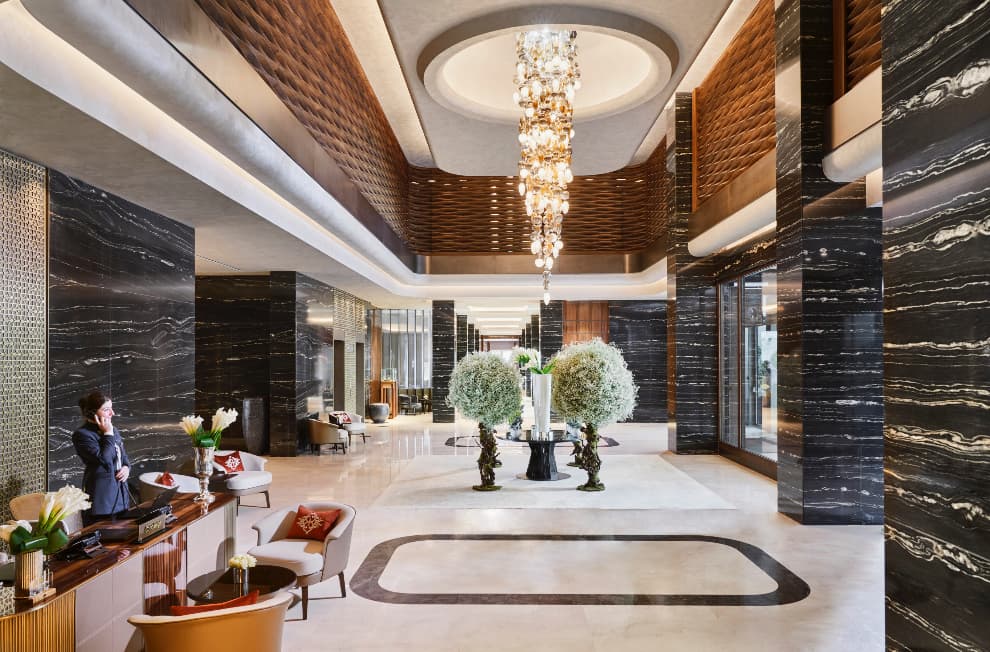
A massive pendant light of the Nuage collection in the Mandarin Oriental Hotel in Istanbul.

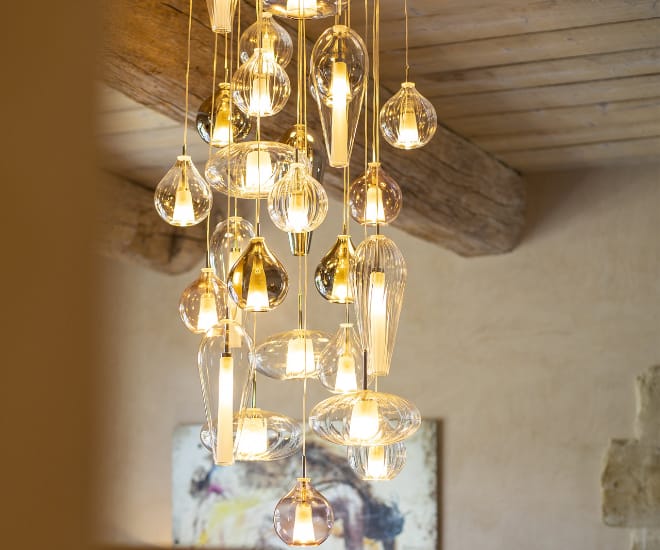
Concept Verre combines exquisite interior lighting with its signature sleek design. Since its conception in 2007, Concept Verre has prided itself on combining “noble and old materials” to execute modern and refined pieces. This luxury lighting brand has grown to build a reputation with its unique mouth-blown glass. Using mass-tinted Murano glass, interior lighting pieces are made using traditional mouth-blown techniques by master glassmakers.

Concept Verre Concept Verre
A combination of lit and unlit glasses gives the Nuage collection its distinctive identity, at the Carreau du Temple in Paris. 

Since 2017, Concept Verre has combined the purity of glass with natural materials such as marble, stone and wood to create sensible and refined collections. At its core, Concept Verre aims to create lighting pieces that each have character, combining strength and grace alongside collaborating with a team of passionate designers.

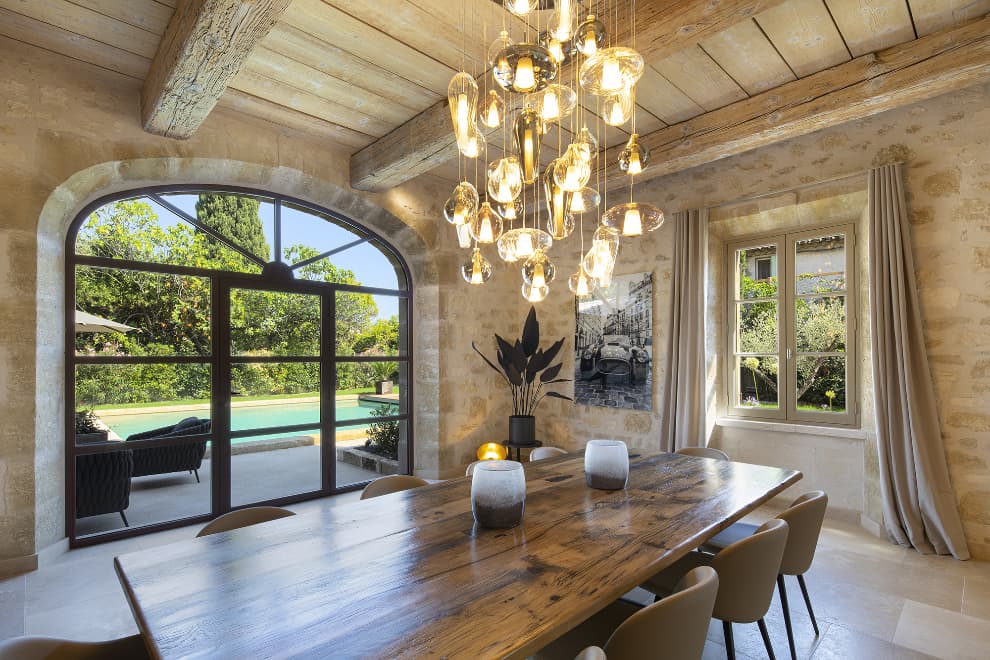
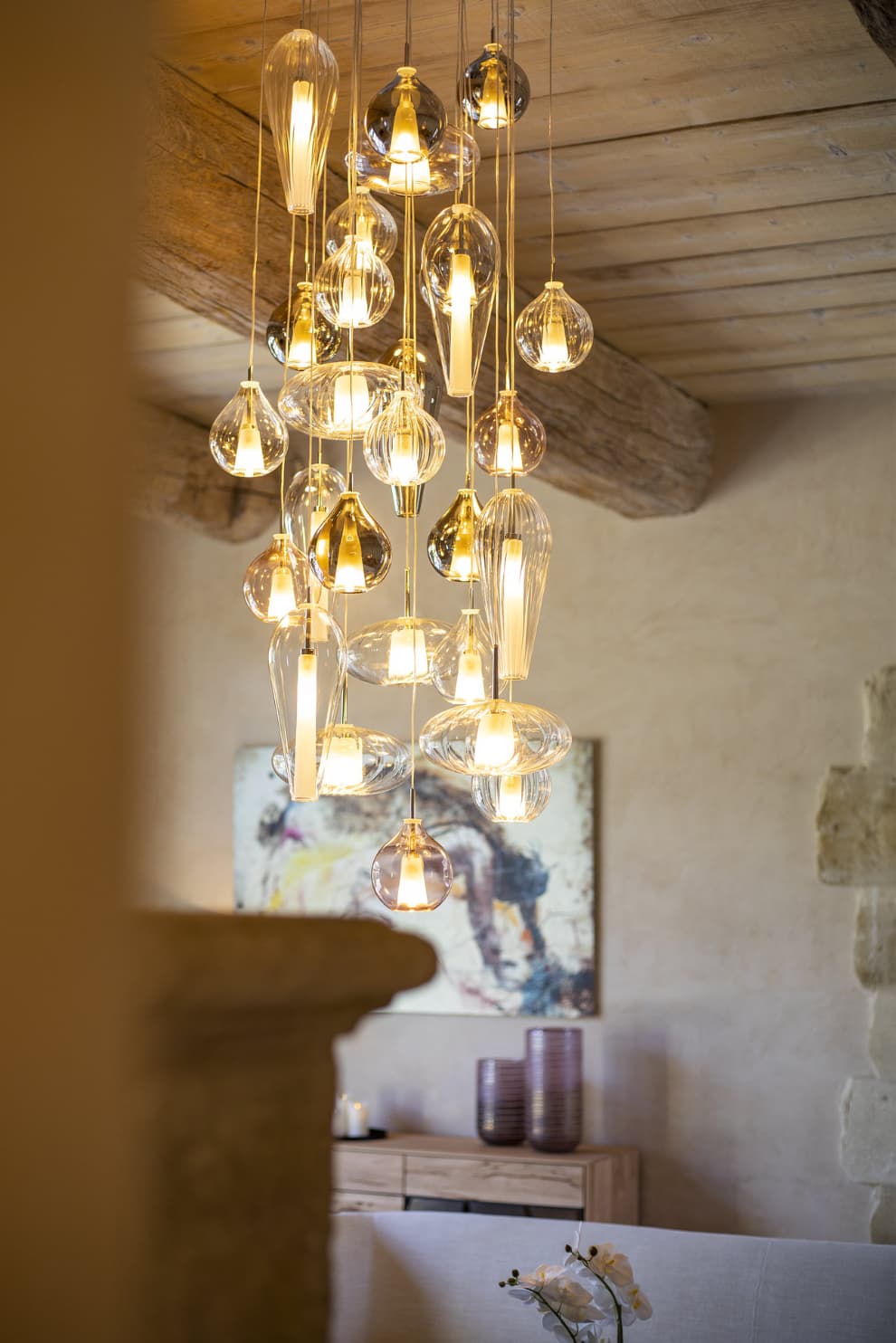
The final touch of ambiance in a Provençal farmhouse.

Using mouth-blown glass as the centrepiece of their creations, they have chosen this storied technique to enhance indoor lighting and dress-up interior spaces. Each of Concept Verre‘s products incorporates the latest technological and normative developments and reflects their know-how in terms of originality and manufacturing quality. The company successfully balances its opulent French roots to suit an international clientele.

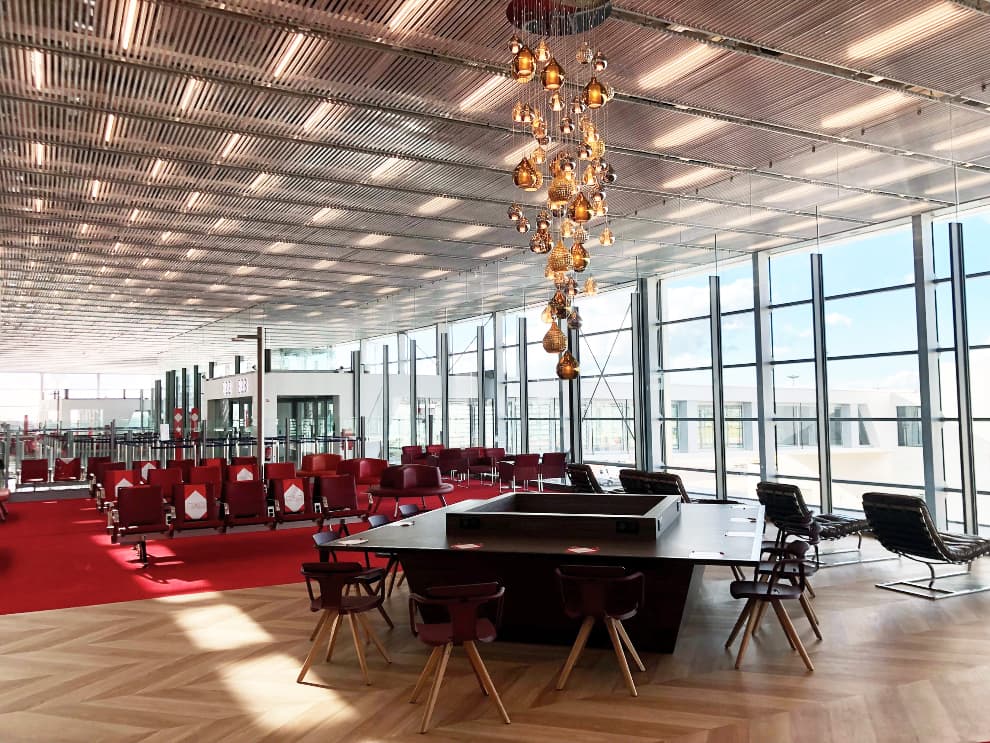
The Circé collection adorns the lobby of Paris’s Charles de Gaulle airport.

Concept Verre also offers customisation options on their lighting fixtures, to adapt their designs to all projects. Today, their creations are distributed internationally and adorn the spaces of the most prestigious locations. Each creation is a work of art, and they treat it as such. For all of their fixtures, each glass is checked and decorated one by one in their workshop in Nice.

A custom-made Circé pendant light in the Atol flagship store on the Champs Élysées in Paris.

Their in-house painter carries out the finishing touches; from subtle gradients to pastel hues and silvering, each finish has its own technique. They precisely apply every nuance, stroke, and detail to create a final look that perfectly matches the customer’s style.

Concept Verre Concept Verre
The Circé pendant light completes the gorgeous interior of this seaside home in Marbella.

Encompassing residential property to public spaces and corporate offices, Concept Verre’s custom fixtures will add a touch of sophistication and character to any space. Each piece is lovingly and meticulously crafted to offer clients an unforgettable lighting experience.

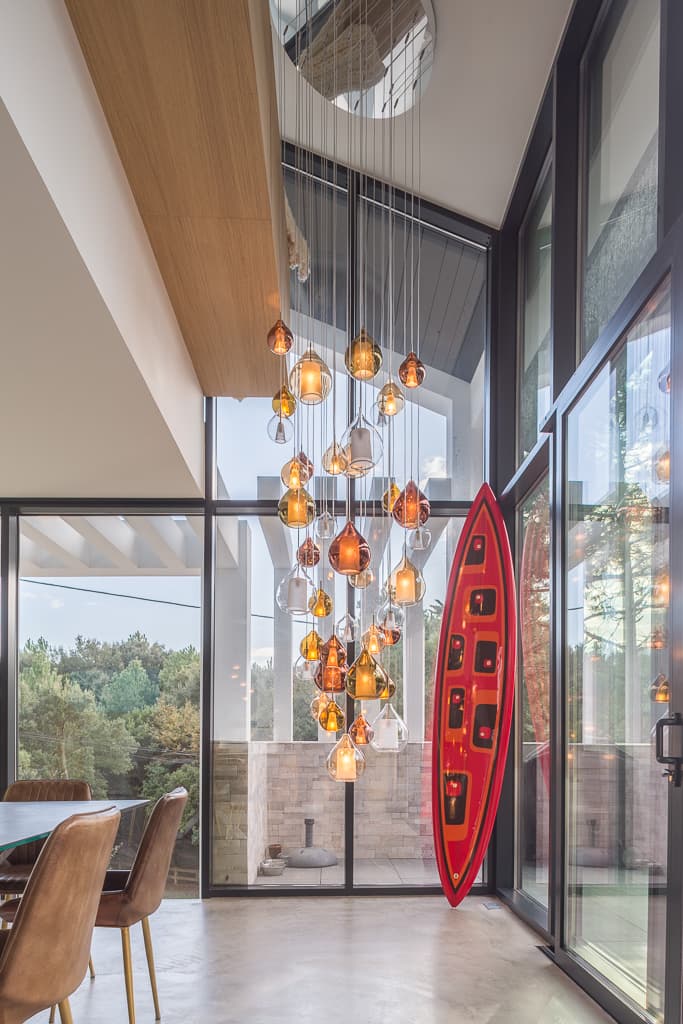
Concept Verre’s iconic Circé collection in a vacation home on France’s West Coast.

With its wide range of personalisation options, Concept Verre believes that every fixture should be an extension of your personality and how you envision your interior to look. Be it an intimate ambiance, an explosion of colour, or a minimalist, contemporary aesthetic, Concept Verre aims to turn your vision into a reality.

Concept Verre Concept Verre
Kahina pendant light in a home in Provence.

Head to Concept Verre to find out more.

For more on luxury interior stories, click here.


Source link

Tesla’s biggest rivals fights charging wait times with a modern approach

0
Tesla’s biggest rivals fights charging wait times with a modern approach


The Tesla Model Y L is perhaps the most wanted vehicle in the company’s lineup in the United States, especially now that it is void of a true family vehicle with the removal of the Model X.

In China, Tesla currently offers a longer, more family-friendly version of the Model Y, known as the Model Y L, which is longer in terms of its wheelbase and larger in terms of interior space, making it the perfect option for those with a need for a tad more room than what the all-electric crossover offers in its Standard, Premium, and Performance trims.

However, there seems to be a hint that the Model Y L could be on its way to the United States. Over the past week, a noticeable wave of American Tesla influencers descended on China and Australia, each posting in-depth YouTube reviews of the Model Y L within days of one another:

The timing has sparked some intense speculation as to whether Tesla is quietly preparing to bring the long-wheelbase, three-row family SUV to North America after months of requests from fans.

The Model Y L stretches the wheelbase by about five inches compared to the standard Model Y.

This delivers dramatically more rear legroom, optional captain’s chairs in the second row, and a true six- or seven-seat configuration ideal for growing families. Reviewers praise its refined ride, upgraded interior features like a rear touchscreen and premium audio, and competitive range—up to roughly 466 miles in some configurations.

Many observers see the coordinated influencer trip as more than a coincidence. Tesla China appears to have hosted the group, possibly tied to the Beijing Auto Show, giving U.S.-focused creators early access to hands-on footage aimed squarely at North American audiences.

Tesla Model Y lineup expansion signals an uncomfortable reality for consumers

Tesla watchers are quick to point out this isn’t the first time such a pattern has emerged.

Just months earlier, American influencers were similarly invited to China to test-drive the refreshed Model Y Performance. Those videos dropped in the lead-up to the variant’s U.S. rollout, generating exactly the kind of pre-launch hype that helped smooth its September arrival in American showrooms.

The parallel is obviously hard to ignore, as Tesla has used overseas influencer trips before as a low-key way to build anticipation without formal announcements. With the Model Y L potentially hitting the U.S. market late this year, according to CEO Elon Musk, the timing would make sense.

Tesla Model Y L might not come to the U.S., and it’s a missed opportunity

Of course, it could still be coincidental. Tesla regularly invites creators to its Shanghai factory and events for broader promotional purposes, and the Model Y L has been on sale in China for some time. No official word has come from Tesla or Elon Musk about U.S. availability, pricing, or timing.

Import tariffs, regulatory hurdles, and production priorities at Fremont or the new Mexican Gigafactory could still delay or alter any stateside plans.

Even so, the buzz is real. U.S. families have long asked for a more spacious, three-row Tesla SUV that doesn’t require stepping up to the larger Model X.

If the influencer campaign is any indication, the Model Y L—or a close North American cousin—could finally answer that call. For now, American Tesla fans are watching closely and wondering whether this latest China trip is just good content… or the opening act for something much bigger stateside.


Source link

BMW iX3 Wins 2026 World Car of the Year x 2

0
BMW iX3 Wins 2026 World Car of the Year x 2


The skeptics were loud, and not without reason. BMW’s decision to build the Neue Klasse on a clean-sheet EV architecture, rather than continuing to adapt existing platforms, was a significant bet by any measure. It required patience from buyers, capital from the company, and faith from everyone watching. The iX3 was always going to be the first real answer to whether that bet was sound.

At the 2026 World Car of the Year ceremony, the answer came back clearly: it was.

The iX3 didn’t just win World Car of the Year. It also claimed the World Electric Vehicle award in the same evening, sweeping across all powertrain categories in the process. It’s the 10th and 11th World Car title for BMW Group, and the first time the Neue Klasse platform has been validated at this scale by an independent jury. The jurors, representing more than 413 million readers globally and issuing purchase recommendations rather than just editorial opinions, aren’t a soft crowd.

What’s interesting isn’t just the double win, it’s what it says about where the iX3 sits in the broader EV landscape. This was not a category where BMW was simply the best of an uninspiring field. The award spans all powertrains, which means the iX3 had to make a case against conventional and hybrid vehicles as well. It did.

The commercial signals were already pointing this direction. More than 50,000 European orders were placed ahead of launch, and BMW Group reported roughly 40 percent year-over-year growth in BEV orders during Q1 2026. Numbers like that suggest the market was reading the iX3 correctly even before the awards circuit confirmed it. The US launch, arriving summer 2026, will be the next meaningful data point.

There’s a version of this story where you could argue the WCOTY is more brand recognition than objective judgment. That argument gets harder to sustain when the commercial data and the jury both land in the same place. The iX3 appears to be doing what BMW needed it to do: demonstrate that the Neue Klasse platform is not a defensive strategic move, but an offensive one.

BMW has been here before with important vehicles that shaped industry perception, but the stakes around Neue Klasse were different. This is the architecture the brand will live on for the next generation. Winning this kind of external validation early, before the full platform rollout, matters more than a trophy on a shelf.

The doubts aren’t entirely gone, of course. The iX3 still needs to hold up in long-term ownership, in US market conditions, and across the broader Neue Klasse lineup that follows. One car winning one award is a good opening chapter. It isn’t the whole story.

But as opening chapters go, this one is difficult to argue with.


Source link

Lamborghini Urus SE Tettonero Capsule revealed: What makes it special?

0
Lamborghini Urus SE Tettonero Capsule revealed: What makes it special?


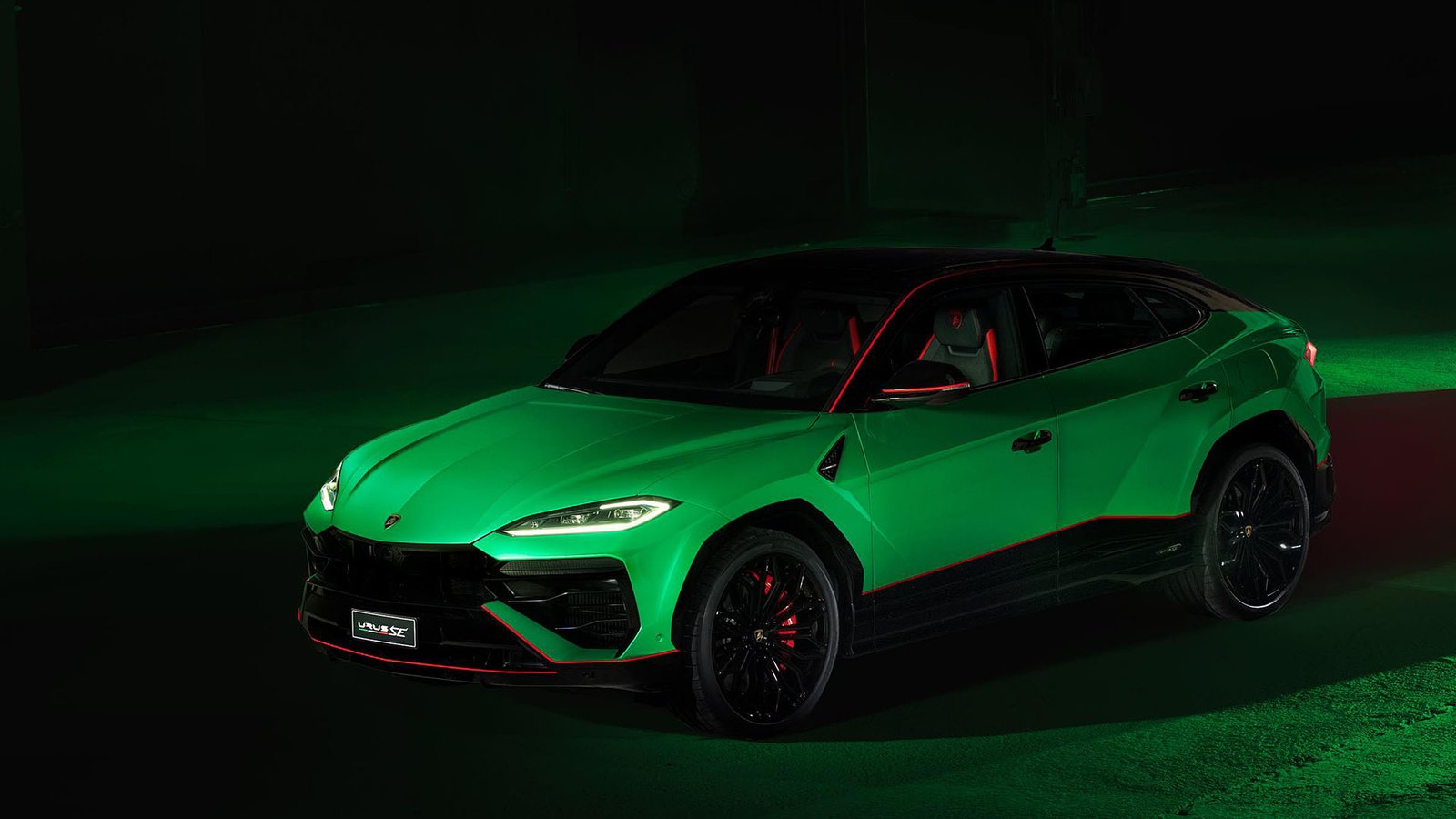
The Lamborghini Urus SE Tettonero Capsule is the latest addition to the Italian brand’s lineup. It has been revealed at the 2026 Milano Design Week. Here is what makes this new SUV special.

First, this is a limited edition model. Only 630 units of the super SUV will be made worldwide. Second, the Lamborghini Urus SE Tettonero Capsule comes with a ton of customisation options. For instance, there are 6 colours to pick from. Then we have 6 colour options for brake calipers, which can be matched to external liveries.

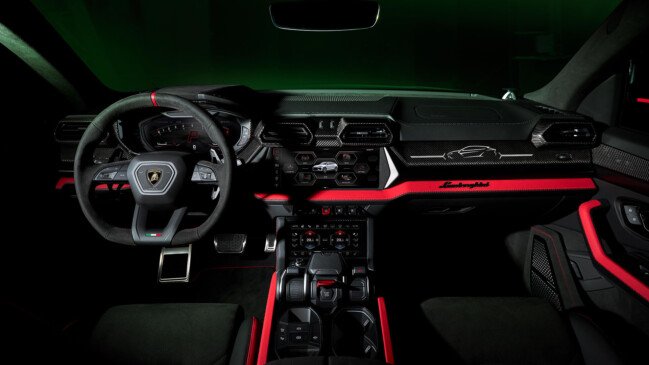
Lamborghini Urus SE Tettonero Capsule interior

Lamborghini is also offering a range of wheels in 21”, 22” and 23” sizes, with the option to include the “63” logo on the lower section of the front doors, as a tribute to the company’s year of establishment.

The exterior of the SUV can also be personalised with carbon fibre elements such as the rear diffuser, side mirror caps and front splitter. In fact, the use of carbon fibre continues on the inside – the passenger section of the dashboard features a carbon fibre trim with a silk-screened printed vehicle logo, and a dedicated carbon fibre logo plate celebrates the tenth anniversary of the Ad Personam Studio.

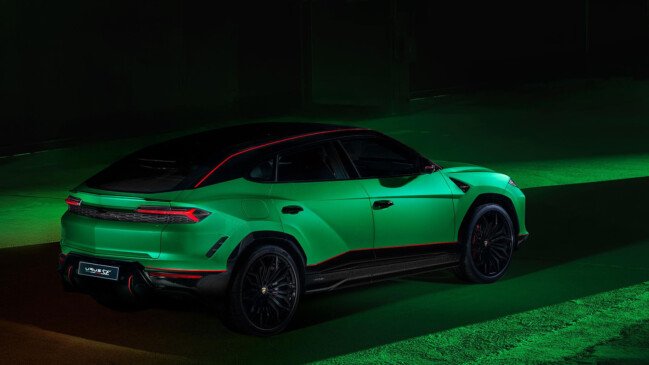
Lamborghini Urus SE Tettonero Capsule rear quarter

Being a super SUV, the Lamborghini Urus SE Tettonero Capsule uses a 4.0L twin-turbo V8 engine along with an electric motor to produce 788 hp and 950 Nm. It can cover around 60 km in pure electric mode. And when everything is unleashed, it can do the 0-100 kmph sprint in 3.4 seconds. Its top speed is 312 kmph.


Source link

Watch this Rolls-Royce Phantom tackle a speed bump like it’s not even there

0
Watch this Rolls-Royce Phantom tackle a speed bump like it’s not even there


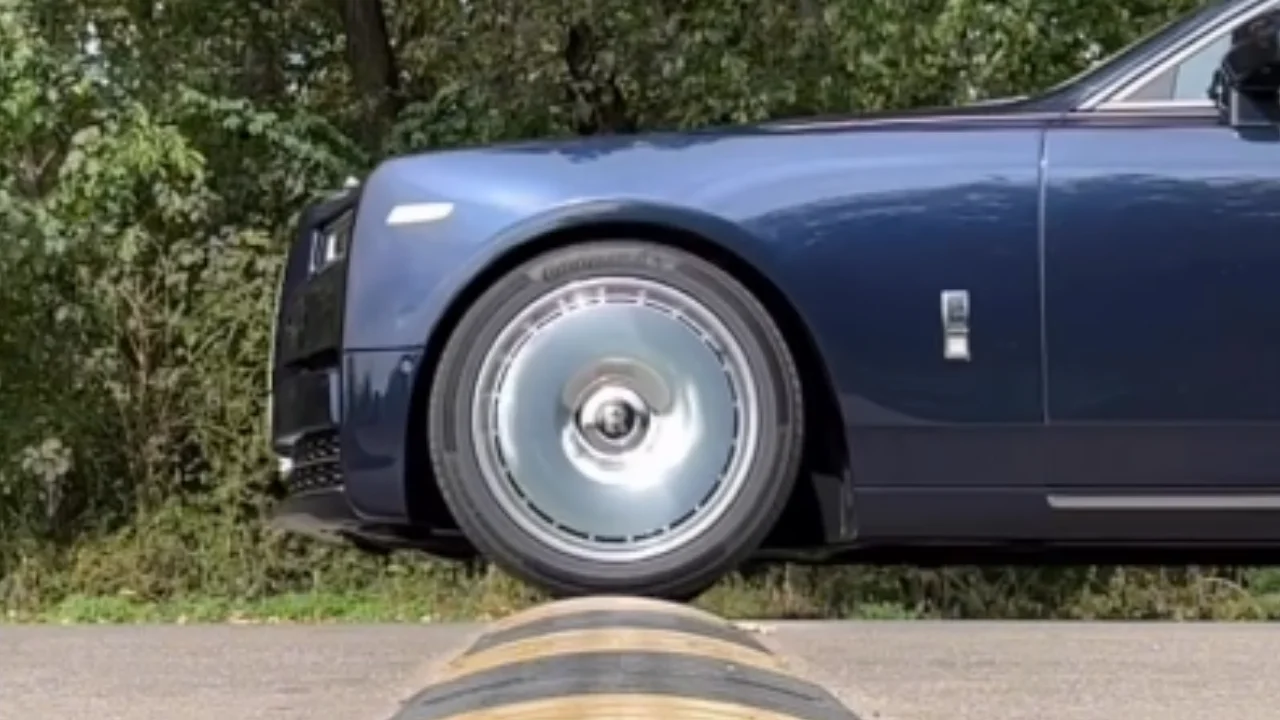
It’s not just the luxury or the status symbol of the Rolls-Royce Phantom that attracts buyers; it’s also the level of comfort and tech this opulent saloon has to offer. Here is a video on Instagram that shows how this car tackles a speed bump like it’s not even there.

We can see that a Rolls-Royce Phantom is driven over a speed bump at different speeds – 17 kmph and 90 kmph – and how its Planar suspension is working to keep the vertical movement of the car to a minimum.

The Rolls-Royce just glides over the speed bump without losing composure, thanks to its sophisticated combination of tech – self-levelling air suspension, adaptive damping, hydraulic roll-control and predictive road scanning, which work in unison to provide the ‘magic carpet’ like ride quality.

The current-gen Rolls-Royce Phantom is powered by a 6.75L twin-turbo V12 engine mated to an 8-speed automatic transmission. It gives this 4-door saloon 563 hp and 900 Nm. As a result, the 2.5 ton car can accelerate from 0 to 100 kmph in 5.3 seconds and flat out will touch 250 kmph.

Source: bratudor on Instagram


Source link

Mocktails, Morning Rituals, and Fitness-Friendly RV Setups

0
Mocktails, Morning Rituals, and Fitness-Friendly RV Setups


Dry tourism — traveling without alcohol — is anything but limiting. It’s actually a growing lifestyle choice, especially among younger travelers (think Gen Z) and a growing community of health-conscious adventurers.

RVing combines perfectly with dry tourism. After all, everyone already knows you should never drink and drive. But as it turns out, cutting the booze at your destination, too, can help you fully sink into and enjoy every moment of your vacation. And when you travel in an RVshare vehicle, you get the best combination of RVing’s innate travel flexibility, the opportunity to choose from a wide range of vehicle types, and total comfort and control over your environment. 

From mocktail recipes to morning rituals, we’ve got you covered when it comes to learning how to do dry tourism right. Read on for all the deets!

What Is Dry Tourism and Why It Works So Well for RV Travel

Eschewing alcohol may initially strike some travelers as, well, a bummer. A cold beer or a nice glass of wine after a long day of adventuring can seem like a comfort.

But on the other hand, alcohol just is bad for humans. It’s cancer-causing, it can wreck your sleep quality, and it can also cause you to forget key moments of your vacation.

Here are some of the reasons dry tourism mixes well (pun totally intended) with RVing, specifically.

A More Intentional Way to Travel

Many RVers are specifically interested in intentional travel. After all, it’s one of the only travel styles where you’re in control of everything: the exact itinerary (no waiting around based on airport schedules), the route you’ll take, and even the quality of the sheets you’ll sleep in at night.

Traveling without alcohol in an RV allows you to stay focused on your connection to others in your travel party (or strangers you meet along the way), the incredible scenery you’ll be passing through, and the experiences you’ll have. It’s also a great travel style for families and wellness-focused adventurers, who are often drawn to RVing in the first place.

Why RV Travel Enhances the Experience

With RVing, you have full control over the food and drink you’ll have on your trip (access to a kitchen means you don’t have to rely on restaurants or gas-station snacks at all if you don’t want to). Additionally, the customizability of the RV travel style gives you space to carve out your own unique rituals and routines. (For instance, some people set aside a section of their motorhome or travel trailer as an RV yoga space.)

Traveling in an RV also gives you the extra storage room you need to stow bigger adventure equipment like bikes and paddleboards. When you rent through RVshare, you can choose from a wide variety of RV floorplans for active travelers and use the space however you like.

Campsite Mocktails That Pair Perfectly with Classic Camp Foods

Just because you’re not drinking alcohol doesn’t mean you can’t enjoy a fine and fancy sip at the end of a long day of driving or exploring! Here are some of our favorite RV campsite mocktails that pair perfectly with the camp foods you’ve already planned for.

Citrus Sparkler + S’mores

For the perfect combination of sweet and tangy, balance those gooey s’mores with this bright, acidic favorite. The recipe couldn’t be easier:

  • 1/2 cup orange juice
  • 2 tbsp lime juice
  • 1/2 cup sparkling water

Simply pour all of the ingredients over ice and garnish with orange or lime slices. And get the campfire and your s’mores ingredients ready!

Spiced Apple Mule + Campfire Chili

Is anything as warm and comforting as campfire-cooked chili? Well, maybe this apple mule. You’ll need:

  • 3/4 cup apple cider
  • 1/2 cup ginger beer
  • A pinch of cinnamon (or other Christmas-y spices to your taste)

Serve it up over ice with an optional squeeze of lime and enjoy the way the warm spices complement your warm, hearty meal.

Berry Mint Refresher + Grilled Skewers

Simple, light, and refreshing, this berry mint refresher is the perfect accompaniment to grilled meats of all types (which are, of course, a campside classic). Just grab:

  • 1/2 cup mixed berries (frozen works well — you can even keep some berries frozen for garnish)
  • 5 mint leaves
  • 1 cup lemonade or soda water

Muddle the thawed berries and mint, add ice, pour the lemonade or soda water over it all, and stir it up. Yum!

Quick Camp-Friendly Mocktail Tips

Want to keep the mocktails flowing all trip long? We recommend:

  • Pre-batching ingredients or even mixing up batched mocktails ahead of time. That way, it’s as simple as grabbing a jug and pouring.
  • Use reusable containers and cups to keep your conscious and intentional approach earth-savvy, as well.
  • Keep it simple: You can get super creative with just three or four ingredients, as the recipes above prove!

Explore RV rentals with full kitchens to make campsite cooking and drink-making easy.

Morning Coffee and Tea Rituals with a View

Replacing an evening libation is one thing. But for dry tourism fans, it’s often all about the mornings: a new day shining its light on every leaf and flower. Here’s the scoop on morning rituals on the road, including why they matter and how to create one that’ll be resonant to you.

Why Morning Rituals Matter on the Road

A good morning means a good day. Honing a beautiful and resonant morning ritual can help set your tone for a whole day of travel adventures, along with encouraging slower, more mindful travel and staying present.

Easy Camp Coffee Setups

For many travelers, a morning ritual is incomplete without coffee. Even if you’re roughing it, though (i.e. off-grid camping or boondocking), it’s easy to make your perfect cup of joe.

French press and pourover options are favorites among RVers because both of them require little more than ground beans and hot water. You can heat a kettle on the stove, over a portable camp stove, or, if you do have electricity, with an electric kettle.

Instant coffee and espresso are also options, though some campers may see them as a bit less refined and indulgent as a slower-brewed cuppa.

Scenic Ritual Ideas

Up the ante by making it not just about the coffee (or tea), but also about the view you’re enjoying as you sip it. It’ll all depend on your own itinerary and destination(s), of course, but some favorites include:

  • Lakeside sunrise coffee. There’s nothing like watching the light shimmer over water to start the day.
  • Mountain overlook tea break. Although it’s fun to get caught up in travel to-dos, it’s also worthwhile to take a midday pause to slow down and enjoy.
  • Walking (and sipping) meditation. Yes, being still is important, but sometimes a little bit of movement helps everything go down even more smoothly. Grab your favorite insulated cup or thermos and head out for a walk-and-sip.

Make It Effortless with the Right RV Setup

With RVing, you benefit from customizable extras that can make your morning ritual a lot easier to set up, such as:

  • Awning space to cover outdoor seating
  • Easy kitchen access
  • Large picture windows to gaze out at the world from wherever you park

Discover the best RV destinations for scenic camping views — and RV kitchen essentials for campsite meals and crafted drinks, too.

Fitness-Friendly RV Floorplans for Active Travelers

Many travelers who are drawn to dry tourism are also hoping to stay active and fit on the road. An RV trip can make doing so easier (and way more fun) than any hotel gym. Here’s what to look for and how to get moving.

What to Look for in an Active-Friendly RV

When you’re road-tripping, the whole world is your backyard and rec center. But for mindful, indoor-based practices like yoga or body-weight training, looking for the right type of RV floorplan can give you a leg up. While you’re browsing the listings, keep an eye out for:

  • Open floor spaces perfect for laying out your yoga mat 
  • Exterior storage compartments for hauling bigger adventure gear like kayaks and snowboards
  • Awnings to make outdoor workouts shady and fun

RV Types That Work Best

Along with the right floorplan and features, certain RV types work better overall for active travelers. We recommend:

  • Class B vans for campers who want the ultimate mobility (i.e., to get off-the-grid and out to where the biggest, sweatiest adventures live)
  • Travel trailers with flexible interiors, perhaps using slide-outs, to offer floorspace when you need it combined with a small footprint when you don’t
  • Toy haulers for gear-heavy trips (i.e., where you’re bringing a boat or four-wheeler

At the end of the day, though, nearly any RV can fit an active lifestyle. In fact, it’s the active lifestyle that brings many RVers to this type of travel.

Simple Campsite Fitness Ideas

You got your morning routine on lock. Now, let’s get you set up with an easy-to-implement (and scenic) fitness routine for the road.

  • Morning yoga flow. Whether it’s lakeside at the campground, in your RV living room or out on the beach, a few sun salutations are always a great way to greet the day.
  • Resistance band workouts are perfect for RVing, since the bands take up almost no room to store and are versatile enough to help you strengthen any muscle group.
  • And, of course, trail runs, bike rides, and big hikes are all accessible ways to turn the great outdoors into your gym — while, of course, enjoying the ride. (Even if the conveyance is your own two feet.)

How to Plan a Dry Tourism RV Trip: Step-by-Step Planning Guide

Tips and tricks are one thing, but here’s a foolproof, step-by-step guide to building your perfect dry tourism RV trip.

1. Choose your destination.

Starting with the right destination can go a long way toward ensuring your trip stays dry — yet interesting. 

State and national parks are popular destinations for adventuresome, wellness-oriented travelers, and they often offer affordable and well-appointed campgrounds. 

Of course, any destination can be incredible without alcohol, even if you’re traveling to Las Vegas. Still, figuring out where you’re going is the very first step in planning any RV trip, wet or dry.

2. Select the right RV type for the job.

We’ve already given you the tools above, so now it’s up to you! As you browse RV rental listings, keep your proposed daily fitness routine in mind as well as the type of trip you’re planning on overall. 

For example, for a rugged boondocking trip, a Class B campervan may work best, while those staying in developed campgrounds might want a Class A motorhome for all the comforts of home — including yoga space.

3. Plan meals and mocktails.

Planning your meals ahead of time, and even doing some basic prep-work, might not sound like a fun vacation activity. But that’s exactly why doing it before you leave is a pro tip: You won’t have to worry about what your next meal will be (or doing every single step to prepare it) on the road!

4. Figure out your morning rituals and fitness routines.

Don’t over-crowd your schedule, but slip in a few fun, wholesome routines and rituals to look forward to. For instance, we recommend a sunrise hike to the top of that nearby mountain for the most well-earned and satisfying cup of coffee of your life.

5. Pack wellness and fitness gear.

Whether it’s your yoga mat, hiking boots, or skis, don’t forget to add your fitness and adventure gear to your packing list.

6. Enjoy!

The whole point of dry tourism is to remain present and fully engaged for the duration of your trip. So along with all the planning and logistics, don’t forget to sit back, relax, and enjoy the view!

Why Dry Tourism Is About More Than Skipping Alcohol

Although staying healthy and comfortable are more than sufficient reasons on their own to try it, dry tourism is about way more than skipping the hangover. It’s about approaching the entire trip with clarity, focus, and connection. 

At RVshare, we believe in a travel lifestyle that offers the freedom and flexibility to travel your own way, along with built-in comfort and memorable, shared experiences. All of that is perfectly aligned with dry tourism, so we’re happy to help you bring your alcohol-free journey to life. 

Enjoy fresh mornings, long days of adventure, and a healthy mind and body on your next RV trip. After all, you’re creating a lifestyle that’ll enable plenty more years of exploring.



Source link

Ford Customers Are Saving Even More On Home Charging With TXU Energy Free EV Miles Program

0
Ford Customers Are Saving Even More On Home Charging With TXU Energy Free EV Miles Program


Support CleanTechnica’s work through a Substack subscription or on Stripe.


What if the best time to fill up your car was while you were fast asleep — and it saved you money?

For Ford electric vehicle (EV) and plug-in hybrid owners in Texas, that’s not a dream; it’s a nightly reality with home charging. Through a partnership between Ford and TXU Energy, we are proving that the future of driving isn’t just cleaner — it can be cheaper.

Filling Up With TXU Energy Free EV Miles Program

In 2024, Ford and TXU Energy introduced a free charging program in Texas to highlight the potential cost savings of electric and plug-in hybrid vehicles. The program encourages TXU Energy customers who own these vehicles to charge at home during off-peak hours — typically at night — when electricity demand is lowest, allowing them to charge at no cost.

The TXU Free EV Miles program offers electric and plug-in electric vehicle drivers’ credit on their TXU Energy bill for all electricity used to charge their vehicle during the free charging hours of 10 p.m. to 1 p.m. the next day, all year long.

Customers can easily schedule their charging during the designated hours using the Ford app. This is essentially free home charging made possible through the Ford Energy Rewards program managed by ChargeScape, a Ford-backed company that makes it easier for utilities to do programs like this.

See visualization explaining Ford Energy Rewards here.

Customers enrolled in the program can receive additional incentives including a $100 prepaid card from Ford at sign-up and $250 from TXU Energy on the customer’s plan anniversary each year to keep customers engaged long-term.

Meet Ricky Davis: The Mustang Mach-E Owner Maximizing the Benefits of Off-Peak Charging

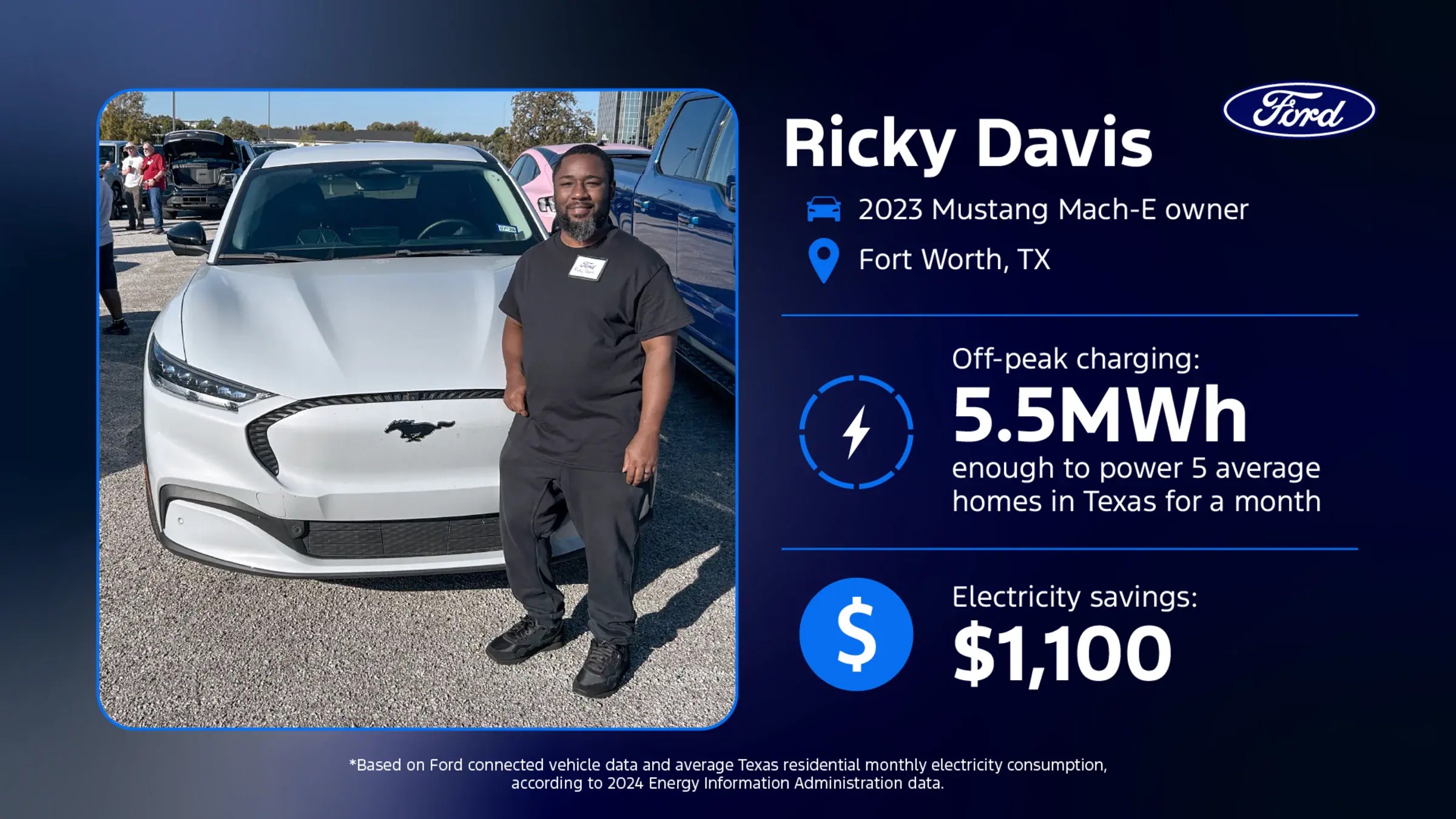
One active customer of the program is Ricky Davis, a 2023 Mustang Mach-E® owner living with his family in Fort Worth, Texas.

“With an electric vehicle, you don’t pay for gas, and now with the Free EV Miles program, I don’t pay for the electricity to charge either,” said Davis.

Davis uses the Ford Mobile Charger, and he upgraded his garage with a 240V plug, which gets him the charge he needs during the designated off-peak hours.

“So pretty much with the [Free EV Miles program] whenever you get home, even if you get home at 10 or 11 p.m., even midnight, that’s enough charge to fill up, and by 6 a.m. you’re ready to go.”

Davis shifted 5.5 megawatt hours (MWh) of charging to off-peak hours last year — enough to power five average homes in Texas for a month1— saving him nearly $1,100 in electricity costs in 2025, which is above average compared to what most battery electric vehicle customers will experience.

Ford owners participating in the TXU Free EV Miles program could potentially save an average of $800 annually with a Mustang Mach-E SUV, $1,200 with a Ford F-150 Lightning® pickup, and $300 with a Ford Escape®.2

94% of Home Charging Is Now Off-Peak Thanks to Free EV Miles

The TXU Energy Free EV Miles program drove 94% of Ford customer electric vehicle home charging to off-peak hours in 2025.3

“Seeing customers embrace off-peak charging gives us real confidence that EV drivers are willing to shift their behavior when the value is clear,” says Jarrod Maddox, director of product development, TXU Energy. “It’s a win for customers, who can unlock meaningful savings, and it helps better manage demand as more electric vehicles enter the transportation mix.”

As more consumers purchase electric vehicles, this program is providing early insights into how to create scalable consumer incentive models for utilities to proactively manage charging needs in a more sustainable way, as much of the electricity overnight is from renewable energy sources in Texas, like wind.

Based on Ford’s analysis of connected vehicle data, in the TXU Energy Free EV Miles program’s first full year, participating customers collectively redirected approximately 515 MWh of electric charging to off-peak hours, which is enough to power 39 average Texas homes for an entire year.4

Enrollment for the Free EV Miles program is open to TXU Energy customers who own an electric or plug-in hybrid Ford. Visit www.txu.com/freeevmilesford to check eligibility and enroll.

Dave Hurst is a senior manager of customer operations and marketing for grid & energy services at Ford


1Based on Ford connected vehicle data and average Texas residential monthly electricity consumption, according to 2024 Energy Information Administration data.

2Estimated savings based on home charging only during off peak hours of 10 pm to 1 pm the next day, TXU energy charges, and average annual electricity consumed in 2025 while charging at home.

3Based on connected vehicle data from Ford customers enrolled in the TXU Energy Free EV Miles program.

4Based on average Texas homes annual electricity consumption via 2024 EIA data.

Article via Ford from the Road.


Sign up for CleanTechnica’s Weekly Substack for Zach and Scott’s in-depth analyses and high level summaries, sign up for our daily newsletter, and follow us on Google News!


Advertisement


Have a tip for CleanTechnica? Want to advertise? Want to suggest a guest for our CleanTech Talk podcast? Contact us here.


Sign up for our daily newsletter for 15 new cleantech stories a day. Or sign up for our weekly one on top stories of the week if daily is too frequent.


CleanTechnica uses affiliate links. See our policy here.

CleanTechnica’s Comment Policy


Source link

BMW had four secret CSL prototypes. Only one should have been built

0
BMW had four secret CSL prototypes. Only one should have been built


BMW M has a secret garage. We’ve been there once in 2011. Inside it: four prototypes that never made production — a V8 M3, a special V10 M5 and V10 M6, and a stripped-out M2. Each one was built, tested, and shelved. Each one could have been something. So which should have actually existed?

The M5 CSL V10 is the crowd-pleaser argument — 630 horsepower, 8,750 rpm, 150 kilograms lighter than the standard car, a 7:50 Nürburgring lap that would have embarrassed almost everything on sale at the time. The M6 CSL V10 makes a similar case but adds active aero, a retractable front spoiler, and those double-strut mirrors that ended up on every M car that followed. The M2 CSL F87 is the purist’s pick — 450 horsepower in the lightest, shortest M car of its generation, essentially the M2 CS but harder. All reasonable. None of them the right answer.

The right answer is the E46 M3 CSL V8.

A CSL Already Born Perfect

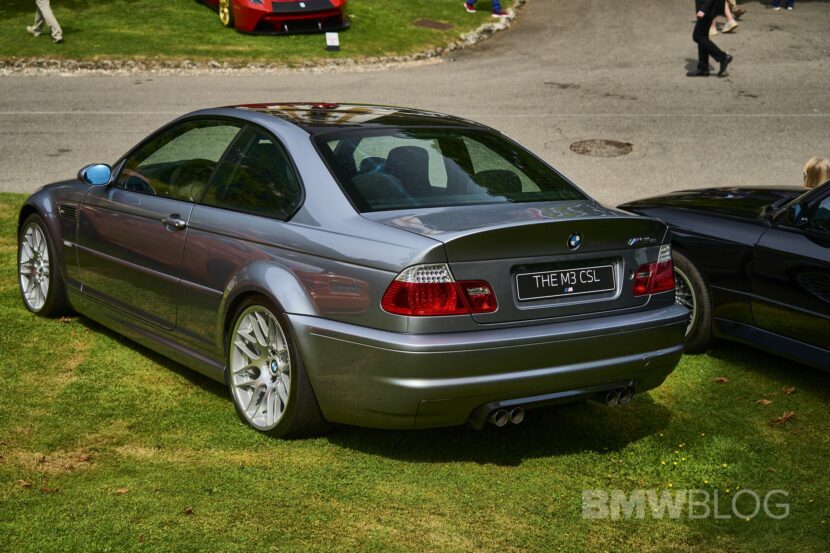
BMW M3 CSL E46

By 2003 the M3 CSL had done something close to impossible. It took the E46 M3 — already the car most enthusiasts pointed to when pressed for the best driving machine on earth — and made it better. Carbon fiber roof. Stripped door cards. Rear bench gone. A reworked S54 spinning to 8,000 rpm with 360 horsepower. It weighed 1,385 kilograms. The steering felt like a direct connection between your palms and the front tyres. It lapped the Nürburgring in 7 minutes 50. In 2003.

By almost universal agreement among journalists who drove it, it was the finest M car BMW had made. Some went further. And yet the engineers at Garching — people constitutionally unable to leave well alone — looked at this car and asked the dangerous question: what if it had a V8?

The Ghost in the Garage

BMW M3 CSL E46 V8 ENGINE 00

BMW M built a V8 M3 CSL. They never sold it. Most people don’t know it exists. The prototype was designated the S65VB40. BMW M took a press-fleet CSL donated after its media duties and used it as the base. The engine came from the S62 — the 4.9-liter V8 from the E39 M5 and Z8 — but this wasn’t a transplant. They developed a 4.0-liter high-revving version producing 430 horsepower. Not a lazy torque-heavy V8. Something tuned to rev, tuned to sing.

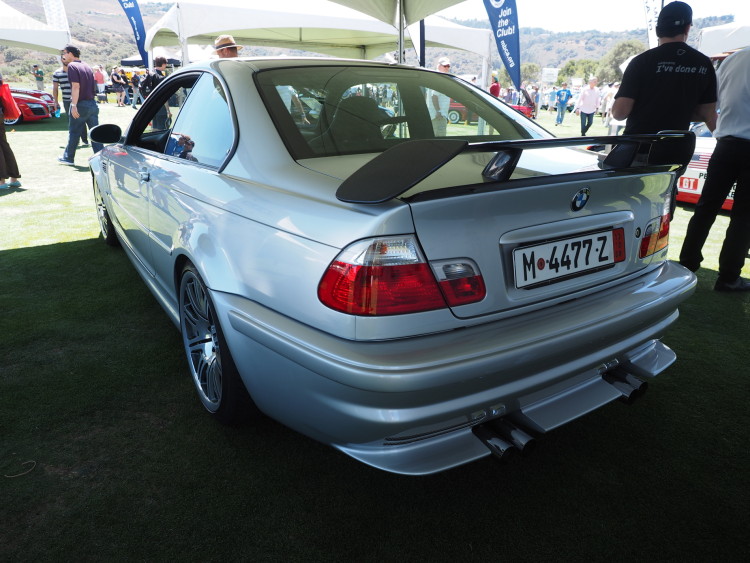
The V8 needed more air than the six. The standard CSL had one opening in the lower bumper. This one needed two. The team cut the holes and built a new bumper cover by hand — it’s the only external tell that something underneath is different. Inside, it’s a normal CSL: full bucket seats, lightweight center console, everything stripped for weight. The 110 kilograms saved over the standard M3 didn’t all survive — the heavier V8 gave some of it back.

It stayed a one-off. The work fed into the S85 V10 for the E60 M5 and, more directly, the S65 V8 that went into the E90/E92/E93 M3 from 2007 — 414 horsepower, 8,300 rpm, one of the best engines BMW M ever made. The prototype had shown them where to go. Years before anyone heard it on a road.

Why It Was the Obvious Choice

BMW M3 GTR Strassenversion

This is pretty simple to argue. The case was already made before that prototype existed. In 2001 BMW M ran the M3 GTR in the American Le Mans Series. Regulations required a road car. So BMW built around a hundred examples of the M3 GTR Straßenversion. That car had already put a 4.0-liter V8 into an E46 body and driven it on public roads. That happened in 2001. Two years later, the engineers at Garching were asking whether the same engine belonged in the CSL. It’s not a difficult question when someone has already done it.

What It Would Have Meant

Start with the existing CSL — 110 kilograms lighter than the standard M3, carbon roof, stripped interior, suspension recalibrated to the point where the car feels almost aggressive at low speed. The SMG gearbox sharpened to match.

Swap the S54 six for the 4.0-liter V8. Seventy more horsepower, completely different character. Not the linear climb of the six but the sudden authority of eight cylinders loading up below 4,000 rpm and then erupting past it. And the sound. The CSL’s stripped cabin would have put that V8 directly into your chest — into that place behind the sternum that has no medical name but every driver knows.

The V8 was heavier than the S54, maybe 25 to 30 kilograms across the nose. BMW M engineers have never treated extra weight as a conclusion, only a problem to solve. More carbon, lighter panels. It would have been handled. The result would have sat alongside the GTR Straßenversion as one of the defining E46 variants — but actually buyable. A car for the person who’d driven the M3 CSL and spent the drive home thinking: more.

The Decision That Wasn’t Made

BMW M let the six-cylinder CSL stand alone. The prototype went into storage. There’s no official explanation. The practical reasons aren’t hard to imagine — recertification costs, development budget, the risk of cannibalising a car already selling at a premium. None of that is unreasonable.

But the great M cars were never built on reasonable grounds. The M1 wasn’t. The GTR wasn’t. The CSL program itself — spending money to build a more expensive, lighter version of a car most people couldn’t afford — wasn’t business logic. It was the engineers refusing to stop.

The V8 CSL deserved to exist for the same reason the six-cylinder CSL deserved to exist.


Source link

Chery Tiggo 9 PHEV’s safety shines in a three-vehicle composite crash test made together with a Tiggo 7

0
Chery Tiggo 9 PHEV’s safety shines in a three-vehicle composite crash test made together with a Tiggo 7


Chery Tiggo 9 PHEV’s safety shines in a three-vehicle composite crash test made together with a Tiggo 7

Part of Chery’s activity list at its ongoing 2026 International Business Summit being held in Wuhu, China, included a three-vehicle composite crash test of the Chery Tiggo 9 PHEV. Held at automaker’s Longshan test centre yesterday, the test simulated one of the many possible complex, high-risk traffic collisions to transparently assess the safety capabilities of its flagship SUV.

During the test, the Tiggo 9 – the one that is heading to Malaysia soon – served as the core test vehicle, being subjected to to a 50 km/h frontal impact from a Tiggo 7, while being simultaneously rear-ended at 40 km/h by another vehicle, the latter being portrayed mechanically by a moving barrier simulating another Tiggo 7 load-wise during the test.

Unlike standardised single-impact crash tests, this public validation focused on high-risk multi-vehicle accident scenarios, replicating continuous loading conditions caused by simultaneous front and rear impacts, a situation that is commonly seen in real-world traffic mishaps such as highway chain collisions and vehicles being struck from both directions while waiting at intersections.

Chery Tiggo 9 PHEV’s safety shines in a three-vehicle composite crash test made together with a Tiggo 7

The objective of the test was to establish the vehicle’s structural rigidity, restraint system coordination and post-collision emergency response capabilities through collision-related demands far exceeding conventional crash testing.

Following the crash test, the Tiggo 9’s passenger compartment remained structurally intact, with no significant deformation to the A, B, C, or D pillars, and sufficient survival space was preserved. All four doors unlocked automatically and could be opened normally, ensuring the interior was accessible for any post-collision rescue.

All major restraint systems functioned precisely as designed, with the front airbags, side airbags and side curtain airbags deploying as intended, while pretensioner seat belts responded effectively. Additionally, no fuel leakage was detected, and the hazard warning lights were activated.

The Chery Tiggo 7 also proved its structural performance during the composite crash, with the automaker stating that the test demonstrated its ability to deliver consistent, high-level safety across the Tiggo family, not only in its flagship models, but throughout the model line-up.

This latest composite crash verification follows a series of high-profile safety validations conducted across multiple global markets, including the successful battery fire safety test held in Malaysia recently. The automaker has also carried out a comprehensive range of crash and safety tests in several international markets, including prolonged seawater immersion assessment, high-temperature desert exposure validation, battery penetration resilience verification and underbody abrasion evaluation.

Looking to sell your car? Sell it with Carro.


Source link